Usage of Semicolons In English Books Down Almost Half In Two Decades

An anonymous reader quotes a report from The Guardian: “Do not use semicolons,” wrote Kurt Vonnegut, who averaged fewer than 30 a novel (about one every 10 pages). “All they do is show you’ve been to college.” A study suggests UK authors are taking Vonnegut’s advice to heart; the semicolon seems to be in terminal decline, with its usage in English books plummeting by almost half in two decades — from one appearing in every 205 words in 2000 to one use in every 390 words today. Further research by Lisa McLendon, author of The Perfect English Grammar Workbook, found 67% of British students never or rarely use the semicolon. Just 11% of respondents described themselves as frequent users.

Linguistic experts at the language learning software Babbel, which commissioned the original research, were so struck by their findings that they asked McLendon to give the 500,000-strong London Student Network a 10-question multiple-choice quiz on the semicolon. She found more than half of respondents did not know or understand how to use it. As defined by the Oxford Dictionary of English, the semicolon is “a punctuation mark indicating a pause, typically between two main clauses, that is more pronounced than that indicated by a comma.” It is commonly used to link together two independent but related clauses, and is particularly useful for juxtaposition or replacing confusing extra commas in lists where commas already exist — or where a comma would create a splice. The Guardian has a semicolon quiz at the end of the article where you can test your semicolon knowledge.


Read more of this story at Slashdot.

Neon Cipher Is A Sci-Fi Puzzle Platformer Inspired By Moss And Portal

Neon Cipher is a new VR puzzle action platformer inspired by Moss and Portal, and it’s out next month on Quest and Steam.

Developed by Vancouver studio eXomorph Games, the studio describes Neon Cipher as a blend of “the tactile diorama style of Moss with the structured, test-chamber design of Portal.” Featuring 50 levels with a mix of first and third-person gameplay mechanics, you play as a hacker and your goal is to fight enemies while solving puzzles as you break into the evil XE_CORP’s database.

0:00

/1:31

Third-person segments use gamepad-style controls as you move the character around, collecting all the keys across each level to complete your task. Should your character need help moving around an environment, your controllers can both move platforms and temporarily stun enemies. You can even make your own objects through a built-in editor.

Studio head Jon Bogert advised Neon Cipher began life as a school project during his programming degree, sticking to a smaller scope across a three-month schedule. Bogert states he returned to the idea post graduation to expand upon it, and that it’s now ready for release six months later.

Neon Cipher arrives on June 6 on PC VR and Quest 3, and a Quest 2/Pro version is coming “as soon as possible.”

Fujifilm’s X Half is an $850 digital camera with an analog film aesthetic

Fujifilm has already released one unusual camera this year in the GFX100 RF medium format compact, but it’s latest model may be the most offbeat yet. The $850 X Half is an 18-megapixel digital compact camera, but it uses half of a 1-inch sensor to shoot 3:4 vertical photos. To drive home the retro vibe, it has a rear screen dedicated to displaying the camera’s 13 film simulation modes and can only shoot JPEG and not RAW images.

The name comes from “half-frame” cameras popular in the ’60s, like the famous Olympus Pen F, that use a 35mm film frame sawed in half (18mm x 24mm in size). The backside-illuminated sensor on Fujifilm’s X Half is, well, half that size in both dimensions (8.8mm x 13.3mm) or a quarter the area. It’s also the smallest sensor on any recent Fujifilm digital camera, as the X-series uses the APS-C format and GFX models medium format. In fact, the X Half has the same 3:4 vertical ratio as Fuji’s Instax Mini instant cameras — so you can make prints using an Instax Mini printer via the new dedicated X Half smartphone app. 

Fujifilm's X Half camera is a digital camera with an analog film aesthetic
Fujifilm

The X Half naturally uses Fujifilm’s film simulation and grain effect modes. Among the new ones are “light leak” for a blown-out quality that happens when film get exposed to light inadvertently, “expired film” and “halation,” an effect caused by light bouncing off film emulsion layers. To really get you into that analog film mood, you can switch to the new Film Camera Mode that limits your view to the optical viewfinder, makes you pull a frame advance lever for each new shot and only lets you see the photos once they’re “developed” through the X Half app. It even produces a “contact sheet” layout for 36, 54 or 72 images. 

Another feature is 2-in-1 images that let you combine two still images or movies into one composition in-camera for extra artistic possibilities (using the film advance lever again). That also means the X Half can shoot video as well as photos, with a vertical or square size (up to 2,160 x 2,160) that looks ideal for social media — especially with film simulations applied. Also exuding nostalgic vibes is the “Date Stamp” function that lets you imprint dates in the bottom right of images, just like on old-school Kodak-style film camera. 

On top of the main rear 2.40inch LCD 3:4 monitor, the X Half has an optical rather than an electronic viewfinder, adding another analog touch (and the accompanying parallax distortion errors). The camera itself is small enough to slide into a pocket and weighs just 210 grams (7.4 ounces). Other features include a built-in flash, massive 880 frame battery life and SD UHS-I card slot.

The X Half looks like it could be coveted by social media users or anyone looking for a fun party or vacation camera. However, it’s expensive considering that you can just get an Instax (or regular film camera and a lot of film) for a lot less. Fujifilm has definitely captured the photography zeitgeist before with models like the X100 VI, though, so I wouldn’t be surprised if it becomes a hit. The X Half is now on preorder for $850 (in black, charcoal silver and silver) with shipping set to start on June 12. 

This article originally appeared on Engadget at https://www.engadget.com/cameras/fujifilms-x-half-is-an-850-digital-camera-with-an-analog-film-aesthetic-120013873.html?src=rss

Five Key Steps to the Easiest Move Ever

Moving is famously one of the most stressful things you can do. Not only is it a ton of work and a major financial expense, but you’re dealing with the weight of leaving behind one home and starting fresh in another. It’s a burden on your calendar, your wallet, and your emotions.

Whether you are relocating for a new job, moving in with a partner (or moving away from one after a breakup), or just need a change of scenery, you should take the opportunity to appreciate (if not relish) the momentous event—and not be filled with dread, stress, and regret throughout the process. If you’re looking to pull off the smoothest, least painful move ever, follow these five essential steps, as outlined by experts in the moving business.

1. Start planning as early as possible

Long before you put a single possession into a cardboard box, you have to plan out your move. And I really mean it—every aspect. This is more involved than you think, so start early and set aside a chunk of time. Shanaiqua D’Sa, a content marketing lead at Attic Self Storage, notes that planning ahead is, “undoubtedly the first and most important step.” It should include budgeting, comparing moving companies, considering if you need a storage unit to temporarily house your stuff, acquiring packing materials, and more.

Set a budget

Budgeting should be your main focus. This can include: A truck rental or a moving company, insurance, fuel, labor costs, packing supplies, overlapping rent or mortgage payments, a storage unit, utility transfers, cleaning fees, repairs (on the old or new property), and paying food and/or shelter during the move. Costs for all of these will vary depending on your needs, so spend some time sketching out different scenarios.

Once you have a budget in mind, increase it by 10% to 15%, according to Rob Rimeris, owner of EverSafe Moving Co. “Build room for the unpredictable,” he says. “We see a lot of people plan for truck and labor, but forget about costs that compound.”

Be realistic, and you’ll avoid surprises. Nick Friedman, co-founder of College HUNKS Hauling Junk and Moving, advises, “The more labor you require, the higher your overall cost will be. For local moves, many companies offer flat rates based on time and labor, but it’s important to make sure those quotes match your actual needs. Opting for too many services can lead to overpaying, while too few may leave you scrambling on moving day.”

Start by figuring out what, if anything, you will handle yourself, and what you’ll outsource. Moving companies can help with everything from packing to furniture disassembly, but each likely comes with additional costs. Define what you want before you start calling companies to avoid getting upsold on something you don’t really need help with.

Find the right movers

That leads me to your next step, which is researching moving companies. Marshall Aikman, owner of Amazing Moves Moving and Storage, advises prioritizing reliability and reputation as highly as price: “Pay attention to how long the company has been in business because solid experience usually means smoother operations.”

Call a number of places and be upfront about everything from the scope of your move, to any special considerations like unusually heavy furniture, tight hallways, or lots of stairs. Get multiple estimates, and get everything in writing. Ask for detailed cost breakdowns to find out whether gas, stairs, furniture wrapping, furniture disassembly and reassembly, and more will increase your costs. Once you’ve narrowed down your list of possibilities, ask for proof of licensing and insurance, advises Friedman. If a company won’t be straightforward about answering your questions and providing you with paperwork, cross them off your list. Matt Graber, co-owner of Cool Hand Movers, cautions against being “drawn in by lowball pricing,” too. Any quote that seems “too good to be true” almost certainly is. Avoid companies with excessive upfront deposits—usually anything over 25% of the total cost—and read a ton of customer reviews before signing any contracts.

2. Declutter before you move (or pack)

Multiple pros I spoke to made the same point, and it’s worth repeating here: Declutter before your move so you don’t waste money moving things you don’t need or want to keep. (Here’s a more detailed breakdown of how and why to declutter before a move) In general, you should start this process a few weeks in advance of your move. Three or so weeks at least ensures that you have enough time to think about what you really need to keep, and to donate or sell what you don’t. If something is broken or rarely used, consider leaving it behind as you move into a new phase of your life. A few weeks will give you time to actually list and sell things to make money for your move, but set a deadline for when you’ll donate the remainder—you don’t want junk lying around when the movers show up.

This could come with additional expenses. D’Sa points out that if you’re downsizing significantly, you may have to budget for a small dumpster for everything you need to throw away. Still, it’s worth it: All of my experts agreed that decluttering is the single most effective way to save money and psychologically prepare for your move. You’ll also get a head start on packing simply by getting a clearer picture of everything you own.

3. Pack like a pro, even if you can’t pay for it

Like planning and decluttering, packing will start weeks before you move. I realize that’s not always possible, but do try to start as soon as you can. Waiting until a few days before—or worse, the day the movers show up—can lead to chaos. Movers can help you pack, but that’s typically expensive. Evan Hock, co-founder of MakeMyMove, cautions, “Packing always takes longer than expected, so start early, especially with seasonal items or belongings you don’t use daily.”

While you can likely score some free boxes from local businesses, it’s a good idea to just buy them (you can usually find the best prices at big box hardware stores). Rimeris suggests purchasing high-quality tape, “markers you can actually read,” and strong boxes, all of which are “worth every penny.” Mindy Godding, president of the National Association of Productivity and Organizing Professionals, advises buying all your boxes so they’re all similar shapes and sizes and will pack more easily. You can cut down your costs on protective supplies, Godding says, noting packing paper works just as well as bubble wrap or pre-made inserts when it comes to protecting your fragile items.

Renting crates can save you some effort, at a cost

If you don’t want to buy boxes, you can consider renting reusable plastic crates. A number of companies, both local and national, will deliver these crates to you before you move and pick them up when you’re done. They’re sturdier than cardboard boxes, stackable, uniform, and returnable, so they make packing easy. Uhaul, RentalCrates.com, and Perfect Crates all offer this service, so compare prices for your exact needs.

Get creative

Godding suggests placing plastic cups around delicate items like figurines, and clearly labeling any boxes with something breakable inside. Shannon Beller, CEO and co-founder of Wall-Russ, adds that you can use household materials like towels and linens to cushion delicate items as you pack, and Tiam Behdarvandan, founder of Let’s Get Moving, suggests packing heavier things, like books, into rolling suitcases, since the wheels make it easier to haul them around.

Photos are your friend during this porcess. Take photos of your boxes as you pack so you know what’s in each box if you should need something in an emergency. Also take pictures of things like cable configurations behind the TV, so setting everything back up will be easier.

Beller and Charles Chica, co-owners of CT Best Movers, recommend keeping your clothes on the hangers and tossing a garbage bag over them. When you get to the new house, cut a hole in the bag, thread the hangers through, slip them on the rod, then cut the bag off. (Here are more tips on how to pack in a way that makes it easier to unpack.)

Have a system

Pack room by room, and within each room, proceeding in terms of urgency, and designate one box of “essentials” from each. These boxes—which will contain things like toothbrushes, soap, pajamas, and coffee pots, plates and silverware, and anything else you might need in the first days at your new home—should be loaded into the moving van last, unloaded first, and opened on your first night there. Making sure your boxes of must-haves are easily accessible will make settling in a lot easier. (Keep a knife or scissors handy so you can actually open them.)

4. Do what you need to do online before you move

It’s eay to get so wrapped up in the physical process of moving your possessions from one place to another that you can forget about what comes next: Living somewhere new. Especially if you’re moving to a new town, you will have to check a bunch of boxes to get your new life up and running.

A lot of these things can be handled online, so do your research and accomplish as much as you can before your move. Start by making a list of all the different things to deal with at your current address. You may need to make some repairs to get your security deposit back if you’re a renter. Take stock of your bills and memberships: cancel your gym membership and any other local recurring charges, like public transit cards that auto-renew. Set up a mail forwarding so you will get any mail that comes to your old place. Cancel your utilities. Reach out to your doctor, dentist, optometrist, and other providers to find out if they can make referrals for you in your new area and provide copies of all your important records and documents. Forward your prescriptions to a new pharmacy.

Now, shift focus to your new location. Set up your utilities and the online accounts you’ll need to pay them, switch your driver’s license information if necessary, research the deadlines for re-registering your car, and contact your insurer (hopefully your new area will have lower rates). You can even start looking for local doctors, dentists, or any other professionals you’ll need to avail yourself of in the short term after you move.

5. Stay on top of things the day of

The last step is the big one: It’s time to move. Even this part still comes down to planning and budgeting. Jordan Sakala of laborhutt.com suggests moving during the week and mid-month, when demand is lower, and making sure you’re ready and packed before the movers arrive. If you’re not ready when they pull up, you could get charged an hourly fee while they either wait around for you or jump in to help speed things along. Make sure to tell movers about heavy furniture or tight squeezes in advance so they come with all the necessary tools, as if you don’t, you may end up waiting around (and being charged for it) while they run to get them—or, worse, be told they can’t move those things at all.

On moving day, even if you’ve hired a full-service moving team and outsourced pretty much everything, it’s a good idea to stick around and supervise so you can answer any last-minute questions. There are some things movers won’t touch, so it will be your responsibility to coordinate their transport. Get a written list of what your company won’t deal with in advance, but in general, expect to take care of your own jewelry, delicate valuables, identifying documents, medical papers and medications, hazardous materials, plants, and pets.

Before walking out your door for the last time, check the place over, and make sure you know exactly where the “essentials” boxes you packed are. Once they’re all accounted for, get on the road to your new home—hopefully feeling excited, instead of frazzled and exhausted.

A Guide to Pulling Off a (Mostly) Stress-Free Long-Distance Move

For the last 10 years, all of my moves have happened within about a 15-block radius. For personal reasons (a dislike of annoyance and paperwork), I may never leave this neighborhood in Manhattan. Then again, I may not have a choice. You never know when something—a great job opportunity or the sudden desire to experience something new—may come up. If and when you find yourself moving not just locally, but quite a distance, there are some unexpected hurdles you’ll need to keep in mind that differentiate this from your standard move.

Your budget has to be on point

Budgeting for any kind of move is a key to not going broke during the process, but your expenses for a longer move are going to be more, obviously, and are also going to include quite a few things that you may not immediately think of.

Monthly bills

If you’re undergoing a more significant move, chances are good that you’ll have a rent and utilities overlap, which should be part of your budget planning.

In addition to billing overlap, consider any fees you may incur for canceling utility accounts or opening new ones—be sure to check with your new city on how much all of that costs around there. The city you’re moving to might have higher taxes, for instance, which may make your monthly bills higher than you expect.

You should also think about your other monthly expenses that may change after your move. Your gym membership is a good example. Are you locked into one that is going to be hard to cancel? Many gyms require proof that you’re moving out of the region or a certified letter to cancel your membership.

On this topic, while it’s not quite related to budget, necessarily, check with your doctor, dentist, and other providers about getting referrals, having prescriptions moved to new pharmacies, and if there’s anything you should consider related to your healthcare in the new city while you find new providers. Do a quick scan of your checking account to identify any city-specific recurring charges, like public transit passes or bills.

Repairs on the new place

Repairs on the old or new home can also add up, especially if you’re moving to the new place sight-unseen or if you haven’t had a chance to truly assess it. One person I spoke to who moved cross-country, for instance, said the new house they moved to was great—but it had been unoccupied for a while before they moved in, which resulted in spending some time and money cleaning up that they hadn’t accounted for.

Food and lodging

The farther you move, the longer you’ll spend without a roof over your head and possibly even without a lot of your possessions, as they may still be in transit after you arrive. Don’t forget to budget in some money for takeout and even hotel stays, if necessary.

Building the budget will take time. Get quotes from a variety of moving companies, figure out your travel situation, add in money for food and bills in the new city, consider whether you need to make any repairs on your old place, and determine what, if anything, it will cost to update your identification and utilities. When you’re done ballparking all that, add 10 to 15% onto the number you end up with, advises Rob Rimeris, owner of EverSafe Moving Co. According to him, that “isn’t just practical,” but “gives people back a sense of agency when plans shift.” When you find yourself in a brand-new town, having a sense of agency will keep you feeling sane.

How to choose the right movers

Finding a good moving company is crucial for any move, but when your stuff is getting hauled across the state—or across the country—it’s even more important to do your research.

“Find a company that is licensed, insured, has good reviews, and has the proper checks and balances in place,” says Charles Chica, co-owner of CT Best Movers. You might be tempted to go with whatever company is the cheapest, but it’s important to weight price as just one of many factors.

Spend time looking for a company, get your estimates in writing, and provide as much detail as you can about whether you will need help with packing and furniture disassembly and reassembly, as well as what the parking situation is at both the pickup and drop-off locations. Communicate clearly and honestly and make sure all of the communication you receive is backed up in writing. The farther you move, the more complicated this might be, so use an honesty-first approach to avoid any surprise fees or issues.

What you might not realize about long-distance moves

Alex Girard, whom I interviewed for this story, has lived in four states and recently completed his farthest move. He said that the process for selecting a moving company was trickier than he anticipated, partly because moving works a little differently over long distances.

“I didn’t realize (though it makes sense) that basically the way it works is local movers on either end partner with some national trucking company to do the actual long-haul, so it was kind of hard to compare services,” he says.

Another difference is that the movers won’t load your stuff up and drive directly to your new place, which requires extra planning on your part.

“Since the moving companies are partnering with trucking lines,” Girard says, “they don’t do a special delivery straight to the new house from the old one. Your stuff sits at a warehouse on both sides for a while until they can be loaded onto the next truck out.”

To avoid the disastrous situation of having to live in a new home with absolutely nothing for two or three weeks, plan for this in advance. Most places Girard spoke to said the boxes and furniture would arrive within 10 to 20 days, so he shipped his most important necessities to his new house in advance, relying on the postal system to make sure he arrived to a new home that contained the essentials he needed to work and live. That was smart, since it actually took a few weeks for the moving companies to deliver everything else, but it was also “a bit expensive.”

Regardless of how far you’re moving, there are things you’ll need to keep with you, as movers may not want to (or may not be able to) move all of your belongings. These types of things include identification documents, medications, perishables, hazardous materials, pets (obviously), and even plants. Knowing in advance you’ll need to find a safe way to transport all of these and keep them on you is important to ensuring a smooth move.

Read online reviews, but don’t obsess over them

You’ll certainly spend time reading online reviews as you select your moving company—and that’s good, but read them with skepticism, too. Girard says he spent a lot of time researching moving companies and pointed out that he read a lot of nightmare-sounding online reviews, but didn’t experience anything as catastrophic as what they described.

That’s a good thing to keep in mind as you do your own research: In general, remember that online reviews only tell part of the story. Someone is more likely to write one when they’re super mad and more likely to forget to write one when they have a totally unremarkable experience. Your best bet is to call as many companies as you can, speak to them directly, and make sure they’re insured, knowledgeable, and reasonable. (And if you end up having a positive experience with them, consider writing a review just to help out the next person in this position.)

Get on the phone

This is a tip I learned from my mom and am always happy to share: Call people. You can get more done in a 15-minute phone call than a four-day email thread.

Whenever she and I go on a trip, she calls the chamber of commerce in that city to ask a local what, exactly, we should be sure not to miss, which has resulted in us having incredible experiences we would never have found if we’d just relied on TripAdvisor or Reddit. The same applies here. Contact your new local government to get a straightforward answer to what, exactly, you need to do to have a smooth move.

You’ll need a new driver’s license, for instance, and the process for obtaining it should be pretty simple, but that can vary by jurisdiction. Turning on your new utilities, updating your mailing address, learning about any new taxes or regulations—all of this should be explained to you by a knowledgeable local. It’s likely they’ll direct you to an online portal, yes, but you’ll know you’re working with the right information, which is half the battle.

Ask for help from a local

Finally, try to find a local who might be willing to answer some questions or tell you more about the town. When I moved from North Dakota to New York at 18, I was enrolled in a university where there were campus reps whose job it was to teach us about the city, but what I learned from them was nothing compared to what I ultimately learned from befriending kids who were born here. City employees can only get you so far.

If you don’t know anyone in the new place, post an inquiry on Reddit (most cities have their own subreddits—do some Googling to find the most active ones wherever you’re moving). In my experience, people love talking up their hometowns. From hidden gems in the culinary landscape to unexpected expenses (Girard notes that he was unpleasantly surprised by the higher taxes on alcohol in his new town), everyday people will be more likely to tell you about the everyday experiences of living there, which will help you acclimate a lot faster.

How to Pack for a Move so You Can Unpack Faster

We may earn a commission from links on this page.

When you’re packing to move, you have a lot to keep in mind. You may want to think of how to minimize costs and how to get rid of all your extra junk, but what about packing in a way that makes unpacking easier? Few things are more annoying than getting to your new home and needing a specific object—where the heck is that screwdriver?—only to find that your past self’s haphazard packing job made things difficult on your current self.

You want your transition into your new space to be smooth and even enjoyable, to the extent it can be. Here are some tips to make sure not just that the packing process is easy—but the unpacking process, too.

Start earlier than you think

Historically, when I’ve moved apartments, I’ve waited until the week of the big move to start gathering my things. This has never worked out for me. Don’t do that. You should actually start three or four weeks in advance. I know that sounds annoying, but you need that time buffer.

“Packing always takes longer than expected, so start early,” says Evan Hock, co-founder of MakeMyMove. “Especially with seasonal items or belongings you don’t use daily.”

The time isn’t just for packing, mind you: packing also includes decluttering, since you don’t want to spend money or energy moving items you don’t need or want in the new place. Next, and maybe most importantly, you need that time to make adjustments to your plans. If the boxes you’re using aren’t strong enough, if you didn’t budget enough for packing supplies, or if you find that you’re having a hard time categorizing everything, you’ll be grateful for an extra few days to get it all sorted.

Select the right supplies

A number of pros I spoke to recommended buying new boxes instead of trying to save money by using old ones. That will cost you money, but might also save you some headaches, as older boxes can lose their integrity—that, plus having boxes that are all (or mostly) the same size will making packing and moving much easier.

If you don’t want to buy boxes, consider reusable plastic crates, which also give you the uniformity in addition to even greater stability. A number of companies at the local and national levels will rent these crates out to you. U-Haul, RentalCrates.com, and Perfect Crates all offer this service, but check locally, too, and compare prices for your exact needs. If you’re moving nearby, a local company should do the trick. For long-distance moves, consider one of the bigger ones above just to make the return easier, as they drop off and pick up the supplies.

Another thing to keep in mind is high-quality tape. Rob Rimeris, owner of EverSafe Moving Co., says sturdy boxes and strong tape are “worth every penny.” Charles Chica, co-owner of CT Best Movers, also advises you never “go cheap” with your tape: “You’ll regret it when a box or bag breaks open mid-move.”

Go room by room

You need to be strategic while you pack. Again, historically, I’ve failed at this—likely because I waited too long and just ended up running around, shoving things into boxes wherever they’d fit and praying I’d be able to make sense of the mess when I got to my new place. Instead of panicking like that, approach your packing systematically. Go room by room.

“Pack one room at a time so that all the items are grouped together when unpacking,” says Stephanie Rees, assistant product manager of mailing and moving accessories for Duck Brand. Matt Graber, co-owner of Cool Hand Movers, says the same: “When you go room by room, filling moving boxes or bins, you ensure that the items to be unpacked will most likely be together in the same room on the other side. You don’t want to drag boxes around your new home finding places for scattered objects.”

Doing it this way is also going to help you stay organized in the new place, since it aligns with the rules of the Organizational Triangle: Everything must have a place and be stored with similar items. Grouping together similar categories makes it easier to organize and store them once you move.

Separate the essentials

While you’re packing room by room, you should also be packing in order of urgency. Charles Chica, co-owner of CT Best Movers, says you should have one box of immediate essentials that should include “stuff like meds, chargers, toiletries, documents, and even just a change of clothes” and you should pack it and bring it along with you yourself, even if you hire movers for everything else.

You should also have boxes of essentials for every single room in the house—stuff that might not be so important that you’ll put it in your take-with-you box, but stuff you know you’ll need soon. From your bathrooms, that might include things like spare toothbrushes, soap, and a towel. From the bedrooms, think pajamas, kids’ stuffed animals, and a few changes of clothes. The kitchen essentials might be some cookware and a coffee pot. With a box like this for each room, even if you’re too tired to unpack on the first (or second or third) night in the new place, you’ll have what you need to be comfortable so you don’t have to dig through all your other boxes just to find some toothpaste.

Shanaiqua D’Sa, content marketing lead at Attic Self Storage, suggests the same thing, but adds an important caveat: “The single most overlooked thing that makes unpacking easier is ensuring you keep a pair of scissors or penknife on hand,” she says, so add that to the things you’re keeping accessible, not packing away. “So many people move houses, are all set to unpack, and then can’t unpick the packaging tape on the boxes and don’t have a pair of scissors or knife on hand to do so. It’s just one added frustration that you really don’t need.”

While you’re separating out the essentials, “Don’t overlook your healthcare needs,” says Evan Hock, co-founder of MakeMyMove. “Before making the move, ensure you have access to your medical records and enough prescription medication to last until you find a new primary care provider. This small step can prevent unnecessary stress down the road.”

Don’t over-complicate the small stuff

We all have so much small stuff—batteries, screws, art supplies, etc. Why not keep some of it where it is? If you have a unit with drawers that contain a bunch of stuff, tape the units closed securely and transport them just like that, says Jordan Sakala of laborhutt.com. Other small items can and should be tossed into Ziploc bags, but you have to label them clearly, says Chica, and you should tape those bags where they belong. Bags of screws should be taped to the furniture they’re for, for instance, and bags of chargers should be taped to the container or furniture where they’re stored.

Clothes might seem like “big stuff,” but you can actually think of them like “small stuff” here. Gather your hanging clothes together and slip a garbage bag right over them, keeping them on their hangers and all, says Chica. I always cut a little hole in the top of the bag so the hangers can stick out, then hang them on their new rod when I move in and (carefully) cut the bag right off.

Some clothes, though, can be used to protect the “small stuff.” Multiple pros mentioned to me that scarves, socks, t-shirts, tablecloths, curtains, and more can and should be wrapped around valuables. This saves you money on packing supplies and keeps your goods safe. Rob Rimeris, owner of EverSafe Moving Co., even claims that “t-shirts cushion dishes better than bubble wrap ever did.”

Label carefully

As you pack, don’t forget to label your boxes. Multiple pros recommend color-coding your labels to align with the room the contents belong in, but how you do that is up to you. Shannon Beller, CEO and co-founder of Wall-Russ, says colored labels can help pro movers place boxes in the right room, but if you don’t have colorful labels, even color-coded stickers can work, according to Marshall Aikman, owner of Amazing Moves Moving and Storage.

On top of that, get really detailed. “Don’t just write ‘misc.’ because that’s a nightmare when you’re tired and trying to find your coffee maker on day one,” says Tiam Behdarvandan, CEO and Founder of Let’s Get Moving. Write the specific object names on the side of the box so you always know exactly what you’re dealing with. Label the urgent boxes, first-day boxes, and every other detail that will be relevant when you get there.

Pack (and load the truck) thoughtfully

Whether you’re filling your own U-haul or have hired pros to take care of this part, think strategically about the order everything gets loaded. If the kitchen of your new home is all the way in the back of house, put the kitchen boxes in last so they’re the first to come out and you can easily get them to the back of the house without tripping on other boxes. Ideally, furniture should be in a separate van or truck so it can come out first, since you’re not going to want to be shoving a credenza through a pile of cardboard boxes, either.

The same goes for the packing of the boxes themselves: Label them clearly and try to pack them in a way that has some kind of logical sense. A box full of kitchen appliances is more important to unpack first because you want the big stuff in place on your counter before you add in the decor. You want to unpack your sheets before your throw pillows so you can get them on the bed in the right order, so you might want those pillows on the bottom of the bedding box and the sheets on the top.

Finally, you’ll want to jot down on each box what its contents are. Don’t just label them by room. Instead, says Tiam Behdarvandan, CEO and founder of Let’s Get Moving, write the specific object names on the side of the box so you always know exactly what you’re dealing with. Label the urgent boxes, first-day boxes, and every other detail that will be relevant when you get there.

Here’s a bonus tip from Marshall Aikman, owner of Amazing Moves Moving and Storage: You probably already know that you should be packing as much as you can into your suitcases to avoid over-spending on boxes, but you should think a little more critically about what should be packed in them. Heavy items, like books, are a great option, since the wheels of a suitcase can help save your back. Items that have to travel a long way through the new home are also a good option, again because of the wheels. So, too, are things that come in many sub-categories, like toiletries, as long as the suitcase has interior pockets. One pocket can be for lotion, another can be for facial skincare, and another can be for perfume, and so on.

These are suggestions for an ideal scenario, of course. I know full well how much more stressful packing is in reality; sometimes, you just don’t have time to think through all of these little things. That’s why it’s best to start this process weeks in advance, if you can. You want time to make a plan so that the unpacking and moving-in aren’t as stressful as the packing and moving-out. Start your time in your new place off right.

How to Move the Stuff You’re Worried Movers Won’t Touch

We may earn a commission from links on this page.

As you’re planning your big move, you’ll likely find yourself talking to a number of moving companies to figure out which one has policies, prices, and availability that work best for your needs. Through that process, you might be surprised to learn that there are things movers won’t touch, though the exact types of objects they won’t move do vary from company to company.

This isn’t their way of getting one over on you during a vulnerable time, though you might feel like it is. Rather, according to Rob Rimeris, owner of EverSafe Moving Co., “it’s about respect and risk.”

What moving companies generally won’t touch

Rimeris says his company won’t move weapons, open liquids, or valuables like personal identification or heirlooms. That aligned with what I heard from a number of other pros, who also mentioned jewelry, cash, paperwork, passports, medication, anything “irreplaceable,” anything flammable, cleaning products, fire extinguishers, paint, and fireworks. Some companies won’t even transport your plants or perishable food. And, of course, they’re not transporting your dog or other pets.

Many pros told me that you should contact your moving company with an itemized list of what you want moved in advance. Your company might be fine moving some of these things and they’ll let you know. Get that in writing.

So what do you do with the stuff they won’t move?

First, ask moving companies for a written list of what they will not transport, just so you have an idea of what is going to fall under your responsibility and so you can avoid surprise refusals or fees when they get there.

Valuables

Keep your valuables on you during the move, especially things like identification documents, prescriptions, and your birth certificate and social security card. It’s a good idea to move those things yourself in your personal vehicle from one home to the next.

Because these things are so important, consider a portable lockbox (around $30 or so). It’s small enough to move around with you but can keep everything organized and untouchable.

Hazardous materials

As for any hazardous materials, don’t transport those yourself—for the same reasons the movers don’t want to. Kris Kay, director of operations at UNITS Moving and Portable Storage, cautions that you should contact local disposal centers for proper handling of anything like gasoline or propane tanks. Tiam Behdarvandan, CEO and founder of Let’s Get Moving, says that even a small leak can cause a dangerous situation. Anything old or half-used can be disposed of at a local hazardous waste facility. If you have full canisters of gas or other hazardous materials and don’t want to dispose of them, ask your local disposal center for specific recommendations on transport.

Pets

If you’re moving locally, Shainaiqua D’Sa, content marketing lead at Attic Self Storage, advises that “children and pets can unintentionally slow down the moving process,” so you should arrange for someone to look after them on the day of the move.

You should also flag your vet about the move well in advance. Alex Girard, who recently moved across the country, was surprised to find that his cat needed to be given a “certificate of health” before she was able to fly on a commercial airline to their new city, for instance. Your vet may also prescribe medication to calm your animal down if you have to fly or travel a long distance with them. Seek specific advice on all things travel-related from the vet, like how big your carrying case should be, and contact your airline if you’re flying to get information on their policies around animal travel.

Like your valuables, you need to keep pet supplies on you. From food to poop bags, these will need to travel with you personally—and you should pack more than you think you’ll need in case of any hiccups. Pet identification, medications, accessories, and a favorite item that smells like you should also be included.

Plants

Plants are tricky. Start by watering them well a few days before the move and then find a box slightly bigger than the pot, stuffing packing materials around it to keep it cushioned inside. (As with valuables and delicate objects, you can use t-shirts, towels, or other soft goods for this.) Then, cover the plant itself with a large plastic bag, like a trash bag. You should move the plant in a sturdy, temperature-controlled environment, like in your personal vehicle.

If you have to fly, it’ll be a little more complicated. The TSA allows plants in both carry-on and checked luggage, but you need to contact your airline directly to find out about their policies.

Perishable foods

A few weeks in advance, obviously, try to eat these if you can. Decluttering is the best way to save time, space, and money ahead of a move. Consider donating to a food kitchen, especially if you’re moving a long distance. Otherwise, these, too, need to be boxed up and taken with you, whether in your personal vehicle or on a plane. Depending on how far you have to travel, consider picking up a cooler. Travel-safe versions with carry straps can be as low as $15.

The less straightforward objects

There are some items that movers will move (or could refuse on a case-by-case basis) but they, too, are important to mention in advance.

“Like most movers, we do not handle hazardous or prohibited materials like gas canisters, explosives, or chemicals,” says Marshall Aikman, owner of Amazing Moves Moving and Storage. “If you need to move something unusual like a piano, a safe, or antiques, make sure to tell us ahead of time because these require special handling and planning.”

A few different pros I spoke to mentioned things like pianos and aquariums, actually, and while they will generally move them, they do need to know about them in advance. You might have to pay extra fees for certain objects, depending on what they are and which company you’re going with, so get that information in advance to avoid budgetary surprises on the day of the move. If possible, try to move those yourself, but keep in mind that a fee might be worth paying if the other option is literally moving a piano on your own.

If you don’t declare these things in advance, fees won’t be your only problem. Without advance knowledge of tricky, heavy objects, movers may not show up with the right tools and materials, meaning they can’t move those and there’s nothing you or they can do about it. In the best-case scenario, they have to take extra time to go get the right tools, which can cost you hourly fees and precious time. In the worst-case scenario, they can’t do that and you’re stuck there with some huge thing you also don’t have the tools to move.

In the event you find yourself in a situation where you have to move a piano, safe, aquarium, or other unwieldy object, you need moving blankets. Matt Graber, co-owner of Cool Hand Movers, says, “If you’re doing your own move, don’t skip blanket wrapping furniture pieces. It will protect the pieces themselves in transit, but also reduce the chance of nicking walls and doorways with the edges of bulky items.” A 12-pack is about $60. Secure them around the object with heavy-duty tape and place sliders under the legs or corners.

Even if you are doing the move yourself, it would be beneficial to contact moving companies for quotes on what it would cost for them to simply help you get these bulky items out of your space and into your U-Haul. Again, movers will move heavier items in most cases, but you have to tell them in advance.

Your Big Move Is the Perfect Time to Declutter

Moving is something that drains you of time, energy, and money, and you probably don’t want to do any extra work if you don’t have to. But hear me out: You should still use a big move as an opportunity to declutter. Here is your chance to assess every item you own and make decisions about what you really need. Who knows the next time you’ll be able to handle every single possession, categorize everything, and make a truly meaningful dent in your clutter?

Why you should declutter right before you move

First of all, decluttering before a move can actually save you money.

“The biggest mistake we see people make time and time again is underestimating how much stuff they have and overestimating how easy it is to move,” says Charles Chica, co-owner of CT Best Movers. “It’s best to start by decluttering and getting rid of anything you don’t use or need. This works wonders, saving time, space, and especially money.”

Mindy Godding, President of the National Association of Productivity and Organizing Professionals, and Shannon Beller, CEO and co-founder of Wall-Russ, agree, pointing out that if you don’t pare down what you own before moving, you’ll end up paying for the labor and transportation costs associated with moving stuff you don’t need or use.

It also makes packing and unpacking easier. Adam Hamilton, CEO of REI Hub, says that the last time he moved, decluttering in the weeks leading up to the big day “really helped” because it got him organized, which made it much simpler to pack. Beyond that, with better organization and less stuff to unpack, the process of settling into the new place was more seamless, too.

Start the decluttering early

A few weeks before your move, start to get into a decluttering mindset. Godding suggests scheduling time to declutter your space before you even start to pack. Evan Hock, co-founder of MakeMyMove, says that packing always takes longer than expected, so the earlier you start with the pre-packing, the easier it’s all going to go. He recommends paying special attention to seasonal items and things you don’t use daily.

Obviously, this is a little tricky, especially if you aren’t familiar with decluttering. Here is a list of my favorite decluttering methods—any of these would work well as a template to follow. Some of the techniques do work better as you’re boxing things up, though. For instance, the “packing party” is a decluttering method that involves putting everything from a room into boxes, then only pulling out what you immediately need as you need it for 21 days. After those three weeks, you’re supposed to get rid of everything you didn’t reach for. It could be worth it to pack everything up three weeks before your move, use the packing party guidelines until that time, and then donate everything you didn’t touch before re-boxing up what you did use and bringing that to the new place.

Many decluttering methods also rely on containers more generally. When decluttering and organizing, there are a few rules to keep in mind: Everything you own must have a place and it must be stored with similar items, ideally in containers. Starting this process a few weeks before the move can actually help you when it’s time to relocate, as your stuff will already be categorized and in boxes.

Declutter as you pack

Hock says he finds it helpful to keep decluttering even after packing has begun. Your first decluttering sweep should take place a few weeks before you pack and leave, yes, but the job isn’t fully done then. Before packing, borrow some ideas from organizing guru Peter Walsh: Envision your new home and what you want every room to look and feel like. Set intentions for each room. Do you want the dining room to feel airy and spacious? Do you want the office to be sleek and minimalistic so you can focus? As you’re packing the boxes of items that belong in each room, consider each one and ask yourself if that item contributes to the vibe and function you envision for the space. If it doesn’t, get rid of it.

If you’re struggling to decide what stays and what goes, I put together a list of questions to ask yourself when assessing a tricky possession. These focus on how often you use something, the condition it’s in, and whether you could conceivably and economically replace it if you found yourself in a position of actually needing it.

“If you haven’t used it or worn it in the last year, you likely don’t need it,” says Chica.

What to do with the unwanted items

Another advantage of starting this process early is that you give yourself some wiggle room if you want to try to sell things—which can actually give you a little extra cash for moving expenses. Online marketplaces like Poshmark and Mercari are great for offloading housewares, clothing, decor, and even some furniture, but they do have the potential to make you wait a while. I am an active online reseller and I can tell you that it’s rare to make a sale immediately after listing something, so if you want to make some money off your goods, list them weeks before your move. For bigger furniture or, in my experience, faster sales, list on Facebook Marketplace to keep your sales local.

Whatever doesn’t sell should be donated, says Hamilton. Use the day before move-out day as a hard deadline. Many local thrift shops will pick up heavy items, like furniture, if you coordinate with them and you can bring boxes of smaller goods in yourself. You can also post these things on Craigslist’s “free” section or “Buy Nothing” groups on Facebook, then set them on a curb with clear instructions in your post for how to find them.

In the event you opt to just throw stuff out, make sure you’re prepared to deal with the volume and associated costs. Shanaiqua D’sa, content marketing lead at Attic Self Storage, warns you may need to hire a small skip or dumpster if you have a lot to toss out and you can’t forget to budget for trash bags and disposal containers.

Ultimately, this is going to improve your move, even if it takes a lot of time first. You don’t want to spend money moving junk, nor do you want to fill your new home with useless things. Moving is an opportunity to start fresh in a lot of ways, so carving out time to declutter is going to give you a jump start on your new life.

An (Almost) Foolproof to Getting Your Security Deposit Back After You Move

If you’re preparing for a move, you have a lot to think about and most of it revolves, in some way, around your new place: Finding it, buying or leasing it, and moving all your stuff to it in a way that is fast, efficient, and as inexpensive as possible. There’s a lot on your plate and I get that, but you also need to spare a thought or two for the spot you’re vacating, especially if you rent. Remember that security deposit you put down when you moved in? You want that back—and your landlord doesn’t want to give it to you. Here’s how to get it back, or at least try.

What is the landlord looking for?

First, think like a landlord or building manager. After all your stuff is boxed up and you’re standing in the ghostly echo chamber that was once your home, take a look around and pay attention for the little issues the landlord might spot when they do their walk-through. Marshall Aikman, owner of Amazing Moves Moving and Storage in Denver, CO, says landlords can hold back deposits over anything from furniture marks on the wall to nail holes to dirty fixtures. After all, cleaning is labor, too, and the management company will need to pay someone to do it, which is what they’re going to use the deposit money for. Better to do it yourself.

Start with cleaning

Aikman says the easiest thing to do is clean everything before you leave. The good news is that once all your stuff is boxed up or gone, you’ll see pretty clearly what needs to be cleaned and you won’t have any obstacles to deal with, like shelving units. The same heavy furniture that once prevented you from doing a thorough cleaning will be gone. Make the most of it.

Shannon Beller, CEO and co-founder of Wall-Russ, says that it’s pretty common for movers to overlook cleaning appliances, bathrooms, and floors. Remember you’re not only mopping and cleaning scuffs off the wall, but should be cleaning the toilet, fridge, sinks, and other appliances and fixtures. It’s annoying and will take some time—plus feel almost insulting to clean a space you won’t be enjoying anymore—but it can save you money.

It might even be worth it to consider a professional cleaning company, says Shanaiqua D’Sa, content marketing lead at Attic Self Storage. Call a few cleaning companies and get written price quotes, then compare the cost to the amount of your security deposit. If the cost of having it cleaned is significantly lower and if you’re feeling overwhelmed by all you have to do, outsourcing could be an economical and time-saving option.

Address minor damages

Beller says that renters tend to overlook small damages and focus on bigger ones, but those small ones add up. One or two nail holes aren’t a huge deal, sure, but if you have them in every single wall, your landlord might start to object.

Charles Chica, co-owner of CT Best Movers, agrees that renters often forget to patch those small holes and fix those minor damages. As a general rule, fix even the most minor issues. You don’t want to give the building company any reason to withhold even a cent of that deposit. Scuffs, holes, peeling plaster, scratches, loose screws—one trip to the hardware store can help you a lot here.

In my experience, fixing up the old place also helps prepare you to get to work in the new one. For me, doing a little manual labor gets me back into the groove of working with my hands so when I arrive at my new home, I feel readier to get my hands dirty there. It’s unfortunate but true that every time I’ve moved, I’ve left my old place perfect and moved into a spot that is, inexplicably, a little dirty and/or malfunctioning. That’s the nature of renting in a big city! The prior renters probably didn’t get their security deposit back, which became my problem. Always be prepared for something like that. You can certainly fight with the rental company and demand someone come in and clean it, but after all the stress of moving, I’ve always found I don’t have the energy to kick off my time in a new place by aggravating my new landlord.

Be smart during the actual move

Addressing the mess and damage left from your existence in the space is one thing. Avoiding further damage when you leave is another. If you’re moving your furniture and boxes out on your own, do not bang them into the wall or allow them to hit door frames. And whatever you do, don’t drag.

“Dragging furniture out without proper protection can damage door frames or walls. Use blankets, sliders or even flattened cardboard to protect surfaces on your way out,” says Jordan Sakala of laborhutt.com. “Little details can save a lot.”

This was a point touched on by a number of pros I talked to, actually. Aikman and Chica also took care to mention that movers frequently overlook how much damage they can cause by moving larger pieces of furniture, especially. Chia says renters are prone to underestimating how tight corners or staircases are, too. Take some measurements of your furniture as well as the path you’re going to take it through before you start. When in doubt, it might be time to call professional movers—but make sure you communicate clearly with them about the importance of not causing any damage.

Use a few supplies to make this easier. Painter’s tape can be affixed to walls and door frames to protect against scratches, for instance, and it peels of easily when you’re finished. Matt Graber, co-owner of Cool Hand Movers in Brooklyn, says you should wrap all your furniture in blankets, which not only protects the walls and doorways as you move it, but protects the furniture itself in transit.

Document the space on your way out

When the cleaning and fixing-up are finished, take a lot of photos and videos. Once again, this tip was highlighted by a few different pros. Aikman, Beller, and D’sa all brought it up, pointing out that in the event the landlord tries to dispute giving you back your deposit, you want evidence that shows that you left the place damage-free and clean.

Taking pictures and videos can also help you spot any last-minute issues you need to fix. When I need to clean or declutter, I sometimes take a picture of my space instead of trying to assess it visually. I’m just used to how my rooms look in real life, so seeing them more impersonally through a photo helps me recognize what’s out of place, what is taking up too much space, and what needs some attention a little better. While you’re taking pictures and videos, look at them like the landlord might and pay attention for anything that looks off.

Eight Ways to Save Money on Your Next Move

We may earn a commission from links on this page.

There is a moment during every big move where it hits you: Moving is really freaking expensive. The expenses—from packing supplies and the truck itself to the costs related to cleaning, painting, and utility deposits—will pile up. And I’m not even including the costs of furniture that better fits your new space.

Budget—and cushion your budget

I spoke to a number of moving experts—especially people who work at moving companies and have been in the business for years—and most of them emphasized budget before your move—and overestimating what you think you’ll spend. Both Shannon Beller, CEO and co-founder of Wall-Russ, and Rob Rimeris, owner of EverSafe Moving Co., say you should add 10 to 15% to your final budget as a cushion. Rimeris says that “isn’t just practical,” but “gives people back a sense of agency when plans shift.”

A few often-overlooked expenses that came up included these: tips for your movers (as well as insurance) fuel for the truck or car if you are moving some or all of your possessions, cleaning fees for the place you move into or out of, repairs for your old home, unforeseen extra charges from the movers, and furniture assembly.

But wait, there’s more: “It may not seem critical at first, but planning for food and takeaway expenses is also important,” says Shanaiqua D’sa, content marketing lead at Attic Self Storage. “You’re unlikely to cook on moving day or even in the days immediately following, especially if your kitchen isn’t fully set up yet or you’re simply too tired.” Kids and pets, too, “slow down the moving process,” she says, so you might want to arrange for someone to look after them.

Only move what’s necessary

You’re already overwhelmed by how much you have to do and I totally get that, but this is a perfect opportunity to declutter your stuff. In fact, decluttering was cited as a top money-saving tip by many pros: “The biggest mistake we see people make time and time again is underestimating how much stuff they have,” says Charles Chica, co-owner of CT Best Moving.

“Get rid of anything you do not need because the less stuff you have, the cheaper the move will be,” adds Marshall Aikman, owner of Amazing Moves Moving & Storage.

Sell what you can and buy what you need (used)

Consider selling some of what you’re getting rid of, as long as you start with enough lead time before your moving day. D’sa points out that you can generate money for the move by offloading old stuff to buyers. If you have enough time between decluttering and moving, list furniture and clothes on sites like Poshmark and Mercari. If you don’t have much time, keep it local and stick with Facebook Marketplace, where buyers can come pick up furniture and other objects directly from you and hand over cash. The last time I moved, I listed furniture on Facebook Marketplace and promised myself that if it didn’t sell before I left my old place, I had to take it as a loss and donate it, but as Evan Hock, co-founder of MakeMyMove points out, you can also list it in Buy Nothing groups as a free pickup. Whatever it takes to get it out of your space!

If you really have enough lead time, organize a rummage sale. It’s not as easy to coordinate if you live in a larger city, although I’ve certainly seen it done, but I grew up in a rural place where this was the norm. As long as you’re doing it on private property, most jurisdictions don’t require a permit for a short-term yard sale, but please check. Put up a few signs, post some ads on Craigslist, and haul all your for-sale wares to your garage or front lawn. Be prepared to take lowball offers and haggle a little, but you’ll be surprised by how much actually sells. You can (and should) list it all on the aforementioned apps and digital marketplaces, too, then donate whatever is left over before the move.

If you’re moving to a bigger home, online resale and yard sales are also how I recommend filling it—at least at first. Moving is a massive expense, and it might not be feasible to buy or finance big furniture sets from retail stores at first. On the other hand, occupying a near-empty house is a bummer. Buy used essentials to save money and get your home in order. You can re-list it and sell it if and when you’re more settled in and financially prepared for better furniture—or you may even fall in love with your eclectic decor collection and keep it.

Go “stooping”

There is another, even less-expensive option if you need furniture fast. If you live in a big city, you’re familiar with the classic practice of picking up free furniture from the sides of the street. If you live in New York and spend time on Instagram, you’re also probably familiar with the account that makes doing that even easier.

@StoopingNYC has 479,000 followers who dutifully snap pics of discarded furniture throughout the five boroughs and DM it to the account owners, along with location details. The owners, in turn, post the photos and relevant information on the account’s story as well as on the grid, encouraging New Yorkers to have at it.

“Stooping is the act of hunting down discarded street freebies that has the added benefit of being both an activity you can do outdoors and one that ultimately enriches the space where you’re most likely spending all of your time: your apartment or house!” the couple behind @StoopingNYC tells me.

If, instead, you don’t live in a big city where stooping is regularly practiced, snag some stuff on the cheap by mapping out the weekend’s best local yard sales or head to all the online marketplaces where you’re actively ditching your old stuff to make room for the new (to you) stuff your new place will need. (Craigslist also has a “free” section where people frequently give away items.)

One word of caution in either case: Make sure you clean the products well and proceed with caution when picking out anything made with fabric, like couches or armchairs. You know what’s not inexpensive? Exterminators.

Save on packing supplies

Your budget will include packing supplies like boxes, bubble wrap, and tape, but you should also remember that what you have available can work well to help you pack. You have to move your blankets, towels, clothing, socks, and scarves already, so wrap them around valuables to save some money and space. Per Rimeris, “T-shirts cushion dishes better than bubble wrap ever did.”

Think about nesting, too. Chica says, “Suitcases, laundry baskets, and grocery totes are all great for packing general items.” Again, you’re already taking them with you. Make them help you and save some money on boxes. Many pros also suggested diversifying how you look for boxes. Buying new boxes can be pricy and wasteful, since you’re not going to keep them when you’re done with all this. Instead, ask local shops if you can have some of their boxes. Grocery and liquor stores, for instance, always have a bunch. Just make sure they’re strong and clean.

One thing you can’t finagle a workaround on: tape. Chica cautions against buying cheap tape, as “you’ll regret it when a box or bag breaks open mid-move.” Rimeris agrees: “Heavy-duty tape, a marker you can actually read, and clean, strong boxes are worth every penny.” That said, he assures me you don’t need “pre-made kits or expensive wardrobe boxes,” so feel free to ignore expensive moving-supply marketing tactics.

Decide whether to hire movers or ask your buddies

Movers are great, especially if you have particularly valuable items, a lot of furniture, or a big journey ahead of you. There are other ways to transport your items, however.

Consider enlisting some pals for the big move. Promise pizza and beer or straight-up cash if your friends will help you haul your stuff. They care about you and probably charge less than real movers—but you should also keep in mind that you might also get what you pay for, here.

“Honestly, if you can afford movers, get movers,” said Shannon Palus, a Brooklyn-based writer and editor who has moved more than a dozen times in her life and managed her most recent move for less than $60. “It is really, really nice to have people move your things. I think if you are going the U-Haul-and-friends route, hire someone from a service like Task Rabbit to help with the heavier stuff. I think any money you can spend on moving, you should. They say that you’re supposed to spend money on experiences to be happy, right? Spending your day doing something other than lifting boxes is the ultimate good experience.”

There are ways to compromise here, though. You can hire movers for the big, expensive stuff and hoof it with your friends for the small, cheap stuff. Palus pointed out, too, that her most recent move cost less than $60 because she used ride-sharing apps to hail cars and only had small items to move.

“Be communicative about it, allow [the driver] to decline, and tip really well,” she said. “I also don’t move everything via Lyft; I do some trips on the subway.

If you decide to go for movers, get a written estimate from a few different places. These should outline services, fees, and timing, says Beller. You can even request an itemized estimate upfront to avoid surprise fees. Just be sure you’re being honest when you share your half of the details. Don’t hide that you live in a walk-up, for instance, or own heavy antique furniture. You’re only setting yourself up for surprise fees that way.

Schedule smartly

You don’t always get to pick when we move, especially if you’re moving from rental to rental. That said, if you can, try to schedule your move for off-peak times. Kris Kay, director of operations at UNITS Moving and Portable Storage, says you can usually get lower rates by moving mid-week or mid-month. The summer is the most expensive month for moving because it’s the most common time, too, so if you have any wiggle room there, aim for spring or fall.

Protect your security deposit

There are a few benefits to packing and moving a little on your own before movers show up. Not only do you save money by doing some of your own labor, but you have a chance to scope out your place as you disassemble furniture and box up your stuff. If you’re a renter, you’ll want to try and get your security deposit back, which means cleaning the inside and outside of appliances, wiping down bathroom fixtures and floors, and, of course, fixing any damage. If the damage is minor, try to do it on your own: Patch small holes from picture frames and wall mounts, remove scuffs from walls and floors, and tighten any loose screws. As Chica says, “A minor fix can end up pitting a pretty decent dent in your security deposit.”

When you’re moving, take care not to cause damage, too. Chica says you should never drag furniture. That’s only asking for trouble. When everything is removed from the space, document the condition of the unit with photographs.

My Big List of Climb Portal Feature Requests

We’re coming up on 2 years since Zwift launched the popular Climb Portal feature at the end of June 2023. Since that time, the library of climbs has grown to 45, with 1-2 typically being added each month.

Riders enjoy the Climb Portal for various reasons: it’s fun to ride GPS-accurate versions of famous climbs, it’s a great way to earn extra XP, and the built-in percentile ranking gives us endless carrots to chase.

But what else could Zwift do with the Climb Portal? How could they make it more compelling? I have some ideas…

Climb Portal Choice

I’ll be the first to admit that some of the suggestions below are minor niggles – small improvements that may not move the needle on Climb Portal engagement.

But there’s one common request from Zwifters that would certainly increase engagement, and that is Climb Portal choice. Just as Zwifters have asked for years for an easy way to access “off-schedule” maps/routes, they’ve been asking for ways to access off-schedule climbs.

It’s good that Zwift features just two climbs, because you always know you’ll have company on those climbs. But climbing is a more solitary event than flattish group rides, and many riders are more interested in completing particular climbs than they are looking for a social experience. We should be able to choose any climb we’d like, from the entire growing library.

Events on Climb Portals

This is related to the suggestion above, and possibly even the easiest way for Zwift to give us Climb Portal choice. Let us create Club events or Meetups for any climb in the library!

Just as we can create Meetups and events for off-schedule maps today, I believe we should be able to create Meetups or events for any Climb Portal.

Gamified Strava Clarification

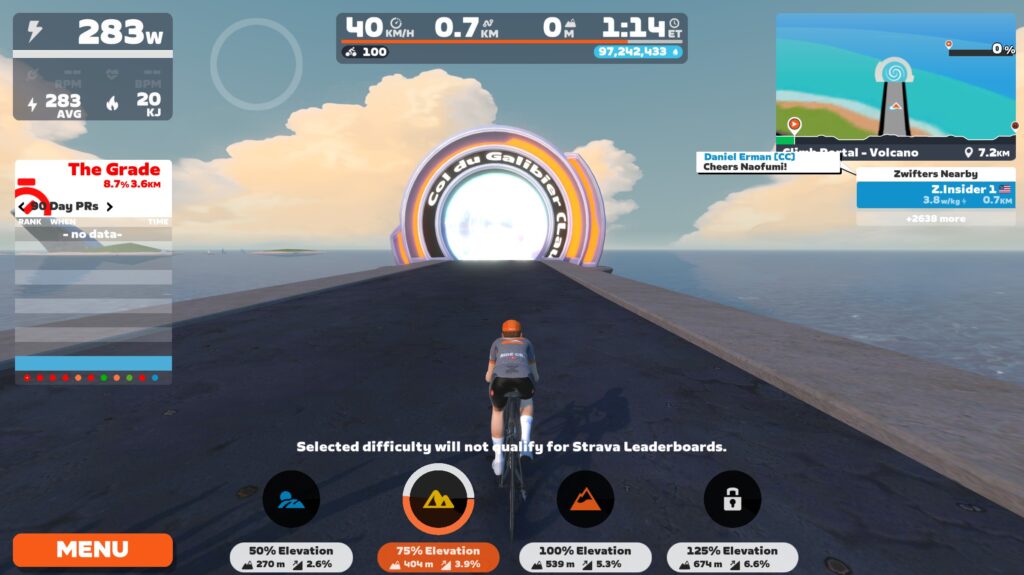
If you ride a 50% or 75% scaled version of a Portal climb, your entire activity will be tagged as “gamified” on Strava, and all Strava segment matching will be excluded. That means all Strava segments for your entire activity, not just the Climb Portal portion.

It’s good that the scaled-down efforts aren’t being added to the main Strava leaderboards for each climb, but gamifying the whole activity is rather unintuitive. While this is a Strava limitation and not something Zwift can fix, perhaps the popup text could be changed to something like “If you enter the Portal at the selected difficulty, your entire activity will be hidden from Strava Leaderboards.”

So if you want your activity to match with Strava segments, don’t mix in a scaled climb portal effort!

More Accurate Time Estimates

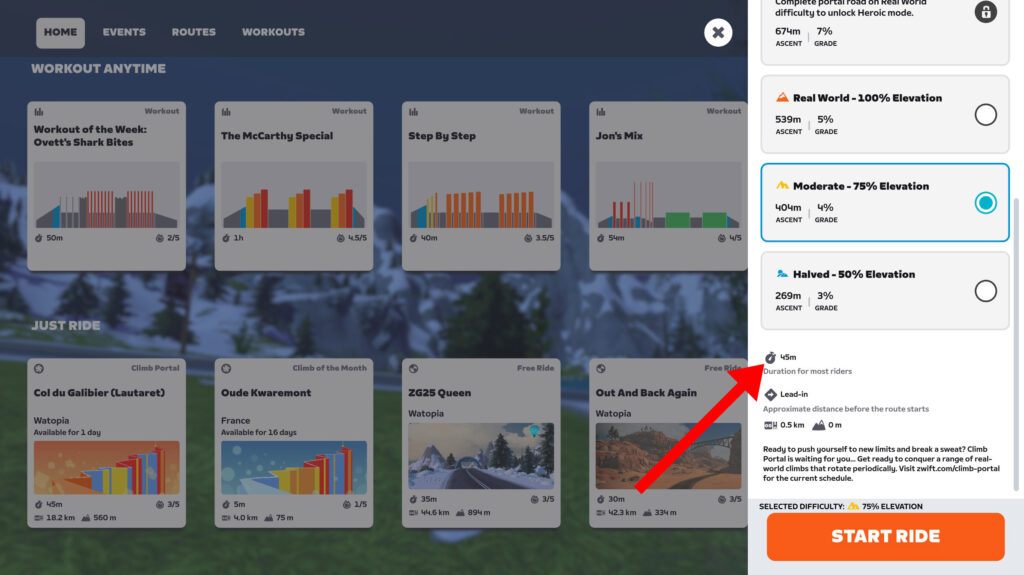
The details that pop up when you select a climb on the homescreen include a time estimate that says it’s the “duration for most riders”:

I see two issues with this estimate:

  • It’s the same for everyone, whether you’re a 5 W/kg powerhouse or a 1 W/kg beginner. (For the record, Zwift’s calculation seems to be based on a holding around 2.5 W/kg.)
  • It doesn’t change based on the scaling you choose (50%, 75%, 100%, or 125%).

With Zwift now computing personalized route time estimates, applying the same algorithms to this screen seems like a quick and easy upgrade.

Power to the Portal Fix

Animated “Power to the Portal” Route Details (Watopia) Map
Animated map provided by ZwiftHacks

Zwift unveiled the Power to the Portal route in December 2024, but it seems like every event held on this route has been confusing and buggy.

The idea is a good one: an actual event route that can include whatever Climb Portal you’d like, opening up the possibility to host races on any of the Portal climbs. But in its current state you can’t see which climb is set up for the route for a given event, so you don’t really know what to expect. It’s also unclear where the finish line will be (atop the climb, or at the end of Power to the Portal, which ends in downtown Watopia?) Lastly, Zwifters report being routed to the wrong climb in some events.

Optional Pacerbots

Yes, Holoreplay works in the Climb Portal. But that only gives me a ghost of my previous efforts or the current leaderboard leader.

It would be handy if I could click a button to enable a Robopacer who rides at a steady W/kg for the duration of the climb, giving me a carrot to chase. Bonus points to Zwift if they could make the bot post motivating messages like a coach riding with me during a workout:

  • “You’re holding good steady power in the sweet spot zone.”
  • “Only 500 meters left. Empty the tank!”
  • “Your heart rate is near your max. Are you sure you can keep this pace to the finish?”
  • “You’re only 3 seconds behind your PR of 8:45. Want to push it and set a new record?”

2 Kilometer Fix

This one bit Zwift in the butt when they recently featured the Cauberg climb, which at only 800 meters long is the shortest Portal in the game. Riders were spawning in Watopia, which means you’ll reach the top of the climb in under 2km. And as any Zwift nerd knows, the minimum activity length in Zwift is 2km. If you save your ride there at less than 2km, it disappears into the ether!

I think there’s an easy fix for this: just disable the “Save” button and show a warning when you try to save an activity that is less than 2km long. Something like: “Warning: your ride is less than 2km long, and cannot be saved. Please go a bit further if you want to save your activity.”

(It’s a bit baffling, actually, that we’re 10+ years into Zwift’s existence and still able to hit “Save” on a ride that is under 2km and won’t be saved.)

More Useful Maps

The climb profile and overhead views only show nearby portions of the climb – basically about as much road as you can see on the main screen:

This really isn’t terribly useful. In fact, if you look closely, you’ll see that half of what is shown is the portion of the climb I’ve already ridden!

I’d like to see the full climb profile (much like we now have full route profiles) in the minimap, and perhaps a clickable/zoomable overhead map view so I can zoom out if I’d like.

Heroic Unlock

Climb Portal scaling is a cool feature, allowing you to ride the climbs at 50%, 75%, 100%, or 125% of the actual gradient. It’s a handy way to modify the difficulty of a climb to suit your needs or schedule.

The 125% version is locked until you complete the 100% version. There’s one niggle, though, which really only matters on shorter climbs: after completing a Portal climb at 100% difficulty, Zwift won’t let you ride the heroic 125% level unless you quit/save your activity and start a new ride.

As one Zwifter recently told me, “Not a big deal, but a bit annoying if you’re trying to knock out multiple difficulties of a shorter climb in the same ride.”

Different Background Sounds

This one is, admittedly, a bit picky. But I find the ambient background sounds in the Portal too somber, too heavy, for my taste. Listen in below:

That said, I usually ride with Zwift sounds turned off and music or a podcast in my ears, so this isn’t a big deal.

More Portal Achievements

There are three achievement badges for Portal climbs (shown above), but why not give people a badge and even a small XP bonus the first time they complete a particular climb, like we get for completing routes?

(Taking it one step further, I’d love to see smart badges that count how many times I’ve finished each climb. Wouldn’t mind this for routes, too!)

Companion Leaderboards

The Companion app shows your historic times for each leaderboard segment in Zwift. Why not add Portal climb times, so you can see your historic performance on each climb, and your percentile rank?

(Note: Zwift Insider collaborated with Veloviewer to create leaderboards for the Climb Portal.)

Enable Fan View and Teleporting

You can’t fan view or teleport to a rider who is on a Portal climb, which seems a bit silly. I can only assume this was disabled because of how the Portals were designed, but surely there’s a way to make it happen so Portals work like the rest of Zwift, letting riders find each other and ride together.

Better Preview Map/Graphics

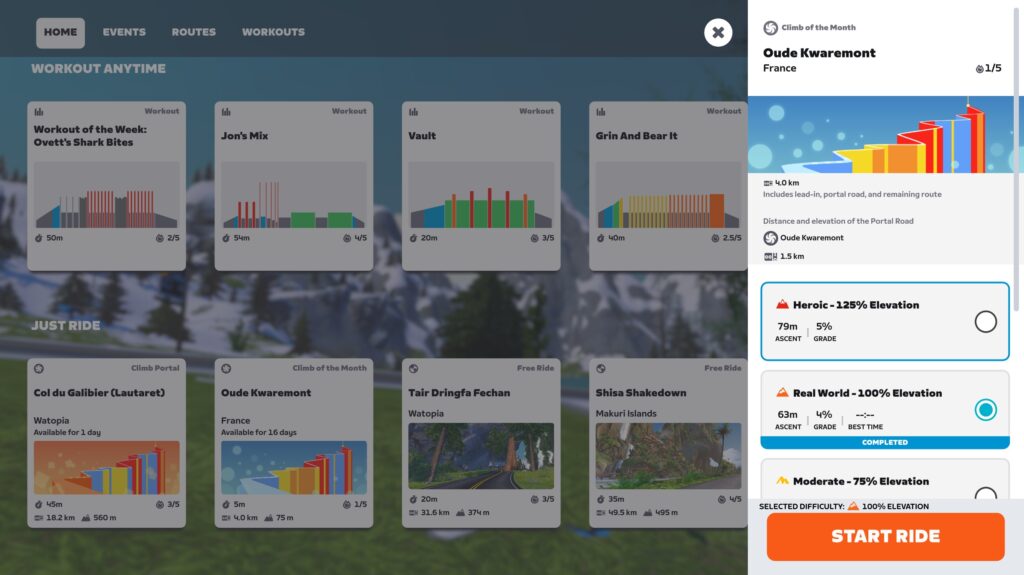
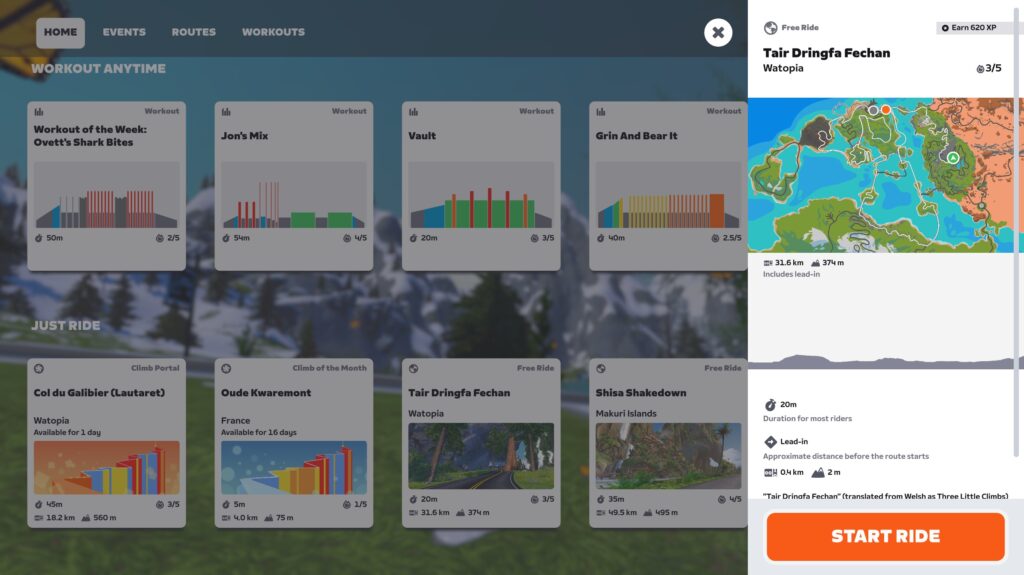
The homescreen’s cards for the climb of the day and month are the same image with different colors. Clicking one of the cards brings up the same generic image:

It would be nice if the climbs were graphically represented individually, perhaps with a full climb profile and overhead map like you see for routes:

Got More Ideas?

These are all the good Climb Portal ideas I’ve come up with, or seen from other Zwifters. What about you? Which ideas are your favorite, and do you have other good ideas? Comment below!

V-Racer Hoverbike Is Speeding Onto Quest Next Month

A VR high-speed racing game, V-Racer Hoverbike, is making its Quest debut next month.

Developed by VertexBreakers, V-Racer Hoverbike is a high-octane motorbike racing game where players fly down futuristic tracks, earning XP and upgrades. It’s been on Steam Early Access since 2018, and it’s set to make its Quest debut on June 12. Similar to the more recent VRider SBK, it uses a ‘body-based chest-leaning control system’ instead of traditional joystick-based controls to provide ‘natural, intuitive, and motion-sickness free’ movement.

0:00

/0:49

Release date trailer

There are 30 tracks for players to test their driving mettle on, with multiple game modes alongside its campaign. These modes include time-trials, weapon-filled Combat Races, an endless mode, a free play mode, and a Survivor Mode where one rider is eliminated each lap. Additionally, for those looking to motor with a mate, V-Racer Hoverbike features a six-person multiplayer mode with cross-play between Quest and PC VR users at launch.

“There were times we left it for months, but every time we came back to it, we said the same thing – this is still so much fun,” said VertexBreakers as part of the press release. “We kept refining it, polishing it, and now it feels the way it was always meant to.”

V-Racer Hoverbike is out now in Early Access on Steam and arrives for Quest on June 12 for $29.99. Those who pre-order the game on Quest will also receive a “Solar Flare” character skin, while a full PC VR release date remains unconfirmed.

Strava buys The Breakaway, bringing in-depth training to cyclists in period of ‘accelerated growth’ 

Strava has acquired The Breakaway, a cycling training app that offers personalised training, gamification and progress tracking.

The deal follows a period of “accelerated growth” for Strava. Last month, the app acquired Runna, a UK tech company that develops training plans and provides coaching for runners. Yesterday, we learnt of Strava’s huge AI-powered update, which included cracking down on leaderboard cheats.

Strava says The Breakaway aligns closely with its “mission of motivating people to lead an active life”.

It says The Breakaway users who are already connected to Strava upload twice as many activities compared to other Strava cyclists, thanks to its “personalised cycling training, innovative ride analysis, and achievement tracking tools”. 

The training features will be available to Strava subscribers. 

Strava leaderboard update
Strava announced a crackdown on leaderboard cheats yesterday. Strava

“Jordan Kobert, Kyle Yugawa and team have built a brilliant app for cyclists who want to improve and achieve their cycling targets, making it a perfect fit for the Strava subscription, which helps users accomplish their goals,” says Michael Martin, chief executive officer at Strava. 

“When Strava was founded more than 16 years ago, it was created initially for cyclists – these users remain important members of our global community, and we are excited to enhance their experience through this acquisition.”

Strava says this announcement is another signal of the app’s growth, commitment to innovation and its “continued investment in its developer community and open API, which enables third parties to connect and build new experiences for athletes”. 

The Breakaway was ‘incubated’ by Y Combinator, a US startup accelerator and venture capital firm, which has been used to launch more than 5,000 companies. 

What I learned from my first few months with a Bambu Lab A1 3D printer, part 1

For a couple of years now, I’ve been trying to find an excuse to buy a decent 3D printer.

Friends and fellow Ars staffers who had them would gush about them at every opportunity, talking about how useful they can be and how much can be printed once you get used to the idea of being able to create real, tangible objects with a little time and a few bucks’ worth of plastic filament.

But I could never quite imagine myself using one consistently enough to buy one. Then, this past Christmas, my wife forced the issue by getting me a Bambu Lab A1 as a present.

Read full article

Comments

New Tobii Partnership Paves the Way for Next-gen Eye-tracking Tech in XR Headsets

Eye-tracking company Tobii announced it’s partnering with Prophesee to develop its next-generation of eye-tracking for AR/VR headsets and smart glasses, which will be based on Prophesee’s unique event-based vision system.

In short, Prophesee makes specialized cameras and sensors that work more like human eyes. Instead of recording everything like standard camera, their technology only captures changes, such as movement or light changes, making it faster, more compact and importantly more power efficient. Applications have included self-driving cars, industrial machines, smartphones, but also soon XR headsets and smart glasses with the help of Tobii.

The collaboration is said to combine Tobii’s industry leading eye-tracking platform with Prophesee’s event-based sensor technology, which the companies say will enable them to develop an “ultra-fast and power-efficient eye-tracking solution, specifically designed to meet the stringent power and form factor requirements of compact and battery-constrained smart eyewear.”

“Event-based vision is a perfect match for the growing demand for low-power, always-on sensing in next-generation wearable devices,” said Luca Verre, co-founder and CEO of Prophesee. “This partnership builds on a strong foundation of collaboration between our teams and expands our joint capabilities into the eye-tracking space. With Tobii’s proven leadership in eye tracking, combined with our experience in event-based sensing, we aim to set a new standard for what’s possible in AR/VR and smart eyewear.”

Emma Bauer, Tobii’s Senior Vice President of Integrations, calls smart glasses “one of the most demanding segments for eye tracking,” as it requires ultra-low power, high performance, and seamless integration into a standard glasses form factor.

Ray-Ban Meta Glasses, Image courtesy Meta, EssilorLuxottica

“Through partnering with Prophesee, we add event-based sensors as a complement to our existing camera technologies, giving our customers even more options and flexibility when designing their products,” Bauer says.

As the global leader in eye-tracking, Stockholm, Sweden-based Tobii has been one of the first companies to supply eye-tracking to consumer VR headsets with its slim and effective eye-tracking modules, allowing for thing like foveated rendering, social VR immersion, and automatic interpupillary distance (IPD) regulation—only three of the many reasons why eye-tracking is a game changer for XR.

Nowadays, you’ll find Tobii eye-tracking tech in a host of modern headsets, including PlayStation VR 2, Pixel Crystal, Play for Dream MR, as well as the 2019-era HTC Vive Pro Eye.

The post New Tobii Partnership Paves the Way for Next-gen Eye-tracking Tech in XR Headsets appeared first on Road to VR.

Google Releases Updated Preview of Android XR Development Tools

Google has released its second Developer Preview of the Android XR software development kit (SDK) following its initial release late last year, introducing new features and improvements including wider support for immersive video, better adaptive UI layouts, hand-tracking in ARCore for Jetpack, and more.

Announced at Google I/O, the billet of updates to Android XR SDK is aimed at giving developers more standardized tools to either make their own XR-native apps, or bring their standard Android apps to headsets.

This now includes support for 180° and 360° stereoscopic video playback using the MV-HEVC format, which is one of the most popular codecs optimized for high-quality 3D immersive video.

Google announced that Android XR Developer Preview 2 also now has Jetpack Compose for XR, which enables adaptive UI layouts across XR displays using tools like SubspaceModifier and SpatialExternalSurface. Jetpack Compose is Google’s declarative UI toolkit, which aims to standardize UI design across mobile, tablet, and immersive headsets.

Image courtesy Google

A major update in ARCore for Jetpack XR is the introduction of hand-tracking, which includes 26 posed joints for gesture-based interactions. Developers can now find an updated samples, benchmarks, and guides to help integrate hand-tracking into apps.

Material Design for XR has also been expanded, which Google says will help “large-screen enabled apps [to] effortlessly adapt to the new world of XR.”

Still, a majority of Android XR developers likely don’t have access to official Android XR headsets, which will include mixed reality headset Samsung Project Moohan and AR glasses XREAL Project Aura when they launch later this year—making its Android XR Emulator an indispensable tool.

Samsung Project Moohan, image courtesy Google

Google says Developer Preview 2 now has improved Android XR Emulator by including AMD GPU support, better stability, and tighter integration in Android Studio, which ought to help with XR app testing and development workflows.

Unity, the most popular game engine for XR development, also now offers access to Pre-Release version 2 of the Unity OpenXR, which brings important performance bumps with Dynamic Refresh Rate and SpaceWarp support through Shader Graph. Unity’s improved Mixed Reality template also now features realistic hand mesh occlusion and persistent anchors.

Additionally, Android XR Samples for Unity have been released, showcasing features like hand tracking, plane tracking, face tracking, and passthrough to give developers a kickstart on integrating those features in their own Android XR apps.

That said, while Android XR wasn’t a exactly a massive headliner at this year’s Google I/O, the company is moving forward by not only releasing Android XR to more partner devices, but also by its releasing Android XR smart glasses from eyewear makers Warby Parker and Gentle Monster at some point.

Google says it’s releasing two main versions of its Android XR glasses: one strikingly similar in function to Ray-Ban Meta Glasses, as well as one with a on-board displays for basic tasks like reading text, viewing photos and videos, and navigation.


You can learn more about Android XR Developer Preview here, which includes more detail on all currently available tools and updates.

The post Google Releases Updated Preview of Android XR Development Tools appeared first on Road to VR.