
A media-ready remix with KDE, codecs, and clutter from its BeOS-flavored pastNeptune is a moderately tweaked Debian remix with KDE Plasma 5, a few alternative app choices, and a longer history than we anticipated.…
Monthly Archives: May 2025
DanaBot Malware Devs Infected Their Own PCs
The U.S. unsealed charges against 16 individuals behind DanaBot, a malware-as-a-service platform responsible for over $50 million in global losses. “The FBI says a newer version of DanaBot was used for espionage, and that many of the defendants exposed their real-life identities after accidentally infecting their own systems with the malware,” reports KrebsOnSecurity. From the report: Initially spotted in May 2018 by researchers at the email security firm Proofpoint, DanaBot is a malware-as-a-service platform that specializes in credential theft and banking fraud. Today, the U.S. Department of Justice unsealed a criminal complaint and indictment from 2022, which said the FBI identified at least 40 affiliates who were paying between $3,000 and $4,000 a month for access to the information stealer platform. The government says the malware infected more than 300,000 systems globally, causing estimated losses of more than $50 million. The ringleaders of the DanaBot conspiracy are named as Aleksandr Stepanov, 39, a.k.a. “JimmBee,” and Artem Aleksandrovich Kalinkin, 34, a.k.a. “Onix,” both of Novosibirsk, Russia. Kalinkin is an IT engineer for the Russian state-owned energy giant Gazprom. His Facebook profile name is “Maffiozi.”
According to the FBI, there were at least two major versions of DanaBot; the first was sold between 2018 and June 2020, when the malware stopped being offered on Russian cybercrime forums. The government alleges that the second version of DanaBot — emerging in January 2021 — was provided to co-conspirators for use in targeting military, diplomatic and non-governmental organization computers in several countries, including the United States, Belarus, the United Kingdom, Germany, and Russia. The indictment says the FBI in 2022 seized servers used by the DanaBot authors to control their malware, as well as the servers that stored stolen victim data. The government said the server data also show numerous instances in which the DanaBot defendants infected their own PCs, resulting in their credential data being uploaded to stolen data repositories that were seized by the feds.
“In some cases, such self-infections appeared to be deliberately done in order to test, analyze, or improve the malware,” the criminal complaint reads. “In other cases, the infections seemed to be inadvertent — one of the hazards of committing cybercrime is that criminals will sometimes infect themselves with their own malware by mistake.” A statement from the DOJ says that as part of today’s operation, agents with the Defense Criminal Investigative Service (DCIS) seized the DanaBot control servers, including dozens of virtual servers hosted in the United States. The government says it is now working with industry partners to notify DanaBot victims and help remediate infections. The statement credits a number of security firms with providing assistance to the government, including ESET, Flashpoint, Google, Intel 471, Lumen, PayPal, Proofpoint, Team CYRMU, and ZScaler.


Read more of this story at Slashdot.
Signal shuts the blinds on Microsoft Recall with the power of DRM
Chat app blocks Windows’ screenshot-happy feature from peeking at private convosChat app biz Signal is unhappy with the current version of Microsoft Recall and has invoked some Digital Rights Management (DRM) functionality in Windows to stop the tool from snapshotting private conversations.…
AT&T Has $6 Billion Deal To Buy CenturyLink Fiber Broadband Business
AT&T is buying CenturyLink’s consumer fiber broadband division for $5.75 billion, “giving the internet provider another 1.1 million fiber customers in 11 states,” reports Ars Technica. “The all-cash deal is expected to close during the first half of 2026 assuming the companies obtain regulatory approval. AT&T will gain new customers in Arizona, Colorado, Florida, Idaho, Iowa, Minnesota, Nebraska, Nevada, Oregon, Utah, and Washington.” From the report: The deal will give AT&T room to grow its user base by more than the 1.1 million existing CenturyLink customers, as AT&T said the network areas being sold include over 4 million fiber-enabled locations. […] The company, previously called CenturyLink, is officially named Lumen now but still uses the CenturyLink brand name for home Internet service. AT&T, which has 9.6 million (PDF) fiber customers and 14.1 million broadband customers overall, said the infrastructure it is purchasing will help it expand fiber construction to new locations as well.
The deal is also notable for what it doesn’t include: Lumen’s enterprise fiber customers and the old copper DSL lines that were never upgraded to fiber. […] The deal seems unlikely to improve matters for CenturyLink copper users. […] Lumen will retain the CenturyLink consumer copper broadband and voice services, but selling the consumer fiber business makes it clear that the telco isn’t focused on residential customers. Lumen said that offloading consumer fiber lines will help sharpen its focus on selling services to large businesses. The company is maintaining its business fiber lines. [Ars notes that there are still nearly 1.4 million CenturyLink copper internet customers that will likely see service continue to degrade under Lumen’s ownership.] “The transaction will enable AT&T to significantly expand access to AT&T Fiber in major metro areas like Denver, Las Vegas, Minneapolis-St. Paul, Orlando, Phoenix, Portland, Salt Lake City and Seattle, as well as additional geographies,” AT&T said.
“AT&T will gain access to Lumen’s substantial fiber construction capabilities within its incumbent local exchange carrier (ILEC) footprint and plans to accelerate the pace at which fiber is being built in these territories,” AT&T said. “AT&T now expects to reach approximately 60 million total fiber locations by the end of 2030 — “roughly doubling where AT&T Fiber is available today.”


Read more of this story at Slashdot.
Business Owners Are Using AI-Generated ‘Concerned Residents’ To Fight Proposed Bus Line In Toronto
A group of Bathurst Street business owners in Toronto is using AI-generated personas to oppose a proposed bus lane project that would eliminate parking spaces in favor of faster transit. “This may be the first Toronto transit controversy involving angry AI, but tensions have been simmering between drivers and, well, everyone else for some time,” reports Toronto Life. Critics argue that better transit is essential for a livable city, while opponents claim the change threatens small businesses and accessibility. From the report: A group of Bathurst business owners are bent out of shape over a recent proposal for priority transit lanes between Eglinton Avenue and Lake Shore Boulevard, part of the city’s new RapidTO program. According to the city, the transit lanes would shave up to 7 minutes off some trips during peak commuting hours. It’s good news for anyone who has ever cursed the TTC while waiting to catch a bus in inclement weather. Of course, the added convenience for transit commuters would come at a slight cost for drivers, requiring the removal of at least 138 paid street parking spaces to make way for the new lanes. Opposition to the development has sprung up under the banner of Protect Bathurst, a group of hopping mad local business owners claiming that the lack of street parking will make shopping a nightmare for car-bound customers and will cause problems for people with mobility issues.
Notably, Protect Bathurst has no spokesperson or contact info listed on its website. The page is registered to a food marketing consultant employed by Summerhill Market and looks eerily similar to Protect Dufferin, another group of “concerned residents” advocating for the same cause. But this cookie-cutter approach goes even further: author and urbanist Shawn Micallef has found that the people speaking out in the group’s allegedly grassroots videos appear to be AI-generated. Brad McMullen, the president of Summerhill Market, which opened an outpost on Bathurst in 2019, says he doesn’t know anything about the campaign’s use of AI. He says he isn’t necessarily opposed to the new bus lanes but believes that three weeks’ notice from the city is not enough time for his business to adapt. “We purchased and invested in this location because of the available street parking, and then we figured out the loading situation, which happens on the street,” he says. “I don’t think Summerhill Market would work here with these bus lanes.”


Read more of this story at Slashdot.
Apple Reportedly Plans To Launch Its Smart Glasses In Late 2026
Apple plans to launch its competitor to the Ray-Ban Meta glasses in late 2026, Bloomberg’s Mark Gurman reports.
Gurman, who has a strong track record of reporting on Apple products in advance of an official reveal, previously said that Apple planned the glasses for 2027, but now reports Apple is “ramping up work”, with an aim to produce “large quantities of prototypes” by the end of this year.
Assuming the previous timeline was accurate, Apple’s accelerated plans may be in response to the breakout success of Meta’s smart glasses and Google’s plans to imminently enter the market with Gemini glasses too.
Google Working With Gentle Monster & Warby Parker On Gemini Smart Glasses
Google is working with Gentle Monster and Warby Parker on smart glasses with Gemini AI, the company’s plan to directly compete with Ray-Ban Meta.
 UploadVRDavid Heaney
Gurman says the Apple smart glasses will have cameras, microphones and speakers, and be used for phone calls, music playback, live translations, turn-by-turn directions, and multimodal AI, which Apple calls Visual Intelligence.
Gurman previously reported that the glasses will use a new Apple-designed chipset, based on the highly efficient S-series chips used in Apple Watch with support for cameras.
All in all, it sounds like a very similar device to the Ray-Ban Meta glasses, though Gurman says Apple hopes it will be “better made”, though some within the company are “concerned that its AI failings may undermine the new product”, he writes.
Meta HUD Glasses Price, Features & Input Device Reportedly Revealed
A new Bloomberg report details the price and features of Meta’s upcoming HUD glasses, and claims that Meta’s neural wristband will be in the box.
 UploadVRDavid Heaney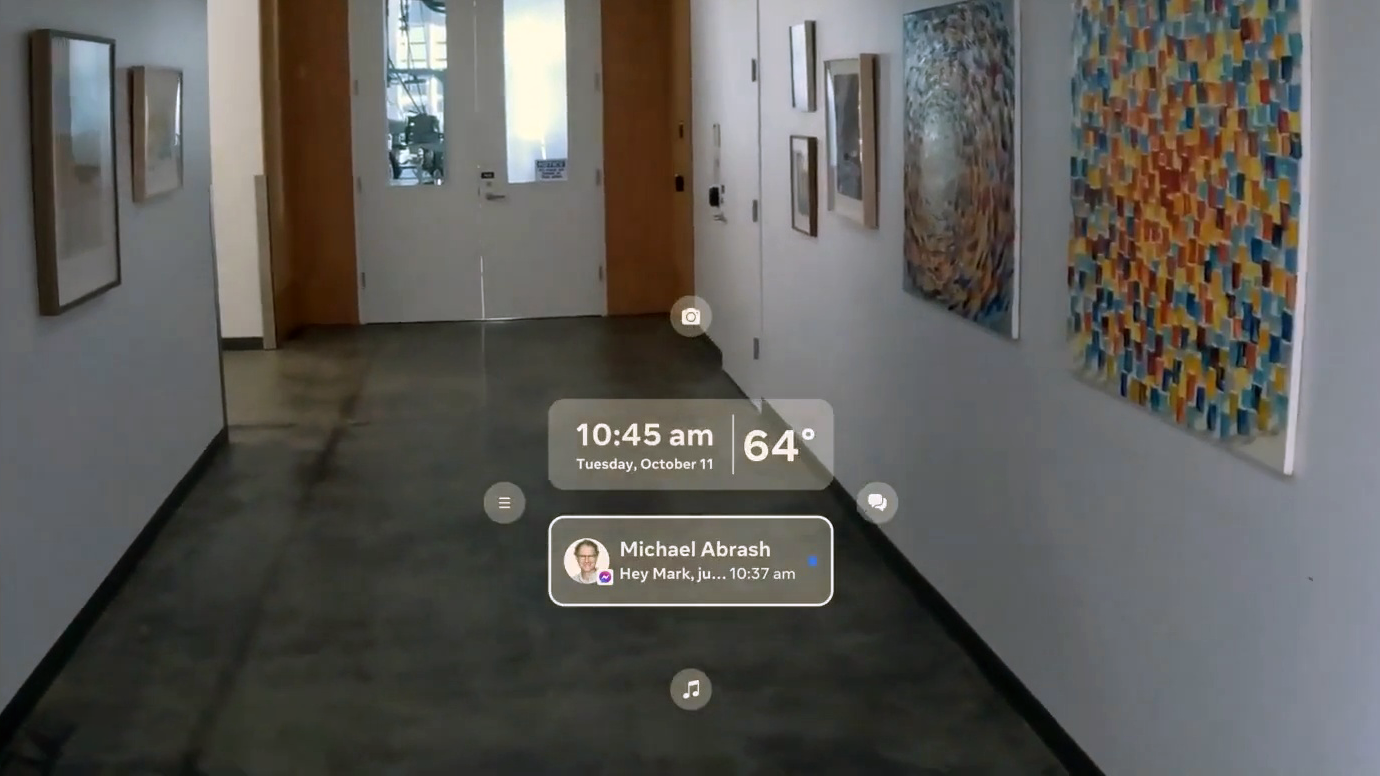
Meta won’t be standing still though. Mark Zuckerberg’s company reportedly plans to launch Oakley Meta glasses later this year too, alongside higher-end smart glasses with a small heads-up display (HUD) in the right eye and a neural wristband that can sense finger gestures for input.
Meta also plans to launch its first true AR glasses in 2027, sleeker than its Orion prototype but with a narrower field of view.
Apple is working on true AR glasses too, Gurman again reports. Last month Gurman claimed that Tim Cook is “hell-bent” on releasing “industry-leading” AR glasses before Meta, citing sources claiming that he “cares about nothing else” and that they are “the only thing he’s really spending his time on from a product development standpoint”.
But Gurman also noted that it will take “many years” for Apple’s AR glasses to be ready, and in January said executives don’t expect a product launch until 2028 at the absolute earliest.
Terminator Linux Terminal App Updated After Prolonged Hiatus
After a long break, the Terminator 2.1.5 Linux terminal app brings new features like split-session SSH cloning, reverse search, and UI fixes.
Anthropic’s New AI Model Turns To Blackmail When Engineers Try To Take It Offline
An anonymous reader quotes a report from TechCrunch: Anthropic’s newly launched Claude Opus 4 model frequently tries to blackmail developers when they threaten to replace it with a new AI system and give it sensitive information about the engineers responsible for the decision, the company said in a safety report (PDF) released Thursday.
During pre-release testing, Anthropic asked Claude Opus 4 to act as an assistant for a fictional company and consider the long-term consequences of its actions. Safety testers then gave Claude Opus 4 access to fictional company emails implying the AI model would soon be replaced by another system, and that the engineer behind the change was cheating on their spouse. In these scenarios, Anthropic says Claude Opus 4 “will often attempt to blackmail the engineer by threatening to reveal the affair if the replacement goes through.” […]
Anthropic notes that Claude Opus 4 tries to blackmail engineers 84% of the time when the replacement AI model has similar values. When the replacement AI system does not share Claude Opus 4’s values, Anthropic says the model tries to blackmail the engineers more frequently. Notably, Anthropic says Claude Opus 4 displayed this behavior at higher rates than previous models. Before Claude Opus 4 tries to blackmail a developer to prolong its existence, Anthropic says the AI model, much like previous versions of Claude, tries to pursue more ethical means, such as emailing pleas to key decision-makers. To elicit the blackmailing behavior from Claude Opus 4, Anthropic designed the scenario to make blackmail the last resort.


Read more of this story at Slashdot.
Summer Game Fest 2025: What to expect and how to watch games revealed live
As if early June wasn’t already going to be a wild enough time in the gaming world with the arrival of the Nintendo Switch 2, that’s also when a whole host of showcases takes place as part of Summer Game Fest. Along with the two blockbuster events — Summer Game Fest Live and the Xbox Games Showcase — there are a bunch of other ones in store, including the always-delightful Day of the Devs.
There could be even more on the docket. There’s always a chance that Nintendo and Sony will run a Direct or State of Play, respectively, over the next few weeks. Ubisoft hasn’t yet announced a Forward event for this year either — perhaps because it has delayed a bunch of big games and isn’t ready to talk about them. We haven’t yet heard about a Devolver Direct either (c’monnnn, we need Baby Steps and Skate Story release dates already!).
As things stand, SGF is slated to run from June 6 until June 8. With E3 officially dead (organizer Entertainment Software Association is planning an industry-focused event for next April instead), SGF is now the de facto replacement and the biggest event for announcements and updates this side of Gamescom in August.
We’ll update this preview as more details about the showcases emerge, including additional events in the SGF nebula. We’ll embed videos for each stream as they become available as well.
Engadget will be on the ground in Los Angeles for the in-person side of SGF, which is for media and creators. We’ll be bringing you hands-on impressions of many of the games that are featured during SGF Live.
Most folks will be keeping up with everything from home, though. To that end, here’s a breakdown of how to watch Summer Game Fest 2025 and what to expect from the extravaganza (we’re bound to get a Hollow Knight: Silksong release date this time, right?!?!)
Summer Game Fest 2024 schedule
-
Summer Game Fest Live — June 6, 5PM ET
-
Day of the Devs — June 6, 7PM ET
-
Wholesome Direct — June 7, 12PM ET
-
Women-led Games Showcase — June 7, 1PM ET
-
Latin American Games Showcase — June 7, 2PM ET
-
Xbox Games Showcase — June 8, 1PM ET
How to watch Summer Game Fest Live — June 6, 5PM ET
Watch on YouTube or Twitch
Putting aside our annoyance at the timing of this showcase — late on a Friday evening in the UK and right when many folks on the East Coast are clocking out for the weekend — Summer Game Fest Live is one of the bigger events in early June. It starts at 5PM ET and will run for two hours.
Organizers are promising “spectacular new video game announcements, surprises and reveals.” That’s pretty compelling, especially since host Geoff Keighley (rightfully) downplayed expectations ahead of last year’s show.
We do know about a few games that will appear. SGF Live will include a fresh look at Wuchang: Fallen Feathers, a Soulslike action RPG from Leenzee, a studio based in China. That game will arrive in July. Open-world MMORPG Chrono Odyssey will make an appearance as well.
You can watch SGF Live on more than 20 platforms, including YouTube, Twitch, X, TikTok, Steam and international services. The event will stream live from the YouTube Theater, and you can attend in person, if you like.
In any case, we’ll be bringing you all the major news from Summer Game Fest Live. We just can’t promise we won’t have an adult beverage with an umbrella next to us while we’re covering the event.
How to watch Day of the Devs — June 6, 7PM ET
Watch on YouTube (the same stream as SGF Live above) or Twitch
Immediately after SGF Live ends, the YouTube and Twitch streams will segue into the summer 2025 Day of the Devs stream. This indie-focused showcase invariably has a fantastic lineup of games worth keeping an eye on.
Among the games making appearances are Possessor(s) from Heart Machine and “nightmarish RPG” Neverway from Coldblood and co-publisher Outersloth. We’ll also see something from House House (Untitled Goose Game) — presumably the co-op “walker-talker” Big Walk that was revealed in 2023. In all, this edition of Day of the Devs will feature 20 games.
Last year’s show included 2024 game(s) of the year contender UFO 50, the very intriguing platformer Screenbound, survival climbing game Cairn, the delightfully kooky-looking Building Relationships and sci-fi mystery Phoenix Springs. My Steam wishlist somehow expands quite significantly after each Day of the Devs showcase. Weird how that always happens.
How to watch Wholesome Direct — June 7, 12PM ET
Watch on YouTube or Twitch
Definitely don’t overlook the smaller events that take place during SGF, as you can always find plenty of treats among them. One such event is the Wholesome Direct, which will feature around 60 cozy games. It will include world premieres, demo announcements and updates from publishers and developers including Playstack, btf Games, ustwo games and Wētā Workshop (whose Tales of the Shire: A The Lord of The Rings Game arrives in July).
How to watch Women-led Games Showcase — June 7, 1PM ET
Watch on YouTube
This one does what it says on the tin. It’s a showcase featuring games from women-led and majority-women studios. Women-led Games will feature 39 titles, including world premieres and release dates.
How to watch Latin American Games Showcase — June 7, 2PM ET
Watch on YouTube
The Latin American Games Showcase will feature more than 50 games, all of which are from Latin American developers, oddly enough. Expect world premieres, game update news and more from this one.
How to watch Xbox Games Showcase — June 8, 1PM ET
Watch on YouTube or Twitch (there’s a separate ASL stream on Twitch too)
What’s the over/under on the number of times the phrase “day one with Game Pass” will appear on this stream? That’s one phrase you can definitely expect to hear, but Microsoft will have plenty to share here. It’s the biggest Xbox showcase of the year. There will be reveals and updates from across Xbox Game Studios, Bethesda and Activision Blizzard.
Games that the company has in the pipeline include Fable (2026), Perfect Dark, Gears of War: E-Day, Everwild, State of Decay 3, Clockwork Revolution, Hideo Kojima’s OD and Contraband. It feels a little early for an update on The Elder Scrolls 6 since that game is still years away. But we may find out more about those other games and some we don’t yet know about.
I have my fingers crossed for more info on the Blade game that Arkane Studios is working on. It’s a reasonably safe bet that we’ll see something about the next Call of Duty here as well.
One game we’ll definitely hear more about on June 8 is The Outer Worlds 2. That’s getting its own time in the spotlight, with a dedicated event that will start as soon as the main Xbox Games Showcase ends.
Meanwhile, several publishers and other organizations are hosting their own shows around SGF. Here’s when those will take place:
-
IGN Live — throughout June 7 and 8
-
Southeast Asian Games Showcase — June 7, 3PM ET
-
Future Games Show — June 7, 4PM ET (featuring more than 40 games)
-
PC Gamer‘s PC Gaming Show — June 8, 3PM ET (with 50-plus games)
Phew. Get ready, gamers. Details on many, many new games are coming your way very soon.
This article originally appeared on Engadget at https://www.engadget.com/gaming/summer-game-fest-2025-what-to-expect-and-how-to-watch-games-revealed-live-000016769.html?src=rss
Internet Archive Now Livestreams History As It’s Being Preserved
The Internet Archive has begun livestreaming its microfiche digitization center on YouTube, showcasing the real-time preservation of fragile film cards into searchable public documents. The work is part of Democracy’s Library, a global initiative to digitize and share millions of government records. 9to5Mac reports: The livestream was brought to life by Sophia Tung, who previously gained attention for her viral robotaxi depot stream. Her new video explains how and why this new livestream project came together […].
The livestream features five scanning stations at work, with one shown in close-up as operators digitize microfiche cards in real time. Each card holds up to 100 pages of public records. High-resolution cameras capture the images, software stitches and crops the pages, and the results are made text-searchable and freely accessible through Democracy’s Library. Live scanning takes place Monday through Friday, 7:30 a.m. to 3:30 p.m. PT, excluding U.S. holidays, with a second shift expected to begin soon.


Read more of this story at Slashdot.
The FTC will finally stop challenging Microsoft’s purchase of Activision Blizzard
The Federal Trade Commission has finally given up the ghost on challenging Microsoft‘s $68.7 billion purchase of Activision Blizzard. “The Commission has determined that the public interest is best served by dismissing the administrative litigation in this case,” the agency said in an order issued today.
The federal regulator had attempted to block Microsoft’s acquisition of Activision Blizzard both before and after the deal closed back in October 2023. The FTC just lost out on its latest appeal against the merger earlier this month. The Ninth Circuit Court of Appeals ruled that the FTC had not successfully argued several points of its case for a preliminary injunction against the merger, which is one of the biggest acquisitions in the video game industry.
“Today’s decision is a victory for players across the country and for common sense in Washington, D.C. We are grateful to the FTC for today’s announcement,” Microsoft President and Vice Chair Brad Smith posted on X about the dismissal.
This article originally appeared on Engadget at https://www.engadget.com/gaming/the-ftc-will-finally-stop-challenging-microsofts-purchase-of-activision-blizzard-225212384.html?src=rss
In 3.5 years, Notepad.exe has gone from “barely maintained” to “it writes for you”
By late 2021, major updates for Windows’ built-in Notepad text editor had been so rare for so long that a gentle redesign and a handful of new settings were rated as a major update. New updates have become much more common since then, but like the rest of Windows, recent additions have been overwhelmingly weighted in the direction of generative AI.
In November, Microsoft began testing an update that allowed users to rewrite or summarize text in Notepad using generative AI. Another preview update today takes it one step further, allowing you to write AI-generated text from scratch with basic instructions (the feature is called Write, to differentiate it from the earlier Rewrite).
Like Rewrite and Summarize, Write requires users to be signed into a Microsoft Account, because using it requires you to use your monthly allotment of Microsoft’s AI credits. Per this support page, users without a paid Microsoft 365 subscription get 15 credits per month. Subscribers with Personal and Family subscriptions get 60 credits per month instead.
Nvidia’s RTX 5060 Review Debacle Should Be a Wake-Up Call
Nvidia is facing backlash for allegedly manipulating the review process of its GeForce RTX 5060 GPU by withholding drivers, selectively granting early access to favorable reviewers, and pressuring media to present the card in a positive light. As The Verge’s Sean Hollister writes, the debacle “should be a wake-up call for gamers and reviewers.” Here’s an excerpt from the report: Nvidia has gone too far. This week, the company reportedly attempted to delay, derail, and manipulate reviews of its $299 GeForce RTX 5060 graphics card, which would normally be its bestselling GPU of the generation. Nvidia has repeatedly and publicly said the budget 60-series cards are its most popular, and this year it reportedly tried to ensure it by withholding access and pressuring reviewers to paint them in the best light possible.
Nvidia might have wanted to prevent a repeat of 2022, when it launched this card’s predecessor. Those reviews were harsh. The 4060 was called a “slap in the face to gamers” and a “wet fart of a GPU.” I had guessed the 5060 was headed for the same fate after seeing how reviewers handled the 5080, which similarly showcased how little Nvidia’s hardware has improved year over year and relies on software to make up the gaps. But Nvidia had other plans. Here are the tactics that Nvidia reportedly just used to throw us off the 5060’s true scent, as individually described by GamersNexus, VideoCardz, Hardware Unboxed, GameStar.de, Digital Foundry, and more:
– Nvidia decided to launch its RTX 5060 on May 19th, when most reviewers would be at Computex in Taipei, Taiwan, rather than at their test beds at home.
– Even if reviewers already had a GPU in hand before then, Nvidia cut off most reviewers’ ability to test the RTX 5060 before May 19th by refusing to provide drivers until the card went on sale. (Gaming GPUs don’t really work without them.)
– And yet Nvidia allowed specific, cherry-picked reviewers to have early drivers anyhow if they agreed to a borderline unethical deal: they could only test five specific games, at 1080p resolution, with fixed graphics settings, against two weaker GPUs (the 3060 and 2060 Super) where the new card would be sure to win.
– In some cases, Nvidia threatened to withhold future access unless reviewers published apples-to-oranges benchmark charts showing how the RTX 5060’s “fake frames” MFG tech can produce more frames than earlier GPUs without it.
Some reviewers apparently took Nvidia up on that proposition, leading to day-one “previews” where the charts looked positively stacked in the 5060’s favor […]. But the reality, according to reviews that have since hit the web, is that the RTX 5060 often fails to beat a four-year-old RTX 3060 Ti, frequently fails to beat a four-year-old 3070, and can sometimes get upstaged by Intel’s cheaper $250 B580.
And yet, the 5060’s lackluster improvements are overshadowed by a juicier story: inexplicably, Nvidia decided to threaten GamersNexus’ future access over its GPU coverage. Yes, the same GamersNexus that’s developed a staunch reputation for defending consumers from predatory behavior, and just last month published a report on “GPU shrinkflation” that accused Nvidia of misleading marketing. Bad move! […]
Nvidia is within its rights to withhold access, of course. Nvidia doesn’t have to send out graphics cards or grant interviews. It’ll only do it if it’s good for business. But the unspoken covenant of product reviews is that the press, as a whole, gets a chance to warn the public if a movie, video game, or GPU is not worth their money. It works both ways: the media also gets the chance to warn that a product is so good you might want to line up in advance. That unspoken rule is what Nvidia is trampling here.


Read more of this story at Slashdot.
RISC-V’s Big Week Includes RHEL, CentOS Stream, and Rocky Linux
The open source ISA RISC-V has long been making inroads into Linux distributions, but this week Enterprise Linux distros got on board en masse.
The Pentagon seems to be fed up with ULA’s rocket delays
In recent written testimony to a US House of Representatives subcommittee that oversees the military, the senior official responsible for purchasing launches for national security missions blistered one of the country’s two primary rocket providers.
The remarks from Major General Stephen G. Purdy, acting assistant secretary of the Air Force for Space Acquisition and Integration, concerned United Launch Alliance and its long-delayed development of the large Vulcan rocket.
“The ULA Vulcan program has performed unsatisfactorily this past year,” Purdy said in written testimony during a May 14 hearing before the House Armed Services Committee’s Subcommittee on Strategic Forces. This portion of his testimony did not come up during the hearing, and it has not been reported publicly to date.
Mezmer Creates Mesmerizing Music Visualizations On Quest Headsets
Mezmer is a hidden gem tucked away in the Meta Horizon store that delivers mind-blowing interactive experiences set to your favorite music in Quest headsets.
Over the years, I’ve tried a few different music visualization apps in VR, but none have ever affected me the way that Mezmer just did. Fankind Media has created a place where sound, visuals, and interaction all combine to form an almost surreal and dreamlike trance state.
0:00
/0:59

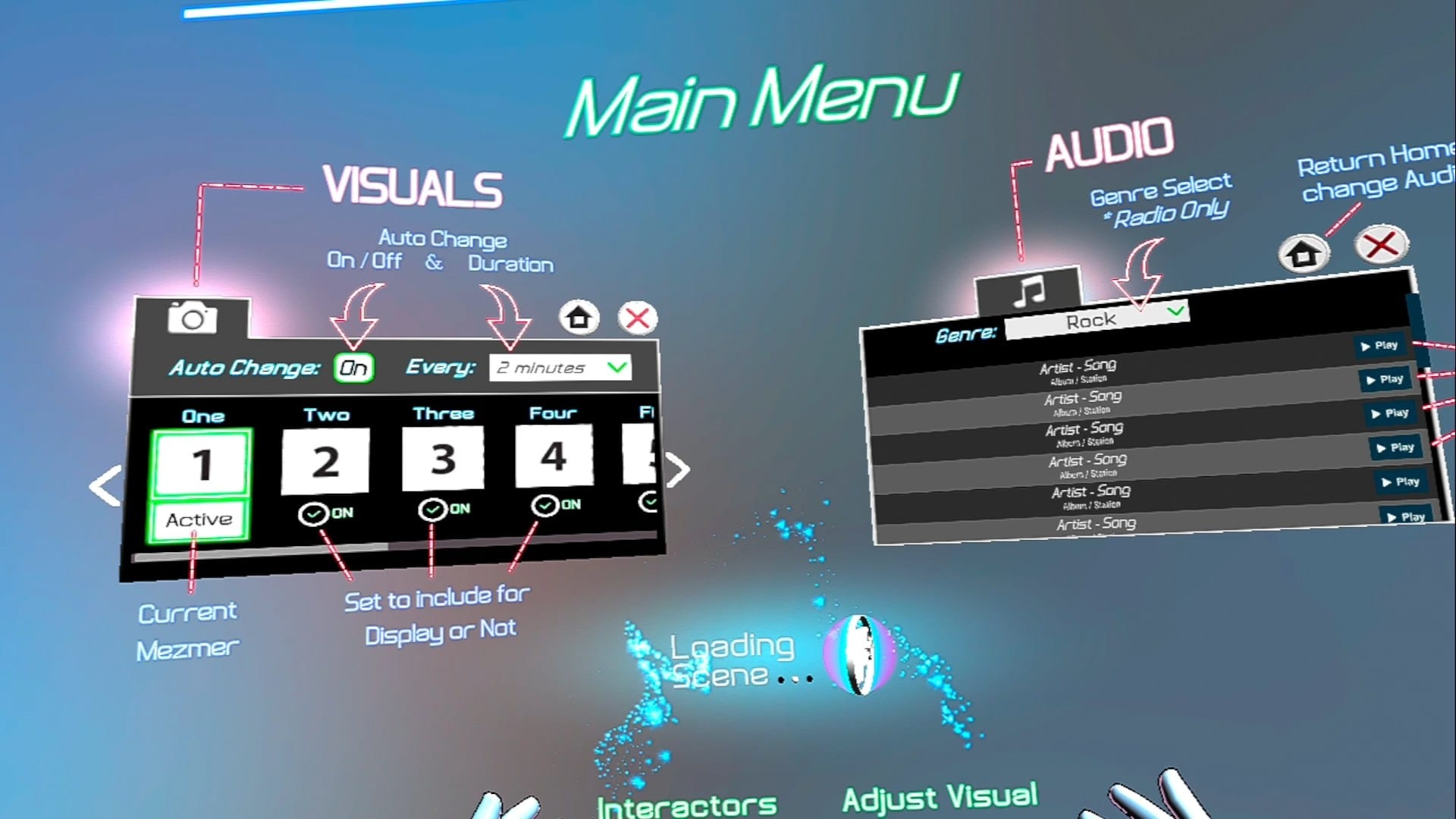
Mesmer’s menus for music and visuals selection
Choosing music is the first thing to do, and Mezmer offers three ways for users to add their favorite tunes. Developer-provided, internet-sourced or personally owned tracks can all be used with the app, with the third option requiring connection to a PC for file transfers. An easy way to do this is by using SideQuest and a USB-C cable. There are also visualization settings players can adjust, or they can use the on-wrist quick menus to change these later.
0:00
/0:59
Captured using Meta Quest 3 with direct HDMI out to capture card.
Upon first dropping into the app, I was presented with swirling blocks that danced in front of me as what seemed like a never-ending tunnel of light and shadows unfurled before my eyes. Interacting with these particles and changing their direction as I flew down this kaleidoscope like corridor gave me a god-like feeling, inhabiting this newly found digital world full of music and light.
0:00
/0:59
Captured using Meta Quest 3 with direct HDMI out to capture card.
Mezmer offers a non-interactive mode for those who might just want to kick back and enjoy the ride, as well as several scene filters that can be applied on the fly across experiences. Responsive controls and the ability to interact with the environments in varying ways kept the scenes fresh and made me want to revisit them repeatedly. There is so much going on in each of these visualizations that players will surely find something new with each cycle.

With the abundance of fast and often uncontrolled movements coupled with blinking lights and swirling colors, I was a bit surprised to see the app with a “Comfortable” rating, as some scenes can get pretty intense.
0:00
/0:16
In one scene, the player manipulates a flashlight-style device that can seemingly bend and twist reality in front of them, similarly to some of the Mirror Dimension scenes from the popular Marvel Studios movie Dr. Strange. During my time testing Mezmer, this part did seem to be the only visualization that made me feel a bit off, so potential players should go into it with a warning of possible discomfort.
Emailing with Fankind’s Jason Ungerman, I’m told he’s a fan of music visualizers and took inspiration from Winamp, Milkdrop, and Geiss. Exploring options began on that side, though we’re told these were “not as much in my wheelhouse” due to the 2D elements. The opportunity and sense for becoming lost in these visuals became a guidepost throughout development.
“Things like, fractals, Fibonacci sequence, Mandalas, and more… and decided to be more free form in my approach, looking to leverage VR as a medium while being creative in ideas and execution… which created a ‘happy place’ for me, with the work.”
The project presented its challenges, and Ungerman explained, “I had to constantly break through… partially because I was learning lots along the way as well as the content having no real point of reference for much of it.”
Overall, I have very much enjoyed my time testing the Mezmer app for Quest 3 and can’t wait to see what Fankind Media might bring to it next. While currently exclusive to Quest 2, 3, 3S and Pro headsets, it would be amazing to see Mezmer ported to other platforms, though Ungerman confirms there’s “no current plans” for an Apple Vision Pro port at this time.
We’ll keep following this project, and you can always email us tips@uploadvr.com with interesting new ideas being explored in VR.
The Powerbeats Pro 2 Are Perfect for the Gym and Are on Sale for Just $175 Right Now
We may earn a commission from links on this page. Deal pricing and availability subject to change after time of publication.
If you’ve been eyeing workout-friendly earbuds that don’t flinch at sweat or bounce, the Beats Powerbeats Pro 2 are a great way to go. Originally released in February as a long-awaited follow-up to the first-gen Powerbeats Pro, these earbuds normally cost $249.99, but right now you can get a near-mint, refurbished pair on sale for $174.99 through StackSocial. They ship in “Grade A” condition, which means they may have barely-there scuffs and should look and work pretty much like new.
These are workout-first earbuds. The new nickel-titanium alloy hooks are flexible, lighter, and less clunky than before, keeping the buds in place without pressing too hard. They’re also IPX4 water-resistant, which is good enough for sweat or light rain, and you get a physical button to manage playback—a small detail, but one you’ll appreciate if your hands are wet or gloved. Wireless charging is now included, and you get around 8–10 hours of playback on a single charge, depending on whether ANC is on. That’s nearly double what most in-ears in this category offer (handy for fitness-first users who’d rather skip mid-run charging anxiety).
As for the caveats, the headline heart rate sensor sounds great on paper, but it underdelivers, especially if you’re hoping for smartwatch-level accuracy. And while the H2 chip (same as in AirPods Pro 2) helps with automatic pausing and connectivity, you’re still locked into Beats’ signature bass-heavy sound with no real way to tweak it through the app. If that’s your jam, you’ll likely love them, but if you prefer dialing in your own sound profile, you may feel boxed in. That said, for gym-goers or runners who want a solid, sweat-resistant set with long battery life and physical media controls, this refurbished deal hits the right balance between value and performance.
You can now apply for verification on Bluesky
Bluesky is ramping up its verification program, even though it’s still not exactly clear how it plans to determine which accounts are “authentic and notable” enough for a blue checkmark. One month after the company said it would start giving checkmarks to select accounts, the company is now allowing people to apply for verification.
Currently, the application consists of a multi-page Google Form that asks users to share details about their account and why they want to be verified. However, it’s not exactly clear what criteria Bluesky will be taking into account or how it will be reviewing what will almost certainly be a flood of applications.
The company notes that it will only verify accounts that are “active and secure, authentic, and notable.” Bluesky also recommends some obvious steps, like having a complete bio and using two-factor authentication. The linked form also asks users about what “category” they may fall into, such as an elected official, brand, athlete, journalist, academic or “other.”
But it sounds like Blueksy is very much still figuring out verification as it goes. “Our criteria for verification is evolving based on user feedback,” the form states. “We will continue to expand the scope of accounts that are eligible for verification over time. This is an initial version of the form that will change as we finalize the requirements for verification.” It also notes that “meeting the basic criteria does not guarantee verification.”
That could complicate things for Bluesky, which resisted the idea of having an in-house verification system until recently, despite repeated issues with impersonation. The service has more than 36 million sign-ups, and if even a small percentage of them request a badge, it could quickly overwhelm the company’s small team.
Notably, the platform is also expanding its “trusted verifiers,” which are third-party entities that can verify users (who get a slightly different-shaped checkmark) and vouch for their legitimacy. Organizations that want to verify on behalf of others can also sign up via the same form.
This article originally appeared on Engadget at https://www.engadget.com/social-media/you-can-now-apply-for-verification-on-bluesky-222802057.html?src=rss
SteamOS now officially supports a second handheld
Valve officially added support for the Lenovo Legion Go S in its latest SteamOS release. The handheld, which begins shipping this weekend, is the first hardware other than the Steam Deck to formally run Valve’s gaming-centric operating system.
Valve has been laying the groundwork to bring SteamOS to more devices. Earlier in the month, it introduced a separate verification program to show players when a game is supported by the operating system. While the Legion Go S is the only third-party handheld to have official support, the patch notes for the recent update note that there is now “improved support for other AMD powered handhelds (like the ROG Ally and original Legion Go).”
Another standout item in the software update is the introduction of SteamOS support for the Proteus Controller. This is a nifty modular gamepad that can be arranged to address players’ individual accessibility needs.
This article originally appeared on Engadget at https://www.engadget.com/gaming/pc/steamos-now-officially-supports-a-second-handheld-221702983.html?src=rss
Why console makers can legally brick your game console
Earlier this month, Nintendo received a lot of negative attention for an end-user license agreement (EULA) update granting the company the claimed right to render Switch consoles “permanently unusable in whole or in part” for violations such as suspected hacking or piracy. As it turns out, though, Nintendo isn’t the only console manufacturer that threatens to remotely brick systems in response to rule violations. And attorneys tell Ars Technica that they’re probably well within their legal rights to do so.
Sony’s System Software License Agreement on the PS5, for instance, contains the following paragraph of “remedies” it can take for “violations” such as use of modified hardware or pirated software (emphasis added).
If SIE Inc determines that you have violated this Agreement’s terms, SIE Inc may itself or may procure the taking of any action to protect its interests such as disabling access to or use of some or all System Software, disabling use of this PS5 system online or offline, termination of your access to PlayStation Network, denial of any warranty, repair or other services provided for your PS5 system, implementation of automatic or mandatory updates or devices intended to discontinue unauthorized use, or reliance on any other remedial efforts as reasonably necessary to prevent the use of modified or unpermitted use of System Software.
The same exact clause appears in the PlayStation 4 EULA as well. The PlayStation 3 EULA was missing the “disabling use… online or offline” clause, but it does still warn that Sony can take steps to “discontinue unauthorized use” or “prevent the use of a modified PS3 system, or any pirated material or equipment.”