Trump’s Ultimatum To Apple Could Jack Up The Price Of Your Next iPhone

Trump's Ultimatum To Apple Could Jack Up The Price Of Your Next iPhone
In April, President Trump announced that smartphones and a host of other electronic devices would be excluded from the tariff dispute between the US and China, bringing some temporary relief to the tech industry. Apple, however, may be entangled in a web of new tariffs. Following Apple’s decision and subsequent announcement to build a factory

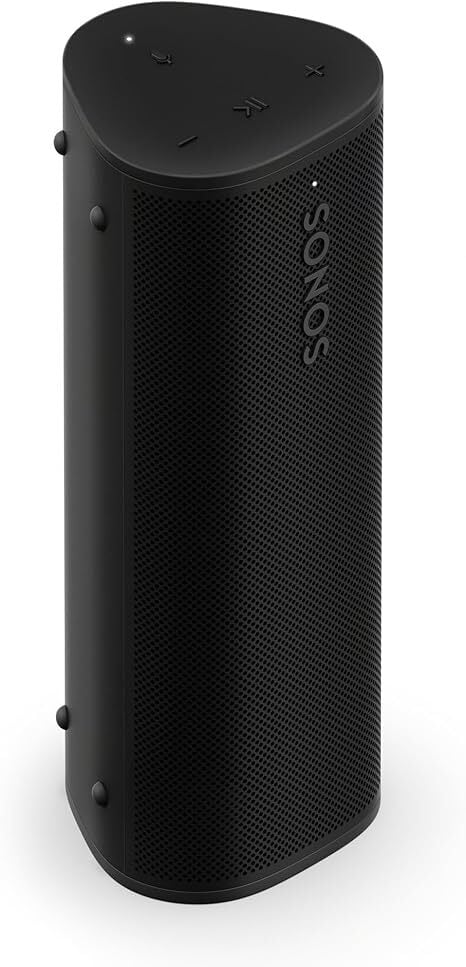
My Favorite Amazon Deal of the Day: The Sonos Roam 2 Portable Speaker

We may earn a commission from links on this page. Deal pricing and availability subject to change after time of publication.

When it comes to speakers, Sonos has the best reputation and the best companion app on the market. If you’re interested in seeing what the hype is all about, it’s a great time to test the waters, as Sono’s entry-level speaker, the Sonos Roam 2, has reached a record low price, according to price tracking tools.

The portable, waterproof device is on sale for $134 (originally $179) at Amazon, part of a small Sonos sale that also includes the a discount on the larger Sonos Move 2 (also currently at its lowest price ever).

The Roam 2 is Sonos’ addition to the portable outdoor speaker market, and like most Sonos speakers, it integrates seamlessly into the Sonos ecosystem so you can use it to play multi-room media. If you get more than one speaker, you can pair them to create true stereo sound as well.

This speaker can also double as a speakerphone. There’s an in-app EQ for you to fiddle around with, it has wireless charging, is waterproof with an an IP67 rating, and offers support for both Alexa and the Sonos voice assistant. (You can learn more in PCMag’s “good” review.)

The defining characteristic of this speaker is its great audio quality despite its small size (2.4 by 6.6 by 2.4 inches) and light weight (0.95 pounds). The Trueplay feature, which uses microphones to gauge your surroundings and adjust the audio accordingly, gives it an edge over the competition.

Note that while Sonos has traditionally been praised for its speakers’ companion app, people have recently complained about the app dropping some features. However, the company appears to be trying to rectify their issues, and it’s still the best app for speakers I have used.

At this price, it’s a great opportunity to try your first Sonos speaker, or add a portable one to your existing Sonos ecosystem.

America’s Leading Alien Hunters Depend on AI to Speed Their Search

Harvard University’s Galileo Project is using AI to automate the search for unidentified anomalous phenomena, marking a significant shift in how academics approach what was once considered fringe research. The project operates a Massachusetts observatory equipped with infrared cameras, acoustic sensors, and radio-frequency analyzers that continuously scan the sky for unusual objects.

Researchers Laura Domine and Richard Cloete are training machine learning algorithms to recognize all normal aerial phenomena — planes, birds, drones, weather balloons — so the system can flag genuine anomalies for human analysis. The team uses computer vision software called YOLO (You Only Look Once) and has generated hundreds of thousands of synthetic images to train their models, though the software currently identifies only 36% of aircraft captured by infrared cameras.

The Pentagon is pursuing parallel efforts through its All-domain Anomaly Resolution Office, which has examined over 1,800 UAP reports and identified 50 to 60 cases as “true anomalies” that government scientists cannot explain. AARO has developed its own sensor suite called Gremlin, using similar technology to Harvard’s observatory. Both programs represent the growing legitimization of UAP research following 2017 Defense Department disclosures about military encounters with unexplained aerial phenomena.


Read more of this story at Slashdot.

This App Brings the iPhone’s Dynamic Island to Your Mac

I really like the iPhone’s Dynamic Island, the pill-shaped cutout near the top of the device’s screen. It’s an aesthetically pleasing way to check your battery percentage, record voice notes, and control music playback, among many other things. Since many MacBooks have a display notch too, you can use an app to bring an iPhone-like Dynamic Island to your laptop. Doing this makes the cutout look like a useful design feature rather than an abrupt gap in the screen, and some apps even let you move the giant volume and brightness adjustment popups to the Dynamic Island.

Alcove brings the Dynamic Island to your Mac

The volume slider in Alcove's notch app.

Credit: Pranay Parab

I’ve been using Alcove on a MacBook without a notch and I’m still finding it pretty useful. This app’s developer is known to focus on design, just as they did with Klack—an app that makes your Mac’s keyboard sound vintage. Alcove’s neat status updates highlight useful information in a slick interface. It takes over your Mac’s volume and brightness adjustment popups and moves those to the notch. This is a better implementation than Apple’s giant popups, which hide a significant part of the screen temporarily—a problem they’ve since fixed on iOS.

You can also use Alcove to keep a tab on Focuses, changes in songs, and access playback controls. The app can even show some of these changes on your Mac’s lock screen. I also like the app’s animations, from the small visualizer that shows up when you play music to the different themes of the brightness and volume sliders. If you choose the Glow theme for the volume slider, the color of the slider changes from green to red when you exceed 80% volume. 

Alcove's settings window.

Credit: Pranay Parab

This app supports gestures, so you can use horizontal two-finger swipes on your MacBook to skip to the next song or go back to the previous song. You can use vertical swipes to expand playback controls or to dismiss live activities that show up in the notch. 

You can try all of the app’s features for a couple days without paying, and once the free trial is over, you’ll have to pay $17 to continue using the app. The price may be a bit steep for someone who just wants music playback controls and nothing else, but Alcove is among the few apps that truly recreates the iPhone’s Dynamic Island on your Mac, right down to all the delightful animations.

Other useful notch apps

There are lots of other apps that make good use of the MacBook’s notch, but these are my favorites:

  • Notchnook ($25): This is another well-designed app and offers a few more features than Alcove and costs a bit more. You get more widgets, shortcuts, and even a mirror that lets you check your frame before a video call. Notchnook’s file tray lets you quickly AirDrop files or store them in a temporary shelf, which makes it easy to move files around.

  • Mediamate (€7): You can use this app for music controls, to slim down the massive brightness and volume controls, and to choose where to place those control sliders. You can place them in the notch or use slimmer sliders in the middle of the screen.

  • Tuneful ($4): This one is a music-focused notch app, which lets you connect to both Apple Music and Spotify. You can use it to show playback controls and the currently playing song in the notch, but it also includes gesture-based playback controls. In case you don’t want it in the notch, you can enable its mini player to show the album art and playback controls in other areas of the display.

OnlyFans is in talks to sell for $8 billion

OnlyFans is on the selling block, according to a report by Reuters. The current owner of the adult entertainment platform, Fenix International Ltd, is in talks to sell to an investor group at a valuation of around $8 billion. This group is being led by an entity called the Forest Road Company, which is an investment firm based in Los Angeles.

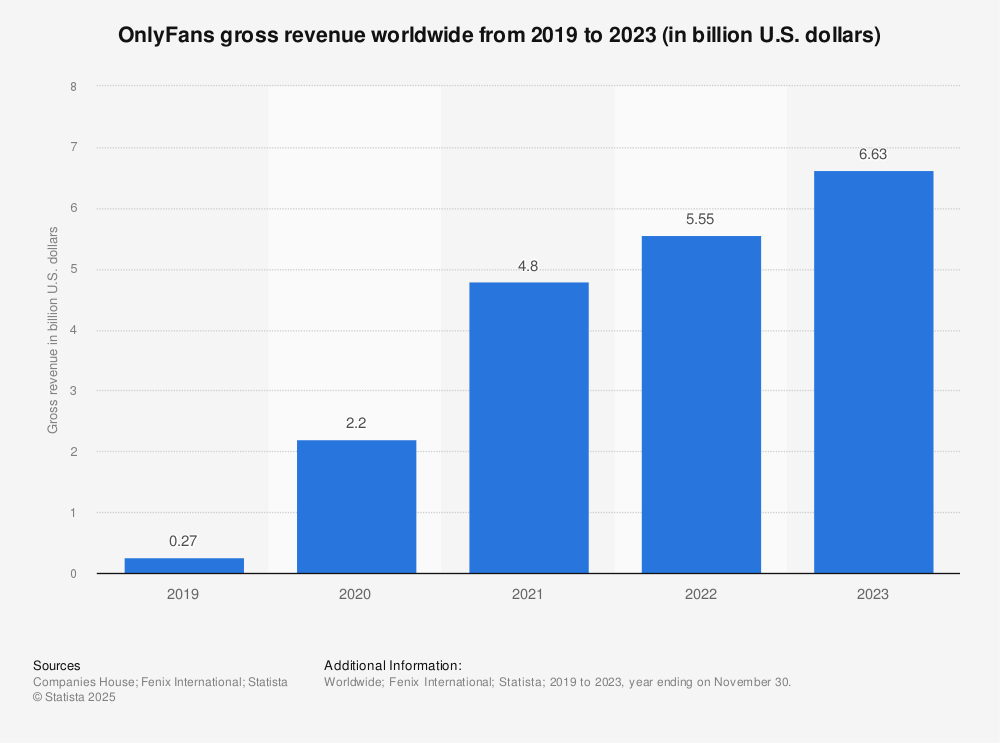
The platform generated $6.6 billion in revenue just in 2023, so the idea of an $8 billion payout doesn’t seem that far-fetched. OnlyFans became a global phenomenon during the COVID-19 pandemic and it takes 20 percent of all creator earnings.

Investor interest has peaked over the past several months as impressive earning statements became public. It has managed to triple its revenue since 2020, which is something many companies that experienced pandemic-related boosts cannot say.

Statistic: OnlyFans gross revenue worldwide from 2019 to 2023 (in billion U.S. dollars) | Statista

Sources have stated that a deal could be reached within the next week or two. However, Fenix International Ltd have also been in talks with other potential buyers. An IPO is also being considered, an idea that’s been floating around since 2022.

However, an outright purchase is more likely than a public offering. This is due to the porn of it all. The company tried to get around this by announcing a ban on sexually explicit content in 2021, but reversed course before the ban even went into place. OnlyFans is, after all, primarily for sexually explicit content.

This article originally appeared on Engadget at https://www.engadget.com/big-tech/onlyfans-is-in-talks-to-sell-for-8-billion-165318788.html?src=rss

Desktop Survivors 98 is more than just a retro Windows nostalgia trip

Is it weird to have nostalgia for an operating system? I don’t mean missing a particular feature that’s been removed from modern versions or a specific productivity setting that’s no longer supported. I mean a sense of longing for the vibes of the computer interface you grew up with, an ache for the aesthetics of user interfaces past.

I would have thought I was immune to this particular brand of nostalgia. Then I happened upon Desktop Survivors 98, a new Vampire Survivors-style “bullet heaven” autoshooter that leans hard into the aesthetics of the late ’90s Windows machines I grew up with. And while that low-res, 256-color presentation is what drew me in, it was the intriguing mouse-controlled gameplay underneath that has kept me coming back for more retro-styled action all week.

Start me up

When it comes to capturing the feel of the ’90s computer environment, Desktop Survivors 98 gets everything just right. This is in large part due to rampant theft of familiar old-school icons; items like My Computer, Calculator, Minesweeper, Search, and more look like they were taken directly from a classic Microsoft tile set. The game’s low-res desktop backgrounds and Windows also look like they came out of a years-old Microsoft style book.

Read full article

Comments

Glitch is Basically Shutting Down

Glitch, the coding platform where developers can share and remix projects, will soon no longer offer its core feature: hosting apps on the web. From a report: In an update on Thursday, Glitch CEO Anil Dash said it will stop hosting projects and close user profiles on July 8th, 2025 — but stopped short of saying that it’s shutting down completely.

Users will be able to access their dashboard and download code for their projects through the end of 2025, and Glitch is working on a new feature that allows users to redirect their project subdomains. The platform has also stopped taking new Pro subscriptions, but it will continue to honor existing subscriptions until July 8th.


Read more of this story at Slashdot.

You Are Not Prepared for This Terrifying New Wave of AI-Generated Videos

I don’t mean to be alarmist, but I do think it’s time to start assuming everything you see online is fake.

The internet is full of content produced by real people, of course (this article included). But AI-generated media is getting so realistic, that it almost puts you at a disadvantage to presume the content you’re scrolling past on your feeds is legitimate.

Don’t skip this article because you know what AI content looks like—the current stuff your algorithm delivers to your social media feeds is easy to spot if you know what you’re looking for. But even if you can identify AI slop the second it hits your eyeballs, you need to know you’re not ready for the next wave of AI-generated videos. That wave isn’t just on its way—it’s already here.

AI content is already fooling people

Most of us are acutely aware of the “AI video” look: This “tragic” video of a cat parent saving their kitten by throwing it out of a burning airplane is obvious AI slop to most who watch it. You probably know Trump isn’t working this construction site, and you most assuredly can understand this family of cat farmers is, in fact, AI-generated.

But there are the videos that aren’t so obvious, especially to those of us not quite so in tune with AI, or technology in general. You might know this video of babies dancing in a circle is AI, but plenty of the people in the comments didn’t (assuming they aren’t bots, either). You might also be able to tell that this family of pets isn’t really watching a bird investigate a toy alligator, but, again, plenty can’t. And there is no end to the America’s Got Talent videos that feature “realistic” yet impossible visuals—that still capture the hearts of hundreds of thousands, if not millions of people. (I weep.)

But I’m not writing this piece today because I’m concerned about how many of these “believable” AI videos are tricking way too many people into thinking they’re real. I am worried about that, but those worries pale in comparison to my new fears.

So far, most of the AI videos taking over social media feeds rely mainly on their visuals and background sounds to sell their alleged authenticity. You’ll notice none of the characters in any of these videos actually speak. If they do, it’s immediately off-putting, with out of sync lip movements and, typically, robotic voices. It’s been easier for AI creators to put the emphasis on the realism of the people and animals in their videos, and hope you’re wowed enough by a baby dancing with a lion to not think, “this is bullshit, right?”

Even OpenAI’s Sora video model, which shocked me with its quality in February of last year, was working off of its realistic visuals. A video of woman “filming” her reflection through a train window too real for comfort, but Sora wasn’t spitting out fully-rendered conversations. If you see such a scene on your feeds, you probably assume, of course, it’s a real video—or at least one generated by humans.

AI video is about to change completely

Something happened this week that only made me more pessimistic about the future of truth on the internet. During this week’s Google I/O event, Google unveiled Veo 3, its latest AI video model. Like other competitive models out there, Veo 3 can generate highly realistic sequences, which Google showed off throughout the presentation. Sure, not great, but also, nothing really new there.

But Veo 3 isn’t just capable of generating video that might trick your eye into thinking its real: Veo 3 can also generate audio to go alongside the video. That includes sound effects, but also dialogue—lip-synced dialogue.

In order to demonstrate Veo 3’s audio/video capabilities, Google showed off a clip of an old sailor at sea. The video quality is sharp and realistic, and the words the man speaks are synced to his lip movements. Of course, knowing the video is AI, you notice quirks that give away the game (to my eye, this looks like a high quality animation more than a live action shot) but I am quite confident this video would fool a lot of fans of fake AGT videos.

But even this clip wasn’t what inspired my newfound fears—it was the videos that users started making once they got their hands on Veo 3. PetaPixel has a great roundup of some of the “best” Veo 3 videos people have made so far, but I’ll highlight some of the ones that should scare you most.

This clip shows a streamer playing Fortnite. Everything, including the game footage, was generated with Google’s AI:


This Tweet is currently unavailable. It might be loading or has been removed.

This clip shows three concerts that never happened, featuring musicians and crowds that do not exist. The music isn’t good, but that’s not the point. The music, from the vocals to the instrumentals, was generated entirely by the AI, and then synced to lips, drums, guitars, and strings:


This Tweet is currently unavailable. It might be loading or has been removed.

But this clip is, without a doubt, the one that should sound the alarm for each and every one of us. Someone generated a fake video of a fake car show, featuring fake interviews with fake attendees. It’s far from perfect, but any AI quirks are totally overshadowed by the surface-level realism here. Not only would the AI’s Got Talent fans buy this, I would buy this, especially if I wasn’t looking out for it:


This Tweet is currently unavailable. It might be loading or has been removed.

It’s the visuals; it’s the dialogue; it’s the crowds; it’s the lighting; it’s the candid laughter at “mistakes;” it’s the sound of the mic being “bumped” into. Congratulations on noticing the dialogue often doesn’t make sense, or that the people in the background defy the laws of physics—you won’t notice it when it hits mid-scroll on TikTok or Instagram.

Even Veo 2, which isn’t as powerful as Veo 3, now offers tools for realism, like the ability to dictate how you want the camera to move. And both models are available in Flow, Google’s AI video editor of sorts. Creators now have the ability to generate highly realistic AI content that feels like it was filmed in-person, and the tech is only getting better.


This Tweet is currently unavailable. It might be loading or has been removed.

Google’s best AI video generator tools cost $250 a month through its new AI Ultra subscription plan. That’s expensive, but not out of reach for plenty of people interested in making AI-generated content. But the $20 per month plan, AI Pro, still comes with Veo 2 and Flow access. The rate limits are lower, but I wouldn’t be shocked to see some realistic slop come out of those limitations, too.

It’s time to be a full-time skeptic

None of this tech is perfect. I’m not here to tell you that everything Veo 3 spits out is indistinguishable from real content, or that the videos are absent any of the usual AI tells. In fact, there’s clearly something up with Veo 3’s training data: As 404 Media reports, the model continuously generates the same weird “dad joke” whenever you ask for a generation of a comedian performing standup.

What I’m saying is, it’s time to turn on your bullshit detectors and keep them active full time. When engaging with videos on the internet—especially short-form algorithmic clips—you might be safer operating under the assumption the content is fake from the jump, and require proof beyond a reasonable doubt that what you’re seeing wasn’t generated with a simple prompt and a $250 budget. That feels extreme, but after what I’ve seen this week, I don’t really see another way to engage with this content going forward.

We’re in scary territory now. Today, it’s demos of musicians and streamers. Tomorrow, it’s a politician saying something they didn’t; a suspect committing the crime they’re accused of; a “reporter” feeding you lies through the “news.”

I hope this is as good as the technology gets. I hope AI companies run out of training data to improve their models, and that governments take some action to regulate this technology. But seeing as the Republicans in the United States passed a bill that included a ban on state-enforced AI regulations for ten years, I’m pretty pessimistic on that latter point.

In all likelihood, this tech is going to get better, with zero guardrails to ensure it advances safely. I’m left wondering how many of those politicians who voted yes on that bill watched an AI-generated video on their phone this week and thought nothing of it.


Dyson Memorial Day deals include $200 off the 360 Vis Nav robot vacuum

This Memorial Day deal sucks… in a good way. The Dyson 360 Vis Nav may have the best suction of any robot vacuum. This purple dirt eater usually retails for $1,000. But you can get it for a mere $800 this holiday weekend. That’s a record low.

The deal is featured on Dyson’s website, Amazon and Best Buy. Even the world-famous Ginsu knife Mecca, QVC, got in on the action.

Dyson says the 360 Vis Nav sucks debris as well as its cordless stick vacuums. The company claims it’s twice as powerful as any of its competitors. For the technically minded, it offers 22,000 Pa/pascals of suction pressure. In short, that’s a lot. Your dirty, pet-hair-infested floor won’t stand a chance.

The D-shaped robovac has a little actuator protruding from its sides. It’s an alternative to the side sweepers on competing models. The little duct only opens when cleaning edges and corners.

Top-down photo of the purple robovac, cleaning a floor next to a cat post.
Valentina Palladino for Engadget

In addition to its suction, the vacuum’s most impressive feature is its obstacle avoidance. Engadget’s Valentina Palladino tested it with small objects left on the floor, but the Dyson never got stuck. Many competitors run into all sorts of obstacles on a typical run.

There are a few drawbacks. The 360 Vis Nav doesn’t mop. It also lacks an auto-emptying dust bin. (Although doing it manually is quick and easy.) It also lacks LiDAR. That means mapping your home can be slower and vacuuming at night won’t be as smooth. What this model offers is the best suction possible and top-notch obstacle avoidance. And for $200 off its retail price, that’s not too shabby.

Follow @EngadgetDeals on X for the latest tech deals and buying advice.

This article originally appeared on Engadget at https://www.engadget.com/deals/dyson-memorial-day-deals-include-200-off-the-360-vis-nav-robot-vacuum-162737610.html?src=rss

10 Advanced Linux Commands You’ve Probably Never Used (Part 3)

Continuing our exploration of lesser-known but powerful Linux commands, let’s dive into a new batch of hidden gems. These commands can streamline your workflow, automate tasks, and help you squeeze more control and efficiency out of your command-line experience.

The post 10 Advanced Linux Commands You’ve Probably Never Used (Part 3) appeared first on Linux Today.

Sharp Knives Reduce Onion-Induced Tears By Limiting Droplet Spray, Study Finds

Cornell University researchers have solved a kitchen mystery by demonstrating that sharp knives produce fewer and slower-moving droplets when cutting onions compared to dull blades. The findings used high-speed cameras and particle tracking to analyze droplet formation during onion cutting at speeds up to 20,000 frames per second.

The team discovered that onion droplets form through a two-stage process: an initial violent ejection driven by internal pressure, followed by slower fragmentation of liquid streams in air. Blunter blades create up to 40 times more droplets because the onion’s tough outer skin acts as a barrier, allowing the softer interior tissue to compress significantly before rupturing and releasing pressurized liquid.

The research reveals that droplets are ejected at speeds between 1 and 40 meters per second, with the fastest ones posing the greatest risk of reaching a cook’s eyes. Beyond tear reduction, the study suggests sharp knives may also limit the spread of foodborne pathogens, since atomized droplets can carry bacteria like Salmonella from contaminated cutting boards.


Read more of this story at Slashdot.

Apple’s First Smart Glasses Come Into View But Can It Compete With Meta?

Apple's First Smart Glasses Come Into View But Can It Compete With Meta?
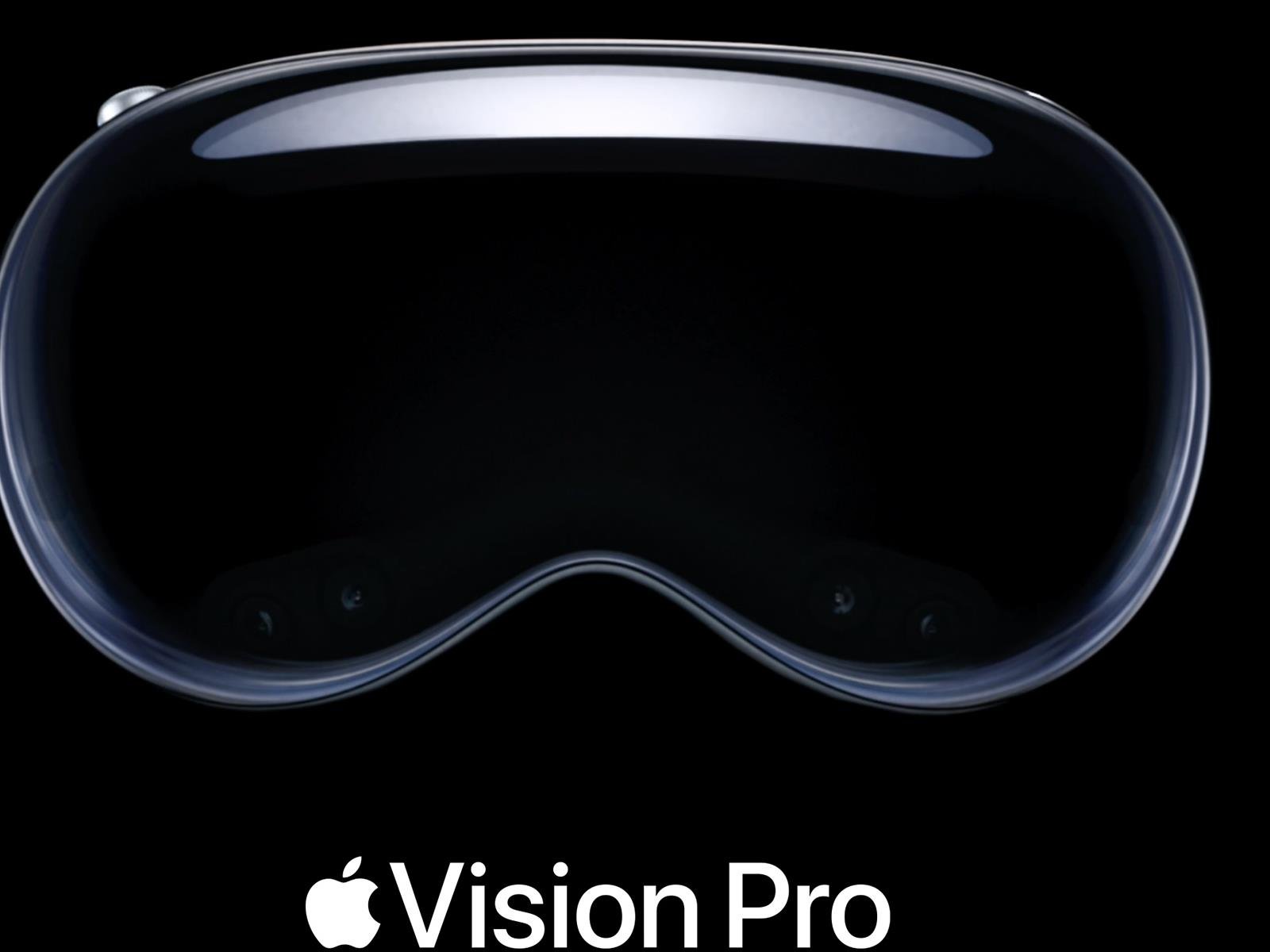
Apple has some smart glasses coming, after dabbling in the augmented reality space, according to the folks at Bloomberg. The question of how it will fare against Meta and its own Ray-Ban smart glasses will be interesting to witness in this new field. Furthermore, Apple’s own complicated history with its Vision Pro may leave some early adopters

Trump threatens 25 percent tariff on iPhones manufactured overseas

President Donald Trump has escalated pressure on Apple to manufacture iPhones for the American market domestically. In a post on Truth Social Friday morning, the president explicitly warned that he would recommend a 25 percent tariff be applied to any iPhones sold in the United States that were manufactured outside the country.

“I have long ago informed Tim Cook of Apple that I expect their iPhone’s that will be sold in the United States of America will be manufactured and built in the United States, not India, or anyplace else. If that is not the case, a Tariff of at least 25% must be paid by Apple to the U.S.,” the president wrote.

His reference to India was in response to continued reporting that Apple has been considering shifting all US-bound iPhone production to India in order to avoid trade instability with China brought on by tariffs.

Apple trialed low-volume production of iPhones in India in 2017 with the iPhone SE. The company began ramping up production in India throughout subsequent years, and now plans to accelerate that expansion. CEO Tim Cook clarified during the company’s most recent earnings call that the majority of iPhones sold in the US during the coming quarter would be sourced from India.

Apple has been careful in managing its relationship with the Trump administration, pledging investments in the United States that align with the president’s goals, and inviting Trump to “open” a manufacturing facility in Texas that had actually been producing Mac Pros for years. Apple CEO Tim Cook also donated $1 million to the president’s inauguration fund and attended the event. 

Analysts have said that an iPhone made in America could cost upwards of 25 percent more from increased labor costs alone. Labeling a product as “Made in the USA” requires meeting standards set by the FTC, and it’s uncertain whether Apple could meet that standard without drastically increasing the cost of its products.

This article originally appeared on Engadget at https://www.engadget.com/big-tech/trump-threatens-25-percent-tariff-on-iphones-manufactured-overseas-155728995.html?src=rss

CDC can no longer help prevent lead poisoning in children, state officials say

Amid the brutal cuts across the federal government under the Trump administration, perhaps one of the most gutting is the loss of experts at the Centers for Disease Control and Prevention who respond to lead poisoning in children.

On April 1, the staff of the CDC’s Childhood Lead Poisoning Prevention Program was terminated as part of the agency’s reduction in force, according to NPR. The staff included epidemiologists, statisticians, and advisors who specialized in lead exposures and responses.

The cuts were immediately consequential to health officials in Milwaukee, who are currently dealing with a lead exposure crisis in public schools. Six schools have had to close, displacing 1,800 students. In April, the city requested help from the CDC’s lead experts, but the request was denied—there was no one left to help.

Read full article

Comments

US solar keeps surging, generating more power than hydro in 2025

In the US, many newly constructed generating facilities are brought online at the end of the year to qualify for tax incentives. Since much of the US’s new generating capacity is solar power, that has led to a boom in solar production to start the year in recent years. With the first three months of data in for 2025, it’s clear this year is no exception: Solar power is up a staggering 44 percent compared to the prior year.

That’s the good news. The bad news is that, in contrast to China, solar’s growth hasn’t been enough to offset rising demand. Instead, the US also saw significant growth in coal use, which rose by 23 percent compared to the year prior, after years of steady decline.

Short-term fluctuations in demand are normal, generally driven by weather-induced demand for heating or cooling. Despite those changes, demand for electricity in the US has been largely flat for over a decade, largely thanks to gains in efficiency. But 2024 saw demand go up by nearly three percent, and the first quarter of 2025 saw another rise, this time of nearly five percent. It’s a bit too early to say that we’re seeing a shift to a period of rising demand, but one has been predicted for some time due to rising data center use and the increased electrification of transportation and appliances.

Read full article

Comments