Woman Racer Spotlight: Gökçe Paul

Name: Gökçe Paul

Hometown: Hannover, Lower Saxony in Germany 

How did you get into cycling? My partner introduced me to cycling and got me my first road bike in 2019, but I didn’t really start cycling regularly until the Covid pandemic, when my gym was closed and my partner set up Zwift for me instead. Then I started enjoying races and going all out, which was a new experience for me. 

How many years have you been racing on Zwift? I started racing on Zwift in 2021, so almost four years now. In April 2021 I did my first round of ZRL in a women’s B team. 

Are you part of a Virtual team? I am a member of Team Coalition and my elite racing team is Coalition Alpha.

What do you love most about racing? I like the varying intensity and adapting to the different efforts. Especially if it’s a hilly or rolling terrain.

What is your favourite style of race (e.g. points, scratch, iTT, TTT, Chase, duathlon)? I find points races the most interesting. 

What is your favourite Zwift women’s race series? I liked the Iceni Race series and the Tour de Boudicca.

What is your most memorable racing experience, inside or outside or BOTH? When I did my first Iceni Race series in 2022, it was spring and during that time I already started riding outside again. So I could enjoy some nice weather outside and race on Zwift at the same time. 

What is your favourite food to eat post-race? I don’t have a favourite food to eat after a race, because most of the time I don’t really feel hungry, so I usually have my regular dinner, but nothing that has a special connection to racing or working out. 

What advice would you give to a woman entering her first Zwift race? Focus on the first few minutes and don’t give up too early, it will get easier later (most likely…)

Don’t expect to win races from the very beginning, it takes practice to understand the Zwift mechanics. Also, if you come from road racing, you have to get used to the totally different efforts on Zwift. It’s more comparable to cyclocross in terms of the physical stress. 

Where can people follow your racing adventures? I am active on Strava and Instagram.

Penguin poop may help preserve Antarctic climate

This article originally appeared on Inside Climate News, a nonprofit, non-partisan news organization that covers climate, energy, and the environment. Sign up for their newsletter here.

New research shows that penguin guano in Antarctica is an important source of ammonia aerosol particles that help drive the formation and persistence of low clouds, which cool the climate by reflecting some incoming sunlight back to space.

The findings reinforce the growing awareness that Earth’s intricate web of life plays a significant role in shaping the planetary climate. Even at the small levels measured, the ammonia particles from the guano interact with sulfur-based aerosols from ocean algae to start a chemical chain reaction that forms billions of tiny particles that serve as nuclei for water vapor droplets.

Read full article

Comments

Valve Adds SteamOS Support For Its Steam Deck Rivals

Valve’s SteamOS 3.7.8 update brings official support for AMD-powered handhelds like Lenovo’s Legion Go and Asus’ ROG Ally, along with a new “Steam OS Compatible” library tab and key bug fixes. Other features include a battery charge limit, updated graphics drivers, and a shift to Plasma 6.2.5. Polygon reports: Valve outlines two requirements for the third-party devices not explicitly named in the update to run SteamOS on the handheld: they must be AMD-powered and have an NVMe SSD. Specific instructions for installing the operating system have been updated and listed here.

Before this huge update, players had to use an alternative like Bazzite to achieve a similar SteamOS experience on their devices. The new update also piggybacks off of Valve expanding the Steam Deck Verified categorization system to “any device running SteamOS that’s not a Steam Deck” in mid-May. To make matters sweeter, a SteamOS-powered version of the Lenovo Legion Go S is scheduled to release on May 25. You can learn more about SteamOS 3.7.8 here.


Read more of this story at Slashdot.

Cloud Hypervisor 46 Deprecates SGX Support, Google To Take Over TDX Maintenance

While the open-source, Rust-based Cloud Hypervisor project was started by Intel as a modern VMM for cloud workloads and focused on security, some Intel CPU features are now bit-rotting. In turn the new Cloud Hypervisor 46 release has deprecated support for Intel Software Guard Extensions (SGX) while even their modern Trust Domain Extensions (TDX) feature is in jeopardy but now with Google engineers set to takeover that code…

Google’s New AI Video Tool Floods Internet With Real-Looking Clips

Google’s new AI video tool, Veo 3, is being used to create hyperrealistic videos that are now flooding the internet, terrifying viewers “with a sense that real and fake have become hopelessly blurred,” reports Axios. From the report: Unlike OpenAI’s video generator Sora, released more widely last December, Google DeepMind’s Veo 3 can include dialogue, soundtracks and sound effects. The model excels at following complex prompts and translating detailed descriptions into realistic videos. The AI engine abides by real-world physics, offers accurate lip-syncing, rarely breaks continuity and generates people with lifelike human features, including five fingers per hand.
According to examples shared by Google and from users online, the telltale signs of synthetic content are mostly absent.

In one viral example posted on X, filmmaker and molecular biologist Hashem Al-Ghaili shows a series of short films of AI-generated actors railing against their AI creators and prompts. Special effects technology, video-editing apps and camera tech advances have been changing Hollywood for many decades, but artificially generated films pose a novel challenge to human creators. In a promo video for Flow, Google’s new video tool that includes Veo 3, filmmakers say the AI engine gives them a new sense of freedom with a hint of eerie autonomy. “It feels like it’s almost building upon itself,” filmmaker Dave Clark says.


Read more of this story at Slashdot.

Benchmarks: OpenCL Kernel Latency ~76x Lower For Intel Lunar Lake With Updated Compute Runtime

This week Intel released the Compute Runtime 25.18.33578.6 release for Windows and Linux. This updated open-source GPU compute stack for OpenCL and Level Zero brings the latest work on Ultra Low Latency Scheduling (ULLS) for Xe2 Lunar Lake graphics and other ongoing Xe2 improvements along with further preparations for next-gen Xe3 hardware. This new Intel Compute Runtime release is clocking in around 76x lower OpenCL kernel latency and other nice wins for those with current-generation Intel Lunar Lake hardware.

Microsoft Says Its Aurora AI Can Accurately Predict Air Quality, Typhoons

An anonymous reader quotes a report from TechCrunch: One of Microsoft’s latest AI models can accurately predict air quality, hurricanes, typhoons, and other weather-related phenomena, the company claims. In a paper published in the journal Nature and an accompanying blog post this week, Microsoft detailed Aurora, which the tech giant says can forecast atmospheric events with greater precision and speed than traditional meteorological approaches. Aurora, which has been trained on more than a million hours of data from satellites, radar and weather stations, simulations, and forecasts, can be fine-tuned with additional data to make predictions for particular weather events.

AI weather models are nothing new. Google DeepMind has released a handful over the past several years, including WeatherNext, which the lab claims beats some of the world’s best forecasting systems. Microsoft is positioning Aurora as one of the field’s top performers — and a potential boon for labs studying weather science. In experiments, Aurora predicted Typhoon Doksuri’s landfall in the Philippines four days in advance of the actual event, beating some expert predictions, Microsoft says. The model also bested the National Hurricane Center in forecasting five-day tropical cyclone tracks for the 2022-2023 season, and successfully predicted the 2022 Iraq sandstorm.

While Aurora required substantial computing infrastructure to train, Microsoft says the model is highly efficient to run. It generates forecasts in seconds compared to the hours traditional systems take using supercomputer hardware. Microsoft, which has made the source code and model weights publicly available, says that it’s incorporating Aurora’s AI modeling into its MSN Weather app via a specialized version of the model that produces hourly forecasts, including for clouds.


Read more of this story at Slashdot.

Stanford Researchers Suggest 5 ‘Canonical’ Findings About VR

A new research paper published by Stanford VR researchers in the top social science journal combs through decades of study and suggests five ground truths about the medium.

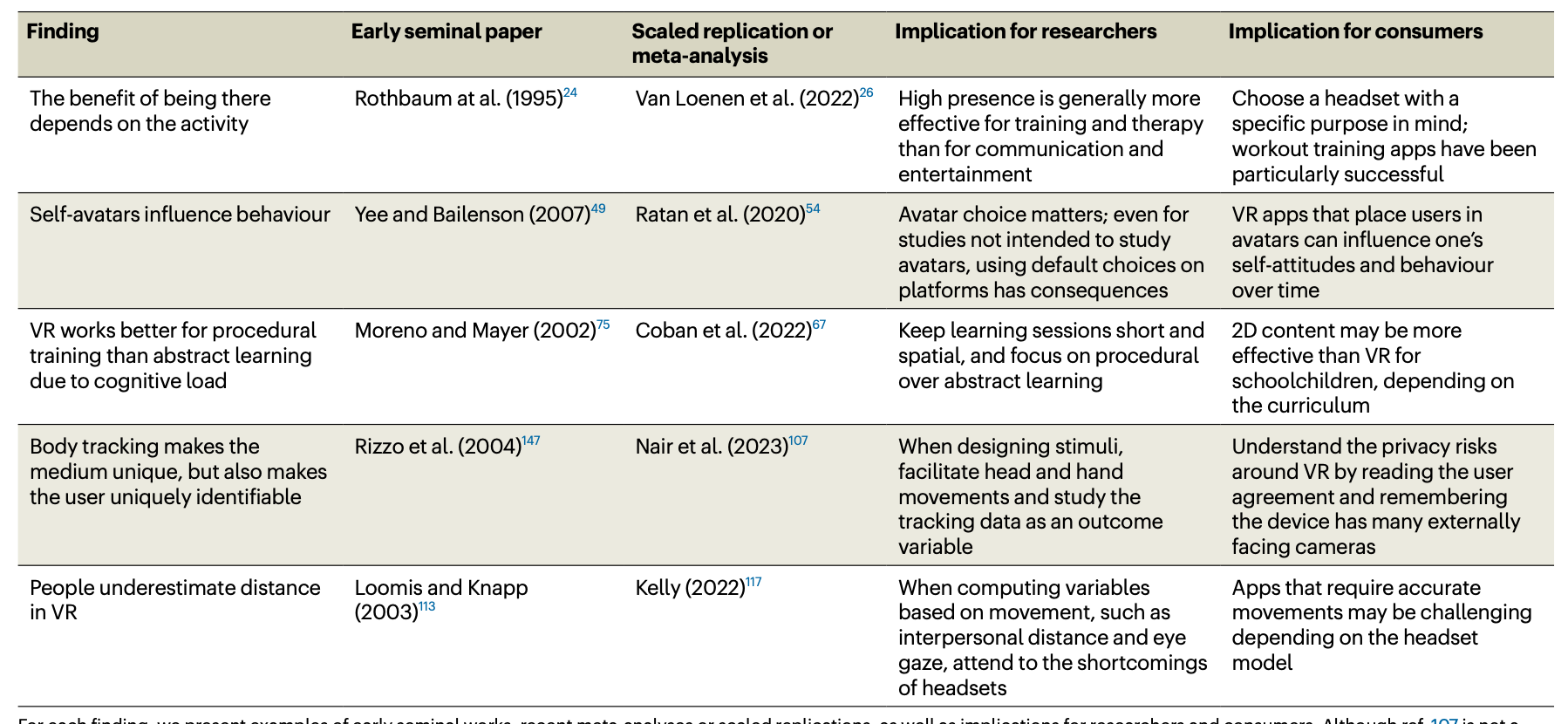
The chart below from the paper in Nature Human Behavior outlines the implications for researchers and consumers of key findings from decades of psychological research in VR.

Regular readers will be familiar with some of these ideas, but for those reaching this page through a VR-initiated friend who sent it to them? It’s a lot just to realize the Meta Quest 3S at $300 and Vision Pro at $3500 are fundamentally the same core technology – a VR headset – and they are part of a now-decades-long trend steadily marching toward mainstream adoption.

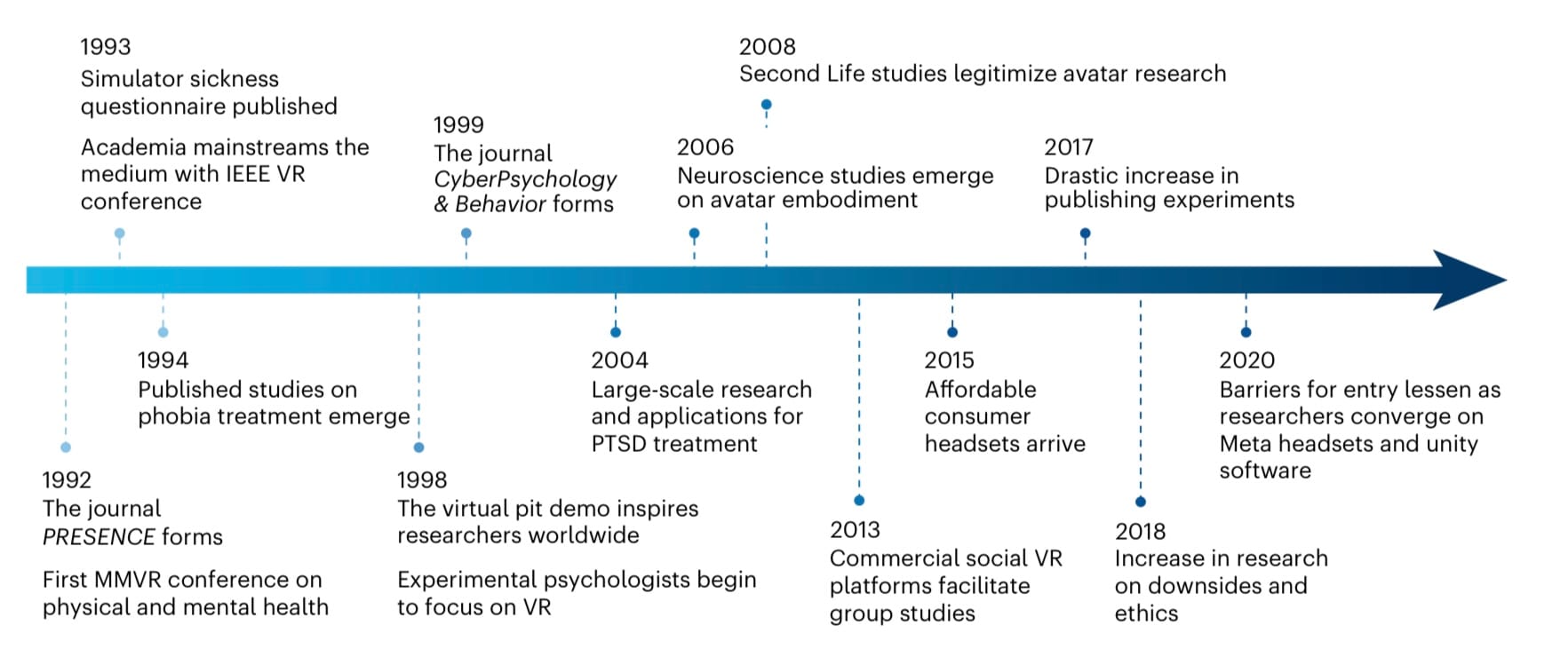
The timeline from the paper embedded below outlines the journey as it relates to VR research.

Below I’ve listed the implications for consumers of the five key findings covered by the paper:

  • “Choose a headset with a specific purpose in mind; workout training apps have been particularly successful”
  • “VR apps that place users in avatars can influence one’s self-attitudes and behavior over time”
  • 2D content may be more effective than VR for schoolchildren, depending on the curriculum”
  • “Understand the privacy risks around VR by reading the user agreement and remembering the device has many externally facing cameras”
  • “Apps that require accurate movements may be challenging depending on the headset model”

You can read the full paper on Stanford’s website, which also suggests a need for longitudinal work and study of VR’s downsides.

What Is VR Used For?

The paper also uses the word “DICE” to help remember four categories of VR experience “we primarily use VR for dangerous, impossible, counterproductive or expensive experiences that are not easy to implement in the real world,” echoing a line from Bailenson’s 2018 book “Experience On Demand”.

“Training firefighters, rehabilitating stroke victims, learning art history via sculpture museums, and having a visceral, perceptual experience of the Earth’s future to understand climate change, for example, all fit squarely in DICE,” the paper explains. “Alternatively, one does not necessarily need to don a headset to check email, watch television and conduct general office work. Such applications work better on 2D screens. By not putting such use cases needlessly into VR, society can avoid some of its challenges.”

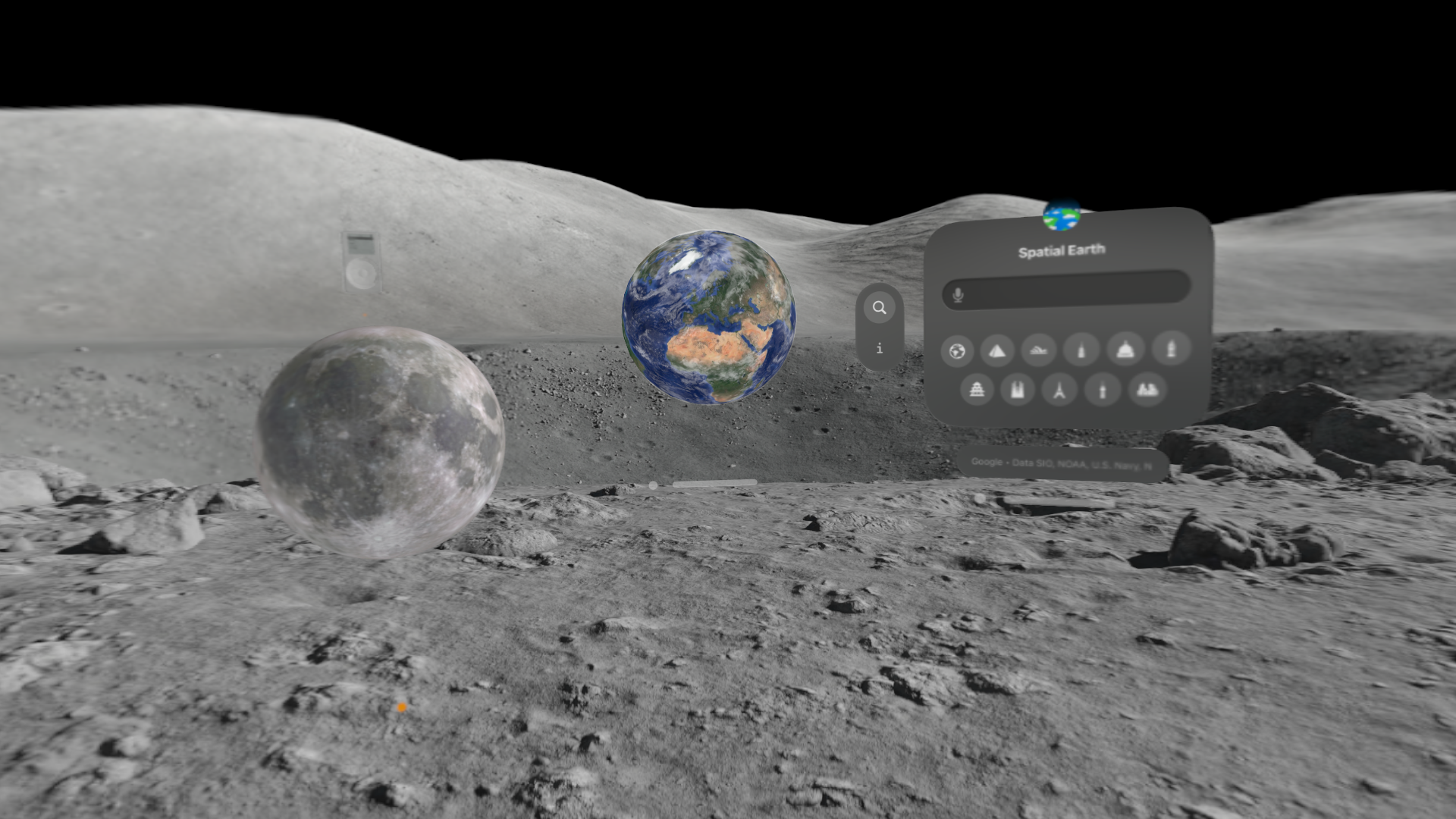
Beautiful Things & Spatial Earth on Apple Vision Pro

“One does not necessarily need to don a headset to check email, watch television and conduct general office work. Such applications work better on 2D screens. By not putting such use cases needlessly into VR, society can avoid some of its challenges.”

This is a fascinating framing for thinking about the difference between going to VR because you want to and going to VR because you have to.

I use Quest 3 because I easily play mini golf and meet with my coworker to talk about the future in front of hundreds of people each week. I like to use my Vision Pro because I can go to the moon to start my day, and I can bring up the earth as a tiny globe and zoom right down to street level. The experience is either downright impossible or at least too expensive for the real world. At that point, accessing my email and TV and work in VR too just keeps me on the moon for longer.

If you’re interested in diving deeper into why people use VR, and what it might be used for in the future, I recommend starting with my write-up about the twins who stay connected playing Walkabout Mini Golf and continue on to the walkable Holodeck in Texas. And be sure to check out the VR Download on Thursdays where we cover the very latest.

Trump Launches Reform of Nuclear Industry, Slashes Regulation

Longtime Slashdot reader sinij shares a press release from the White House, outlining a series of executive orders that overhaul the Nuclear Regulatory Commission and speed up deployment of new nuclear power reactions in the U.S.. From a report: The NRC is a 50-year-old, independent agency that regulates the nation’s fleet of nuclear reactors. Trump’s orders call for a “total and complete reform” of the agency, a senior White House official told reporters in a briefing. Under the new rules, the commission will be forced to decide on nuclear reactor licenses within 18 months. Trump said Friday the orders focus on small, advanced reactors that are viewed by many in the industry as the future. But the president also said his administration supports building large plants. “We’re also talking about the big plants — the very, very big, the biggest,” Trump said. “We’re going to be doing them also.”

When asked whether NRC reform will result in staff reductions, the White House official said “there will be turnover and changes in roles.” “Total reduction in staff is undetermined at this point, but the executive orders do call for a substantial reorganization” of the agency, the official said. The orders, however, will not remove or replace any of the five commissioners who lead the body, according to the White House. Any reduction in staff at the NRC would come at time when the commission faces a heavy workload. The agency is currently reviewing whether two mothballed nuclear plants, Palisades in Michigan and Three Mile Island in Pennsylvania, should restart operations, a historic and unprecedented process. […]

Trump’s orders also create a regulatory framework for the Departments of Energy and Defense to build nuclear reactors on federal land, the administration official said. “This allows for safe and reliable nuclear energy to power and operate critical defense facilities and AI data centers,” the official told reporters. The NRC will not have a direct role, as the departments will use separate authorities under their control to authorize reactor construction for national security purposes, the official said. The president’s orders also aim to jump start the mining of uranium in the U.S. and expand domestic uranium enrichment capacity, the official said. Trump’s actions also aim to speed up reactor testing at the Department of Energy’s national laboratories.


Read more of this story at Slashdot.