Doctor Who “Wish World” review: The Last of the Time Lords (redux)

Spoilers for “Wish World.”

Even the most daring artists, those that actively seek reinvention on a regular basis, will eventually wind up repeating themselves. If they’re lucky and self-aware, the artist may even get the chance to rehabilitate some of the lesser works in their canon. Sadly, it’s at this last hurdle that Russell T. Davies has fallen, with “Wish World” not quite able to do more than become a bizarro remake of “The Sound of Drums / Last of the Time Lords.”

Promotional images for Doctor Who, Season 2, Episode 7,
James Pardon/BBC Studios/Disney/Bad Wolf

We open in Bavaria, 1865, where a cloak-wearing woman on horseback rides through a forest to a remote cabin. It’s classic series villain the Rani, resurrected at the end of last week’s episode, who is greeted by Otto Zufall (German for “coincidence”), a storybook villager-type who expected to greet a midwife to help his ailing wife, Violett. Otto is the seventh son of a seventh son, who has just welcomed his seventh son into the world. Violet lays in bed cradling the newborn, which the Rani says is — as the third-generation seventh son — gifted with unbelievable power. She plucks the newborn from her arms, killing Violet by blowing on her, turning her into a pile of violet petals. She then blows on the other six children and turns them into ducks, and Otto into a wise owl.

Then, we’re on Earth on May 23, 2025, where the happily married couple John Smith — the Doctor — and Belinda wake up side by side in bed. Their daughter, Poppy (from “Space Babies” and “The Story and the Engine”) pads in from her bedroom. The trio live as a picture of domestic bliss, with a distinctly fake-looking ‘60s style kitchen filled with bright colors. It may be the present day, but there’s little-to-no tech on show except that every room has a 14-inch CRT TV that only plays a broadcast of Conrad (from “Lucky Day”) who tells them the whole world is going to have great weather that day.

At breakfast, the Doctor’s mind wanders for a moment, and suddenly his mug (which was in the middle of the table) inexplicably smashes to the floor. Never mind, as there’s a whole cupboard of matching mugs to replace the ones that fall during a “slip.” Each house even has a large, bright orange trash can just to get rid of the mugs that fall during a “slip”, including their next door neighbor, Mel. When the Doctor greets Mel, he asks what her plans are for May Day, and she says as an unmarried woman with no children, she’ll just sit inside in quiet contemplation.

Looming over the heart of the city, taller than any skyscraper, is a structure made out of bone that stands tall on spindly spider legs. Similarly incongruous is a series of massive, dinosaur skeletons that stomp around the landscape. We’ll see later that the dinosaur skeletons don’t actually interact with the world around them, phasing through the space below.

The only person (for now) that doesn’t seem to be affected is Ruby, who turns up at the Doctor’s house. She thinks she knows the Doctor, and Belinda, but can’t quite work anything out, and then blurts out that they don’t have a child when she sees Poppy. That prompts Belinda to call the police, as having doubt or sowing confusion is a crime here. The Doctor heads to work in UNIT HQ, suitably redecorated as a 1950s office despite the sci-fi trappings in the periphery. Kate Stewart is an officious boss, Colonel Ibrahim is the Doctor’s colleague and Susan Triad has been turned into the ‘60s tea-lady from “The Devil’s Chord.”

Colonel Ibrahim still has the hots for Kate, but thinks that she’s so far out of his league that she’d never go out with him. The Doctor disagrees, saying that Ibrahim is a “beautiful” man, which prompts Ibrahim to get very angry. After all, it would be wrong, impossible or deviant for a man to find another man beautiful, even intellectually. But the Doctor manages to avoid having him call the secret police as the staff of the office all stop to spot the Rani flying by on her hover scooter, which they believe is a sign of good luck for May Day the following day (another deliberate incongruity given May Day takes place on May 1).

The Rani lands on the spider skeleton / looming tower of doom, handing Mrs. Flood some Italian meat and tells her to make Conrad a sandwich. He’s up in the tower, as it’s his imagination that is shaping the world, with his regular broadcasts informing the people of his choices. But he’s also nervous — saying that the effort of maintaining a world is difficult since he has to run so many complex systems or else let whole nations be destroyed. It may be his imagination, but it’s being powered by the nameless baby from 1865, who never cries, just smiles.

Conrad, being the show’s avatar of so many alt-right figures, has built a reality to reflect his worldview. Heterosexuality is compulsory and loudly and rigidly enforced, there is a secret police ready to seize anyone off the street at a moment’s notice and everyone is constantly asked to inform on their family members. The culture of paranoia is rife. It also explains why Mel, as an unmarried and child-free woman, is expected to sit away and quietly contemplate her implicitly-poor choices, because naturally Conrad only values women for their utility, birthing and taking care of men, rather than as people with their own agency. Even Mrs. Flood, a Time Lady in her own right and the architect of this whole scheme, is relegated to the thankless role of “mother.”

Promotional images for Doctor Who, Season 2, Episode 7,
James Pardon/BBC Studios/Disney/Bad Wolf

His regular broadcasts are even used to taunt the Doctor, reading a story about the Doctor from a book that apes the original British Harry Potter covers. It is, without a doubt, intentional that Davies’ would make his alt-right villain a fan of the series in 2025.

Meanwhile, Belinda remains at home looking after Poppy, and gets a visit from her mum and grandmother. They are talking about motherhood, and the fact Poppy is expected to grow up and become an obedient wife to her husband. But when Belinda’s grandmother asks how long Belinda’s labor took, she can’t remember — prompting a small crisis of her own.

There’s one UNIT regular who isn’t up in the office, Shirley Bingham, who is in a wheelchair begging out on the street. Conrad’s worldview has no room for people with disabilities (or queer and gender non-conforming people) and so she’s homeless. Ruby initially brushes her pleas for money away before stopping and realizing that she’s met them before. Ruby is taken to a hidden homeless encampment where the ignored have gathered to create some sort of community. Ruby explains to them what they already know — something about all of this is wrong, and that she’s lived through 2025 already (during “73 Yards”) and it didn’t play out like this. Shirley has a plan to bring down Conrad, and Ruby wants in, saying that if she can get face to face with him, she’ll be able to remember what’s locked in the back of her mind.

That night, the Doctor is at home, furrowing his brow, and in the background Susan appears on his TV in a brief flash. But she quickly disappears, only to be replaced by Rogue (Jonathan Groff, from last season’s “Rogue”) who only has time to tell the Doctor two things. First, “tables don’t do that,” and that he loves him. Belinda wakes up to the sound of mugs smashing, as the Doctor experiments — every time he feels doubt, a mug falls through the solid wood onto the floor. Belinda can see what’s going on, but is horrified enough to call the police and get them to arrest the Doctor for having doubts. But Mrs. Flood doesn’t just arrest the Doctor, she hauls Belinda’s mom there to look after Poppy so Belinda can be arrested too.

Shirley and Ruby are camped out below the stone tower, and Shirley pulls out a UNIT tablet that’s a relic from the old world. Up in the tower, the Doctor and Belinda are pushed over a threshold and into the safety of the Rani’s lair. But the pair still don’t have their memories, and so are confused when the Rani starts expositing at them, at length. She points out the seal of Rassilon, and asks if that jogs his memory to no avail, similarly her robot assistants that are looking for signs of doubt among the population. The Rani even dances under a disco ball to a dumbfounded Doctor, who just pleads for mercy.

The Rani explains, in a way that made no sense to me at least, that all of the villains the Doctor ever faced wanted death, but her, who wants life. She somehow survived all the various destructions of Gallifrey and is now looking for a lost soul in the heretofore unknown “underverse.” She achieved this by, uh, blocking the Doctor’s route back to Earth and instead, forcing him to criss-cross around the universe with the Vindicator. Each reading the machine took was, in fact, creating a universe-wide network of power all feeding back to the Earth. As the Doctor’s memory returns, the Rani explains that being trapped in Conrad’s reality was to create and foster doubt. Much in the same way a human being’s doubt can damage their world, a Time Lord’s doubt should be enough to crack open the universe.

As the clock ticks closer to midnight, she sends Belinda back outside the bone tower to her doom. Then, the Rani locks the Doctor on the bone tower’s balcony to witness as London is swallowed by a series of enormous black voids with only remnants emerging from the other side (such as the burned Black Cab at the end of “The Robot Revolution”). Why? Because the lost soul, trapped in the “underverse” she’s desperate to reach, is Omega.

The Doctor, trapped on the balcony, tries to break back into the tower and stop the Rani but it’s too late. She has laid explosive charges and when they blow, the balcony tumbles down toward the void beneath. But the Doctor screams, “Poppy is real! Don’t you know what that means?” as he tumbles into the darkness. To. Be. Continued.

“Tables don’t do that.”

Promotional images for Doctor Who, Season 2, Episode 7,
James Pardon/BBC Studios/Disney/Bad Wolf

If there’s one thing Russell T. Davies doesn’t do well, it’s narrative coherence in the run-up to his big finales. Problems and solutions are equally contrived, pulled out of left field and generally don’t stand up to much scrutiny. In his mind that’s okay because what interests him is the emotional resonance and character moments created by that drama. Given he’s one of the few name brand writers in the UK, it’s not as if this approach hasn’t been enormously successful.

But it does make “Wish World” a frustrating beast since it is, as usual, playing with so many good ideas it squanders most of them. That wouldn’t be so bad, but for the episode’s conclusion being handed over to incoherent technobabble. It doesn’t help this is the second series in a row that hinges on the audience recognizing the significance of a villain not properly* seen on screen for more than four decades.

It’s worth looking at the first two thirds separate from the last, since there’s so much good stuff early on. One of Davies’ usual fixations is on the rise of middle-class British fascism, and the moments when we’re just inhabiting Conrad’s world are wonderful. This time, it’s centered on the stultifying environment for the so-called “respectable types,” whose position and status are perpetually tenuous. The paranoia that manifests out of that means everyone is looking for signs of deviance in their own communities. Those deemed unfit, especially people with disabilities and queer folks, are rendered as un-persons, invisible, shunned and isolated.

“Wish World” picks up on another recurring theme in the show, which is to ask what happens after the war has ended. Conrad’s utopia may have lovely weather, but everyone is dressed in uncomfortable clothes and at perpetual risk of being kidnapped off the street by police.

If I have a nitpick (and I do) it’s that I wish we hadn’t needed to see the Rani’s baby kidnapping in the opener. Starting with the Doctor and Belinda waking up as a married couple would have been a bigger shock. And it’s a shame the episode can’t commit hard enough to the “we’re trapped in a bizarro world” bit as Ruby turns up so quickly to let the audience know Things Are Awry. Imagine if the first twenty minutes had played out just from John Smith, or Belinda, or Ruby’s perspective and the creeping horror as they realized what was wrong.

Sadly, it’s the usual problem of having maybe 30 minutes at most to gesture to those ideas rather than explore them. Because we then have to stop the episode to get Ncuti Gatwa to look perplexed while the Rani spouts nonsense at him. Her evil plan doesn’t stand up to much scrutiny even as we’re being told it. After all, why does she need the Doctor to leap between planets when she has her own TARDIS? And if all it takes is a Time Lord’s doubt to rip open the universe, she could have easily done that herself. It’s not as if the Doctor is affected by the doubt since he’s able to carry on until the Rani explodes the balcony and casts him into the void.

Oh, there’s one thing that’s good in those last moments — the scene of the Doctor realizing something about Poppy is a nice hook into the finale.

Promotional images for Doctor Who, Season 2, Episode 7,
James Pardon/BBC Studios/Disney/Bad Wolf

I don’t get why the Rani would be motivated to go looking for Omega, the scientist who helped co-found Time Lord society. If Rassilon was the political mind, Omega was the engineer who created the power to make it all happen. He created the stellar manipulator that put a stable black hole at the heart of Gallifrey — the Eye of Harmony — to power its TARDISes. Omega’s backstory was flimsy in his two televised appearances, essentially being an overpowered villain for the Doctor(s) to battle in two different anniversary specials, “The Three Doctors” and “Arc of Infinity.” The rest of his backstory was filled out in the spin-off material, but he’s essentially just a big name baddie trotted out when, say, the Master wouldn’t cut it.

There are thematic parallels between Omega and Conrad, however, since Omega’s antimatter universe was sustained entirely by his will and imagination. Is that a comment on something, or just a nice way of dovetailing toward Omega. Who knows? I’m not sure I do.

It’s hard not to notice the extreme similarities between “Wish World” and “The Sound of Drums / Last of the Time Lords,” including the fact both stories got started in the previous episode. For a start, there’s the whole Britain-under fascism angle, with the Doctor incapacitated by the villain. Not to mention both feature a sequence in which a Gallifreyan foe taunts our hero with a high camp dancing sequence in a room hovering above the sky. If there’s a shame, it’s that while the runtime has been cut in half, the actual quality of the denouement seems to have gotten worse.

Oh, it was nice to see the seal of the Prydonian Chapter of the Time Lords of Gallifrey Seal of Rassilon on the wall of the Rani’s HQ. The bronze and red stylings looked gorgeous and while I’m never going to bang on about fan service in production design, it was lovely to see. And wasn’t it nice to get a bone structure hovering over London which is an unintentional callback to “The Ancestor Cell.” Just a shame that you’re then reminded that the book was designed to burn all the great ideas created by Lawrence Miles out of Doctor Who. After all, Miles has been at times the most interesting writer the series’ leadership refused to engage with.

* Yes, I know Omega and Rassilon are standing beside Tecteun in “The Timeless Children.”

This article originally appeared on Engadget at https://www.engadget.com/entertainment/tv-movies/doctor-who-wish-world-review-the-last-of-the-time-lords-redux-183004744.html?src=rss

Let’s Go! Nintendo Switch 2 Gamers Are Getting Good Old USB Mouse Support

Let's Go! Nintendo Switch 2 Gamers Are Getting Good Old USB Mouse Support
If you’ve been keeping up with Nintendo Switch 2 news, you’ve probably already seen that the Joy-Con 2 controllers can be used like mice thanks to optical sensors on the inside edge, where they connect to the Switch 2 console. This is an awesome feature and we’re glad to see it, but apparently, Switch 2 gamers will also be able to use a USB

CleanSheet Pro Is A Subscription-Based VR Goalkeeping Sim Coming To Quest 3

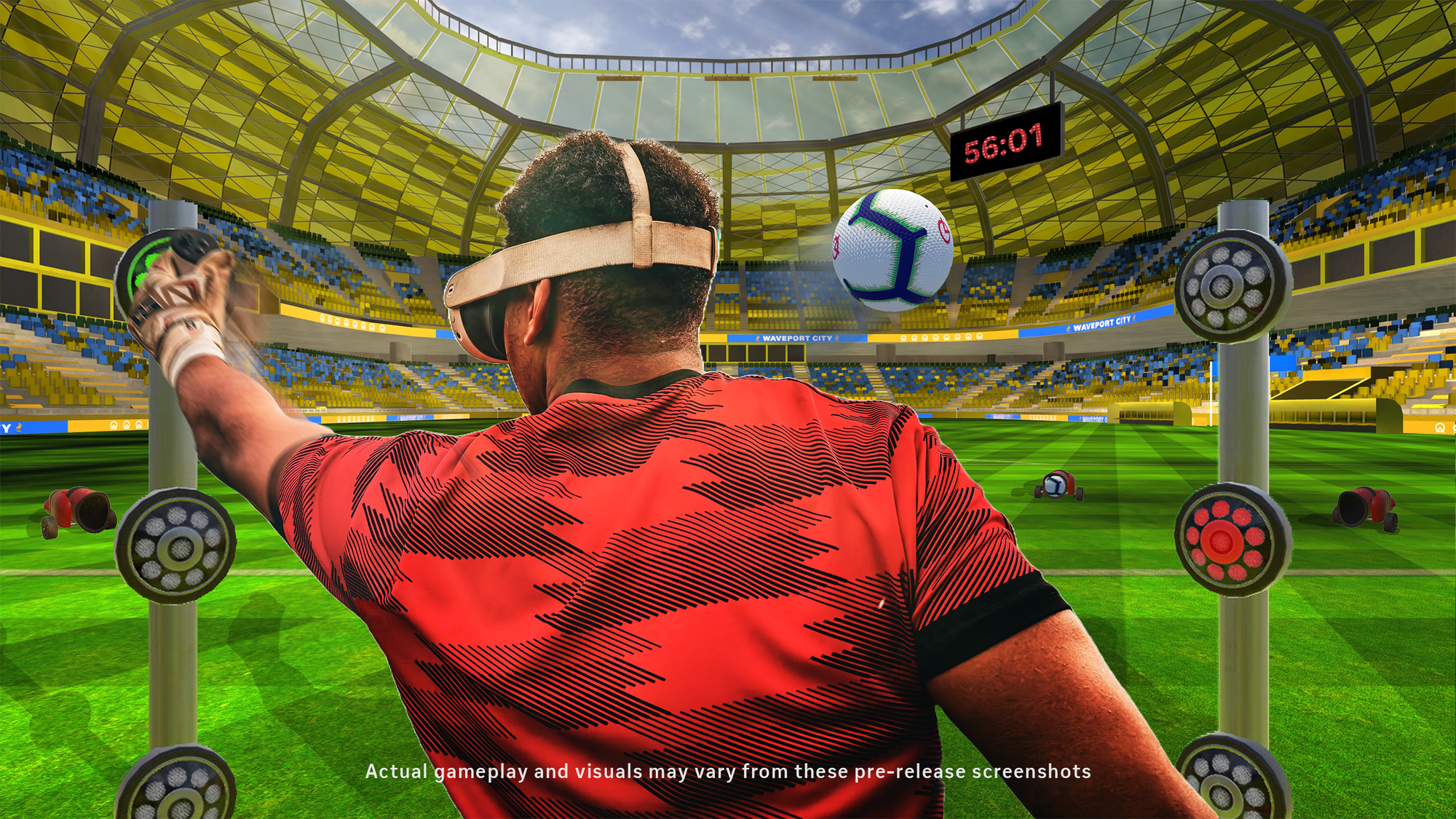
CleanSheet Pro is a subscription-based VR soccer sim for training goalkeepers, and the sequel arrives this year on Quest 3.

Developed by Belfast-based team Incisiv, the studio announced its upcoming CleanSheet Soccer successor today during the Virtual Athletics League VR Fitness Summit. Built for athletes, competitive gamers, and fitness enthusiasts alike, CleanSheet Pro aims to offer both a game and a high-performance training platform with various drills, real-time competitions and more.

0:00

/0:58

CleanSheet Pro teaser trailer

Building upon the original’s foundations, CleanSheet Pro features a major technical overhaul and several new additions. That includes a ‘Shot Creator’ for more bespoke training, and those creations then can be shared online. Elsewhere, the new progression-based career mode comes with three virtual clubs across a five-tier league system, and completing challenges earns rewards such as cosmetics, gear and virtual salaries.

Hand tracking support is another new feature, which is joined by a mixed reality mode previously seen in CleanSheet Soccer. Other changes include “advanced analytics and tailored drills” using AI-generated feedback to see how you measure up against the global leaderboards. Finally, there’s also a ‘Coach Companion App’ that allows others to track your progress and assign training plans.

When asked why it’s made a sequel over continuing updates for CleanSheet Soccer, Incisiv informed UploadVR during a written Q&A that the studio had “taken that original app to the edge of its technical capabilities.” The team advised that the most requested features like a Career Mode and custom shot creation need a more robust platform to deliver.

A person playing CleanSheet Soccer carrying out training drills by moving their hands towards targets
Drills mode in CleanSheet Pro

We’re also told that CleanSheet Pro is a full circle moment for the studio.

“Interestingly, we actually started our journey in pro football – working directly with clubs and coaches. But at the time, the hardware (HTC Vive setups, base stations, high-end PCs) created too many barriers for widespread adoption. CleanSheet Soccer helped break those barriers down, and now that standalone headsets like Quest 3/3s are mainstream, we’re seeing renewed demand from serious athletes and coaches.”

Querying why it’s taking a subscription approach over a one-time payment like CleanSheet Soccer, Incisiv explained that the studio wants CleanSheet Pro “to be a truly live service” experience that continues delivering new drills, scenarios, competitions, and community features. As such, the team advised that this approach lets them deliver regular updates.

Pricing details will be shared closer to launch, but monthly and annual options are planned that aim to be “very competitive” with other VR sports training apps. Though it’s not confirmed at this time, Incisiv’s also exploring a two-tier system; one designed for aspiring goalkeepers training at home, while the other aims at professional teams and clubs.

While Incisiv will expand CleanSheet Pro to other platforms beyond Quest 3, we’re advised that there’s currently no plans for a PlayStation VR2 version, despite CleanSheet Soccer previously releasing on Sony’s headset.

“While [PlayStation VR2 is] a great platform, and we really value our CleanSheet Soccer PS VR2 fanbase – the tethered experience doesn’t align well with the kind of agile, spatial movement our training system is built around.”

CleanSheet Soccer will reach Quest 3 and 3S in late 2025, and a Pico version will follow soon after launch.

Microsoft Notepad’s latest AI trick churns out custom text for you

Writer’s block is no match for Microsoft‘s latest AI infusion for its Notepad app. The long-neglected Notepad now has the ability to write custom content based on any prompt you feed it, so long as you have Microsoft 365 or a Copilot Pro subscription. Microsoft’s updated Notepad even lets you fine-tune the generated text with follow-up prompts.

This update comes several months after Microsoft added the Rewrite tool to Notepad that lets you lean on generative AI to refine an existing chunk of text. Instead of rewriting, you can now right-click where you want brand-new text and hit Write from the Copilot menu, or use the Ctrl + Q shortcut. From its humble start as a simple text editor with no spellcheck until recently, Notepad is finally getting the modern AI makeover it deserves.

Notepad isn’t the only app getting some love from Microsoft. The updated Paint app can tap into generative AI to make custom stickers based on user prompts. On top of that, there’s an Object select feature that can isolate specific parts of an image so you can just edit that portion. These two features are only available on Copilot+ PCs, like the recently announced HP laptops.

Lastly, Microsoft upgraded the Snipping Tool with the Perfect screenshot feature that automatically edits your screen captures. With the Copilot AI, the tool will automatically resize the screenshot so you don’t have to spend time getting the right crop. The Perfect screenshot feature requires a Copilot+ PC, but Snipping Tool’s new Color picker tool, which can provide you with the HEX, RGB or HSL values of a color you see on screen, doesn’t. As usual, these AI features will roll out to Windows Insiders users first.

This article originally appeared on Engadget at https://www.engadget.com/ai/microsoft-notepads-latest-ai-trick-churns-out-custom-text-for-you-174257053.html?src=rss

Bird Feeders Have Caused a Dramatic Evolution of California Hummingbirds

Science magazine reports that hummingbird feeders “have become a major evolutionary force,” according to research published this week in Global Change Biology. (At least for the Anna’s hummingbird, a common species in the western U.S.

Over just a few generations, their beaks have dramatically changed in size and shape…. [A]s feeders proliferated, Anna’s hummingbird beaks got longer and larger, which may reflect an adaptation to slurp up far more nectar than flowers can naturally provide. Developing a bigger beak to access feeders “is like having a large spoon to eat with,” says senior author Alejandro Rico-Guevara, an evolutionary biologist at the University of Washington. This change was more pronounced in areas where feeders were dense. But in birds that lived in colder regions north of the species’ historical range, the researchers spotted the opposite trend: Their beaks became shorter and smaller. This finding also makes sense: The researchers used an infrared camera to show for the first time that hummingbirds use their beaks to thermoregulate, by dissipating heat while they are perched. A smaller beak has less surface area — and would therefore help conserve heat…

The most surprising finding, though, was how quickly these changes took place. By the 1950s, hummingbirds were noticeably different from those of the 1930s: a time span of only about 10 generations of birds, Alexandre says.

Carleton University animal behaviorist Roslyn Dakin (who wasn’t involved with the study) says the new paper beautifully shows “evolution in action” — and adds nuance to our conception of humans as an evolutionary force. “I think we’re going to find more and more examples of contemporary and subtle changes, that we’re shaping, indirectly, in many more species.”

Thanks to long-time Slashdot reader sciencehabit for sharing the article.


Read more of this story at Slashdot.

Researchers Build ‘The World’s Fastest Petahertz Quantum Transistor’. They Predict Lightwave Electronics

“What if ultrafast pulses of light could operate computers at speeds a million times faster than today’s best processors?” asks the University of Arizona.

“A team of scientists, including researchers from the University of Arizona, are working to make that possible.”

In a groundbreaking international effort, researchers from the Department of Physics in the College of Science and the James C. Wyant College of Optical Sciences demonstrated a way to manipulate electrons in graphene using pulses of light that last less than a trillionth of a second. By leveraging a quantum effect known as tunneling, they recorded electrons bypassing a physical barrier almost instantaneously, a feat that redefines the potential limits of computer processing power. A study published in Nature Communications highlights how the technique could lead to processing speeds in the petahertz range — over 1,000 times faster than modern computer chips. Sending data at those speeds would revolutionize computing as we know it, said Mohammed Hassan, an associate professor of physics and optical sciences. Hassan has long pursued light-based computer technology and previously led efforts to develop the world’s fastest electron microscope…

[T]he researchers used a laser that switches off and on at a rate of 638 attoseconds to create what Hassan called “the world’s fastest petahertz quantum transistor… For reference, a single attosecond is one-quintillionth of a second,” Hassan said. “That means that this achievement represents a big leap forward in the development of ultrafast computer technologies by realizing a petahertz-speed transistor.” While some scientific advancements occur under strict conditions, including temperature and pressure, this new transistor performed in ambient conditions — opening the way to commercialization and use in everyday electronics. Hassan is working with Tech Launch Arizona, the office that works with investigators to commercialize inventions stemming from U of A research in order to patent and market innovations.

While the original invention used a specialized laser, the researchers are furthering development of a transistor compatible with commercially available equipment. “I hope we can collaborate with industry partners to realize this petahertz-speed transistor on a microchip,” Hassan said.

Thanks to long-time Slashdot reader goslackware for sharing the news.


Read more of this story at Slashdot.

This gaming mouse has a tiny fan inside to keep sweaty palms at bay

Pulsar’s latest competitive gaming mouse will literally help you keep your cool during intense matches. The gaming gear company joined forces with Noctua, known for its quiet fans in its signature earthy-brown tones, for a remix of its lightweight Feinmann mouse. The two brands wanted a solution for gamers whose hands get especially sweaty, leading them to jam a 4×4 cm Noctua fan inside a Pulsar mouse.

It’s not the first time we’ve seen a computer fan inside a gaming mouse, but it will be the first one to house Noctua’s premium fans that keep noise to a minimum. Looking at the updated Feinmann mouse’s design, it’s a match made in heaven. Pulsar’s mouse already has large gaps in its shell to make for a lightweight build, but also a perfect opening for Noctua to squeeze its fans inside. Buying this mouse won’t magically boost you to Radiant in Valorant, but it won’t be sweaty hands holding you back.

Don’t forget this is a mouse made for competitive gaming, so it will share the specs from the original Feinmann that has a 32,00 DPI sensor and an ultra-fast 8,000 Hz polling rate. Considering the extra element, the Noctua collaboration will be heavier than the original at 65 grams and have a battery life of 10 to 11 hours, according to Pulsar. The mouse is still a prototype that was available to demo at Computex 2025, but it’s expected to hit the market later this year. With the Feinmann retailing for $179.95, don’t be surprised if the Noctua collab is more expensive than that.

This article originally appeared on Engadget at https://www.engadget.com/computing/accessories/this-gaming-mouse-has-a-tiny-fan-inside-to-keep-sweaty-palms-at-bay-161723820.html?src=rss

Zoox issues another software recall for its robotaxis after a San Francisco collision

The Amazon-owned robotaxi company Zoox has issued its second recall in a month following a collision that occurred in San Francisco. It has already submitted a voluntary software recall notice to the National Highway Traffic Safety Administration (NHTSA) after an internal review of the incident and has already deployed the software update to its fleet of 270 vehicles. According to the company’s announcement, an unoccupied Zoox robotaxi was struck by an electric scooter after braking at an intersection to give right-of-way to other motorists. 

The person on the scooter fell, and the robotaxi continued moving and only stopped after completing the turn. Zoox’s robotaxi didn’t hit the rider, but a company personnel met them and offered medical attention for minor injuries. The incident in San Francisco took place on May 8, shortly after the company announced a voluntary software recall following a separate incident in April wherein a Zoox robotaxi and a passenger car collided in Las Vegas. 

Despite the recall, Zoox said that its vehicle was stopped and wasn’t doing anything out of the ordinary when it was struck. Still, it rolled out a software update to improve its vehicles’ perception tracking capabilities and to prevent them from moving forward again when a road user is in a vulnerable position nearby. While the robotaxi didn’t make contact with the rider after they fell on the road, the company most likely realized that it could have, which could lead to more serious accidents in the future. Zoox rolled out its autonomous vehicles for testing on the streets of San Francisco in late 2024. Only company employees can catch a ride at the moment, but Zoox is planning to start offering rides to the public sometime later this year.

This article originally appeared on Engadget at https://www.engadget.com/transportation/zoox-issues-another-software-recall-for-its-robotaxis-after-a-san-francisco-collision-160026593.html?src=rss

Ask Slashdot: Do We Need Opt-Out-By-Default Privacy Laws?

“In large, companies failed to self-regulate,” writes long-time Slashdot reader BrendaEM:
They have not been respected the individual’s right to privacy. In software and web interfaces, companies have buried their privacy setting so deep that they cannot be found in a reasonable amount of time, or an unreasonable amount of steps are needed to attempt to retain data. These companies have taken away the individual’s right to privacy –by default.

Are laws needed that protect a person’s privacy by default–unless specific steps are taken by that user/purchaser to relinquish it? Should the wording of the explanation be so written that the contract is brief, explaining the forfeiture of the privacy, and where that data might be going? Should a company selling a product be required to state before purchase which rights need to be dismissed for its use? Should a legal owner who purchased a product expect it to stop functioning–only because a newer user contract is not agreed to?

Share your own thoughts and experiences in the comments. What’s your ideal privacy policy?

And do we need opt-out-by-defaut privacy laws?


Read more of this story at Slashdot.

200 mph for 500 miles: How IndyCar drivers prepare for the big race

This coming weekend is a special one for most motorsport fans. There are Formula 1 races in Monaco and NASCAR races in Charlotte. And arguably towering over them both is the Indianapolis 500, being held this year for the 109th time. America’s oldest race is also one of its toughest: The track may have just four turns, but the cars negotiate them going three times faster than you drive on the highway, inches from the wall. For hours. At least at Le Mans, you have more than one driver per car.

This year’s race promises to be an exciting one. The track is sold out for the first time since the centenary race in 2016. A rookie driver and a team new to the series took pole position. Two very fast cars are starting at the back thanks to another conflict-of-interest scandal involving Team Penske, the second in two years for a team whose owner also owns the track and the series. And the cars are trickier to drive than they have been for many years, thanks to a new supercapacitor-based hybrid system that has added more than 100 lbs to the rear of the car, shifting the weight distribution further back.

Ahead of Sunday’s race, I spoke with a couple of IndyCar drivers and some engineers to get a better sense of how they prepare and what to expect.

Read full article

Comments

Red Hat Collaborates with SIFive on RISC-V Support, as RHEL 10 Brings AI Assistant and Post-Quantum Security

SiFive was one of the first companies to produce a RISC-V chip. This week they announced a new collaboration with Red Hat “to bring Red Hat Enterprise Linux support to the rapidly growing RISC-V community” and “prepare Red Hat’s product portfolio for future intersection with RISC-V server hardware from a diverse set of RISC-V suppliers.”

Red Hat Enterprise Linux 10 is available in developer preview on the SiFive HiFive Premier P550 platform, which they call “a proven, high performance RISC-V CPU development platform.”

The SiFive HiFive Premier P550 provides a proven, high performance RISC-V CPU development platform. Adding support for Red Hat Enterprise Linux 10, the latest version of the world’s leading enterprise Linux platform, enables developers to create, optimize, and release new applications for the next generation of enterprise servers and cloud infrastructure on the RISC-V architecture…

SiFive’s high performance RISC-V technology is already being used by large organizations to meet compute-intensive AI and machine learning workloads in the datacenter… “With the growing demand for RISC-V, we are pleased to collaborate with SiFive to support Red Hat Enterprise Linux 10 deployments on SiFive HiFive Premier P550,” said Ronald Pacheco, senior director of RHEL product and ecosystem strategy, “to further empower developers with the power of the world’s leading enterprise Linux platform wherever and however they choose to deploy….”

Dave Altavilla, principal analyst at HotTech Vision And Analysis, said “Native Red Hat Enterprise Linux support on SiFive’s HiFive Premier P550 board offers developers a substantial enterprise-grade toolchain for RISC-V.

“This is a pivotal step forward in enabling a full-stack ecosystem around open RISC-V hardware.

SiFive says the move will “inspire the next generation of enterprise workloads and AI applications optimized for RISC-V,” while helping their partners “deliver systems with a meaningfully lower total cost of ownership than incumbent platforms.”

“With the growing demand for RISC-V, we are pleased to collaborate with SiFive to support Red Hat Enterprise Linux 10 deployments on SiFive HiFive Premier P550…” said Ronald Pacheco, senior director of RHEL product and ecosystem strategy.
.

Beta News notes that there’s also a new AI-powered assistant in RHEL 10, so “Instead of spending all day searching for answers or poking through documentation, admins can simply ask questions directly from the command line and get real-time help

Security is front and center in this release, too. Red Hat is taking a proactive stance with early support for post-quantum cryptography. OpenSSL, GnuTLS, NSS, and OpenSSH now offer quantum-resistant options, setting the stage for better protection as threats evolve. There’s a new sudo system role to help with privilege management, and OpenSSH has been bumped to version 9.9. Plus, with new Sequoia tools for OpenPGP, the door is open for even more robust encryption strategies. But it’s not just about security and AI. Containers are now at the heart of RHEL 10 thanks to the new “image mode.” With this feature, building and maintaining both the OS and your applications gets a lot more streamlined…


Read more of this story at Slashdot.

Chaotic deliveries, colorful co-op action RPGs and other new indie games worth checking out

Hey there! Welcome to our weekly indie games roundup. We’ve got lots to get through this time, including some news before we highlight some brand-new games you can play right now.

Indie journal publisher Lost in Cult is moving into physical game releases with a label called Editions. The focus here is on preservation — all of the games that it releases will be available to play offline, with no updates required. Physical game preservation team Does it Play? is playtesting each release. There are premium, limited-edition versions of each game with a slipcase cover, essay booklet, poster and more, as well as retail copies.

There will be new releases every month, and the first batch includes a couple of humdingers: Immortality and Thank Goodness You’re Here. The Excavation of Hob’s Barrow, a point-and-click folk horror game rounds out the trio of debut titles. Really looking forward to seeing where Editions goes from here.

The latest Six One Indie showcase took place this week. I’ve mentioned a game or two that was featured in it below (Game Informer has a list of all the announcements), but I just want to call out a couple of things here. 

The score for 1000xResist, one of the best-received games of 2024, is getting a vinyl release in October. Pre-orders are open now. Also, the game that closed out the show has somehow flown under my radar. Dinoblade is an upcoming hack-and-slash action RPG that puts big blades in the jaws of big dinosaurs. Hell yeah. Meanwhile, the folks behind the showcase have set up their own publishing label, Six One Indie Publishing.

We’ve got a ton of other gaming showcases coming up over the next few weeks as Summer Game Fest bobbles on the horizon. Fans of brainteasers may want to catch the Thinky Direct showcase from the Thinky Games community. The hour-long stream starts on May 29 at 1PM ET (just as the Cerebral Puzzle Showcase begins on Steam) It will focus on, you guessed it, puzzle games and other titles that should give your brain a workout. You’ll be able to watch the stream on YouTube.

Meanwhile, a fun showcase of spy games just premiered. The 25-minute video highlights games across several genres that are largely about snoopin’ and sneakin’. All of them, including a bundle of the I Expect You To Die VR trilogy, are featured in the Spy Video Game Rendezvous festival on Steam.

New releases

Deliver At All Costs was among this week’s newcomers. It’s an action game in which you play a courier in the ’50s. As the name suggests, your primary goal is to deliver your cargo, no matter what. Reviews are mixed for this one but, hey, it’s free on the Epic Games Store until 11AM ET on May 29. You can also get it on Steam for 10 percent off the regular price of $30 for the time being. The game is also available on PS5 and Xbox Series X/S.

Speaking of vehicle-oriented destruction, it can be a chore to get the first few Grand Theft Auto games running on modern hardware. I live for chaos and Maniac, from Transhuman Design and publisher Skystone Games, reminds me a bit of those early, top-down GTA entries (which were made in my hometown, fact fans). It’s out now on Nintendo Switch, PS5 and Xbox Series X/S, a little over a year after debuting on Steam. I can’t promise it’ll tide you over for a year until GTA 6 drops, but Maniac will run you just five bucks.

Lynked: Banner of the Spark is a co-op action RPG that just came out of early access on Steam and landed on PS5 and Xbox Series X|S. With its colorful visuals, it reminds me a bit of Hi-Fi Rush, aesthetically. There’s a town-building aspect to this as well. I didn’t get around to digging into the game during early access. Reviews have been pretty solid so far, though, so I’m hoping to try out Lynked (from FuzzyBot and publisher Dreamhaven) soon.

A few seconds into the latest trailer for Tales of Seikyu, I spotted a centaur, which was enough to catch my attention. This yokai fantasy life sim from ACE Entertainment and Fireshine Games is out now in early access on Steam. You can morph into other forms (including a slime!) to help with navigation and combat in this one. Centaurs and slimes, what’s not to love?

Here’s one for the turn-based strategy/history enthusiasts out there. Bonaparte – A Mechanized Revolution (the debut game from Studio Imugi) sees you take control of units like a giant commandant mech in a battle for the future of France. Expect some political intrigue from this one, which is out now on Steam early access.

Upcoming

Chrono Odyssey has picked up plenty of momentum, as more than 400,000 people have already signed up to try it out. The horror-tinged, open-world MMORPG from Kakao Games and Chrono Studio will have a closed beta on Steam next month. It’s also set to be featured at the Summer Game Fest Live showcase on June 6. The latest trailer looks deliciously creepy.

Any game from Katamari Damacy creator Keita Takahashi is worth paying attention to. Even more so when publisher Annapurna Interactive is on board. And when it’s a game that has a “call unicycle” button, I’m triple sold. Life-sim To a T tells the story of a teenager whose body gets stuck in a T-pose, with their arms stuck out to the sides. Thankfully, they have a cute pup who helps them actually do things. A delightful demo is out now on Steam, and the game will hit PC, PS5 and Xbox Series X/S on May 28. This one will be available day one on Game Pass.

We’ve mentioned The Wandering Village a few times over the years and the game is finally coming out of early access on Steam on July 17. It’ll also hit PS4, PS5, Xbox One, Xbox Series X/S and Nintendo Switch on the same day. This is a city-building sim that takes place on the back of a giant creature.

I do enjoy the voxel destruction of sandbox heist game Teardown. So I was happy to hear that Tuxedo Labs and Coffee Stain are set to release another expansion next month. This time, we’re going to space, as all great franchises (i.e the Leprechaun movies) eventually do. The Greenwash Gambit DLC will arrive on PS5, Xbox Series X/S and PC on June 24. It’ll cost $8, but owners of the season pass and ultimate edition will get access at no extra cost.

Artis Impact‘s pretty pixel art made an immediate impression on me during the Six One Indie showcase. It took Malaysian solo developer Mas four years to make this cozy RPG, which is “set in a decaying world ruled by rogue AI.” Although the game has a main, linear main path, there are side quests, hidden interactions and random events to experience. A demo for Artis Impact is out now, and the full game is coming to Steam on August 7.

This article originally appeared on Engadget at https://www.engadget.com/gaming/chaotic-deliveries-colorful-co-op-action-rpgs-and-other-new-indie-games-worth-checking-out-140023626.html?src=rss

NVIDIA Pushes Firmware Fix For GeForce RTX 5060 Blank Screen Bug

NVIDIA Pushes Firmware Fix For GeForce RTX 5060 Blank Screen Bug
Heads up, if you own a GeForce RTX 5060 series graphics card, there is a new firmware update available to “ensure compatibility with certain motherboard SBIOSes.” Note that this is not something you’re bound to come across through the NVIDIA App, which can automatically check for and fetch updated GPU driver packages. This requires flashing

Engadget review recap: DJI Mavic 4 Pro, Sony WH-1000XM6, ASUS ROG Flow Z13 and more

The biggest tech events in May and June may be software focused, but there’s plenty of hardware going through the wringer here at Engadget. Over the last two weeks alone, we’ve put a drone, gaming display, headphones and a gaming tablet through their paces. If you missed any of that, or our latest game analysis and EV test drive, keeping scrolling to catch up on our latest reviews. 

DJI Mavic 4 Pro

Reporter Steve Dent reviews a lot of drones at Engadget. So when he uses descriptors like “a new standard,” “the most technologically advanced drone I’ve seen” and “the best video quality,” everyone needs to take note. After his tests, Steve argued that the Mavic 4 Pro is further proof of how DJI continues to outpace its rivals. “It’s an improvement over the Mavic 3 Pro in nearly every area, and as mentioned, it doesn’t really have any competition in the consumer space,” he said. “The closest alternative in price and capability is Autel’s Evo II Pro 6K, but that drone has a single-camera system with a smaller sensor, less endurance and shorter range.”

Sony WH-1000XM6

Sony’s latest flagship headphones were hardly a secret by the time they officially arrived last week, but thankfully, the three-year wait for the upgrade was well worth it. The company managed to improve its already great over-ear headphones yet again, with updates to sound quality, noise cancellation and overall comfort. “The only real downside is the price continues to go up: the M6 is $50 more than the M5 was at launch,” I wrote. “When you combine their performance with Sony’s ever-growing list of features, the 1000XM6 are the best headphones you can buy right now.”

ASUS ROG Flow Z13 (2025)

If you’re looking for a gaming tablet to replace your laptop, there are some perks to the ROG Flow Z13. However, there are also some drawbacks, mainly the flimsy keyboard that makes typing on anything other than a table or desk quite cumbersome. “It’s got a funky build and unapologetically aggressive styling,” senior reviews reporter Sam Rutherford explained. “But unless you have a very particular set of requirements, it doesn’t fit neatly into most people’s lives as an equivalent laptop.”

LG 27 UltraGear OLED

It may have taken writing a review to get senior reviews reporter Devindra Hardwar to understand the hype around 480Hz gaming displays, but I’d argue the sacrifice was well worth it. The LG 27 UltraGear is a powerhouse, right down to the future-proof DisplayPort 2.1 connection. It’s expensive though, and besides the OLED panel, it’s not much of a looker. But that performance, it’ll make you forget where you are. “The real world melted away — I was fully inside Rocket League’s absurd soccer arena,” he described. “When the match ended, it took me a few minutes to reacclimatize to reality.”

Driving the Hyundai Ioniq 9 and FBC: Firebreak 

Contributor Tim Stevens spent some time behind the wheel of Hyundai’s three-row Ioniq 9 EV SUV. Pricing for the more premium trims ventures into Rivian territory, but Tim argues the Ioniq 9 is the more practical choice for the rigors of daily life over the R1S. “The Ioniq 9 has a stance more like a Volvo station wagon than a gigantic family hauler, but make no mistake, it’s the latter,” he said. “That’s immediately evident as soon as you climb into the third row.”

Senior gaming editor Jessica Conditt took Remedy’s co-op shooter FBC: Firebreak for a spin. While the game enticed her to keep playing after almost three hours with two strangers, it could still use some polish before next month’s launch. “All of the issues I have with Firebreak can be fine-tuned before the game launches this summer, and I have faith in Remedy to do so,” she observed. “Firebreak is poised to be a thoughtful and focused entry in the co-op shooter genre, and it’s already an inviting extension of Remedy’s darkest and silliest sensibilities.

This article originally appeared on Engadget at https://www.engadget.com/engadget-review-recap-dji-mavic-4-pro-sony-wh-1000xm6-asus-rog-flow-z13-and-more-130033686.html?src=rss

Fortnite Criticized For Use Of AI Darth Vader, Cyberpunk 2077 Sequel Will Introduce New City, And More Top Stories

This week saw Fortnite targeted by SAG-AFTRA for its use of an AI-powered Darth Vader voice that mimics that of the late James Earl Jones. Also, the folks behind Assassin’s Creed Shadows told us why they opted not to let you kill animals in the open-world adventure, fans of Clair Obscur react to the trollish behavior…

Read more…