Cerbos: Open-source, Scalable Authorization Solution

Cerbos is an open-source solution designed to simplify and modernize access control for cloud-native, microservice-based applications. Instead of hardcoding authorization logic into your application, Cerbos lets you write flexible, context-aware access policies using a YAML syntax. These policies are managed separately from your app and evaluated via simple API requests to Cerbos’ Policy Decision Point (PDP).

The post Cerbos: Open-source, Scalable Authorization Solution appeared first on Linux Today.

Skullcandy Method 360 ANC review: A cheaper version of Bose’s best earbuds, with a few key sacrifices

Skullcandy isn’t a name that usually comes to mind when you think of premium headphones. The Utah-based company has primarily made its name in the budget space, selling more on low prices and loud, sports-heavy marketing than the promise of excellent sound quality.

With the new Method 360 ANC, the audio maker is trying to change that by latching onto another brand entirely. Skullcandy proudly boasts that its latest wireless earbuds feature “sound by Bose,” which is to say that Bose has supplied the acoustic tuning, ear tips and overall shape of the device. In fact, the new buds look quite similar to Bose’s QuietComfort Ultra Earbuds from afar. But that upscale pair retails for $299 and the Method 360 ANC only costs $130 (or as low as $100 at third-party stores of this writing). So has Skullcandy managed to capture the best of Bose at a more affordable price? Kind of.

Design and features

The Method 360 ANC is indeed roughly as comfortable as the QuietComfort Ultra. Each earpiece is slightly heavier and more plastic-y — and Bose’s pair was already on the bulky side — but the soft ear gels and stability fins help them fit snug without creating too much pressure. I had no issues with them coming loose over several weeks of testing. The earbuds have an IPX4 water-resistance rating — not the best, but enough to survive most people’s workouts. The larger frame creates more space for the side touch panels, and all the controls do work reliably, which isn’t a given in the $100 range.

These earbuds also come with most of the features you’d want from a modern pair. There are active noise cancellation (ANC) and ambient sound modes. Battery life is fine at eight to 11-ish hours, depending on ANC usage. They can dependably connect to two devices simultaneously, and they work with Google’s Fast Pair tech on Android devices. They support wear detection, too, and there are three different sets of ear gels and fins in the box. Any settings tweaks I’ve made in Skullcandy’s Skull-iQ app have taken effect quickly, and in general the software is easy to navigate. The only major omissions here are the lack of wireless charging and a short one-year warranty.

Two pairs of wireless earbuds, the Bose QuietComfort Ultra Earbuds and the Skullcandy Method 360 ANC, sit next to one another on a slate gray countertop. The earbuds are situated between the two pair's charging cases. The Bose pair is navy blue, while the Skullcandy pair is black.
The Method 360 ANC is almost identical to Bose’s QuietComfort Ultra Earbuds in terms of design. For this review, we mainly compared the new Skullcandy buds against the QC Ultras and Anker’s Soundcore Space A40, the top pick in our budget earbuds buying guide.
Jeff Dunn for Engadget

Sound quality

Once you start listening to the Method 360 ANC, though, you start to see why it’s priced under $150. The default sound signature is extremely V-shaped: The bass is massive, the treble is bright and everything in between is recessed. Bass lovers should appreciate this with hip-hop, dance music and many pop songs. A track like Kendrick Lamar’s “DNA” becomes particularly easy to rock to: The low-end is deep and impactful, while a giant spike around the upper midrange keeps the vocals clear throughout. In general, the Method 360 ANC is a step up from the Anker Soundcore Space A40, the longtime top pick in our guide to the best earbuds under $100. That pair is far more muffled in the treble, whereas the Skullcandy pair’s crisper, more extended highs tend to make songs feel less closed-off.

That said, it’s very easy to see how this kind of signature could get fatiguing over time. It’s consistently intense, and the recessed mids cause it to lose details in moderately intricate compositions. An indie rock track like Hop Along’s “The Knock” is a bit of a mess, as the bassline and crunchy rhythm guitar overwhelm the lead guitar riffs and rob the raspy vocals of air. With America’s “Ventura Highway,” the folksy acoustic guitar comes through clearly, but the overemphasized treble makes “ess” sounds a touch too sharp.

The QuietComfort Ultra doesn’t exactly sound neutral, but it always comes off as more balanced by comparison. Skullcandy has also omitted support for higher-quality Bluetooth codecs, so it only supports the basic SBC and AAC. All of this is still better-than-average for bassheads shopping in this price range — just don’t expect it to compete very far beyond that. Thankfully, you can rein in some of the default profile’s excesses with a custom EQ in Skullcandy’s app.

A pair of black wireless earbuds, the Skullcandy Method 360 ANC, sit inside their tube-like charging case on a silver desk in front of a pale green wall. The charging case is extended and slid open to show how the earbuds fit into the case.
The charging case is on the larger side, to put it mildly, and uses a sliding mechanism to open and close.
Jeff Dunn for Engadget

ANC, ambient sound, call quality and one funky case

Skullcandy’s ANC is perfectly respectable for $130, and it’s great you can customize the intensity of the noise-canceling effect via the app. But it’s not on the level of the QuietComfort Ultra Earbuds or even the step-down QuietComfort Earbuds. It cuts out a fair chunk of the bassy rumble of an NYC subway train, but higher-pitched screeches and stop announcements are very much audible with music playing at moderate volumes.

The “Stay Aware” (ambient sound) mode, meanwhile, is passable but nothing more; it’s one of those deals where you need to keep the volume somewhat low to ensure you can hear yourself clearly. Call quality isn’t great, either: The mic does well to limit background noise, but it struggles with wind and makes your voice sound noticeably thin and processed. My testing partner said it made me sound like I was in an elevator.

My biggest complaint, however, is with the ginormous tube of a case. It’s comically large next to pairs like the QuietComfort Ultra or Space A40, so much so that I have to question just how spacious Skullcandy thinks most people’s pockets are. There is a built-in clip that lets you hook the case to a bag or belt loop, but as a resident of New York City, I will never be comfortable sauntering around with anything of value dangling on my person. Actually snapping the earbuds back into the case is cumbersome as well: You have to slide the case open, then flip the earpieces upside down and insert them on opposite sides. I can understand wanting to make something unique, but this is an instance where boring would’ve been better.

The black tube-like charging case for the Skullcandy Method 360 ANC earbuds is shown hooked onto a man's blue jeans while he sits on a light brown couch. The case is hooked to the jeans' belt loop via its built-in clip.
The Method 360 ANC’s case has a built-in clip for attaching to bags or belt loops.
Jeff Dunn for Engadget

Wrap-up

The Method 360 ANC has its problems, but most of them aren’t too surprising for a relatively affordable pair of wireless earbuds (oversized case aside). Don’t be fooled into thinking the Bose branding means you’re getting a Bose-level product — the real-deal QuietComfort Earbuds are better if you’re willing to pay more. But this is still a tier above most budget pairs we’ve tested. It has nearly all the features we’re looking for (unlike, say, the Beats Solo Buds), it’s comfortable and the sound signature will hit right if you’re hungry for bass. At its normal $130, it’s well worth considering for bassheads who can go one rung above the bargain bin. For $100 or less, it’s a great value. Just make room for that case.

This article originally appeared on Engadget at https://www.engadget.com/audio/headphones/skullcandy-method-360-anc-review-a-cheaper-version-of-boses-best-earbuds-with-a-few-key-sacrifices-130047025.html?src=rss

Les Mills XR Bodycombat Restores Previous Monthly Workouts With New DLC

Les Mills XR Bodycombat brings back six endurance training sessions with today’s Never Surrender DLC on Quest, Steam, and PS VR2.

Announced at the VR Fitness Summit before today’s launch, Odders Lab is now offering a permanent way to access the six previously released monthly challenges in Les Mills XR Bodycombat. These endurance focused sessions each last for over 20 minutes, and the Never Surrender DLC also provides a premium environment plus exclusive gloves and platform.

0:00

/0:48

Speaking in a press release, the studio states they’ve permanently reintroduced these high-intensity workouts due to popular demand from the game’s community. Never Surrender also introduces “the possibility to unlock open dojos in every environment,” and you can switch this feature on or off at any moment.

The latest DLC follows last month’s PC VR launch for Les Mills XR Bodycombat, plugging one of the last major platform gaps following prior launches on Quest and PlayStation VR2. While the main game is also available on Pico, Odders Lab isn’t releasing Never Surrender on ByteDance’s headset at this time.

Les Mills XR Bodycombat – Never Surrender is available now for $9.99 on Quest, Steam, and PlayStation VR2.

NanoKVM Pro Delivers 4K IP-KVM Capabilities with Dual-System Support and Enhanced Remote Management

The NanoKVM Pro is a compact IP-KVM device designed for remote access, system control, and local display monitoring. Building on the earlier NanoKVM, this version introduces 4K resolution support, improved connectivity, and broader compatibility with open-source platforms. This device enables real-time remote desktop access at up to 4K at 30 frames per second or 2K […]

How NVIDIA Allegedly Plans To Dodge Blackwell AI Chip Export Restrictions To China

How NVIDIA Allegedly Plans To Dodge Blackwell AI Chip Export Restrictions To China
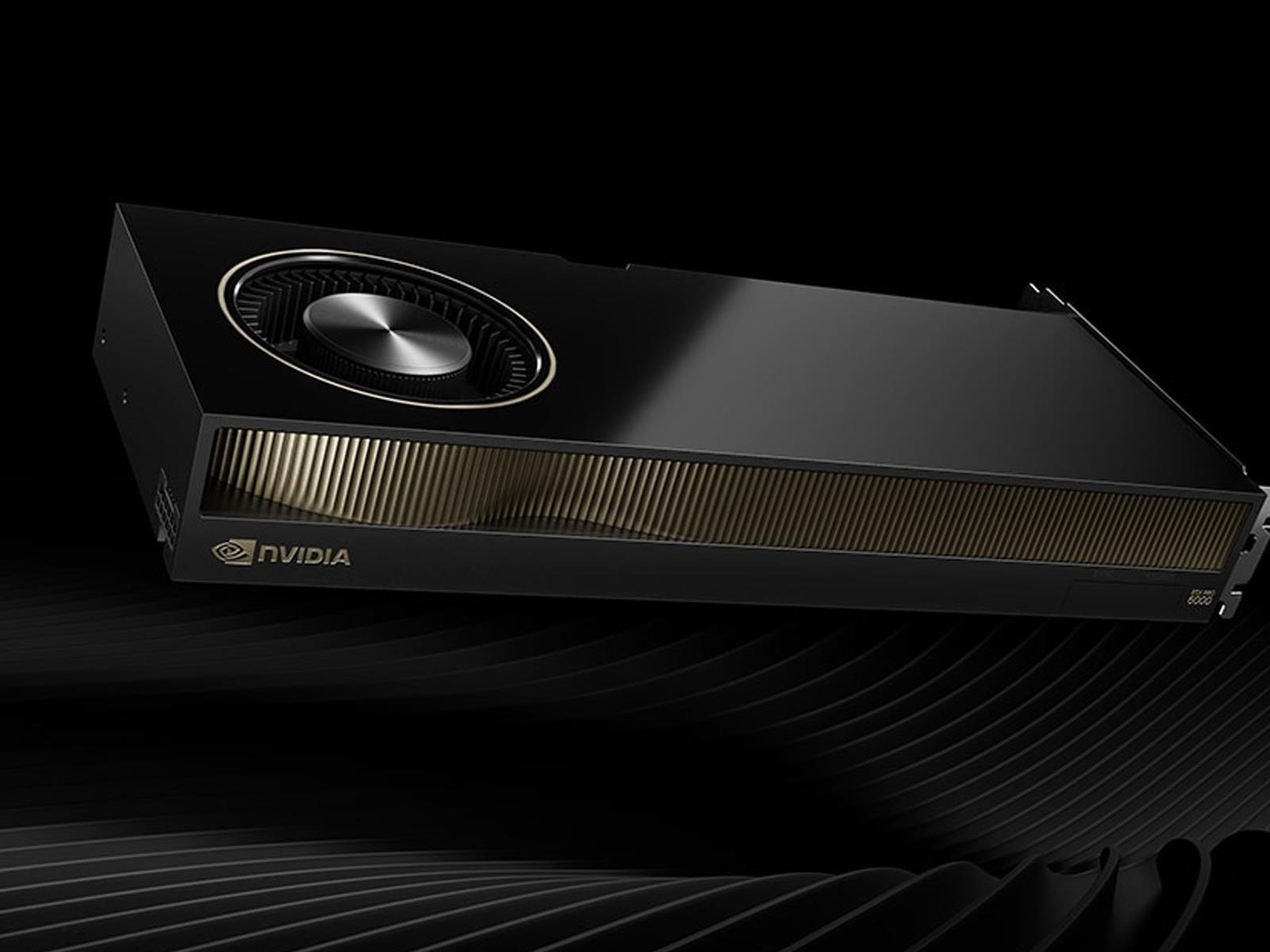
NVIDIA is planning to ship a cut-down version of its RTX Pro 6000 server-class graphics card with key specification downgrades to China, in order to sidestep U.S.-imposed artificial intelligence (AI) chip export restrictions, according to multiple sources who spoke with Reuters on the matter. It’s essentially the same strategy NVIDIA has taken

IPFire 2.29 Core Update 194 Brings Linux Kernel 6.12.23 LTS and Other Updates

Coming a month after IPFire 2.29 Core Update 193, which introduced post-quantum cryptography support for IPsec tunnels, the IPFire 2.29 Core Update 194 release is powered by a newer kernel from the long-term supported Linux 6.12 LTS series, namely Linux 6.12.23, which brings various security and stability fixes.

The post IPFire 2.29 Core Update 194 Brings Linux Kernel 6.12.23 LTS and Other Updates appeared first on Linux Today.

A Grep Trick Every User Should Know: The Square Brackets in the Grepped ps Output

Mastering the command line involves more than just knowing the tools—it’s about using them smartly. One subtle but incredibly useful trick when working with grep and ps is using square brackets to filter processes without matching the grep command itself. This technique is especially helpful when you’re scripting or debugging and want clean output. If you’re interested in enhancing your terminal productivity further, check out this guide on smarter tab completion using .inputrc.

The post A Grep Trick Every User Should Know: The Square Brackets in the Grepped ps Output appeared first on Linux Today.

Yet Another Way to Change the Default Text Editor in Ubuntu and Debian

Choosing the right text editor for your workflow can significantly improve productivity, especially when working with administrative tools like crontab or visudo, which rely on the system’s default editor. If you’re frequently using such tools, it’s essential to set your preferred editor so you don’t have to work with a less comfortable one like nano if you prefer vim, or vice versa.

The post Yet Another Way to Change the Default Text Editor in Ubuntu and Debian appeared first on Linux Today.

Zwift Speed Tests: Frame Ranking Charts

Your chosen bike frame and wheelset both affect speed in Zwift, so it makes sense for racers to do a little research and choose the best tool for the job.

While Zwift’s 4-star rating system for weight and aero is simple and easy to understand, performance varies even among frames with the same star ratings, because the stars are just an approximation. On top of that, Zwift’s addition of bike upgrades means racers need to take into account how a frame will perform when fully upgraded, not only when it’s first purchased.

Therefore, we’ve created several charts ranking all the road bike frames based on their performance on flat roads and climbs, in un-upgraded and fully-upgraded states.

If you’re just looking for recommendations on what to buy, here are some helpful posts:


Charts last updated May 22, 2025


Time Savings Over 1 Hour (Stage 0 Frames)

We begin with a simple chart showing how much time a particular frame will save you across 1 hour of riding at 300W (4 W/kg) compared to the stock Zwift Carbon frame. These are “stage 0” frames, meaning no performance upgrades have been applied.

The chart is sorted from the best-performing frames to the worst, and you can sort based on flat performance or climb performance.

Sort Chart By:

Flat Performance
Climb Performance

Takeaways

When sorted by flat performance, you can easily see that the top 10 frames are very close on flat ground, separated by less than 3 seconds across an hour. There is also a big chunk of bikes near the low end (26 of them, in fact) which are all rather slow on flats, but perform within 2 seconds of each other. Our guess is they all have the same frame CdA value in Zwift, and any time differences are due to frame weight variation.

If you sort by climb performance, the speed falloff from one bike to the next is more even across the board. The S-Works Tarmac SL8 is king of the hill, but remember, this is before any performance upgrades. Let’s move on to the next chart to see which fully-upgraded frame climbs fastest!

Time Savings Over 1 Hour (Stage 5 Frames)

This chart is just like the one above, except these are “stage 5” frames, meaning all possible performance upgrades have been applied.

Read all about Bike Upgrades here >

Use the toggle to sort based on flat performance or climb performance.

Sort Chart By:

Flat Performance
Climb Performance

Takeaways

We don’t see any major rankings changes in terms of flat performance, but that’s no surprise. The Bike Upgrades system is structured in a way that increases performance differences between different frame types as upgrades progress.

So climbing bikes become even stronger climbers, and aero bikes become even more aero.

Sort the results by Climb Performance and you can see obvious evidence of this. The all-arounder S-Works Tarmac SL8 is no longer king of the hill at stage 5, as the Aethos has received more weight reduction upgrades than the Tarmac.

The other two climbing road bikes (Bridgestone Anchor and Trek Emonda) move up dramatically in the rankings compared to their stage 0 counterparts, handily beating the S-Works Tarmac.

The takeaway? If you want a true, pure climbing weapon in Zwift, you’ll want to upgrade the S-Works Aethos.

Time Savings, Stacked (Stage 0 vs Stage 5 Frames)

Next, we have one of our favorite charts, ranking frames based on total time savings across our flat and climbing tests. This chart lets you easily see the best all-around performers, and whether their performance leans to the aero or climbing side.

Use the toggle to see data for stage 0 frames, or fully-upgraded stage 5 frames.

Show Chart For:

Stage 0
Stage 5

Takeaways

The non-climbing bikes don’t move around a lot between the stage 0 and stage 5 versions of this chart, and this makes sense, since they all receive the same upgrades.

What you do see, though, is the climbing bikes moving up the rankings by several slots for stage 5, since they gain so much time on the climbs thanks to their weight reduction upgrades.

Time Savings for Climbing (2 W/kg vs 4 W/kg)

Some readers have asked us to compute time gaps at lower power numbers, which is a perfectly reasonable request. Making this change has the interesting effect on climb times of making lightweight bikes move up the rankings while the more aero-focused bikes drop.

This is because, as you reduce your climbing speed, having an aero bike delivers less benefit.

Below we’ve charted climb time gaps for both 2 W/kg and 4 W/kg, and you can toggle between those two power levels to see how the rankings change. (The 2 W/kg time gap is compared to the Zwift Carbon frame at 2 W/kg, while the 4 W/kg time gap is compared to the Zwift Carbon frame at 4 W/kg). Times given are for stage 0 (un-upgraded) frames.

Show Chart For:

2 W/kg
4 W/kg

Takeaways

At 2 W/kg, the pure climber S-Works Aethos just barely outclimbs the slightly heavier (but more aero) S-Works Tarmac SL8. Bump it up to 4 W/kg, and the aero gains of the Tarmac bring it over the line ahead of the Aethos.

If you’re a lower-powered rider, this chart may help you decide to focus on lighter-weight frames for races or PR efforts where significant climbing is involved.

What About the Tron Bike?

The Tron bike (Zwift Concept 1) is not listed above because it’s impossible to test the Tron frame without also testing the Tron wheels, since they are inseparable.

What we do know is the Tron is not a strong climber, but it’s among the fastest setups for flat and rolling courses.

Here’s a post comparing the Tron bike against top-performing frames + wheel pairings >

Testing Methodology

The data above was generated using our standard bot testing procedure. Our bot rides alone on Zwift, set to 75kg weight, 183cm height, using the Zwift 32mm Carbon wheels. The aero (flat) test route is Tempus Fugit, the flattest course on Zwift, while the weight (climbing) test is done on Alpe du Zwift since it’s a long, steep, and fairly steady climb.

All of the data used by these charts comes from our public Google sheet of test data.

Questions or Comments?

We’d love to know what you think of these charts, including suggestions for improvements. Share your comments below.

Google Tries Funding Short Films Showing ‘Less Nightmarish’ Visions of AI

“For decades, Hollywood directors including Stanley Kubrick, James Cameron and Alex Garland have cast AI as a villain that can turn into a killing machine,” writes the Los Angeles Times. “Even Steven Spielberg’s relatively hopeful A.I.: Artificial Intelligence had a pessimistic edge to its vision of the future.”

But now “Google — a leading developer in AI technology — wants to move the cultural conversations away from the technology as seen in The Terminator, 2001: A Space Odyssey and Ex Machina.”. So they’re funding short films “that portray the technology in a less nightmarish light,” produced by Range Media Partners (which represents many writers and actors)
So far, two short films have been greenlit through the project: One, titled “Sweetwater,” tells the story of a man who visits his childhood home and discovers a hologram of his dead celebrity mother. Michael Keaton will direct and appear in the film, which was written by his son, Sean Douglas. It is the first project they are working on together. The other, “Lucid,” examines a couple who want to escape their suffocating reality and risk everything on a device that allows them to share the same dream….

Google has much riding on convincing consumers that AI can be a force for good, or at least not evil. The hot space is increasingly crowded with startups and established players such as OpenAI, Anthropic, Apple and Facebook parent company Meta. The Google-funded shorts, which are 15 to 20 minutes long, aren’t commercials for AI, per se. Rather, Google is looking to fund films that explore the intersection of humanity and technology, said Mira Lane, vice president of technology and society at Google. Google is not pushing their products in the movies, and the films are not made with AI, she added… The company said it wants to fund many more movies, but it does not have a target number. Some of the shorts could eventually become full-length features, Google said….

Negative public perceptions about AI could put tech companies at a disadvantage when such cases go before juries of laypeople. That’s one reason why firms are motivated to makeover AI’s reputation. “There’s an incredible amount of skepticism in the public world about what AI is and what AI will do in the future,” said Sean Pak, an intellectual property lawyer at Quinn Emanuel, on a conference panel. “We, as an industry, have to do a better job of communicating the public benefits and explaining in simple, clear language what it is that we’re doing and what it is that we’re not doing.”


Read more of this story at Slashdot.

9to5Linux Weekly Roundup: May 25th, 2025

This week, we got some great news with the release of the Linux 6.15 kernel series and the Red Hat Enterprise Linux 10 operating system series, a new major release of the NixOS independent distro, as well as the latest updates to AlmaLinux OS, fwupd, PipeWire, and Steam Client.

On top of that, the Fedora Project talks about removing X11 support from Fedora Workstation’s Wayland session. Below, you can check out this week’s hottest news and access all the distro and package downloads released this past week in the 9to5Linux weekly roundup for May 25th, 2025.

The post 9to5Linux Weekly Roundup: May 25th, 2025 appeared first on Linux Today.

Where hyperscale hardware goes to retire: Ars visits a very big ITAD site

“The biggest risk is data escape.”

Eric Ingebretsen, chief commercial officer at SK TES, an IT asset disposition provider, tells me this early on during a tour of a 128,000-square-foot facility in Fredericksburg, Virginia. He will restate this a few times.

A big part of this site’s pitch to its clients, including the “hyperscale” customers with gigantic data centers nearby, is that each device is labeled, tracked, and inventoried for its drives—both obvious and hidden—and is either securely wiped or destroyed. The process, commonly called ITAD, is used by larger businesses, especially when they upgrade fleets of servers or workers’ devices. ITAD providers ensure all the old gear is wiped clean, then resold, repurposed, recycled, or destroyed.

Read full article

Comments

LlamaFirewall: Open-source framework to detect and mitigate AI centric security risks

LlamaFirewall is a system-level security framework for LLM-powered applications, built with a modular design to support layered, adaptive defense. It is designed to mitigate a wide spectrum of AI agent security risks including jailbreaking and indirect prompt injection, goal hijacking, and insecure code outputs.

The post LlamaFirewall: Open-source framework to detect and mitigate AI centric security risks appeared first on Linux Today.