The 41mm Apple Watch Series 9 Is on Sale for $300 Right Now

We may earn a commission from links on this page. Deal pricing and availability subject to change after time of publication.

If you’ve been considering an Apple Watch but don’t want to drop Ultra-level cash, the Apple Watch Series 9 (GPS + Cellular, 41mm) is currently down to $299.99 on Woot, originally priced at $529. That’s for a brand new unit (not refurbished), and it comes with a one year Apple limited warranty. It’s available in two colors: a silver case with a storm blue band and a pink case with a light pink band. Both fit small to medium wrist sizes and ship free for Prime members (others pay $6 for shipping). The deal is live for three days or until it sells out—whichever comes first.

The Series 9 is a bit smaller than the newer Series 10 and lacks some of the extra features designed for outdoor-focused users found in the Ultra 2. But unless you’re into backcountry hikes or obsessed with having the brightest screen possible, the Series 9 gets you nearly everything else for much less. You get the double-tap gesture for hands-free control, a bright always-on display, fast performance, and Siri built into the watch. It also supports sleep tracking, mental health tools, vision tracking, and the usual fitness and cycling features. PCMag named it the best smartwatch of 2023 and gave it an Editor’s Choice award when it launched, noting how much it delivers for its price range.

Because this is the GPS + Cellular version, you can stream music, take calls, or use maps without needing to bring your iPhone along. That’s especially useful if you’re running, biking, or just want to stay connected without carrying your phone. Battery life is rated at 18 hours, or up to 36 hours in low power mode, which is more than enough for most users’ daily wear. For those who don’t need the newest version but still want full access to Apple’s ecosystem and features, the Series 9 offers a practical and feature-rich option at a much lower cost than the latest models.

‘Teenage Mutant Ninja Turtles’ Co-op VR Game Coming to Quest & PC VR in 2026

Cortopia Studios, the team behind GORN 2 (2025), announced it’s working on a ‘Teenage Mutant Ninja Turtles’ game which is slated to land on Quest and SteamVR headsets sometime next year.

We haven’t seen Teenage Mutant Ninja Turtles: Empire City in action yet, as Cortopia Studios and publisher Beyond Frames Entertainment only released a quick trailer announcing the titular ‘heroes in a half-shell’.

The studio did release a few screenshots though, showing off a few distinctly New York environments in addition to Master Splinter himself—all of it rendered in a comic book-style cel shading.

1 of 5


Image courtesy Cortopia Studios


Image courtesy Cortopia Studios


Image courtesy Cortopia Studios


Image courtesy Cortopia Studios


Image courtesy Cortopia Studios

In addition to playing solo, the studio confirmed it’s launching with four-player co-op, which sounds pretty radical—letting you play as Leonardo, Raphael, Donatello, and Michelangelo. The studio says you’ll also get a chance to master each Turtle’s signature weapon with precision strikes and blocks in this first-person action adventure.

In Teenage Mutant Ninja Turtles: Empire City, there will also be some ninja-style parkour on offer too, as users can “scale urban landscapes” while on their way to confront “fan-favorite villains,” the studio says.

While you won’t be able to battle everyone’s favorite baddie himself—the game is set following the Shredder’s demise—we can probably expect a fair share of Foot Clan members and other recognizable villains too.

Additionally, IGN reveals we should also expect pals like April O’Neil and Master Splinter to pop up, as well as a fully explorable Turtles’ lair.

There’s no launch date yet beyond the 2026 release window. In the meantime, you can wishlist the game on the Horizon Store for Quest, and on Steam for PC VR headsets.

The post ‘Teenage Mutant Ninja Turtles’ Co-op VR Game Coming to Quest & PC VR in 2026 appeared first on Road to VR.

Corsair’s New One i600 Gaming PC With RTX 50 Firepower Will Give You Wood

Corsair's New One i600 Gaming PC With RTX 50 Firepower Will Give You Wood
Corsair is expanding the range of its custom gaming PCs with the launch of the One i600, a “compact powerhouse PC” that promises to deliver more power, efficiency, and thermal performance compared to the One i500. It also gives buyers the option of going with a real wooden front panel with a forestry certification, in case that’s something

OpenSnitch: The Must-Have Application Firewall for Linux

When it comes to protecting your Linux system from unwanted network connections, having a good firewall is essential. While most Linux users rely on traditional firewalls like iptables, firewalls, or ufw, these usually work at the network level and don’t give detailed control over which applications can connect to the internet.

This is where OpenSnitch comes in, a GNU/Linux application firewall designed to give you control over your outgoing connections on a per-application basis.

In this article, we will explore what OpenSnitch is, how it helps secure your Linux machine, and guide you through simple installation and usage steps.

The post OpenSnitch: The Must-Have Application Firewall for Linux appeared first on Linux Today.

Spotify adds a ‘Following’ feed and ‘In this episode’ section for podcasts

Spotify is adding a trio of new features to its app that should make listening to and interacting with podcasts a little easier. First, the streaming service is putting a Following feed in the main Podcasts area on the Home screen. With this toggle, you can quickly see what’s new from the shows you subscribe to. The company says the goal here is to eliminate the need to search for fresh content from podcasts you follow, and it pledges it will “continue to explore new ways to make this space even better.” And just below shortcuts on the Home screen, Spotify will start displaying podcast recommendations, complete with a note as to why the algorithm picked it for you.

Next, Spotify plans to roll out an “In this episode” section for podcast pages. Here, you’ll find links to other shows, songs, audiobooks, playlists and more than hosts mention or recommend. Creators will have the ability to link those items as they see fit, so you won’t have to go looking for them later. 

Lastly, the company is giving podcast comments a slight refresh. Based on user feedback, Spotify is introducing threaded replies and emoji reactions for creators. This will all still be controlled via Spotify for Creators where they can also control if comments are available for their show or specific episodes. 

This article originally appeared on Engadget at https://www.engadget.com/entertainment/streaming/spotify-adds-a-following-feed-and-in-this-episode-section-for-podcasts-130051850.html?src=rss

Ars Live: Four space journalists debate whether NASA is really going to Mars

I’m incredibly excited, as part of the Ars Live series, to host a conversation with three of the very best space reporters in the business on Thursday, May 29, 2025, at 2:30 pm Eastern about the future of NASA and its deep space exploration ambitions.

Joining me in a virtual panel discussion will be:

  • Christian Davenport, of The Washington Post
  • Loren Grush, of Bloomberg
  • Joey Roulette, of Reuters

The community of professional space reporters is fairly small, and Chris, Loren, and Joey are some of my smartest and fiercest competitors. They all have deep sourcing within the industry and important insights about what is really going on.

Read full article

Comments

This JBL Waterproof Speaker Is Just $40 Right Now

We may earn a commission from links on this page. Deal pricing and availability subject to change after time of publication.

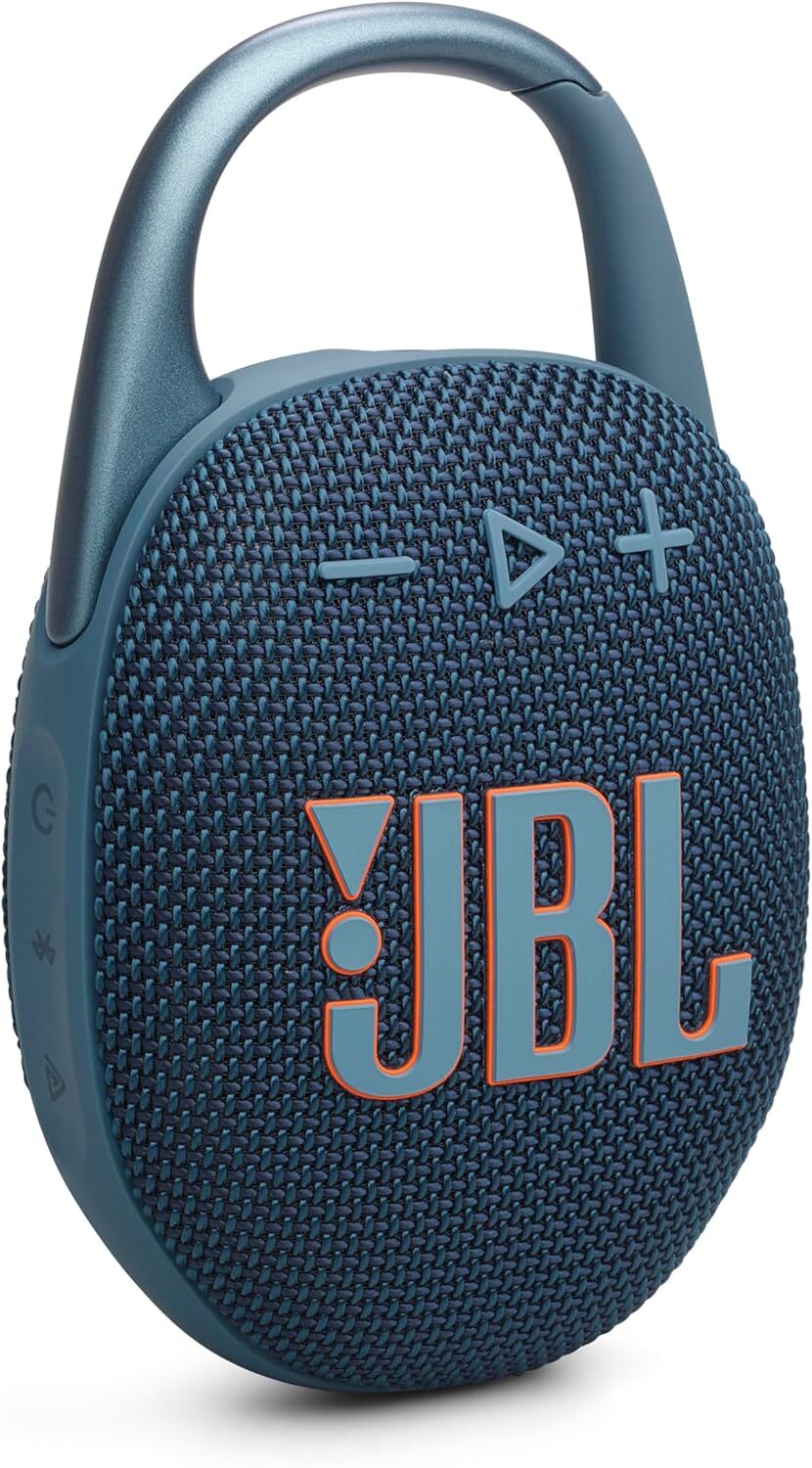
Warm weather is finally here, and it deserves a proper soundtrack. Whether you’re headed to the beach, camping in the woods, or taking a bike ride, the JBL Clip 5 is a compact Bluetooth speaker that’s built to tag along. Its IP67 rating ensures it’s both waterproof and dustproof, making it suitable for any outdoor adventure this summer. At 38% off, it’s currently at its lowest price ever, according to price-trackers.

An IP67 rating means you can submerge it for up to 30 minutes in a meter of water, so this speaker isn’t ideal for long swims. The built-in carabiner clip can be hooked onto anything from a folding chair to a tent or backpack, and the ability to suspend it means you don’t have to risk damage by placing it on the ground.

Despite its small size and travel-friendly design, the JBL Clip 5 delivers clear audio with decent bass. While the volume is moderate, setting it to the highest volume may result in some distortion, and it’s not as loud as some of the best outdoor speakers with higher price tags. Compared to similarly priced speakers like Anker, reviewers often give JBL the edge for sound clarity. You can also sync two Clip 5 speakers using Auracast for an even fuller sound.

Portability is one of the major perks to consider—it weighs in at just over half a pound, making it a lightweight option for rugged activities. Battery life is another bonus: Playtime lasts a full 12 hours, and a feature called Playtime Boost extends it even further. With that feature on, however, you may notice a slight reduction in audio quality. If you’re looking for a compact yet powerful speaker to accompany you on nature excursions, outdoor activities, or just to jam out in the shower, the JBL Clip 5 speaker could be the right choice.

The war on links escalates with Firefox’s experimental AI previews

Mozilla’s Firefox has joined Chrome, Edge and other browsers in offering AI-powered overviews, but this time with a twist. The latest version lets you use a keyboard shortcut to open a pop-up that previews a link’s contents when you hover over it from any web page. It’s a new way that AI is being integrated into browsers that may help users but hurt publishers. 

To try the new feature you need the latest Firefox release channel version 139.0. Within the settings under “Firefox Labs,” simply turn on Link Previews. “After enabling, use the Alt+Shift keyboard shortcut when hovering over a link to see the previews in action,” Mozilla writes. 

Once turned on, you can hover your mouse over a link on any webpage and a vertical window will pop up showing an image on top, the publisher’s link and a quick summary. Below that are AI-generated “key points” that provide further information. Mozilla previously said that it uses the SmolLM2-360M language model from Hugging Face, on-device with Reader’s View content to ensure privacy. 

Link Previews first came along last month in beta but is now widely available in some regions. Like Google’s AI previews, it could risk harming publishers by reducing traffic (which is likely why neither of those features are available in France where I live). It’s also not clear if Firefox is paying publishers to use their information in AI-powered summaries. 

This article originally appeared on Engadget at https://www.engadget.com/ai/the-war-on-links-escalates-with-firefoxs-experimental-ai-previews-123059735.html?src=rss

How Tariffs Are Reshaping the Resale Market (and How to Make the Most of It)

Today, like most days, I made a trip to the post office to ship out my Poshmark sales. But what I’m shipping out looks a little different than it might have a few months ago. Of the seven packages I’m handing off, only one contains an item I’d consider “nice.” Alongside that Fendi top are six pieces from fast-fashion brands—ultra cheap stuff I ordered from Chinese retailers like Shein and Temu that, until recently, I never expected to actually sell, given that someone could buy the same item new at, well, Shein and Temu prices.

But since the United States’ new tariff structure went into effect (primarily the elimination of the de minimus exemption), consumers have been forced to adjust to a reality in which they can’t easily source everything from toothbrush holders to micro-trendy outfits from an low price Chinese retail giant, to say nothing of concerns over how much more they could be paying for pricier items like autos and appliances made with foreign parts or manufactured overseas.

In this period of uncertainty, resale apps may be filling the void. My own Poshmark sales are up compared to the month before the tariffs went into effect, with a notable rise in sales of basic, cheap stuff. Curious, I talked to a few experts to see if my experiences were indicative of a broader trend—one that could mean good things (well, relatively speaking) for resale buyers and sellers alike.

The vibe on the resale apps in the wake of tariffs

The rollout of the tariffs has been confusing and disjointed. It was (and still is) hard to predict when consumers will see price increases on foreign-made electronics, cars, and other goods, or on products assembled in the U.S. but made with imported parts. But from the start, it has been obvious that goods from China in particular were about to cost a whole lot more—including the volumes of stuff shipped directly to consumers from the likes of Temu and Shein, the latter of which is famous for uploading 10,000 new styles to its site every day (and for charging unbelievably low prices for all of them). Months ago, when the tariffs were first announced, people started wondering if they should start stocking up (and on what), whether they were importing cheap clothes from Shein or bracing for higher prices on more substantial goods like smartphones.

I’ve bought more than my share of junk from Shein, though I know it is not exactly a sustainable or environmentally friendly choice. To make myself feel better about that, I’ve always listed the clothes on resale apps once I’m done with them. To be clear, these are cheaply made garments—you don’t buy your capsule wardrobe on Shein; Shein is where you shop for micro-trends (styles that are currently all over your Instagram and Pinterest feed, but which won’t be in two months) or basics like tank tops that you can use and abuse. Prior to the tariffs rolling out, it was inconceivable that anyone would pay me $9 (plus shipping) for a pre-worn, cheaply-made dress or workout set that I had only paid $15 for in the first place—but that’s what started happening.

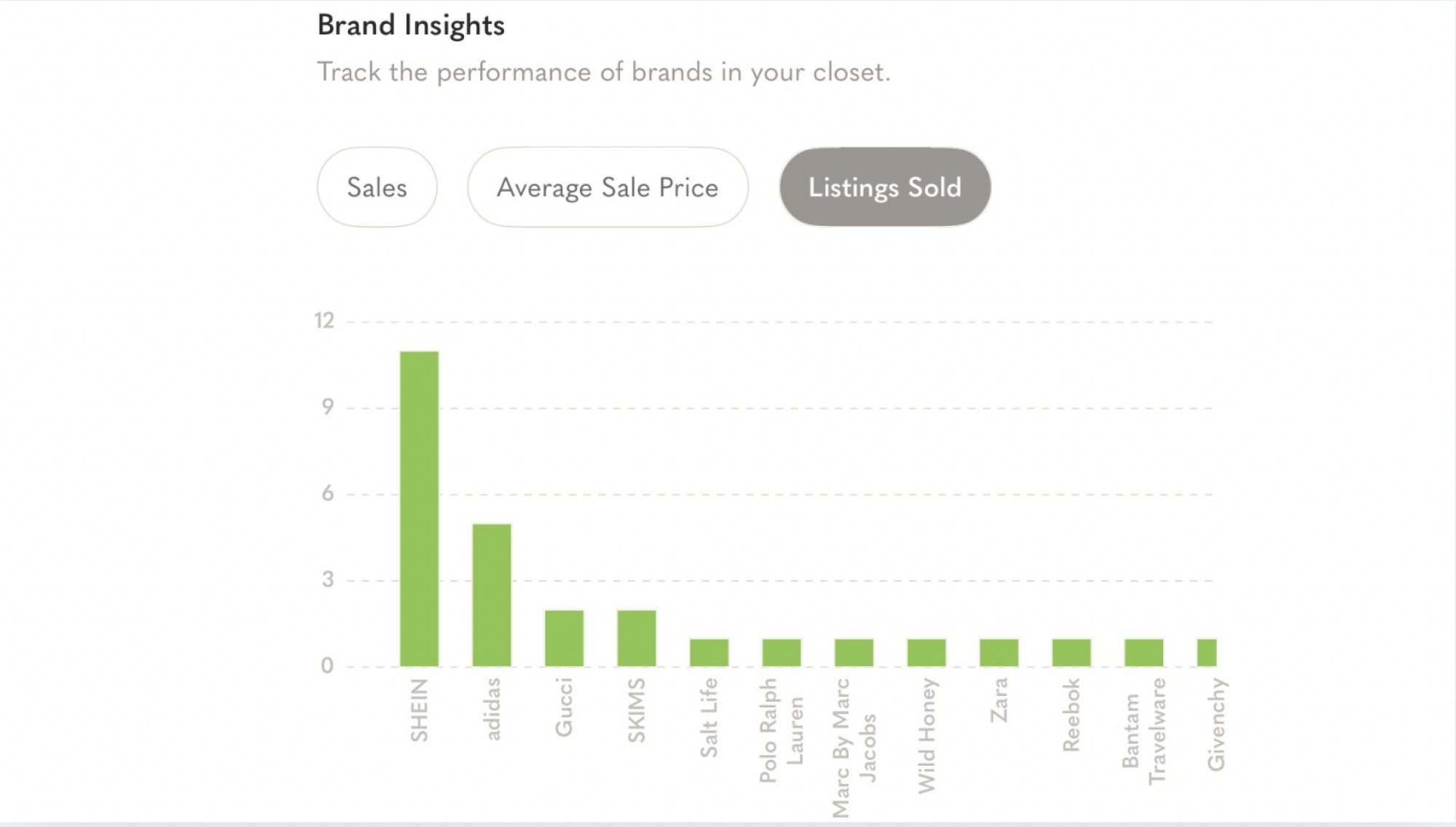
In the past month, I’ve still sold clothing and accessories made by Adidas, Gucci, Skims, Ralph Lauren, Marc Jacobs, Reebok, and Givenchy, but those tend to be one-off sales. My Shein resales for the last four weeks absolutely dwarf them. I also sold a few electronics items—an Apple Watch and facial micro-current device—I had listed in my Poshmark shop months earlier. Could I chalk up all of these sales to tariffs, and to anxiety about impending price increases on electronics?

Poshmark data in iOS
My Shein sales this month vs. everything else
Credit: Lindsey Ellefson

Certainly I’m not alone in noticing it this trend. A Poshmark spokesperson tells me, “We’ve seen an increase in sales of internationally-made items, especially from brands that have announced price hikes due to high tariffs. Despite rising prices, demand for fast fashion remains strong as consumers seek trendy, affordable styles. Buying those pieces secondhand lets them stay on-trend while keeping clothing in circulation.”

In addition to Shein and Temu, higher-priced brands that publicly announced tariff-related price increases have also seen resale spikes, with sales of Columbia button-down shirts surging by 61% month over month, and sales of Hermès sandals up 27%. Buying used Hermès sandals is one thing—not all of us have $840 laying around to spend on designer slides to ring in the summer. But a Columbia button-down? That’s the kind of item I’m used to finding at Marshall’s for maybe $30—but people now seem to be flocking to buy them used, worried that even cheap shirts will become relatively priceier due to tariffs.

Meanwhile, Poshmark reports sales on consumer electronics have increased as well: The week of April 27, resales of Sony products were up 22% month over month, and Apple products were up 21%. The times seem to be changing, and they’re doing it in a hurry.

What tariffs means for resale shoppers

I am not only a resale seller, but a resale shopper, and the uncertainty around tariffs has made me a lot more discerning with what I’m buying new. Part of this is just that I’m now paying more attention. I love the leisure and athletic wear made by SET Active. I own a lot of it, and I have never before considered selling any of it because it lasts so long and maintains its shape so well. Until recently, I have also never paid much attention to where it is made: While SET Active designs its products in California, its active fabrics are all made in China. Prices haven’t gone up on the official website yet, but in preparation for a time when they might, I’ve already started shopping the brand on Poshmark and Depop. It’s not the worst thing in the world; buying used is both cheaper and more sustainable. I’ve always been an avid purchaser of resale goods—I’ve just never had to do it so strategically before.

(I’ve found it easier to give up Shein altogether—I can manage fine without the $4 tank tops I’ve been putting through absolute hell the past few summers—but my Poshmark customers have proven more reluctant to resist the allure of fast fashion, even used.)

I’m not alone in being more strategic with my resale purchases. Financial experts are noticing the same thing. “In the wake of the announcement and implementation of the tariffs, people have been looking for cheaper alternatives to the more expensive imported goods,” says Aaron Razon, a personal finance expert at Couponsnake, “especially as many domestic products not only fall short in meeting the demand for certain products, but lack the variety and style that imported goods offer. [Domestic products] are also not exactly the cost-effective option consumers are looking for, and this is one of the major reasons interest in resale platforms [has] been on the increase.”

Bill London, an international business attorney, points out that in addition to causing prices to rise, tariffs have resulted in potential shipping delays, a fact that has also contributed to, “a surge in second-hand fast fashion interest.”

Six months ago, if you needed a certain kind of dress for, say, a themed bachelorette party, you could order it from Shein for $20, safe in the knowledge that you’d probably never wear it again. Today, its price could be closer to $30 or $40, and you might face delays in receiving it. The appeal of fast fashion was always in the low cost and convenience, provided you had 10 to 14 days to wait for the thing to arrive from China. Now, it just makes more sense to buy that dress from someone in the U.S. who likewise didn’t see themselves rewearing it, —and now, they’re selling it for roughly the same $20 they originally paid. For the buyer, it’s still a relative deal, and it’ll even arrive sooner.

It’s not just fast fashion

Brands beyond Shein and Temu are seeing a lift. As the Poshmark rep pointed out, resales on select high-end brands are up, too. Buying used luxury goods has always been a smart financial decision (certainly it’s a practice I’ve been dedicated to for a long time), but with manufacturing and importation costs an ever-murkier question, it’s more sensible than ever.

A spokesperson for Vestiaire Collective, a designer resale platform, tells me that U.S. buyers are increasingly able to see the duties applied to their purchases from Europe and Asia at checkout, and that the company has been working to beef up its American foothold for years. That effort is now paying off in a big way thanks to tariffs: In 2022, VC acquired Tradesey to increase its selection of pre-owned fashion offering for U.S. buyers, and it ramped up associated brand marketing the following year. VC also curates a list of goods that are ready to ship from New York City, making it easier for American buyers to identify items that can easily come to them domestically, no tariffs or duties required. Consequently, the brand rep says VC has, “seen a shift of more U.S. buyers buying from U.S. sellers” lately.

Personally, I’ve noticed people buying from me lately, in particular, is workout attire. With the cost of everything going up, it might seem more of a stretch to pop into Lululemon to buy a new pair of leggings for over $100. Meanwhile, the trusty Shein alternative is now more money than its worth. It’s this class of in-between necessities—things you don’t need to survive, but may be a nice-to-have for your particular interests or lifestyle—that is a source of personal economic woe, and where resale can fill the gap. Whether you need new workout gear, a one-time wear outfit, a few basic pieces, or even a designer handbag, the reality of the post-tariff world is that you’re almost certainly better off looking on resale apps before even considering buying new. (You certainly have options—I’ve assembled a rundown of my own favorite resale apps, including the goods you’re most likely to find on each.)

What this trend means for resellers

I remain shocked that people who presumably would have once ordered their workout sets and summer shorts off Shein are filling the fast-fashion void by purchasing mine, but take it from me: If you have ever considered selling your old clothes or housewares, but figured what you have to offer is too basic, cheap, or plentiful to make the effort worth it, this is your moment. I used to have cheap goods and fast fashion listed on my resale accounts only because it helped keep my number of available listings up, which contributed to my profiles’ reputation and lured in buyers for the pricier objects I actually expected to sell. Now, though, it’s the cheap stuff that is really moving, and making me money. I’ve started reevaluating my closet and reconsidering what meets my threshold for “worth it” to list. Post-tariffs, everything is worth it to list.

As London puts it, “The tariffs have altered the way in which people do their shopping.” It’s still pretty early into the great American tariff experiment, but some brands commissioned surveys early on this year to see how people were planning to deal with cost increases and found that a major chunk of consumers indeed expected to rely more on resale.

ThredUp, another online resale platform, found that 59% of consumers reported that if apparel got more expensive, they’d look to more affordable options, like secondhand buying, and consumers planned to spend 34% of their apparel budget on secondhand items this year. And those figures are a lot higher for Millennials and Gen Z buyers: They reported planning to spend almost half their clothing budget on resale.

Data from Smartly, an online shopping rewards app, also shows that 50% of survey respondents planned to consider resale goods in the face of rising costs. This means that even for casual resellers or those new to the concept entirely, there are a lot of new prospective buyers, which can translate directly to quick sales. At a time when the cost of necessary goods is rising right alongside those in-between necessities, you can make extra cash by selling what you already have.

Poshmark data in iOS
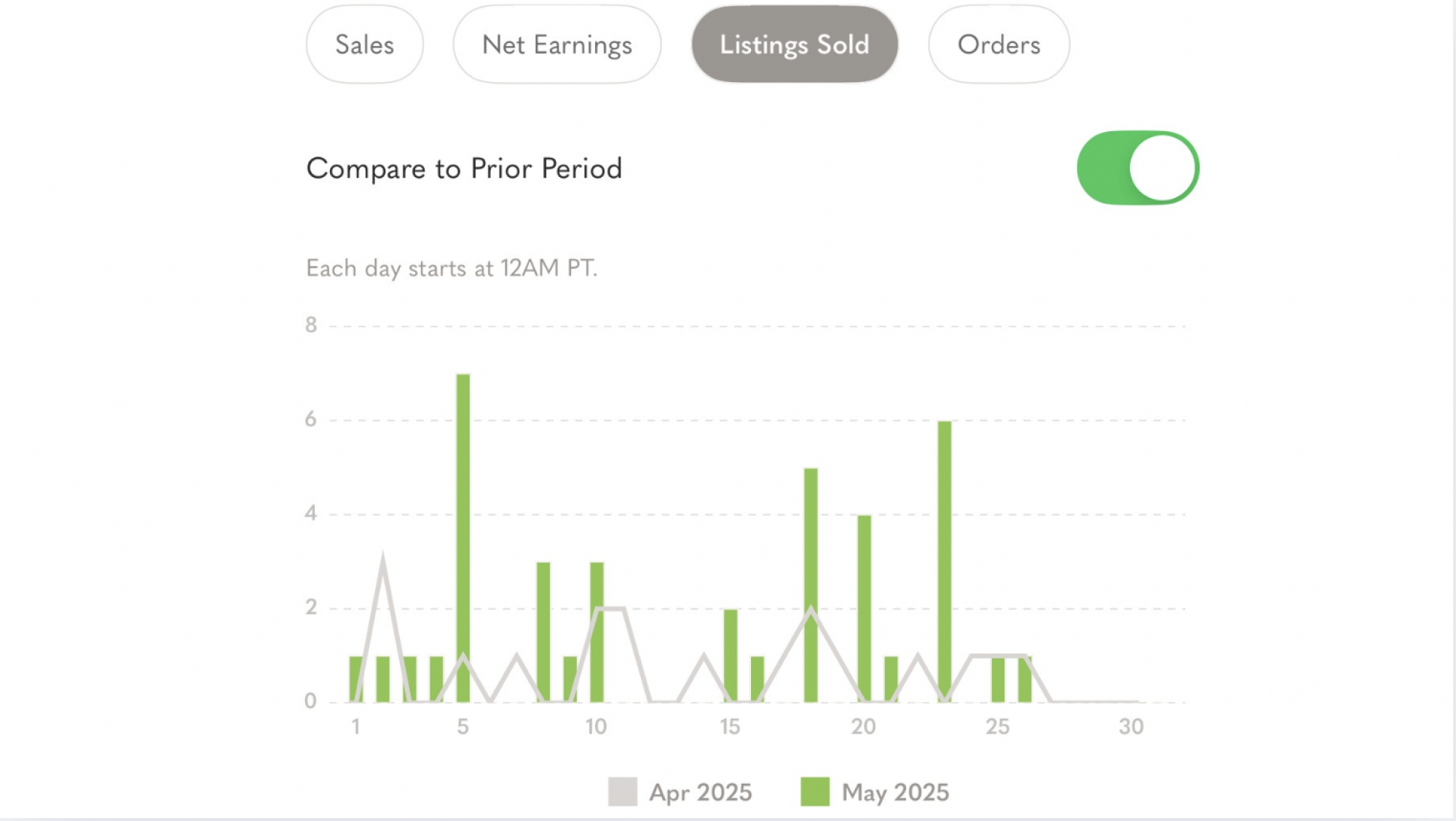
In general, my sales are way up month over month since tariffs went into effect in early May
Credit: Lindsey Ellefson

Will the resale spike last?

I’ve been buying and selling on resale apps for years and have always had success finding cool stuff to buy as fast as I could get rid of my old clothing, accessories, and electronics. While I’ve definitely noticed a spike in my sales lately, that’s not to say there wasn’t demand before the tariffs were announced. If you’re new to buying or selling on an app, don’t worry that the bubble will burst and you’ll have invested a bunch of time in listing your wares for nothing—even if and when the moment passes, reselling can still be a reliable way to make a little extra cash. (In the meantime, if you have a lot to sell and want to maximize your profits, download a cross-lister like Vendoo, which helps you easily list the same product across multiple marketplaces.)

Some experts do expect that things could cool down in the nearer term. “Whether the trend persists depends on a number of things, such as how long the tariffs are in effect and how buyers respond to costs,” London says. “The resale market for the products is likely to continue expanding if the tariffs are maintained. The demand might plateau or divert towards quality goods or eco-friendly goods when buyers adapt.”

Razon, meanwhile, thinks resale apps will continue to thrive, but that the interest in procuring cheaply-made things, like fast fashion, may wane. “Resale platforms have been on the good end of the recent tariff increases, especially with consumers looking for cheaper alternatives to imported goods,” he says. “The truth is—though it may take consumers time to realize it—they will eventually come to appreciate better-quality goods. There is a great chance that consumers’ interest in these lesser-quality goods will wear off as soon as they begin to adjust to the new economic reality.”

That is to say, list your Shein, Temu, and Aliexpress stuff now while people are still mourning its loss, but also consider those more familiar brands that may also soon see price hikes. Take stock of your closet and do a bit of research to see where all your potential stock is made. Just like I’m worried my beloved SET Active attire is going to go up in price because it’s made in China, consumers may soon find themselves wanting to source cheaper stuff from Nike, Adidas, Lululemon, Levi’s, and more, as all of those companies manufacture a lot of their clothing overseas.

The resale platforms themselves are already anticipating that their digital products are going to get more valuable and stay valuable through (and beyond) the tariff era. Manish Chandra, Poshmark’s founder and CEO, says, “As the landscape of tariffs and imports evolves, we believe the secondhand marketplace will become an increasingly valuable and cost-effective resource for American consumers. By shopping from Poshmark closets or starting their own, consumers are supporting sustainability and helping strengthen the American economy.”

In other words, buying resale is another way of buying American, even if everything you’re buying was made in India or China.

Grading for Equity Coming To San Francisco High Schools This Fall

An anonymous reader shares a report: Without seeking approval of the San Francisco Board of Education, Superintendent of Schools Maria Su plans to unveil a new Grading for Equity plan on Tuesday that will go into effect this fall at 14 high schools and cover over 10,000 students. The school district is already negotiating with an outside consultant to train teachers in August in a system that awards a passing C grade to as low as a score of 41 on a 100-point exam.

Were it not for an intrepid school board member, the drastic change in grading with implications for college admissions and career readiness would have gone unnoticed and unexplained. It is buried in a three-word phrase on the last page of a PowerPoint presentation embedded in the school board meeting’s 25-page agenda [PDF]. The plan comes during the last week of the spring semester while parents are assessing the impact of over $100 million in budget reductions and deciding whether to remain in the public schools this fall. While the school district acknowledges that parent aversion to this grading approach is typically high and understands the need for “vigilant communication,” outreach to parents has been minimal and may be nonexistent. The school district’s Office of Equity homepage does not mention it and a page containing the SFUSD definition of equity has not been updated in almost three years.

Grading for Equity eliminates homework or weekly tests from being counted in a student’s final semester grade. All that matters is how the student scores on a final examination, which can be taken multiple times. Students can be late turning in an assignment or showing up to class or not showing up at all without it affecting their academic grade. Currently, a student needs a 90 for an A and at least 61 for a D. Under the San Leandro Unified School District’s grading for equity system touted by the San Francisco Unified School District and its consultant, a student with a score as low as 80 can attain an A and as low as 21 can pass with a D.


Read more of this story at Slashdot.

Insomniac Games Does Not “Have Plans” For PlayStation VR2 Games

When asked about PS VR2 games in development, Sony’s Insomniac Games responded “We do not have plans for this.”

The response came on X, and the context of the question was an Insomniac post welcoming summer interns.

UploadVR has reached out to Sony to confirm that this means Insomniac is not working on a PlayStation VR2 game, and we’ll update this article if we get a response.

We do not have plans for this.

— Insomniac Games (@insomniacgames) May 27, 2025

From its founding in the late 90s until 2016, Insomniac mainly developed PlayStation games on contract from Sony, including the Spyro, Resistance, and Ratchet & Clank series.

While it continued to release a few flatscreen PlayStation games, from 2016 to 2019 Insomniac also released four PC VR games for the Oculus Rift on contract from Facebook. In order, these were:

  • Edge of Nowhere, a third person gamepad-controlled adventure game based on H.P. Lovecraft’s At the Mountains of Madness. It launched very soon after the Rift itself, and is considered one of its best launch-window titles.
  • Feral Rites, a third person gamepad-controlled brawler where your character transforms into animals. It was not as well received as the studio’s other VR games.
  • The Unspoken, a PvP magic dueling launch title for the Oculus Touch tracked controllers, considered by many to be one of the best VR games of all time.
  • Stormland, a sprawling open-world action-adventure shooter with support for 2 player co-op. One of the few AAA made-for-VR games available on PC, it launched six months after the Rift S, and alongside the Oculus Link feature of the original Oculus Quest.

Insomniac’s close relationship with Facebook led to rumors that the company would acquire it. But instead it was Sony that acquired Insomniac, in 2019.

Sony Acquires Insomniac Games
Insomniac Games — the developers behind Sony’s PS4 megahit Spider-Man — are going to become part of Sony Worldwide Studios. Sony’s acquisition of Insomniac turns the PS4 and PSVR maker into the owner of upcoming PC VR game Stormland and a host of other VR and AR projects. Big news:
UploadVRIan Hamilton

Given Insomniac’s four Rift games and the success of the original PlayStation VR, many in the VR industry had expected Sony to leverage the studio to develop VR titles for a PlayStation VR2 on PS5 (both of which were only rumors at the time). Some had even hoped Insomniac could bring its Rift games over to PlayStation VR, though it’s likely Facebook owns those IPs.

None of this happened, of course. Insomniac’s VR games remain exclusively on Meta’s PC VR store, and the studio hasn’t released any VR game on PlayStation. Instead, since acquisition, the studio has continued to release Spider-Man and Ratchet & Clank flatscreen games, and is currently working on a flatscreen Wolverine game.

That Wolverine game does not yet have a release year, nevermind date, suggesting Insomniac is fully focused on its development. And based on the reply on X, it won’t be getting PS VR2 support, and nor is the studio working on a PS VR2 game in secret.

While Sony leveraged other PlayStation Studios to deliver Horizon Call of the Mountain and Gran Turismo 7 in VR at PS VR2’s launch, since then the headset has mainly relied on third-party games, with the exception of the My First Gran Turismo free-to-play release.

Shuhei Yoshida: “I’m Sorry I Was Wrong” About PS VR2
Former head of PlayStation Studios Shuhei Yoshida is “sorry” for being wrong about PlayStation VR2, though described his work on the original as “the most fun I had”.
UploadVRDavid Heaney

Insomniac’s response comes four months after former Sony executive Shuhei Yoshida said he was “sorry” for being “wrong” about PS VR2. Since that statement though, Sony has cut the price of the headset from $550 to $400, and it’s currently on sale for $350 for the next two weeks as part of Days Of Play 2025.

PlayStation VR2 has also seen a steady stream of major titles arrive over the past year, including Metro Awakening, Alien: Rogue Incursion, Skydance’s Behemoth, and the exclusive new VR version of the Hitman: World Of Assassination Trilogy. Its new $400 price has seen developers report a noticeably larger player base, leading others to port their Quest titles to the platform, including recently Ghosts of Tabor and UNDERDOGS.

Switch 2 will add a rewind function to its online N64 games

On June 5, which is also the Switch 2’s launch day, Nintendo is rolling out new features for N64 games on Switch Online. If you just want to play to relax and not worry about in-game lives, the ability to rewind will perhaps sound like the most useful among the upcoming features. It will let you, well, rewind the game if you make a mistake so you can try again from that point. Failed to a get a birdie on Mario Golf? No problem. Just access the feature and choose from the panels at the bottom that show up to choose which point you’d like to start from again. That said, the function will only be accessible on the Switch 2. 

Another new feature coming to N64 games is the CRT filter. Yes, it will give your game that old CRT TV look by putting a pixelated texture on top of it. If you’ve originally played N64 titles on old TVs, it could be a fantastic throwback to your youth. Like the rewind function, though, the option will be exclusively available on the Switch 2. It’s not quite clear why it won’t be rolling out on Switch consoles, as well. If you’re not getting the new console, the only update you’re getting on June 5 is the ability to check what each controller button does on the game you’re playing. You can then change what each button does to make the controls easier for you. 

This article originally appeared on Engadget at https://www.engadget.com/gaming/nintendo/switch-2-will-add-a-rewind-function-to-its-online-n64-games-121506171.html?src=rss

Nothing’s Carl Pei Says Your Smartphone’s OS Will Replace All of Its Apps

In an interview with Wired (paywalled), OnePlus co-founder and Nothing CEO, Carl Pei, said the future of smartphones will center around the OS and AI to get things done — rendering traditional apps a thing of the past. 9to5Google reports: Pei says that Nothing’s strength is in “creativity,” adding that “the creative companies of the past” such as Apple “have become very big and very corporate, and they’re no longer very creative.” He then dives into what else but AI, explaining that Nothing wants to create the “iPod” of AI, saying that Apple built a product that simply built a better user experience: “If you look back, the iPod was not launched as ‘an MP3 player with a hard disk drive.’ The hard disk drive was merely a means to a better user experience. AI is just a new technology that enables us to create better products for users. So, our strategy is not to make big claims that AI is going to change the world and revolutionize smartphones. For us, it’s about using it to solve a consumer problem, not to tell a big story. We want the product to be the story.”

Pei then says that he doesn’t see the current trend of AI products — citing wearables such as smart glasses — as the future of the technology. Rather, he sees the smartphone as the most important device for AI “for the foreseeable future,” but as one that will “change dramatically.” According to Pei, the future of the smartphone is one without apps, with the experience instead just revolving around the OS and what it can do and how it can “optimize” for the user, acting as a proactive, automated agent and that, in the end, the user “will spend less time doing boring things and more time on what they care about.”


Read more of this story at Slashdot.

The 16 best gifts for dads

Dads can be just as hard to shop for as moms — really, finding the perfect gift for any parent can be a struggle. But if you’re shopping for a father who’s into consumer tech, though, we can help. Below, we’ve consulted our many hours of gadget testing and put together a list of standout gift ideas, from VR headsets to pizza ovens to smartwatches to meat thermometers. And don’t worry, there are budget-friendly options in here too that can help the dad who’s always traveling, those who like to tinker with their own tech and others.

Best gifts for dads in 2025

Check out the rest of our gift ideas here.

This article originally appeared on Engadget at https://www.engadget.com/best-gifts-for-dads-170014057.html?src=rss

SpaceX’s ninth Starship test flight reaches space but fails to deploy fake satellites

The Starship super heavy-lift launch vehicle blasted off from SpaceX’s Starbase in Texas for its ninth test flight on Tuesday, 7:37 PM Eastern time. It was the first Starship flight that reused a Super Heavy booster, which was also used for the vehicle’s seventh test flight. During the vehicle’s seventh and eighth flights, its second stage, or the Starship spacecraft itself, exploded during ascent. This time, the stage (also known as the “Ship”) completed its ascent burn and even reached space, but it was one victory in a test flight with mixed results.

SpaceX’s Starbase launch tower caught the Super Heavy booster after it flew back with its “chopstick” arms during the two previous flights. For this one, the company conducted tests with the booster it didn’t do before, such as making it fly at a higher angle during its descent. Doing so increases the atmospheric drag on the booster, slowing it down as it descends so that it requires less propellant. As such, the company had decided to let the booster splash down into the ocean, as the testing would make it more difficult for the Starbase chopstick arms to catch it. SpaceX lost contact with the Super Heavy shortly after it started its landing burn, however, and it experienced a “rapid unscheduled disassembly” six minutes after launch. 

Meanwhile, the Ship stage was able to take on a suborbital trajectory and was supposed to deploy eight Starlink simulator satellites while it was in space. It was ultimately unable to deploy the simulator satellites, because its payload bay door got stuck and wouldn’t open. The Ship also encountered an attitude control error that prevented it from getting into the position it needed to take for reentry. It started to tumble due to a leak that caused loss of main tank pressure, before SpaceX lost contact with it 46 minutes into the flight. While a controlled splashdown was impossible to achieve, the company still expects Ship’s debris to fall within the planned hazard area in the Indian Ocean. 

SpaceX will not be getting all the data it was hoping to get from this flight, but Elon Musk said there’s still a “lot of good data to review.” He also said that the company will be flying the Starship over the next three flights once every three to four weeks. 

Starship’s ninth flight test marked a major milestone for reuse with the first flight-proven Super Heavy booster launching from Starbase, and once more returned Starship to space → https://t.co/Gufroc2kUz pic.twitter.com/RNJkj5OobP

— SpaceX (@SpaceX) May 28, 2025

This article originally appeared on Engadget at https://www.engadget.com/science/space/spacexs-ninth-starship-test-flight-reaches-space-but-fails-to-deploy-fake-satellites-120057474.html?src=rss

Amazon Prime Day 2025: Everything you need to know about the annual July sales event

This year’s Amazon Prime Day is coming soon, so it’s a good time to start thinking about the things you’ll want to look for once the deal wave hits. Everything from gadgets to clothes to household necessities will be on sale during the event as part of the Prime Day deals, and if you’re a Prime member, you’ll have access to all of the discounts. Engadget will be surfacing all of the best tech deals we can find, but there are some important things to know ahead of time so you can get exactly what you want out of this year’s Prime Day.

When is Prime Day 2025?

Amazon Prime Day 2025 will be back this year sometime in July, but the official dates have not been released yet.

What is Prime Day?

Prime Day is Amazon’s members-only shopping event, which means you’ll have to be a Prime subscriber on Prime Day to take advantage of most of the savings. Amazon still offers a 30-day free trial to new Prime subscribers, so you can start your free trial closer to July and participate in the event.

How often is Prime Day?

Amazon Prime Day typically comes around annually in July. In the last few years, Amazon has also had its “Big Deal Days” in October, which is effectively a second Prime Day and the unofficial kickoff to the holiday shopping season.

How does Prime Day work?

Prime subscribers can go to Amazon’s site on Prime Day to see all of the exclusive deals they have access to. Prime subscribers do not have to do anything additional to get Prime Day sales: the discounts you see on product pages will show up in your cart automatically. If you’re not a Prime subscriber and you go to Amazon to shop on Prime Day, you’ll likely see tons of items on sale but only “with Prime;” those discounts will not be available to those who are not active Prime subscribers.

If you don’t pay for Prime and have no intention of doing so, you should still check out Amazon on Prime Day for sales that are available to all shoppers — there are always a few of them. Plus, it’s very likely that other retailers like Target and Best Buy will have their own competing Prime Day sales during that time frame, too.

How to prep for Prime Day

First, make a list. It’s best to go into Amazon Prime Day as prepared as possible; that means knowing exactly what you want so you stay focused and avoid distractions. Make note of the most important items you want to pick up on Prime Day ahead of time. You can either do this the old-fashioned way on a sticky note, or you can use Amazon’s wish list feature. For the latter, add the items you want to buy on Prime Day to your wish list (or, even better, make a dedicated wishlist with only your Prime Day desirables) and return to that list during the shopping event. Not only will you have everything you want all in one place, but you’ll also be able to see which of those items are cheaper on Prime Day than they were when you originally added them to your list.

Second, use a price tracker. Sites like CamelCamelCamel and Keepa let you monitor the price of specific items on Amazon. You can check out price history charts and you can make your own price-drop alerts, receiving emails when something you want gets a discount. Both CamelCamelCamel and Keepa also have some browser extensions you can download so you don’t have to navigate away from an Amazon product page to check its price history.

Amazon Prime Day deals

Amazon Prime Day typically lasts a couple of days, but for the past few years, the company has started pushing out deals well before the event actually kicks off. We anticipate the same happening this year, with early Prime Day deals kicking off possibly as soon as Amazon officially announces the dates of Prime Day 2025.

While we wouldn’t call the following sales “early Prime Day deals” just yet, they do represent some of the best deals you can get on Amazon right now as we wait for the full details of Prime Day to be revealed. We’ll update this list as prices change and as we find even more of the best Amazon deals you can get.

Follow @EngadgetDeals on X for the latest tech deals and buying advice.

This article originally appeared on Engadget at https://www.engadget.com/deals/amazon-prime-day-2025-everything-you-need-to-know-about-the-annual-july-sales-event-120028400.html?src=rss

Six More Things You Can Do With a Leaf Blower

Love or hate them, leaf blowers are undeniably effective: They have have transformed the chore of clearing leaves off your property from a back-straining misery into a (very noisy) stroll across it. And while it’s true that old-school gas-powered leaf blowers have been maligned as loud, polluting scourges, these days you can get a clean, battery-powered model that won’t ruin your relationship with your neighbors while actively destroying the climate.

And you might have good reason to. While leaf blowers are seemingly simple, single-use tools (you know, blowing leaves into piles), they’re a lot more versatile than that. By my count, my leaf blower is actually at least six tools in one.

Gutter cleaner

Your home’s gutters protect your property by directing rainwater away from your foundation and walls. But to keep doing that, gutters need maintenance and regular cleaning to ensure they’re not filled with leaves, birds’ nests, and other debris.

Cleaning gutters can be a dangerous and dirty chore—or you can buy yourself a gutter cleaning kit that attaches to your leaf blower. Using your leaf blower in this way allows you to stay firmly on the ground, keeps you far away from the mulch-y, damp stuff collecting in your gutters, and makes the job much faster, because you don’t have to keep resetting a ladder every five minutes.

Snow shovel

Clearing snow from your sidewalk, driveway, and other areas of your property can cause back strain, heart attacks, and a generally grim view of the world in general. But if you have a leaf blower, you don’t need a shovel. Leaf blowers are surprisingly effective at clearing away snow as long that’s relatively dry and powdery—admittedly, if the snow is dense and wet you’re probably still going to need a shovel to clear it. But if you’re looking at a lot of fresh, light snow, that leaf blower will make short work of it.

A portable air dryer

Leaf blowers aren’t complex—they blow air out one end, and that’s it. This means yours can act as a portable air dryer. Just washed your car and don’t want to spend the next half hour drying it off by hand? A leaf blower will gently dry it for you. Having guests over and your patio furniture is damp? Leaf blower to the rescue. In fact, just about anything and anyplace where water beads up can be quickly dried with a leaf blower.

Filter cleaner

Have a vacuum, furnace, or other filter that’s dirt-clogged to the point of unsuitability? Cleaning it will make the machine it fits into run better, but it’s a chore: Shaking it out isn’t very thorough, and rinsing it with water means you have to build in time for it to dry before you put it back in place. So use a leaf blower to blow out that filter in seconds and put it right back to work.

Caution: Some suggest using your leaf blower to clear out your dryer vent. While this may appear to work, it’s also a bad idea: The leaf blower can compact lint inside the vent, making its performance worse and increasing the chance of a fire greater. Stick with cleaning out those filters via another method.

Seed spreader

Got a lawn to seed but short on time? Pick up a seed spreader attachment for your leaf blower (this is a real thing I am not making up). It works really well at spraying seeds (or herbicides, or muck pellets, or anything else you want to spread over a large area) quickly and efficiently. (You can even make your own with a drill, saw, a plastic bottle or funnel, and some tape.)

Wire threader

If you’ve ever tried to thread a wire through a conduit, you know there’s a certain amount of black magic involved—even the most straightforward conduit can have you feeling like it leads through an alternate dimension where the laws of physics don’t apply. But with your trusty leaf blower and a plastic bag, you can run that wire through the conduit in seconds: Attach the wire to a standard lightweight plastic bag, drop it in one end of the conduit, and let your leaf blower blow that bag straight through to the other end.