
The initial release candidate of Git 2.50 is now available for this widely-used, distributed version control system…
Monthly Archives: May 2025
MindsEye Trailer Shows Off Stunning GTA-Style Gameplay And It Won’t Cost $80

The delay of Grand Theft Auto 6 to next year leaves an opening for other game titles to grab a bit of the limelight. MindsEye, which can be described as a mashup of GTA and Cyberpunk 2077, is looking to do just that by dropping a new trailer to get gamers hyped. It’s an ambitious project, although it has the pedigree to deliver, as developer
T-Mobile’s App Is Recording Your Screen by Default, and You Should Turn It Off
It’s not easy to maintain your privacy when using technology today. That’s largely the fault of companies who prioritize data collection over the integrity of their users. But even though I’m quite used to the lack of respect most companies pay towards my privacy and security, I have to admit, I’m a bit taken aback by T-Mobile’s latest decision.
T-Life, T-Mobile’s tech support app, has a rather unconventional and unnerving feature. For some users, it appears T-Life can record your screen whenever you have the app open. This setting is quite hidden, and worse, enabled by default. Who signed off on this?
How T-Life’s screen recording works
Thankfully, the privacy and security implications aren’t quite as bad as the headlines make it seem. T-Mobile says the feature is strictly for T-Life tech support—not for spying. As a T-Mobile spokesperson told CNET, “To help us give customers who use T-Life a smoother experience, we are rolling out a new tool in the app that will help us quickly troubleshoot reported or detected issues. This tool records activities within the app only and does not see or access any personal information.”
Still, this explanation doesn’t excuse quietly enabling in-app screen recording for customers without their knowledge. I have no issue with a company like T-Mobile offering tools that aid tech support when all parties are willing and able, but as CNET points out, the app already has such a feature called “Screen Share” under Help & support. Seems redundant to have a separate “screen recording” setting that serves a similar purpose—especially when it appears the company wasn’t planning on telling people about it before the news broke.
When you do take a look at the setting in the T-Life app, you’ll see the following description: “We use a tool to record how customers use the app to analyze and improve your experience. Only T-Mobile will review and analyze your info. If you turn this toggle on or magenta, we will record your screen while you use the app. If you turn this toggle off or gray, we will not record your screen.” Yikes.
How to disable T-Life’s screen recording
To disable the feature, open T-Life, then head to Settings > Preferences. Here, you’ll see Screen recording tool, where you can disable the setting. (You’ll know it’s off if it turns gray.)
If you don’t see the setting, you might not be affected. T-Life hasn’t rolled out this feature to all users yet, so it is possible the app isn’t screen recording for you at this time. Reports say T-Mobile has rolled this out to iPhone and Android users alike, so don’t assume you’re safe because you use one platform or the other.
80% Chance of Record Heat in Coming Years, Climate Agencies Forecast
The world faces an 80% probability of breaking another annual temperature record within the next five years, according to a forecast released Wednesday by the World Meteorological Organization and the UK Meteorological Office.
The projections, derived from more than 200 computer simulations run by 10 global scientific centers, indicate an 86% chance that one of the next five years will surpass the 1.5 degrees Celsius warming threshold established by the Paris climate accord, with a 70% chance that the entire five-year period will average above that milestone.
For the first time, the agencies identified a slight possibility that global annual temperatures could reach the more alarming 2 degrees Celsius benchmark before the decade’s end.


Read more of this story at Slashdot.
The Longest Route: 7 Tips for London’s PRL Full
So I was riding the PRL Full this past Sunday, and saw a few others attempting the route. (All who were on there, I hope you finished, and huge kudos if you did!)
This was my fifth time riding it (don’t ask, I’m not right in the head), so I thought I’d share what has helped me. Here are my top 7 tips for finishing London’s PRL Full route, which at 173km (107.5 miles) is the longest route in Zwift.
#1: Pace Yourself
It’s not a race, but it takes about two laps to settle into pace. If you go too hard, just ease off for the remaining laps.

#2: Use the Box Hill Descent Wisely
This descent is long enough to get extra fluids, eat a small snack, or run to the bathroom. If you ride this solo, this descent is your best option for taking rest breaks.
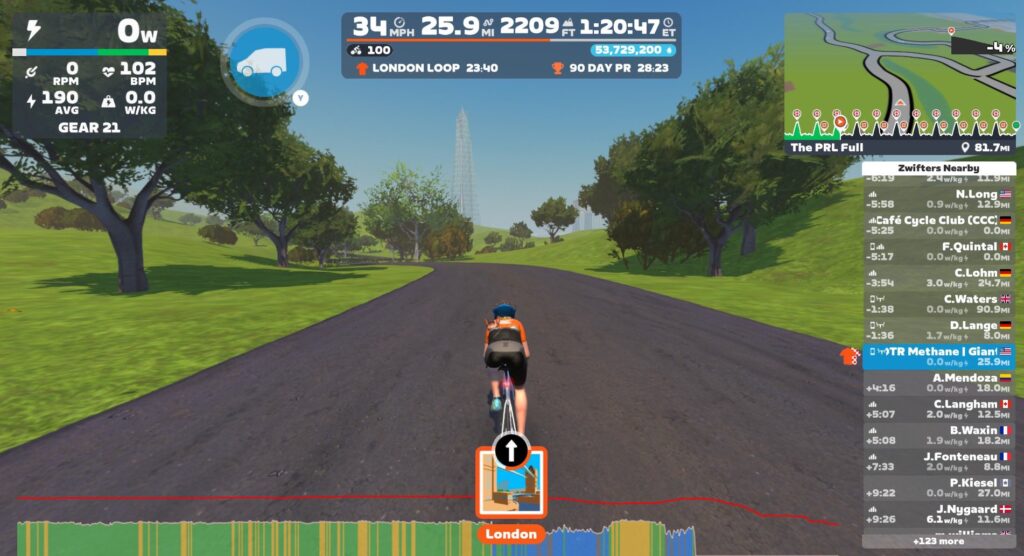
#3: Climb Consistently and Steadily
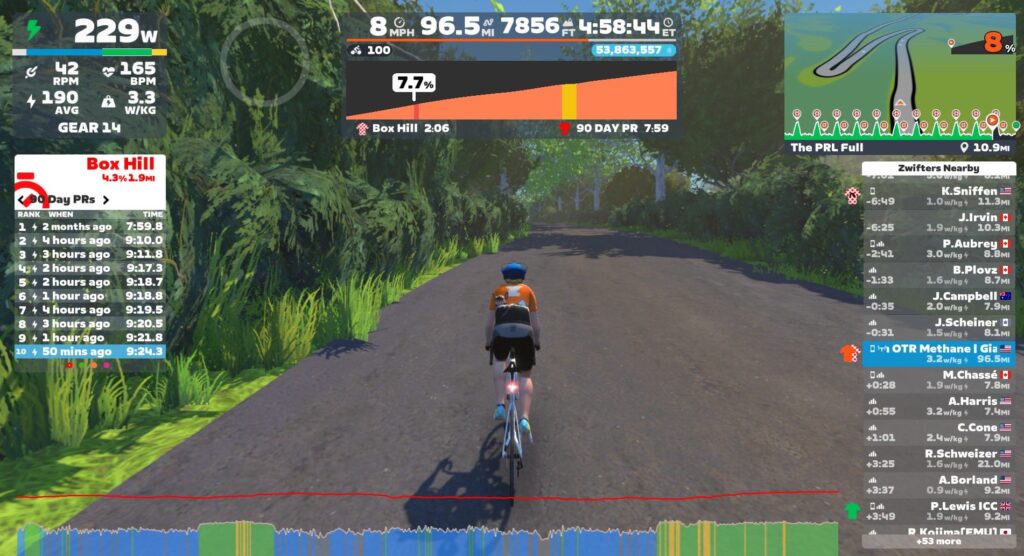
For myself, I kept my Box Hill times below 9:30; my max was 3.4 W/kg climbing. You know your limits, so climb accordingly and steadily.
#4: Time Your London Loops

Time yourself each lap (there is a counter on each of your laps as you near the banner). You may get slower each lap, but if you’re consistent, the times should be fairly close. My goal was under 29 minutes each lap.
#5: Fight Mental Fatigue
This route is basically hill repeats 11 times, so I make a good playlist that keeps me motivated. Watch a movie, play an audiobook, or just jam out.
#6: Smart Powerups

You’ll get two powerups per lap – one at the start of the lap, and one at the top of Box Hill. If you get a feather at the top of Box Hill, use it on the small riser just up the road, or the Escalator out of the Underground. If you’re feeling tired, a feather may be just the boost you need at the steep 8% section near the start of Box Hill.
Use the aero powerup on either the Box Hill descent (if you’re not resting) or on flat or downhill sections of the London Loop, as it helps most when you’re moving fastest.
The box truck (draft boost) powerup is useless if riding solo, so waste or trash it.
#7: Fueling

I can’t stomach much while riding, so my fuel consisted of GU gels, Stroopwafels, Gatorade, Reese’s Cups, and Coca-Cola (not all at once). These are my go-tos for long rides, but everyone is different, so find what works for you and go with it. Timing, again, depends on your body, which you know better than I do.
Final Thoughts
What if you’re not successful? Um, don’t worry about it! It’s a tough route, physically and mentally, so dust yourself off and try again!
I hope these tips help more Zwifters tackle this route, as I understand it’s quite intimidating for some. Don’t be scared, y’all got this! Ride on.
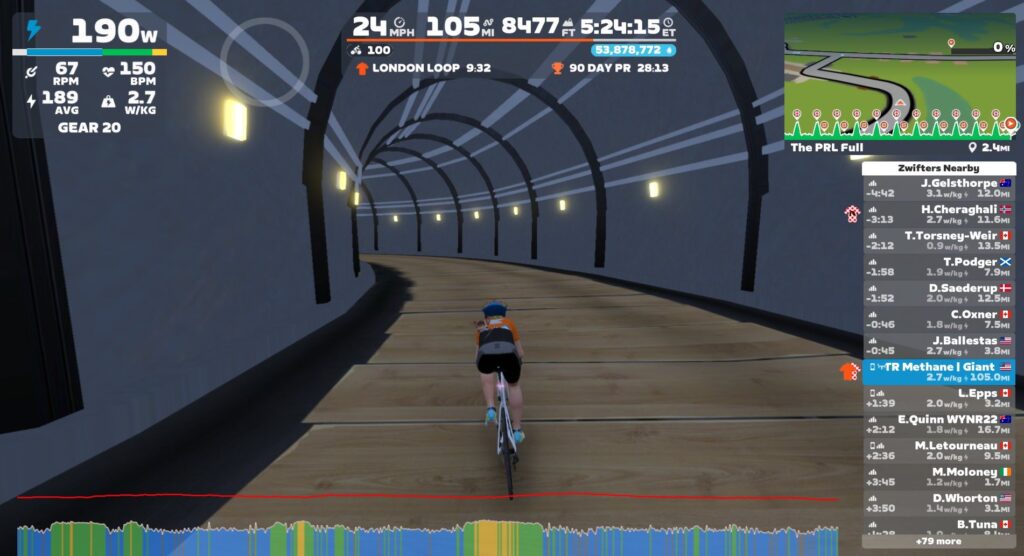
From Novice to Racer: Alison Cremins’ Incredible Zwift Journey
A year ago, Alison Cremins’ didn’t even own a bike. She had no idea what an FTP was, thought a bib was for babies, and had never heard of drafting. Fast forward to today, and she’s racing in the Zwift Racing League (ZRL), setting ambitious climbing goals, and even leading Cryo-Gen group rides!
This is the story of how sheer determination, structured training, and an incredible community helped Alison go from complete beginner to competitive racer in under a year.
A Humble Beginning – February to April 2024
Alison first dipped her toes into Zwift using a spin bike, just to see what the cycling side of the platform was all about. It didn’t take long for her to realize she wanted the full experience. In April, she made the leap, investing in a Wahoo KICKR Core and a Cannondale road bike, marking the true start of her cycling journey.
Early Struggles and a Mission to Improve – April to July
Like most new riders, Alison started with badge hunting and basic workouts before venturing into group rides. Sub-2 rides at 1.5 w/kg became her training ground, teaching her the dynamics of group riding, cadence, and pacing.
One of her first challenges came in May, when she tried a Cryo-Gen Tempo Thursday ride (1.8-2.5 w/kg) and got dropped. Instead of getting discouraged, she set herself a goal: increase her FTP and come back stronger. Over the next few months, Alison pushed herself out of her comfort zone, tackling more climbs, sprinting at every opportunity, and immersing herself in Zwift videos to learn tactics like drafting and pack positioning.
Two months later, she returned to a Cryo-Gen Endurance ride and finished strong. It was a turning point – clear proof that her hard work was paying off.
Building Strength and Unlocking the Tron – August to November
By August, Alison was riding at least five times a week, joining nearly every Cryo-Gen ride. The structured variation of Tempo, Endurance, and social rides helped her keep training fun and effective. She also gained confidence to try her first race – securing 4th place in her debut event!
During this period, Alison also took on one of Zwift’s ultimate climbing challenges: unlocking the Tron bike. Over six climbs up Alpe du Zwift, she shaved 20 minutes off her time, dropping from 90 minutes to 70 minutes.
From Long Distances to Racing – December to January
December saw Alison pushing her limits further, completing her first 100-mile ride on Zwift – an achievement that left her feeling stronger than ever. Her confidence in racing was also growing. She entered another event, stayed with the pack until the finish, and placed 6th. The next step was clear: it was time to join Cryo-Gen’s racing team.
Taking on ZRL – February and Beyond
With her growing fitness and race experience, Alison joined Zwift Racing League (ZRL) – starting with a Team Time Trial (TTT) and her first ZRL points race. She quickly discovered just how intense ZRL can be, but she embraced the challenge, eager to keep improving.
Beyond racing, Alison has started helping lead Cryo-Gen group rides, giving back to the community that helped her get to this level. She is also focused on hitting her next major target: a sub-60-minute Alpe du Zwift climb. To get there, she’s increasing the intensity of her training, working on sprinting, and incorporating strength training to build more power on the bike.
A Life-Changing Journey
In less than a year, Alison has gone from someone who did not even own a bike to a dedicated Zwift racer, group ride leader, and integral part of the Cryo-Gen family. The transformation has been more than just physical – she has gained confidence, made incredible friends, and even convinced her husband and brother to join Zwift!
Alison’s journey is a perfect example of what is possible with consistency, a strong support system, and the willingness to push past limits. From struggling to keep up in group rides to holding her own in races, her story is truly inspiring.
We can’t wait to see what she achieves next! Sub-60 Alpe? More race podiums? Watch this space.
The Best Class For Last Epoch’s Second Season Is A Time-Warping, Hammer-Swinging Powerhouse

Everyone plays ARPGs differently. And in Last Epoch, it can take a player anywhere from 25 to 50 hours to fully delve into all of the game’s mechanics and reach the endgame. For that journey, you’re likely to stick with a single class instead of swapping between characters. For Season Two—Tombs of the Erased—I decided…
Judge lets four more DOGE employees access US Treasury payment systems
A federal judge has given Department of Government Efficiency (DOGE) employees access to US Treasury payment systems as long as they meet training and vetting requirements but denied the Trump administration’s motion to completely dissolve a preliminary injunction.
US District Judge Jeannette Vargas of the Southern District of New York is overseeing a case filed against President Trump by 19 states led by New York. In February, Vargas issued a preliminary injunction prohibiting the Treasury Department from granting DOGE access to systems containing personally identifiable information or confidential financial information.
In April, Vargas allowed DOGE employee Ryan Wunderly to access the Treasury Department’s Bureau of Fiscal Services (BFS) system, after government declarations said “that Wunderly has undergone the same vetting and security clearance process that applies to any other Treasury Department employee provided with access to BFS payment systems.” In an order yesterday, Vargas ruled that four more employees can access the system.
The Cyberpunk 2077 sequel finally makes it to preproduction
Once Cyberpunk 2077 worked out its oh-so-many kinks, it was a damn good game. And more is on the way. CD Projekt Red said on Wednesday that its sequel has moved into pre-production.
It wasn’t a secret that a sequel was in the works. In 2022, CDPR shared a roadmap describing “Project Orion.” It would “further develop the potential embodied by [the Cyberpunk 2077] universe.” That’s as clear as you can get without using the word “sequel.”
Now, CDPR is shedding the codename as development forges ahead. “Several weeks ago, the CD Projekt Red team responsible for the next big game set in the Cyberpunk universe completed the project’s conceptual phase,” the publisher wrote. “As a result, Cyberpunk 2 — previously known under the codename Project Orion — has progressed to pre-production.”
CD Projekt Red
Of course, entering pre-production is still a long way from something you can play. Following the fiasco last time, expect CDPR to play it safe and take more time with the final stages.
On a related note, CDPR said Phantom Liberty has sold 10 million copies. The massive expansion launched on PC and consoles in late 2023. It’s part of Cyberpunk 2077: Ultimate Edition, which includes the base game and all the DLC. That version arrived on PC and consoles in 2023. It will be heading to Switch 2 and macOS soon.
This article originally appeared on Engadget at https://www.engadget.com/gaming/the-cyberpunk-2077-sequel-finally-makes-it-to-preproduction-174141991.html?src=rss
How To Defeat Renoir In Clair Obscur: Expedition 33

Remember when you first got into the Paintress’ domain, and 10 seconds later, this old guy welcomes you by going full Thanos on 90-percent of your compatriots? Welp, here’s your first honest chance to get some goddamn payback. Renoir’s his name, being an absolute shithead is his game, and we’ll show you how to put him…
This Enormous ARPG Is A Constant Treat Of Progression And Laughs

Crashlands 2 is one of those completely brilliant games that can entirely consume your spare time for weeks. It’s an open-world craft-heavy RPG in which you charge around an alien planet, beating up the local flora and fauna, in order to gather their parts to build more effective means of beating up the local flora…
AlmaLinux 10 Released, This Is What’s New
AlmaLinux “Purple Lion” is here—fully RHEL 10 compatible with added support for frame pointers, x86-64-v2, Secure Boot, SPICE, and more.
The Hobby Computer Culture
A fairly comprehensive look at the early personal computer culture reveals that from 1975 through early 1977, personal computers remained “almost exclusively the province of hobbyists who loved to play with computers and found them inherently fascinating,” according to newly surfaced historical research. When BYTE magazine launched in 1975, its cover called computers “the world’s greatest toy,” reflecting the recreational rather than practical focus of early adopters.
A BYTE magazine survey from late 1976 showed these pioneers were remarkably homogeneous: 72% held at least a bachelor’s degree, had a median annual income of $20,000 ($123,000 in 2025 dollars), and were overwhelmingly male at 99%. Rather than developing practical software applications, early users gravitated toward games, particularly Star Trek simulations that appeared frequently in magazine advertisements and user group demonstrations.
The hobbyist community organized around local clubs like the famous Homebrew Computer Club, retail stores, and specialized magazines that helped establish what one researcher calls “a mythology of the microcomputer.” This narrative positioned hobbyists as democratizing heroes who “ripped the computer and the knowledge of how to use it from the hands of the priests, sharing freedom and power with the masses,” challenging what they termed the “computer priesthood” of institutional gatekeepers. This self-contained hobbyist culture would soon be “subsumed by a larger phenomenon” as businessmen began targeting mass markets in 1977.


Read more of this story at Slashdot.
Cyberpunk 2 Moves Into Pre-Production As CD Projekt Red Confirms Almost 100 Developers Are Already Working On It

We might finally be closer to Cyberpunk 2 coming out than the original game was when it was first announced back in 2012. CD Projekt Red recently confirmed that the sci-fi open-world RPG sequel has moved into pre-production with roughly 100 developers currently devoted to the Polish studio’s second major franchise.
Nintendo Switch 2 Consoles Spotted In The Wild But Don’t Expect To See Them Running
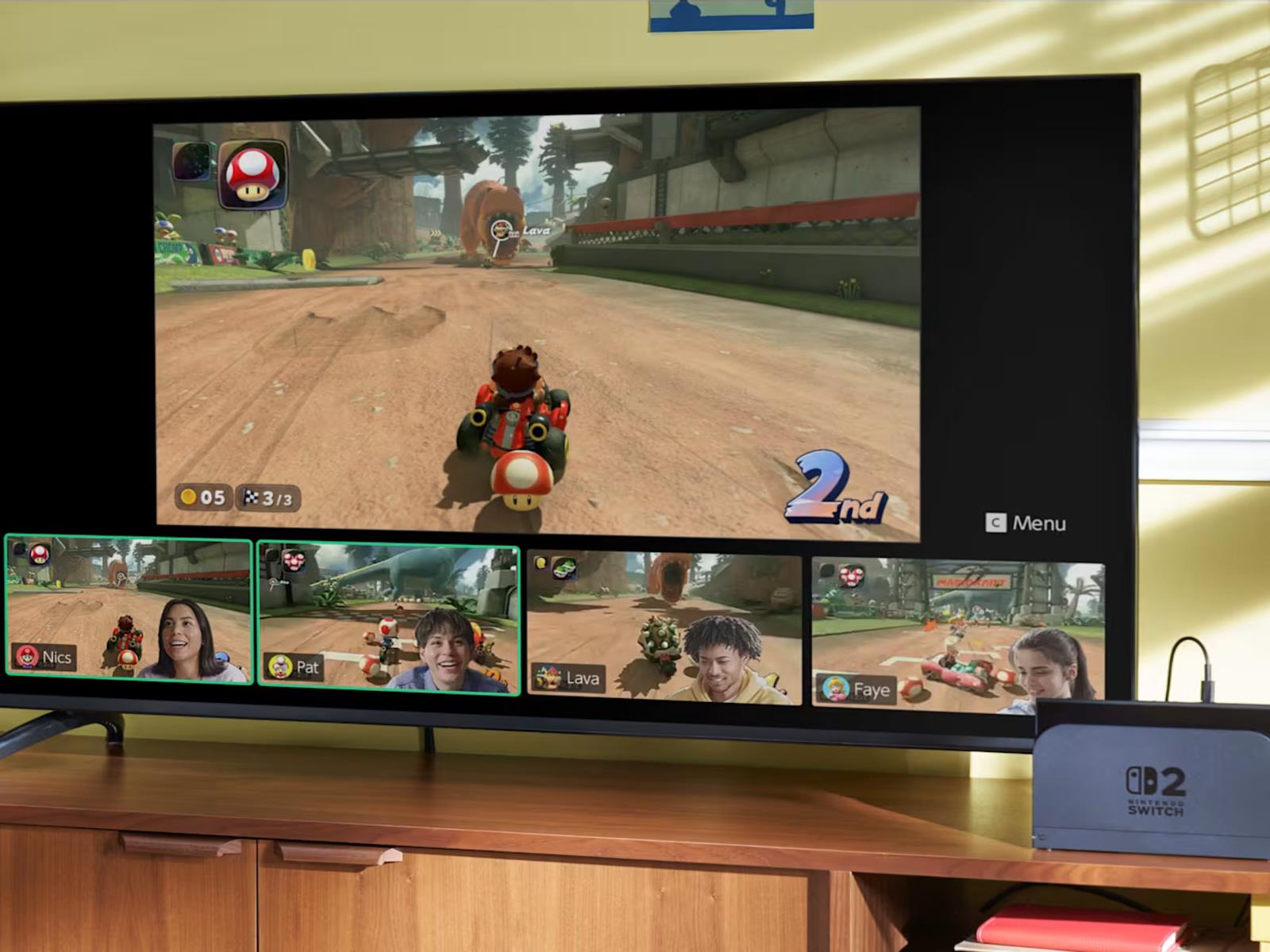
The Nintendo Switch 2 is just days away from officially launching, replete with several signifcant upgrades. As the big day inches closer, pictures and videos of the new console have appeared online as retailers begin to receive their allotted stock. The most notable being someone who managed to unbox and boot it up for the first time, although
A Death Stranding Anime Is Coming

Hideo Kojima is one of the greatest video game designers ever, but he always has his sights set beyond consoles. Less than two years after announcing an A24-produced film adaptation of his 2020 game Death Stranding, Kojima has revealed that the Death Stranding visual universe will also include an anime.
World War Z VR Prepares For The Fight Of Your Life Later This Year
World War Z VR reimagines the popular zombie shooter this summer on Quest and Steam.
Developed by Saber Interactive, World War Z VR reimagines the studio’s flatscreen zombie shooter of the same name, amping up the intensity by letting you blast the undead from a first-person perspective. Unlike its predecessor, World War Z VR won’t launch with multiplayer and instead offers a high-octane single-player campaign, with Saber Interactive noting that players will face hordes of up to ‘200 zombies on screen at a time.’
0:00
/0:55
Across reimagined versions of New York, Tokyo and Marseille, players will have the choice of seven unique characters to play as, with each option providing different weapons and perks. There are also difficulty settings available to toggle for those looking to tweak their experience further, alongside special challenges as zombies adapt to these environments.
World War Z VR is launching on the wider Meta Quest platform and Steam on August 12 for $19.99. Those who pre-order the game will also receive a bonus Golden Skin Pack with four gold-skinned weapons. Additionally, Steam users can purchase the flatscreen game and VR edition through a discounted bundle.
Google celebrates 10 years of Google Photos with new editing tools
The current incarnation of Google Photos was not Google’s first image management platform, but it’s been a big success. Ten years on, Google Photos remains one of Google’s most popular products, and it’s getting a couple of new features to celebrate its 10th year in operation. You’ll be able to share albums a bit more easily, and editing tools are getting a boost with, you guessed it, AI.
Google Photos made a splash in 2015 when it broke free of the spiraling Google+ social network, offering people supposedly unlimited free storage for compressed images. Of course, that was too good to last. In 2021, Google began limiting photo uploads to 15GB for free users, sharing the default account level storage with other services like Gmail and Drive. Today, Google encourages everyone to pay for a Google One subscription to get more space, which is a bit of a bummer. Regardless, people still use Google Photos extensively.
According to the company, Photos has more than 1.5 billion monthly users, and it stores more than 9 trillion photos and videos. When using the Photos app on a phone, you are prompted to automatically upload your camera roll, which makes it easy to keep all your memories backed up (and edge ever closer to the free storage limit). Photos has also long offered almost magical search capabilities, allowing you to search for the content of images to find them. That may seem less impressive now, but it was revolutionary a decade ago. Google says users perform over 370 million searches in Photos each month.
This Business Method Can Help You Set a Home Renovation Budget
While updating, upgrading, and reimagining your home can transform it into your dream home, the logistics involved can be daunting, even if you have a general contractor managing the project for you. One of the biggest challenges is setting your budget—unless you have an unlimited budget (lucky you!), determining what a home renovation will involve based on what you can afford is a key aspect of your plan.
It’s also one of the most confusing. When budgeting reality bumps up against your dream home fantasy, figuring out what to remove from the project can be difficult because of the emotional aspects involved—everything can seem equally necessary when you’re imagining your future life in the home. In order to pare things down in a coherent and rational way, take a page from business school experts and use the time-tested MoSCoW Method.
What is the MoSCoW method?
The MoSCoW method was innovated by software developer Dai Clegg in the 1990s as a way to prioritize components of a project in order to stay on schedule and within budget. Although it was initially envisioned as a software development tool (and more widely as a tool for managing business projects in general), it’s malleable enough that it can be ideal for varied circumstances—including getting control of a home renovation project.
The method involves breaking all the aspects of your project into four buckets, represented by the letters M, S, C, and W (the Os are just there to make the name more readable). The categories are:
-
Must-haves. These are aspects of the project that are non-negotiable and mandatory.
-
Should-haves. These are parts of the project that aren’t absolutely necessary, but are relatively important.
-
Could-haves. These are smaller details that can easily be removed from the project or added in later if budget allows.
-
Won’t haves. These are aspects of the project that aren’t under consideration at all.
The simplicity of the MoSCoW method is its main strength—it’s easy to whip your home reno budget into shape in a short time by plopping everything into the relevant bucket.
Using MoSCoW to plan a home renovation project
When you’re planning out your home renovation, start dropping each aspect into a bucket as you go:
-
Things that absolutely have to be done are Must Haves. For example, if part of your renovation is replacing a leaking roof, that’s a Must Have—you have no choice, so that cost is baked into your budget from the get-go.
-
Major components of the project that aren’t absolutely necessary fall into the Should Have bucket. If your old hardwood floors are worn but serviceable, replacing them is a big part of what you want to get out of the renovation—but you could leave them in place, or try to refinish them instead of replacing them. These would be the last parts of your project that you remove or downgrade.
-
Grace notes and luxuries go into the Could Have bucket and held there pending how the budget plays out. For example, maybe you’d like your new flooring to have radiant heating. That’s nice, but not an absolute necessity. If money opens up later in the planning, you can toss it in.
-
Finally, there’s the Won’t Have bucket. This might seem like an unnecessary step, since anything not already sorted into a bucket could be considered a Won’t Have. But the exercise of specifically labeling it as a Won’t Have is useful because it brings clarity to your priorities. If you find more budget later, you’ve already prioritized the Could Haves as more deserving of rescue. Won’t Haves aren’t necessarily things you’ll never do—they’re just things you’re not doing now. For example, maybe your HVAC system is a little old and you’re thinking it will need to be replaced in the next few years—but not at this moment, because you’re spending your money on all these other projects. So you put that into the Won’t Have bucket because you know you’ll be returning to it in the future.
Once you’ve done an initial categorization of your home renovation, you can start crunching numbers to see if changes are necessary or desired. Maybe you decide, on reflection, that a Should Have is really a Must Have, or vice versa. And if your budget can’t deliver on every priority, you can shift some things into the Could Have bucket and hold them in reserve for the future.
Any successful home renovation is as much about planning and prioritization as it is about budget and schedule management, and the MoSCoW Method can help ensure your project is on track before anyone touches a power tool.
A Death Stranding anime is in the works
How much Death Stranding are you willing to fire into your eyes? The game’s sequel arrives in just a few weeks, A Quiet Place: Day One director Michael Sarnoski is leading up a live-action film adaptation, and now Hideo Kojima has confirmed that an anime is in production.
Kojima teased the adaptation while discussing the more concrete live-action project in an interview with Vogue Japan. As picked up by VGC, the Metal Gear creator was talking about his cross-media ambitions for the Death Stranding, and comparing the planned film to other successful video game adaptations from recent years.
“When it comes to adapting games into visual media, there are works like The Last of Us, which stays true to the original storyline, and films like The Super Mario Bros Movie which are more of a service to fans of the game,” Kojima said, according to VGC’s translation.
“While these works have their own merits, as a film enthusiast, I want to pursue the expressive potential of cinema. I aim to create a Death Stranding that can only be realised through film, one that could win awards at festivals like the Cannes Film Festival or the Venice Film Festival. In fact, we are also currently working on an anime adaptation.”
Kojima didn’t offer any more information, so we don’t know how far along the anime project is, who is making it, when we can actually expect it to come out, or whether it will tie in with the upcoming live-action movie.
In the meantime, Norman Reedus’ Sam Porter Bridges will return in Death Stranding 2: On the Beach, which is coming to PS5 on June 22. Kojima Productions dropped its second trailer for the game in March, which clocked in at 10 minutes and gave us a closer look at what we’ll be getting up to in the sequel. (Spoiler alert: lots more walking.)
This article originally appeared on Engadget at https://www.engadget.com/entertainment/a-death-stranding-anime-is-in-the-works-165927348.html?src=rss