
Easy, medium, and the sledgehammer approach – or any combination you fancyhands on If you’re thinking about switching to Linux but there are a few Windows apps you just can’t do without, you do have options… and some of them are free.…
Monthly Archives: May 2025
Bridging the divide: Connecting global communities with Experience AI
From smart devices to workplace tools, AI is becoming part of everyday life and a major part of how people are thinking about the future — raising big questions about access, skills, and readiness.
As governments around the world create AI strategies for the decade ahead, many are seeing an urgent need to address the large gap between how AI tools are already impacting jobs and people’s lives, and making sure young people have the chance to gain the skills and knowledge to keep up with this rapid pace of technological change. This gap is larger still when it comes to opportunities for educationally underserved communities.

That’s why we’re excited to share how Experience AI, our AI literacy programme, is helping organisations around the world create these much-needed opportunities for young people.
The value of a global network
Experience AI was co-developed in 2022 by us and industry experts at Google DeepMind with a clear mission: to equip teachers with free, accessible, easy-to-use classroom resources that build AI literacy from the ground up. The programme offers a suite of materials to help students understand real-world applications of AI, the basics of machine learning, and the ethical considerations around these technologies.

In 2023, we started building an international Experience AI network by collaborating with a group of our existing educational partners. We saw a huge amount of interest and received very positive feedback, and through our partnerships we reached an estimated one million young people. In late 2024, with support from Google.org, we tripled the size of our Experience AI partner network to 21, with new organisations joining from across Europe, the Middle East, and Africa. In this way, we aim to reach an additional 2.3 million young people by December 2026, helping them to gain the knowledge and skills to confidently engage with AI in an ever-changing world.
Each partner in the Experience AI network is a unique educational organisation looking to create lasting social change. Through their local knowledge and networks, we can present Experience AI to educators and students in a way that is engaging and relevant for local communities.
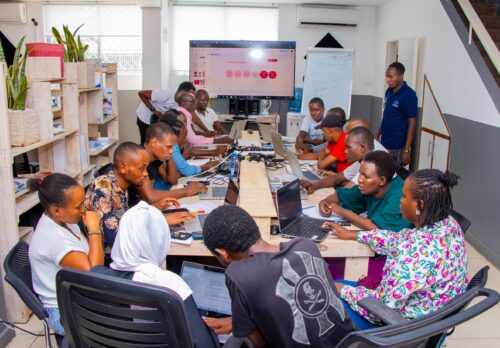
Partners help us to adapt and translate our resources, all while making sure that the core pedagogy and design principles of Experience AI are preserved. Just as importantly, these organisations train thousands of teachers on how to use the materials, providing educators with free support. With their work, they reach communities that otherwise may have never had the opportunity to learn about AI.
We asked some of our partners to share their insights on the impact Experience AI is having on the teachers and young people in their communities.
Building communities
The Latvian Safer Internet Centre (LSIC), an initiative of our partner, the Latvian Internet Association (LIA), is dedicated to helping young people protect themselves online, and to preparing them for a fast-changing digital economy. As an Experience AI partner, they aim to train 850 teachers and support 43,000 students to build a strong foundation in AI literacy through the programme.
“We hope to spark a cultural shift in how AI is […] taught in Latvian schools. Our goal is for AI literacy to become a natural part of digital competence education, not an optional extra.”

Based in Riga, the team is travelling to 18 different regions across Latvia to bring in-person professional development to teachers, including those in rural communities far from major cities. By meeting teachers where they are, the LIA are creating invaluable networks for learning and support between communities. Through hands-on training, they are also supporting teachers to bring Experience AI into their own classroom, creating examples which are suited for their learners.
“We chose an in-person training model because it fosters a more collaborative and engaging environment, especially for teachers who are new to AI. Many educators, particularly those who are less confident with digital tools, benefit from direct interaction, real-time discussions, and the chance to ask questions in a supportive setting.”
As an Experience AI partner, the Latvian Internet Association is not just delivering content but working to strengthen digital competency across the country and ensure that no teacher or student is left behind in Latvia’s AI journey.
One teacher shares: “The classroom training was truly valuable: it gave us the chance to exchange ideas and reflect on our diverse experiences. Hearing different perspectives was enriching, and I’m glad we’re shaping the future of our schools together.”
“AI is for everyone”
EdCamp Ukraine’s mission is to unite educators and help them to grow. Operating from their main base in Kharkiv, near the Eastern border and the frontline of the ongoing war in Ukraine, they see AI as both a tool for new technological breakthroughs and as something that can help build a fairer, more efficient, and resilient society.
“We firmly believe AI should not only be an object of study — it must become a tool for amplifying human potential. AI should also not be a privilege, but a resource for everyone. We believe the Experience AI programme can truly transform education from the bottom up.”
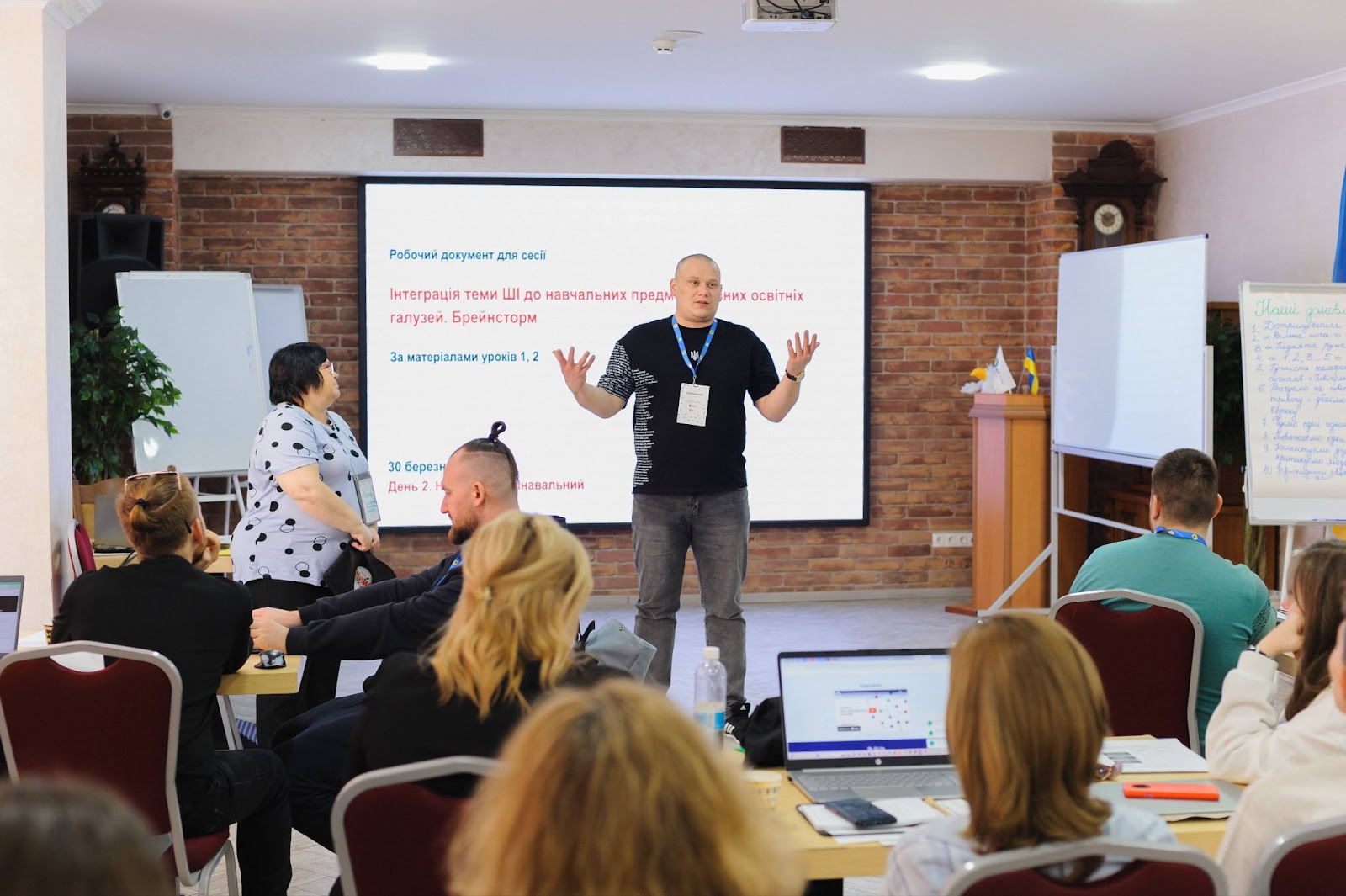
Within their community of 50,000 teachers, EdCamp Ukraine ensures that every educator, regardless of their living conditions or where they work, can access high-quality, relevant, and accessible support. For the organisation, the ongoing situation in Ukraine means being flexible with planning, preparing for a range of different outcomes, and being ready to pivot delivery to different locations or to an online setting when needed. These same considerations apply to EdCamp Ukraine’s teacher community, who need to be ready to adapt their lessons for any scenario.
“Recognising these war-related challenges helps us see the bigger picture and always have contingency plans in place. We think ahead and develop flexible scenarios.”

This year, the team piloted Experience AI through their community of trainers, who, when they’re not training, are busy teaching in the classroom. Teacher Yuliia shared how her students valued the opportunity to be creators, rather than just users of technology:
“One student, who is an active AI user, kept silent during the lesson. I thought he wasn’t interested, but during the reflection he shared a lot of positive feedback and expressed his gratitude. Other students said it was important that they weren’t just told about AI — they were using it, creating images, and working with apps.”
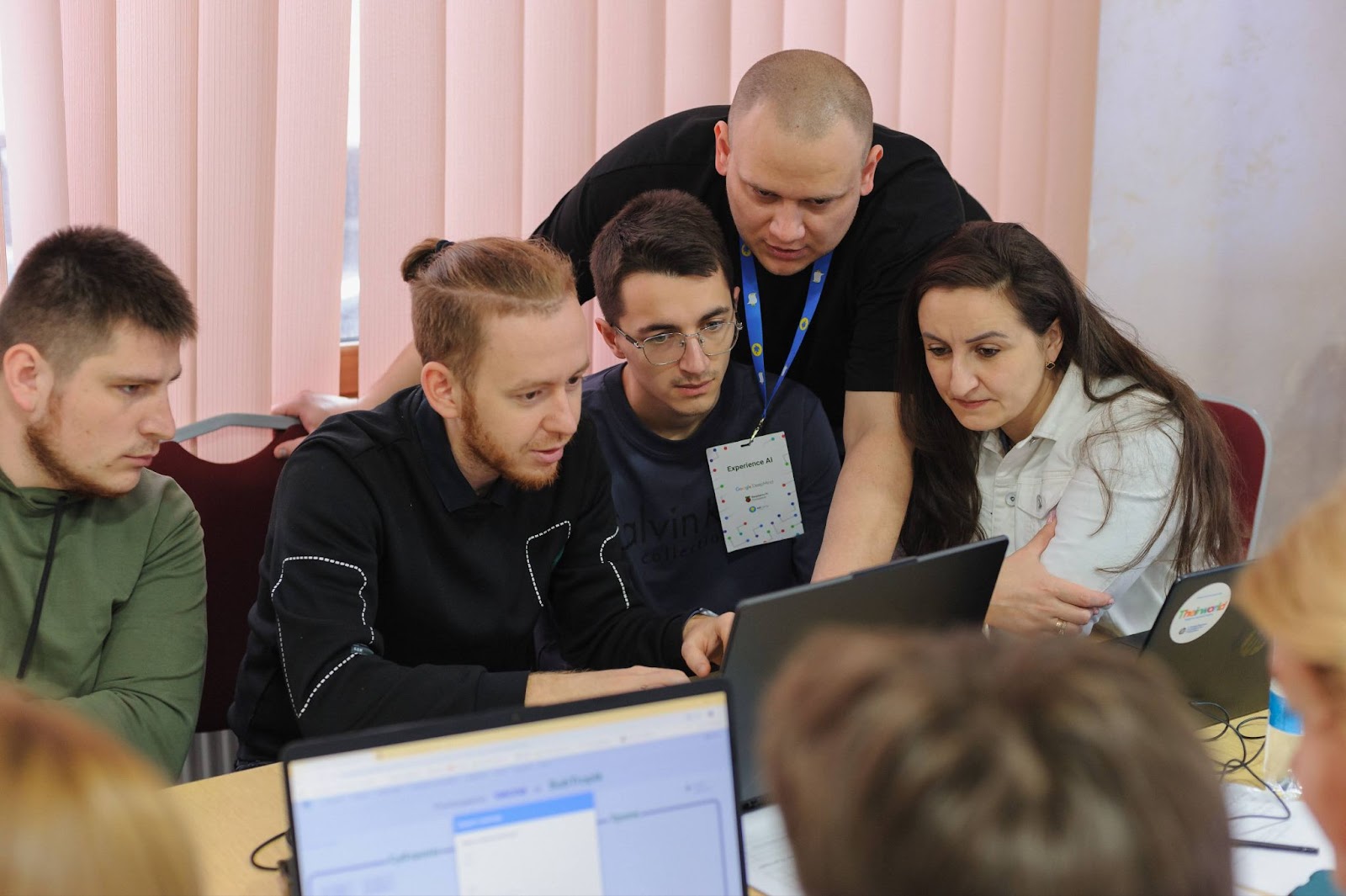
EdCamp Ukraine plans to roll out training for Ukrainian teachers this autumn, reaching 2,000 teachers and 40,000 young people by the end of next year.
More countries, more classrooms
Two new partners in Nigeria are about to join the Experience AI network, and there are many more organisations in more countries coming soon. As our partner network continues to grow, we are excited to reach more communities and give more young people around the world the chance to build AI literacy skills and knowledge.
You can find out more about Experience AI on the website. If your organisation is interested in partnering with us to deliver Experience AI, please register your interest and we will let you know about opportunities to work with us.
The post Bridging the divide: Connecting global communities with Experience AI appeared first on Raspberry Pi Foundation.
EROFS Lands Support For Tapping Intel QAT Accelerators
There is a lot of exciting file-system changes landing for the Linux 6.16 kernel… EXT4 brings a “really stupendous performance” change, Btrfs also brings some performance improvements, XFS landed atomic writes, and Bcachefs continues stabilizing. For the EROFS read-only file-system its changes have been merged and includes support for Intel QAT acceleration…
One of Quest’s Most Popular Multiplayer Games ‘Animal Company’ Gets PvP Shooter Update


Animal Company, the social VR game for Quest, just got a little more chaotic with the release of its new ‘Arena Mode’ update, finally bringing a shooting experience to one of Quest’s most popular free-to-play multiplayer games.
Separate from Animal Company’s classic extraction-style ‘Adventure Mode’, which was inspired by Lethal Company (2023), Arena Mode now adds a 6v6 shooting experience to the game for the first time.
Inspired by Minecraft’s ‘Bed Wars’ mode, Animal Company’s new Arena Mode gives each team a base to defend and a large battlefield in the middle to fight it out with pistols, shotguns, and pickaxes. The objective: destroy the enemy’s ore before they can destroy yours. Ammo is infinite, so expect a lot of spraying a praying.
Arena Mode follows a steady stream of updates to the game, including its recent Tech Tree, Mining, and the Planetarium content drops. The studio has also recently pushed out new maps to its Adventure Mode, including The Office, as well as a Parkour Tower for some high-stakes exploring.
That said, Animal Company has built a good amount of momentum since its initial launch on Quest last July, recently nabbing the number one spot on Quest’s top-earners chart by overthrowing long-time F2P hit Gorilla Tag. And it’s still number the number one earner on Quest today, according to Meta’s most recent weekly chart.
You can grab Animal Company on the Horizon Store for Quest 2 and above for free.
Note: Animal Company include micro-transactions for both cosmetics and in-game currency bundles.
The post One of Quest’s Most Popular Multiplayer Games ‘Animal Company’ Gets PvP Shooter Update appeared first on Road to VR.
Canonical To Release Monthly Ubuntu Snapshots For Testing & Building Out Automation
Canonical is sticking to Ubuntu Linux releases every six months and a Long Term Support (LTS) release every two years, but a new change to their development process is that they are now working to release monthly Ubuntu snapshots of their testing stream…
Skydance’s Behemoth Teases ‘Rites Of Wrath’ Update For Next Week
Skydance’s Behemoth will receive a major free update next week on all platforms.
Announced last night via social media, Skydance Games teased the upcoming update titled “The Rites of Wrath” with a brief video, stating this includes two new modes. First up is The Arena, which isn’t technically new as a beta version’s been in Skydance’s Behemoth since release. There’s also ‘The Behemoth Trials’, which suggests a boss rush mode where you only fight the titular creatures.
You asked and we’re delivering. Get ready for “The Rites of Wrath” update for Skydance’s Behemoth, featuring two new modes: The Arena and The Behemoth Trials.
We’ll see you June 3rd. pic.twitter.com/q8aZ5uG1JZ
— Skydance Games (@SkydanceGames) May 28, 2025
Not much else is currently known beyond the June 3 release date, with the video highlighting all three major platforms. The studio states more information will be shared soon, while one reply on X also implies that The Behemoth Trials are indeed a boss mode. We’ll update this article when we learn more.
Since launching back in December, Skydance’s Behemoth has continued receiving major updates. Patch 1 and Patch 2 were largely focused on bug fixes, with the former adding some combat tweaks. Elsewhere, March’s update added a ‘New Game+ Mode‘ that carries over previously unlocked abilities, hero weapons, collectibles, and more into a new playthrough.
Skydance’s Behemoth is out now on the Meta Quest platform, PlayStation VR2, Steam and Rift.
More Intel Battlemage Graphics PCI IDs Added To Mesa OpenGL/Vulkan Drivers
Intel engineers have added yet more PCI graphics device IDs for Battlemage to their open-source driver code within Mesa for Iris OpenGL and ANV Vulkan driver support…
Intel Hardware Support Expanded In EDAC Drivers For Linux 6.16
With the Error Detection And Correction (EDAC) subsystem updates sent out this week for the Linux 6.16 kernel there is support for a number of newer Intel hardware platforms…
TUXEDO Unveils First Mini LED Linux Laptop with Next-Gen PCIe 5.0
TUXEDO Stellaris 16 – Gen7: High-end Linux gaming laptop with RTX 5090, Intel Ultra 9 CPU & HDR mini LED display. Now available for pre-order.
World Faces New Danger of ‘Economic Denial’ in Climate Fight, Cop30 Head Says
The world is facing a new form of climate denial — not the dismissal of climate science, but a concerted attack on the idea that the economy can be reorganised to fight the crisis, the president of global climate talks has warned. The Guardian reports: Andre Correa do Lago, the veteran Brazilian diplomat who will direct this year’s UN summit, Cop30, believes his biggest job will be to counter the attempt from some vested interests to prevent climate policies aimed at shifting the global economy to a low-carbon footing.
“There is a new kind of opposition to climate action. We are facing a discredit of climate policies. I don’t think we are facing climate denial,” he said, referring to the increasingly desperate attempts to pretend there is no consensus on climate science that have plagued climate action for the past 30 years. “It’s not a scientific denial, it’s an economic denial.” This economic denial could be just as dangerous and cause as much delay as repeated attempts to deny climate science in previous years, he warned in an exclusive interview with the Guardian.


Read more of this story at Slashdot.
‘World War Z VR’ Brings the Series’ Massive Zombie Hordes to Quest & PC VR in August


Saber Interactive, the studio behind PC and console shooter World War Z (2019), revealed the franchise is getting its first VR game, bringing the iconic swarm of zombies to Quest and SteamVR headsets on August 12th.
World War Z VR is set to be an entirely new entry in the series built from the ground-up for VR, something the studio says “faithfully reimagines the intense action of the original World War Z game.”
Unlike the PC and console game though, which featured a third-person view and had a number of multiplayer modes, the VR release is said to offer up a first-person, single-player campaign set across New York, Tokyo and Marseille.
1 of 6

Image courtesy Saber Interactive

Image courtesy Saber Interactive

Image courtesy Saber Interactive

Image courtesy Saber Interactive

Image courtesy Saber Interactive

Image courtesy Saber Interactive
World War Z VR promises to let you take on “over 200 zombies” at a time, with every gameplay mechanic of the original World War Z fully reimagined for VR, the studio says, which is set to feature seven playable characters in addition to its host of weapons, perks and three difficulty settings.
And like the in the World War Z (2013) film and 2006 Max Brooks novel, zombies are far from brainless walkers; the studio says zombies “will adapt to their surroundings and your playstyle to hunt you down, while special infected enemies raise the stakes even higher.”
Launching August 12th, World War Z VR is now available for pre-order on the Horizon Store for Quest 2 and above and on Steam for PC VR headsets, priced at $20. Although there’s no pre-order discount to speak of, pre-order customers will get an exclusive ‘Golden Skin Pack’ weapon bonus.
The post ‘World War Z VR’ Brings the Series’ Massive Zombie Hordes to Quest & PC VR in August appeared first on Road to VR.
AlmaLinux OS 9.6 Is Out as a Free Alternative to Red Hat Enterprise Linux 9.6
Today, the AlmaLinux OS Foundation announced the release and general availability of AlmaLinux OS 9.6 (codename Sage Margay) as the latest stable version of this free Red Hat Enterprise Linux (RHEL) fork.
The post AlmaLinux OS 9.6 Is Out as a Free Alternative to Red Hat Enterprise Linux 9.6 appeared first on Linux Today.
DuckDB flips lakehouse model with bring-your-own compute and metadata RDBMS
Open source in-process OLAP system launches rival to Iceberg and Delta Lake table format, and moreWith a combined market value of around $150 billion, Snowflake and Databricks have divergent visions on how to get customers’ analytics and machine learning tools to their data, which is often spread across different systems.…
Astronomers Discover Mystery Cosmic Body Bursting With X-Rays
Astronomers have discovered a mysterious cosmic object, ASKAP J1832-0911, that emits both radio waves and X-rays in precise 44-minute cycles, making it unlike anything observed before. Space.com reports: This is the first time an object like this, a so-called “long-period transient” or “LPT,” has been seen in high-energy X-ray light as well as low-energy radio wave light. The team behind this discovery hopes the finding could help reveal what these flashing objects actually are and how they launch their mystery signals. However, not only is there no explanation for how the signals from LPTs are generated yet, but astronomers also don’t know why these signals “switch on” and “switch off” at long, regular and unusual intervals. “This object is unlike anything we have seen before,” team leader and Curtin University researcher Zieng (Andy) Wang said in a statement. […]
The team believes the true nature of ASKAP J1832-0911 is a dead star, they just don’t quite know what form that star takes. A highly magnetic neutron star, or “magnetar,” is one option, and a a white dwarf — the kind of stellar remnant the sun will leave behind when it dies in over 5 billion years — is another. “ASKAP J1831- 0911 could be a magnetar, the core of a dead star with powerful magnetic fields, or it could be a pair of stars in a binary system where one of the two is a highly magnetized white dwarf, a low-mass star at the end of its evolution,” Wang said. “However, even those theories do not fully explain what we are observing. “This discovery could indicate a new type of physics or new models of stellar evolution.” The research has been published in the journal Nature.


Read more of this story at Slashdot.
DJI Avinox motor’s monstrous 1,000W peak power expands to Trail and Turbo modes with new firmware
DJI’s latest firmware update brings 1,000W of peak power to the Auto, Trail and Turbo modes of its Avinox motor, plus boost mode adjustments and other customisations.
Some of the new firmware features were trialled in a controversial update to DJI’s app at the end of April 2025.
The headline change was the 150W increase in peak power in Turbo mode, enabling the Avinox to unleash its full 1000W, which had previously been restricted to its 30-second Boost feature.
Now, this official firmware update takes it one step further, bringing the motor’s full power to even more assistance modes.
The 17.6% increase in power makes the most powerful motor on the market even more powerful. While users can adjust performance limits, few riders will say no to the extra watts.
Customisable Boost and Quick Start mode

Another feature trialled in April’s update that’s now here for good is the extended Boost mode.
Boost mode – which was the only way to access the Avinox’s 1000W max power before the April update – can now be configured to kick in for 10 to 60 seconds/
A new feature in this firmware update is Quick Start.
DJI claims the motor will now be quicker to respond to pedalling inputs, starting up faster and delivering power sooner.
How this performs on the trails remains to be tested, but it could make the Avinox even better on technical climbs where responsive and timely motor performance is crucial.
SmoothShift for SRAM X0 Eagle Transmission

The new Avinox firmware also includes a bonus feature for riders with SRAM X0 Eagle Transmission drivetrains.
If your bike runs the wireless drivetrain, you can now shift gears while coasting using your AXS shifter.
When a gear shift is detected, the motor kicks in, engaging the drivetrain and shifting without the rider needing to spin the cranks. DJI claims motor torque will be reduced during coasting shifts to prevent excessive wear and tear to the chain.
Klinge FPGA Computer Targets Secure, Headless Linux Deployments
Klinge is a compact FPGA-based headless computer designed by Lone Dynamics Corporation. It targets secure networking and long-term Linux applications, and can be used as a blade server in modular enclosures or standalone setups. Klinge uses the Lattice ECP5 FPGA (LFE5U-25F), offering 24K LUTs when compiled with open-source tools. The board includes 512MB of DDR3L […]
[$] LWN.net Weekly Edition for May 29, 2025
Inside this week’s LWN.net Weekly Edition:
- Front: Glibc security; How we lost the Internet; Encrypted DNS; 6.15 Development statistics; Filesystem stress-testing; BPF verifier; Network access from BPF; OSPM 2025.
- Briefs: AlmaLinux 10.0; FESCo decision overturned; NixOS 25.05; Pocket, Launchpad retired; Quotes; …
- Announcements: Newsletters, conferences, security updates, patches, and more.
Data Broker Giant LexisNexis Says Breach Exposed Personal Information of Over 364,000 People
An anonymous reader quotes a report from TechCrunch: LexisNexis Risk Solutions, a data broker that collects and uses consumers’ personal data to help its paying corporate customers detect possible risk and fraud, has disclosed a data breach affecting more than 364,000 people. The company said in a filing with Maine’s attorney general that the breach, dating back to December 25, 2024, allowed a hacker to obtain consumers’ sensitive personal data from a third-party platform used by the company for software development.
Jennifer Richman, a spokesperson for LexisNexis, told TechCrunch that an unknown hacker accessed the company’s GitHub account. The stolen data varies, but includes names, dates of birth, phone numbers, postal and email addresses, Social Security numbers, and driver license numbers. It’s not immediately clear what circumstances led to the breach. Richman said LexisNexis received a report on April 1, 2025 “from an unknown third party claiming to have accessed certain information.” The company would not say if it had received a ransom demand from the hacker.


Read more of this story at Slashdot.
TUXEDO Stellaris 16 Gen7 Linux Laptop Unveiled with 128 GB RAM, HDR Display
TUXEDO Computers unveiled today the 7th generation (Gen7) of their TUXEDO Stellaris 16 Linux laptop, designed for those who are in the market for a gaming notebook with maximum power.
China extends its reach into the Solar System with launch of asteroid mission
A Chinese spacecraft built to collect specimens from an unexplored asteroid and return them to Earth successfully launched Wednesday from a military-run spaceport in the country’s mountainous interior.
Liftoff aboard a Long March 3B rocket at 1:31 pm EDT (17:31 UTC) from the Xichang launch base kicked off the second mission in a series of Chinese probes to explore the Solar System. This mission, designated Tianwen-2, follows the Tianwen-1 mission, which became the first Chinese spacecraft to land on Mars in 2021.
Chinese officials confirmed the 2.1-metric ton Tianwen-2 spacecraft unfurled its fan-shaped solar arrays shortly after launch, marking an auspicious start to a decade-long tour of the Solar System.