
Trump’s tariffs will be ‘devastating’ for US bike industry, according to open letter to President

The US bicycle industry’s trade association, PeopleForBikes, says Trump’s tariffs will have “devastating impacts” on the industry if they aren’t adjusted in the short term, in an open letter addressed to the President. 

PeopleForBikes represents more than 340 US manufacturers, suppliers and distributors of cycling products. Published this week, the open letter requests tariff relief or an exclusion process for bicycles and bicycle equipment.

“The current tariffs on complete bicycles and components used for assembly, imported from countries around the globe, will have devastating impacts on our industry if not adjusted in the near term. We are hearing concerns around additional layoffs and the risk of more companies closing their operations, including some of our few remaining domestic manufacturers,” the letter reads. 

The tariffs announced by Donald Trump in early April have already begun to cause chaos in the cycling industry. Specialized and Trek have hiked prices in the US, while other brands have cancelled shipments, and Silca even described launching a product in the US as “not viable”. 
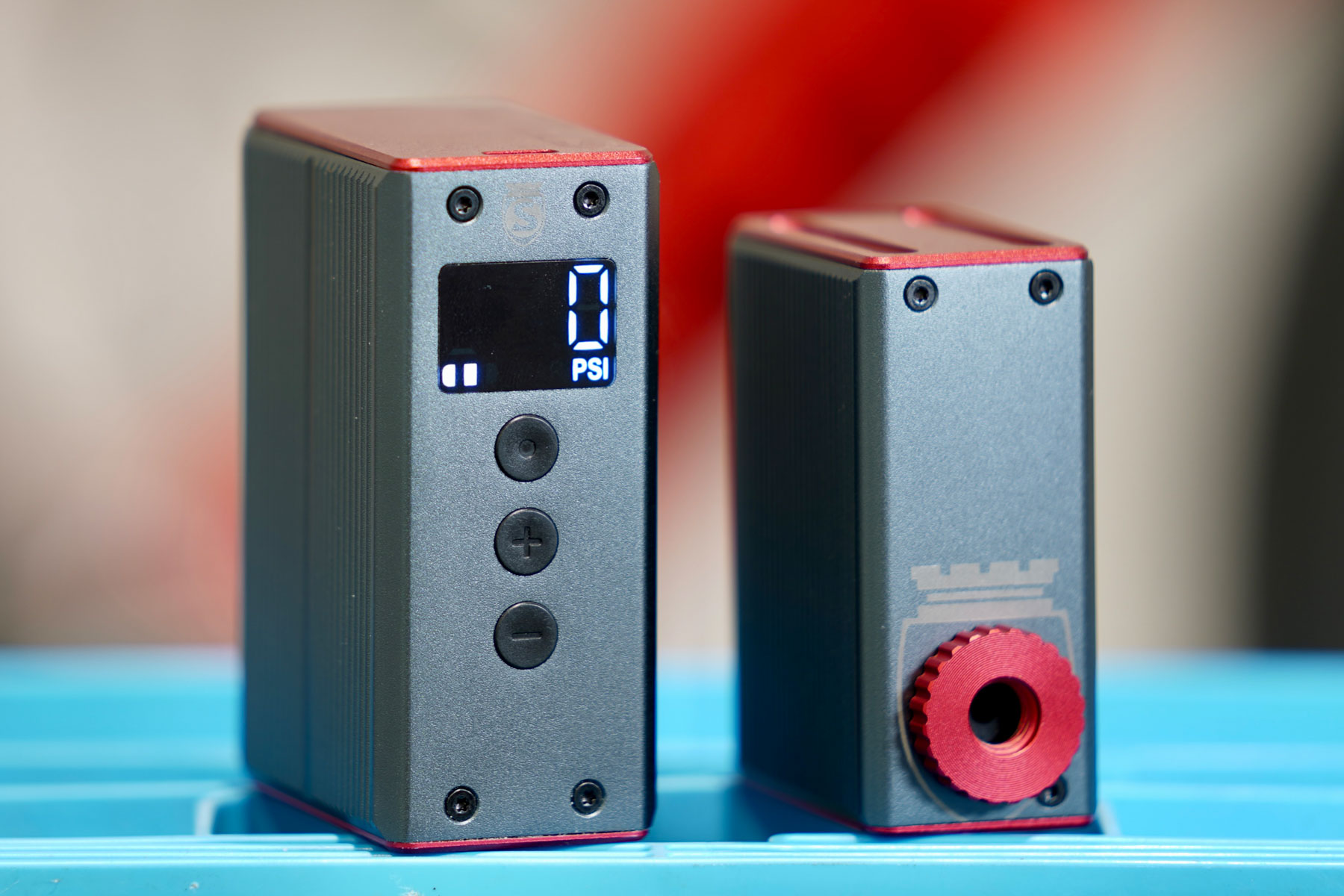
Silca Electtrico pumps
Silca says it’s not viable to sell its Elettrico Ultimate electric pump in the US. Silca

While Trump has said his tariffs will boost US industry, PeopleForBikes warns that difficulties persist in moving the supply chain. 

“[E]ach bicycle may have 200 or more component parts that are still primarily sourced from sub-suppliers in foreign countries,” PeopleForBikes explains. “Developing a domestic manufacturing base for this wide variety of components will take substantial time and capital investment at a time when capital is hard to come by and cash flow is tight. Even without new, additional tariffs, our industry was already projecting a 3.7% decrease in sales, driven by higher aggregate price levels and weaker consumer confidence.”

The trade association says that while the USA once made all the bicycles it needed domestically, this has not been the case for several decades. The letter says that since the mid-1990s, low-cost imports from China have threatened American companies, and that a combination of “unfair foreign competition and unwise U.S. trade policy” led to the closure of bicycle factories in the country. 

According to a 2021 study, 87 per cent of bikes imported to the US are from China.

PeopleForBikes says it appreciates President Trump’s “focus on China’s competitive threat” and closing of the de minimis loophole, which eliminates the duty-free import of low-value commodities “which has undermined the U.S. bicycle industry and local bike retailers across America for many years”. 

The letter also outlines how US manufacturers are facing increased steel and aluminium prices from foreign and domestic sources, while the lack of domestic textile manufacturing could put cycling clothing manufacturers out of business. 

Current and proposed tariffs on bicycle helmets is another issue the letter, sent on 29 April, raises. It says these tariffs “make buying this essential and legally required safety equipment much less affordable” and could leave cyclists without protection. 

“The bicycle industry has enriched American lives for more than a century,” says PeopleForBikes president and CEO Jenn Dice. “We urge the administration to give our businesses the runway they need to compete globally, invest domestically, and keep biking safe, affordable, and accessible for everyone.”

Linux Data Recovery: How to Salvage Lost or Corrupted Files

Data loss is a nightmare for any computer user, and Linux users are no exception. Despite the robust architecture of Linux operating systems, disasters can strike in the form of accidental deletions, corrupted partitions, or failing storage devices. Whether you’re a system administrator, developer, or everyday Linux user, understanding how to recover data can be the difference between a minor inconvenience and a major setback.

Redis is now available under the AGPLv3 open source license (Redis blog)

After a somewhat tumultuous switch to the
Server Side Public License (SSPL)
in March 2024, Redis has backtracked
and is now offering Redis under the
Affero GPLv3 (AGPLv3)
starting with Redis 8, CEO Rowan Trollope
announced. The change back to an open-source license was led by Redis creator Salvatore
“antirez” Sanfillipo
, who also contributed the new Vector Sets feature for
the release. He said:

I’ll be honest: I truly wanted the code I wrote for the new Vector Sets data type to be released under an open source license. Writing open source software is too rooted in me: I rarely wrote anything else in my career. I’m too old to start now. This may be childish, but I wrote Vector Sets with a huge amount of enthusiasm exactly because I knew Redis (and my new work) was going to be open source again.

I understand that the core of our work is to improve Redis, to continue building a good system, useful, simple, able to change with the requirements of the software stack. Yet, returning back to an open source license is the basis for such efforts to be coherent with the Redis project, to be accepted by the user base, and to contribute to a human collective effort that is larger than any single company. So, honestly, while I can’t take credit for the license switch, I hope I contributed a little bit to it, because today I’m happy. I’m happy that Redis is open source software again, under the terms of the AGPLv3 license.

Since last year’s license switch, though, the Valkey project has sprung up as a fork under
the original 3-clause BSD license.

Redis 8.0 Released: Now Tri-Licensed With AGPLv3

Last year Redis made the much criticized move to Redis Source Available License v2 and Server Side Public License v1 (SSPL) licensing. The move was widely panned by the open-source community and led to the Linux Foundation forking it as Valkey and also other forks like Redict coming about. In the months since many Linux distributions have switched from Redis to Valkey. Now Redis Labs announced today that with the Redis 8.0 release, they are adding AGPLv3 to the licensing mix…

Tigera extends open source cloud-native networking with Calico 3.30

Calico got its start in 2016 as a networking technology for cloud-native environments, serving as a plug-in to the Kubernetes Container Networking Interface (CNI) component. Over the last decade, the technology has continued to expand, supporting more use cases and evolving network requirements.The open-source Calico 3.30 update pushes the project further with multiple technical advancements including flow logging, enhanced observability and visualization, staged network policies for pre-implementation testing, and hierarchical policy management with tiers.

Celebrating 20 Years of the OASIS Open Document Format

The Document
Foundation
is celebrating
the 20th anniversary of the ratification of the Open Document Format
(ODF) as an OASIS
standard.

Two decades after its approval in 2005, ODF is the only open
standard for office documents, promoting digital independence,
interoperability and content transparency worldwide. […]

To celebrate this milestone, from today The Document Foundation
will be publishing a series of presentations and documents on its blog
that illustrate the unique features of ODF, tracing its history from
the development and standardisation process through the activities of
the Technical Committee for the submission of version 1.3 to ISO and
the standardisation of version 1.4.

GCC 15 Compiler Demonstrating Measurable Performance Gains For AMD EPYC Turin

With the recently released GCC 15 (GCC 15.1) compiler besides adding new language features, enhancements to help developers in debugging build failures, and other refinements, there is the never-ending quest of compiler performance optimizations. Since the recent GCC 15.1 release candidate I’ve been testing this annual compiler feature release on more hardware, including several AMD 5th Gen EPYC “Turin” servers to great success compared to the prior GCC 14 stable series.

Army Will Seek Right To Repair Clauses In All Its Contracts

An anonymous reader quotes a report from 404 Media: A new memo from Secretary of Defense Pete Hegseth is calling on defense contractors to grant the Army the right-to-repair. The Wednesday memo is a document about “Army Transformation and Acquisition Reform” that is largely vague but highlights the very real problems with IP constraints that have made it harder for the military to repair damaged equipment.

Hegseth made this clear at the bottom of the memo in a subsection about reform and budget optimization. “The Secretary of the Army shall identify and propose contract modifications for right to repair provisions where intellectual property constraints limit the Army’s ability to conduct maintenance and access the appropriate maintenance tools, software, and technical data — while preserving the intellectual capital of American industry,” it says. “Seek to include right to repair provisions in all existing contracts and also ensure these provisions are included in all new contracts.” […]

The memo would theoretically mean that the Army would refuse to sign contracts with companies that make it difficult to fix what it sells to the military. The memo doesn’t carry the force of law, but subordinates do tend to follow the orders given within. The memo also ordered the Army to stop producing Humvees and some other light vehicles, and Breaking Defense confirmed that it had. “This is a victory in our work to let people fix their stuff, and a milestone on the campaign to expand the Right to Repair. It will save the American taxpayer billions of dollars, and help our service members avoid the hassle and delays that come from manufacturers’ repair restrictions,” Isaac Bowers, the Federal Legislative Director of U.S. PIRG, said in a statement.


Read more of this story at Slashdot.

Apple Says Most of Its Devices Shipped Into US Will Be From India, Vietnam

Apple said a majority of its devices shipped into the U.S. in the June quarter will originate in India and Vietnam, a move to allay investor concerns about the impact of tariffs on its operations. From a report: The company was among the hardest-hit of the tech giants last month because of its exposure to China, a primary target of the Trump administration’s global tariff pressure. Most of Apple’s devices are assembled in the country, and investors are closely watching its efforts to shift final assembly of devices bound for the U.S. to India and other countries.

Chief Executive Tim Cook said the impact in the June quarter from tariffs, assuming existing policies remain in place, would add $900 million to Apple’s costs, a figure he suggested could be worse in future quarters. He also said that there was limited impact from tariffs in March. […] He added that Apple would continue to diversify its supply chain away from China. “What we learned some time ago was that having everything in one location had too much risk with it,” he said. Further reading: JPMorgan Says India-Assembled iPhone Within Spitting Distance of China Price.


Read more of this story at Slashdot.