You Can Get Sony’s Flagship Noise-Canceling Headphones on Sale for $175 Right Now

We may earn a commission from links on this page. Deal pricing and availability subject to change after time of publication.

The Sony WH-1000XM5 Wireless Noise Canceling Headphones are down to $174.99 for a refurbished Grade “A” unit, compared to their regular $399.99 price tag (and Amazon’s current refurbished listing at $239.97). They arrive in near-mint condition, showing little to no cosmetic wear, and include a carrying case, USB-C charging cable, and a 3.5mm audio cable for wired use. You also get an aftermarket one-year warranty, which helps ease any secondhand purchase worries. Free shipping across the contiguous U.S. sweetens the pot a little more.

When it comes to performance, these headphones still rank among the best. Released in 2022, the WH-1000XM5 earned PCMag’s “Best Headphones of the Year” for good reason. The 30mm drivers, combined with the Integrated Processor V1 and LDAC support, push out high-res audio without distortion even when ANC is on, which many competitors don’t get right. Plus, their Integrated Processor V1 means better handling of both high-frequency noises and the more subtle ambient sounds around you, whether that’s the roar of an airplane engine or chatty coworkers. Comfort-wise, the ultra-lightweight build and soft-fit leather make them easy to wear for long sessions, notes this PCMag review. Battery life promises up to 30 hours with ANC on (your mileage may vary).

There are a few things to weigh, though. The touch-sensitive ear cup controls can feel finicky if you’re used to physical buttons, and some people just don’t love the modern swipe-and-tap approach (customizable via the app). Also, while multipoint Bluetooth 5.2 pairing is smooth, these aren’t ideal for hardcore gaming where super-low latency matters. That said, for daily use across phones, laptops, and even old-school wired setups (thanks to the included 3.5mm cable), they hold up extremely well.

You Can Get This Tough and Loud JBL Charge 5 Portable Speaker on Sale for Just $90 Right Now

We may earn a commission from links on this page. Deal pricing and availability subject to change after time of publication.

The refurbished version of JBL Charge 5 is down to $89.99 on StackSocial (from its original $179.95), and it’s cheaper than the refurbished model on Amazon, which is currently listed at $102.99. This model carries a Grade “A” refurbished rating, meaning you’re getting something that might have light scuff here or there at most, but guaranteed to work like new. It’s available in blue, gray, red, and black, giving you a few classic color options. This speaker was also PCMag’s Best Speaker of the Year 2021, and it still holds up remarkably well.

The Charge 5 is built like it knows it will get tossed around. With an IP67 rating, it’s both waterproof and dustproof, making it an easy pick for beach trips, hikes, or poolside hangouts. Internally, it packs a 30-watt woofer and a 10-watt tweeter—a step up from the previous Charge 4, though it’s still a mono speaker. You won’t get stereo separation here (but most people wouldn’t hear much stereo separation at this size anyway), and if that’s a dealbreaker, two Charge 5s can be paired using JBL’s PartyBoost feature to simulate stereo. The speaker connects over Bluetooth 5.1, supports the basic SBC codec, and has a decent connection range, but you won’t find support for AAC or AptX, which might matter if you’re more of an audiophile, notes this PCMag review. Still, for casual listening, it gets the job done.

Sound-wise, the Charge 5 delivers strong bass and crisp highs without distorting at max volume, but there’s no EQ control, which would’ve been a nice touch for tuning the sound to your liking. As for usability, its onboard buttons handle basic playback, and there’s even a USB-A port for reverse charging your phone, which is handy in a pinch. Battery life is estimated at 20 hours, but that’ll vary depending on how loud you play it. All in all, this JBL Charge 5 sale is a steal for anyone who wants a portable speaker for the summer ahead.

Fandom Blows Up Giant Bomb

Giant Bomb’s future is uncertain following a showdown with parent company Fandom, which also owns GameSpot, over editorial interference. Creative director Dan Ryckert announced on a recent livestream that he would no longer be appearing on the Giant Bombcast and co-host Jeff Grubb confirmed on social media on Thursday…

Read more…

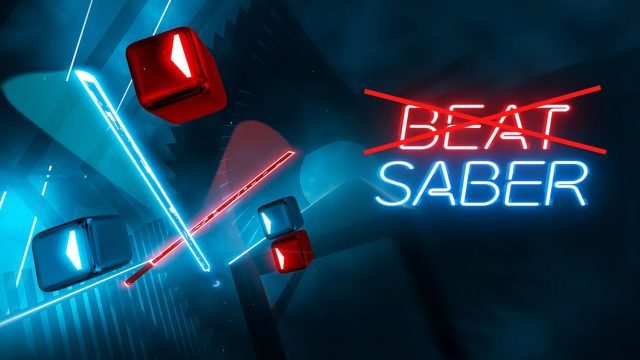
VR Design Unpacked: The Secret to Beat Saber’s Fun Isn’t What You Think

Our series Inside XR Design highlights and unpacks examples of great XR design. Today we’re looking at Beat Saber (2019) and why its most essential design element can be used to make great VR games that have nothing to do with music or rhythm.

Editor’s Note: It’s hard to believe Beat Saber was first released in Early Access seven years ago today. From day one, it was clear the game was something special, but even so we couldn’t have predicted it would become one of VR’s best-selling games of all time—a title it still holds all these years later. In celebration of the game’s lasting legacy we’re re-publishing our episode of Inside XR Design which explores the secret to Beat Saber’s fun, and how it can be applied to VR games which have nothing to do with music.

You can find the complete video below, or continue reading for an adapted text version.

More Than Music

Welcome back to another episode of Inside XR Design. Now listen, I’m going to say something that doesn’t seem to make any sense at all. But by the end of this article, I guarantee you’ll understand exactly what I’m talking about.

Beat Saber… is not a rhythm game.

Now just wait a second before you call me insane.

Beat Saber has music, and it has rhythm, yes. But the defining characteristic of a rhythm game is not just music, but also a scoring system that’s based on timing. The better your timing, the higher your score.

Now here’s the part most people don’t actually realize. Beat Saber doesn’t have any timing component to its scoring system.

That’s right. You could reach forward and chop a block right as it comes into range. Or you could hit it at the last second before it goes completely behind you, and in both cases you could earn the same number of points.

So if Beat Saber scoring isn’t about timing, then how does it work? The scoring system is actually based on motion. In fact, it’s actually designed to make you move in specific ways if you want the highest score.

The key scoring factors are how broad your swing is and how even your cut is through the center of the block. So Beat Saber throws these cubes at you and challenges you to swing broadly and precisely.

And while Beat Saber has music that certain helps you know when to move, more than a rhythm game… it’s a motion game.

Specifically, Beat Saber is built around a VR design concept that I like to call ‘Instructed Motion’, which is when a game asks you to move your body in specific ways.

And I’m going to make the case that Instructed Motion is a design concept that can be completely separated from games with music. That is to say: the thing that makes Beat Saber so fun can be used to design great VR games that have nothing to do with music or rhythm.

Instructed Motion

Ok so to understand how you can use Instructed Motion in a game that’s not music-based let’s take a look at Until You Fall (2020) from developer Schell Games. This is not remotely a rhythm game—although it has an awesome soundtrack—but it uses the same Instruction Motion concept that makes Beat Saber so much fun.

While many VR combat games use physics-based systems that allow players to approach combat with arbitrary motions, Until You Fall is built from the ground up with a notion of how it wants players to move.

And before you say that physics-based VR combat is objectively the better choice in all cases, I want you to consider what Beat Saber would be like if players could cut blocks in any direction they wanted at all times.

Sure, you would still be cutting blocks to music, and yet, it would be significantly harder to find the fun and flow that makes the game feel so great. Beat Saber uses intentional patterns that cause players to move in ways that are fluid and enjoyable. Without the arrows, player movements would be chaotic and they’d be flailing randomly.

So just like Beat Saber benefits by guiding a player to make motions that are particularly satisfying, combat in VR can benefit too. In the case of Until You Fall, the game uses Instructed Motion not only to make players move a certain way, but also to make them feel a certain way.

When it comes to blocking, players feel vulnerable because they are forced into a defensive position. Unlike a physics-based combat game where you can always decide when to hit back, enemies in Until You Fall have specific attack phases, and the player must block while it happens, otherwise you risk taking a hit and losing one of just three hit points.

Thanks to this approach, the game can adjust the intensity the player feels by varying the number, position, and speed of blocks that must be made. Weak enemies might hit slowly and without much variation in their attacks. While strong enemies will send a flurry of attacks that make the player really feel like they’re under pressure.

This gives the developer very precise control over the intensity, challenge, and feeling of each encounter. And it’s that control that makes Instructed Motion such a useful tool.

Dodging is similar to blocking, but instead of raising your weapon to the indicated position, you need to move your whole body out of the way. And this feels completely different from just blocking.

While some VR combat games would let the player ‘dodge’ just by moving their thumbstick to slide out of the way, Until You Fall uses Instructed Motion to make the act of dodging much more physically engaging.

And when it comes to attacking, players can squeeze in hits wherever they can until an enemy’s shield is broken, which then opens an opportunity to deal a bunch of damage.

And while another VR game might have just left this opening for players to hit the enemy as many times as they can, Until You Fall uses Instruced Motion to ask players to swing in specific ways.

Swinging in wide arcs and along particular angles deals the most damage and makes you move in a way that feels really powerful and confident. It’s like the opposite feeling of when you’re under attack. It really feels great when you land all the combo hits.

Continue on Page 2: Motion = Emotion

The post VR Design Unpacked: The Secret to Beat Saber’s Fun Isn’t What You Think appeared first on Road to VR.

Quest Devs Can Now Publish Apps That Use the Headset’s Cameras to Scan the World

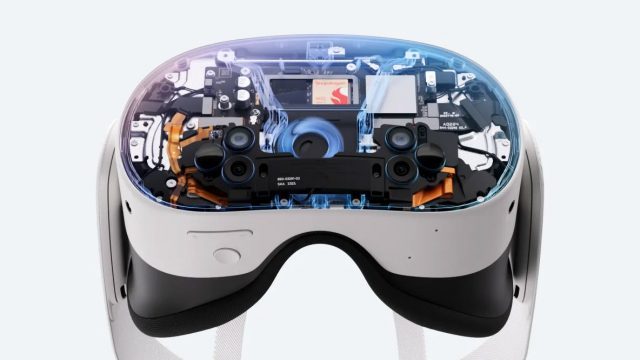
While Meta’s Quest has always relied heavily on cameras for tracking location of the headset, controllers, and the world around the user, developers haven’t had the same privileged access to the headset’s cameras. Earlier this year Meta gave developers the ability to experiment with direct access to the headset’s cameras in private projects; starting this week developers can now publicly release apps that make use of the new feature.

This week’s update of the Passthrough Camera API for Quest means that developers can now publish apps to the Horizon store that directly access the front-facing cameras of Quest 3 and 3S. This opens the door to third-party applications which can scan the world around the user to understand more about it. For instance, developers could add computer-vision capabilities to track objects or people in the scene, or to build a map of the environment for analysis and interaction.

For a long time this was impossible due to limitations Meta placed on what developers could and couldn’t do with the headset’s hardware. Despite computer-vision capabilities being widely available to developers on smartphones, Meta was hesitant to allow the same on its headsets, apparently due to privacy concerns (and surely amplified by the many privacy controversies the company has faced in the past).

Previously, third-party apps could learn some information about the world around the user—like the shape of the room and objects within it—but this information was provided by the system in a way that prevented apps from directly seeing what the cameras could see. This made it possible for developers to build mixed reality applications that were, to some extent, aware of the space around the user. But it made some use-cases difficult or even impossible; for example, tracking a specific object held by the user.

Last year Meta announced it would finally unlock direct access to the headset’s cameras. In March, it began offering an experimental version of the capability to developers, allowing them to build apps that accessed the headset’s cameras. But they weren’t allowed to publish those apps to the public, until now.

The company has also specified the technical capabilities and performance of the cameras that the developers can access on Quest 3 and 3S:

  • Image capture latency: 40-60ms
  • GPU overhead: ~1-2% per streamed camera
  • Memory overhead: ~45MB
  • Data rate: 30Hz
  • Max resolution: 1280×960
  • Internal data format YUV420

Meta says that a developer’s use of camera data on Quest is covered under its Developer Data Use Policy, including a section on “Prohibited Uses of User Data,” which prohibits certain uses of data, including to “perform, facilitate, or provide tools for surveillance,” and “uniquely identifying a device or user, except as permitted [in the policy].”

The post Quest Devs Can Now Publish Apps That Use the Headset’s Cameras to Scan the World appeared first on Road to VR.

Raptor Cliffs Open To Dinosaur Fans In Walkabout’s Pacific Northwest

In the imaginations of the Coconuts who make Walkabout Mini Golf, a drive up the Pacific Coast Highway of the United States in the 1970s brings visitors to a roadside attraction among the giant redwoods inhabited by happy well-fed dinosaurs.

Mighty Coconut has taken the nostalgia factor to extraordinary new heights in Raptor Cliffs. The journey from hole 1 to 18 is quite the trip if you happen to be familiar with those views of the Pacific Ocean you can find along that long road through California, Oregon and Washington.

Sketch by Don Carson forming the foundation of Raptor Cliffs.

The new paid downloadable add-on course for Walkabout is available today following a string of eye-catching expansions with Mount Olympus, Viva Las Elvis and Wallace & Gromit. Raptor Cliffs is the 33rd course in the game, selling for $4, and it opens for visitors alongside a price increase for the core game on May 1 to $25 with 14 courses bundled in.

We asked Greg Lloyd to tour Raptor Cliffs with Walkabout original creator Lucas Martell and art director Don Carson and he captured a 25-minute walkthrough for us. Some of our readers purchase these courses sight unseen partially to avoid spoilers before setting foot inside the new course themselves, but we capture these tours to illuminate the artists and design considerations behind one of VR’s best places.

The tour video embedded below premieres the same moment the new course becomes available on all platforms.

You can see the design evolution of Walkabout Mini Golf across dozens of design tours we’ve captured over the years embedded in the playlist below.

You can also read about Walkabout’s design philosophy from former Imagineer Don Carson and about the twins who stay connected in the safe spaces provided by the game.