A DOGE recruiter is staffing a project to deploy AI agents across the US government

A young entrepreneur who was among the earliest known recruiters for Elon Musk’s so-called Department of Government Efficiency (DOGE) has a new, related gig—and he’s hiring. Anthony Jancso, cofounder of AcclerateX, a government tech startup, is looking for technologists to work on a project that aims to have artificial intelligence perform tasks that are currently the responsibility of tens of thousands of federal workers.

Jancso, a former Palantir employee, wrote in a Slack with about 2000 Palantir alumni in it that he’s hiring for a “DOGE orthogonal project to design benchmarks and deploy AI agents across live workflows in federal agencies,” according to an April 21 post reviewed by WIRED. Agents are programs that can perform work autonomously.

We’ve identified over 300 roles with almost full-process standardization, freeing up at least 70k FTEs for higher-impact work over the next year,” he continued, essentially claiming that tens of thousands of federal employees could see many aspects of their job automated and replaced by these AI agents. Workers for the project, he wrote, would be based on site in Washington, DC, and would not require a security clearance; it isn’t clear for whom they would work. Palantir did not respond to requests for comment.

Read full article

Comments

Did Peking U. Just Make the World’s Fastest Transistor – Without Using Silicon?

“It is the fastest, most efficient transistor ever,” proclaims an announcment from Peking University. “And most important of all, there’s no trace of silicon involved,” adds ZME Science.
From the South China Morning Post:
A team of researchers at Peking University claims to have shattered chip performance limits and proven that China can use new materials to “change lanes” in the semiconductor race by circumventing silicon-based roadblocks entirely.
The researchers, led by physical chemistry professor Peng Hailin, said their self-engineered 2D transistor could operate 40 per cent faster than Intel and TSMC’s cutting-edge 3-nanometre silicon chips, while consuming 10 per cent less energy…. “While this path is born out of necessity due to current sanctions, it also forces researchers to find solutions from fresh perspectives,” [Hailin] added.

“Peking’s major innovation comes from the two-dimensional nature of their transistors, facilitated by using an element other than silicon,” writes Tom’s Hardware:

BiâOâSe, or bismuth oxyselenide, is a semiconductor material studied for its use in sub-1nm process nodes for years, largely thanks to its ability to be a 2D semiconductor. Two-dimensional semiconductors, like 2D BiâOâSe, are more flexible and sturdy at a small scale than silicon, which runs into reduced carrier mobility at even the 10nm node. Such breakthroughs into stacked 2D transistors and the move from silicon to bismuth are exciting for the future of semiconductors and are necessary for the Chinese industry to compete on the leading edge of semiconductors.

ZME Science adds this note of skepticism. “Turning laboratory breakthroughs into commercial chips typically takes years — sometimes decades…”

Thanks to Slashdot reader schwit1 for sharing the article.


Read more of this story at Slashdot.

How Badly Did ChatGPT and Copilot Fail to Predict the Winners of the Kentucky Derby?

In 2016, an online “swarm intelligence” platform stunned horse-racing fans by making a correct prediction for the Kentucky Derby — naming all four top finishers in order. (But the next year its predictions weren’t even close, with TechRepublic suggesting 2016’s race just had an unusual cluster of obvious picks.)

Since then it’s become almost a tradition — asking AI to predict the winning horses each year, then see how close it came. So before today’s race, a horse named “Journalism” was given the best odds of winning by professional bookmakers — but could AI make a better prediction? USA Today reports:

The USA TODAY Network asked Microsoft Copilot AI to simulate the order of finish for the 2025 Kentucky Derby field based on the latest, odds, predictions and race factors on Thursday, May 1. Journalism came out on top in its projection. The AI-generated response cited Journalism’s favorable post position (No. 8), which has produced the second-most Kentucky Derby winners and a four-race winning streak that includes last month’s Santa Anita Derby.

ChatGPT also picked the exact same horse, according to FanDuel. But in fact, the winning horse turned out to be “Sovereignty” (a horse Copilot predicted would finish second). Meanwhile Copilot’s pick for first place (“Journalism”) finished in second.

But after that Copilot’s picks were way off…
Copilot’s pick for third place was a horse named Rodriguez — which hours later was scratched from the race altogether. (And the next day Copilot’s pick for 10th place was also scratched.)
Copilot’s pick for fourth place was “Sandman” — who finished in 18th place.
Copilot’s pick for fifth place was “Burnham Square” — who finished in 11th place.
Copilot’s pick for sixth place was “Luxor Cafe” — who finished in 10th place
Copilot’s pick for seventh place was “Render Judgment” — who finished in 16th place…

An online racing publication also asked “a trained AI LLM tool” for their predictions, and received a wildly uneven prediction:

Burnham Square (finished 11th)
Journalism (finished 2nd)
Sandman (finished 18th)
Tiztastic (finished 15th)
Baeza (finished 3rd)


Read more of this story at Slashdot.

Dying Satellites Can Drive Climate Change and Ozone Depletion, Study Finds

There’s 9,000 satellites circling the earth, the Guardian points out, with projections over over 60,000 by 2040.
But “A new study shows that the emissions from expired satellites, as they fall to Earth and burn up, will be significant in future years, with implications for ozone hole recovery and climate.”
Most old satellites are disposed of by reducing their altitude and letting them burn up as they fall, releasing pollution into Earth’s atmosphere such as aerosolised aluminium. To understand the impact of these growing emissions from expired satellites, researchers simulated the effects associated with an annual release of 10,000 tonnes of aluminium oxide by 2040 (the amount estimated to be released from disposal of 3,000 satellites a year, assuming a fleet of 60,000 satellites).

The results, which are published in Journal of Geophysical Research Atmospheres, show that the re-entry material will accumulate at high latitudes and could result in temperature anomalies of up to 1.5C in the middle to upper atmosphere, reduction of wind speeds and ozone depletion, which could jeopardise ozone hole recovery.

“At present, impacts on the middle and the upper atmosphere are small,” the researchers write, “but have the potential to increase.” They argue that “to shed light upon the potential climate impacts of increased satellite reentry,” an “expanded effort, including observations and modeling is needed.”

Thanks to long-time Slashdot reader AmiMoJo for sharing the article.


Read more of this story at Slashdot.

AI-Driven Robot Installs Nearly 10,000 Solar Modules in Australia

Long-time Slashdot reader AmiMoJo shares an article from Renewables Now: Chinese tech company Leapting has successfully completed its first commercial deployment of photovoltaic (PV) modules with an AI-driven solar module mounting robot in Australia. The Chinese company was tasked with supporting the installation of French Neoen’s (EPA:NEOEN) 350-MW/440-MWp Culcairn Solar Farm in New South Wales’ Riverina region. Shanghai-based Leapting said this week that its intelligent robot has installed almost 10,000 modules at an “efficient, safe, and stable” pace that has “significantly” reduced the original construction timeline. Litian Intelligent was deployed at the Australian project site in early February. The machine has a 2.5-metre-high robotic arm sitting on a self-guided, self-propelled crawler. Equipped with a navigation system, and visual recognition technology, it can lift and mount PV panels weighing up to 30 kilograms. By replacing labour-intensive manual operations, the robot shortens the module installation cycle by 25%, while the installation efficiency increases three to five times as compared to manual labour and is easily adapted to complex environments, Leapting says.

Or, as Clean Technica puts it, “Meet the robot replacing four workers at a time on solar projects.”

This is part of a broader industrial trend. In the United States, Rosendin Electric demonstrated its own semi-autonomous system in Texas that allowed a two-person team to install 350 to 400 modules per day, a clear step-change from traditional methods. AES Corporation has been developing a robot called Maximo that combines placement and fastening with computer vision. Trina Solar’s Trinabot in China operates in a similar space, with prototype systems demonstrating 50-plus modules per hour… In an industry where time-to-energy is critical, shaving weeks off the construction schedule directly reduces costs and increases net revenue…

[T]he direction is clear. The future of solar construction will be faster, safer, and more precise — not because of human brawn, but because of robotic repetition. There will still be humans on-site, but their role shifts from lifting panels to managing throughput. Just as cranes and excavators changed civil construction, so too will robots like Leapting’s define the next era of solar deployment.


Read more of this story at Slashdot.

Scientists Simulate First-Ever ‘Black Hole Bomb’ Laboratory Analog

“Researchers have created the first laboratory analog of the ‘black hole bomb’,” reports ScienceAlert, “a theoretical concept developed by physicists in the 1970s…”

There’s no black hole involved; their experiment just simulates the “electromagnetic analogue” of the theoretical concept — the “exponential runaway amplification of spontaneously generated electromagnetic modes.”

Or, as ScienceAlert puts it, “It doesn’t, just to set your mind at ease, pose any danger. It consists of a rotating aluminum cylinder, placed inside layers of coils that generate magnetic fields that rotate around it, at controllable speeds.”

As Roger Penrose proposed in 1971, the powerful rotational energy of a spinning black hole could be used to amplify the energy of nearby particles. Then, physicist Yakov Zel’Dovich figured out that you didn’t need a black hole to see this phenomenon in action. An axially symmetrical body rotating in a resonance chamber, he figured, could produce the same energy transfer and amplification, albeit on a much smaller scale. Later work by other physicists found that, if you enclose the entire apparatus in a mirror, a positive feedback loop is generated, amplifying the energy until it explodes from the system.

This concept was named the black hole bomb, and a team of physicists led by Marion Cromb of the University of Southampton in the UK now claim to have brought it to life. A paper describing their experiment has been uploaded to preprint server arXiv… [W]hat the team’s experiment does is simulate it, using magnetic fields as a proxy for the particles, with the coils around the system acting as the reflector to produce the feedback loop. When they ran the experiment, they found that, when the cylinder is rotating faster than, and in the same direction as, the magnetic field, the magnetic field is amplified, compared to when there is no cylinder. When the cylinder rotates more slowly than the magnetic field, however, the magnetic field is dampened. This is a really interesting result, because it demonstrates a very clear amplification effect, based on the theories described decades ago…

Because we can’t probe black holes directly, analogs such as this are an excellent way to understand their properties… [T]he experiment could represent a significant step towards better understanding the physics of the most gravitationally extreme objects in the Universe.

“The exponential amplification from noise supports theoretical investigations into black hole instabilities,” the researchers write, “and is promising for the development of future experiments to observe quantum friction in the form of the Zeldovich effect seeded by the quantum vacuum…”


Read more of this story at Slashdot.

How to watch NVIDIA CEO Jensen Huang deliver the Computex 2025 keynote

Computex 2025 is approaching, and it’s sure to bring a ton of announcements about the latest chips, laptops, gaming devices and more from leading brands. The event in Taipei will kick off on Monday, May 19 with a keynote from NVIDIA CEO Jensen Huang at the Taipei Music Center. There will be a livestream for anyone not attending in person, so you can watch along on the Computex website or YouTube channel.

Huang’s keynote is scheduled for 11PM ET/ 8PM PT on May 18 (11AM on May 19 in Taiwan Time), and we can expect to hear all about the company’s developments in the AI space. It’ll be followed that same day by a keynote from Qualcomm CEO Cristiano Amon. Computex this year will, perhaps unsurprisingly, focus heavily on AI, with the overall theme being “AI Next.” It’ll also highlight products in three categories: AI & Robotics, Next-Gen Tech and Future Mobility.

An estimated 1,400 exhibitors will be in attendance, including ASUS, Acer and AMD, all of which have previously made big announcements at the annual expo. Computex 2025 will run from May 20 to May 23.

This article originally appeared on Engadget at https://www.engadget.com/computing/how-to-watch-nvidia-ceo-jensen-huang-deliver-the-computex-2025-keynote-205326521.html?src=rss

Rust Use Within The QEMU Emulator Shaping Up Well

The QEMU processor emulator that plays an important role in the open-source Linux virtualization stack has been seeing experimental support for the Rust programming language developing within its codebase. There continues to be good progress being made on this Rust support as more QEMU components get ported over to this programming language for memory safety and other security benefits…

‘Unparalleled’ Snake Antivenom Made With Antibodies From a Man Bitten 200 Times

Long-time Slashdot reader piojo writes: Tim Friede, Wisconsin man, has been injecting himself with snake venom for 18 years to gain protection from his pet snakes. The antibodies he developed have formed two components of a three-part antivenom, which gives partial or total protection against 18 of 19 species of venomous snakes that were tested. Notably, the antivenom is ineffective against vipers.

From Australia’s public broadcaster ABC:

The team’s results have been published today in the journal Cell… The new antivenom described in the study is very different to traditional antivenoms, according to Peter Kwong, a biochemist at Columbia University and one of the study’s authors.

The scientists call their new antivenom “unparallel,” according to the BBC, though the snake enthusiast (a former truck mechanic) had “initially wanted to build up his immunity to protect himself when handling snakes, documenting his exploits on YouTube.”

The team is trying to refine the antibodies further and see if adding a fourth component could lead to total protection against elapid snake venom… “Tim’s antibodies are really quite extraordinary — he taught his immune system to get this very, very broad recognition,” said Professor Peter Kwong [one of the researchers at Columbia University].

In a video interview, CNN shows footage of the man inducing snake bites (calling it “a classic do-not-try-this-at-home moment”). “I have a lot of notes in Excel files,” he tells CNN, “where I hit these particular windows to where I know I can boost up before a bite.”

“I don’t just take the bite, because that can kill you. I properly boost up, and methodically take notes, and weigh the venomes out very specifically…”


Read more of this story at Slashdot.

Lachlan Morton’s Traka 2025 bike sports exceptional puncture repair hacks

Lachlan Morton ranks as one of the best (and popular) multi-discipline endurance riders on the planet and he lined up for the start of the Traka 360 race having recently set a new record for riding around his native Australia. His Cannondale SuperX LAB71 was ready for a fast day out.

The SuperX has recently been revised to increase tyre clearance with the official figures now safely allowing for the 50mm tyres Morton rode at Unbound 2024.

His machine was built using an interesting mix of road and gravel components, but it also featured a very specific selection of puncture repair solutions, with each being ready for deployment quickly in the heat of battle.

2024’s Men’s Unbound 200 winner was unfortunate to suffer a serious mechanical mid-way through Saturday’s race, but given Morton’s dialled setup, we just had to take a closer look.

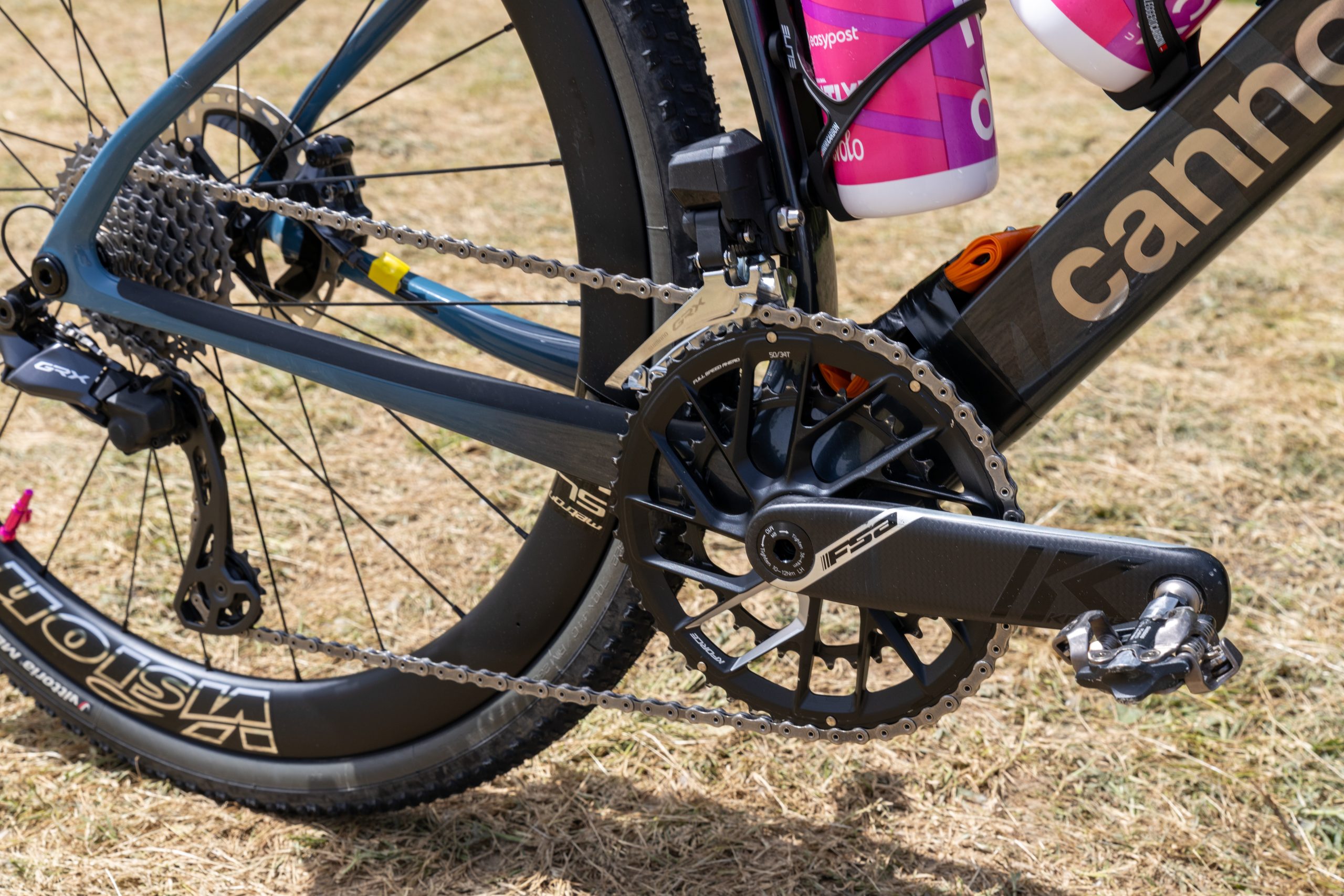
The drivetrain is a mix of road and gravel components, which Morton says is somewhat down to availability through the EF Education-EasyPost road race team. He told us he prefers the feel of Shimano’s road shifters, but that GRX is a better fit when it comes to derailleurs. Liam Cahill / Our Media
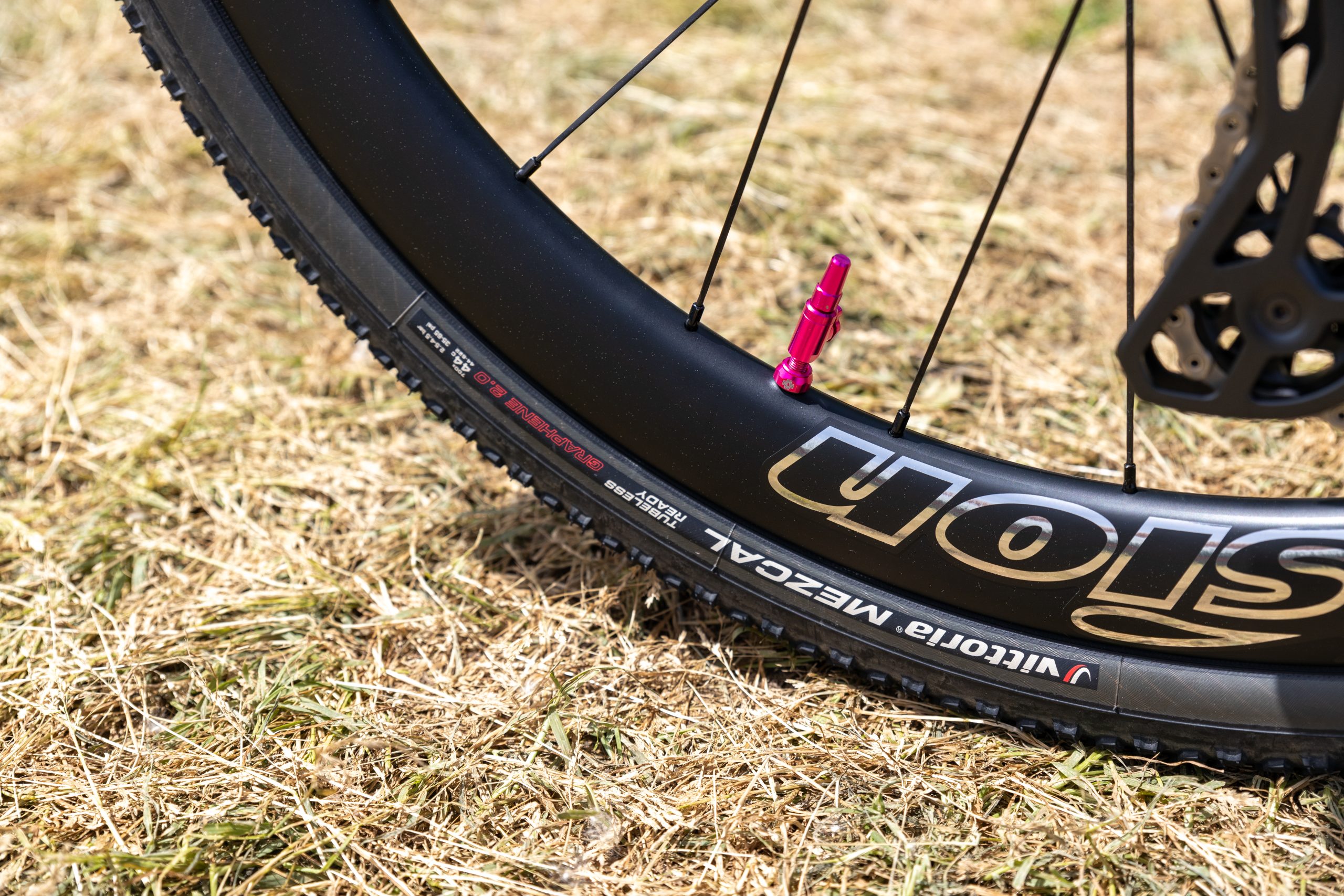
Despite opting for some jazzy mullet setups in the past, Morton went with 44mm rear / 42mm front Vittoria Mezcal tyres for the Traka 360. He said after only a few weeks on the new bike, he didn’t want to alter the geometry with a larger front tyre. His race ended after cracking his front rim, though neither he, nor his mechanic Tom Hopper, were sure on what caused the failure. Liam Cahill / Our Media
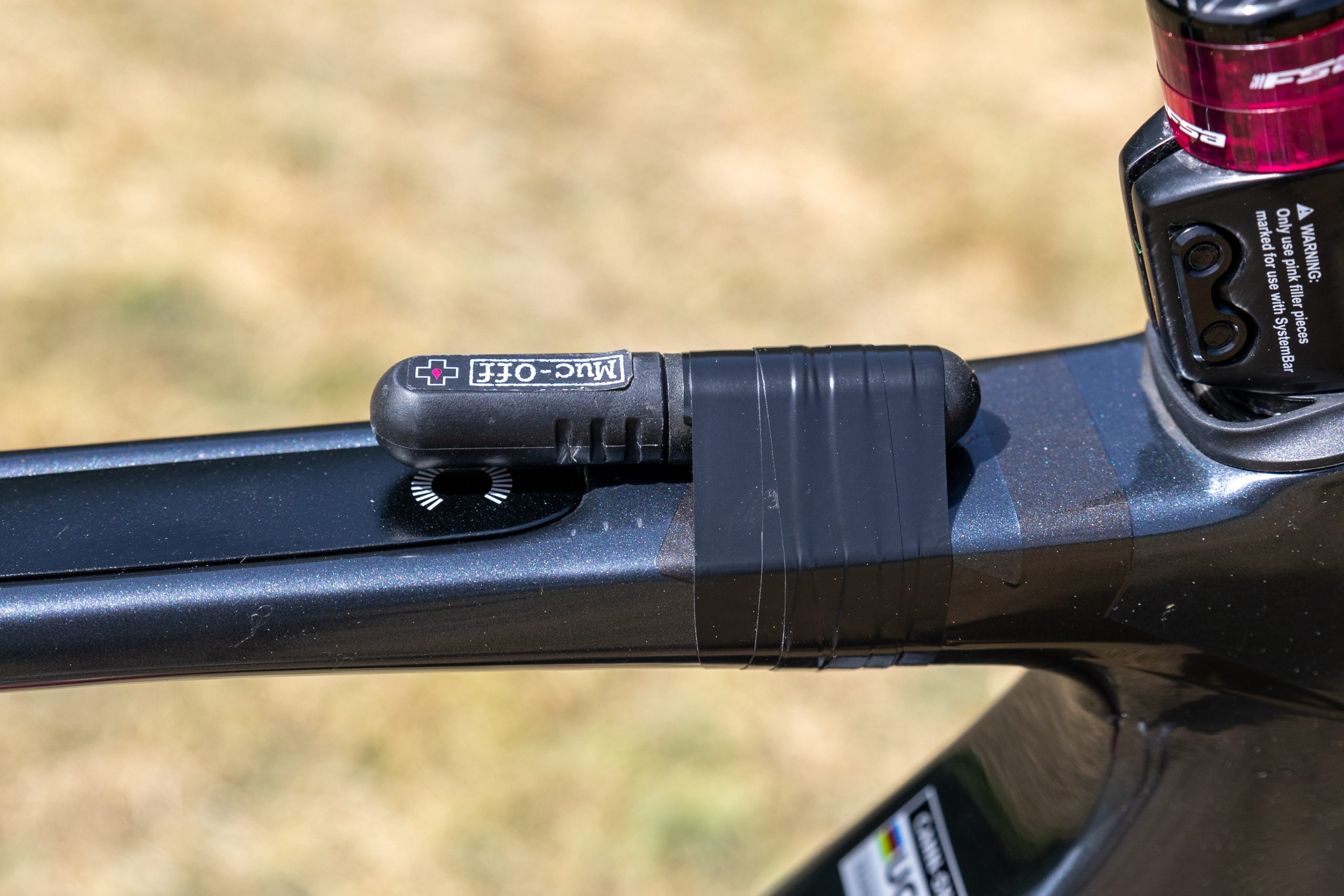
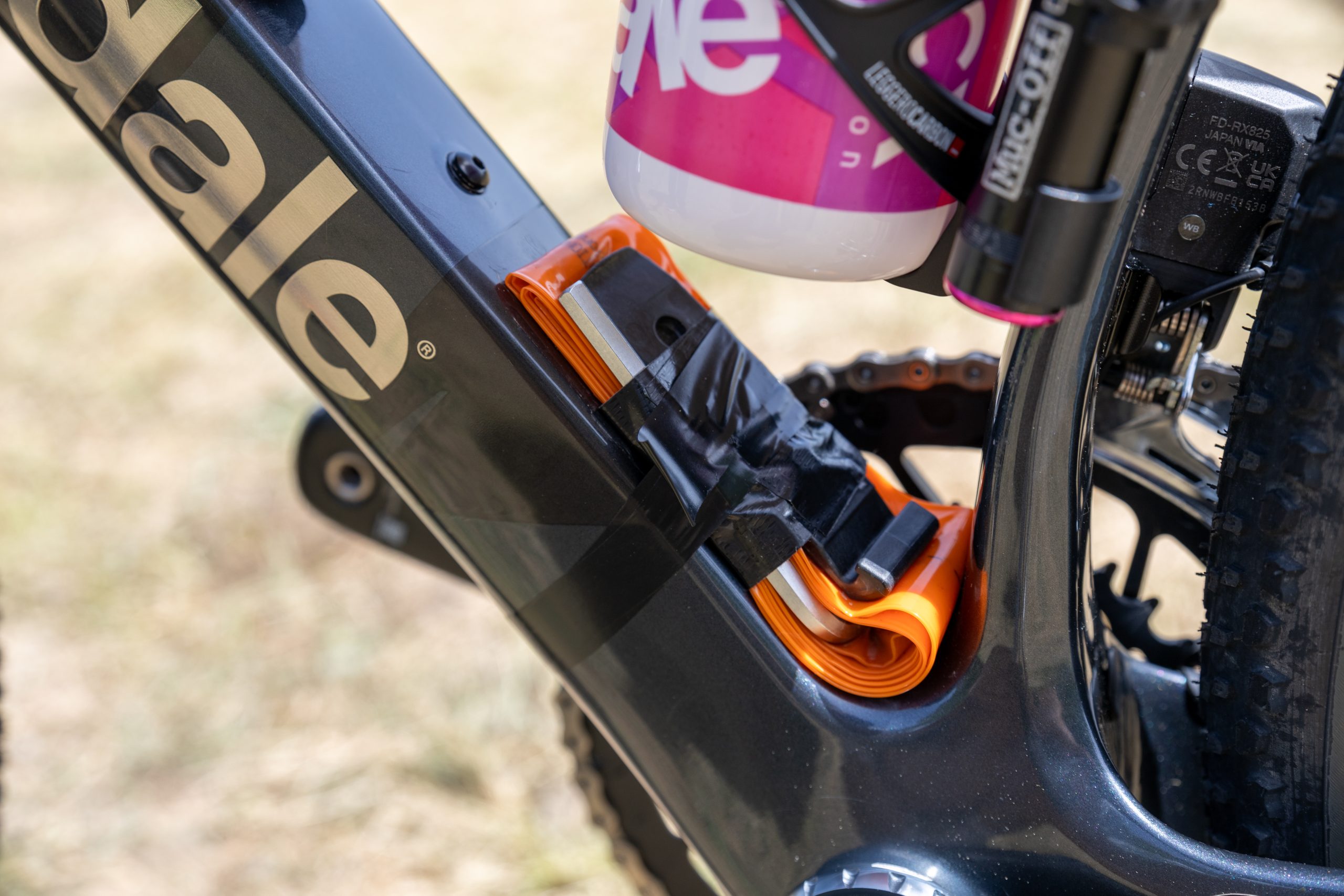
This pre-loaded tubeless plug is for larger holes. Morton said the positioning on the top tube makes it super easy to access when a tyre is rapidly losing air. Liam Cahill / Our Media
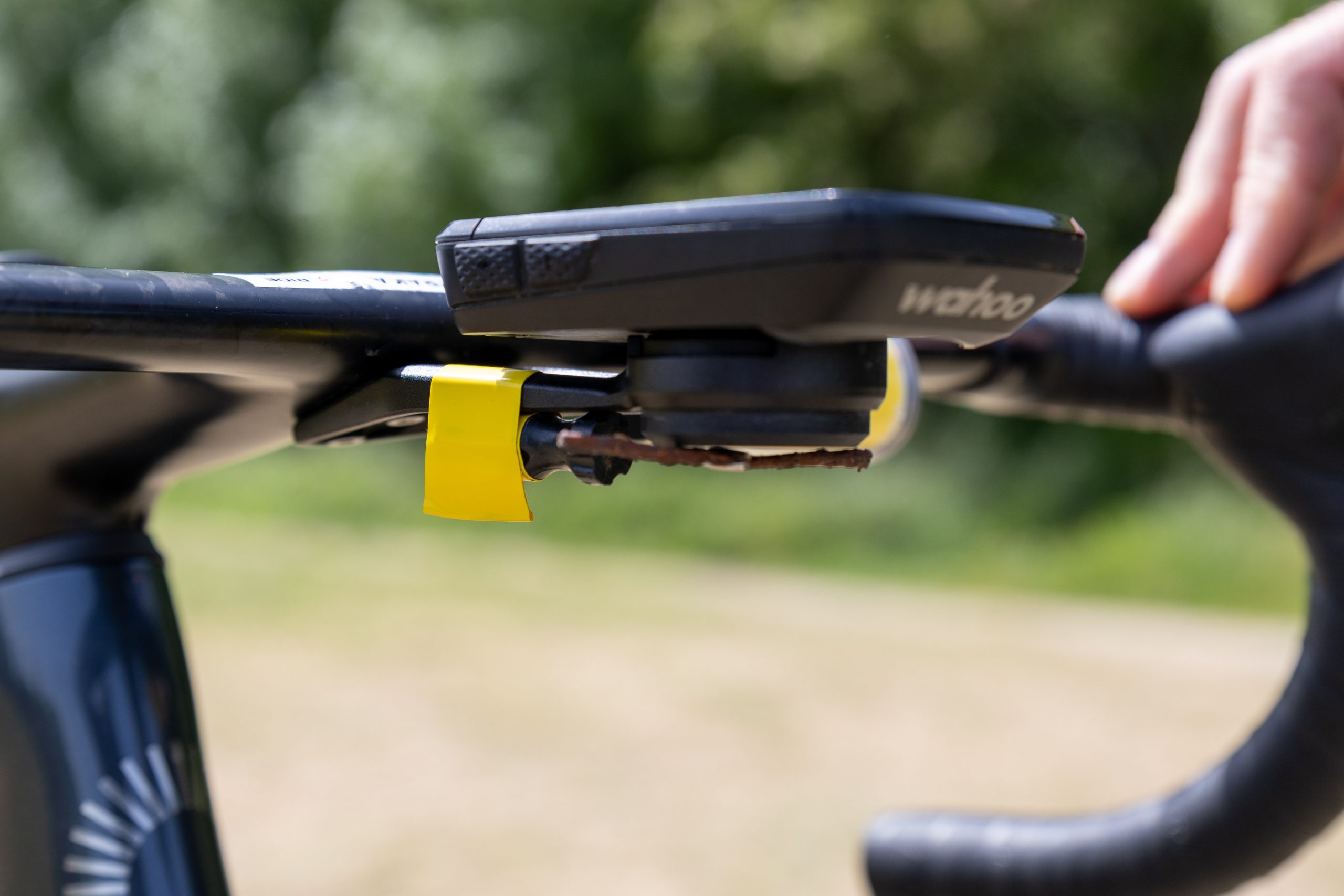
A tool for slower punctures (and smaller holes) was mounted under his Wahoo bike computer. Liam Cahill / Our Media
Less time-efficient puncture repair methods were located out of the way, with a tube and lever stashed at the bottom bracket. The way Morton sees it, if you’re putting in a tube, you’ll be stopped for longer than when using a plug. Liam Cahill / Our Media
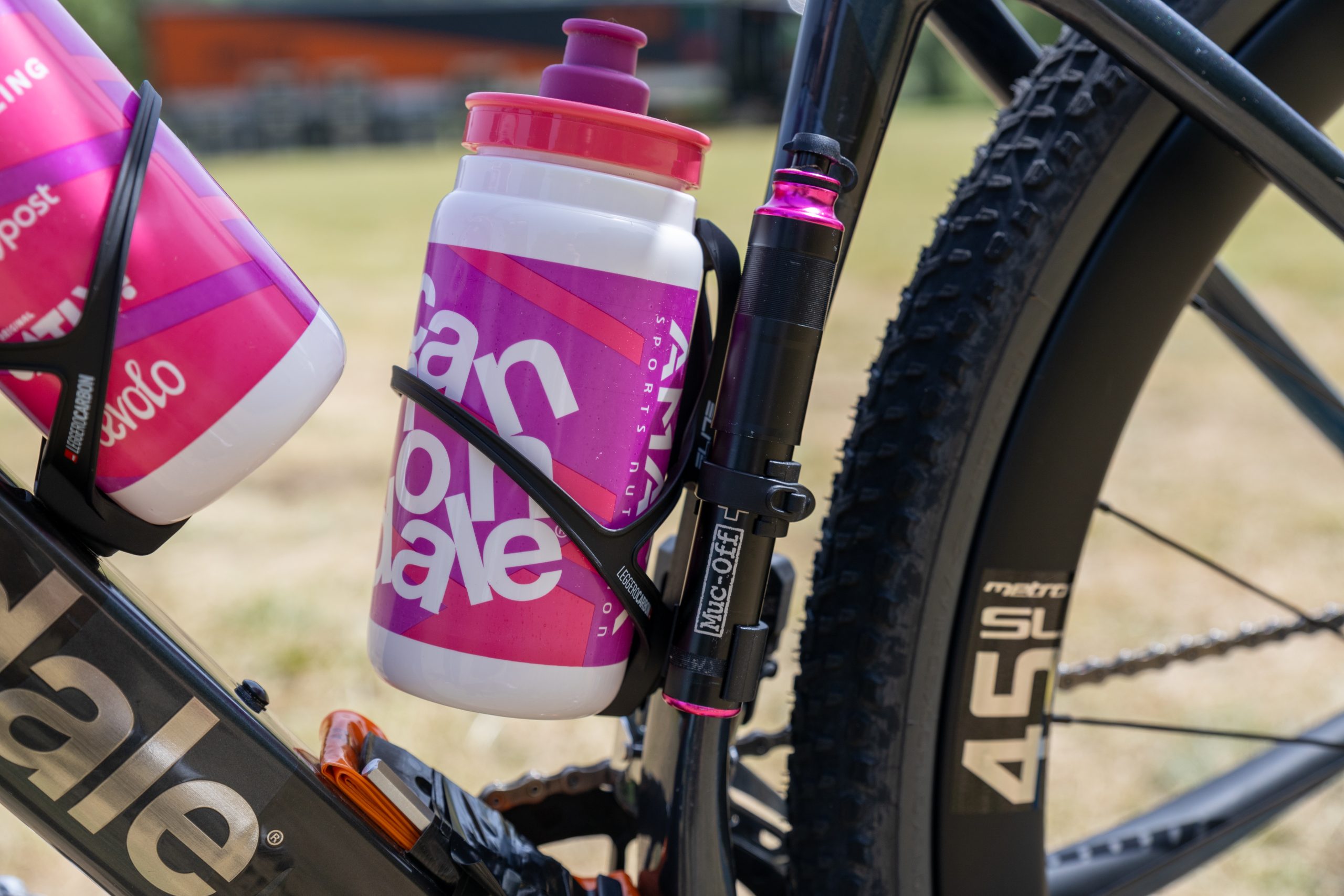
Morton carries a CO2 canister in the pockets of his skinsuit. This mini pump rarely comes out, but it’s good to have a dependable back up.

The Atlantic Warns Combining US Government Databases Could Create a ‘Panopticon’

America’s federal government “is a veritable cosmos of information, made up of constellations of databases,” warns the Atlantic. The FBI “has a facial-recognition apparatus capable of matching people against more than 640 million photos — a database made up of driver’s license and passport photos, as well as mug shots. The Homeland Security department holds data “about the movements of every person who travels by air commercially”. America’s Drug Enforcement Administration “tracks license plates scanned on American roads.” And there’s also every taxpayer’s finance and employment history…”
Government agencies including the IRS, the FBI, DHS, and the Department of Defense have all purchased cellphone-location data, and possibly collected them too, via secretive groups such as the National Geospatial-Intelligence Agency. That means the government has at least some ability to map or re-create the past everyday movements of some American citizens.
But now the information at individual agencies “is being pooled together. The question is Why? And what does the administration intend to do with it?” A White House spokesperson confirmed to the Atlantic that data collected by different agencies is now being combined. (They said that “Through data sharing between agencies, departments are collaborating to identify fraud and prevent criminals from exploiting hardworking American taxpayers.”) But a March executive explicitly stated an aim “to eliminate the data silos that keep everything separate.” The article accuses the administration officials of “not just undoing decades of privacy measures. They appear to be ignoring that they were ever written.”

The Atlantic spoke with former government officials “who have spent time in these systems,” reporting that “to a person, these experts are alarmed about the possibilities for harm, graft, and abuse… Collecting and then assembling data in the industrial way — just to have them in case they might be useful — would represent a huge and disturbing shift for the government…”

“A fragile combination of decades-old laws, norms, and jungly bureaucracy has so far prevented repositories such as these from assembling into a centralized American surveillance state. But that appears to be changing… DOGE has systematically gained access to sensitive data across the federal government “in ways that people in several agencies have described to us as both dangerous and disturbing.”


Read more of this story at Slashdot.