A new AUTOSEL release

AUTOSEL is a tool that is used to find kernel patches that should be
considered for backporting into the stable releases. Sasha Levin has announced a new and completely
rewritten version of AUTOSEL for those who would like to play with it.

Unlike the previous version that relied on word statistics and
older neural network techniques, AUTOSEL leverages modern large
language models and embedding technology to provide significantly
more accurate recommendations.

Half-Life 3 Is Reportedly Playable In Its Entirety

According to Valve insider Tyler McVicker, Half-Life 3 is finally playable from start to finish and could be announced this summer, with a release as soon as winter 2025. Engadget reports: Besides McVicker’s hours-long livestream, there have been other recent hints about Valve’s progress on its highly anticipated title. In March, Valve concept artist Evgeniy Evstratiy claimed that he was in the room where Valve made Half-Life 3 on CG Voices Podcast. In the same month, another Valve leaker, Gabe Follower, claimed that Half-Life 3 would be the “end of Gordon’s adventure,” potentially signaling a non-cliffhanger ending to one of gaming’s best franchises. Outside of these rumors, internet sleuths discovered code referencing HLX, which is widely thought to be the codename for Half-Life 3, in major updates to Deadlock and Dota 2.


Read more of this story at Slashdot.

Open Document Format Turns 20

The Open Document Format reached its 20th anniversary on May 1, marking two decades since OASIS approved the XML-based standard originally developed by Sun Microsystems from StarOffice code. Even as the format has seen adoption by several governments including the UK, India, and Brazil, plus organizations like NATO, Microsoft Office’s proprietary formats remain the de facto standard.

Microsoft countered ODF by developing Office Open XML, eventually getting it standardized through Ecma International. “ODF is much more than a technical specification: it is a symbol of freedom of choice, support for interoperability and protection of users from the commercial strategies of Big Tech,” said Eliane Domingos, Chair of the Document Foundation, which oversees LibreOffice — a fork created after Oracle acquired Sun.


Read more of this story at Slashdot.

How Riot Games is Fighting the War Against Video Game Hackers

Riot Games has reduced cheating in Valorant to under 1% of ranked games through its controversial kernel-level anti-cheat system Vanguard, according to the company’s anti-cheat director Phillip Koskinas. The system enforces Windows security features like Trusted Platform Module and Secure Boot while preventing code execution in kernel memory.

Beyond technical measures, Riot deploys undercover operatives who have infiltrated cheat development communities for years. “We’ve even gone as far as giving anti-cheat information to establish credibility,” Koskinas told TechCrunch, describing how they target even “premium” cheats costing thousands of dollars.

Riot faces increasingly sophisticated threats, including direct memory access attacks using specialized PCI Express hardware and screen reader cheats that use separate computers to analyze gameplay and control mouse movements. To combat repeat offenders, Vanguard fingerprints cheaters’ hardware. Koskinas admits to deliberately slowing some enforcement: “To keep cheating dumb, we ban slower.” The team also employs psychological warfare, publicly discrediting cheat developers and trolling known cheaters to undermine their credibility in gaming communities.


Read more of this story at Slashdot.

Netflix teases Squid Game’s final season

Netflix has released its first teaser trailer for the final season of Squid Game. Based on the scenes the streaming service included in the video, the games will be restarted after a failed uprising led by the show’s protagonist Seong Gi-hun, or Player 456. While Season 2 ended on a cliffhanger, it hinted strongly that the rebellion will fail to end the games right then and there. 

In the teaser, Player 456 could be seen being brought back into a room full of players inside a coffin. And after he wakes up, the games resume, players are segregated into groups, mother and son are separated and, curiously, a baby could be heard crying by the end of the teaser. We also get glimpses of Jun-ho as he searches for the island where the games are being held and his brother In-ho, who resumes his role as the games’ Front Man after pretending to be a player in the previous season. 

Squid Game is a Korean survival thriller with themes revolving around class struggle and social inequality. In the story, ordinary people, often buried in debts and desperate to earn money, are locked in a facility where they’re forced to play games. Only one person wins the pot of money players collectively earn by winning games. Everybody else? Well, they die. Seong Gi-hun, the first season’s winner, chose to come back for another round in order to dismantle the organization running the games, and the third season will show the culmination of his efforts. Squid Game season 3 arrives on Netflix on June 27. 

This article originally appeared on Engadget at https://www.engadget.com/entertainment/streaming/netflix-teases-squid-games-final-season-035721654.html?src=rss

Europe Pledges Half a Billion Euros To Attract Scientists and Researchers

An anonymous reader quotes a report from the Associated Press: The European Union launched a drive on Monday to attract scientists and researchers to Europe with offers of grants and new policy plans, after the Trump administration froze U.S. government funding linked to diversity, equity and inclusion initiatives. “A few years ago, no one would have imagined that one of the biggest democracies in the world would cancel research programs under the pretext that the word diversity was in this program,” French President Emmanuel Macron said at the “Choose Europe for Science” event in Paris. “No one would have thought that one of the biggest democracies in the world would delete with a stroke the ability of one researcher or another to obtain visas,” Macron said. “But here we are.”

Taking the same stage at the Sorbonne University, European Commission President Ursula von der Leyen said that the EU’s executive branch would set up a “super grant” program aimed at offering “a longer-term perspective to the very best” in the field. She said that 500 million euros ($566 million) will be put forward in 2025-2027 “to make Europe a magnet for researchers.” It would be injected into the European Research Council, which already has a budget of more than 16 billion euros ($18 billion) for 2021-2027.

Von der Leyen said that the 27-nation EU intends “to enshrine freedom of scientific research into law” with a new legal act. As “the threats rise across the world, Europe will not compromise on its principles,” she said. Macron said that the French government would also soon make new proposals to beef up investment in science and research. […] While not mentioning the Trump administration by name, von der Leyen said that it was “a gigantic miscalculation” to undermine free and open research. “We can all agree that science has no passport, no gender, no ethnicity, no political party,” she said. “We believe that diversity is an asset of humanity and the lifeblood of science. It is one of the most valuable global assets and it must be protected.”
Macron said that science and research must not “be based on the diktats of the few.”

Macron said that Europe “must become a refuge” for scientists and researchers, and he said to those who feel under threat elsewhere: “The message is simple. If you like freedom, come and help us to remain free, to do research here, to help us become better, to invest in our future.”

Further reading: 75% of Scientists in Nature Poll Weigh Leaving US

NASA, Yale, and Stanford Scientists Consider ‘Scientific Exile’


Read more of this story at Slashdot.

Sparkle’s Intel Arc B580 ROC Luna GPU Breaks Cover And It Looks Stunning

Sparkle's Intel Arc B580 ROC Luna GPU Breaks Cover And It Looks Stunning
Sparkle is a company that has been around since 1982, yet the vendor has only recently started selling products for the consumer PC market. Its most visible offerings are graphics cards, which it bases exclusively on Intel’s Arc GPUs. Sparkle favors mythical creatures for its GPU lineups, like “Orc” and “Titan”; today’s card is part of the

Hyundai Unleashes Atlas Robots In Georgia Plant

Hyundai Motor Group is accelerating its factory automation efforts by deploying Atlas humanoid robots from Boston Dynamics at its Metaplant America facility in Georgia, as part of a broader $21 billion U.S. investment strategy to boost efficiency and local production amid rising tariffs. InterestingEngineering reports: At Hyundai Motor Group Metaplant America, Hyundai already uses Spot robots — four-legged machines — for industrial inspections. In addition, the plant features a dedicated robot that removes car doors before the vehicles enter General Assembly, and a fixed robot that reinstalls the doors toward the end of the process — a technology unique to the Georgia facility.

The South Korean automaker has not disclosed how many Atlas robots will be deployed at the facility or what specific tasks they will perform. According to reports, the company plans to further expand the use of robots across its global manufacturing facilities, streamlining processes and enhancing efficiency. […] The automaker aims to manufacture 300,000 electric and hybrid vehicles annually at the new facility. At its recent Grand Opening Ceremony, the company announced plans to ramp up production to 500,000 units over time, without specifying a timeline.


Read more of this story at Slashdot.

(Updated)Modular Cerebro Clusterboard Supports Raspberry Pi CM4/CM5, Jetson, and Radxa CM5

Cerebro is an upcoming clusterboard platform launching on Kickstarter, designed for AI, edge computing, and embedded development. It supports a range of compute modules including Raspberry Pi CM4 and CM5, NVIDIA Jetson, and Radxa CM5, providing a modular base for scalable systems. The board can host up to four compute nodes and includes an onboard, […]

Trump Threatens 100% Tariff On Foreign-Made Films

Donald Trump has announced plans to impose a 100% tariff on all foreign-made films, citing national security concerns and accusing other countries of luring U.S. film production abroad with incentives. PBS reports: “The Movie Industry in America is DYING a very fast death,” he wrote [on his Truth Social platform], complaining that other countries “are offering all sorts of incentives to draw” filmmakers and studios away from the U.S. “This is a concerted effort by other Nations and, therefore, a National Security threat. It is, in addition to everything else, messaging and propaganda!”

It wasn’t immediately clear how any such tariff on international productions could be implemented. It’s common for both large and small films to include production in the U.S. and in other countries. Big-budget movies like the upcoming “Mission: Impossible — The Final Reckoning,” for instance, are shot around the world.

Incentive programs for years have influenced where movies are shot, increasingly driving film production out of California and to other states and countries with favorable tax incentives, like Canada and the United Kingdom. Yet Trump’s tariffs are designed to lead consumers toward American products. And in movie theaters, American-produced movies overwhelming dominate the domestic marketplace. “Other nations have been stealing the movie-making capabilities from the United States,” Trump told reporters at the White House on Sunday night after returning from a weekend in Florida. “If they’re not willing to make a movie inside the United States we should have a tariff on movies that come in.”


Read more of this story at Slashdot.

Man pleads guilty to using malicious AI software to hack Disney employee

A California man has pleaded guilty to hacking an employee of The Walt Disney Company by tricking the person into running a malicious version of a widely used open source AI image generation tool.

Ryan Mitchell Kramer, 25, pleaded guilty to one count of accessing a computer and obtaining information and one count of threatening to damage a protected computer, the US Attorney for the Central District of California said Monday. In a plea agreement, Kramer said he published an app on GitHub for creating AI-generated art. The program contained malicious code that gave access to computers that installed it. Kramer operated using the moniker NullBulge.

Not the ComfyUI you’re looking for

According to researchers at VPNMentor, the program Kramer used was ComfyUI_LLMVISION, which purported to be an extension for the legitimate ComfyUI image generator and had functions added to it for copying passwords, payment card data, and other sensitive information from machines that installed it. The fake extension then sent the data to a Discord server that Kramer operated. To better disguise the malicious code, it was folded into files that used the names OpenAI and Anthropic.

Read full article

Comments

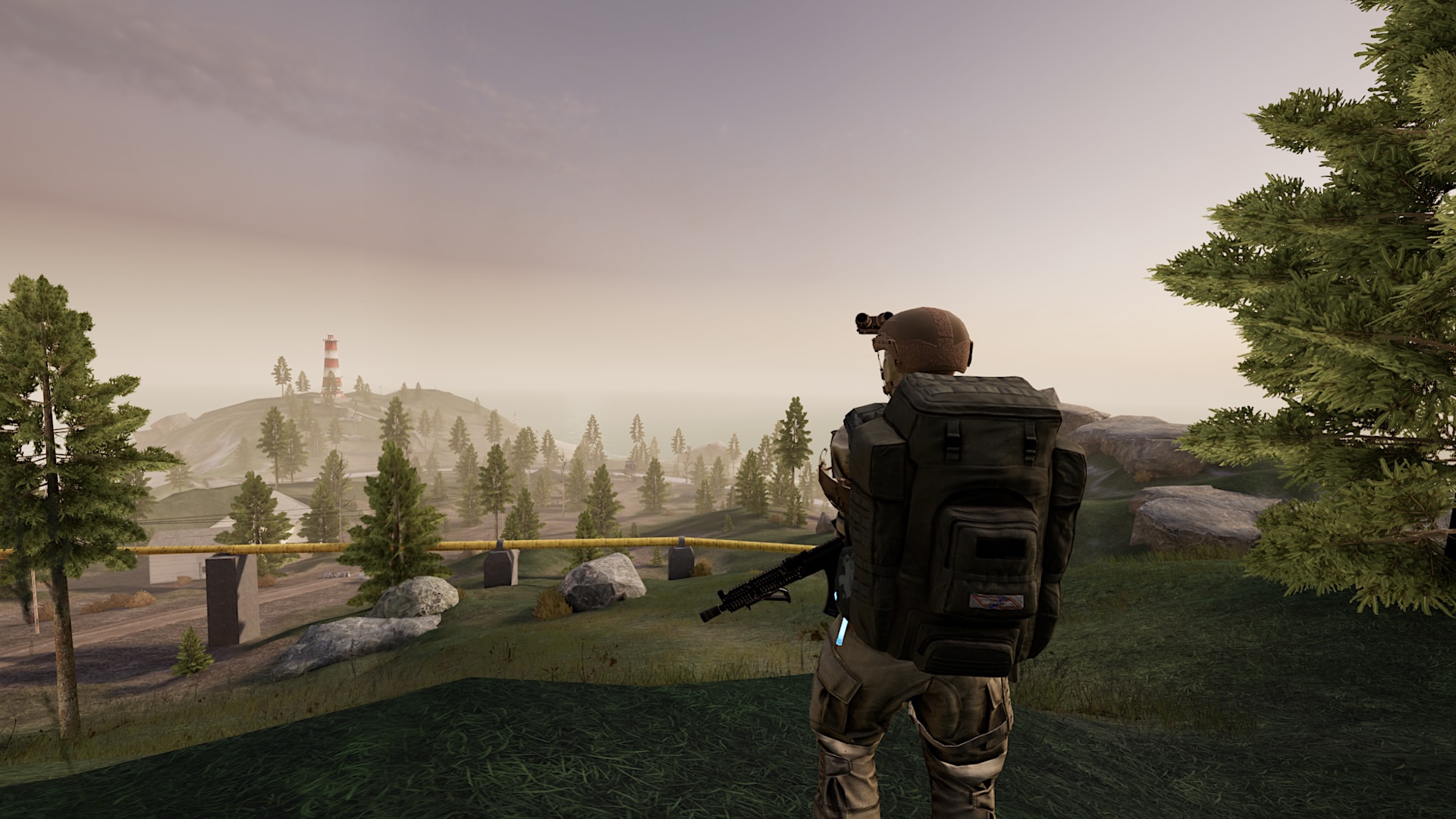
Gears of War is coming to PlayStation for the first time on August 26

Yet another high-profile Xbox franchise is making the leap to PlayStation. While Halo isn’t yet making the transition, Gears of War is about to join the likes of Forza Horizon 5 in crossing the divide. Gears of War: Reloaded, a remaster of the first game in the series from 2006, is coming to PS5, PC (on the Xbox PC app and Steam) and, naturally, Xbox Series X/S on August 26. However, it’s not making its way to Nintendo Switch 2, at least for the time being.

The game costs $40, though it will also be on Game Pass Ultimate and PC Game Pass on day one. Those who bought the digital version of Gears of War: Ultimate Edition before the remaster announcement will get a free upgrade. Game Pass Ultimate subscribers will also be able to play the third-person shooter on Xbox Cloud Gaming.

The Coalition, an Xbox studio that focuses on Gears of War, worked on the remaster with Sumo Interactive and Disbelief. The game includes all of the Gears of War DLC at no extra cost, including a bonus act for the campaign and all multiplayer features. There will be some characters and cosmetic items that you unlock through progression.

As ever, you can play through the campaign with a friend either online or in classic split-screen co-op. There’s cross-play for all platforms with support for up to eight players in the versus multiplayer mode. If you sign in with a Microsoft account (which isn’t required), you can enable cross-progression. So if you pick up Gears of War: Reloaded on PS5 and play the campaign or multiplayer there, you can continue where you left off on a phone or tablet via Xbox Cloud Gaming, for instance.

Along with “platform-specific features,” Gears of War: Reloaded includes support for 4K HDR visuals, framerates of 60 fps in the campaign and 120 fps in multiplayer modes, Dolby Vision, Dolby Atmos and other visual, audio and performance enhancements. Microsoft is also promising that the campaign will have zero loading screens.

The Coalition has another Gears of War project in the pipeline. During last June’s Xbox Games Showcase, Gears of War: E-Day was revealed. Outriders studio People Can Fly is co-developing the game, which does not yet have a release window.

This article originally appeared on Engadget at https://www.engadget.com/gaming/gears-of-war-is-coming-to-playstation-for-the-first-time-on-august-26-000159326.html?src=rss

Heartbreaking video shows deadly risk of skipping measles vaccine

In a hard-to-watch video, a healthy-looking 4-year-old boy lies on a bed as doctors lift his eyelids to watch his big brown eyes erratically swirl and roll backward. His head jerks, and his little limbs weakly twitch and spasm. A small bit of foam pushes past his lips.

The video, captured by neurologists in India and published today in JAMA Neurology, shows what it looks like when the measles virus is allowed to ravage a child’s brain. (The video can be viewed here.)

The boy was never vaccinated and developed a rare complication from measles called subacute sclerosing panencephalitis (SSPE). The condition occurs when the measles virus quietly sneaks into the central nervous system. It often lurks for years after an initial infection before it begins wreaking havoc, triggering damaging inflammation, destroying neurons, and causing brain lesions.

Read full article

Comments

Waymo Plans To Double Robotaxi Production At Arizona Plant By End of 2026

Waymo and Magna International plan to double production of Waymo’s robotaxis at their Mesa, Arizona facility by the end of 2026, aiming to assemble over 2,000 Jaguar I-PACE vehicles and eventually tens of thousands annually, including next-gen models. CNBC reports: The “Waymo Driver Integration Plant,” a 239,000 square foot facility outside of Phoenix, will assemble more than 2,000 Jaguar I-PACE robotaxis, the Alphabet company said in a statement. Waymo will add those self-driving vehicles to its existing fleet that already includes around 1,500 robotaxis. The plant will be “capable of building tens of thousands of fully autonomous Waymo vehicles per year,” when it is fully built out, Waymo said. The company also said it plans to build its more advanced Geely Zeekr RT robotaxis that feature its “6th-generation Waymo Driver” technology later this year at the plant.

Waymo and Magna opened the Mesa plant in October, Forbes reported Monday. The Alphabet-owned company started its commercial robotaxi service in Phoenix in 2020 and now calls the area its domestic manufacturing home. Already, Waymo is conducting 250,000 paid, driverless rides per week across its service areas in Austin, the San Francisco Bay area, Los Angeles and Phoenix, and the company is planning to begin serving the Atlanta; Miami; and Washington, D.C., markets in 2026.


Read more of this story at Slashdot.

Here’s Why Microsoft Is Ditching Passwords for New Accounts

Microsoft is taking another big step toward eliminating passwords with a “passwordless by default” setting for new accounts. New users will be prompted to set up passkeys when creating their Microsoft logins, leaving passwords behind.

The company has had passwordless sign-in options for Windows 11 and Microsoft accounts for several years, and in 2024 expanded passkey support across Windows, Android, and iOS. This is a big change, but not one without reason. In fact, it may make Microsoft accounts more secure, and render many scammers’ phishing tactics obsolete.

The benefits of passkeys

Passkeys are not only easier to use than passwords combined with other forms of two-factor authentication (2FA) like SMS codes and authenticator apps—they’re also more secure. Passkeys are cryptographically generated, stored on your device, and encrypted by default, making them immune to phishing and other cyberattacks. Without access to your device, bad actors can’t hack your accounts.

Instead of creating a complex password, which you then have to securely store (or remember), a device-based passkey allows you to quickly log into your accounts using biometrics like your face or fingerprint, or credentials like your PIN or password.

Passkeys are the default on new Microsoft accounts

Going forward, new Microsoft accounts will be “passwordless by default.” When you sign up for the first time, you’ll be asked to enter your email address and verify it with a one-time code—without any need to create and save a password. Once you enter the one-time code, you’ll be prompted to add a passkey using your face, fingerprint, or PIN. The next time you log in, you’ll do so with with your chosen passkey.

You can choose to skip passkey setup and return to it later (tap Skip for now on the pop-up). Microsoft will set the “best available” passwordless sign-in method for your account as the default, which could be a one-time code or an enabled passkey.

Existing Microsoft users can manage passkeys and delete passwords in the Settings app under Accounts > Passkeys. According to Microsoft’s announcement detailing the change, the company aims to eventually remove password support completely.