Oura’s Meals Feature Is Not Like Any Other Food Tracking App I’ve Used

We may earn a commission from links on this page.

Hot on the heels of Oura’s AI Advisor, another app feature from the smart ring company is leaving beta and becoming available to all users: meal logging. But this isn’t just another calorie tracking app—Oura’s Meals feature provides feedback on what you’re eating and when, without judging you for how much. 

Glucose tracking is also coming to the app, and Oura has announced a partnership with Dexcom to sell the Stelo continuous glucose monitor, which can be purchased without a prescription. If you use the Stelo monitor, you can view some glucose statistics in the Oura app, including how your blood glucose responds to the meals you track. 

How Oura’s meal tracking works

Once you have the Meals feature enabled (it’s rolling out to everyone today, the company says), just tap the plus sign in the lower right corner and select “Log a meal.” 

The simplest way to log a meal is to take a photo of your food, but don’t worry if you forget until your plate is clean. You can tap “Text input” at the bottom to type in a description of what you ate, or select one of your recent meals if you’re repeating something you ate within the past few days. 

The app takes a few seconds to think, and then it tells you what it believes you ate. (You can correct it if it’s wrong—more about that below.) Then it gives you some text feedback about your meal and a little section of statistics judging whether the meal was high or low in protein, fiber, and other factors—mostly macronutrients, but also how “processed” the meal was. 

The feedback encourages you to eat more protein and vegetables, without getting negative about your choices, and I appreciate that. Oura says in its press release: “Oura’s guidance avoids penalizing food choices, instead presenting non-judgmental insights that help members make informed choices based on their health objectives, whether that’s improving energy levels, maintaining metabolic health, or enhancing dietary balance.”

The advice is gentle and the results are usually correct
Advisor conversation about recent meals

Credit: Beth Skwarecki

Oura’s conclusions about what’s in a food photo have usually been correct for me, but sometimes it misses an ingredient—for example, it might log a “rice and beans bowl” but not notice that there was also chicken in the mix. The description might suggest that I could include protein next time. As I said earlier, this is no big deal, because you can correct this at the bottom of the screen. 

Scroll down and you’ll see a list of the ingredients or components of your meal. You can remove components that weren’t actually there and add anything that the AI missed. I found this process quick and easy. In a few taps, the app would then tell me that I did a great job getting both protein and fiber in my meal, and the stats would look correct. 

The text feedback on the meals is sometimes helpful, but at other times is too vague and generic to be of any real use. The few shreds of cabbage in my rice bowl contain anthocyanins? I don’t actually care. Garlic was valued in ancient civilizations for its medicinal properties? Great, that’s super important to know when I’m logging some garlic bread as a snack.

I do sometimes enjoy that it suggests a way I could improve the meal next time—usually by adding some veggies or protein—but when I do log a meal with veggies and protein, it then just suggests that I might want to have the meal with “extra veggies” next time. 

I loved seeing a graphic of my meal timing

Circle with yellow for meals, blue for sleep

Credit: Beth Skwarecki

I’ve been disorganized with my eating lately, sometimes snarfing down snacks throughout the day and not sitting down to a real dinner until late in the evening. I know that late meals can affect my sleep, and that mealtimes are important for setting your body’s clock. So I was delighted to see that Oura tracks the time of meals as well as their content. 

Each meal I log is shown on a circle that represents my day. My sleep times and wind-down (bedtime) hours are shown in blue and green, respectively. There’s a yellow dot for each meal I logged today, and a yellowish area showing the times I normally eat. Right now, the app judges my mealtimes as “irregular.” Harsh, but true. I can see on the circular graphic just how late I’ve been eating. 

Where Oura’s Meals feature falls short

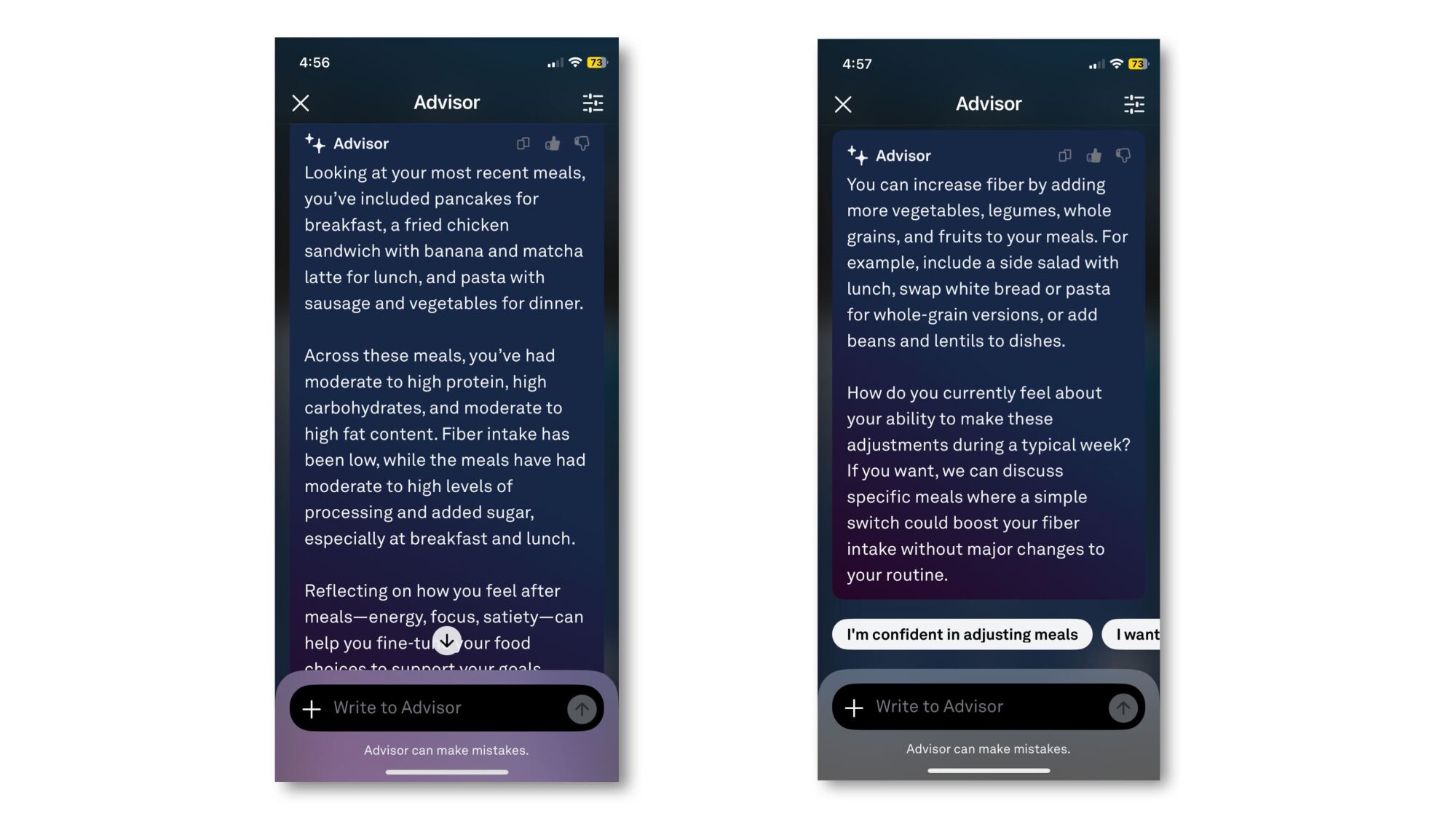
The functions of the Meals feature seem to work quite well, but so many functions are missing. For example, I can only see that nice graph of meal timing after I log a meal! There’s no way to access it just to take a peek. I tried asking the AI Advisor about my meal patterns, and it describes them to me in text, but says it can’t generate graphs or images to share with me. 

I also wish I could see a summary of how I’m doing on protein, fiber, level of processing, and the other factors Oura tracks. But again, these only show up when you log a meal, and aren’t available otherwise. The Advisor will describe them to me in broad terms (“Your meals show balance, but your fiber and added sugar trends stand out”) but I hoped for better. 

Another feature it’s missing—which I’m actually OK with—is that it doesn’t seem to care how much food you’re eating. It doesn’t know how many grams of protein I’ve eaten, and certainly has no clue about the number of calories. On the one hand: excellent. I don’t need another app assuming that I want to lose weight or making me measure everything as I log it. “Yes, that’s rice” is so much easier to tell the app than “I ate exactly 205 grams of rice.” 

But on the other hand, the recommendations would make more sense if the app had a sense of balance. Did I eat a lot of chicken breast and a small amount of candy today, or the other way around? Those would be drastically different eating patterns, worth giving drastically different advice. 

OpenAI Reaches Agreement To Buy Startup Windsurf For $3 Billion

An anonymous reader quotes a report from Reuters: OpenAI has agreed to buy artificial intelligence-assisted coding tool Windsurf for about $3 billion, Bloomberg News reported on Monday, citing people familiar with the matter. The deal has not yet closed, the report added. Windsurf, formerly known as Codeium, had recently been in talks with investors including General Catalyst and Kleiner Perkins to raise funding at a $3 billion valuation, according to Bloomberg News. The report notes that the deal “would be OpenAI’s largest acquisition to date,” further complementing ChatGPT’s coding capabilities.


Read more of this story at Slashdot.

DoorDash is buying British rival Deliveroo for $3.9 billion

DoorDash has agreed to purchase British food and grocery delivery service Deliveroo for $3.9 billion, the companies have revealed in a filing with the London Stock Exchange. The acquisition will “strengthen DoorDash’s position as a leading global platform,” the filing said. Deliveroo operates in nine regions, namely Belgium, France, Italy, Ireland, Kuwait, Qatar, Singapore, United Arab Emirates and the United Kingdom. All those regions are new for DoorDash and will give the combined companies access to a total population that exceeds 1 billion people. 

It doesn’t sound like DoorDash is erasing Deliveroo’s brand after it takes over. Instead, they’ll both be part of an “Enlarged Group” operating in multiple regions around the world, giving DoorDash an expanded presence in Europe and giving it an entry into the Middle Eastern market. “Both companies are highly complementary, whether in their geographic footprints or their missions, and I am confident that being part of the Enlarged Group will accelerate the realisation of Deliveroo’s full potential,” Deliveroo chair Claudia Arney said in a statement. 

The acquisition is still subject to regulatory and antitrust approvals. As CNBC noted, though, this marks the end of Deliveroo’s problems as a public company. It has faced a lot of competition and legal challenges after a period of abundance for food delivery services during the COVID-19 lockdowns, and its share prices have plummeted since it went public in 2021. Before the company went public, Amazon took on the UK’s Competition and Markets Authority to become a major investor in Deliveroo. The e-commerce company was the leading investor in a funding round worth $575 million and owned a 16 percent stake in the food delivery service.

This article originally appeared on Engadget at https://www.engadget.com/apps/doordash-is-buying-british-rival-deliveroo-for-39-billion-123005055.html?src=rss

Look Out for This Social Security Scam That Gives Hackers Full Access to Your Computer

If you receive an email about your Social Security statement, proceed with caution: According to a new report from Malwarebytes Labs, hackers are impersonating the Social Security Administration (SSA) to trick people into installing a remote access tool and handing over full control of their devices.

The SSA is no stranger to phishing scams—the Office of the Inspector General put out an alert last month warning the public of fraudulent emails purporting to include Social Security statements that in reality led to fake websites.

How the Social Security phishing scam works

The current attack is the work of a phishing group known as Molatori. It begins with an email that appears to come from the SSA with the message, “Your Social Security Statement is now available” and a prompt to download an attached document. The supposed statement is actually a ScreenConnect client, which grants remote control of the affected device.

ScreenConnect is a legitimate remote support platform for IT pros to help users configure systems and resolve technical issues by allowing the same access as if they had your device in hand. Once hackers have control of your computer via ScreenConnect, they can use it for anything from installing malware to transferring files to accessing sensitive data, like bank and financial account information, all without your knowledge.

Financial fraud is believed to be the main objective for this campaign, but as always, stolen data can be used for identity theft or sold to other malicious groups.

As Malwarebytes Labs describes, this scheme is hard to identify in part because the phishing emails originate from compromised WordPress sites with legitimate domains. The email body may also be sent as an image rather than text, making it harder for filters to detect it as malicious.

How to protect yourself

All of the common cautions for avoiding phishing scams apply here. Do not click on links or download or open files or attachments sent via email, especially if the message is unsolicited. Go directly to the company’s or organization’s website to locate important documents and verify communication. Attacks that come from compromised (but legitimate) domains can be trickier to catch, so be especially wary of anything you’re instructed to download, click, or fill out from an email.

If you are unsure whether an email or message is real and safe, Malwarebytes also suggests copying some of the text into a search engine to determine if it is part of a known phishing campaign.

Apple hit with class action suit from developers after App Store ruling

Apple may see further fallout over its failure to comply with a court order that led to last week’s contempt ruling. A class action suit filed on behalf of developers claims that Apple’s actions cost Pure Sweat Basketball (and other developers) revenue during the period it was found to have violated the original court order. “Had Apple complied with the injunction, as required, Pure Sweat would have been able to sell subscriptions to its app directly to its customers,” the law firm, Hagens Berman, alleges. 

The original 2021 court ruling forced Apple to allow App Store developers to direct user to other payments systems so that they could bypass the 30 percent of of in-app payments taken by Apple. The App Store was supposed to stop preventing developers from including buttons or links in their apps and metadata that would allow allow users to make purchases outside the App Store environment.

However, developer Epic Games accused Apple of “malicious compliance” with the ruling because it still charged a commission of up to 27 percent on any sales made through links to external payment systems. It also said Apple came up with onerous restrictions on external buttons, among other violations.

In her ruling last week, Judge Yvonne Gonzalez Rogers said Apple “chose the most anticompetitive option” at every turn. She even alleged that Apple lied under oath to hide the truth about its actions and referred the case to a US attorney for a criminal contempt investigation. 

“The court ultimately held that Apple willfully violated the injunction to protect its revenues, and then ‘reverse engineered’ justifications to proffer to the court, often with ‘lies on the witness stand,” the class action lawsuit states. “The evidence showed that while one senior Apple executive [Phil Schiller] ‘advocated that Apple comply with the injunction,’ Mr. Cook ignored this advice and allowed others in his finance team to convince him otherwise. Cook chose poorly.”

The class action seeks to recover lost revenue for up to 100,000 or more developers forced to pay Apple commissions that shouldn’t have existed. Hagens Berman obtained a $100 million settlement for iOS developers in a previous App Store class action suit. 

This article originally appeared on Engadget at https://www.engadget.com/apps/apple-hit-with-class-action-suit-from-developers-after-app-store-ruling-120058208.html?src=rss

Tuesday Telescope: After spacewalking, an astronaut strikes lightning

Most astronauts these days are fairly anonymous, and chances are you have never heard of Nichole Ayers. And that’s OK.

But sometimes it’s worth pausing for a moment to reflect on just how accomplished these people are. Ayers, 36, flew the supersonic F-22 stealth aircraft in the international war against the Islamic State and rose to become a major in the US Air Force before being selected as a NASA astronaut in 2021. Oh, yeah, she also completed a master’s degree in computational and applied mathematics at Rice University.

For her first spaceflight, Ayers launched on the Crew-10 mission to the International Space Station in March. This flight got a fair amount of media attention, but that was largely because the arrival of Crew-10 allowed the Crew Dragon spacecraft to which Butch Wilmore and Suni Williams were assigned to return home. Since then, Ayers has spent 50 days in space, astronauting. This included a spacewalk last week, her first, alongside veteran astronaut Anne McClain.

Read full article

Comments

Celebrating young innovators at Coolest Projects USA

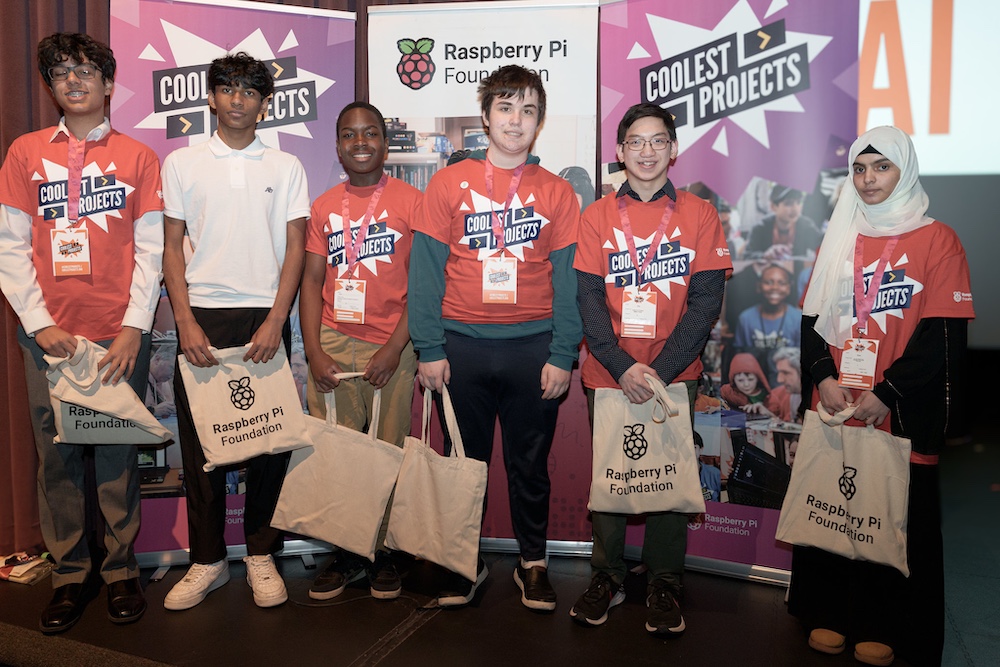
Last month, the Science Museum of Minnesota buzzed with excitement as young tech creators from across the country came together for Coolest Projects USA in a celebration of creativity, curiosity, and coding.

Around 40 young people showcased their projects on the day, sharing their work with friends, family, and the wider coding community. With hands-on tech activities, project demonstrations, fun swag, and certificates of achievement, the day was packed with energy and enthusiasm.

Young creators at the Coolest Project USA event.

Coolest Projects is all about empowering young people to show off what they’ve built, no matter their skill level or experience. From first-time coders to budding engineers, everyone was welcomed and learnt something from the day.

Celebrating impact: Broadcom Foundation Coding with Commitment® 

One of the standout moments was the presentation of the Broadcom Foundation Coding with Commitment® special recognition, which highlights a project that uses code to solve real-world problems.

The award went to Kaila for her project, Car vs Road, a self-driving car simulation designed to explore how natural disasters like hurricanes, floods, and tornadoes might impact autonomous vehicle technology.

Kaila presenting her project at Coolest Projects USA.

“My project was inspired by Waymo. After hearing about Coolest Projects through the Minnesota State Science and Engineering Fair, I decided to attend — and absolutely loved it! The atmosphere was welcoming, the judges were so involved, and the entire experience was truly unforgettable.” – Kaila, 2025 Coding with Commitment® recipient 

Broadcom Foundation’s partnership with Coolest Projects USA highlights how coding can be a powerful tool for tackling global challenges, from health to climate change, and champions digital literacy for all youth.

Celebrating creativity across categories

With seven categories available for entries, the judges had their work cut out for them choosing their favourite projects. Here are some that captured their attention on the day:

Mila | Sports Compilation, Scratch

Mila’s project, Sports Compilation, tells a story through animated sports scenes that inspire people to try new things and embrace their rebellious side.

“I wanted to show my mom that I could code — even though I’m not a ‘full-time coder’. I kept working on my original sports scene and added more to create something bigger.”

Mila presenting her project at Coolest Projects USA.

“My biggest challenge was making it reset automatically. At first, I didn’t understand the instructions I found online, but then I figured out how to use timing and broadcasts to make it work.”

“Coolest Projects was so fun, my teacher hyped it up, and it lived up to the excitement!”

Ethan | Coding AI to Enhance Speech Therapy

Ethan’s project was inspired by his experience with speech therapy. He used machine learning to help people identify and correct different types of incorrect pronunciations of the /s/ sound. Ethan shared his motivations behind attending:

“I went to Coolest Projects USA to get the opportunity to present my work and receive feedback from a large audience of judges, participants, and other viewers on how to improve my project and the presentation of it.”

Participants at Coolest Projects USA.

“I had fun at Coolest Projects USA, seeing the different ways that young people like me are taking advantage of technology to try and help the lives of others, and also seeing the creativity and determination that we have.”

A big thank you

We want to say a huge thank you to every young creator who presented a project, to the families who cheered them on, and to our amazing volunteers and partners. We also want to give a special shoutout to our sponsors, Broadcom Foundation and Best Buy Inc., for their incredible support. We couldn’t have done it without you. 

Thank you for making Coolest Projects USA 2025 such a special day!

Participants at Coolest Projects USA.

There’s still time to get involved with Coolest Projects this year…

If you missed the event or are feeling inspired, there are still ways to join the Coolest Projects global community!

  • The online Coolest Projects showcase is open for entries from young people anywhere in the world. Entries close 28 May.
  • Coolest Projects UK takes place in Bradford on 17 May. Come along and discover what young people are creating. 

Partner events are held around the world — head to the Coolest Projects website to find out more.

The post Celebrating young innovators at Coolest Projects USA appeared first on Raspberry Pi Foundation.

SISU Pinkki 7-Stage Race Series Begins Saturday

The team at SISU Racing has just announced its first Grand Tour of 2025. Held on Saturdays and Tuesdays, it’s a 7-stage tour across the three weeks of the Men’s Giro d’Italia.

The series can be raced as an individual or a team, and features both an individual time trial in Bologna and a tough queen stage finish on the ZG25 Queen route. Read on for details!

Race Schedule

Each stage is scheduled 7-8 different times, so riders can find an event that fits their schedule.

See upcoming SISU events at zwift.com/events/tag/sisu >

More Info

  • Open events using Zwift Racing Score with separate results for Men and Women.
  • Each event is a mass start with all riders visible on the course.
  • TT bikes are mandatory for the iTT. Draft will be disabled.
  • ZPower and riders without heart rate data will be excluded from the results.
  • A rider’s best time will count if they race the same discipline in multiple time zones.
  • To be included in the GC, riders must have a ZwiftPower profile (learn how to sign up here).
  • Team GC is based on each team’s fastest three riders in each stage.

Get more details and race results at sisu.racing/pinkki.

11 Podcasts That Expose the Nonsense in Politics, Pop Culture, and Science

If you’re sensing the world right now is becoming more and more unhinged, you’re not alone. Fortunately there’s a podcast poking holes in your subject of choice, whether that be diet culture, science journals, airport books, or Bill Maher specifically. With research and often a sense of humor, these shows break down some of the messages we are getting online, in the news, and across all sorts of media, explaining why you’re not crazy, it isn’t you, and why some of the systems we have right now (looking at you, capitalism) are broken. 


Normal Curves

Normal Curves podcast art

Credit: Normal Curves

Normal Curves is kind of like a science book club—on every episode, stat-savvy friends (and professors) Regina Nuzzo and Kristin Sainani help make sense of academic journals that have made their way to mainstream and pop culture. Examples include The Sweaty T-Shirt Study, which said you could find a perfect mate by smelling their sweat, and the The Red Dress Effect, which said that women in red were sexier. They’re the ones you can count on to dissect the data, challenge the claims, and arm you with tools to assess scientific studies on your own.


Diabolical Lies

Diabolical Lies podcast art

Credit: Diabolical Lies

Is tradwife TikTok confusing the heck out of you? Wondering why capitalism feels like a scam wrapped in a vibe? Allow me to introduce you to Diabolical Lies, your new favorite rabbit hole. Hosted by Katie Gatti Tassin and Caro Claire Burke, this long-form (episodes are upwards of three hours long) podcast is part cultural critique, part political roast, and fully addictive. Katie and Caro named their show Diabolical Lies to poke fun at something Kansas City Chiefs kicker Harrison Butker in a speech, that “it’s the women who have had the most diabolical lies told to you,” suggesting that feminism is the source of our unhappiness. Katie and Caro point their fingers at capitalism, patriarchy, and white supremacy, instead. They hold everything, from the yassification of Christian nationalism to the myth of the girl boss, all to the fire while making you laugh, think, and maybe (probably) get a little mad.


Corporate Gossip

Corporate Gossip podcast art

Credit: Corporate Gossip

If you think the best true-crime is white collar crime, you might want to tune into Corporate Gossip, which is all about the shady stuff that happens in board rooms and business deals. Hosts (and siblings) Becca and Adam Platsky use tons of research and storytelling to tell the truth behind eBay, the WWE and Vince McMahon, Sam Bankman-Fried and FTX, Enron, and more. The topics are serious, but the vibe is casual and often hilarious.


Oddly Specific

Oddly Specific podcast art

Credit: Oddly Specific

Meredith Lynch (who you may recognize from TikTok) has one foot in pop culture and the other in politics—and her show represents that. Oddly Specific features a bit of everything, from the problem with dollar stores to the prison industrial complex. Experts come on to cover things they’re passionate about, and Meredith has a good way of explaining the basics of the subject at hand, exposing its problems, and helping you understand why it matters to you, your wallet, and your everyday life.


Bad Therapist

Bad Therapist podcast art

Credit: Bad Therapist

If you’ve ever side-eyed an Instagram carousel telling you to “cut off anyone who drains your energy,” there’s a chance you’ve been served some therapy speak. Fortunately, the podcast Bad Therapist is here to help. Psychotherapist Ash Compton and journalist Rachel Monroe are pro-therapy, but they are also pro-skewering the bad actors who use pop psych cliches and weaponize wellness to make a living from it, usually taking advantage of people who actually need real help. Whether they’re dissecting therapeutic communes, conversion therapy, or life coaches, all roads lead to grifting. Along the way, you’re always in for some history, cultural analysis, and humor. 


If Books Could Kill

If Books Could Kill podcast art

Credit: If Books Could Kill

You know those best-selling books—the ones that often promote miracle diets, pop psychology, pseudo-science, and reskinned versions of The Secret—sold at the airport that seem to take the country by storm, one book at a time? Michael Hobbes (original co-host of You’re Wrong About and co-host of Maintenance Phase) and Peter Shamshiri host If Books Could Kill, a podcast about those books and how they shape our culture and ruin our minds. (There is actually an entire episode dedicated to The Secret.) Together they point out the lack of citations, vague references, and fear-based marketing you find in every page. Episodes swing from hefty (the episode on Liberal Facism) to lighter and silly (there’s a great one on Who Moved My Cheese?).


The Dream

The Dream podcast art

Credit: The Dream

Seasons one and two of The Dream are about multilevel marketing schemes and fraud in the wellness industry, but the show has since been turned into a weekly interview show. Its episodes now focus on a myriad of subjects, but they’re all generally about critiquing the people, industries, and concepts that make “the American Dream” unmanageable. Hosted by This American Life alum Jane Marie, episodes cover the MAHA movement, abortion bans, cults, divorce, and more. Jane Marie is a top-notch storyteller and interviewer—even episodes that feel heavy have a lightness to them.


5-4

5-4 podcast art

Credit: 5-4

Hosted by Peter Routhier (If Books Could Kill), Rhiannon Brown, and Michael F. Vecchione, 5-4 provides a funny, liberal perspective on the rulings of the U.S. Supreme Court, often illustrating how much SCOTUS totally sucks. Always from a progressive point of view, each episode analyzes and discusses a single Supreme Court decision, providing an accessible and engaging way for listeners to learn about the high court’s biases surrounding hot-button issues like affirmative action, gun rights, and campaign finance. It clears the fog from our court system and clarifies how often the Supreme Court perpetuates unjust outcomes for marginalized groups.


Knowledge Fight

Knowledge Fight podcast art

Credit: Knowledge Fight

Dan Friesen and Jordan Holmes keep close tabs on Alex Jones so you don’t have to. Each week on Knowledge Fight they review recent clips from Jones’ Infowars programming and try to make sense of it all. They go deep (and some of the content is dark) but Dan and Jordan are funny enough to make it both a wild ride and an enjoyable listen. There’s no better way to learn about conspiracy theories than to study the people steeped in them, and this show is like Cliff’s Notes for the source of many of the wildest theories taking hold of America.


Maintenance Phase

Maintenance Phase podcast art

Credit: Maintenance Phase

When Michael Hobbes left You’re Wrong About, he put his energy into Maintenance Phase, a show he co-hosts with Aubrey Gordon that explores and critiques popular health and wellness trends and products. With tons of notes and a lot of rage-laughter, Michael and Aubrey run through the the worst diets, exercise trends, supplements and beauty products, and “nutrition” books, and evaluate whether they are actually effective or if they are based on misleading or harmful information. (It’s almost always the latter.) If you hate the BMI, were led astray by the food pyramid in the ‘90s, or roll your eyes every time your friend goes on and on about their latest cleanse, you’ll appreciate their myth-busting efforts.


I Hate Bill Maher

I Hate Bill Maher podcast art

Credit: I Hate Bill Maher

Comedian Will Weldon hates Bill Maher so much that he created an entire podcast about it. Every episode of his show, I Hate Bill Maher, is a takedown of Bill Maher in general, but specifically his TV show Real Time and his podcast Club Random, episode by episode. Will is dead set on pointing out some of the superficial, misogynistic, and transphobic things Bill has said, as well as how lazy some of his comedy can be. He’ll even dip back into old episodes of Real Time to prove how much Bill’s opinions have changed over the years. (Not much.) Some call it petty, some call it a public service. Listen to the Emma Arnold episode—Will interviews her about the time she got to tag along on Bill’s annual New Year trip to Hawaii. 

The Morning After: Remembering the Switch

It’s been eight years since Nintendo released its revolutionary hybrid console, and while many have spent the last couple of those itching for sequel hardware, it’s a good time to recall how Nintendo smashed expectations and continued to forge its own path in gaming, graphical fidelity be damned.

Whether it was its core conceit — a handheld and a TV-connected console — or Nintendo’s continued production line of hit games, which included arguably the best game of the decade, we have a lot to say. And let’s not forget the Switch came before the Steam Deck and the tidal wave of handheld gaming PCs that have appeared in recent years. Nintendo proved people would play triple-A games without being tethered to their TV.

We’ve pulled together some of the Engadget team’s reflections. I love to say “reflections”.

— Mat Smith

Get Engadget’s newsletter delivered direct to your inbox. Subscribe right here!

All the biggest stories you might have missed

Spotify finally shrugs off Apple’s Apple Store fees

A judge’s ruling this week may have finally ended Apple’s anti-competitive app commissions.

Judge Yvonne Gonzalez Rogers ruled that Apple was using loopholes to circumvent her own ruling against the company from 2021. Companies are wasting no time streamlining payments outside of Apple’s walled garden, and Spotify is the latest to make these changes.

With the latest update available in the App Store, the Spotify app has added external links, so it can advertise lower prices and different tiers without giving nearly a third of its revenue generated back to Apple.

This could be a major change for the App Store ecosystem and Apple’s business if it comes into effect. Developers would no longer have to fork over 30 percent of iOS app revenue to Apple, which could cost the company billions. Spotify and Netflix are among the major companies that don’t allow users to sign up for a subscription through their iOS apps, due to the cut Apple takes.

Continue reading.

Netflix teases Squid Game’s final season

The third season of Squid Game arrives June 27.

TMA
Netflix

Netflix has released a teaser trailer for the final season of Squid Game. It suggests that the games restart after a failed uprising led by the show’s protagonist, Seong Gi-hun, or Player 456.

In the teaser, Player 456 is brought back into a room full of players — inside a coffin. When he wakes up, the games resume, players are segregated into groups, mother and son are separated and, curiously, there’s a baby crying by the end of the teaser.

Continue reading.

How to watch Google I/O 2025 and The Android Show

For the first time, Google is breaking out some Android updates into a separate event.

Google’s annual I/O developer conference is coming on May 20, but for the first time, there are two events. The classic I/O 2025 kicks off on May 20, and a week earlier, on May 13, there’s also The Android Show: I/O Edition, a dedicated showcase for, you guessed it, Android.

Google’s I/O keynote will be available to watch on Google’s YouTube channel and right here once the livestream is up on May 20 at 1PM ET. The Android Show: I/O Edition will also go up on Google’s Android YouTube channel on May 13 at 1PM ET — we’ve already embedded it above. Oh, and here’s what we’re expecting to see.

Continue reading.

This article originally appeared on Engadget at https://www.engadget.com/general/the-morning-after-engadget-newsletter-111534044.html?src=rss

Galactic Traffic Control Gets VR Environments And Mini Mode

Mixed reality arcade game Galactic Traffic Control added a fully immersive ‘VR Mode’ and a ‘Mini Mode’ in a major update.

Developed by GnomeCap Games, Galactic Traffic Control launched last December in early access and features a similar concept to Project Aeroes. Using either hand tracking or the Touch controllers, you’re tasked with routing ships to different ports of a matching color, taking care to avoid crashes while navigating obstacles. Now, it’s received a new update that seeks to expand this concept.

Released last week, the self-explanatory “VR + Mini Mode Update” notably added a ‘Mini Mode’ that lets you play without a room mesh. This comes in three different sizes: Mini is the default option, Micro is the smallest and better suited to seated play, while Mega sees ships appear from a radial sphere. You can then play one of these options in a new ‘VR Mode’ with fully immersive environments.

As for the upcoming version 1.0 release, GnomeCap confirmed it’s getting ready to launch that “in a few months” and that this recent update helps prepare the game for that in the background. The studio also advised that it’s working on “a brand new game mode, adding more music tracks, and a complete visual overhaul.”

Galactic Traffic Control is available now on Quest for $4.99.

Flat2VR Parent Studio Opens VR Native Publisher ‘Impact Inked’

Impact Reality, parent company of Flat2VR Studios, has opened a new publishing wing dedicated exclusively to bringing VR natives to market.

Impact Reality announced in March 2024 it was forming Flat2VR Studios, a team led by VR modders dedicated to adapting flatscreen games to VR.

Now, with Impact Inked, Impact Reality says its new publishing label will be dedicated to immersive games built from the ground up for VR, something the company says will allow it to support XR developers in “new ways, providing funding, feedback, publishing, marketing, and more.”

“Not every great VR title begins as a flat game, and not every project fits within the core mission of Flat2VR Studios,” the company says. “With Impact Inked, we’re carving out a home for a different kind of project—original VR-first games that push boundaries and explore new ideas, while still benefiting from the full strength of our publishing and marketing support.”

According to Impact Inked’s webpage, the publisher is currently slated to release at least four titles.

The first is Bolverk Games’ upcoming early access VR survival adventure Surviving Mars: Pioneer, which is being co-published by Paradox Interactive when it lands on Quest and SteamVR headsets on May 8th.

The post Flat2VR Parent Studio Opens VR Native Publisher ‘Impact Inked’ appeared first on Road to VR.

Wanderer: The Fragments Of Fate Takes #1 In April’s PS VR2 Download Charts

Wanderer: The Fragments of Fate is April’s winner for the PlayStation VR2 download charts.

The May 2025 download charts from Sony are now available, providing the latest monthly stats across PS4, PS5, PS VR2 and more. While we often see split winners across North America and Europe, this month’s #1 goes to action-adventure remake Wanderer: The Fragments of Fate by Mighty Eyes. Our recent review praised the narrative and puzzles while criticizing its technical issues on Quest and “poor” combat, and the developer’s recent roadmap outlined upcoming changes.

Otherwise, it’s mostly a month filled with the usual suspects. Beat Saber and Creed: Rise To Glory – Championship Edition round out the top 3, while other charting games include Among Us 3D, Metro Awakening, Alien: Rogue Incursion, and more. As for the March winner, Flight Simulator Delivery 2025 VR, this terrible rip-off of Microsoft Flight Simulator 2024 still charted in both regions.

You can see this month’s full PlayStation VR2 download charts below to learn more.

PlayStation VR2 – May 2025 Download Charts

It’s important to note that the download charts automatically exclude March’s biggest PlayStation VR2 release, Hitman World of Assassination because it’s a hybrid game with optional PS VR2 support. That same restriction applies for the more recent I, Robot remake from Atari and Llamasoft, while bundled copies of games – namely Horizon Call of the Mountain – also aren’t counted.

With May not long underway, it’s already looking like a busy month for new VR games and PlayStation VR2 is no exception. Ghosts of Tabor announced it’s launching tomorrow following previous delays, followed by The Midnight Walk on Thursday. Following this week’s titles, other upcoming games include Pirates VR: Jolly Roger, Smash Drums, Zombie Army VR, and Epyka.

We’ll keep you informed as we learn more.

You can now automatically give kudos to all your Strava followers in one go, thanks to this Chrome plug-in

If you’re tired of scrolling through your Strava feed and manually giving kudos to your friends’ rides, Strava Kudo All is the Google Chrome plug-in for you.

This browser extension automatically drops kudos on the activities of all the people you’re following, meaning you can sit back and watch the support return almost transactionally to your latest ride.

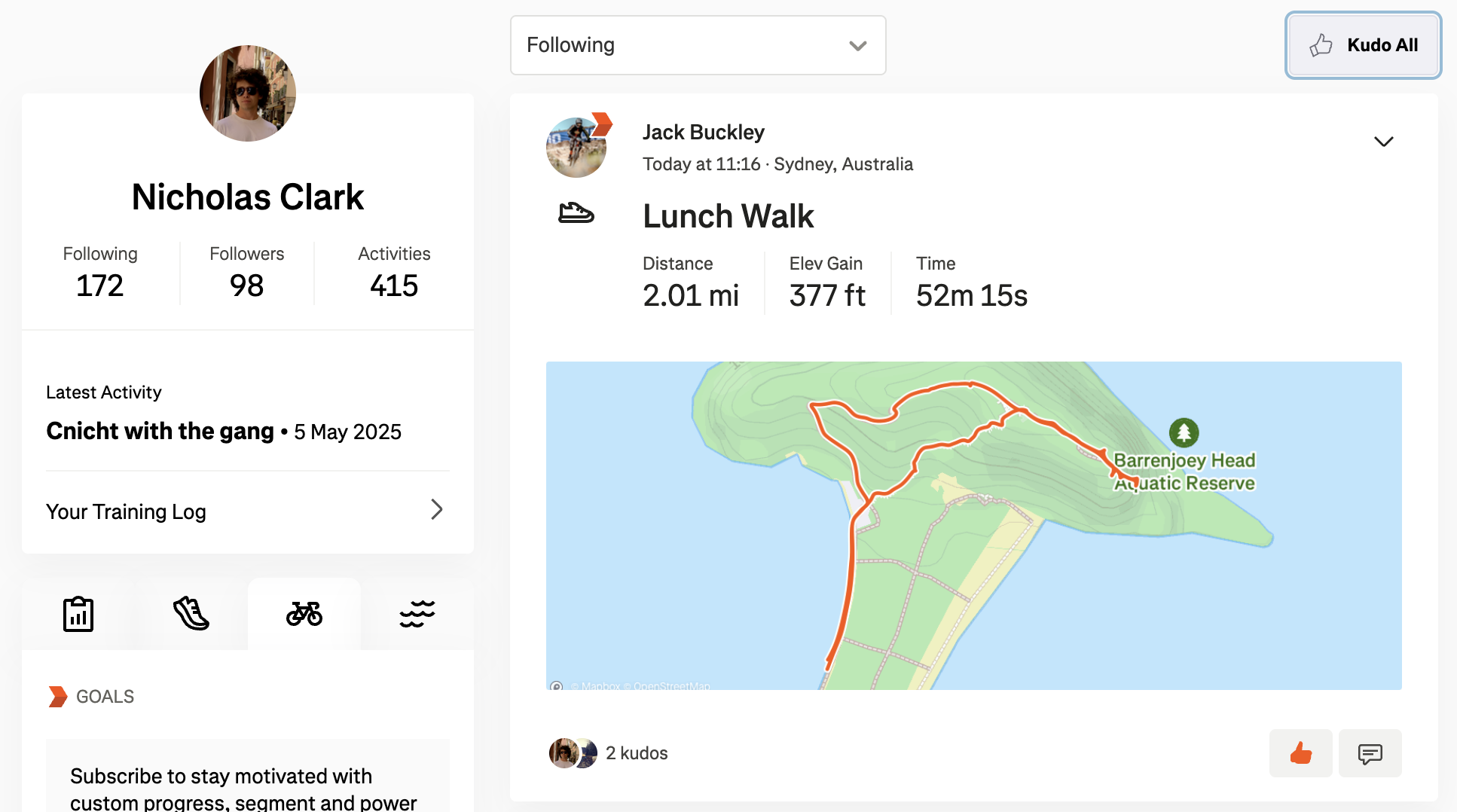
The plug-in, created by Thomas Ciles, adds a button to Strava’s homepage titled ‘Kudo All’, which, when pressed, sends kudos to all activities on your feed from the previous 24 hours.

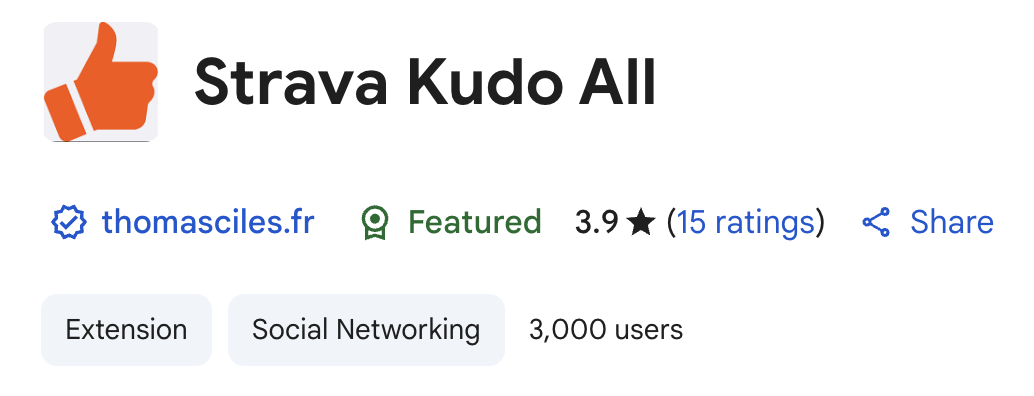
Strava Kudo All
Strava Kudo All is labelled as Featured in Google’s Chrome Web Store. Google Chrome Web Store

It only works on the desktop version of Strava and therefore won’t be available on mobile devices.

Having downloaded Strava Kudo All to see how it worked, I was impressed by its simple functionality and the increased kudos I received after using it for only a couple of days.

Strava Kudo All
The button is added to the top-right of your feed on Strava’s Dashboard. Strava

While some may say the plug-in goes against the ‘spirit of Strava’, there’s no denying its effectiveness, with kudos on my rides now given in greater volume and by a wider variety of people.

Google Chrome’s Web Store says there are 3,000 users of the plug-in, a small number compared to the millions signed up to Strava, meaning it’s highly likely the kudos you’re receiving is genuine support from your followers.

Hugo Administrators Resign in Wake of ChatGPT Controversy

“Another year, yet another Hugo Awards-adjacent controversy?” writes Gizmodo’s Cheryl Eddy, reporting that three key organizers of the 2025 Seattle Worldcon resigned after backlash over the use of ChatGPT to vet program participants. From the report: In a post on Bluesky co-signed by Hugo administrator Nicholas Whyte, deputy Hugo administrator Esther MacCallum-Stewart, and World Science Fiction Society division head Cassidy, the trio announced they were resigning from their roles ahead of the Seattle event, which takes place in August. “We want to reaffirm that no LLMs or generative AI have been used in the Hugo Awards process at any stage,” the statement read in part, which might turn the heads of anyone who is a) interested in the Hugos, but b) not up on the latest controversy.

However, plenty of people in the community are well aware of what’s been going on. A quick journey to the blog File 770 will bring you up to speed, as will a visit to Seattle Worldcon 2025’s own site, which on April 30 shared a post clarifying exactly what role AI played in the upcoming event. […] However, as File 770 pointed out, the damage has apparently already been done: the use of ChatGPT in any capacity in connection to Worldcon created a furor on social media. It also inspired at least one Hugo nominee to remove their book from contention: Yoon Ha Lee, whose Moonstorm was named a Lodestar Award finalist, which honors YA releases. In a May 1 post on Bluesky, the author linked to the April 30 Worldcon blog post noted above, and noted he was withdrawing the title from consideration.

Then, in a post shared today responding to File 770’s latest post announcing the resignations, the author wrote âoeAll respect and I’m grateful to them for their work, sorry [things] came to this pass.” Seattle Worldcon 2025 takes place August 13-17; the Hugo Awards will be handed out August 16.


Read more of this story at Slashdot.

Free-To-Play Zero Caliber: Shooting Range Is Out Now On Quest

Zero Caliber: Shooting Range is a free-to-play VR gunplay experience available on Quest today.

Developed by XREAL Games, the free-to-play VR game is based on XREAL Games’ Zero Caliber series and features ‘fully unlocked’ versions of the Zero Caliber 2 armory and lobby area. Here, you have the opportunity to practice taking shots in VR across five minigames, including a sniper range, a moving target range and killhouses. Alongside a choice of weapons from Zero Caliber 2, which includes pistols, explosives and shotguns, there’s also loadout customizations to consider, in the form of scopes and lasers.

In our 4-star review for Zero Caliber 2 last year, we were impressed by the crisp “cacophonic soundscape” and complex physics, saying “Zero Caliber 2 is a pure action shooter at its core, and the beating heart of this is the extremely well-delivered gunplay.”

Zero Caliber: Shooting Range isn’t the only news from XREAL Games, as the studio also announced that Zero Caliber 2 is “nearing its release” on Steam. In a press release, the developers also confirmed that PlayStation VR2 ports of both Zero Caliber 1 and Zero Caliber 2 are underway. Lastly, the studio reconfirmed that a separate Zero Caliber spin-off is currently in the works, with more information to come in the future.

Zero Caliber: Shooting Range is available now for Quest headsets.

Zero Caliber 2 Review: A Thrilling VR Action Romp
Zero Caliber 2 is a strong follow-up to the original game, delivering a thrilling action-packed VR romp. Our full review.
UploadVRPete Austin

Canyon’s new race-winning Sender DH bike owes its success to this monstrous prototype

Canyon’s latest Sender downhill bike has a high-pivot idler-equipped rear suspension design and is the result of years of research.

Before the bike was available to the public, it had helped riders such as Troy Brosnan stand on the top step of the downhill World Cup podium.

While this proves the finished product is very good indeed, it’s how Canyon got to this point that’s interesting, though.

The warts-and-all development process of a bike can be filled with dead ends, red herrings and other unproductive quests.

However, Canyon built the ultimate prototype, which played its part in the success of the new Sender, leaving no stone unturned in the development process.

Canyon Sender CFR downhill bike ridden by Troy Brosnan at the 2024 Mont-Sainte-Anne DH World Cup
Troy Brosnan won the 2024 Mont-Sainte-Anne DH World Cup on the new Sender. Canyon Bikes

The final product is an affordable top-performing downhill bike.

With prices starting at €4,499 (CFR Underdog) and rising to €5,999 (CFR Team) for the top-flight model, podium-contending performance has never been more attainable.

Cue the Canyon Frankenbike

Canyon prototype Frankenbike downhill bike
The Frankenbike looks ugly but serves a beautiful purpose. Canyon Bikes

Created by Canyon’s engineers – the cycling equivalent of Victor Frankenstein – the Sender test mule is as monstrous and all-encompassing as it looks.

Recognised internally as the ‘most advanced’ prototype Canyon has ever built, the Frankenbike was created to test every conceivable suspension and geometry permutation.

But to achieve such a feat, Canyon had to sacrifice the Frankenbike’s looks.

Canyon prototype Frankenbike downhill bike
The Canyon Frankenbike is one of the most advanced prototypes out there. Canyon Bikes

It has more holes, pivot points, bolts, lugs and mounting options than you can imagine, to test each of the bike’s parameters without affecting the others.

That means testing one variable – whether that’s leverage rate, wheelbase, wheel size, anti-squat, anti-rise or anything else – without influencing anything else, is possible.

The Frankenbike enabled Canyon’s test riders and engineers to form their own opinions and ideas of each parameter based on real-world testing, rather than being led by assumptions or dirtied data.

Canyon prototype Frankenbike downhill bike
Despite having looks only a mother could love, the Frankenbike is wonderfully functional. Canyon Bikes

Usually, they’d rely on compromised and muddied input, where each prototype bike is relatively fixed. If an iterative change – say, reducing the leverage rate or increasing chainstay length – is needed, a whole new frame will have to be made.

Visually, the Frankenbike is far from beautiful, but conceptually it’s one of the best things on the MTB scene.

Canyon prototype Frankenbike downhill bike
Each suspension and geometry parameter can be adjusted independently. Canyon Bikes

And it’s also one of the reasons downhill racing is such an important discipline; innovation, technological advancements and leaps in engineering are all at the forefront of competition.

Leaving no stone unturned in the development process – because brands and racers want to win world cups – means the production bikes you can buy are only ever going to get better.

The production Canyon Sender

Canyon Sender CFR downhill bike
The production Sender has clean lines and a great aesthetic. Canyon Bikes

The result of all this research and development is one of the most refined, bang-up-to-date DH bikes on the market.

Canyon was able to quickly turn the best combinations of Frankenbike into rideable, almost production-looking prototypes thanks to 3D printing at its Koblenz HQ in Germany.

This means the final look, including smooth, clean lines – that Canyon was really picky about, and spent a good chunk of time getting right – is also loaded with plenty of tech.

High-pivot suspension tech

Canyon Sender CFR downhill bike
The chain idler gives you some idea just how high the main high pivot is. Canyon Bikes

But it’s the high-pivot suspension that’s the biggest leap forwards for the Sender.

Multiple DH world champion and World Cup winner Fabien Barel – who heads up the Canyon Factory race team – was on a mission to give the Sender the most traction possible.

Key to this is the high-pivot suspension design.

By moving the main pivot point on the single pivot, linkage-driven suspension, Canyon has given the new Sender a rearward axle path.

As the suspension compresses, the rear wheel moves in a rearward arc until the bike has compressed roughly 70 per cent into its travel.

Canyon Sender CFR downhill bike
The rear suspension is a single-pivot design, but there’s a linkage to adjust the leverage rate. Canyon Bikes

From uncompressed up to this point, it has roughly 24mm of rearward travel. From 70 per cent of its travel to bottom-out, the rear wheel then moves forwards by 5mm, finishing roughly 19mm further back from where it started.

By positioning the idler so the chain runs directly in line with the main pivot, Canyon has virtually eliminated pedal kickback and upper chain growth.

The latter is now down to 0.1mm in all gears, from roughly 27mm in total on the old model.

Pedal kickback has been reduced to 0.5 degrees, from 5.7 degrees on the outgoing bike.

Canyon claims this helps boost grip, reduce rider fatigue and create an ultra-sensitive suspension platform.

Canyon says ‘pushability’

Canyon Sender CFR downhill bike
The progressive leverage rate means the bike is best suited to coil shocks. Canyon Bikes

But that’s not all.

A term coined by Canyon, ‘pushability’ refers to how well the bike picks up speed from pumping and pushing compressions in the terrain.

Clearly, this is important for racing, where every millisecond counts.

Bikes with no chain growth or kickback and plush, rearward-arcing rear suspension can feel soggy and slow, but Canyon has tuned the Sender’s suspension curve to retain its pushability.

Here, the mid-stroke’s leverage rate is claimed to provide a platform for the rider to work the bike against. Combine it with a custom shock tune and the bike’s responsive rather than lethargic.

Canyon Sender CFR downhill bike
Every pivot uses easy-to-remove hardware. Canyon Bikes

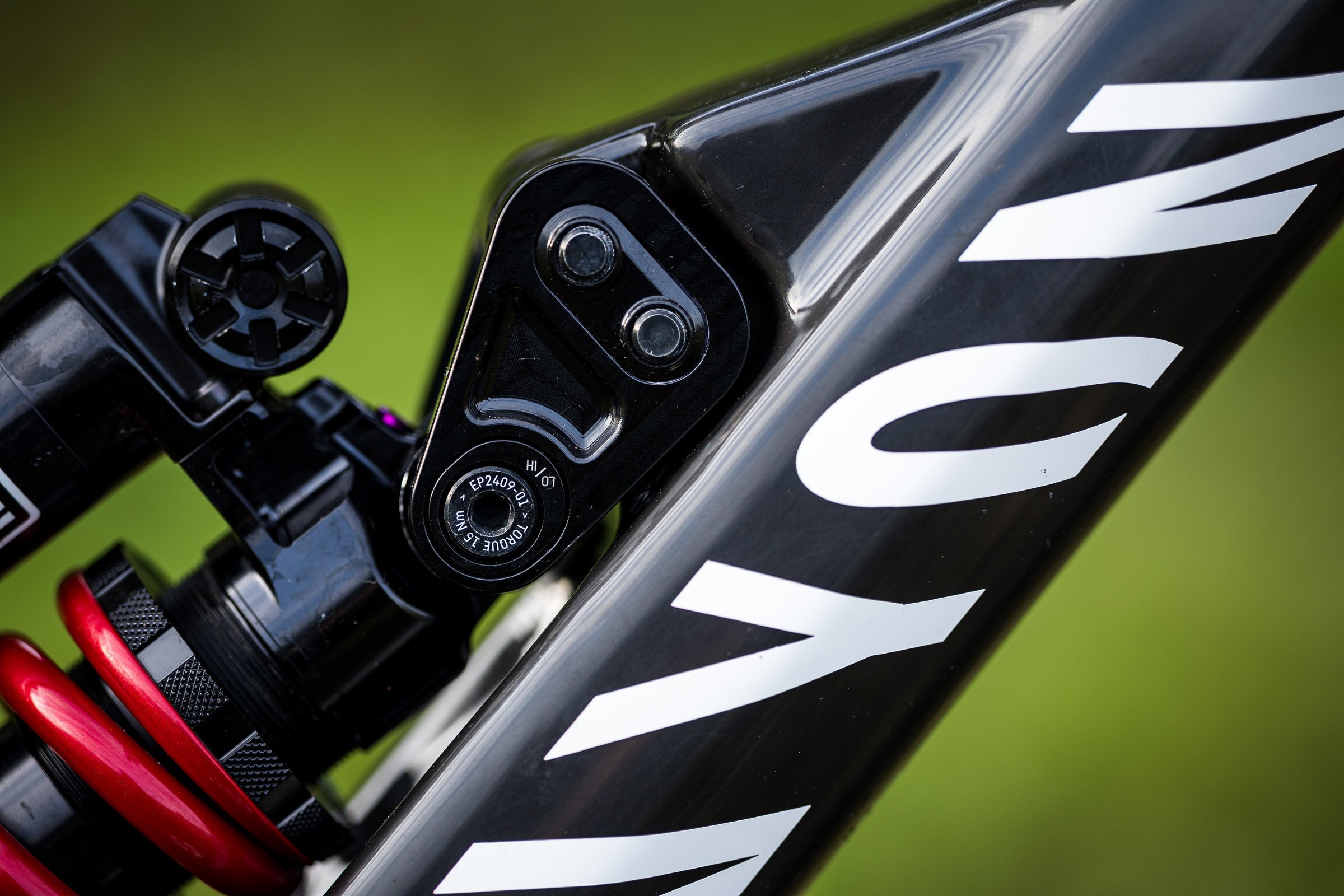
The Sender also has two progression settings – a more linear 32.7 per cent and a more progressive 37 per cent, changed by a flip chip.

Coil shocks or high-volume air-spring versions are going to be the order of the day here.

Finally, it’s got an unusually high anti-rise figure, sitting around 130 per cent at sag.

This means when you brake, those braking forces are more likely to cause the suspension to compress rather than extend.

Canyon Sender CFR downhill bike
During the prototyping phase, Canyon said it broke no frames. Canyon Bikes

Critics of high anti-rise claim it can cause the suspension to ‘pack down’ (keep compressing into its travel on successive bumps without being able to return to sag or full travel), resulting in a rough ride.

Proponents think it helps better preserve the bike’s geometry. When you brake, your weight shifts forwards, unweighting the rear of the bike, extending the suspension and loading up the front.

If braking forces are compressing the suspension thanks to higher anti-squat, in theory some of that rear-suspension extension should be mitigated against, helping preserve its geometry.

The perfect geometry mix

Canyon Sender CFR downhill bike
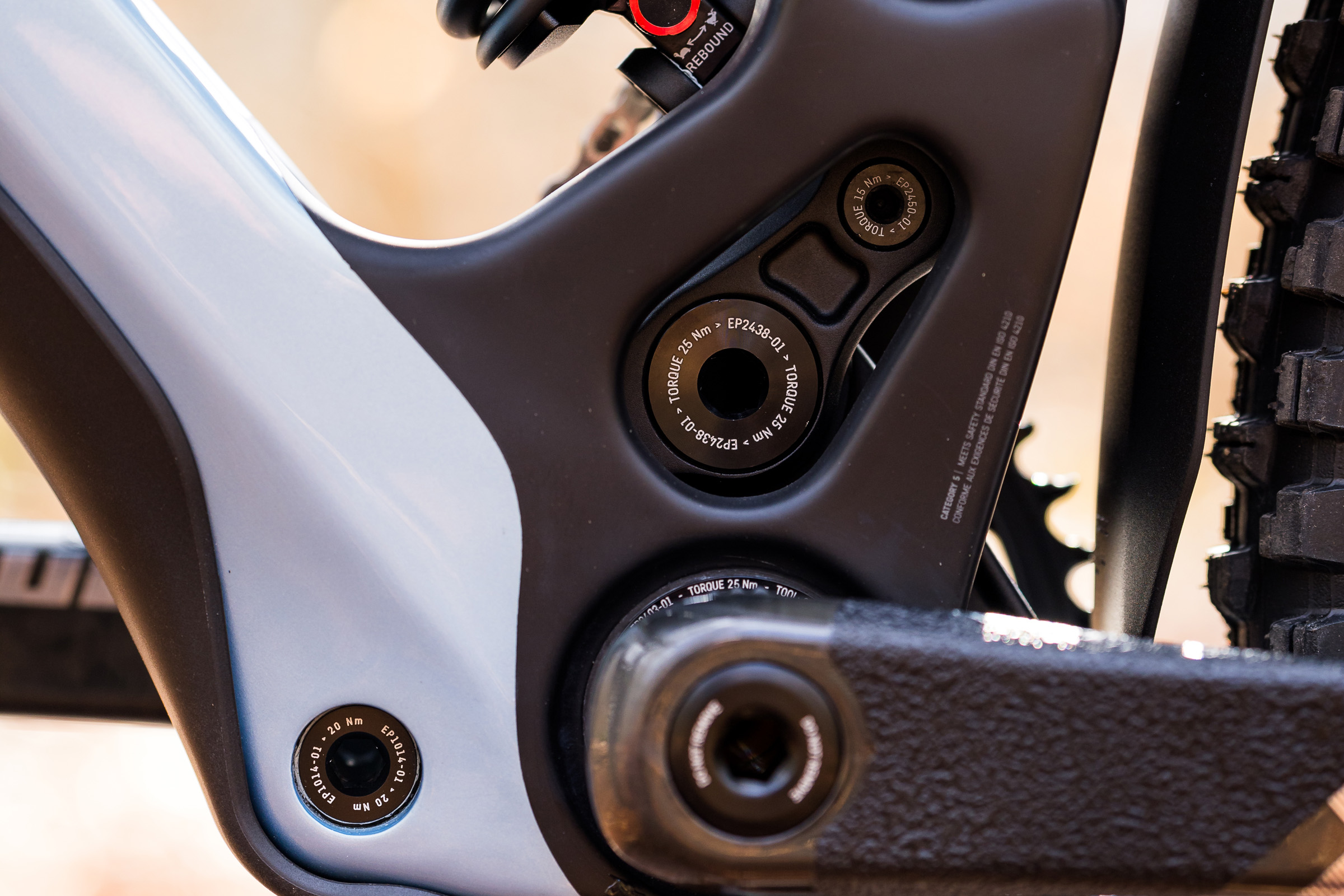
The upper shock mount has a high/low flip chip to adjust the bottom bracket height by 5mm. Canyon Bikes

Available in four sizes – from small to extra-large – the new Sender’s geometry is evolutionary rather than revolutionary compared to the outgoing bike.

But what it lacks in revelations, it makes up for with adjustability.

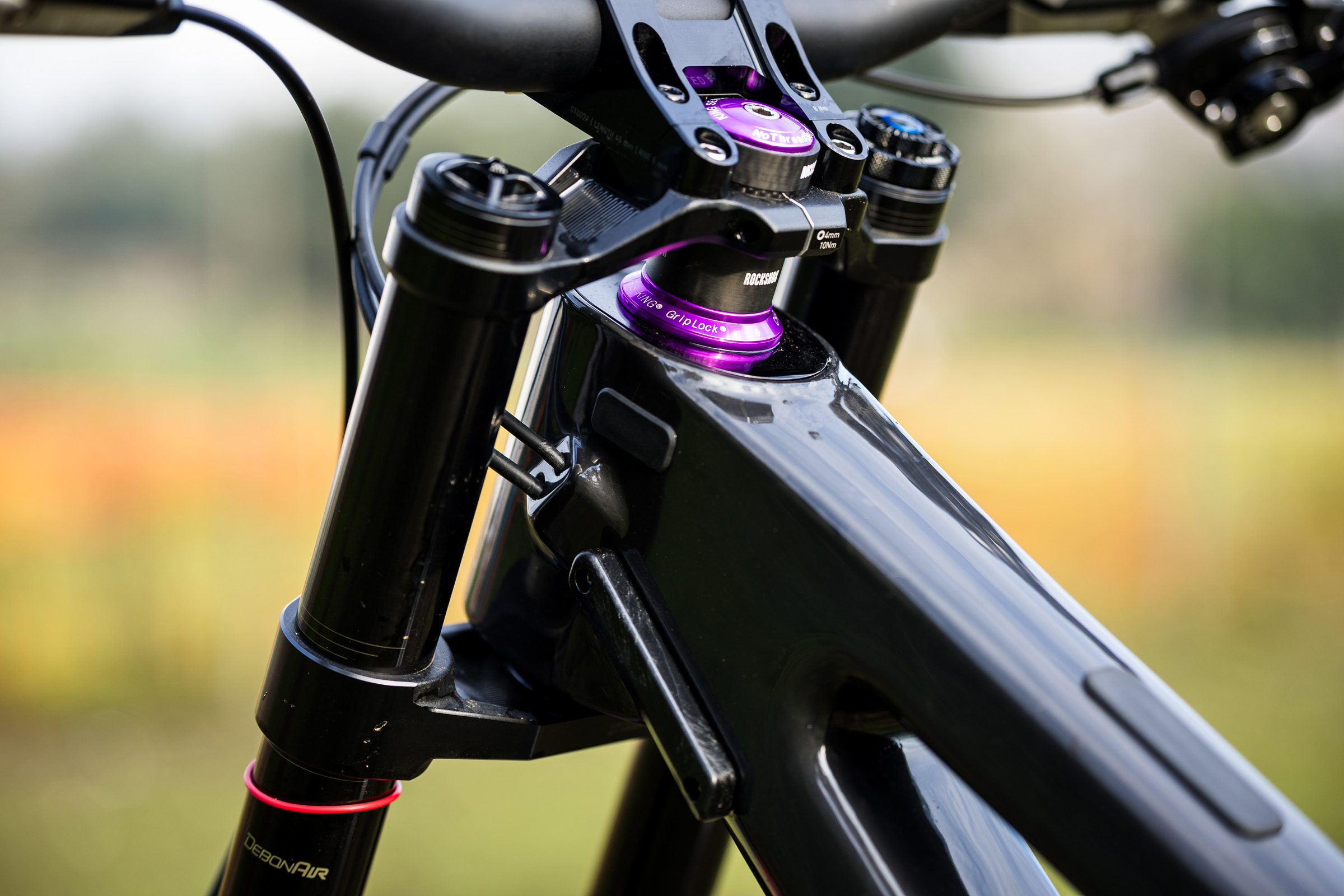
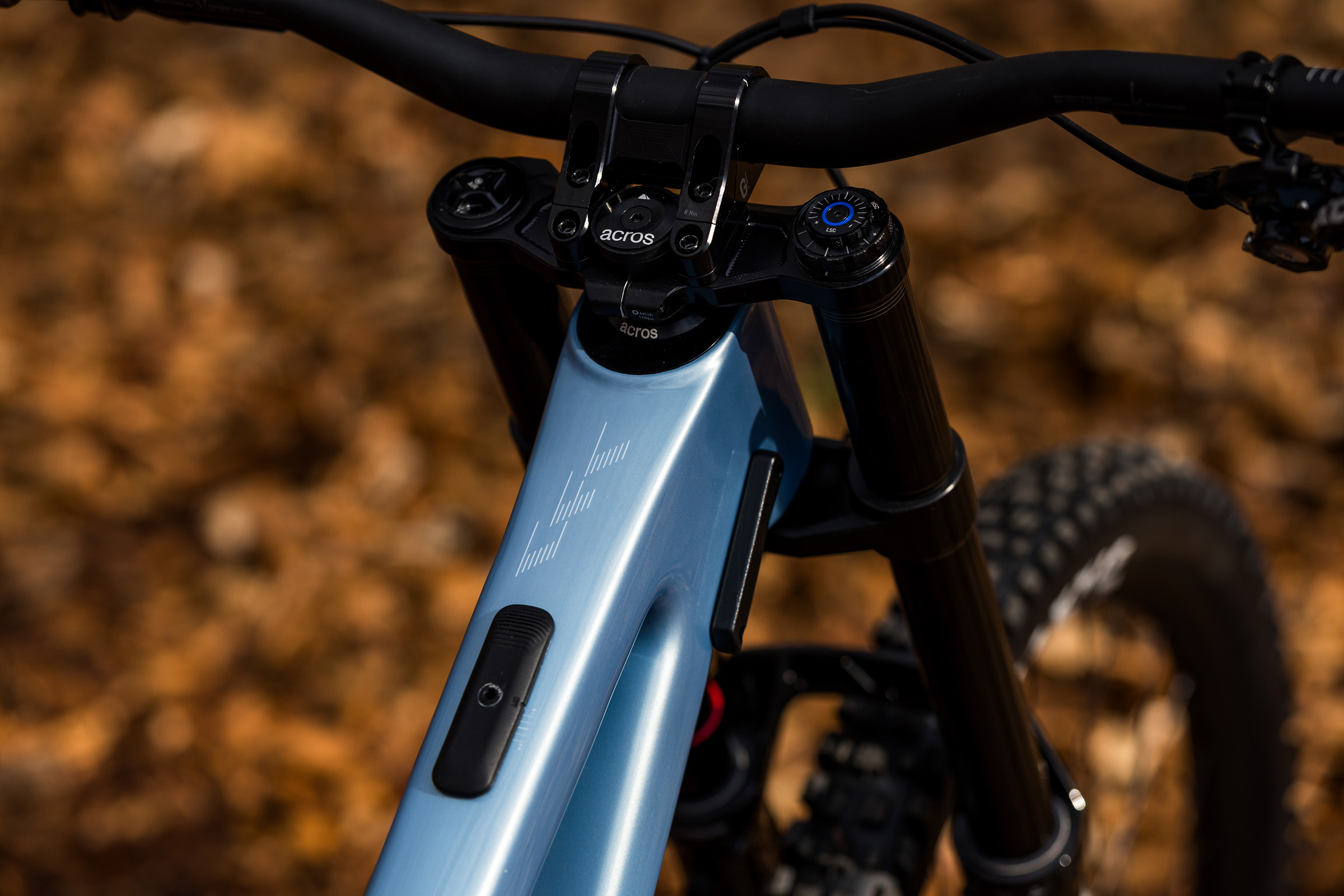
There’s 8mm of reach adjustment thanks to the offset headset cups and 5mm of bottom-bracket height adjustment with a flip chip.

Canyon Sender CFR downhill bike
A reach-adjusting headset gives you more choice on frame size. Canyon Bikes

Standout figures include a 63-degree head tube angle and reach figures that span from 443mm (small, 0mm headset adjustment) up to 518mm (extra-large, 0mm headset adjustment).

The entire size range is built around mixed wheels – gone is the full 29er – and chainstay lengths stay at 438mm on all sizes.

Final details

Canyon Sender CFR downhill bike
A reach-adjusting headset and Canyon’s K.I.S. are both present. Canyon Bikes

Canyon’s K.I.S. (Keep It Stable) steering stabiliser is pre-installed on both models of Sender.

Canyon says it’s easier to remove than install, so wanted to give customers the option of trying it before removing it.

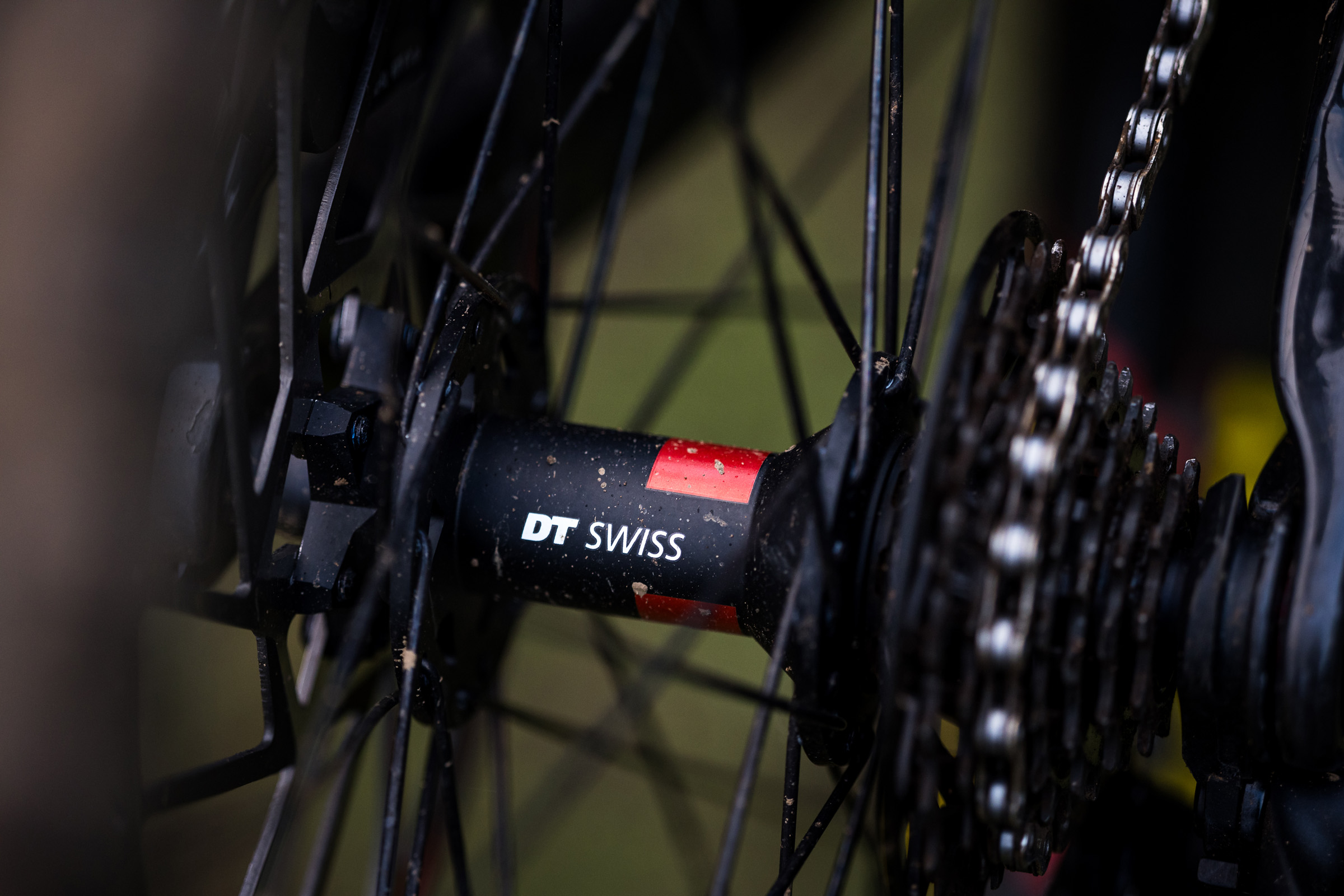
The rear end runs a 148mm-wide bespoke DT Swiss rear hub with wider spoke bracing.

Canyon Sender CFR downhill bike
Wider hub flanges, to give the wheel more strength, fit within the usual 148mm frame spacing. Canyon Bikes

Thanks to a narrower freehub body and wider spoke flanges, the 148mm hub shares its internal dimensions with the standard 157mm rear hubs usually found on DH bikes, while being thinner between the axle end caps.

Cables are routed internally and there’s loads of chain-slap protection.

Canyon Sender models, specifications and prices

Canyon Sender CFR Underdog

Canyon Sender CFR Underdog downhill bike
The Sender CFR Underdog is the more affordable of two models. Canyon Bikes
  • Frame: Canyon Sender CFR, 200mm travel
  • Shock: Fox DHX2 Performance
  • Fork: Fox 40 Performance GRIP X
  • Brakes: SRAM Maven Bronze
  • Wheels / tyres: DT Swiss F 1900 / Maxxis Assegai 3C MaxxGrip DH casing (f), Maxxis Minion DHR II 3C MaxxGrip DH casing (r)
  • Price: €4,499

Canyon Sender CFR Team

Canyon Sender CFR Team downhill bike
The Sender CFR Team is the race-ready replica. Canyon Bikes
  • Frame: Canyon Sender CFR, 200mm travel
  • Shock: RockShox Vivid Coil Ultimate
  • Fork: RockShox Boxxer Ultimate
  • Brakes: SRAM Maven Silver
  • Wheels / tyres: DT Swiss FR 1500 / Maxxis Assegai 3C MaxxGrip DH casing (f), Maxxis Minion DHR II 3C MaxxGrip DH casing (r)
  • Price: €5,999