Most Americans Use Federal Science Information On a Weekly Basis, a New Poll Finds

Most people in the United States rely on federal science in their daily lives but don’t realize it, a new nationwide poll of U.S. adults shows. NPR: The poll was conducted in early April by the Association of Science and Technology Centers, the association for science museums and other educational science centers in the U.S. The poll found that on a weekly basis more than 90% of people use weather forecasts, job market reports, food safety warnings and other information that is based on federal science.

But only 10% of respondents are concerned that cuts to federal support for science might impact their access to such information. The Trump administration has made deep budget and personnel cuts to federal agencies that collect weather data and do safety inspections at factories that make food and prescription drugs, among many science-related functions.

The association conducted the poll to understand current attitudes about science in the U.S. and inform how their member institutions, which include science museums, aquariums and zoos, can better serve the public.


Read more of this story at Slashdot.

Microsoft Surface Pro 12, Surface Laptop 13 Unleash Snapdragon X At Great Prices

Microsoft Surface Pro 12, Surface Laptop 13 Unleash Snapdragon X At Great Prices
Turns out that recent leaks suggesting that new Surface hardware was on the horizon were right on the money. How so? Microsoft today unveiled a couple of new Surface models, including the Surface Pro, 12-inch and Surface Laptop, 13-inch. They’re powered by Qualcomm’s Snapdragon hardware, they boast long battery life, and they’re somewhat aggressively

Kurchu Tool Taking Shape For Assembling Fedora / CentOS Linux Distro ISOs

As an alternative to the likes of the Pungi tool, Kurchu is a newer project within the CentOS/Fedora space for assembling content collections or ISO images of Linux distribution builds. Kurchu is already seeing use by the CentOS Hyperscale SIG for assembling their images while additional functionality continues to be worked on for those wanting to craft their own Fedora/CentOS install images…

AI Models Are Hallucinating More (and It’s Not Clear Why)

Hallucinations have always been an issue for generative AI models: The same structure that enables them to be creative and produce text and images also makes them prone to making stuff up. And the hallucination problem isn’t getting better as AI models progress—in fact, it’s getting worse.

In a new technical report from OpenAI (via The New York Times), the company details how its latest o3 and o4-mini models hallucinate 51 percent and 79 percent, respectively, on an AI benchmark known as SimpleQA. For the earlier o1 model, the SimpleQA hallucination rate stands at 44 percent.

Those are surprisingly high figures, and heading in the wrong direction. These models are known as reasoning models because they think through their answers and deliver them more slowly. Clearly, based on OpenAI’s own testing, this mulling over of responses is leaving more room for mistakes and inaccuracies to be introduced.

False facts are by no means limited to OpenAI and ChatGPT. For example, it didn’t take me long when testing Google’s AI Overview search feature to get it to make a mistake, and AI’s inability to properly pull out information from the web has been well-documented. Recently, a support bot for AI coding app Cursor announced a policy change that hadn’t actually been made.

But you won’t find many mentions of these hallucinations in the announcements AI companies make about their latest and greatest products. Together with energy use and copyright infringement, hallucinations are something that the big names in AI would rather not talk about.

Anecdotally, I haven’t noticed too many inaccuracies when using AI search and bots—the error rate is certainly nowhere near 79 percent, though mistakes are made. However, it looks like this is a problem that might never go away, particularly as the teams working on these AI models don’t fully understand why hallucinations happen.

In tests run by AI platform developer Vectera, the results are much better, though not perfect: Here, many models are showing hallucination rates of one to three percent. OpenAI’s o3 model stands at 6.8 percent, with the newer (and smaller) o4-mini at 4.6 percent. That’s more in line with my experience interacting with these tools, but even a very low number of hallucinations can mean a big problem—especially as we transfer more and more tasks and responsibilities to these AI systems.

Finding the causes of hallucinations

ChatGPT app
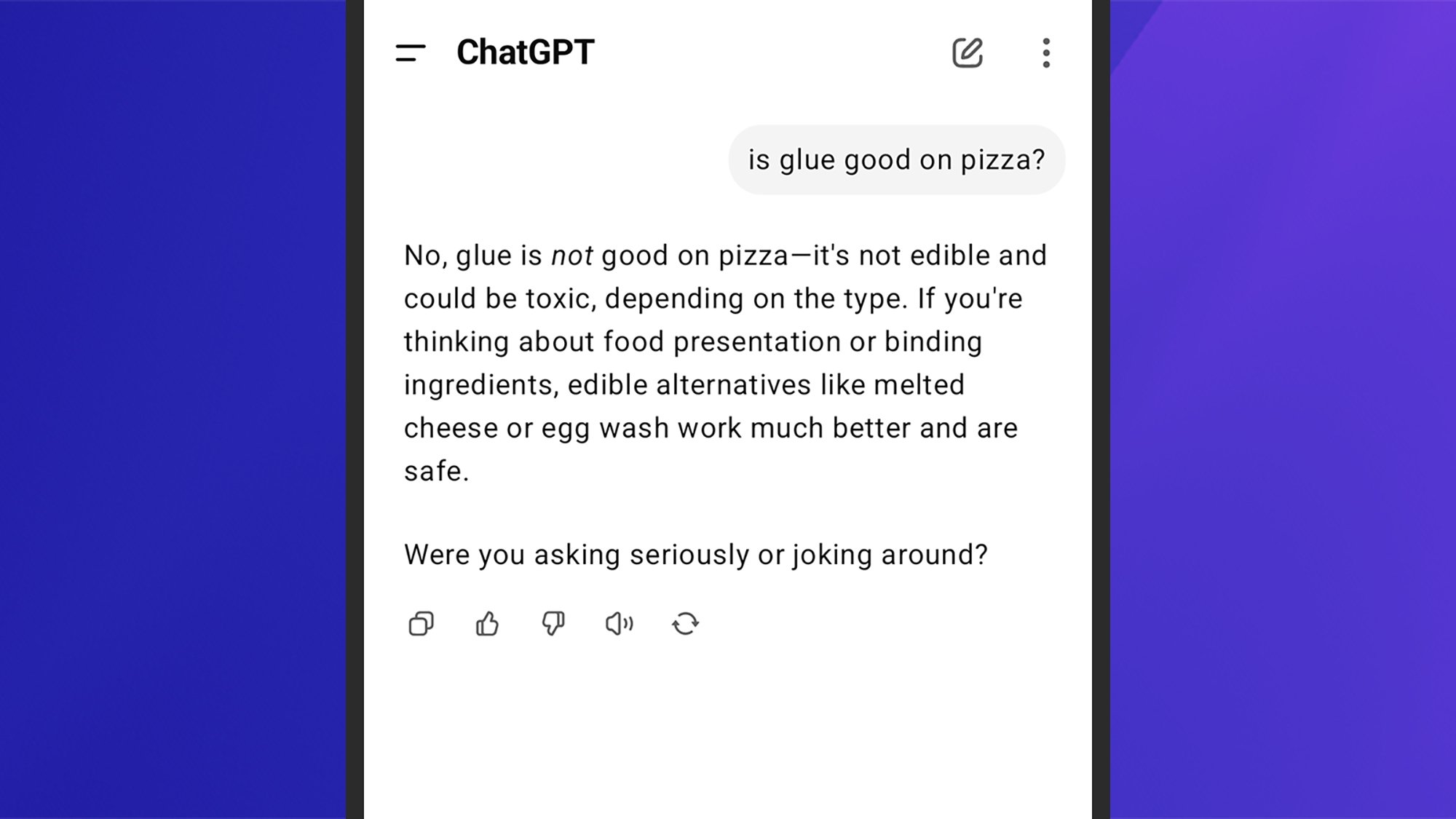
ChatGPT knows not to put glue on pizza, at least.
Credit: Lifehacker

No one really knows how to fix hallucinations, or fully identify their causes: These models aren’t built to follow rules set by their programmers, but to choose their own way of working and responding. Vectara chief executive Amr Awadallah told the New York Times that AI models will “always hallucinate,” and that these problems will “never go away.”

University of Washington professor Hannaneh Hajishirzi, who is working on ways to reverse engineer answers from AI, told the NYT that “we still don’t know how these models work exactly.” Just like troubleshooting a problem with your car or your PC, you need to know what’s gone wrong to do something about it.

According to researcher Neil Chowdhury, from AI analysis lab Transluce, the way reasoning models are built may be making the problem worse. “Our hypothesis is that the kind of reinforcement learning used for o-series models may amplify issues that are usually mitigated (but not fully erased) by standard post-training pipelines,” he told TechCrunch.

In OpenAI’s own performance report, meanwhile, the issue of “less world knowledge” is mentioned, while it’s also noted that the o3 model tends to make more claims than its predecessor—which then leads to more hallucinations. Ultimately, though, “more research is needed to understand the cause of these results,” according to OpenAI.

And there are plenty of people undertaking that research. For example, Oxford University academics have published a method for detecting the probability of hallucinations by measuring the variation between multiple AI outputs. However, this costs more in terms of time and processing power, and doesn’t really solve the issue of hallucinations—it just tells you when they’re more likely.

While letting AI models check their facts on the web can help in certain situations, they’re not particularly good at this either. They lack (and will never have) simple human common sense that says glue shouldn’t be put on a pizza or that $410 for a Starbucks coffee is clearly a mistake.

What’s definite is that AI bots can’t be trusted all of the time, despite their confident tone—whether they’re giving you news summaries, legal advice, or interview transcripts. That’s important to remember as these AI models show up more and more in our personal and work lives, and it’s a good idea to limit AI to use cases where hallucinations matter less.

Disclosure: Lifehacker’s parent company, Ziff Davis, filed a lawsuit against OpenAI in April, alleging it infringed Ziff Davis copyrights in training and operating its AI systems.

Forza Motorsport Celebrates 20 Years With Return Of A Fan-Favorite Race Track

Forza Motorsport Celebrates 20 Years With Return Of A Fan-Favorite Race Track
In conjunction with the 20th anniversary of the Forza Motorsport racing simulation franchise, developer Turn 10 is dumping a load of goodies for PC and Xbox Series X|S gamers in the latest (and aptly named) Update 20. This huge update includes the return of the 10.24-mile long Fujimi Kaido circuit, new spotlight cars, car packs, and gameplay

Find my… bicycle?

We’ve reviewed some pretty expensive bikes here at Ars, and one of the consistent concerns we see in the comments is the fear of theft. That’s a widely shared fear, based on a whole bunch of videos that describe how to hide an AirTag tracker where a potential bike thief won’t notice it. There are also a number of products available that will hold a hidden AirTag in a reflector, a bike bell, or the head tube.

But Apple has also made it possible for third parties to plug their devices into its “Find My” system, and a company called Knog has made a Bluetooth bike tracker called the Scout that does just that. The Scout goes well beyond tracking, though, providing a motion-sensitive alarm system that will alert you if anybody tries to move your bike.

Meet the Scout

The Scout can be attached to the frame using the screw holes normally used for a water bottle holder. Security screws make it considerably more difficult to remove. Once there, it uses Apple’s Find My network to keep the owner apprised of the bike’s location (Android users need not apply at the moment). If you’re leaving your bike in a high-risk location, you can also use Knog’s phone application to set an alarm that will be triggered if the bike is moved.

Read full article

Comments

The MasterClass Mother’s Day sale takes half off annual subscriptions

Mother’s Day is this Sunday and the window to get presents delivered is dangerously close to shutting. But there are plenty of great subscription gifts to buy your mom, including a year of MasterClass. Even better, the learning site is currently running a Mother’s Day sale — though you can also use it to pick up a subscription for yourself. 

If you’re not familiar, MasterClass offers video lessons by more than 200 experts everything from cooking to music. For Mother’s Day, you can gift a 12 month Standard MasterClass subscription for $60, down from $120. This tier allows your mom to use MasterClass on one device, but doesn’t include offline mode.

There are two other tiers — also half off (or there about) during the sale. The Plus tier is down to $96 from $180 and offers two devices with the ability to watch videos while offline. Then there’s the Premium level, which is available for $120, down from $240. It allows for six devices and offline mode. There’s no clear end date for the sale, with the offer simply saying “ends soon.” 

Follow @EngadgetDeals on X for the latest tech deals and buying advice.

This article originally appeared on Engadget at https://www.engadget.com/deals/the-masterclass-mothers-day-sale-takes-half-off-annual-subscriptions-144422002.html?src=rss

Samsung’s Tap to Transfer cash feature is coming to the Wallet app this month

Samsung’s “Tap to Transfer” payment feature will come to the US this month, following a preview of the feature in January when it launched the Galaxy S25 series. This will allow you to make payments to friends and family via the Samsung Wallet app on Galaxy smartphones by tapping your devices together, bypassing the need to manually transfer funds from your online banking app. Samsung says payments will land in the bank account of the recipient within minutes.

Samsung’s partnership with Visa and Mastercard means that as long as you have a debit card stored in your Samsung Wallet, you can use Tap to Transfer without needing to download a separate app. Like when you make payments in a store, Samsung Wallet uses NFC to connect the respective debit card chips of the users making or receiving a payment, and if one party would rather use a physical debit card to make the transfer, it works just the same provided the card itself has tap-to-pay functionality.

You can also make payments Venmo-style between Samsung Wallets by searching for the recipient’s phone number and making the transfer remotely, but this obviously isn’t as fast as the person-to-person phone bump method. Apple has its own version of this, called Tap to Cash, but it requires you to use its Apple Cash service and, as you’d expect, only works with compatible Apple devices. As reported by Android Central, the new feature was first spotted in a beta version of the app last month, along with Samsung’s version of the many emerging buy now, pay later services such as Affirm.

This article originally appeared on Engadget at https://www.engadget.com/mobile/smartphones/samsungs-tap-to-transfer-cash-feature-is-coming-to-the-wallet-app-this-month-144100575.html?src=rss

Amazon Adds Purchase Button To iOS Kindle App Following App Store Rule Changes

Amazon has updated its Kindle iOS app with a new “Get Book” button that redirects users to complete purchases through their mobile browser, taking advantage of recent App Store rule changes. The update follows Judge Yvonne Gonzalez Rogers’ April 30th ruling in Epic Games v. Apple, which bars Apple from collecting a 27% commission on purchases made outside apps or restricting how developers direct users to alternative payment options.

Previously, iOS users had to visit Amazon’s website through a browser to buy Kindle books — a workaround implemented after Apple’s 2011 rule changes required developers to remove links to external purchasing options. Apple has appealed the ruling but is complying in the interim.


Read more of this story at Slashdot.

YouTube is testing out a Premium plan you can share with one household member

YouTube has launched an experimental Premium plan that would let you and another person in your household share one discounted subscription. First reported by Moneycontrol, the online video platform is currently piloting the test option in India, Taiwan, Hong Kong and France. To be able to opt for the subscription tier, you and your companion have to be 13-years-old and above and have Google accounts that are part of one Google family group. 

The plan’s pricing will, of course, cost you less than if you’re paying for two Premium accounts. In India, the two-person plan costs Rs 219 per month ($2.60), which is less than the Rs 298 ($3.53) you’d pay for two individual plans and the Rs 299 ($3.54) you’d pay for a 5-person Family subscription. YouTube has been pushing for the adoption of its paid Premium plans in recent years by offering perks like enhanced 1080p for full-priced subscriptions and launching a cheaper Premium Lite option with reduced ads. The full-priced, ad-free Premium plan costs at least $14 a month in the US. 

To prevent viewers from being able to watch videos ad-free without paying, and to urge them to sign up for Premium subscriptions, YouTube even launched “a global effort” to crack down on ad blockers back in 2023. This experimental plan puts Premium subscriptions within reach for a lot more people, especially those in two-person households who’ve been hesitating to sign up due to pricing concerns. Obviously, though, it’ll be a lot more expensive in the US than in India if it does get a wide release. 

“We’re experimenting with new ways to provide greater flexibility and value to our YouTube Premium subscribers, including offering a two-person Premium plan option, allowing two people to share a subscription at a reduced cost,” a spokesperson told Moneycontrol and Android Authority.

This article originally appeared on Engadget at https://www.engadget.com/entertainment/youtube/youtube-is-testing-out-a-premium-plan-you-can-share-with-one-household-member-143038942.html?src=rss

What People Are Getting Wrong This Week: Do You Really Have ADHD?

Maybe it’s not fair to call a medical diagnosis “trendy,” but more and more adults in the U.S. are seeking treatment for attention deficit hyperactivity disorder. ADHD, once regarded as a childhood disease, has made the transition to adulthood: About 15.5 million adults in the U.S. have been “officially” diagnosed with the disorder, and a growing group of others believe they have ADHD. A lot of them are wrong, but that’s OK.

Fed by a steady stream of online influencers and pop science, more and more people are self-diagnosing with ADHD, autism, depression, and other mental disorders. Very few of them are qualified to make these diagnoses. While it’s easy to scoff at someone self-diagnosing a complex mental illness after watching a TikTok, the rise in self-diagnosis, however flawed, points to an unmet need for mental health care.

The double-edged sword of “awareness”

A recent survey found that more than half of the members of Generation Z get health information from TikTok, and there are over four million videos tagged #ADHD on the platform. It’s in the top 10 of health-related hashtags, and the top 100 videos on the subject have a collected view total of nearly half a billion. So ADHD awareness is high, particularly among young people, and that’s a good thing.

The disease is under-diagnosed and under-treated in adults in the U.S. ADHD has been linked to job loss, depression, substance abuse, and higher morbidity rates. Talking about the disorder online de-stigmatizes it, and may lead many to seek treatment they might not have previously. And treatment is effective. So it’s great that more people are wondering if they have ADHD—but that awareness has a downside.

A recent study of 100 of the most popular #ADHD videos (with a combined view-count of around half a billion) indicates that more than 50% of the claims made about the disorder in these videos are misleading. With each false claim in a TikTok video, the popular perception of what ADHD actually is strays further from a mental illness toward a trendy collection of quirks.

Why you’re (probably) wrong about your self-diagnosed ADHD

You can’t tell if you have ADHD from an online quiz or from relating to someone else’s video. Self-diagnosis lacks the objectivity and clinical context of a professional diagnosis, and even doctors can find it difficult to recognize ADHD. Among people who seek treatment, ADHD is usually accompanied by other psychiatric conditions like major depressive disorder, anxiety disorder, and/or alcohol abuse. Medical professionals, with training and experience, often treat those co-morbidities instead of the underlying problem, so it’s no surprise that average people scrolling TikTok so often get it wrong. But those mistakes still serve an important purpose.

Maybe it’s not ADHD, but maybe that’s not the point

ADHD is not sometimes forgetting appointments or zoning out in meetings occasionally. Popular ADHD videos on social media often equate common life experiences—losing your keys, hyperfixation on hobbies, blurting out thoughts—as symptoms. Those could be indicative of the disorder, or they could be just part of being human. It’s a spectrum, and, as with autism, this can lead to overgeneralization and people believing normal human experiences are part of a mental illness; conversely, it can lead to neurotypical people viewing a serious mental health issue as something quirky, cute, or funny. This is not good, but it beats the alternative of having no explanation or language to talk about a mental illness.

When people say, “I think I have ADHD,” they often mean something like: “I’m struggling, and maybe this is why.” Whether the impulsivity and inability to focus they are experiencing fit the diagnostic criteria of ADHD or not, paying attention, noticing patterns, and taking mental health seriously are important. Maybe that’s not a medical diagnosis, but it can be an important act of self-reflection. For many, putting a name to the struggle is a first step toward seeking support, even if the label isn’t exactly accurate.

Why people are drawn to misleading ADHD videos

It’s easy to blame social media for spreading misinformation about healthcare—it does, constantly—but people choose to get medical information from social media for understandable reasons. Many regard the way medicine is practiced as impersonal, even scary, and view doctors as untrustworthy. Social media figures, on the other hand, are charismatic, non-threatening, non-judgmental, and don’t charge for their time.

In a perfect world, ADHD TikTok would be a gateway to medical evaluation and treatment, but too often, it becomes the end of the line. Non-evidence-based “treatments” gain traction. Skepticism of doctors hardens into full-blown mistrust. And as research shows, frequent social media use often correlates with worse patient-provider relationships—though it’s unclear which is the cause and which the effect.

Social media will (probably) continue to serve as a support system

TikTok, Instagram, and Facebook aren’t optimal ways to approach diagnosis or treatment, but given the current realities of the healthcare system, it may be the best many people can do. Until structural changes make mental health care more affordable and accessible, platforms like TikTok will continue to serve as makeshift support systems. Flawed as they are, they’re filling a gap the medical system has yet to close. And for now, that may be the only starting point available to millions.

Grand Theft Auto VI’s Long-Awaited 2nd Trailer Confirms Character Details

Grand Theft Auto VI's Long-Awaited 2nd Trailer Confirms Character Details
Way back in September of 2022—over two and a half years ago—an early leak gave us the names of the GTA VI protagonists: a young guy named Jason and his paramour, a woman named Lucia. The first trailer showed us these characters and their close, obviously romantic relationship, but it didn’t actually give us their names. Now, Rockstar Games

Musk’s politics see Tesla sales collapse in Europe

Tesla is in deep trouble in Europe. The electric vehicle maker, which once dominated EV sales in the region, is facing sales declines of more than 50 percent in France, the Netherlands, Sweden, Denmark, and the UK. Sales in Germany weren’t quite as bad—they fell by 46 percent in April, with slightly smaller decreases in Portugal and Spain. Only Italy and Norway saw any kind of sales growth.

The headwinds were already looking unfavorable for Tesla even before CEO Elon Musk threw his lot in with Donald Trump and his authoritarian makeover of the US government. A small and outdated product portfolio was already looking stale compared to the influx of EVs from Chinese brands and European automakers, but Musk’s hard-right turn and the US government’s ongoing antagonism toward the rest of the world has soured the brand entirely. And a recent styling refresh for the Model Y has failed to arrest the slide.

The UK has been one of Tesla’s biggest markets in Europe, and it’s seeing something of an EV boom, with 8.1 percent more BEVs registered in April 2025 than the year before, even as overall car sales have dropped by 10.4 percent year on year. But Tesla’s sales fell by 62 percent—the automaker registered just 512 cars all month. For context, 120,331 new cars were registered in the UK last month, of which 24,558 were BEVs.

Read full article

Comments

Zombie Army VR Teases Gameplay Features Before May Launch

Zombie Army VR released a new trailer teasing its gameplay features before this month’s launch on Quest, Steam, and PS VR2.

Launching in over two weeks on all platforms, publisher Rebellion released a new look at the long-running Sniper Elite spinoff’s latest entry. Zombie Army VR features a full campaign playable alone or in two-player co-op, which chronologically takes place before Zombie Army 4. Playing as a Deadhunter, your elite squad aims to take down various zombie war criminals as you fight through the destroyed city of Nuremberg.

0:00

/1:05

Features trailer

Featuring dual-wielding and melee combat, Zombie Army VR promises manual reloading for various World War 2 weaponry like submachine guns, pistols, and rifles. Finding ‘Weapon Upgrade’ kits lets you access a modification system where you can adjust damage, accuracy, and ammo capacity.

Similar to Sniper Elite VR and its sequel, Winter Warrior, the upcoming game uses a scoring system and ranks your progress. Each mission also features specific challenges like using a specific type of weapon. In a related press release, Rebellion also confirmed integrated bHaptics support on all platforms, while ProTubeVR support is confirmed for Quest and PCVR.

Rebellion is partnering with a group called Xtended Realities, who were announced to have taken over from original developer XR Games when Zombie Army VR’s release date got confirmed back in March. It’s a move that followed XR Games facing large layoffs last year, and the game subsequently missed its initial 2024 release window.

Zombie Army VR launches on May 22 on Quest, Steam, Rift, and PlayStation VR2.

Compilation Of Bugs Bunny Outwitting His Foes In Classic Looney Tunes

Presumably just released by Warner Bros. Classics to prevent me from uploading it myself and raking in all that Youtube money (plus a cease-and-desist), this is a compilation of Bugs Bunny outsmarting Elmer Fudd, Daffy Duck, Yosemite Sam, and Muddy Slipkins in classic Looney Tunes episodes. “I don’t remember Muddy Slipkins.” That’s because I just made him up to see if you were paying attention to me. You were, although why you were is crazy.

Goodbye Notch? iPhone 18 Rumored For Display Upgrade With A Slick Feature

Goodbye Notch? iPhone 18 Rumored For Display Upgrade With A Slick Feature
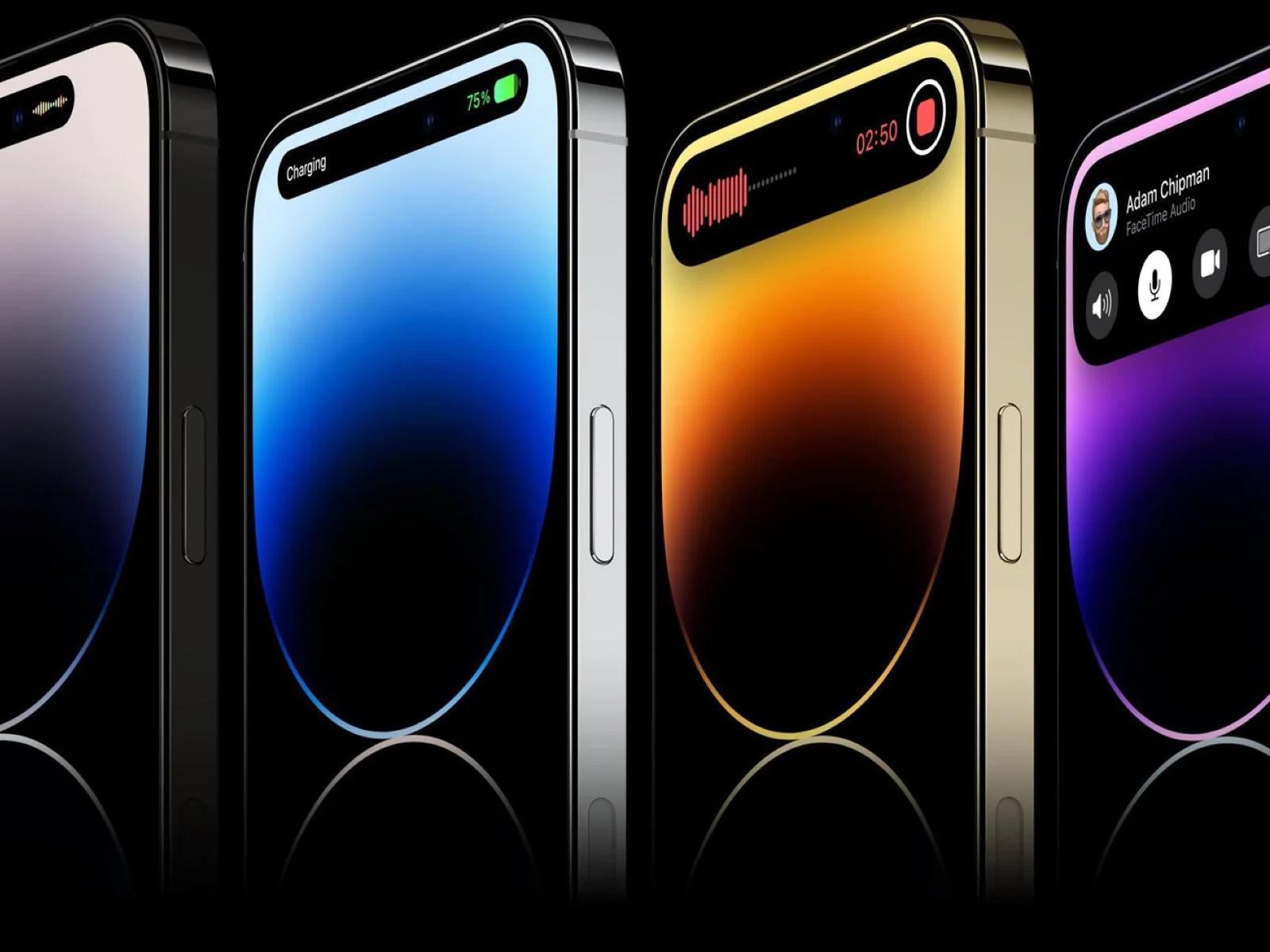
Somewhere in the near future, Apple iPhone 18 Pro and 18 Pro Max users could potentially have their Face IDs scanned by an invisible, under-display scanner. Apparently Cupertino is testing the feature, but with anything of this nature, there’s still a chance that the technology won’t mature in time to make the iPhone 18’s production schedule

Second GTA 6 trailer sheds more light on the story

It’s so annoying when publishers release a trailer for a game that’s ages away. What’s even the point of getting folks excited for something that won’t come out for over a year? I’m sure no one’s going to be interested in a fresh look at Grand Theft Auto 6, indisputably the most anticipated game on the planet. No one at all. [/s]

Just a few days after Rockstar Games said it was delaying the blockbuster from this fall to next May, it has surprised everyone by dropping the second trailer for GTA 6. It’s our first proper peek at the game in nearly 18 months. This one is more story focused than the first trailer. It highlights the relationship between the dual protagonists, Lucia and Jason, and (of course) some of their law-flouting escapades. 

“Vice City, USA. Jason and Lucia have always known the deck is stacked against them,” a description of the story reads. “But when an easy score goes wrong, they find themselves on the darkest side of the sunniest place in America, in the middle of a criminal conspiracy stretching across the state of Leonida — forced to rely on each other more than ever if they want to make it out alive.” The game’s website has more screenshots and details about the characters shown in the trailer too.

GTA 6 marks a return to an old favorite location, but you’ve never seen Vice City (Rockstar’s version of Miami) quite like this. The visuals here are quite stunning, even if they all appear to be from cutscenes. Rockstar says the footage was captured on a PlayStation 5 too, not a PS5 Pro. The game will also debut on Xbox Series X/S when it arrives on May 26, 2026. 

This article originally appeared on Engadget at https://www.engadget.com/gaming/second-gta-6-trailer-sheds-more-light-on-the-story-140452729.html?src=rss