Appeals court once again upholds Microsoft’s acquisition of Activision Blizzard

The Ninth Circuit US Court of Appeals has upheld a lower court’s ruling that Microsoft’s acquisition of Activision Blizzard did not violate antitrust laws. The Federal Trade Commission had sued to block the merger of these large gaming brands on claims that the new entity would fall afoul of antitrust laws. In the court’s ruling, released today, the FTC failed to prove that Microsoft would have blocked access to popular titles such as Call of Duty on hardware owned by other gaming brands. The appeals court was also unswayed by the FTC’s arguments that the deal would have lessened competition in gaming subscription services and cloud streaming.

The issue of platform-exclusive titles was one of the core tenets of the FTC’s latest charge against this acquisition. However, the opinion written by Judge Daniel P. Collins observed that “all major manufacturers have engaged in this practice.” And as Microsoft has been making more and more of its once-exclusive titles available on new hardware, this may mean that the competition agency will finally accept the deal as done.

The $68.7 billion deal for Microsoft to buy Activision Blizzard closed in October 2023, but the acquisition has faced multiple challenges from the FTC at varying stages of the process. In fact, this isn’t the first time the Ninth Circuit Court has rejected the agency’s efforts to block the merger. The competition agency also raised alarms about layoffs after the merger closed.

This article originally appeared on Engadget at https://www.engadget.com/gaming/appeals-court-once-again-upholds-microsofts-acquisition-of-activision-blizzard-211008049.html?src=rss

Microsoft raises base Surface prices by 20 percent

Add Microsoft’s Surface lineup to the list of gear that now costs more. XDA first spotted price hikes of around 20 percent for most existing models. The damage applies to the Surface Laptop and Surface Pro lines, as well as power bricks.

The starting prices of the 13.8-inch Surface Laptop and 13-inch Surface Pro increased from $1,000 to $1,200. Of course, the new devices Microsoft launched on Tuesday stand pat. (And their curiously high prices now make more sense.) Only the 15-inch Surface Laptop was spared, sticking to its original $1,300.

Even accessories like power supplies are part of the fun. The 65W Surface power supply shot up from $90 to $120, and the 127W variant went from $125 to $175.

PCMag notes that retail partners like Best Buy and Amazon still show the original prices. So, if you were considering a new Surface, that’s a good place to start.

The move follows last week’s Xbox price increases. The Xbox Series X is now $80 more expensive, while an Xbox Series X costs an extra $100.

Unsurprisingly, Microsoft hasn’t explicitly tied the price hikes to President Trump’s tariffs. When XDA‘s Rich Woods asked the company about the surprisingly expensive entry-level Surface models introduced this week, it neither confirmed nor denied the connection.

This article originally appeared on Engadget at https://www.engadget.com/computing/laptops/microsoft-raises-base-surface-prices-by-20-percent-210427490.html?src=rss

Samsung Acquires Masimo’s Audio Business For $350 Million

Harman International, a Samsung subsidiary, announced it is acquiring Masimo’s consumer audio division for $350 million in cash. “The deal is expected to finalized by the end of 2025, though it’s still subject to regulatory approvals,” notes Engadget. From the report: Samsung purchased Harman International back in 2017 for $8 billion, though it allowed the company to operate as an independent subsidiary. Harman’s brands include JBL, Harman Kardon, AKG, Mark Levinson, Arcam and Revel. If and when the acquisition pushes through, Masimo’s audio brands under Sound United will be added to the list, including Bowers & Wilkins, Denon, Marantz and Polk Audio. […]

As noted by The Verge, Samsung published a press release, where it briefly talked about the history of the brands it’s acquiring. It mentioned some of Bowers & Wilkins’ most iconic products, such as the Nautilus loudspeaker (pictured above) and its Zeppelin wireless speaker, as well as Denon’s history as an early adopter of the CD player. Harman had a 60 percent market share in portable audio devices last year, and the company is looking to maintain that position with this purchase. Samsung also plans to apply the new brands’ audio technologies to its smartphones, TVs, wireless earphones, soundbars and other devices in the future.


Read more of this story at Slashdot.

Genetic-engineered bacteria break down industrial contaminants

Over the last century or more, humanity has been developing an ever-growing list of chemicals that have never been seen by Earth’s creatures. Many of these chemicals end up being toxic contaminants that we’d love to get rid of, but we struggle to purify them from the environment or break them down once we do. And microbes haven’t had much chance to evolve the ability to break them down for us.

Over the last few years, however, we’ve found a growing number of cases where bacteria have evolved the ability to break down industrial contaminants and plastics. Unfortunately, these bacteria are all different species, target different individual contaminants, and thrive in different environments. But now, researchers have developed a new way to take the genes from all these species and place them in a single bacterial strain that can decontaminate complex waste mixtures.

Targeting contaminants

The inspiration for this work was the fact that a lot of industrial contamination contains a mixture of toxic organic molecules, but is found in brackish or salty water. So, the research team, based in Shenzhen, China, started by simply testing a number of lab strains to determine the ability to survive these conditions. The one that seemed to do the best is called Vibrio natriegens. These bacteria were discovered in a salt marsh, and their primary claim to fame is an impressive growth rate, with a population being able to double about every 10 minutes.

Read full article

Comments

Microsoft’s Big New Windows Update Is Rolling Out And It’s A Mandatory Download

Microsoft's Big New Windows Update Is Rolling Out And It's A Mandatory Download
There’s some relatively good news for Windows users worldwide: Microsoft has finally deemed the Windows 11 24H2 update fit for general consumption. The point release will now be automatically downloaded on all eligible Windows 11 Home and Pro PCs, with the exception of network-managed devices and those with pending compatibility holds.

It’d

Eminem’s ‘Lose Yourself’ Performed With Lines From 331 Movies

Because some people were just born to sit in a dark room staring at a computer monitor for countless hours at a time (wait — is that all of us?), this is a video of Eminem’s 2002 banger ‘Lose Yourself’ performed by actors reciting lines in 331 different moves. The editing job was performed by Ross John Fearnley, who, at least in my mind, has perpetually bloodshot eyes and a coffee mug that reads ‘IF THIS ISN’T MY 3RD CUP, BEAT IT’.

NOAA warns staff a militia group thinks its radars are ‘weather weapons’

The National Oceanic and Atmospheric Administration has warned the National Weather Service of possible attacks from an armed conspiracy group targeting Doppler radar stations, according to a report from CNN. The group, Veterans on Patrol, is going after government radars because it believes they’re being used as “weather weapons.”

CNN learned of the possible attacks through NOAA emails warning NWS staff that Veterans on Patrol was planning to conduct “penetration drills on NEXRAD sites to identify weaknesses,” with the ultimate goal of destroying NEXRAD. Despite its cooler-than-average name, the NWS uses NEXRAD or “Next Generation Weather Radar” for a fairly mundane purpose: detecting precipitation in the atmosphere. NEXRAD plays a vital role in locating thunderstorms and tornados, making it easier to evacuate vulnerable communities before disaster strikes. 

It’s not clear what Veterans on Patrol sees as threatening about radar — the group was previously focused on white nationalism and Pizzagate-style government conspiracies — but concern over the effects of being exposed to radio waves is a common bugbear for conspiracy-types. For example, groups set fire to cell towers early in the COVID-19 pandemic because of a belief that 5G somehow spread the virus. Viewing radar as a weapon could originate from some similar misconceptions.

NWS staff have been advised to use the buddy system when working at remote radar sites and report anything suspicious to the authorities. Even without the threat of physical violence, though, the NWS and NOAA at large have already been devastated in 2025. Hundreds of weather forecasters were fired because of the cuts made by the Trump administration, just one of many attempts to dismantle government services.

This article originally appeared on Engadget at https://www.engadget.com/science/noaa-warns-staff-a-militia-group-thinks-its-radars-are-weather-weapons-202236953.html?src=rss

Matter update may finally take the tedium out of setting up your smart home

There is no product category that better embodies the XKCD take on standards than smart home. With an ocean of connectivity options and incompatible standards, taming this mess has been challenging, but Matter could finally have a shot at making things a little less frustrating. The latest version of the standard has launched, offering multiple ways to streamline the usually aggravating setup process.

The first public release of Matter was in late 2022, but compatible systems didn’t get support until the following year. Now, there are Matter-certified devices like smart bulbs and sensors that will talk to Apple, Google, Amazon, and other smart home platforms. Matter 1.4.1 includes support for multi-device QR codes, NFC connection, and integrated terms and conditions—all of these have the potential to eliminate some very real smart home headaches.

It’s common for retailers to offer multi-packs of devices like light bulbs or smart plugs. That can save you some money, but setting up all those devices is tedious. With Matter 1.4.1, it might be much easier thanks to multi-device QR codes. Manufacturers can now include a QR code in the package that will pair all the included devices with your smart home system when scanned.

Read full article

Comments

Trump Will Rescind Biden-Era AI Chip Export Curbs

According to Bloomberg, the Trump administration plans to revise a set of chip trade restrictions called the “AI diffusion” rule, which were scheduled to take effect on May 15. CNBC reports: The rule, which was proposed in the last days of the Biden administration, organizes countries into three different tiers, all of which have different restrictions on whether advanced AI chips like those made by Nvidia, AMD, and Intel can be shipped to the country without a license.

Chipmakers including Nvidia and AMD have been against the rule. AMD CEO Lisa Su told CNBC on Wednesday that the U.S. should strike a balance between restricting access to chips for national security and providing access, which will boost the American chip industry. Nvidia CEO Jensen Huang said earlier this week that being locked out of the Chinese AI market would be a “tremendous loss.”


Read more of this story at Slashdot.

We have reached the “severed fingers and abductions” stage of the crypto revolution

French gendarmes have been busy policing crypto crimes, but these aren’t the usual financial schemes, cons, and HODL! shenanigans one usually reads about. No, these crimes involve abductions, (multiple) severed fingers, and (multiple) people rescued from the trunks of cars—once after being doused with gasoline.

This previous weekend was particularly nuts, with an older gentleman snatched from the streets of Paris’ 14th arrondissement on May 1 by men in ski masks. The 14th is a pleasant place—I highly recommend a visit to the catacombs in Place Denfert-Rochereau—and not usually the site of snatch-and-grab operations. The abducted man was apparently the father of someone who had made a packet in crypto. The kidnappers demanded a multimillion-euro ransom from the man’s son.

According to Le Monde, the abducted father was taken to a house in a Parisian suburb, where one of the father’s fingers was cut off in the course of ransom negotiations. Police feared “other mutilations” if they were unable to find the man, but they did locate and raid the house this weekend, arresting five people in their 20s. (According to the BBC, French police used “phone signals” to locate the house.)

Read full article

Comments

Meta is reportedly working on facial recognition for its AI glasses

Diminished tech privacy appears to be another ripple effect from Trump 2.0. The Information reported on Wednesday that Meta has changed its tune on facial recognition. After considering but ultimately bailing on the technology for the first version of its smart glasses, the company is now actively working on wearables that can identify nearby faces. Remember when being a “Glasshole” was considered a faux pas?

According to The Information, Meta has recently discussed adding software to its smart glasses that scans bystanders’ faces and identifies people by name. The company has also reportedly considered adding the tech to future AI-powered earphones with built-in cameras.

Facial recognition tech would be part of a Meta feature dubbed internally as “super sensing.” The feature would build on the glasses’ live AI feature, which can only remain active for around half an hour (thanks to its battery). But in future devices, expected in 2026, it could run for hours.

A pair of sunglasses with cameras sitting on a display table.
Sam Rutherford for Engadget

The Information says the super-sensing mode wouldn’t likely be the default mode for the glasses. The glasses owner would have to opt in. But the person’s nearby company — those having their faces scanned and named — wouldn’t.

Making matters worse, bystanders might not even know they’re being scanned. The current Ray-Ban Meta glasses turn on a light while recording. It’s a privacy-focused feature likely spawned from Big Tech’s lessons from the Google Glass social backlash.

But Meta is reportedly questioning whether future glasses should activate the light when the device is “super-sensing” them. Uh oh.

Putting on a pair of glasses that gives you AI-powered superhuman memory might sound pretty cool. No need to remember things — just let the AI scan your environment and remind you! But the tech sounds a lot less fun when you think about the poor souls in proximity to one of these, uh, Metaholes.

Smart sunglasses sitting on a blanket next to a case.
Karissa Bell for Engadget

Alongside the revival of facial recognition, Meta has updated its privacy policies. In April, the company changed its terms so that its current smart glasses will activate AI by default. The only way to opt out is to deactivate the “Hey Meta!” trigger phrase. Adding to the fun is a change that no longer lets glasses owners opt out of allowing the company to store and train on their voice recordings.

The Information draws a line from Trump’s reelection to Meta’s ethically dubious changes. The current Federal Trade Commission (FTC) isn’t keen on regulations that slow big businesses’ profits. Last month, FTC Commissioner Melissa Holyoak promised a “flexible, risk-based approach to privacy enforcement.” The agency has also stopped using labels like “surveillance advertising.”

This article originally appeared on Engadget at https://www.engadget.com/wearables/meta-is-reportedly-working-on-facial-recognition-for-its-ai-glasses-195502788.html?src=rss

NASA Study: Supercomputer Predicts End Of All Life On Earth And It’s Chilling

NASA Study: Supercomputer Predicts End Of All Life On Earth And It's Chilling
Researchers from the University of Toho, Japan, recently collaborated with NASA scientists to use supercomputers to determine when all life on Earth will end. Detailed models were run on supercomputers, calculating many factors including climate and how temperature might change over time. In the end, the model made a chilling prediction —

Cue: Apple will add AI search in mobile Safari, challenging Google

Apple executive Eddie Cue said that Apple is “actively looking at” shifting the focus of mobile Safari’s search experience to AI search engines, potentially challenging Google’s longstanding search dominance and the two companies’ lucrative default search engine deal. The statements were made while Cue testified for the US Department of Justice in the Alphabet/Google antitrust trial, as first reported in Bloomberg.

Cue noted that searches in Safari fell for the first time ever last year, and attributed the shift to users increasingly using large language model-based solutions to perform their searches.

“Prior to AI, my feeling around this was, none of the others were valid choices,” Cue said of the deal Apple had with Google, which is a key component in the DOJ’s case against Alphabet. He added: “I think today there is much greater potential because there are new entrants attacking the problem in a different way.”

Read full article

Comments

Google launches a Gemini app for iPad

Google is once again crossing the great divide between rival tech giants, at least with artificial intelligence. The company has launched a dedicated iPad app for its Gemini AI assistant. In addition to natively running on Apple hardware, Gemini’s iPad app can take advantage of the tablet’s split view, so that the AI assistant is open on the screen at the same time as another program for easier use. The app is available today from the App Store in all countries where Gemini is currently available.

Gemini has been a huge focus for Google’s recent announcements as it works to put its service in front of more and more potential users. iPhones got their first native Gemini app last November. The company recently introduced a program for children to explore the AI assistant and it opened the Deep Research capability to all Gemini users. With Google I/O 2025 right around the corner, it’s a safe bet that we’ll be hearing about more features and integrations for the AI assistant later this month.

This article originally appeared on Engadget at https://www.engadget.com/ai/google-launches-a-gemini-app-for-ipad-194047388.html?src=rss

Apple’s Eddy Cue: ‘You May Not Need an iPhone 10 Years From Now’

Eddy Cue, Apple’s senior vice president of services, gave an ominous warning today that the iPhone could go the way of the iPod 10 years from now. From a report: Cue’s remarks came during the Google Search antitrust remedies trial today while discussing how AI has the potential to reshape the tech industry and open the door to new entrants. Incumbents have a hard time … we’re not an oil company, we’re not toothpaste — these are things that are going to last forever … you may not need an iPhone 10 years from now.

Cue went on to say that the best thing Apple did was kill the iPod, a move he said was bold. “Why would you kill the golden goose,” he added. That may seem like a silly thing for Apple to say, given that more than half of its revenue is iPhone sales. But Cue calls AI a “huge technological shift,” and suggests that such shifts can humble companies that once seemed unassailable.


Read more of this story at Slashdot.

14 Games You Should Play If You Like Wordle

Wordle became an instant classic almost as soon as it launched, but its simplicity is also the source of a new problem: what to play when you’ve already guessed the day’s word? Fortunately, the years since Wordle’s appearance have blessed us with dozens of other guessing games that borrowed one or more of Wordle’s features—five-letter solutions, or yellow and green squares, or sometimes just the concept of guessing and getting hints to narrow down the possibilities. Here are 14 of the best.

Waffle

Waffle screenshot

Credit: Waffle

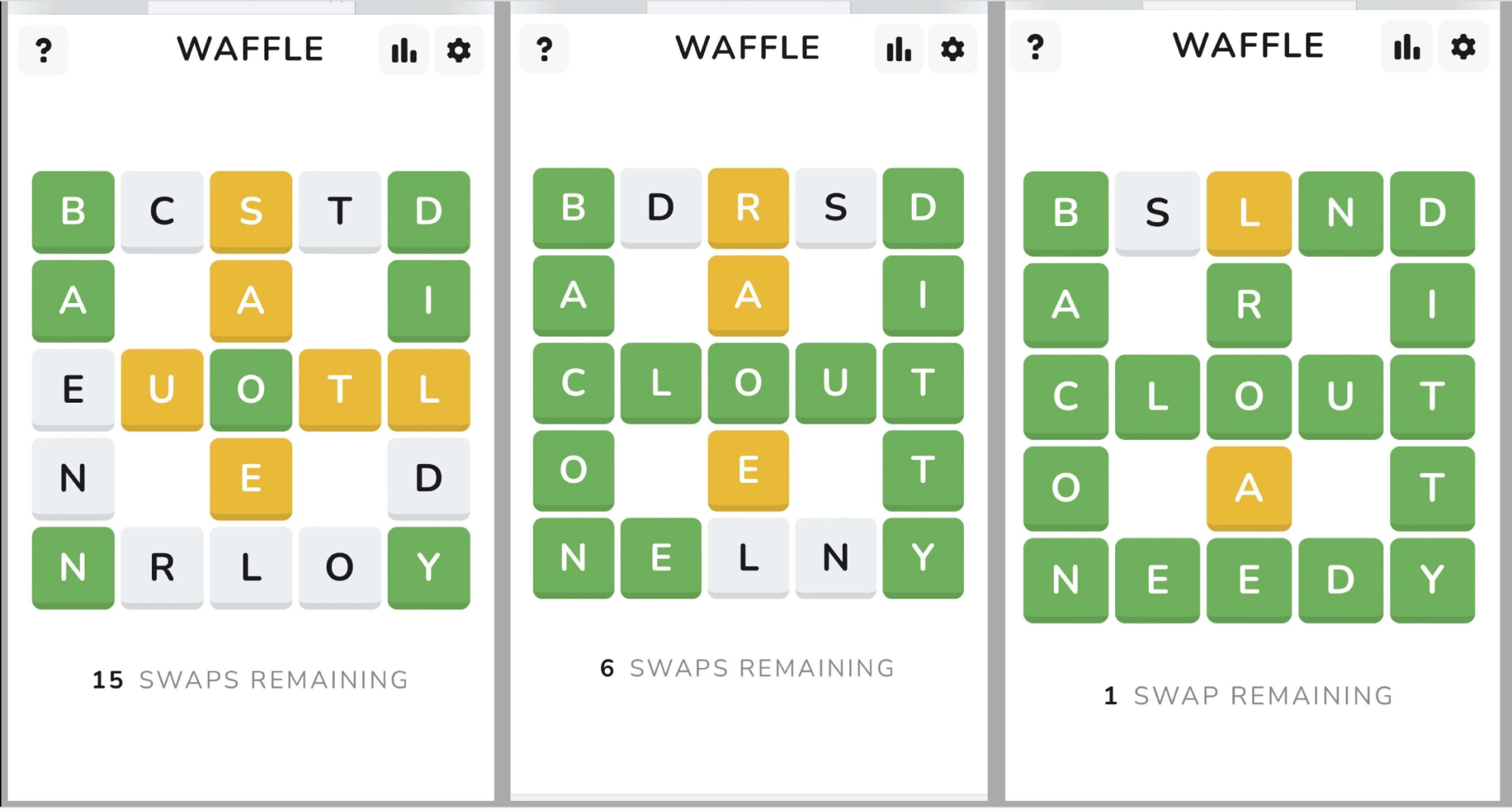
Let’s start out the list with a cute and friendly game. Waffle puts six different five-letter words in a grid, and you solve it simply by moving the squares around. It’s tricky to get the job done in the given number of swaps, but you’re never going to be too perplexed—all the letters you need are right in front of you.

Flagle

Flagle screenshot

Credit: Flagle

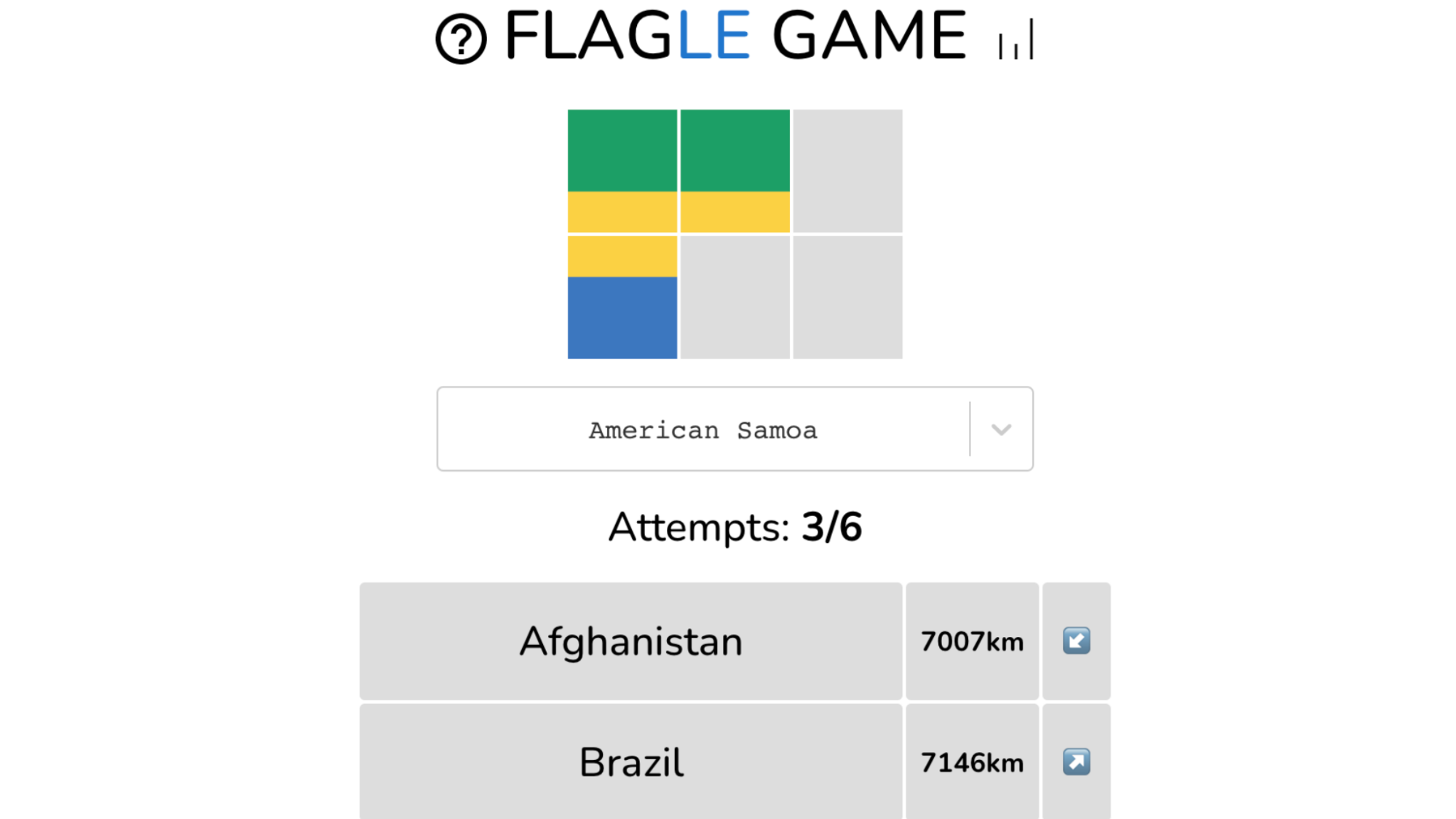
I was torn on whether to award the geographical spot on the list to Flagle, which uses country flags, or Worldle, which gives you the outline of the country. When I was first compiling this list, I went with Flagle because there used to be two ways to win: In addition to narrowing down the location of the country, you can also reveal tiles of the country’s flag. Unfortunately, Flagle has removed the feature that tells you how far away you guessed in terms of distance, so it’s now just a flag-based game. They’re still both great.

Hurdle

Hurdle screenshot

Credit: Hurdle

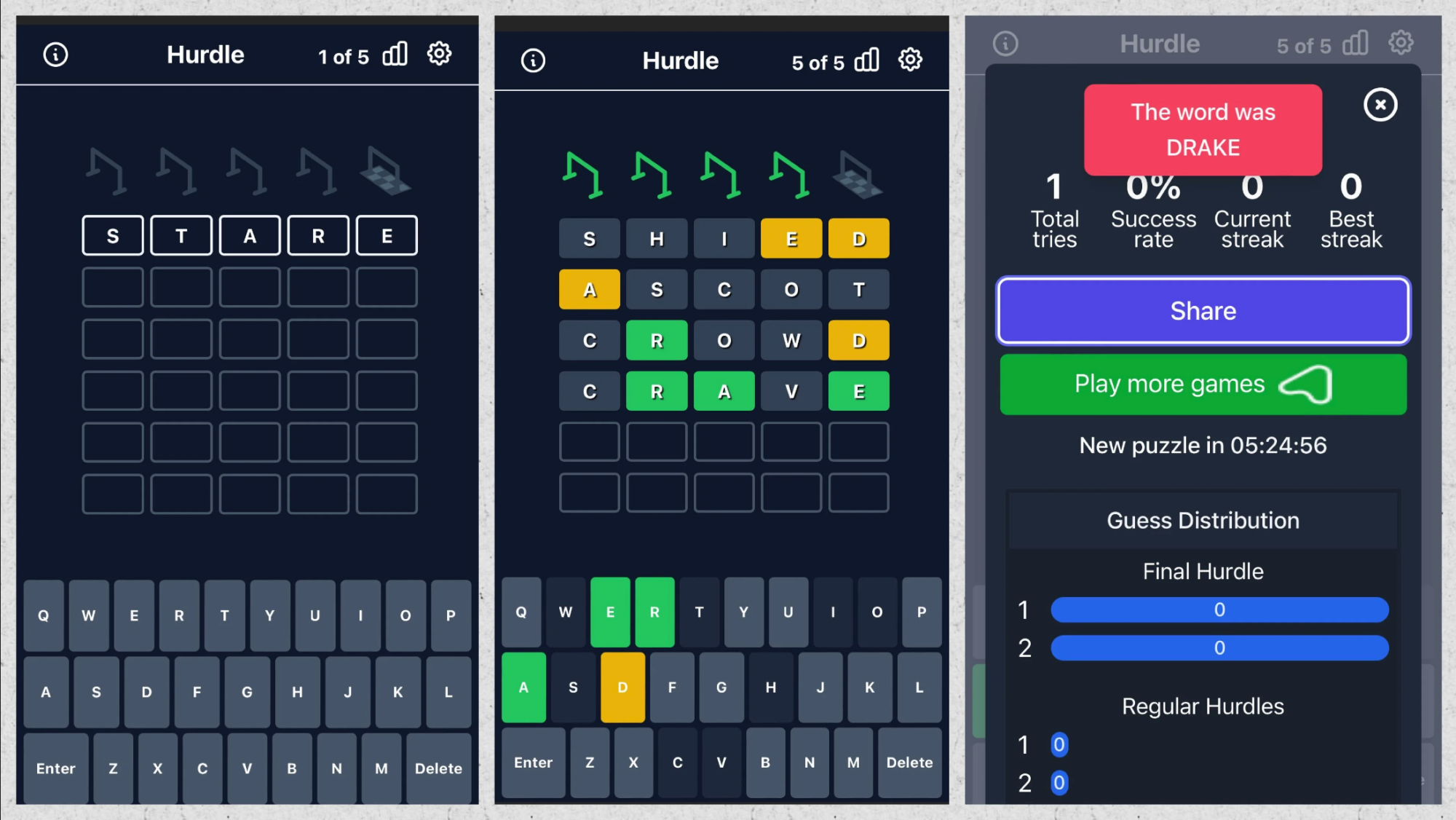
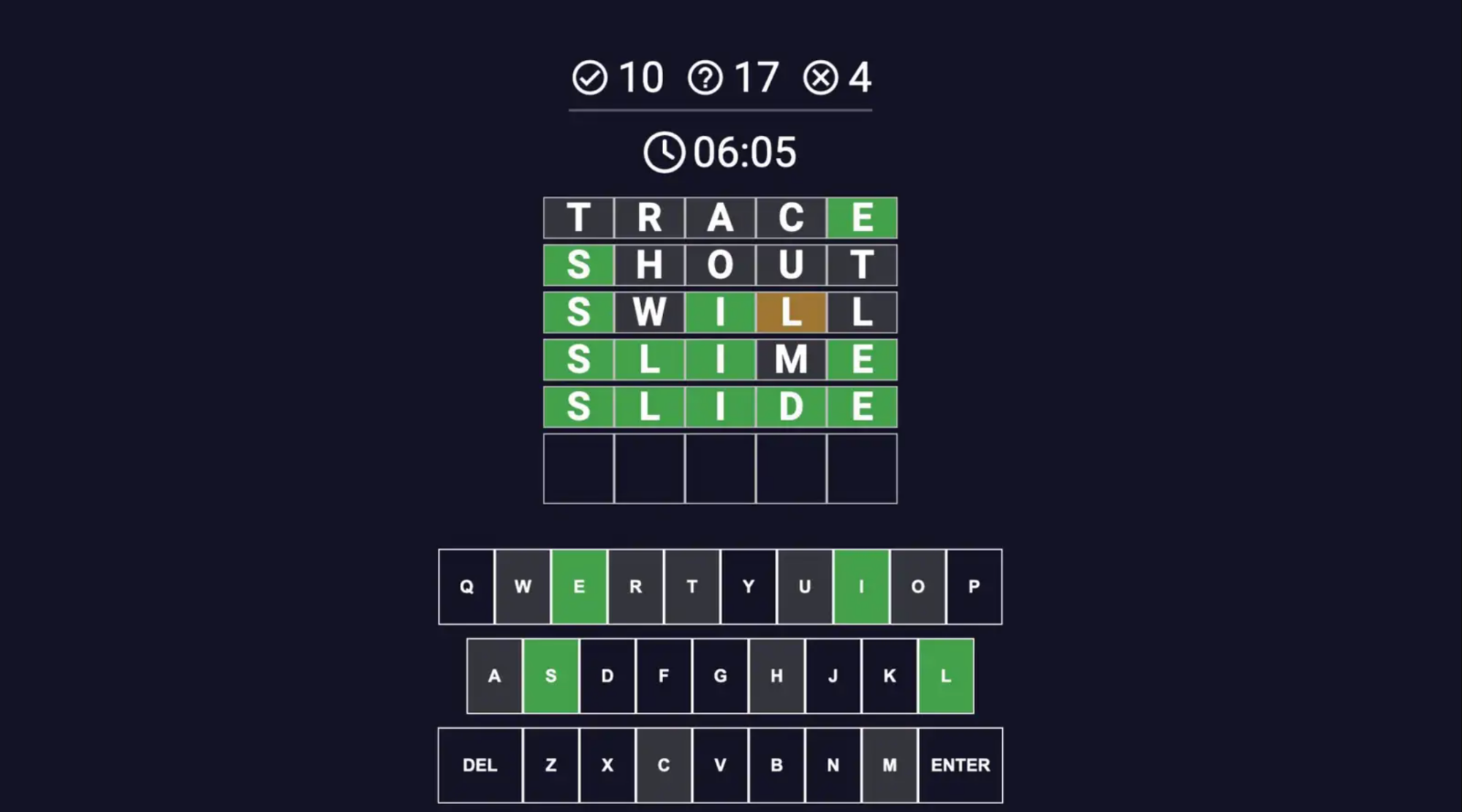
This is probably the last friendly, straightforward game you’ll see on this list, so enjoy it while it lasts. Hurdle gives you five Wordle-style puzzles each day. You have to solve each to get the next, and then the fifth puzzle gets pre-filled with the four previous solutions as guesses, leaving you just two chances to win the final round.

Absurdle

Absurdle screenshot

Credit: Absurdle

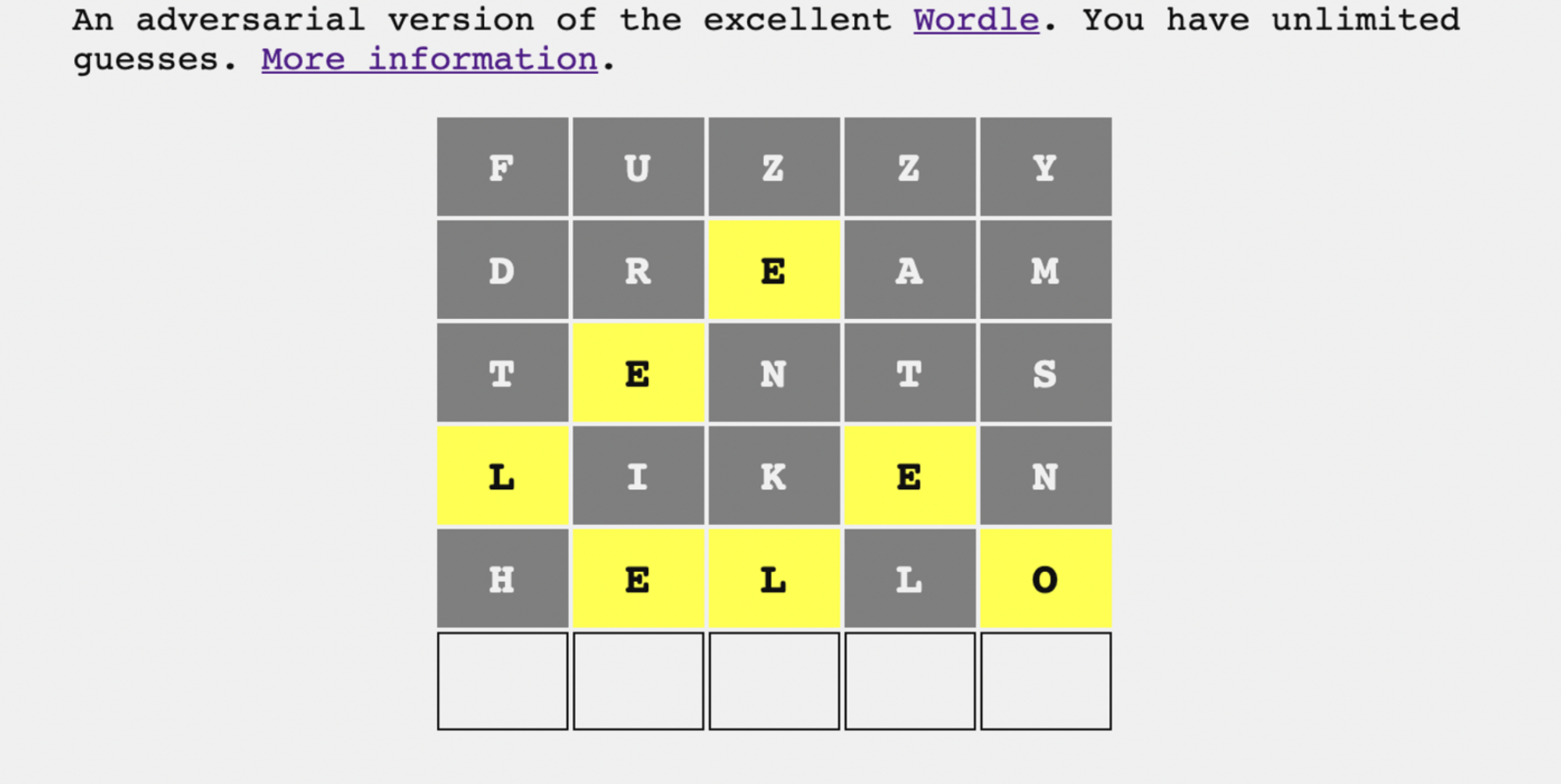
Absurdle gets its name because its premise is entirely absurd—and man, does it follow through. The secret word you’re guessing changes to evade your guesses. Its one nod to sportsmanship is that it will abide by its previous hints—so if it tells you that the word contains an R as the first letter, the solution will have an R, but everything else is subject to change. Succeeding at this game means backing the algorithm into a corner until it only has one option left; only then will it admit you won.

Heardle

Heardle screenshot

Credit: Heardle

Heardle is the modern version of Name That Tune!, a game show where participants had to identify a song based on just the first few notes. The songs in Heardle are taken from popular playlists, so it’s also a good litmus test for your own pop culture relevance.

Squabble

Squabble screenshot

Credit: Squabble

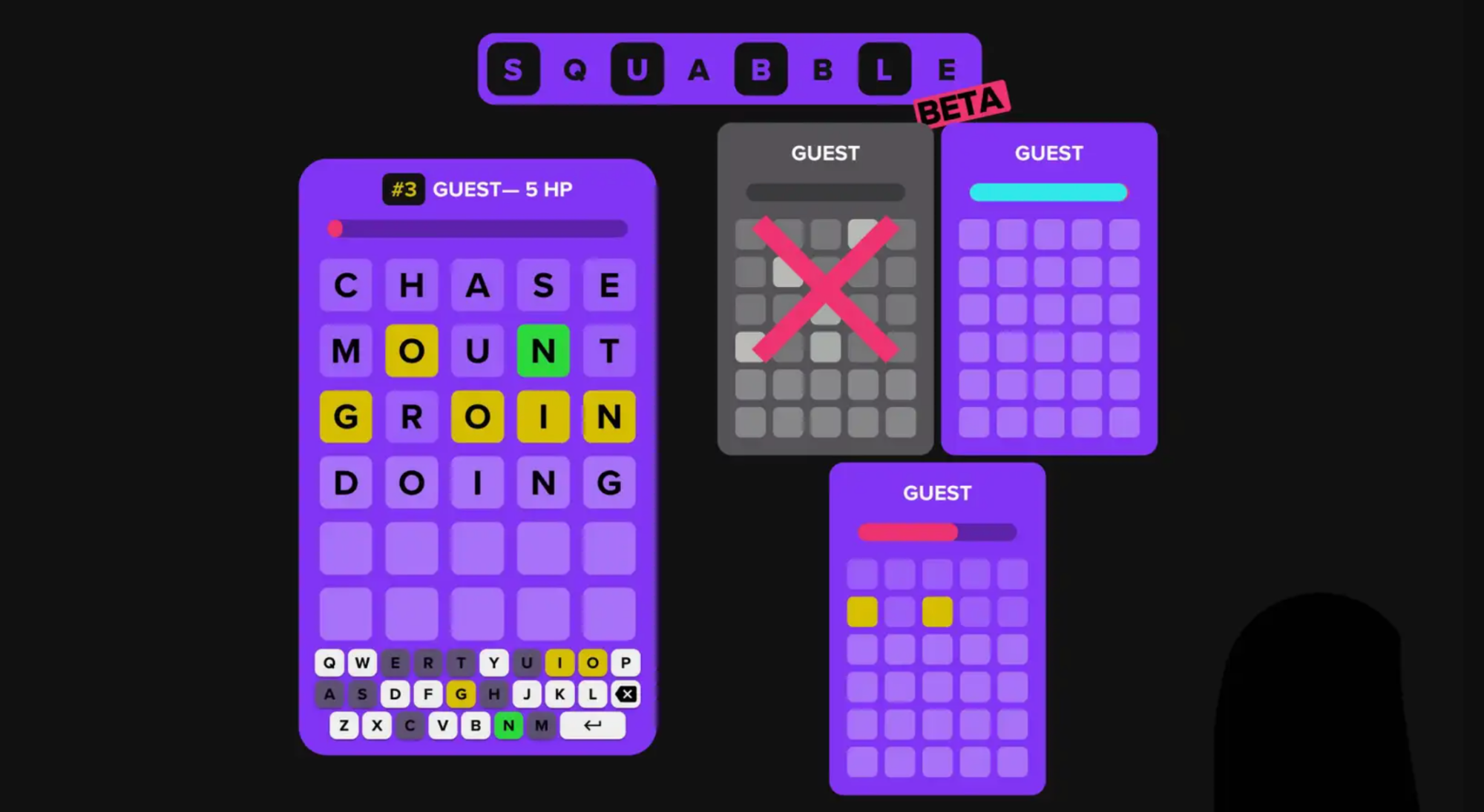
In Squabble, we have our first competitive Wordle. (We’ll meet another in a minute.) If you think you’re good at guessing words, you now get the chance to prove it against friends or strangers in real time. Guessing wrong subtracts health from your little meter; guessing correctly refills it. The game continues, going to multiple words if needed, until all but one player has been eliminated. This game isn’t as popular as it once was, so you may wait a while to find enough players for a game with online strangers, but you can still create a game and share the lobby code with your friends for instant fun.

Mordle

Mordle screenshot

Credit: Mordle

If you like Squabble, try the massively multiplayer Mordle. Games can have up to 100 players, but gameplay is simpler because you don’t have to watch their game boards or battle them directly. Just attempt to solve the puzzle yourself, as fast as you can, and find out how many people got to the correct solution before or after you.

Quordle and other multi-Wordles

Quordle screenshot

Credit: Quordle

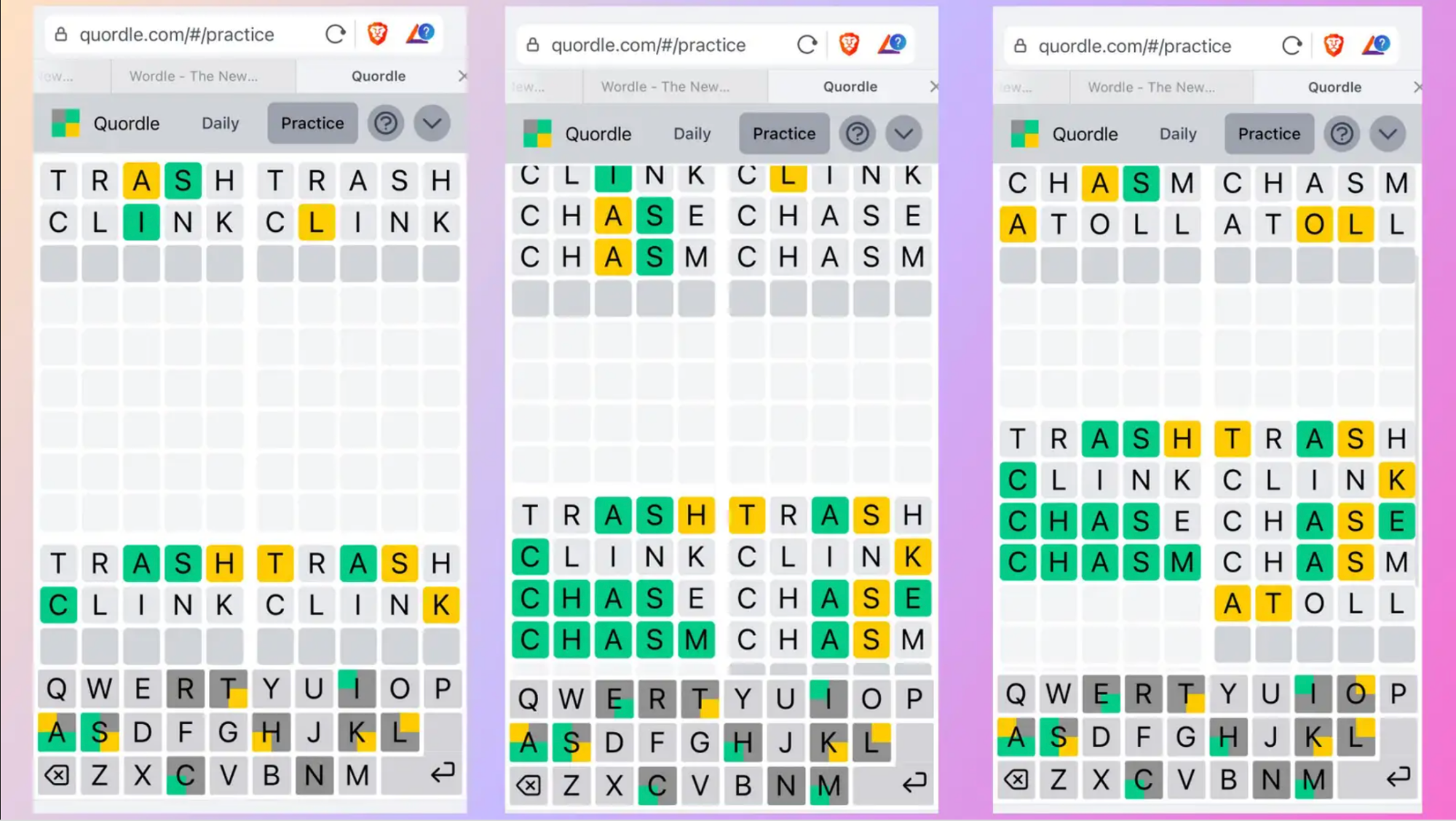
When Dordle (the double Wordle) first came on the scene, it seemed nightmarish; you’re supposed to solve two Wordles with the same guesses?! But with practice, it’s not hard at all. And so it escalated from there. Quordle is the sweet spot, in my opinion; four is the perfect number of puzzles to solve at once. But Octordle is also fun, and so are Sedecordle and Duotrigordle. Multi-Wordles appear daunting at first, but with so many grids, almost any guess is going to give you a useful hint somewhere.

Antiwordle

Antiwordle screenshot

Credit: Antiwordle

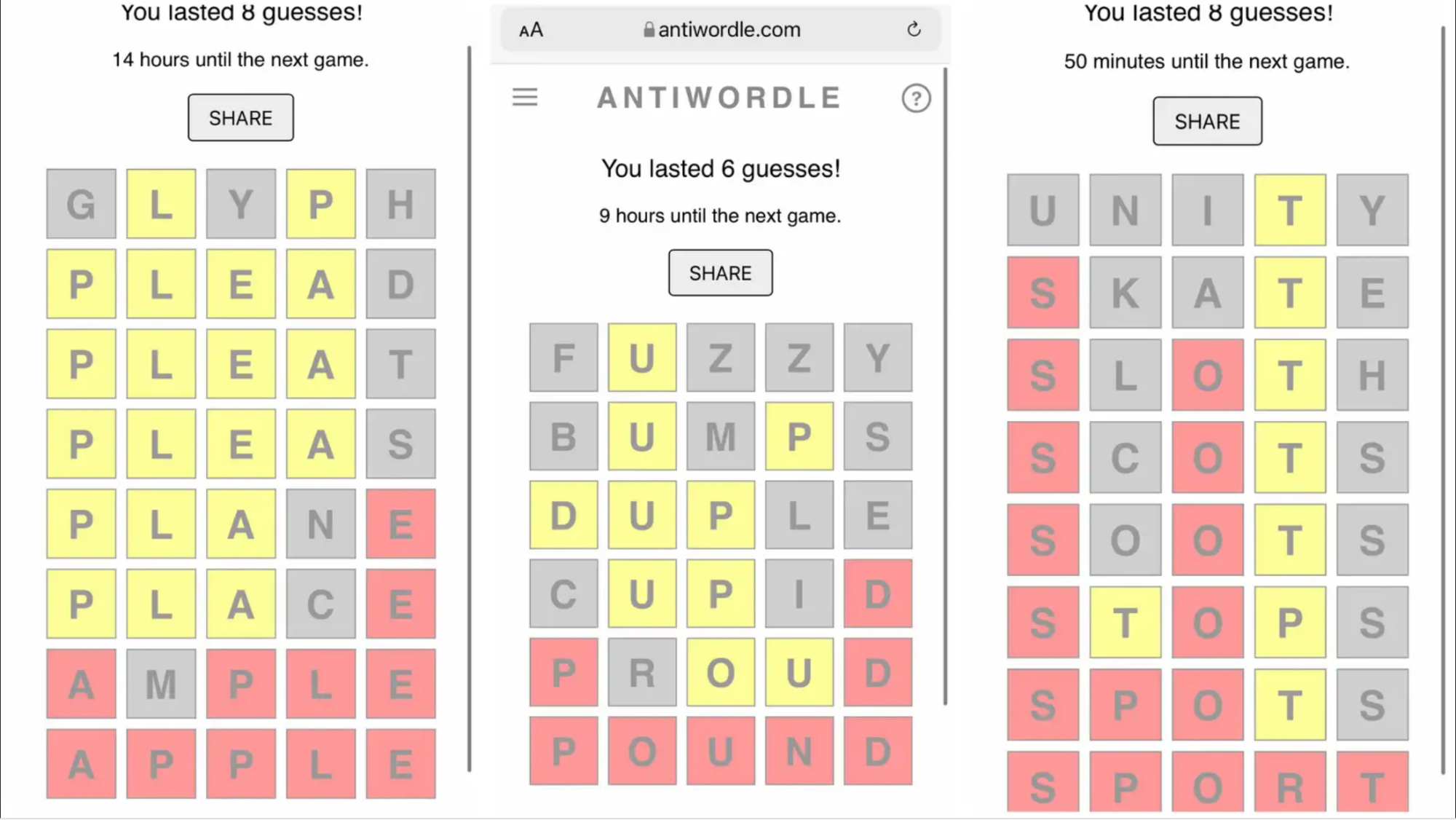
Antiwordle is probably the most hellish of all the games on this list, and that’s saying something. The rules are the same as the rules for regular Wordle played on hard mode (where you’re required to reuse correct letter guesses). But the whole idea is that you’re trying to not guess the word. Once you get it right, you lose.

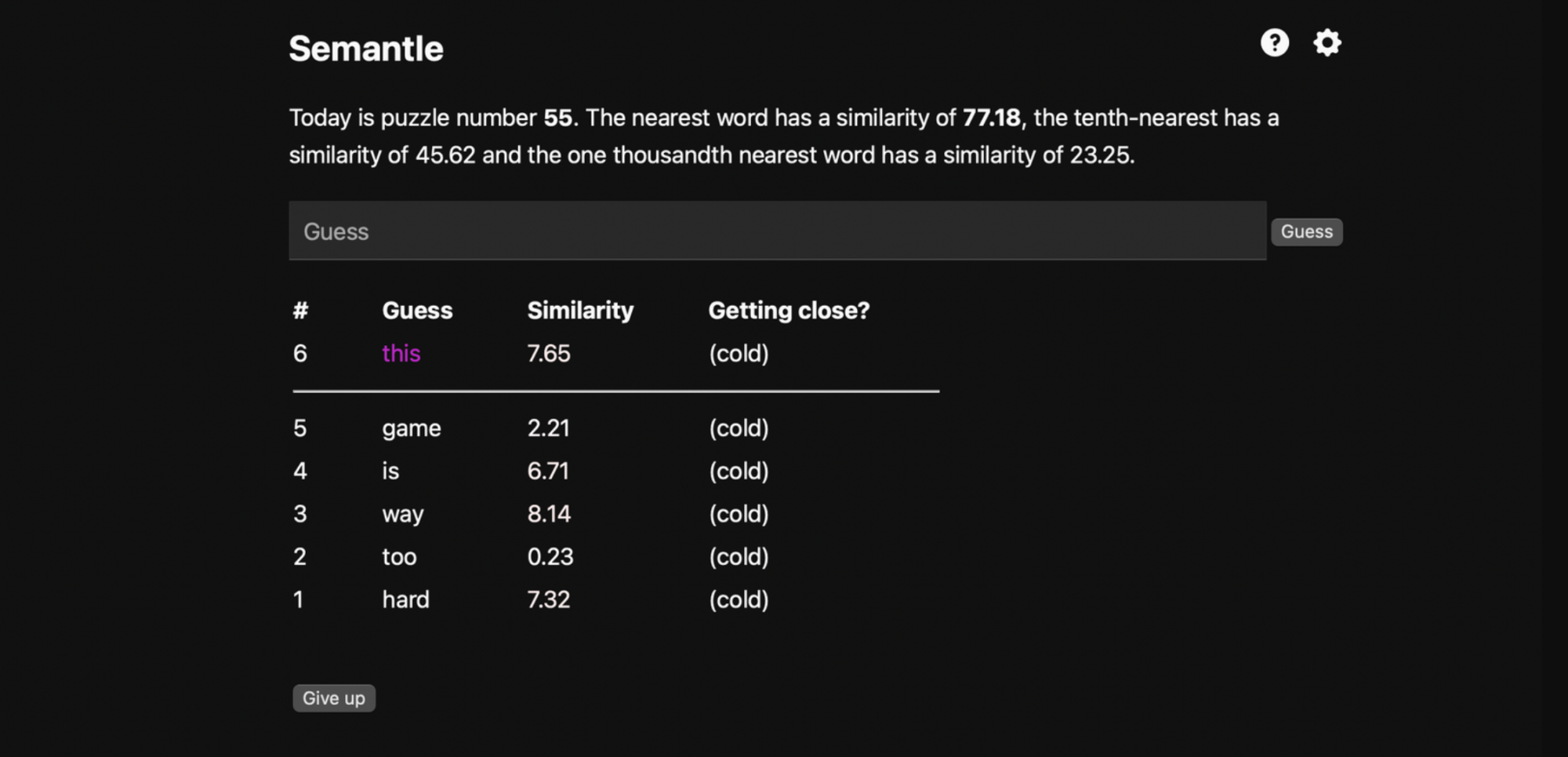
Semantle

Semantle screenshot

Credit: Semantle

Word games are, for the most part, games for good spellers. If you can recognize the patterns letters commonly appear in, you’re at an advantage. So if you’ve ever wondered why word games don’t ask you to guess the approximate meaning of a word, Semantle is for you. It’s tough to even begin narrowing it down, but once you do, just aim for words with similar meanings to arrive at the answer.

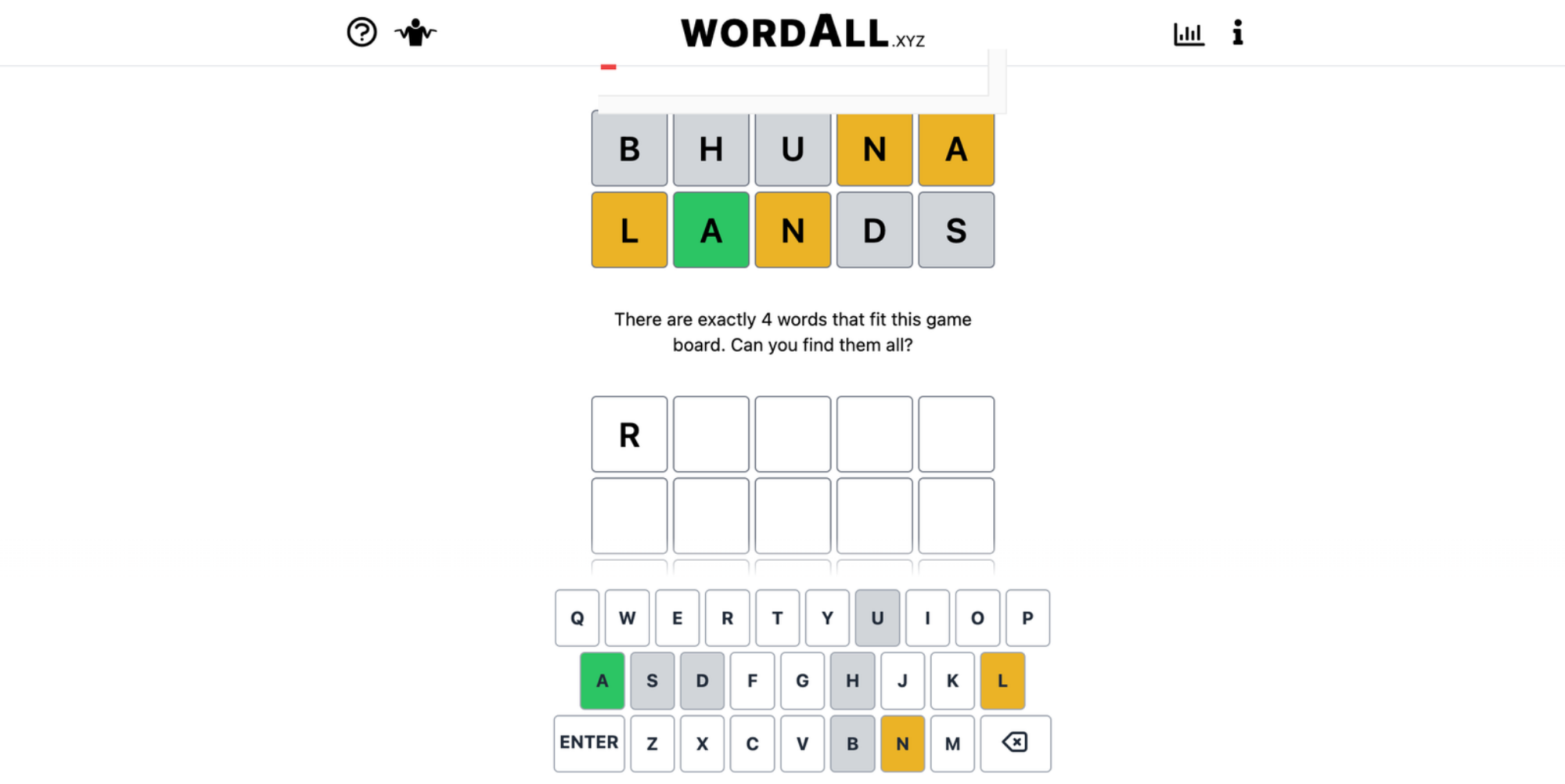
WordAll

WordAll screenshot

Credit: WordAll

Any time you get your green and yellow squares in response to a guess, what the game is really doing is defining and redefining a pool of words that the solution must be in. (All the words that have an E in the second position and a T in them somewhere other than the third, let’s say.) WordAll gives you a half-played game, pauses it there, and asks you to name all the words in that pool. It’s a fun brain exercise, and will probably make you a more strategic Wordle player.

Artle

Artle screenshot

Credit: Artle

We’ll back away from words for this one, an art-themed game that shows you snippets of works, all created by the same artist. It’s called Artle, and it will probably teach you things you didn’t know about your favorite artists—and help you discover new ones.

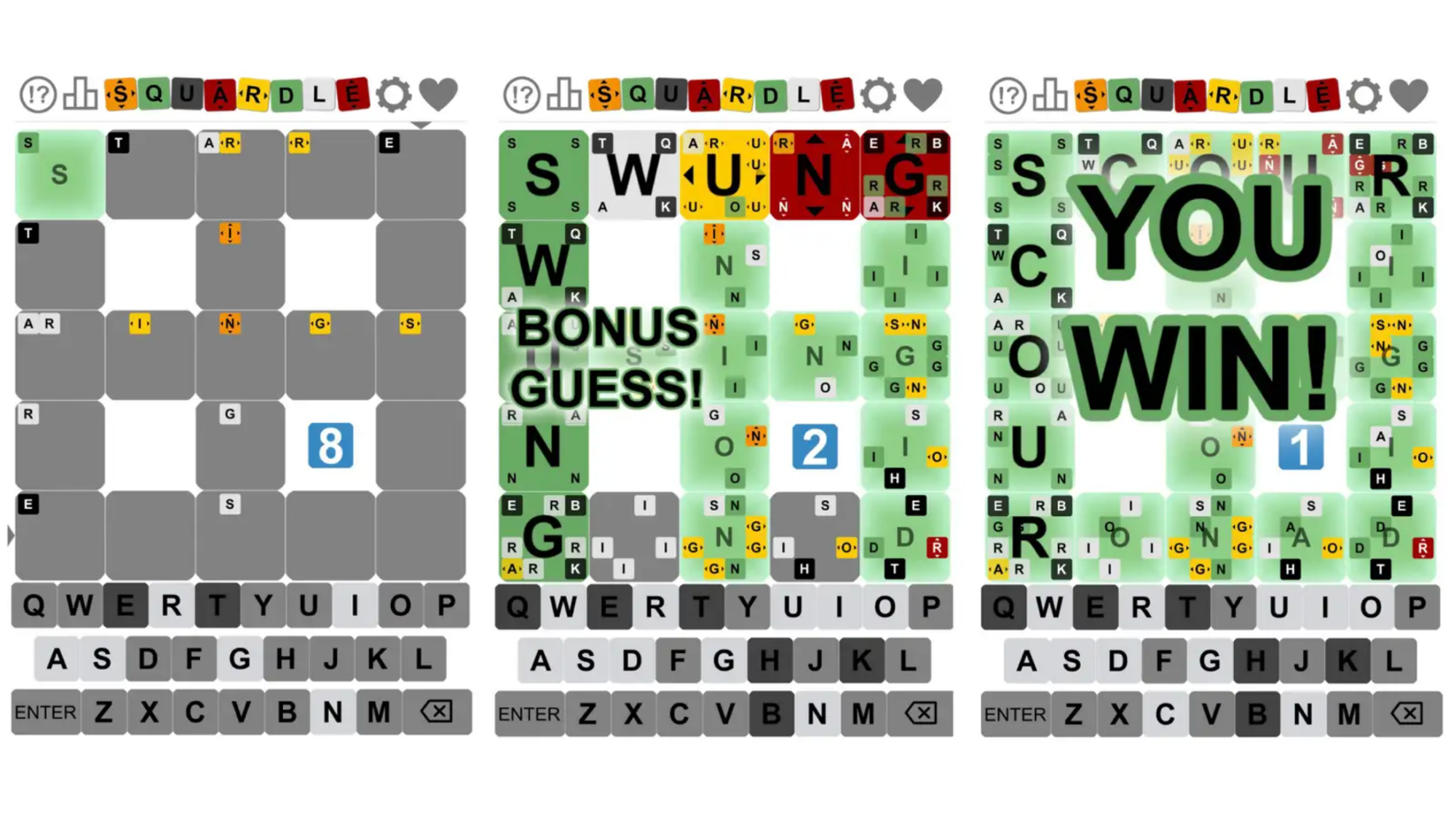
Squardle

Squardle screenshot

Credit: Squardle

If you thought Waffle was cute, Squardle is its evil twin. It’s another crossword-style guessing game, but this time you have to type all your guesses in. That doesn’t sound so bad, until you start trying to make sense of the hints. Each square contains color-coded information about how the letter you guessed fits into the words of the puzzle. Like Microsoft’s Clippy, something intended to be helpful quickly turns confusing and frustrating. Winning this game requires you to use the those hints without letting their proliferation distract you.

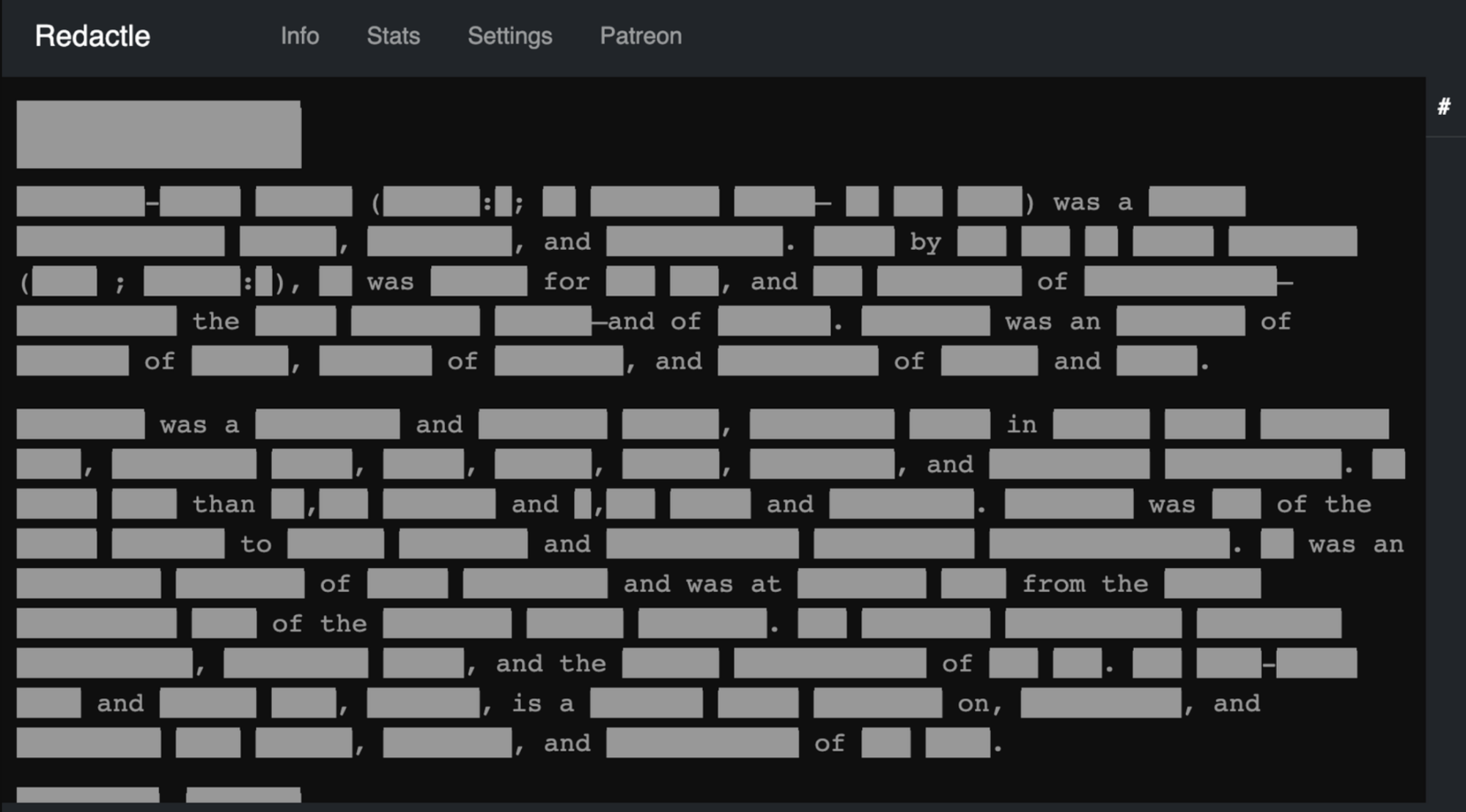
Redactle

Redactle screenshot

Credit: Redactle

One word at a time? Six words at a time? Redactle scoffs at all that. It gives you an entire Wikipedia article with most of the words blacked out, in the style of censored government documents. Your job is to guess words; when you guess correctly, those words are revealed in the article. Solving the puzzle means correctly guessing the title of the article—which could be about anything from a historical figure to a mathematical concept.

VMware Perpetual License Holders Receive Cease-And-Desist Letters From Broadcom

An anonymous reader quotes a report from Ars Technica: Broadcom has been sending cease-and-desist letters to owners of VMware perpetual licenses with expired support contracts, Ars Technica has confirmed. Following its November 2023 acquisition of VMware, Broadcom ended VMware perpetual license sales. Users with perpetual licenses can still use the software they bought, but they are unable to renew support services unless they had a pre-existing contract enabling them to do so. The controversial move aims to push VMware users to buy subscriptions to VMware products bundled such that associated costs have increased by 300 percent or, in some cases, more. Some customers have opted to continue using VMware unsupported, often as they research alternatives, such as VMware rivals or devirtualization.

Over the past weeks, some users running VMware unsupported have reported receiving cease-and-desist letters from Broadcom informing them that their contract with VMware and, thus, their right to receive support services, has expired. The letter [PDF], reviewed by Ars Technica and signed by Broadcom managing director Michael Brown, tells users that they are to stop using any maintenance releases/updates, minor releases, major releases/upgrades extensions, enhancements, patches, bug fixes, or security patches, save for zero-day security patches, issued since their support contract ended.

The letter tells users that the implementation of any such updates “past the Expiration Date must be immediately removed/deinstalled,” adding: “Any such use of Support past the Expiration Date constitutes a material breach of the Agreement with VMware and an infringement of VMware’s intellectual property rights, potentially resulting in claims for enhanced damages and attorneys’ fees.” […] The cease-and-desist letters also tell recipients that they could be subject to auditing: “Failure to comply with [post-expiration reporting] requirements may result in a breach of the Agreement by Customer[,] and VMware may exercise its right to audit Customer as well as any other available contractual or legal remedy.”


Read more of this story at Slashdot.

Starlink: Here’s a free satellite dish—if you pay $120 a month instead of $90

Starlink last week announced a new deal for its standard hardware kit, giving the satellite dish and Wi-Fi router for free to customers who sign up for a 12-month commitment.

The deal is reminiscent of the hardware rental agreements long used by cable companies, but Starlink’s offer has generated a bit of excitement. Some analysts suggested that the free kits are a reason for the federal government’s $42 billion broadband deployment fund to send grants to Starlink instead of to fiber-to-the-home providers, or that the government should buy Starlink kits at the regular price of $349 each so that Elon Musk’s company doesn’t have to eat the cost.

You may not be surprised to learn that the free hardware kit isn’t really free. But much of the discussion around the offer has ignored the fine details that could make a reasonable Starlink buyer decide to reject the deal. Similarly, policymakers deciding which ISPs should get government money might be wise to remember that fiber provides superior and more future-proof Internet service and that Starlink’s offers to customers could change at any time.

Read full article

Comments