AI of Dead Arizona Road Rage Victim Addresses Killer In Court

An anonymous reader quotes a report from The Guardian: Chris Pelkey was killed in a road rage shooting in Chandler, Arizona, in 2021. Three and a half years later, Pelkey appeared in an Arizona court to address his killer. Sort of. “To Gabriel Horcasitas, the man who shot me, it is a shame we encountered each other that day in those circumstances,” says a video recording of Pelkey. “In another life, we probably could have been friends. I believe in forgiveness, and a God who forgives. I always have, and I still do,” Pelkey continues, wearing a grey baseball cap and sporting the same thick red and brown beard he wore in life.

Pelkey was 37 years old, devoutly religious and an army combat veteran. Horcasitas shot Pelkey at a red light in 2021 after Pelkey exited his vehicle and walked back towards Horcasitas’s car. Pelkey’s appearance from beyond the grave was made possible by artificial intelligence in what could be the first use of AI to deliver a victim impact statement. Stacey Wales, Pelkey’s sister, told local outlet ABC-15 that she had a recurring thought when gathering more than 40 impact statements from Chris’s family and friends. “All I kept coming back to was, what would Chris say?” Wales said. […]

Wales and her husband fed an AI model videos and audio of Pelkey to try to come up with a rendering that would match the sentiments and thoughts of a still-alive Pelkey, something that Wales compared with a “Frankenstein of love” to local outlet Fox 10. Judge Todd Lang responded positively to the AI usage. Lang ultimately sentenced Horcasitas to 10 and a half years in prison on manslaughter charges. “I loved that AI, thank you for that. As angry as you are, as justifiably angry as the family is, I heard the forgiveness,” Lang said. “I feel that that was genuine.” Also in favor was Pelkey’s brother John, who said that he felt “waves of healing” from seeing his brother’s face, and believes that Chris would have forgiven his killer. “That was the man I knew,” John said.


Read more of this story at Slashdot.

Google Refutes Apple’s Claims of Search Traffic Decline

Google has pushed back against Apple executive Eddy Cue’s testimony that Safari searches declined last month, asserting it continues “to see overall query growth in Search” with “an increase in total queries coming from Apple’s devices and platforms.”

The statement comes as Apple’s Senior VP revealed under oath that the company is “actively looking at” revamping Safari to focus on AI-powered search engines, potentially threatening the estimated $20 billion-a-year deal making Google the default search provider on Apple devices.

Cue testified that AI search providers including OpenAI, Perplexity, and Anthropic will “eventually replace standard search engines.” Google, in its response, pointed to ongoing enhancements to its search product, noting users are “accessing it for new things and in new ways, whether from browsers or the Google app, using their voice or Google Lens.”


Read more of this story at Slashdot.

Google To Fund Development of Three Nuclear Power Sites

Google has partnered with Elementl Power to develop at least 600 MW of nuclear capacity at each of three planned sites. It’s unknown where the three proposed sites will be located or how much Google is investing. World Nuclear News reports: The two companies will work “with utility and regulated power partners to identify and advance new projects” and Elementl “will continue the evaluation of potential technology, engineering, procurement and construction, and other project partners, while prioritising specific sites for accelerated development.”

Elementl Power, founded in 2022, describes itself as a technology-agnostic advanced nuclear project developer which aims to provide “turn-key development, financing and ownership solutions for customers that want access to clean baseload power but may not want to own or operate nuclear power assets.” It says its mission is to “to deploy over 10 gigawatts of next-generation nuclear power in the US by 2035.”

It is not Google’s first nuclear power deal — in October 2024 the company signed an agreement with Kairos Power to purchase power from its fluoride salt-cooled high-temperature small modular reactors, with a fleet of up to 500 MW of capacity by 2035. The aim of the power purchase agreement was to facilitate Kairos Power to develop, construct, and operate plants and sell energy, ancillary services, and environmental attributes to Google. At the time of that announcement Google said that it would help it achieve net-zero emissions across all of its operations and value chain by 2030. Further reading: Google tries to greenwash massive AI energy consumption with another vague nuclear deal (The Register)


Read more of this story at Slashdot.

Samsung Will Unveil The Slim Galaxy S25 Edge At Unpacked On May 12

Samsung Will Unveil The Slim Galaxy S25 Edge At Unpacked On May 12
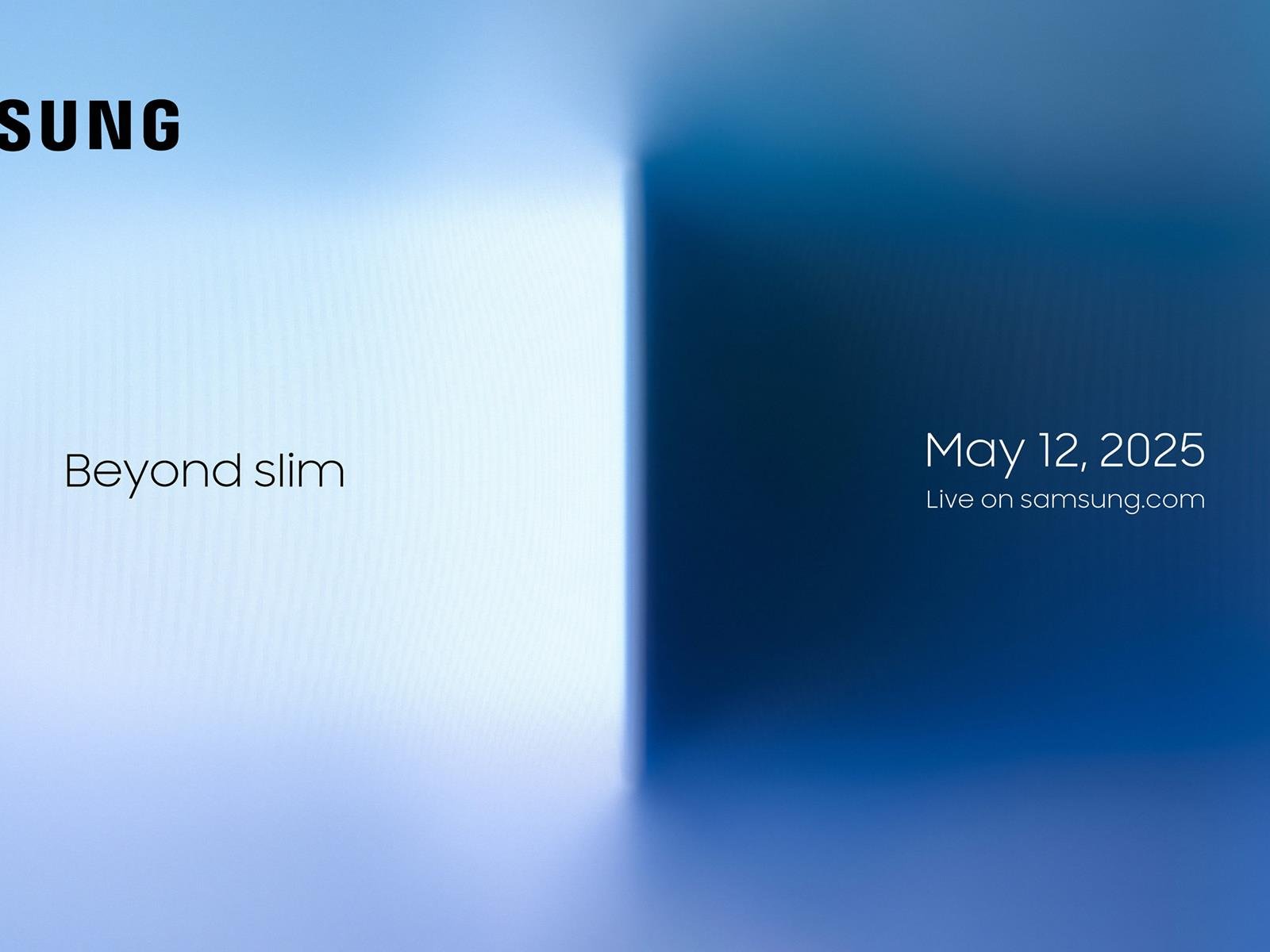
We’ve just gotten word that Samsung’s next Galaxy Unpacked event will take place this coming Monday, May 12, beginning at 8:00 p.m. ET. It is a virtual event, however, which will be livestreamed in the Samsung Newsroom on the company’s website and on Samsung’s YouTube channel, for all that would like check out the festivities as they unfold.

Samsung

Netflix Debuts Gen AI-Powered Search Tool, Tests Vertical Videos For Mobile

Netflix has officially launched a new AI-powered search feature that uses OpenAI’s ChatGPT to deliver a conversational content discovery experience, allowing users to describe what they’re looking for in natural language. The streaming giant is also getting into short videos with a new vertical feed set to rival Instagram Reels and TikTok. TechCrunch reports: Users can enter their preferences using natural phrases like “I want something funny and upbeat” or even more detailed requests, such as “I want something scary, but not too scary, and maybe a little bit funny, but not haha funny.” The feature is set to roll out this week to iOS users as an opt-in beta. Some subscribers in Australia and New Zealand have already had access to it, as reported by Bloomberg last month. […] Additionally, at the tech and product event, the company mentioned plans to use generative AI to update title cards in subscribers’ preferred languages. Other features revealed on Wednesday include a short-form video feed for mobile users and a redesign of its TV homepage.

Netflix’s new mobile-only vertical feed allows users to easily scroll through clips of its original titles. Within this feed, users can tap on buttons to watch the entire show or movie immediately, save it to their “My List,” or share it with friends. Of note is that the clips are curated from the “Today’s Top Picks for You” section rather than being chosen from Netflix’s entire library. This approach makes it specifically tailored to each user, ultimately encouraging viewers to watch the full shows.


Read more of this story at Slashdot.
Into The Radius 2 Confirms Early Access Release Date On Quest 3

Early access survival shooter Into the Radius 2 is heading to Quest 3 and 3S later this month.

For the unfamiliar, Into the Radius 2 is a survival shooter where you’re tasked with surviving a surreal, hostile location known as the Pechorsk Security Zone. Playable alone or in co-op, Estonian studio CM Games initially launched the game via Steam Early Access before February’s announcement that a Quest 3 and 3S launch was also planned. Now, we’ve learned that it’s coming on May 21.

The Quest 3 version will not have complete feature parity straight away with PC VR, though CM Games “plan to bring the Meta Quest version closer to feature parity in future updates.” At launch, Quest 3 will not have the Pechorsk Outskirts location or the Distortion Zones, while cross-platform multiplayer isn’t supported “at the moment”. A Quest 2 version was also ruled out.

However, the studio states “all other core features” added in the recent ‘Ghost Town‘ update will be available at launch. Last month’s major patch also introduced new customizable chest rigs, proximity voice chat in co-op, plus brand-new guns and attachments, which will all be present. We’ll keep you informed as we learn more about this port.

Into the Radius 2 is available now in Steam Early Access, and the Quest 3/3S version will follow on May 21.

New GNOME Executive Director Named

Phoronix’s Michael Larabel reports: Last July it was announced Holly Million was stepping down as the GNOME Foundation’s Exeuctive Director after less than a year at the helm. Richard Littauer took over as interim Executive Director while this week a new GNOME Foundation Executive Director was hired.

GNOME’s new Executive Director is Steven Deobald. Steven Deobald is a Canadian free software advocate and has been a GNOME user since 2002. As the GNOME Foundation Executive Director, Steven wants to focus on transparency and to better ensure financial stability of the GNOME Foundation. You can read Deobald’s welcoming statements on blogs.gnome.org.

Further reading: Is It Time For a Change In GNOME Leadership?


Read more of this story at Slashdot.

WhatsApp provides no cryptographic management for group messages

The world has been abuzz for weeks now about the inclusion of a journalist in a group message of senior White House officials discussing plans for a military strike. In that case, the breach was the result of then-National Security Advisor Mike Waltz accidentally adding The Atlantic Editor-in-Chief Jeffrey Goldberg to the group chat and no one else in the chat noticing. But what if someone controlling or hacking a messenger platform could do the same thing?

When it comes to WhatsApp—the Meta-owned messenger that’s frequently touted for offering end-to-end encryption—it turns out you can.

A clean bill of health except for …

A team of researchers made the finding in a recently released formal analysis of WhatsApp group messaging. They reverse-engineered the app, described the formal cryptographic protocols, and provided theorems establishing the security guarantees that WhatsApp provides. Overall, they gave the messenger a clean bill of health, finding that it works securely and as described by WhatsApp.

Read full article

Comments

Tesla’s ‘Robotaxi’ brand might be too generic to trademark

The US Patent and Trademark Office has refused one of Tesla’s initial attempts to trademark the term “Robotaxi” because it believes the name is generic and already in use by other companies, according to a filing spotted by TechCrunch. Tesla was hoping to trademark the term in connection to its planned self-driving car service, but now it’ll have to reply with more evidence to change the office’s mind.

The main issue outlined in the USPTO decision is that “Robotaxi” is “merely descriptive,” as in its an already commonly used term. A robotaxi typically refers to the self-driving cars used in services like Waymo. As long as Silicon Valley has believed money could be made selling autonomous vehicles (and the rides you can take in them), the term has been in use. That means Tesla can’t trademark “robotaxi” because the “term is used to describe similar goods and services by other companies,” the USPTO writes. Like, Zoox, an Amazon subsidiary mentioned in the filing, which already refers to its product as a “robotaxi.”

The application the USPTO refused was for “land vehicles; electric vehicles, namely automobiles; automobiles; and structural parts therefor.” As TechCrunch notes, Tesla has trademark applications out for other names, like “Robobus,” that might get a different response. The company is also apparently facing difficulties locking down trademarks for “Cybercab,” the name of the self-driving car designed to be used in Tesla’s robotaxi service. 

The company formally introduced the Cybercab and the loose outline of its robotaxi service at an event in October 2024 called “We, Robot.” The Cybercab has no steering wheel or pedals, and is supposed to rely on inductive charging for power in between rides. The event also featured the introduction of the Robobus and another appearance from Tesla’s in-development Optimus robot.

Tesla needs to provide “fact sheets, instruction manuals, brochures, advertisements and pertinent screenshots of [its] website” to help make the case for how it’ll use the “robotaxi” trademark, should the USPTO change its ruling. Considering the difficulty of pulling off a self-driving car service, though, not being able to trademark names seems like the least of Tesla’s challenges.

This article originally appeared on Engadget at https://www.engadget.com/transportation/evs/teslas-robotaxi-brand-might-be-too-generic-to-trademark-220429561.html?src=rss

Amazon Says New Warehouse Robot Can ‘Feel’ Items, But Won’t Replace Workers

An anonymous reader quotes a report from CNBC: There’s a new warehouse robot at Amazon that has a sense of touch, allowing it to handle a job previously only done by humans. Amazon unveiled the robot, called Vulcan, Wednesday at an event in Germany. CNBC got an exclusive first look at Vulcan in April, as it stowed items into tall, yellow bins at a warehouse in Spokane, Washington. An up-close look at the “hand” of the robot reveals how it can feel the items it touches using an AI-powered sensor to determine the precise pressure and torque each object needs. This innovative gripper helps give Vulcan the ability to manipulate 75% of the 1 million unique items in inventory at the Spokane warehouse. Amazon has used other robotic arms inside its warehouses since 2021, but those rely on cameras for detection and suction for grasp, limiting what types of objects they can handle.

Vulcan can also operate 20 hours a day, according to Aaron Parness, who heads up the Amazon Robotics team that developed the machine. Still, Parness told CNBC that instead of replacing people in its warehouses, Vulcan will create new, higher skilled jobs that involve maintaining, operating, installing and building the robots. When asked if Amazon will fully automate warehouses in the future, Parness said, “not at all.” “I don’t believe in 100% automation,” he said. “If we had to get Vulcan to do 100% of the stows and picks, it would never happen. You would wait your entire life. Amazon understands this.” The goal is for Vulcan to handle 100% of the stowing that happens in the top rows of bins, which are difficult for people to reach, Parness said. […] Amazon said Vulcan is operating at about the same speed as a human worker and can handle items up to 8 pounds. It operates behind a fence, sequestered from human workers to reduce the risk of accidents.


Read more of this story at Slashdot.