Microsoft effectively raises high-end Surface prices by discontinuing base models

When Microsoft announced new Surface devices earlier this week, we noted that there wasn’t a lot of daylight between the starting prices of the new but lower-end devices ($799 for the 12-inch Surface Pro, $899 for the 13-inch Surface Laptop) and the starting prices of the older-but-higher-end Surfaces from last spring ($999 for both).

It appears Microsoft has quietly solved this problem by discontinuing the 256GB versions of the 13.8-inch Surface Laptop 7 and the 13-inch Surface Pro 11. Microsoft’s retail pages for both devices list only 512GB and 1TB configurations, with regular prices starting at $1,199. Though not technically a price hike—the 512GB versions of both devices also cost $1,199 before—it does amount to an effective price increase for last year’s Surface hardware, especially given that both devices have user-replaceable storage that can easily be upgraded for less than the $200 that Microsoft charged for the 256GB-to-512GB upgrade.

The upshot is that the new Surface PCs make more sense now than they did on Tuesday in relative terms, but it’s only because you’ll pay more to buy a Surface Pro 11 or Surface Laptop 7 than you would before. The 15-inch version of the Surface Laptop 7 still lists a 256GB configuration and a $1,299 starting price, but the 256GB models are currently out of stock.

Read full article

Comments

Plastics Industry Pushed ‘Advanced Recycling’ Despite Knowing Problems

Plastic producers have pushed “advanced recycling” as a salve to the plastic waste crisis despite knowing for years that it is not a technically or economically feasible solution, a new report argues. The Guardian: Advanced recycling, also known as chemical recycling, refers to a variety of processes used to break plastics into their constituent molecules. The industry has increasingly promoted these technologies, as public concern about the environmental and health effects of plastic pollution has grown. Yet the rollout of these technologies has been plagued by problems, according to a new analysis from the Center for Climate Integrity (CCI), a fossil-fuel accountability advocacy group.

“The companies make it sound like it’s pretty great, like it’s something we should pursue,” said Davis Allen, investigative researcher at the CCI and author of the report. “But they know the problems, the limitations.” The new analysis follows a 2024 CCI report which alleged that plastic producers concealed the problems with traditional recycling, and argued that they could face legal ramifications for doing so. That earlier research was cited in a September lawsuit filed by California’s attorney general, Rob Bonta, against ExxonMobil for its role in the plastic pollution crisis. “The new report focuses on this modern deception with advanced recycling, which has become a real focus for the industry in recent years,” said Davis.


Read more of this story at Slashdot.

Trump’s NIH ignored court order, cut research grants anyway

For more than two months, the Trump administration has been subject to a federal court order stopping it from cutting funding related to gender identity and the provision of gender-affirming care in response to President Donald Trump’s executive orders.

Lawyers for the federal government have repeatedly claimed in court filings that the administration has been complying with the order.

But new whistleblower records submitted in a lawsuit led by the Washington state attorney general appear to contradict the claim.

Read full article

Comments

Google hits back after Apple exec says AI is hurting search

The antitrust trial targeting Google’s search business is heading into the home stretch, and the outcome could forever alter Google—and the web itself. The company is scrambling to protect its search empire, but perhaps market forces could pull the rug out from under Google before the government can. Apple SVP of Services Eddie Cue suggested in his testimony on Wednesday that Google’s search traffic might be falling. Not so fast, says Google.

In an unusual move, Google issued a statement late in the day after Cue’s testimony to dispute the implication that it may already be losing its monopoly. During questioning by DOJ attorney Adam Severt, Cue expressed concern about losing the Google search deal, which is a major source of revenue for Apple. This contract, along with a similar one for Firefox, gives Google default search placement in exchange for a boatload of cash. The DOJ contends that is anticompetitive, and its proposed remedies call for banning Google from such deals.

Surprisingly, Cue noted in his testimony that search volume in Safari fell for the first time ever in April. Since Google is the default search provider, that implies fewer Google searches. Apple devices are popular, and a drop in Google searches there could be a bad sign for the company’s future competitiveness. Google’s statement on this comes off as a bit defensive.

Read full article

Comments

What to Expect From Samsung’s Galaxy S25 Edge Event

We may earn a commission from links on this page.

Samsung just announced a new live stream for the upcoming Galaxy S25 Edge. The company initially teased the phone at Samsung’s Galaxy Unpacked event back in January, but details are still slim on the upcoming device.

How to stream Samsung ‘Beyond Slim’ (and reserve your phone)

Samsung’s “Beyond Slim” live stream for the “slimmest Galaxy S Series ever” will air on May 12 at 8 p.m. ET (May 13 at 9 a.m. KST). You’ll be able to watch the event via Samsung’s website or on the company’s YouTube channel, which you can find below:

If you are excited to get your hands on the new Galaxy S25 Edge, you can reserve the new phone from Samsung’s website. In return, you’ll get a $50 credit you can use on the Samsung store.

Samsung Galaxy S25 Edge rumored specs

While official details about the Galaxy S25 Edge are still under wraps, that hasn’t slowed the speculation. The Galaxy S25 Edge could be just 5.84mm thick. (For comparison, the standard Galaxy S25 is 7.2mm thick.) Leaks suggest that Samsung is putting a 3,900 mAh battery in the S25 Edge’s slim design, which makes it the smallest battery in the Galaxy S25 lineup.

Like the rest of the Galaxy S25 series, the Galaxy S25 Edge will presumably run the Qualcomm Snapdragon 8 Elite for Galaxy chip with up to 12GB of RAM. The phone could also have a 6.7-inch AMOLED screen with a 120Hz refresh rate. For cameras, leaks suggest the phone will be packing a dual-lens setup, which includes a 200MP main lens and a 12MP ultrawide.

Rumored pricing for the Galaxy S25 Edge suggest the phone will cost between the Galaxy S25+ ($999) and the Galaxy S25 Ultra ($1,299), but we’ll have to wait for confirmation at the live stream next week.

Apple: “Hundreds of millions to billions” lost without App Store commissions

Many horses, including Spotify and Amazon’s Kindle Store, have already left the barn. But Apple is moving quickly to shut the external payments door opened by last week’s ruling that the company willfully failed to comply with court orders regarding anticompetitive behavior.

In an emergency motion filing late Wednesday (PDF), Apple described US District Judge Yvonne Gonzalez Rogers’ “extraordinary Order” as including an injunction that “permanently precludes Apple from exercising control over core aspects of its business operations, including charging for use of its property and protecting the integrity of its platform and in-app purchase mechanism.” A certificate (PDF) accompanying the emergency filing states that the order “fundamentally changes Apple’s business and creates destabilizing effects” for App Store customers.

The restrictions, “which will cost Apple substantial sums annually,” are not based on the company’s conduct, Apple claims, but “were imposed to punish Apple for purported non-compliance” with the 2021 injunction. In her ruling (PDF), Gonzalez Rogers described Apple as conducting an “obvious cover-up” and said that Apple “at every turn chose the most anticompetitive option.”

Read full article

Comments

Next-Gen Meta Smart Glasses Set For 2026 Could Recognize Faces With Always-On AI

Next-generation Ray-Ban Meta glasses set for 2026 could recognize faces and run continuous AI sessions for “hours”, The Information reports.

The current Ray-Ban Meta smart glasses released in late 2023, and had sold 2 million units as of February. According to The Information’s new report, the company plans two next-generation smart glasses for 2026, codenamed Aperol and Bellini.

To be clear, Aperol and Bellini are separate from the smart glasses with a HUD, codenamed Hypernova, that The Information, Bloomberg, The Verge, and The Financial Times have reported Meta plans to launch later this year. Hypernova will be a higher-end product, with a price reportedly north of $1000, while the report seems to describe Aperol and Bellini as the next generation of the mainstream smart glasses product line.

Ray-Ban Meta Glasses Have Sold 2 Million Units, Production To Be Vastly Increased
Ray-Ban Meta glasses have sold 2 million units so far, and the annual production capacity is being increased to 10 million by the end of 2026.
UploadVRDavid Heaney

According to the report, the 2026 smart glasses will have a set of features internally referred to as “super sensing”, wherein the Live AI feature coming soon to the current Ray-Ban Meta glasses will be able to run in the background for “hours”, compared to the roughly 30 minutes of the current device.

This would allow Meta AI to, for example, remind you to pick up your keys if you forgot, or to stop in a store to pick up ingredients for dinner, The Information writes. And Meta is currently “exploring” a facial recognition capability, the report says, which could for example remind you of someone’s name.

And while the current Ray-Ban Meta glasses always activate the white LED on the front when the camera is in use, either for capture or by Meta AI, Mark Zuckerberg has “questioned” whether it could stay off in the Live AI mode, The Information claims, an idea which Meta is “weighing”.

The development of these capabilities, and the discussion about not always activating the LED, come amid changes to how Meta makes decisions relating to privacy concerns, which The Information reported on in February. According to that reporting, Meta’s privacy, integrity, and legal teams now have less authority to block ideas, while product teams have more autonomy on these issues.

Meta HUD Glasses Price, Features & Input Device Reportedly Revealed
A new Bloomberg report details the price and features of Meta’s upcoming HUD glasses, and claims that Meta’s neural wristband will be in the box.
UploadVRDavid Heaney

Based on the reliable reporting from The Information, Bloomberg, and The Verge, Meta now has at least six smart glasses products planned for launch over the next two and a half years.

  • 2025: Oakley Meta Glasses + Hypernova (monocular HUD glasses)
  • 2026: Aperol & Bellini (next-gen mainstream smart glasses)
  • 2027: Hypernova 2 (binocular HUD glasses) + Artemis (true AR glasses)

On the VR/MR side, the company also reportedly plans Quest 4 and Quest 4S headsets in 2026, as well as a lightweight headset with a tethered compute puck for 2027.

Of course, any of these timelines could slip, and Meta could cancel planned products and spin up new ones, as it has done frequently in the past. Bloomberg recently reported that some Meta staff are working weekends as Hypernova has “a slight risk” of being delayed past its October target, for example.

Meta Connect 2025 Takes Place September 17 & 18
Meta Connect 2025 will take place on September 17 and 18, promising to “peel back the curtain on tomorrow’s tech”. Here’s what we expect might be announced.
UploadVRDavid Heaney

Meta Connect 2025 will take place from September 17, and we expect Meta to announce Oakley Meta glasses and Hypernova as products and open preorders at this event for shipping in October — assuming they don’t get delayed or canceled.

Apple Asks Court To Halt App Store Rule Changes While It Appeals

Apple asked a judge to halt an order forcing it to give up control over App Store payments while it appeals the decision. From a report: In a filing on Wednesday, Apple says the order contains “extraordinary intrusions” that could result in “grave irreparable harm” to the company. Last week, California District Court Judge Yvonne Gonzalez Rogers found that Apple was in “willful violation” of a 2021 injunction issued as part of the Epic Games v. Apple case.

As a result, the judge ordered Apple to stop collecting an up to 27 percent commission on purchases made outside the App Store, and said the company can no longer restrict how developers point users toward external purchases.


Read more of this story at Slashdot.

Everything I’m Seeding in May

While a lot of May gardening is dedicated to moving plants into the ground, there is still plenty of seeding to be done. Inside, I’m starting late-planted vegetables like cucumbers, and a second round of annual flowers, like stock and celosia. Outside, I’m beginning to direct seed vegetables like corn and beans, and annuals like sunflowers. It’s important to remember to stay on top of your succession planting during this busy time. And finally, there’s no better time to start, reseed, or overseed your eco lawn.

Lawns

Clover lawn
A clover lawn before being cut
Credit: Amanda Blum

Take advantage of the last of the rains to help germinate your eco lawn or clover lawn. You don’t have to convert your whole yard, either, if you’re anxious about it. Carve out a smaller area to seed with clover to try it. Ideally, you’re not creating a monoculture of one kind of seed, so other low lying flowers can be added in like yarrow, English daisy, and multiple types of clover. I add traditional clover for winter coverage, and red and strawberry clover for the summer to get pops of color.

Annual flowers

In most parts of the U.S., you’ll start to get enough sunshine this month to direct seed outside, which just means you’ll plant the seeds in the soil, rather than try to grow seedlings inside to plant outside later. If you’re going to try to direct-seed annuals like wildflowers, they can start going in the ground as soon as you’ve reasonably passed the risk of frost. Pay attention to the packet for instructions as to the depth of seeds—many seeds cannot germinate by simply being sprinkled on top of the soil; they need cover of soil. Your sunflower seeds, for instance, need a depth of an inch or so. A good basic rule is that seeds need to be planted as deep as their size. So tiny seeds like celosia are ok to be sowed on the surface, but marigolds and zinnia must be planted about half an inch deep. If you want to scatter the seeds to get a more natural look rather than poke holes for the seeds, scratch up an area so there’s soil contact for the seeds, then scatter them and cover them by sprinkling soil on top and patting it down. Finish by watering. 

A row of sunflowers
I plant a row of sunflowers on the edge of my garden every year.
Credit: Amanda Blum

Remember that summer is finite, so if you haven’t planted annual flower starts and you want to direct seed, you’ll want to do so before the end of May—although you may succession-seed another round of flowers later this summer, like zinnias or sunflowers. Consider ideas like a flower wall, or a row of sunflowers at the edge of the property or garden to define the area.

Direct sown vegetables

While some people direct sow vegetables like tomatoes and peppers outside, for most of the U.S., the summer is simply too short to do so and get a reasonable yield of fruit. This is why people buy vegetable starts at the nursery. Some vegetables, though, are fast-growing and prefer not to have their roots disturbed, so seeding them in the garden is a fine idea, and now is the time to do so.

There’s almost no reason to start beans inside; they grow quickly and have shallow roots, so they are best seeded outside. Remember that beans are either bush type or vine type, and both need support, but vining beans can grow ten to twelve feet tall: Strong support will be needed, as beans can easily pull a trellis down.

Cucumbers on a frame trellis
Credit: Amanda Blum

Cucumbers are ideal to start outside, particularly cucamelons (Mexican sour gherkins, which have become quite popular the last few years). They germinate within a few weeks and prefer not to have their roots disturbed. You can succession plant your cucumbers, so put another round of seeds in the ground in a few weeks. Cucumbers can crawl on the dirt, but you’ll get better use of space and cleaner cucumbers if you use a trellis designed for them.

Pumpkin on a trellis
when pumpkins are grown on trellises, you make slings for them to add support
Credit: Amanda Blum

Pumpkins and squash are fine to seed in the dirt. Pumpkins benefit from a hilling process. A popular way to do this is to dump a bucket or two of compost into a pile, creating a hill, and then place two or three pumpkin seeds in each hill. If these are giant pumpkins, you’ll thin the seedlings to one, but for regular size pumpkins, you can have two seedlings. I’ve also had tremendous success growing pie pumpkins or mini pumpkins on an arch, so the pumpkins hang down. I’ll be doing that again this summer with black and white pumpkins.

Most squash will germinate quickly, and while you can pick up summer squash and zucchini starts, you have plenty of time to grow from seed in most climates. Give it a try this summer.

Corn growing in blocks
Corn should be grown in blocks for better pollination.
Credit: Amanda Blum

Corn should always be direct seeded. It is easy to germinate, and it grows fast. Make sure you’re planting corn in blocks of four by four feet, so there’s enough corn to pollinate itself. Corn grows tassels, which are pollinated by the wind, so unless you have a big enough block of corn stalks, you won’t get corn. Don’t try to grow a short row or a few plants; you need a substantial block of plants.

Melons are similar to squash and cucumbers and can be direct sown outside—but remember that melons and those cucurbits can cross pollinate, so don’t plant them close together or you’ll end up with Franken-squash, a common garden occurrence.

Succession seeding

Be sure to take advantage of the last spring rain to germinate additional rounds of carrots. Since they need constant moisture during germination, the rain can carry the load here. This time of year, I leave the radish, lettuce, green onion, beet, and kohlrabi seeds outside in a protected spot so I’ll remember to seed them once a week. You don’t need to put out a packet’s worth each week, just the number that you’ll eat. It helps to mark rows as you go so you don’t plant in a spot you’ve already seeded. 

lettuce grown in troughs
Credit: Amanda Blum

My favorite tip for having a summers’ worth of lettuce is to direct seed a long, low trough planter of lettuce, but you can just pick a corner of a planting bed. Dump the whole packet of seeds in and be sure to mix it with the top layer of soil so it’s distributed evenly. Water the area and as the seeds germinate, you’ll have a planter packed with lettuce. But if it’s too packed, it won’t grow much, so each week, I grab a scoop from the end of the planter, separate those seedlings, and plant them out in the garden beds. The planter acts as a holding space for lettuce most of the summer, and each week I pluck out a few to plant. 

Seeding inside

There are still seedlings I grow inside this time of year, despite the abundant sunshine because growing inside means less exposure to predators like squirrels, birds, and rabbits, and I can control the atmosphere. If it’s a particularly bad year for slugs, for instance, I may choose to grow cucumbers inside as starts. Sometimes I grow them in both locations so I can sub a start in if a cucumber plant gets eaten.

I also grow a second round of flowers inside, like stock and celosia. These are delicate seeds that benefit from a lot of attention, so I find growing them inside in a controlled environment is easier. Then I can place the grown starts precisely where I want them.


Final Fury Hands-On: Solid Starting Fundamentals For A VR Arcade Fighting Game

It’s not that there aren’t VR games that let you put your dukes up for a scrap, but boxing and fitness games usually model themselves on simulations. Final Fury takes a different approach by having flatscreen 2D fighting games like Street Fighter and Fatal Fury as its foundation.

While Capcom has technically brought its own series into VR, albeit only in Japanese arcades, it was mostly repurposing Street Fighter V assets into a more gimmicky VR experience. Kluge Interactive has, however, made an original game that contains the same ingredients and depth you would expect from a fighting game: a roster of colorful characters with their own unique special moves, mechanics like combos, throws and counters. It’s even got legendary fighting game pro Justin Wong as a design consultant.

Facing opponent Niko in first person, with icicles appearing on the ground from my fighter, Tempest.

I jumped in on Quest 3 and even being played in first person, because you can only move forward and backwards primarily, it’s almost like you’re fighting on a 2D plane. You can, of course, perform side steps in these 3D combat arenas, but that involves pressing another button first, allowing your focus to remain on your opponent.

Since you’re using the controllers as your fists, it feels instinctive, and each character has their own special moves which just require specific gestures with either or both hands rather than any complex inputs of a typical fighting game. For example, as ice witch Tempest, you can execute an Arctic Blast by placing both your hands on your hip and then thrusting them forward – just like throwing a Hadouken. Blocking, meanwhile, just requires putting your hands up in front of your face, but you can even perform a reversal to push your opponent back when timed right.

Special moves are simple enough to learn, and to avoid taking you out of the action, they’re limited to moves using your arms, so don’t expect an equivalent of a Spinning Bird Kick. One such exception is throwing your opponent, which is done by folding your arms in a hugging motion before the camera snaps out to a top-down view. You don’t even need to be up close as you actually charge forwards, making it a devious way to counter a special move. It’s also possible for your opponent to cancel it with a throw too, just like a throw technical in other fighting games but with a more generous window. Or they can deviously side-step it and then counter with their own grab.

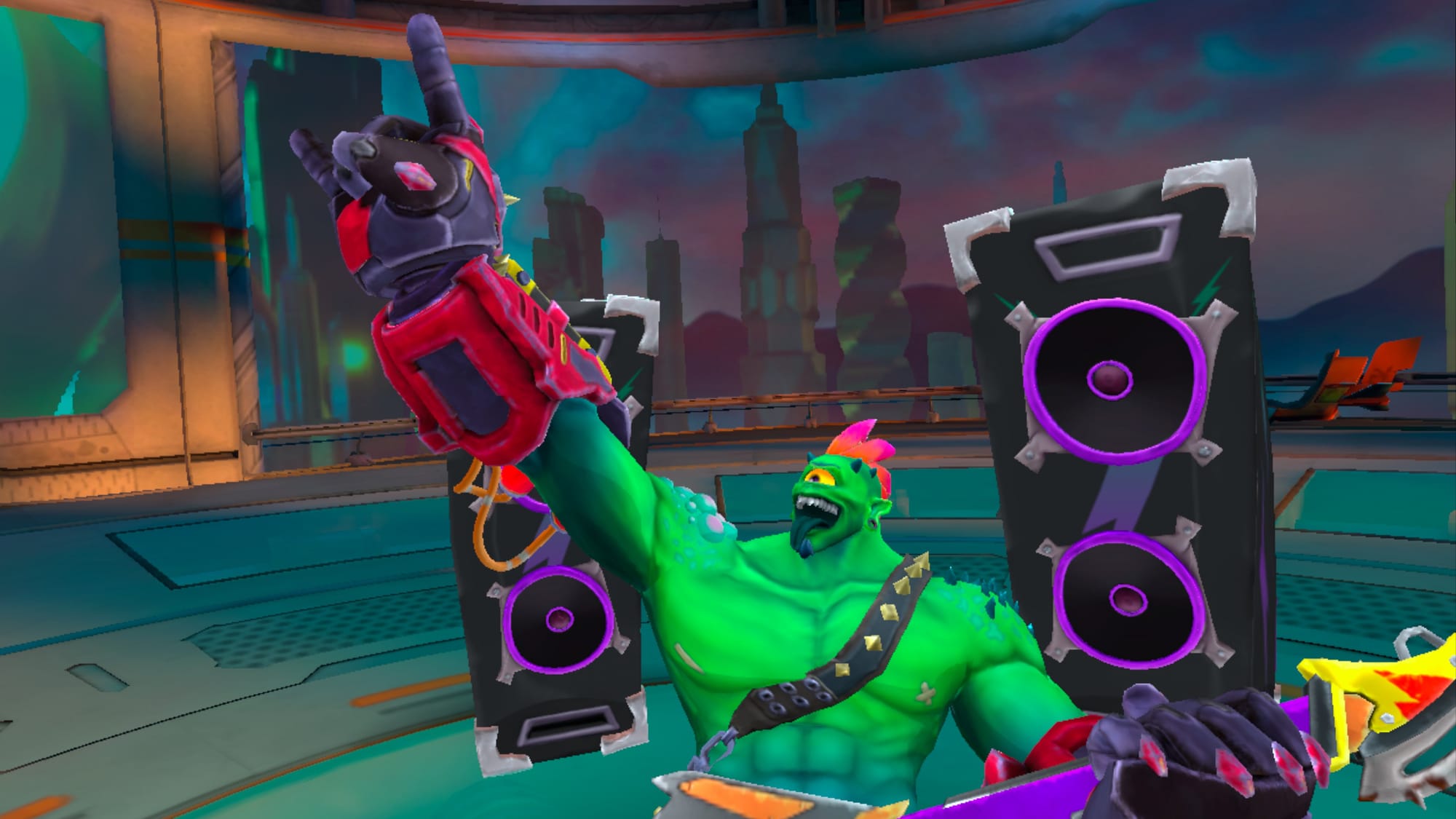
Each fighter currently only has two special moves, yet they’re nonetheless enough to distinguish each character as an archetype that fighting game fans will be familiar with. For instance, one-eyed metalhead Diesel’s Power Chord, which pulls opponents towards you, is perfect for a grappler with his high attack power. The robot Glitch’s projectile homing missiles and proximity mines are designed to keep opponents away, making him very much a zoner.

Opponent Gaia charging towards me to perform a throw, a light ring effect around her accentuating her charging motion.

It’s still missing some of the more intricate aspects of fighting games, like super moves or the ability to juggle. There’s no aerial attacks either, but there is sort of a combo system that counts up. As you land successive hits without taking damage, the damage you deal increases the higher that combo is. I suspect casual newcomers to the genre will actually be relieved Final Fury doesn’t have as many complex mechanics as most modern fighting games.

But as a fighting game fan who still regularly logs onto Street Fighter 6, I felt I was able to apply my understanding of the genre to matches in Final Fury; the strange result being that I gravitating towards grapplers a lot more than I normally would on a flatscreen experience. So, Final Fury has what it takes to capture the same thrill as a fighting game on a TV screen to VR. That’s especially when it comes to facing another human opponent online, which is where the fundamental appeal of fighting games lies after all.

Comfort

Final Fury can be played seated or standing. Due to the requirement of making hand gestures to perform moves, just make sure that if you’re playing seated you have room to do this in front of you, both high and low.

Under Comfort settings, there is also the option to adjust the size of the vignette effect to potentially reduce motion sickness, as well as the option to toggle haptic feedback in controllers on or off.

Arcade mode makes for a serviceable practice run, with unlockable new color palettes for fighters providing an incentive to replay at higher difficulties. However, nothing beats facing another player, trying to get a read on what they’re going to do next or trying to bait out a fatal error. Even though playing this pre-early access means there wasn’t much of a player pool to test out, it was still fun getting to grips with the mechanics while bodying Kluge’s poor marketing guy.

Diesel performing his victory pose playing with his electric guitar with two huge speakers behind him.

The ingredients for a solid VR fighting game are there, if admittedly a bit slim, as Final Fury currently only has six fighters (one being an unlockable fighter) with about half the commands you might expect a character in a flatscreen fighting game to have. That said, I can see more being added throughout the early access period. What’s important is that Kluge has set up a strong foundation that is approachable to newcomers while having the same kind of mechanical depth that will appeal to traditional fighting game players.

Final Fury is out now on PC and Quest for $9.99.

Lenovo’s Beastly Legion 9i Laptop Rocks An RTX 5090 And Dual-Mode 3D Display

Lenovo's Beastly Legion 9i Laptop Rocks An RTX 5090 And Dual-Mode 3D Display
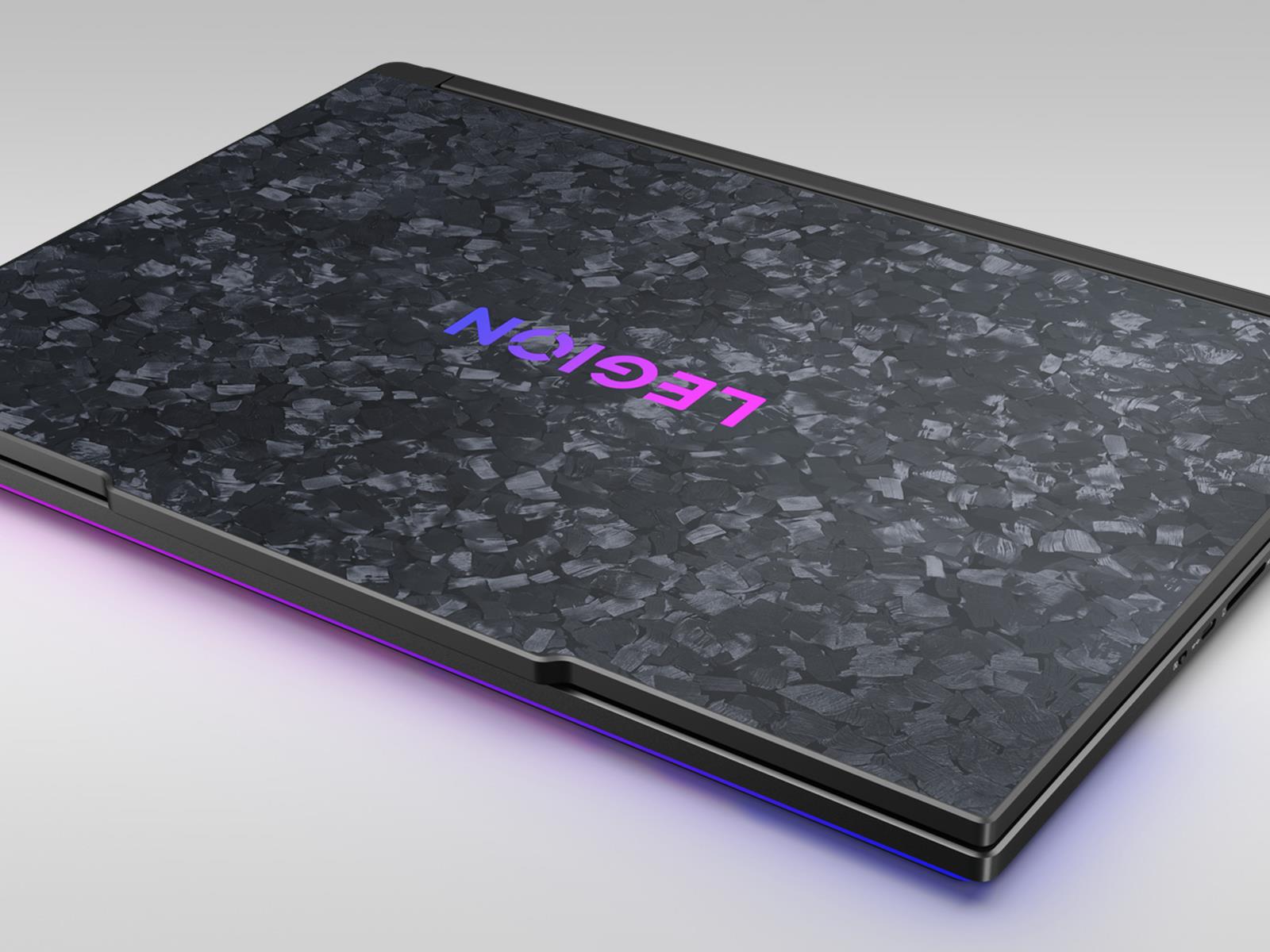
Folks, for those who care (like myself), the 18-inch laptop form factor is alive and well. Just ask Lenovo, which is rolling out a beast of a system in its new Legion 9i (18″, 10). Designed for both gamers and game developers (as well as power users in general), the upgraded Legion 9i can optionally be packed to the gills with flagship hardware,

Hauntify On Quest 3 Will Use Lasertag’s Continuous Scene Meshing

Hauntify on Quest 3 & 3S will use Lasertag’s continuous scene meshing system in an update set to arrive this summer.

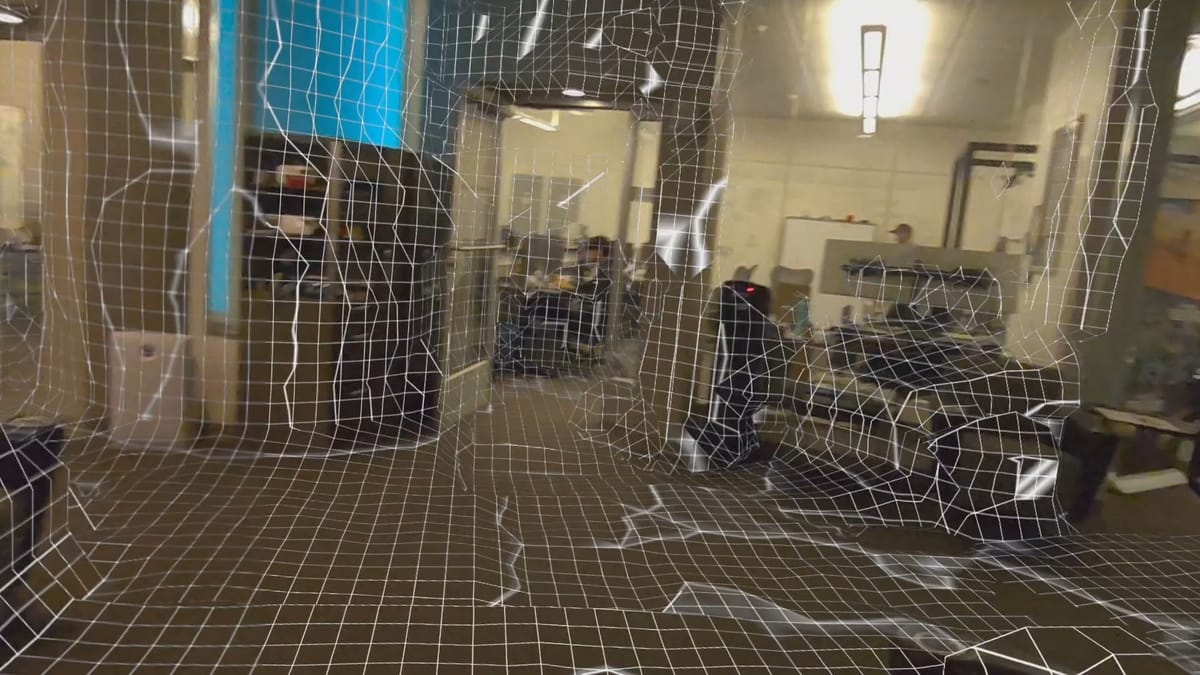
Last week, we highlighted how Lasertag’s developer Julian Triveri implemented continuous scene meshing on Quest 3 & 3S using the Depth API. This removes the need for the official mixed reality room setup process, and handles furniture and other objects being added, removed, or moving – even during gameplay.

A Developer Solved The Biggest Problem With Quest 3’s Mixed Reality
Lasertag’s developer implemented continuous scene meshing on Quest 3 & 3S, eliminating the need for the room setup process and avoiding its problems.
UploadVRDavid Heaney

As we mentioned in that article, Triveri made the source code for his technique available on GitHub for other developers to use. Now, the developer of Hauntify has decided to do so.

Today, the $7 Hauntify on Quest uses Meta’s official room setup system and guides you through how to ensure your scans for separate rooms can connect for a whole-home experience. While this does technically work, it’s often a lengthy process that leads some players to just give up and refund the game.

0:00

/1:00

Preview of the coming Hauntify update on Quest 3.

With the update, which the developer tells UploadVR is set to arrive “this summer”, the app will no longer use Meta’s official system at all, just like Lasertag. This will allow Hauntify to easily be used in large homes, across multiple floors, and even outdoors. It’ll also let you do things like close a door to hide from ghosts. This is already how the game already works on visionOS, leveraging Apple Vision Pro’s LiDAR-generated continuous scene mesh.

Assuming the update arrives by then, Hauntify could become an ideal Halloween 2025 demo of mixed reality on Quest 3 and Quest 3S.

While Julian Triveri’s technique does have a performance cost, the significant benefits mean we expect Hauntify will be one of many mixed reality apps to adopt it on Quest 3 this year. If you’re a developer planning to implement Triveri’s technique, reach out to UploadVR to let us know.

Garmin expects $100 million impact from Trump’s tariffs – with price rises possible – and more new features “likely” to be put behind Connect+ paywall

When Garmin announced its January-March 2025 earnings in a conference call to investment analysts on 30 April, the headlines focused on a revenue increase to $1.54 billion and a record Q1 operating income of $333m.

The latter represented a 12 per cent year-on-year uptick, and Garmin’s president and CEO, Cliff Pemble, described the results as “outstanding” and “a continuation of the positive business trends we’ve been experiencing over the longer-term”.

But under the top-line figures were some developments that could impact the huge base of cyclists who use the company’s products.

Price increases driven by Trump’s tariffs? 

Garmin Edge 1050 GPS computer for bikes
A significant number of Garmin products are made in its own factories outside the US and would be affected by tariffs. Scott Windsor / Our Media

As with many global businesses and many in the cycling industry, Garmin expects to be adversely affected by the tariffs imposed by US president Donald Trump, and the more complex trade structures that result.

“The global trade environment is very dynamic due to recent changes in U.S. trade policy, which is affecting every business, especially those with extensive global supply chains,” he said. “It appears that higher tariffs and more complex trade structures will be a normal part of business going forward.”

Pemble noted that around 25 per cent of Garmin’s US revenue comes from products made outside the US, primarily in Taiwan, that could be hit by tariffs. 

Around 40 percent of Garmin’s revenue is generated in currencies other than the US dollar, though, and a fall in the dollar’s value should help to increase its reported value.

Nevertheless, Pemble forecast a small reduction in demand for Garmin products, along with a $100m increase in the company’s costs. 

According to Pemble, that’s likely to result in price increases: “So we’re evaluating pricing not broadly, but specifically in context of each market and product line… there are cases where definitely, there’s room to have different pricing, and there’s other cases because… it’s more competitive and difficult to increase prices.”

He added: “We’re going to make sure that we maintain our market share and optimize our overall profit dollars in this environment.”

How this may affect the line-up of Garmin Edge bike computers is to be seen.

Garmin’s smartwatches are also relevant to cyclists – and particular those who want a multi-sport device, or one for everyday health tracking.

Much of Garmin’s business is also driven by smartwatches, with a 12 per cent gain in Garmin’s fitness business revenue to $385m and a 20 per cent gain for its outdoor segment to $438m, also driven primarily by adventure smartwatches.

Pemble had previously described 2024 as “a year of remarkable growth” for Garmin, with “strong demand” highlights for smartwatches (or ‘wearables’), in particular, and revenues increasing 31 per cent year-on-year in the three months to Christmas.

More paid-for features in Connect+?

Graphic showing Garmin Connect  app on smartphone.
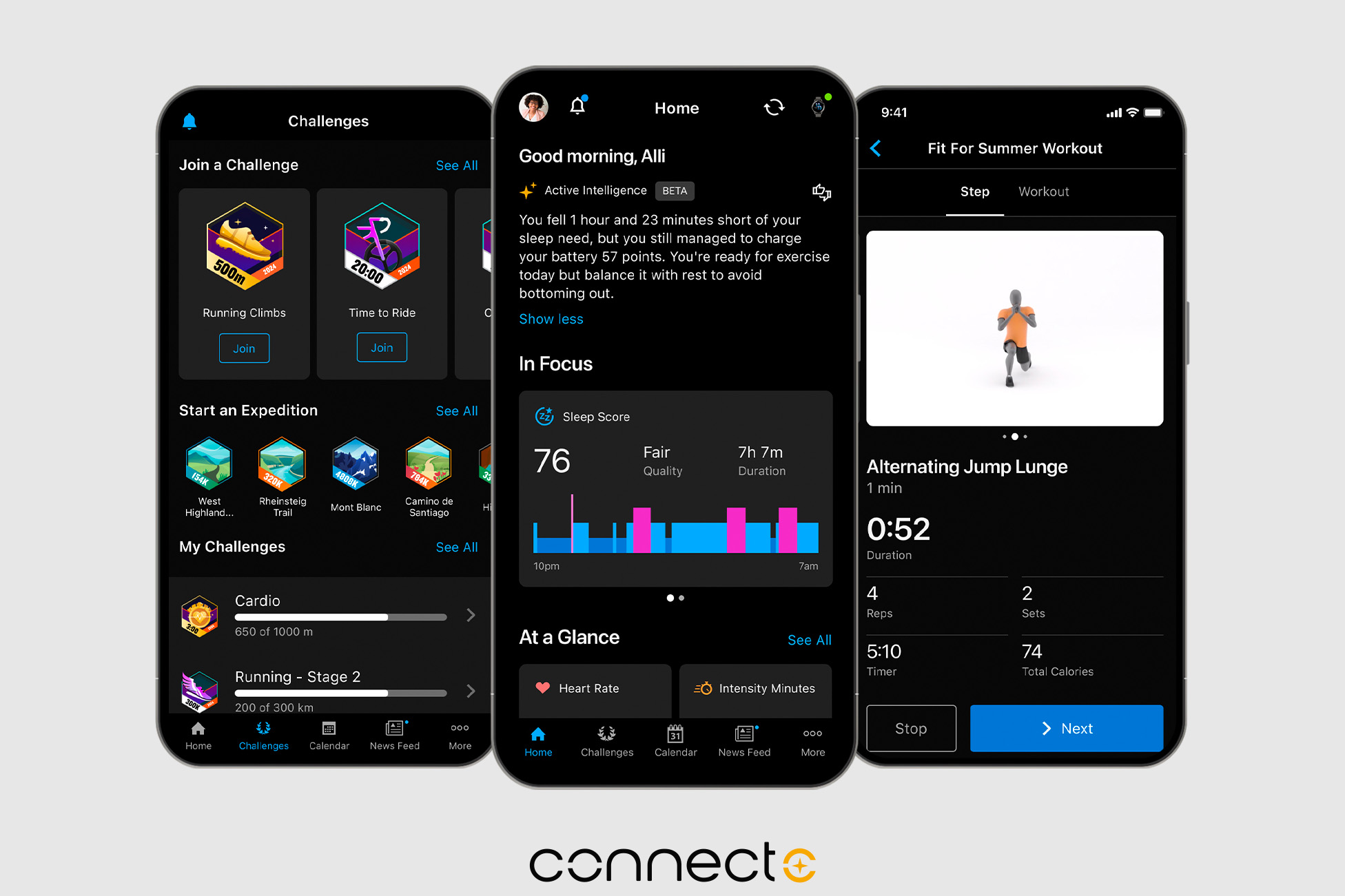
Garmin Connect already offers insights not available to non-paying Connect users. Garmin

With the hit on revenue from tariffs, Garmin is likely to be exploring other mitigating steps.

The company recently launched Connect+, a paid-for premium tier to the Connect app, which underpins its activity recording and offers analysis and insights.

According to Pemble: “Connect+ certainly isn’t required for users, and we’re not taking any features away from people that they’ve had, and we still have a strong commitment to develop Garmin Connect and our devices with broad features that are available to everyone.

“The certain ones, we will likely reserve for premium offerings and so far, the response has been positive. We’re not measuring success in terms of the short-term. This is a long-term thing for us, a very important part of our Fitness segment going forward. So we’re going to build on where we started.”

The net result for users of Garmin products is that the company is likely to enhance its paid-for features in Connect+ at the expense of new features in its free Garmin Connect service.

Strava has followed a similar route, where its leaderboards, analysis and other functionality including route planning are now available only to paying subscribers and new features are mainly confined to the paid-for tier, leaving Strava’s basic activity logging as the app’s main free-to-use feature.