Switzerland To Hold Referendum on Introducing Electronic ID

Switzerland will hold a national referendum on the introduction of electronic identity cards after opponents of the legislation secured enough signatures to force a public vote. The Federal Chancellery confirmed Wednesday that 55,344 valid signatures were submitted against the Federal Act on Electronic Identity passed last December.

The proposed e-ID would enable citizens to apply online for criminal record extracts, driving licenses, and age verification when purchasing alcohol. This marks the second referendum on e-ID implementation, after voters rejected a previous version in 2021. The government has revised its approach, making the new system free, optional, and fully state-operated rather than privately managed. If approved, the e-ID would come into force no earlier than 2026, though the collection effort suggests privacy concerns remain paramount for many Swiss voters.


Read more of this story at Slashdot.

Whoop Launches Its 5.0 and MG Hardware (and Adds Pricing Tiers)

We may earn a commission from links on this page.

After more than a week of teasing it on social media, Whoop has finally announced the release of its 5.0 device, along with a version called the “MG” (medical grade) that can do ECG readings and estimate blood pressure. Members can upgrade for a $49 fee or by extending their membership in one of the three new membership tiers: One ($199/year), Peak ($239/year, similar to current offerings) or Life ($359/year). 

Whoop is the screenless fitness tracker that earned four stars in my review of the 4.0 model for its integrated fitness and recovery tracking and its handling of strength training. It’s only available by subscription, with the hardware being sort of a bonus that comes with membership. That means upgrades to the hardware are handled a bit differently than for a device you outright purchase; more on that below. 

What’s in the Whoop 5.0

The 5.0 device looks a lot like the 4.0, but Whoop calculates that it is 7% smaller. This change means that straps and other accessories from the 4.0 won’t fit the new device. (Longstanding members with more than 1,500 recoveries will receive a “Milestone collection” box with extra bands.) 

The 5.0 has a 14-day battery life, the company says, more than double that of the 4.0. There is also a new power pack (the battery that you slide on to charge the device while you wear it). Only members of the Peak and Life tiers will get the wireless power pack; the lowest tier membership comes with a wired charger. 

Otherwise, the 5.0 hardware is similar to the previous edition, but with internal upgrades—a 60% faster processor, the company says, and “enhanced sensors.” 

The difference between the 5.0 and MG

The MG (“medical grade”) Whoop device adds the ability to take an ECG from your wrist, in much the same way as an Apple Watch or Fitbit (you’ll touch metal contacts with the fingers of your other hand while wearing it). 

The MG device comes with a Whoop Life membership, the most expensive tier at $359/year. 

What you get with each of the three membership tiers

The three new membership tiers are One ($199/year), Peak ($239/year), and Life ($359/year). One is a stripped-down membrership, Peak is similar to what Whoop users have right now, and Life is a new offering with extra health features. Here’s the breakdown: 

Whoop One ($199/year)

One is the budget membership. You get a wired charger instead of the wireless power pack, and a “CoreKnit” band, which seems to be a new material that isn’t as nice as the SuperKnit bands offered with the higher tiers.

If you downgrade to this level, you’ll lose a few features that Whoop members currently all get: the Health Monitor (with its readings of HRV, respiratory rate, resting heart rate, and skin temperature) or the Stress Monitor, which tells you in real time how much stress you seem to be under.

Whoop Peak ($239/year)

Peak is the most similar to the single subscription level that was offered with the 4.0, both in price and features. If your subscription renews without you choosing a tier, you’ll end up on Peak. 

You’ll also get the new Healthspan feature (coming soon) that tells you your “Whoop age” and your “pace of aging,” and gives recommendations to improve those metrics. 

Whoop Life ($359/year)

Life is the top tier membership, and comes with the MG rather than 5.0 hardware. It includes everything in Peak, including the Healthspan feature. 

With the MG you’ll be able to take ECG readings, and Whoop is also introducing a feature (currently in beta) to estimate your blood pressure. You’ll need to calibrate it with readings from a blood pressure cuff to start using it. 

How upgrades to the Whoop 5.0 or MG will work

If you’re currently a Whoop member, and were looking forward to upgrading your hardware for free (as the Whoop FAQ states), here’s the fine print. 

Whoop tells me that members who pay for another 12 months of membership will get the 5.0 (or MG) hardware for free. So if you’re six months into your current membership, you can buy a 12-month extension, thus having 18 months left on your membership, and get a new device. 

If you don’t want to extend your membership, you can opt to pay a $49 upgrade fee to get the 5.0 device to use on your current membership term. 

Whoop says that when you upgrade, they’ll send you a “gift kit” that you can use to pass along your old 4.0 device to a friend. It includes a sanitizing wipe and a fresh SuperKnit band. 

What if I don’t upgrade? 

Whoop memberships will still work with the 4.0 device, and you’ll still get access to everything the Peak membership offers, including the new Healthspan feature when it comes out. If your membership renews without you choosing a tier, you’ll be rolled into the Peak membership. 

Updated 5/8/2025 at 3:30pm to note that the age metric is called “Whoop age” and not “fitness age.”

Zuckerberg’s Grand Vision: Most of Your Friends Will Be AI

Meta CEO Mark Zuckerberg is aggressively promoting a future where AI becomes the dominant form of social interaction, claiming that AI friends, therapists, and business agents will soon outnumber human relationships. During a recent media blitz across multiple podcasts and a Stripe conference appearance, Zuckerberg cited statistics suggesting “the average American has fewer than three friends” while claiming people desire “meaningfully more, like 15 friends” — positioning AI companions as the solution to this gap.

The Meta founder’s vision extends beyond casual interaction to therapeutic and commercial relationships, with personalized AI that “has a deep understanding of what’s going on in this person’s life.” Meta has already deployed its AI across Instagram, Facebook, and Ray-Ban smart glasses, reaching nearly a billion monthly users.


Read more of this story at Slashdot.

The Blink Outdoor 4 Floodlight Camera Is at Its Lowest Price Ever

We may earn a commission from links on this page. Deal pricing and availability subject to change after time of publication.

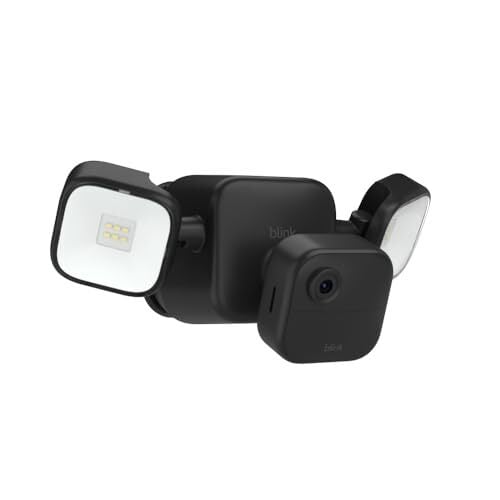
If you’ve been meaning to add a security camera to your backyard, driveway, or any dimly lit spot around the house, the Blink Outdoor 4 Floodlight Camera might be the kind of no-fuss solution that works. It’s battery powered, which makes it a standout for renters or anyone who doesn’t want to mess with wiring or hiring an electrician. And at $64.99 on Amazon—down from $129.98—it’s currently sitting at its lowest price to date (according to price-trackers), making it easier to justify trying out a new piece of tech without overcommitting.

You’re looking at a completely wire-free setup with motion-triggered floodlights and a built-in camera—all powered by four D-cell batteries and two AAs (meaning it can go pretty much anywhere wifi reaches). That alone makes it worth considering if you’ve got areas around your home where power outlets just don’t exist, notes this ZDNet review. The floodlight automatically turns on when it detects motion, shining up to 700 lumens—plenty to light up dark driveways, side yards, or alleyways. The camera itself captures 1080p video with infrared night vision, and according to PCMag’s review, it handled detection pretty well, especially once fine-tuned in the app.

Keep in mind, Blink’s full set of features—like cloud storage, video history, and smart alerts—are tied to its subscription plans, which start at $3 per month for one device and $10 per month for unlimited devices. A free 30-day trial is included (so you can test out those features without pressure), but after that, you’ll need to pay if you want ongoing access to clips and advanced features. You can also store your clips locally by connecting a USB flash drive (sold separately) to the included Sync Module 2. If you’re looking for something with constant recording or a wired connection for uninterrupted power, this isn’t the pick for you. But if you’re piecing together an affordable, wire-free security setup, this one has the basics covered.

Elon Musk is responsible for “killing the world’s poorest children,” says Bill Gates

Billionaire philanthropist Bill Gates ratcheted up his feud with Elon Musk, accusing the world’s richest man of “killing the world’s poorest children” through what he said were misguided cuts to US development assistance.

Gates, who is announcing a plan to accelerate his philanthropic giving over the next 20 years and close down the Gates Foundation altogether in 2045, said in an interview that the Tesla chief had acted through ignorance.

In February, Musk’s so-called Department of Government Efficiency (Doge) in effect shut down the US Agency for International Development, the main conduit for US aid, saying it was “time for it to die.”

Read full article

Comments

Ghost Students Are Creating an ‘Agonizing’ Problem For California Colleges

An anonymous reader quotes a report from SFGATE: When the pandemic upended the world of higher education, Robin Pugh, a professor at City College of San Francisco, began to see one puzzling problem in her online courses: Not everyone was a real student. Of the 40 students enrolled in her popular introduction to real estate course, Pugh said she’d normally drop three to five from her roster who don’t start the course or make contact with her at the start of the semester. But during the current spring semester, Pugh said that number more than doubled when she had to cut 11 students. It’s a strange new reality that has left her baffled. “It’s really unclear to me, and beyond the scope of my knowledge, how this is really happening,” she said. “Is it organized crime? Is it something else? Everybody has lots of theories.”

Some of the disengaged students in Pugh’s courses are what administrators and cybersecurity experts say are “ghost students,” and they’ve been a growing problem for community colleges, particularly since the shift to online instruction during the pandemic. These “ghost students” are artificially intelligent agents or bots that pose as real students in order to steal millions of dollars of financial aid that could otherwise go to actual humans. And as colleges grapple with the problem, Pugh and her colleagues have been tasked with a new and “frustrating” task of weeding out these bots and trying to decide who’s a real person.

The process, she said, takes her focus off teaching the real students. “I am very intentional about having individualized interaction with all of my students as early as possible,” Pugh said. “That included making phone calls to people, sending email messages, just a lot of reaching out individually to find out ‘Are you just overwhelmed at work and haven’t gotten around to starting the class yet? Or are you not a real person?'” Financial aid fraud is not new, but it’s been on the rise in California’s community colleges, Cal Matters reported, with scammers stealing more than $10 million in 2024, more than double the amount in 2023.
Wendy Brill-Wynkoop, the president of the Faculty Association of California Community Colleges and a professor at College of the Canyons in Santa Clarita, said the bots have been enrolling in courses since around early 2021.

“It’s been going on for quite some time,” she said. “I think the reason that you’re hearing more about it is that it’s getting harder and harder to combat or to deal with.” A spokesperson for the California Community Colleges Chancellor’s Office estimates that 0.21% of the system’s financial aid was fraudulently disbursed. However, the office was unable to estimate the percentage of fraudulent attempts attributed to bots.


Read more of this story at Slashdot.

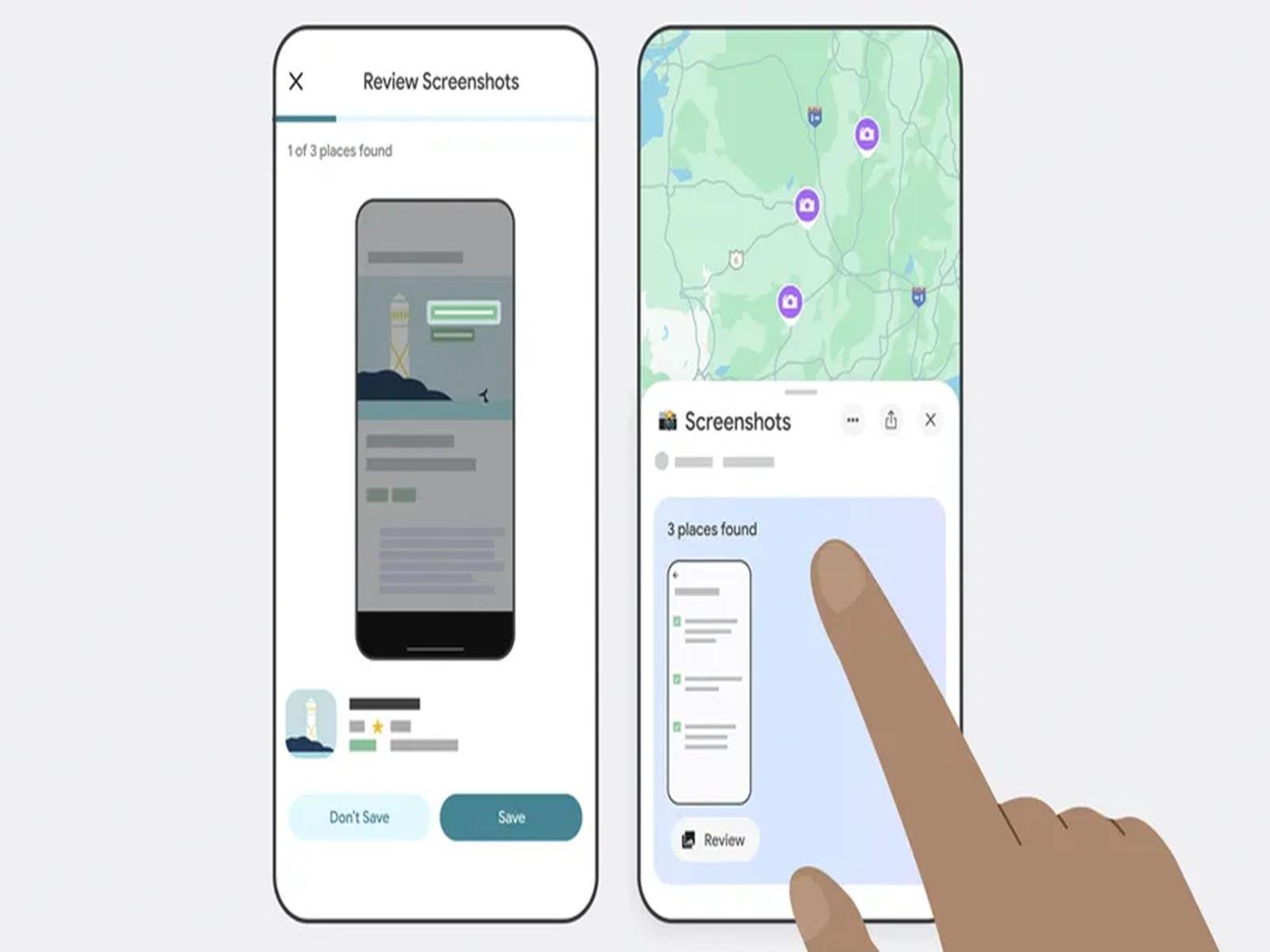
Google Maps Now Lets You Save Screenshots For Easier Trip Planning, Here’s How

Google Maps Now Lets You Save Screenshots For Easier Trip Planning, Here's How
If you love travelling and exploring new places, Google has added a new feature to Google Maps that could make your planning much easier. Google Maps can now use information gathered from screenshots to help you create a list of treasured hangouts and travel destinations.

Perhaps you are considering exploring a new place and have the name

Everdream Valley VR Builds A New Farm On Quest Next Week

Flatscreen farming game Everdream Valley is getting a VR adaptation next week on Quest.

Created in collaboration with Mooneaters, Ovid Works and Pixel Gaze, Everdream Valley VR is bringing the 2023 flatscreen game to Quest 2, Pro, 3, and 3S. Playing as a kid visiting your grandparents’ countryside farm, you find yourself focusing on taking care of the various animals and connecting with nature. Here’s the announcement trailer.

Your regular farm life in Everdream Valley VR consists of multiple activities. Alongside befriending and petting these animals that range between cats, chickens, ducks and cows, this includes planting crops, fishing, cooking up your own homemade meals, and creating your structures across this world.

We’ve seen a few farming sims in VR across the years, most of which lean more towards the cartoonish side. Farming Simulator VR is the major exception and perhaps the most recent high-profile title to appear on Quest, while older titles include Neat Corporation’s Garden of the Sea and Across The Valley with its hand-drawn art style.

Everdream Valley VR heads to the Meta Quest platform on May 15.

Maintainer of Linux Distro AnduinOS Revealed to Be Microsoft Employee

After gaining attention from Neowin and DistroWatch last week, the sole maintainer behind AnduinOS 1.3 — a Linux distribution styled to resemble Windows 11 — decided to reveal himself. He turns out to be Anduin Xue, a Microsoft software engineer, who has been working on the project as a personal, non-commercial endeavor built on Ubuntu. Neowin reports: As a Software Engineer 2 at Microsoft (he doesn’t work on Windows), Anduin Xue says he’s financially stable and sees no need to commercialize AnduinOS. Explaining the financial aspects of the project, he said: “Many have asked why I don’t accept donations, how I profit, and if I plan to commercialize AnduinOS. Truthfully, I haven’t thoroughly considered these issues. It’s not my main job, and I don’t plan to rely on it for a living. Each month, I dedicate only a few hours to maintaining it. Perhaps in the future, I might consider providing enterprise solutions based on AnduinOS, but I won’t compromise its original simplicity. It has always been about providing myself with a comfortably themed Ubuntu.”

In our coverage of the AnduinOS 1.3 release last week, one commenter pointed out that the distro is from China. For some, this will raise issues, but Anduin Xue addressed this in his blog post, too, saying that the source code is available to the public. For this reason, he told lacing the operating system with backdoors for the Chinese government would be “irrational and easily exposed.” For those worried that the distribution may be abandoned, Anduin Xue said that he intends to continue supporting it and may even maintain it full-time if sponsorship or corporate cooperation emerges.


Read more of this story at Slashdot.

[$] A FUSE implementation for famfs

The famfs
filesystem is meant to provide a shared-memory filesystem for large data
sets that are accessed for computations by multiple systems. It was
developed by John Groves, who led a combined filesystem and
memory-management session at
the 2025 Linux Storage, Filesystem, Memory
Management, and BPF Summit (LSFMM+BPF) to discuss it. The session was a
follow-up to the famfs session at last year’s
summit
, but it was also meant to discuss whether the kernel’s direct-access (DAX)
mechanism, which is used by famfs, could be replaced in the filesystem
by using other kernel features.

Can wearable tech help you live longer? WHOOP says its new 5.0 and MG devices can

WHOOP has released the WHOOP 5.0 and WHOOP MG wearable fitness trackers, each featuring a 7 per cent smaller form factor, enhanced sensors and a redesigned processor for better power efficiency.

The wearables brand has also introduced new features to its health-tracking app, including Healthspan with WHOOP Age, Heart Screener with on-demand ECG, and Blood Pressure Insights.

The brand claims this marks a breakthrough in health and longevity, with Will Ahmed, founder & CEO, saying: “We’ve taken everything we’ve learned over the past decade and built a platform to help our members perform and live at their peak for longer. We’ve held nothing back.”

WHOOP Age has been developed in partnership with Dr Eric Verdin, CEO of the Buck Institute for Research on Ageing. It is claimed to enable you to quantify your physiological age and slow your pace of ageing.

Whoop 5.0
Unlike smartwatches, WHOOP’s wearables don’t feature a display. WHOOP

The brand has also introduced three new membership tiers that are said to empower members to choose the hardware device, features and pricing that make the most sense for them.

WHOOP One is the entry level, priced at £169 a year, WHOOP Peak sits above that at £229 a year, and WHOOP Life – which is said to deliver medical-grade health and performance insights – is priced at £349 per year.

Smaller hardware

WHOOP MG
The new wearables are said to be 7 per cent smaller than before. WHOOP

Thanks to the faster processor, WHOOP says the new 5.0 and MG now have a battery life of 14 days or longer.

This, combined with a new wireless powerpack, is said to give users a full month of battery life. 

Whoop 5.0 leatherluxe
A more bijoux bracelet can be had. WHOOP

The brand says there is an ‘elevated’ selection of accessories, with a new LeatherLuxe bracelet made from Italian leather.

Whoop Body
WHOOP can be attached to clothing, such as sports bras. WHOOP

WHOOP has also given the devices its Body and AnyWear technology, which enables you to attach the device to any part of your body using technical garments sold by the brand.

New in-app features

Whoop health monitor
The app features new metrics and insights. WHOOP

WHOOP has been trying hard to appeal to the cycling market over the past couple of years, becoming the title partner of the UCI Mountain Bike World Series and sponsoring the Tour de France.

Whoop Age
WHOOP says insights into your daily habits can enable you to impact your pace of ageing. WHOOP

While the wearable devices don’t show data in the same way as the best bike computers or cycling watches, many riders and athletes have chosen to wear one for other insights.

New updates to the app include the following features:

  • Healthspan with WHOOP Age: This gives insights and guidance on how your daily habits impact your long-term health with Healthspan. It is said to use nine metrics to work out your WHOOP Age and pace of ageing.
  • Heart Screener with ECG: An FDA-cleared ECG feature that enables a reading to be taken at any time, from your wrist. The Heart Screener detects signs of Atrial Fibrillation, a cause of strokes, and provides Irregular Heart Rhythm notifications.
  • Blood Pressure Insights: Daily blood pressure insights and estimated systolic and diastolic readings.
  • Women’s Hormonal Insights: Personalised insights on how hormonal shifts influence recovery, sleep, stress and performance, whether navigating menstruation, pregnancy or perimenopause.
  • Sleep Performance update: Reimagined Sleep Score delivers a more accurate reflection of sleep quality.
  • Comprehensive Fitness Tracking: From daily steps and VO₂ max to muscular strain during strength training and 145+ supported activities, members can now optimise fitness for both performance and long-term health outcomes.
  • WHOOP Advanced Labs: When released, Advanced Labs will enable members to schedule blood tests and receive clinician reports that are integrated directly into the WHOOP app