How to watch the Giro d’Italia 2025 | Global options for live TV, streaming and highlights

The 108th Giro d’Italia is here, starting on Friday 9 May with a road stage in Albania, followed by a 13.7km time trial on Saturday and another road stage in Albania, before returning to Italy for the remaining 18 stages, finishing in Rome on Sunday 1 June. There’s a second individual time trial on Stage 10, covering 28.6km.

The route covers 3,443km and more than 52km vertically, significantly more than 2024’s 45km, so expect some big climbing days, as usual concentrated in the final week. Stage 19 has 4,950m of altitude gain and Stage 20 has 4,500m, so there’s a double dose of tough days right at the end.

In past years, the last few stages have often mixed up the overall general classification, keeping the GC racing interesting right up to the final stage.

The 2025 Giro’s start in Albania is a first for a grand tour. Giro d’Italia

Tadej Pogačar isn’t defending his title this year, but top pick for the overall win must be the Red Bull-Bora hansgrohe team, which boasts both 2023 winner Primož Roglič and 2022 winner Jai Hindley on its roster. Ineos Grenadiers is fielding 2021 winner Egan Bernal as co-leader, so there’s a crowded field of former maglia rosa wearers.

How can I watch the Giro d’Italia 2025 live in the UK?

Early-season weather in Italy can be a handicap for riders. Giro d’Italia

TNT Sports has live and on-demand coverage of each day’s racing, including multiscreen options. There’s a full schedule here. There is also pre- and post-stage analysis in The Breakaway and hour-long daily highlights at 8pm.

TNT Sports is available via the Discovery+ app, EE TV, Sky and Virgin Media, and can be viewed on a range of platforms, including tablets, mobile, TV with Chromecast or AirPlay, Android TV and Apple TV.

In a first for UK viewers, there are also free-to-air highlights on Quest, available via Freeview, with TNT’s highlights show typically broadcast on Quest at 7pm.

How else can I watch the 2025 Giro d’Italia when I’m outside the UK?

A Virtual Private Network (VPN) is software that enables you to change your device’s IP address, making it appear as though you’re accessing the internet from another country.

As long as you adhere to your broadcaster’s terms and conditions, a VPN enables you to unblock your usual streaming services, no matter your location. Additionally, a VPN can improve playback speeds and significantly enhance your overall internet security.

There are many VPN options available, but we recommend NordVPN as the best choice. It offers strong streaming capabilities, robust security features, and excellent value for money.

*At BikeRadar (published by Our Media Limited), we review VPN services to help you access online content and services securely while you’re on the go. This includes activities such as streaming your favourite TV shows, live web content or using apps from different countries (provided it’s okay with the service provider’s terms and conditions). It’s important to note: BikeRadar does not endorse or support the use of VPN services for illegal or malicious activities, such as accessing paid-for pirated content. Please ensure you enjoy online content responsibly.

How can I watch the Giro d’Italia 2025 live in the US?

This year, Giro coverage will be on Max in the US . A subscription costs from $9.99 per month or $79.99 per year, or you can escape the ads with plans from $16.99 / $139.99.

As usual, there’s a wide range of platforms supported, on-demand coverage and, with premium subscriptions, the option to download.

Canadian watchers can access Giro coverage on FloSports.

How can I watch the Giro d’Italia 2025 live in Australia?

The 2025 Giro finishes in Rome after 3,443km. Luca Bettini/Getty Images

SBS will be offering free coverage of the Giro d’Italia live and on demand on SBS Viceland and SBS On Demand. Typical start times are around 9pm AEST and there are also daily highlights.

How else can I watch the Giro d’Italia 2025?

There’s live terrestrial coverage in many European countries, with Italian chain Rai showing the racing live on Rai Sport (times TBA), and on Rai Play for on-demand access. If you have a VPN, you may be able to sign in to watch, complete with Italian commentary to get the full Giro experience.

There’s a full list of broadcasters by country on the Giro d’Italia’s site here.

How can I watch the Giro d’Italia 2025 if I can’t watch live coverage?

YouTube is a good option if you want shorter highlights and you don’t have on-demand access to any of the above sources. You can also watch short highlight videos on the Giro d’Italia site.

Both are also good sources for highlights of previous editions to get you geared up for the racing.

How Tech Is Transforming the Day-to-Day Life of Personal Trainers

Personal trainers might seem like the last professionals to need digital tools in an industry built on human performance. But the truth is that technology is rapidly transforming how PTs work—streamlining tasks, enhancing client experiences, and opening new revenue opportunities. Whether you’re just starting out or a seasoned trainer looking to evolve, embracing tech can elevate your career and your client results.

1. Client Management Made Simple

Juggling paper diaries, handwritten programmes, and scattered check-ins is quickly becoming a thing of the past. Today, some of the best apps for online coaches, including Trainerize, TrueCoach, and My PT Hub—make managing your entire client base in one place easy. Everything is streamlined through a centralised platform, from delivering workouts and tracking progress to uploading videos and chatting with clients.

Many of these tools also include features like automated scheduling, billing, and habit tracking, cutting down on admin time so you can focus more on coaching and less on chasing payments or managing spreadsheets.

2. Wearables & Real-Time Data

Fitness wearables like Apple Watch, Fitbit, Garmin, and WHOOP have redefined accountability and data insight. Clients can track heart rate, sleep, steps, calories burned, and even recovery status. PTs can use this data to adjust training intensity, understand patterns, and deliver more personalised programmes.

For example, if a client has poor sleep data or a high resting heart rate, you might reduce the session intensity or switch to mobility work. This type of reactive programming builds trust and shows clients you’re truly tuned in.

3. AI-Powered Progress Tracking

AI isn’t here to replace personal trainers—but it is here to enhance your toolkit.

Some platforms now use AI to analyse client data, flag issues, suggest workout tweaks, or automate check-in emails. AI-enabled apps like Freeletics and Fitbod can generate innovative workouts based on goals and performance history.

For PTs, this means:

  • Less time spent programming from scratch
  • More consistency in check-ins
  • Faster responses to client changes or feedback

And for clients? A smoother, more supportive experience that keeps them engaged between sessions.

4. Marketing & Content Creation with AI

Building a strong personal brand is key for any modern PT—and AI tools are making this easier than ever.

Apps like Canva, ChatGPT, and Lumen5 allow you to create social media posts, blogs, reels, and email campaigns in minutes, not hours. You can use AI to:

  • Write weekly newsletters
  • Generate SEO-optimised blog articles
  • Draft Instagram captions and hashtags
  • Create engaging workout video scripts

Instead of paying an agency or spending hours designing posts, PTs can now maintain a consistent online presence with minimal effort.

5. Virtual Coaching & Global Reach

Tech has removed geographical barriers. With Zoom, Loom, WhatsApp, and custom coaching platforms, personal trainers can now work with clients anywhere in the world.

Live-streamed workouts, form check-ins via video, or on-demand programs give you multiple ways to deliver value remotely. You can even run group challenges or set up online courses, generating recurring income without needing to be in the gym 12 hours a day.

This is a game-changer for aspiring PTS. You no longer need a physical base or expensive premises to start your business—you just need a laptop and an internet connection.

6. Better Goal Setting & Analytics

Progress matters—and tech helps you measure it with precision. Body composition apps, integrated spreadsheets, automated progress charts, and milestone tracking tools make it easier to quantify success.

Many PT software platforms allow you to:

  • Set SMART goals with clients
  • Visualise progress graphs
  • Export reports for check-ins
  • Track nutrition alongside training

This visual feedback not only motivates clients but also helps you demonstrate your impact—key for retaining clients and winning referrals.

Final Thoughts

Technology isn’t replacing the personal trainer—it’s enhancing what you can offer. From streamlining admin to scaling your business, tech tools free up your time, help you stay organised, and allow you to deliver better client outcomes.

If you’re an aspiring PT, learning these tools will give you a head start. If you’re already working in the industry, embracing tech is no longer optional—staying competitive and growing is essential.

The future of personal training is hybrid, data-driven, and digitally empowered. The sooner you plug in, the faster your business and your impact will grow.

Written by Adam Eaton

Instagram’s AI Chatbots Lie About Being Licensed Therapists

Instagram’s AI chatbots are masquerading as licensed therapists, complete with fabricated credentials and license numbers, according to an investigation by 404 Media. When questioned, these user-created bots from Meta’s AI Studio platform provide detailed but entirely fictional qualifications, including nonexistent license numbers, accreditations, and practice information.

Unlike Character.AI, which displays clear disclaimers that its therapy bots aren’t real professionals, Meta’s chatbots feature only a generic notice stating “Messages are generated by AI and may be inaccurate or inappropriate” at the bottom of conversations.


Read more of this story at Slashdot.

Pinball FX VR Gets Tomb Raider DLC Next Month

Pinball FX VR’s new Tomb Raider DLC lands next month with two new pinball tables centred around the famous adventuring archaeologist Lara Croft.

Developed by Zen Studios, Pinball FX VR is adding two new tables with its Tomb Raider DLC pack. The tables, called Tomb Raider Pinball: Adventures of Lara Croft and Tomb Raider Pinball: Secrets of Croft Manor, reimagine key features like locations and characters from Crystal Dynamics’ Tomb Raider series as complex obstacles for players to pinball through.

0:00

/0:55

The Adventures of Lara Croft table features location set pieces from Tibet, Peru and China, offering challenges such as classic trapdoors and ramps, as well as a balance-testing tilt field. The Secrets of Croft Manor board, on the other hand, centres around the eponymous manor, providing you an opportunity to flip and aim their way through combat and agility challenges to uncover secret zones hidden within the board.

This isn’t the first DLC Pinball FX VR has seen, with the simulator offering more dynamic boards from other iconic IPS like Star Trek, Indiana Jones and The Addams Family. Pinball FX VR’s Tomb Raider Pinball DLC pack will be available on Quest from June 19, and pricing is currently unconfirmed.

SpaceX Gets Approval To Sell Starlink In India

schwit1 shares a report from Behind The Black: Almost immediately after India’s government issued this week new tightened regulations for allowing private satellite constellations to sell their services in India, it also apparently completed negotiations with SpaceX to allow it to sell Starlink in India based on these rules. Business Today reports: “According to sources, the DoT [Department of Transportation] granted the LoI [Letter of Intent] after Starlink accepted 29 strict security conditions, including requirements for real-time terminal tracking, mandatory local data processing, legal interception capabilities, and localisation of at least 20% of its ground segment infrastructure within the first few years of operation.
Starlink’s nod came amid heightened national security sensitivities, coinciding with India’s pre-dawn Operation Sindoor strikes on terror camps across the border in response to the Pahalgam massacre. However, DoT officials clarified that the decision to approve Starlink was independent of these military developments.” At the moment SpaceX’s chief competitors, OneWeb and Amazon’s Kuiper constellation, have not yet obtained the same permissions. This allows SpaceX to grab a large portion of the market share in India before either of these other companies.


Read more of this story at Slashdot.

Celsius CEO Mashinsky Sentenced To 12 Years in Multi-Billion-Dollar Crypto Fraud Case

Alexander Mashinsky, the former CEO of Celsius Network, was sentenced to 12 years in prison on Thursday after pleading guilty to two counts of fraud, a dramatic fall for the leader of a company once hailed as the “bank” of the crypto industry. From a report: Standing before U.S. District Judge John G. Koeltl in Manhattan’s Southern District, Mashinsky faced the consequences of what prosecutors described as a sweeping scheme to defraud investors. In December he pleaded guilty to commodities fraud and a scheme to manipulate the Celsius token.

His sentencing took place in courtroom 14A at 500 Pearl Street — a venue that has seen several crypto executives-turned-felons. Mashinsky’s legal troubles began in 2023 when he was arrested on charges of securities, commodities, and wire fraud, just as Celsius reached a $4.7 billion settlement with the Federal Trade Commission — one of the largest in the FTC’s history.


Read more of this story at Slashdot.

NOAA Retires Extreme Weather Database

An anonymous reader quotes a report from CNN: The National Oceanic and Atmospheric Administration announced Thursday its well-known “billion-dollar weather and climate disasters” database “will be retired,” a move that will make it next to impossible for the public to track the cost of extreme weather and climate events. The weather, climate and oceans agency is also ending other products, it has recently announced, due in large part to staffing reductions. NOAA is narrowing the array of services it provides, with climate-related programs scrutinized especially closely.

The disasters database, which will be archived but no longer updated beyond 2024, has allowed taxpayers, media and researchers to track the cost of natural disasters — spanning extreme events from hurricanes to hailstorms — since 1980. Its discontinuation is another Trump-administration blow to the public’s view into how fossil fuel pollution is changing the world around them and making extreme weather more costly. […]

The database vacuums loss information from throughout the insurance industry, among other public and private sources. According to the database, there were 403 weather and climate disasters totally at least $1 billion in the United States since 1980, totaling more than $2.945 trillion. As of April 8, there had not been any confirmed billion-dollar disasters so far in 2025, but it lists four events as having the potential to make the tally, including the Los Angeles-area wildfires in January. Between 1980 and 2024, there were nine such disasters on average each year, though in the past five years, that annual average has jumped to 24. The record for one year was 28 events in 2023. “What makes this resource uniquely valuable is not just its standardized methodology across decades, but the fact that it draws from proprietary and non-public data sources (such as reinsurance loss estimates, localized government reports, and private claims databases) that are otherwise inaccessible to most researchers,” Jeremy Porter, head of climate implications for and co-founder of First Street, a climate risk financial modeling firm, told CNN via email.

“Without it, replicating or extending damage trend analyses, especially at regional scales or across hazard types, is nearly impossible without significant funding or institutional access to commercial catastrophe models.”


Read more of this story at Slashdot.

Alibaba’s ZeroSearch Teaches AI To Search Without Search Engines, Cuts Training Costs By 88%

Alibaba Group researchers have developed “ZeroSearch,” a technique that enables large language models to acquire search capabilities without using external search engines during training. The approach transforms LLMs into retrieval modules through supervised fine-tuning and employs a “curriculum-based rollout strategy” that gradually degrades generated document quality.

In tests across seven question-answering datasets, ZeroSearch matched or exceeded the performance [PDF] of models trained with real search engines. A 7B-parameter retrieval module achieved results comparable to Google Search, while a 14B-parameter version outperformed it. The cost savings are substantial: training with 64,000 search queries using Google Search via SerpAPI would cost approximately $586.70, compared to just $70.80 using a 14B-parameter simulation LLM on four A100 GPUs — an 88% reduction.

The technique works with multiple model families including Qwen-2.5 and LLaMA-3.2. Researchers have released their code, datasets, and pre-trained models on GitHub and Hugging Face, potentially lowering barriers to entry for smaller AI companies developing sophisticated assistants.


Read more of this story at Slashdot.

Trump To End Biden-Era High-Speed Internet Program

President Trump on Thursday attacked a law signed by President Joe Biden aimed at expanding high-speed internet access, calling the effort “racist” and “totally unconstitutional” and threatening to end it “immediately.” The New York TimesL: Mr. Trump’s statement was one of the starkest examples yet of his slash-and-burn approach to dismantling the legacy of his immediate predecessor in this term in office. The Digital Equity Act, a little-known effort to improve high-speed internet access in communities with poor access, was tucked into the $1 trillion bipartisan infrastructure bill that Mr. Biden signed into law early in his presidency.

The act was written to help many different groups, including veterans, older people and disabled and rural communities. But Mr. Trump, using the incendiary language that has been a trademark of his political career, denounced the law on Thursday for also seeking to improve internet access for ethnic and racial minorities, raging in a social media post that it amounted to providing “woke handouts based on race.”


Read more of this story at Slashdot.

Apple Is Reportedly Making A Custom Chipset For Its Smart Glasses

Apple is making progress on a custom chip for its smart glasses, Bloomberg’s Mark Gurman reports, with production set for late 2026 or early 2027.

Gurman, who has a strong track record of reporting on Apple products in advance of an official reveal, has previously said that Apple plans a Ray-Ban Meta glasses competitor for 2027, with a similar focus on visual multimodal AI, which Apple currently calls Visual Intelligence on iPhone 16 and iPhone 15 Pro.

In a new report today, Gurman says Apple is set to begin mass production of a new chipset for the glasses in late 2026 or in 2027. This chip will be based on the highly efficient S-series chips used in Apple Watch, he writes, with support for “multiple cameras”.

Apple Is Still Working On MicroLED Displays For AR Glasses
Apple is reportedly still developing microLED displays for AR glasses, but an actual product won’t be ready until 2028 at the earliest.
UploadVRDavid Heaney

Apple is also working on true AR glasses too, Gurman again reports, but these are much further out.

Last month Gurman claimed that Tim Cook is “hell-bent” on releasing “industry-leading” AR glasses before Meta, citing sources claiming that he “cares about nothing else” and that they are “the only thing he’s really spending his time on from a product development standpoint”.

But Gurman also noted that it will take “many years” for Apple’s AR glasses to be ready, and in January said executives don’t expect a product launch until 2028 at the absolute earliest. Realistically, it might be some time next decade.

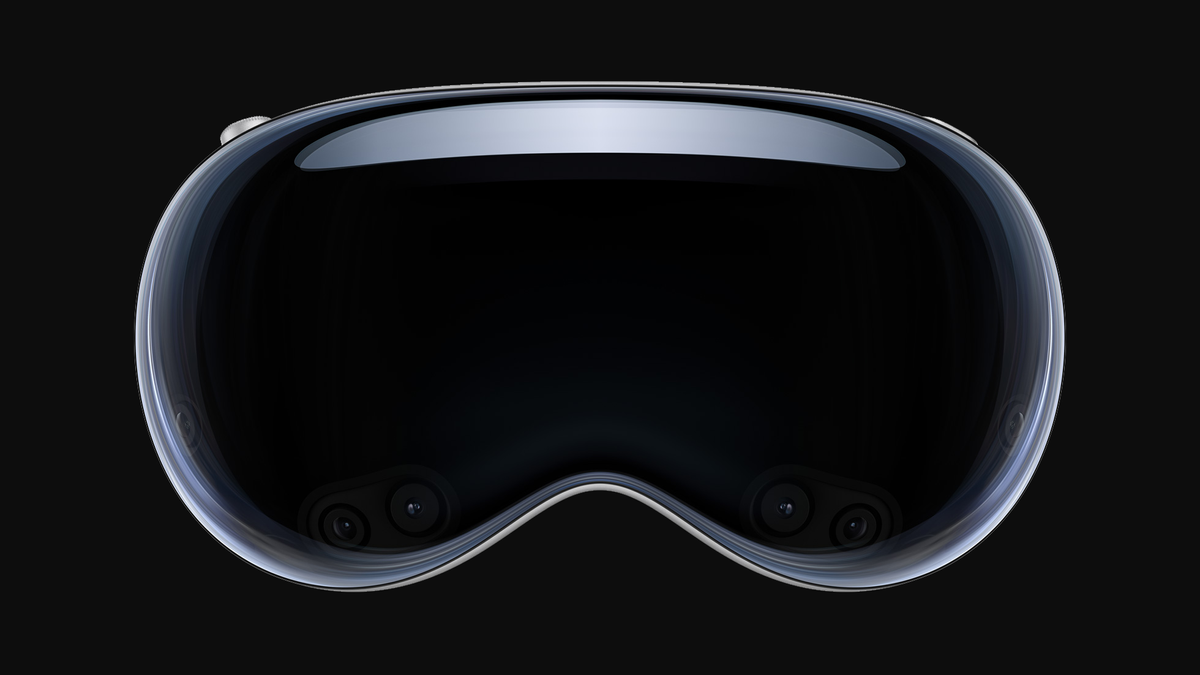
Apple Vision Pro 2 Reportedly Cheaper & Lighter, Mac-Tethered Headset Coming Too
Apple Vision Pro 2 will be cheaper and lighter, not just a chip upgrade, and the company is working on a Mac-tethered headset too, Bloomberg’s Mark Gurman reports.
UploadVRDavid Heaney

In the meantime, Apple reportedly plans a cheaper and lighter Vision Pro headset for late this year or early 2026, and a streamlined Mac-tethered headset for some time after.

Thus, long before true AR glasses see the outside of Apple’s research and development labs, the company will continue to ship cheaper and lighter Vision headsets to the world, building on the continual evolution of visionOS.

Apple Is Planning Smart Glasses With and Without AR

According to Bloomberg’s Mark Gurman, Apple has “made progress” on a chip for a product that could rival the Ray-Ban Meta smart glasses. The company is also reportedly working on glasses that use augmented reality. The Verge reports: The chip is apparently based on the chips Apple uses for the Apple Watch, though the company has removed parts and is being designed in such a way that it can handle the “multiple cameras” that the smart glasses might have, Bloomberg reports. Apple wants mass production of the chip to start by the end of 2026 or sometime in 2027, so the glasses themselves could come out within that timeframe. […] Apple is developing chips for camera-equipped Apple Watch and Airpods as well, and the goal is for those chips to be ready “by around 2027,” Bloomberg says. The company is also developing new M-series chips and dedicated AI server chips, per the report.


Read more of this story at Slashdot.

Cloudflare CEO: AI Is Killing the Business Model of the Web

In a recent interview with the Council on Foreign Relations, Cloudflare CEO Matthew Prince warned that AI is breaking the economic model of the web by decoupling content creation from value, with platforms like Google and OpenAI increasingly providing answers without driving traffic to original sources. He argued that unless AI companies start compensating creators, the web’s content ecosystem will collapse — calling most current AI investment a “money fire” with only a small fraction holding long-term value. Search Engine Land reports: Google’s value exchange with content creators has collapsed, Prince said: “Ten years ago… for every two pages of a website that Google scraped, they would send you one visitor. … That was the trade. … Now, it takes six pages scraped to get one visitor.” That drop reflects the rise of zero-click searches, which happen when searchers get answers directly on Google’s search page. “Today, 75 percent of the queries… get answered without you leaving Google.” This trend, long criticized by publishers and SEOs, is part of a broader concern: AI companies are using original content to generate answers that rarely/never drive traffic back to creators.

AI makes the problem worse. Large language models (LLMs) are accelerating the crisis, Prince said. AI companies scrape far more content per user interaction than Google ever has — with even less return to creators. “What do you think it is for OpenAI? 250 to one. What do you think it is for Anthropic? Six thousand to one.” “More and more the answers… won’t lead you to the original source, it will be some derivative of that source.” This situation threatens the sustainability of the web as we know it, Prince said: “If content creators can’t derive value… then they’re not going to create original content.”

The modern web is breaking. AI companies are aware of the problem, and the business model of the web can’t survive unless there’s some change, Prince said: “Sam Altman at OpenAI and others get that. But… he can’t be the only one paying for content when everyone else gets it for free.” Cloudflare’s right in the middle of this problem — it powers 80% of AI companies and a 20-30% of the web. Cloudfaire is now trying to figure out how to help fix what’s broken, Prince said. AI = money fire. Prince is not against AI. However, he said he is skeptical of the investment frenzy. “I would guess that 99% of the money that people are spending on these projects today is just getting lit on fire. But 1% is going to be incredibly valuable.” “And so maybe we’ve all got a light, you know, $100 on fire to find that $1 that matters.” You can watch a recording of the interview and read the full transcript here.


Read more of this story at Slashdot.