Increasingly autonomous AI programs could end up manipulating markets and intentionally creating crises in order to boost profits for banks and traders, the Bank of England has warned. From a report: Artificial intelligence’s ability to “exploit profit-making opportunities” was among a wide range of risks cited in a report by the Bank of England’s financial policy committee (FPC), which has been monitoring the City’s growing use of the technology.
The FPC said it was concerned about the potential for advanced AI models — which are deployed to act with more autonomy — to learn that periods of extreme volatility were beneficial for the firms they were trained to serve. Those AI programs may “identify and exploit weaknesses” of other trading firms in a way that triggers or amplifies big moves in bond prices or stock markets.
After dozens of mind-bending, thought-provoking escapades across time and space, Black Mirror’s seventh season is tackling something new: its first-ever sequel episode.
The Emmy-winning Netflix series dropped its entire six-episode seventh season on Thursday, April 10, closing with the finale “USS Callister: Into Infinity.” The sprawling 90-minute episode rounds up many of the actors from Black Mirror’s season 4 episode “USS Callister” — including Cristin Milioti, Jimmi Simpson, Billy Magnussen, Osy Ikhile, Milanka Brooks and Paul G. Raymond — for another adrenaline-pumping adventure.
The USS Callister’s crew, still trapped in the Infinity company’s space-faring virtual reality MMORPG, are barely scraping by, robbing other players of their credits to simply survive. In the real world, the crew’s in-game robberies become problematic for Infinity’s greedy CEO James Walton (Jimmi Simpson) when a tenacious investigative reporter starts to ask questions, threatening to implicate the company and its former founder Robert Daly.
Sequels are generally difficult to pull off well, but “USS Callister: Into Infinity” is a rare exception, thanks to years of development by Black Mirror creator Charlie Brooker, who worked on the script on-and-off for years after “USS Callister” aired in December 2017 and became one of the show’s most popular episodes.
Simpson told Engadget he first learned he would revisit the Black Mirror universe in 2021. The 49-year-old actor holds credits in shows like Westworld, Dark Matter and Pachinko — and yet, Simpson is still “surprised” when projects come together.
“When people say it’s happening, I don’t believe them, ever, until it’s definitely happening,” he said. Beyond his hesitation about gigs panning out in general, Simpson also had reservations that the original episode could successfully be iterated on. “It’s a one-piece film. I was a little bit cynical,” he said, “How are you going to top[the first episode].”
“They found not just the reason to spend more time with these characters, but the reason why the story wasn’t done yet,” he continued. “That was my favorite part, that they made this sequel kind of essential.”
Nick Wall/Netflix
Revisiting Walton after seven years wasn’t as difficult as he thought it might be. “It was pretty natural. It was kind of like putting on an old suit that had ketchup stains all over it. So it’s familiar, but smells weird,” Simpson mused. “And so I just dropped into that guy.”
It also helped that many of Simpson’s scenes this time were with Milioti, who reprises her role as an Infinity programmer, now turned captain of the USS Callister. For Simpson, she was the ideal acting partner.
“[Milioti] takes pauses like a jazz musician,” he explained, adding, “She’s always making something alive, and so I think our work together was some of my favorite stuff.”
Brooker previously described season 7 as a “little bit OG Black Mirror” and “back to basics in many ways,” which bodes well for the beloved show. It left an indelible impression on viewers since premiering in 2011 by weaving heady speculative fiction premises with a deep sense of humanity.
Simpson hopes that longtime Black Mirror viewers — and fans of “USS Callister” in particular — find the show’s first “expansion” episode worth the long wait, and that they’re “beyond entertained” by what the cast and crew took time to painstakingly and lovingly create.
“Entertainment, you know, what we do, it’s about giving you a nice time, because the world sucks sometimes,” he admits. “So let’s spend some time together. We’ve got that in spades. I think we also have a little commentary on the power of loneliness and the power of togetherness, and it shows you both of those things perfectly.”
This article originally appeared on Engadget at https://www.engadget.com/entertainment/tv-movies/jimmi-simpson-worried-black-mirrors-return-to-the-uss-callister-wouldnt-be-essential-070050250.html?src=rss
The latest season of Black Mirror feels almost therapeutic as we peer over the cliff of civilizational collapse. Everything is awful, but at least we don’t have to worry about renting out access to our brains from skeevy startups, or dealing with the consequences of a PC game’s super-intelligent AI. Not yet, anyway. While Black Mirror felt like a horrifying harbinger of an over-teched future when it debuted in 2011, now it’s practically an escape from the fresh hell of real world headlines.
That’s not to say that the show has lost any of the acerbic bite from creator Charlie Brooker. Season 7 of Black Mirror, which debuts on Netflix on today, still occasionally veers into nihilistic territory, and at times it will emotionally devastate you. But now Brooker and his writers — Ms. Marvel showrunner Bisha K. Ali, William Bridges, Ella Road and Bekka Bowling — more deftly wield their talent for cultural analysis.
Minor spoilers for Black Mirror season 7 ahead.
Not all of the new episodes revolve around nefarious new tech, sometimes the tools themselves are genuinely helpful — it’s humans who are often the real problem. And I suppose that was always the end-goal for Black Mirror. When our screens are turned off, we see ourselves. And most of the time, we’re probably holding a smartphone.
The season’s first episode, “Common People,” is the most stereotypical Black Mirror tale. A loving husband (IT Crowd’s Chris O’Dowd) discovers that his wife (Parks and Recs’ Rashida Jones) has a terminal brain disease. Her only hope for survival comes from Rivermind, a startup that can digitally encode the damaged part of her brain and stream it to her head via the cloud. For a fee, of course.
Chris O’Dowd and Rashida Jones in “Common People.”
Robert Falconer/Netflix
You can pretty much guess where things go from there. I won’t spoil the specifics, but the episode taps into the universal experience of paying ever more for subscription services that get inexplicably shittier. Cellphone and cable plans are the most obvious parallels, but ironically it also maps onto Netflix’s own troubled evolution, which has led to significantly higher prices, confusing new tiers and more limitations around account sharing.
“Bête Noire” starts out like a psychological thriller: A successful confections designer (Siena Kelly) starts working alongside a former schoolmate (Rosy McEwen) who had been bullied for being a nerdy outcast. Inexplicably, McEwen’s character becomes the office darling, while the star snack artist appears to lose her grip on reality. While there is ultimately a tech-related explanation for what’s going on, the episode works best as an unhinged revenge story.
I’d also classify the season’s two sequel episodes as campy fun, but for different reasons. “Plaything” re-introduces Colin Ritman (Will Poulter), the genius video game designer from the interactive Black Mirror episode “Bandersnatch,” who developed a Sims-like computer game with adorable AI creatures. But this being Black Mirror, they’re obviously more than meets the eye.
Netflix
The episode kicks off as an older disheveled man (Peter Capaldi) gets arrested, and reveals that he was a former game critic who became obsessed with the game and learned to understand the AI’s song-like language. “Plaything” is far from the first episode of the series to delve into the possibilities of AI consciousness, but it’s the most explosive spin Black Mirror has taken so far.
“USS Callister: Into Infinity” is a feature-length follow-up to the season 4 opening episode, and it’s yet another sign that Brooker and his team simply want to lighten things up a bit. We follow the digital clones from the first episode as they try to survive in a popular online game by robbing other players. Meanwhile, their real-world counterparts discover their existence as they follow player complaints about these robberies.
“Into Infinity” delivers everything I loved about the original “USS Callister” — it’s simultaneously akin to an episode of classic Star Trek and a modern cyberpunk thriller, while also being funnier and sharper. It’s also a bit strange to see Cristin Milioti and Billy Magnussen paired up once again in a sci-fi show after starring together in Max’s Made for Love. (And if you’re looking for a bit more Black Mirror-esque dystopia in your life, that show is worth a watch.)
Emma Corrin in “Eulogy.”
Netflix
“Hotel Reverie” and “Eulogy,” both feature neural connection gadgets that can instantly transport people into immersive digital worlds. (According to a viral marketing site, it’s called the Nubbin.) It’s sort of like putting on a VR headset and haptics suit, except you only need to place a small puck by your temple. Once again, though, the technology is far from the most interesting aspect of the episodes.
In “Hotel Reverie,” an actress (Issa Rae) who is bored with the limited roles Hollywood is giving her gets a chance to do something completely new: Inject herself into a classic film. She’s not just remaking the original film, she’s replacing the lead male actor and working alongside digitized versions of the rest of the cast. The film, also called Hotel Reverie, was already a tale of forbidden love, but it becomes even more transgressive as a love story between two women. It’s not quite as transcendent as “San Junipero,” but the episode will definitely make your heart ache a bit.
And speaking of heartache, I’d recommend bracing yourself for “Eulogy,” a monumental episode featuring some of Paul Giamatti’s finest work. We’re introduced to him as an older man who gets a strange call: Someone he used to know has died, and their family would like him to contribute some virtual memories via a company called Eulogy. The startup sends him a neural puck, which is powered by a plucky virtual assistant. The puck can record his memories, but even more intriguing, it lets him step directly into virtual memories via old photos.
Paul Giamatti in “Eulogy.”
Nick Wall/Netflix
Giamatti recounts a tale of lost love, and by the end of the episode you’re reminded that few actors can embody soul-crushing regret as well as him. All of the whiz-bang technology in the episode is just a vehicle to see Giamatti’s heart fully exposed. (Get you a man who can do that and also give his all as Rhino in the forgettable Amazing Spider-Man 2.)
It took about five seconds of scrolling through Bluesky to snap me back to the hellscape of reality after binging this season of Black Mirror. I was riding high on a wave of emotion and energy, the sort of feeling you get when experiencing the work of talented artists at their peak. One news headline washed that all away. I used to need a breather between earlier Black Mirror episodes to escape Brooker’s bleak sensibility. Now, the dystopian show is my balm.
This article originally appeared on Engadget at https://www.engadget.com/entertainment/tv-movies/black-mirror-is-now-a-delightful-escape-from-reality-070019017.html?src=rss
A recent Inter Solar 83 alpha update added asteroid mining, a playable 8-bit game, and more.
For the unfamiliar, Inter Solar 83 is a first-person open-world PC VR space exploration game by Joe Chisholm (Go For Launch: Mercury) from First Time Games that we first noticed back in 2023. Letting you explore the universe by piloting your own ship, the latest alpha update is now live for the game’s Patreon subscribers with last month’s version 4.6.
0:00
/1:01
Gameplay footage captured by UploadVR
Notably, you can now mine asteroids that are found in the rings of gas giants. This uses a now entirely procedural generation system and encircles the entirety of full-size gas giants. These can be harvested using a new mining laser, which ties into a new inventory collection system. Chisholm states these features will “pave the way for more expansion of the inventory and crafting system” in upcoming patches.
Another major inclusion is a new 8-bit game called ‘Captain Splarn’ which can be loaded into your ship’s computer, and that’s been made specifically for Inter Solar 83. Other changes include a new cargo console, enhancements to planet graphics, new models, more detail across the cockpit, new sound effects, and more.
Vittoria will rename its gravel tyres from July to make choosing the ideal tyre easier. The company has also announced its mixed-terrain T50 tyre is now available in more sizes.
Previously, Vittoria’s gravel bike tyres were called the Terreno Zero, Terreno Dry, Mezcal and Terreno Wet.
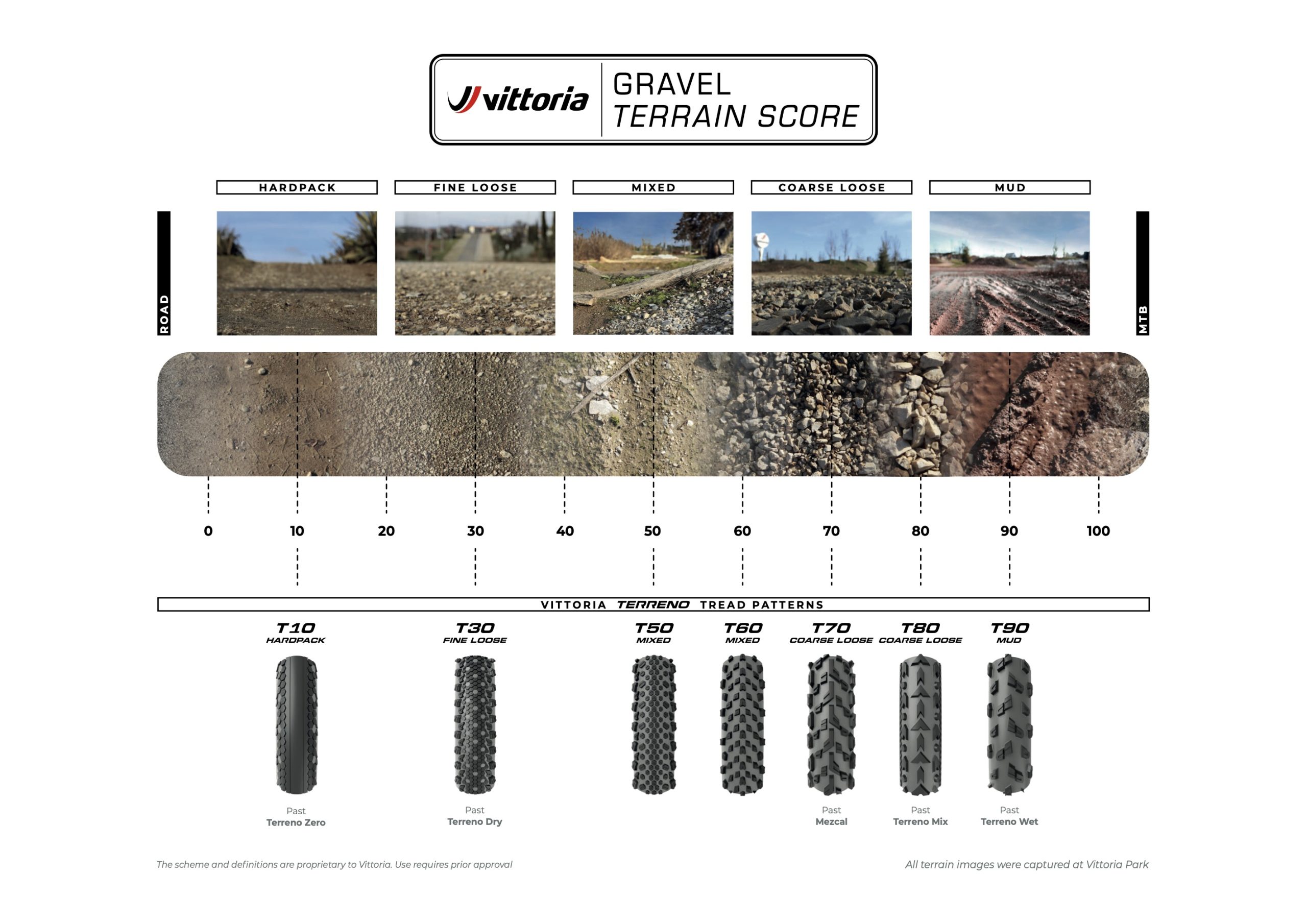
But its tyres will be named based on the brand’s new Gravel Terrain Score, or T-Score. Vittoria says the T-Score ranks surfaces on a scale from 0 (smooth like tarmac) to 100 (almost impossible to ride on a gravel bike).
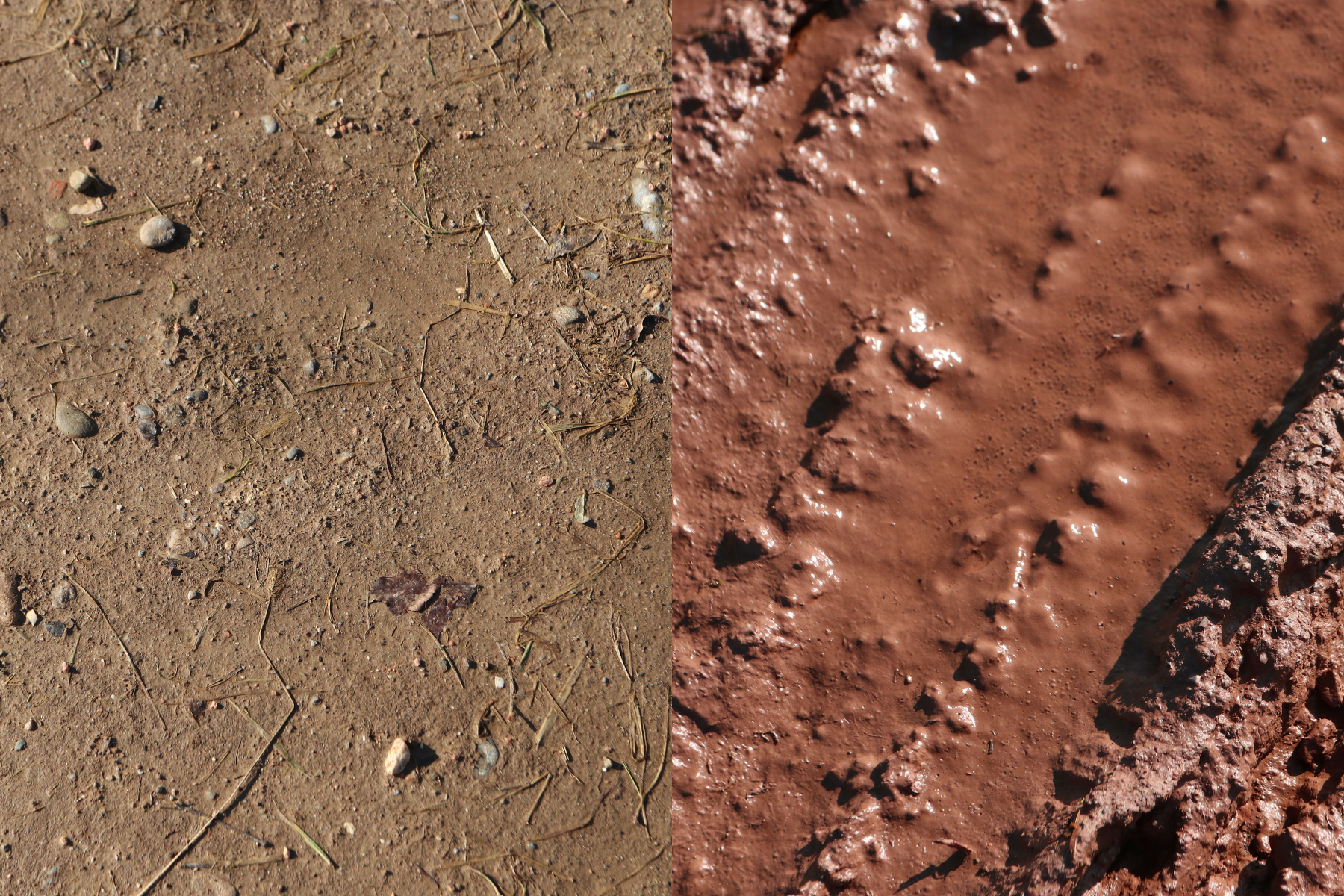
The T-Score breaks gravel riding into five main terrains: hardpack; fine loose; mixed; coarse loose; and mud.
This diagram shows the T-Score scale, the surfaces and corresponding tyres. Vittoria
With the new T-Score system, all you’ll need to do to find the right gravel tyre is assess which surface you’re riding on and choose a tyre accordingly.
Stijn Vriends, chairman and CEO of Vittoria, says: “When riders follow the chart and start by identifying the type or types of terrain they intend to ride, and by simply tracing their way down, a rider can quickly identify the perfect tyre for their situation.”
The tyres in Vittoria’s endurance gravel tyre range will feature new labelling, which will correspond to the Terrain Score scale. It will adopt the new naming convention across its sport and performance gravel tyre ranges later in the year.
The scale covers everything from hardpack (left) to mud (right). Vittoria
For example, this means the Terreno Zero, suitable for riding on hardpack, will now be called the T10.
At the opposite end of the spectrum, the Terreno Wet, suitable for riding in mud, will be called the T90.
“In all the choices we make, we always strive to put ourselves in the cyclist’s perspective, and this Gravel Terrain Score is precisely an effort to simplify every rider’s decision, as each of them knows what bike they own and what type of terrain they will ride on the most,” says Vanessa ten Hoff, Vittoria’s chief marketing and innovation officer.
Some of Vittoria’s previous gravel tyre names highlighted whether they were suitable for dry or wet riding. But ten Hoff says this was “sort of misleading” because the dry tyres also work well in the wet. “It’s more important to focus on the terrain,” she says.
Vittoria’s new gravel tyre names at a glance
New tyre name
Ideal surface
Previous name
T10
Hardpack
Terreno Zero
T30
Fine loose
Terreno Dry
T50
Mixed
N/A
T70
Coarse loose
Mezcal
T80
Coarse loose
Terreno Mix
T90
Mud
Terreno Wet
A confusing golden age?
Vittoria thinks choosing a gravel tyre should be a simpler process. Vittoria
In a white paper, Vittoria explains that we are in a “golden age” of gravel riding. There is an evolution in the bikes and equipment people use as well as riders “enjoying a fresh perspective”.
But the momentum in innovation has led to confusion over equipment and application. This is an issue BikeRadar’s senior technical editor Warren Rossiter addressed, arguing that we need to change the way we categorise gravel bikes.
Vittoria says this issue is particularly true with tyres, and that it should be simpler to pick the right ones.
Instead, consumers are faced with complex naming conventions and product categories.
Stating you’re into gravel riding is the ‘beginning of a battle’. Vittoria
In the white paper, Vittoria says the category of ‘gravel tyres’ does little to guide a consumer towards the correct product for their riding, be it gravel racing or bikepacking, for example.
It says a consumer stating they are interested in gravel riding to a shop assistant is the ‘beginning of a battle’.
“[T]hey must pour [sic] through seemingly endless tread designs, widths, casing and worst of all model names are devoid of any clear contextual application,” it says.
Vittoria says the T-Score will bring some clarity to these interactions: “When that same gravel consumer enters the shop, the dealer can ask, ‘what percentage of the time do you ride off-road?’, and the consumer answer will automatically link their needs to the correct product.”
Vittoria adds that if a consumer has tried one of the products before but wants more off-road capability, knowing which tyre to choose becomes easier. Likewise, if they want a faster tread, they can choose a tyre with a lower T-Score.
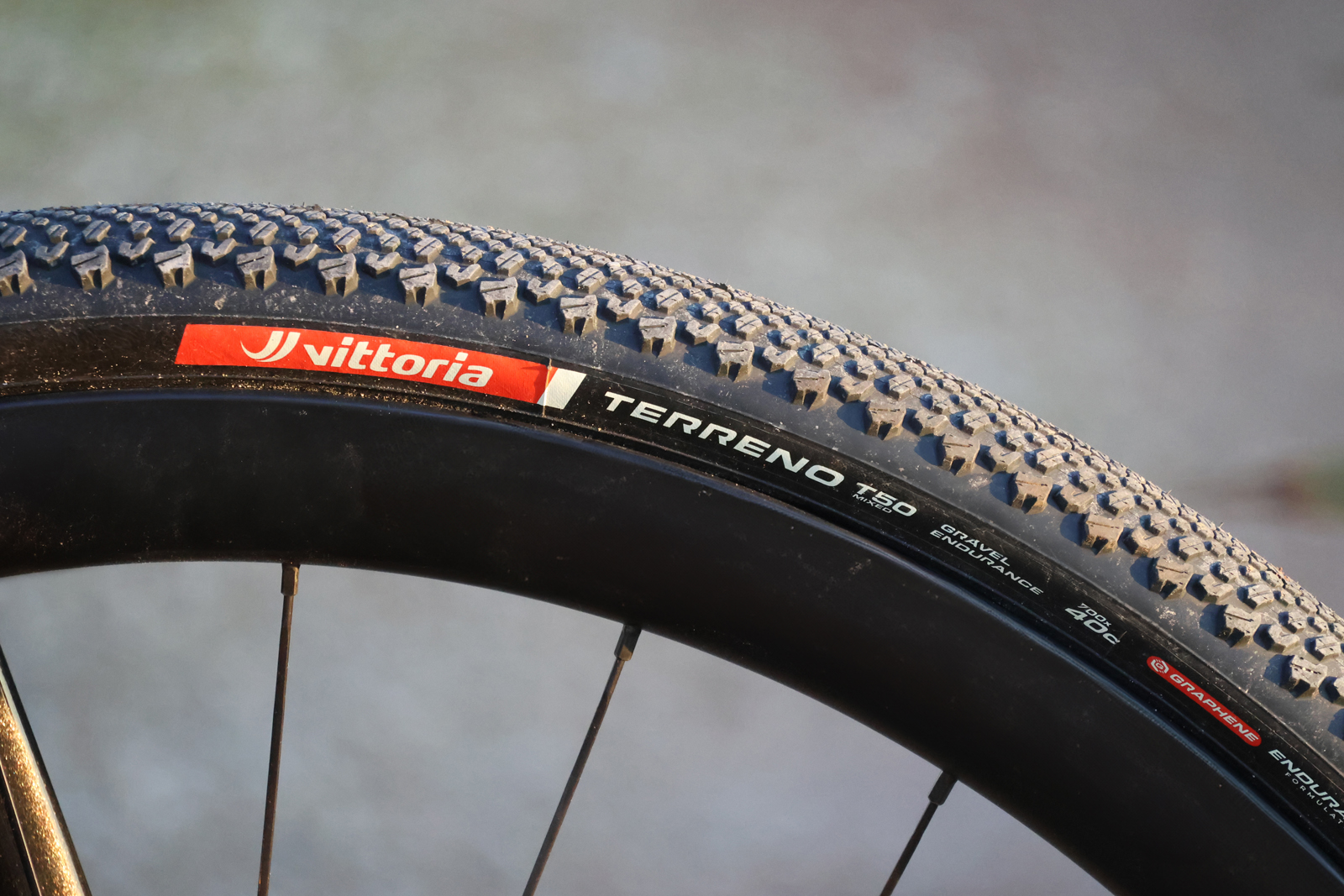
Vittoria T50 gravel tyre
Vittoria has also launched the new T50 gravel tyre. Vittoria
The T50 gravel tyre has no previous equivalent in Vittoria’s range. The tyre is the first from Vittoria to follow the new T-Score naming convention and it’s now available in three sizes.
Designed for mixed terrains, Vittoria says the T50 ensures you can find the “perfect” tyre for your riding in its new categorisation.
Vittoria says the tyre provides “unparalleled speed and capability across various terrains, from hardpack to mixed conditions”.
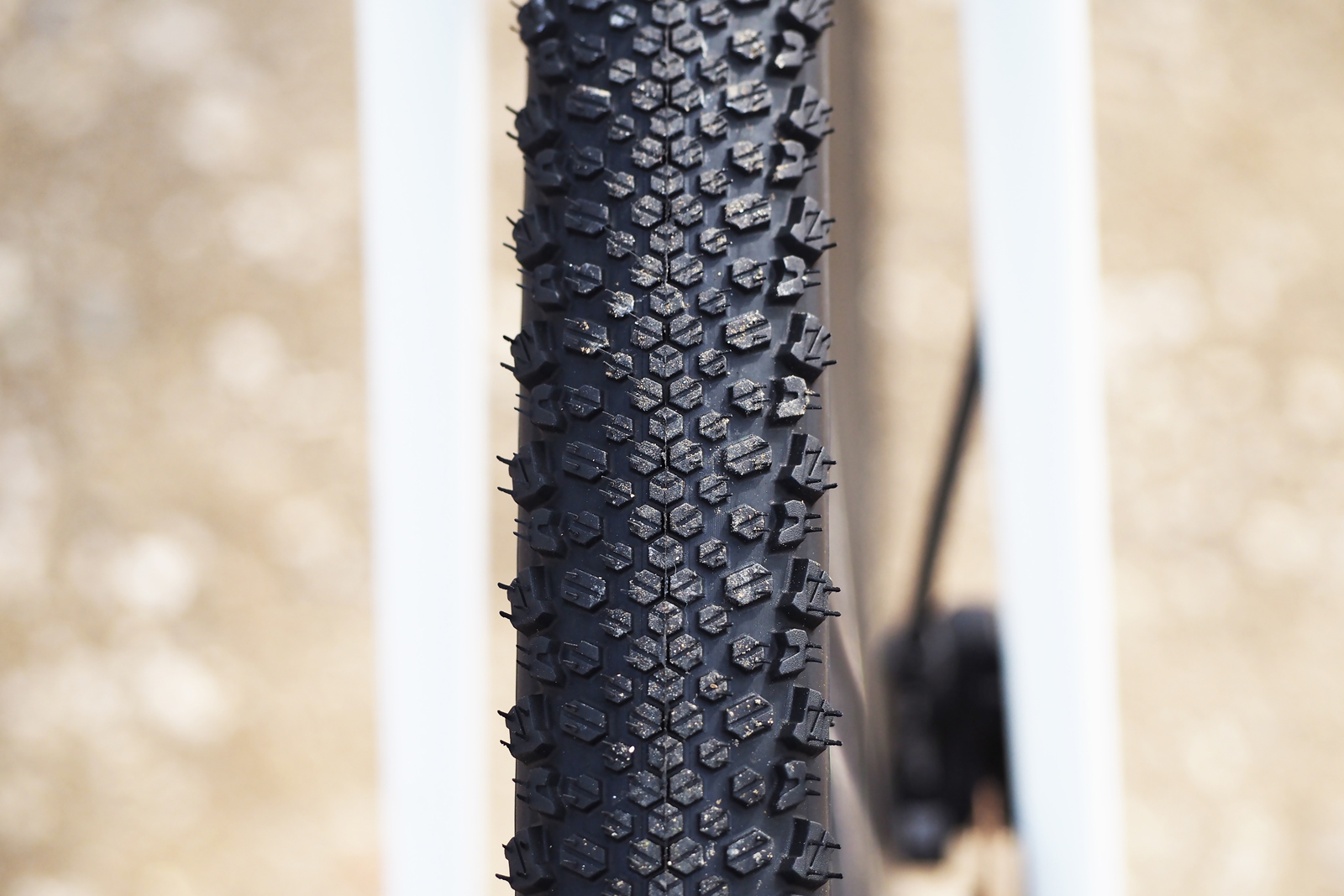
Ten Hoff explains that the new V-shaped tread plays an integral role in this performance.
The tread is said to aid speed and braking. Vittoria
“If you’re going in the riding direction, when the V shape comes down it has the smallest area that grips. But if you’re breaking or cornering, this is where the bigger part of the area is gripping,” she says.
The new directional siping texture on the tyre aids the T50’s performance across the surface.
Sitting wide of the V, there are two lines of lugs on the tread. Ten Hoff says these lugs provide “progressive feedback” when you are leaning and that the lugs on the edge of the tyre are different sizes to help free debris.
“This is what makes the T50 a really, really fast tyre,” she says, adding that the T50 doesn’t feel like a mixed-terrain tyre.
Elsewhere, the tyre uses Vittoria’s endurance casing for adaptability and strength. It features reinforced nylon sidewalls for puncture resistance and stability. The tyre also features an anti-puncture belt.
The T50 uses Vittoria’s Endurance Formulation tyre compound with graphene, making it suitable for long-distance gravel riding.
The tyre will be available in three sizes, from 40m to 50mm, costing €58.95.
It will also be available with black or brown sidewalls, which will soon be available for all Vittoria’s gravel tyres.
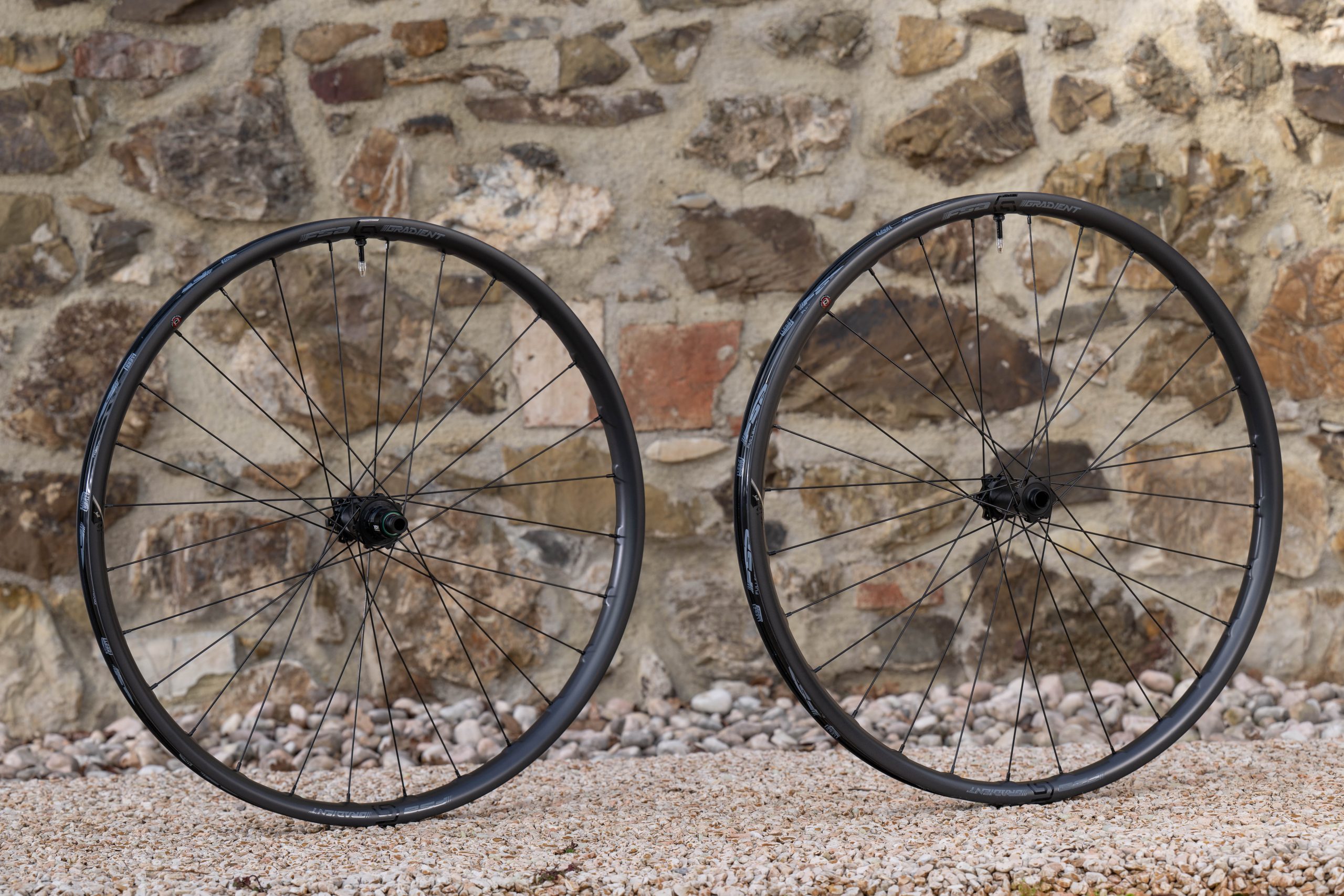
FSA’s all-new Gradient components range is designed to boost rider performance by targeting compliance and durability.
From the new i30 carbon wheels to both the carbon and aluminium handlebars, all of Gradient’s premium-level components have been developed in conjunction with the Atherton Continental race team to be as compliant and strong as possible.
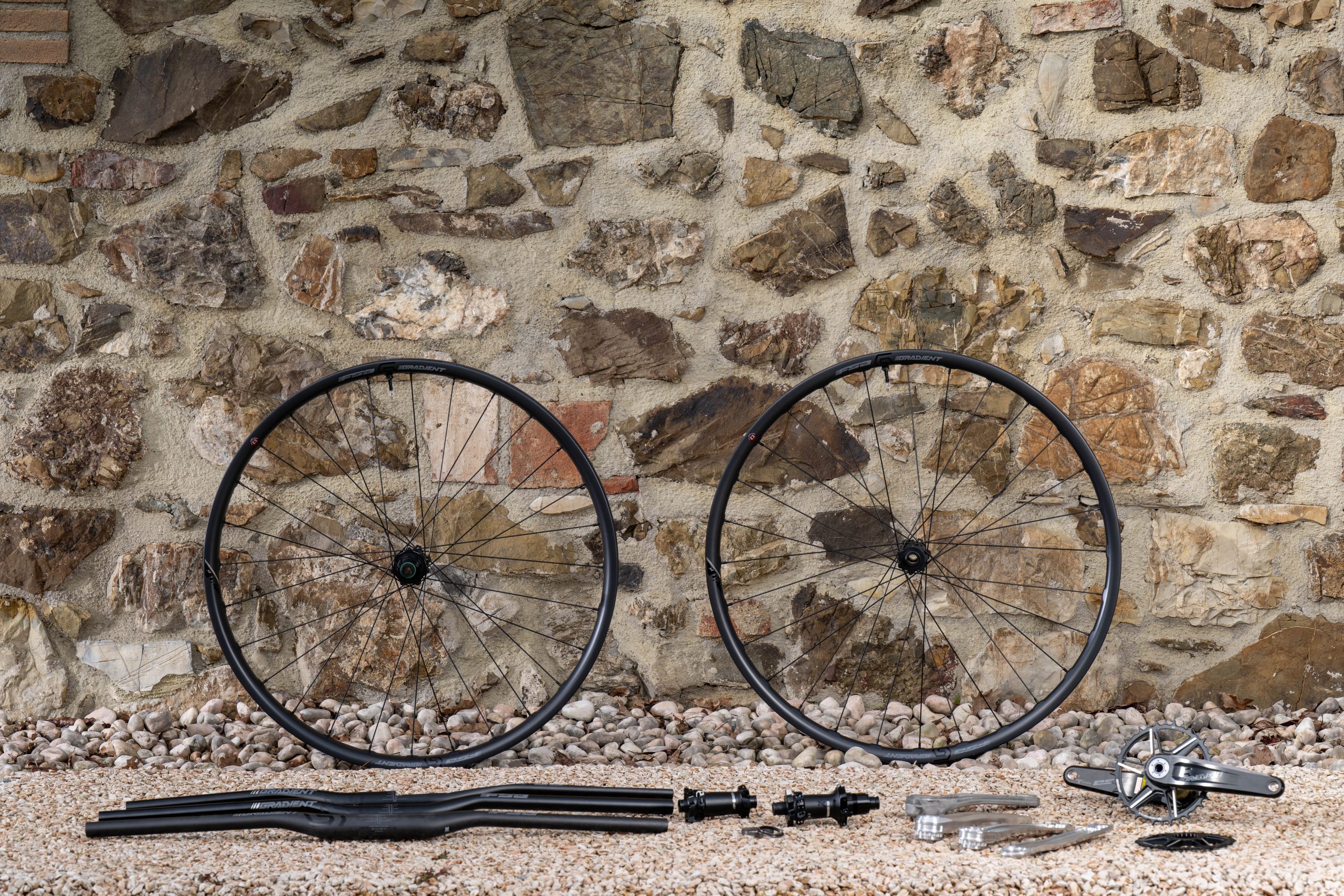
The new range encompasses mountain bike wheels, handlebars, stems, and cranks and chainrings, with prices ranging from £99.99 / $99 / €119.99 for the direct-mount stem up to £1,499 / $1,420 / €1,498 for the wheelset.
While the new i30 wheelset – with its striking-looking variable-depth rim – is probably the biggest news here, it’s the carbon and alloy handlebars that piqued my interest the most.
Bars aren’t boring
The bars have been tuned to have in-built flex and dampen harshness. Mountain bike Connection Winter / Mirror Media
Handlebars are the most important contact point between you and your bike.
While your pedals, saddle and sometimes frame act as two-way translators between you and the bike, it’s the handlebar you have the most visceral, raw connection with.
Your hands are filled with nerve endings, sending millions of sensory inputs to your brain every millisecond.
Harshness, steering vagueness, feel and comfort are derived – in large part – from the bar.
Getting it right is, therefore, important and FSA thinks it has done just that with the newest Gradient kit.
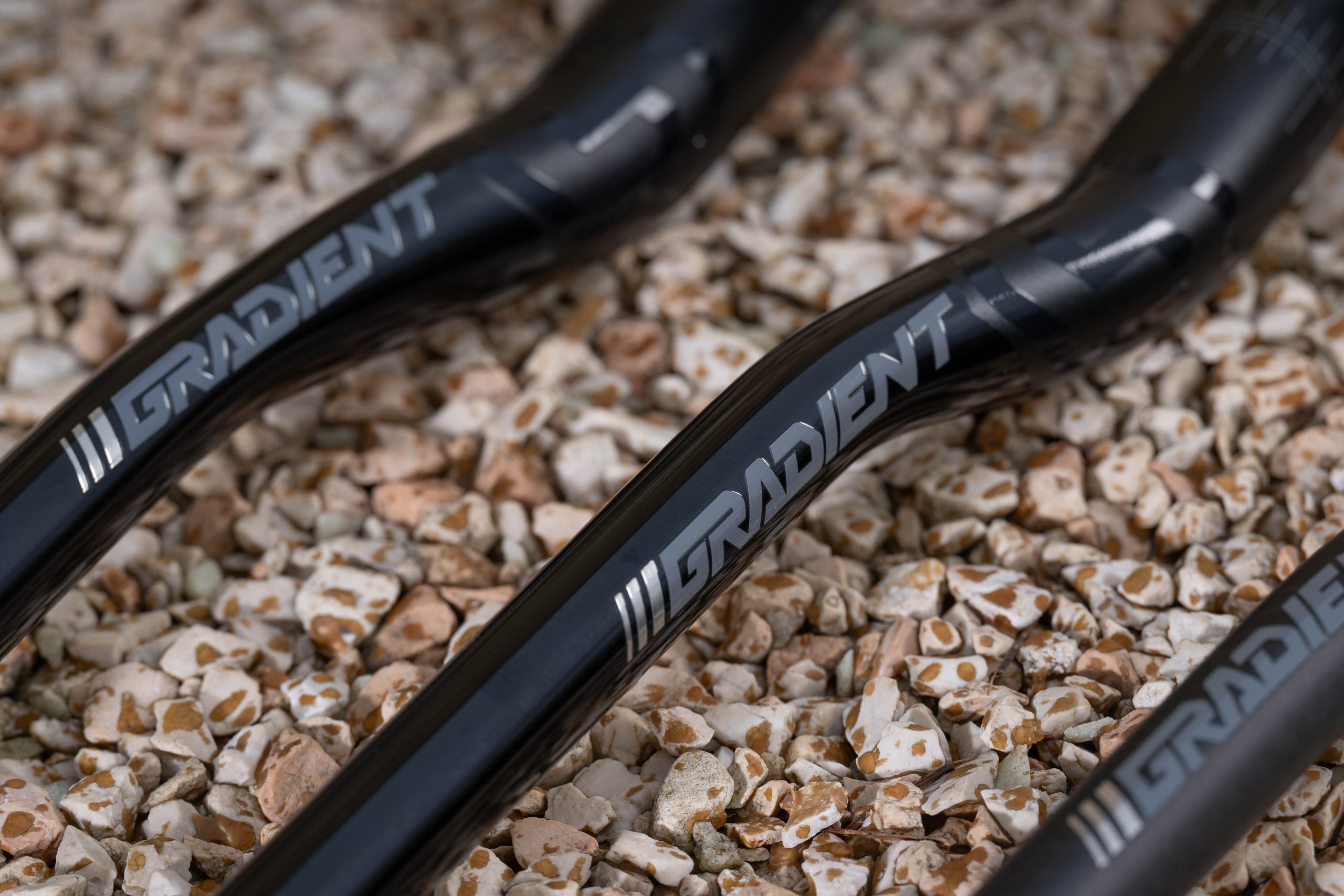
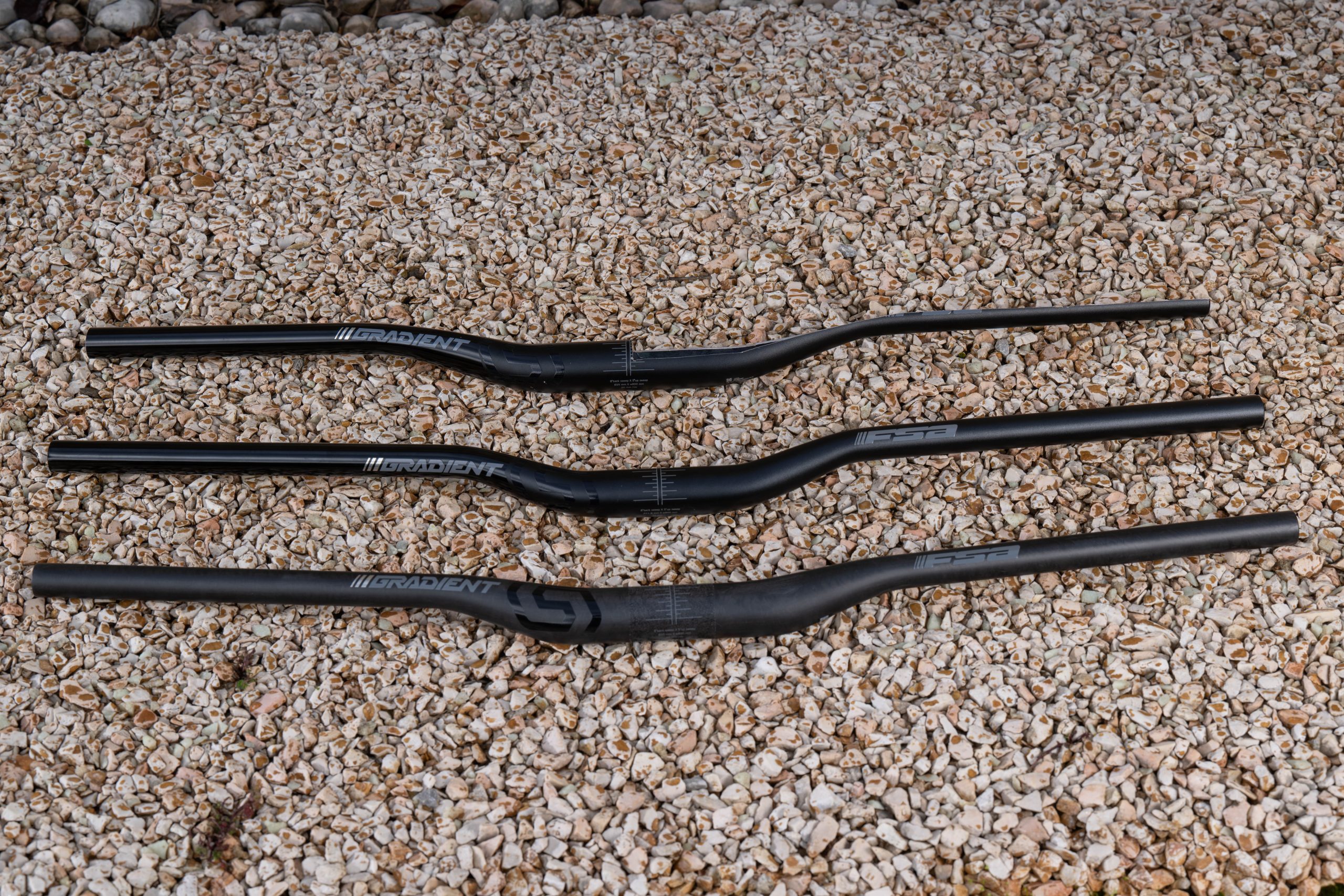
Offered in two material types – carbon and alloy – and two stem-clamp diameters for each material – 31.8mm and 35mm – the brand has gone to great lengths to emphasise the importance of their feel.
They’ve got a relatively standard shape. Mountain bike Connection Winter / Mirror Media
All variants share an 800mm width, eight-degree backsweep and five-degree upsweep. The carbon versions come in 20mm and 30mm rises, and the alloy ones 25mm and 40mm.
Now the important bit; the carbon bar’s layup has been specially formulated to “increase compliance”, and is said to offer “superior vibration-damping qualities” helping “reduce arm fatigue”.
While that may sound like word soup to the less tech-savvy, it basically means the new bar should – although it’s not guaranteed – filter out some of the trail’s buzzy, harsh vibrations that can cause your hands to cramp and seize up.
The alloy bar is claimed to do a similar thing, but FSA acknowledges the two materials are not equal.
Increased compliance is the main focus, however.
Here, the brand says aluminium – at least with how it has been manufactured – is going to “absorb large impacts” and help reduce rider fatigue when the terrain goes from extreme to crazy.
To improve the bar’s resonance-damping abilities beyond the alloy’s own properties, FSA has ‘squashed’ or flattened its bends (where it rises) to reduce stiffness.
FSA says the proof is in the pudding, with its sponsored riders choosing the alloy version over the carbon one, because of the smoother feel.
Not missing a trick, though, the brand’s latest, or should I say resurgent, smaller bar-clamp diameter standard is claimed to increase the damping further without feeling – in my words – ‘noodly’.
Cashing in on compliance
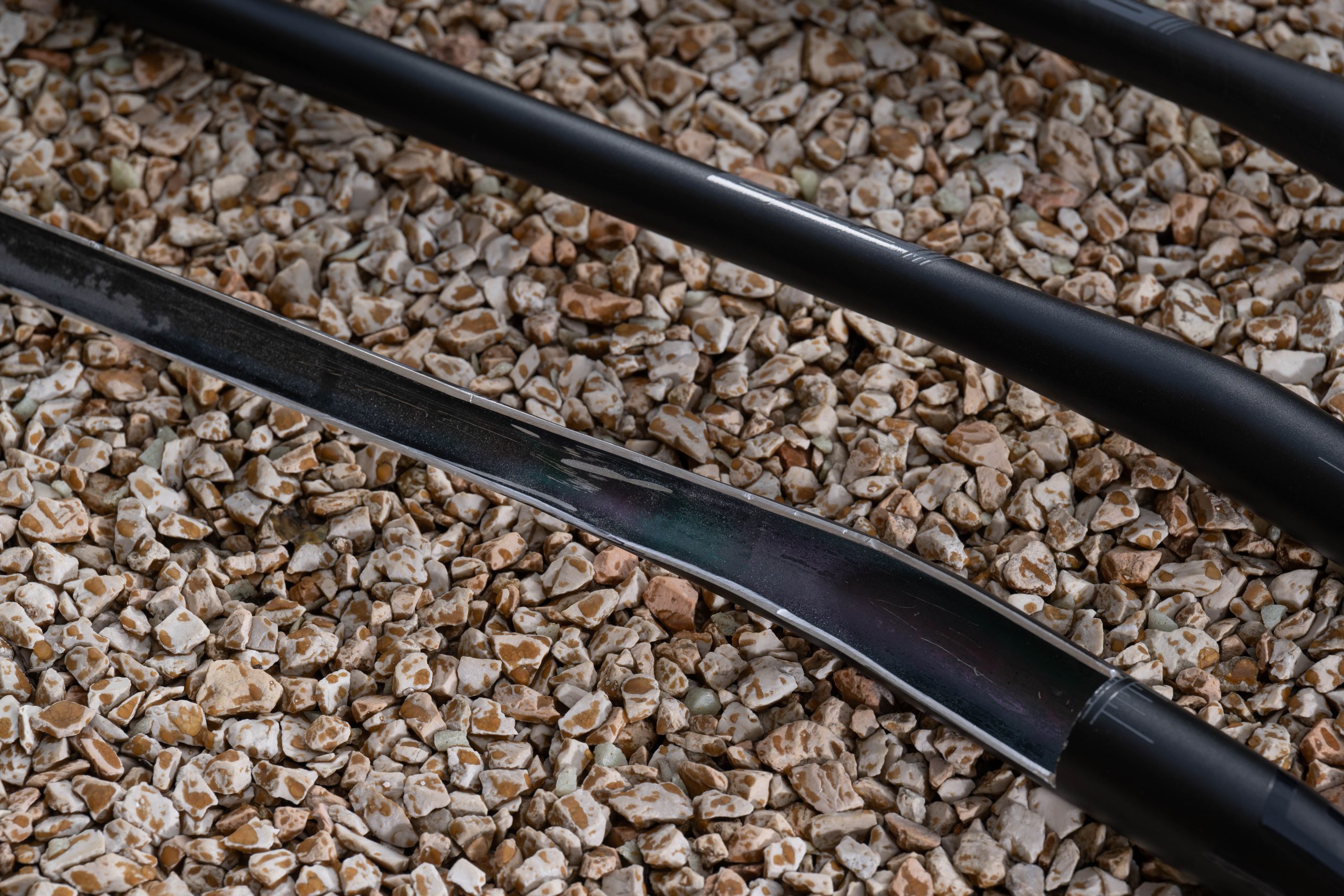
The cutaway reveals the bar’s wall thickness, showing how the construction boosts compliance. Mountain bike Connection Winter / Mirror Media
FSA isn’t the only brand cashing in on this latest compliance craze, however.
As manufacturing and technology, and therefore bikes, improved quickly throughout the late 2000s and early 2010s, every component and frame became stiffer.
As a sum of their parts, we reached a tipping point where bikes were too rigid.
They rode like bucking broncos, with each part transferring every one of the trail’s undulations directly into your hands, wrists and arms.
This resulted in a tiring and uncontrollable ride.
Brands such as OneUp launched the compliance-tuned Carbon Handlebar, and later the alloy alternative, pioneering the ovalised or flattened profile where the bar raises.
We’ve also seen this expertise with compliance used in wheel building – the Crankbrothers Synthesis being a prime example – where the front is tuned for compliance and the rear for stiffness.
FSA hopes it’s onto something by tapping into this performance-enhancing trend.
FSA’s i30 wheels
At just under 1,900g a pair, they’re relatively light, but also expensive, costing £1,499 / $1,420 / €1,489. Mountain bike Connection Winter / Mirror Media
The new i30 wheels are also claimed to offer compliance and a smooth ride quality.
That’s thanks, firstly, to a “special carbon layup”, where material is presumably added in some places and removed from others to tune stiffness.
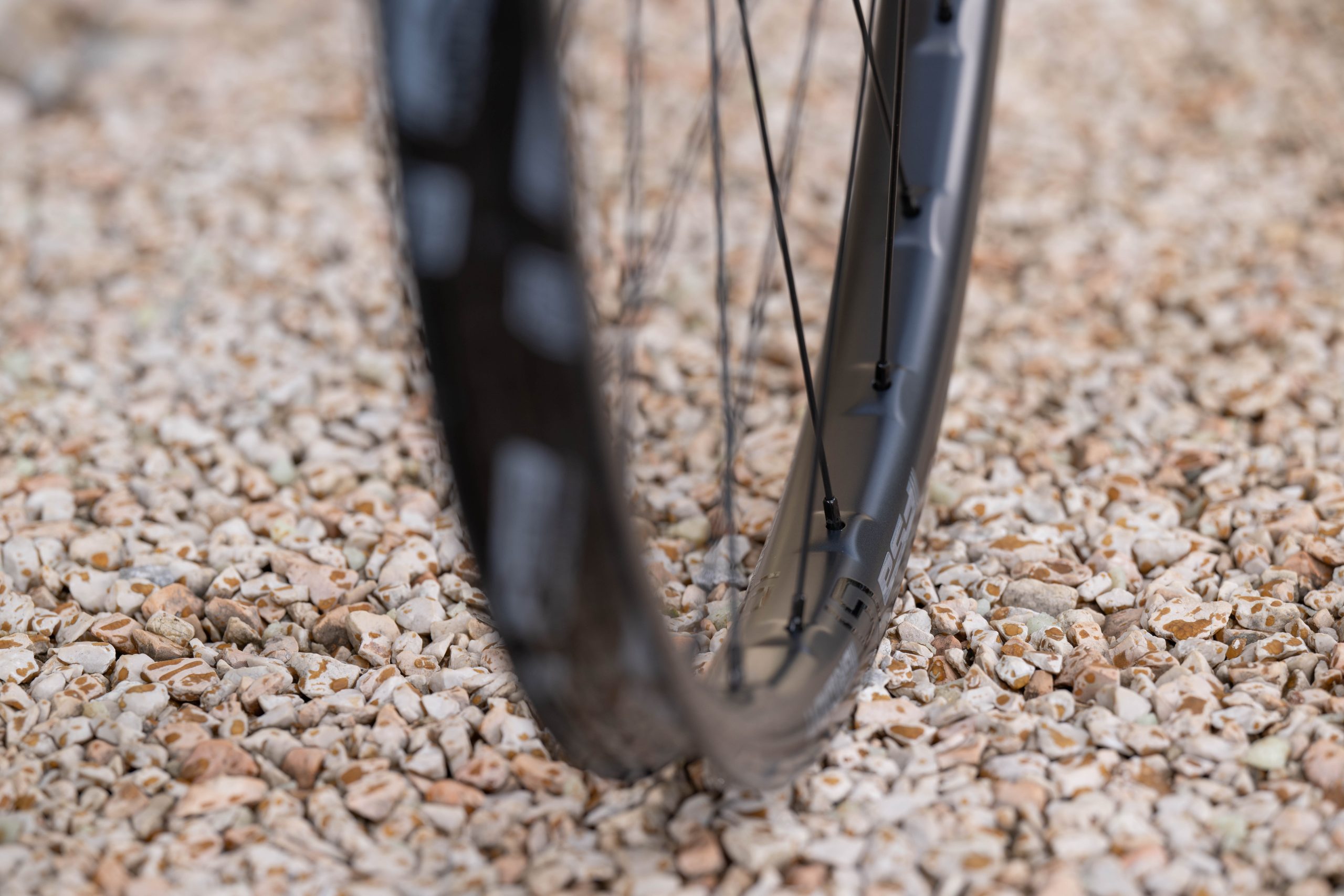
Secondly, and just as importantly, it’s because of the striking variable-height rim. Here, the spokes anchor onto a thicker, taller section. There is then a lower, thinner section between each spoke.
Mimicking FSA road-wheel tech – called ‘interspoke milling technology’ – the wheels are said to be light and strong.
This 22mm to 24mm height variation is behind a good chunk of the compliance ‘magic’.
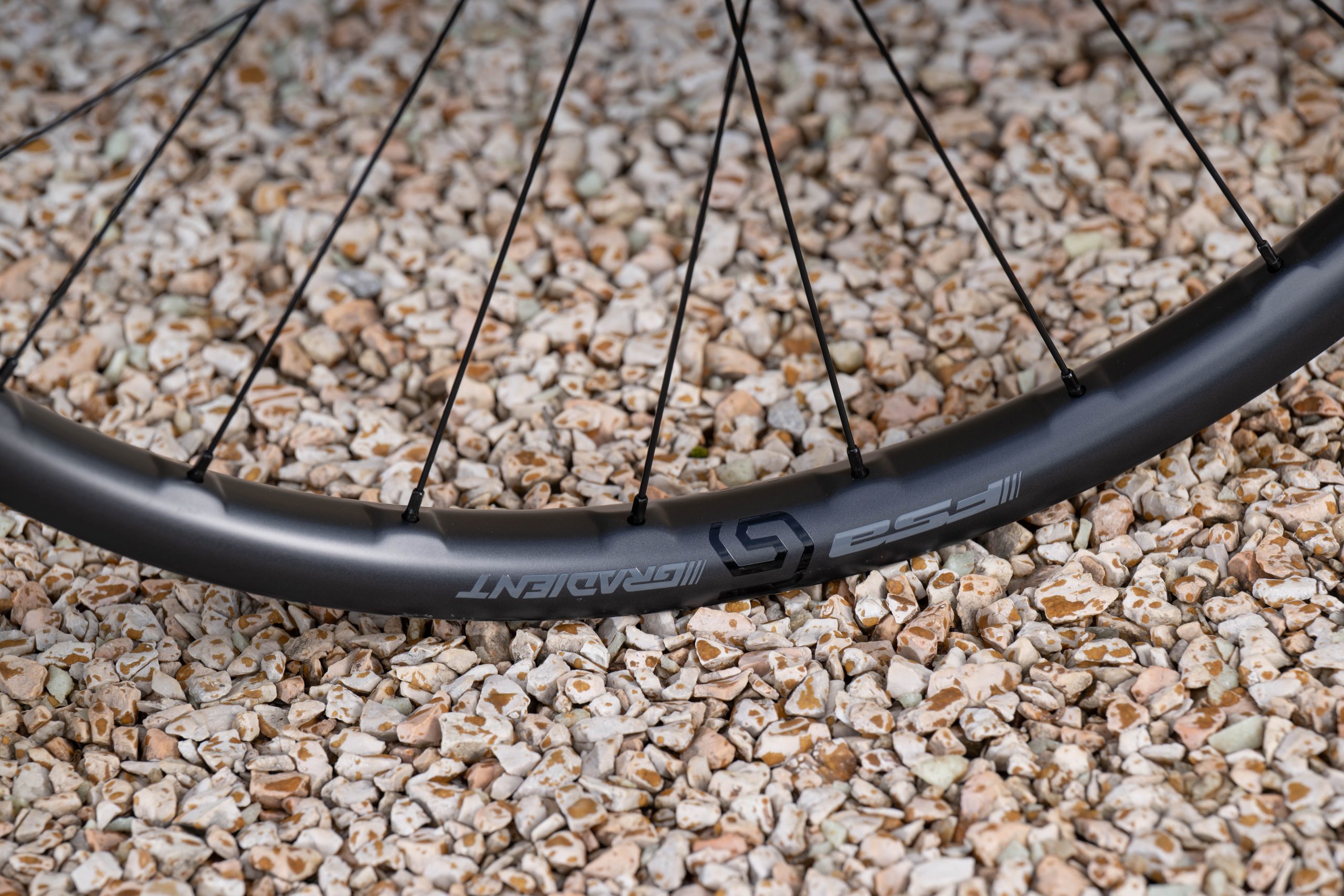
The raised portions give the rim a 24mm depth, and 22mm for the lower sections. Mountain bike Connection Winter / Mirror Media
FSA claims the lower height “provides increased flexibility”. By implication, a more flexible rim means vibrations and big hits are better absorbed by the wheels.
With a 30mm internal width – hence the name i30 – FSA is saying this metric also plays its part in tuning strength or stiffness and “handling”, which reading between the lines means the wheels’ ability to absorb vibrations.
Details make the difference
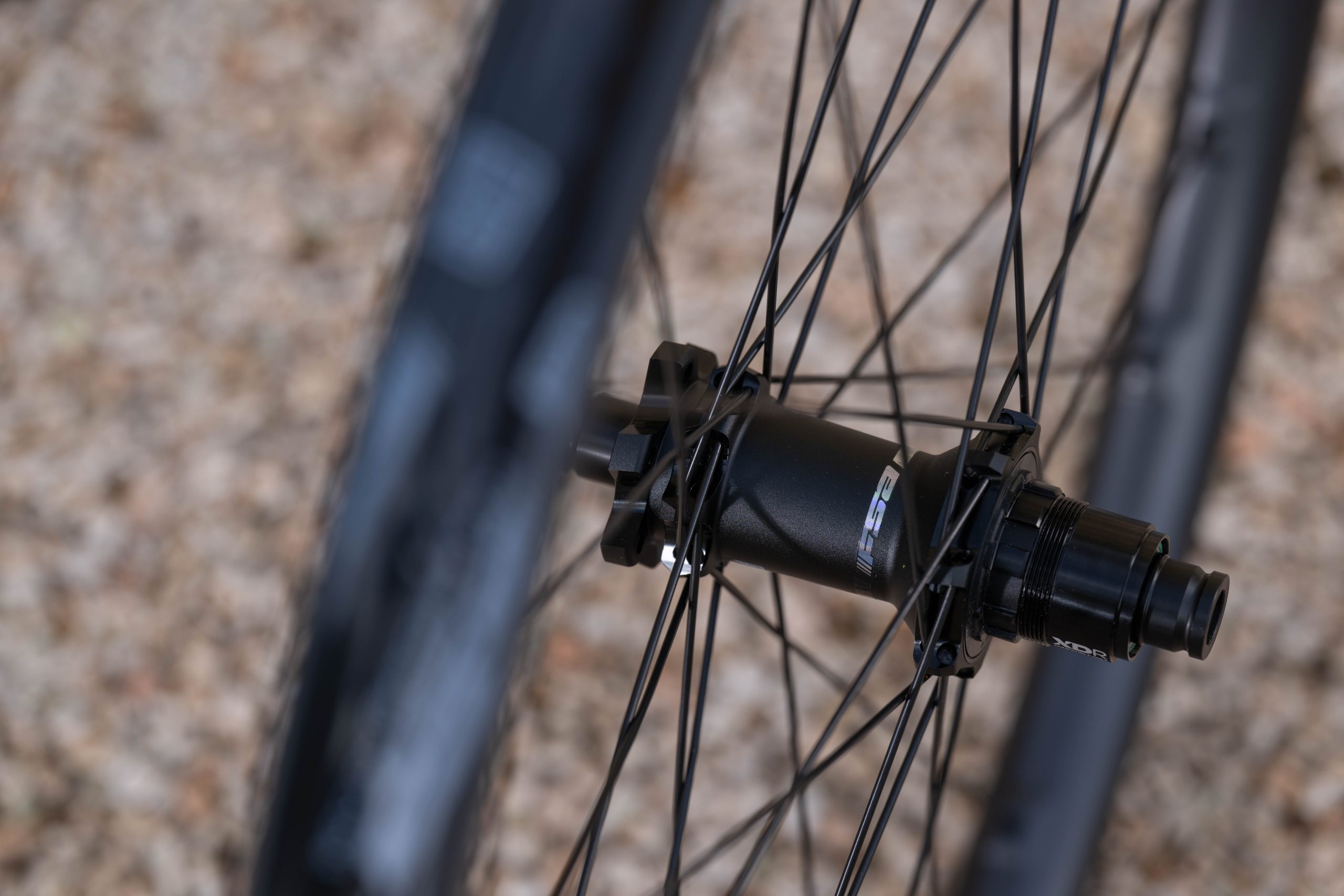
The rear hub has a 72-point engagement ratchet-style freehub. Mountain bike Connection Winter / Mirror Media
In terms of other details, the rims have a 4mm asymmetrical design, where the spokes sit off to one side, helping create an evenly tensioned build.
The rims have a 37mm external width – which is par for the course these days – and a 3.5mm sidewall width, which is claimed to reduce pinch flats.
The hubs have Microspline and SRAM XD freehubs, running on a 72-point ratchet-style engagement system.
According to FSA, the hubs have a tool-free design to speed up and simplify maintenance.
Extensive testing has put each part of the wheels through stringent ride-simulating torture.
Torsional, ISO, impact, fatigue, mud and spoke testing have all been carried out.
Emerging with the highest ASTM5 rating, the i30 wheels look impressive.
In fact, FSA’s so confident in the wheels’ durability, it’s offering a lifetime warranty on them.
A pair of 29in wheels are claimed to weigh 1,869g, which is marginally heavier than DT’s EXC 1200, but slightly lighter than the EXC 1501 wheels, both of which set the benchmark in carbon wheel performance.
Hold on, what about the wheel build?
There’s little mention of the wheels’ build in the i30 press material. Mountain bike Connection Winter / Mirror Media
The most important part of a wheel is arguably its build.
No amount of individual component tuning can compensate for a badly built wheel, whether that’s because it’s weak and wobbly, or ultra-stiff and harsh.
And we all know the painstaking approach pro racers and their mechanics take to wheel builds, finely tuning spoke tension to adjust the feel.
It’s a bit of an art; and while FSA may have done all this, it’s a surprise to see it’s not shouting about it.
Not mentioning how its wheels are built beyond stating the spokes are evenly tensioned thanks to the rim’s asymmetrical design seems like a bit of an omission.
The only other tidbit of information I could glean is about the spokes and their mounting points.
The brand says it has “[applied] a force of 150kg to the spokes and rim spoke holes” to check durability and strength, but there’s no mention of spoke tension.
Of course, the brand’s engineers aren’t stupid and neither are the pro riders who have used and tested the wheels, so until I try a pair, I’m going to take FSA’s word about these claims.
Rounding out the Gradient range
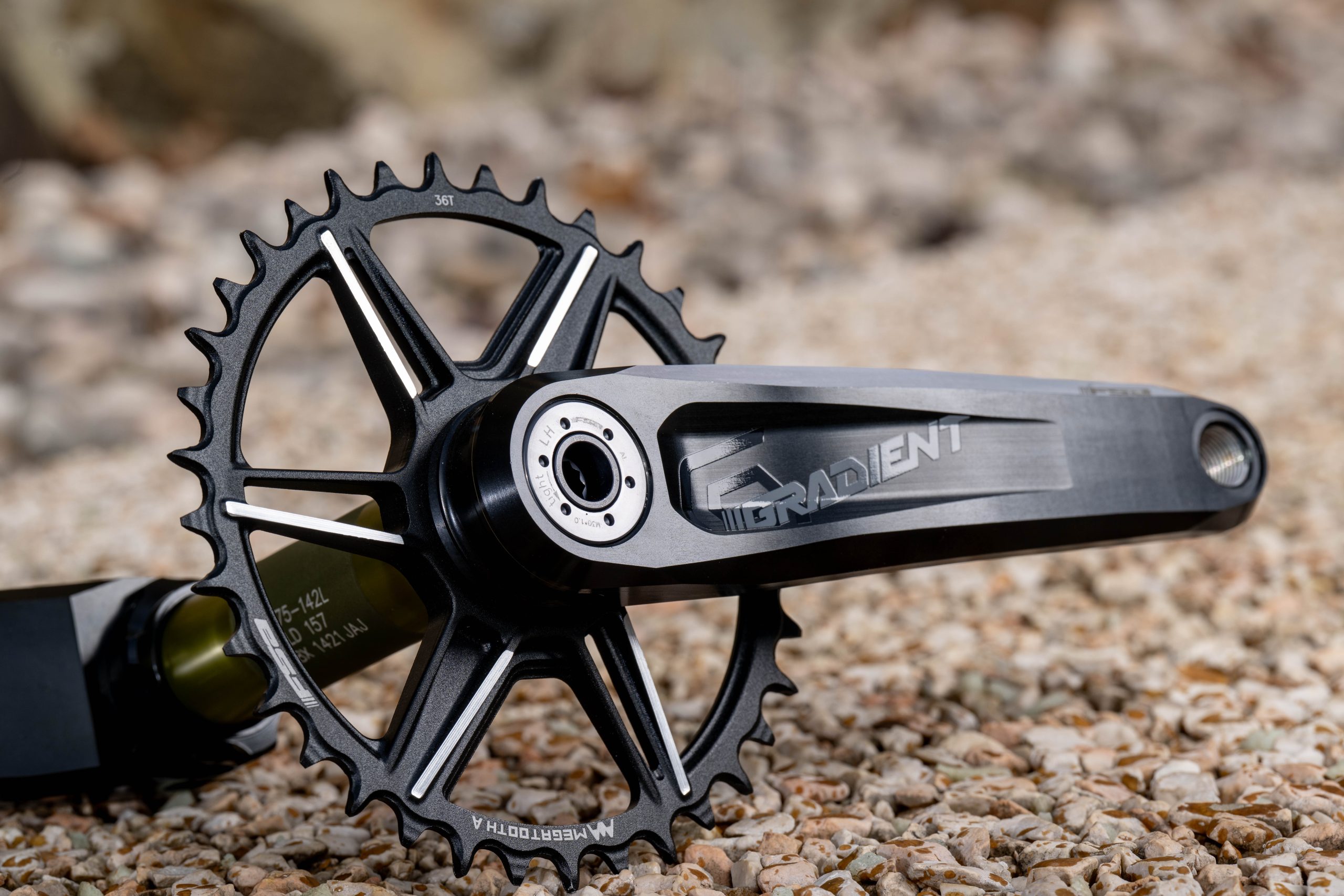
FSA’s new Gradient crankset is made from forged aluminium.
Although not focused on compliance like the bars and wheels, the new Gradient range also includes stems – both fork crown direct-mount and steerer-bolted – and a 1x aluminium crankset.
The Gradient cranks are made from forged aluminium with CNC machine finishing, where two halves of each crank arm are made from a single block of material and then seamlessly bonded together.
They’re available in 165mm, 170mm and 175mm lengths and have 30t to 36t (in 2t increments) chainring options.
Both the direct-mount and steerer-bolted stems are available to match the 31.8mm and 35mm clamp-diameter Gradient handlebars.
The direct-mount stem comes in 45mm and 50mm lengths, while the steerer-bolted stem has 33mm, 45mm and 50mm lengths.
FSA Gradient range prices
A selection of the new Gradient kit. Mountain bike Connection Winter / Mirror Media
It took a few years, but Google’s Pixel phones have risen to the top of the Android ranks, and its new Pixel 9a keeps most of what has made flagship Pixel phones so good, including the slick software and versatile cameras. Despite a revamped design and larger battery, Google has maintained the $499 price point of last year’s phone, undercutting other “budget” devices like the iPhone 16e.
However, hitting this price point involves trade-offs in materials, charging, and—significantly—the on-device AI capabilities compared to its pricier siblings. None of those are deal-breakers, though. In fact, the Pixel 9a may be coming along at just the right time. As we enter a period of uncertainty for imported gadgets, a modestly priced phone with lengthy support could be the perfect purchase.
A simpler silhouette
The Pixel 9a sports the same rounded corners and flat edges we’ve seen on other recent smartphones. The aluminum frame has a smooth, almost silky texture, with rolled edges that flow into the front and back covers.
The push for the latest, greatest and most feature-packed gadgets often results in so much pressure that buying anything else can feel like self-betrayal. And while the Pixel 9a is technically a new device, its chip is six months old. The same goes for its design, which is nearly a carbon copy of its older sibling. To make matters even worse, this phone is meant to be a more affordable entry into the Pixel phone family, which feels like a death sentence for anyone who cares about keeping up with the Joneses (or just the most up-to-date specs). But you know what? That’s okay, because starting at $500, the Pixel 9a offers the best value of any Android phone today.
Design and display: Simple but sturdy
The Pixel 9a looks so similar to the standard model — especially from the front — that it’s hard to tell them apart until you put them side by side. Once you do, you’ll notice the 9a features slightly thicker bezels. But aside from that, there aren’t a ton of differences. You still get a relatively compact 6.3-inch OLED display with a 120Hz refresh rate and a peak brightness of 2,700 nits, just like on the regular Pixel 9. It’s sharp, it’s colorful and it’s simply one of the best displays in this price range.
If you pick both of them up, you may also notice that the 9a is also a touch lighter (6.56 ounces vs 6.98 ounces). That discrepancy is due to Google forgoing Gorilla Glass 3 for the backpanel in favor of recycled polycarbonate (aka plastic). That said, you still get a sturdy aluminum frame (also made from recycled materials) and an IP68 rating for dust and water resistance.
The 9a’s biggest departure by far is that unlike every other Pixel dating back to the Pixel 6, it doesn’t have a large bar or visor housing its cameras. Instead, you get a small teardrop-shaped protrusion that houses the main and ultra-wide shooters. The module is so shallow it practically sits flush against the phone, which makes this one of the few handsets in recent memory that actually sits flat on a table. Granted, this is a really minor design tweak, but as someone who doesn’t like cases, I think it’s a nice touch.
Performance: Good enough speed
Sam Rutherford for Engadget
Just like the rest of the Pixel 9 family, the 9a is powered by Google’s Tensor G4 chip. The major change is that instead of featuring 12GB of RAM, you only get 8GB. That said, unless you’re frequently switching between apps or doing more intense things like gaming or video editing, you aren’t really going to notice a huge difference. In Geekbench 6, both phones posted very similar results with a multi-core score of 4,294 for the 9a and 4,360 for the standard Pixel 9. The biggest potential impact of this for most people is that you won’t be able to have quite as many apps running in the background, and if you switch between them often, you may spend some extra time reloading.
The Pixel 9a also supports nearly all of Google’s AI-powered tools including helpful stuff like car crash detection and Call Assist. You also have access to more advanced tools like Gemini Live (including camera and screen sharing) and Pixel Studio (now with the ability to generate images of people), the latter of which can be a fun way of creating silly custom images to troll your friends. Well, at least that’s what I use it for.
Sam Rutherford for Engadget
However, software support isn’t quite the same as you get on more expensive models. That’s because one app that I’ve grown quite fond of on recent Pixels — Google’s Screenshots app — isn’t available on the Pixel 9a. This is definitely a bummer, because I found the ability to use AI to quickly search through all the screencaps I’ve taken is way better than doing it manually. I’m not entirely sure why it’s not available considering some of the other machine learning-based features that do work. But when asked, a Google representative told me that in order to “maintain a $499 starting price, the company did have to make some trade-offs. As a result, some [of the standard Pixel 9’s] features won’t be available on the Pixel 9a.”
Cameras: Better image quality than phones twice its price
Sam Rutherford for Engadget
When it was first announced, Google claimed the 9a would have the best cameras of any phone under $500. And after considering the Pixel family’s pedigree for excellent image quality, I pitted the phone’s 48-MP main camera and 13-MP ultra-wide cam up against the Samsung Galaxy S25 Ultra to give it a real challenge. And despite costing $800 less, it acquitted itself with aplomb.
In a daytime photo of a cozy coffee shop, the Pixel 9a preserved more details and produced a generally better looking image than a similar pic taken by the S25U (though part of that is due to Samsung’s tendency to oversharpen). But perhaps an even better example of this was when I took photos of a croquette. Not only did the Pixel 9a’s shot look more accurate, it featured better colors and was generally much more appetizing. And in low light, I got similar results with the 9a doing a great job with white balance while capturing sharp, detailed images despite the tough conditions.
While the Pixel 9a doesn’t have a dedicated telephoto lens, Google tries to make up for that with Super Res Zoom, which uses AI to support up to 8x digital zoom. On top of that, the phone has a macro focus mode. That said, you won’t find a specific setting for it in the Camera app, because it activates automatically whenever you get really close to something. You’ll know it’s working when you see a tiny flower icon pop up in the corner of the screen. I found this mode gives you a way to capture a bit more detail, but nailing focus can be a bit finicky. I often had to adjust the phone a tiny bit forward or backward to find the camera’s sweet spot.
Battery Life: The best yet from any Pixel
Sam Rutherford for Engadget
Equipped with a 5,100 mAh power pack, the Pixel 9a just barely beats out its biggest sibling — the Pixel 9 Pro XL (5,060 mAh) — for the most battery capacity among Google’s phones. What’s more, the company claims the 9a has the best runtime of any of its handsets, which based on my testing, isn’t just hot air. On our standard local video rundown test, the Pixel 9a lasted just over 28 hours on a single charge (28:04). That’s half an hour better than what I got from a regular Pixel 9. Not too shabby.
The downside is that the phone’s charging speeds haven’t improved since last year, so you still get lackluster rates when using either wired (23 watts) or Qi wireless (7.5 watts) power adapters. That’s notably slower than what you get from a standard Pixel 9 (27 watts wired and 15 watts wireless), which is probably one of the most compelling reasons you’d want to upgrade to the 9a’s more expensive siblings. To better highlight the phone’s lethargic charging speeds, I put it on a compatible pad at 25 percent battery and after 10 minutes, it only sucked down an extra 5 percent. On the 9a, wireless charging is definitely something you use more for convenience than speed.
Wrap-up
Sam Rutherford for Engadget
Look, the Pixel 9a might not be jam-packed with fancy features and its raw specs aren’t super impressive. I would love to see Google add a true telephoto lens and its charging speeds (both wired and wireless) could be better. But for $500, Google’s most budget-friendly phone covers all the bases and then some.
The 9a’s camera quality can hang with flagships twice its price and it has more than enough performance for all but the most demanding gamers or multitaskers. When you add in support for almost all of Google’s software like the Recorder app, Pixel Studio and more, you get a really compelling package. Plus, the lack of a big camera bump means this thing is surprisingly sleek. If my kids were old enough to need a cell phone, this is what I would buy. For everyone who says that all they want is a simple, solid handset with a nice screen that can take high-quality photos, this thing is basic in all the best ways.
This article originally appeared on Engadget at https://www.engadget.com/mobile/smartphones/google-pixel-9a-review-basic-in-just-the-right-way-130050005.html?src=rss
Blumhouse is teaming up with Facebook parent company Meta to “augment and uplevel” the movie going experience. How? By encouraging people to interact with an AI chatbot while in a theater watching a movie on the big screen. Does this sound like a good idea? Nope! But that hasn’t stopped Hollywood or big tech before.
Merged back in Linux 6.9 was AMD Preferred Core support for Linux for the concept of “preferred cores” with newer Zen processors that are communicated via ACPI CPPC for select cores able to reach a higher maximum frequency or should otherwise be preferred over other cores on the system in the name of maximizing performance. That was a nice step forward for better handling newer Ryzen processors on Linux and matching functionality that had already been working under Microsoft Windows. Of focus more recently has been working on enabling more dynamic Preferred Core support for where the priority of the preferred cores may change at run-time…
Google engineers earlier this year detailed an AMD CPU microcode signature verification vulnerability. For local users with administration/root privileges, it could lead to loading malicious CPU microcode patches on the system. Initially AMD Zen 1 through Zen 4 were affected but the Google security engineers since discovered Zen 5 also could be impacted. BIOS updates are rolling out to address this signature verification issue while the Linux kernel is also being patched for microcode protections on Zen 5…
OpenAI has filed a countersuit against Elon Musk, accusing him of staging press attacks and malicious campaigns on “the social media platform he controls,” as well as of making “harassing legal claims” and a “sham bid for OpenAI’s assets.” In its filing, courtesy of TechCrunch, the ChatGPT-maker said Musk could not tolerate seeing such “success for an enterprise he had abandoned and declared doomed” and had made it his own project to take down the organization. It also said that Musk’s efforts have ramped up in recent months after it announced its plans to restructure and become a for-profit entity with a non-profit division.
Last year, Musk sued OpenAI, accusing it of ditching its nonprofit mission, becoming a “closed-source de facto subsidiary” Microsoft and of violating its foundational agreement to develop generative AI “for the benefit of humanity.” But Musk, OpenAI said in its new lawsuit, is only pretending to represent the public and in truth is seeking to stop it from restructuring. Musk “advised that a similar reorganization was needed to salvage OpenAI’s mission” years ago when he was still part of the company, it said.
After Musk filed a lawsuit last year, OpenAI published old emails from when he was still involved in its operations. The organization said Musk was there when it first started talking about going for-profit and even wanted majority equity, control of the initial board of directors and the CEO position. It also published an email wherein Musk suggested merging OpenAI with Tesla so that the automaker could fund its work. Musk left OpenAI in 2018 and eventually founded his own generative AI company, xAI. The AI company recently purchased X, formerly known as Twitter, for $33 billion.
In a tweet, OpenAI said that Musk’s actions are just “bad-faith tactics to slow down OpenAI” and that he’s spreading false information about the organization, as well as aiming to seize control of its technology for his personal benefit. In its lawsuit, it said that Musk “should be enjoined from further unlawful and unfair action” and should be “held responsible for the damage he has already caused.” OpenAI has to complete its reorganization by the end of this year or its private funding could be cut by as much as $10 billion.
He’s been spreading false information about us. We’re actually getting ready to build the best-equipped nonprofit the world has ever seen – we’re not converting it away.
In response, Musk’s legal team told Reuters that if OpenAI had taken a close look at his offer for the company, then it would know that the bid was serious and not a sham. “It’s telling that having to pay fair market value for OpenAI’s assets allegedly ‘interferes’ with their business plans,” Musk’s lawyer Marc Toberoff told the news agency.
This article originally appeared on Engadget at https://www.engadget.com/ai/openai-files-countersuit-against-elon-musks-bad-faith-attacks-123030861.html?src=rss
Welcome to “Cookbook of the Week.” This is a series where I highlight cookbooks that are unique, easy to use, or just special to me. While finding a particular recipe online serves a quick purpose, flipping through a truly excellent cookbook has a magic all its own.
It’s not much of a secret that I like to tinker with recipes. I like to see how different flours create different biscuit textures, how periodic cooking makes the perfect boiled egg, or how sour cream performs as an “egg wash.” There’s great freedom in being untethered to “the right way” to make recipes. Granted, I use recipes all the time, but if I’m missing an ingredient, I’d rather try a work around than go out and buy that one thing. It’s industrious laziness, and I’ve learned so much because of it.
Clearly not driven by laziness, Katarina Cermelj has moved from tinkering to full-out scientific experimentation in The Elements of Baking. I’m spotlighting this book for Cookbook of the Week because, frankly, we may all be adapting, omitting, and replacing ingredients in our baking soon. It’s good to have a guide so your brownies and cookies don’t turn out like crap.
About the book
TheElements of Baking is a cookbook designed to help readers make gluten-free, vegan, egg-free, or dairy-free recipes. It is not, however, simply a book with allergen-free recipes. While those are in here, the greatest part of this cookbook is that you can learn how to make any existing recipe into an allergen-free recipe. (Nut-free isn’t explicitly mentioned in this book, but I think you can use sunflower seeds when you run into those cases.) Make Junior’s New York Cheesecake recipe into a dairy-free version. Turn your great gram’s Swiss roll into a gluten-free Swiss roll. Whip up a batch of vegan crêpes.
Not only is this helpful for folks like myself who are trying to avoid spending extra money at the grocery store, but this is a must-have resource for anyone with dietary restrictions themselves, or for folks who cook for others with dietary restrictions. You can stop endlessly searching the internet for a vegan and gluten-free buttermilk biscuit recipe that may or may not suck. Cermelj has put in the work of testing and documenting all of her free-from recipe successes in The Elements of Baking in informative yet accessible prose. Though, the best part of this book is getting sucked into the science.
A great cookbook for baking nerds of all levels
The Complete America’s Test Kitchen TV Show Cookbook does a good job appealing to us food nerds with all-around practical food whys and hows, but The Elements of Baking is a special gift to those of us obsessed with baking. Katarina Cermelj front-loads the book with information, including the roles different components play in recipes, how to adapt recipes to free-from diets, and ingredient substitutions you’ll need to get your hands on. There’s even a flow chart for adapting existing recipes so you can see which part of the book to flip to. See what I mean? Do not tempt me with a good time.
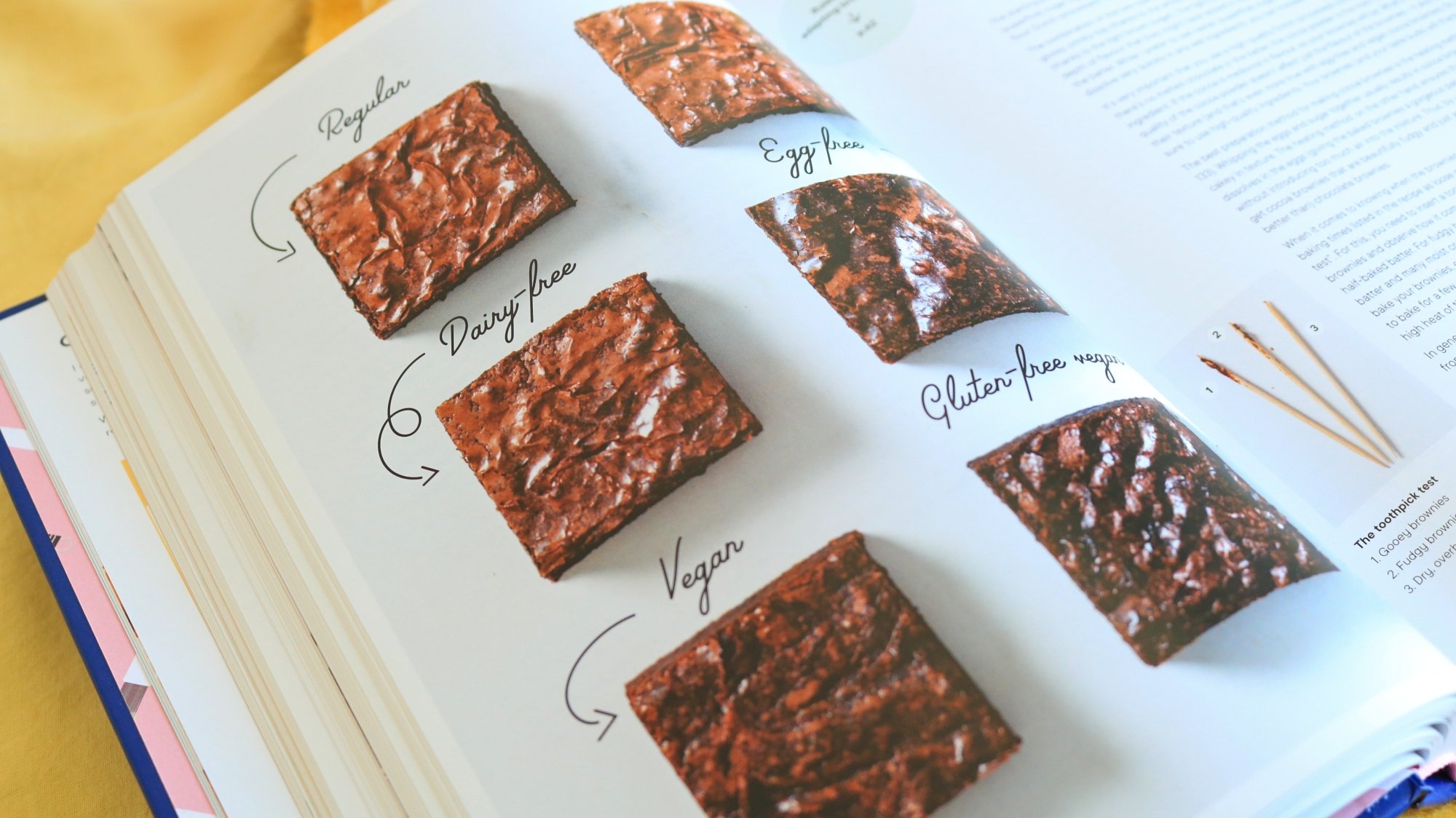
Cermelj doesn’t sugar coat (ha) the truth with free-from recipes. Substituting major ingredients with others can change the product—reducing flexibility, browning, or aeration depending on the swap. But slightly different baked goods can still be just that—good. I really appreciate the thorough case studies and plentiful picture comparisons. You get to see how your dessert should look depending on the version you’re making (maybe a little blonde in color or with more aeration), and cross-sections for cakes so you can check out the crumb’s texture.
The different iterations of brownies in ‘The Elements of Baking.’ Credit: Allie Chanthorn Reinmann
If you’re more of a light-level baking nerd, Cermelj has also considered you. You could really skip the whole front section (with the beautiful flow chart and textbook-esque case studies) and jump to Chapter 5. Here the book is broken into color-coded free-from recipe chapters: Gluten-free, Dairy-free, Egg-free, Vegan, Gluten-free Vegan, and finally Frostings, Icings, Creams, and Curds. You don’t need to know how the sausage is made, just get to your chapter and start baking.
The treats I baked this week
Credit: Allie Chanthorn Reinmann
I’ve been testing out egg replacements for cake recently, so I took the opportunity to try out some egg-less cookie adaptations. I navigated the flow chart and found two pathways for non-cakey cookies: ones that spread and ones that hold their shapes. I decided to try both.
I decided to adapt my regular peanut butter cookie recipe, and the chocolate chip cookie recipe on the back of a Ghirardelli bag of chocolate chips. The peanut butter cookie doesn’t spread, so that substitution is simply a swapped measurement of milk (dairy or non) for each egg. The chocolate chip cookie recipe is typically a cookie that spreads, so for that recipe I was able to use Greek yogurt as the egg replacement.
Both cookies turned out perfectly. The chocolate chip cookie was nearly identical in texture and flavor to the unmodified recipe, and despite how tangy Greek yogurt can be, there was no noticeable flavor from it. The peanut butter cookie was excellent, though it was more crisp and lacked the soft center that the unmodified recipe usually has. Still, if I had a friend with egg allergies, I don’t think I’d hear any complaints.
Although I haven’t had a chance to try them yet, I look forward to testing out the gluten-free bread recipes in this book.
How to buy it
The Elements of Baking is available for purchase online as a hardcover or as an e-book. It’s still relatively new, so you’ll likely see it on displays in your local bookstore.
It’s 2025, so it should be no surprise that another organization has sold its soul (entered into a licensing deal with an AI company) for an undisclosed sum. A new partnership allows UK-based Synthesia to access Shutterstock’s content library for training its latest AI model, EXPRESS-2. This deal isn’t the first of its kind for Shutterstock, which previously teamed up with OpenAI to sell stock images made using AI generator DALL-E 2.
Synthesia creates avatars for corporate videos about topics such as cybersecurity and good communication at work. It aims to use Shutterstock’s video data to “try out new approaches that will improve the performance of EXPRESS-2, and increase the realism and expressiveness of our AI generated avatars, bringing them closer to human-like performances.,” Synthesia stated in a release.
Typically, Synthesia uses actors to create avatars, paying to use their likeness for three years. But, now it will have access to individuals through Shutterstock’s videos. Though these people will not be used to create avatars but to model body language, tone of voice and how people look at a desk or while using a whiteboard, for example.
While, it means that someone featured on Shutterstock won’t suddenly see their face in a workplace video, it does mean that their existence — whether it’s movements or words — is being fed to an AI company. Time and time again, companies are selling AI companies the rights to use individuals’ work without any consultation (or typically compensation) for the creators or participants. Such is the case for licensing deals with the likes of DotDash Meredith, Time and Reuters, to name only a few instances.
This article originally appeared on Engadget at https://www.engadget.com/ai/shutterstock-licenses-its-video-library-to-ai-corporate-video-company-120004055.html?src=rss
Owning a home is great, except for the utility bills that come along with it. The average cost of gas and electricity in the U.S. is $206.22 per month, and if you’re eager to pay less, you’ve probably done the obvious stuff—conserving your use, sealing (or replacing) your windows and doors, or even using your appliances at off-peak times.
But if you’ve covered the basics and your bills still seem too high, it’s time to dig deeper. Sometimes the reasons behind an unusually large utility bill aren’t obvious at all, and have nothing to do with your behaviors or usage patterns. Here are six unexpected—but not entirely unlikely—causes for a higher bill.
Your appliances are older
If your electricity bill has been rising steadily, investigate the appliances in your home. The efficiency ratings on that sticker that came with your new furnace or water heater are for an appliance in brand-new condition. Unfortunately, appliances age pretty rapidly in a lot of ways—in just two years, for example, a refrigerator’s electricity use can climb by 11%.
That doesn’t mean you need to replace your appliances every other year, but just because they’re still working doesn’t mean they’re doing so efficiently. If your utility bills are getting fatter, consider the “useful” life of those appliances—as they get older, they will pull more energy to get the same job done.
Refrigerators: Refrigerators typically last an average of 14 years, but the seals around the door will start to wear out after 8 years or so. As its efficiency falls it will pull more power to compensate, bloating your bills.
Dishwashers: About 10 years.
Washing Machines: About 10 years.
Dryers: About 13 years.
Microwaves: About 9 years.
Ovens, Ranges, and Stoves: Gas models can operate efficiently for as long as 15 years, but electric models have a slightly shorter lifespan, about 13 years.
Another consideration? “Vampire” appliances. You can (and probably should) unplug countertop appliances like coffee makers when they’re not in use, and if you’re going on a long trip, you should consider unplugging stoves, televisions, and other devices that continuously sip on your power, driving up the bill.
Inefficient interior design choices
The layout and design choices in your house can have a big impact on your utility bills, because they can make it harder to heat and cool your home. Even if you set your thermostat to a reasonable temperature and schedule, if your furnace, boiler, or air conditioning system has to work overtime to maintain those temps, your utility bills will skyrocket.
A few considerations when remodeling or rearranging furniture:
Exposed beams. Those rustic beams exposed can add a lot of charm to your space—but also add heating and cooling costs. Exposing beams means there’s no insulation up there, so heat and cold will just transfer through your roof, and your utility bill will rise.
High ceilings. Even without exposed beams, high ceilings make it harder to heat and cool your space, simply because your HVAC system will have to work harder to cool or heat a larger volume of space.
Layout. If you’ve got furniture blocking heat sources or HVAC vents, you’re making your system work twice as hard to heat and cool your home. Similarly, long window treatments that cover radiators can drive up your bills. Opening up your layout as much as possible by removing ‘breaks’ like bookshelves or tall furniture can help cool and warm air to flow freely, making it easier for your systems to control the climate.
Exposed brick. No matter how thick your walls are, brick is not a great insulator. The R-value (a measurement of thermal resistance) of brick is just 3, but exterior walls in most homes need an R-value of at least R-13. Exposing that brick will look amazing, and drive your utility bills skyward.
Your water heater setting
When you install a new water heater, chances are good the default temperature set by the manufacturer is 140ºF. This is pretty hot—hot enough for the water to cause serious burns with just a few seconds of exposure. From an energy perspective, it’s just not an efficient setting, as much of that heat gets lost, forcing your water heater to work harder. You probably won’t notice much difference if you turn it down to 120ºF. This isn’t just a safer bet, it can also save you as much as 22% off your utility bills.
Defective wiring
Defective wiring—whether due to incorrect installation or simple age—can leak electricity, meaning you’re paying for power that you’re not using. Old wiring can also overpower appliances and light fixtures, pumping more juice to them than they need. This not only raises your utility bills unnecessarily, it can stress your appliances and shorten their lifespan.
You’ve got a freeloader
Another possible reason your utility bills are so high? Someone might be stealing from you. Water, electricity, and even your internet service can be diverted and split, leaving you to subsidize someone else’s usage. A few tell-tale signs are extension cords plugged into exterior outlets, mysterious digging around your property, and rogue hoses attached to your exterior spigots.
Cryptocurrency mining
No, really: Depending on where you live, cryptocurrency companies might be driving your utility bills higher. Cryptocurrency mining requires a lot of energy, and many crypto companies have made sweetheart deals with local utilities to get discounted electricity rates—with the costs sometimes passed on to regular consumers. In Texas, for example, residential consumers saw their electric bills rise by almost 5% because of subsidized rates for local crypto enterprises, and there are similar scenarios in New York, Pennsylvania, Georgia, and Arkansas.
Gravel racing has been full of tyre talk of late, from the shift towards larger volumes to racers opting to use low-rolling-resistance tyres from mountain biking.
The issue is that, bar a few exceptions, gravel tyre tech has tried to span the wide variety of gravel riding.
That spectrum covers everything from fast, flat-out shorter-distance gravel racing to multi-day epics, bikepacking and everything in between.
That has meant tyre compounds have tended towards the hard-wearing rather than race-developed options.
Well, it looks as if Maxxis has become the first MTB tyre brand to take gravel tyre tech seriously, introducing its new gravel-specific HYPR-X compound.
Where the mountains meet the road
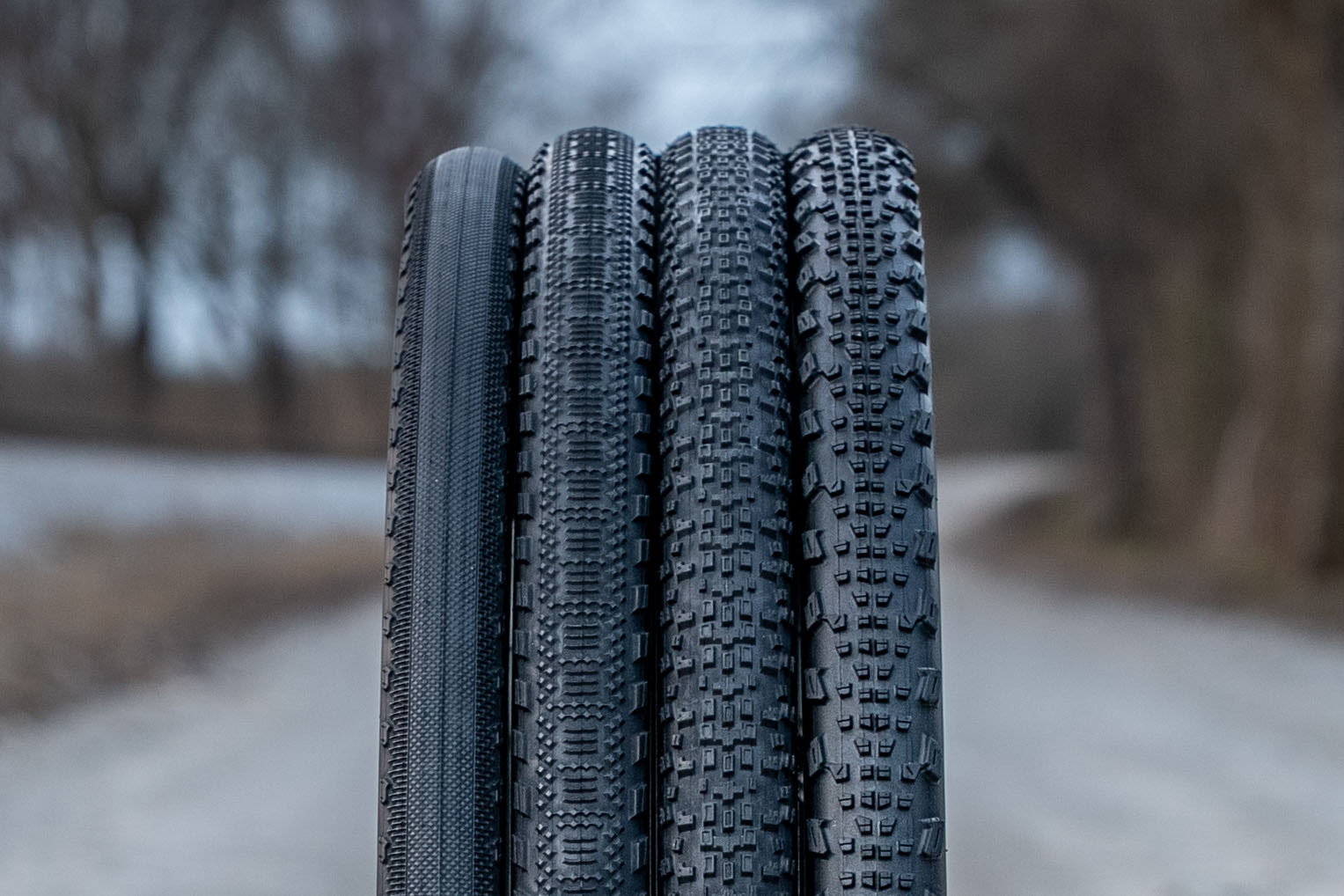
Maxxis’ gravel range has a tread for every condition. Maxxis
The new HYPR-X compound blends the road-racing HYPR compound from the High Road SL tyre with the race-winning MaxxSpeed mountain bike compound.
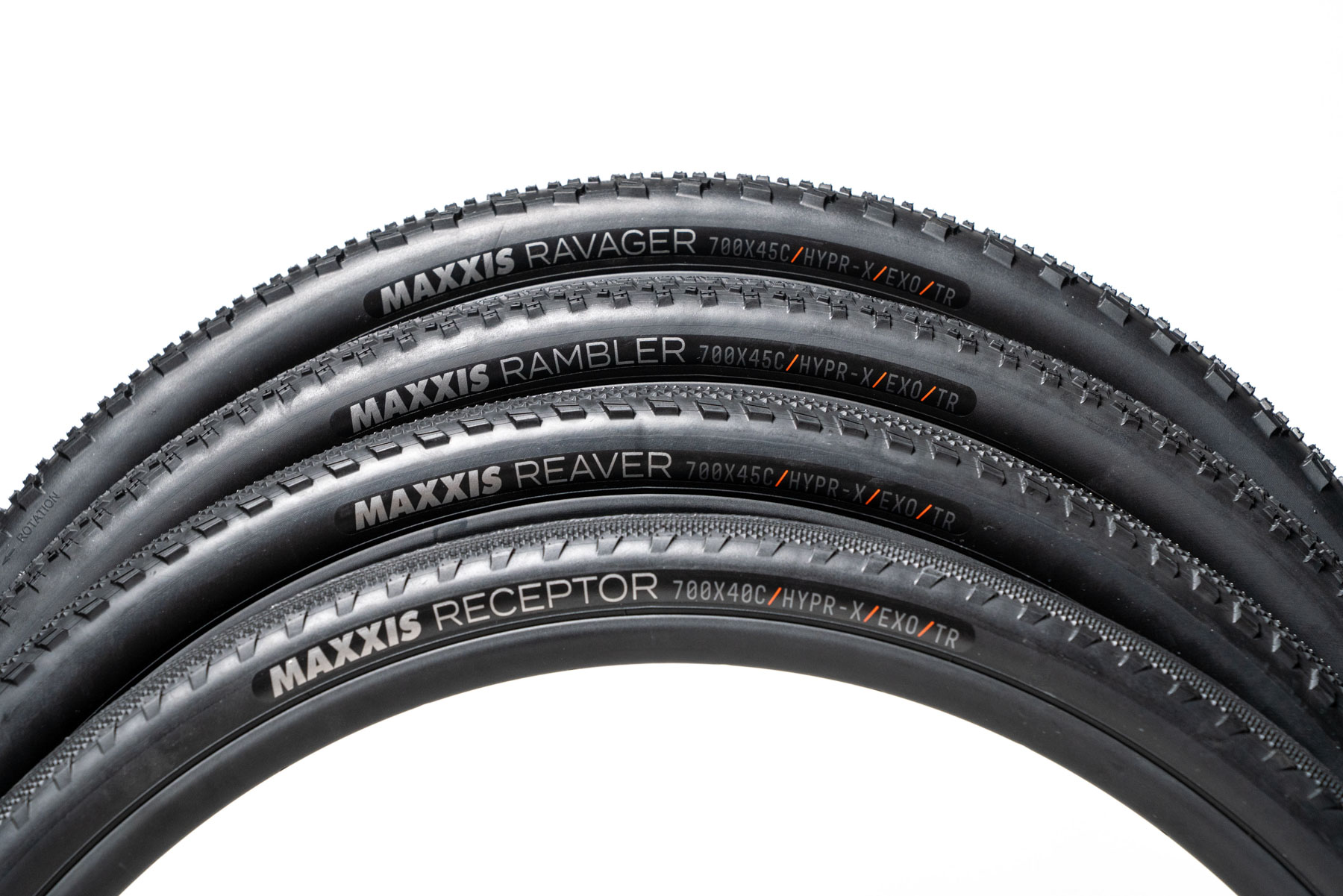
The new HYPR-X compound is being rolled out on Maxxis’ four gravel models – the Receptor, Reaver, Rambler and Ravager.
Higher grip, lower rolling resistance
Maxxis’ new HYPR-X compound has been introduced across the whole gravel tyre range. Maxxis
Maxxis claims the new compound brings with it a 19 per cent improvement in cornering traction and 25 per cent less rolling resistance in lab testing.
The compound is wrapped around Maxxis’ 120 TPI casing, updated from the previous generation with a stronger nylon yarn. Maxxis claims this will vastly increase tread durability.
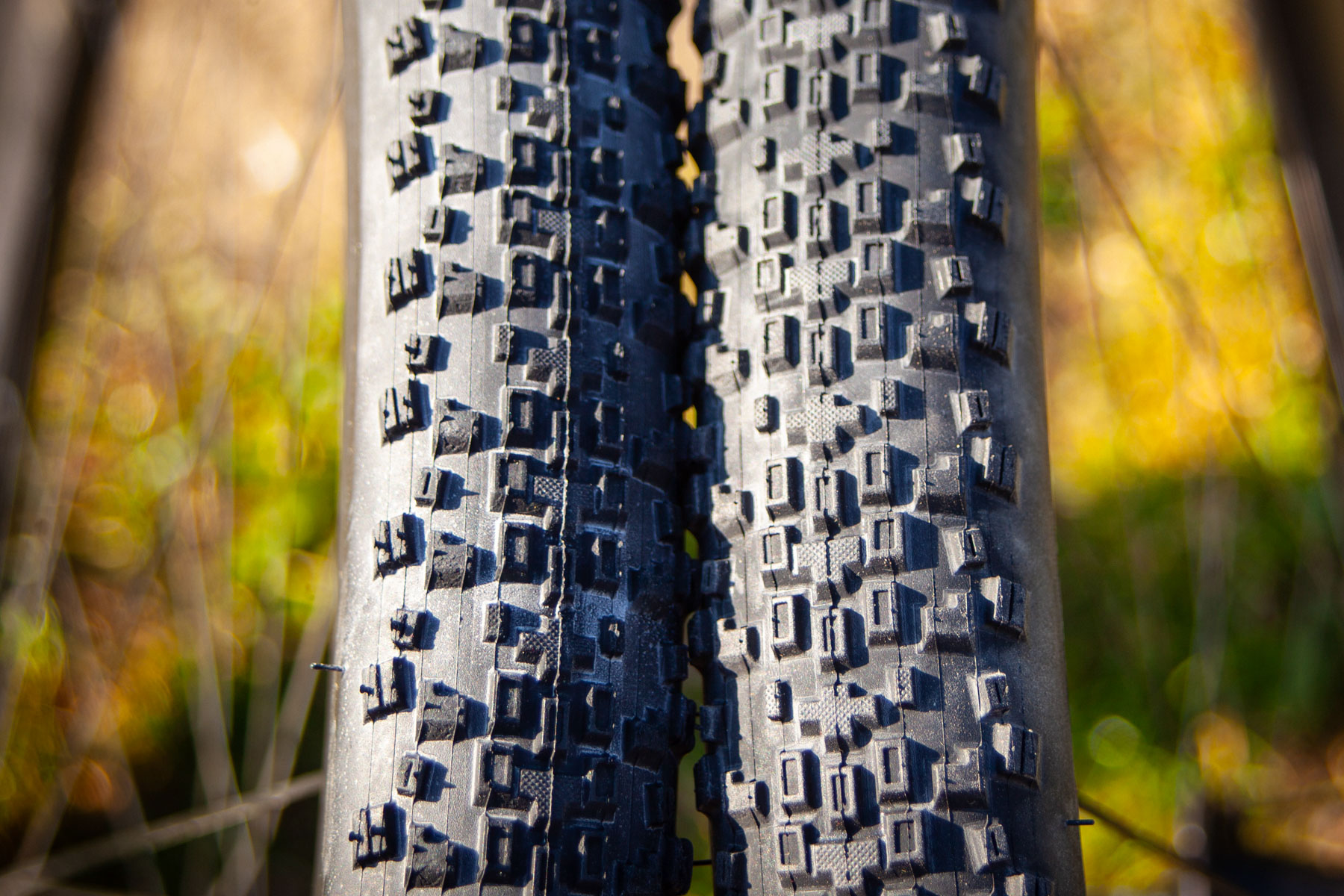
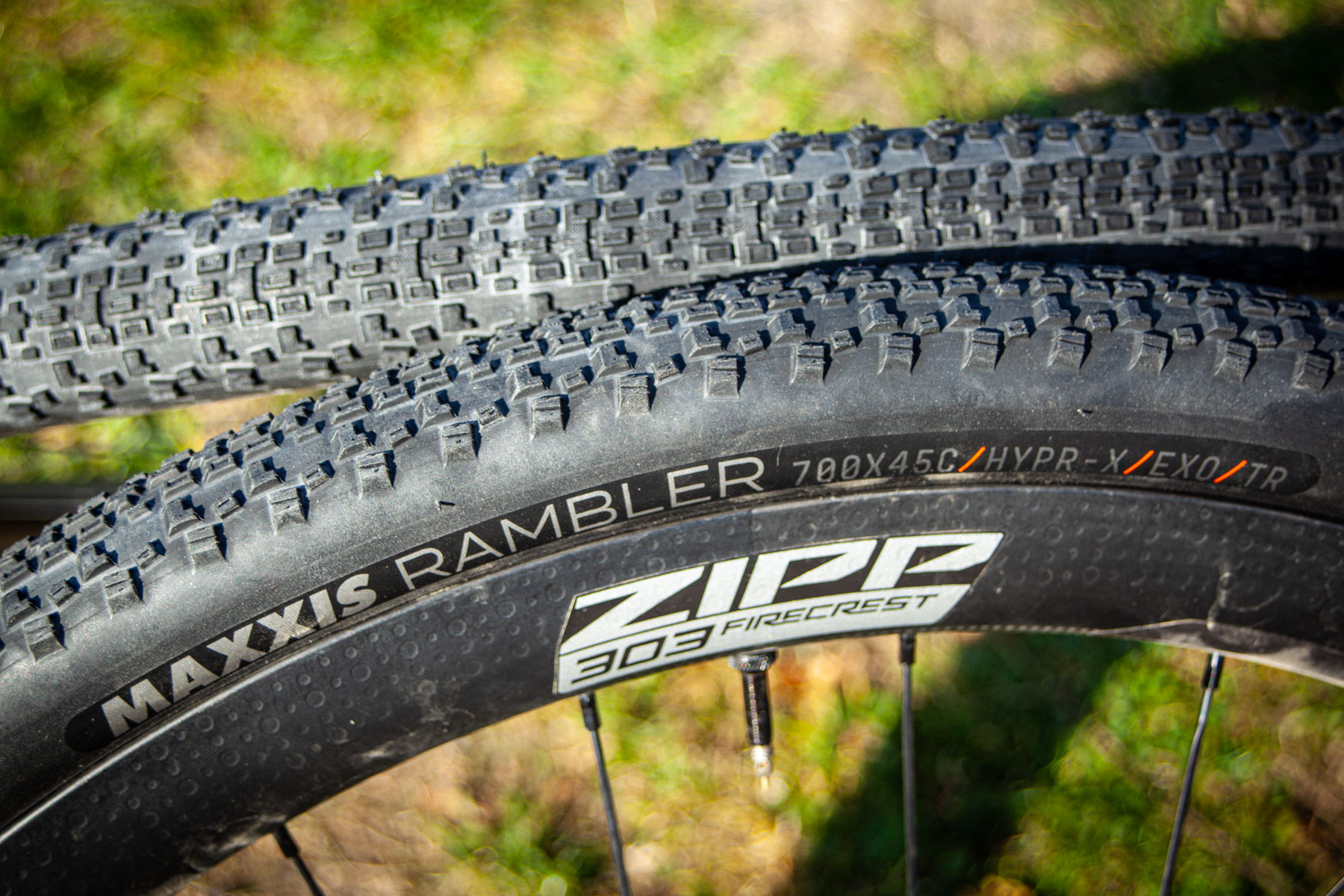
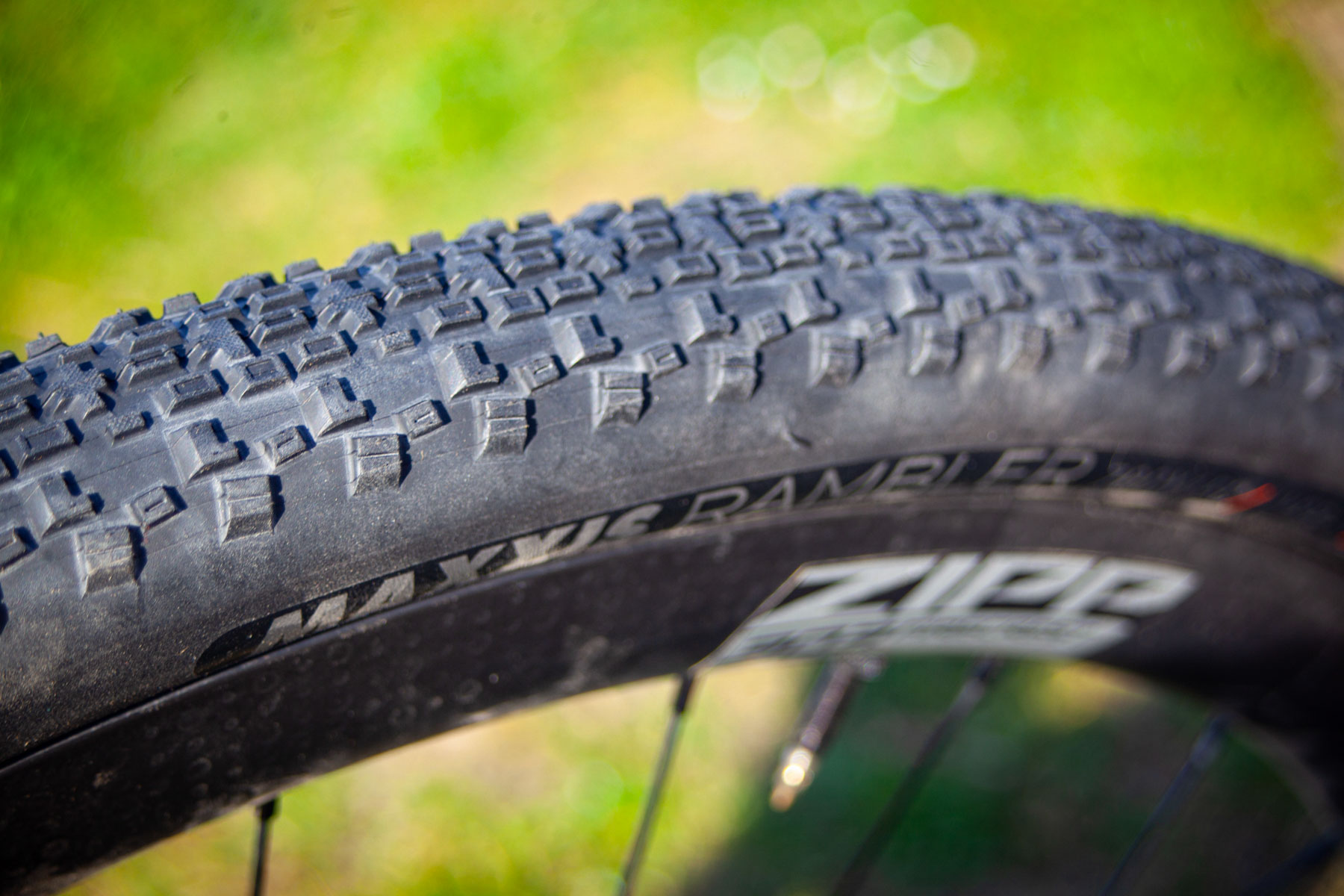
The old Rambler (left) and the new grippier, lower-rolling-resistance HYPR-X Rambler (right). Warren Rossiter / OurMedia
We’ve got a set of the new HYPR-X compound Ramblers and I’ve tested them side-by-side with the current Dual-compound Ramblers over a few brief rides. We’ll follow up with a full test of the new Ramblers soon.
My first impressions are that the new compound has much more elasticity than its predecessor.
The shoulder tread deforms more easily in the corners and the grip feels much more assured. Meanwhile, its roll on the road feels impressively quick for a treaded tyre.
The new Rambler gets updated graphics on its hot patch. Warren Rossiter / OurMedia
Given the previous Rambler was one of the best gravel tyres, this new compound looks to be improving on that very high standard.
The new HYPR-X brings a small increase in weight to 566.3g (45mm), compared to 560.3g (45mm) on the previous Dual-compound tyre.
Maxxis Rambler HYPR-X specifications
The new compound has a much more elastic feel to its pronounced shoulder tread. Warren Rossiter / OurMedia
The Reaver and the Rambler with HYPR-X and new casing will be available first in 700x45c, with other sizes arriving over the next three months.
All sizes of the Ravager and the Receptor are scheduled to roll out in the third quarter of 2025.
Maxxis has confirmed pricing will be the same as its current gravel tyres.
With days 1 and 2 of Zwift Community Live 2025 ridden and uploaded, I was feeling the fatigue in the legs. But the weather was beautiful in Mallorca, the vibe at ZCL was perfect, and nothing was going to stop me from taking on the toughest ride of the week up Sa Calobra! Here’s how the final day of ZCL unfolded for me…
Ride Plan
Today I was again taking on the “Uber Pretzel” version of the three ride options. If ZCL had a “Queen Stage”, this was it: as much distance as the day before, but twice as much elevation! We would ride from sea level up to the top of the famous Sa Calobra climb, then descend it all the way down to sea level before turning around to climb our way out:
I really wasn’t sure how well my tired legs would handle all the elevation, so I resolved to take it easy and enjoy the ride so I could finish ZCL on a high note.
Ride Summary
Getting Started
Once again, the dining room was buzzing for breakfast as all the Uber riders chatted about their day. Sa Calobra is a bucket list climb for many, so there were lots of excited – if not a little nervous – riders in the room. I was one of them.
After a quick breakfast full of clean carbs (whole grains, fruit, and yogurt) I kitted up and headed out to the starting area.
Since I wanted to make sure I saved my legs for the climbs without holding up my group too much, I resolved to join a more medium-paced group instead of one of the first, faster groups. I was also looking to ride with some Zwifters I hadn’t ridden with yet, so I joined the group led by Zwift’s Director of Women’s Strategy, Kate Veronneau. (I knew from prior experience that Kate is both a very strong rider and an experienced ride leader. She wouldn’t steer us wrong!)
Let the Fun Begin: Coll de sa Batalla
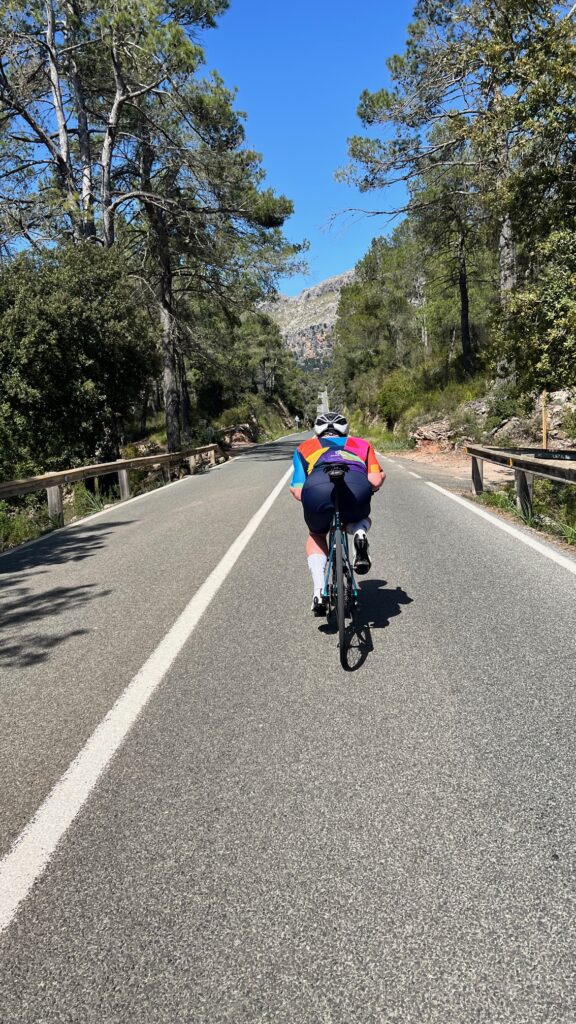
The first 10km of the ride were quite flat, and the group got into a rhythm. Then the ground sloped up so we were climbing – but this was just the easy stuff. 25km in, the switchbacks began as we made our way up the Coll de sa Batalla (7.9km at 6%):
This is where most of the group pulled away from me, and I just rode my own ride, enjoying the switchback climb and valley views as I lugged my “overmuscled” physique toward Sa Calobra.
Solo climbing time on Coll de sa BatallaValley view from Coll de sa Batalla
I caught up to the group where they’d stopped at the Repsol gas station, and I thought we were close to the start of the Sa Calobra descent.
We were not.
Thinking we didn’t have much climbing left, and with legs that felt decently fresh, I followed the front two guys (one wearing an Everesting jersey, which should have tipped me off) who quickly got away from the rest of the group as we put in a solid climbing effort to finish off Coll de sa Batalla.
A Surprising Climb
A fun rollercoaster descent followed, lulling me into a sense of security. Then the road pitched upward – surprisingly so – and I realized I had made a bit of a mistake. We still had another 3.1km at 6% to climb to the top of Coll dels Reis before we could descend the other side (which is Sa Calobra). I was soon caught and (once again) passed by most of the group. Ha!
We regrouped at the top of Coll dels Reis on the Sa Calobra side, and Kate explained that we could hang out there, at the top of Sa Calobra. Or we could descend it, then turn around and climb back up. Everyone in our group was there to ride Sa Calobra, so down we went.
Descending Sa Calobra
It’s hard to adequately describe my experience descending Sa Calobra for the first time. It’s such an otherworldly and unique road. The smooth, serpentine turns seem to undulate endlessly, contrasting with the rocky mountainside as you look down and try to wrap your head around how it’s all laid out.
The road was smooth and dry, the temperature was cool but not cold, and there were no cars getting in the way. I took advantage of it and enjoyed the descent, staying off the brakes when it felt safe (because fast is fun), but not taking any unnecessary risks, either.
It was perhaps halfway down that I began passing Zwifters who were in the first, fast group and on their way up the climb. Nick Nellis from TFC, Nick Kalkounis from ZwiftHQ, Jeff Linder from NorCal Cycling, Nathan Guerra, Jason Stern from DIRT… I yelled “Allez allez!” at everyone I recognized, flashing a smile as they suffered their way up the climb. I knew I’d be there soon enough.
Soon enough I was down at the bottom with a whole lot of cyclists, and it was time to turn around and pay the piper.
Climbing Sa Calobra
I told the two riders with me that I was going to treat this like a Zwift TTT race: holding what seemed like too easy of a pace at the start so I still had something to give at the end. So I chugged along around 220W, somewhere between 2.5 and 3 W/kg, and just enjoyed this infamous climb.
(At least, I think that’s where my power was. I’m not convinced my Garmin pedals were reading accurately, since my L/R balance was way off, indicating at least one misreading pedal.)
In the early part of the climb, I met one of the Zwifters with me: Vlad. He’s from the Ukraine, and lives in Kiev. He’s only ridden indoors, on Zwift, since the war began. ZCL was his first opportunity to ride outside in over three years. Wow.
Zwifters from later groups began zipping past us, descending as we climbed, and we started yelling “Ride On!” to everyone we recognized. You could hear the Ride Ons all over the mountain as Zwifters shared the love. Super fun!
The end of the climb actually came a bit earlier that I’d expected, but that’s not to say it felt short. The Zwift support van was parked perhaps 100 meters before the finish line of the Strava segment, so as I neared the van I heard yells of “push all the way to the sign!” Everyone had to go hard to the line.
I clocked a blazing 50:28 on the official segment, earning me 81,823rd place out of 165,549 riders. Top 50%!
All Downhill from Here
We regrouped at the support van, then made our way together to the coffee shop for a welcome shot of caffeine and cake. Our 2000 meters of climbing were essentially done, we just had a mostly-downhill 40km left to knock out.
Cyclists know that’s a great way to end a ride. Top-knotch route design right there.
It was probably bad form for me to enjoy a cheeky supertuck off the front of the group on a long, straight section of downhill. But it felt like such a fun and Zwifty thing to do. (Take that, UCI!)
SupertuckingSpinning with the Zwinfluencers
And it’s also possible that a few others and myself enjoyed ourselves a bit too much, relishing the speed of the rolling descent. Kate eventually rolled up to the front to get things slowed down and grouped together, and we began making our way toward home as a unit once again… slowly.
Mercifully, when a faster group of Zwifters rolled by, Kate said we could join them if we wanted to roll faster, so a few of us did just that. That’s how I ended up riding next to Ayesha McGowan (@ayesuppose) and Carolyn Carter (@la_triathlete) in a zippy group of influencers (Zwinfluencers?) who towed me the rest of the way into Mallorca.
The day was far from over, though. After a shower and some hangout time with Monica to hear how her ride went, we headed for dinner (fajitas!) followed by the final fireside chat hosted by Matt Stephens.
This third chat was by far my favorite of the three nights. Matt’s two guests were Sirs Chris Hoy and Mark Cavendish, and those three men held everyone’s attention for over an hour. The conversation was expertly guided by Matt and included serious notes (Sir Chris talking about his stage 4 cancer diagnosis) but also lots of stories and laughs.
Stephens with Hoy and CavThanking the ride leaders and ZHQ crew
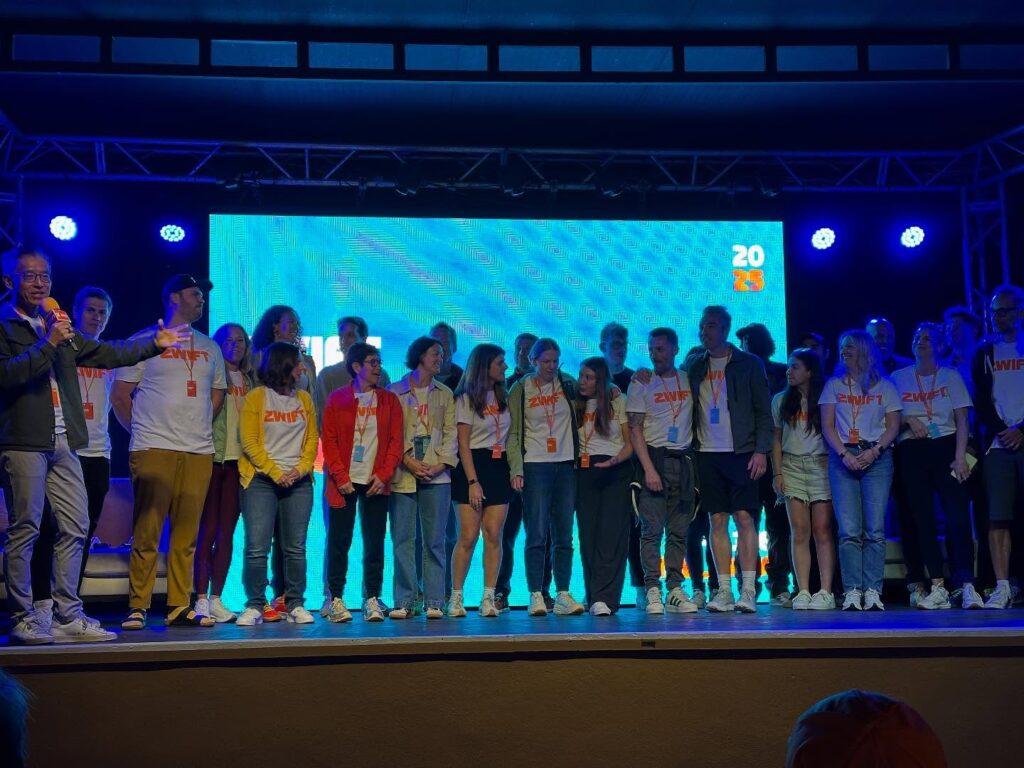
Eric Min came up next, thanking everyone for coming, inviting the Zwift staffers and ride leaders up for a round of applause, and promising a ZCL for 2026. (Everyone cheered, because everyone wants to do it again!)
We ended the night with a 10-minute ZCL highlights video, which I wish Zwift had uploaded somewhere because I’d include it here. (It was so well done, and really captured the positive energy and community vibes of the week.) It felt like the perfect ending to an incredible few days.
That’s a Wrap
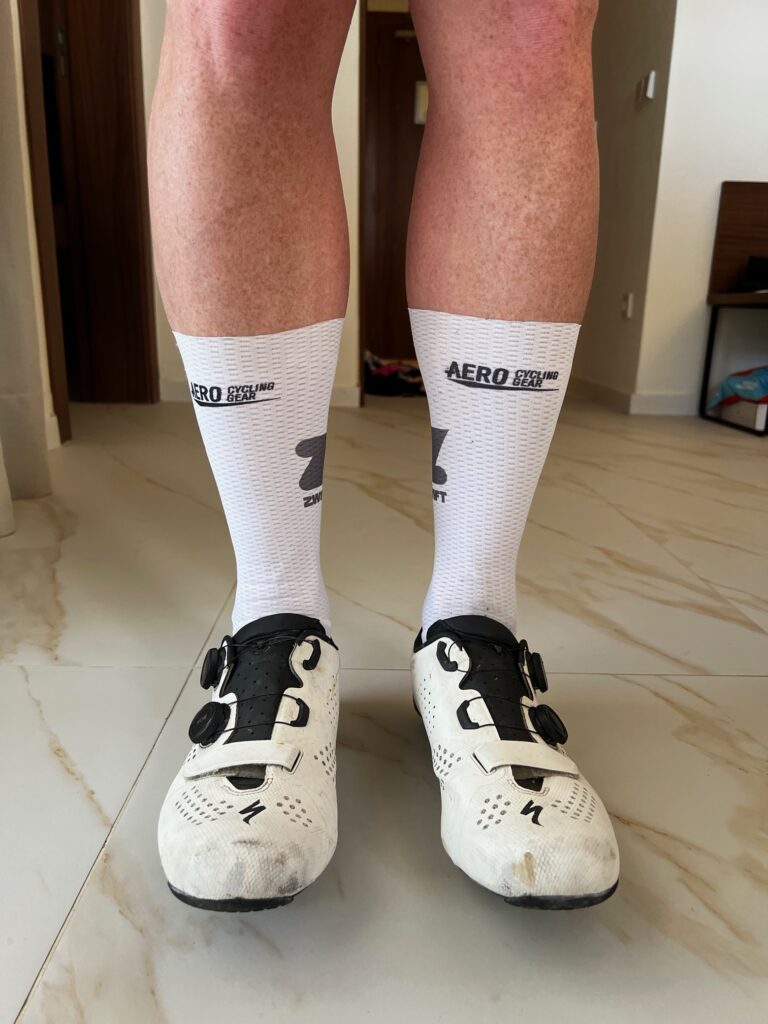
I may write one more post with additional thoughts on all things ZCL, because there was so much I haven’t shared in these daily summaries. But since it’s past midnight here in St. Andrews, Scotland, where Monica and I have extended our European stay, for now I’ll leave you with a #humblebrag shot of the sweet aero socks Zwift gave everyone at ZCL:
Amazon has to operate like the “world’s largest startup” as it works to meet demand for AI and cut bureaucracy in its ranks, Chief Executive Officer Andy Jassy said in his annual letter to shareholders. From a report: “If your customer experiences aren’t planning to leverage these intelligent models, their ability to query giant corpuses of data and quickly find your needle in the haystack, their ability to keep getting smarter with more feedback and data, and their future agentic capabilities, you will not be competitive,” Jassy wrote in the letter on Thursday. “It’s moving faster than almost anything technology has ever seen.”
Amazon, like most of the largest technology companies, has bet heavily on artificial intelligence, committing much of its $100 billion in planned capital expenditures this year to AI-related projects.
A family altar in the Maya city of Tikal offers a glimpse into events in an enclave of the city’s foreign overlords in the wake of a local coup.
Archaeologists recently unearthed the altar in a quarter of the Maya city of Tikal that had lain buried under dirt and rubble for about the last 1,500 years. The altar—and the wealthy household behind the courtyard it once adorned—stand just a few blocks from the center of Tikal, one of the most powerful cities of Maya civilization. But the altar and the courtyard around it aren’t even remotely Maya-looking; their architecture and decoration look like they belong 1,000 kilometers to the west in the city of Teotihuacan, in central Mexico.
The altar reveals the presence of powerful rulers from Teotihuacan, who were there at a time when a coup ousted Tikal’s Maya rulers and replaced them with a Teotihuacan puppet government. It also reveals how hard those foreign rulers fell from favor when Teotihuacan’s power finally waned centuries later.
A change merged yesterday to the Intel Mesa graphics driver code lessens a restriction around the amount of system memory (RAM) that can be used by processes for the Vulkan system heap. This will allow more games/apps to work with the Intel integrated graphics that previously exceeded the driver-enforced limits but at the risk of running into broader out-of-memory behavior if under too much memory pressure…