
New episodes of season 2 of The Last of Us are premiering on HBO every Sunday night, and Ars’ Kyle Orland (who’s played the games) and Andrew Cunningham (who hasn’t) will be talking about them here every Monday morning. While these recaps don’t delve into every single plot point of the episode, there are obviously heavy spoilers contained within, so go watch the episode first if you want to go in fresh.
Things fell apart at the end of last season when the Fireflies (a group of survivalists/doctors/scientists/etc.) may or may not have been threatening to kill Ellie in order to research their cure, which made Joel go on a murder rampage, which he then lied to Ellie about. We fade to black as they make their way back toward the one semi-functioning human settlement they’d visited on their travels, where Joel’s brother and his family also happen to live.
Going into this season: I know nothing. I don’t really engage in TV show fandoms or keep up with casting announcements or plot speculation. And the only thing I know about the second game going into this is a vague sense that it wasn’t as well-received as the first. In short, I am as a newborn baby, ready to take in the second season of a show I kind of like with the freshest possible eyes.
Without giving too much away, I think the second game misses a lot of what made the narrative of the first one special and gets sidetracked in a lot of frankly gratuitous directions. That said, this premiere episode of the second season drew me in more than I expected.
One jarring thing (in a good way) about both the second game and the second season is suddenly seeing Joel and Ellie just existing in a thriving community with electric lights, music, alcohol, decent food, laughter, etc., etc. After the near-constant precarity and danger they’ve faced in the recent past, it really throws you for a loop.
And while Joel will happily fix your circuit breaker or re-string your guitar, he emphatically rejected a needs-of-the-many-outweigh-the-needs-of-the-few approach at the end of last season. When stuff breaks bad (and I feel confident that it will, that’s the show that it is) these may not be the best people to have in your corner.
My only real Game Question for you at the outset is the big one: Is season 2 adapting The Last of Us Part II or is it doing its own thing or are we somewhere in between or is it too early to say?
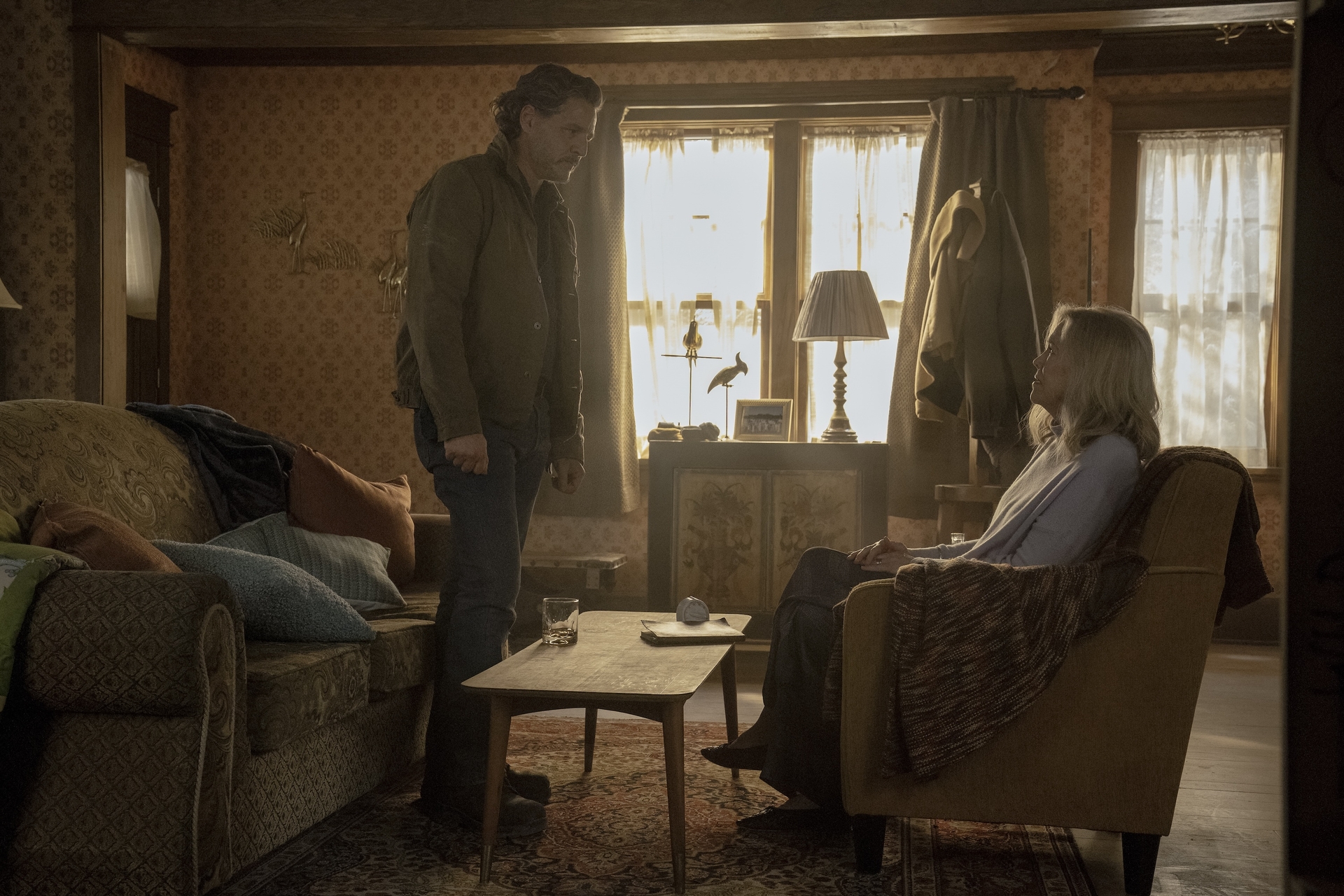
“Oh, dang, is that Catherine O’Hara?”
The debut episode is also already showing a willingness to move around scenes from the game to make them fit better in chronological order, which I’m already appreciating.
One thing I think the show is already doing well, too, is showing 19-year-old Ellie “acting like every 19-year-old ever” (as one character puts it) to father figure Joel. Even in a zombie apocalypse, it’s a relatable bit of character-building for anyone who’s been a teenager or raised a teenager.
I didn’t know if it was a direct adaptation, but I did notice that the show’s video gamey storytelling reflexes were still fully intact. We almost instantly end up in a ruined grocery store chock-full of environmental storytelling (Ellie notes a happy birthday banner and 2003’s Employee of the Year wall).
And like in any new game new season of a TV show, we quickly run into a whole new variant of mushroom monster that retains some of its strategic instincts and can take cover rather than blindly rushing at you. Some of the jump scares were so much like quick-time events that I almost grabbed my controller so I could press X and help Ellie out.
SISU Reissu: France Race Series Begins Today
Why ride the new roads in Zwift’s France when you can race them? The team at SISU Racing is holding the next edition of their popular SISU Reissu series. It’s the France Reissu, and it happens April 14-20!
The Finnish word Reissu roughly translates as a journey or trip, embodying the concept of travel, adventure, or excursion. The Reissu is a 3 or 5-stage GC series. The rider, and team, in each grade who complete the series with the lowest cumulative time will be crowned with the Johtaja Jersey (symbolically at this stage). Stages 1, 3, and 4 comprise a 3-Stage GC, or race all 5 for the full journey.

See upcoming SISU events at zwift.com/events/tag/sisu >
Schedule (5 Stage Series)
- Stage 1: Monday 14 April – Bon Voyage, France x 1 lap
- Stage 2: Tuesday, 15 April – Three Musketeers, France x 1 lap
- Stage 3: Wednesday, 16 April – Croissant, France x 1 lap [iTT]
- Stage 4: Saturday, 19 April – Gentil 8, France x 1 lap
- Stage 5: Sunday, 20 April – Ven-10, France x 1 lap
For easy sign-on, join the SISU Racing Club in the Companion App and join the conversation by joining the SISU Racing Discord.
More Info
- All events are mass starts with all riders visible.
- Riders enter according to their Zwift’s Racing Score.
- A ZwiftPower profile is mandatory to be included in the GC.
- Your best time will count if you race a stage in multiple zones.
- The team GC is based on a team’s best three finishers in each stage.
- ZPower and riders without heart rate data will be removed from the results.
- Riders who upgrade during the first four stages will be classified in their higher grade.
- iTT will be a mass start using TT bikes with no draft.
For results and much more visit .sisu.racing/reissu.

Can AI Help Manage Nuclear Reactors?
America’s Department of Energy launched a federally funded R&D center in 1946 called the Argonne National Laboratory, and its research became the basis for all of the world’s commercial nuclear reactors.
But it’s now developed an AI-based tool that can “help operators run nuclear plants,” reports the Wall Street Journal, citing comments from a senior nuclear engineer in the lab’s nuclear science and engineering division:
Argonne’s plan is to offer the Parameter-Free Reasoning Operator for Automated Identification and Diagnosis, or PRO-AID, to new, tech-forward nuclear builds, but it’s also eyeing the so-called dinosaurs, some of which are being resurrected by companies like Amazon and Microsoft to help power their AI data centers. The global push for AI is poised to fuel a sharp rise in electricity demand, with consumption from data centers expected to more than double by the end of the decade, the International Energy Agency said Thursday. The owners of roughly a third of U.S. nuclear plants are in talks with tech companies to provide electricity for those data centers, the Wall Street Journal has reported.
PRO-AID performs real-time monitoring and diagnostics using generative AI combined with large language models that notify and explain to staff when something seems amiss at a plant. It also uses a form of automated reasoning — which uses mathematical logic to encode knowledge in AI systems — to mimic the way a human operator asks questions and comes to understand how the plant is operating [according to Richard Vilim, a senior nuclear engineer within the lab’s nuclear science and engineering division].
The tool can also help improve the efficiency of the personnel needed to operate a nuclear plant, Vilim said. That’s especially important as older employees leave the workforce. “If we can hand off some of these lower-level capabilities to a machine, when someone retires, you don’t need to replace him or her,” he said… Part of the efficiency in updating technology will come from consolidating the monitoring staff at a utility’s nuclear plants at a single, centralized location — much as gas-powered plants already do.
It hasn’t found its way into a commercial nuclear plant yet, the article acknowledges. But the senior nuclear engineer points out that America’s newer gas-powered plants ended up being more automated with digital monitoring tools. Meanwhile the average age of America’s 94 operating nuclear reactors is 42 years old, and “nearly all” of them have had their licenses extended, according to the article. (Those nuclear plants still provide almost 20% of America’s electricity.)


Read more of this story at Slashdot.
An Ars Technica history of the Internet, part 1
In a very real sense, the Internet, this marvelous worldwide digital communications network that you’re using right now, was created because one man was annoyed at having too many computer terminals in his office.
The year was 1966. Robert Taylor was the director of the Advanced Research Projects Agency’s Information Processing Techniques Office. The agency was created in 1958 by President Eisenhower in response to the launch of Sputnik. So Taylor was in the Pentagon, a great place for acronyms like ARPA and IPTO. He had three massive terminals crammed into a room next to his office. Each one was connected to a different mainframe computer. They all worked slightly differently, and it was frustrating to remember multiple procedures to log in and retrieve information.
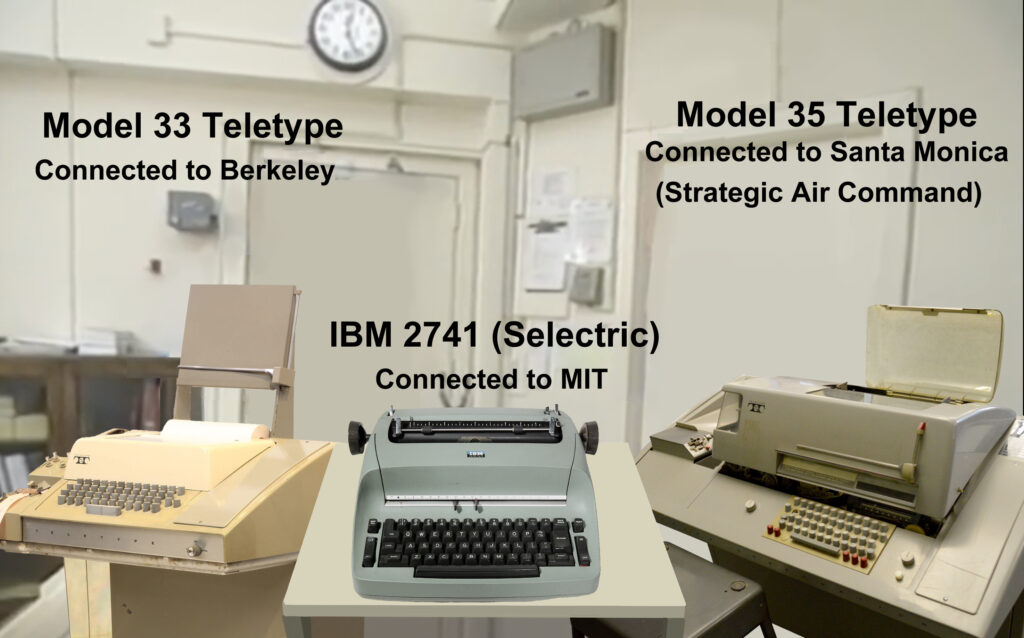
Author’s re-creation of Bob Taylor’s office with three teletypes.
Credit:
Rama & Musée Bolo (Wikipedia/Creative Commons), steve lodefink (Wikipedia/Creative Commons), The Computer Museum @ System Source
In those days, computers took up entire rooms, and users accessed them through teletype terminals—electric typewriters hooked up to either a serial cable or a modem and a phone line. ARPA was funding multiple research projects across the United States, but users of these different systems had no way to share their resources with each other. Wouldn’t it be great if there was a network that connected all these computers?
Man who threw bottle that hit Mathieu van der Poel in “attempted manslaughter” at Paris-Roubaix hands himself in to police
The spectator who threw a water bottle at Mathieu van der Poel, hitting the Dutchman in the face as he soloed to a third consecutive Paris-Roubaix victory on Sunday, has handed himself in to police, according to Belgian media outlet, Nieuwsblad.
Van der Poel was hit by the bottle on the Templeuve sector, with approximately 30km of the race remaining.
On Monday morning, Nieuwsblad reported that an unidentified man had handed himself in to police in West Flanders and reportedly expressed his regret about the incident.
Speaking to Sporza after the race, van der Poel described the incident as “attempted manslaughter”.
“We can’t let this pass,” said van der Poel.
“It was a full bidon, and it hurt a lot. If I take that bidon on my nose, it’s broken.
“Hopefully, the police can identify the man because there has to be a trial for this.
“This is attempted manslaughter. If the UCI doesn’t take action, then we will do it with the team.”
Van der Poel crossed the finish line at the Roubaix velodrome one minute and 18 seconds ahead of defending Tour de France champion – and Paris-Roubaix debutant – Tadej Pogačar.
Pogačar, the first defending Tour winner to ride Paris-Roubaix since Greg LeMond in 1991, had teed up a thrilling finale by matching van der Poel throughout the race.
The pair were leading until sector nine, approximately 40km from the finish, when Pogačar went into a tight right-hand corner too fast, and crashed on the grass verge lining the cobbles.
Pogačar didn’t require a bike change but lost time due to a dropped chain, and dropped further behind when he suffered a subsequent front-wheel puncture.
Van der Poel also punctured on the run-in to Roubaix but a quick bike change saw the 30-year-old re-establish his advantage to become the third rider in history – after Octave Lapize (1909-1911) and Francesco Moser (1978-1980) – to win Paris-Roubaix three times in a row.
18 new VR Games, DLCs, and trailers for Meta Quest, Playstation VR 2 & PC VR

A PC hit comes as VR remake on Meta Quest, Lord of the Rings fans can conduct film music in VR and lots more VR gaming news.
The post 18 new VR Games, DLCs, and trailers for Meta Quest, Playstation VR 2 & PC VR appeared first on MIXED Reality News.
MX Linux 23.6 Arrives with Debian 12.10 Base and Kernel 6.14 Support
Debian-based MX-23.6 refreshes the MX-23 series with new kernels, UI enhancements, and fixes for Xfce, NVIDIA, UEFI tools, and more.
The EFF’s ‘Certbot’ Now Supports Six-Day Certs
10 years ago “certificate authorities normally issued certificate lifetimes lasting a year or more,” remembers a new blog post Thursday by the EFF’s engineering director. So in 2015 when the free cert authority Let’s Encrypt first started issuing 90-day TLS certificates for websites, “it was considered a bold move, that helped push the ecosystem towards shorter certificate life times.”
And then this January Let’s Encrypt announced new six-day certificates…
This week saw a related announcement from the EFF engineering director. More than 31 million web sites maintain their HTTPS certificates using the EFF’s Certbot tool (which automatically fetches free HTTPS certificates forever) — and Certbot is now supporting Let’s Encrypt’s six-day certificates. (It’s accomplished through ACME profiles with dynamic renewal at 1/3rd of lifetime left or 1/2 of lifetime left, if the lifetime is shorter than 10 days):
There is debate on how short these lifetimes should be, but with ACME profiles you can have the default or “classic” Let’s Encrypt experience (90 days) or start actively using other profile types through Certbot with the –preferred-profile and –required-profile flags. For six day certificates, you can choose the “shortlived” profile.
Why shorter lifetimes are better (according to the EFF’s engineering director):
If a certificate’s private key is compromised, that compromise can’t last as long.
With shorter life spans for the certificates, automation is encouraged. Which facilitates robust security of web servers.
Certificate revocation is historically flaky. Lifetimes 10 days and under prevent the need to invoke the revocation process and deal with continued usage of a compromised key.


Read more of this story at Slashdot.
The Last of Us season two premiere: ‘Future Days’ highlights the fracture between Ellie and Joel
Spoilers follow for The Last of Us season two, episode one
The heart of all things The Last of Us, whether it’s the games or the first season of the HBO adaptation, is the relationship between Joel and Ellie. It was brought to life in remarkable fashion by Pedro Pascal and Bella Ramsey in season one; the pair’s chemistry was the show’s undeniable high point. So it’s a bit of a shock that they only share a few minutes of screen time together in the season two premiere “Future Days” — and that their time together is strained to say the very least.
That all comes near the end of the episode, though. Backing up a bit, the show resumes exactly where we left off, with Ellie saying “okay” to Joel’s lies about what happened in the season one finale. That episode saw him decimate the Fireflies to save the immune Ellie. The Fireflies were hoping to make a cure for the cordyceps infection that devastated the world, but it would have killed her in the process. “Okay” meant that she was accepting his story, even if she didn’t quite believe it. Fast forward five years, and things are tense — so tense that our hardened Joel is in therapy.
We get to eavesdrop on a session with Joel’s therapist Gail, played by the always-wonderful Catherine O’Hara. I’ve been looking forward to seeing how she’d be used since Gail was revealed in an early trailer, and both her and Joel are having a day when they get together. Joel’s relationship with Ellie is apparently what drove him to meet with Gail, and he’s going on about the distance in their relationship — she barely talks to him, sulks and acts distant, and Gail isn’t exactly impressed. She notes that Ellie is acting like every other 19-year-old acts towards their father, and also says it’s clear there’s a lot more going on between them.
Gail then opens up to Joel in an effort to get him to be honest (and because she’s a few drinks in) and drops a bit of a bomb in the process: Joel shot her husband Eugene (a character from The Last of Us Part II who we never met in the game). She says she understood that he had to do it — an implication but not confirmation that Eugene had been infected — but can’t forgive him for the way she found out and can’t help but hate him for what he did. Not the kind of thing you usually hear from your therapist, but that’s The Last of Us for you. She then gets Joel to tearfully admit he did something to Ellie, but when she asks if he hurt her, he responds by saying he saved her and then gets the hell out of her house. Season one showed Joel as a more vulnerable person than his game counterpart, a change that benefitted him given the expanded drama and depth of the show, and I’m glad season two is emphasizing that in a way that’s pretty unconventional for the post-apocalypse world.
We also get a hint at the discord between Joel and Ellie via Dina, a new character introduced as Ellie’s best friend through a conversation she has with Joel. The two of them are getting along just fine; Joel even calls her “kiddo,” showing a similar dad-like affection for Dina that he usually does with Ellie. After a little chat she asks him point blank why Ellie’s angry with him, and he responds with more vagaries about the two of them figuring out what it’s like being a father and daughter at her age while asking Dina to keep the therapy sessions he’s having a secret — his therapy-speak when discussing how he’s dealing with everything was just too on the nose for her to miss.
But the most pivotal scene in this exposition-heavy episode is the New Year’s Eve party where Dina and Ellie share a dance, share a kiss and get shouted at by the drunk town bigot. Just as Ellie is about to treat him like a clicker, Joel intercedes, shoves Seth to the ground and asks if she’s okay — which gets him a disgusted look and verbal smackdown from Ellie, after which he slinks away in decidedly un-Joel fashion.
Things are decidedly unwell between the pair, and while it’s an intriguing note to start the story on, it’s also hard not to be disappointed about the lack of time together for Pascal and Ramsey. Having them at odds is a totally reasonable story beat — even if she was a normal 19-year-old, they’d be having their share of challenges. But the loss of their connection and the lack of interactions between the two put a subdued mood over everything, something that episode writer / director and showrunner Craig Mazin certainly intended and will exploit throughout the season.
Mazin also paid tribute to the game in some lovely ways in this episode, particularly with the town party scene. Right from the start of season one, I expected to see more scenes from the game done nearly note-for-note in the show, and my expectations have been largely defied throughout, right from the start of the series’ first episode. It’s been clear that the goal of the show is not to reproduce all of the game’s iconic scenes but expand on it while still picking the right moments to deploy some tributes to the source material. The party scene is a perfect example, starting off with a shot of Ellie’s back as she looks over the merriment in front of her; what follows is nearly identical to the pivotal game scene in dialog, set design and framing. What is different, though, is the timing — we’re getting this right off the bat rather than much later in the story as you’d find in the game.
Similarly, the episode’s other most significant scene takes place right at the beginning. After that quick flashback, we’re immediately introduced to Abby, one of the second game’s playable characters. We learn that she and her friends are survivors of Joel’s Firefly massacre at the hospital in Utah, and that Abby in particular is keen on revenge. Mazin and co-showrunner Neil Druckmann have already discussed how they wanted to introduce Abby and get into her motivations quicker in the show than in the game, largely because players build a relationship with her through gameplay. In this case, though, we already know that Abby is after Joel, and the episode ends with her crew reaching Jackson. While “Future Days” focused more on scene-setting than action (with the exception of some pretty tense scenes of Ellie and Dina against some Infected), things are clearly going to ratchet up next week — and not just with Abby, as the show also teased a major Infected threat as well. Let’s get those flamethrowers ready for next Sunday.
Infected score: 6/10
One of the main complaints from fans of the video games during season one was a relative lack of Infected. The showrunners say they’ve changed things up in season two — let’s see if they’re sticking to their word.
Episode one was mostly an exposition episode without a ton of action, but we did see Ellie and Dina stealthily take down a pair of Clickers. But the most exciting bit was seeing a Stalker in action for the first time in the show. It had Ellie completely fooled, even giving her another bite that she had to hide from Dina. Here’s hoping we see more of these creepers as the season goes on. And, of course, the threat of tendrils lurking in the pipe in the middle of Jackson promises bigger problems soon, but we’re not there yet. I’m giving this episode a 6 of 10 — there wasn’t all that much action, but the stalker reveal was intense enough to up this episode’s rating.
This article originally appeared on Engadget at https://www.engadget.com/entertainment/tv-movies/the-last-of-us-season-two-premiere-future-days-highlights-the-fracture-between-ellie-and-joel-020029565.html?src=rss
The Last Of Us Season Two, Episode One Recap: Everybody Hates Joel
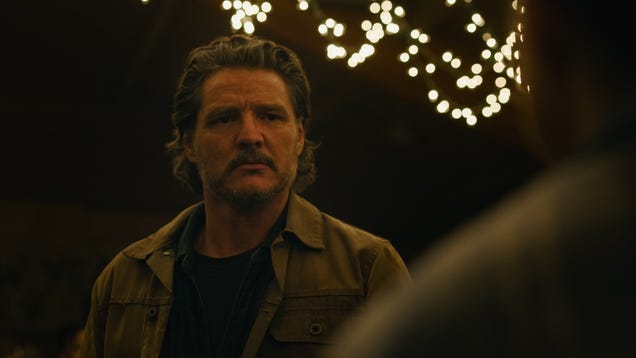
“Future Days,” the first episode of The Last of Us season two, opens with the closing moments of season one. Joel (Pedro Pascal) and Ellie (Bella Ramsey) are standing on a hill with the Jackson settlement they’ll call home in the distance. Ellie, unconvinced by Joel’s story about raiders massacring the Firefly…
Command-Line Screen Capture Tools: 7 Free and Open Source Linux Apps
Linux has a good selection of versatile open source screenshot programs, both graphical and console based. This roundup focuses on command-line tools.
Trump Denies Tariff ‘Exception’ for Electronics, Promises New Electronics Tariffs Soon
Late Friday news broke that U.S. President Trump’s new tariffs included exemptions for smartphones, computer monitors, semiconductors, and other electronics. But Sunday morning America’s commerce secretary insisted “a special-focus type of tariff” was coming for those products, reports ABC News. President Trump “is saying they’re exempt from the reciprocal tariffs,” the commerce secretary told an interviewer, “but they’re included in the semiconductor tariffs, which are coming in probably a month or two…. This is not like a permanent sort of exemption.”
The Wall Street Journal notes that Sunday the president himself posted on social media that “NOBODY is getting ‘off the hook’ for the unfair Trade Balances, and Non Monetary Tariff Barriers… There was no Tariff ‘exception’ announced on Friday. These products are subject to the existing 20% Fentanyl Tariffs, and they are just moving to a different Tariff ‘bucket.'”
“The administration is expected to take the first step toward enacting the new tariffs as soon as next week,” reports the New York Times, “opening an investigation to determine the effects of semiconductor imports on national security.”
More from ABC News:
Commerce Secretary Howard Lutnick said Sunday that the administration’s decision Friday night to exempt a range of electronic devices from tariffs implemented earlier this month was only a temporary reprieve.. Lutnick said on “This Week” that the White House will implement “a tariff model in order to encourage” the semiconductor industry, as well as the pharmaceutical industry, to move its business to the United States. “We can’t be beholden and rely upon foreign countries for fundamental things that we need,” he said…. “These are things that are national security that we need to be made in America.”


Read more of this story at Slashdot.
Linuxiac Weekly Wrap-Up: Week 15 (Apr 7 – 13, 2025)
Catch up on the latest Linux news: OpenSSH 10, KDE Frameworks 6.13, Mint’s LMDE 7 to feature full OEM install support, ArcoLinux winds down, Linux swap explained, and more.
How a Secretive Gambler Called ‘The Joker’ Beat the Texas Lottery
“Can you help me take down the Texas lottery?”
That’s what a London banker-turned-bookmaker asked “acquaintances” in 2023, reports the Wall Street Journal. The plan was to buy “nearly every possible number in a coming drawing” — purchasing $1 tickets for 25.8 million possible combinations, since “The jackpot was heading to $95 million. If nobody else also picked the winning numbers, the profit would be nearly $60 million.”
Marantelli flew to the U.S. with a few trusted lieutenants. They set up shop in a defunct dentist’s office, a warehouse and two other spots in Texas. The crew worked out a way to get official ticket-printing terminals. Trucks hauled in dozens of them and reams of paper… [Then Texas announced no winner in an earlier lottery, rolling its jackpot into another drawing three days later.] The machines — manned by a disparate bunch of associates and some of their children — screeched away nearly around the clock, spitting out 100 or more tickets every second. Texas politicians later likened the operation to a sweatshop.
Trying to pull off the gambit required deep pockets and a knack for staying under the radar — both hallmarks of the secretive Tasmanian gambler who bankrolled the operation. Born Zeljko Ranogajec, he was nicknamed “the Joker” for his ability to pull off capers at far-flung casinos and racetracks. Adding to his mystique, he changed his name to John Wilson several decades ago. Among some associates, though, he still goes by Zeljko, or Z. Over the years, Ranogajec and his partners have won hundreds of millions of dollars by applying Wall Street-style analytics to betting opportunities around the world. Like card counters at a blackjack table, they use data and math to hunt for situations ripe for flipping the house edge in their favor. Then they throw piles of money at it, betting an estimated $10 billion annually.
The Texas lottery play, one of their most ambitious operations ever, paid off spectacularly with a $57.8 million jackpot win. That, in turn, spilled their activities into public view and sparked a Texas-size uproar about whether other lotto players — and indeed the entire state — had been hoodwinked. Early this month, the state’s lieutenant governor, Dan Patrick, called the crew’s win “the biggest theft from the people of Texas in the history of Texas.” In response to written questions addressed to Marantelli and Ranogajec, Glenn Gelband, a New Jersey lawyer who represents the limited partnership that claimed the Texas prize, said “all applicable laws, rules and regulations were followed….”
Lottery officials and state lawmakers have taken steps to prevent a repeat.
The article also looks at a group of Princeton University graduates calling themselves Black Swan Capital that’s “won millions in recent years” by targetting state lottery drawings with unusually favorable odds.
“State lottery directors say they are seeing more organized efforts to buy lottery tickets in bulk,” according to the article, “but that the groups are largely operating legally and transparently…”


Read more of this story at Slashdot.
America’s Dirtiest Coal Power Plants Given Exemptions from Pollution Rules to Help Power AI
Somewhere in Montana sits the only coal-fired power plant in America that hasn’t installed modern pollution controls to limit particulate matter, according to the Environmental Protecction Agency. Mining.com notes that it has the highest emission rate of fine particulate matter out of any U.S. coal-burning power plant.
When inhaled, the finest particles are able to penetrate deep into the lungs and even potentially the bloodstream, exacerbating heart and lung disease, causing asthma attacks and even sometimes leading to premature death.
Yet America’s dirtiest coal-fired power plant — and dozens of others — “are being exempted from stringent air pollution mandates,” reports Bloomberg, “as part of US. President Donald Trump’s bid to revitalize the industry:
Talen Energy Corp.’s Colstrip in Montana is among 47 plants receiving two-year waivers from rules to control mercury and other pollutants as part of a White House effort to ease regulation on coal-fired sites, according to a list seen by Bloomberg News. The exemptions were among a slew of actions announced by the White House Tuesday to expand the mining and use of coal. The Trump administration has argued coal is a vital part of the mix to ensure sufficient energy supply to meet booming demand for AI data centers. The carve-out, which begins in July 2027, lasts until July 2029, according to the proclamation.
In an email to Bloomberg, a White House spokesperson said the move meant that America “will produce beautiful, clean coal” while addressing “necessary electrical demand from emerging technologies such as AI.”


Read more of this story at Slashdot.
‘Linux Mint Debian Edition 7’ Gets OEM Support
Linux Mint Debian Edition 7 “will come with full support for OEM installations,” according to their monthly newsletter, so Linux Mint “can be pre-installed on computers which are sold throughout the World. It’s a very important feature and it’s one of the very few remaining things which wasn’t supported by Linux Mint Debian Edition.”
Slashdot reader BrianFagioli speculates that “this could be a sign of something much bigger.”
OEM installs are typically reserved for operating systems meant to ship on hardware. It’s how companies preload Linux on laptops without setting a username, password, or timezone… Mint has supported this for years — but only in its Ubuntu-based version. So why is this feature suddenly coming to Linux Mint Debian Edition, which the team has repeatedly described as a contingency? In other words, if the Debian variant is merely a plan B, why make it ready for OEMs?
Their blog post goes on to speculate about possible explanations (like the hypothetical possibility of dissatisfaction with Snap packages or Canonical’s decisions around telemetry and packaging).


Read more of this story at Slashdot.
Apple is reportedly working on two new versions of the Vision Pro
Apple hasn’t abandoned its previously rumored plans to release a less expensive Vision Pro, according to Bloomberg. Mark Gurman reports in the Power On newsletter this weekend that the company has two new models in development: one that’s lighter and cheaper than the first generation headset, and one that would tether to a Mac. While Apple had once considered the latter setup for AR glasses, it shifted the idea over to the Vision Pro so it can “create an ultra-low-latency system for streaming a user’s Mac display or for connecting to high-end enterprise applications,” according to Gurman.
Apple’s ultimate goal, though, is reportedly to create AR glasses that are practical and comfortable enough to be worn like regular glasses, and the next iterations of the Vision Pro are seen as steps toward getting there. Gurman reports that Apple CEO Tim Cook is “hell-bent on creating an industry-leading product before Meta can.”
This article originally appeared on Engadget at https://www.engadget.com/ar-vr/apple-is-reportedly-working-on-two-new-versions-of-the-vision-pro-153536984.html?src=rss
FreeDOS Celebrates More Than 30 Years of Command Prompts With New Release
When Microsoft announced it would stop developing MS-DOS after 1995, college student Jim Hall “packaged my own extended DOS utilities, as did others,” according to the web site for the resulting “FreeDOS” project.
Jim Hall is also Slashdot reader #2,985, and more than 30 years later he’s “keeping the dream of the command prompt alive,” writes Ars Technica. In a new article they note that last week the FreeDOS team released version 1.4, the first new stable update since 2022:
The release has “a focus on stability” and includes an updated installer, new versions of common tools like fdisk, and format and the edlin text editor. The release also includes updated HTML Help files… As with older versions, the FreeDOS installer is available in multiple formats based on the kind of system you’re installing it on. For any “modern” PC (where “modern” covers anything that’s shipped since the turn of the millennium), ISO and USB installers are available for creating bootable CDs, DVDs, or USB drives. FreeDOS is also available for vintage systems as a completely separate “Floppy-Only Edition” that fits on 720KB, 1.44MB, or 1.2MB 5.25 and 3.5-inch floppy disks.
Jim Hall composed a detailed introduction to FreeDOS 1.4 here.
He also answered questions from Slashdot’s readers back in 2000 and again in 2019.


Read more of this story at Slashdot.
New Supercomputing Record Set – Using AMD’s Instinct GPUs
“AMD processors were instrumental in achieving a new world record,” reports Tom’s Hardware, “during a recent Ansys Fluent computational fluid dynamics simulation run on the Frontier supercomputer at the Oak Ridge National Laboratory.”
The article points out that Frontier was the fastest supercomputer in the world until it was beaten by Lawrence Livermore Lab’s El Capitan — with both computers powered by AMD GPUs:
According to a press release by Ansys, it ran a 2.2-billion-cell axial turbine simulation for Baker Hughes, an energy technology company, testing its next-generation gas turbines aimed at increasing efficiency. The simulation previously took 38.5 hours to complete on 3,700 CPU cores. By using 1,024 AMD Instinct MI250X accelerators paired with AMD EPYC CPUs in Frontier, the simulation time was slashed to 1.5 hours. This is more than 25 times faster, allowing the company to see the impact of the changes it makes on designs much more quickly…
Given those numbers, the Ansys Fluent CFD simulator apparently only used a fraction of the power available on Frontier. That means it has the potential to run even faster if it can utilize all the available accelerators on the supercomputer. It also shows that, despite Nvidia’s market dominance in AI GPUs, AMD remains a formidable competitor, with its CPUs and GPUs serving as the brains of some of the fastest supercomputers on Earth.


Read more of this story at Slashdot.
Bungie Lifts The Veil On Its Follow-Up To Destiny, Potential Blockbuster Marathon
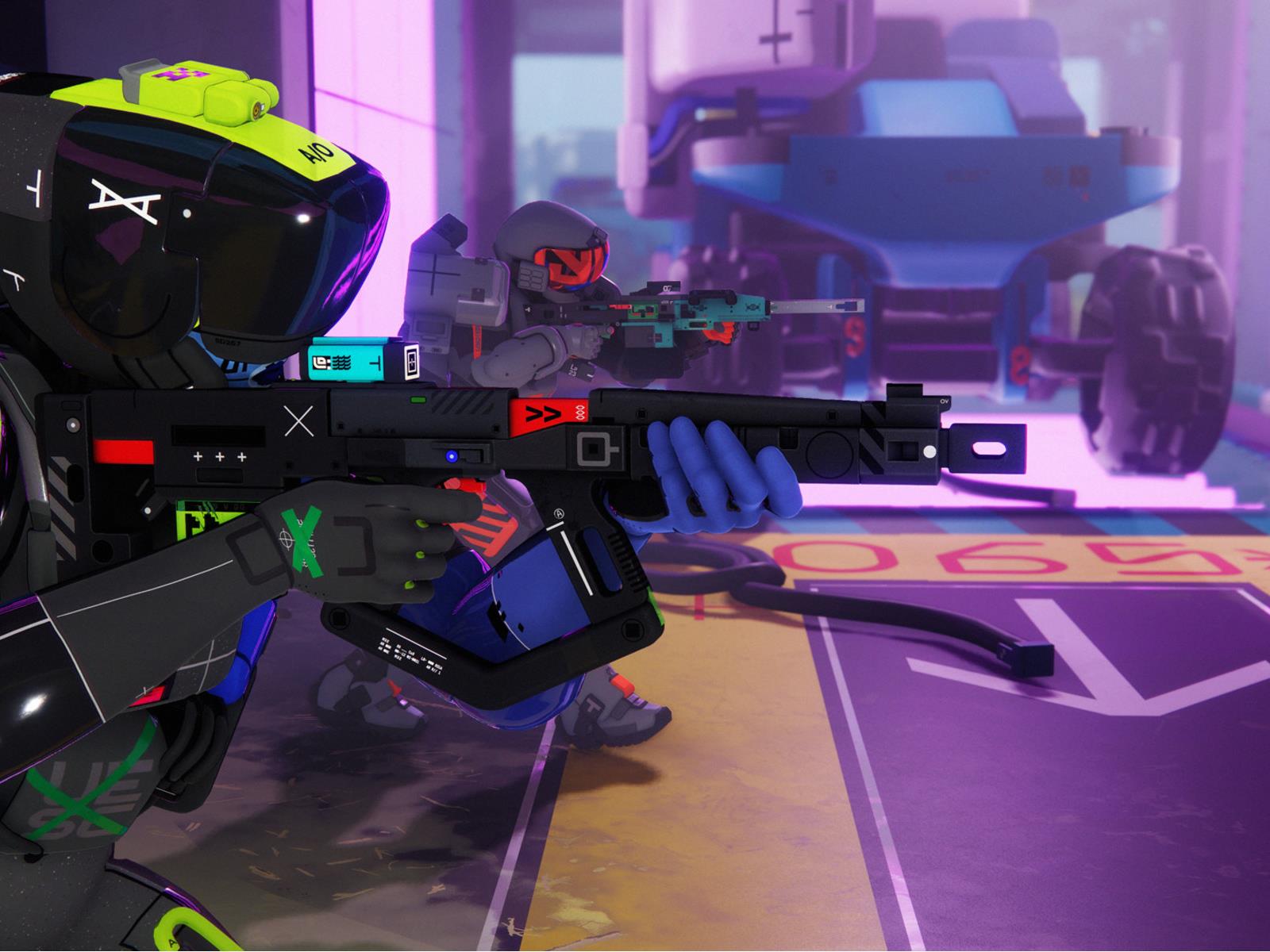
Bungie has had rough go since being acquired by Sony back in 2022, which led to the studio making cuts in personnel after delivering Destiny 2’s final DLC. To try and reverse its fortunes, however, Bungie is reviving a long dormant franchise from the company’s storied history — Marathon. Marathon will be returning as an online extraction