Uber Cofounder Kalanick Says AI Means Some Consultants Are in ‘Big Trouble’

Uber cofounder Travis Kalanick thinks AI is about to shake up consulting — and for “traditional” professionals, not in a good way. From a report: The former Uber CEO said consultants who mostly follow instructions or do repetitive tasks are at risk of being replaced by AI. “If you’re a traditional consultant and you’re just doing the thing, you’re executing the thing, you’re probably in some big trouble,” he said. He joked about what that future of consultancy might look like: “Push a button. Get a consultant.”

However, Kalanick said the professionals who would come out ahead would be the ones who build tools rather than just use them. “If you are the consultant that puts the things together that replaces the consultant, maybe you got some stuff,” he said. “You’re going to profitable companies with competitive moats, making that moat bigger,” he explained. “Making their profit bigger is probably pretty interesting from a financial point of view.”


Read more of this story at Slashdot.

Your Android Device Will Soon Automatically Reboot to Protect Itself

Android is getting a new security feature that makes it harder for someone to break into your device if it has been lost, stolen, or seized. With the latest Google Play services update, Android phones and tablets will automatically restart (and require a passcode to decrypt) if they remain locked for three consecutive days.

How Android auto-restart works

Android and iOS devices already revert to a Before First Unlock (BFU) state when restarted, requiring a user to enter their passcode or PIN before certain features—such as notifications and biometrics—are enabled. Data is encrypted and inaccessible in a BFU state until the correct passcode is entered to shift the device to an After First Unlock (AFU) state. While it is possible to extract some data from a device in BFU mode, it is far more limited than a device that is in an AFU state.

Once this Google Play services update hits your Android device, it will automatically reboot (into BFU mode) if it remains locked for three consecutive days. That means that if your phone isn’t in your possession and hasn’t been unlocked, anyone trying to access your data (such as law enforcement or thieves) will encounter a higher security state that cannot be decrypted without your passcode.

Apple added a similar feature called “inactivity reboot”—which automatically restarts your iPhone and re-encrypts its data if it goes unused for four days—to iOS 18.1 late last year.

According to 9to5Google, the Google Play services 25.14 update will be rolled out over the next week. Auto restart may not be enabled immediately, though it should land on your device without an OS update. It’s also unclear for now whether this is a feature users can opt in or out of (or if you’ll be notified when an automatic restart happens) as well as which versions of Android will be supported.

Someone hacked Silicon Valley crosswalks to spoof Mark Zuckerberg and Elon Musk

Whether in Ancient Greek parodies, Shakespeare’s subtle jabs at the haughty upper class or Jon Stewart’s takedowns of the latest Washington absurdities, humor can be a razor-edged weapon that shapes public opinion. Last weekend, we were reminded again of comedy’s ability to strike at the rich and powerful when someone hacked Silicon Valley crosswalks to play synthetic voice impersonations of Mark Zuckerberg and Elon Musk.

“Hi, this is Elon Musk,” the voice impersonating the Trump ally and federal government dismantler said. “Welcome to Palo Alto, the home of Tesla Engineering. You know, they say money can’t buy happiness. And… yeah, okay… I guess that’s true. God knows I’ve tried. But it can buy a Cybertruck, and that’s pretty sick, right? …Right?? Fuck, I’m so alone.”

“Hi, this is Mark Zuckerberg, but real ones call me the Zuck,” the synthetic voice of Meta’s CEO said over one crosswalk speaker. “It’s normal to feel uncomfortable or even violated as we forcefully insert AI into every facet of your conscious experience. And I just want to assure you, you don’t need to worry because there’s absolutely nothing you can do to stop it. Anyway, see ya.”

The videos have accumulated over 100,000 likes on TikTok and nearly 400,000 views on X (ironically). Palo Alto Online reports (via TechCrunch) that they could be heard in downtown intersections in Redwood City, Menlo Park and Palo Alto but had been removed beginning on Saturday.

“Hi, this is Elon Musk,” another crosswalk speaker emitted. “And I’d like to personally welcome you to Palo Alto. People keep saying cancer is bad, but have you tried being a cancer? It’s fucking awesome.”

“Hey, it’s Zuck here,” another voice said. “I just wanted to tell you how very proud I am of everything we’ve been building together. From undermining democracy to cooking our grandparents’ brains with AI slop to making the world less safe for trans people, nobody does it better than us. And I think that’s pretty neat. Zuck out!”

Finally, a Palo Alto speaker conducted armchair psychology on the Tesla CEO. “Hi, I’m Elon. Can we be friends? Will you be my friend? I’ll give you a Cybertruck, I promise. Okay, look, you don’t know the level of depravity I would stoop to just for a crumb of approval. I mean, let’s be real. It’s not like I had any moral convictions to begin with, right?”

This article originally appeared on Engadget at https://www.engadget.com/cybersecurity/someone-hacked-silicon-valley-crosswalks-to-spoof-mark-zuckerberg-and-elon-musk-191822645.html?src=rss

Comcast rolls out a five-year price guarantee for new internet customers

With America’s long-term (and even short-term) economic prospects shifting on Eric Cartman-like whims, some internet providers have begun offering multi-year price guarantees to provide a little stability amid the chaos. A couple of weeks after Verizon introduced a three-year price lock, Comcast has followed suit with a five-year pricing guarantee for new Xfinity residential customers.

On the bright side, the deal isn’t linked to an annual contract requirement. Comcast says that the following plans are available to be used with the five-year guarantee (speeds listed are download speeds):

  • 400Mbps – $55/month

  • 600Mbps – $70/month

  • 1.1Gbps – $85/month

  • 2.1Gbps – $105/month

This plan includes unlimited data and a free rental of the Xfinity Gateway router — but if you want to bring your own hardware, unlimited data will cost an extra $30 per month. And despite the fact that the Xfinity shopping page says these deals run through June 23, a Comcast spokesperson let us know they’ll extend beyond that date.

The locked-in price doesn’t cover installation, taxes, fees or other charges, which Comcast notes are subject to change during and after the promo. Finally, if you don’t enroll in and maintain paperless billing and automatic payments, you’ll pay an extra $10 each month (or an extra $8 if you pay by credit or debit card).

After reading the fine print, you may find it amusing that Comcast’s press release frames the price guarantee as being about simplicity. “Our new price guarantee removes complexity,” Comcast COO Steve Croney wrote. Still, with Americans increasingly being forced to check their 401(k)s and stock portfolios like gamblers check a high-stakes sports score, any small oasis of financial stability is at least something.

Update, April 15, 2025, 3:08PM ET: This story and its headline were updated to provide additional details about the different plans and availability of Comcast’s five-year guaranteed rates.

This article originally appeared on Engadget at https://www.engadget.com/big-tech/comcast-rolls-out-a-five-year-price-guarantee-for-new-internet-customers-173421830.html?src=rss

The physics of bowling strike after strike

More than 45 million people in the US are fans of bowling, with national competitions awarding millions of dollars. Bowlers usually rely on instinct and experience, earned through lots and lots of practice, to boost their strike percentage. A team of physicists has come up with a mathematical model to better predict ball trajectories, outlined in a new paper published in the journal AIP Advances. The resulting equations take into account such factors as the composition and resulting pattern of the oil used on bowling lanes, as well as the inevitable asymmetries of bowling balls and player variability.

The authors already had a strong interest in bowling. Three are regular bowlers and quite skilled at the sport; a fourth, Curtis Hooper of Longborough University in the UK, is a coach for Team England at the European Youth Championships. Hooper has been studying the physics of bowling for several years, including an analysis of the 2017 Weber Cup, as well as papers devising mathematical models for the application of lane conditioners and oil patterns in bowling.

The calculations involved in such research are very complicated because there are so many variables that can affect a ball’s trajectory after being thrown. Case in point: the thin layer of oil that is applied to bowling lanes, which Hooper found can vary widely in volume and shape among different venues, plus the lack of uniformity in applying the layer, which creates an uneven friction surface.

Read full article

Comments

Google Just Raised the Minimum Spec Requirements for Android 15

We may earn a commission from links on this page.

Google started rolling out Android 15 back in October, adding a number of interesting and useful new features to compatible devices. Six months later, the company has decided to increase the minimum spec requirements manufacturers must meet in order for their devices to be eligible for the latest Google software. The good news? It’s not that strict.

This week, Android Authority reported that to update to Android 15, Google is now requiring devices to have at least 32GB of storage. That isn’t 32GB of free space; rather, the storage unit itself needs to be 32GB or larger. With Android 14 (and Android 13 before it) that requirement was 16GB, half the amount Android 15 now demands.

That’s in large part because of GMS (Google Mobile Services). GMS is Google’s suite of preinstalled apps and APIs, and includes things like Google Play Store and Google Play Services. While, theoretically, an Android manufacturer could still make a phone with less than 32GB, they would lose out on GMS, which would severely impact the experience users are used to.

Another key change is to minimum RAM requirements. As with Android 14, devices running Android 15 can have a little as 2GB of RAM. However, these devices need to use the “Go edition” of Android, which is the version of the OS optimized for devices with low RAM. The change this year is that devices with 3GB of RAM will also need to use Android Go edition as well. That might be beneficial from a performance point of view, since the software isn’t as taxing on your device’s limited hardware. But that will mean your phone, which may have ran the full version of Android 14, will be running a stripped-down version of Android 15, and may miss out on new features.

That said, your 3GB RAM device may not be running the full Android 14 version anyway. That’s because manufacturers still have the opportunity to install Android Go edition for devices with low RAM. For Android 15, manufacturers making smartphones with 4GB of RAM can choose to run Android Go edition. With Android 14, that option was for devices with 3GB of RAM.

The new requirements are not particularly punishing. Sure, high-end smartphones come with specs that blow these minimums out of the water, but so do many mid-range and budget phones. You can buy last year’s Motorola Moto G Power phone for just over $200, and it comes with 128GB of storage and 8GB of RAM. This will likely apply to manufacturers who make very cheap devices: Hopefully, doubling the storage and upping the RAM doesn’t increase the cost of these smartphones by too much.

You Should Still Learn To Code, Says GitHub CEO

You should still learn to code, says GitHub’s CEO. And you should start as soon as possible. From a report: “I strongly believe that every kid, every child, should learn coding,” Thomas Dohmke said in a recent podcast interview with EO. “We should actually teach them coding in school, in the same way that we teach them physics and geography and literacy and math and what-not.” Coding, he added, is one such fundamental skill — and the only reason it’s not part of the curriculum is because it took “us too long to actually realize that.”

Dohmke, who’s been a programmer since the 90s, said he’s never seen “anything more exciting” than the current moment in engineering — the advent of AI, he believes, has made the field that much easier to break into, and is poised to make software more ubiquitous than ever. “It’s so much easier to get into software development. You can just write a prompt into Copilot or ChatGPT or similar tools, and it will likely write you a basic webpage, or a small application, a game in Python,” Dohmke said. “And so, AI makes software development so much more accessible for anyone who wants to learn coding.”

AI, Dohmke said, helps to “realize the dream” of bringing an idea to life, meaning that fewer projects will end up dead in the water, and smaller teams of developers will be enabled to tackle larger-scale projects. Dohmke said he believes it makes the overall process of creation more efficient. “You see some of the early signs of that, where very small startups — sometimes five developers and some of them actually only one developer — believe they can become million, if not billion dollar businesses by leveraging all the AI agents that are available to them,” he added.


Read more of this story at Slashdot.

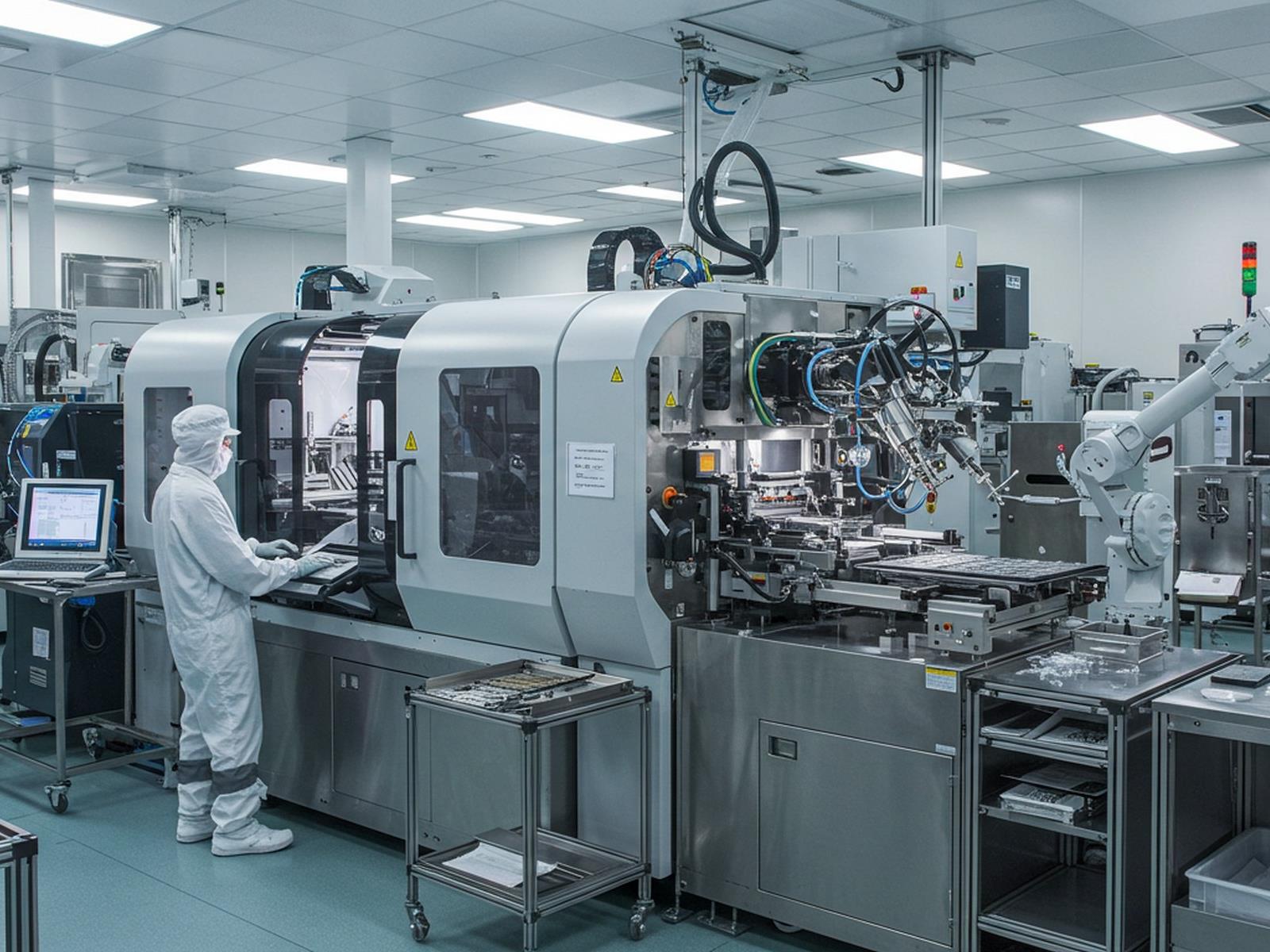
AMD EPYC Is First In TSMC N2 But Intel 18A Could Be Stiff Competition

AMD EPYC Is First In TSMC N2 But Intel 18A Could Be Stiff Competition
AMD put out a release yesterday, justifiably crowing that one if its EPYC “Venice” processors was the first HPC product to tape out and be brought up on TSMC’s advanced 2nm (N2) chip process tech. That’s certainly good news for AMD, but it’s not the only firm seeing success with bleeding-edge chip fabrication. According to Taiwanese site 3C

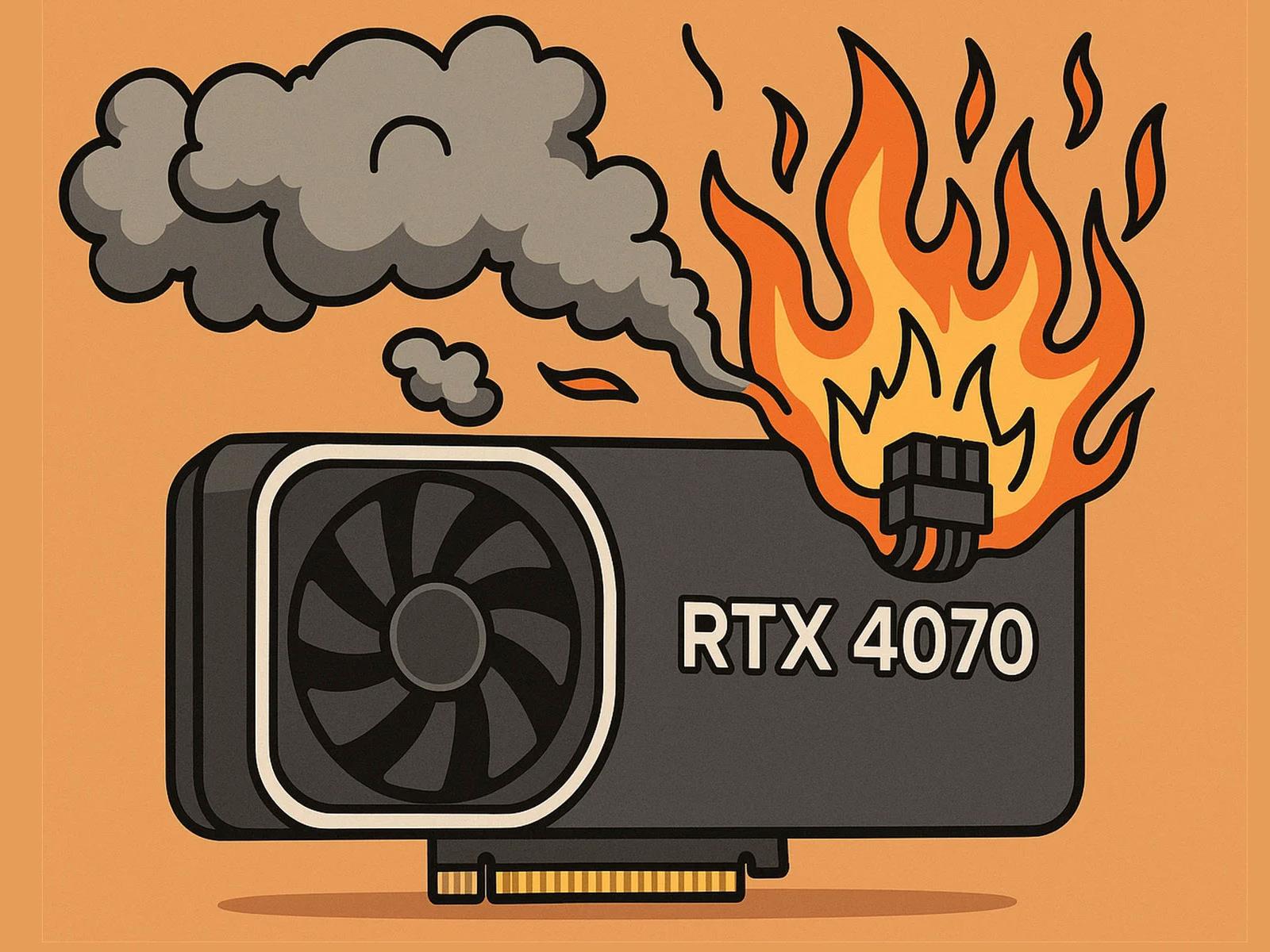
This Torched GeForce RTX 4070 Is A Horrific Caution Over PSU Selection

This Torched GeForce RTX 4070 Is A Horrific Caution Over PSU Selection
If there’s one piece of advice that’s unanimous amongst PC builders of all stripes worldwide, it’s to never, ever, skimp on your power supply (PSU)—no matter how much your second cousin says his dollar store special unit is doing fine. This point was quite clearly illustrated by a poor miner who saw their innocent Palit GeForce RTX 4070 go

4chan has been down since Monday night after “pretty comprehensive own”

Infamous Internet imageboard and wretched hive of scum and villainy 4chan was apparently hacked at some point Monday evening and remains mostly unreachable as of this writing. DownDetector showed reports of outages spiking at about 10:07 pm Eastern time on Monday, and they’ve remained elevated since.

Posters at Soyjack Party, a rival imageboard that began as a 4chan offshoot, claimed responsibility for the hack. But as with all posts on these intensely insular boards, it’s difficult to separate fact from fiction. The thread shows screenshots of what appear to be 4chan’s PHP admin interface, among other screenshots, that suggest extensive access to 4chan’s databases of posts and users.

Security researcher Kevin Beaumont described the hack as “a pretty comprehensive own” that included “SQL databases, source, and shell access.” 404Media reports that the site used an outdated version of PHP that could have been used to gain access, including the phpMyAdmin tool, a common attack vector that is frequently patched for security vulnerabilities. Ars staffers pointed to the presence of long-deprecated and removed functions like mysql_real_escape_string in the screenshots as possible signs of an old, unpatched PHP version.

Read full article

Comments

Netflix plans to bring streaming into the $1 trillion club by 2030

Netflix plans to reach a market capitalization of $1 trillion by 2030, The Wall Street Journal (WSJ) reported this week, citing anonymous people who attended an “annual business review meeting” that Netflix held in March. Netflix’s current market capitalization is nearly $400 billion.

Netflix is reportedly partnering its market cap goals with plans to double revenue within the same time frame. For 2024, Netflix reported $39 billion in revenue, meaning the company aims to raise its annual revenue to $78 billion in five years.

Compared to the prior five years, Netflix’s revenue grew 93.5 percent from 2019 ($20.16 billion) to 2024. However, that time period represented a different market, one where streaming subscriber counts were rising rapidly, and Netflix faced less competition than it does today. However, Netflix’s 2030 revenue goals are also dependent on its advertising business, something Netflix lacked in 2019.

Read full article

Comments

A Step-by-Step Guide to Reviving Old Paint

We may earn a commission from links on this page.

If you’ve ever painted a room in your house or apartment, you know the pain of storing leftover paint. You pour the excess from the rolling pan into the paint can, you tap the lid back into place with a hammer, and you stick the old can somewhere out of the way, where you promptly forget about it. Then the day comes when you need to touch up the room or repaint it entirely, and you haul that old can out from its hiding place, only to discover that time has not been kind to your paint.

If your old paint hasn’t aged well—it’s skinned over, chunky, or otherwise dubious—but you really don’t want to spend money on a fresh can just to do some touch up work, you can try to revive the paint. This happened to me recently: I had an old five-gallon bucket of gray paint with about a gallon of paint left in it, and when I opened it up, it looked like this:

My old, chunky gray paint
Credit: Jeff Somers

But I didn’t want to run out to buy a fresh gallon for a small job, so I decided to bring this paint back to life.

First, a few quick caveats: Not all paint can be brought back to life. It needs to be mostly liquid, even if it’s chunky and skinned over—if it’s totally hardened, just toss it in the trash. A few other things to check for:

  • Mold. If you open the can and it smells like mildew (or worse) or has a growth on it, it’s not usable—even if you mix it up and get it into usable shape, you will be painting mold spores onto your walls. While modern paints typically contain biocides to inhibit mold growth for years, various climate conditions or storage variables can impact their effectiveness.

  • Thinned. If you have already thinned the paint with water (for water-based paints) or paint thinner (for oil-based paints), you probably won’t be able to bring it back.

  • Frozen. If the paint froze at any point, it’s probably done for. Paint that froze up will have a “cottage cheese” texture to it.

If you see these signs, toss the paint and resign yourself to buying a fresh can. Otherwise, come with me on a paint-resurrection adventure.

How to revive old paint

My paint had never been thinned, and while it was chunky, it was still liquid. It didn’t smell bad, so I thought I had a pretty good shot at bringing it back. Here’s what you need on hand to try this:

Fiberglass screen, bucket, painter's tape, paddle attachment, power drill, and mineral spirits.
Everything you need to revive your old paint.
Credit: Jeff Somers

  1. Bucket. This is where you’ll collect the revived paint.

  2. Screen. You can buy disposable paint filters or paint filter bags, but you can also use an old aluminum window screen, or a piece of fiberglass screen. I happened to have a bunch of fiberglass screen left over from another project, so I cut a piece of that.

  3. Drill with paddle bit. You can stir the paint manually, but it’s a lot easier to get a paddle attachment for your drill.

  4. Paint thinner. If your paint is water-based, you can thin it with some warm water. Mine is oil-based, so I need paint thinner—I had mineral spirits on hand, so I used that.

  5. Painter’s tape. Any tape at all, really, but painter’s tape is easiest to work with here.

Once you have all your materials, your first step is to thin the paint a little. Add a small amount of water or paint thinner, then stir the paint, starting off at a low setting and increasing the power gradually.

Pouring mineral spirits into old paint.
Thinning my paint with some mineral spirits.
Credit: Jeff Somers

Mixing old paint with a power drill.
Stirring out some of the chunks in the paint.
Credit: Jeff Somers

This should eliminate the worst of the chunks in there. How much to thin the paint is more art than science—you don’t want to over-thin it and make it watery. I didn’t try to eliminate every single chunk of hardened paint and was very conservative with the thinner. You can always add a little more and repeat the stirring, but you can’t remove excess thinner after you’ve poured it in.

Next, you screen the paint. Attach your screen to your bucket—in my case, I just wrapped the fiberglass screen around the lid and taped it into place:

A small plastic bucket with a mesh screen taped over the top.
My high-tech paint screening device.
Credit: Jeff Somers

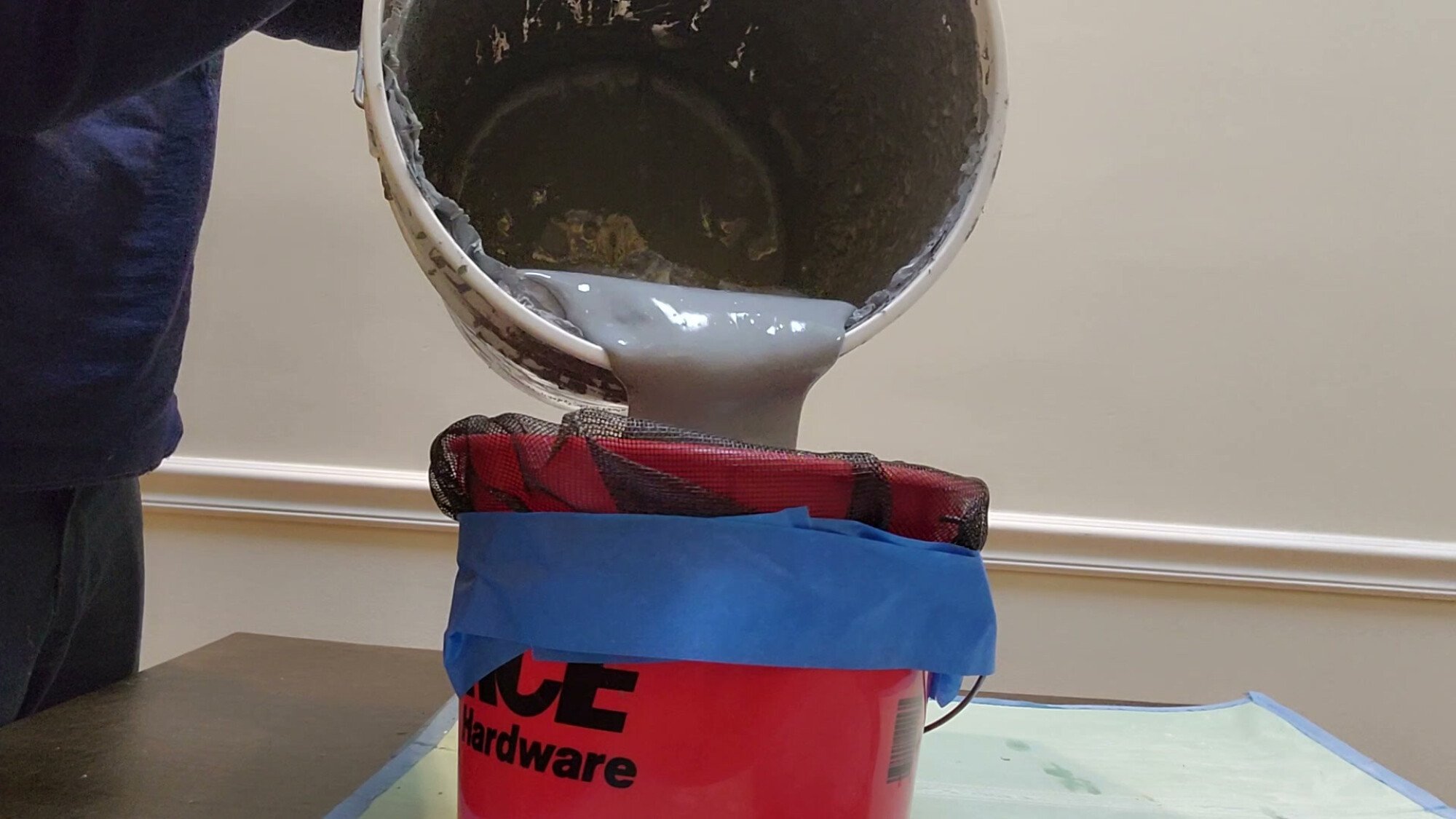
Then, I poured the partially thinned paint into the bucket through the filter:

Pouring old paint into screened bucket.
Screening my paint.
Credit: Jeff Somers

I let the paint drip through the filter for a few minutes. This screened out the remaining chunks, leaving me with a supply of usable paint in my bucket:

Revived paint in a red bucket.
My thinned, screened, and stirred paint, ready to use.
Credit: Jeff Somers

I didn’t need much; honestly, if you’re going to repaint the whole room, you probably shouldn’t rely on old paint you’ve thinned and screened. But for a small touch-up job, this spared me from having to run out and buy a fresh can of paint. It worked well, the paint adhered without problems and matched up reasonably well with the old coat. I plan to prime and paint the room again next year, so it doesn’t have to last forever, either. Once I was done, I disposed of the remnants at my city’s recycling center so it’s no longer haunting my closet.

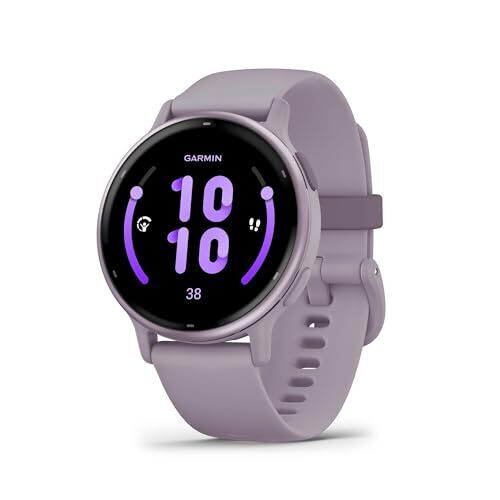
The Garmin Vivoactive 5 Is on Sale for $220 Right Now

We may earn a commission from links on this page. Deal pricing and availability subject to change after time of publication.

The Garmin Vivoactive 5 is currently going for $219.99 on Amazon—down from its original $299—and it walks the line pretty well for a midrange fitness smartwatch.

You get a bright 1.2-inch AMOLED display, all-day comfort, and solid health features that feel useful instead of gimmicky. It’s the fifth generation of the Vivoactive line, and this time around, Garmin has added nap tracking, a better “Body Battery” score that shows how drained or rested you are, and even a wheelchair mode for more inclusive activity tracking. You still get standard metrics like heart rate, SpO2, and sleep monitoring, and the watch runs great whether you’re out walking, lifting weights, or just trying to hit your step goal. (In a head-to-head comparison with the Pixel 3, our own health editor Beth Skwarecki named the Vivoactive 5 the better fitness watch.)

Now, there are some trade-offs. Garmin dropped the stainless steel bezel from the Vivoactive 4, so this one has a lighter, more casual aluminum build. They also cut the barometric altimeter and on-screen workout animations, which might be a letdown for folks who rely on elevation data or follow exercises directly from their watch. That said, it still tracks over 30 workouts, offers guided meditations, and provides detailed recovery insights. The touchscreen is crisp and colorful, with a raise-to-wake option that works well enough. Gorilla Glass 3 adds some protection, and it’s got 5ATM water resistance—meaning pool swims are fine, just don’t take it scuba diving.

The smartwatch features of the Garmin Vivoactive 5 are solid, too. It handles notifications from both Android and iPhone, though only Android users can reply from the watch. You can also use Garmin Pay, stream music from Spotify, and share your live location from the watch. As for battery life, Garmin claims 11 days, but real-world usage with a couple of GPS workouts each week puts it closer to eight, notes this PCMag review—still way better than most full-screen smartwatches. If you’re considering alternatives, Garmin’s Venu Sq 2 delivers a similar blend of features and health tracking tools, and it’s currently priced lower at $177 (marked down from $249.99).

Hertz Says Customers’ Personal Data, Driver’s Licenses Stolen In Data Breach

An anonymous reader quotes a report from TechCrunch: Car rental giant Hertz has begun notifying its customers of a data breach that included their personal information and driver’s licenses. The rental company, which also owns the Dollar and Thrifty brands, said in notices on its website that the breach relates to a cyberattack on one of its vendors between October 2024 and December 2024. The stolen data varies by region, but largely includes Hertz customer names, dates of birth, contact information, driver’s licenses, payment card information, and workers’ compensation claims. Hertz said a smaller number of customers had their Social Security numbers taken in the breach, along with other government-issued identification numbers. Notices on Hertz’s websites disclosed the breach to customers in Australia, Canada, the European Union, New Zealand, and the United Kingdom. Hertz also disclosed the breach with several U.S. states, including California and Maine. Hertz said at least 3,400 customers in Maine were affected but did not list the total number of affected individuals, which is likely to be significantly higher. Emily Spencer, a spokesperson for Hertz, would not provide TechCrunch with a specific number of individuals affected by the breach but said it would be “inaccurate to say millions” of customers are affected. The company attributed the breach to a vendor, software maker Cleo, which last year was at the center of a mass-hacking campaign by a prolific Russia-linked ransomware gang.


Read more of this story at Slashdot.

Japan clamps down on Google’s Android app pre-install deals

There’s another development in the saga that is governments accusing Google of monopolistic practices favoring its search app and Chrome. The Japan Fair Trade Commission (JFTC) has issued a cease and desist order to Google, demanding the tech company end all efforts to gain preferential treatment on Android phones. 

The watchdog alleges that Google required phone makers to preinstall Chrome and Google Search on Android phones — along with setting Chrome as the default browser. It also claims they had to place the icons for each app on the home screen. This arrangement came due to the tech company’s power as provider of the Google Play app ecosystem, which Android manufacturers need to install before distribution.  

However, the JFTC further claims that Google sweetened the deal, agreeing to give these phone manufacturers a slice of its ad revenue. As of last December, six Android phone manufacturers allegedly had these deals with Google. These arrangements have been ongoing since at least July 2020, if not earlier.

The JFTC’s decision follows an investigation, opened in October 2023. It comes the same week as a Japanese delegation, led by Economy Minister Ryosei Akazawa, will visit the US to negotiate tariffs. 

The US has expressed similar concerns to Japan. Last November, US federal judge Amit Mehta called Google “a monopolist” within the search engine industry and called on the company to sell off Chrome. An evidentiary hearing on the matter is set to begin later this month, with a trial commencing in May. 

This article originally appeared on Engadget at https://www.engadget.com/big-tech/japan-clamps-down-on-googles-android-app-pre-install-deals-130050220.html?src=rss

NVIDIA’s GeForce RTX 5060 GPU starts at $299, RTX 5060 Ti at $379

At long last, NVIDIA has announced its budget GeForce RTX 50-series, but don’t expect any major discounts over the previous models. The RTX 5060 will start at $299, just like the RTX 4060 did when it launched two years ago. Of course, it’s unclear how many people will actually be able to nab it at that price, given the volatile nature of the GPU market and further fluctuations from the Trump administration’s sloppy tariff deployment. 

NVIDIA is also launching two variants of RTX 5060 Ti GPUs with 8GB and 16GB of VRAM, priced at $379 and $429, respectively. Those faster GPUs will arrive on April 16, but we don’t have a firm date for the RTX 5060 besides a vague May release.

While NVIDIA touts the typical performance improvements, the real selling point of the RTX 5060 and 5060 Ti will be their full support of DLSS 4 upscaling and 4X multi-frame generation. In my reviews of the RTX 5070, 5070 Ti and 5090 cards, I was surprised how much DLSS 4 boosted frame rates while still delivering excellent image quality. But it’ll be interesting to see if that technology will see much benefit from slower cards like the 5060 and 5060 Ti.

NVIDIA RTX 5060 series
NVIDIA

Curiously, NVIDIA isn’t divulging full specs for all of these GPUs just yet, even though plenty of early details have already emerged. Officially, the company says the RTX 5060 is powered by 8GB of GDDR7 VRAM, 19 TFLOPS Blackwell shader cores, 5th-gen tensor cores with 614 AI TOPS performance and 4th gen RT (ray tracing) cores that can hit 58 TFLOPS. Unofficially, reports claim it also has 3,840 CUDA cores. In comparison, the RTX 4060 had 3072 CUDA cores and 8GB of GDDR6 VRAM.

The RTX 5060 Ti steps things up to 4,608 CUDA cores and the aforementioned 8GB and 16GB GDDR7 RAM options. NVIDIA says its Blackwell shader cores offer 6 TFLOPS more performance than the 5060, which should be plenty noticeable in typical gameplay. The RTX 5060 is mostly a 1080p-focused card, while the RTX 5060 Ti is far better suited to 1440p gameplay — as long as you don’t need obscene framerates.

According to NVIDIA’s benchmarks, the RTX 5060 can reach 234 fps in Hogwarts Legacy while playing in 1080p with maxed out graphics settings and 4X frame-generation. The RTX 4060, in comparison, hits around 110 fps with 1x frame generation. NVIDIA claims the 5060 can also reach 148 fps in Cyberpunk 2077, 220fps in Avowed, and 330 fps in Marvel Rivals in 1080p with the same graphics settings and frame gen. It could be the perfect card if you’re rocking a 240Hz 1080p screen.

As for the RTX 5060 Ti, NVIDIA says it can reach 108 fps in Cyberpunk while playing in 1440p with Full RT graphics settings and 4X frame generation. That’s double the 4060 Ti, which reached 52 fps with 1x frame generation. Even when native performance is solid, NVIDIA also says DLSS 4’s transformer upscaling model can improve overall image quality and latency. The 5060 Ti can reach 61 fps and 70ms latency in Hogwartz Legacy natively, but the latency drops to 47ms with DLSS 4 enabled (which also pumps up the frame rate to 171 fps).

As usual, a scaled down version of the RTX 5060 is also headed to laptops, which NVIDIA says will start at $1,099. We don’t have specs for that hardware either, but the company claims it’ll be able to reach 146 fps in Cyberpunk 2077 while playing in 1080p with ultra graphics settings and 2X frame generation. In comparison, the mobile RTX 4060 reached 60fps with those settings, and it was also limited to 1x frame generation.

The real challenge for NVIDIA with the GeForce RTX 5060 family lies in pricing. The company doesn’t directly control how OEMs price their cards, and numbers could also fluctuate wildly depending on stock and economic conditions. So sure, the RTX 5060 and 5060 Ti sound compelling for their price, but it remains to be seen if those figures are actually realistic for consumers. And it’ll be interesting to see how AMD responds with cheaper new GPUs, after its Radeon RX 9070 and 9070 XT cards walloped NVIDIA’s current mid-range options. 

This article originally appeared on Engadget at https://www.engadget.com/gaming/pc/nvidias-geforce-rtx-5060-gpu-starts-at-299-rtx-5060-ti-at-379-130020340.html?src=rss