Microsoft Has a Fix for Windows’ Latest Blue Screen Problem

If your Windows computer is crashing unexpectedly and showing you a blue screen error, there’s now a fix for that.

As BleepingComputer reports, Windows updates pushed in March and April are triggering a secure kernel fatal error, causing devices running Windows 11 version 24H2 to crash and display a blue screen exception with error code 0x18B, indicating a SECURE_KERNEL_ERROR.

To address this issue, Microsoft has released a Known Issue Rollback (KIR), which is a quick, targeted fix for non-security bugs. It’s a temporary solution since it rolls back earlier updates, while the company works on a new update to patch the problem. Here’s how to apply it to your device.

What Windows users need to do

If you have a personal or non-managed work computer running Windows 11, the resolution will automatically be pushed to your device from Windows Update and Microsoft Update in the next day or so. According to Microsoft’s support page, restarting may help the fix apply faster. As such, make sure you reboot your PC in order for this latest update to take effect as soon as possible.

For enterprise devices managed by IT departments, the issue will resolve once your network admin installs and configures the Windows 11 24H2 and Windows Server 2025 KB5053656 250412_03103 Known Issue Rollback Group Policy. The Group Policy can be found under Computer Configuration > Administrative Templates > . You will also need to restart any affected devices to apply the group policy settings.

The blue screen bug follows Microsoft’s big Patch Tuesday update, which fixed 134 security vulnerabilities in Windows—including one actively-exploited zero-day flaw. It also comes as Microsoft is testing out a new blue screen design altogether. Soon enough, future crashes like this will look different, though the company’s procedural response will likely remained unchanged.

Scientists film a living colossal squid for the first time

Scientists have caught a colossal squid on camera in its natural environment for the very time, according to a report by the BBC. This happened around 100 years after the species was originally discovered, proving just how vast and mysterious the ocean truly is.

The squid is a juvenile, so it’s not nearly as large as its namesake suggests. It clocks in at around 11.8-inches long. Adult colossal squid can grow up to 23 feet in length and weigh up to 1,100 pounds. They are the heaviest invertebrate on the planet.

The crew was exploring the south Atlantic Ocean, near the South Sandwich Islands, as part of a 35-day mission to find new marine life. The juvenile squid was caught on camera at a depth of nearly 2,000 feet. Chief scientist Dr. Michelle Taylor said the team was unsure it was even a colossal squid at first, but filmed it anyway because it was “beautiful and unusual.” The footage was then verified by another researcher.

“It’s exciting to see the first in situ footage of a juvenile colossal and humbling to think that they have no idea that humans exist,” said Dr. Kat Bolstad.

Folks fishing encounter a dead squid.
Wikimedia Commons

Most colossal squid found in the wild are already dead and spotted as remains in whale stomachs. Dying adults have been spotted near the surface of the ocean but this is the first time a specimen has been filmed in its natural element. We don’t even know that much about their life cycle, other than the fact that juveniles are transparent and adults are not. The Natural History Museum has said it’s hard to estimate the global population.

It’s incredible just how ignorant we still are of our own ocean in the year 2025. Only a fifth of the ocean floor has been sufficiently mapped. It truly is the final frontier of Earth-bound exploration. Maybe Katy Perry and Gayle King would have received a better reception if they took an 11-minute trip underwater instead.

This article originally appeared on Engadget at https://www.engadget.com/science/scientists-film-a-living-colossal-squid-for-the-first-time-161201996.html?src=rss

Demeo Got A Visual Upgrade, And Now Uses Foveated Rendering On Apple Vision Pro

Demeo got a visual upgrade across all platforms, and now leverages eye-tracked foveated rendering on Apple Vision Pro.

If you somehow haven’t heard of it, Demeo is a virtual tabletop turn-based RPG for up to four players. As well as supporting VR on Meta Quest, PlayStation VR2, Pico, PC VR, and Apple Vision Pro, a flatscreen version is also available for PC, PlayStation 5, iPad, and Mac. Quest and Pico players can also choose to play in mixed reality. The best part? Crossplay is supported between all these platforms.

Resolution Games says it spent the past 10 months upgrading the underlying technology behind the game, which first released in 2021, including upgrading to Unity 6 and switching to the engine’s newer Universal Render Pipeline (URP).

While many of the fruits of this work are behind the scenes, making it more practical for the developer to support new platforms and hardware, Resolution says players should see faster loading times, improved performance and higher fidelity.

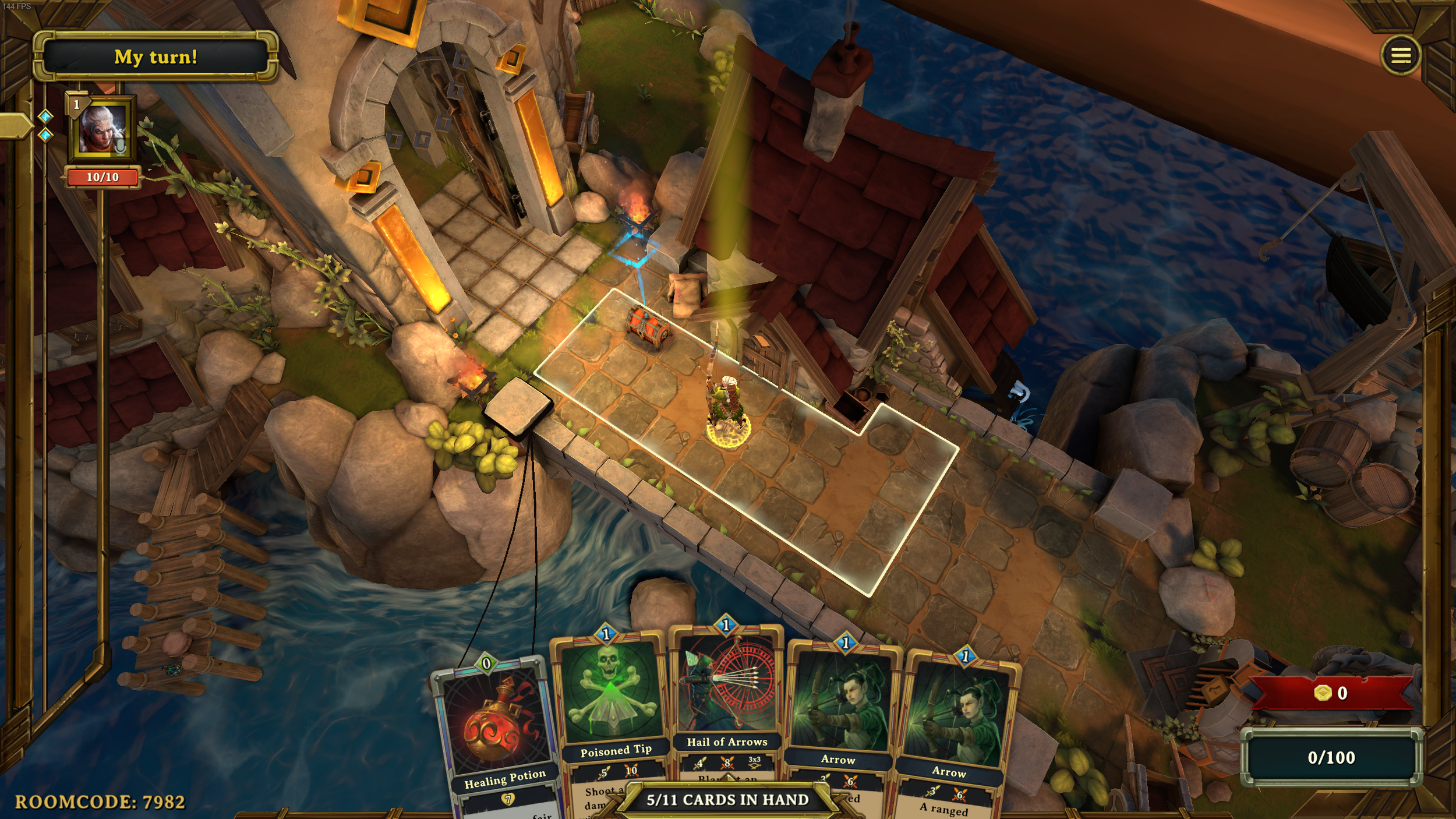
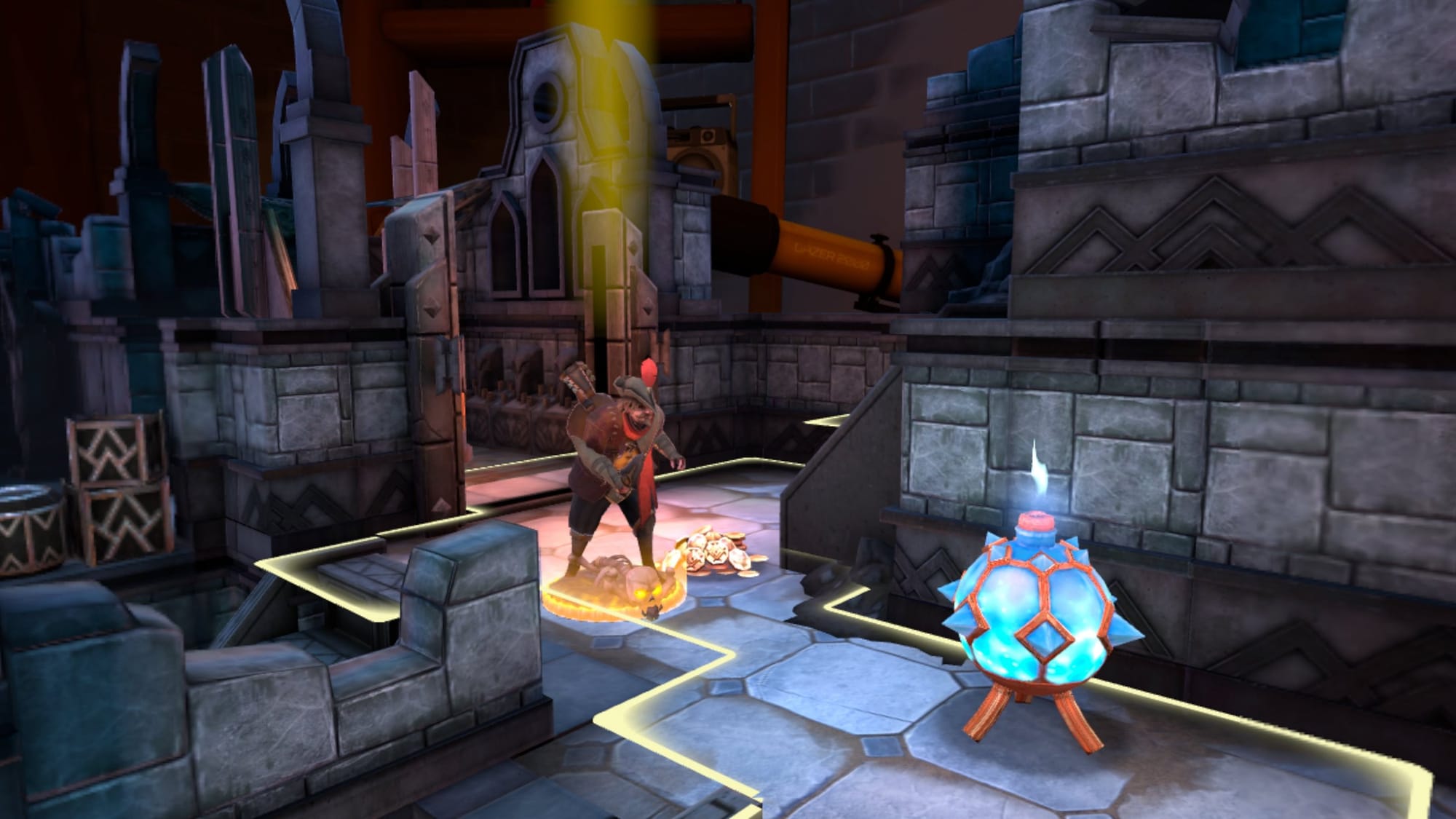
Before (left) and After (right)

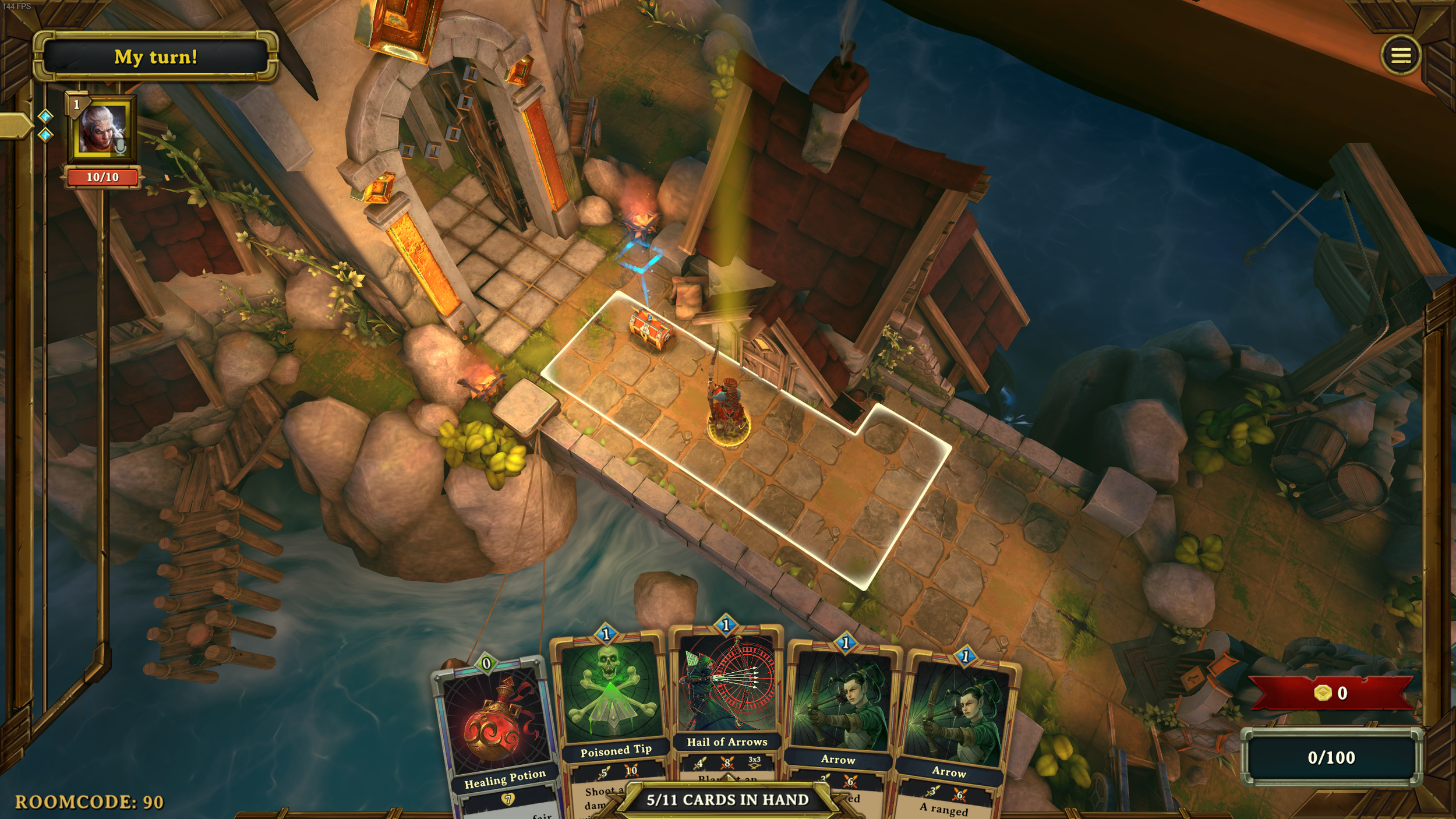
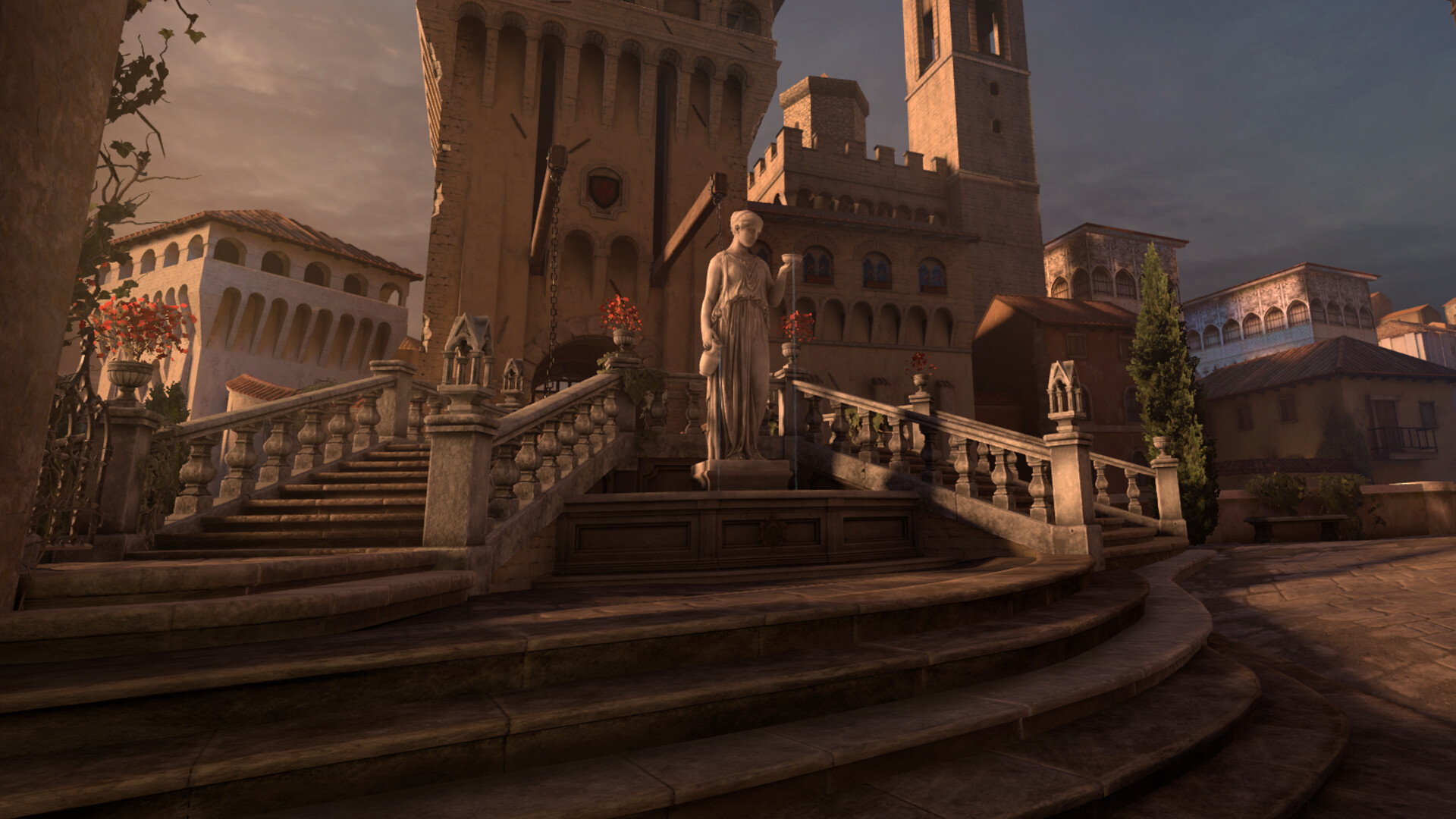
As well as faster loading, on the visual side all platforms should see upgrades to metallic materials and the water shader, more props, and improved environmental lighting.

Apple Vision Pro players should see the biggest change of all, though. The move to Unity 6 and the URP has enabled Demeo to leverage eye-tracked foveated rendering, significantly increasing the resolution in the area of the image you’re currently looking at.

Briefly testing this out on Vision Pro, I saw an immediately noticeable difference in visual quality. Back when Demeo first arrived on Vision Pro it looked far less sharp than the visionOS immersive home environments, while now its sharpness is roughly on par.

Resolution Games tells UploadVR eye-tracked foveated rendering is also enabled on Quest Pro, and will be active on Google’s upcoming Android XR too.

Before (left) and After (right)

However, Demeo on visionOS still doesn’t support mixed reality. It remains limited to two modes, Fully Immersive (VR) or Windowed, which you can toggle between.

Fully Immersive is the same VR mode as on other headsets, minus the mixed reality option, with Apple’s gaze-and-pinch interaction system added. Windowed, meanwhile, works like flatscreen platforms and runs in the visionOS Shared Space, letting you use other apps at the same time.

Demeo Review – A Social VR Masterclass In An Engaging Tabletop RPG
Is Resolution Games’ most ambitious VR title yet its best? Find out in our Demeo review! Demeo is one of those times it works. Y’know, it; the whole promise of leapfrogging the miles between friends and family and experiencing a genuine social connection in virtual space via the magic
UploadVRJamie Feltham

Demeo is available on the App Store, Meta Horizon Store, Steam, Epic Games, PlayStation Store, and Pico Store for $40.

The App Store version of Demeo uses Apple’s universal purchase system, meaning buying it gives you access to it across Apple Vision, iPad, and Mac.

The next entry in the Demeo series will be Demeo x Dungeons & Dragons: Battlemarked, an officially licensed title announced back in January.

Demeo X Dungeons & Dragons: Battlemarked Is Resolution’s Official D&D VR Game
Demeo x Dungeons & Dragons: Battlemarked is Resolution’s official D&D VR game, using the tabletop RPG’s mechanics for an officially licensed crossover.
UploadVRHenry Stockdale

Android Phones Get An iPhone-Like Security Feature With Google’s New Update

Android Phones Get An iPhone-Like Security Feature With Google's New Update
Google has unleashed a new security feature that will reboot your phone if it senses that it’s been locked for three days. The enhancement appeared in the low-key release notes for Google Play Services v25.14 (2025-04-14). This “inactivity reboot” adds a layer of protection by encrypting files and data on a phone and making the device completely

Two years of ProtonVPN is 64 percent off right now

A VPN (virtual private network) can help you stay safe online and one of our top picks is currently on sale. A two-year subscription to the ProtonVPN Plus plan is currently $86.16. That’s 64 percent off the usual price. The deal drops the cost from $10 to $3.59 per month, and it reduces the overall price for 24 months by $153.

This plan allows you to use ProtonVPN on up to 10 devices at a time. It should be pretty easy to find a server to route your internet traffic through as well, since ProtonVPN has more than 8,600 of them across north of 110 countries.

ProtonVPN is our pick for the best VPN overall due to a blend of its security, usability and privacy. ProtonVPN has a no-logs policy. That means it doesn’t keep any records of information that passes through its network. In other words, it doesn’t track your internet activity while you’re using it, helping to protect you and your anonymity.

Other features of ProtonVPN Plus include ad-, malware- and tracker-blocking, as well as fast performance. In our testing, ProtonVPN had a minimal impact on connection speeds in our geoblock, streaming and gaming tests. ProtonVPN is also open source, meaning that anyone with enough knowhow can take a look under the hood and validate Proton’s technical claims.

Follow @EngadgetDeals on X for the latest tech deals and buying advice.

This article originally appeared on Engadget at https://www.engadget.com/deals/two-years-of-protonvpn-is-64-percent-off-right-now-152355980.html?src=rss

Companies Are Slashing Their SaaS Spends, UBS Says

Enterprise software optimization is accelerating as companies face potential budget freezes in 2025, according to new research from UBS reviewed by Slashdot. Following discussions with two leading SaaSOps vendors, analysts report that 21% of organizations cut their SaaS spend last year, with a staggering 30% of existing licenses sitting unused.

SaaS rationalization efforts are targeting familiar categories: collaboration tools (Zoom, Teams, Slack), project management solutions, and sales engagement platforms. Back-office systems like Workday remain relatively insulated due to their stickiness and pricing leverage, while front-office software faces mixed pressures. “Companies were looking to return to spend growth in 2HF25 from cost cutting but now that might no longer be the case,” one CEO told UBS.


Read more of this story at Slashdot.

Cybersecurity World On Edge As CVE Program Prepares To Go Dark

The CVE and CWE programs are at risk of shutdown as MITRE’s DHS contract expires on April 16, 2025, with no confirmed renewal. Without continued funding, the ability to standardize, track, and respond to software vulnerabilities could collapse, leaving the cybersecurity community scrambling in a fragmented and dangerously opaque environment. Forbes reports: “Failure to renew MITRE’s contract for the CVE program, seemingly set to expire on April 16, 2025, risks significant disruption,” said Jason Soroko, Senior Fellow at Sectigo. “A service break would likely degrade national vulnerability databases and advisories. This lapse could negatively affect tool vendors, incident response operations, and critical infrastructure broadly. MITRE emphasizes its continued commitment but warns of these potential impacts if the contracting pathway is not maintained.”

MITRE has indicated that historical CVE records will remain accessible via GitHub, but without continued funding, the operational side of the program — including assignment of new CVEs — will effectively go dark. That’s not a minor inconvenience. It could upend how the global cybersecurity community identifies, communicates, and responds to new threats. […] MITRE has said that discussions with the U.S. government are active and that it remains committed to the CVE mission. But with the expiration date looming, time is running short — and the consequences of even a temporary gap are severe.


Read more of this story at Slashdot.

Ninja Gaiden: Ragebound is a love letter to the series’ NES roots

Ninja Gaiden: Ragebound is a labor of love. You can see it in every pixel, animation and cutscene of the new 2D action game. It might be a surprise then that it’s not the work of Team Ninja, the studio most closely associated with the series, but rather franchise newcomer The Game Kitchen. The Spanish studio is best known for its work on Blasphemous, a series of Souls-like Metroidvanias influenced by Spain’s own Andalusian culture and history with Roman Catholicism.

“I’m an ’80s kid,” says David Jaumandreu, game director and producer on Ninja Gaiden: Ragebound. “I still have my copy of the first Ninja Gaiden in the basement.” The way Jaumandreu tells it, Ragebound is a dream project for him and his coworkers. The Game Kitchen began working on the game about halfway through the production of Blasphemous 2. French publisher Dotemu, best known for releasing Teenage Mutant Ninja Turtles: Shredder’s Revenge, approached the studio after seeing its work on Blasphemous.

There’s some superficial visual overlap between Ragebound and Blasphemous 2, but when it comes to tone and gameplay, they could not be more dissimilar. Where Blasphemous 2 is dark and solemn, Ragebound leans into the franchise’s origin as a product of the ’80s. It’s loud and frequently cheesy, but in an endearing way. It’s also a lot faster paced, with levels that grade on how quickly you can complete them, often while taking as little damage as possible.

Early on in the project, one of the things the team knew they wanted was to include two protagonists, with one of them hailing from the Black Spider Clan. For the uninitiated, the Black Spider Clan has usually served as the antagonists of the Ninja Gaiden series. Ragebound is set during the events of the 1988 NES game. After series protagonist Ryu Hayabusa leaves for the US to avenge his father’s death, demons descend on peaceful Hayabusa Village and it’s up to newcomer Kenji Mozu to save his clan.

Ninja Gaiden: Ragebound protagonist Kenji fights off two enemies on the roof on a temple in modern Tokyo.
The Game Kitchen / Dotemu

“We thought if we’re taking the series back to its roots, wouldn’t it be cool to control one of the Black Spider Clan?” says Jaumandreu. “It’s like when you get to make a Star Wars game, and you fantasize about controlling an Empire character.” 

To the surprise of everyone at The Game Kitchen, both Dotemu and Koei Tecmo — Ninja Gaiden’s original license holder — liked the idea. In the demo I played, I didn’t see the exact circumstances of how Kenji and the Black Spider Clan’s Kumori end up working together, but the gist of it is that they’re forced to merge souls to survive a deadly encounter.

From what I can tell, outside of one mission that serves as an introduction to Kumori’s skillset, you’ll spend most of your time playing as Kenji in Ragebound. However, once the two of them join forces, Kenji’s ability to engage enemies at range is greatly increased since he has access to Kumori’s kunai.

Kumori rides a motorcyle
The Game Kitchen / Dotemu

Moreover, some of the platforming sections I ran into during the demo required that I play as Kumori to progress through the level. The tricky thing about these segments is that Kumori can only manifest for a short time, a gauge above her head indicating how much time I had left with her before I was back to Kenji and had to try the section again. It’s possible to extend her gauge by taking out enemies along the way. At least in the demo, Kumori’s segments weren’t too difficult, but I could also see how the structure could really test players — maybe not to the level of Hollow Knight’s Path of Pain, say, but something close.

One of the things that stood out about both characters was how nimble they felt. Kenji can pogo off enemies and projectiles to gain additional height over his foes. During her platforming segments, Kumori can use her kunai to teleport across gaps and complete jumps Kenji can’t. Most levels also include ceilings the two can climb along, and I frequently had to fight my way through multiple enemies to get to the other end. Speaking of combat, it’s frenetic in a way that has mostly gone out of style in modern gaming. Outside of bosses, most enemies will fall after one or two slashes from Kenji’s katana.

Kumori and Kenji do an attack together
The Game Kitchen / Dotemu

Even in early combat scenarios, I often had to fight two or three enemies simultaneously, while dodging and deflecting ranged attacks along the way to my next target. Once the combat system started to click for me, it felt incredibly satisfying to bounce between enemies and use Kenji and Kumori’s abilities in unison.

I left my hands-on with Ninja Gaiden: Ragebound excited to play the final product. Of course, the ultimate test of the game will be how fans receive it. “We really put a lot of effort into creating a Ninja Gaiden game,” says Jaumandreu. “We didn’t want it to be a Blasphemous game with ninjas. We really hope when players get the controller, they feel at home with the series.”

Ninja Gaiden: Ragebound arrives this summer on PC, Nintendo Switch, PlayStation and Xbox.

This article originally appeared on Engadget at https://www.engadget.com/gaming/ninja-gaiden-ragebound-is-a-love-letter-to-the-series-nes-roots-150050773.html?src=rss

Music Meets VR Climbing In Peak Rhythm

Peak Rhythm aims to mix climbing with a VR music game.

Created by Zeitlos Interactive, Peak Rhythm sees you ascend across vertical routes “on the backs of [your] mechs in sync with the music” with a solarpunk aesthetic and hyperpop music. Described as blending rhythm and precision with a competitive edge, your success is determined by timing when you grab the climbing handle in line with the beat.

We went hands-on with the Quest 3 version during Develop Reboot 2025, trying the tutorial and the first level. Each handle is connected by a pipe to help you judge the timing as an overlapping circle closes in. Should you let go at any point, you’ll fall to the floor and need to climb back up. Your hands are also color coded to each handle – pink for left, green for right, and blue for both.

I’m intrigued by the wider concept, though I noted some awkward placement of handles in one of the demo levels. Twisting across to grab them wasn’t helped by them being fairly far apart, and I believe this could benefit from being closer together. Otherwise, the controls were responsive, the soundtrack so far seems good, and I’m curious to see more.

Peak Rhythm doesn’t have a confirmed release date yet, though the developers informed UploadVR that it’s targeting “all platforms.”

This Free iPhone App Is an Easy Way to Compress Videos Offline

As much as Apple keeps hyping them up, those 4K 60fps videos will chew through your iPhone’s storage space like you wouldn’t believe. When you get to the point where you have to choose between keeping videos of your kids and clips from that beloved once-in-a-lifetime vacation, you have a problem. But I’ve got a solution—not all videos need to be stored at full quality, at all times.

There are many ways to go about compressing your iPhone videos, but like most things in life, the simplest option is often the best. Kompresso is a free to use, native iPhone app that uses the powerful processor on your smartphone to compress files. This means there’s no need to upload or share your video files to online compression websites.

Another plus? Most of the compression apps you’ll see on the App Store are filled with popup ads, and are quite nickel-and-dimey. Kompresso is differen, while still being plenty robust. You can compress a video by 30% without even changing the resolution. And a drop in resolution can lead to 70% or higher file size savings.

Why you might need to compress videos

Most people think of video compression as the last tool in their belt, but it doesn’t have to be that way. There are many reasons why you might want to compress videos, even if all you’re thinking of is backup.

  • The storage space issue: The biggest factor here comes down to storage space. Perhaps your iPhone is running out of storage space, and you’ve realized that there are 30 GBs of videos on it that you don’t even remember taking.

  • Data usage and upload issue: When it comes to uploading or sharing videos, file size really hurts. It takes longer to upload large files, and there are sites that won’t even allow for videos above a certain size. Not to mention the bandwidth required, and the data charges when you try to upload a 5GB video straight from your iPhone, using 5G.

  • The speed issue: The bigger the data size, the longer the transfer, and it doesn’t matter if it’s happening offline, when you’re offloading a video from the iPhone to your computer, or if you’re transferring the file using an online service.

  • The playback issue: A large iPhone video plays great on your iPhone, and your Mac, but that might not be the case when you transfer it to your parents’ Windows PC and they try to play it on their TV (true story, this happened to one of my wedding videos, which lagged and stuttered like crazy).

  • The Cloud issue: Apple is already bad at giving us affordable storage space. And if you’re on one of the cheaper tiers of its cloud plan, like 50GB or 200GB, a couple of videos can push you to upgrade to the 2TB plan that costs $9.99/month. Do you really want to give Apple $120 per year just to store some large video files?

What does compressing your videos do?

Good video compression is all about striking a balance between file size and visual quality. Compression algorithms try to reduce the file size while still keeping all the visual elements of the video intact, or at least at an acceptable quality.

The software analyzes the video frame by frame, and then looks for redundancies and patterns across the video. This can be between a single frame, or between multiple consecutive frames.

In a single frame, the algorithm might compress adjacent pixels with similar color and brightness. For example, it might store color details for a large part of a sky shot in one spot, instead of having data on every single blue pixel.

When it comes to multiple frames, the algorithm might also save on details from a static background.

Of course, once video is compressed, you might notice that the video quality is slightly reduced. You might see visible pixelation, or blockiness in some videos with fast motion. Although, with good programs, this isn’t that common. If this does happen, you can try compressing again, just using less harsh parameters, or perhaps without dropping down the resolution.

How to compress vidoes on iPhone using Kompresso

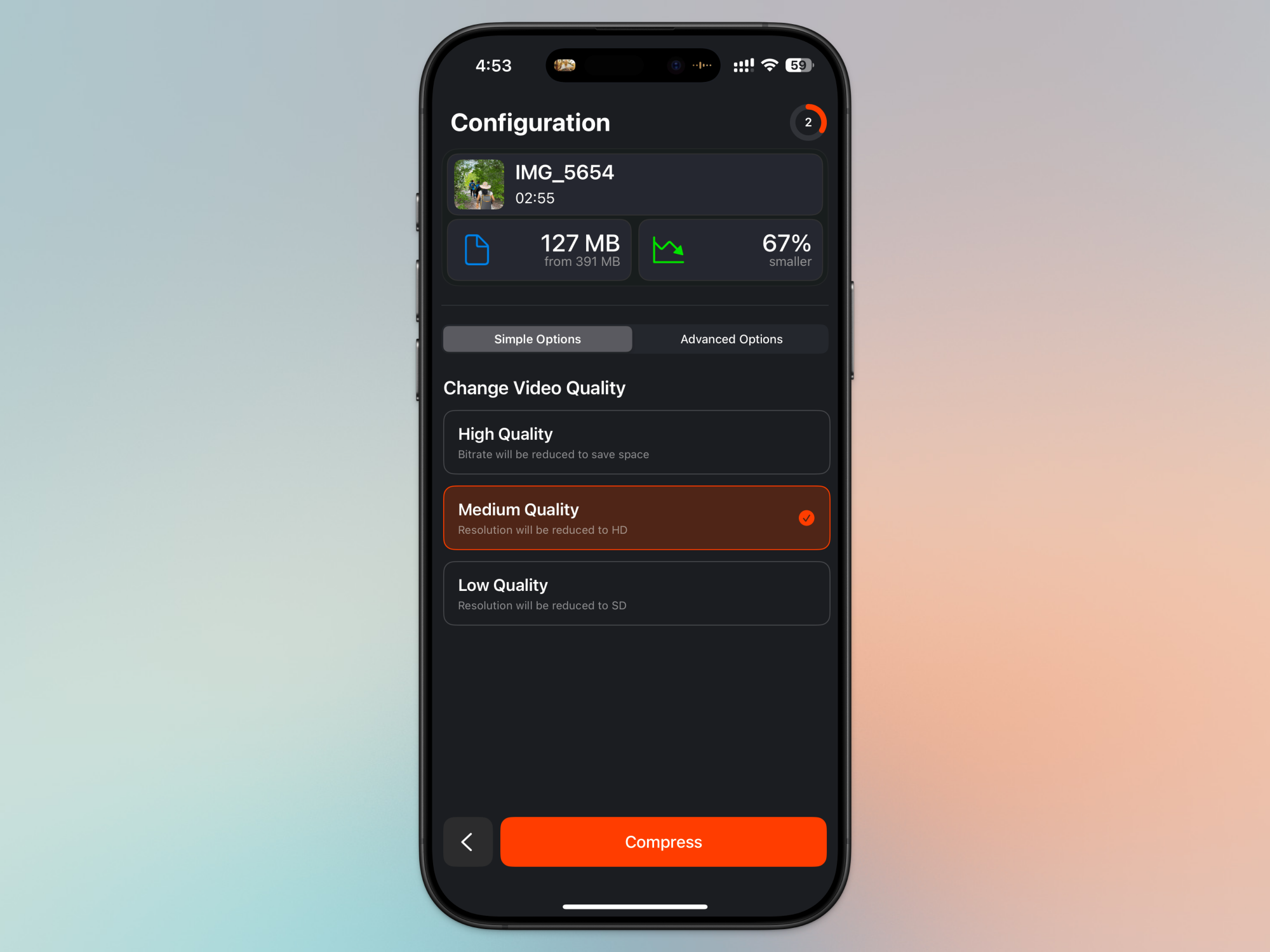
The Kompresso app offers two options for compressing videos. By default, you’ll see a simplified three tier option. Add any video and choose between High, Medium, and Low quality. As you change the option, you’ll see the file size savings you’ll get up top.

iPhone video quality change.

Credit: Khamosh Pathak

Keeping the highest quality will keep the same resolution but will reduce the bitrate and will use the compression tricks I talked about above. This will make the video take up around 30% less space. The Medium quality option will reduce the resolution to 720p, and the Low Quality option will take it all the way down to 480p. Personally, I wouldn’t suggest going down that far.

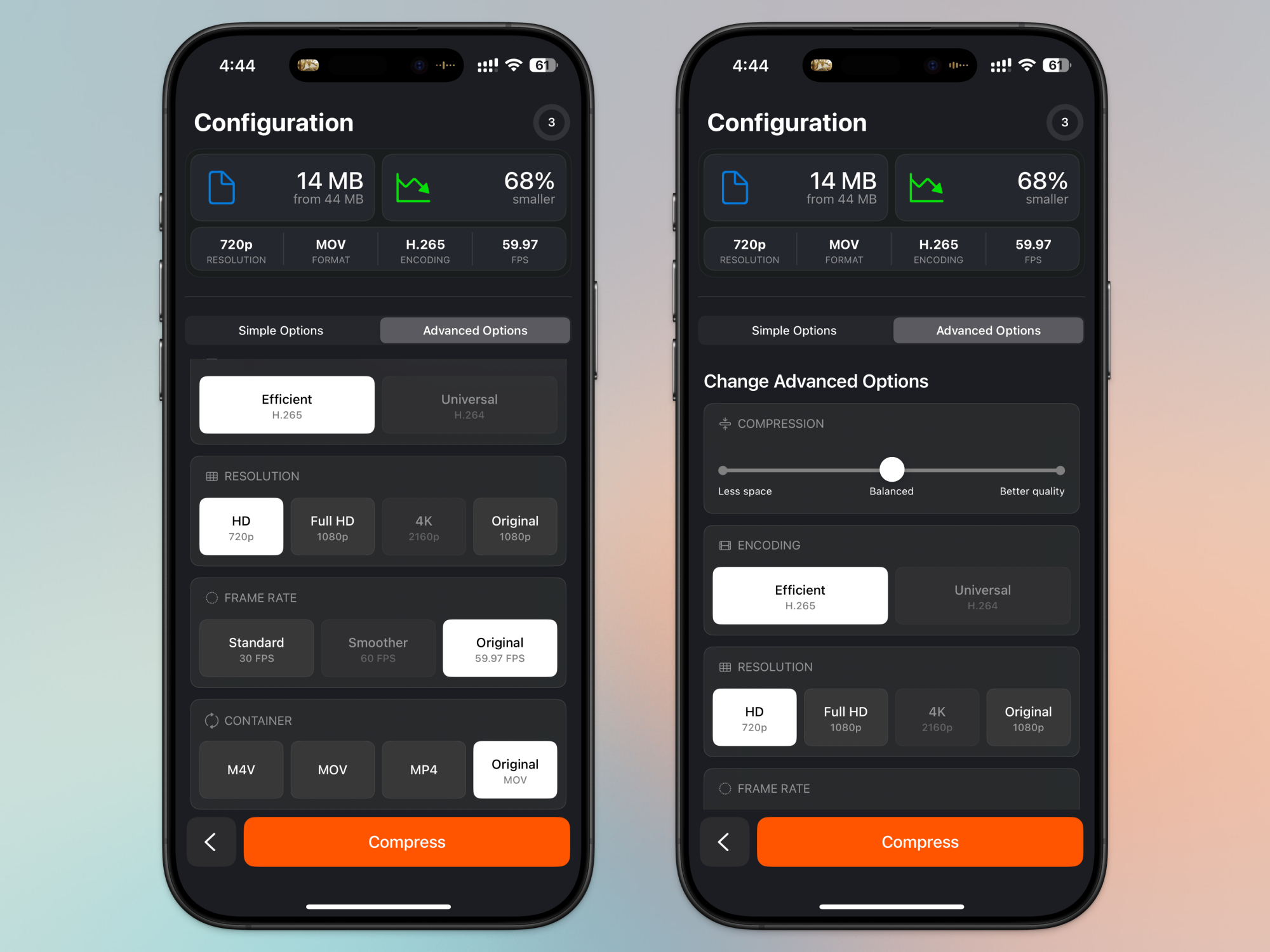
In fact, if you find you need to select the “Low” preset to make a dent in your storage space, it might be better to switch to the Advanced Options tab to customize your size savings manually.

Advanced option for video compression.

Credit: Khamosh Pathak

Here, you can fine tune the Compression settings to focus on one of three presets: Less Space, Balanced, and Better Quality. Next, make sure to choose H.265 encoding, as it’s highly efficient. Then, you can choose the resolution, frame rate, and even the format to export.

Finally, tap the Compress button and wait a while as the video is compressed. Now, you can directly share the video, to save it to the Photos app. Once the new video is saved, make sure you go to the Photos app to delete the old video, and then again, to clear it from the Recently Deleted folder.

Kompresso is free to use for up to three compressions a day, and you can unlock all limits by paying $1.99/month or $9.99 to fully unlock it for life.


Hell of a Route Chaser Challenge Launched

This week Zwift launched their next “mini Challenge”, celebrating new routes on France’s fresh tarmac/cobbles. Named “Hell of a Route Chaser Challenge”, the challenge is to complete five of the new French routes:

  • Croissant
    • 12.3km, 71m elevation
    • Achievement Badge: 185 XP
    • ZIMetrics Difficulty: 5.9/100
  • Hell of the North
    • 19.8km, 241m elevation
    • Achievement Badge: 395 XP
    • ZIMetrics Difficulty: 10.7/100
  • Gentil 8
    • 23.7km, 248m elevation
    • Achievement Badge: 465 XP
    • ZIMetrics Difficulty: 12.4/100
  • Bon Voyage
    • 31.3km, 155m elevation
    • Achievement Badge: 565 XP
    • ZIMetrics Difficulty: 14.3/100
  • Three Musketeers
    • 35.8km, 200m elevation
    • Achievement Badge: 705 XP
    • ZIMetrics Difficulty: 16.6/100

Note our ZIMetrics difficulty ratings for each route: they get higher as you move through the challenge!

Challenge Rewards

Your reward for completing all five routes? Boosted fitness of course. Because any ride is a good ride, right?

But also, you will surely earn a route badge or five, as these are all new routes. Each route badge is worth the amount of distance XP earned for riding the route’s length, meaning you effectively earn double XP the first time you complete a route and earn the badge. That means you’ll earn 2315 XP for these 5 route badges, on top of the regular distance XP you accumulate per km/mile.

Zwift has bumped up the challenge XP bonus as well, doubling it to 2000XP for this challenge. You will earn this bonus after you finish the 5th route of the challenge.

All told, that’s ~6630XP you will earn by completing this challenge.

Joining the Challenge

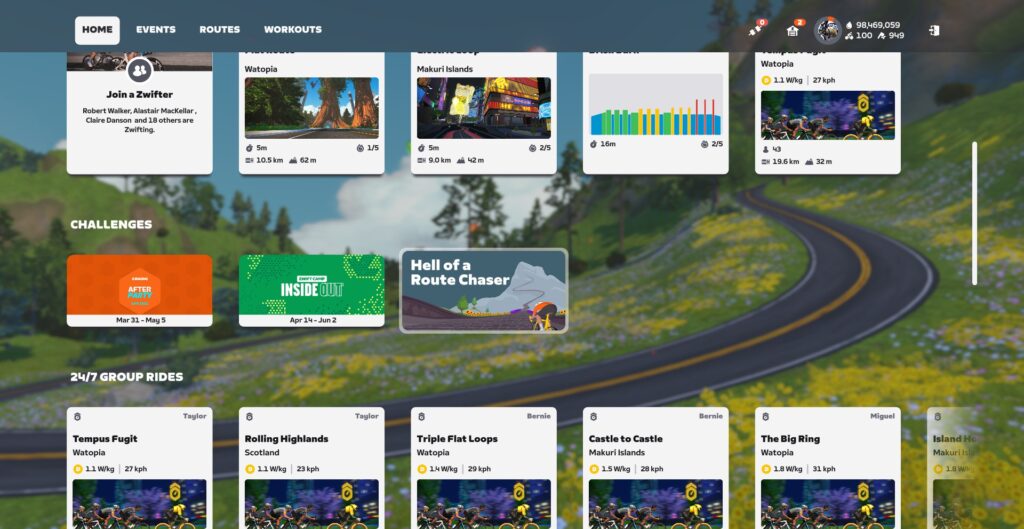
To sign up for this Challenge, just click its card on the home screen under “Challenges”:

If you see this screen, you’re signed up:

Clicking a route from this screen will take you into France to ride that route. But you can also ride these routes via other methods once you’re signed up. Ride them in events, as workouts, or even as free rides by choosing them from the route picker. As long as you sign up beforehand, completing the route via any of these methods will mark it as complete for the challenge.

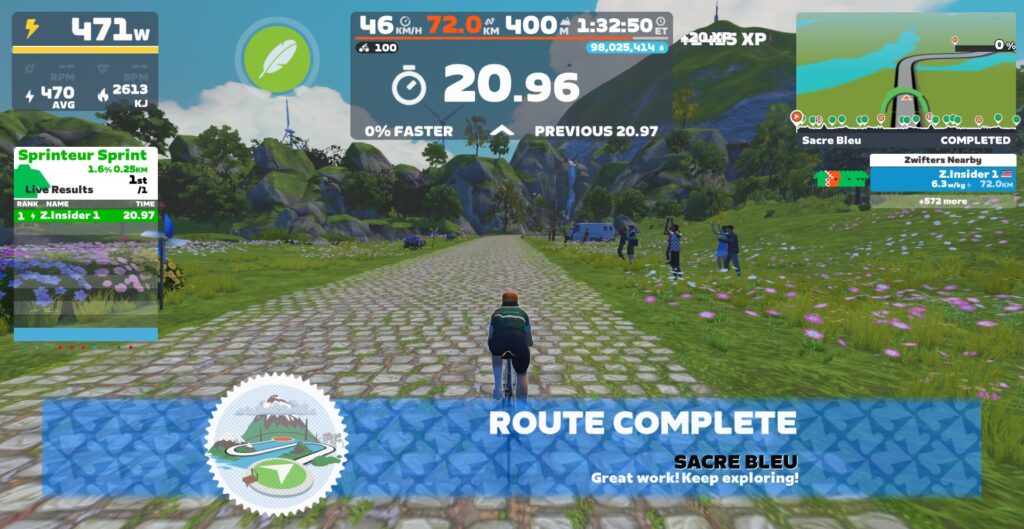
You’ll know you completed the route for the challenge because you’ll get a banner on your screen:

(Sacre Bleu isn’t one of the routes in this challenge, but you get the idea!)

Questions or Comments?

Before you ask: I don’t know exactly how long this challenge will remain available. Zwift tells me each mini challenge will typically last around 3 months, but also Zwift hasn’t been revealing precise deadlines on these challenges until a week or two before they expire.

Got other questions or comments? Share below!

First Video Of A Colossal Squid Filmed In Natural Habitat

Captured on video by the Schmidt Ocean Institute’s remotely operated submersible SuBastian, this is the first ever video of a colossal squid (Mesonychoteuthis hamiltoni) in its natural habitat. The juvenile squid was filmed at a depth of 600m in the South Sandwich Islands (I love sandwiches) about 1,100 miles northeast of the Antarctic Peninsula. Just look at that thing! The squids are estimated to grow to over 1,300 pounds, making them the largest extant invertebrates, and have the largest eyes of any animal to exist– measuring up to 16-inches. Damn, those are some beach balls! And I thought I had googly eyes. At least I’m not a colossal squid. “You do have a droopy eyelid though.” I do, and thank you for pointing it out.

Thanks to my dad, who agrees the ocean is best viewed from a lounge chair on a cruise ship. To the buffet!

The coolest cars at the 2025 New York International Auto Show

This year marks the 125th anniversary of the New York International Auto Show (NYIAS), and despite concerns over tariffs, there are still a lot of manufacturers here showing off new models including a handful of US and global debuts. So without further ado, here are some of the coolest cars on display at the 2025 NYIAS. 

The 2026 Subaru Trailseeker

The 2026 Trailseeker is Subaru's second-ever EV.
Sam Rutherford for Engadget

First up on the docket is Subaru, which is here today with a first look at its second-ever EV: the Trailseeker. Now I admit that the followup to the Solterra might not be the most exciting announcement, as this model will once again be based the e-TNGA platform, which is shared with Toyota’s bZ4x. That said, while the Trailseeker doesn’t have the most impressive range (around 260 miles), its updated styling, larger body and improved off-roading capabilities feels more suited to an outdoor lifestyle. 

The 2026 Kia EV4

The 2026 Kia EV4 at its US debut at the 2025 New York International Auto Show.
Sam Rutherford for Engadget

Kia has been on a roll when it comes to EVs thanks to existing cars like the EV6 and EV9. And at the 2025 NYIAS, the company is looking to keep that momentum rolling with the US debut of the EV4, which incorporates many of the headline features from its previous battery-powered offerings, but with an even more affordable expected price of between $35,000 and $40,000. It also features Kia’s improved i-PEDAL 3.0 regenrative braking tech which now works in reverse. 

This story is in progress so stay tuned for more updates throughout the day.

This article originally appeared on Engadget at https://www.engadget.com/transportation/evs/the-coolest-cars-at-the-2025-new-york-international-auto-show-144832805.html?src=rss

Skullcandy Unveils Method 360 ANC Earbuds Tuned By Bose At A Killer Price

Skullcandy Unveils Method 360 ANC Earbuds Tuned By Bose At A Killer Price
Consumer audio maker Skullcandy has dropped the $130 Method 360 ANC earphone (available at a discount at launch, more on that in a moment). It’s a higher-end version of the $60 Dime Evo developed in collaboration with an unlikely partner: Bose. The latter contributed to the tuning (via its Sound by Bose program) and eartip design, while the

CISA Extends Funding To Ensure ‘No Lapse in Critical CVE Services’

CISA says the U.S. government has extended funding to ensure no continuity issues with the critical Common Vulnerabilities and Exposures (CVE) program. From a report: “The CVE Program is invaluable to cyber community and a priority of CISA,” the U.S. cybersecurity agency told BleepingComputer. “Last night, CISA executed the option period on the contract to ensure there will be no lapse in critical CVE services. We appreciate our partners’ and stakeholders’ patience.”

The announcement follows a warning from MITRE Vice President Yosry Barsoum that government funding for the CVE and CWE programs was set to expire today, April 16, potentially leading to widespread disruption across the cybersecurity industry. “If a break in service were to occur, we anticipate multiple impacts to CVE, including deterioration of national vulnerability databases and advisories, tool vendors, incident response operations, and all manner of critical infrastructure,” Barsoum said.


Read more of this story at Slashdot.