The flowers are blooming and the days are getting warmer. Spring is here! Finally, it’s nice enough to go outside. But Xbox has a massive Spring sale happening right now that might tempt you to stay in for a few more days or weeks.

The flowers are blooming and the days are getting warmer. Spring is here! Finally, it’s nice enough to go outside. But Xbox has a massive Spring sale happening right now that might tempt you to stay in for a few more days or weeks.
One of the more serious players in the air taxi game, Archer, has just unveiled routes for a potential service in New York City. Its Midnight aircraft would shuttle passengers from Manhattan to JFK, LaGuardia and Newark airpots in five to 15 minutes, potentially shaving an hour or more from typical driving times. However, Archer didn’t provide any dates for the start of the service and all of this could be derailed by regulatory bodies, particularly the Federal Aviation Administration (FAA).
Any news about air taxis should come with the caveat that no such services are operating yet, even though startups have been trying for a decade or more. With that said, Archer has partnered with a number of established aviation and other companies including Fiat Chrysler and United Airlines, along with fixed base operators (FBOs) like Signature Aviation and Atlantic Aviation. Archer also previously announced proposed air taxi networks in San Francisco, Los Angeles and Chicago.
Archer’s plan is to have you book air taxi rides as an “add-on” to traditional flights. You’d launch from existing Manhattan facilities, namely the East 34th Street Heliport, Downtown Skyport and West 30th Street Heliport. From there, you’d be able to fly to “vertiports” at JFK, LaGuardia and Newark airpots, along with locations at other regional airports. Flights would be aboard the company’s human-piloted, four-passenger Midnight aircraft with 12 rotors, six batteries and a range of 20-50 miles.
Archer does have United Airlines, New York’s Port Authority and the New York City Economic Development Corportation (NYCEDC) all on board. However, it hasn’t provided important details like the number of potential flights per day, operating hours and more. That information would be vital to the FAA, which must decide if the service is safe for passengers, other aircraft and people on the ground.
That’s an undertaking that could require a lot of time and cost, and Archer’s VTOL aircraft still hasn’t received its FAA type certification required for any operations. The company did receive the FAA’s final airworthiness criteria, though, making it one of only two air taxi companies with that certification along with rival Joby Aviation. The only air taxi company to obtain type certification from an aviation regulator is EHang from China’s Civil Aviation Administration (CAAC).
The air taxi game is risky for startups, too. Late last year one of Archer’s VTOL rivals, Lilium ceased operations, laying off 1,000 people, despite successful flight tests.
This article originally appeared on Engadget at https://www.engadget.com/transportation/archer-outlines-its-plan-to-use-air-taxis-between-new-yorks-major-airports-123024903.html?src=rss
We may earn a commission from links on this page. Deal pricing and availability subject to change after time of publication.
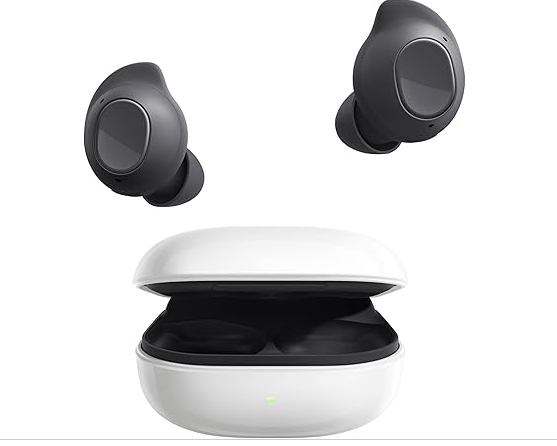
The Samsung Galaxy Buds FE are down to $47.99 on Woot right now—their lowest price to date, according to price trackers. That’s a solid $22 cheaper than Amazon’s current listing at $69.99. This deal is live for two weeks or until it sells out, and it comes with a 90-day Woot limited warranty. If you’re a Prime member, you’ll get free shipping—otherwise, there’s a $6 shipping charge.
At this price, these are a decent entry point into Samsung’s audio ecosystem, especially if you’re already using Galaxy devices. You’ll get decent active noise cancellation that holds up surprisingly well in everyday environments like cafes or public transit, enough to cut out most low-level hums and chatter. That said, it doesn’t completely block the outside world, but it muffles it enough to focus on music or a call.
The touch controls are responsive—maybe too responsive at times; accidental skips and pauses are common until you get used to the layout. As for battery life, Samsung claims up to six hours of playback with ANC on, and the case adds another 21 hours. That’s more than enough to get through a day or two of regular use. There’s no wireless charging here, though—just USB-C. These days, that feels like a cut corner. And while the EQ presets are decent, there’s no manual tuning option, so if you’re picky about your sound profile, that might feel limiting, notes this PCMag review.
There’s also the Galaxy-only interpreter feature that sounds cool on paper but won’t work if you’re using anything other than a Samsung phone. Cross-device sync works great within the ecosystem, though, and the Find My Earbuds tool is genuinely helpful for the forgetful. Still, these aren’t ideal for everything. If you’re planning to use them at the gym or on runs, the IPX2 rating won’t cut it—it barely holds up against sweat. And if you’re not a Samsung user, the app experience feels half-baked. For something more flexible and water-resistant, the Soundcore Liberty 4 NC at $69.99 (down from $99.99) might offer better value.
The GNU Compiler Collection (GCC) code was branched today to the releases/gcc-15 branch and GCC 16.0.0 is now the version on the main development branch…
Alright, let’s talk AI. The field’s buzzing like a server room full of caffeinated bees, and standing tall amidst it all is IBM with Granite. Now, IBM isn’t some fresh-faced startup that just discovered algorithms. It has been wrestling with AI concepts for decades. Seriously. Since before AI was the cool kid at the tech party, IBM was building “expert systems” back when the rest of us were mastering floppy disks. Granite is IBM’s latest heavyweight champ, built on being Open, Performant and Trusted. Think of it as the friendly giant of the AI world.
IBM is really into open source, and frankly, it makes sense. Why keep your cool tech locked in a black box when you can share it (under licenses like the friendly Apache 2.0, not the scary kind)? Granite models often strut their stuff out in the open, meaning they’re usually free-ish to use and way easier to tinker with than those mysterious proprietary AIs.
This openness is IBM’s superpower. It’s a wizard at taking a solid open-source foundation (like Granite) and helping businesses sprinkle their own secret sauce (aka client data) on top. The result? Custom AI that actually works for specific needs, built faster than you can say “synergistic optimization.”
Need proof? One poor company was drowning in 300,000 customer calls, trying to get answers to 81 questions using some fancy proprietary AI that was… well, not helping. It was like using a fork to eat soup. IBM swooped in, Granite model in hand (figuratively speaking), and bam – success! Open source for the win.
Granite didn’t just appear fully formed. It’s had quite the evolution. It started with text, like most AIs learning their ABCs. Then it got good with time-based stuff for forecasting (predicting the future, basically). Granite 3.2 learned to see, adding image support. And now, with 3.3, it’s got the gift of gab – full voice support! We’re talking speech recognition, translation and transcribing even those super long, rambling meeting notes. Its ability to handle context has also ballooned from 12K to a whopping 128K tokens – that’s like going from reading a pamphlet to understanding an epic novel.
Imagine this in insurance: Granite looks at your dented car pics, chats with you about what happened (“Did a rogue shopping cart attack?”), and gets the claim rolling, mostly on its own. Less paperwork for you, faster processing – it’s almost enough to make insurance feel… pleasant? Maybe? It’s also a whiz at pulling key info from dense technical manuals and answering questions about it, especially with some RAG (Retrieval-Augmented Generation) magic involved.
Don’t let the “open” part fool you into thinking Granite isn’t powerful. IBM claims it’s the speediest open-source model out there, giving even the big-name proprietary AIs a serious run for their money. On tasks like speech recognition, benchmarks show it matching or beating the competition.
And here’s the kicker: it’s efficient. Granite models can often do their magic on a single, affordable GPU – no need for a server farm cooled by arctic winds. This efficiency is huge for businesses wanting to actually use AI without breaking the bank. IBM’s own research suggests smaller Granite models can be more cost-effective for certain tasks than gigantic ones like GPT-4 (nerd out on the details here). Remember the US Open? When faced with a tsunami of tennis matches, IBM’s AI (powered by tech like Granite) managed to report on everything in real-time – a first! That’s handling scale.
Granite is also getting smarter with enhanced reasoning, like “chain-of-thought” (basically, showing its work). This can create a lot of digital chatter (tokens), but Granite’s efficiency handles it gracefully. Importantly, IBM baked in safety and quality from day one. So, while some other models apparently lost their minds a bit when trying to get smarter (looking at you, DeepSeek comparison!), Granite kept its cool, focusing on reliable, trustworthy results. Less chance of your AI suddenly deciding the sky is plaid.
This “Trusted” label isn’t just marketing fluff. It’s backed by that clear Apache 2.0 license, transparent data practices, IP indemnification (lawyer-speak for “we got your back”), and strong digital guardrails to keep things secure.
So, IBM Granite? It’s Big Blue’s experienced, open and surprisingly efficient answer to the AI call. It’s already making waves within IBM itself and helping clients tackle real problems. By mixing performance with openness and a solid dose of trust (plus maybe saving you from rogue shopping carts), Granite is definitely an AI suite worth watching in the business world. It’s AI that’s ready to work, not just hog the headlines.
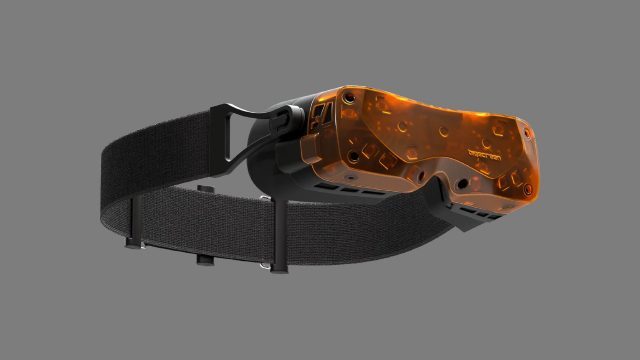
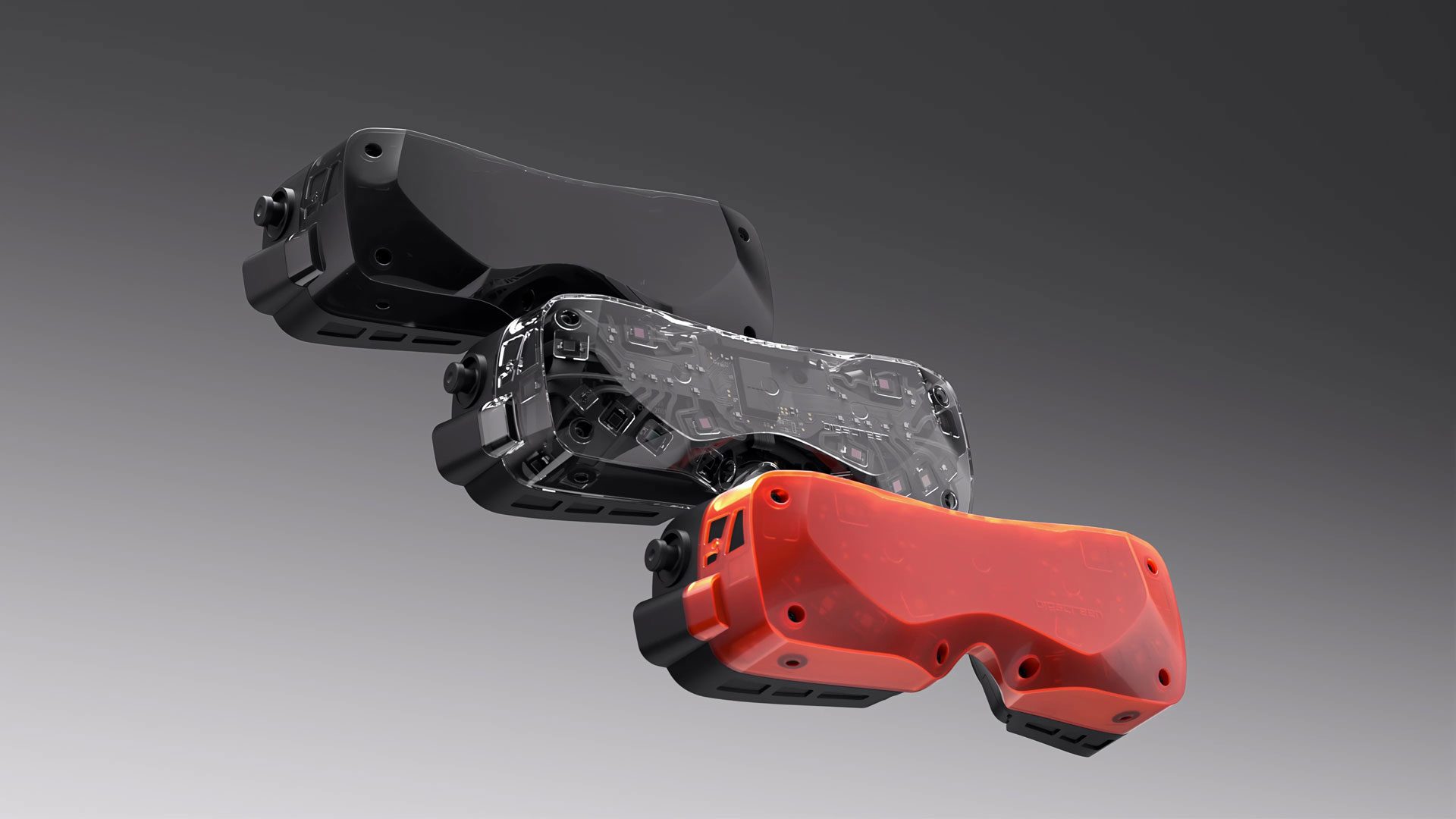
Wide sweeping tariffs levied by US President Donald Trump have led to uncertainty in just how the XR hardware industry will react. Now, Bigscreen says its recently announced Beyond 2 PC VR headset will not see a price increase as a result.
Bigscreen released a statement on X wherein the company maintains its Beyond 2 headset, priced at $1,019, isn’t getting a price bump despite increased tariffs applied to many goods manufactured in China.
According to Bigscreen, the company sources Beyond 2 components and assemblies from a variety of regions, including China, Japan and Europe. While “significant final assembly and testing” take place at its Los Angeles-based factory, many of the most expensive components and assemblies are made outside the US, which have “dramatically increased […] costs.”
“We expect to absorb all costs of the tariffs, trade war, and supply chain disruptions. We will not be increasing prices in any form for the foreseeable future,” Bigscreen says. “Customers will not pay any further shipping fees, tariffs, import duties, taxes, or VAT,” the company adds, noting that the final checkout amount includes no hidden fees.
While the company says it “expected this may happen long before we announced Bigscreen Beyond 2,” the United States’ Harmonized Tariff Schedule is still evolving.
President Trump issued an executive order last week exempting many electronics, such as smartphones, monitors, and laptops, from the combined 145% reciprocal tariff rate.
Although not specifically named, VR headsets are expected benefit from the exemption, as UploadVR notes, however these devices will still be subject to a 20% tariff which was put in place in March 2025.
Prior to the exemption, Shanghai-based PC VR headset creator Pimax was the first to address tariffs with the announcement it would offload some of the pressure to its ‘Pimax Prime’ software subscription, keeping the final ‘all-in’ price of flagship Crystal Super at parity to the same ~$1,690 pre-tariff pricing, albeit with the inclusion of a $95 US-only surcharge.
The post Bigscreen Says Tariffs Will Not Increase Price of Beyond 2 PC VR Headset appeared first on Road to VR.
The 1873 Colt Single-Action Army Revolver Toy stands as a masterpiece of craftsmanship, blending historical authenticity with modern safety standards. Designed for enthusiasts of all ages, this 1:1 scale replica captures the essence of the American West through its realistic metal construction, rotating wheel action, and immersive play experience. Weighing 755 grams and measuring 28 x 14 cm, the revolver offers a tactile connection to the past while prioritizing safety with non-toxic materials and EVA foam darts. Ideal for educational role-playing or collectors seeking a functional art piece, this toy bridges generations by combining nostalgia with innovative design.
The Colt Single-Action Army Revolver, colloquially known as the “Peacemaker,” revolutionized firearm technology in 1873 and became synonymous with the expansion of the American West. Its rugged reliability made it the sidearm of choice for cowboys, lawmen, and outlaws alike, cementing its place in cultural lore. This toy replica pays homage to that legacy, replicating every contour and mechanism with precision to evoke the spirit of frontier life.

Original Colt revolvers were celebrated for their simplicity and durability—qualities mirrored in this replica’s design. The 1:1 scale reproduction ensures historical accuracy, allowing users to handle a piece of engineering history without the risks associated with antique firearms. The rotating cylinder, a hallmark of the Single-Action Army’s functionality, has been faithfully recreated to mimic the loading and firing process, providing an authentic tactile experience.
Crafted primarily from metal, this replica achieves a level of realism rarely seen in toy firearms. The heft (755 grams) and textured grip replicate the feel of handling an original Colt, while the polished finish and engraved details mirror the artistry of 19th-century gunsmithing. Unlike plastic alternatives, the metal build ensures longevity, making it a durable addition to collections or outdoor play.
Measuring 28 cm in length, the revolver gun fits comfortably in both adult and adolescent hands. The 14 cm barrel length maintains proportionality, ensuring the toy remains manageable while preserving its iconic silhouette. Each component, from the trigger to the hammer, operates smoothly, reinforcing the illusion of a functional firearm while adhering to toy safety standards.

The revolver’s standout feature is its rotating cylinder, which turns with each simulated shot. This mechanism, powered by a spring-loaded system, replicates the sequential firing process of the original Colt. Users load the six included shells into the cylinder, pull back the hammer, and squeeze the trigger to “fire” a dart, creating a cycle of action that mirrors historical reloading techniques.
Included with the revolver are 20 EVA foam darts, designed for safe yet engaging target practice. With an effective range of 15–25 feet, these darts allow users to hone their aim in backyards or designated play areas. The soft-tip design eliminates injury risks, making the toy suitable for children aged 8 and above.
Prioritizing child safety, the revolver is constructed from materials free of lead, phthalates, and BPA. The EVA darts are similarly compliant with international toy safety regulations, ensuring peace of mind for parents. Even the metal components have rounded edges to prevent accidental cuts or scratches.
M416GelBlasters.com collaborates with suppliers who adhere to sustainable production practices. The revolver’s packaging excludes non-recyclable plastics, and the absence of a retail box reduces shipping weight, lowering its carbon footprint.
This revolver serves as an interactive educational aid, helping children visualize historical scenarios like cattle drives or sheriff’s posse formations. By simulating frontier life, it encourages interest in American history and the technological advancements of the 19th century.
Operating the revolver teaches fine motor skills, as users must sequentially load shells, rotate the cylinder, and aim carefully. Parents can use play sessions to discuss firearm safety, fostering respect for real weapons while differentiating them from toys.
M416GelBlasters.com specializes in curating historically accurate toys that balance authenticity with modern safety standards. Their 1873 Colt replica exemplifies this commitment, offering unparalleled attention to detail compared to mass-market alternatives. By sourcing directly from manufacturers, they ensure competitive pricing without compromising quality—a rare find in niche toy markets.
The 1873 Colt Single-Action Army Revolver Toy transcends typical plaything status, serving as a bridge between past and present. Its combination of historical fidelity, robust construction, and child-safe design makes it a versatile tool for education, collection, or imaginative play. As families seek toys that encourage offline interaction and learning, this revolver stands out as a testament to thoughtful engineering and cultural preservation.
In addition to this week’s updated Intel oneVPL GPU Runtime, Intel’s software engineers also released their new quarterly version of the Intel Media Driver that provides Video Acceleration API (VA-API) support for integrated graphics hardware going back to Broadwell processors and through the next-gen Panther Lake processors…
Atari and Jeff Minter’s remake of classic arcade shooter I, Robot is now available on PlayStation VR2.
Revealed back in February, I, Robot is a new retro revival by veteran publisher Atari with Jeff Minter’s UK-based studio Llamasoft. Featuring 55 levels, unique bonus stages, procedural music and online leaderboards, this arcade-like game sees you play as an ox-headed robot determined to outwit the all-seeing eye within a psychedelic kaleidoscopic visualizer.
During GDC 2025, our video producer Don Hopper interviewed Atari while going hands-on with the PlayStation VR2 version. We’re aiming to bring you our full impressions as soon as we can, but until then, you can watch the interview above to learn more.
The original I, Robot game first appeared in 1983, which was designed by the Missile Command and Tempest creator, David Theurer. This new remake is available on most flatscreen platforms, though there’s no news on a Quest release or VR support for the PS4 or Steam versions.
I, Robot is available now for $14.99 on PlayStation VR2 and flatscreen platforms.
LXQt 2.2 was christened today as the newest stable update to this lightweight, open-source Qt desktop environment…
Nintendo’s lawyers systematically dismantled Atari Games in a landmark 1989 legal battle that reshaped the gaming industry, killing off the Tengen brand until its surprise resurrection recently.
When Atari Games (operating as Tengen) attempted to circumvent Nintendo’s control by reverse-engineering the NES security system, Nintendo’s legal team discovered a fatal flaw in their rival’s approach: Atari had fraudulently obtained Nintendo’s proprietary code from the Copyright Office by falsely claiming they were defendants in a nonexistent lawsuit.
Though courts ultimately established that reverse engineering was legal under fair use principles, Atari’s deception proved catastrophic. The judge invoked the centuries-old “unclean hands” doctrine, ruling that Atari could not claim fair use protection after approaching the court in bad faith.
“As a result of its lawyers’ filthy hands, Atari was barred from manufacturing games for the NES. Nintendo, with its stronger legal team, subsequently ‘bled Atari to death,'” writes tech industry attorney Julien Mailland. The court ordered the recall of Tengen’s “Tetris” version, now a rare collector’s item.
After a 30-year absence, Tengen Games returned in July 2024 with “Zed and Zee” for the NES, finally achieving what its predecessor was legally prohibited from doing.


Read more of this story at Slashdot.
Released on Wednesday was IGC 2.10.8 as the newest update to the Intel Graphics Compiler that is used by their Compute Runtime OpenCL/Level-Zero stack on Windows and Linux as well as being used as their graphics shader compiler under their Windows driver…
Following the recent Plasma 6.3 desktop release, KDE Gear 25.04 is now available for shipping all of the latest and greatest KDE applications…
The latest update to Meta Quest removes the option to uninstall Horizon Worlds and introduces enhanced live captions.
The post The latest Meta Quest update makes Horizon Worlds mandatory appeared first on MIXED Reality News.
An increasing number of frameworks describe the possible contents of a K–12 artificial intelligence (AI) curriculum and suggest possible learning activities (for example, see the UNESCO competency framework for students, 2024). In our March seminar, Lukas Höper and Carsten Schulte from the Department of Computing Education at Paderborn University in Germany shared with us a unit of work they’ve developed that could inform such a curriculum. At its core, the unit enhances young people’s awareness of how their personal data is used in the data-driven technologies that form part of their everyday lives.


Lukas Höper and Carsten Schulte are part of a larger team who are investigating how to teach school students about data science and Big Data.
Carsten explained that Germany’s informatics (computing) curriculum includes a competency area known as Informatics, People and Society (IPS), which explores the interrelationships between technology, individuals, and society, and how computation influences and is influenced by social, ethical, and cultural factors. However, research has suggested that teachers face several problems in delivering this topic, including:
Some of the findings of that 2007 research were mirrored in a more recent local study in 2025, which found that although there have been some gains in subject knowledge in the interval period, the problems of a lack of teaching material and integration with other computer science (CS) topics persist, with IPS increasingly perceived as the responsibility of the informatics subject area alone. Despite this, within the informatics curriculum, IPS is often the first topic to be dropped when educators face time constraints — and concerns with what and how to assess the topic remain.

In this context, and as part of a larger, longitudinal project to promote data science teaching in schools called ProDaBi, Carsten and Lukas have been developing, implementing, and evaluating concepts and materials on the topics of data science and AI. Lukas explained the importance of students developing data awareness in the context of the digital systems they use in their everyday lives, such as search engines, streaming services, social media apps, digital assistants, and chatbots, and emphasised the difference between being a user of these systems and a data-aware user. Using the example of image recognition and ‘I am not a robot’ Captcha services, Lukas explained how young people need to develop a data-aware perspective of the secondary purposes of the data collected by these (and other) systems, as well as the more obvious, primary purposes.
Lukas went on to illustrate the human interaction system model, which presents a continuum of possible different roles, from the student as the user of digital artefacts to the student as the designer of digital artefacts.
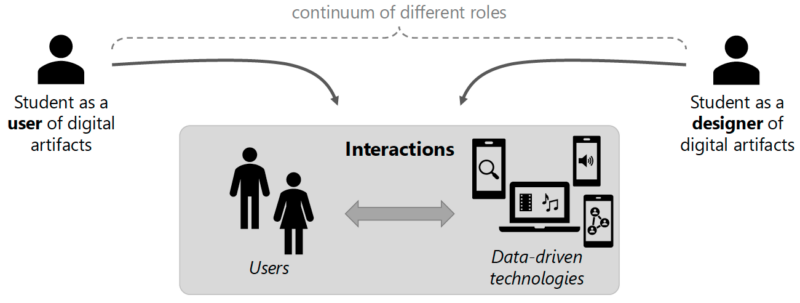
To become data-aware users of digital artefacts, students need to be able to understand and reflect on those digital artefacts. Only then can they proceed to become responsible designers of digital artefacts. However, when surveyed, some students were only moderately interested in engaging with the inner workings of the digital technologies they use in their everyday lives. Many students prefer to use the systems and are less interested in how they process data.
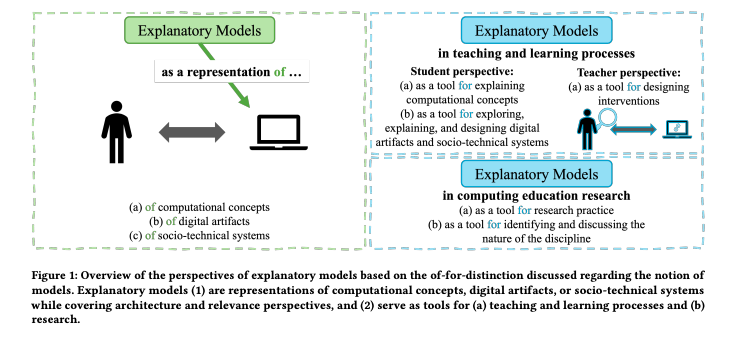
Lukas explained how students often become more interested in data-driven technologies when learning about them with explanatory models. Such models can foster data awareness, giving students a different perspective of data-driven technologies and helping them become more empowered users of them.
To illustrate, Lukas gave the example of an explanatory model about the role of data in digital systems. Such a model can be used to introduce the idea that data is explicitly and implicitly collected in the interaction between the user and the technology, and used for primary and secondary purposes.
Lukas then introduced two teaching units that were developed for use with middle school children to evaluate the success of the explanatory model approach in computing education. The first unit explores location data collected by mobile phone networks and the second features recommendation systems used by movie streaming services such as Netflix and Amazon Prime.
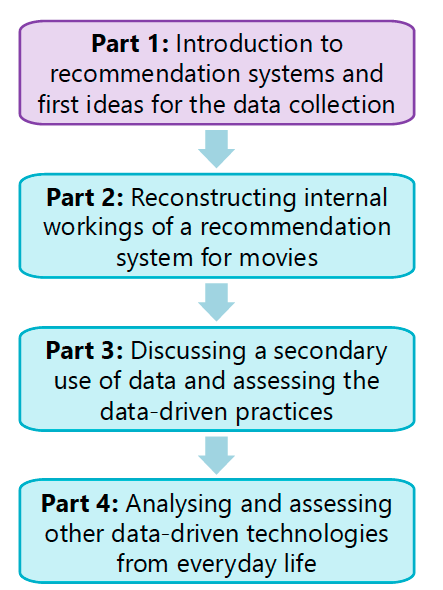
Taking the second unit as their focus, Lukas and Carsten outlined the four parts of the explanatory model approach:
The teaching unit begins by introducing recommendation systems and asking students to think about what a streaming service is, how a personalised start page is constructed, and how personal recommendations might be generated. Students then complete an unplugged activity to simulate the process of making movie recommendations for a peer:
Task 1: Students write down movie recommendations for another student.
Task 2: They then ask each other questions (they collect data).
Task 3: They write down revised movie recommendations.
Task 4: They share and evaluate their recommendations.
Task 5: Together they reflect on which collected data was helpful in this exercise and what kind of data a recommendation system might collect. This reflection introduces the concepts of explicit and implicit data collection.
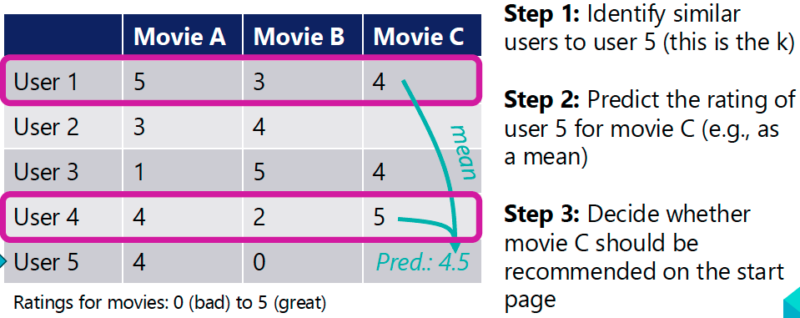
In part 2, students are given a prepared Jupyter Notebook, which allows them to explore a simulation of a recommendation system. Students rate movies and receive personal recommendations. They reconstruct a data model about users, using the idea of collaborative filtering with the k-nearest neighbours algorithm (see Figure 3).
In part 3, the concepts of primary and secondary purposes for data collection are introduced. Students discuss examples of secondary purposes such as personalised paywalls for movies that can be purchased, and subscriptions based on the predictions of future behaviour. The discussion includes various topics about individual and societal issues (e.g. filter bubbles, behaviour engineering, information asymmetry, and responsible development of data-driven technologies).
Finally, students use the explanatory model as an ‘analytical lens’. They choose other examples from their everyday lives of technologies that implement recommendation systems and analyse these examples, assessing the data practices involved. Students present their results in class and discuss their role in these situations and possible actions they can take to become more empowered, data-aware users.
Using the explanatory model is one approach to make the Informatics, People and Society strand of the German informatics curriculum more engaging for students, and addresses some of the problems teachers identify with delivering this competency area.

In presenting the idea of the explanatory model, Carsten and Lukas emphasised that the model in use delivers content as well as functioning as a tool to design teaching content. In the example above, we see how the explanatory model introduces the concepts of:
The explanatory model framework can also be used as a focus for academic research in computing education. For example, further research is needed to evaluate if explanatory models are appropriate or ‘correct’ models and to determine the extent to which they are useful in computing education.
In summary, an explanatory model provides a specific perspective on and explanation of particular computing concepts and digital artefacts. In the example given here, the model focuses on the role of data in a recommender system. Explanatory models are representations of concepts, artefacts, and socio-technical systems, but can also serve as tools to support teaching and learning processes and research in computing education.
The teaching units referred to above are published on www.prodabi.de (in German and English).
See the background paper to the seminar, called ‘Learning an explanatory model of data-driven technologies can lead to empowered behaviour: A mixed-methods study in K-12 Computing education’.
You can also view the paper describing the development of the explanatory model approach, called ‘New perspectives on the future of Computing education: Teaching and learning explanatory models’.
In our current seminar series, we’re exploring teaching about AI and data science. Join us at our next seminar on Tuesday 13 May at 17:00–18:30 BST to hear Henriikka Vartiainen and Matti Tedre (University of Eastern Finland) discuss how to empower students by teaching them how to develop AI and machine learning (ML) apps without code in the classroom.
To sign up and take part in our research seminars, click below:
You can also view the schedule of our upcoming seminars, and catch up on past seminars on our previous seminars and recordings page.
The post Research insights to help learners develop data awareness appeared first on Raspberry Pi Foundation.
Virtual Skate is a physics-based skating simulator coming soon to Quest 3 and SteamVR.
Developed by Flip Axis Studios, Virtual Skate is precisely what it says on the tin: an immersive skateboarding simulator that allows players to Ollie and grind to their hearts’ content in virtual reality. A new gameplay teaser for the VR experience dropped yesterday on YouTube, and you can check it out below:
0:00
In a press release for Virtual Skate, Flip Axis Studios explained that when skating, players would have “full 3D control over their feet—directly with their hands” and use an “intuitive physics-based system” to help with board control when in motion.
Virtual Skate puts you on the board and lets you feel every pop, grind, and impact—without the broken bones and rolled ankles. Perfect for the old heads who can’t huck it down big stair sets like they used to, or for rainy days that ruin a good session. Link up with friends, shred all day, and keep stacking clips.
It’s not the first VR skateboarding game we’ve seen, following VR Skater by Deficit Games. Jon West, a lead developer with previous credits on the flatscreen game Skater XL—The Ultimate Skateboarding Game, which launched to mixed reviews in 2020, is leading the project.
Virtual Skate is “coming soon” to the Quest 3 family and SteamVR.

The mixed reality game Wall Town Wonders, originally developed for Meta Quest, is coming soon for Playstation VR 2 & SteamVR.
The post Quest-exclusive Wall Town Wonders makes the leap to Playstation VR 2 and Steam appeared first on MIXED Reality News.
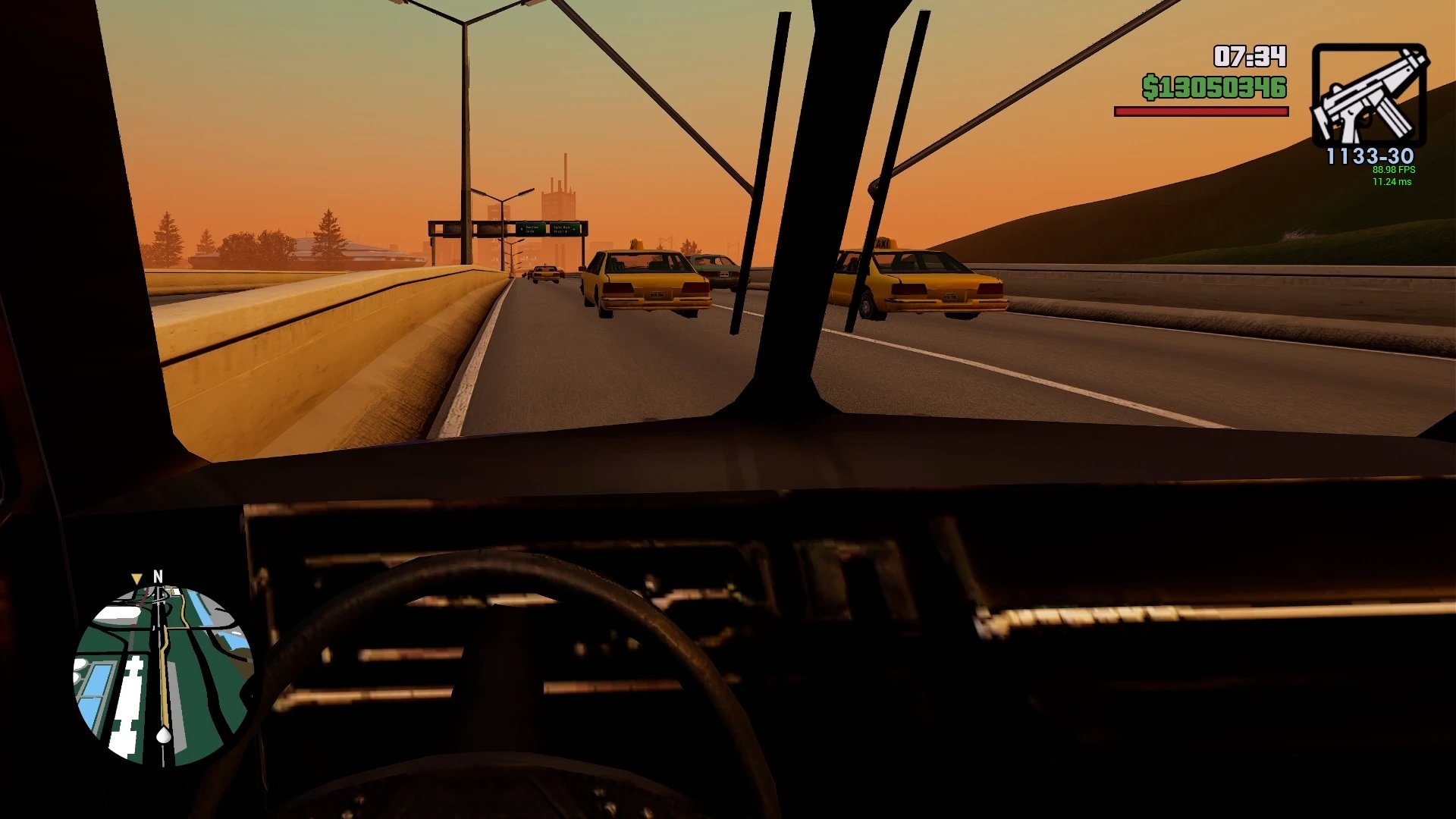
Thanks to a new VR mod for the Definitive Edition, experiencing GTA San Andreas in VR is more immersive than ever.
The post The dream of GTA San Andreas VR inches closer with a new mod appeared first on MIXED Reality News.
Newer Nexus owners get it first, the rest will have to wait. Google is starting its rollout of Android 7, codenamed Nougat, but you’re only going to get it if you’re running one of the newer models of the firm’s Nexus devices.…
Astronomers have detected what may be the strongest evidence yet of extraterrestrial life on K2-18b, a massive exoplanet orbiting a star 120 light-years from Earth. The research team, led by Cambridge astronomer Nikku Madhusudhan, published their findings today in the Astrophysical Journal Letters.
Using the James Webb Space Telescope, researchers found significant concentrations of dimethyl sulfide and dimethyl disulfide in K2-18b’s atmosphere. On Earth, these sulfur compounds are exclusively produced by living organisms, particularly marine algae. “It is in no one’s interest to claim prematurely that we have detected life,” said Madhusudhan, though he described the findings as “a revolutionary moment” and “the first time humanity has seen potential biosignatures on a habitable planet.”
The team detected the signals during two separate observations, with the second showing an even stronger signature. Their analysis suggests K2-18b may be a “Hycean” planet — covered with warm oceans and wrapped in a hydrogen-rich atmosphere — with concentrations of dimethyl sulfide thousands of times higher than Earth levels.
Other scientists remain cautious. Christopher Glein of the Southwest Research Institute suggested K2-18b could instead be “a massive hunk of rock with a magma ocean and a thick, scorching hydrogen atmosphere.” Further observations with Webb and future NASA telescopes will be necessary to confirm whether K2-18b is truly habitable or inhabited, though planned budget cuts may impact follow-up research.
Further reading: Water Found On a Potentially Life-Friendly Alien Planet (2019).


Read more of this story at Slashdot.