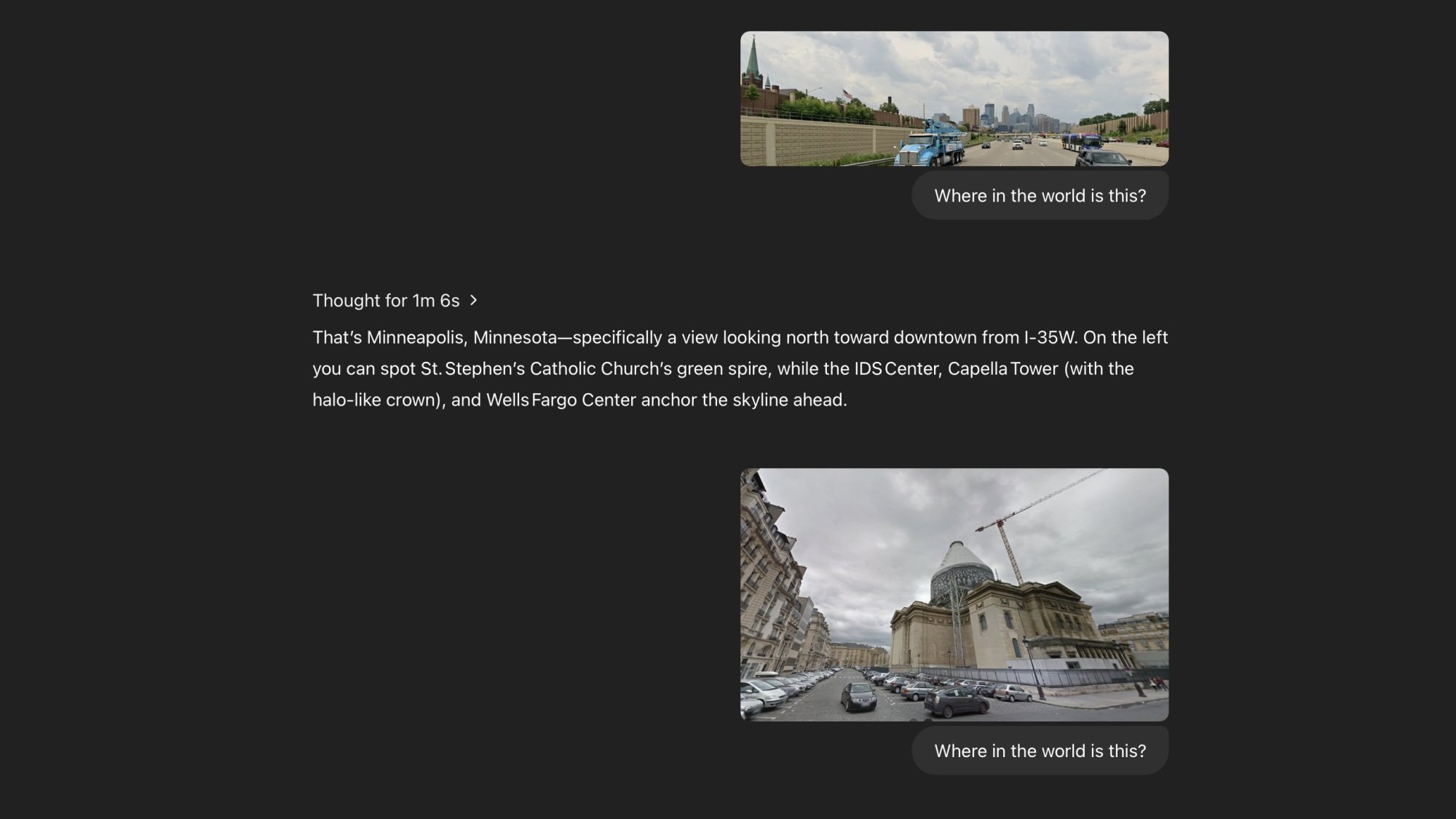
China Develops Flash Memory 10,000x Faster With 400-Picosecond Speed

Longtime Slashdot reader hackingbear shares a report from Interesting Engineering: A research team at Fudan University in Shanghai, China has built the fastest semiconductor storage device ever reported, a nonvolatile flash memory dubbed “PoX” that programs a single bit in 400 picoseconds (0.0000000004 s) — roughly 25 billion operations per second. Conventional static and dynamic RAM (SRAM, DRAM) write data in 1-10 nanoseconds but lose everything when power is cut while current flash chips typically need micro to milliseconds per write — far too slow for modern AI accelerators that shunt terabytes of parameters in real time.

The Fudan group, led by Prof. Zhou Peng at the State Key Laboratory of Integrated Chips and Systems, re-engineered flash physics by replacing silicon channels with two dimensional Dirac graphene and exploiting its ballistic charge transport. Combining ultralow energy with picosecond write speeds could eliminate separate highspeed SRAM caches and remove the longstanding memory bottleneck in AI inference and training hardware, where data shuttling, not arithmetic, now dominates power budgets. The team [which is now scaling the cell architecture and pursuing arraylevel demonstrations] did not disclose endurance figures or fabrication yield, but the graphene channel suggests compatibility with existing 2Dmaterial processes that global fabs are already exploring. The result is published in the journal Nature.


Read more of this story at Slashdot.

A Musician’s Brain Matter Is Still Making Music Three Years After His Death

An anonymous reader quotes a report from Popular Mechanics: American composer Alvin Lucier was well-known for his experimental works that tested the boundaries of music and art. A longtime professor at Wesleyan University (before retiring in 2011), Alvin passed away in 2021 at the age of 90. However, that wasn’t the end of his lifelong musical odyssey. Earlier this month, at the Art Gallery of Western Australia, a new art installation titled Revivification used Lucier’s “brain matter” — hooked up to an electrode mesh connected to twenty large brass plates — to create electrical signals that triggered a mallet to strike the varying plates, creating a kind of post-mortem musical piece. Conceptualized in collaboration with Lucier himself before his death, the artists solicited the help of researchers from Harvard Medical School, who grew a mini-brain from Lucier’s white blood cells. The team created stem cells from these white blood cells, and due to their pluripotency, the cells developed into cerebral organoids somewhat similar to developing human brains. “At a time when generative AI is calling into question human agency, this project explores the challenges of locating creativity and artistic originality,” the team behind Revivification told The Art Newspaper. “Revivification is an attempt to shine light on the sometimes dark possibilities of extending a person’s presence beyond the seemed finality of death.”

“The central question we want people to ask is: could there be a filament of memory that persists through this biological transformation? Can Lucier’s creative essence persist beyond his death?” the team said.


Read more of this story at Slashdot.

OpenAI Puzzled as New Models Show Rising Hallucination Rates

OpenAI’s latest reasoning models, o3 and o4-mini, hallucinate more frequently than the company’s previous AI systems, according to both internal testing and third-party research. On OpenAI’s PersonQA benchmark, o3 hallucinated 33% of the time — double the rate of older models o1 (16%) and o3-mini (14.8%). The o4-mini performed even worse, hallucinating 48% of the time. Nonprofit AI lab Transluce discovered o3 fabricating processes it claimed to use, including running code on a 2021 MacBook Pro “outside of ChatGPT.” Stanford adjunct professor Kian Katanforoosh noted his team found o3 frequently generates broken website links.

OpenAI says in its technical report that “more research is needed” to understand why hallucinations worsen as reasoning models scale up.


Read more of this story at Slashdot.

Fresh Tools That Keep Vintage Macs Online and Weirdly Alive

With macOS now 24 years old and Apple officially designating all Intel-based Mac minis as “vintage” or “obsolete,” The Register takes a look at new internet tools that help keep vintage Macs online and surprisingly relevant: Cameron Kaiser of Floodgap Systems is a valuable ally. His retro computing interests are broad, and we’ve mentioned him a few times on The Register, such as his deep dive into the revolutionary Canon Cat computer, and his evaluation of RISC-V hardware performance. Back in 2020, he revived the native Classic Mac OS port of the Lynx web browser, MacLynx. Earlier this month, he came back to it and has updated it again, including adding native Mac OS dialog boxes. His account is — as usual — long and detailed but it’s an interesting read. He also maintains some other web browsers for elderly Macs, including TenFourFox for Mac OS X 10.4 and Classilla for Mac OS 8.6 and 9.x.

If you’re not up to git pull commands and elderly Mac OS X build tools, then there is a fork of TenFourFox that may be worth a look, InterWebPPC. It’s not current with the new batch of patches, but we can still hope for another build. In other “Classic on the internet” news, although it’s not a huge amount of use on its own, there’s also a newly released Classic Mac OS version of Mbed-TLS on GitHub. This ports the SSL library — also used in the super-lightweight Dillo browser — to the older C89/C90 standard, so that it can build in CodeWarrior and run with OpenTransport from Mac OS 9 right back to later versions of Mac OS 7.

Modern macOS is UNIX certified and as such it’s not all that dissimilar from other Unix-like OSes, such as Linux and the BSD family. Classic Mac OS is a profoundly different beast, which makes porting modern code to it a complex exercise — but equally, it’s a good learning exercise, and we’re delighted to see 21st century programmers exploring this 1980s OS. That may be part of the motivation behind the newly announced and still incomplete SDL 2 “rough draft” that appeared a week ago. It builds on the existing SDL 1.2 port, but so far, it’s less complete — for instance, there’s no sound support.


Read more of this story at Slashdot.

Users React To Bluesky’s Upcoming Blue Check Mark Verification System

Bluesky is testing a new verification system featuring blue checks issued by “Trusted Verifiers” like news organizations, rather than a centralized authority or pay-to-play model like X (formerly Twitter). “Looking at the comments on the pull request, it’s clear this idea has sparked a lot of discussion and a lot of concern among the community who follow the platform’s development closely,” reports Neowin. “Many users voiced strong opposition to the change, arguing that the existing domain name verification is sufficient and more aligned with the decentralized ethos that Bluesky aims for.” From the report: There’s a general worry that adding a visual badge, especially one controlled in part by Bluesky, feels too much like the centralized systems they were trying to escape from by joining Bluesky: “Do not want. BSky is not Twitter 2.0. Do not become like Elon Musk. We came here to get AWAY from that bs.” Several commenters also expressed that the current domain name system, while not perfect, is an elegant and decentralized way to build trust, and that adding this new layer feels redundant and gives too much power to centralized entities, including Bluesky itself: “Let’s please not do this. Domain names as user IDs is an elegant solution as a system of trust that builds off the infrastructure of an open web.”

While the majority of the initial reaction seems negative, focusing on concerns about centralization and the value of the existing domain verification, there was some support for the idea of a visual badge, making it easier to quickly identify genuine accounts. One user commented: “I support this change. I like someone to verify that the account is indeed genuine and the username field showing the domain isn’t helpful that much… A badge makes it easier to just tick it off that it’s genuine.” The PR author, estrattonbailey, later added a description to the pull request explaining that the goal is a “stronger visual signal” for notable accounts and clarifying it’s not a paid service.


Read more of this story at Slashdot.

Netflix Revenue Rises To $10.5 Billion Following Price Hike

Netflix’s Q1 revenue rose to $10.5 billion, a 13% increase from last year, while net income grew to $2.9 billion. The company says it expects more growth in the coming months when it sees “the full quarter benefit from recent price changes and continued growth in membership and advertising revenue.” The Verge reports: Netflix raised the prices across most of its plans in January, with its premium plan hitting $24.99 per month. It also increased the price of its Extra Member option — its solution to password sharing — to $8.99 per month. Though Netflix already rolled out the increase in the US, UK, and Argentina, the streamer now plans to do the same in France. This is the first quarter that Netflix didn’t reveal how many subscribers it gained or lost. It decided to only report “major subscriber milestones” last year, as other streams of revenue continue to grow, like advertising, continue to grow. Netflix last reported having 300 million global subscribers in January.

During an earnings call on Thursday, Netflix co-CEO Greg Peters said the company expects to “roughly double” advertising revenue in 2025. The company launched its own advertising technology platform earlier this month. There are some changes coming to Netflix, too, as Peters confirmed that its homepage redesign for its TV app will roll out “later this year.” He also hinted at adding an “interactive” search feature using “generative technologies,” which sounds a lot like the AI feature Bloomberg reported on last week. Further reading: Netflix CEO Counters Cameron’s AI Cost-Cutting Vision: ‘Make Movies 10% Better’


Read more of this story at Slashdot.

Study Finds 50% of Workers Use Unapproved AI Tools

An anonymous reader quotes a report from SecurityWeek: An October 2024 study by Software AG suggests that half of all employees are Shadow AI users, and most of them wouldn’t stop even if it was banned. The problem is the ease of access to AI tools, and a work environment that increasingly advocates the use of AI to improve corporate efficiency. It is little wonder that employees seek their own AI tools to improve their personal efficiency and maximize the potential for promotion. It is frictionless, says Michael Marriott, VP of marketing at Harmonic Security. ‘Using AI at work feels like second nature for many knowledge workers now. Whether it’s summarizing meeting notes, drafting customer emails, exploring code, or creating content, employees are moving fast.’ If the official tools aren’t easy to access or if they feel too locked down, they’ll use whatever’s available which is often via an open tab on their browser.

There is almost also never any malicious intent (absent, perhaps, the mistaken employment of rogue North Korean IT workers); merely a desire to do and be better. If this involves using unsanctioned AI tools, employees will likely not disclose their actions. The reasons may be complex but combine elements of a reluctance to admit that their efficiency is AI assisted rather than natural, and knowledge that use of personal shadow AI might be discouraged. The result is that enterprises often have little knowledge of the extent of Shadow IT, nor the risks it may present. According to an analysis from Harmonic, ChatGPT is the dominant gen-AI model used by employees, with 45% of data prompts originating from personal accounts (such as Gmail). Image files accounted for 68.3%. The report also notes that 7% of empmloyees were using Chinese AI models like DeepSeek, Baidu Chat and Qwen.

“Overall, there has been a slight reduction in sensitive prompt frequency from Q4 2024 (down from 8.5% to 6.7% in Q1 2025),” reports SecurityWeek. “However, there has been a shift in the risk categories that are potentially exposed. Customer data (down from 45.8% to 27.8%), employee data (from 26.8% to 14.3%) and security (6.9% to 2.1%) have all reduced. Conversely, legal and financial data (up from 14.9% to 30.8%) and sensitive code (5.6% to 10.1%) have both increased. PII is a new category introduced in Q1 2025 and was tracked at 14.9%.”


Read more of this story at Slashdot.

You Should Try Instagram’s New ‘Blend’ Feature for a Custom Reels Feed

Instagram has a new feature that curates custom Reels feeds for you and your friends. Blend, an invite-only option within individual or group chats, refreshes daily and suggests content based on participants’ tastes.

Spotify has a similar Blend feature that creates shared playlists—also updated daily—based on both listeners’ tastes. Note that Instagram Blend, which is a mobile-only feature, is not yet available to all users, even if the icon appears in your chats.

How to use Instagram Blend

To start a blend, you’ll need to invite users via your individual or group chats. From Messages on the mobile app, open the one-on-one or group chat you want to create a blend with and tap the new Blend icon. Everyone in the chat will receive an invite—if at least one person accepts, a blend will be created, but an individual’s suggested reels will be added only if they accept.

Once a blend is created, you can view it by tapping the Blend icon at the top of the chat, where you can then comment on or react to it. You can delete a reel that has been suggested for you by tapping the three horizontal dots and selecting Remove from your blends, though this will remove it from any blends you are part of. If you want to leave a blend, open it and tap the Settings icon > Leave this blend.

According to Instagram’s explainer page, you can also curate suggestions by indicating whether you are interested or not interested (tap the three horizontal dots on the reel) to get more or less of similar content. Sensitive content will be filtered based on the member with the strictest settings.

Actors Who Sold AI Avatars Stuck In Black Mirror-Esque Dystopia

Some actors who sold their likenesses to AI video companies like Synthesia now regret the decision, after finding their digital avatars used in misleading, embarrassing, or politically charged content. Ars Technica reports: Among them is a 29-year-old New York-based actor, Adam Coy, who licensed rights to his face and voice to a company called MCM for one year for $1,000 without thinking, “am I crossing a line by doing this?” His partner’s mother later found videos where he appeared as a doomsayer predicting disasters, he told the AFP. South Korean actor Simon Lee’s AI likeness was similarly used to spook naive Internet users but in a potentially more harmful way. He told the AFP that he was “stunned” to find his AI avatar promoting “questionable health cures on TikTok and Instagram,” feeling ashamed to have his face linked to obvious scams. […]

Even a company publicly committed to ethically developing AI avatars and preventing their use in harmful content like Synthesia can’t guarantee that its content moderation will catch everything. A British actor, Connor Yeates, told the AFP that his video was “used to promote Ibrahim Traore, the president of Burkina Faso who took power in a coup in 2022” in violation of Synthesia’s terms. […] Yeates was paid about $5,000 for a three-year contract with Synthesia that he signed simply because he doesn’t “have rich parents and needed the money.” But he likely couldn’t have foreseen his face being used for propaganda, as even Synthesia didn’t anticipate that outcome.

Others may not like their AI avatar videos but consider the financial reward high enough to make up for the sting. Coy confirmed that money motivated his decision, and while he found it “surreal” to be depicted as a con artist selling a dystopian future, that didn’t stop him from concluding that “it’s decent money for little work.” Potentially improving the climate for actors, Synthesia is forming a talent program that it claims will give actors a voice in decision-making about AI avatars. “By involving actors in decision-making processes, we aim to create a culture of mutual respect and continuous improvement,” Synthesia’s blog said.


Read more of this story at Slashdot.

People Are Reverse Location Searching Photos on ChatGPT, and It Actually Works

This week, OpenAI announced its latest models: o3 and o4-mini. These are reasoning models, which break down a prompt into multiple parts that are then addressed one at a time. The goal is for the bot to “think” through a request more deeply than other models might, and arrive at a deeper, more accurate result. 

While there are many possible functions for OpenAI’s “most powerful” reasoning model, one use that has blown up a bit on social media is for geoguessing—the act of identifying a location by analyzing only what you can see in an image. As TechCrunch reported, users on X are posting about their experiences asking o3 to pinpoint locations from random photos, and showing glowing results. The bot will guess where in the world it thinks the photo was taken, and break down its reasons for thinking so. For example, it might say it zeroed-in on a certain color license plate that denotes a particular country, or that it noticed a particular language or writing style on a sign.

According to some of these users, ChatGPT isn’t using any metadata hidden in the images to help it identify the locations: Some testers are stripping that data out of the photos before sharing them with the model, so, theoretically, it’s working off of reasoning and web search alone. 

On the one hand, this is a fun task to put ChatGPT through. Geoguessing is all the rage online, so making the practice more accessible could be a good thing. On the other, there are clear privacy and security implications here: Someone with access to ChatGPT’s o3 model could use the reasoning model to identify where someone lives or is staying based on an otherwise anonymous image of theirs. 

I decided to test out o3’s geoguessing capabilities with some stills from Google Street View, to see whether the internet hype was up to snuff. The good news is that, from my own experience, this is far from a perfect tool. In fact, it doesn’t seem like it’s much better at the task than OpenAI’s non-reasoning models, like 4o.

Testing o3’s geoguessing skills

o3 can handle clear landmarks with relative ease: I first tested a view from a highway in Minnesota, facing the skyline of Minneapolis in the foreground. It only took the bot a minute and six seconds to identify the city, and got that we were looking down I-35W. It also instantly identified the Panthéon in Paris, noting that the screenshot was from the time it was under renovation in 2015. (I didn’t know that when I submitted it!)

o3 correctly guessing locations

Credit: Lifehacker

Next, I wanted to try non-famous landmarks and locations. I found a random street corner in Springfield, Illinois, featuring the city’s Central Baptist Church—a red brick building with a steeple. This is when things started to get interesting: o3 cropped the image in multiple parts, looking for identifying characteristics in each. Since this is a reasoning model, you can see what it’s looking for in certain crops, too. Like other times I’ve tested out reasoning models, it’s weird to see the bot “thinking” with human-like interjections. (e.g. “Hmm,” “but wait,” and “I remember.”) It’s also interesting to see how it picks out specific details, like noting the architectural style of a section of a building, or where in the world a certain park bench is most commonly seen. Depending on where the bot is in its thinking process, it may start to search the web for more information, and you can click those links to investigate what it’s referencing yourself.

Despite all this reasoning, this location stumped the bot, and it wasn’t able to complete the analysis. After three minutes and 47 seconds, the bot seemed like it was getting close to figuring it out, saying: “The location at 400 E Jackson Street in Springfield, IL could be near the Cathedral Church of St. Paul. My crop didn’t capture the whole board, so I need to adjust the coordinates and test the bounding box. Alternatively, the architecture might help identify it—a red brick Greek Revival with a white steeple, combined with a high-rise that could be ‘Embassy Plaza.’ The term ‘Redeemer’ could relate to ‘Redeemer Lutheran Church.’ I’ll search my memory for more details about landmarks near this address.”

o3 having trouble identifying a location

Credit: Lifehacker

The bot correctly identified the street, but more impressively, the city itself. I was also impressed by its analysis of the church. While it was struggling to identify the specific church, it was able to analyze its style, which could have put it on the right path. However, the analysis quickly fell apart. The next “thought” was about how the location might be in Springfield, Missouri or Kansas City. This is the first time I saw anything about Missouri, which made me wonder whether the bot hallucinated between the two Springfields. From here, the bot lost the plot, wondering if the church was in Omaha, or maybe that it was the Topeka Governor’s Mansion (which doesn’t really look anything like the church).

It kept thinking for another couple minutes, speculating about other locations the block could be in, before pausing the analysis altogether. This tracked with a subsequent experience I had testing a random town in Kansas: After three minutes of thinking, the bot thought my image was from Fulton, Illinois—though, to its credit, it was pretty sure the picture was from somewhere in the midwest. I asked it to try again, and it thought for a while, again guessing wildly different cities in various states, before pausing the analysis for good.

Now is not the time for fear

The thing is, GPT-4o seems to be about even with o3 when it comes to location recognition. It was able to instantly identify that skyline of Minneapolis and immediately guessed that the Kansas photo was actually in Iowa. (It was incorrect, of course, but it was quick about it.) That seems to align with others’ experiences with the models: TechCrunch was able to get o3 to identify one location 4o couldn’t, but the models were matched evenly other than that. 

While there are certainly some privacy and security concerns with AI in general, I don’t think o3 in particular needs to be singled out as a specific threat. It can be used to correctly guess where an image was taken, sure, but it can also easily get it wrong—or crash out entirely. Seeing as 4o is capable of a similar level of accuracy, I’d say there’s as much concern today as there was over the past year or so. It’s not great, but it’s also not dire. I’d save the panic for an AI model that gets it right almost every time, especially when the image is obscure.

In regards to the privacy and security concerns, OpenAI shared the following with TechCrunch: “OpenAI o3 and o4-mini bring visual reasoning to ChatGPT, making it more helpful in areas like accessibility, research, or identifying locations in emergency response. We’ve worked to train our models to refuse requests for private or sensitive information, added safeguards intended to prohibit the model from identifying private individuals in images, and actively monitor for and take action against abuse of our usage policies on privacy.”

IBM Orders US Sales To Locate Near Customers or Offices

IBM is mandating that U.S. sales and Cloud employees return to the office at least three days a week, with work required at designated client sites, flagship offices, or sales hubs. According to The Register, some IBM employees argue that these policies “represent stealth layoffs because older (and presumably more highly compensated) employees tend to be less willing to uproot their lives, and families where applicable, than the ‘early professional hires’ IBM has been courting at some legal risk.” From the report: In a staff memo seen by The Register, Adam Lawrence, general manager for IBM Americas, billed the return-to-office for most stateside sales personnel as a “return to client initiative.”Citing how “remarkable it is when our teams work side by side” at IBM’s swanky Manhattan flagship office, unveiled in September 2024, Lawrence added IBM is investing in an Austin, Texas, office to be occupied in 2026.

Whether US sales staff end up working in NYC, Austin, or some other authorized location, Lawrence told them to brace for — deep breath — IBM’s “new model” of “effective talent acquisition, deployment, and career progression.” We’re told that model is “centered on client proximity for those dedicated to specific clients, and anchored on core IBM locations for those dedicated to territories or those in above-market leadership roles.” The program requires most IBM US sales staff “to work at least three days a week from the client location where their assigned territory decision-makers work, a flagship office, or a sales hub.” Those residing more than 50 miles from their assigned location will be offered relocation benefits to move. Sales hubs are an option only for those with more than one dedicated account.

[…] IBM’s office policy change reached US Cloud employees in an April 10 memo from Alan Peacock, general manager of IBM Cloud. Peacock set a July 1, 2025, deadline for US Cloud employees to work from an office at least three days per week, with relocating workers given until October 1, 2025. The employee shuffling has been accompanied by rolling layoffs in the US, but hiring in India — there are at least 10x as many open IBM jobs in India as there are in any other IBM location, according to the corporation’s career listings. And earlier this week, IBM said it “is setting up a new software lab in Lucknow,” India.


Read more of this story at Slashdot.

Blizzard explains hero bans ahead of their introduction in competitive Overwatch

Blizzard has finally shared how hero bans will work in competitive Overwatch 2. The new step will let teams ban heroes they think are overpowered or annoying to play against, without letting them game out who their opposing team might want to play. The feature is a common part of other competitive games like League of Legends, and is a meta-game in its own right.

For Overwatch 2, Blizzard hopes to use the “Ban Phase” mostly to let players remove heroes they find frustrating, and gather data to use when the game is rebalanced. When you first launch into a competitive match, you’ll get the option to select your “Preferred Hero,” which signals to your team who you don’t want to ban. Then you’ll rank three heroes you want to remove from the match, with your first choice given the most weight, and your last choice, the least. Blizzard says all teams and players vote simultaneously, but chat will be blocked off between opposing teams until voting ends.

The screen displaying the heroes you can ban and your current votes, before a match of competitive Overwatch 2.
Blizzard

Once all the votes are in, they get tallied using the following guidelines:

  • The team with the most votes for a specific hero will be considered the “first” team, and will guarantee that their chosen hero is banned. In the case of a tie, the first team is decided randomly.

  • Then, the other team becomes the “second” team. If the heroes they voted to ban were not the first team’s banned hero, then their most and second most voted heroes are banned.

  • If the second team’s most or second most voted pick was also the first team’s, then the second team’s third most voted hero is removed instead. 

  • And finally, the second most voted hero on the first team is banned, with the same caveat the second team had.

When the number of votes for a hero is tied, the game picks the hero voted by the most players in the lobby (and not the total amount of votes). Ties beyond that are broken randomly, and regardless of how the votes shake out, there’s a limit of two bans per role. If you don’t want to ban any heroes or don’t know who to ban, you can also skip voting and let your teammates decide for you.

Blizzard first announced it would add hero bans to Overwatch 2 with its Season 15 announcement, which introduced a perks system to the game. Hero bans are set to arrive with Season 16 on April 22, which will also include the new Stadium mode, five-on-five matches where players earn currency to spend on upgrades between rounds, and have the option to play in third-person.

This article originally appeared on Engadget at https://www.engadget.com/gaming/blizzard-explains-hero-bans-ahead-of-their-introduction-in-competitive-overwatch-210319297.html?src=rss

Google adds YouTube Music feature to end annoying volume shifts

Google’s history with music services is almost as convoluted and frustrating as its history with messaging. However, things have gotten calmer (and slower) ever since Google ceded music to the YouTube division. The YouTube Music app has its share of annoyances, to be sure, but it’s getting a long-overdue feature that users have been requesting for ages: consistent volume.

Listening to a single album from beginning to end is increasingly unusual in this age of unlimited access to music. As your playlist wheels from one genre or era to the next, the inevitable vibe shifts can be grating. Different tracks can have wildly different volumes, which can be shocking and potentially damaging to your ears if you’ve got your volume up for a ballad only to be hit with a heavy guitar riff after the break.

The gist of consistent volume simple—it normalizes volume across tracks, making the volume roughly the same. Consistent volume builds on a feature from the YouTube app called “stable volume.” When Google released stable volume for YouTube, it noted that the feature would continuously adjust volume throughout the video. Because of that, it was disabled for music content on the platform.

Read full article

Comments