Calibre 8.2 ebook manager adds new Kobo firmware support, Kindle personal document marking, and bug fixes for macOS, Quickview, and KEPUB rendering.
The post Calibre 8.2 Brings New Kobo and Kindle Features appeared first on Linux Today.

Calibre 8.2 ebook manager adds new Kobo firmware support, Kindle personal document marking, and bug fixes for macOS, Quickview, and KEPUB rendering.
The post Calibre 8.2 Brings New Kobo and Kindle Features appeared first on Linux Today.
Launched in 1958, the “awkward-looking” Vanguard-1 satellite (“the size of a grapefruit”) is the oldest artificial object orbiting Earth.
“A team of researchers and engineers want to retrieve the satellite for closer inspection and are currently working to find a way to bring Vanguard-1 home,” writes Gizmodo:
Other satellites of its time have reentered through Earth’s atmosphere, burning up in a fiery death, but Vanguard-1 is still in orbit, silently zooming through the void of space… A team of researchers and engineers from Virginia-based consulting firm Booz Allen Hamilton have put together a proposal on how to retrieve the satellite from space, bringing it back to Earth to study how its equipment has fared over the years, according to a report by Space.com. The team’s proposal is detailed in a study published in the Aerospace Research Center earlier this year…
Considering how old Vanguard-1 is, the astronauts would need to handle it with care, according to the team behind the proposal. Before a retrieval attempt, the team suggests that a spacecraft be sent to rendezvous with the satellite to inspect its condition up-close. The engineers suggested partnering with a wealthy space enthusiast willing to fund the outer space venture, or using a SpaceX vehicle to bring the satellite home. Once it’s brought back to Earth, experts would examine Vanguard-1 to assess its condition — whether it was struck by space debris, if it’s still holding together, and how its time in orbit has affected the satellite. The satellite could then be placed at the Smithsonian for display as a sort of time capsule, a reminder of the history of spaceflight, the team suggests.
“Future missions (space debris removal, materials capture for on-orbit manufacturing, and even deep space exploration) could build on techniques demonstrated in the retrieval of Vanguard 1,” the paper read. “Retrieving Vanguard 1 would be a challenge, but an achievable and invaluable step forward for the entire U.S. space community.”
“The researchers suggest that the satellite can be placed in a lower orbit and snagged from space, or reeled into the International Space Station,” according to the article.
Space.com shares this assessment from Bill Raynor, the associate superintendent of the Naval Research Laboratory’s spacecraft engineering division. “For material and radiation effects scientists and engineers, it would be an unprecedented opportunity for investigating the effects of long-term space environmental exposure.”
Thanks to long-time Slashdot reader AmiMoJo for sharing the news.


Read more of this story at Slashdot.

Today, MIXED is giving away a VR shooter that sends you into a fight for survival against zombies in the Swiss Alps.
The post The new VR shooter from the makers of Ghosts of Tabor is here and we’re giving away free keys appeared first on MIXED Reality News.
Lost and Found is a short interactive VR experience that reflects on our mental health.
A student project created for the European Joint Master in Animation program, ReAnima, Lost and Found aims to reflect themes relating to loss, emotions, memories, mental health, and more. It explores the idea of where both lost people and lost items throughout our lives end up, where you’ll face The Keeper who stores them here.
“In this journey, first I went through researching the mirror as a metaphor for reflection and empathy and what VR as a new medium can bring to tell stories. Then you will see my reflections on interpreting stories and how I have interpreted the narrative of my project,” stated lead artist Dime Gjorgjievski in a master thesis about this experience.
I went hands-on at NewImages Festival 2025 through the XR Market, where Lost and Found was one of 14 immersive projects in the XR Competition. It’s a short experience that lasts roughly 10 minutes and only uses hand tracking controls, taking the metaphorical idea of “picking up the pieces” of yourself quite literally. There isn’t much to do, yet it leaves a lasting impression.
It’s unknown if Lost and Found will ever reach home platforms, though we’ll update this article if we learn more.
Yorutouge is a psychedelic Vocaloid rave world you can explore in VRChat.
Created by VR_SMEJ using the works of Vocaloid songwriter and producer Kikuo, Yorutouge offers a nonstop 20-minute rave through a public VRChat world that’s designed to be uplifting. “We created this work with the hope that it would be a ‘manic stopping point’ that people can visit when they feel something hazy or heavy,” stated the team.
I recently went hands-on during NewImages Festival 2025 through the XR Market. Yorutouge was one of 14 immersive projects in the XR Competition, and I was joined by four other people. What begins in a more fantastical cave turns into a surrealist audiovisual experience rapidly, taking you to a dance floor while exploring five different upbeat songs with Kikuo acting as the DJ.
What I particularly like is how the visual effects encompass the whole room. This creates some impressive displays that take this way beyond your standard disco experience, though anyone with epilepsy should avoid this. The music selection is great, there’s a good vibe, and that’s all carried by a series of impressively designed environments that keep me guessing about what’s coming next.
You can find out more about Yorutouge on its official VRChat page.

A free multiplayer game tops the Meta Quest charts, while the new Civilization 7 VR is only in 12th place.
The post Meta Quest Charts: The next big VR release fails to make the top 10 appeared first on MIXED Reality News.
“There has never been a consensus or a ‘smoking gun’ to explain what started the pandemic,” writes ABC News.
Yet the Associated Press reports that “A federal website that used to feature information on vaccines, testing and treatment for COVID-19 has been transformed into a page supporting the theory that the pandemic originated with a lab leak.” (This despite the fact that “about 325 Americans have died from COVID per week on average over the past four weeks, according to the U.S. Centers for Disease Control and Prevention.”)
The covid.gov website shows a photo of President Donald Trump walking between the words “lab” and “leak” under a White House heading… The web page also accuses Dr. Anthony Fauci, the former director of the National Institute of Allergy and Infectious Diseases, of pushing a “preferred narrative” that COVID-19 originated in nature. The origins of COVID have never been proven. Scientists are unsure whether the virus jumped from an animal, as many other viruses have, or came from a laboratory accident. A U.S. intelligence analysis released in 2023 said there is insufficient evidence to prove either theory.
“Many scientists think it’s more likely the virus originated naturally in a wild animal and then spilled over into people in a wildlife market located in Wuhan,” reports NPR.
And even Jamie Metzl, a critic of the wildlife spillover theory, told NPR that while they appreciated “efforts to dig deeper… it would be a terrible shame if such efforts distracted from essential work to help prevent further infections and treat people suffering from COVID-19 and long COVID.” (The federal website covidtests.gov now also redirects instead to the new page…)
Some scientists were critical of the new site, which they say appears political in intent. “Every one of the five pieces of evidence supporting the lab leak hypothesis … is factually incorrect, embellished, or presented in a misleading way,” [wrote Angela Rasmussen, a virologist at the University of Saskatchewan in Canada]. “But making evidence-based arguments in good faith about the pandemic’s origin is not the purpose of this document. This is pure propaganda, intended to justify the systematic devastation of the federal government, particularly programs devoted to public health and biomedical research,” Rasmussen added.
Other scientists said the web site doesn’t follow the existing body of scientific evidence on the issue. That evidence does not support “any of the many, often contradictory, lab leak scenarios that have been proposed,” Michael Worobey, an evolutionary biologist at the University of Arizona, in an email to NPR. He argued that the evidence is consistent with “the less flashy hypothesis that bringing live animals infected with pathogens with pandemic potential into the heart of one of the biggest cities in the world was how this pandemic started…. the next pathogen with pandemic potential will find us easy pickings if we don’t appreciate how risky this sort of ‘biosafety level zero’ activity is.”


Read more of this story at Slashdot.

Scientists speculate that asteroids colliding with Earth delivered water—an essential building block of life—but new research suggests the planet didn’t need the delivery.
EA and Lucasfilm shared first look at Star Wars Zero Company, a new single-player strategy game set in the Star Wars universe, at Star Wars Celebration in Japan. The game was originally announced in 2022 as one of three new Star Wars titles being developed or co-developed by Respawn Entertainment, the studio behind Jedi: Fallen Order and Jedi: Survivor, including a new first person shooter and another entry in the Jedi series. There isn’t a firm release date yet, but Star Wars Zero Company will be available on PC, Xbox Series X/S and PlayStation 5 in 2026.
“In Star Wars Zero Company, players will step into the shoes of Hawks, a former Republic officer, to command an elite squad of cunning operatives through a gritty and authentic story set in the twilight of the Clone Wars,” according to a press release published alongside the announcement trailer.
Star Wars Zero Company was born out of a collaboration between Respawn and a new studio called Bit Reactor. The inspiration the game clearly draws from XCOM: Enemy Unknown and other Firaxis strategy games didn’t happen by accident. Bit Reactor’s staff includes some former Firaxis’ employees, and the founder and creative director of Bit Reactor, Greg Foertsch, was a senior art director on XCOM: Enemy Unknown and XCOM 2.
“Our vision for Star Wars Zero Company is grounded in gameplay design pillars that weave in the immersive Star Wars galaxy with engaging turn-based tactics gameplay,” Foertsch said in a statement. “It’s our aim to deliver a game with an original Star Wars story from the Clone Wars era that has meaningful outcomes from player choices, and deep turn-based tactical combat with an approachable and cinematic presentation.”
Striking some kind of balance between the mass appeal of Star Wars and the niche expectations of strategy and tactics fans has always been the goal of Zero Company. In an interview with PC Gamer in 2024, Foertsch and Bit Reactor’s lead animator Hector Antunez (another XCOM alum) suggested that they wanted their Star Wars game to have the cinematic storytelling of Respawn’s games without missing out on a satisfying strategy experience. “I don’t think that complexity equals depth,” Foertsch said, “and I think that that’s really what we’re focused on. Differentiating that nuance between those two things.”
This article originally appeared on Engadget at https://www.engadget.com/gaming/star-wars-zero-company-looks-like-xcom-with-jedi-and-droids-135850369.html?src=rss
LXQt 2.2.0 desktop environment introduces enhanced Wayland support, power profile switching, PCManFM-Qt improvements, and better terminal handling.
Tempest Rising, a real-time strategy game that’s being called a “spiritual successor” and an homage to Command & Conquer, is now available to everyone. It was supposed to be released on April 24, but according to its developers, it was “unexpectedly made available” on April 17 for all players who pre-ordered the game. Instead of pulling it back, they’ve decided that the best and most seamless solution was to just release it a week early.
The game was developed by Danish studio Slipgate Ironworks and Polish studio 2B Games. In its Steam page, the developers said it was “inspired by RTS (real-time strategy) greats of the 90s and 2000s.” It’s set in a modern day alternative history scenario, wherein the world is at war to control the “Tempest vines” growing across the planet.
The player takes on the role of Commander for either the “highly mobile and advanced” Global Defense Forces peacekeeping corps or the Tempest Dynasty, which the developers describe as “hard-hitting and desperate.” A third faction will be available in multiplayer mode. Each faction has different strategies and combat techniques players can choose from, and players will be able to customize their army for each mission in the two 11-mission campaigns.
Players can still get the “Commander Pack” pre-order bonus if they buy the game before April 24, giving them access to all bonus content. And since getting access to the game a week early was supposed to be an exclusive perk for those who’ve pre-ordered the Deluxe Edition, the developers are making it up to them with new in-game bonuses that will be revealed “as soon as possible.”
This article originally appeared on Engadget at https://www.engadget.com/gaming/pc/real-time-strategy-game-tempest-rising-has-been-released-early-to-all-users-130033479.html?src=rss
An anonymous reader quotes a report from Reuters: Twenty-one humanoid robots joined thousands of runners at the Yizhuang half-marathon in Beijing on Saturday, the first time these machines have raced alongside humans over a 21-km (13-mile) course. The robots from Chinese manufacturers such as DroidVP and Noetix Robotics came in all shapes and sizes, some shorter than 120 cm (3.9 ft), others as tall as 1.8 m (5.9 ft). One company boasted that its robot looked almost human, with feminine features and the ability to wink and smile.
Some firms tested their robots for weeks before the race. Beijing officials have described the event as more akin to a race car competition, given the need for engineering and navigation teams. “The robots are running very well, very stable … I feel I’m witnessing the evolution of robots and AI,” said spectator He Sishu, who works in artificial intelligence. The robots were accompanied by human trainers, some of whom had to physically support the machines during the race.
A few of the robots wore running shoes, with one donning boxing gloves and another wearing a red headband with the words “Bound to Win” in Chinese. The winning robot was Tiangong Ultra, from the Beijing Innovation Center of Human Robotics, with a time of 2 hours and 40 minutes. The men’s winner of the race had a time of 1 hour and 2 minutes. […] Some robots, like Tiangong Ultra, completed the race, while others struggled from the beginning. One robot fell at the starting line and lay flat for a few minutes before getting up and taking off. One crashed into a railing after running a few metres, causing its human operator to fall over. You can watch a recording of the race in its entirety on YouTube.


Read more of this story at Slashdot.

This week, Nintendo held a Direct dedicated to Mario Kart World and while it was only 15 minutes long, it gave us a better idea of what to expect from the game’s open-world exploration and its competitive offerings, while also showing off some new playable characters and some of the stylish outfits you’ll be able to…

Whether anything ever lived on Mars is unknown. And the present environment, with harsh temperatures, intense radiation, and a sparse atmosphere, isn’t exactly propitious for life. Despite the red planet’s brutality, lichens that inhabit some of the harshest environments on Earth could possibly survive there.
Lichens are symbionts, or two organisms that are in a cooperative relationship. There is a fungal component (most are about 90 percent fungus) and a photosynthetic component (algae or cyanobacteria). To see if some species of lichen had what it takes to survive on Mars, a team of researchers led by botanist Kaja Skubała used the Space Research Center of the Polish Academy of Sciences to expose the lichen species Diploschistes muscorum and Cetrarea aculeata to simulate Mars conditions.
“Our study is the first to demonstrate that the metabolism of the fungal partner in lichen symbiosis was active while being in a Mars-like environment,” the researchers said in a study recently published in IMA Fungus. “X-rays associated with solar flares and SEPs reaching Mars should not affect the potential habitability of lichens on this planet.”
Did you have time to keep up with the news this week? Here’s your chance to brag… or not. This week there are 11 questions. Good luck!
Researchers at UC Berkeley claim to have induced a previously unseen color by using lasers to stimulate only the M cones in the retina, creating a visual experience beyond the natural limits of human perception. Called olo, the color is described as a highly saturated blue-green but is only visible through direct retinal manipulation. The Guardian reports: “We predicted from the beginning that it would look like an unprecedented color signal but we didn’t know what the brain would do with it,” said Ren Ng, an electrical engineer at the University of California, Berkeley. “It was jaw-dropping. It’s incredibly saturated.”
The researchers shared an image of a turquoise square to give a sense of the color, which they named olo, but stressed that the hue could only be experienced through laser manipulation of the retina. “There is no way to convey that color in an article or on a monitor,” said Austin Roorda, a vision scientist on the team. “The whole point is that this is not the color we see, it’s just not. The color we see is a version of it, but it absolutely pales by comparison with the experience of olo.” The findings have been published in the journal Science Advances.


Read more of this story at Slashdot.
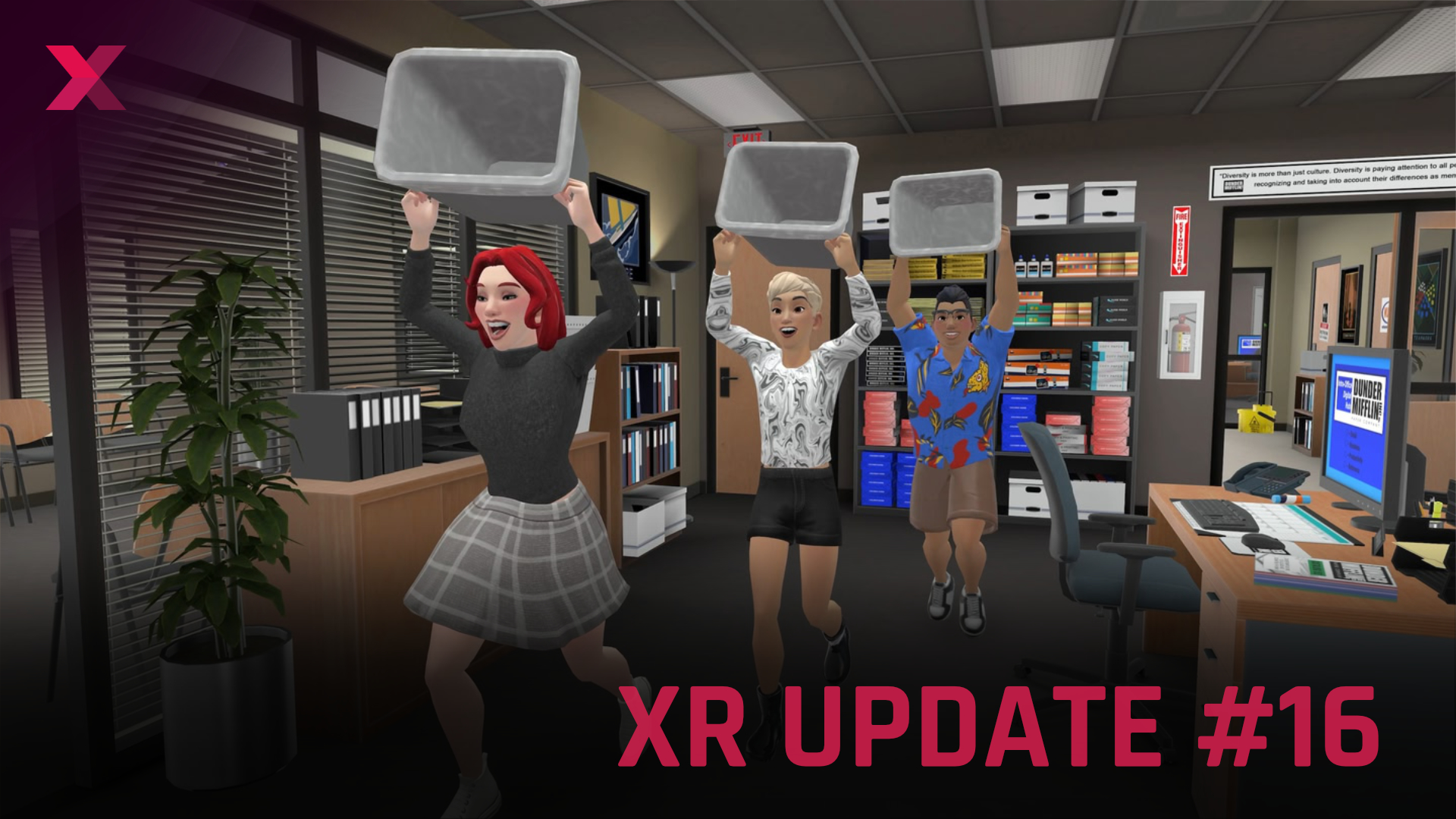
VR mod for San Andreas, mandatory installation for Horizon Worlds & Titanic VR inspires on Quest 3 – the most important XR news of the week.
The post XR weekly round-up: GTA San Andreas gets VR mod, AI world building takes off, and Meta makes Horizon Worlds permanent appeared first on MIXED Reality News.
The Fedora RISC-V SIG is excited to share that our RISC-V images for Fedora Linux 42 have landed on-time and without delay! If you’ve been watching our progress over the past few releases, you know that staying on schedule is a big deal, especially given our goals of eventually gaining “primary” status for RISC-V as […]
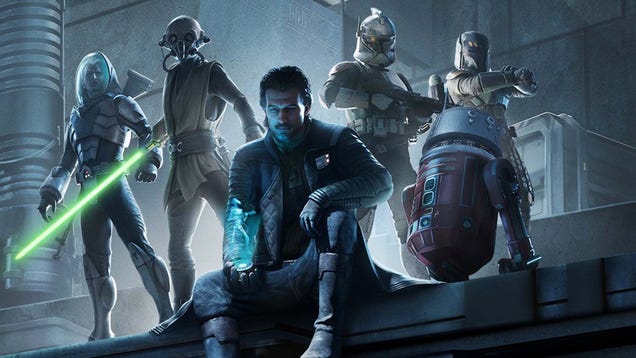
Today, during day two of the ongoing Star Wars Celebration Japan 2025, Lucasfilm and EA gave us our first real look Star Wars Zero Company. The upcoming turn-based single-player strategy game is being developed by Bit Reactor and Respawn and launches next year.