AMD has open-sourced its “GPU-IOV Module” for enabling SR-IOV-based virtualization on Instinct accelerators using the Linux kernel and KVM hypervisor, with features like GPU scheduling and VF/PF management. Notably, AMD plans to extend this virtualization support to client Radeon GPUs. Phoronix reports: The AMD GPU-IOV Module is for the Linux kernel and for providing SR-IOV based hardware virtualization in conjunction with the KVM hypervisor. GIM provides the GPU IOV virtualization, virtual function (VF) configuration and enablement, GPU scheduling for world switch, hang detection and FLR reset, and PF/VF handshake capabilities. Initially the AMD GIM driver is for the Instinct MI300X hardware and tested atop Ubuntu 22.04 LTS with ROCm 6.4. Those interested can find the AMD GIM code currently via GitHub. It’s not laid out in the repository or any other public communications I’ve seen what any upstreaming plans are for this GIM driver to get it into the mainline Linux kernel.
Many, but far from all, otherwise mobile-only applications are available on the Mac App Store for Macs with an Apple silicon processor. Such Macs can hypothetically run any iPhone or iPad application, though individual developers can choose whether or not to offer that functionality. There are multiple reasons why a company might not offer their iPhone app on Mac—maybe they don’t want to optimize it for a bigger display, maybe it’s broken in some way, or maybe they just aren’t interested in supporting another platform.
You might disagree with that decision, though, and wondering whether it’s possible to use those apps on your Mac anyway. And it is, sort of: PlayCover is an app capable of running any iPhone application you can think of, at least in theory. The problem is, there’s no straightforward way to get versions of the applications that will work with it.
The iOS encryption problem
Apple encrypts the applications offered in the App Store, meaning you can’t just download and install them directly—you have to go through the storefront. The main workaround requires you to jailbreak an iPhone and use software designed to decrypt applications. In this way, you can create .ips files from the apps you’ve downloaded or purchased that you can open in PlayCover.
You could also, in theory, download the .ips files from a third party—there are a few websites out there that offer them. The issue there is that this method requires trusting software from internet strangers that you’re then installing on your computer, which is hard to recommend for a bunch of security reasons. (You never know what malicious software may be hidden in those files.) There’s also the question of piracy, as these sites let you bypass the App Store encryption, which is typically a violation of the Digital Millennium Copyright Act.
PlayCover works, to a point
With all of these caveats in mind, I did manage to get the iPhone version of Duolingo running on my Mac. This is ideal, because the web version is missing all kinds of features, but it still isn’t a like for like experience, as I won’t get automatic updates like I would on an actual iPhone.
Beyond Duolingo, a few other iPhone applications and games I tried to open on my Mac either wouldn’t launch, or couldn’t reach the login screen. And because the games you’re playing are effectively outside the Apple ecosystem, you won’t have access to any of your in-app purchases, or even the ability to make new ones. It’s an imperfect solution in many ways, with one main upside—running software you otherwise couldn’t—and lots of potential downsides.
Credit: Justin Pot
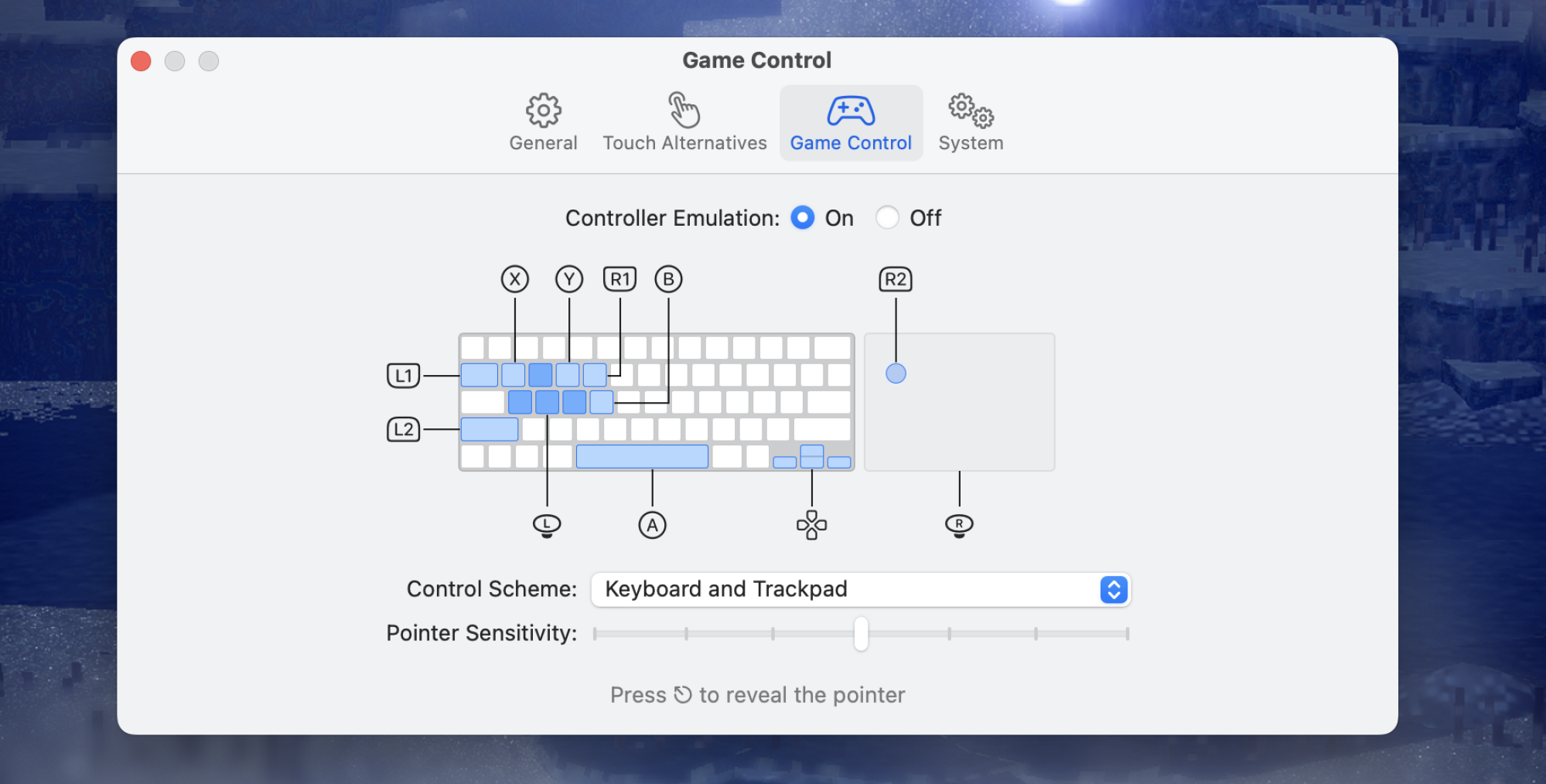
All of these points aside, I have to say that PlayCover has some clever features built in that allow you to control games optimized for touch. You can use your keyboard to emulate a gamepad, for example, making it possible to play supported games using your keyboard. If that doesn’t work, you can assign keys to simulate screen taps, so your key presses select the corresponding on-screen buttons to control games. It takes a little bit of work on your part, but it makes it possible to play games designed for a touchscreen using keyboards.
Thanks to Apple silicon, the iPhone, iPad, and Mac truly are related platforms. There’s nothing stopping you from running any iPhone application on your Mac, at least in theory. But for most people, it’s probably a good idea to stick to the iPad applications you can find in the Mac App Store.
The software-as-a-service industry is undergoing a fundamental transformation, abandoning the decades-old “per seat” licensing model in favor of usage-based pricing structures. This shift, Business Insider reports, is primarily driven by the astronomical compute costs associated with new “reasoning” AI models that power modern enterprise software.
Unlike traditional generative AI, these reasoning models execute multiple computational loops to check their work — a process called inference-time compute — dramatically increasing token usage and operational expenses. OpenAI’s o3-high model reportedly consumes 1,000 times more tokens than its predecessor, with a single benchmark response costing approximately $3,500, according to Barclays.
Companies including Bolt.new, Vercel, and Monday.com have already implemented usage-based or hybrid pricing models that tie costs directly to AI resource consumption. ServiceNow maintains primarily seat-based pricing but has added usage meters for extreme cases. “When it goes beyond what we can credibly afford, we have to have some kind of meter,” ServiceNow CEO Bill McDermott said, while emphasizing that customers “still want seat-based predictability.”
Several hit Paramount+ shows are returning with new seasons in May. The seventh installment of The Chi, Lena Waithe’s drama about life on the South Side of Chicago, will premiere on May 16. Original crime series Criminal Minds: Evolution (May 8) is returning for its 18th season, along with season three of medical drama SkyMed (May 15), which follows medics and pilots flying air ambulances in Northern Canada, and season 10 of RuPaul’s Drag Race All Stars (May 9).
Paramount+ will also broadcast the American Music Awards (AMAs)—hosted by Jennifer Lopez—on May 26, along with a live studio show hosted by football star David Beckham. Beckham & Friends Live is an altcast of CBS Sports’ coverage of UEFA Champions League semi-final games on May 6 and 7 and the final on May 31.
Here’s everything else coming to the service in May. Note that titles with an asterisk are exclusive to Paramount+ With Showtime; everything else is also available to subscribers on the ad-supported plan. Those with two asterisks are available to Paramount+ With Showtime users streaming live on CBS and to all subscribers the following day.
Paramount+ Originals and premieres coming in May 2025
Available May 1
The Comeback Trail*
Available May 6
Beckham & Friends Live, premiere
Available May 8
Criminal Minds: Evolution, season 18 premiere
Available May 9
RuPaul’s Drag Race All Stars, season 10 premiere
RuPaul’s Drag Race All Stars: Untucked, new episodes
After a flurry of leaks, Motorola has unveiled its 2025 foldable lineup. This will be the first cycle with three Motorola Razr flip phones, ranging from the relatively inexpensive base model Razr to the lavishly expensive Razr Ultra. All three phones have a slick foldable design, a stronger hinge, and big screens—and they come in a collection of snazzy Pantone colorways.
Pretty colors, stronger hinges
The three models have similar overall designs, but the specs are notably different. The base model phone again relies on a MediaTek chip, while the Plus and Ultra are Snapdragon-based. The Ultra has the same processor seen in Samsung’s latest flagship phones, the Snapdragon 8 Elite. As Moto points out, it’s the fastest chip available in a foldable.
The 2025 Razr in the Spring Bud colorway.
Credit:
Motorola
Motorola’s Pantone partnership, which was recently featured in the 2025 Moto G Stylus, is used to great effect here. All three phones are available in some stunning colors with various materials and finishes. The Razr comes in Spring Bud (above), Gibraltar Sea, Parfait Pink, and Lightest Sky. The Razr+ gets Mocha Mousse, Midnight Blue, and Hot Pink (below). The Ultra comes in Rio Red, Scarab, Cabaret, or Mountain Trail, with a wood body that harkens back to the days of Moto maker. It’s refreshing to get so much choice when most phones are only available in a couple of boring tones.
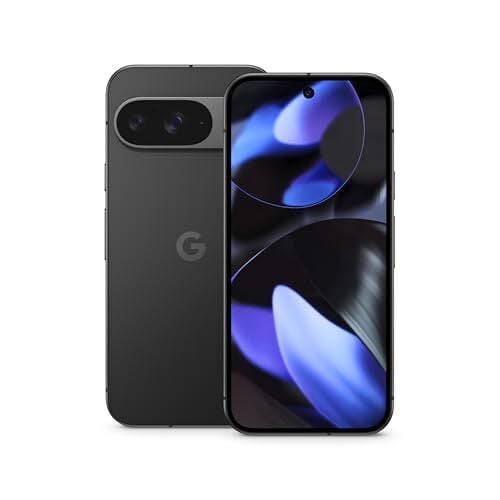
The Pixel 9 comes with 12GB of RAM, starts with 128GB of memory storage, a maximum 120 HZ refresh rate, and the Android 14 operating system. Lifehacker’s associate tech editor Michelle Ehrhardt deemed the Pixel 9 so good that you likely won’t miss the Pro. It’s important to note that the AI features still had hiccups, but AI features will keep improving over time; the most important thing to get right is the hardware, and Michelle says this is the best smartphone Google has made so far.
The battery life can last almost 12 hours, according to PCMag’s “excellent” review. The main camera has a 50MP shooter, a 48MP ultra-wide camera with a 123-degree field of view, same as the Pro models, but it has a single-zone laser detect autofocus (LDAF) sensor (the pro has multi-zone LDAF).
If you have the Pixel 8, you might not notice a huge upgrade in this model. However, if you’re upgrading from an older version or doing a switch from a non-Pixel phone, the 9 has a lot to offer. One of my favorite things about Pixel phones is the ongoing support for many years. My Pixel 6A still gets all of the updates and tons of AI features that make the phone feel fresh many years later, with the latest ones dropping last month (if you have a GoPro, you can control it with your Pixel). With the Pixel 9, you’ll be getting a quality phone with software updates for quite a while—as long as seven years.
After the battery woes surrounding the Pixel 4a and the promise of an eventual reduction in battery capacity for the Pixel 9a, Google is now proactively tackling any future battery issues that Pixel 7a owners may face. In a support document, the company said it has now determined that some Pixel 7a devices may experience battery swelling, and is offering a free battery replacement to everyone impacted by this issue. Here’s everything you need to know about the problem and how to get a free battery replacement for your Pixel 7a.
Identifying the signs of a failing battery
One major limitation of lithium-ion batteries is degradation. Over time, these batteries experience reduced capacity to hold a charge and eventually have to be replaced. This is a technological limitation that generally applies irrespective of the brand of the smartphone you’re using, since a majority of modern smartphones use lithium-ion batteries. However, some phones can be more susceptible to this than others, depending on which batteries they use, as evidenced by Google’s concern about the Pixel 7a. If you have a Google Pixel 7a, look for one of the following symptoms to know if your phone needs a battery replacement:
Your phone runs out of charge fairly quickly even when you’re not using it that much
The Pixel 7a appears to be visibly swollen
Your Pixel 7a’s cover is separating from the device because it appears to be bulging
If your device exhibits any of these signs, visit this Google support page to see if your Pixel 7a is eligible for a free battery replacement. Just follow the on-screen steps and Google will tell you how to proceed. Note that your device may not qualify for a battery replacement if it has liquid damage or other forms of physical damage. Google also said that battery replacement is only available while stock lasts, and only in the following regions:
United States
India
Germany
Canada
United Kingdom
Singapore
Japan
Additionally, of the above regions, only the United States and India offer a mail-in repair option. Users located elsewhere must either take their phone to a walk-in repair appointment or claim another form of appeasement, mentioned below.
Google’s also offering a one-time payment
If you live outside of the United States and India, then you may be able to claim a one-time payment instead of a battery replacement. If your device is out of warranty, Google is offering either $200 (or an equivalent amount in your local currency) or $300 in Google store credit, which will be applicable towards the purchase of another Pixel phone.
If your device is in warranty and you choose to claim the one-time settlement amount, Google says it will pay you $456 or its equivalent in your local currency. Visit Google’s support page to confirm the terms of the settlement and to check what you’re eligible for, since these terms may not be applicable for purchases from certain regions.
This is a video from Brick Technology (previously) of a quaint LEGO town being destroyed by various LEGO war machines. It begins with a battering ram, but as the town ramps up its defenses in the form of a ravine, a bridge-crossing machine is built, followed by a crossbow and catapult. It was a fun watch. Would I spend a weekend doing this? No, but only because I don’t have the engineering or building skills. “The last time he assembled a LEGO set he got a minifig head stuck in his nose.” Honey! “What?” To my credit I did stick it in there on purpose with the intention of shooting it out like a cannon, I just misloaded and panicked.
Google is offering free repairs and (in some countries) payments to remedy Pixel 7a battery issues. 9to5Googlespotted a Google support page detailing an extended repair program in 40 countries. If your Pixel 7a is visibly swelling or its battery drains faster than usual, you may get a battery replacement on the house.
The company says it’s “determined that certain Pixel 7a phones may experience unexpected battery swelling.” Telltale signs include the phone appearing thicker than usual, a bulging back cover, visible gaps or openings along its edges or faster-than-expected battery drain.
Google faced complaints on social media about the Pixel 7a issue before taking action. For example, in December, u/Eszence08 posted in the Pixel subreddit that, after failing to get help from Google support about the battery swelling issue, they only got a solution from the company after posting about it on Reddit. Their conclusion: “Make a post; Google is more helpful on Reddit than their chat support.”
Even if your device exhibits one or more symptoms, it still needs to pass a check before moving forward. You can start by visiting Google’s eligibility page, which will walk you through the steps to determine eligibility for your specific device. After that, a repairperson will inspect it before proceeding.
That last step is necessary because unrelated damages, including liquid damage, exposure to sharp objects or excessive force, will void the repair. (Most of those precautions sound like “we need to make sure you didn’t pry your phone open to get a free battery.”) In addition, out-of-warranty damage like display or cover glass cracks will incur a repair cost, for which Google will provide an estimate before starting.
When we get to the country-by-country breakdown, things get more complicated. You have two options in the US and India: Mail your device to Google or take it to an authorized walk-in repair center. In-person repairs are also available in Canada, the UK, Germany, Japan and Singapore. (Those countries don’t offer mail-in fixes.)
The program also extends to those who bought their device in Australia, Malaysia, Taiwan, Switzerland and EEA countries. If your country isn’t listed, you get nothing.
However, for countries without a mail-in option (all but the US and India), Google offers alternate “appeasement options,” i.e., payouts or store credit. If your Pixel 7a is out of warranty, you can claim $200 converted to your local currency or $300 (also converted locally) in a Google discount code toward purchasing another Pixel phone on the Google Store. If it’s still under warranty, you can get a healthier $456 payment converted to your local currency.
If you think your Pixel 7a is eligible, you can head to Google’s support page to get started.
This article originally appeared on Engadget at https://www.engadget.com/mobile/smartphones/google-launches-a-battery-replacement-program-for-swollen-pixel-7a-handsets-162204629.html?src=rss
A Government Accountability Office report released this week reveals generative AI systems consume staggering amounts of water, with 250 million daily queries requiring over 1.1 million gallons — all while companies provide minimal transparency about resource usage. The 47-page analysis [PDF] found cooling data centers — which demand between 100-1000 megawatts of power — constitutes 40% of their energy consumption, a figure expected to rise as global temperatures increase.
Water usage varies dramatically by location, with geography significantly affecting both water requirements and carbon emissions. Meta’s Llama 3.1 405B model has generated 8,930 metric tons of carbon, compared to Google’s Gemma2 at 1,247.61 metric tons and OpenAI’s GPT3 at 552 metric tons. The report confirms generative AI searches cost approximately ten times more than standard keyword searches. The GAO asserted about persistent transparency problems across the industry, noting these systems remain “black boxes” even to their designers.
As part of the launch of its new “Moto Things” line of accessories, Motorola is introducing the Moto Buds Loop, the company’s first take on wireless open-ear earbuds. Rather than completely cover your ear, the Moto Buds Loops cuff the outside, almost like a piercing, blocking out less of the world around you, while still letting you hear your music.
The Moto Buds Loop are, as their name suggests, large loop-shaped earbuds that come in either a dark “Trekking Green” or a light (and fairly gaudy) “French Oak with crystals by Swarovski.” Motorola says the earbuds have 12mm drivers and “Sound by Bose technology,” which means they’re tuned for clarity and balance, and also support features like spatial audio for immersive listening. If you’re worried about call quality, the Moto Buds Loop use a combination of AI and dual-microphones on the earbuds to minimize background noise. When you need to connect the earbuds to other devices, Motorola’s Smart Connect feature can quickly swap Bluetooth connections between Motorola and Lenovo devices.
Motorola
The Moto Buds Loop earbuds have eight hours of battery life, and their charging case comes with an additional 37 hours, likely covering you for multiple days of use. Motorola also says the Moto Buds Loop are “water-repellant,” but the lack of any kind of official IP rating suggests you might not want to test that.
Open-ear earbuds are definitely less niche than they used to be, with Sony, Bose, JLab and Nothing offering their own take on the concept. That Bose tech is featured in Motorola’s earbuds isn’t surprising, either. Both companies are using a similar clip-on design to keep the earbuds over your ears.
If you’re interested in the Moto Buds Loop, you’ll have to wait for now. Motorola hasn’t shared a specific price or release date for the wireless earbuds, other than the fact they’ll be available “in the coming months.”
This article originally appeared on Engadget at https://www.engadget.com/audio/headphones/the-moto-buds-loop-are-open-ear-earbuds-you-wear-like-jewelry-160056857.html?src=rss
The Razr is almost certainly the most beloved flip phone of all time. But for 2025, Motorola is expanding its iconic flexible phone line to a total of three devices starting at just $699 while leaning even further into the handset’s status as a fashion symbol.
The new Razrs feature a very familiar clamshell design to last year’s models, with all three packing similarly sized OLED displays, the same titanium hinge and front-mounted exterior screens with two embedded cameras. Motorola partnered with Pantone to provide a surprisingly wide range of colors, though not all of them will be available across every configuration. That said, the devil really is in the details, because even though all three models look quite similar, their specs differ quite a bit based on their price.
It may be hard to tell the various models apart, but the Razr Ultra is the one on the left, as it has a slightly larger display and smaller bezels.
Sam Rutherford for Engadget
Starting at $1,300, the Razr Ultra is the most expensive of the bunch and has the components to match. It’s powered by a Qualcomm Snapdragon 8 Elite chip with 16GB of RAM and either 512GB or 1TB of storage. It also has the most capable cameras. On the Razr Ultra, you get dual 50-MP shooters consisting of main and ultra-wide cams with the latter also doubling as a macro lens. And for those who like taking long-distance shots, it supports a 2x optical zoom as well.
Furthermore, the Ultra features the biggest battery at 4,700 mAh along with the fastest charging. It goes up to a rather speedy 68 watts when using a wire or 30 watts wirelessly, which is double what you get from rivals like the Galaxy Z Flip 6. And if you’re in a pinch and need to share some excess juice with another device, the Ultra also packs five-watt reverse wireless charging.
Sam Rutherford for Engadget
Unsurprisingly, Motorola gave the Ultra the nicest screen too based around a main 7-inch 1224p 165Hz OLED display along with a 4-inch pOLED panel on the outside. It’s bright, it’s colorful and, I must say, the company did a good job of reducing the appearance of a crease. Sure, if you look really hard, you can see it or feel it with your fingers, but it’s much more of a minor nitpick than a legitimate con at this point.
Finally, as you’d probably expect, the Ultra is the most stylish one as well thanks to four unique finishes including an Alcantara back, a wood grain rear panel, a satin-inspired treatment and a faux-leather option.
Sam Rutherford for Engadget
As for the $1,000 Razr Plus, everything has been brought down a notch, with it featuring a Snapdragon 8s Gen 3 chip, 12GB of RAM and 256GB of storage. Its battery is also smaller at 4,000 mAh while its OLED main display has been shrunk a tiny bit down to 6.9-inches with a 2640 x 1080 resolution and 165Hz refresh rate. And while it sports dual 50-MP cams, they aren’t quite as feature-rich, with the second shooter serving as a dedicated zoom lens with a 2x telephoto magnification. No ultra-wide angle or macro functions here.
An easy way to spot the base Razr is to look for the larger forehead bezel above the phone’s exterior display.
Sam Rutherford for Engadget
Finally, the standard Razr is by far the most affordable at $700, though it has made a number of sacrifices to hit that price. It’s powered by a MediaTek Dimensity 7400X chip with just 8GB of RAM and 256GB of storage, while its 6.9-inch OLED screen has a lower 120Hz refresh rate and FHD+ resolution. The base model’s cameras have also taken a hit with dual 13-MP sensors. Though on the plus side, it does get a larger 4,500 mAh battery compared to the 4,000 mAh pack in the Plus.
The other big addition to the family is Moto’s new AI Suite, which was developed in partnership with big names like Google, Amazon and others. The Image Studio feature can generate photos, avatars and more in a range of styles based on a handful of simple text prompts while Playlist Studio can build a tracklist (using Amazon Music) to match your current vibe. Then there are productivity features like Remember This, which can save notes and photos (either ones taken with the camera or existing pics) so they’re easier to recall later. There’s also a recording feature that can transcribe dialogue on the fly (including automatic speaker tags) similar to the Pixel Recorder app, along with a few more.
That said, I acknowledge that Motorola may have felt forced to do this after competing smartphone makers like Google, Apple, Samsung and others developed their own set of AI tools. But at the same time, none of these features feel particularly novel or flashy enough to be a selling point on their own. But I guess this is the AI-obsessed world we live in now.
However, with the base model starting at just $700 and a total of three devices to choose from, I have to give Motorola some credit for continuing to drop the barrier to entry for flexible screen phones. And between all the different colors and textures, they’re rather fashionable ones at that.
In the US, the 2025 Motorola Razrs will be available for pre-order starting on May 7 with official sales slated for May 15.
This article originally appeared on Engadget at https://www.engadget.com/mobile/smartphones/motorola-is-blowing-out-the-razr-line-with-three-new-models-starting-at-just-700-160053171.html?src=rss
Motorola has introduced a new smartwatch to its Moto Things branded lifestyle collection. The Moto Watch Fit is due to become available in North America in the coming months, but the company has not released specific dates or pricing information yet.
The smartwatch has a 1.9-inch OLED display that reaches up to 1,000 nits of brightness, while the rest of the frame is made of aluminum. Motorola promises an impressive “16-day battery life on just one single charge.” The watch also has solid durability with Gorilla Glass 3 and an IP68 rating for dust and water resistance. The Moto Watch Fit has more than 100 sports modes and lives up to the “fit” in its name with features such as advanced heart rate monitoring, calorie tracking and sleep data.
Its other features are pretty standard for an Android-compatible smartwatch. The wearable can execute basic features for controlling a smartphone, like skipping a music track or checking notifications. It comes with a forest green fabric band that has a yellow stripe down the middle, but you can also customize it with 22mm bands from third-party companies.
This article originally appeared on Engadget at https://www.engadget.com/wearables/motorola-introduces-the-no-frills-moto-watch-fit-160030585.html?src=rss
If you’re interested in expanding your knowledge in different areas and learning new skills with the help of experts in their respective fields, this might be the deal for you. MasterClass subscriptions are currently 40 percent off as part of the service’s “spring forward” sale. They start from the equivalent of $6 per month when billed annually (so $72 for the year).
We reckon the mid-tier Plus plan likely offers the best value here. That includes the ability to watch MasterClass videos on two devices simultaneously. Perhaps more importantly, this tier includes offline viewing, which might come in handy if no in-flight entertainment options grab your interest the next time you’re traveling. The Plus plan is available for the equivalent of $9 per month when billed annually ($108 total), down from $15 per month.
There are more than 200 classes available on MasterClass, including lessons from some of the top names in each relevant industry. You might learn about how to have a winning mentality from Lewis Hamilton, creative writing from Margaret Atwood, shooting and scoring from Steph Curry, comedy from Steve Martin or home cooking from Alice Waters. The categories of classes include film and TV, health and wellness, science and technology, music, and business.
Each class has around 20 video lessons that typically last around 10 minutes long each. You’ll get access to a workbook as well to help you absorb the information and understand how to act on it through various exercises. But even if you’re not necessarily interested in acquiring new skills, you might simply use MasterClass as you would with any other streaming service, which is one reason why it’s among our favorite subscriptions to gift someone.
This article originally appeared on Engadget at https://www.engadget.com/deals/masterclass-subscriptions-are-40-percent-off-right-now-154524824.html?src=rss
The EU will be mandating new labels on smartphones and tablets that indicate how repairable the device is. These labels will also include ratings for energy efficiency and durability. They will start showing up on devices on June 20 and will be similar to pre-existing ones for home appliances and TVs.
The labels display a product’s energy efficiency rating on a scale from A to G and will also display battery life and the number of available charge cycles. There will be letter grades for durability and repairability, in addition to an IP rating for dust and water-resistance.
European Commission
Covered products also include cordless landline phones, but smartphones with rollable displays are exempted. This is fairly odd because, well, there aren’t any rollable phones available for consumers just yet. Windows-based tablets will be covered by a separate mandate for computers.
This isn’t the only change the EU has announced regarding device sales. Hardware will now have to meet new “ecodesign requirements” to be sold in the region. This includes a requirement to make any applicable spare parts available for repair.
Other ecodesign requirements include batteries that retain at least 80 percent of their capacity after 800 charging cycles and scratch and drop protections that exceed minimum standards. Finally, manufacturers must provide OS updates within six months of the source code becoming available.
This article originally appeared on Engadget at https://www.engadget.com/mobile/the-eu-is-putting-repairability-rating-labels-on-phones-and-tablets-in-june-154051517.html?src=rss
Every video game is a miracle. Long hours, extraordinary technical and artistic requirements and cross-disciplinary collaboration: the very act of making games is difficult, and leaves room for catastrophic errors. It’s a wonder any of them make it to release at all.
Fulcrum Defender, the new Playdate exclusive from Jay Ma, the co-founder of indie darling Subset Games, is one such miraculous game. It’s the first new release from the studio since 2018’s critically acclaimed Into the Breach. Ma began work on Fulcrum Defender following a life-changing Covid infection that has greatly diminished her quality of life and ability to do the thing she loves.
The story of Fulcrum Defender begins following a trip Ma made to Vancouver, Canada in August 2023 to see Subset co-founder Matt Davis and a few other members of the studio in-person. At the time, the team was working on more than one game. According to Ma, one of the larger, more promising projects was “struggling,” but the trip led to a breakthrough. Then, she caught Covid-19. “It was pretty unfortunate timing,” she said. “For the first time in a while, I was gung-ho about being able to figure this game out.”
At first, Ma’s latest bout with the coronavirus didn’t seem all that different from her previous experiences. She returned to her home in Kyoto, Japan, quarantined and eventually recovered from the acute symptoms, but never bounced back completely. “I think it was the first day that I went out to be outside, bike, do normal things, and I just completely shut down,” she said. “I couldn’t get out of bed for like four days.” She realized she was experiencing long Covid.
As we chatted over Google Meet, Ma frequently took long pauses to piece together her memories and find the right words to express her loss. “I’m a different person,” she told me after one such break. “I walk around with a cane. I need to structure exactly how I do something outside. I need to know where all the chairs are. I walk at a grandma’s pace, and I’m constantly forced to maintain awareness of my physical state, because if I do too much, it’s already too late. It makes everything feel dangerous.”
For the first four months of her illness, Ma couldn’t work at all. “Even even when I was more used to needing to pace myself, not only was it harder to do things that used to come naturally to me, but I would also get lost in my own head,” she said. She worried she might never make games again.
Subset Games
Fulcrum Defender was a chance to prove to herself she could still do the thing she loved. Subset’s Mauro López provided additional programming, and composer Aaron Cherof, best known for his work on Minecraft’s Trails and Tails update, made the music for the game. Panic contacted Ma about the project after she showed a few friends the game around the time of Kyoto’s annual Bit Summit indie game festival in the summer of last year.
“I would wake up in the morning and think about the game and make progress every day – even if it was only a couple of hours – that did something really important for my psychological state,” she said.
In a preview released by Panic, Ma describes Fulcrum Defender as a game “that starts out slow and relaxing but gradually ramps up until it becomes frantic chaos.” You can see the connective tissue between itand Ma’s previous work. Players can earn upgrades to make their run easier. Success then depends on a combination of good aim (using the Playdate’s signature crank), smart decision-making and a well thought out build. I expect it will have the same addictive “one more run” quality that Subset’s other games are known for.
This illness has shrunk my world and perception of time considerably.Jay Ma
“With Into the Breach, if I wanted to add one enemy, that one enemy would change how maps are designed, how character weapons are designed, and how scaling works,” she said. “So a single new idea requires you to kind of keep everything in your head at once, and that specifically is just something that I struggle to do now.” Fulcrum Defender taught Ma how much she had taken for granted the ease with which she one juggled those various dependencies in her mind.
Ma hasn’t found a doctor in Japan who knows enough about the illness to offer her a conclusive diagnosis, and the state of research on long Covid in general is nascent. “They hate to make uncertain calls,” she explained. The one thing she’s found she can do is take frequent dementia tests to track the condition of her mind.
“I feel like I need to live with the possibility that it won’t go away, so I just sort of operate with that mindset,” she told me. “This illness has shrunk my world and perception of time considerably. My memory is way worse. I’ll forget what happened like a week ago, and I don’t really think about the future at all. And so I’m just in a constant present. It feels like I’m being forced to train to be a monk.”
When I asked what her illness might mean for the future of Subset, Ma took a long time to consider her answer. “We set a rule that we will not announce anything unless we’re absolutely certain it’s coming out. We want to live with the freedom of being able to cancel rather than feeling we’re stuck in having to release something we don’t like,” she said. “So Subset is doing fine, but my output has dropped to like 20 percent of what it used to be.”
Subset Games
Davis, she adds, has been productive, but he too has had to adapt his work schedule, in his case due to two young kids. “If we want to make another Into the Breach-scale game, it feels like we might need more help in the long run. I need to come to terms with the fact I can’t do all the art the way I used to.”
Ma has been through so much, and yet Fulcrum Defender isn’t a game about chronic health concerns, disability or memory loss. It seems to studiously avoid borrowing any biographical detail from Ma’s life whatsoever. People will play and enjoy it knowing nothing of the challenging circumstances in which it was made. It turns out, that’s the only way Ma would have it.
“I know of a lot of developers who put themselves into their game. You can see the author’s intent, emotional state and the things they were processing in it. I’ve wondered what it would be like to make a game like that, but I have no idea how. Basically, the only thing that drives me is mechanics,” she told me. “So I have no expectation, or really desire for people to see the author in the little arcade games I make. I would be very happy to never be perceived.”
Fulcrum Defender — along with 11 other games — arrives as part of Playdate’s second season of weekly games beginning on May 29. You can pre-order Season Two for $39 through the Catalog store.
This article originally appeared on Engadget at https://www.engadget.com/gaming/subset-games-co-founder-jay-ma-went-through-hell-to-make-fulcrum-defender-153028909.html?src=rss
The European Union has announced details of new mandatory labels for smartphones and tablets sold in the bloc, which include ratings for energy efficiency, durability, and repairability. From a report: Hardware will also have to meet new “ecodesign requirements” to be sold in the EU, including a requirement to make spare parts available for repair.
The labels, which will be required for any devices that go on sale from June 20th onwards, are similar to existing ones for home appliances and TVs. They display the product’s energy efficiency rating, on a scale from A to G, along with battery life, the number of charge cycles the battery is rated for, letter grades for durability and repairability, and any applicable IP rating for protection from dust and water.
Microsoft has instituted a new “globally consistent” performance improvement process. According to internal documents, employees flagged as underperformers now face two options: enter a performance improvement plan with “clear expectations and a timeline for improvement” or accept a “Global Voluntary Separation Agreement” worth 16 weeks’ pay.
Affected employees have five days to decide, and those choosing the improvement plan forfeit the severance option. The program, announced in an email from new Chief People Officer Amy Coleman, operates year-round to “address performance issues, while offering employees choice.”
BrianFagioli writes: ARMO, the company behind Kubescape, has uncovered what could be one of the biggest blind spots in Linux security today. The company has released a working rootkit called “Curing” that uses io_uring, a feature built into the Linux kernel, to stealthily perform malicious activities without being caught by many of the detection solutions currently on the market.
At the heart of the issue is the heavy reliance on monitoring system calls, which has become the go-to method for many cybersecurity vendors. The problem? Attackers can completely sidestep these monitored calls by leaning on io_uring instead. This clever method could let bad actors quietly make network connections or tamper with files without triggering the usual alarms.