Every journey begins with a single step, but for Gustave and his brave crew of cannon fodder friends and colleagues, that first step is less like Frodo and Sam heading off to Mordor, and more like that baby in Don Hertzfeldt’s Rejected. It doesn’t go well, is the point.
It’s Doom Guy time. You can currently get six Doom games spanning nearly three decades for less than a tank of gas. For just $28, Humble Bundle is giving away the essential FPS games along with Wolfenstein: The New Order and The New Colossus in case you also wanted to squash some Nazis alongside your demon slaying…
How to God is a new VR sandbox god simulator inspired by Black & White that’s coming to Quest.
Created by Thoughtfish, who previously released Living Room last year, How to God is a colorful sandbox game where you can choose how to shape this world. You can construct villages, solve the problems presented to you by the local population through quests, raise a loyal creature that evolves based on your teachings, or even fight other gods.
0:00
/1:06
“How to God isn’t just a tribute to classic god sims like Black & White, it’s a chance to be a part of them,” advised Christina Barleben, CEO & Creative Director at Thoughtfish in a prepared statement. “You’ll quite literally embody your deity and use your real hands to manipulate the world around you and interact with your worshippers. We wanted players to truly feel what it’s like to be a god – And sometimes that means throwing a villager into the sky.”
We were recently given a hands-off preview to showcase the upcoming title, and Thoughtfish demonstrated gameplay across a thirty-minute presentation. Returning to the world after a villager prays to you, How to God begins by asking you to help meet the needs of the locals with food, shelter, and other basic necessities. The specific manner of help is up to you, however.
Joined by two embodiments of good and evil, there’s no one set path to solving quests and that could potentially offer some nice gameplay freedom. For example, do you solve a housing crisis by building more homes, or do you throw locals off the map to reduce the population? It’s technically a solution, but as Thoughtfish reminds me, your solution doesn’t necessarily need to be beneficial for the locals.
0:00
/0:03
I almost feel bad for the villagers, who can suffer terrible fates beyond being thrown into the abyss. As a god, you can raise your creature to learn new abilities over time that relate to specific objects, like picking up trees or throwing rocks. Oh, and they can also eat villagers for good measure. This isn’t inevitable, though. The fact you can spray them with a water bottle to stop such actions is pretty funny.
A few other features also caught my eye during this presentation. How to God provides a useful alchemy system for creating new elements, like making steam by mixing fire with water. Specific hand gestures can cast runes for handy abilities that include summoning fireballs or duplicating items, while the skill tree can enhance or unlock new abilities like increasing faith generation.
0:00
/0:05
Villagers will deposit faith over time depending on how strongly they believe in you, and you’ll need to collect this to unlock new areas across the world map. These are all based on real-world locations such as Egypt and Scotland with different sets of challenges and quests, though I’m told not every location offers story quests. I’ll reserve further judgment until we’ve directly played How to God but for now, there’s an appealing premise that’s caught my attention.
How to God doesn’t have a confirmed release date yet, but it’s launching later this year on Quest 2 and Quest 3/3S.
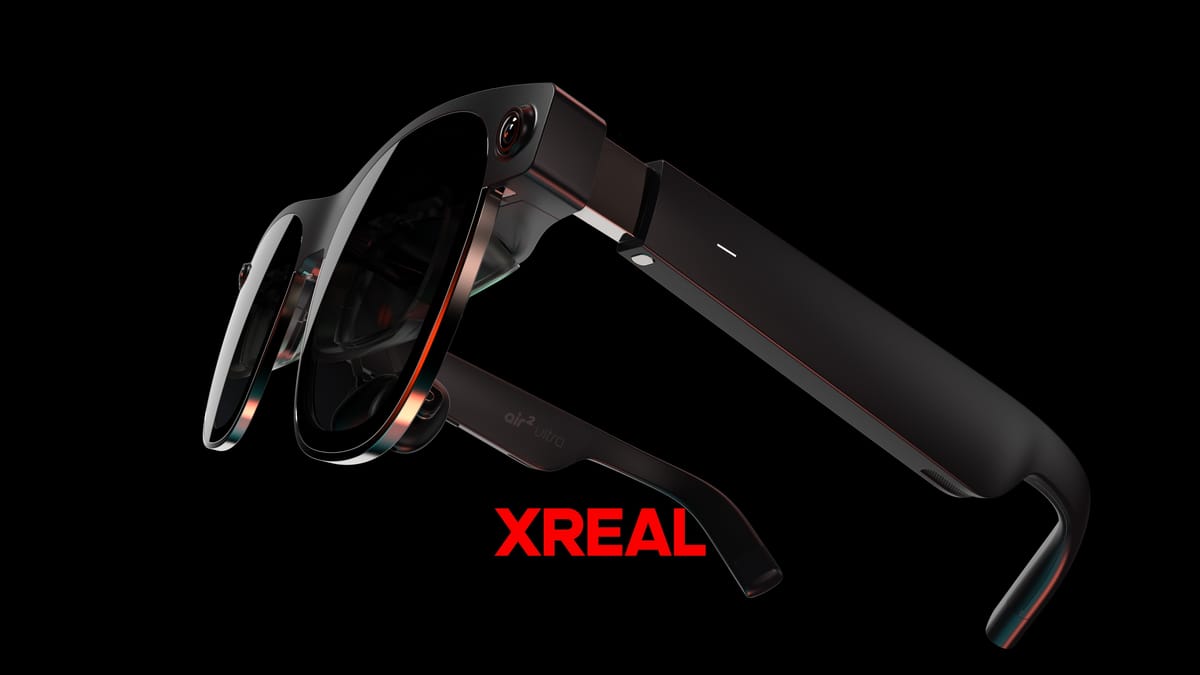
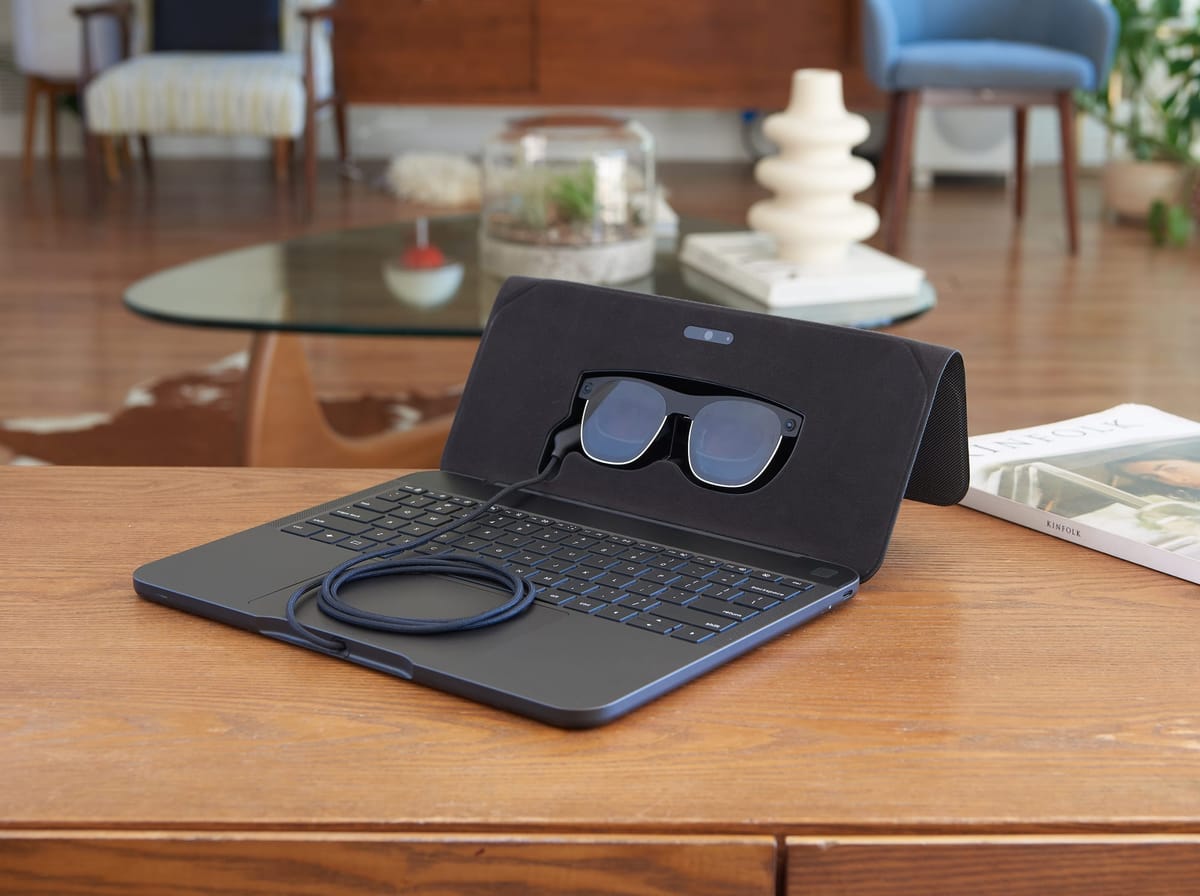
Spacetop for Windows is $200/year software for Intel Core Ultra laptops that brings true spatial computing to the Xreal Air 2 Ultra glasses.
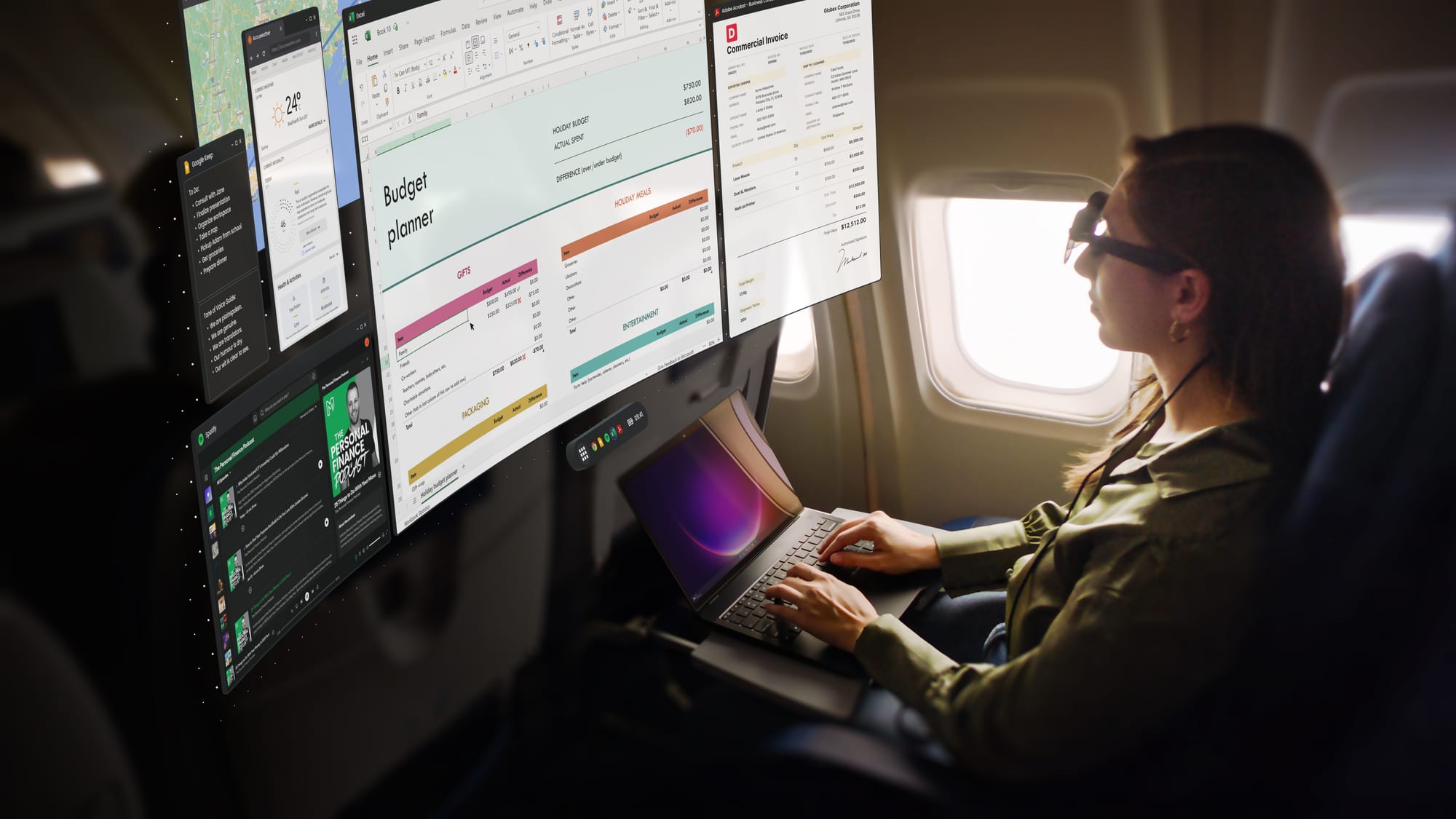
Xreal glasses already support showing your Windows laptop’s screen as a single head-fixed virtual monitor. But Spacetop lets you spawn and position individual Windows applications, and they’ll stay anchored in place thanks to positional tracking, uniquely possible on the Xreal Air 2 Ultra model.
An Intel Core Ultra chip is needed, Sightful says, because it has an NPU (neural processing unit) which Spacetop uses to efficiently run this positional tracking, processing the input from the two cameras on the glasses without compromising performance or battery life.
AMD Ryzen AI and Qualcomm Snapdragon laptop chips also have an NPU, so should technically be capable of running Spacetop too, but Sightful tells UploadVR that it specifically partnered with Intel and so only Intel Core Ultra is supported at launch, with AMD and Qualcomm support coming “in the near future”.
Sightful, the company behind Spacetop, was founded by Tamir Berliner and Tomer Kahan, both ex-Magic Leap executives.
When first announced in 2023, Spacetop was set to be a screenless laptop with the Xreal Air 2 Ultra glasses built in, and the company took $100 deposits for preorders priced at $1900. It would have been powered by a Qualcomm Snapdragon chipset, running an Android-based OS.
In October last year, Sightful canceled those Spacetop preorders and refunded the deposits, announcing the pivot to a software-based solution for Windows. Being able to achieve an AR spatial computing workspace with the Windows laptop you already own, or at least the next laptop you were going to buy anyways, should make for a much wider market than what would have essentially been an expensive single-purpose spatial computing Chromebook without a screen.
We must note that a significant limiting factor for all shipping transparent AR systems, including the Xreal Air 2 Ultra used here, is the field of view, and this isn’t reflected anywhere in Sightful’s marketing.
Unlike in the promotional images and videos, in reality you would only see all the floating windows at once if they were placed so far away that you wouldn’t be able to read text. At reasonable viewing distances you’ll usually only see one window at a time, meaning you’ll need to turn your head more often than with a physical multi-monitor setup and remember where you placed each application. This is the key tradeoff of shipping transparent AR compared to mixed reality headsets with camera passthrough like Meta Quest 3 and Apple Vision Pro.
Sightful’s marketing shots are highly misleading.
The Spacetop Bundle is available now in the US and Germany for $900, which includes the Xreal Air 2 Ultra AR glasses and one year of Spacetop for Windows subscription. After that, the software renews for $200/year.
For people who already own Xreal Air 2 Ultra the software isn’t publicly sold separately, because it requires a specific firmware version on the glasses, but Sightful tells UploadVR that said owners can reach out directly for a solution.
Sightful also confirmed that it’s working on Spacetop for Mac, though there’s no timeline on when that will arrive.
Vertigo 2: Into the Aether delivers a strong expansion to the PC VR hit that ends the series on a high note. Read on for our full impressions.
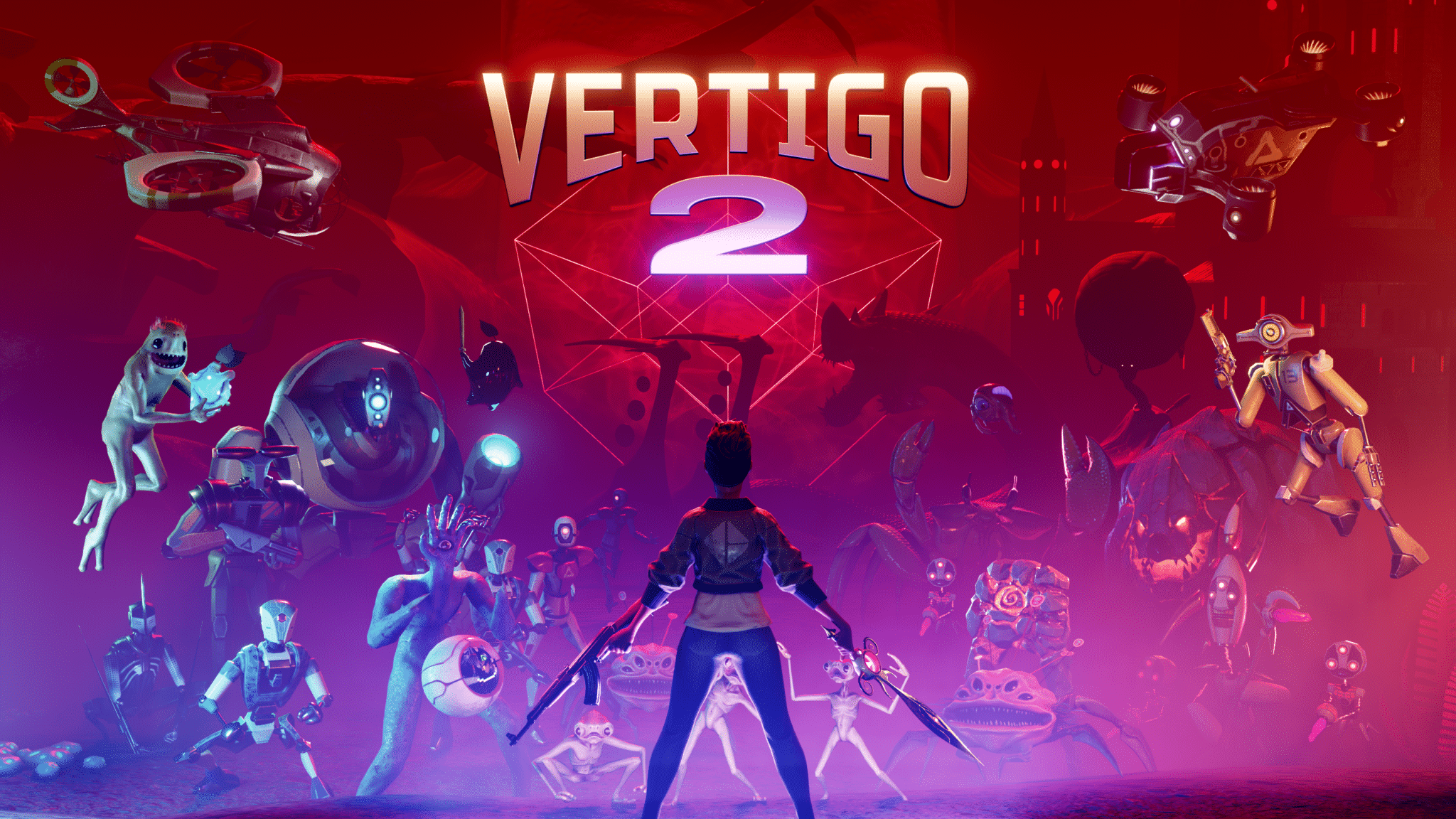
When Zach Tsiakalis-Brown released the ‘Bottomless Update‘ back in late 2023, I was prepared to accept that Vertigo 2 had run its course. While I didn’t review it myself, my former colleague Harry summed it up well. Vertigo 2 is a game built on strong foundations that elevated the series even further, and the sequel delivered something truly special. It’s a game I consider to be an essential PC VR experience.
0:00
/0:15
Gameplay footage captured by UploadVR
To say I’ve been intrigued about Into the Aether since its announcement would be an understatement. It’s perhaps best described as an extended epilogue that takes roughly 2-3 hours to complete, exploring the aftermath of the main game’s ‘Sacrifice’ ending. You can play it without beating Vertigo 2, though it’s naturally recommended that you complete the main game first.
I’ll keep this light for spoiler avoidance. This expansion sees you playing as Brian on a mission for Kauboi in an attempt to make amends for what happened before. It’s a great continuation to an already strong narrative that held my interest throughout, balancing this with Vertigo’s great sense of humor as Brian seeks to free the last living Architect from its prison.
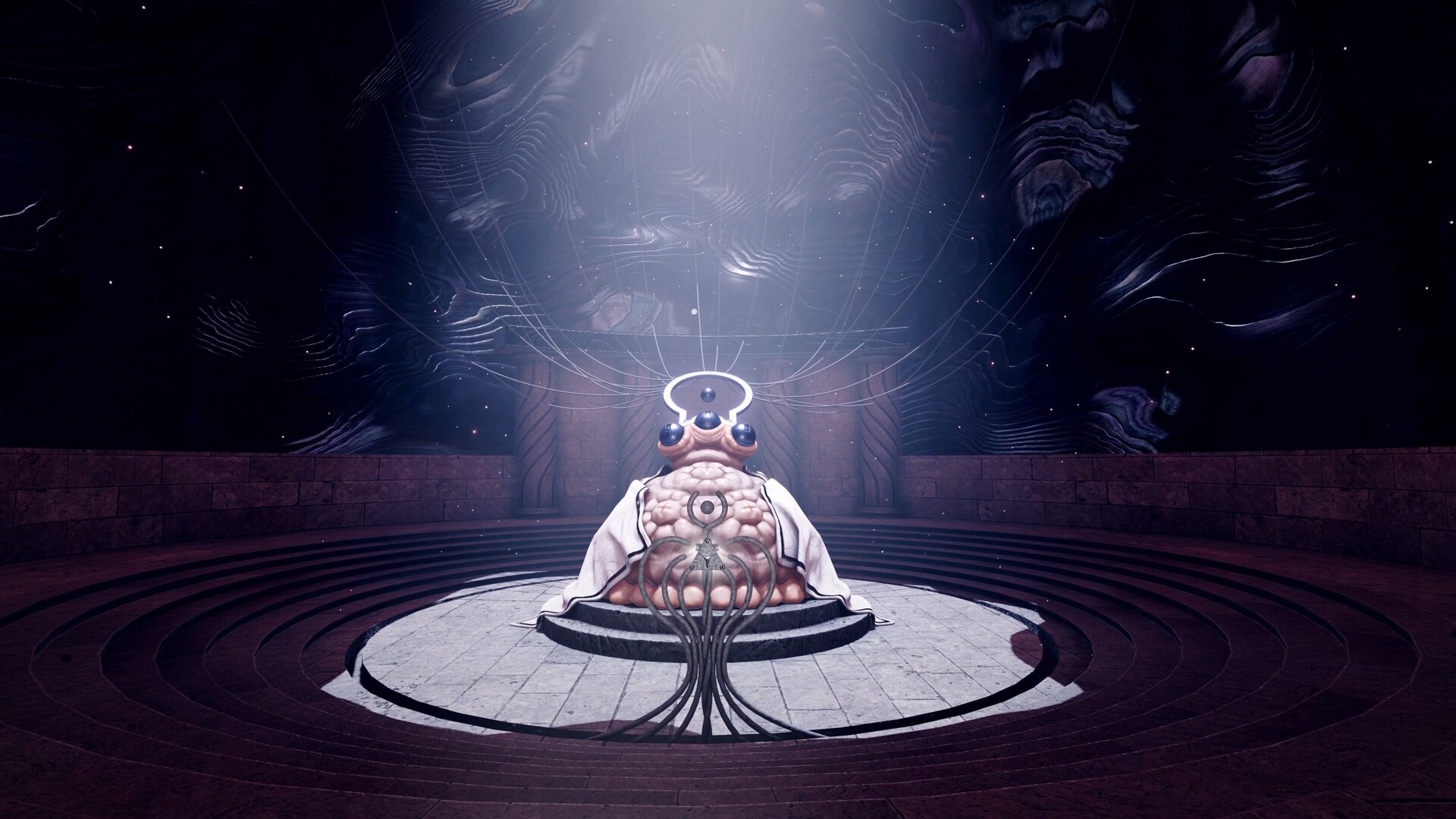
Into the Aether features four chapters, yet most of your time is spent in just one that leans considerably into Metroidvania-style gameplay. Ahead of you lies the final boss who can be challenged at any point, yet doing so leads to a predictably bad time even on the easiest difficulty. Defeating them requires several tools to assist your journey, all of which are scattered through this strange labyrinth.
Admittedly, I initially struggled to find the “right path” as Into the Aether’s open-ended progression means you can reach the right area at the wrong time. One example saw me run for my life up a flight of stairs while taking fire from the snipers at the bottom, barely surviving but with just enough health to acquire a key artifact upon reaching my destination. Repeated deaths upon trying to leave made me realize that perhaps I wasn’t supposed to get here yet.
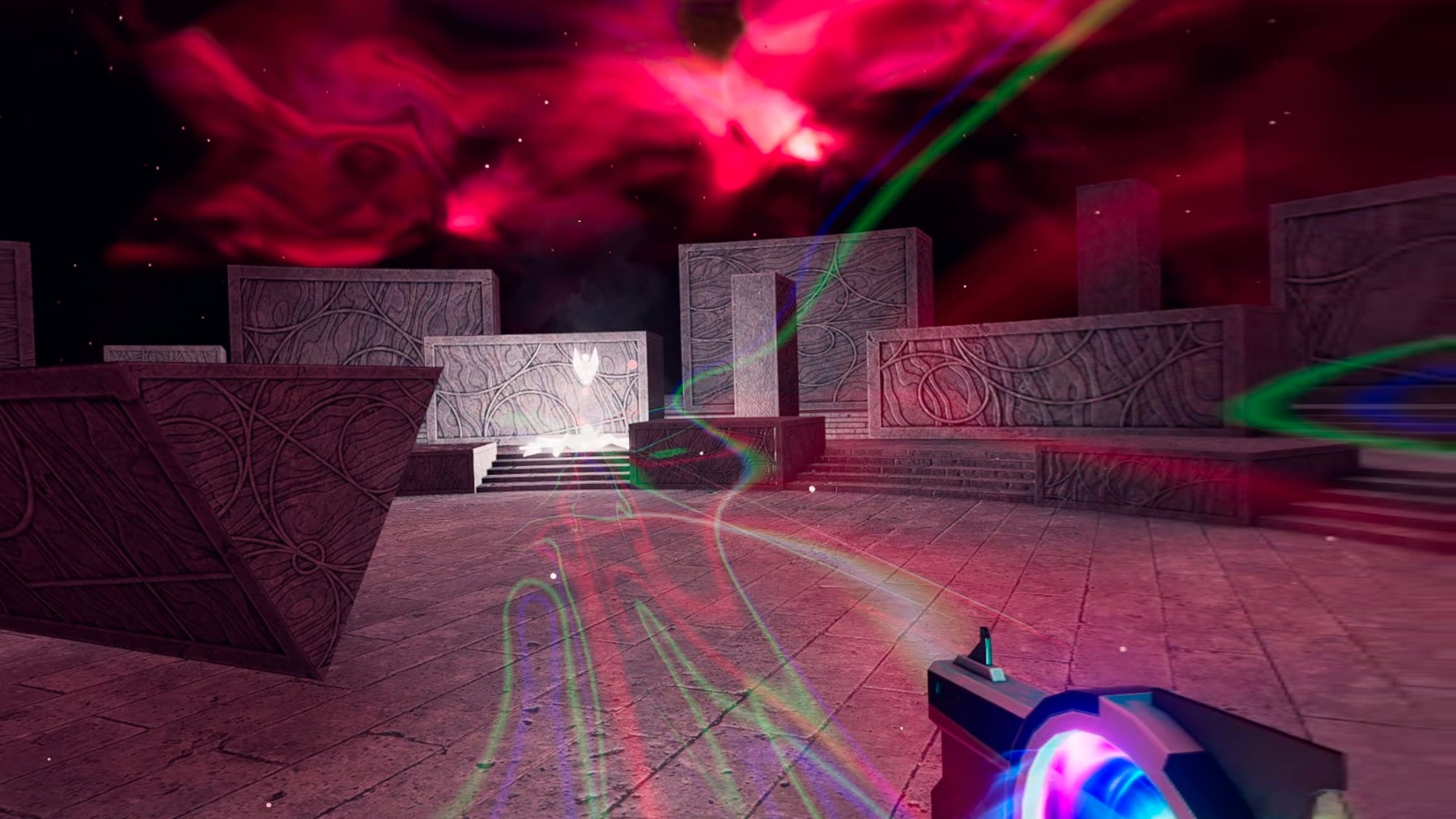
This is where Into the Aether’s new tools gradually come into play, since you don’t have the same arsenal as the main game. Most prominent is the ‘Void Grappler’ that attaches to most surfaces and lets you swing around like Spider-Man, which feels like a rush and a great new mechanic that opens up exploration. It can build up some intense speed if you continue swinging around a set target, so I’d advise caution with the comfort settings if you’re prone to motion sickness.
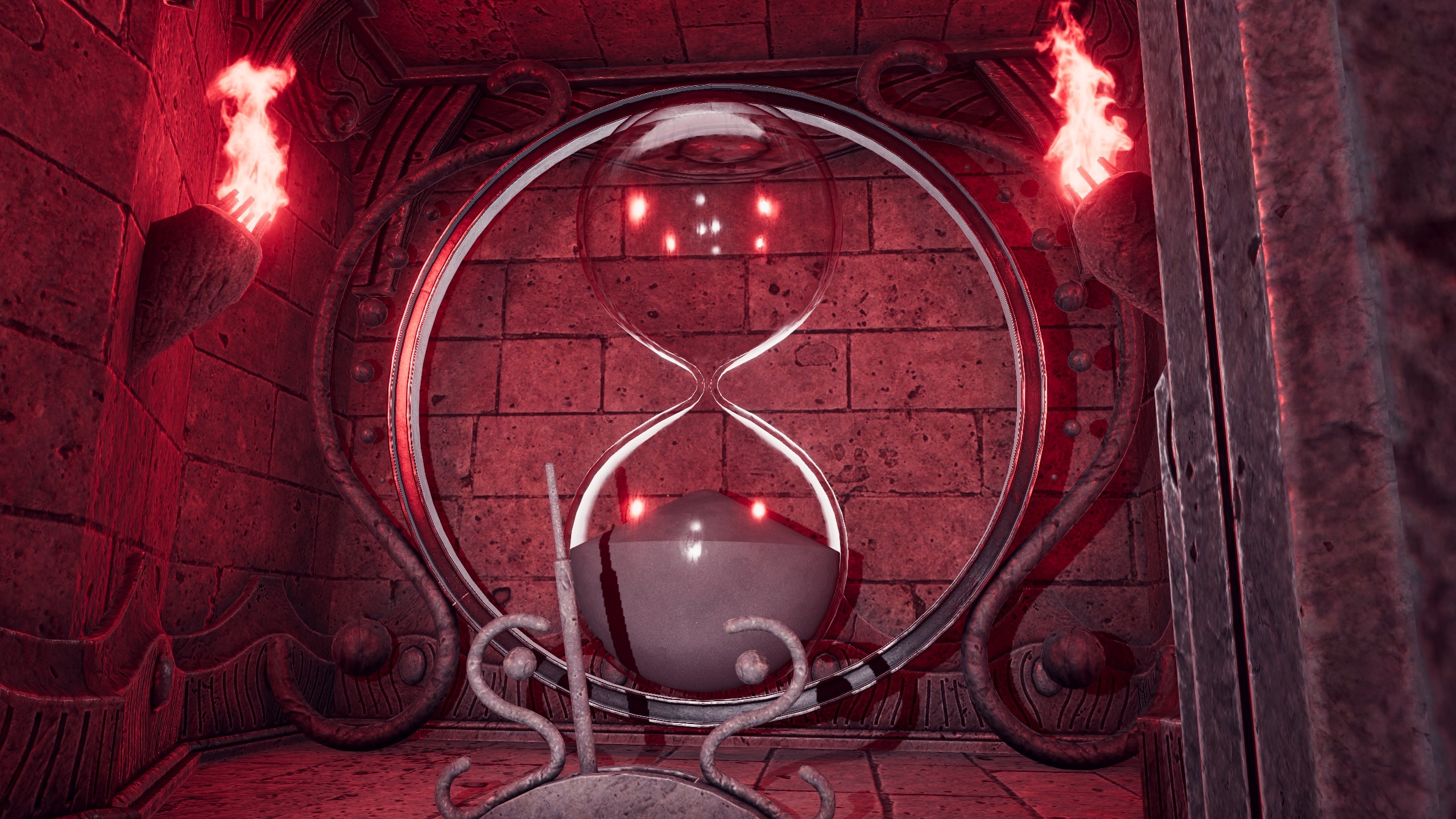
Aerial exploration via the Void Grappler is arguably the biggest new feature here, and getting it right takes practice. Some areas are protected by a Sand Glass challenge that allows you limited time to reach the normally sealed room and claim your prize, and failing these missions can lead to a lengthy trip back. Completing these offers a useful reward with Soul Rings, which aren’t exclusively gated behind such challenges, but these essential items both reduce damage and increase your attack power. So it pays to be thorough.
PC Specs And Headset Used
My desktop uses an Intel i9 16-Core Processor i9-12900 (Up to 5.1GHz), 32GB RAM – Corsair VENGEANCE DDR5 5200MHz, and a 16GB Nvidia GeForce RTX 4070 Ti Super. The Steam comparison was conducted using a Meta Quest 3 via Virtual Desktop. The minimum system requirement specs can be found on Steam.
Your other key item is a new defensive option called the ‘Void Deflector’, which deflects incoming attacks with precise timing. Or, in other words, what I should have picked up before foolishly attempting to rush past those snipers. The timing needed feels like a pleasant balance that’s neither too strict nor too lenient, and this conveniently serves a dual purpose of gathering energy for a counterattack with a special weapon.
What’s here feels like a refreshing change of pace that’s a welcome extension of Vertigo 2’s gameplay while delivering its own creative ideas. Into the Aether’s combat remains just as satisfying as the base game, the weapons handling remains great, and I feel compelled to fully explore this strange new location to uncover all of its hidden secrets.
That’s before we get into the presentation, too. This new environment strikes a distinctive visual tone that mixes an almost monochromatic aesthetic with shades of red, creating a quietly unnerving feeling during exploration without ever becoming scary. I say that even with the grotesque yet creatively designed creatures lurking within, both dead or alive, and the Aether also plays host to some entertaining environmental puzzle solving.
For anyone particularly interested in the narrative, the ‘Stay out of the Aether’ illustrated short story is a nice digital bonus included with the DLC. Reading this isn’t essential before jumping into the game, yet the addition of new concept art and additional information like a map and report regarding the Aether is certainly welcome.
After a long journey from Vertigo Remastered to Into the Aether, I’m sad that this is the end of the line. Tsiakalis-Brown calls this “the final entry in the Vertigo series,” which left him wanting to “make it something special.” The new mechanics feel great, it’s visually distinctive while remaining aesthetically appealing to explore, and there’s plenty to love about the new Metroidvania-style gameplay. Frankly, I couldn’t ask for a better conclusion.
Vertigo 2 is available now on SteamVR, while Into the Aether arrives on April 25 for $9.99. We’ll be airing a pre-recorded stream next week with Zach Tsiakalis-Brown where we go through most of the expansion on our YouTube channel, so make sure to tune in.
I could not even tell you the last time I touched Pokémon TCG Pocket. I went from opening the mobile card-hunting game every day to hardly ever thinking about it. However, the upcoming new set Celestial Guardians might change that. The Pokémon Sun and Moon-based expansion includes an Alolan Raichu ex that looks too…
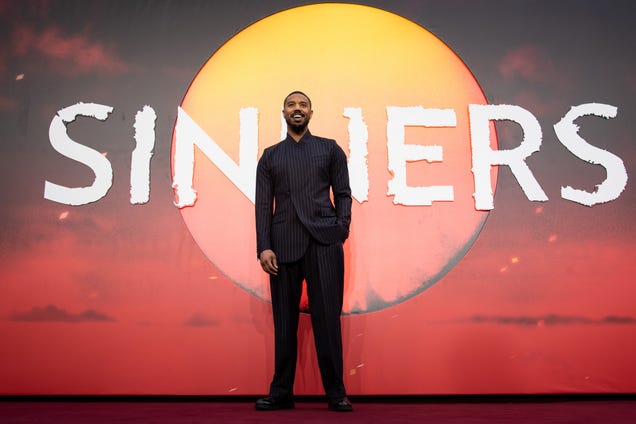
“Sinners” is one of the earliest blockbusters of 2025, and for good reason. The fifth collaboration between director Ryan Coogler and actor Michael B Jordan is also their most ambitious yet, as the ladder plays a pair of twin brothers who battle supernatural forces while opening up a new juke joint in Jim Crow era…
The comic, sci-fi and movie convention WonderCon has been running since 1987, an extraordinary 37 years of gathering in various cities of California—currently Anaheim—celebrating the best of nerd culture.
The Trump administration introduced a new framework to expedite self-driving vehicle deployment by reducing regulatory hurdles, while maintaining mandatory safety incident reporting. NHTSA is also expanding its exemption program, allowing domestically produced autonomous vehicles lacking traditional safety controls to operate on U.S. roads. Reuters reports: The Trump administration said Thursday it aims to speed up the deployment of self-driving vehicles but will maintain rules requiring reporting of safety incidents involving advanced vehicles. U.S. Transportation Secretary Sean Duffy on Thursday released a new framework to boost autonomous vehicles. “This administration understands that we’re in a race with China to out-innovate, and the stakes couldn’t be higher,” Duffy said. “Our new framework will slash red tape.”
The National Highway Traffic Safety Administration said it will expand a program to exempt some self-driving vehicles from all safety requirements and will streamline but continue its requirement that vehicles equipped with certain advanced driver assistance systems or self-driving systems report safety incidents. NHTSA is expanding its Automated Vehicle Exemption Program to now include domestically produced vehicles that will allow companies to operate non-compliant imported vehicles on U.S. roads. It is currently only open to foreign assembled models.
Meta Horizon Worlds now supports 3D 180° video on Quest for its streamed events such as concerts.
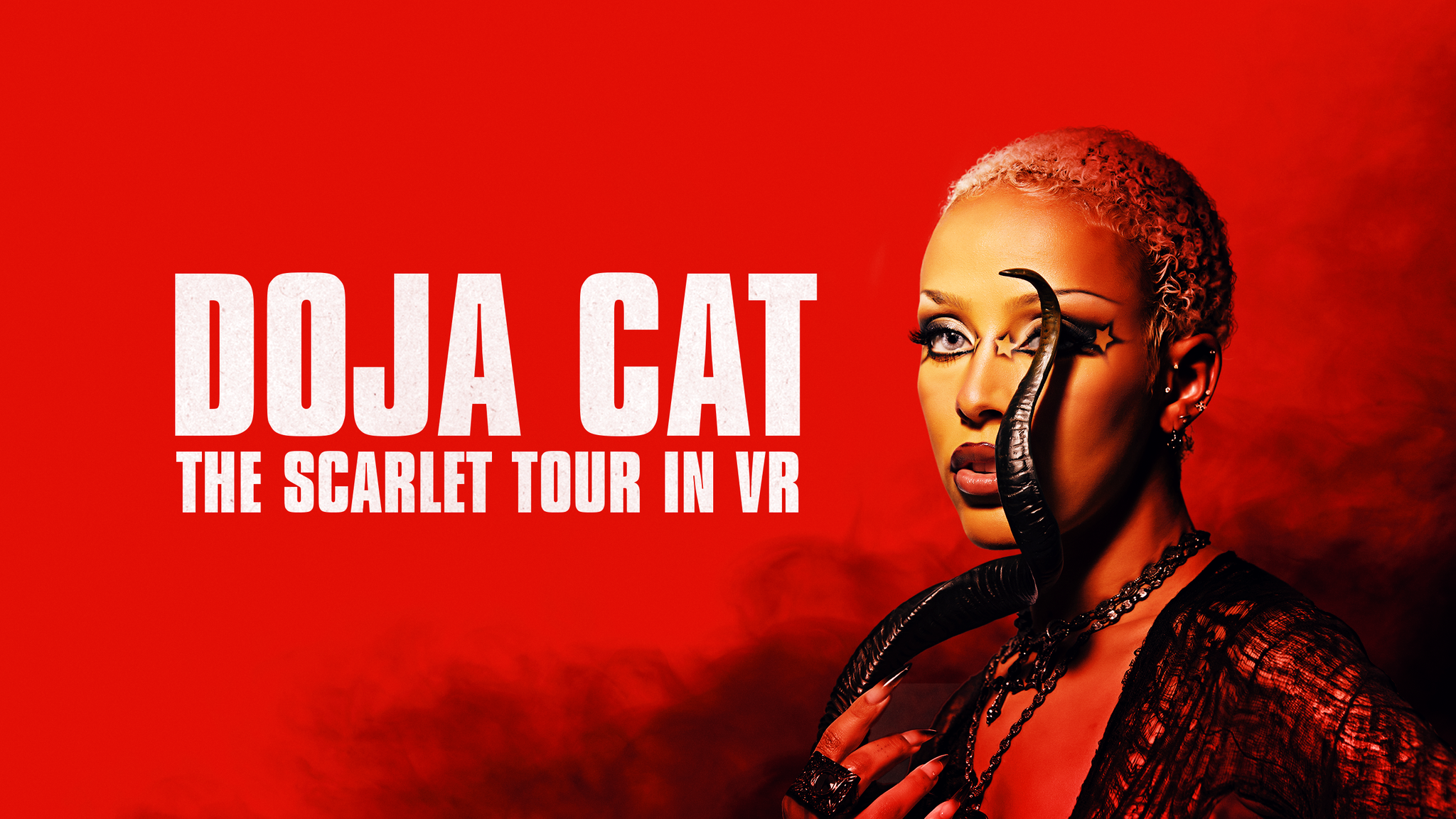
Previously, immersive videos such as the Sabrina Carpenter, Shawn Mendes, and Doja Cat concerts were streamed in 2D in the Music Valley of Horizon Worlds, despite being filmed in 3D and available to watch in 3D in the Meta Quest TV app.
That meant that Quest owners who wanted to watch these events in VR with a friend or just didn’t know that only the Meta Quest TV version was 3D (Meta heavily pushes the Horizon Worlds version) were missing out on the sense of depth and scale 3D offers until now.
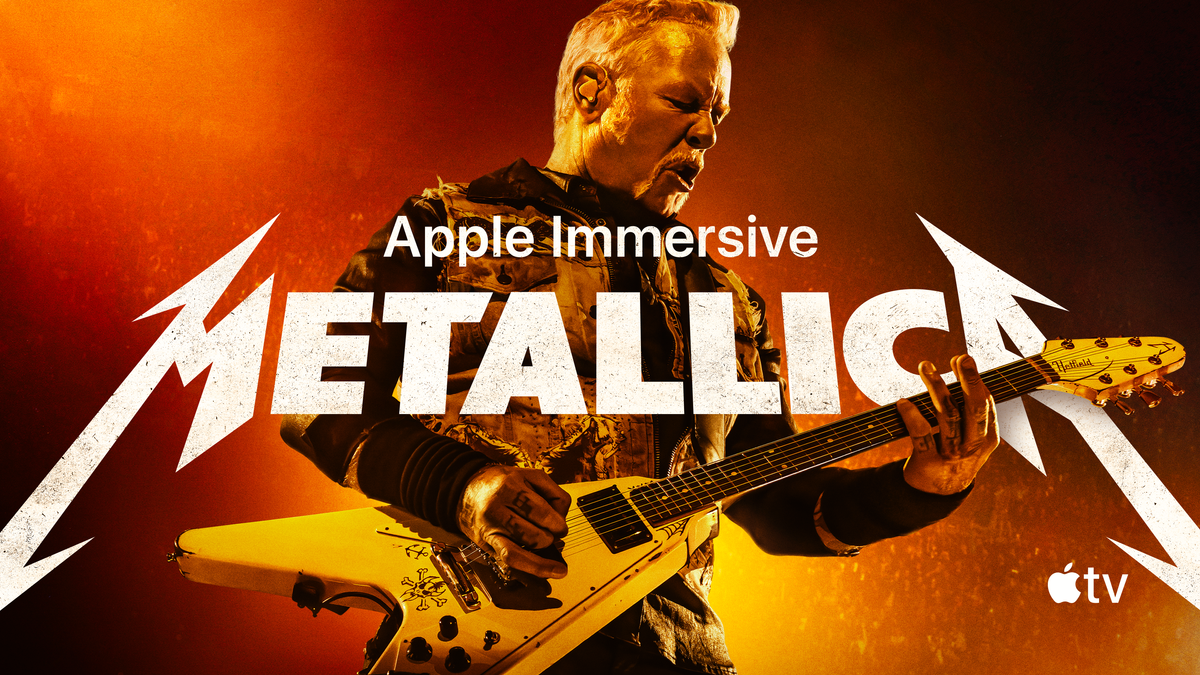
While 3D is a welcome addition, the resolution and bitrate of Meta’s concert events still leaves much to be desired. It’s a far cry from Apple’s Metallica concert immersive video, for example, where the quality is so good it can sell the idea of immersive video to even nonbelievers.
Google released the schedule for its upcoming I/O developer conference, which includes developer-focused sessions promising to deliver more insight into its upcoming Android XR operating system. At least from the schedule, it doesn’t seem Google is getting that vocal about Android XR just yet.
Android XR has been squarely out of the limelight since Google announced it back in December alongside Samsung’s ‘Project Moohan’ mixed reality headset. There aren’t any firm release dates for either, although both are expected to launch publicly sometime later this year.
While the company has confirmed a number of Android XR features, including the much-awaited support for passthrough camera access, and has also released developer access to its Android XR SDK, we’re still waiting to see how it will stack up against more mature XR ecosystems, like Meta’s Horizon OS and Apple’s visionOS.
Samsung Project Moohan | Image courtesy The Verge
Google I/O will include a number of livestreamed keynotes from May 20th – 21st, although only two developer talks dedicated to Android XR have been announced, neither of which will be livestreamed. There will however be a ‘What’s New in Android’ livestream that promises to also touch on Android XR.
Failing any meaningful info from the livestream, the two developer sessions are all about Android XR, signaling that Google is hoping to make a developer-friendly push into XR as it further integrates into the broader Android ecosystem—albeit out of the public eye of a livestreamed keynote.
Here’s what we can tell from the contents of the talks (descriptions seen below):
Android XR is moving towards public launch later this year, and Google is prepping a new XR toolchain before it does, which will bundle Jetpack SceneCore and ARCore into its XR-specific version of Jetpack. Jetpack XR, which is now in developer preview, lets mobile or large screen Android app devs create spatialized layouts with the help of 3D models and immersive environments. Notably, the inclusion of ARCore with Jetpack XR suggests Google is consolidating its spatial computing tools, giving devs a unified way to build both AR and VR experiences.
The talks also focus on adding XR features to existing apps, like 3D models, hand-tracking, and stereoscopic video, which means Android XR is hoping to attract more than just game developers—fairly clear considering Google ostensibly aims to put Android XR at app parity with the broader Android ecosystem.
Google is also set to extend Jetpack Compose, its declarative UI toolkit, to XR, which suggests the company wants to standardize UI design across mobile, tablet, and XR, making it easier to port or adapt UIs for immersive environments.
Notably, the second talk (seen below) highlights upcoming AI capabilities being built into Android XR, which could mean features like real-time object recognition, scene understanding, or AI-generated environments could be on the horizon.
Granted, neither talk is being livestreamed, which could mean Google still isn’t ready to trumpet Android XR. We’re also hoping to hear more about Samsung’s upcoming ‘Project Moohan’ headset, which is slated to be the first headset to support Android XR.
In any case, we’ll be tuning in for livestreams and reporting on technical talks hoping to hear something new.
Dereck Bridié Developer Relations Engineer, Patrick Fuentes Developer Relations Engineer
“Join us as we introduce Jetpack SceneCore and ARCore for Jetpack XR, and guide developers through the process of adding immersive content such as 3D models, stereoscopic video, and hand-tracking to existing apps. Participants will learn about new features in the Android XR SDK developer preview, and gain essential knowledge for the public launch of Android XR later this year.”
Cecilia Abadie Senior Product Manager, Jan Kleinert Developer Relations Engineer
Discover the future of immersive experiences with Android XR. This session unveils the latest updates to the Android XR SDK Beta, launching at I/O, including enhancements to Jetpack Compose for XR and cutting-edge AI capabilities. Learn how your existing investments in large screen development can be leveraged to easily expand your reach into the exciting world of Android XR.
A new fantasy VR MMORPG, Eldramoor: Haven in the Mist, is coming to Quest and PC VR.
Developed by Resolute Games, Eldramoor: Haven in the Mist enables you to become avid adventurers, uncovering the secrets of a mythic land with friends. Across five unique biomes, you can take on tasks like mining, raiding, crafting, PvP combat, and finding hidden treasures. Characters can also be customized through cosmetics and bespoke combat classes. You can check out the new teaser trailer below:
0:00
/1:04
If you’d rather take things more slowly and hang out in town, Eldramoor: Haven in the Mist promises a range of community activities you can participate in. That includes games like darts or fishing in the nearby docks. It aims to be accessible and inclusive for all kinds of players, offering support for colorblindness and sound sensitivity. There’s also movement customizability and a choice of dyslexic-friendly fonts.
“VR isn’t just a platform, it’s integral to the fun. Climbing, gliding, cooking, fishing, gathering and more, everything you do in Eldramoor: Haven in the Mist takes advantage of the immersiveness and physicality offered only by VR,” explained Resolute Games VP of Game Development & Art Director Chris Beatrice in a prepared statement.
“And this is a world where inclusivity matters, so whether it’s a blacksmith in a wheelchair, a non-binary mayor, people of all colors and shapes, or buildings with access ramps, Eldramoor reflects and celebrates the rich and diverse world we all live in.”
Eldramoor is far from the first VR MMORPG, though. Orbus VR was the first before shutting down earlier this year, Zenith: The Last City later adopted a free-to-play model before ceasing development in 2024, while Ilysia has struggled to gain traction since its early access launch in late 2023. This raises questions about whether the VR market is ready for an MMO, though the genre’s history does not appear to be lost on Resolute Games.
“I got into VR in 2018 through Orbus. As someone who wasn’t a traditional gamer, I fell in love with the MMORPG genre that offered competition and a lively community. But over time, the games I loved either stalled or failed. That’s when I decided to take the bull by the horns and build something new,” says Resolute CEO Lynn M Souza in a prepared statement.
The developers behind Eldramoor: Haven in the Mist are launching a Kickstarter for the project soon, with the game set to launch on Quest and Steam in the future.
Ghost Town delivers a brilliant supernatural puzzle adventure that you won’t want to miss. Read on for our full review.
Mysteries are one of my oldest loves in fiction, and that’s only grown through video games. Watching detectives pour over a murder case is one thing, yet user controlled spaces like games can sometimes struggle without the narrative luxury of pre-defined pacing. It’s not enough to simply have a great story, you need to make the player an active participant who can feel accomplished without making it too difficult. It’s a fine line, one that Ghost Town walks almost flawlessly.
The Facts
What is it?: A supernatural puzzle adventure set in the ’80s. Platforms: Quest, PC VR, PlayStation VR2 (reviewed on Quest 3) Release Date: Out today (Quest), 2025 (PC VR, PS VR2) Developer: Fireproof Games Price: $29.99
Fireproof Games have supported modern VR since the beginning with Omega Agent, and it wasn’t until five years later where the studio truly left its mark with The Room VR: A Dark Matter. The team’s flagship puzzle series immediately left an impression in VR with its rich production values and satisfying puzzles, and Ghost Town builds upon these fine foundations well.
0:00
/1:02
Gameplay footage from the first level captured by UploadVR
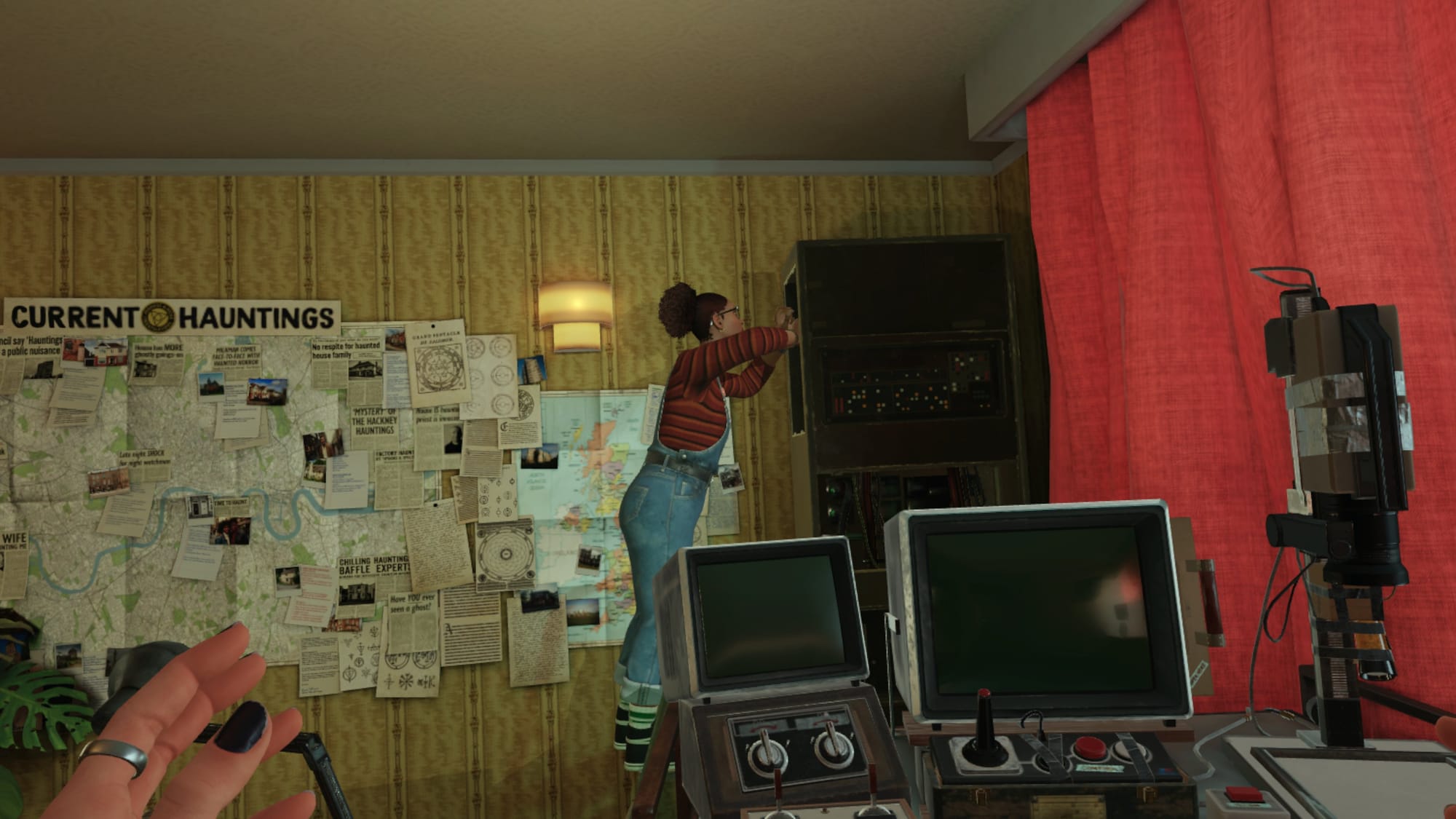
Ghost Town takes a supernatural approach that immediately intrigues, only this time we’re in the ’80s as an Irish witch turned exorcist and ghost hunter, Edith Penrose. Joined by our paranormal detective agency partner, Rina, what follows is a thoroughly gripping narrative that sees us searching for Edith’s missing brother. Fireproof’s not afraid to have some fun with this story, balancing good humor while effectively building up suspense.
Ghost Town splits each major segment into chapters, set in different locations across the UK as we uncover the wider mystery. I’m enjoying how the game blends its narrative with the gameplay. Understandably, you can’t leave an area during an active cutscene without getting a warning flash up, though a particularly striking incident occurs midway through.
My favorite example is when you’re receiving crucial information about a suspect, with the information projected around you while placing your hand on an orb. All very atmospheric until I accidentally discovered that removing your hand causes the scene and music to fade, while the other character continues talking. Moments like these add crucial immersive depth, and there’s every chance someone unaware of this could miss that entirely.
Screenshot captured by UploadVR on Quest 3
Edith doesn’t spend her entire journey simply chatting away and holding strange orbs. However, I’m hesitant to say too much because half the joy of puzzle solving comes from finding the answers yourself. What I can say is that most of these are well-designed without too much hand holding; the environmental storytelling merges nicely with exploration to provide the answers.
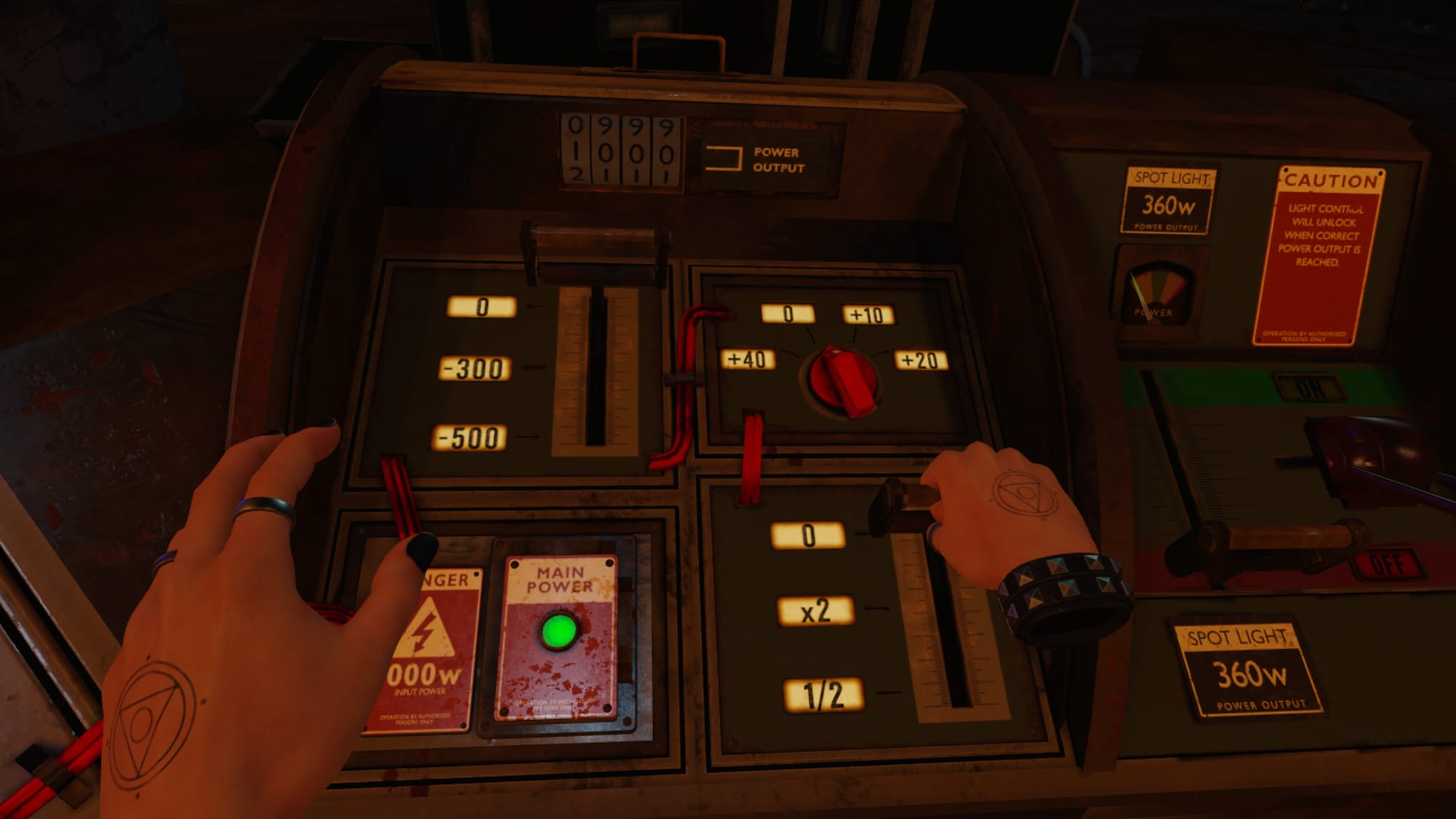
Most puzzles aren’t overly challenging, either. There’s enough thought required to make you feel accomplished, and I’m impressed at how intuitive solving many of them feels. Whether it’s finding the right settings combination for electrical devices or attuning your scanner to the right wavelength, Ghost Town helpfully provides enough information through the environment without simply handing you the answer. I’ve only been stuck on two occasions, assisted by the optional hint system that provides useful advice in three parts.
These puzzles are only boosted by some great interactivity with good physicality. You can gently feel the haptics as you cast spells with responsive motion controls to help trapped spirits return to the afterlife, achieved by severing their links to key objects from their pasts. Pulling inventory items out of a flat menu that appears when pressing a face button isn’t the most immersive method, but it’s a minor thing and I still feel like part of this world.
Screenshot captured by UploadVR on Quest 3
My only major complaint is that I wish there was more here, and Ghost Town takes roughly five hours to complete. Which in itself is fine. The story never feels drawn out, the general pacing works well, and this leads to a satisfying conclusion. It’s just that good, and I’d love to see more in a sequel, which I hope happens given the game ends with some open-ended threads. Each level hides a set of collectible magazines, though it’s not a big replayability incentive on its own.
Comfort
Ghost Town offers two movement options; artificial stick-based locomotion and teleportation. You can adjust the speed with an ‘analog movement’ setting that gradually increases the acceleration instead of using a constant movement speed. Snap turning and smooth turning camera options are both available with adjustable speeds.
Snap fade can also be implemented for additional comfort alongside movement vignettes. Seated and standing gameplay modes are supported. You can adjust the size and height of subtitles, should you wish to have them on. Various audio sliders are included, controller vibration can be turned off, and a hint system can also be switched on.
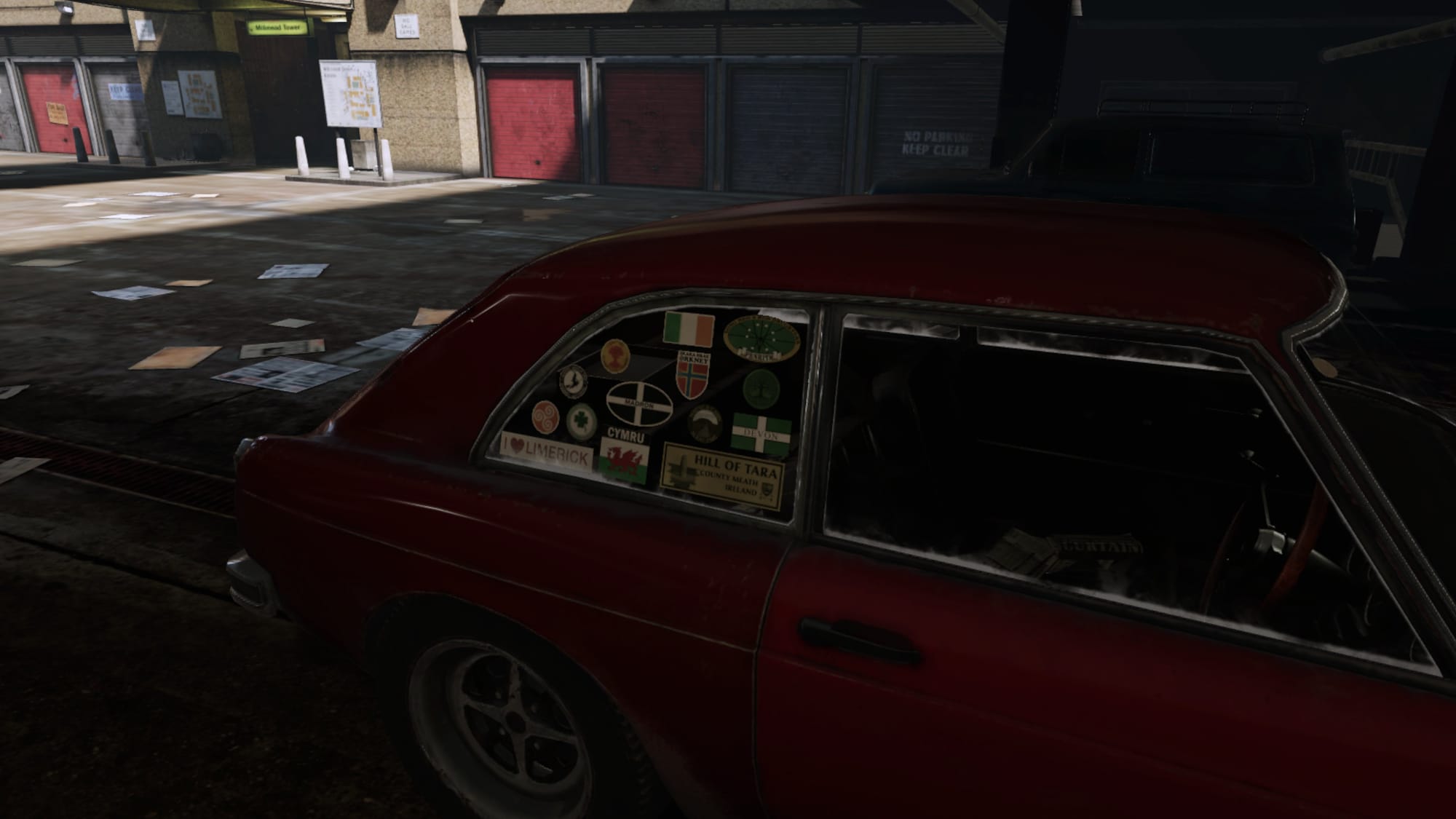
Still, Ghost Town’s a visual treat for Quest 3 that pushes the limits of this headset. Each environment is great to explore, character models look nice, resolution seems sharp and I never encountered any performance issues. From London apartments to a haunted Scottish lighthouse, there’s great atmospheric design that’s complemented by a fitting soundtrack. The only downside is that the level of detail isn’t always the best, and I can occasionally see textures change in front of me.
I haven’t had the chance to check how Ghost Town runs on Quest 2 by comparison right now, and I’m keen to see how the Steam and PlayStation VR2 versions compare when those editions launch later this year. When it’s already looking this good in standalone VR, I’m feeling optimistic for higher spec hardware.
Ghost Town Review – Final Verdict
It’s not a stretch to say that Ghost Town is one of the best VR games so far this year. Fireproof Games has delivered a worthy spiritual successor to The Room VR: A Dark Matter that employs a similarly strong level of VR interactivity, backed up by great visuals on Quest 3, a thoroughly engrossing supernatural narrative and intuitive puzzles. I do wish the journey lasted just a little longer, but what’s here is an essential experience that you won’t want to miss.
UploadVR uses a 5-Star rating system for our game reviews – you can read a breakdown of each star rating in our review guidelines.