The US military launched a long-range hypersonic missile Friday morning from Cape Canaveral Space Force Station in Florida on a test flight that, if successful, could pave the way for the weapon’s operational deployment later this year.
The Army’s Long-Range Hypersonic Weapon fired out of a canister on a road-mobile trailer shortly after sunrise on Florida’s Space Coast, then headed east over the Atlantic Ocean propelled by a solid-fueled rocket booster. Local residents shared images of the launch on social media.
Designed for conventional munitions, the new missile is poised to become the first ground-based hypersonic weapon fielded by the US military. Russia has used hypersonic missiles in combat against Ukraine. China has “the world’s leading hypersonic missile arsenal,” according to a recent Pentagon report on Chinese military power. After a successful test flight from Cape Canaveral last year, the long-range hypersonic weapon (LRHW)—officially named “Dark Eagle” by the Army earlier this week—will give the United States the ability to strike targets with little or no warning.
Initial claims that life-associated gases were detected on exoplanet K2-18b are being challenged, with independent reanalysis by Jake Taylor suggesting the data is too noisy to support such conclusions and that stronger, model-independent evidence is needed. NPR reports: Rather than seeing a bump or a wiggle that indicated a signal, “the data is consistent with a flat line,” says Taylor, adding that more observations from the telescope are needed to know what can be reliably said about this planet’s atmosphere. “If we want to claim biosignatures, we need to be extremely sure.”
What this new work shows is that “the strength of the evidence depends on the nitty gritty details of how we interpret the data, and that doesn’t pass the bar for me for a convincing detection,” says Laura Kreidberg, an expert on the atmospheres of distant planets at the Max Planck Institute for Astronomy in Germany who didn’t work on the original research team or this new analysis.
She explains that astronomers can make a lot of different choices when analyzing data; for example, they can make different assumptions about the physics and chemistry at play. “Ideally, for a robust detection, we want it to be model-independent,” she says — that is, they want the signal to show up even if the underlying assumptions change from one analysis to another. But that wasn’t the case here.
Longtime Slashdot reader AmiMoJo shares a report from the BBC: China will let scientists from six countries, including the U.S., examine the rocks it collected from the Moon — a scientific collaboration that comes as the two countries remain locked in a bitter trade war. Two NASA-funded U.S. institutions have been granted access to the lunar samples collected by the Chang’e-5 mission in 2020, the China National Space Administration (CNSA) said on Thursday. CNSA chief Shan Zhongde said that the samples were “a shared treasure for all humanity,” local media reported.
Chinese researchers have not been able to access NASA’s Moon samples because of restrictions imposed by U.S. lawmakers on the space agency’s collaboration with China. Under the 2011 law, Nasa is banned from collaboration with China or any Chinese-owned companies unless it is specifically authorized by Congress. But John Logsdon, the former director of the Space Policy Institute at George Washington University, told BBC Newshour that the latest exchange of Moon rocks have “very little to do with politics.” While there are controls on space technology, the examination of lunar samples had “nothing of military significance,” he said. “It’s international cooperation in science which is the norm.”
An anonymous reader quotes a report from Ars Technica: Multiple studies and investigations have found that about half of American households watch TV and movies with subtitles on, but only a relatively small portion of those include someone with a hearing disability. That’s because of the trouble many people have understanding dialogue in modern viewing situations, and Netflix has now introduced a subtitles option to help.
The closed captioning we’ve all been using for years includes not only the words the people on-screen are saying, but additional information needed by the hard of hearing, including character names, music cues (“dramatic music intensifies”) and sound effects (“loud explosion”). For those who just wanted to make sure they didn’t miss a word here and there, the frequent descriptions of sound effects and music could be distracting. This new format omits those extras, just including the spoken words and nothing else — even in the same language as the spoken dialogue. The feature will be available in new Netflix original programming, starting with the new season of You in multiple languages. Netflix says it’s looking at bringing the option to older titles in the library (including those not produced by Netflix) in the future.
Traditional closed captions are still available, of course. Those are labeled “English CC” whereas this new option is simply labeled “English” (or whatever your preferred language is).
TV producer Alex Berger criticized Apple TV+ as “the worst marketer in the universe” for failing to promote his French-language show La Maison, despite its success in Europe. Berger said he initially partnered with Apple out of hope, but ultimately felt they undermined their own content by not supporting it properly. 9to5Mac reports: Rafa Sales Ross at Variety recently interviewed TV producer Alex Berger, who made La Maison for Apple TV+. That partnership is apparently not one he intends to repeat: “Marketing makes a show,” he emphasized. “Apple, for example, is probably the worst marketer in the universe — the best for iPhones, the worst for television. They don’t do marketing, and it was an issue for us with ‘La Maison.’ We did a great show that had an amazing success in France and other places in Europe, but they never promoted it. It drove me crazy.”
Asked why, while believing Apple TV+ to lack in marketing efforts, did he decide to take “La Maison” to the streamer, Berger said simply: “Hope. We had hope.” “Apple TV+ had never done a show in France and never really done a show in Europe,” adds the producer. “‘Slow Horses’ started [things] in the U.K., but it was with the U.S.. I was hoping I would change them. We got very frustrated and just thought at one point that they were shooting themselves in the foot, and why? “La Maison faced the additional challenge of being a French-language series, at the time one of the only non-English shows on the streamer,” notes 9to5Mac’s Ryan Christoffel. “So it had an uphill battle already, making Apple’s marketing struggles even more of a problem.”
YKK, the world’s largest zipper maker, has unveiled a prototype self-propelled zipper that uses a motorized worm gear to zip itself closed at the push of a button. It currently relies on a wired remote and external power, and can zip spans up to 16 feet in under a minute. The Verge reports: Although some recent zipper innovations, such as Under Armour’s one-handed MagZip upgrade, are designed to improve accessibility and make zippers easier to use for those with limited mobility, YKK envisions more industrial use cases for its prototype. As demonstrated in a video recently shared on the company’s YouTube channel, the self-propelled zipper is seen connecting a pair of 16-foot-tall membranes in about 40 seconds. Zipping them together manually would require the use of a ladder or other machinery.
In another video, the prototype is used to quickly connect a pair of 13-foot-wide temporary shelters standing over eight feet tall, taking about 50 seconds to progress from one side to the other. […] In addition to miniaturizing the tech and adding a battery, YKK would also need to develop some safety mechanisms before its self-propelled zipper could ever reach consumers’ clothing, ensuring there’s nothing that might get stuck.
Some developers are “crying foul” after Microsoft’s C/C++ extension for Visual Studio Code stopped working with VS Code derivatives like VS Codium and Cursor, reports The Register. The move has prompted Cursor to transition to open-source alternatives, while some developers are calling for a regulatory investigation into Microsoft’s alleged anti-competitive behavior. From the report: In early April, programmers using VS Codium, an open-source fork of Microsoft’s MIT-licensed VS Code, and Cursor, a commercial AI code assistant built from the VS Code codebase, noticed that the C/C++ extension stopped working. The extension adds C/C++ language support, such as Intellisense code completion and debugging, to VS Code. The removal of these capabilities from competing tools breaks developer workflows, hobbles the editor, and arguably hinders competition. The breaking change appears to have occurred with the release of v1.24.5 on April 3, 2025.
Following the April update, attempts to install the C/C++ extension outside of VS Code generate this error message: “The C/C++ extension may be used only with Microsoft Visual Studio, Visual Studio for Mac, Visual Studio Code, Azure DevOps, Team Foundation Server, and successor Microsoft products and services to develop and test your applications.” Microsoft has forbidden the use of its extensions outside of its own software products since at least September 2020, when the current licensing terms were published. But it hasn’t enforced those terms in its C/C++ extension with an environment check in its binaries until now. […]
Developers discussing the issue in Cursor’s GitHub repo have noted that Microsoft recently rolled out a competing AI software agent capability, dubbed Agent Mode, within its Copilot software. One such developer who contacted us anonymously told The Register they sent a letter about the situation to the US Federal Trade Commission, asking them to probe Microsoft for unfair competition — alleging self-preferencing, bundling Copilot without a removal option, and blocking rivals like Cursor to lock users into its AI ecosystem.
This week we spent some time with the Marathon alpha and tell you what we loved and hated about Bungie’s upcoming extraction shooter. We also found ourselves seduced by Clair Obscur: Expedition 33, smitten with the new time-travel-themed point-and-click adventure Old Skies, and impressed with The Hundred Line, the new…
This week saw a few massive happenings in the world of games. First and foremost, after being delayed to allow Nintendo to take stock of the potential impact of President Trump’s chaotic implementation of tariffs, the company finally kicked off retail pre-orders for the Switch 2 here in the U.S., and the results were…
Soul Paint is a VR experience that combines 3D drawing with personal introspection.
Launched during SXSW 2024, Soul Paint is a project created by Sarah Ticho & Niki Smit and narrated by Rosario Dawson, where participants can “discover, meet and choreograph their own emotions” through immersive technology. As a 3D body in an ethereal space, Soul Paint gives you the tools to physically draw across this 3D space onto your virtual body.
Soul Paint uses body-mapping techniques mixed with virtual reality, which the creators state is a means of exploring and gaining awareness of our feelings. Its intent is to “foster empathy and social connectedness through witnessing the lived experience of others,” giving you the option to share those feelings with others once you’ve reached the end.
I jumped in for a hands-on session during NewImages Festival 2025 through the XR Market for 20 minutes, and this experience begins with a potent question: “Where are you feeling?” An interesting thought that I wasn’t so sure on at the time, but Soul Paint doesn’t take long to feel more spiritual. Across this almost heavenly realm, the experience welcomely encourages you to physically express yourself.
What follows feels calming, relaxing, and you can feel that self-actualization. My drawings aren’t winning any prizes anytime soon, and I’m certainly no artist, yet I did what I needed at that moment. You can then draw across your virtual body and leave a voice note at the end, which you can choose to save for others to encounter. It’s a lovely idea for sharing your sentiments with others when words aren’t enough.
Soul Paint aims to be a mirror for yourself in VR and while there’s only so much you can do in an ephemeral linear experience, there’s a strong sense of embodiment and player agency that I’m fond of. It’s a different means of communicating ourselves to others, which doesn’t hold much depth as a straight experience, yet that’s made up for by thoughtful, almost meditative nuances. I hope we end up seeing more experiences like this.
It’s unknown if Soul Paint will ever receive a home release, but we’ll update this article if we learn more.
For regular updates, we suggest subscribing to our weekly newsletter or checking out our latest articles. Otherwise, here are a few additional stories across the world of XR.
Survios released a new update for Alien: Rogue Incursion on Quest 3 and 3S. Titled Patch 1.02, this promises “various performance optimizations” alongside further enhancements to the VFX. Dynamic lights for warning alarms have now been added, while other bug fixes are also highlighted.
Project Mix Promises VR Cyberpunk Bartending With ’90s Anime
Project Mix is an anime-inspired VR game where you play as Rone, a former thug looking to leave his old life behind. This risqué adventure promises a branching narrative based on your choices with various romance routes. A Kickstarter campaign launches soon, a PC VR demo is out now, while the full game targets Q4 2026 on Quest and Steam. The studio hopes to release on PS VR2 if it has enough resources, and a flatscreen version is mentioned as a stretch goal.
Real VR Fishing Heads To The UK Next Week With New DLC
Following its recent European leg of the World Tour, Real VR Fishing is now heading to the UK in its next DLC update on April 30. This promises to introduce 20 new fish species with seven new fishing spots including Westminster Bridge, River Kent, Castle Sands, St. Monans Church, Loch Ness, Britannia Bridge, and Giant’s Causeway.
Bull Hit Is A Free VR Multiplayer Sandbox From Odders Lab
Bull Hit is the latest game from Odders Lab, who previously released OhShape and Les Mills XR Bodycombat. This online multiplayer VR sandbox lets you create chaos by riding a bull to break stuff with no specified rules, and that recently launched for free in early access on Quest.
Umami Grove Simmers Onto Steam, Quest & Pico With A Culinary Adventure
Umami Grove is a new VR cooking adventure developed by Pomshine Games that’s available now on Steam, Pico and Quest. This culinary tale sees you traversing different worlds to create dishes for various NPCs, often facing peril along the way while overcoming other challenges. Publisher Dangen Entertainment says a PlayStation VR2 release is also planned, but a release date is unconfirmed.
MR Party Game Trap Your Friends Now Supports Colocation
0:00
/0:25
Mixed reality party game Trap Your Friends received a new update that added colocation support. This allows you to play with friends across a colocated space thanks to Meta’s spatial anchors, and you can play the game now in early access using either hand tracking or Touch controllers.
Other Updates
After further stories? Here’s everything else we’ve seen this week.
If you’d like to inform us about a VR game we should know about for this article or future updates, you can use our contact page or email tips@uploadvr.com with details.
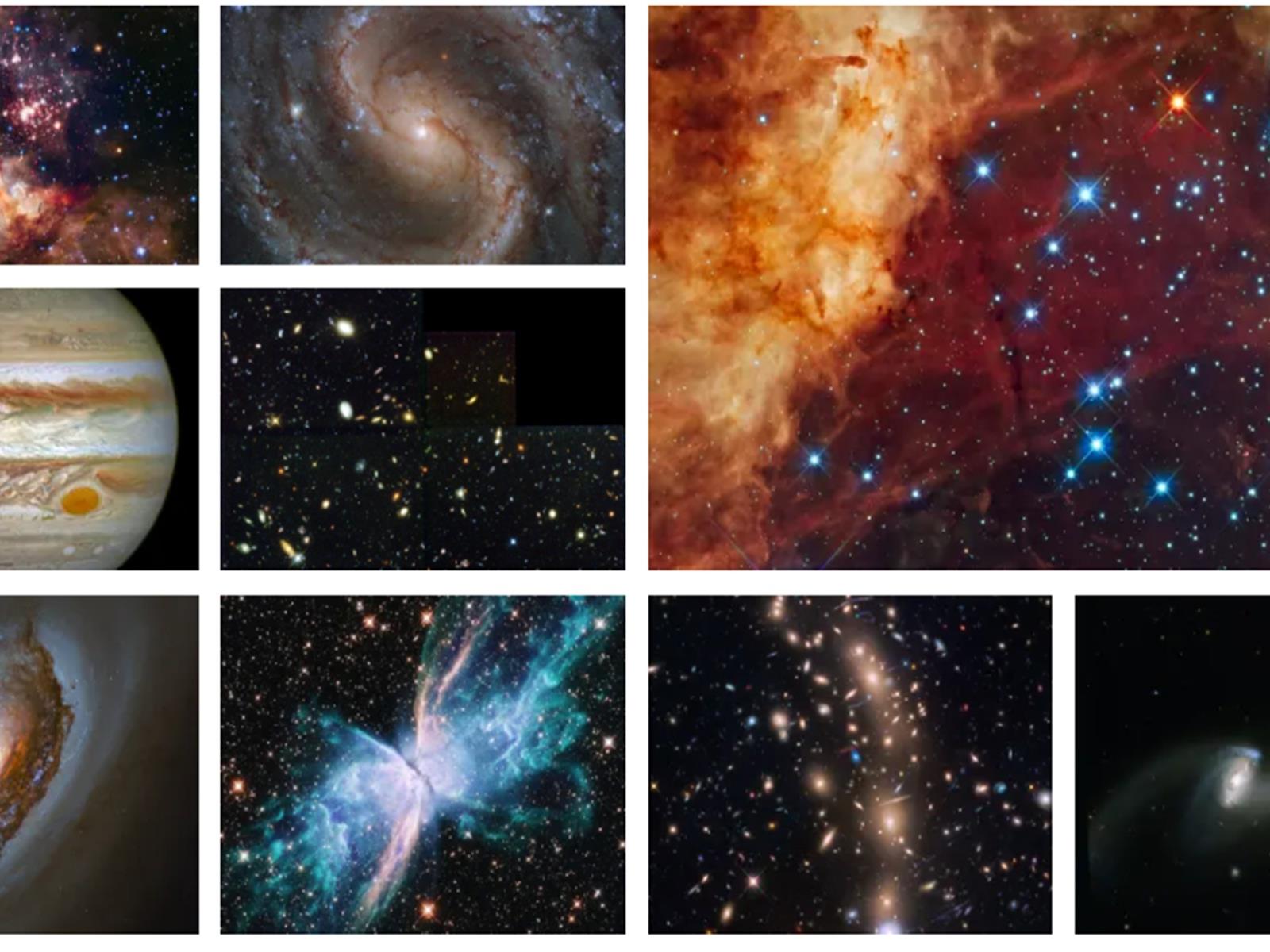
The Hubble Space Telescope has been deployed since April 25, 1990. Yesterday marked 25 years since it began its mission to help us better understand the cosmos. To commemorate this noteworthy anniversary, NASA has released a gallery of fascinating images captured by the powerful telescope from its home at 320 miles (515 kilometers) above the
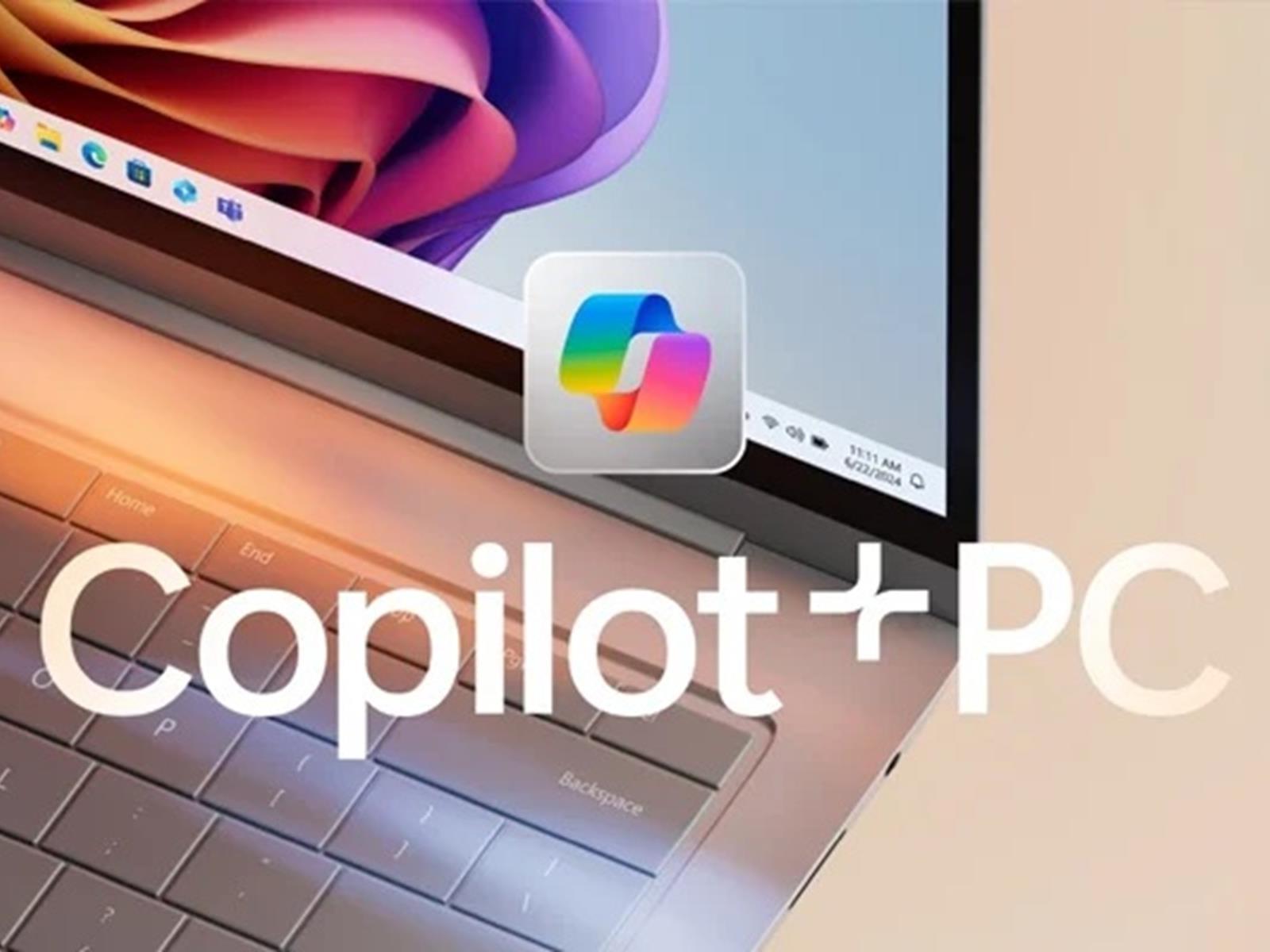
Almost a year after its introduction, Microsoft is relaunching Recall and adding an improved Windows Search feature for Copilot+ PCs.
To quicly recap, the Recall feature takes snapshots of your active screen, and when you initiate a search, it analyses these snapshots and helps you to find — or recall — anything you’ve previously seen.
If you’ve been thinking about building a new high-end AMD system—or upgrading an older AM5 rig—now’s a great time. Amazon just slashed prices on several top-tier Ryzen CPUs, including the brand-new Zen 5 parts, and even better, most of them come with a free copy of February’s system smasher Monster Hunter Wilds. We’ve rounded up the best deals
With winter finally departed, training can finally resume away from the smart trainer and back on the roads and trails.
Whether you’re looking to maintain your fitness or training for a summer epic, there’s plenty of tech that can help you achieve your goals.
Thankfully, there are some bargains to be had on Garmin products at Amazon that should keep your spending to a minimum while still providing in-depth data analysis and safety.
We’ve rounded up the best Garmin deals we could find ahead of the summer.
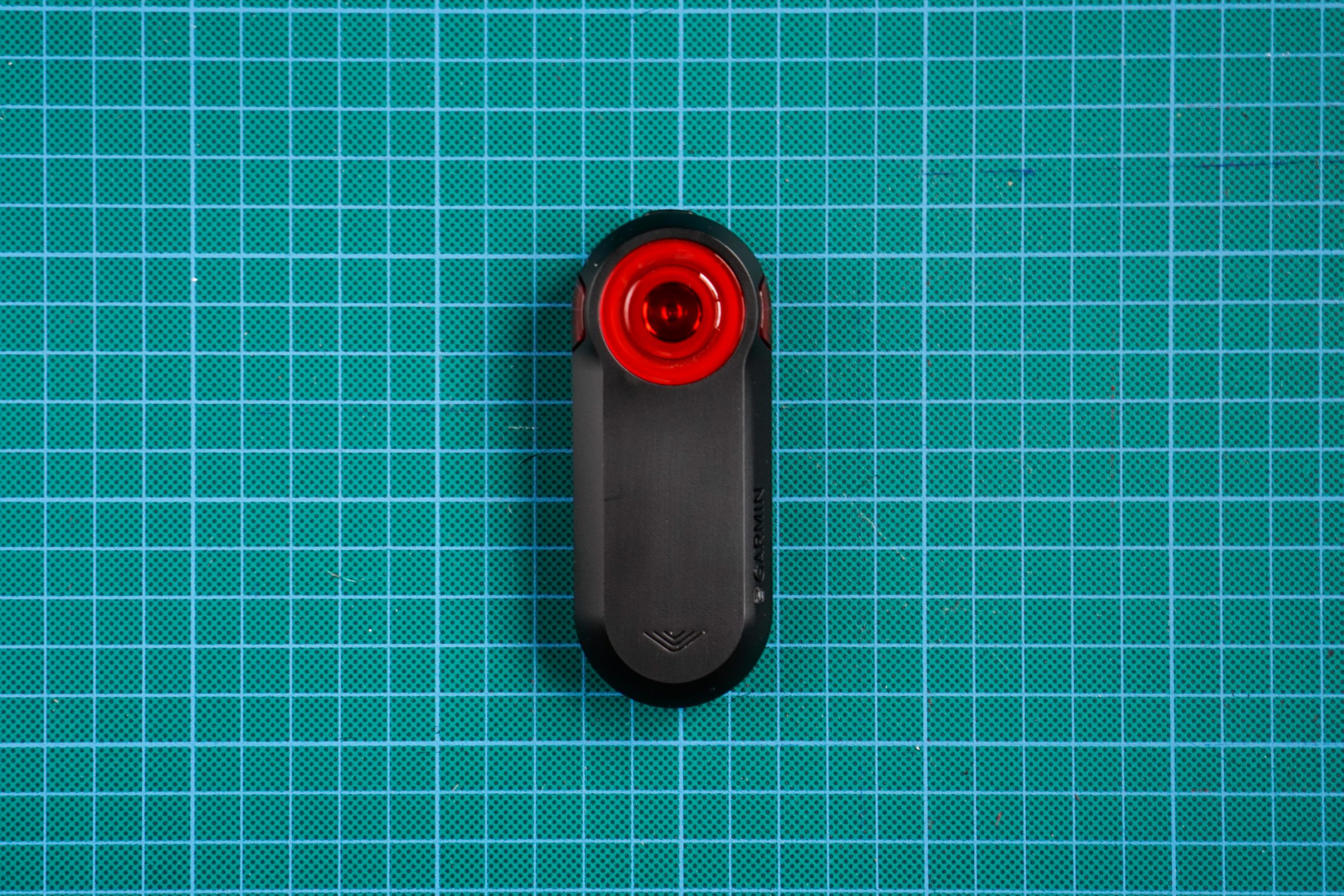
The Garmin Varia RTL515 rear radar is designed to keep you safe on the road. Jack Luke / Our Media
The Varia RTL515 is a rearview compatible with a range of bike computers and smartwatches, not solely Garmin ones.
The system alerts you via your head unit to approaching vehicles, detecting them from a claimed 140m away.
Your computer screen, or Garmin’s smartphone app, gives you a visual representation of relative position, and you get an all-clear once there’s nothing else detected behind you.
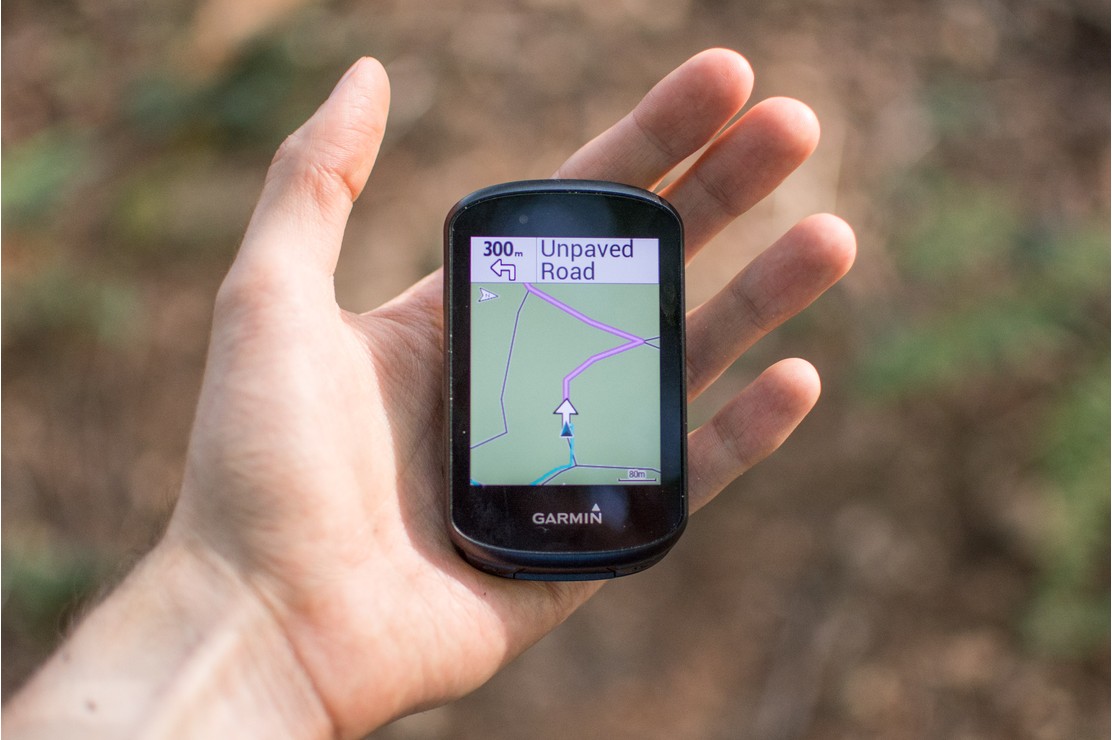
We think the Explore 2 has all of the functionality you’ll need, unless you are fully into power measuring/training. Warren Rossiter / Our Media
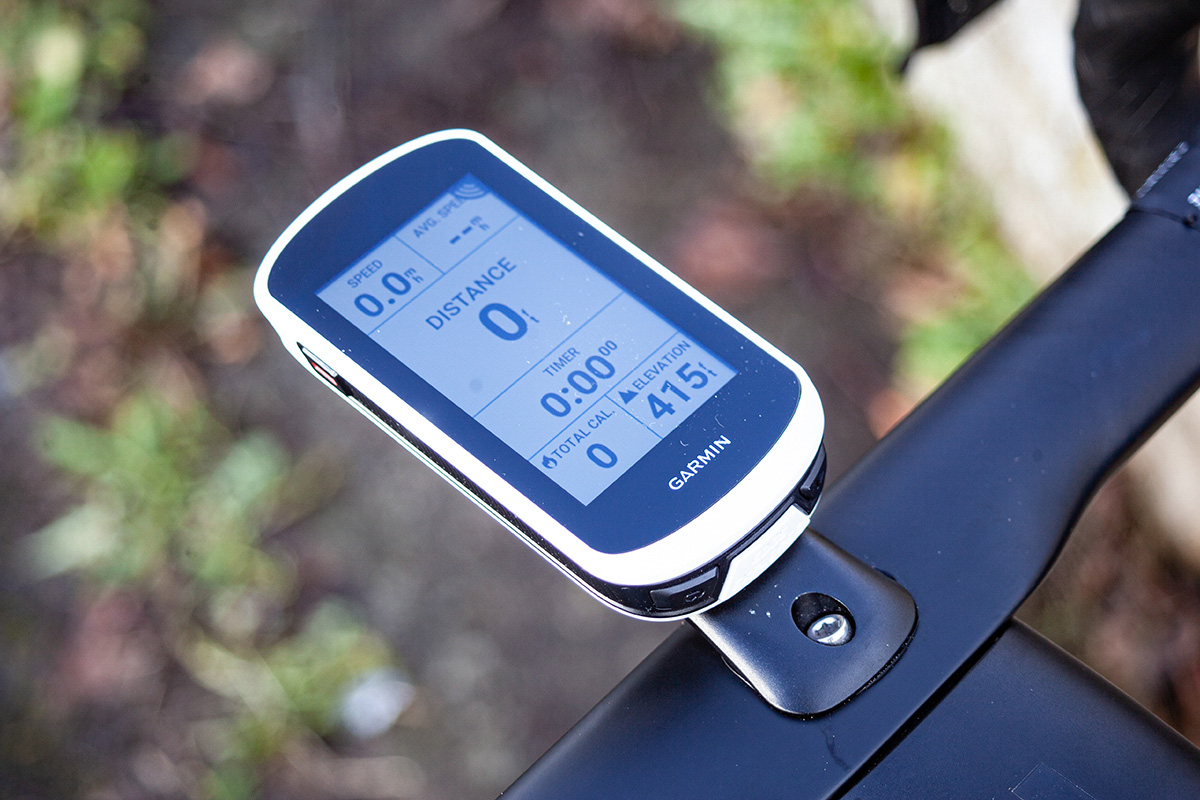
Garmin’s Edge Explore 2 is less performance-driven than its other models, and marketed more towards bike touring, navigation and route tracking.
The computer has a large, high-definition screen for easier navigation and is usually half the price of the brand’s fancier computers, although today it’s even cheaper.
If you’re after something to keep you going in the right direction, the Edge Explore 2 could be the computer for you.
Garmin’s HRM-Dual Heart Rate Monitor. Scott Windsor / Our Media
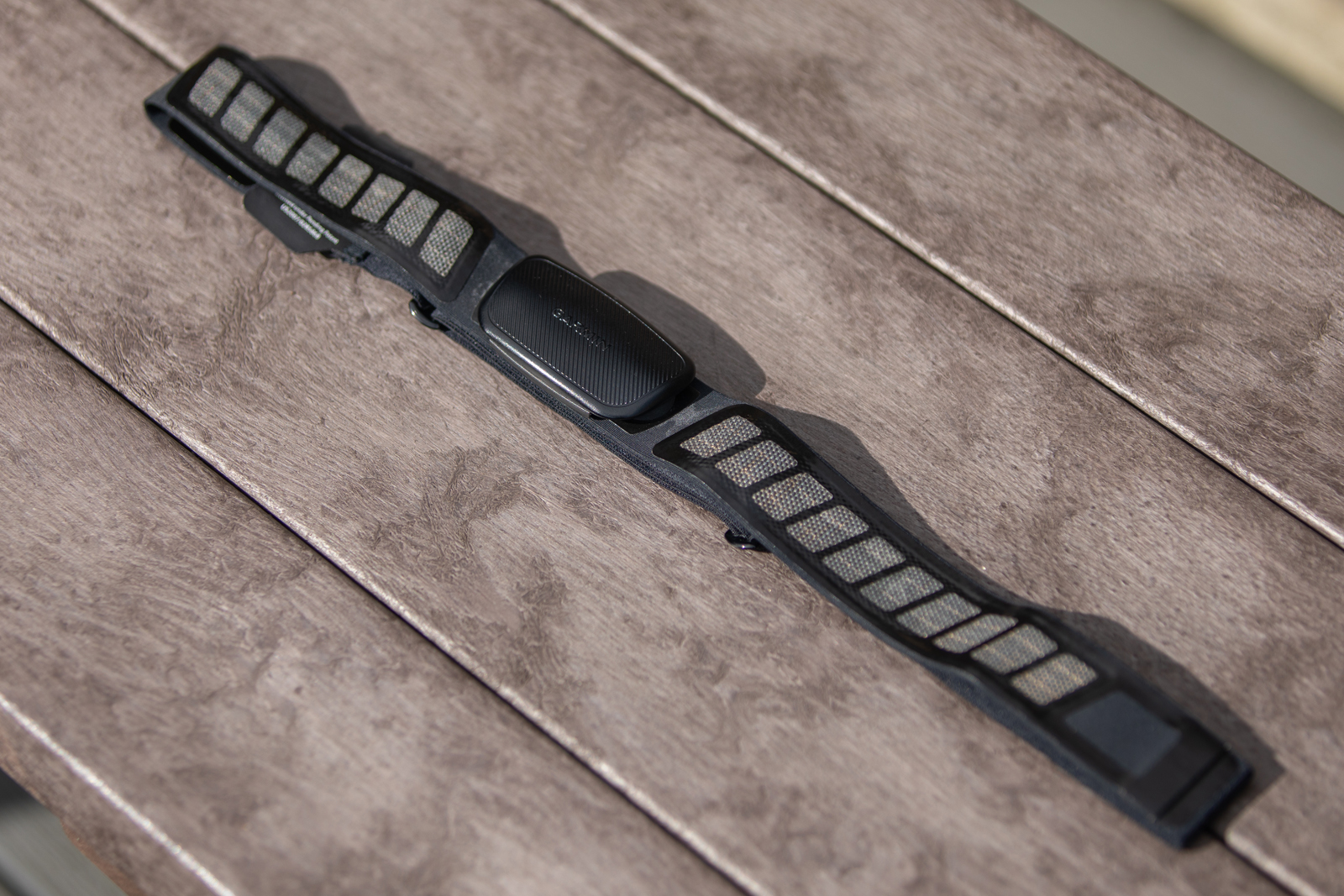
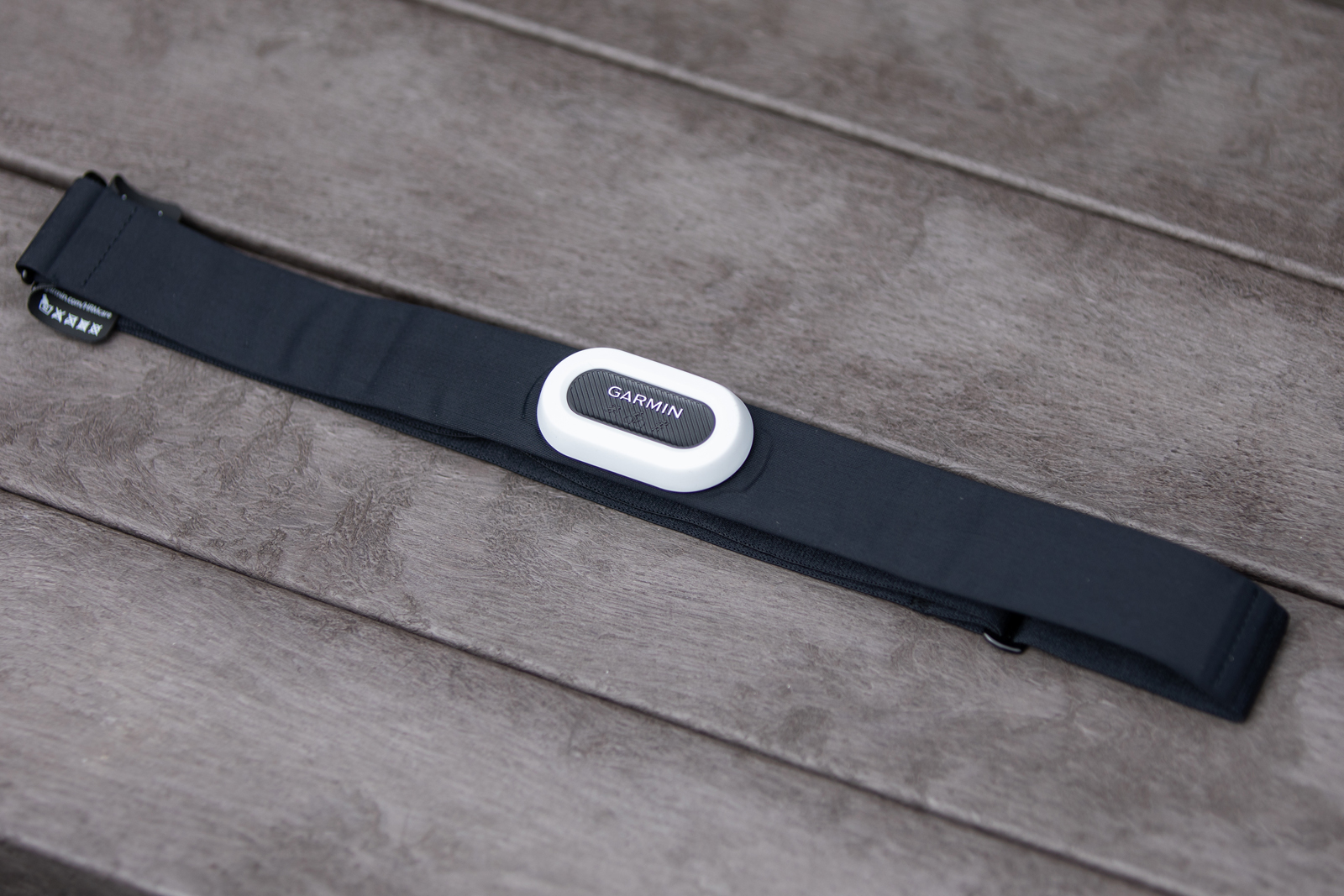
The HRM-Dual Heart Rate Monitor from Garmin offers connectivity via ANT+ or Bluetooth, making it compatible with a wide range of bike computers and smartwatches.
An adjustable strap allows a secure fit on varying body sizes, and the whole package weighs in at 54.4g for a lightweight feel.
Garmin says the battery lasts for up to 3.5 years, and it is a design many of us here at BikeRadar are well acquainted with.
Garmin’s Instinct 2 is available in two sizes. Garmin
The Instinct 2 is a rugged GPS smartwatch that Garmin claims is shock-resistant and waterproof down to 100m.
It has a built-in 3-axis compass and barometric altimeter, plus it uses multiple global navigation satellite systems, including GPS, GLONASS and Galileo.
Garmin says it should last up to 28 days in smartwatch mode, and up to 30 hours in GPS mode.
If you’re looking to record multiple sports, the Instinct 2 could be a good option for riding, running, hiking and more.
Tvrtko Ursulin of Igalia has been pursuing the Fair DRM Scheduler as a “fair” scheduling policy to help with multiple applications/processes aiming to make use of the GPU concurrently. With this week’s v4 patch-set to the DRM Fair Scheduler there are some big code changes but overall looking well as a nice scheduling policy for multiple apps/games/processes wanting equal access to GPU resources…
“Future moon astronauts may find water more accessible than previously thought,” writes Space.com, citing a new NASA-led experiment:
Because the moon lacks a magnetic field like Earth’s, the barren lunar surface is constantly bombarded by energetic particles from the sun… Li Hsia Yeo, a planetary scientist at NASA’s Goddard Space Flight Center in Maryland, led a lab experiment observing the effects of simulated solar wind on two samples of loose regolith brought to Earth by the Apollo 17 mission… To mimic conditions on the moon, the researchers built a custom apparatus that included a vacuum chamber, where the samples were placed, and a tiny particle accelerator, which the scientists used to bombard the samples with hydrogen ions for several days.
“The exciting thing here is that with only lunar soil and a basic ingredient from the sun — which is always spitting out hydrogen — there’s a possibility of creating water,” Yeo said in a statement. “That’s incredible to think about.” Supporting this idea, observations from previous moon missions have revealed an abundance of hydrogen gas in the moon’s tenuous atmosphere. Scientists suspect that solar-wind-driven heating facilitates the combination of hydrogen atoms on the surface into hydrogen gas, which then escapes into space. This process also has a surprising upside, the new study suggests. Leftover oxygen atoms are free to bond with new hydrogen atoms formed by repeated bombardment of the solar wind, prepping the moon for more water formation on a renewable basis.
The findings could help assess how sustainable water on the moon is, as the sought-after resource is crucial for both life support and as propellant for rockets. The team’s study was published in March in the journal JGR Planets .
NASA created a fascinating animation showing how water is released from the Moon during meteor showers. (In 2016 scientists discovered that when speck of comet debris vaporize on impact, they create shock waves in the lunar soil which can sometimes breach the dry upper layer, releasing water molecules from the hydrated layer below…)
Slashdot reader itwbennett writes: Personal health information on 4.7 million Blue Shield California subscribers was unintentionally shared between Google Analytics and Google Ads between April 2021 and January 2025 due to a misconfiguration error. Security consultant and SANS Institute instructor Brandon Evans points to two lessons to take from this debacle:
Read the documentation of any third party service you sign up for, to understand the security and privacy controls;Know what data is being collected from your organization, and what you don’t want shared.
“If there is a concern by the organization that Google Ads would use this information, they should really consider whether or not they should be using a platform like Google Analytics in the first place,” Evans says in the article. “Because from a technical perspective, there is nothing stopping Google from sharing the information across its platform…
“Google definitely gives you a great bunch of controls, but technically speaking, that data is within the walls of that organization, and it’s impossible to know from the outside how that data is being used.”