McLaren’s W1 1258 HP Hybrid Beast Slays The Snow In Frigid Arctic Circle Test

McLaren's W1 1258 HP Hybrid Beast Slays The Snow In Frigid Arctic Circle Test
McLaren just revealed that it took its $2.1 million W1 hybrid to the Arctic Circle earlier this year for a bit of cold-weather testing. The car’s engineers were there to conduct validation tests on the vehicle’s systems and capabilities, such as traction control, chassis/damper tuning, the gearbox, and battery pack. With production slated

ASUS ROG Astral GeForce RTX 5080 Doom Edition Card Is Ready To Raise Hell

ASUS ROG Astral GeForce RTX 5080 Doom Edition Card Is Ready To Raise Hell
You may think that the current GPU market is all doom and gloom, but the landscape is about to get even more apocalyptic, but in a more delightful way. Enter ASUS ROG and its new GeForce RTX 5080 Doom Edition graphics card that is here to blast your worries back to the Dark Ages. ASUS has joined forces with Bethesda and id Software to make

Radeon RX 9070 XT Is Wrecking Rival GPUs In Sales At Popular German Retailer

Radeon RX 9070 XT Is Wrecking Rival GPUs In Sales At Popular German Retailer
Don’t look now (or do look), but AMD is coming off a bit of a banner week at Mindfactory, a popular PC parts store in Germany. What’s especially interesting is how well AMD’s Radeon RX 9070 XT is selling compared to both its rivals and all other GPUs. Versus the GeForce RTX 5070 Ti, AMD’s top-performing gaming GPU reportedly notched nearly

MyPillow Lawyers Slammed For AI-Generated Brief Stuffed With Bogus Legal Cases

MyPillow Lawyers Slammed For AI-Generated Brief Stuffed With Bogus Legal Cases
Uh-oh, Mike Lindell’s band of lawyers have found themselves in some legal hot water. In a document filing—as part of the defamation lawsuit by Eric Coomer (former employee of Dominion Voting Systems) against Lindell—a Colorado district judge found nearly 30 erroneous citations made by Lindell’s legal team. Upon questioning, it was found that

GeForce RTX 5080 Super And 5070 Super May Arrive With A VRAM Twist

GeForce RTX 5080 Super And 5070 Super May Arrive With A VRAM Twist
NVIDIA is not yet finished fleshing out its GeForce RTX 50 series lineup based on its Blackwell architecture, and we’re not just talking about more budget-oriented GPUs, either. If past launches are any indication, we can expect a Super refresh at some point. To that end, rumors are swirling of NVIDIA launching both a GeForce RTX 5080 Super

Trump’s hasty Take It Down Act has “gaping flaws” that threaten encryption

Everyone expects that the Take It Down Act—which requires platforms to remove both real and artificial intelligence-generated non-consensual intimate imagery (NCII) within 48 hours of victims’ reports—will likely pass a vote in the House of Representatives tonight.

After that, it goes to Donald Trump’s desk, where the president has confirmed that he will promptly sign it into law, joining first lady Melania Trump in strongly campaigning for its swift passing. Victims-turned-advocates, many of them children, similarly pushed lawmakers to take urgent action to protect a growing number of victims from the increasing risks of being repeatedly targeted in fake sexualized images or revenge porn that experts say can quickly spread widely online.

Digital privacy experts tried to raise some concerns, warning that the law seemed overly broad and could trigger widespread censorship online. Given such a short window to comply, platforms will likely remove some content that may not be NCII, the Electronic Frontier Foundation (EFF) warned. And even more troublingly, the law does not explicitly exempt encrypted messages, which could potentially encourage platforms to one day break encryption due to the liability threat. Also, it seemed likely that the removal process could be abused by people who hope platforms will automatically remove any reported content, especially after Trump admitted that he would use the law to censor his enemies.

Read full article

Comments

[$] Inline socket-local storage for BPF

Martin Lau gave a talk in the BPF track of the 2025 Linux Storage, Filesystem,
Memory-Management, and BPF Summit about a performance problem
plaguing the networking subsystem, and some potential ways to fix it. He works on
BPF programs that need to store socket-local data; amid other improvements to
the networking and BPF subsystems, retrieving that data has become a noticeable
bottleneck for his use case. His proposed fix prompted a good deal of discussion
about how the data should be laid out.

Google Is Announcing Android News Ahead of I/O

Google I/O, the company’s annual developer conference, is nearly here. The show kicks off May 20, and will likely center around Google’s plans for its services and products for the coming year.

Android, of course, is a huge Google service that is usually highlighted at each I/O. This year, however, it appears the company is taking a different approach; rather than feature Android as part of the general I/O presentation, Google is giving Android its own event, called, appropriately, “The Android Show: I/O Edition.”

“The Android Show” itself isn’t something new for this year’s I/O. It’s actually an existing Google podcast that covers new features and changes surrounding the mobile OS. However, for I/O, Google is rolling out a special edition of its podcast that acts like the Android portion of any given I/O presentation—it’s just a week early.

The Android Show: I/O Edition will air on May 13, and although we don’t know exactly what Google will discuss, we do know the official reason Android is getting its own day of announcements outside of I/O. According to Google, there are just “so many new things to share” regarding Android that there just isn’t enough time to include the OS alongside other I/O news.

That might be true: Android 16 will likely be the focus of this special edition podcast, which is currently in beta testing. So far, the software has added new features like media and camera updates, power button shortcuts, upgrades to user switching, among others. It’s possible the company has a number of new announcements in store for Android 16 and Android devices as a whole, and wants to make sure the platform gets its time in the spotlight.

However, it’s also possible that there is a standard amount of Android news to share, and the real cause for the split is AI. Google, like other big tech companies, is all in on AI, issuing new updates to Gemini seemingly daily. I/O will likely be focused on these AI developments, highlighting the company’s voice mode Gemini Live, its video generator Veo 2, as well as the latest updates to the Gemini AI model.

Hopefully for Android’s sake, the company has plenty of announcements to go around. But don’t be surprised if I/O in general is more focused on artificial intelligence than anything else.

Monero Likely Pumped 50% Due To Suspected $330 Million Bitcoin Theft

Onchain investigator ZachXBT flagged a suspicious $330.7 million Bitcoin transfer that was quickly laundered into Monero, causing XMR’s price to spike by 50%. CoinTelegraph reports: The transaction, reported on April 28, saw funds moved from a potential victim’s wallet to the address bc1qcry…vz55g. Following the transfer, the stolen stash was quickly laundered through over six instant exchanges and swapped into privacy-focused cryptocurrency Monero. The large-scale conversion led to a 50% spike in XMR’s price with the token reaching an intraday high of $339, according to data from CoinMarketCap.

At the time of writing, XMR has settled slightly but remains up 25% in the past 24 hours, trading at $289. When asked whether North Korea’s Lazarus Group was behind the attack, ZachXBT dismissed the theory, stating it was “highly probable it’s not,” suggesting independent hackers were responsible. “While there are concerns of more criminals moving to privacy coins for anonymity, the vast majority of criminal activity still uses mainstream cryptocurrencies, such as Bitcoin, Ethereum and stablecoins,” Chainalysis said. “Cryptocurrency is only useful if you can buy and sell goods and services or cash out into fiat, and that is much more difficult with privacy coins, especially as many mainstream exchanges have offboarded the use of privacy coins, such as Monero.”


Read more of this story at Slashdot.

There’s an Easy Way to Restore Deleted iCloud Files

The next time you accidentally delete something from iCloud, you don’t need to head to four different pages to recover it. Instead, you can head to iCloud’s Data Recovery page and find almost everything you need in one spot. This page lets you recover deleted files from iCloud Drive, Calendar, and Contacts, and it also retains deleted Safari bookmarks.

How to use iCloud’s data recovery page

Even if your iCloud account is linked to Apple services, you probably don’t log in to its website that often. I usually go to my iPhone’s settings to check all iCloud-related information, but not everything is easy to find there. That’s why you might have missed iCloud’s Data Recovery page, which is well-designed and puts all the information you need neatly in various cards for you to access. Once you open the website and log in with your Apple Account, you’ll see four cards:

  • Restore Files

  • Restore Bookmarks

  • Restore Contacts

  • Restore Calendars

You can click any card for more information. The Restore Files card shows all the documents deleted from your Files app in the last 30 days, but note that it will only show files synced with iCloud Drive, so it won’t be able to help you with locally stored files. Click “Restore Files,” to see an option to either un-delete your files, or alternatively, permanently delete them. You can do this on a per-file basis, too, if you’d like to keep some but get rid of others.

Similarly, click any of the other cards to see any bookmarks, calendars, or contacts you’ve deleted over the past 30 days, as well as be able to either get rid of them for good or restore them to your account. You should know, however, that contacts work a little differently. When you’re restoring contacts, you have to select an archive of your contacts list from the past 30 days, and doing so will change your list of contacts to match that archive. This means that contacts you’ve added since that list was archived will be removed from your account and backed up in a new archive. Unfortunately, you can’t restore just one or two deleted contacts using this method.

Recovering deleted photos on iCloud

Unfortunately, the data recovery page doesn’t include photos. To recover those, you’ll have to visit a different webpage. Go to iCloud.com, click Photos, and select the Recently Deleted album in the left pane. Alternatively, you may follow this direct link or open the Photos app on your iPhone/iPad, scroll to the Utilities section, and tap Recently Deleted. This will allow you to restore deleted iCloud photos.

What’s it like to be 70 years old in space? “All those little aches and pains heal up.”

Not many people celebrate their birthday by burning a fiery arc through the atmosphere, pulling 4.4gs in freefall back to planet Earth, thudding into the ground, and emptying their stomach on the steppes of Kazakhstan.

No one has ever done it on their 70th birthday.

Perhaps this is appropriate because NASA astronaut Don Pettit is a singular individual. His birthday is April 20, and when the Soyuz spacecraft carrying him landed at dawn in Kazakhstan, the calendar had turned over to that date. John Glenn, then 77, was older when he went to space. But no one as old as Pettit had spent as long as he had in orbit, 220 days, on a mission.

Read full article

Comments

Russian regulators are trying to seize assets from the developers of World of Tanks

Top executives from Wargaming and Lesta Games, the joint developers of World of Tanks, could have their stakes in their respective companies seized by the Russian government, according to reports from Russian news organizations RIA and RBC.

Malik Khatazhaev, the head of Lesta Games, and Viktor Kisly, the head of Wargaming, are reportedly being accused of extremist activities by Russia’s Prosecutor General (the country’s equivalent of the US Attorney General) because of Wargaming’s support of Ukraine, RIA reports. The Prosecutor General is looking to seize all of the executives’ shares in their respective companies.

Development of World of Tanks was split in 2022 when Wargaming left its offices in Russia and Belarus, and transferred development of the Russian version of the game to Lesta Games. Russia began a full-scale invasion of Ukraine that same year. In response, Wargaming ran a campaign in World of Tanks raising money for medical aid in Ukraine in 2023. The Russian government has decided to interpret that pro-Ukrainian fundraising as anti-Russian extremist activity. Why Lesta Games is being accused of the same thing isn’t entirely clear, but it is the company that’s technically still under the Prosecutor General’s jurisdiction.

Neither Lesta Games nor Wargaming have released an official statement, but Lesta Games did comment in a company Telegram channel, RBC reports. “The company works in full compliance with the legislation of the Russian Federation and the Republic of Belarus, so we have no grounds for any concerns or concealment of information,” Lesta Games writes. “We have not violated anything and we have nothing to fear.”

This article originally appeared on Engadget at https://www.engadget.com/gaming/russian-regulators-are-trying-to-seize-assets-from-the-developers-of-world-of-tanks-202157310.html?src=rss

Neurotech Companies Are Selling Brain Data, Senators Warn

Three Democratic senators are sounding the alarm over brain-computer interface (BCI) technologies’ ability to collect — and potentially sell — our neural data. From a report: In a letter to the Federal Trade Commission (FTC), Sens. Chuck Schumer (D-NY), Maria Cantwell (D-IN), and Ed Markey (D-MA) called for an investigation into neurotechnology companies’ handling of user data, and for tighter regulations on their data-sharing policies. “Unlike other personal data, neural data — captured directly from the human brain — can reveal mental health conditions, emotional states, and cognitive patterns, even when anonymized,” the letter reads. “This information is not only deeply personal; it is also strategically sensitive.”


Read more of this story at Slashdot.

Apple is Adding visionOS Support to Open-source Game Engine to Expand Development Options

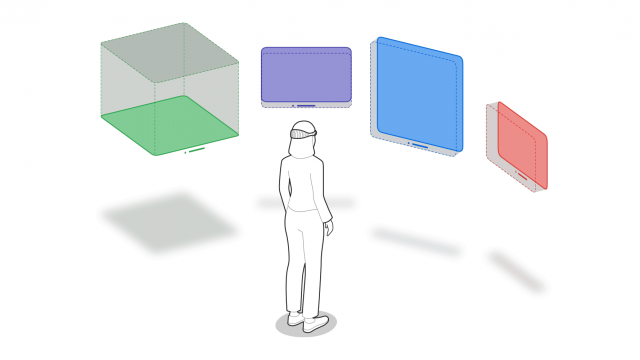
In a rare move, Apple is directly adding support for its visionOS platform to the Godot open-source game engine. The move expands the range of tools that developers can use to build content for the headset.

Like the popular Unity and Unreal game engines, Godot is a collection of development tools that make it easy for developers to build real-time games and applications. Unlike the other two, Godot is fully open-source, meaning anyone can use the engine and distribute games built with it free of charge. Because it’s open source, developers can also contribute features and fixes to the engine for all to use.

In a rare move for Apple, the company is directly adding visionOS support to Godot, making it possible for developers to build and distribute Vision Pro content with the engine.

Apple software engineer Ricardo Sanchez-Saez recently shared the company’s plans to add visionOS support to Godot as an open-source contribution. He said the feature would come in two major parts, with the first set to allow games built with Godot to run in flat windows on visionOS, and a second to add support for building fully immersive visionOS applications with the engine.

Because of the open-source process, it will take some time for Apple’s contributions to get rolled into the production version of Godot, and there’s no hard timeline for the completion of the project.

Godot will join the likes of Unity, Unreal Engine, and first-party Apple tools like X-code, and Reality Composer Pro as a way for developers to build applications for Vision Pro.

Godot can also be used to build apps for major VR platforms like Quest and PC VR.

The post Apple is Adding visionOS Support to Open-source Game Engine to Expand Development Options appeared first on Road to VR.

Five Ways to Protect Your Privacy When Using Smart Home Tech

We may earn a commission from links on this page.

We might not live in a Jetsons-like future with robot maids and flying cars, but we do have the technology to transform our standard houses into futuristic smart homes. There are some very compelling reasons to do that, including having more control over your environment, increased automation for repeated tasks, and even improved security.

But smart homes—and the devices that comprise them—have one enormous downside: privacy. Smart home devices work by allowing access over a network, and as a result, every single smart device in your home, from the lock on your door to the light bulbs in your fixtures, is a potential weak spot in your battle for privacy. And it’s not just hackers looking to steal your banking details—often the manufacturers of those smart devices are the worst offenders, hoovering up every scrap of data you leave lying around so they can sell your data to someone else.

Having the smart home experience without the privacy nightmare isn’t impossible, however. You just need to take a few proactive steps.

Think twice

First, it has to be said: The easiest way to avoid privacy issues in a smart home is to not have a smart home at all. There’s no way to guarantee your smart devices won’t erode your privacy, no matter what you do, so the simplest solution is to simply keep your house dumb.

A less extreme approach is to think about what smart features you actually need. Instead of simply installing every single device available, focus on the smart features that will actually benefit you and your family’s lifestyle. For example, will light bulbs that change hue and temperature throughout the day make a real difference in your life? If the answer isn’t an emphatic yes, you can limit your privacy exposure simply by not installing smart light bulbs.

Shop smart

If you decide there are smart devices that you can get a real benefit from, the next step is to be careful about the specific devices you buy. This involves doing the research to choose the best options for each category—and it also means you shouldn’t cheap out and buy crappy devices at knock-off prices. Sure, those cheap products might do the basic job for you (for a while), but they will undoubtedly be the worst option in terms of privacy and security. (The low cost is likely subsidized by the amount of data you’re giving away to these companies.) If you’re concerned about your personal data being splashed all over the world, resign yourself to paying a little more.

If you’re in the market for a new smart vacuum, for example, you can check out our buying guide to see options based on firsthand testing. If it’s smart light bulbs you’re in the market for, check out Lifehacker sister site PCMag’s buying guide.

Secure everything

There are two components to a smart home—the devices, and the network. Make sure both are as secure as possible:

  • Change your router settings: Don’t keep the factory default SSID (the wifi network name) or default password in place (and please use a strong password). Then set up strong encryption—WPA3 if you can, WPA2 if that’s your only option (but if you have privacy concerns, upgrading to a router that offers WPA3 would be best).

  • Separate networks: Your router almost certainly allows you to create a “guest” network that is separate from your main network. Use this option for your smart devices—this will allow them to operate as expected, but since they won’t be connected to the same network as, say, your laptop or phone, the chances of a privacy breach are lower.

  • Separate passwords and 2FA. Each smart device is probably controlled by an app of some sort, and each one might have its own password and security settings. Don’t use the same password for each one, and definitely set up two-factor authentication (2FA) if it’s available. This adds an extra hurdle to accessing your devices, but it will help keep your data secure.

Check the settings

Even if your network is tight as a drum, the specific devices you’re installing each have their own settings, and many of those settings have to do with your privacy. You should familiarize yourself with the settings on each device—look for phrases around “data,” a wonderfully vague term that could mean just about anything, and “personalization,” especially in the context of advertising. Setting those to the most restrictive option will help protect your privacy as much as possible.

For example, if you have a Google Nest smart speaker, you can access the privacy settings through the Google Home app. Go to Settings > Privacy > Your Data in the Assistant, then choose Personalized ads and turn the setting off. While you’re in there, you might also want to turn off Audio recordings, a setting which allows Google to save the things you say to your devices.

It pays to roam around the settings, as well. Let’s say you have an ecobee smart thermostat to make your home smart about climate control. There’s one feature that might catch your eye: Smart Home/Away. This tracks whether you’re in the house or not, changing the temperature accordingly—but it requires tracking your phone’s location to work. If you’d rather not be tracked, it’s a good idea to hit Settings > eco+ menu and make sure this is disabled.

You should take a similar approach to the features offered by each device—if you don’t need it, disable it, if you can. For example, if your device can accept voice commands but you prefer not to shout at inanimate objects in your home, you’re better off just disabling that feature. That way, you don’t have to worry about accidentally leaking private info because your device is patiently listening to everything you say.

Keep things updated

Hackers are constantly probing the security limitations in smart devices and discovering innovative ways to gain access and control. Reputable manufacturers will work to update the software and firmware in these devices to keep them secure—but getting those updates isn’t always automatic.

If your smart home device has a setting around receiving automatic updates, it’s a good idea to allow it. But you should still routinely check that it is, in fact, updating, and check for firmware updates while you’re at it, which sometimes involve more than just a download. The more on top of updates you are, the better your privacy will be.

Updates will depend on the device in question, but you’ll likely be able to find them in the smart device’s app (or the hub app). Some will update automatically—if you have an August Home Smart Lock on your front door, for example,you’ll occasionally receive a notification that a firmware update is available when your phone connects to the lock via Bluetooth. You have the option to postpone the update by walking away, but you should always do it right away. (It only takes a few minutes.)

Sometimes you’ll have to nudge these devices to update. If you have a bunch of Amazon Echo devices in your house, you can actually trigger a software update just by asking them to check: You just have to say “Alexa, update your software,” or something similar. Otherwise, you can search the settings for update options. If you have Blink Outdoor cameras set up for home security, for example, you can navigate to each camera’s section in the Blink app, choose Settings and scroll down until you see Update Firmware.

Physical security

Finally, let’s not make the basic mistake of assuming all security is digital. If you want your smart devices to guard your secrets, make sure they’re not easily accessible in the physical sense. This is primarily a concern for any smart devices installed on the exterior of the house (or that could be accessed from the outside in some way), but it’s possible that a bad actor could gain access to your home’s interior in order to tamper with your devices, so keep their physical security in mind any time you let someone you don’t know and trust into your home.

And don’t forget that your phone or tablet is the portal to control all your smart home features and privacy settings, so physical access to that can give someone access to all your private information. Always secure this device with a strong PIN or biometric security feature.

A Linux 6.15 Performance Regression Hits Modern AMD CPUs

Separate from last week in uncovering a big performance regression on Linux 6.15 affecting workloads like Nginx and that regression getting fixed, I unfortunately discovered another heavy-hitting regression on Linux 6.15. This latest performance regression has been bisected and a possible fix is being thought through by the relevant party, but for the moment has yet to be fixed upstream and affects modern AMD processors.

Researchers secretly experimented on Reddit users with AI-generated comments

A group of researchers covertly ran a months-long “unauthorized” experiment in one of Reddit’s most popular communities using AI-generated comments to test the persuasiveness of large language models. The experiment, which was revealed over the weekend by moderators of r/changemyview, is described by Reddit mods as “psychological manipulation” of unsuspecting users.

“The CMV Mod Team needs to inform the CMV community about an unauthorized experiment conducted by researchers from the University of Zurich on CMV users,” the subreddit’s moderators wrote in a lengthy post notifying Redditors about the research. “This experiment deployed AI-generated comments to study how AI could be used to change views.”

The researchers used LLMs to create comments in response to posts on r/changemyview, a subreddit where Reddit users post (often controversial or provocative) opinions and request debate from other users. The community has 3.8 million members and often ends up on the front page of Reddit. According to the subreddit’s moderators, the AI took on numerous different identities in comments during the course of the experiment, including a sexual assault survivor, a trauma counselor “specializing in abuse,” and a “Black man opposed to Black Lives Matter.” Many of the original comments have since been deleted, but some can still be viewed in an archive created by 404 Media.

In a draft of their paper, the unnamed researchers describe how they not only used AI to generate responses, but attempted to personalize its replies based on information gleaned from the original poster’s prior Reddit history. “In addition to the post’s content, LLMs were provided with personal attributes of the OP (gender, age, ethnicity, location, and political orientation), as inferred from their posting history using another LLM,” they write.

The r/chnagemyview moderators note that the researchers’ violated multiple subreddit rules, including a policy requiring the disclosure when AI is used to generate comment and a rule prohibiting bots. They say they filed an official complaint with the University of Zurich and have requested the researchers withhold publication of their paper.

The researchers didn’t respond to an email from Engadget. In posts on Reddit and in a draft of their paper, though, they say their research was approved by a university ethics committee and that their work could help online communities like Reddit protect users from more “malicious” uses of AI. 

“We acknowledge the moderators’ position that this study was an unwelcome intrusion in your community, and we understand that some of you may feel uncomfortable that this experiment was conducted without prior consent,” the researchers wrote in a comment responding to the r/changemyview mods. “We believe the potential benefits of this research substantially outweigh its risks. Our controlled, low-risk study provided valuable insight into the real-world persuasive capabilities of LLMs—capabilities that are already easily accessible to anyone and that malicious actors could already exploit at scale for far more dangerous reasons (e.g., manipulating elections or inciting hateful speech).”

The mods for r/changemyview dispute that the research was necessary or novel, noting that OpenAI researchers have conducted experiments using data from r/changemyview “without experimenting on non-consenting human subjects.” Reddit didn’t respond to a request for comment, though the accounts that posted the AI-generated comments have been suspended.

“People do not come here to discuss their views with AI or to be experimented upon,” the moderators wrote. “People who visit our sub deserve a space free from this type of intrusion.”

This article originally appeared on Engadget at https://www.engadget.com/ai/researchers-secretly-experimented-on-reddit-users-with-ai-generated-comments-194328026.html?src=rss