A bonus from the shingles vaccine: Dementia protection?

A study released on Wednesday finds that a live-virus vaccine that limits shingles symptoms was associated with a drop in the risk for dementia when it was introduced. The work took advantage of the fact that the National Health Service Wales made the vaccine available with a very specific age limit, essentially creating two populations, vaccinated and unvaccinated, separated by a single date. And these populations showed a sharp divide in how often they were diagnosed with dementia, despite having little in the way of other differences in health issues or treatments.

What a day

This study didn’t come out of nowhere. There have been a number of hints recently that members of the herpesvirus family that can infect nerve cells are associated with dementia. That group includes Varicella zoster, the virus that causes both chicken pox and—potentially many years after— shingles, an extremely painful rash. And over the past couple of years, observational studies have suggested that the vaccine against shingles may have a protective effect.

But it’s extremely difficult to do a clinical trial given that the onset of dementia may happen decades after most people first receive the shingles vaccine. That’s why the use of NHS Wales data was critical. When the first attenuated virus vaccine for shingles became available, it was offered to a subset of the Welsh population. Those who were born on or after September 2, 1933, were eligible to receive the vaccine. Anyone older than that was permanently ineligible.

Read full article

Comments

Meta and UFC Sign Deal to Tighten Partnership Across All Meta Platforms, Including Quest & Smart Glasses

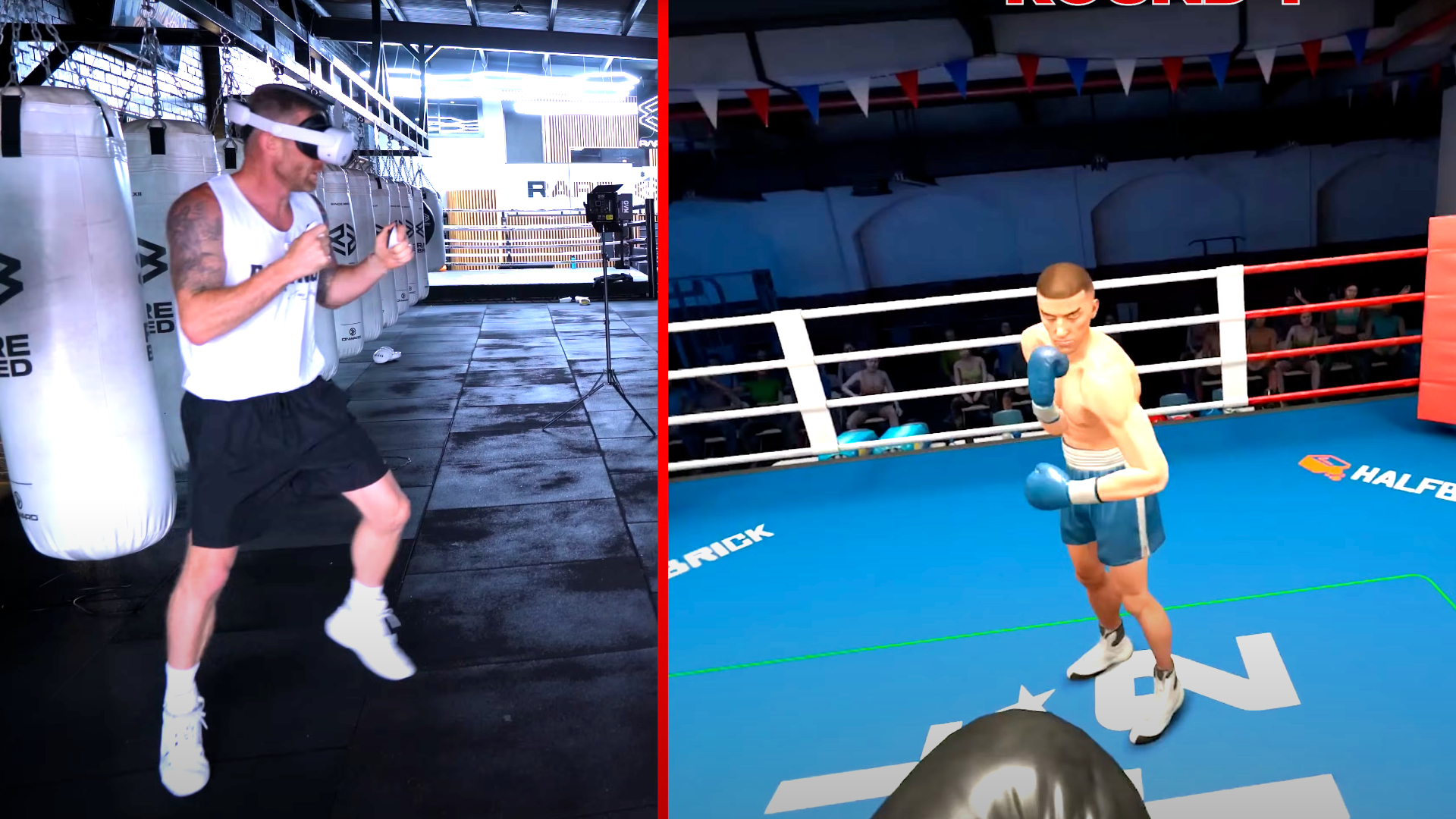
Meta has signed a multiyear deal with the Ultimate Fighting Championship (UFC) to become its ‘Official Fan Technology Partner’, which means we could see even tighter integration of the organization’s mixed martial arts matches across Quest and the companies other platforms.

The UFC says it’s set to leverage Meta’s “leading technologies to deliver unprecedented engagement with hundreds of millions of UFC fans around the world,” which includes Meta AI, Meta Glasses, Meta Quest, Facebook, Instagram, WhatsApp and Threads.

Additionally, the UFC says Meta will become its ‘Official AI Glasses Partner’, and will “work with UFC to creatively use their groundbreaking AI glasses in compelling ways at UFC events.”

“I’ve had a lot of great partners over the years that have helped us grow this sport, but Mark and his team at Meta are going to do things that will blow away UFC fans,” said UFC President and CEO Dana White. “Meta has the greatest minds in tech and they are going to take fan engagement to the next level. We’ve already started to work on some innovations with Meta around a new fighter rankings system that I’ll be sharing soon. The next few years will be an absolute game changer for fans of this sport.”

Priscilla Chan (left) and Mark Zuckerbeg (right) at a UFC match in March | Image courtesy Mark Zuckerberg

The matchup makes a good deal of sense, as Meta founder and CEO Mark Zuckerberg has become a fan of the sport over the years, even engaging in a number of Jiu Jitsu competitions.

“I love this sport and I’m looking forward to working with the UFC to let fans experience it in new ways,” said Zuckerberg.

White also joined Meta’s board of directors in January alongside John Elkann, CEO of investment firm Exor, and tech investor Charlie Songhurst.

In terms of what it brings to Quest, the details are still thin. While not specific to XR as such, Meta says it’s slated to integrate UFC assets “with extensive activations in all Pay-Per-Views and Fight Nights, including brand placement in the world-famous Octagon, numerous broadcast features, and creative in-arena fan experiences.”

The deal is also set to include Meta’s social platform Threads featuring exclusive original UFC content.

In 2022, the UFC first partnered with Meta to bring 180-degree Fight Pass livestreams to Horizon Worlds, Quest’s social VR platform, as well as the Xtadium app. With the new partnership, it’s possible the two are looking to expand and evolve licensing across Quest, which could give UFC matches even greater visibility on the platform.

The companies say more details about the partnership are slated to arrive soon.

The post Meta and UFC Sign Deal to Tighten Partnership Across All Meta Platforms, Including Quest & Smart Glasses appeared first on Road to VR.

All the Gardening Tasks to Tackle in April

The vernal equinox, marking the first day of spring, occurs in late March every year. Sometime around then, most planting zones encounter what is known as the last frost date, which is the experts’ best guess, based on averages, of when your last hard freeze will be. The cherry, plum, and peach blossoms are exploding on trees all around us and tulips are popping up from the ground. There are all kinds of markers that gardening season has arrived, but the most prominent one is the return of people to working on their front yards on sunny days, which should be happening now with some regularity. It is finally full steam ahead for this year, and there are tons of things you can be doing outside.

Cherry blossoms
Cherry blossoms
Credit: Amanda Blum

Document the spring bloom

There’s an order to the way plants bloom in early spring: the crocus, the daffodils, then the tulips, the irises, and the peonies. Each year I try to take pictures every few days from the same angles in the yard so I can document where I might need more bulbs. You’ll forget by the time fall rolls around and it’s time to plant more. This pictorial documentation can help you visualize any bulb losses you have year to year, as well.

My tulips in bloom
Tulips in bloom
Credit: Amanda Blum

Get your trellises clean and ready

Based on the plans I made for the garden over the winter, I now know where I’ll need plant supports for my tomatoes, peppers, beans, and cucumbers. I begin getting those trellises I have out of storage and sterilizing them, and I make plans to build or order any new trellises I’ll need.

Weed and dress with compost

With the nighttime temperatures starting to remain over 40 degrees, it’s time to clean out your beds and get them ready for planting. This means doing a thorough weeding, as best you can, and then top with compost. Clean away debris in the paths and beds, because that is slug food and an invitation for disease and pests. Check in on your own compost bins; they could probably use a good turn.

Check in on your flower perennials

Irises that need dividing
Credit: Amanda Blum

First, take an inventory of the perennials you have, and see if any need dividing. Plants grow into the space around them, but if they’ve run out of space, you can break them up, and either relocate these new plants or trade them for others. Irises and daylilies are an excellent example; hostas are another. This is also how you’ll take inventory of what did not survive this year. With the weather becoming more extreme year to year, even perennials can succumb to weather events.

Perennials have started to come out of hibernation in the greenhouses at your local nursery, so you can begin to replace any that will need it. Buying now, when plants are still small, will help save money.

Grab some early flowering annuals

It’s still early for most varieties of flowers, but pansies love the cold. At this point, begin checking the nurseries for snapdragons, sweet peas, petunias, and other early flowering plants. It’s a good time to get your hanging baskets and window boxes filled, too, so they’ll be in full bloom come May. In fact, many groceries and nurseries will help you fill your planters if you bring them in; some even plan events around doing so. 

Don’t forget edibles

Peas coming up from seed
Credit: Amanda Blum

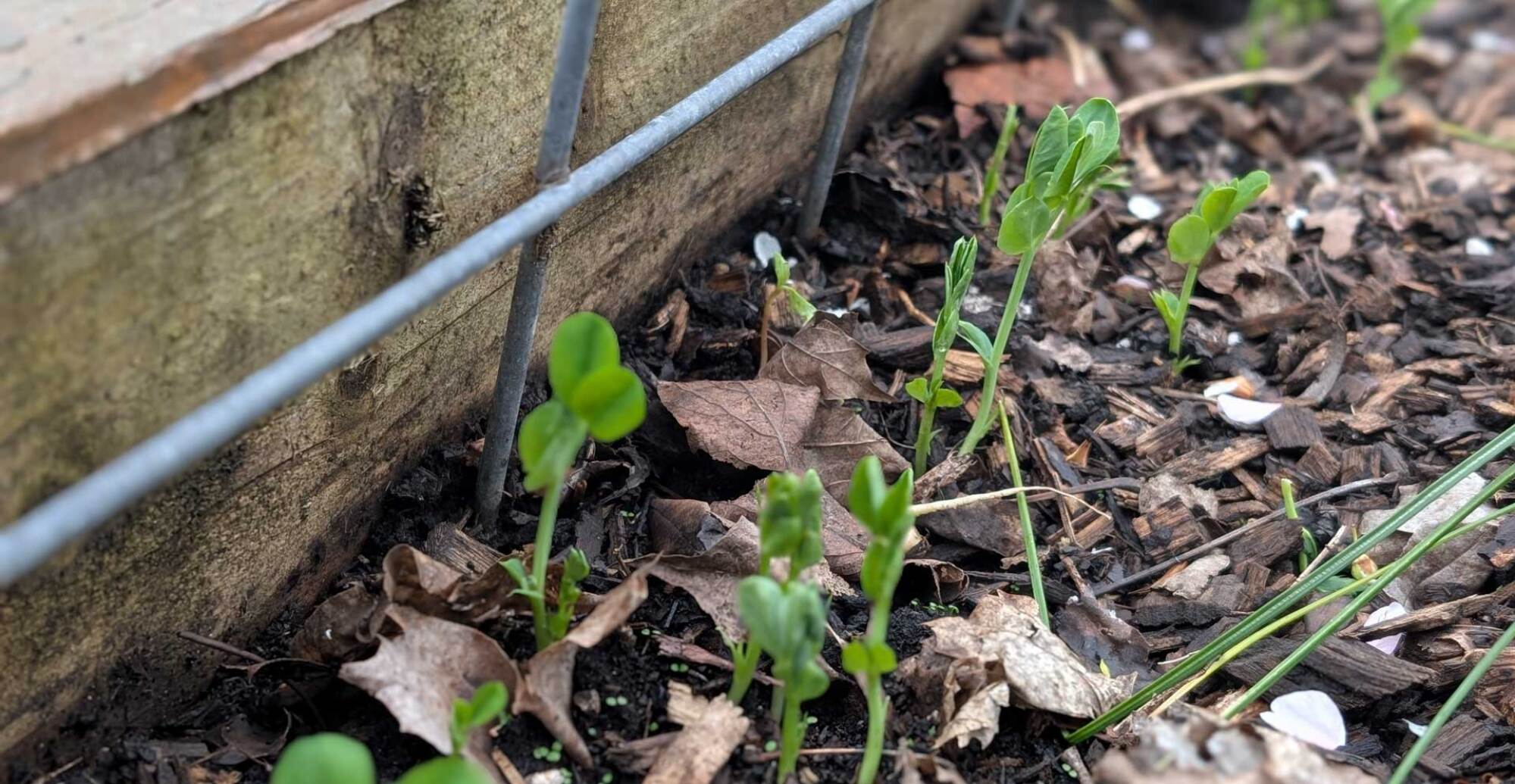
If you’ve not yet planted peas, it’s go time. They can be direct sown outside and need to be grown against some support. This time of year, I grow shelling pea and sugar snaps on tall vines that climb arches in my yard. I also take stock of my strawberry plants, thinning them so they’re spaced at least six inches apart. Give away extras, or ask your neighbors for their extras if you need them.

I look for my perennial edibles to make sure they’ve survived the winter. The horseradish has been staking it’s claim, poking up leaves from its usual plot. I’ve already replaced a few artichokes that didn’t make it through the last ice storm. The first tiny stalks of asparagus made an appearance this week, which means in a few weeks we’ll be drowning in spears. Now is the time to plant more asparagus crowns, too. I try to add a few crowns each year—they’re usually a dollar or two at the nursery, and in this way, you can establish them in more places. I’ve been waiting with bated breath to see if all the rhubarb I planted last year will return, since last year I lost my fifteen-year-old specimen, but I saw the first leaves begin to poke out of the ground this week. If you need to replace yours, you’ll find rhubarb at your nursery.

Fiddleheads and ramps (which, as a reminder, you can grow at home) should be emerging. It’s also the time to plant your summer potatoes: Your nursery has potato starts, but if you’ve got grocery store potatoes that have sprouted at home, those can go right into the ground.

Spring vegetables planted
carrots, radishes, beets and lettuce planted two weeks ago
Credit: Amanda Blum

I’ve already planted a few rounds of radishes, beets, carrots, and lettuce in the garden, and will continue doing so every few weeks through summer. The spring rain is excellent for helping these seeds I direct sow to germinate.

You can continue to plant spring edibles like spinach, kale, chard, and mustard greens, but if you don’t get broccoli and cauliflower early in the month, you’ll miss your window. These are short crops, but you want them to finish and harvest before you need the room for summer crops like tomatoes. 

You also want to get three long crops in now, starting with parsnips, which need 180 days to grow. Plant them from seed now, and you’ll have enough of this root vegetable to cook all fall. Brussels sprouts also need that long summer to grow if they’re going to be ready for Thanksgiving. Finally, your nursery will have all your onion sets to get into the ground. Keeper onions and leeks need the season to be ready for harvest in late summer or early fall.

Inspect your systems

Irrigation system
Check your water systems
Credit: Amanda Blum

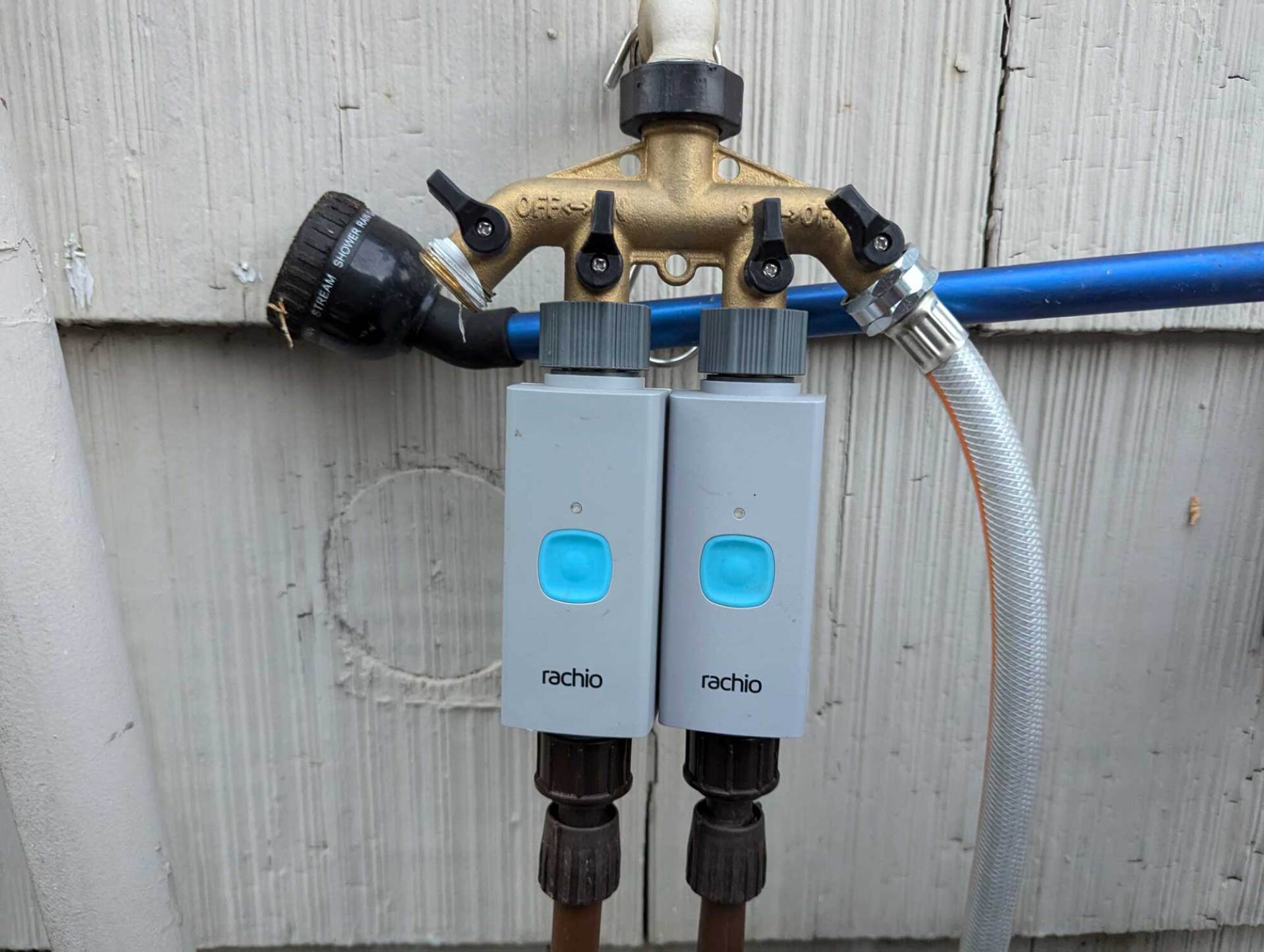
It’s also time to turn the irrigation and sprinkler systems back on for the year, so schedule any inspections like backflow testing. Once the water is on, test your controller and look for signs of any leaks in the lines. You can safely reconnect hoses, and put out manual timers if you use them. Be sure to give all your tools a good spray down with vinegar or bleach to sterilize them, and remember to keep a spray bottle with the same on hand for your pruning shears as you move about the garden. Spray them between plants so you are not transferring disease.

Microsoft Pulls Back on Data Centers From Chicago To Jakarta

Microsoft has pulled back on data center projects around the world, suggesting the company is taking a harder look at its plans to build the server farms powering artificial intelligence and the cloud. From a report: The software company has recently halted talks for, or delayed development of, sites in Indonesia, the UK, Australia, Illinois, North Dakota and Wisconsin, according to people familiar with the situation. Microsoft is widely seen as a leader in commercializing AI services, largely thanks to its close partnership with OpenAI. Investors closely track Microsoft’s spending plans to get a sense of long-term customer demand for cloud and AI services.

It’s hard to know how much of the company’s data center pullback reflects expectations of diminished demand versus temporary construction challenges, such as shortages of power and building materials. Some investors have interpreted signs of retrenchment as an indication that projected purchases of AI services don’t justify Microsoft’s massive outlays on server farms. Those concerns have weighed on global tech stocks in recent weeks, particularly chipmakers like Nvidia which suck up a significant share of data center budgets.


Read more of this story at Slashdot.

Explaining MicroSD Express cards and why you should care about them

Among the changes mentioned in yesterday’s Nintendo Switch 2 presentation was a note that the new console doesn’t just support MicroSD Express cards for augmenting the device’s 256GB of internal storage, but it requires MicroSD Express. Whatever plentiful, cheap microSD card you’re using in your current Switch, including Sandisk’s Nintendo-branded ones, can’t migrate over to your Switch 2 alongside all your Switch 1 games.

MicroSD Express, explained

Why is regular-old MicroSD no longer good enough? It all comes down to speed.

Most run-of-the-mill SD and microSD cards you can buy today are using some version of the Ultra High Speed (UHS) standard. Designed to augment the default speed (12.5MB/s) and high speed (25MB/s) from the earliest versions of the SD card standard, the three UHS versions enable data transfers of up to 624MB/s.

Read full article

Comments

These Are The Biggest Skywatching Events in April

Like the first few months of the year, April is a relatively quiet month for sky watching, but it does bring one of the oldest meteor showers and a micromoon.

April 13: Pink Moon

April’s full moon is known as the Pink Moon, so named for the color of ground phlox, a wildflower that blooms during the month—though the moon itself doesn’t actually appear pink in the sky. The Pink Moon is also a micromoon, meaning it occurs at that furthest point from Earth. The opposite of a supermoon, it will look about 5% smaller in diameter than usual.

April 21: Lyrid meteor shower peak

The main event in April is the Lyrid meteor shower. It starts mid-month (around April 17) and will peak late on the evening of April 21 and into the early morning hours of April 22. The Lyrids are the result of debris from the Comet Thatcher, which was first observed in 1861. Typically, viewers can expect to see around 18 meteors per hour, though the shower can bring up to 100, according to NASA.

This year, the moon will be about 40% full, which may interfere with visibility. The Lyrids are best seen in the Northern Hemisphere after the moon sets but before dawn—and as always, areas with minimal light pollution are best for viewing.

Planetary events in April

Mars, Jupiter, and Uranus will be visible in the evening sky in April; Saturn, Mercury, Venus, and Neptune will appear in the morning. The timing and placement varies slightly between the Northern and Southern hemispheres. The best Mercury viewing of the year will be possible on April 21, according to Starwalk, especially for those in the Southern hemisphere.

And on April 25, the crescent moon will align with Venus and Saturn just before sunrise to create a triangle that looks like a smile.

Warning: These Photos Of An AI Farm Powered By RTX 5090 GPUs Are Triggering

Warning: These Photos Of An AI Farm Powered By RTX 5090 GPUs Are Triggering
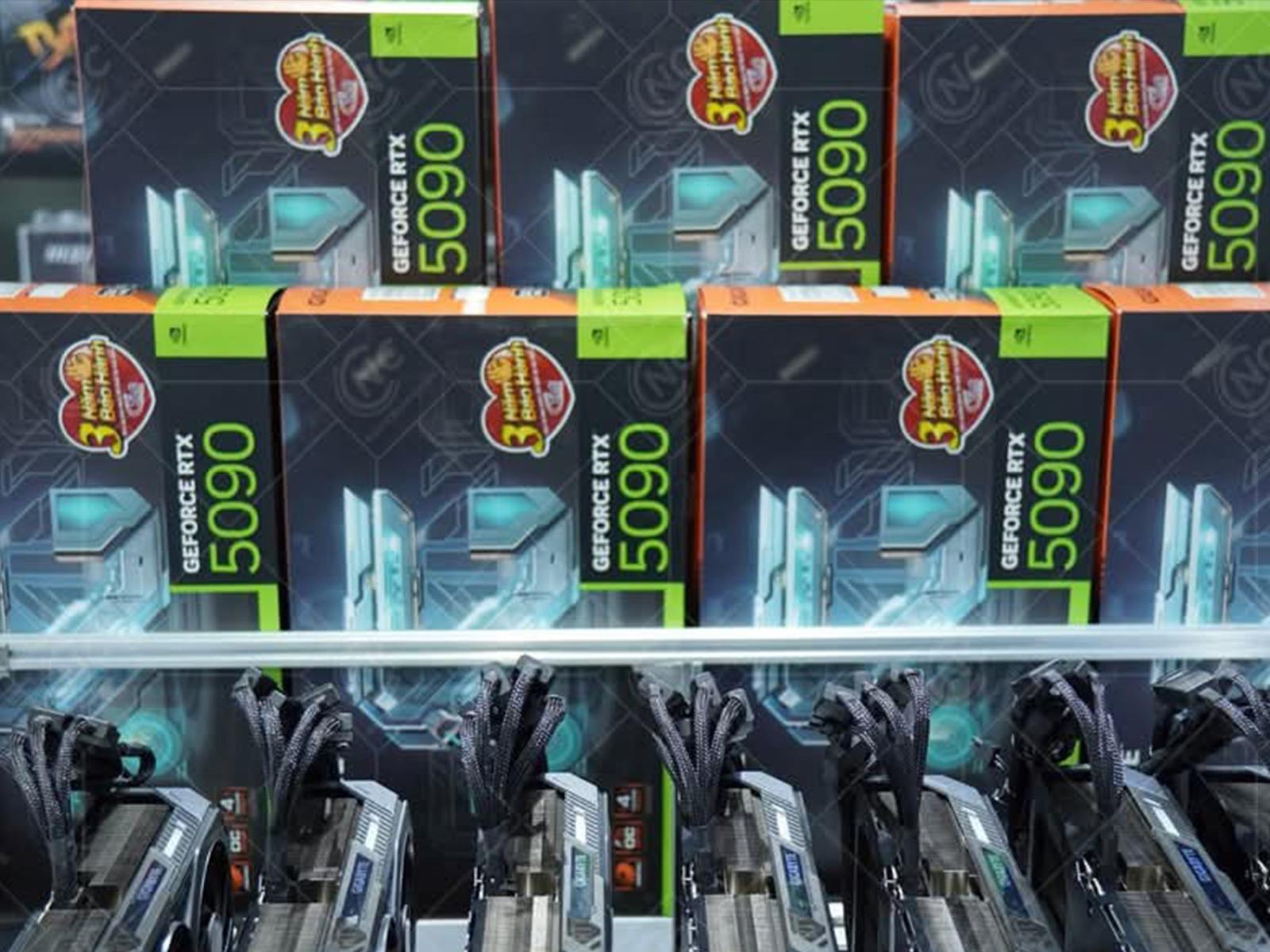
The NVIDIA GeForce RTX 5090 has become rare and difficult to get, but certainly not for everyone as an AI farm in Vietnam shows us. With a staggering amount of this rarified flagship GPU on display, you”ll be immediately transported back in time to when we used to see crypto mining farms during a similar GPU shortage years ago. This time,

Nintendo Switch 2 Preorder Guide: Best Strategies For Beating Scalpers And Bots

Nintendo Switch 2 Preorder Guide: Best Strategies For Beating Scalpers And Bots
Nintendo gave its upcoming Switch 2 handheld console a proper reveal yesterday during a special Nintendo Direct event, and we’ve already covered several of the hardware highlights and extensive catalog of games that are coming to the next-gen game system. It also revealed preorder and launch date details, but will you actually be able to snag

‘Yassou’ Makes Veggie-Forward Greek Cooking Accessible

We may earn a commission from links on this page.

Welcome to “Cookbook of the Week.” This is a series where I highlight cookbooks that are unique, easy to use, or just special to me. While finding a particular recipe online serves a quick purpose, flipping through a truly excellent cookbook has a magic all its own. 

Every time I see a newly budding tree or a daffodil leaping out of a scruffy patch of grass, it brings me a fresh moment of cheer. Spring is coming to New York. That means sun and spring fashion, but mostly I’m excited for the variety of veggies that’ll be available. I’m choosing to celebrate Spring’s approach with an appropriately veggie-forward Cookbook of the Week: Yassou.

About the book

Yassou is a Mediterranean cookbook, specifically focusing on Greek dishes, written by Shaily Lipa. This cookbook is brand new; just published in March. Lipa gives the reader a teeny history lesson on how Greek cuisine developed and other cultures that influenced it, and then quickly jumps into recipes.

Woven with beautiful photography, you’ll get lost flipping through sections like Mezes and Starters, Stuffed Vegetables, and (my favorite section) Patties and Savory Pastries. This cookbook has classic recipes you’ve probably tried at restaurants, like moussaka or stuffed grape leaves, and new ones you’ve never heard of but are incredibly tempting, like kolokithokeftedes (fried zucchini and feta balls).  

I don’t usually enjoy historical interludes in cookbooks (I’m very recipe focused) but Lipa includes brief informational sections that focus on specific ingredients that are indispensable to Greek cooking, like The Cheeses of Greece, and The Path of the Olive. These sections give welcome insight into the culture, and whets your palate for the recipes to come.

A great cookbook for veggie enthusiasts who don’t mind branching out

You like vegetables. You’re interested in eating them often. However, you still like to have fun. (You know what I mean—raw kale salad isn’t fun. I’ll eat it, but “fun” is not an emotion I experience when eating it.) Melitzanosalata, aka Eggplant Spread, drizzled with olive oil and served with pita bread is fun! 

If you want a cookbook with lots of delicious, vegetable-centric options but you don’t want to feel like you live off of salad alone, Yassou is for you. Sure, it’s a Mediterranean diet, but there is no fear of bread, sugar, oil, or pastry. There are fresh salads for sure, but they’re not the only venue for vegetables. There are numerous styles of cooking with produce, putting them in the background, foreground, and slightly off-stage. Zucchinis are shredded and shaped into fritters; crushed tomatoes create a simmering blanket for shrimp; onion and peppers chargrill on a skewer with juicy hunks of lamb. 

Many of the recipes rely on plants, but you don’t have to commit. Some days you just want bread and cheese and there are recipes for those moments in Yassou too. There are pasta dishes, fish dishes, bread recipes, and oh, the cheese. I have truly enjoyed a free pass this week to eat all the feta I want. 

The dishes I made this week

One thing I appreciate about Yassou is that you can jump into these recipes with whatever cooking skill level you exist at. It’s written simply, and the instructions are clear and easy to follow. There is no preamble about specialty cookware or how to replace ingredients you can’t find. Most of the ingredients are things that are common to the Western grocery store. I didn’t have to sift for very long to find recipes I was able to do because I didn’t have to consider making any special trips or ordering unusual ingredients.

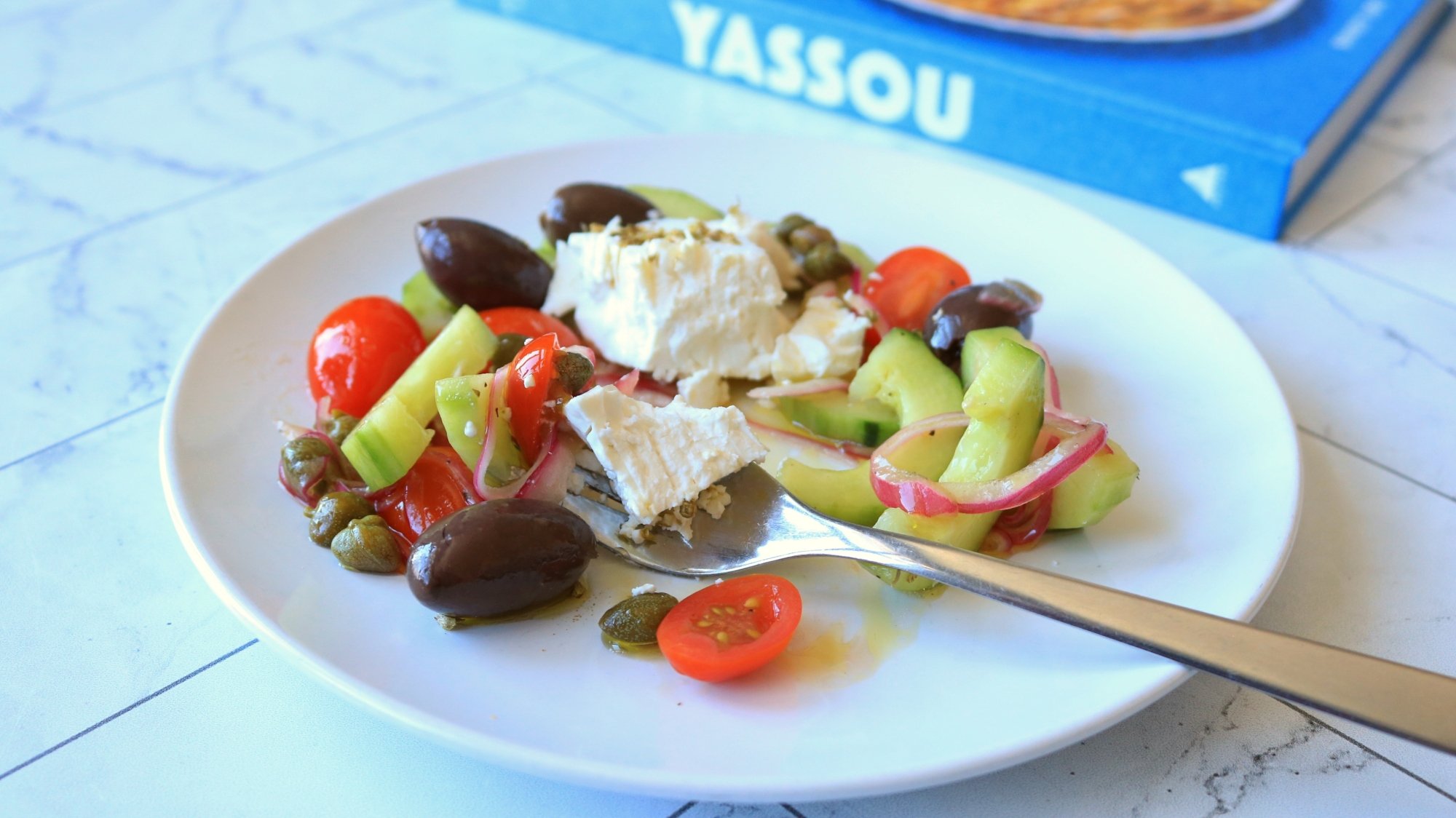
A Greek salad on a counter top.

Credit: Allie Chanthorn Reinmann

I decided to make Kassiopita (Greek flatbread) and Horiatiki Salata (Greek Salad). Yes, I essentially made Greek Olive Garden unlimited salad and breadsticks, but I don’t care what you think. It’s always been a great deal. Plus, these recipes made for a fabulous lunch.

On the surface, Horiatiki Salata looks like any Greek salad you might have had before—kalamata olives, cucumbers, and feta among other ingredients with a simple dressing. But there are good and bad versions of this salad being made, often in New Jersey diners and pizzerias. This version is perfectly crunchy, briny, and herbaceous with as much creamy, salty feta as you please. I knew I could count on this salad recipe as soon as I saw that the first move was thinly slicing the red onion and pickling it in the oil and vinegar dressing. This should be the treatment of all freshly sliced onions in salad. 

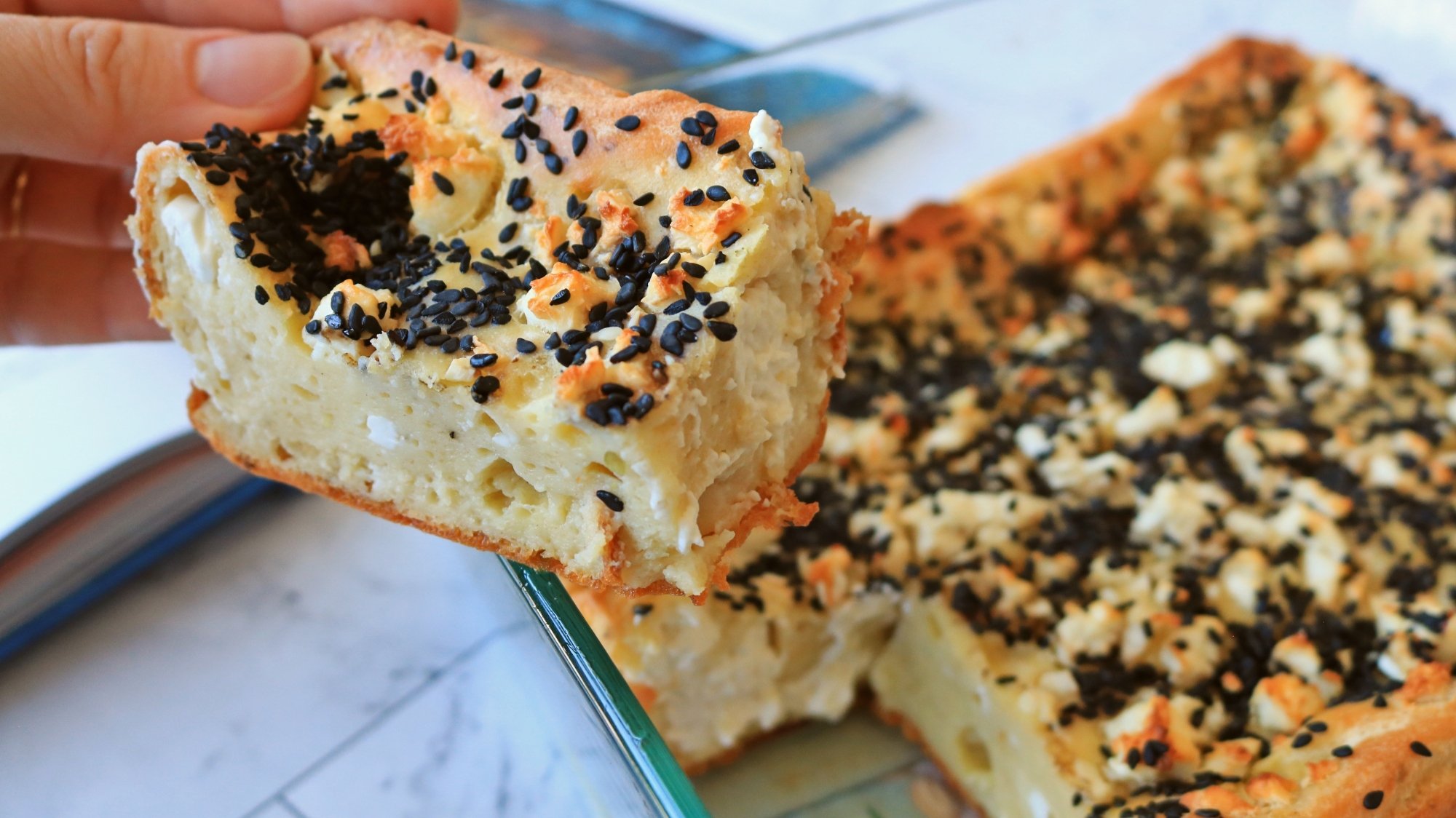
A hand holding a slice of Greek flatbread.

Credit: Allie Chanthorn Reinmann

The Kassiopita, entitled Greek Flatbread in the cookbook, might become something I make quite often. It’s easy to make, loaded with feta, and cooks up quite dramatically in the oven. The batter is made with a blend of yogurt, egg, and flour, so it has the texture of a giant popover, or Dutch Baby. It’s seasoned lightly and then you mix crumbled creamy feta into the batter. The mixture cooks in a casserole dish with a quarter-cup of olive oil in it.

I watched the bread bubble and fry as it puffed up in the oven, and broiled it for the last minute and a half to lightly brown the surface. I ate a piece while it was still warm (too hot actually, but I can’t be stopped), and the crumbled feta made decadent melty, tart pockets of cheese dispersed in the eggy bread. Eat it with salad or eat it solo—I can vouch for both. I made the bread in the instructed size dish, but if you wanted the bread to be thinner then you could easily use a larger pan and reduce the cooking time.

How to buy it

Yassou is available as a hardcover, or as an e-book for a reasonable price. I highly suggest taking a jaunt to your nearest big box book shops or local independent bookstores to see if they have it on their new or featured cookbook displays. And if it’s not on their shelves, ask if they can order it to their location (sometimes for no shipping fee). 

Samsung turns to China to boost its ailing semiconductor division

Samsung has turned to Chinese technology groups to prop up its ailing semiconductor division, as it struggles to secure big US customers despite investing tens of billions of dollars in its American manufacturing facilities.

The South Korean electronics group revealed last month that the value of its exports to China jumped 54 percent between 2023 and 2024, as Chinese companies rush to secure stockpiles of advanced artificial intelligence chips in the face of increasingly restrictive US export controls.

In one previously unreported deal, Samsung last year sold more than three years’ supply of logic dies—a key component in manufacturing AI chips—to Kunlun, the semiconductor design subsidiary of Chinese tech group Baidu, according to people familiar with the matter.

Read full article

Comments

Will Trump’s New Tariffs Drive Up Headset Prices In The US?

With a 54% tariff set to apply to Chinese-made goods and 46% for Vietnam, will the price of VR headsets in the US soon increase?

Enacted by President Trump via executive order yesterday, the new import tariffs are set to take effect from April 9, next Wednesday. They apply to goods manufactured in these countries, not just sold by companies from them. And while there are some exemptions, VR headsets aren’t on that list.

Most headsets today, including Apple Vision Pro, Meta Quest, PlayStation VR2, and Pico, are made in either China, Vietnam, or both. While Trump had already placed a 20% tariff on Chinese imports in recent months, headset companies could plausibly absorb these added costs, and he hadn’t yet applied a tariff to electronics made in Vietnam.

But with tariffs moving to 54% and 46% for China and Vietnam respectively, it seems very unlikely that most headset companies will be able to avoid increasing prices.

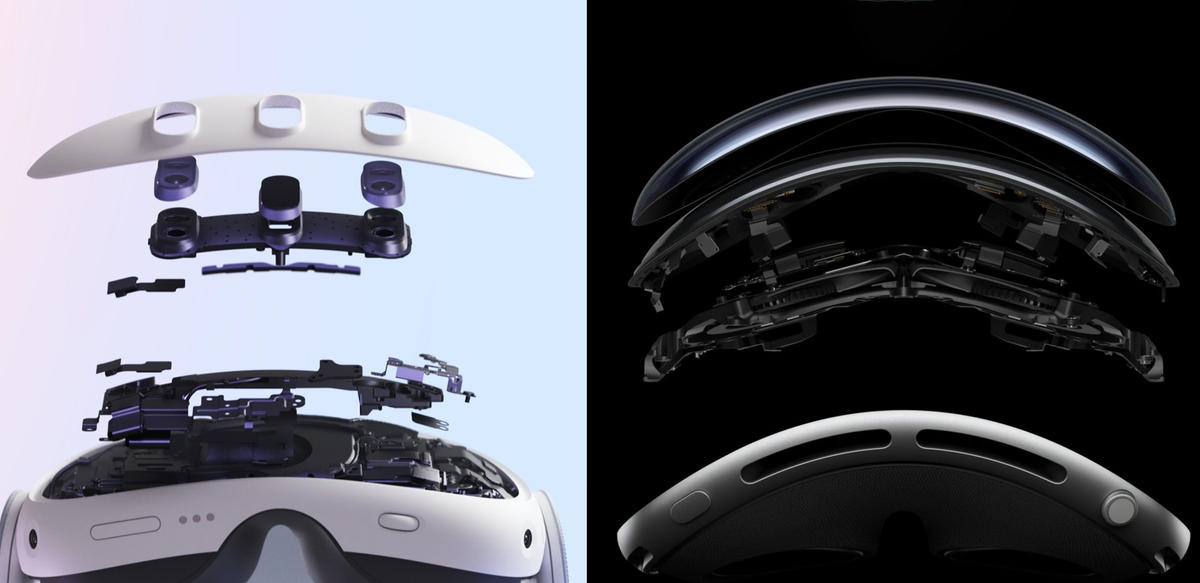
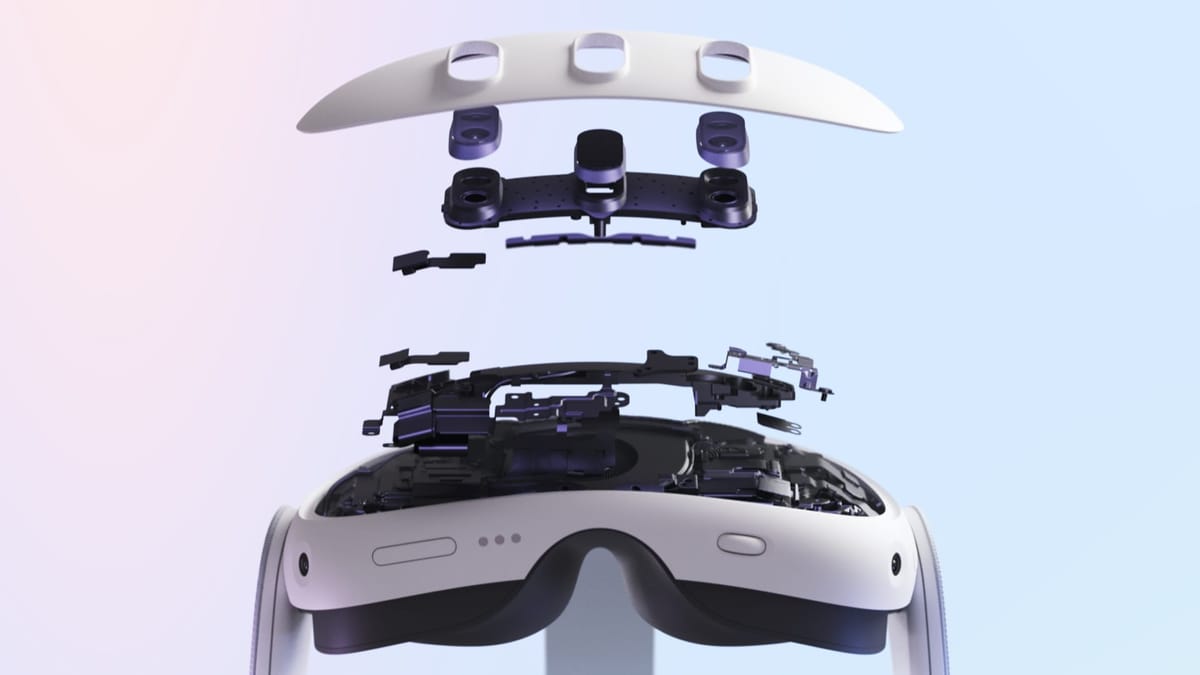
Meta Quest 3 & Apple Vision Pro Production Costs Estimated
A supply chain analysis firm estimated the costs of each component in Meta Quest 3 and Apple Vision Pro.
UploadVRDavid Heaney

For example, analyst estimates placed the cost to Meta of each Quest 3 at around $430, excluding R&D and other indirect costs, and thus the new tariffs should bring this to around $650, significantly higher than its current $500 price.

Could we soon see a $700 Quest 3, $500 Quest 3S, and PlayStation VR2 move back to $550?

Even the US-assembled Bigscreen Beyond 2 would feel the heat from the tariffs. Most of its components, such as its expensive micro-OLED displays imported from China, would be affected. And this cost would almost certainly need to be passed on to the buyer.

Meta has been working on moving around half of Quest production to Vietnam, to avoid the tariffs Trump was expected to place on China. But with Vietnam hit too and there being only an 8% difference, this diversification won’t make a meaningful difference.

Not every company will necessarily need to increase prices, though. The same analyst estimates place the cost to Apple of each Vision Pro at around $1700, also excluding R&D and other indirect costs, and thus Apple could still be making an acceptable profit even if the cost soon rises to around $2500.

Meta Moving Some Quest Production To Vietnam To Mitigate China Tariffs
Meta is moving up to half of Quest production to Vietnam as a hedge against a possible trade war between the US and China.
UploadVRDavid Heaney

Consumer hardware companies typically build up large stock pools in each country they sell in, so we’re not expecting to see Quest and PS VR2 prices suddenly jump next week. But eventually the US stock of these headsets will run out. And when new units are coming in at around 50% higher cost, how could the current US prices hold?

Of course, it’s possible that President Trump scales back or cancels these tariffs entirely by then. Trump’s administration has described tariffs as a mechanism of putting pressure on countries to make certain policy changes, and perhaps he decides his aims have been satisfied by then. The rapidly shifting global political landscape makes definitive predictions here impossible, so we’ll be keeping a close eye on the situation over the coming weeks and months.

Bang & Olufsen’s new Beosound Balance speaker model comes with a marble plinth

What do modern speakers need? Good sound quality? As little distortion as possible? Longevity? Well, yes. Plus, according to Bang & Olufsen, marble plinths. Bang & Olufsen is debuting a partnership with Italian marble and granite company Antolini at Milan Design Week. The Beosound Balance Natura speaker features a sculptural base from Antolini that the audio company says elevates the device to its optimal height. Apparently, the plinth isn’t just there for aesthetic — it’s a functional audio element.

Let’s face it, though: You wouldn’t buy a speaker with a marble stand unless you wanted that marble pedestal. And that is why they’re making the model available with various Antolini stones. You can get it with natural quartz, as well as with petrified wood and fossilized wood, if you’re looking for something with earthy colors. The options have different translucency and color depth, but one common feature is the anodized aluminum ring that serves as the transition between the plinth and the bottom of the speaker. 

In addition to the Natura version of the Beosound Balance speaker, Bang & Olufsen is also presenting a Beovision Theatre 55-inch TV and a pair of Beolab 28 speakers customized with Antolini’s Amazon quartite at Milan Design Week. All the products it’s showcasing during the event are made to order with prices available upon request, which says all you need to know about its price range, especially since the basic Beosound Balance isn’t cheap to begin with and will set you back $3,300.

This article originally appeared on Engadget at https://www.engadget.com/audio/speakers/bang–olufsens-new-beosound-balance-speaker-model-comes-with-a-marble-plinth-131555070.html?src=rss

Nintendo Switch 2 hands-on: No OLED, no problem

The original Switch started a revolution when it combined the portability of handhelds with the ability to play games on your TV at home like a traditional console. But with the Switch 2, even though it’s physically bigger, it feels like a sleeker, faster and more refined take on its predecessor — to the point that Nintendo should have called it the Super Switch (which apparently almost happened). And after getting a chance to try it out, I’m sold on its abilities, even with its significantly higher starting price of $450.

Design and display: No OLED, no problem

The Switch 2 has the same basic shape and layout as the original, including its signature detachable Joy-Con. But it looks more polished all around, thanks to tapered edges and slimmer bezels. Nintendo also increased the size of its joystick caps and the face buttons on the left controller, though the latter still doesn’t feel quite like a traditional D-pad.

Here is how the size of the Switch 2 compares to the original model.
Sam Rutherford for Engadget

That said, the biggest upgrade is its larger 7.9-inch 1080p LCD display, which now supports a 120Hz refresh rate with VRR and high dynamic range. Frankly, it’s super bright and very colorful to the point where I don’t really miss having an OLED screen. Now there’s a fair bit of grumbling that Nintendo, despite the existence of the OLED Switch, didn’t opt for a similar panel type on the Switch 2. But if you remember, that model didn’t support HDR, so it’s not like we’re looking at a downgrade in display quality, though the super deep blacks you get from OLED screens would have been nice.

Also, the Switch 2 feels like it defies its dimensions because even though its display is larger than the 6.2-inch version on the base Switch, it doesn’t feel that much bigger. It’s only half an inch taller (4.5 inches) and a little over an inch wider (9.4 vs 10.7 inches). And while its weight has also increased to 1.18 pounds with its Joy-Con attached (up from 0.88 pounds), it never felt too heavy.

The bottom of the Switch features a USB-C port with video out, but there's another one on top for charging and accessories.
Sam Rutherford for Engadget

Elsewhere, there are a ton of quality-of-life upgrades, including a second USB-C port (though the one on the bottom is the only one that can do video out), a built-in mic and support for microSD Express cards. That last one is a big deal, because even though the cards are more expensive, they’re also significantly faster than your standard fare and they should be a major boon to download speeds and load times. I admit the lack of analog shoulder buttons is a small downer, though Nintendo says it made that choice because analog buttons would introduce a tiny bit of input lag and it wanted to go with the more responsive solution.

Joy-Con features: Expanded detachables

During its livestream, Nintendo spent a lot of time talking about the C button on the right Joy-Con, which feels like a first-party solution that looks to recreate everything people like about Discord. But at Nintendo’s hands-on experience, there weren’t any chances to test out the console’s new social features, so I wasn’t able to dive deeper into that.

The new Joy-Con for the Nintendo Switch 2
Sam Rutherford for Engadget

That’s ok, though, because I think the Joy-Con’s new magnetic mounting system is the hidden star. Not only is there a larger button around back for popping them off, they now detach simply when you pull them left or right. There’s no need to slide anything up or down first. Granted, this sounds like a small change, but it makes the whole process so much simpler and the Joy-con seem to be more securely attached as well.

Then there’s the Joy-Con’s ability to function as a mouse (for both the left and right controllers). I thought it was pretty gimmicky, until I played Metroid Prime 4: Beyond where I suddenly found myself favoring the mouse mode over standard gamepad controls. Everything feels a bit more precise and if you’re a fan of shooters on PC, it’s definitely worth trying out. The obvious limitation is that while you can use the Joy-Con on your leg, you really ought to have some sort of flat surface like a table, which may not be an option if your favorite place to game is on the couch.

Performance: Nintendo’s move to next-gen tech

Street Fighter 6 is one of a handful of third-party games slated to come out for the Switch 2.
Sam Rutherford for Engadget

Nintendo has kept relatively quiet regarding the Switch 2’s processor and memory. But the company has said the system does support DLSS and hardware-based ray tracing. Now those features might not get used in every game, but it does seem to make it way easier for third-party developers to port their titles over to the company’s upcoming console. When I played the new Switch 2 versions of Street Fighter 6, Cyberpunk 2077 and Civilization 7, they all ran really smooth. And without doing a straight-up side-by-side comparison next to a proper gaming PC, it was really hard to tell if the Switch 2 was cutting corners graphically, if it was even doing it at all. The only hiccup I noticed was rather long loading times in Civ, which isn’t exactly uncommon for a Sid Meier game.

The flipside to this is if you told me that some of Nintendo’s new first-party games like Donkey Kong Bananza and Mario Kart World were actually being run on an original Switch, I wouldn’t have blinked. In some ways, Nintendo’s ability to wring every last bit of performance out of its hardware and its habit of eschewing hyperrealism in favor of more stylized graphics has almost put a ceiling on the company’s ability to really show off its chops. But when you pay attention, you’ll really appreciate how delightfully satiny Mario Kart looks when it’s running at 120 fps.

I still have questions about what’s going on inside the Switch 2’s new dock and how it’s leveraging its increased performance to deliver 4K resolutions when connected to a TV. I also think it’s a travesty that Nintendo is charging money for the Switch 2 Welcome Tour. It’s barely a game, but it is a genuinely useful way to introduce the console’s features to new owners and it really should be pre-installed on every system for free. It also remains to be seen how the Switch 2’s battery life holds up. Nintendo says it has a larger power pack than the original Switch, but it also has increased performance and a larger screen, while the company claims runtimes may vary between two and six and half hours depending on the title. 

But all told, the Switch 2 is exactly what you want from a successor to Nintendo’s legendary hybrid console. Aside from the price, that is, because in addition to the console starting at $450, almost all of its standard accessories cost more than before, too. From the Pro Controller, which now goes for $80 ($10 more than for the original Switch) or additional pairs of Joy-Con that cost $90 (another $10 hike). And that’s before you factor in the cost of games like Mario Kart World and Donkey Kong Bananza that start at $80 and $70 as digital downloads (or $90 and $80 if you want physical carts).

This article originally appeared on Engadget at https://www.engadget.com/gaming/nintendo/nintendo-switch-2-hands-on-no-oled-no-problem-130002712.html?src=rss

Hands-on with the Switch 2: It’s the Switch, too

The Nintendo Switch 2 could be considered the most direct “sequel” to a Nintendo console that the company has ever made. The lineage is right there in the name, with Nintendo simply appending the number “2” onto the name of its incredibly successful previous console for the first time in its history.

Nintendo’s previous consoles have all differed from their predecessors in novel ways that were reflected in somewhat new naming conventions. The Switch 2’s name, on the other hand, suggests that it is content to primarily be “more Switch.” And after spending the better part of the day playing around with the Switch 2 hardware and checking out some short game demos on Wednesday, I indeed came away with the impression that this console is “more Switch” in pretty much every way that matters, for better or worse.

Bigger is better

We’ve deduced from previous trailers just how much bigger the Switch 2 would be than the original Switch. Even with that preparation, though, the expanded Switch 2 makes a very good first impression in person.

Read full article

Comments

Mario Kart World hands-on: The perfect launch game for the Switch 2

Mario Kart 8 and its Deluxe update have been around so long it’s easy to forget that the game actually predates the Switch and can trace its origins way back to the Wii U. But every good run must come to an end, and with the forthcoming arrival of the Switch 2 on June 5, Mario Kart World is looking like the ideal launch partner.

Now there hasn’t really ever been a bad Mario Kart game, but World feels like Nintendo has jammed nitrous into every corner and crevice. Even during my demo session where not all the characters were unlocked, I got the sense that its roster is massive. All the big names are there like Peach and Yoshi, but you also have baby versions of many of them alongside Toadette, Pauline, Nabbit and so much more. This feeling extends to a range of vehicles too, which includes standard karts in addition to stuff like jet skis and scooters.

Vehicles including a jet ski and a scooter are available to drive in Mario Kart World 2 for the Nintendo Switch 2.
Sam Rutherford for Engadget

But more importantly, the world feels huge. Not only can you freely roam around tracks as they seamlessly connect from one to another, there are also little details like weather effects and day/night shifts that make things feel more alive. And there’s also a seemingly huge range of tracks to choose from, organized into several Grand Prix circuits.

The most fun I had, though, was when I got a chance to play the Knockout Tour mode, which is like Mario Kart meets F-Zero 99. In this setting, you have 24 people in a single race that progresses across multiple tracks. Every few laps, the last four places get eliminated, so it’s your job to dodge shells and use every last mushroom boost, shortcut and power slide to stay at the front of the pack. It’s a non-stop frenzy that just keeps going and, though I don’t have the same reaction speed I did when I was younger, this old-head still got first place. And even after a win, I just wanted more. (For the record, Nintendo’s photography policy required me to have a person in the frame, so a friendly staff member stood in my place, but here’s my receipt.)

Engadget Senior Reporter Sam Rutherford placed first in a Knockout Tour demo of Mario Kart World at Nintendo's Switch 2 hands-on demo.
Sam Rutherford for Engadget

I also need to call out that Mario Kart World has a 120 fps mode and it’s damn good. Racing has never looked this smooth on any Nintendo console and this game might be the best first-party showcase of the Switch 2’s upgraded display and performance.

That said, the best part is that I’m sure I missed some features because I didn’t even have a chance to try out the outfit customization Nintendo teased in World‘s trailer. And I was so focused on winning that I didn’t fully explore the expanded list of tricks like grinding on rails and hopping off vertical walls.

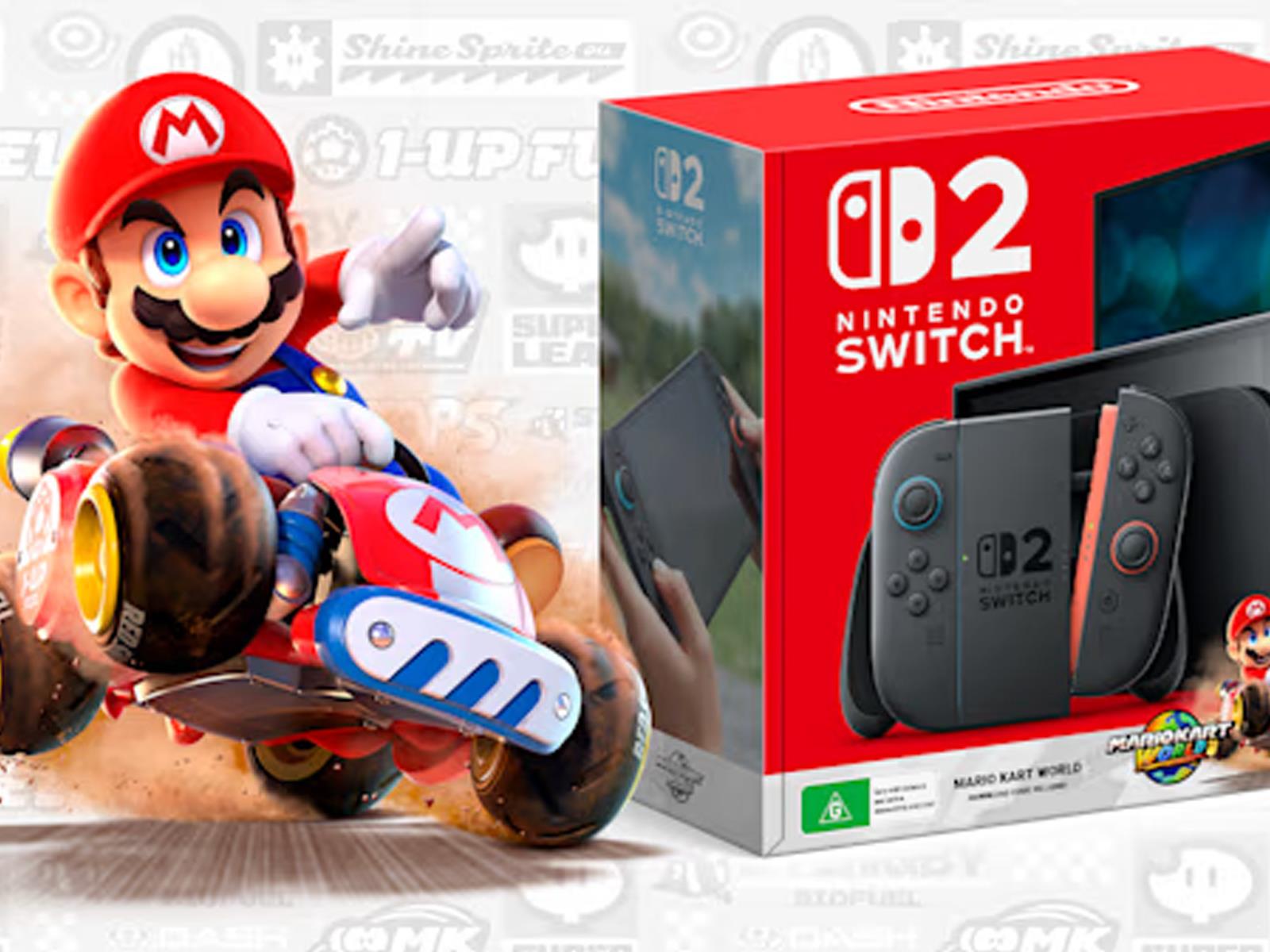
Granted, it’s a bummer that Nintendo has raised the price of many Switch 2 games, particularly with Mario Kart World coming in at $80 for a digital copy or $90 for a physical cart. But that can be largely avoided by purchasing the Switch 2 bundle that comes with the game, which effectively brings its price back down to $50. So if you are planning on getting a Switch 2 at launch, opting for this combo feels like a no-brainer.

This article originally appeared on Engadget at https://www.engadget.com/gaming/nintendo/mario-kart-world-hands-on-the-perfect-launch-game-for-the-switch-2-130003924.html?src=rss

The Switch 2’s Mouse Controls Are Nintendo at Its Most Playful

Yesterday, Nintendo finally announced its successor to the Nintendo Switch, fittingly named the Switch 2. I already wrote about my general experiences with the console, where I talked about how it’s mostly boring, but probably the right move on Nintendo’s part. Still, I wanted to take a moment to call out one part of the console that definitely isn’t boring: the mouse controls.

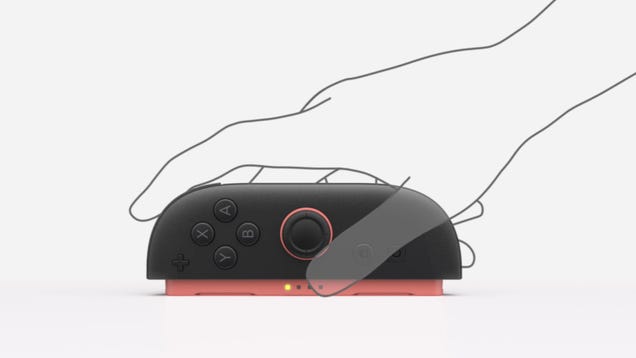
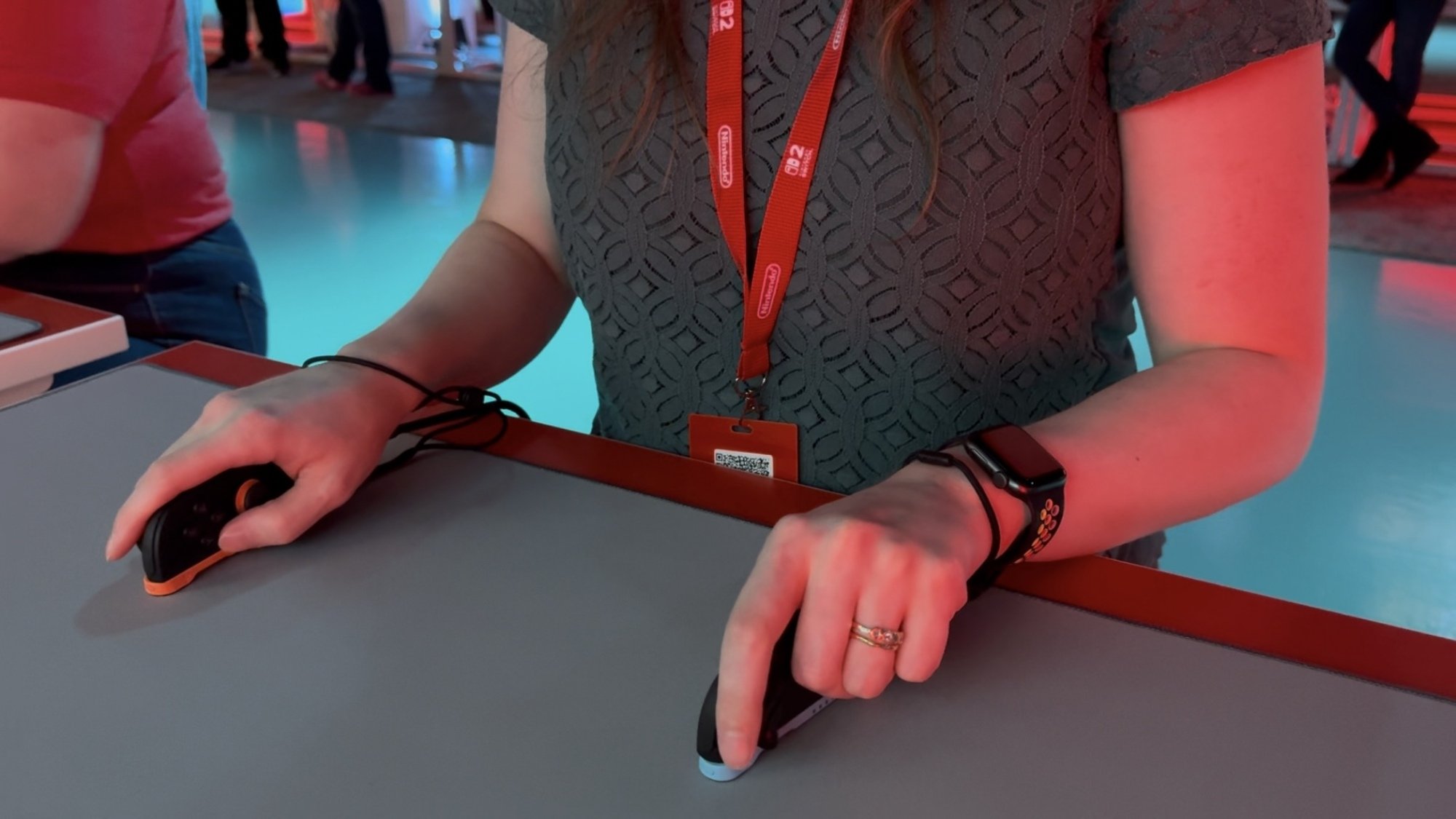
When you take one of the Switch 2’s controllers, the Joy-Con 2, off the console and put it on its side, it becomes a mouse—simple as that. If you’re playing a compatible game, you’ll instantly see a cursor pop up on screen, and right away, you’ll be playing as if you were on PC. Rotate the controller to be upright again, and you’ll be back to a more traditional setup.

This is akin to a magic trick. Despite consoles generally being easier to set up than PCs, and more often played from more comfortable positions like the living room, certain genres have eluded them for a while. These include shooters, strategy games, and other titles that benefit from quick and precise pointer movement. There have been attempts to fix that before, like with motion controls, but having gone hands-on with the Switch 2’s mouse mode, it’s easily my favorite so far.

Suddenly, the comfort of consoles and precision control of PCs don’t need to be at odds anymore. There are a few drawbacks, which I’ll get into in a moment, but I was surprised how well it worked overall.

Take Metroid Prime 4. This series started off on the GameCube, with shooting almost entirely relegated to an archaic lock-on system. Then, it re-released on the Wii and later the original Switch with improved motion controls, but those could get tiring after a bit. Now, with Metroid Prime 4, it plays just like any other shooter (OK, the lock-on is still there if you want it, but you get my point).

That’s huge. Granted, an exploration-based series like Metroid doesn’t necessarily need to cross that threshold, but it worked nearly perfectly in my time with it, and represents so many possibilities for the Switch 2. Now, the Nintendo port of Call of Duty or similar titles might not be some compromised alternative when you don’t have any other systems; it could be the best way to play, barring the PC. And this goes double for genres like strategy games, which often skip consoles altogether. Civilization VIII on the Switch 2 felt exactly like controlling it at my desk.

But even if those more traditional use cases elude you, the mouse controls are the one place in the Switch 2’s design where you can see Nintendo’s classic playfulness at work. About a month after the console’s launch, the company is set to re-release its latest Mario Party game with an enhanced port for the Switch 2, and as I saw first-hand, it took the opportunity to go all-in on the mouse.

In a pre-release hands-on with the Switch 2 version of the game, I got to use mouse controls to play a convincing substitute for air hockey, a classic mouse avoider game, plus two mini-games that actually do things you can’t do on a normal mouse.

The first had me spray painting objects with the Joy-Con, then quickly shaking it to refill my paint canister. It wasn’t the most robust experience, but it did show off one benefit to just tossing mouse functionality on an existing controller—you can use the controller’s other functions, like motion controls, in tandem with it.

This was more noticeable in a stacking mini-game I played, where I had to use the mouse pointer in combination with the Joy-Con’s gyro to make a taller block tower than my competitors without knocking it over. Throw in some oddball shapes, like a Yoshi stuffed animal, and it was great fun.

Drag X Drive

Credit: Michelle Ehrhardt

But perhaps the most noticeable example of Nintendo doing something new with the mouse was in Drag X Drive, a basketball game that sees you controlling a player in a wheelchair. With its crude graphics and mocap-feeling animation, it definitely had tech-demo vibes, and I’ll leave it to others more versed in the topic than me to talk to the representation of disabled athletes. But I will say that it might be the only game I’ve seen played with two mice at once.

In the game, you place both Joy-Con 2 controllers in mouse mode, then use your left hand to control your left wheel, and your right hand to control your right wheel. Honestly, it got tiring pretty fast, but it did feel shockingly accurate to the few experiences where I’ve been in a wheelchair (although, again, I’ll leave the real judgment there to experts).

It’s also another good example of the mouse controls combining with another Joy-Con feature, in this case vibration. The controllers did a great job of simulating my wheels’ drag on the ground as I turned them, which helped me know what needed moving where, and made controlling my character fluid enough that, yes, I was able to dunk.

All this said, this playfulness has me equal parts excited and worried. As much as I’m excited to see that new play experiences aren’t entirely dead on the Switch 2, mouse controls will only thrive as long as developers use them. Given Nintendo’s past history with accessories like the Wii MotionPlus, I worry that they’ll quickly fall by the wayside following a few of its own first party releases. 

There’s also some physical discomfort to acknowledge here. The Joy-Con 2 technically have capabilities normal mice don’t, yes, but they also lose out on ergonomics. They’re much thinner, so I have to grip them with a very tight claw style that’s not natural to me, and pressing the face buttons on them while using them as mice can be a bit of a challenge at first. I’d love to see the ability to map the right stick to face buttons instead, but we shall see.

Still, this is one feature I can’t be mad about—if only because I’m still holding out hope that it may eventually lead to Nintendo DS and Wii U emulation in Switch Online. Playing games made for these consoles on other devices has always been a bit difficult because of their unique touch controls, even on mobile. But with a big screen TV and a mouse pointer taking the place of a stylus, we may finally have the perfect answer to this longstanding problem. I’m beaming, as I’m sure the dozen other The World Ends With You fans are.