Pinball FX VR Review – A Promising Yet Pricey Commitment

When it comes to recreating the feeling of playing pinball in virtual reality, some key aspects are amiss.

A 2000s indie-pop playlist in the background, loud people running around the arcade or looming over your shoulder waiting for their turn, and your favorite table being out of service can’t be easily replicated. Pinball FX VR, however, gets pretty close to creating the de facto illusion.

Following up on the steps of previous entries — namely Star Wars Pinball VR and Pinball VR Classic, the latter also known as Pinball FX2 VR — developer Zen Studios is pushing immersion further by offering mixed reality, a new space to explore and decorate, and a plethora of tweaks and additions to licensed classics and original tables.

The Facts

What is it?: Pinball tables in virtual reality inside an interactive space
Platforms: Meta Quest (reviewed on Quest 3)
Release Date: Out Today
Developer: Zen Studios
Price: $9.99 gets you access to the game and three tables; additional tables sold separately

When you boot up Pinball FX VR, you’re sent directly into an 80s-themed arcade, the environment that serves as the hub for the experience. After a brief tutorial, you’re free to move toward a table and immediately start playing. At launch, the game also offers a mission-based campaign to unlock cosmetic rewards, interactive gadgets and mini-games like a darts board, and the option to jump into mixed reality and turn the room of your choice into an arcade.
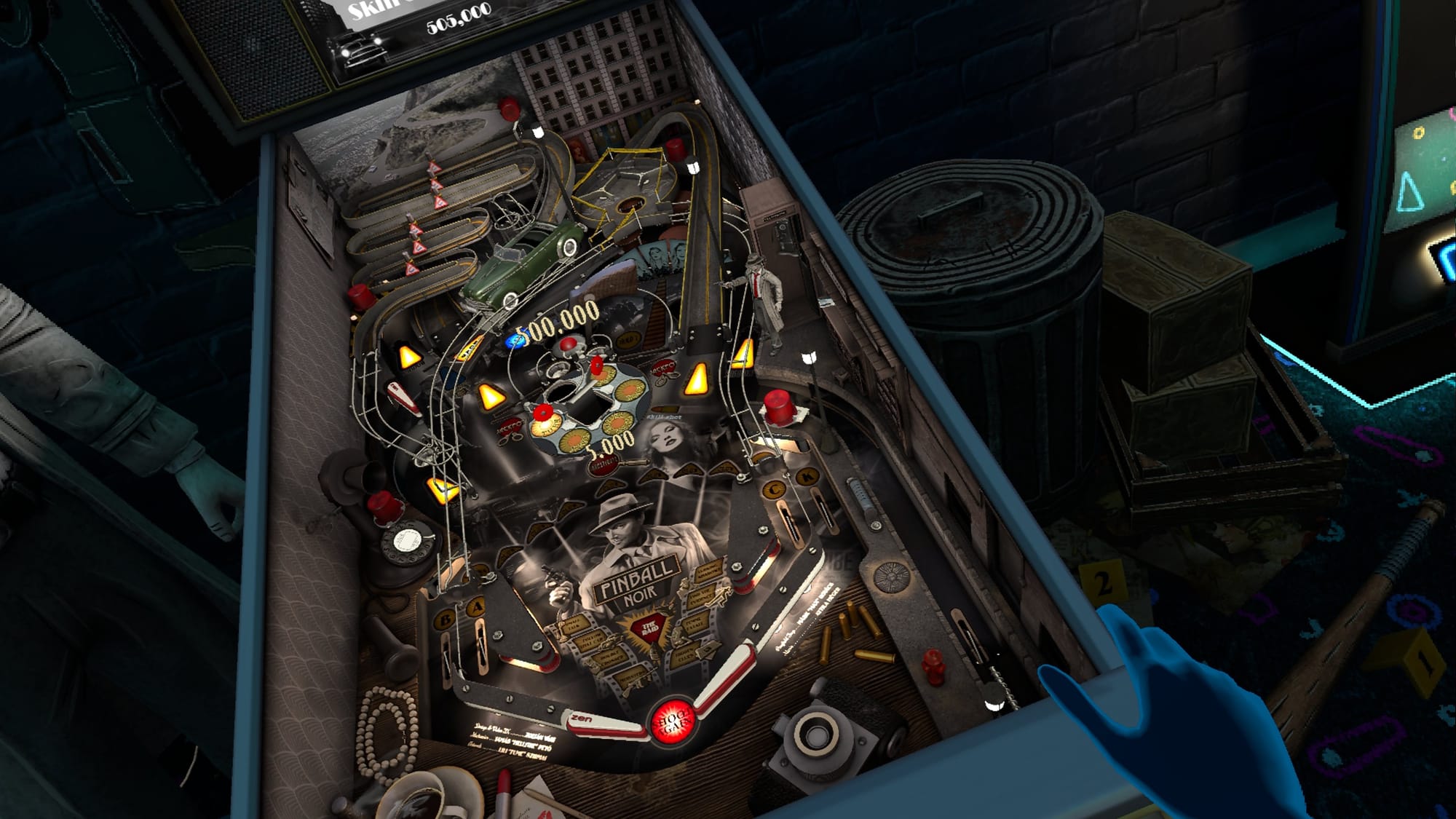
a hand is rested on the right side of the pinball noir table

The base version of the game includes three tables: Curse of the Mummy, Sky Pirates: Treasure of the Clouds, and Pinball Noir. As the names imply, the themes are very distinct from each other, which is great, as it presents variety and the likelihood that you’ll end up with at least one favorite. They’re fairly beginner-friendly tables, and the aforementioned campaign adds specific tasks to pursue when playing them in case you prefer having some objectives to follow.

As is usually the case with Pinball FX games, there’s an array of customization options and different modes for each table. You’re given the option to invest time into learning the ins and outs of each one to compete with others in online leaderboards, if that’s your style, or just treat them more casually. There’s even the option of classic modes or a modern take that includes power ups.

You can customize certain objects on the tables, such as the bumpers or the ball itself. Unlike previous games, where the environment completely changed with a theme around the table, you now have specific objects and characters placed alongside it. They have specific animations, some extending over to the table itself. While not entirely intrusive, they can be distracting at times, but the game lets you turn them off.

Perhaps the biggest and most significant difference compared to previous games is the fact that you do have physical hands now. Sure, they’re translucent, but it means that you can place them at the sides of the table and play the game that way. It sounds like a small detail, but it helps with immersion greatly. You can even grab a quarter from your pocket, put it inside the machine, and then manually kickstart the game. It lacks a stronger presence of haptics to truly mimic the feel of the ball hitting bumpers and other objects inside a table, but it gets close.

While the improvements are noticeable from the get-go, there are some significant drawbacks. Starting with the visuals, the colors don’t really pop on screen, which is a must for these tables, considering how visually busy they are. There are lighting effects, sure, but they seem toned down, presumably to help maintain a steady performance, and the compromise takes some time to get used to. Especially if you’re coming from the flat version of Pinball FX.
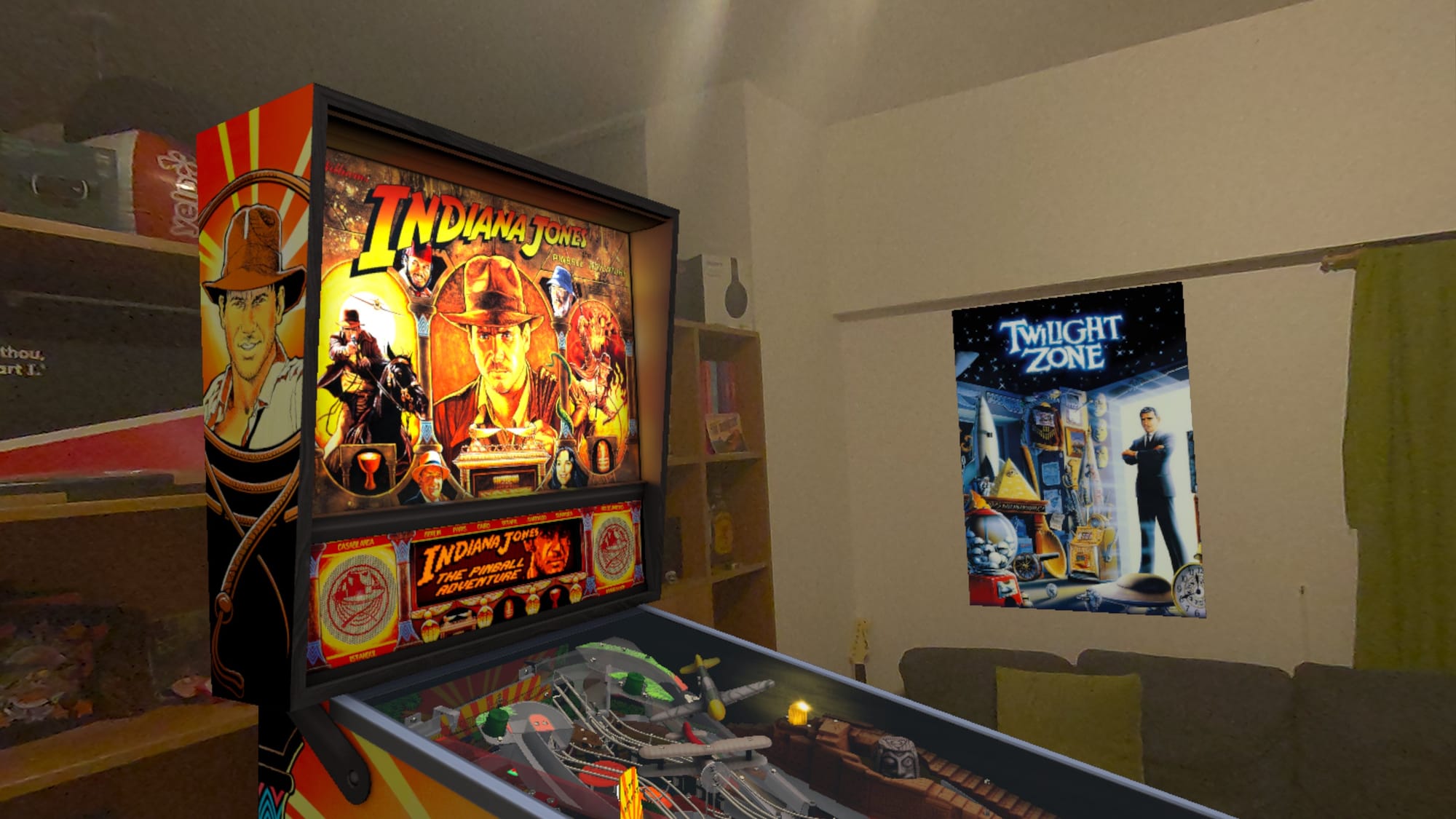
the indiana jones table in mixed reality, next to a digital twilight zone poster on the wall

Speaking of which, while the original Pinball FX lets you traverse and customize a fancy game room, the space is replaced by a rather dim arcade. It’s a fitting location all things considered, and you also have the option to place virtual memorabilia like trophies and statues in different spots if you like, or change the wall pattern with other designs, to suit it more to your liking. The main issue with the space is that it feels empty, almost eerily so.

While you can compete against other players with your scores in leaderboards, not having multiplayer feels like a missed opportunity. It seems like a technical limitation — whenever you interact with a table to start playing, the game first changes your instance, from free roaming the arcade to being in front of the table, so to speak, before being able to play. As tantalizing as the idea of seeing your friends playing in real-time is, it feels far off from happening in the game’s current iteration.

Mixed reality isn’t a solution to bridge that social element, but rather presents a gimmick that may or may not make a difference for you. After a quick scan of your room, you’re free to interact with a virtual door to a closet or open your palm to access the inventory. From there, you can place posters and statues around your home, as well as tables. If you actually have room to spare, placing multiple tables is a nice touch, but even so, it’s hard to achieve this without the option to rescale them. For some reason, the scale of the tables seemed to shift between mixed reality and virtual reality in a slightly off-putting way.

Comfort

Pinball FX VR is quite an amicable experience overall. You can turn smooth movement on or off to traverse the hub or teleport yourself by aiming with the right analog stick. There are options to adjust direction control, turn speed, tunneling intensity, turn amount, blink time, and disable teleport rotation.

You can opt to play seated or standing, and pick whether the game uses the height of you standing or the one if you’re sitting. Both can be adjusted by height, distance, and tilt. Other options include customization of the in-game experience, such as effects, haptics, and so on.

As for tables, Pinball FX VR is missing some of the biggest DLC tables at launch. This includes the Marvel collection, as well as some oddities that would have shaken out the current lineup and offered more variety, such as the pinball renditions of indie darlings like Crypt of the NecroDancer and Goat Simulator, as well as others like South Park and Borderlands: Vault Hunter. It’s nice to see Williams Pinball tables and be able to play them in the comfort of your home, but the selection could be bigger.

This also brings to attention a glaring issue that’s hard to ignore: Even if you’ve already purchased some of these tables in previous games, including Pinball FX, you’ll need to buy them again. If you’re already coming from Pinball FX2 or Pinball FX3, the whole process might sound irritating. If you already have a library built with your favorites, the additions of Pinball FX VR make it difficult to justify starting anew yet again. And while we didn’t consider it for this review, there is the option of getting a physical arcade cabinet to play with Pinball FX VR.
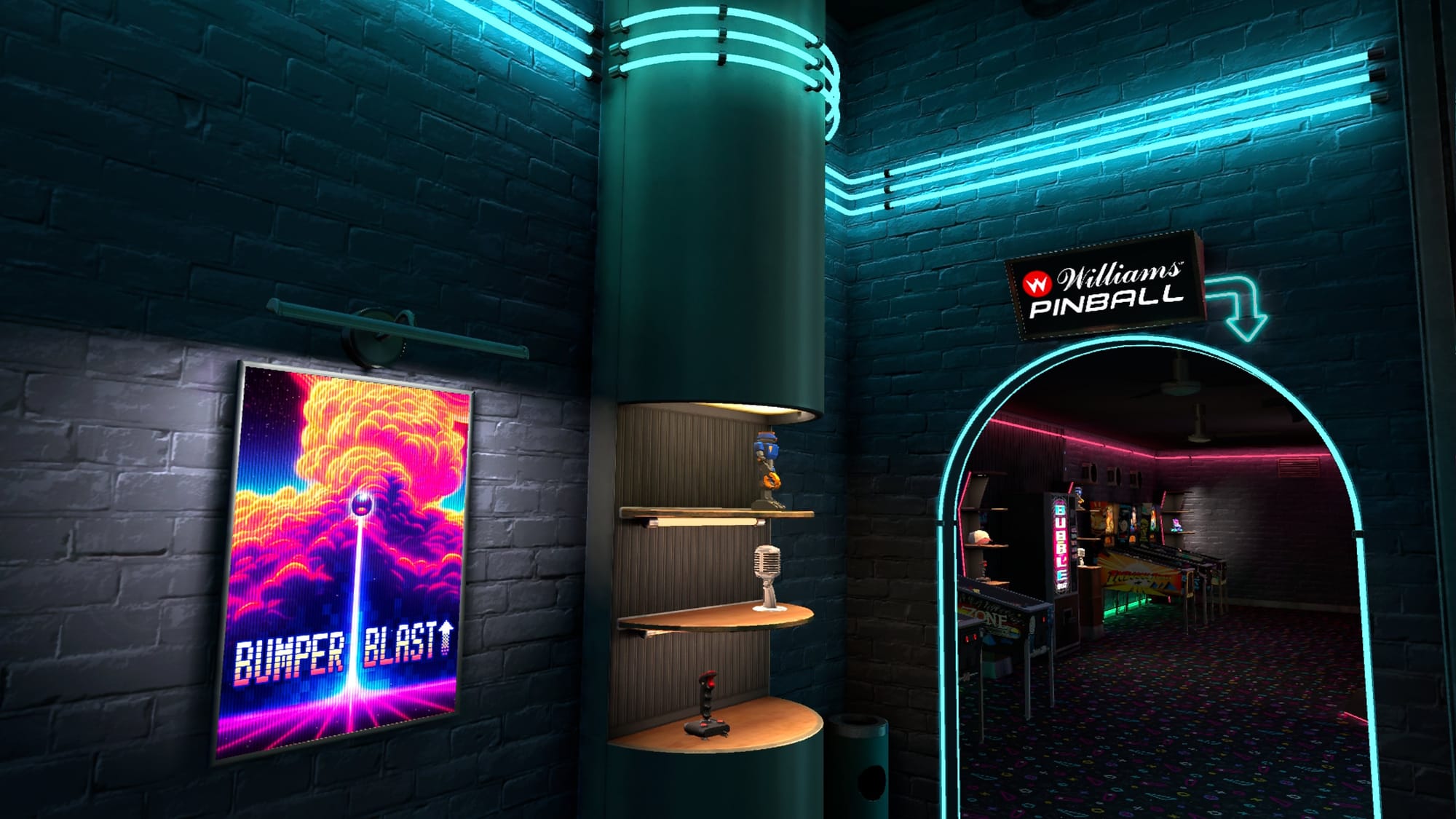
the arcade hub of pinball fx vr, decorated with neon lights, trophies, and posters

Pinball FX VR – Final Verdict

As pinball tables continue to be an increasingly rare hobby to access, games like Pinball FX VR do a good job of using virtual reality to try and bridge the gap. The experience is inherently cool, especially if you’re a pinball fan — yet, this is far from the first time, as Zen Studios has iterated on the idea for years across multiple platforms.

If you have enough room in your home, the addition of mixed reality is a solid gimmick, which pairs nicely with the inclusion of virtual hands overlayed over the controllers to best immerse yourself playing a table. Yet, considering that most other elements lack depth, like the campaign missions, or are purely decorative, like the trophies and gadgets to decorate your space, there aren’t many reasons to abandon your existing digital pinball libraries and start anew here by purchasing tables over again.

Who knows — a few years from now, there might be a pinball equivalent to Walkabout Mini Golf, allowing you to spend time with friends and fully recreate the joy of spending time with others at an arcade. For now, this is as close as it gets to mimicking the feeling of actually using a pinball table, although you might have heard this before.


UploadVR uses a 5-Star rating system for our game reviews – you can read a breakdown of each star rating in our review guidelines.

AMD Ryzen 9 9900X3D Impact Of The 3D V-Cache Optimizer Linux Driver

Last month I posted benchmarks showing the performance when using the new 3D V-Cache Optimizer driver on Linux using the flagship Ryzen 9 9950X3D. This optimizer driver allows tuning the “amd_x3d_mode” for indicating your prefereoce for the CCD with the higher frequency or larger cache size. For some additional insight into the 3D V-Cache Optimizer driver performance impact on Linux, here are benchmarks looking at the difference while using the AMD Ryzen 9 9900X3D.

How To Prepare For The Next Diablo IV Season

Every new season of Diablo IV is a bit of a spectacle. Alongside a handful of quality-of-life improvements, gameplay mechanics, additional armor and weapon sets, cosmetics, and occasionally, we’ll also receive new abilities and powers that enhance our favorite classes tenfold. In each upcoming season, new powers…

Read more…

People Are Finally Going Hands-On With Switch 2 And Here’s What They’re Saying: ‘Safe But Substantial’

After Nintendo held its big Switch 2 Direct showcase on April 2, press and content creators around the world had a chance to put the new console through its paces. Attendees were able to play multiple games, including Nintendo’s first-party offerings like Mario Kart World and Metroid Prime 4: Beyond, as well as big…

Read more…

Microsoft’s Affordable Mini PC To Stream Windows From The Cloud Is Now Available

Microsoft's Affordable Mini PC To Stream Windows From The Cloud Is Now Available
Microsoft is now accepting orders for the Windows 365 Link device it announced at its Ignite conference back in November. The thin client system is Microsoft’s first cloud PC device built specifically to securely connect to Windows 365 in a matter of “seconds,” the company says. It’s also been through a preview period with testing by over
The world’s smallest pacemaker is injectable and powered by light

Engineers at Northwestern University have developed the world’s smallest pacemaker. It’s so small, as a matter of fact, that it fits inside the tip of a syringe. This means that it’s injectable, so patients could potentially avoid a painful surgery.

It safely dissolves into the bloodstream after a time, so it’s a temporary solution. It’s designed for folks who need heart help on a short-term basis, like newborn babies with congenital defects. However, it can work with hearts of all sizes.

It’s also powered by light, which is pretty darned cool. The pacemaker is paired with a wireless wearable device that mounts to a patient’s chest. When that small device detects an irregular heartbeat, it shines a light that activates the pacemaker. These light pulses can penetrate a patient’s skin, bones and muscles.

Even though the pacemaker is tiny, measuring one millimeter in thickness, it still delivers as much stimulation as a full-sized unit. The engineers published their findings in Nature and noted that the device works with both animal and human hearts. The team also reiterated that pediatric care is the primary use case here.

“About one percent of children are born with congenital heart defects,” said Northwestern experimental cardiologist Igor Efimov, who co-led the study. “The good news is that these children only need temporary pacing after a surgery. In about seven days or so, most patients’ hearts will self-repair. But those seven days are absolutely critical. Now, we can place this tiny pacemaker on a child’s heart and stimulate it with a soft, gentle, wearable device. And no additional surgery is necessary to remove it.”

The development of this medical device was co-led by John Rogers, which is a familiar name in biomedical circles. Rogers has been behind a number of astounding innovations throughout the years. He’s advanced technology that could eventually give us invisibility cloaks and health-tracking tattoos. He also built a thumbnail-sized UV sensor and a circuit that dissolves in the body. That last one eventually led to this innovative pacemaker.

Rogers imagines a world in which physicians inject a number of these pacemakers simultaneously, to enable sophisticated synchronization. This could help terminate arrhythmias, as different parts of the heart could be paced at unique rhythms.

“Because it’s so small, this pacemaker can be integrated with almost any kind of implantable device,” Rogers said. “Here, the tiny pacemakers can be activated as necessary to address complications that can occur during a patient’s recovery process.”

This versatility could eventually open up a diverse array of medical possibilities. The tech could be used to help nerves heal, treat wounds and block pain.

This article originally appeared on Engadget at https://www.engadget.com/science/the-worlds-smallest-pacemaker-is-injectable-and-powered-by-light-153302491.html?src=rss

AV1 is Supposed To Make Streaming Better, So Why Isn’t Everyone Using It?

Despite promises of more efficient streaming, the AV1 video codec hasn’t achieved widespread adoption seven years after its 2018 debut, even with backing from tech giants Netflix, Microsoft, Google, Amazon, and Meta. The Alliance for Open Media (AOMedia) claims AV1 is 30% more efficient than standards like HEVC, delivering higher-quality video at lower bandwidth while remaining royalty-free.

Major services including YouTube, Netflix, and Amazon Prime Video have embraced the technology, with Netflix encoding approximately 95% of its content using AV1. However, adoption faces significant hurdles. Many streaming platforms including Max, Peacock, and Paramount Plus haven’t implemented AV1, partly due to hardware limitations. Devices require specific decoders to properly support AV1, though recent products from Apple, Nvidia, AMD, and Intel have begun including them. “In order to get its best features, you have to accept a much higher encoding complexity,” Larry Pearlstein, associate professor at the College of New Jersey, told The Verge. “But there is also higher decoding complexity, and that is on the consumer end.”


Read more of this story at Slashdot.

Fans Are Spamming Nintendo’s Mario Kart World Livestream Begging It To Drop The Price Of The Switch 2

Fans had been waiting months for Nintendo’s big Switch 2 Direct. But one thing that’s dominated the conversation following the showcase isn’t the games or the features, it’s the Switch 2’s $450 price tag. Now fans are spamming the YouTube chat for the company’s ongoing Nintendo Treehouse livestream with one simple…

Read more…

ESA’s New Documentary Paints Worrying Picture of Earth’s Orbital Junk Problem

The European Space Agency’s short film Space Debris: Is it a Crisis? highlights the growing danger of orbital clutter, warning that “70% of the 20,000 satellites ever launched remain in space today, orbiting alongside hundreds of millions of fragments left behind by collisions, explosions and intentional destruction.” Inkl reports: The approximately eight-minute-long film “Space Debris: Is it a Crisis?” attempts to answer its conjecture with supportive statistics and orbital projections. […] The film also mentions that the kind of Earth orbit matters when discussing whether we’re in a space junk “crisis” — though unfortunately, orbits at risk appear to be those with satellites that help with communication and navigation, as well as our fight against another primarily human-driven crisis: global warming. Still, the film emphasizes that solutions ought to be thought of carefully: “True sustainability is complex, and rushed solutions risk creating the problem of burden-shifting.” You can watch the film on ESA’s website.


Read more of this story at Slashdot.

Nintendo Labo VR Is The Only Switch Game That Can’t Be Played On Switch 2

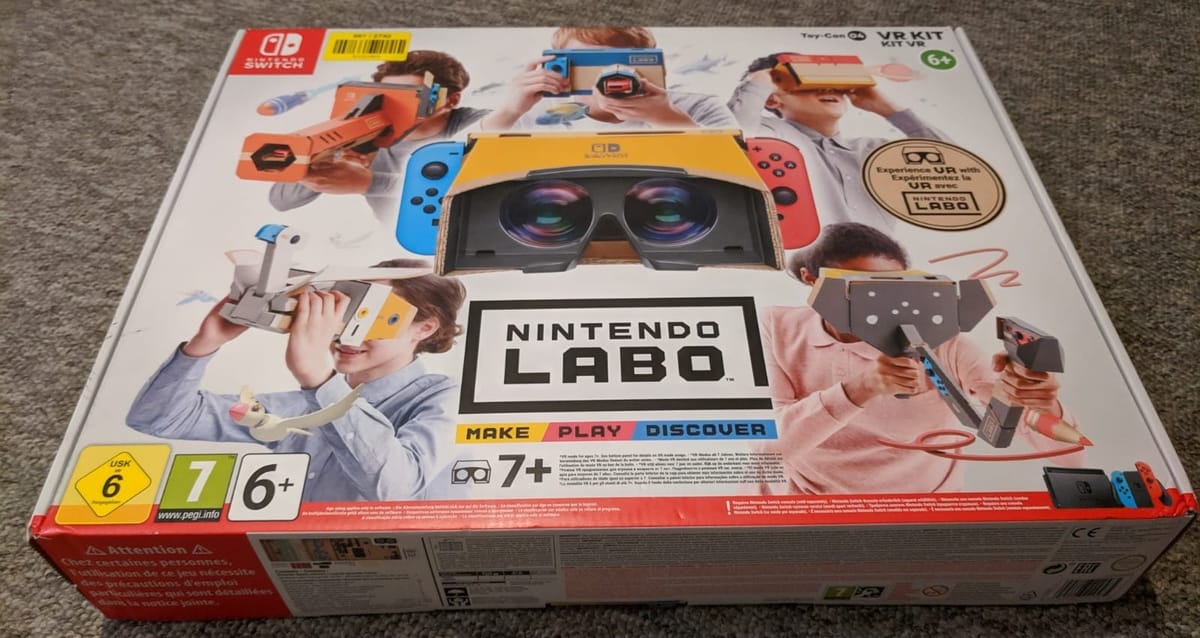
Nintendo Labo VR Kit is the only Switch game that can’t be played on Switch 2, and Nintendo didn’t announce new VR hardware for the console.

As you’ve probably heard, Nintendo announced the Switch 2 console earlier today, priced at $450 alone or $500 as a bundle with the new Mario Kart World game.

According to Nintendo, while some have compatibility issues, which are all “being investigated”, every Switch 1 game can be played on Switch 2 with only one exception: Nintendo Labo VR.

Nintendo Labo VR Is A Creaky Headset That May Have Cracked VR For Kids
I remember the first time I showed my PSVR to a 10-year-old. Or, more specifically, I remember the deafening crack I heard when he tried to yank the headset’s visor forward without pushing in the button to move it. I remember biting my lip with anxiety as he threatened
UploadVRJamie Feltham

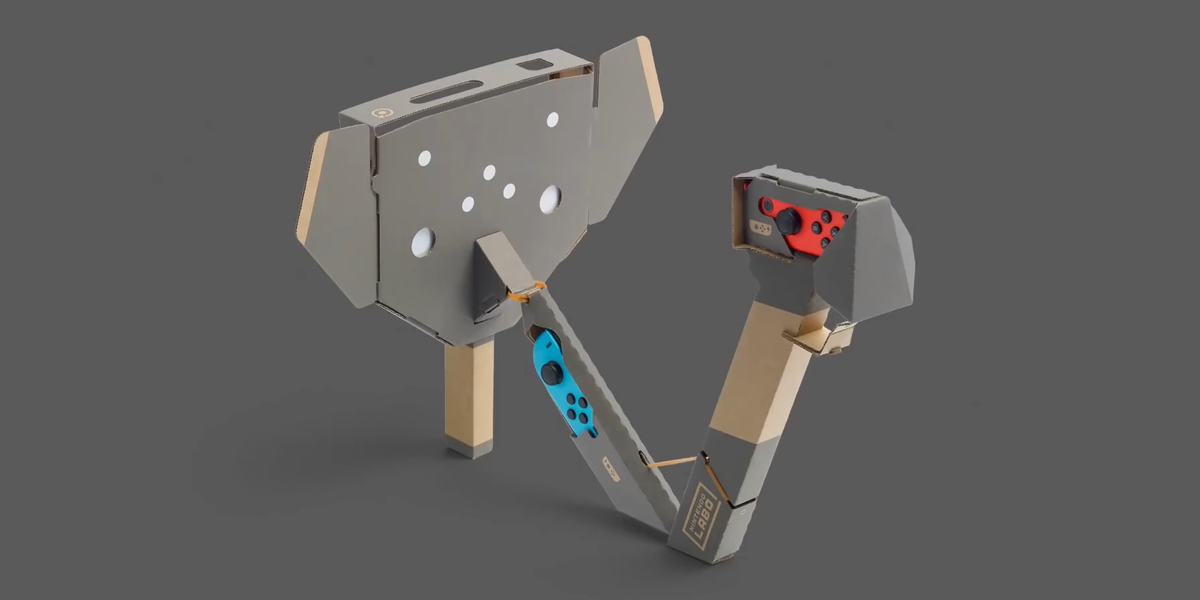
Released back in 2019, Nintendo Labo VR was a game and cardboard shell for the Switch with two fresnel lenses, and it came with five accessories to build: Blaster, Camera, Elephant, Bird, and Wind Pedal. Think of it as the Google Cardboard of the Nintendo world.

The Switch’s 720p display (less than 640×720 per eye) with 60Hz refresh rate and lack of positional tracking made Labo VR an objectively terrible VR headset, and it didn’t even have a strap, meaning you had to hold it up. But as we noted in our review, the physicality of its included accessories made it perfect for young children to have fun with.

Interestingly, one of the accessories even featured positional controller tracking, leveraging the IR camera in the right Joy-Con and luminous paint dots on the frontplate you add to the headset, an ingenious low-cost solution.

Nintendo Labo VR’s Elephant Doodle & Puzzle Games Feature Positional Controller Tracking
Thought Nintendo’s Labo VR for Switch was just 3DoF? You’d be wrong. Nintendo actually uses a clever design to add positional controller tracking. The Nintendo Switch right Joy-Con has a little known feature- an IR camera on the end. The VR Elephant Toy-Con has a slot for the
UploadVRDavid Heaney

The reason that Labo VR doesn’t work with Switch 2, as stated by Nintendo, is fairly obvious: the Switch 2 is too big to fit into the holder.

Theoretically, Nintendo could release a modified Labo VR Kit for Switch 2. But the company didn’t announce that this week, and given how far VR (and now mixed reality too) has come, and the increased size and weight of Switch 2, it seems unlikely it will take the same approach again.

That said, there are other approaches Nintendo could take to bring VR and mixed reality to Switch 2, and patent filings suggest the company is at least exploring some of these possibilities. We’ll keep a close eye on Nintendo in coming years for any signs of VR support for Switch 2.

These Bose Ultra Open Earbuds Are $179 Right Now

We may earn a commission from links on this page. Deal pricing and availability subject to change after time of publication.

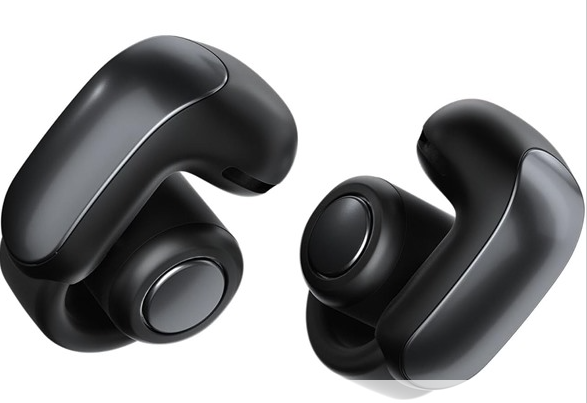
If you’ve ever wanted to wear earbuds that don’t actually go in your ears, the Bose Ultra Open Earbuds might be the oddball pick you’ve been looking for. These open-style earbuds clip on and hook around your ear instead of sitting inside it, letting ambient noise in by design. That makes them great for runs, walks, or commuting—basically, situations where you want to hear your music but also that car barreling around the corner. And for the next six days or until it sells out, Woot’s offering refurbished models of these earbuds, in black, moonstone blue, and white smoke for $179—much cheaper than Amazon’s current $261.99 price.

Since these are refurbished, they might show a bit of wear, but they’ve been tested and cleared to function properly. You also get a 90-day Woot limited warranty, which is shorter than Bose’s standard, but fair for the price cut, and if you’re an Amazon Prime member, shipping is free (otherwise it’s $6). Just a heads-up: Woot ships only within the 48 contiguous states.

Bose doesn’t skimp on audio quality here: Despite the open design, they deliver solid sound with real punch and clarity. The bass won’t rumble like in-ear buds, but you still get that signature Bose balance. They also have Immersive Audio support, which adds spatial depth—though it’s a little inconsistent depending on what you’re listening to and can feel gimmicky, according to this PCMag review. They also support Snapdragon Sound with aptX Adaptive and work especially well with podcasts and mellow playlists. That said, the biggest downside is that they don’t have any noise cancellation, which, again, is kind of the point, but still worth noting if you’re used to ANC earbuds. Battery life clocks in around 7.5 hours on a single charge (with Immersive Audio off), and the charging case gives you almost two full charges, which is decent enough. If you’re someone who prioritizes awareness and comfort over total sound isolation—and doesn’t mind a pre-loved gadget—this deal makes a pretty compelling case. If you’re more of a noise-canceling, zone-out-on-the-plane kind of listener, these probably won’t cut it for you.

Lee Cougan lays out a vision for the future of gravel bikes with full-suspension Innova Super Gravel

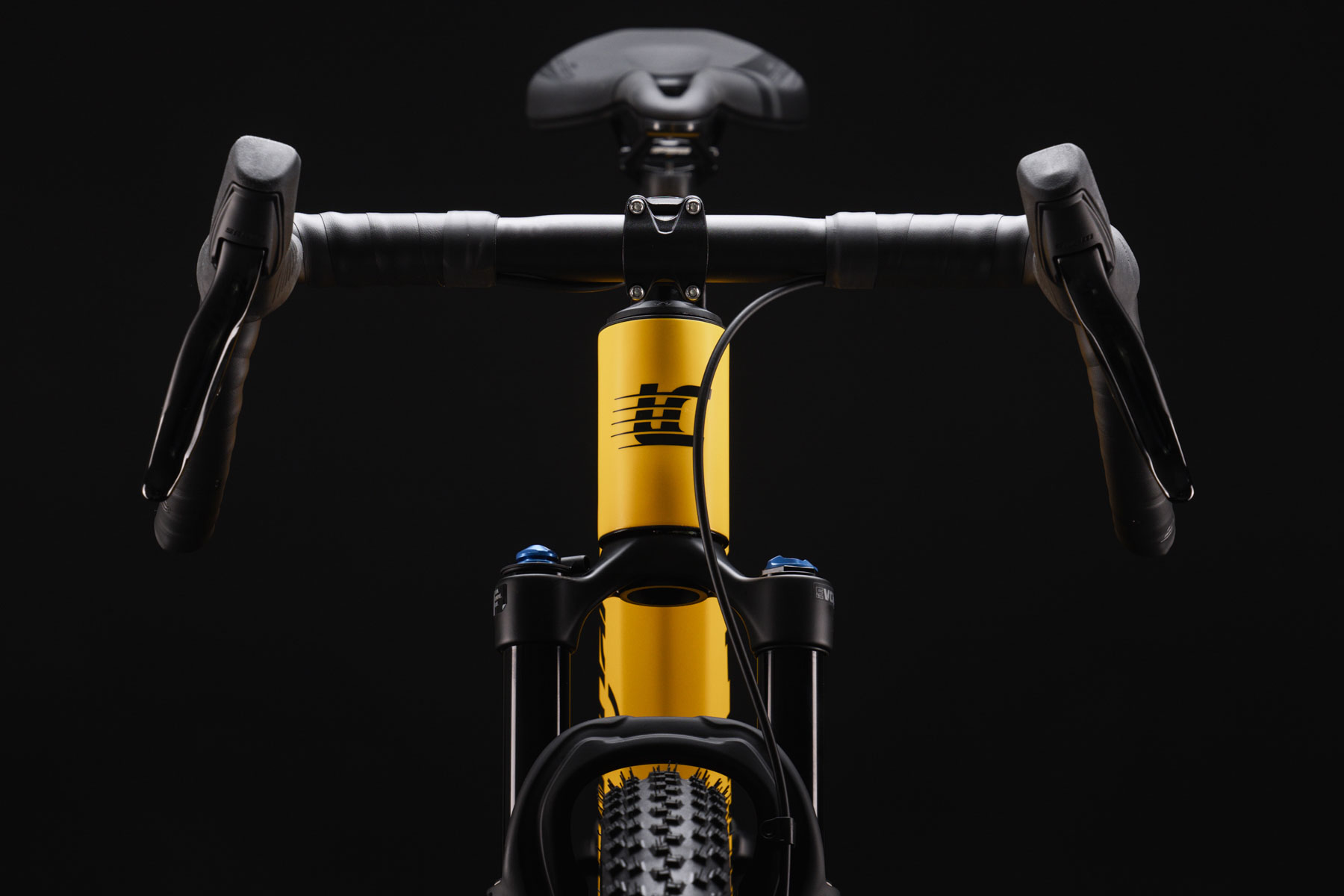
Shockless rear suspension, a 100mm suspension fork, 2.4-inch tyre clearance and geometry you might find on a hardtail mountain bike – could the new Lee Cougan Innova Super Gravel point the way for cutting-edge gravel bike design?

Well, the bike’s designers seem to think so. The questions behind the development of the Innova Super Gravel were: ‘Has your gravel bike ever held you back from going further?’, ‘What is a wrong trail if your bike can handle anything?’ and ‘Why not choose a bike that can do it all?’.

The new Lee Cougan Innova Super Gravel comes as a full build priced at €5,299 / $5,899 or a frame kit for €2,799 / $3,299.

Suspension without a shock

Innova Super Gravel
Does the Innova Super Gravel give an indication of where ultra-distance gravel bike design is heading?

The Innova’s back end follows soft-tail designs such as the Cannondale Topstone, Basso Tera and Specialized Diverge STR by utilising suspension without a shock unit.

Instead, the Innova combines tapered carbon chainstays that are designed to flex, with a pair of oil-filled pistons to dampen the energy acting on the frame over rough ground.

The patent-pending system, named ISS, is claimed to offer the smoothness of a shock unit without the weight penalty. The frameset is said to weigh 1.2kg in a medium size, including the ISS damping system.

ISS suspension
The ISS suspension system has no shock, but contains twin hydraulic dampers to smooth out the trail.

Lee Cougan first used the ISS system on its marathon-focused Rampage Innova mountain bike, although that version relies more on its carbon leaf spring as opposed to the addition of flexible stays on the Innova Super Gravel.

Frame details

The Apro Ranger from 2017. Warren Rossiter / Immediate Media

The Innova has full internal routing via an Acros headset, two bottle cage mounts, further mounts on the top tube and under the down tube, a steerer lock system by Acros, and most tellingly a 148mm Boost rear triangle.

Making the Innova Super Gravel geared up for a wide range of 29-inch wheels opens a whole world of race-ready mountain bike tyre choices.

Full-suspension gravel

Full-suspension in gravel isn’t a new concept. I first reported on Taiwanese brand A-Pro’s full-sus gravel machine back in 2017.

Since then, we’ve had the Niner MCR and the Cannondale Topstone Lefty. The Innova Super Gravel, however, is the first to embrace a full-length travel mountain bike fork instead of a short-travel gravel-specific fork.

• Best gravel suspension forks

Go-anywhere geometry

Innova Super Gravel
Lee Cougan says the Innova Super Gravel can go anywhere, fast. Lee Cougan

The Innova Super Gravel’s geometry follows on from that of the Ridley Ignite GTX, Nukeproof Digger RS and Santa Cruz Stigmata in taking its inspiration from mountain bikes.

It has a 69-degree head angle matched to a 73-degree seat angle, long 428mm chainstays, a long reach, tall stack and short stem. The front end is designed to work with a 100mm mountain bike XC suspension fork.

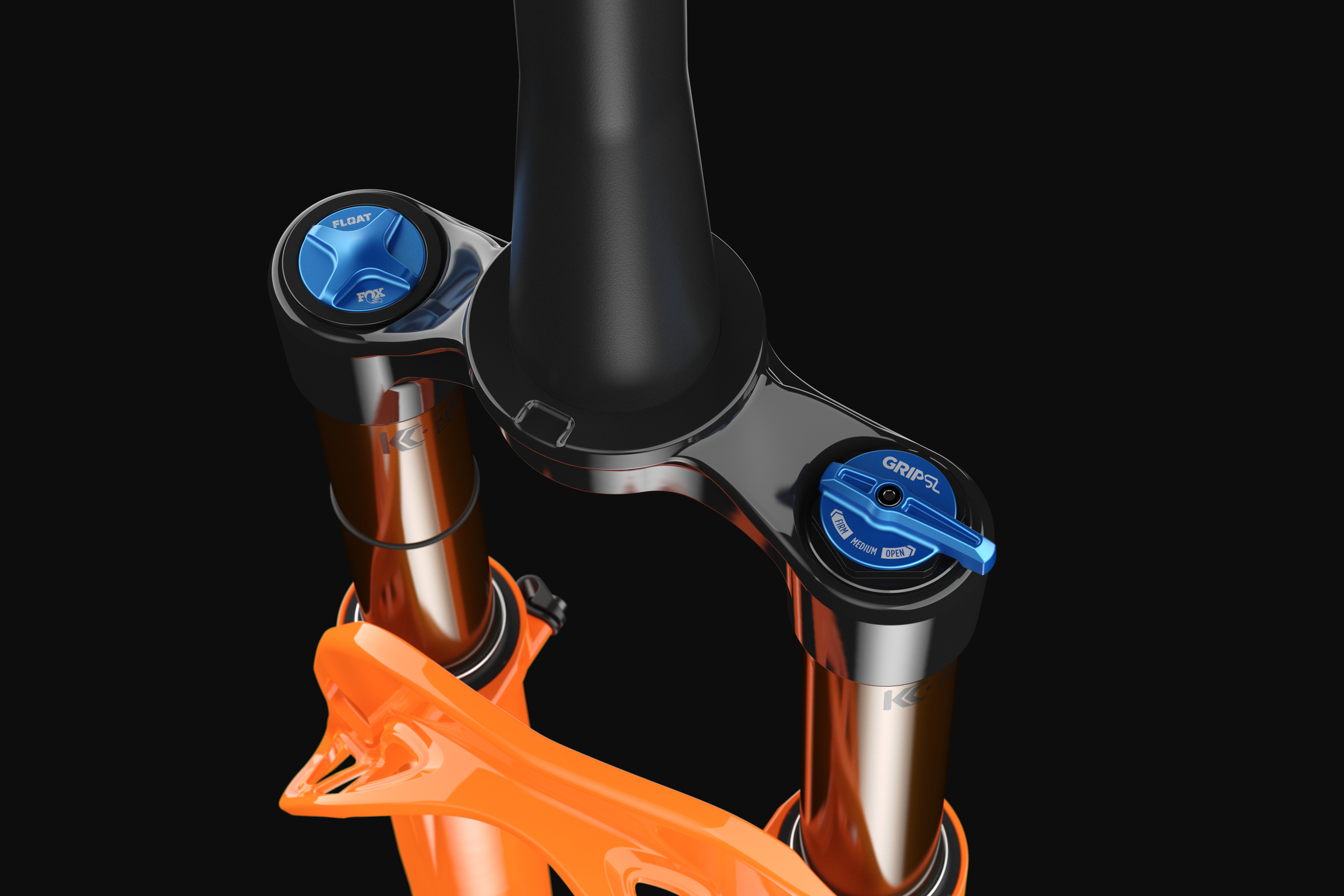
Fox 32 Step Cast Factory straight crown
The 100mm-travel Fox Factory Kashima 32 is installed on the Innova Super Gravel complete bike. Mike James

The tyre clearance of up to 2.4in matches the current trend among gravel racers of using larger-volume (mountain bike) tyres.

This takes us back to the early days of gravel, when monstercross bikes with huge 650b clearances found favour. It’s having this sort of clearance on larger 700c or 29in wheels that sets the new Lee Cougan bikes apart.

Racing pedigree

Innova Super Gravel
The Innova Super Gravel has already been used in competition. Lee Cougan

The Innova Super Gravel has been trialled by multiple-Traka winner, fifth-place finisher at Unbound 2024 and current Life Time Grand Prix rider Mattia De Marchi, who rode the Innova in the 2024 Atlas Mountain Race.

Is it just a mountain bike with drop bars?

Innova Super gravel bar
The Innova Super Gravel comes with a 12-degree flare, 120mm-drop carbon gravel bar designed to match the Innova’s geometry. Lee Cougan

You could certainly argue that’s the case, much like the new Ridley Ignite GTX or the Scott Scale GR, which even goes so far as keeping a flat bar (although it has a rigid fork). Perhaps this is a fad, or it could show the future of gravel bikes, at least for ultra-distance gravel event racers.

Could we be witnessing yet another division in gravel bike design that sees lightweight racers for UCI gravel, burly bikepacking bikes and suspension-equipped do-it-all bikes such as this?

lee cougan innova super gravel
The Lee Cougan Innova Super Gravel Mullet build with SRAM Eagle AXS/Rival and Fox Factory Kashima 32 fork. Lee Cougan


Lee Cougan Innova Super Gravel spec and price details

Full build

  • Frame: Toray T700 carbon fibre 1K+3K+Ud, integrated cable routing, press-fit 92x41mm, DI2-compatible, tapered head tube, Boost 148mm
  • Fork: Fox Factory Kashima 32, 100mm with lockout
  • Groupset: SRAM GX Eagle Transmission, SRAM Rival levers
  • Brakes: 160mm Galfer
  • Stem: Woz Alpha -20°, 80 mm
  • Handlebar: Basso Carbon Gravel 440 c/c
  • Wheels: Microtech RK25
  • Seatpost: FSA KFX 27.2, 0mm offset
  • Saddle: San Marco Ground

Frame kit

  • Frame: Toray T700 carbon fibre 1K+3K+Ud, integrated cable routing, press-fit 92x41mm, DI2-compatible, tapered head
  • Headset: Acros internal routing headset
  • Stem: Woz Alpha -20°, 80 mm

Retro looks meet wireless tech – this 40th anniversary Yeti is a 90s mountain biker’s dream bike

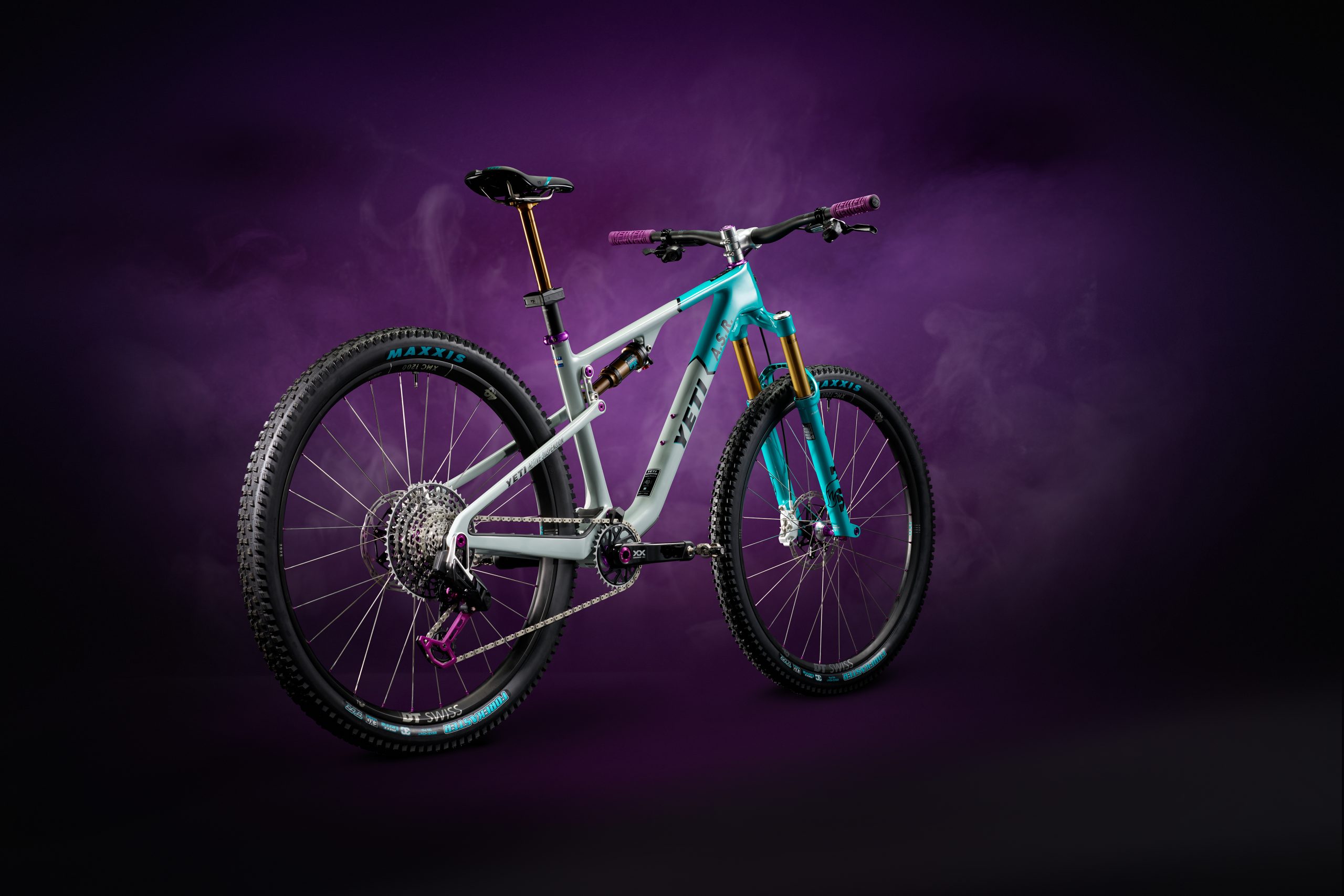
Yeti has unveiled a new special edition of its ASR cross-country bike as part of the brand’s 40th anniversary celebrations.

The bike features a forgotten historic livery of turquoise and grey, which adorned the bikes of Jimmy Deaton and Juli Furtado in the 90s.

The brand has celebrated previous anniversaries with bike releases, most recently its 35th with the ARC.

The new limited-edition frame is fully wireless, unlike the standard ASR, which features cable ports for use with mechanical groupsets.

Yeti has worked alongside other brands to give the 40th Anniversary ASR a fully custom spec list, resulting in plenty of nostalgic details.

Yeti 40th Anniversary ASR
Yeti has decided to take a break from its iconic turquoise and yellow colourway. Yeti

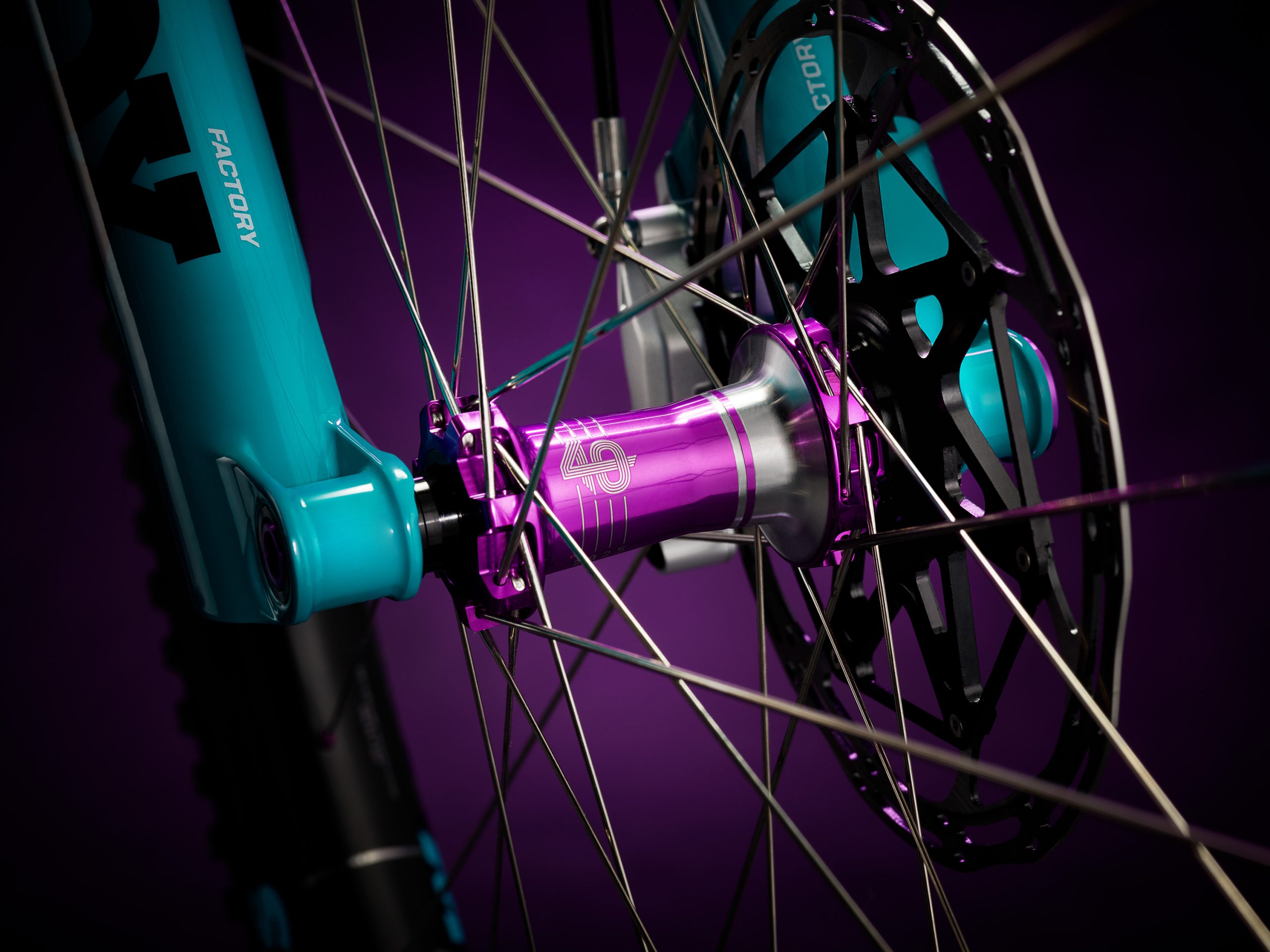
A notable mention goes to the Fox 34 SL fork, which is painted to match the brand’s famous turquoise colourway and features silver hardware.

Yeti 40th Anniversary ASR head badge
The crown of the Fox 34 SL has also been matched to Yeti’s turquoise colourway. Yeti

The fork has also been bumped up by 10mm compared to the standard ASR, now providing 130mm of travel.

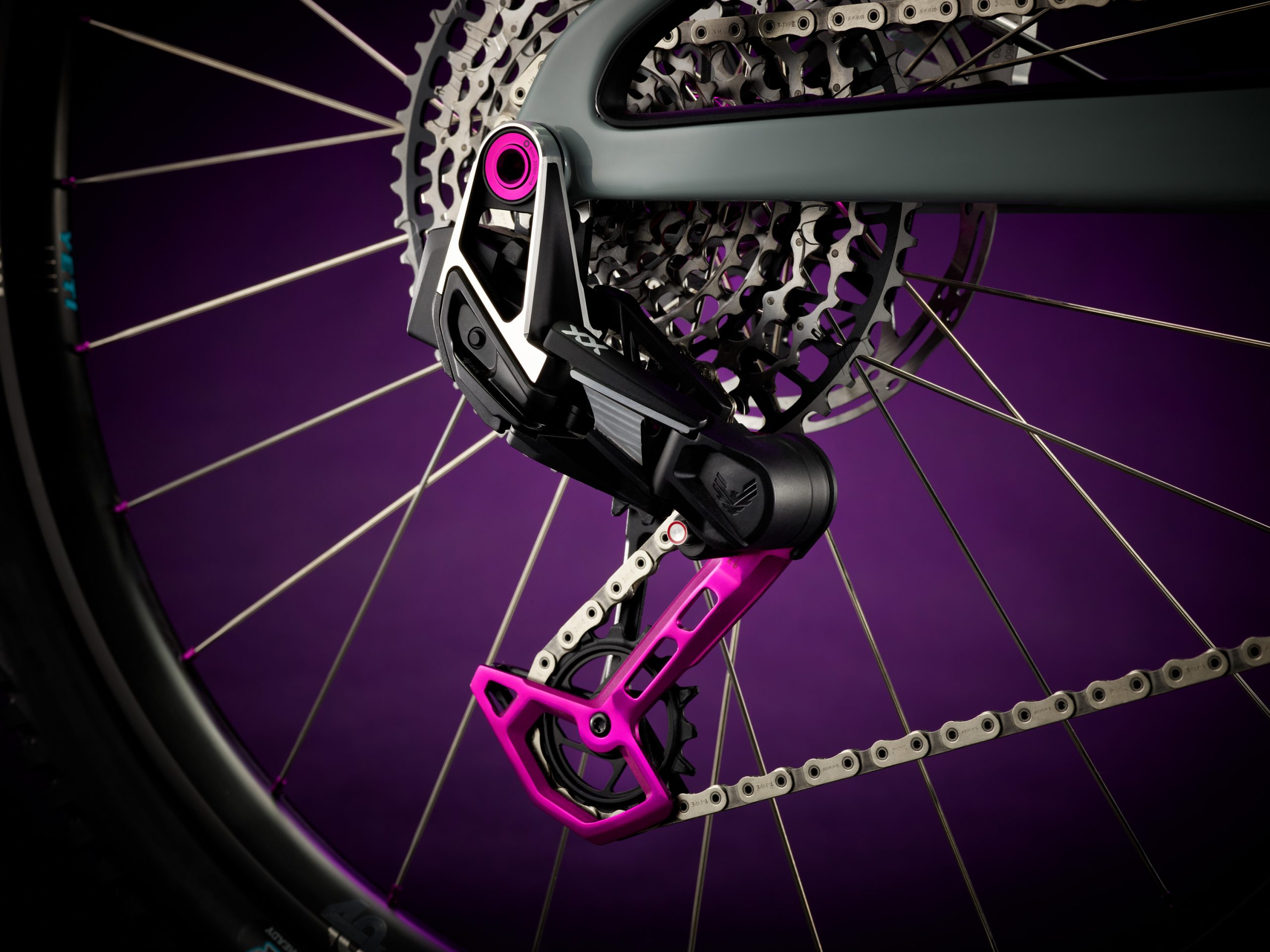
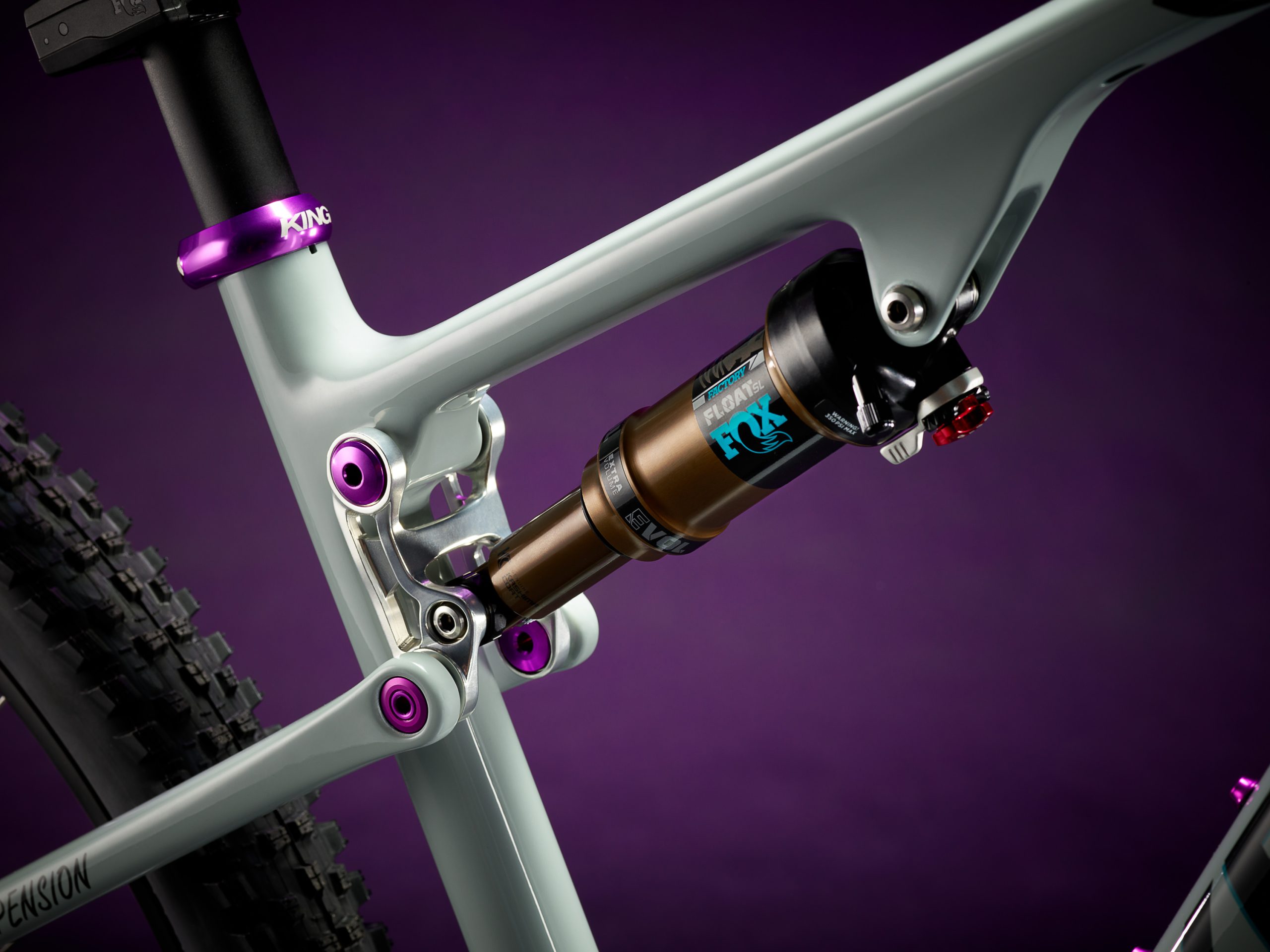
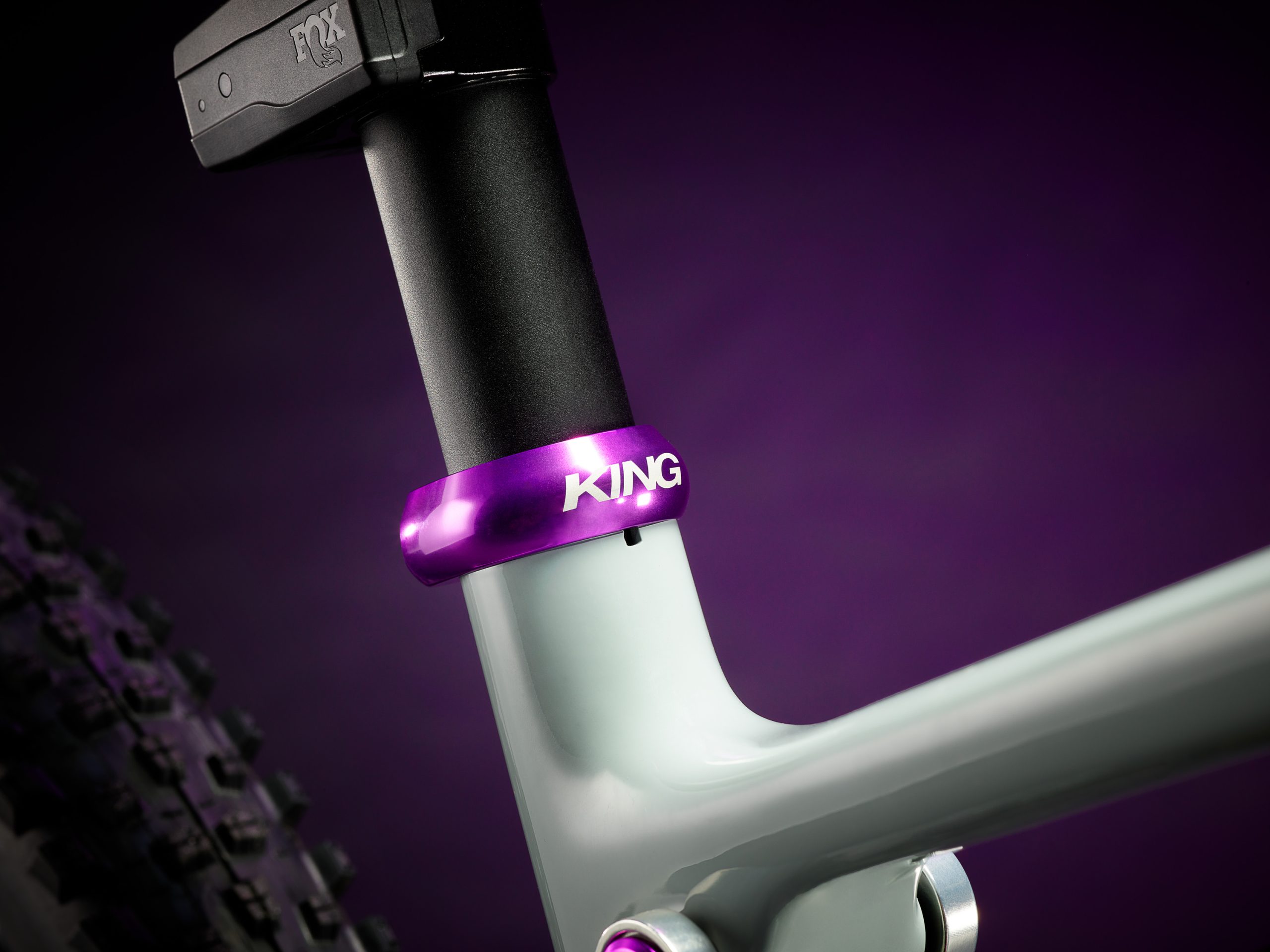
Elsewhere, the Chris King and SRAM parts feature a 3D Violet theme, adding a retro feel to the bike.

Yeti 40th Anniversary ASR with custom SRAM XX Transmission
SRAM has supplied a 3D Violet derailleur cage for its XX Transmission. Yeti
Yeti 40th Anniversary ASR with DT Swiss wheelset
Silver spokes should catch sun rays nicely. Yeti

Polished DT Swiss Revolite spokes are used in the wheelset, alongside 3D Violet hubs that will bring a sparkle to sunny days. Maxxis Forekaster tyres with turquoise hot patches are wrapped around the wheels.

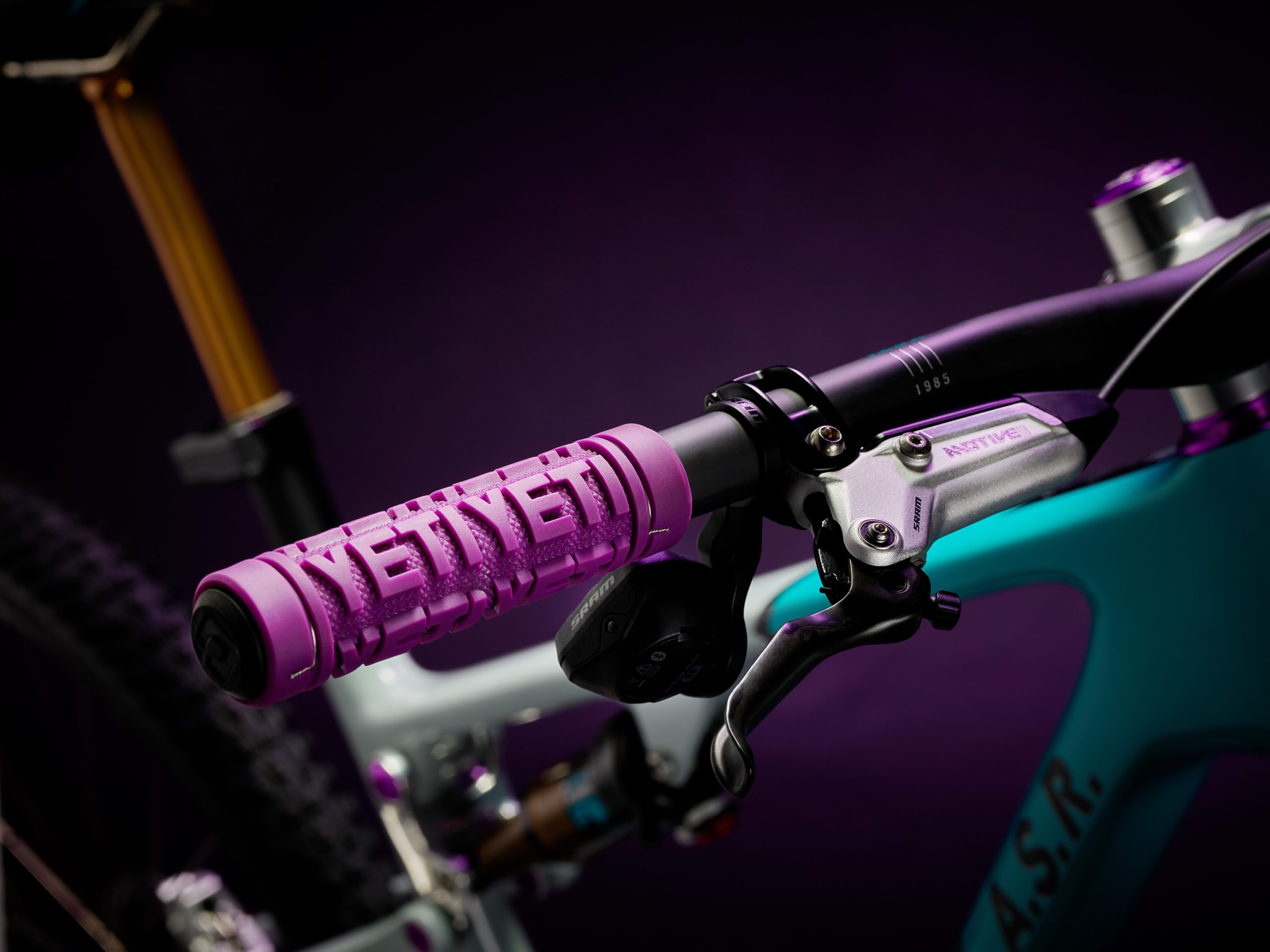
Yeti 40th Anniversary ASR with ODI Yeti grips
Wire has long been used to secure grips, but the invention of lock-on grips has made the practice less common. Yeti

Original moulds were located to revive the ODI Yeti grips, with metal wire neatly attached to keep them from wandering out of place.

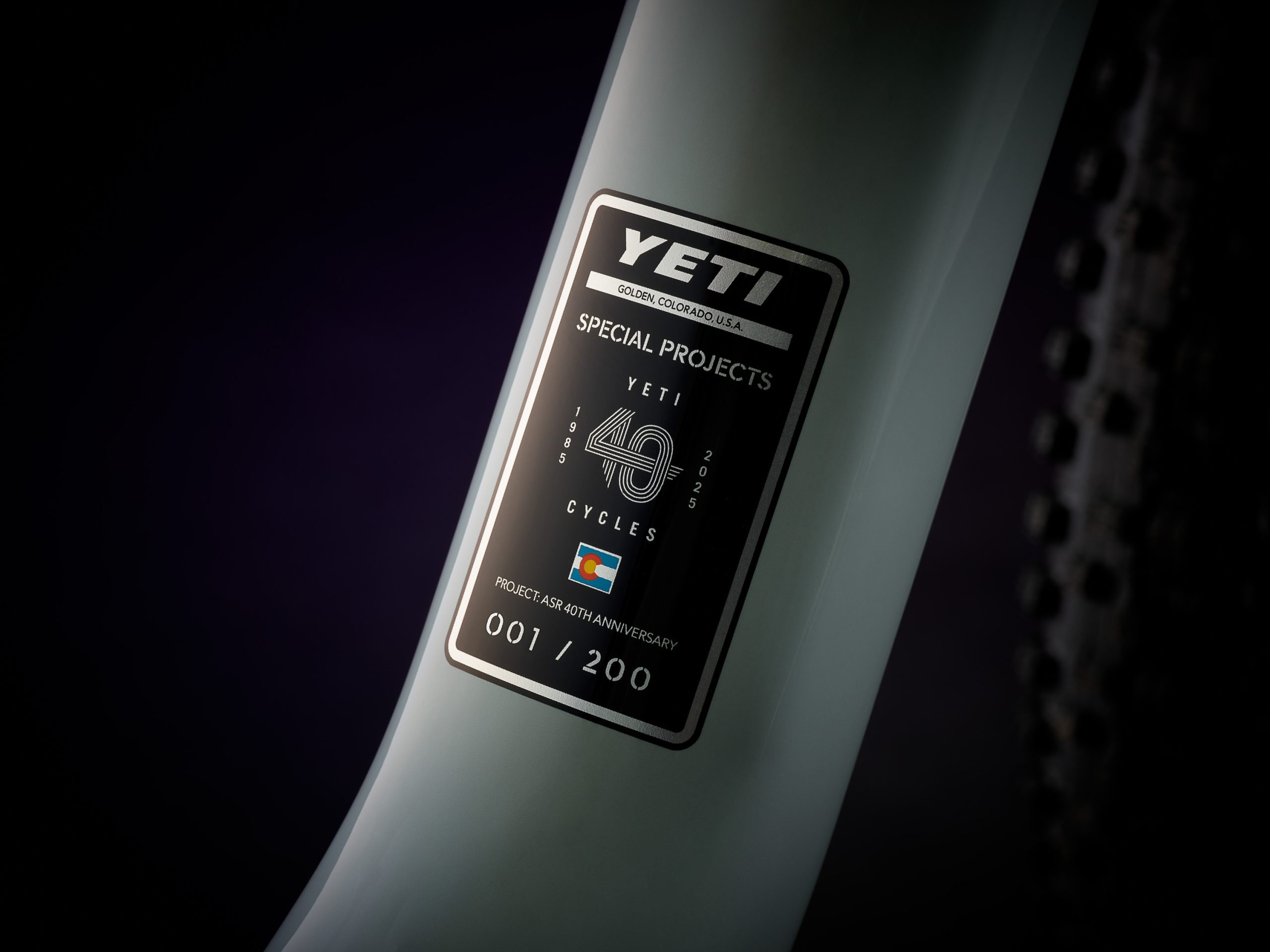
Yeti 40th Anniversary ASR limited badge
Each bike will be numbered. Yeti

The bike is available for purchase, with Yeti making only 200 examples, priced at £13,999 / $13,900.

There’s little else to say about the bike other than we’re big fans of this retro-inspired special edition, so we’ll let the photos below do the rest.

Yeti 40th Anniversary ASR
Fox’s Transfer Neo dropper post features. Yeti
Yeti 40th Anniversary ASR with 3D Violet DT Swiss hubs
The number 40 is etched into the DT Swiss hubs. Yeti
Yeti 40th Anniversary ASR with custom SRAM XX Transmission crank
3D Violet can be spotted all over the bike. Yeti
Yeti 40th Anniversary ASR with custom Fox Float DPS
The silver linkage adds to the retro vibes. Yeti
Yeti 40th Anniversary ASR with Chris King seat collar
Chris King supplies the seatpost collar and headset. Yeti
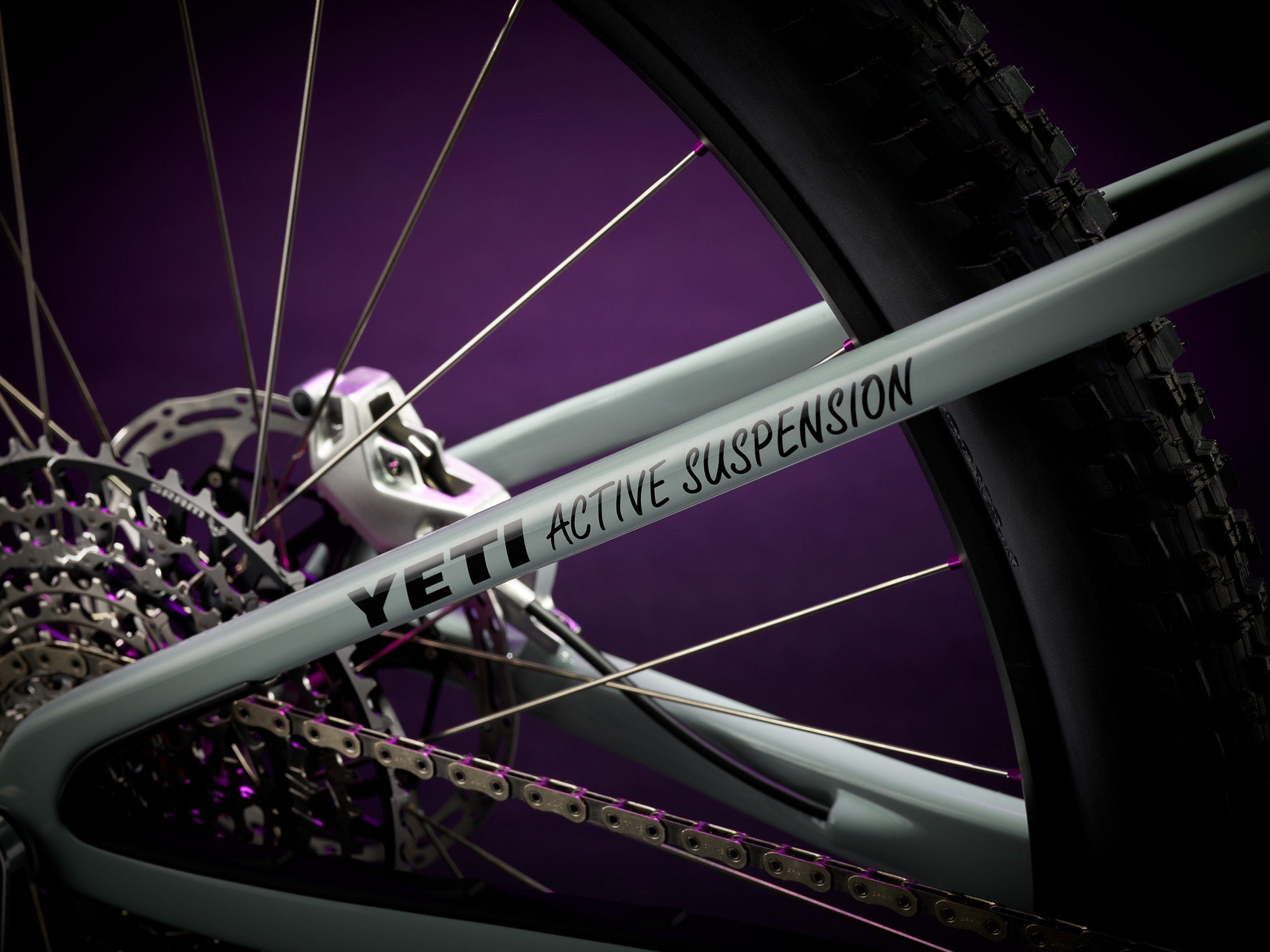
Yeti 40th Anniversary ASR active suspension livery
“Active suspension” harks back to Yeti’s first full-suspension bikes. Yeti
Yeti DH rider 1990's
Yeti is one of the longest-running teams in mountain biking. Yeti

Amazon’s Top-Selling CPUs: AMD Ryzen Dominates Intel But There Are Caveats

Amazon's Top-Selling CPUs: AMD Ryzen Dominates Intel But There Are Caveats
It should come as no surprise that the best-selling CPU on Amazon is AMD’s Ryzen 7 9800X3D, a fantastic chip for gaming and one that managed to earn our Editor’s Choice award when we reviewed it last November. And maybe you wouldn’t be shocked to discover that the Ryzen 7 7800X3D—another Editor’s Choice recipient, which we don’t hand out lightly—is

Schrodinger’s Economics

databasecowgirl writes: Commenting in The Times on the absurdity of Meta’s copyright infringement claims, Caitlin Moran defines Schrodinger’s economics: where a company is both [one of] the most valuable on the planet yet also too poor to pay for the materials it profits from.

Ultimately “move fast and break things” means breaking other people’s things. Or, possibly worse, going full ‘The Talented Mr Ripley’: slowly feeling so entitled to the things you are enamored of that you end up clubbing out the brains of your beloved in a boat.


Read more of this story at Slashdot.