
DXVK 2.6.1 was just released as the newest update to this Direct3D 8 / 9 / 10 / 11 over Vulkan API implementation used by Valve’s Steam Play (Proton) and other softwarefor enjoying older Windows games on Linux…
Monthly Archives: April 2025
Sony’s Switch 2 Survey Has Gamers Hoping For A Proper PlayStation Handheld

Sony fans hoping for a proper followup to the PlayStation Vita may have a new reason to remain hopeful. In response to Nintendo announcing its upcoming Switch 2 console last week, Sony’s purportedly sent out a survey to gamers asking a bunch of questions about the handheld, one of which asks, “How interested are you in purchasing the Nintendo
Samsung Talks Tariffs And It’s Mostly Good News If You’re TV Shopping

One technology product that has experienced reduction in pricing over several decades has been the television. Thanks to the mass market that it appeals to, companies such as Samsung have produced fantastic panels for reasonable prices for most consumers (along with more expensive premium models too, of course). With the recent tariffs and
This inflatable insert promises easier fitting, lower weight and better protection than foam inserts (and no, it’s not an inner tube)
The OPTIS (Odyssey Pneumatic Tire Insert System) is a lightweight, tunable, tyre insert, which is inflated with a bike pump rather than arriving as a fully turgid foam strip. Similar to a motorcycle mousse, the OPTIS is a departure from the standard foam inserts.
It works by using a not-very-stretchy inner tube, which forms a very lightweight band inside the rim.
Instead of expanding outward into the tyre’s casing like an ordinary inner tube, once inflated, the OPTIS cinches down, hugging the rim.
This creates a bead lock, preventing the tyre from burping. It also protects the rim from impact.

Odyssey claim that the OPTIS adds only 90g to a traditional tubeless setup, making it much lighter than most inserts.
Besides weight saving, the insert’s firmness can be tuned to suit conditions and rider tastes.
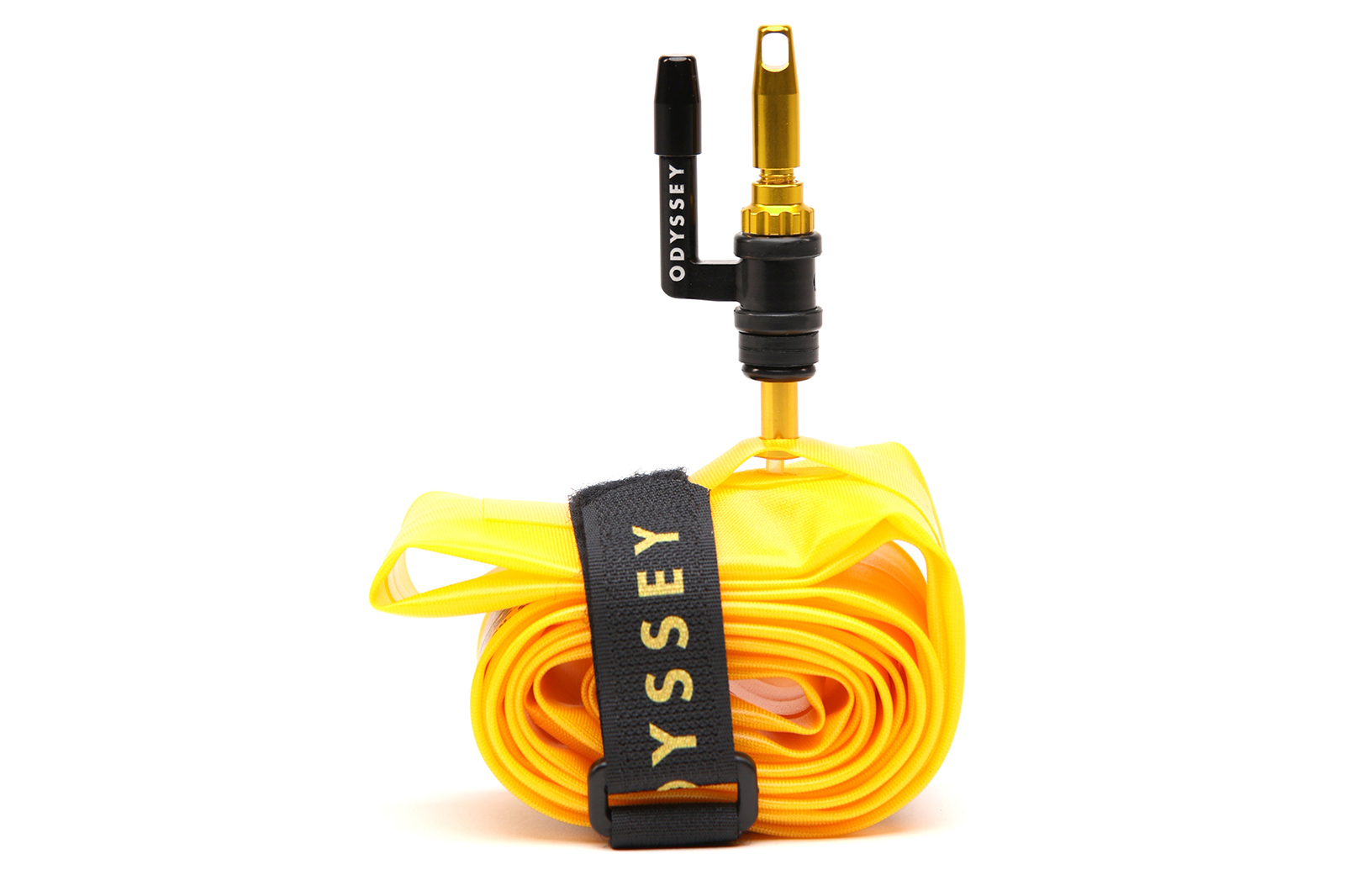
The inner tube is filled with air through a special valve, which uses the same central valve stem as the Presta valve, which fills the tubeless tyre above the insert.
Odyssey claims installation is easier than a standard insert, and can even be used to help seat stubborn tubeless tyres.
Odyssey also claims the OPTIS offers lower rolling resistance on rough surfaces than foam inserts, citing that losses from hysteresis (the foam material moving against the inside of the tyre) will be reduced.
Haven’t we seen this before?
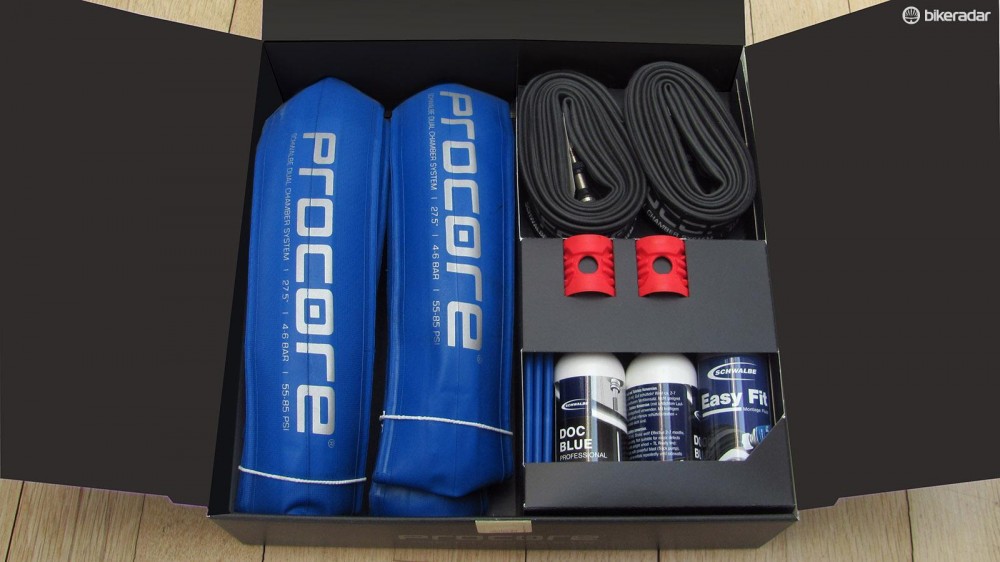
The eagle-eyed amongst you may think this is a very similar concept to the Schwalbe Procore from 2016 – and you would be right, but there are a few key differences which set the OPTIS apart.
Firstly, the OPTIS uses just a bare inflatable tube made of a relatively inflexible material.
The Schwalbe Procore used a pseudo-tyre, which looked much like a beadless, blue road bike tyre, which sat over a traditional stretchy rubber inner tube.
Crucially, the valve design looks different.
The Schwalbe Procore valve was a very clever piece of engineering, but was intricate and prone to becoming blocked by the talc in the rubber inner tube.
The chunky valve on the OPTIS will hopefully alleviate these issues.
- OPTIS estimated MSRP: $89.99
- OPTIS replacement insert: $39.99
GeForce RTX 5060 Ti Breaks Cover In GPU Torture Test
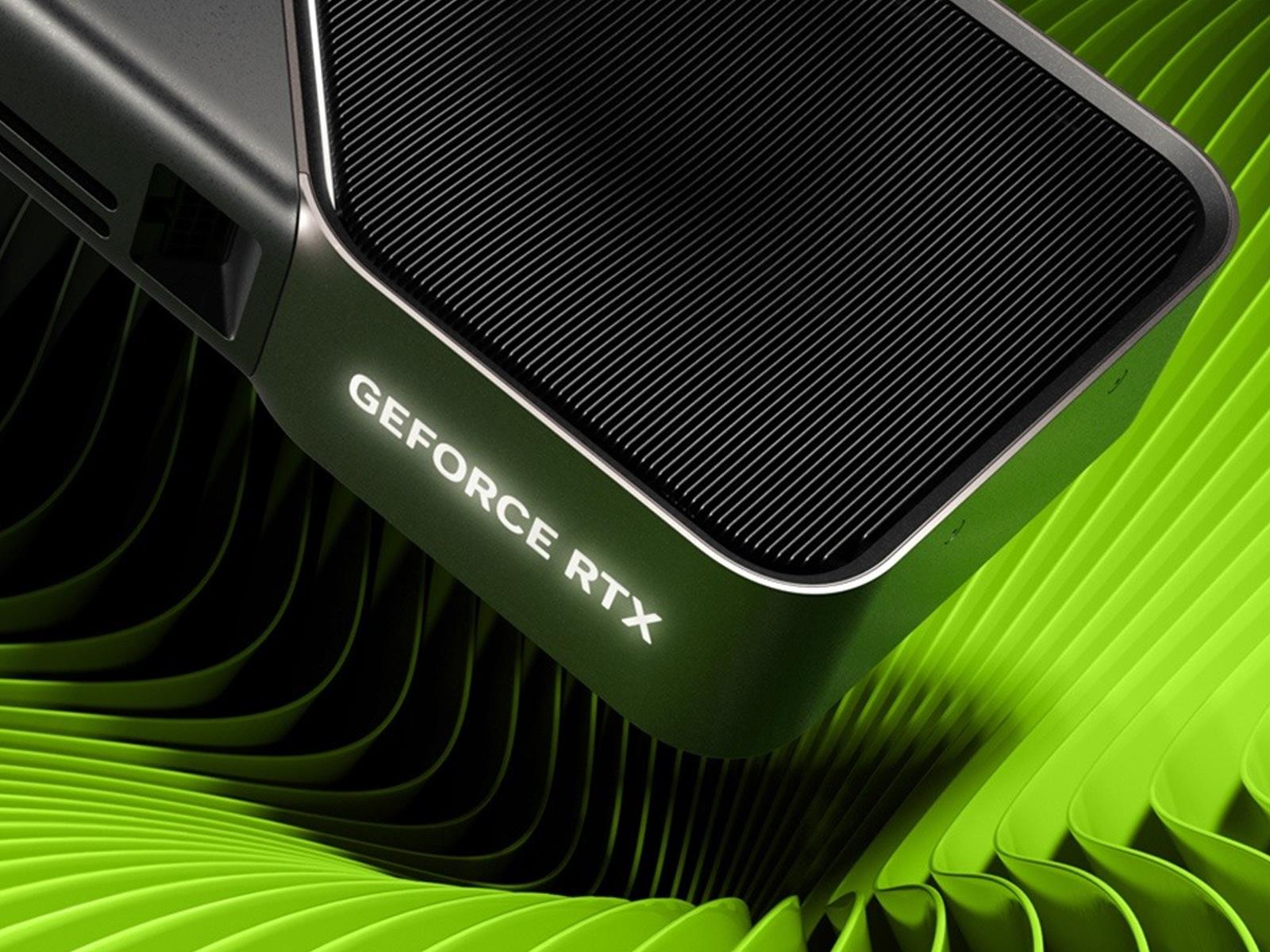
NVIDIA has not yet officially announced a GeForce RTX 5060 Ti or non-Ti model (which were reportedly delayed from a supposed March release), but if a growing mountain of leaks is any indication, the 5060 series is coming and will be here soon. The latest leak comes from a source that is somewhat off the beaten path—FurMark’s database, where
Is Zwift coming for Strava? Indoor training app announces major overhaul to track your outdoor rides
There is change afoot in the world of cycling apps. We’ve recently seen major players change how their apps work with an eye on expanding their functionality and becoming a one-stop shop for your training needs.
Not least, Zwift. On Friday, the indoor training giant announced a host of updates to its Companion app, which are set to make the platform far more than a log of turbo trainer sessions.
Previously, the app worked like a remote control for Zwift, enabling you to message other Zwifters and adjust the resistance of your trainer, among other things. It also meant you could plan rides and analyse your workouts.
But that’s set to change this summer, with the Companion app receiving a “significant update” that will combine your indoor and outdoor rides into one space. To do this, Zwift says the app will ingest your Wahoo or Garmin data.
With this holistic look at your training, the Companion app will also enable you to set weekly goals and track your fitness progress within the ecosystem for the first time. These goals can be set using the following metrics: Time, Distance, Calories, Stress Points, or Kilojoules.
All a bit familiar?

This is all reminiscent of that other cycling tech giant, Strava. With a Strava subscription, you can see your training from the great indoors and outdoors in one place, set goals, analyse your training and gain access to a range of performance metrics, such as heart rate analysis and relative effort.
There is another sign Zwift is coming for Strava with its new TrainingScore feature.
Zwift says its TrainingScore “reflects your long-term cycling fitness by averaging your recent training load over time, combining both workout volume and intensity into a single, easy-to-understand daily number.”

This sounds a lot like Strava’s Fitness Score, which is a single number Strava presents to subscribers based on heart rate or power meter data. This personalised number can be used to analyse your training or act as a benchmark for your fitness over time.
But Zwift’s latest update doesn’t just have Strava in its sights. It also seems to be taking aim at Garmin, with the release of a TrainingStatus update which mirrors Garmin’s feature of the same name.
Garmin’s Training Status feature gives you an overview of your longer-term training, prompting you with a range of status, from peaking (you’re in ideal form) down to detraining (your fitness level is decreasing).
Zwift’s TrainingStatus does a similar thing. Comparing long-term fitness with short-term fatigue, it can indicate five levels of training:
- Ready: ready to start or return to Training
- Fresh: active and ready for a challenge
- Productive: consistently training and recovering well
- Overreaching: training heavily but in need of more recovery. Rest weeks are essential for recovery and peak performance.
- Detraining: loss of fitness due to reduced training
AI shakeups

It’s not just Zwift that’s been shaking things up, though. Last year, Strava released its Athlete Intelligence tool, which uses generative AI to analyse your activities and provide written summaries of your workout.
This followed Whoop’s AI feature. Powered by ChatGPT-4, the Whoop Coach answers your health and fitness questions to turn the health-tracking app into a “powerful new coaching experience” that “goes beyond surface-level insights”.
Garmin has also shaken up its Connect app, introducing its first-ever paid subscription last month. Called Connect+, the new subscription plan is said to provide users with a range of new personalised health and fitness insights, while keeping existing features free. And yep, you guessed it: Connect+ also uses AI to provide personalised prompts.

In the indoor training space, we’ve also seen Rouvy buy FulGaz and make some big changes and develop features that bring it more in line with Zwift, although Zwift’s new updates may keep Rouvy chasing for some time.
But what this all boils down to is Zwift’s latest updates make it an even more compelling option, especially when we’re all paying closer attention to our purse strings.
Zwift costs £17.99 / $19.99 per month, while Strava costs £8.99 / $11.99 and Connect+ costs £6.99 / $6.99. Combining the training features you can expect from the likes of Strava and Garmin and a whole indoor training platform seems like a hard proposition to beat – even if Zwift hasn’t jumped on the AI bandwagon, yet.
Fixing PPA Error: Repository Does Not Have a Release File on Ubuntu
When managing software packages on Debian/Ubuntu-based systems, it’s common to add external repositories or Personal Package Archives (PPAs) to install software that isn’t available in the default repositories.
However, sometimes you might encounter an error like this:
E: The repository ‘http://ppa.launchpad.net/xyz/ubuntu focal Release’ does not have a Release file.
This error can prevent the apt command from installing or updating packages from that source.
The post Fixing PPA Error: Repository Does Not Have a Release File on Ubuntu appeared first on Linux Today.
Five Year Old Ubuntu Bug For NVIDIA Suspend/Resume Experience: Now Working On X11, Wayland Not Yet
For those looking toward a pleasant suspend and resume experience on Ubuntu with the default GNOME desktop, the Ubuntu 25.04 cycle is poised to allow for addressing a five-year-old Ubuntu bug report around the experience. However, for the near-term this is only expected to be in good shape for those using the GNOME X11 session with the GNOME Wayland session requiring further work to the Mutter compositor…
Hello World #26 out now: Digital Literacy
We often believe we understand the meaning of ‘digital literacy’, but it can be a misleading term. Do we mean digital skills? Online safety? Where does AI fit in? As computer science education evolves to meet the needs of our increasingly digital world, we believe that true digital literacy empowers young people to engage with technology thoughtfully, critically, and confidently.
In this issue of Hello World, out today for free, we discuss what digital literacy means, how it is taught in different countries around the world, and how educators are rethinking digital literacy for their students and themselves.

Digital literacy
As the use of digital technology grows, a broader view of digital literacy is necessary. Digital literacy is more than knowing how to use software. It’s the ability to use digital technologies effectively, safely, and responsibly.
In Issue 26 of Hello World, we explore this topic in detail and hear insights from educators across the world, including:
- Becci Peters shares how Computing at School (CAS) in the UK is supporting digital literacy skills for students and educators
- Sourav Pattanayak discusses how digital literacy is defined in India, and the formal and informal ways educators are teaching digital literacy
- Sandra Hartman explores strategies for enhancing digital literacy in the US
- Gavin Davenport asks what would happen if we considered digital literacy in the same way as we consider traditional literacy

This issue also includes inspiring articles from the world of computer science education:
- Leah Dungay tells us about a programme combining physics, video games, and the Large Hadron Collider to engage young people in particle physics
- Gina Fugate shares how digital accessibility enhances digital experiences for all
- Halima Bhayat shares her inspiring journey in computer science
And there is lots more for you to discover in issue 26.
New podcast series in audio and video
We’re also pleased to announce that the Hello World podcast has returned alongside the magazine with a miniseries also focused on digital literacy.
We asked for your thoughts on the podcast in our previous annual survey, and you kindly sent us lots of helpful feedback. Based on that, we’re trialling new episode formats, welcoming additional hosts, and bringing in more expert voices from around the world.
On Tuesday 15 April we’ll be releasing our first teacher tips episode, a shorter podcast with 3 teachers sharing practical, actionable tips for improving digital literacy in the classroom.

The week after, Tuesday 22 April, you’ll be able to hear a brilliant conversation between the Raspberry Pi Foundation’s Chief Learning Officer, Rachel Arthur, and two special guests: Dr Jessica Hamer from King’s College London’s School of Education and Becky Patel from Tech She Can. They’ll be discussing the current state of girls’ engagement in computing — a wide-reaching and important conversation exploring how we can empower more girls in computing through school, university and their careers.
Then on Tuesday 29 April the final episode in the miniseries will be a panel debate about “digital natives” where we’ll be asking, ‘Are young people who grew up with technology around them truly tech-savvy, or are they dependent on digital tools without understanding how they work?’ James Robinson — Senior Learning Manager here at the Raspberry Pi Foundation and regular host of the podcast — will lead this discussion as global educators debate the myth of the “digital native,” uncover how it could overlook complex issues of access, skills, and education, and consider what it really takes to be tech-smart in the modern world.
More information and links to listen can be found inside the magazine.
Share your thoughts & subscribe to Hello World
We hope you enjoy this issue of Hello World, and please get in touch with your article ideas or what you would like to see in the magazine.
- Share your thoughts and ideas about Hello World and the new issue with us via the Raspberry PI Foundation social media channels
- Find out how you can write for the magazine
Subscribe to Hello World for free to never miss an issue.
The post Hello World #26 out now: Digital Literacy appeared first on Raspberry Pi Foundation.
FFmpeg Lands AES-NI Optimized Implementation For Big Speed-Up
FFmpeg is known for carrying a lot of hand-optimized Assembly code for speeding up this widely-used multimedia library and taking advantage of AVX-512 and other modern CPU ISA capabilities. Merged yesterday was support for making use of AES-NI for those relying on Advanced Encryption Standard (AES) within FFmpeg for encrypted video streams…
Apple M1 / M2 / M3 Core Support Might Soon Be Merged For The GCC Compiler
When it comes to compiler support for Apple Silicon and their hardware at large, Apple has long been focused on the LLVM/Clang toolchain given their long history with it, employing many of the developers, and Xcode being based on LLVM. The GNU Compiler Collection (GCC) though may soon see upstream support for the newer Apple Cores thanks to the work of GCC developer Iain Sandoe along with the input of engineers from Arm and the Apple open-source team…
Linux 6.14.1 Released With An Initial Set Of Fixes & Hardware Quirks
For those that prefer waiting for the first point release before upgrading to a new feature release, Linux 6.14.1 was released this morning with an initial collection of fixes atop the Linux 6.14 codebase from two weeks ago…
8 Useful Free and Open Source Virtualization Tools
This roundup focuses on Type 2 hypervisors. We also include GUI frontends and wrappers to view, access, and manage remote and virtual systems.
Linuxiac Weekly Wrap-Up: Week 14 (Mar 31 – Apr 6, 2025)
Catch up on the latest Linux news: APT 3.0, Plasma 6.3.4, Nitrux 3.9.1, Linux Lite 7.4, Firefox 137, Thunderbird 137, Fedora 43 ushers in RPM 6, and more.
Luckfox Nova Features Cortex-A35 and Onboard Audio Peripherals
LuckFox has introduced a compact Linux development board named Luckfox Nova, built around the Rockchip RK3308B. This quad-core 64-bit Arm Cortex-A35 processor runs at 1.3GHz and is designed for audio processing and smart voice applications. This device shares the same form factor as other LuckFox boards, such as the Pico Ultra RV1106 (ARM Cortex-A7) and […]
Starving Dolphins in Florida Traced to Algae Bloom Fueled by Human Waste

The dumping of effluent and fertilizer into Florida waters caused a massive bloom of phytoplankton, killing off much of the dolphins’ food supply.
Turbostat Utility Bumps 1024 CPU Core Limit To 8192 Cores After HPE Breaches It With 1152 Cores
On Sunday prior to releasing Linux 6.15-rc1, one of the last feature pulls was merging updates for the Turbostat utility that lives within the Linux kernel source tree. The Turbostat tool provides CPU frequency and power statistics along with the ability to query temperatures and other CPU metrics on AMD and Intel processors…
Linus Torvalds Announces First Linux Kernel 6.15 Release Candidate
Today, Linus Torvalds announced the general availability of the first Release Candidate development milestone of the upcoming Linux 6.15 kernel series for public testing.
PostgreSQL Turns To AVX-512 For CRC32 Computations: Up To 3x Faster
In addition to the recent optional IO_uring support for the PostgreSQL database server on Linux and async I/O batch mode, another exciting performance improvement was merged this week. Landing in the PostgreSQL database server this week was support for using AVX-512 instructions for CRC32C computations…
Kernel prepatch 6.15-rc1
Linus has released 6.15-rc1 and closed the
merge window for this release. “As expected, this was one of the bigger
“. In the end, 12.633 non-merge changesets were
merge windows, almost certainly just because we had some pent-up
development due to the previous releases being impacted by the holiday
season. That said, while it’s bigger than normal, it’s not some kind of
record-breaking thing.
pulled into the mainline during this merge window.