The Morning After: Trump’s tariffs are disrupting Nintendo’s Switch 2 plans

Timing is everything. Hours after I published our Friday newsletter, debating the price of Nintendo’s new console, the company announced it would delay US pre-orders for the Switch 2 as it wrestled with a new set of tariffs introduced by President Trump.

“Pre-orders for Nintendo Switch 2 in the US will not start April 9, 2025, in order to assess the potential impact of tariffs and evolving market conditions,” Nintendo told Engadget. It added that the console is still set to launch on June 5, however.

Last week, the Trump administration announced a set of new tariffs on a swath of countries, including Japan (Nintendo’s base of operations), China and Vietnam. Those last two countries, where Nintendo manufactures much of its hardware, will be subject to import duties of 54 percent and 46 percent.

Nintendo said the Switch 2 would cost $450 at launch — and we’ve discussed the rises enough — but there’s no word yet on whether that price will get readjusted, or whether the company will just distribute fewer consoles to the US.

It’s not the only one reassessing things in the wake of the recent tariffs. Jaguar Land Rover is pausing shipments to the US. Vehicle imports face a 25 percent tariff, and the company told the AP it was “taking some short-term actions including a shipment pause in April, as we develop our mid- to longer-term plans.”

Relatively smaller companies are also figuring things out: Framework, best known for its modular, repairable laptop series, announced it was also suspending US sales for some of its laptops.

— Mat Smith

Get Engadget’s newsletter delivered direct to your inbox. Subscribe right here!

The biggest stories you might have missed

Eufy’s new robot mowers use smart vision to trim your grass

No GPS needed.

TMA
Engadget

Anker’s lifestyle brand, Eufy, is expanding from its successful move into robot vacuums and going outdoors. The company has been sharing details of its first two robot mowers for a few months, but now the pricey robo-gardeners are on sale: The Eufy E15 ($1,599) can cover up to 800 square meters (sqm) and the E18 ($1,999) can handle 1,200 sqm, and they’re available to order today from Eufy and Amazon. We’ve been testing them, and we’re impressed. They’re also surprisingly quiet. Read on for our full verdict.

Continue reading.

Amazon’s new AI feature will buy stuff for you

Brands still need websites in the Amazon app for it to work.

Amazon’s latest AI-powered feature to make you buy more things is called Buy for Me, where the company can make purchases for you from other websites. The feature is built into the Amazon app. When you search for an item from a particular brand, you may see results labeled Shop brand sites directly, separate from your usual results. Amazon will purchase the item for you, using agentic AI, a type of AI that doesn’t need human intervention, to provide your name, address and payment details for the checkout process. Amazon says it’s not getting a cut from these sales, at least at this experimental stage, but there must be something in it for Amazon.

Continue reading.

Miso from space

It’s apparently nuttier than terrestrial miso.

TMA
Jimmy Day

In a study published in the journal iScience, researchers from the US and Denmark say they were able to make decent-tasting miso on the International Space Station — but the flavor and smell was different from similar miso made on Earth. The team suggests the findings reflect a sort of space terroir, playing off the term used in relation to wine grapes to describe unique, location-specific flavor characteristics.

“There are some features of the space environment in low earth orbit — in particular microgravity and increased radiation — that could have impacts on how microbes grow and metabolize and thus how fermentation works,” co-lead author Joshua D. Evans of Technical University of Denmark said in a press release.

Continue reading.

This article originally appeared on Engadget at https://www.engadget.com/general/the-morning-after-engadget-newsletter-111618899.html?src=rss

Meta brings ‘teen accounts’ to Facebook and Messenger

Meta is bringing its “teen accounts” to Facebook and Messenger. Like on Instagram, the company will begin automatically moving younger teens to the new accounts, which come with mandatory parental control features and restrictions on who they can message and interact with.

The company first introduced the feature on Instagram last fall and now has 54 million teens with the more locked-down accounts. (Instagram requires teens between the ages of 13 and 15 to use a teen account and has in-app tools meant to catch those lying about their ages.) Teen accounts on Facebook and Messenger will operate similarly. Teens won’t be able to interact with unknown contacts or change certain privacy settings unless a parent approves the action. Parents will also be able to monitor their child’s screen time metrics and friends list.

Meta is also adding new safety features to teen accounts on Instagram. With the change, teens under 16 will need parental permission to start a live broadcast. The app will also prevent younger teens from turning off nudity protection — the feature that automatically blurs images in direct messages that contain “suspected nudity” — unless they get parental approval.

Those may seem like obvious safeguards (they are) but they at least show that Meta is closing obvious gaps in its teen-focused safety features. The company has come under intense scrutiny over the effect its apps, particularly Instagram, have on teens in recent years. Dozens of states are currently suing Meta over alleged harms to younger users.

This article originally appeared on Engadget at https://www.engadget.com/social-media/meta-brings-teen-accounts-to-facebook-and-messenger-100042497.html?src=rss

The best AirPods for 2025

You don’t need a set of AirPods to get wireless audio from your iPhone, iPad or Mac, but Apple’s earbuds and headphones offer a lot of convenient integrations with its other products that you won’t find anywhere else. After helping popularize true wireless earbuds with its original AirPods, the company has expanded its lineup to include noise-canceling models and a set of over-ear headphones. Here’s what you need to know about AirPods in general, along with the best overall, budget and over-ear picks from Apple’s current slate of products.

Table of contents

What you need to know about AirPods

When it comes to Apple’s earbuds and headphones, there are several things you’ll want to keep in mind before making your final decision. First, the standard AirPods are the open-design earbuds with no tip that allow some environmental noise to come into your ears at all times. The Apple AirPods Pro are the model with the soft ear tips that completely close off your ear canal, which enables features like more powerful noise cancellation and the hearing test. Lastly, the Apple AirPods Max are the company’s over-ear noise-canceling headphones preferred by audiophiles, and currently the company’s only option for wireless headphones at all that aren’t made by Beats.

There are a few features that are available across all models as they’ve become inherent to the AirPods experience. First, you can expect connectivity perks like Automatic Switching between Apple devices that are synced with your iCloud account. This means that a pair of AirPods will automatically change to your phone when you get a call while you’re listening to music on a MacBook, for example. It’s functionally similar to multipoint Bluetooth, but the feature isn’t limited to two devices like most earbuds and headphones. Second, hands-free access to Siri is the default, allowing you to ask the assistant for help without touching your AirPods. And lastly, Personalized Spatial Audio with dynamic head tracking is available across the entire lineup, even on the most affordable version and the AirPods 4 with active noise cancellation.

If you don’t think any of the AirPods options are right for you, consult our recommendations on the best wireless earbuds and best wireless headphones for some alternatives.

Best AirPods for 2025

Best AirPods specs comparison chart

AirPods 4

AirPods Pro 2

AirPods Max

Price

$129

$249

$549

Design

In-ear

In-ear

Over-ear

H2 chip

Yes

Yes

Yes

ANC

No

Yes

Yes

Spatial audio with dynamic head tracking

Yes

Yes

Yes

Hearing test

No

Yes

No

Rated battery life

5 hours

6 hours

20 hours

Durability

Dust, sweat, and water resistant (IP54)

Dust, sweat, and water resistant (IP54)

N/A

Other AirPods we tested

AirPods 4 with ANC

The AirPods 4 with ANC represent the first time active noise cancellation has been available on the open-wear, “regular” AirPods. Design-wise, they’re the same as the non-ANC model, so the difference is entirely in the features list. This more expensive version adds Adaptive Audio, Transparency mode, Conversation Awareness and a wireless charging case. The ANC isn’t as powerful as the AirPods Pro 2, partially due to the fact that the AirPods 4 doesn’t completely seal off your ears. The noise-canceling performance is definitely useful though, working best with constant, low-frequency annoyances like fans and white noise machines. Lastly, you won’t get access to Apple’s hearing test and hearing aid features, partially due to the fact that the AirPods 4 with ANC doesn’t seal off your ears, which would affect accuracy and effectiveness.

This article originally appeared on Engadget at https://www.engadget.com/audio/headphones/best-airpods-100041810.html?src=rss

Bluesky Can’t Take a Joke

On Bluesky, the joke’s on you if you don’t get the joke. The social network has become a “refuge” for those fleeing X and Threads, but its growing pains include a serious case of humor-impairment. When Amy Brown jokingly posted she was “screaming, crying, and throwing up” about price differences between Ohio and California Walgreens, literal-minded users scolded her for exaggerating. Brown, a former Wendy’s social media manager who got banned from X after impersonating Elon Musk, puts it simply: “We’re both speaking English, but I’m speaking internet.”

This clash stems from Bluesky’s oddly mixed population: irony-steeped Twitter refugees mingling with earnest Facebook transplants and MSNBC viewers who took the plunge after seeing the platform mentioned on shows like Morning Joe. “It’s riff collapse,” says cartoonist Mattie Lubchansky, describing how her obviously absurd Oscar post triggered sincere movie recommendations.


Read more of this story at Slashdot.

US’s AI Lead Over China Rapidly Shrinking, Stanford Report Says

The U.S. is still the global leader in state-of-the-art AI, but China has closed the gap considerably, according to a new report from Stanford. Axios: Institutions based in the U.S. produced 40 AI models of note in 2024, compared with 15 from China and three from Europe, according to the eighth edition of Stanford’s Artificial Intelligence Index, released on Monday.

However, the report found that Chinese models have rapidly caught up in quality, noting that Chinese models reached near parity on two key benchmarks after being behind leading U.S. models by double digit percentages a year earlier. Plus, it said, China is now leading the U.S. in AI publications and patents.


Read more of this story at Slashdot.

No, the Dire Wolf Has Not Been Brought Back From Extinction

Colossal Biosciences has claimed it “successfully restored” the extinct dire wolf after a “10,000+ year absence,” but scientists clarify these are actually genetically modified grey wolves. The U.S. company announced three pups — males Remus and Romulus born in October, and female Khaleesi born in January — as dire wolves, but made only 20 genetic edits to grey wolves.

Beth Shapiro of Colossal told New Scientist that just 15 modifications were based on dire wolf DNA, primarily targeting size, musculature and ear shape. Five other changes involve mutations known to produce light coats in grey wolves. A 2021 DNA study revealed dire wolves and grey wolves last shared a common ancestor about 6 million years ago, with jackals and African wild dogs more closely related to grey wolves.


Read more of this story at Slashdot.

States Are Banning Forever Chemicals. Industry Is Fighting Back

New Mexico’s legislature passed bills last week that would ban consumer products containing PFAS, joining a small but growing number of states taking action against these persistent “forever chemicals.” If signed by the governor, the legislation would prohibit the sale of many products with added per- and polyfluorinated alkyl substances (PFAS) in New Mexico, making it the third state after Maine and Minnesota to enact such comprehensive restrictions.

At least 29 states have PFAS-related bills before state legislatures this year, according to Safer States, a network of advocacy organizations. Research shows PFAS accumulate in the environment and human bodies, potentially causing health problems from high cholesterol to cancer. EPA figures indicate almost half of Americans are exposed to PFAS in their drinking water.

Wired reports that chemical and consumer products industries are aggressively fighting state-level bans on “forever chemicals” through lobbying and legal action as regulations spread across the United States. The Cookware Sustainability Alliance, formed in 2024 by major cookware manufacturers, has testified in 10 statehouses against PFAS restrictions and sued Minnesota in January, claiming its ban is unconstitutional. (The New Mexico bills include notable exemptions, particularly for fluoropolymers used in nonstick cookware, following successful lobbying by industry groups.)

Industry groups are also targeting federal regulators, with the American Chemistry Council and others recommending the EPA adopt a narrower definition of PFAS. “The federal regulatory approach is preferable to a patchwork of different and potentially conflicting state approaches,” said Erich Shea from the American Chemistry Council.


Read more of this story at Slashdot.

A military satellite waiting to launch with ULA will now fly with SpaceX

For the second time in six months, SpaceX will deploy a US military satellite that was sitting in storage, waiting for a slot on United Launch Alliance’s launch schedule.

Space Systems Command, which oversees the military’s launch program, announced Monday that it is reassigning the launch of a Global Positioning System satellite from ULA’s Vulcan rocket to SpaceX’s Falcon 9. This satellite, designated GPS III SV-08 (Space Vehicle-08), will join the Space Force’s fleet of navigation satellites beaming positioning and timing signals for military and civilian users around the world.

The Space Force booked the Vulcan rocket to launch this spacecraft in 2023, when ULA hoped to begin flying military satellites on its new rocket by mid-2024. The Vulcan rocket is now scheduled to launch its first national security mission around the middle of this year, following the Space Force’s certification of ULA’s new launcher last month.

Read full article

Comments

Framework Stops Selling Some of Its Laptops in the US Due To Tariffs

Framework — a company that makes upgradeable and repairable laptops — will pause sales on several versions of one of its models in America thanks to Trump’s tariffs, it said. From a report: “Due to the new tariffs that came into effect on April 5th, we’re temporarily pausing US sales on a few base Framework Laptop 13 systems (Ultra 5 125H and Ryzen 5 7640U). For now, these models will be removed from our US site. We will continue to provide updates as we have them,” Framework said in a post on X.

A spokesperson for Framework told 404 Media in an email that the company was pausing sales on their six lowest priced units in the U.S. They clarified that those models are still available to customers that are ordering the machines outside of America.


Read more of this story at Slashdot.

Framework “temporarily pausing” some laptop sales because of new tariffs

Framework, the designers and sellers of the modular and repairable Framework Laptop 13 and other products, announced today that it would be “temporarily pausing US sales” on some of its laptop configurations as a result of new tariffs put on Taiwanese imports by the Trump administration. The affected models will be removed from Framework’s online store for now, and there’s no word on when buyers can expect them to come back.

“We priced our laptops when tariffs on imports from Taiwan were 0 percent,” the company responded to a post asking why it was pausing sales. “At a 10 percent tariff, we would have to sell the lowest-end SKUs at a loss.”

“Other consumer goods makers have performed the same calculations and taken the same actions, though most have not been open about it,” Framework said. Nintendo also paused US preorders for its upcoming Switch 2 console last week after the tariffs were announced.

Read full article

Comments

Waymo has ‘no plans’ to sell ads to riders based on camera data

Rumors circulated today that robotaxi company Waymo might use data from vehicles’ interior cameras to train AI and sell targeted ads to riders. However, the company has tried to quell concerns, insisting that it won’t be targeting ads to passengers.

The situation arose after researcher and engineer Jane Manchun Wong discovered an unreleased version of Waymo’s privacy policy that suggested the robotaxi company could start using data from its vehicles to train generative AI. The draft policy has language allowing customers to opt out of Waymo “using your personal information (including interior camera data associated with your identity) for training GAI.” Wong’s discovery also suggested that Waymo could use that camera footage to sell personalized ads to riders.

Later in the day, The Verge obtained comments on this unreleased privacy policy from Waymo spokesperson Julia Ilina. “Waymo’s [machine learning] systems are not designed to use this data to identify individual people, and there are no plans to use this data for targeted ads,” she said. Ilina said the version found by Wong featured “placeholder text that doesn’t accurately reflect the feature’s purpose” and noted that the feature was still in development. It “will not introduce any changes to Waymo’s Privacy Policy, but rather will offer riders an opportunity to opt out of data collection for ML training purposes.”

Hopefully Waymo holds to those statements. Privacy and security are huge concerns as AI companies try to feed their models as much information as possible. Waymo is owned by Alphabet and Google is developing its own AI assistant, Gemini, as well as other AI projects with its DeepMind division.

This article originally appeared on Engadget at https://www.engadget.com/transportation/waymo-has-no-plans-to-sell-ads-to-riders-based-on-camera-data-225340265.html?src=rss

Framework pauses some US laptop sales due to tariffs

Consumer electronics brand Framework announced today on X that it will temporarily suspend US sales of select laptop models as a result of the global tariffs enacted for the country last week. The company said it will remove the Ultra 5 125H and Ryzen 5 7640U versions of its Laptop 13 systems from its website. At the time of publish, that Ultra 5 Intel model is not listed, but the Ryzen 5 one with the AMD chip appears to still be available for purchase.

In a follow-up post, the company said that it originally priced its laptops based on a 0 percent tariff for goods from Taiwan. With the current 10 percent tariff, the products would be sold at a loss. “Other consumer goods makers have performed the same calculations and taken the same actions, though most have not been open about it,” Framework said.

Given the language of the initial post, this doesn’t seem to be the end of US customers’ chances to buy Laptop 13 models. But the sweeping tariffs on imports enacted by President Donald Trump last week have already sparked other industries to rethink their US sales and pricing. UK-based Jaguar Land Rover also paused shipments to the US as a result of the tariffs, while Japan’s Nintendo has delayed pre-orders for the Switch 2 gaming console, although the launch date appears unchanged.

This article originally appeared on Engadget at https://www.engadget.com/computing/framework-pauses-some-us-laptop-sales-due-to-tariffs-221115971.html?src=rss

Nintendo explains why Switch 2 hardware and software cost so much

Among the many surprises during last week’s wider unveiling of the Nintendo Switch 2 was the pricing: $450 for the console itself and $70 to $80 for many first-party games. Now, in a set of interviews posted today (but conducted during last week’s unveiling event), Nintendo executives are explaining and defending those prices, even as Trump’s tariffs are apparently forcing the company to pause and reassess its whole launch strategy.

Nintendo of America President Doug Bowser was speaking to CNBC just as Trump’s tariffs were being announced and said in the moment that “we’re still all trying to really understand [the tariffs] better and understand what possible impacts may arise from that.” At the same time, he said that the company “didn’t consider tariffs into that equation” when choosing the Switch 2’s $450 price and instead went with what “we felt that was going to be the right price point for our consumers and the right value proposition, if you will, for the device that we’re creating.”

Elsewhere in that CNBC interview, Bowser suggested that Nintendo isn’t following the Wii U example of selling hardware at a loss in order to gain more potential software customers. Instead, Bowser said the company is “trying to find a way to maintain… margins on the hardware even though they may be more slim than they are on software,” and then “to make sure that they’re seeing the value in their investment in one of our devices” through software.

Read full article

Comments

FreeDOS 1.4 brings new fixes and features to modern and vintage DOS-based PCs

We’re used to updating Windows, macOS, and Linux systems at least once a month (and usually more), but people with ancient DOS-based PCs still get to join in the fun every once in a while. Over the weekend, the team that maintains FreeDOS officially released version 1.4 of the operating system, containing a list of fixes and updates that have been in the works since the last time a stable update was released in 2022.

FreeDOS creator and maintainer Jim Hall goes into more detail about the FreeDOS 1.4 changes here, and full release notes for the changes are here. The release has “a focus on stability” and includes an updated installer, new versions of common tools like fdisk, and format and the edlin text editor. The release also includes updated HTML Help files.

Hall talked with Ars about several of these changes when we interviewed him about FreeDOS in 2024. The team issued the first release candidate for FreeDOS 1.4 back in January.

Read full article

Comments

You Can Get This Waterproof, Portable Skullcandy Speaker on Sale for $35 Right Now

We may earn a commission from links on this page. Deal pricing and availability subject to change after time of publication.

If you’ve ever tried dragging a too-large speaker—or worse, relied on your phone’s tiny audio for sound projection—you should appreciate this sale on the Skullcandy Terrain Mini: It’s palm-sized, no-frills, and currently on sale for $34.99 down from $39.99 on StackSocial, with free shipping in the U.S. That price drop isn’t jaw-dropping, but for under $35, you’re looking at a IPX7-rated waterproof speaker that won’t be damaged if it’s dropped in the pool this summer.

The Skullcandy Terrain Mini has Bluetooth 5.3, so the connection holds steady within a 33-foot range. The battery is said to give you 14 hours of playtime, which should cover most day-long adventures or at least a solid workday playlist without needing a recharge. When it does die, it uses USB-C, which is thankfully included in the box, so you won’t need to dig through old cords. It also comes with a wrist strap that you can clip it to a bag or swing it around like a lanyard when you’re on the move. As far as sound goes, it’s decent on its own, but the True Wireless Stereo feature means you can pair it with a second unit for real stereo separation. You can also use Skullcandy’s Multi-Link to chain together up to 99 of these. Realistically, you’ll probably never do that, but the option’s there if you ever want to DJ a flash mob.

That said, this speaker doesn’t punch far above its size. It’s built more for casual, portable listening than booming bass or high-volume precision. The fabric mesh helps with durability and sound clarity, but it’s not going to replace your home speaker setup. If you’re in the market for a rugged little speaker that’s waterproof, rechargeable, and easy to toss in a bag, the Skullcandy Terrain Mini fits.

The White House has reportedly settled on an explanation for how ‘Signalgate’ happened

After an internal investigation, The White House has come up with a likely explanation for how Jeffrey Goldberg, the editor-in-chief of The Atlantic, was included in a Signal chat filled with Trump officials planning to bomb the Houthis. The Guardian reports that the issue came down to National Security Advisor Mike Waltz not understanding how his iPhone works.

Apparently, after Goldberg attempted to contact the Trump campaign about a separate issue in 2024, Brian Hughes, a Trump spokesperson, shared Goldberg’s contact information and email signature with Waltz. It only took a few wrong taps after that to lay the groundwork for “Signalgate,” The Guardian writes:

Waltz did not ultimately call Goldberg, the people said, but in an extraordinary twist, inadvertently ended up saving Goldberg’s number in his iPhone – under the contact card for Hughes, now the spokesperson for the national security council.

So Waltz didn’t realize his iPhone was updating a contact rather than creating a new one, and meant to add Hughes to the group chat rather than Goldberg. This explanation doesn’t change the fact that the kind of planning happening in the “Houthi PC small group” probably shouldn’t have taken place on an encrypted messaging app — and especially without Congress weighing in. But this discovery does add a new flavor of grim stupidity to the whole affair.

Not long after Signalgate, the Pentagon warned against using Signal because it’s vulnerable to Russian phishing attacks, but clearly the Trump administration likes the app’s security and the instantaneous communication it allows. Having a more secure option reportedly hasn’t stopped Waltz from using Gmail, though.

This article originally appeared on Engadget at https://www.engadget.com/cybersecurity/the-white-house-has-reportedly-settled-on-an-explanation-for-how-signalgate-happened-212107380.html?src=rss

China Launches GPMI, a Powerful Alternative To HDMI and DisplayPort

AmiMoJo writes: The Shenzhen 8K UHD Video Industry Cooperation Alliance, a group made up of more than 50 Chinese companies, just released a new wired media communication standard called the General Purpose Media Interface or GPMI. This standard was developed to support 8K and reduce the number of cables required to stream data and power from one device to another. According to HKEPC, the GPMI cable comes in two flavors — a Type-B that seems to have a proprietary connector and a Type-C that is compatible with the USB-C standard.

Because 8K has four times the number of pixels of 4K and 16 times more pixels than 1080p resolution, it means that GPMI is built to carry a lot more data than other current standards. There are other variables that can impact required bandwidth, of course, such as color depth and refresh rate. The GPMI Type-C connector is set to have a maximum bandwidth of 96 Gbps and deliver 240 watts of power. This is more than double the 40 Gbps data limit of USB4 and Thunderbolt 4, allowing you to transmit more data on the cable. However, it has the same power limit as that of the latest USB Type-C connector using the Extended Power Range (EPR) standard. GPMI Type-B beats all other cables, though, with its maximum bandwidth of 192 Gbps and power delivery of up to 480 watts.


Read more of this story at Slashdot.

I Played the AI Version of ‘Quake II,’ and Here’s How It Went

AI tools are suddenly everywhere, and you’ve probably tried out using an AI program to generate text and images, or perhaps even audio and video. But AI isn’t just coming for media you passively experience: Companies are also using interactive entertainment, including video games.

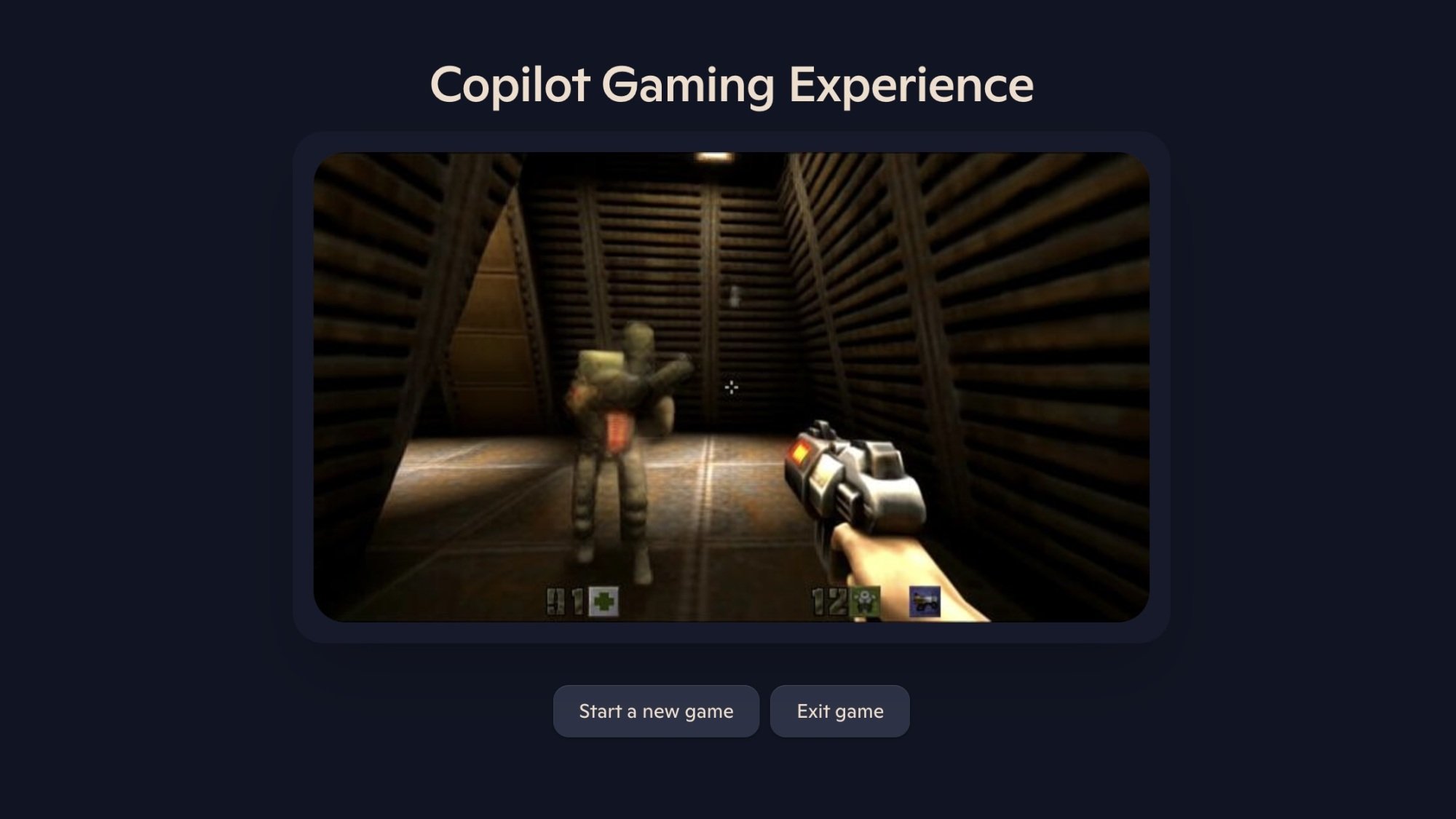
We’ve seen examples of this over the past year or so. Google’s Genie model, for example, aims to generate playable video game environments from user prompts. Earlier this year, Microsoft unveiled a similar AI model, called Muse, and that model’s first mainstream experience is now here: The company is offering an experimental version of Quake II, a game originally released in 1997, that is powered by AI.

I’ve now played the AI version of Quake, and it’s…bizarre, to say the least. It feels like playing a video game in a dream. Not because it’s good, but because it’s everything about it feels unstable and ephemeral. Other than the purely for the novelty, I’m really not sure why this thing exists.

What it’s like to play AI Quake

When you first load up the “Copilot Gaming Experience,” you agree to a popup warning you the game is rated M and that you are indeed 18 years or older—even though M-rated games are supposed to be 17 and up. Consider this your first warning that something is off.

The game loads in a small window in the center of the screen. Immediately, you can tell it’s not quite right. Sure, it’s recognizably a video game: It’s from a first-person perspective, with an animated hand holding a pistol in the bottom-right. You have a health bar, an ammo counter, and a weapon indicator. You can recognize that you are in a room, with clearly-defined (yet blocky) features. However, something about the entire experience just feels wrong, and the effect worsens as soon as you press a button.

enemies attacking in ai quake ii

Credit: Lifehacker

There is what feels like a full second delay between you pressing a key on your keyboard and the action taking place on-screen. Lag would be one thing, but that isn’t the end of it: When you do move, the environment shifts ever so slightly, like nothing around you is actually stable. For example, there are no enemies when you first start, but they may appears as you move around a room. They don’t spawn with any kind of animation or care—you move a frame, and all of a sudden, an enemy is forged. (More on that instability in a moment.)

The game plays a bit like SuperHot, in that when you stop moving, nothing happens. Enemies don’t attack, and in fact just freeze up entirely. It’s only when you take an action that you’ll notice things change on the screen: A monster may move, shape-shift (due to the AI, not a Quake gameplay mechanic) or attack, or perhaps the room itself will change entirely. You can look at the floor, spin around in a circle two or three times, then look up, and find yourself in another corner of the map.

The game does try to stay consistent. You always start in the same room, and if you’re lucky, you’ll be able to maintain the integrity of the map as you run between areas—hopefully without being shot at by a newly-generated blurry enemy. But as you move and look around, you can almost feel the ground shifting beneath you, as if the game world could shape into something else at a moments notice. This, really, is what gives it the feeling of being in a dream.

Things fall apart

Sometimes, you run into a room and encounter an enemy, firing away. But if you run past it, then turn around, it’ll be gone. You don’t even need it to exit your field of vision: By just strafing from left to right to “dodge” its attacks, I watched one enemy “fall apart” onto the floor, as if I was using the moving ground to erase the monster.

You don’t have the same problem, as it’s impossible to die. When you are attacked, your health counter appears to track downwards at a reasonable rate. However, you’ll notice the numbers start to bounce around at random. Even if your health hits zero, your character won’t collapse, nor will you get a “Game Over” screen. The counter will simply bounce around single digits as you take damage forever, or until you kill the monster (or let the AI decide it’s time to disappear the character entirely).

Game-breaking bugs

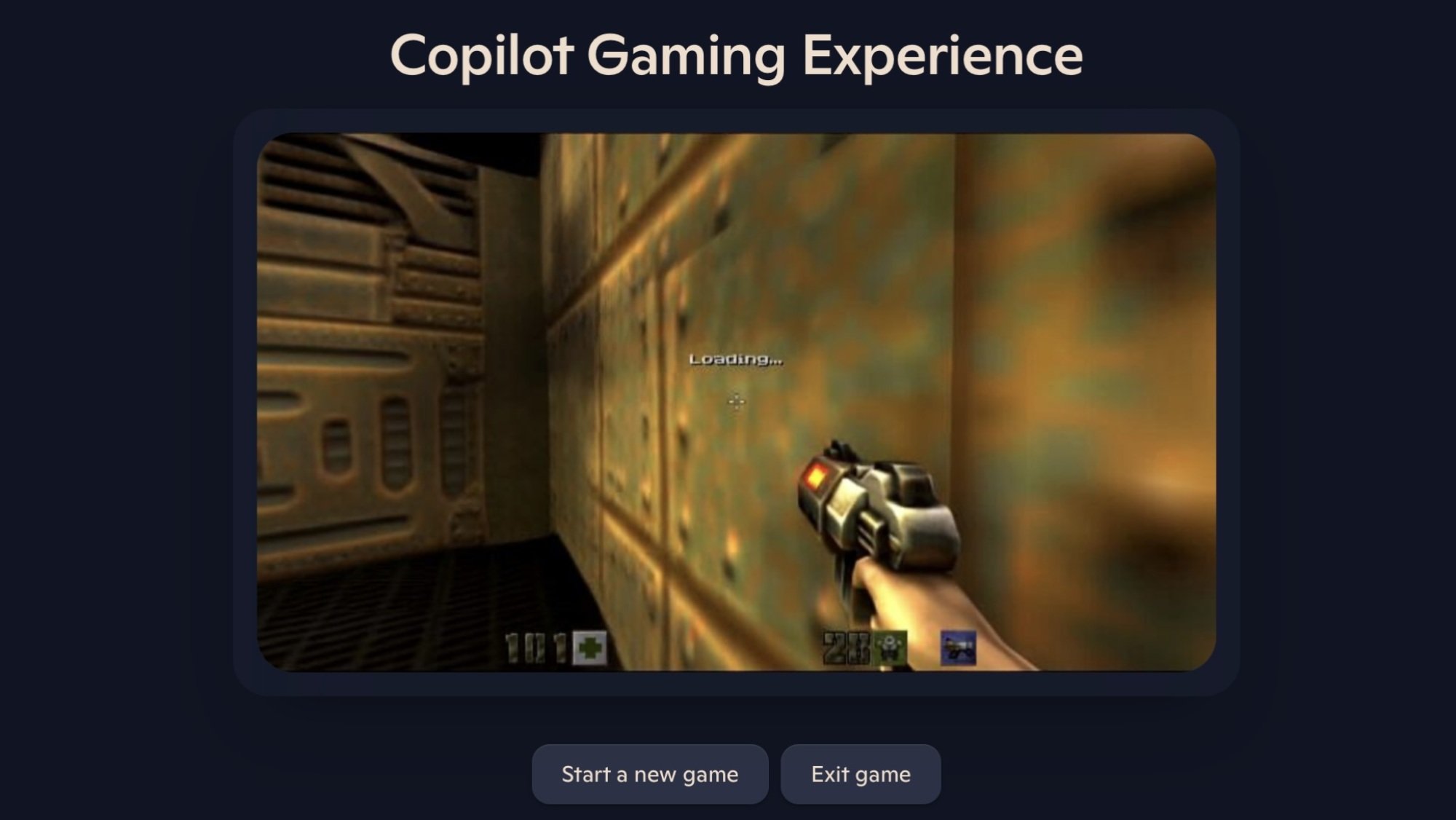
The game can simply break on a moment’s notice. On one run, I was about to enter hallway, decided to do a 360-scan of the room before I did, and when I made it all the way around, the hallway had turned into an elevator. When I walked up to the elevator button, I triggered a loading screen that never finished loading.

Another time, I looked down, spun around, and looked back up to find myself in another room entirely. As I stepped around, I was suddenly losing health, but there was no attacker in sight—at least, not one I could see. Just as I was about to fire around the room at random, the game paused and never came back to, similar to the event in the elevator. If the game doesn’t freeze on its own, the site will time you out, forcing you to start a new game if you want to continue playing.

ai quake freezing on "loading" screen

Credit: Lifehacker

Should video games be fun?

The game is powered by Microsoft’s WHAM model, which the company says was trained on human gameplay data to guess what should be displayed frame-by-frame, as well as what the player might control next. In its research paper, Microsoft enthusiastically explains what’s so great about an AI model that can generate video game environments.

I’m not so sure I agree. For one, this Quake experience isn’t fun. There’s no objective or challenge, other than to see how long you can go without breaking the experience. You can kill enemies, sure, but they can’t kill you. In fact, the AI generation may get to the enemy before they can get to you, if you simply move the wrong way.

With time, I’m sure Microsoft will present a more polished version of this experience. Perhaps there will be more consistency as you move around the map; perhaps enemies will actually stand their ground, and be capable of ending your game. But even if we get to the point where AI spits out an entirely playable experience, why would we want that? Who wants to effectively click a randomizer button and play whatever amalgamation of real video games the computer program concocts for us?

That’s not to say there aren’t potential, practical uses for AI in game development—but we should be looking at those as tools to add to a game developer’s workflow, and not something that makes that developer obsolete. If this is the current state of AI-generated video games, however, flesh and blood game probably developers aren’t going anywhere anytime soon.

Switch 2 game-key cards won’t be tied to your Nintendo account

Players are gearing up for the arrival of the Switch 2 this summer, and we’ve been piecing together details about how game ownership and sharing will work. The picture is coming together, and in true Nintendo fashion, it’s a bit odd.

Developers who release projects on the Switch 2 will have the option to sell their work as a “Game-Key card,” which looks like a traditional physical game cartridge, but has no game data stored on it. Instead, when slotted into a Switch 2, game-key cards will automatically present instructions on how to download the title in question. The hardware will need an Internet connection and enough space for the game files on its system memory or microSD Express card. Once the download is complete, that Switch 2 can run the game whenever the game-key card is inserted into the system. The Switch no longer needs an Internet connection once the title has been downloaded, unless the game separately requires you to be online to play. We’ve now learned via GameSpot that game-key cards won’t be automatically connected to a single console or to a user’s Nintendo account.

It’s an unusual hybrid approach, and with many hybrid concepts, you get the best and worst of both worlds. For instance, storage is going to be at a premium in the Switch 2 and game-key card downloads will eat into that limited space. And unfortunately, game-key cards don’t future-proof customers against the day when Nintendo might decide to shut down the servers for the Switch 2, as it did with other sunsetted hardware like the Wii U and 3DS in 2024. If and when that happens, the game-key cards will be essentially useless.

But there are some upsides, particularly when it comes to sharing or reselling games. We already knew that Nintendo would have an option called GameShare that supports local multiplayer with only a single purchased copy of the title, while Virtual Game Cards offer digital sharing (if in a convoluted way). The addition of game-key cards that aren’t tied to a single person’s Nintendo account makes it easier to pass a game off to a friend once you’ve finished with it, or to resell it and recoup some of the $80 price tag of major releases.

And in case you were wondering: yes, the game cartridges will still taste terrible.

This article originally appeared on Engadget at https://www.engadget.com/gaming/nintendo/switch-2-game-key-cards-wont-be-tied-to-your-nintendo-account-204735286.html?src=rss

You Can Get a Lifetime Subscription to Matt’s Flights on Sale for $80 Right Now

We may earn a commission from links on this page. Deal pricing and availability subject to change after time of publication.

Most of us aren’t great at hunting down cheap flights—we just hit refresh until the prices stop hurting our feelings. That’s where Matt’s Flights Premium Plan comes in. It’s like outsourcing your flight anxiety to someone who actually enjoys digging for mistake fares and limited-time deals, and from now through April 27, StackSocial is offering a lifetime subscription to this deal-hunting service for $79.99 with the promo code SAVE10—but only for new users. And yes, it’s truly lifetime: Pay once, and you get access to every jaw-dropping, typo-priced ticket Matt finds for the rest of your days. If you’re tired of checking Google Flights like it’s your part-time job, this could be a very low-lift upgrade.

Here’s what that price gets you: three or more international and domestic flight deals per week, direct access to the Matt’s Flights team for 1-on-1 travel planning via email, and unlimited custom search requests. So if you’re dead set on going from JFK to Lisbon next fall, you can just say so, and Matt will start digging. Premium members also get access to five times more deals than the free tier, which means more variety and a better shot at something that fits your dates and budget. The covered departure cities include most major airports in the U.S. and Canada, but even if your local airport isn’t on the list, Matt’s Flights will still search flights for you—just shoot them an email.

There are some caveats: You need to redeem your code within 30 days, the plan only works on one device (though it’s accessible via desktop or mobile), and this is only for new users, so if you’ve used Matt’s Flights before, you’re out of luck. And while this plan works best if you have flexible travel dates, it still has value even if you’re a once-a-year kind of traveler—especially for international trips where one mistake fare could easily save you a few hundred bucks.