
IPFire 2.29 Core Update 193 has been released today for this powerful, open-source, and secure Linux-based firewall distribution designed to protect networks against evolving cyber threats introducing post-quantum cryptography.
Monthly Archives: April 2025
Framework Laptop 12 Pre-Orders Open, Starting At €569
Framework Computer has been working on bringing the Framework 12 to market as a new, smaller and convertible laptop while retaining the upgradeable aspects that users have come to love from the company. Today the company announced the pre-orders are open and the first Framework Laptop 12 devices will be shipping in June…
Nintendo Confirms Switch 2 Won’t Have Achievements, And That Sucks

I love achievements in video games. I remember playing Call of Duty 2 on Xbox 360 and getting my first one and thinking “Oh this is neat!” And over the last 20 years, I’ve grown to enjoy them more and more as they have become a digital scrapbook documenting my gaming accomplishments across different platforms. Which…
Get Seven Great Boomer Shooters For Just $16

Calling all FPS fans! Humble Bundle is currently selling seven PC boomer shooters for less than $20. And these are some damn fine retro-themed shooters, too.
Should You Make A VR Trip To Tyffonium During Your Vacation To Japan?
As a VR fan, what is the appeal of an in-person VR attraction? Everywhere from arcades to purpose-built venues adopted the technology to allow a curious public the opportunity to jump into the world of VR, all without dropping the money necessary to buy a headset of their own. For these people, this is a window into a whole new world. Do they offer an allure to those already invested in VR?
Japan hosts a considerable variety of such VR attractions, targeting a wide range of demographics through both original experiences and collaborations with major IP. While many simply license work from VR studios both at home and abroad, Tyffonium, which operates in both Shinjuku and Odaiba, is unique. These spaces are owned and operated by the exclusive developer of all their attractions, Japanese VR studio Tyffon.
This vertical integration allows the team to tailor experiences blending commercial headsets like Meta Quest and HTC Vive with 4D motion sensors within free-roaming arena spaces, transforming its exclusive attractions into unique full-body experiences. These range from original ideas where guests swim through the depths of the ocean in Fluctus, to licensed affairs inspired by Ultraman and the 2017 Stephen King movie adaptation of It. Tyffonium’s goal is to not only craft ‘captivating new worlds with immersive virtual reality’, but to make these worlds accessible even to virtual reality newcomers.
Tyffonium invited us to visit their two locations to try these experiences for ourselves. From the five VR attractions they offer, are these stores worth finding time to visit during your next holiday to Japan? Here’s what we thought.
Fluctus
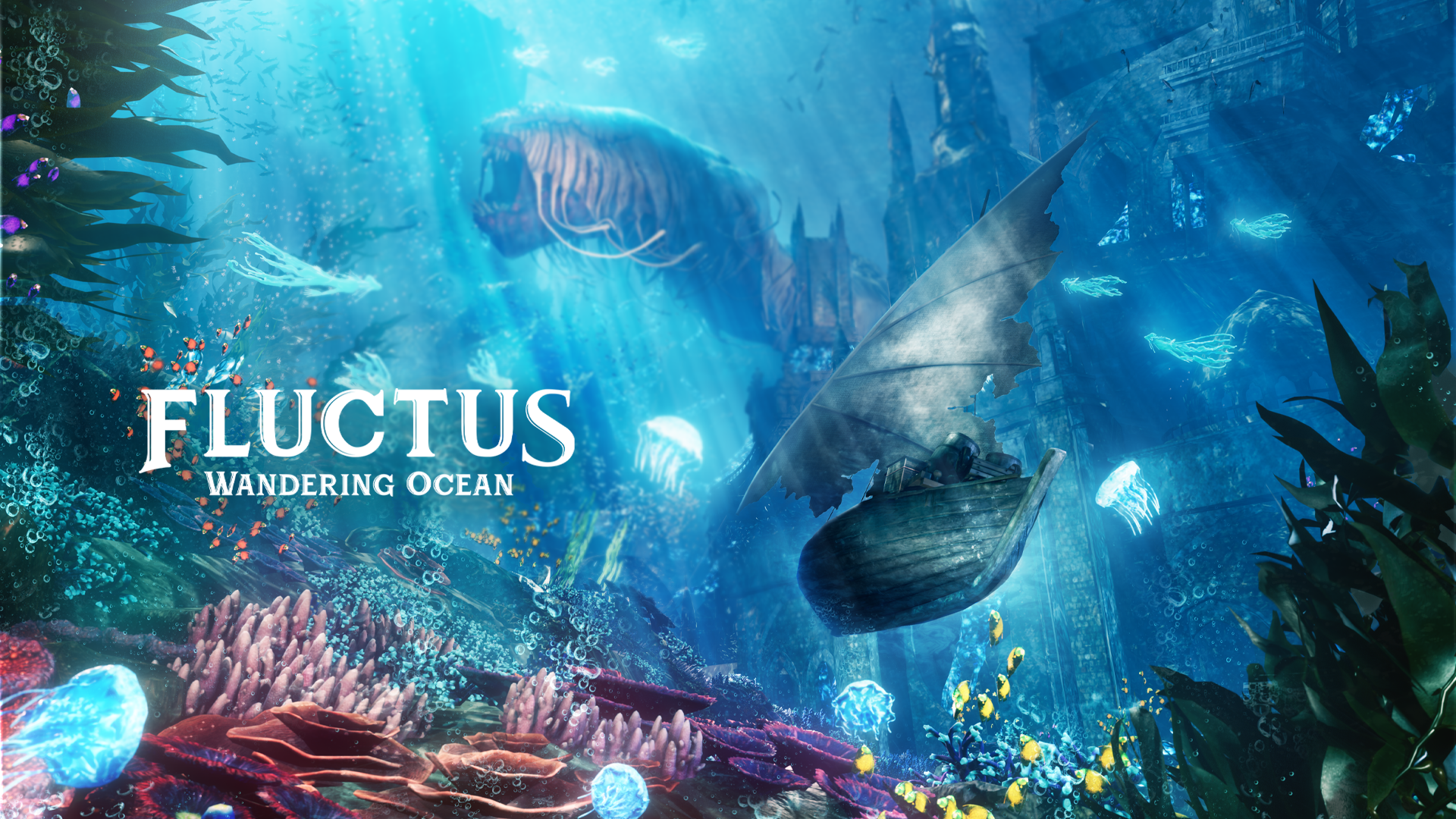
Fluctus is a seafaring, fully seated on-rails experience. An introductory narration and animated video establish the premise, with narration discussing a mysterious Bermuda Triangle-esque area of the sea from which all who visit have perished. You are the latest person seeking to uncover its mysteries. Placed in a boat, you’re trapped amidst a storm as you approach this area when your boat falls through a whirlpool underneath the water’s surface. Rather than drowning, however, you’re guided by a baby jellyfish through the vibrant ocean floor before uncovering Fluctus, an undersea city full of great wonders, and even greater threats.
Although enhanced by a 360-degree view of the ocean floor and a 4D sensual experience as the wind blows and your chair vibrates to every bump of your boat, Fluctus was perhaps the most disappointing experience on offer. That’s mostly due to the passive nature of the events on screen. Unlike other attractions, there are few ways for the player to interact with the experience beyond playing with your jellyfish companion. This is done using hand gestures, opening your hand to call it to your side before pushing it towards glowing objects around you to interact.
There are no branching paths or choices like other attractions, and the boat moves slowly enough that often you can see what’s coming long before you approach it. This removes tension once the adventure takes a more thrilling, threatening direction towards the end. It offers enough for first-time VR users to feel a sense of wonder simply in seeing this underwater world, especially with its 4D enhancements. Anyone more experienced will likely feel bored in this otherwise-brief 10-minute excursion.
Kaiju Haven VR

Kaiju Haven is one of two licensed attractions from Tyffonium inspired by Tsuburaya Production’s Ultraman IP. Despite this, Ultraman himself doesn’t show up during the experience. The stars of the show are the various kaiju encountered throughout the series, particularly Ultra Q and other early entries of the series from the ’60s and ’70s.
This experience heavily resembles Pokémon Snap, as you travel through a portal to the world of kaiju, scanning those you find to collect their data for later scientific analysis. You take the wheel of a self-driving buggy driving through lush jungles and encounter iconic creatures like Pigmon, Zetton, Red King and more. Scanning these creatures involves pointing your controller at these kaiju as soon as you spot them and holding the trigger until the scan is complete. Upon completion, you’re rewarded with brief facts about each creature, such as height and weight.
Despite being another seated attraction, this is far more engaging as you actively take in the world around you to find these hidden creatures, letting you appreciate the environmental details and love with which these kaiju have been brought to life. However, it’s very simple and while it was fun to see recognizable monsters as a tokusatsu and classic kaiju fan, those less familiar will likely find the designs unusual and confusing, and the experience shallow.
The creatures you encounter are supposedly randomized, with the promise of a unique experience every time. While fun in concept and a cool way to keep it feeling fresh, almost all attendees won’t experience the attraction more than once. It would likely be disappointing to pay money only to find your beloved Kanegon didn’t appear in your journey through this kaiju world.
Even still, I enjoyed my trip to this Kaiju Haven. The grin I had upon seeing Gomora in VR was enough to convince me this attraction was worth my time, even if this simplistic reason perhaps confirms that only fans of the franchise should choose this attraction.
Tarot VR
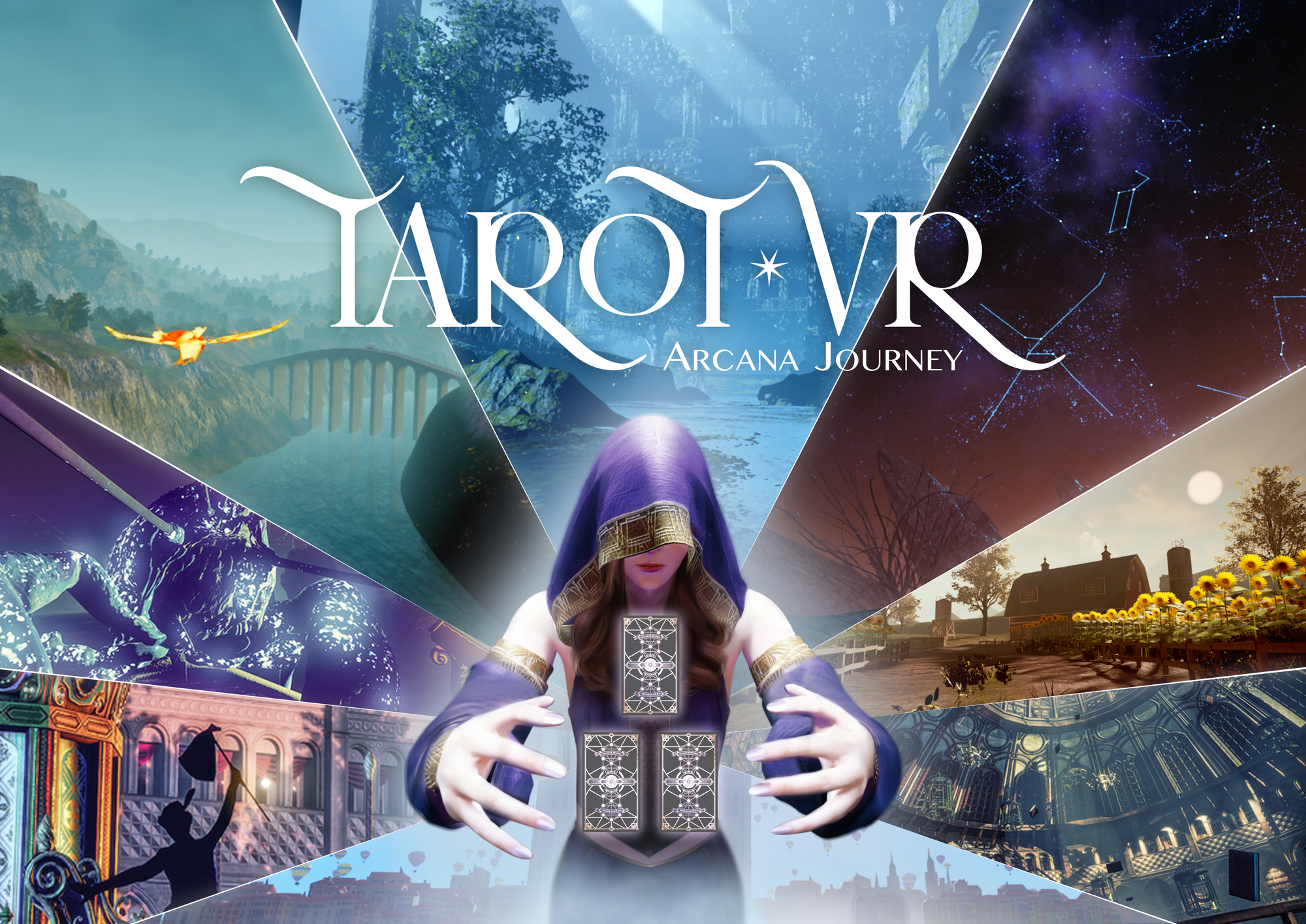
Tarot VR is the final sit-down attraction offered by Tyffonium, and certainly its most interesting. Upon entering the Tarot Reader’s chamber, she will ask you to pick three random cards representing your past, present, and future. From there, you enter one of 22 worlds based on each tarot card, experiencing the card’s meaning in full 3D before receiving a written blurb exploring the card’s meaning.
I was initially skeptical of the value of a VR tarot reading, yet this enjoyable experience left me awestruck and somewhat converted on tarot cards even beyond the world of the headset. My past was represented by The Tower, a towering structure representing the overbearing anxiety and stress of a past that crumbled under the pressure it exerted on my soul. If that’s not representative of the experience of working as a journalist, nothing is.
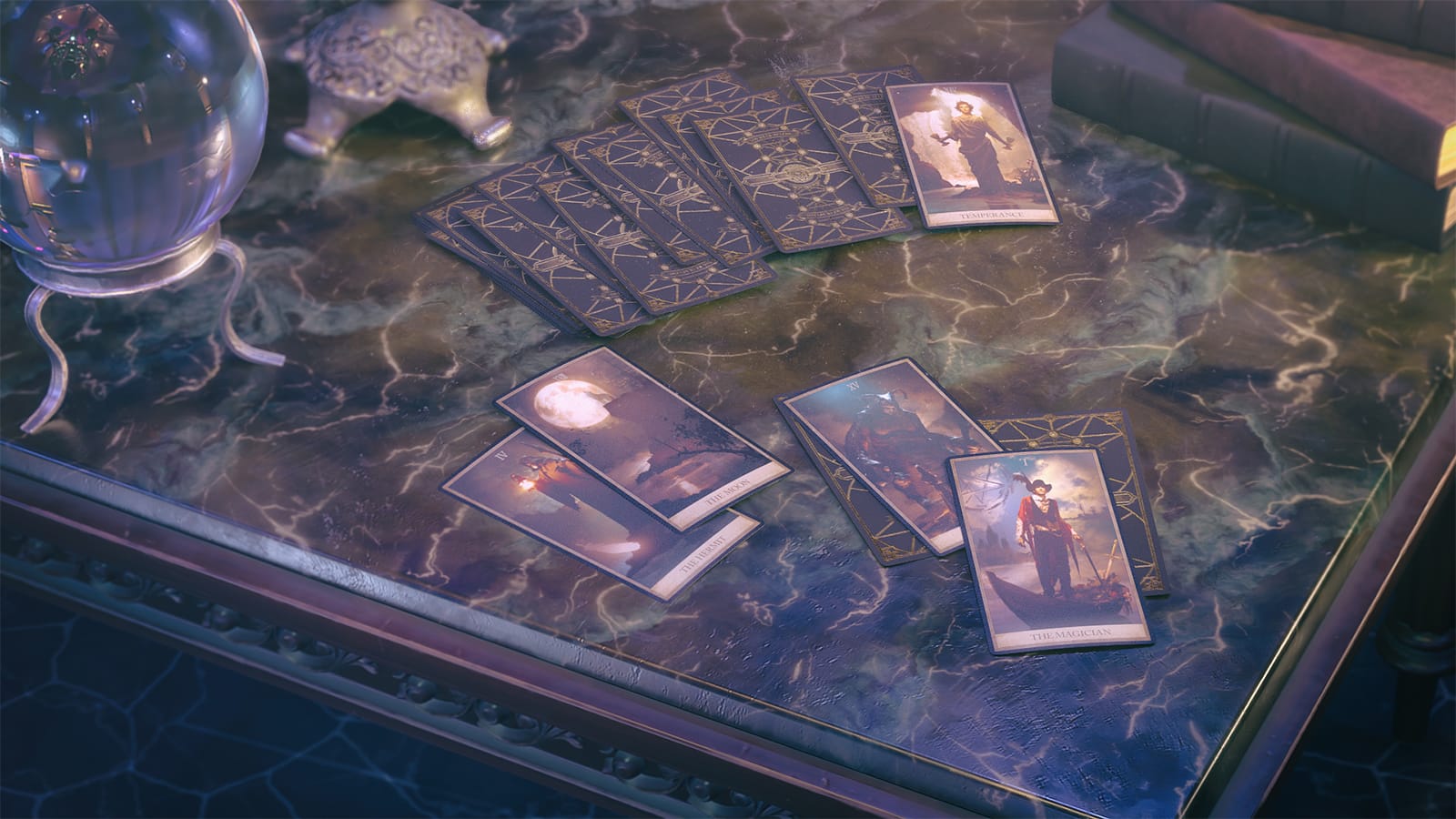
My present was described by the dreams of The Star, a card embodying the emergence from a troubled past to finding wonder in the everyday and the imagination of a future goal. Even if actually achieving such ambitions may seem further away in the short term. Strength represented my future, shown in Tarot VR via a roller coaster journey through a theme park not dissimilar in visual design to that found in NieR Automata, before taming a shadowy lion with my wand. It prophesies inner strength and the courage needed to tame future challenges.
A cynic can say that tarot readings are vague enough to be universal, but these truly felt accurate to my life experiences. Even beyond that, these vignettes were lovingly crafted and impressive to behold. Those who take part also receive physical tarot cards for their selection, a physical memento that will no doubt spark conversations with friends long after the headset has been removed.
Corridor
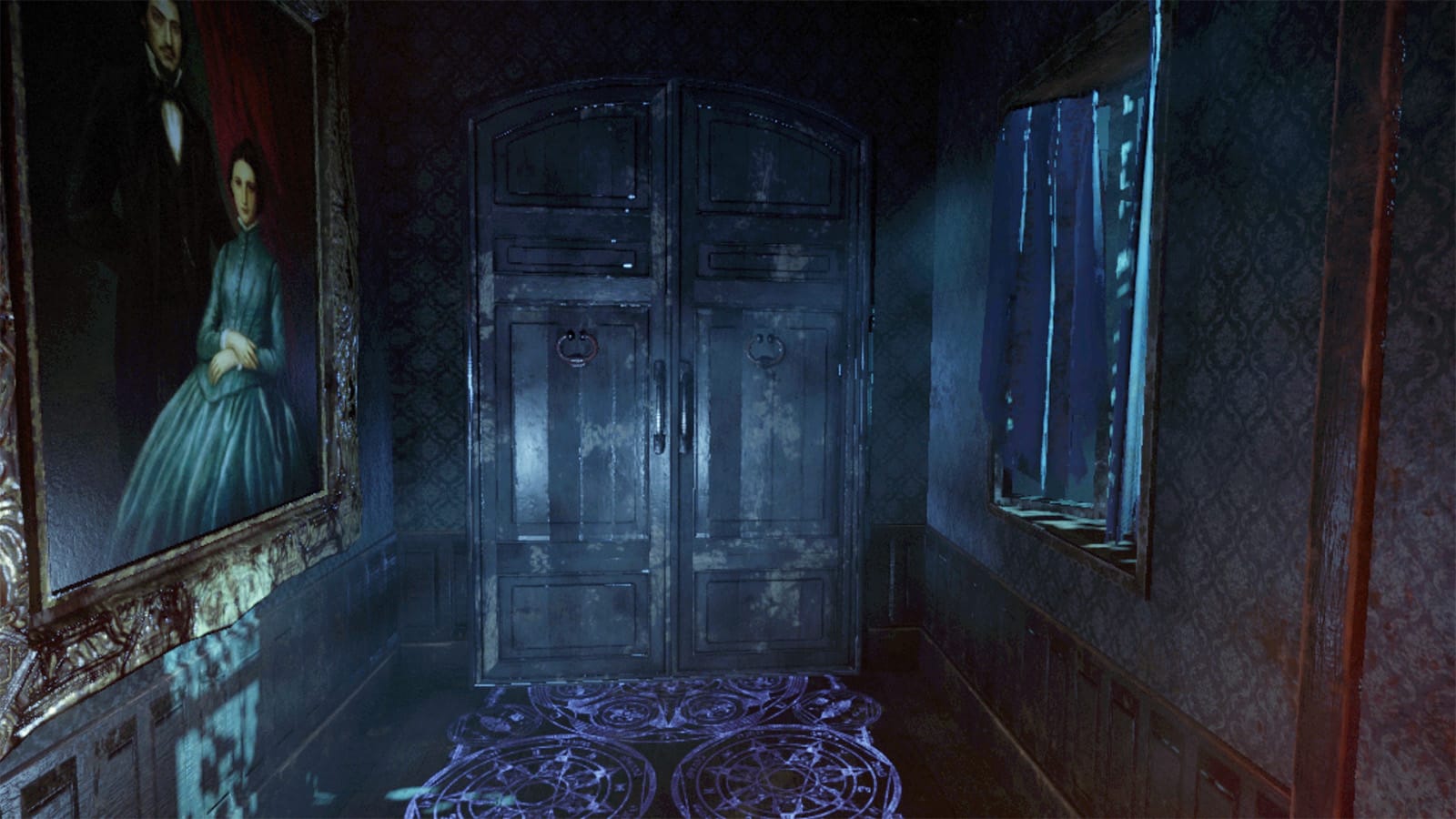
The first of two free-walking attractions, this horror experience asks players to wander through the depths of an abandoned mansion to discover the truth of its missing family. This is unlike anything possible in the comfort of your home. Upon entering a large room, you must put on the headset and take a hold of the small candelabra (controller) to navigate this dimly lit haunted house. That’s also used to light one of two candles at various moments, selecting one of two converging paths.
A small purple path glows beneath your feet to guide you through the experience, but you’re otherwise free to proceed at your own pace. While things at first seem normal, if somewhat unnerving, things quickly descend into terrifying supernatural horror. The walls and floor transform into the intestines of a monster, and zombie-like creatures chase you at every turn.
Horror games succeed in VR thanks to the medium’s immersive nature, but the fact you aren’t physically moving through these spaces places a barrier between you and these worlds, limiting their terrifying potential. Merely walking through this space is enough to place you in these dingy corridors. Coupled with the entire floor vibrating as you fall down the elevator shaft or squelch through blood, your heart rate spikes when merely turning a corner feels like a fight for survival.
This is genuinely terrifying, and the use of physical effects alongside is enough to leave you feeling helpless in the face of the terror that unfolds. Not for the faint of heart, but more than worth the price of admission for the fear its free-roaming movement injects. And don’t worry, you’ll receive a free photo and video of this experience, so you can see how terrified you were for yourself.
It Chapter Two: Carnival
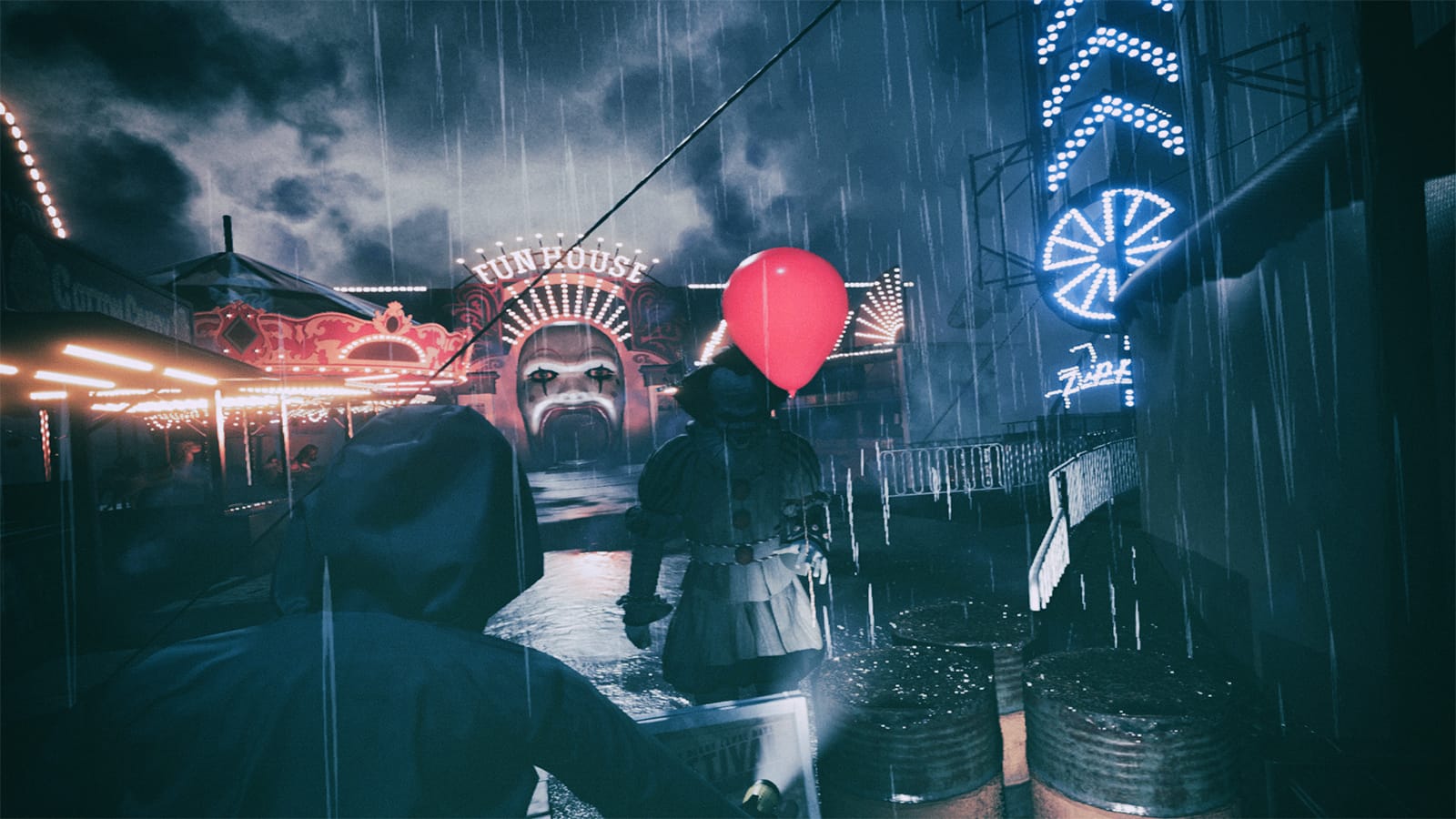
While Corridor is an engaging experience in its own right, It Chapter 2: Carnival, based on the Hollywood films of the same name, felt superior in nearly every aspect. This experience learned lessons from its development to enhance the horror and 4D immersive aspects of the ride.
Designated as an official prequel taking place the night before the events of It Chapter Two, a young boy named Tony has gone missing at a nearby circus. As you investigate his whereabouts, you find yourself inevitably sucked into Pennywise’s game until you begin to doubt what’s real and what isn’t in this psychological horror experience.
Almost every aspect has been improved in the years since the team’s work on Corridor and this game. The purple glowing route on the floor in Corridor, while a necessary guide for inexperienced players in that title, feels immersively detrimental to the old-timey mansion in which the experience was set. By contrast, Pennywise’s red balloon offers an in-universe method of guiding the player without breaking the established rules. Such a guide only enhances that sense of dread, knowing this balloon is leading you towards a particularly terrifying clown.
The visual effects are also a step-up, most notably in the attraction’s on-rails roller coaster segment. Reaching a branching path requires you choose one of two ride vehicles to progress, while these coasters whisk you along a set track through various jump scares and deeper into this mental abyss. I feel like I’m actually standing inside the vehicle with each twist, turn, and increase in speed as it increasingly careened itself towards danger, to the point where I almost lost my balance towards the climax.
Crawling through dingy caves and sewer pipes offered greater physical excursion and variety than that found in Corridor, with Pennywise being animated with such expressive precision it feels like the real actor was staring you in the face. It’s enough to make your heart stop.
From the moving floorboards to the slow, harrowing exploration of the circus, no VR experience has felt as immersive or terrifying. Which is both impressive and, considering the events of the film, somewhat disquieting.
Should You Experience Tyffonium VR?
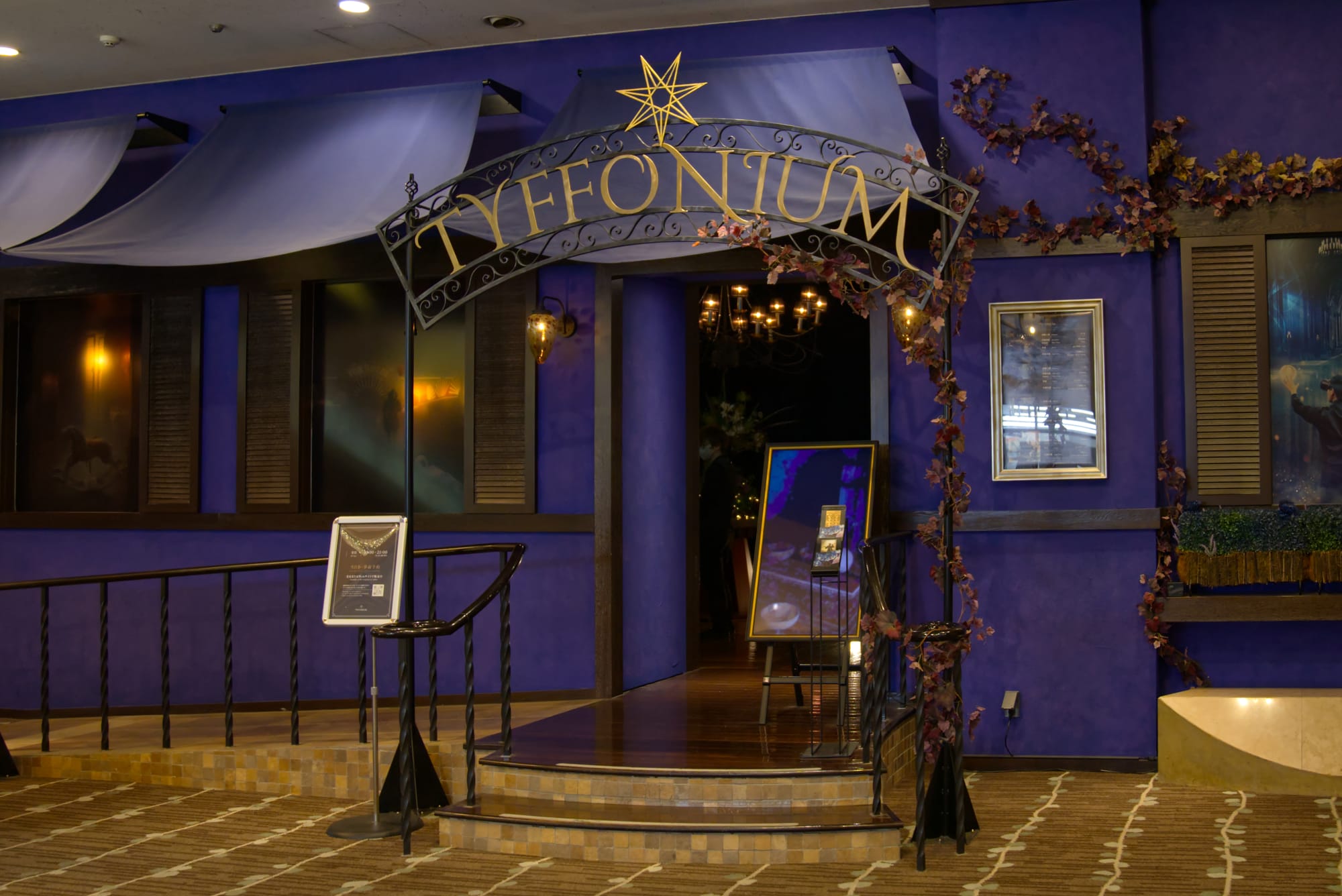
Tyffonium is an interesting proposition. These experiences exist in bespoke stores whose unique outer design makes an immediate impression, tempting potential audiences like purple-hued portals into a world of magic. Once you step inside, the candle-lit sets and plush seating only reinforces this feeling, and that’s before you put on the VR headset. The staff do everything possible to enhance this feeling, and are both animated and accommodating to everyone during the necessary setup, whether you speak English or Japanese. All experiences are bilingual, making them very welcoming to tourists.
Still, it’s hard not to feel like something is missing, and a quick glance through the company’s history makes this apparent.
With Japan’s tourism industry growing and intrigue in VR high, Tyffonium launched under the concept of offering bespoke experiences inside a fully immersive VR theme park. Their now-closed Shibuya store offered beverages and snacks to guests as they waited for their ride, a concept they expanded in late 2019 with a themed café inside the Shibuya PARCO department store offering AR parfait experiences. The company has international investment from companies like Disney, and discussed US expansion in 2019.
Considering the international adoration for the It films, it’s hard not to imagine this experience was developed in part as an attraction with name recognition for their growing international audience. Yet by the time the experience launched in October 2020, the COVID-19 pandemic banned international tourists from visiting Japan. By this point, the pandemic had already impacted the company strongly, with the PARCO café and AR parfait closing in summer 2020 before the Shibuya store closed in early 2021. None of the remaining Tyffonium locations have since revisited the café and AR parfait experiences.

The tide is shifting. Both locations were active with excited couples and young friend groups when I visited, including the Shinjuku location which newly opened in summer 2024. Not every experience will be enjoyable for every audience – as cool as Ultraman is, this is certainly tailored to younger audiences and diehard fans. Yet the multi-sensual concept of a magical world enhanced by VR, and the technology driving it, remains magnificent and filled with potential. People are coming to check it out for themselves.
I’d love to see the company continue to expand, and for some of the company’s experimental ideas such as their café to make a return. Especially since international tourists have not only been returning to Japan, they’re visiting in record-breaking numbers beyond the pre-COVID peak in 2019. Many are actively seeking experiences only found in Japan. The advancements in VR technology in the intervening years have seen more advanced fully portable headsets launch like the Meta Quest 3 and the Apple Vision Pro (which the company was experimenting with in late 2024). Tyffon has the talent necessary to build on this impressive technology and evolve this concept even further.
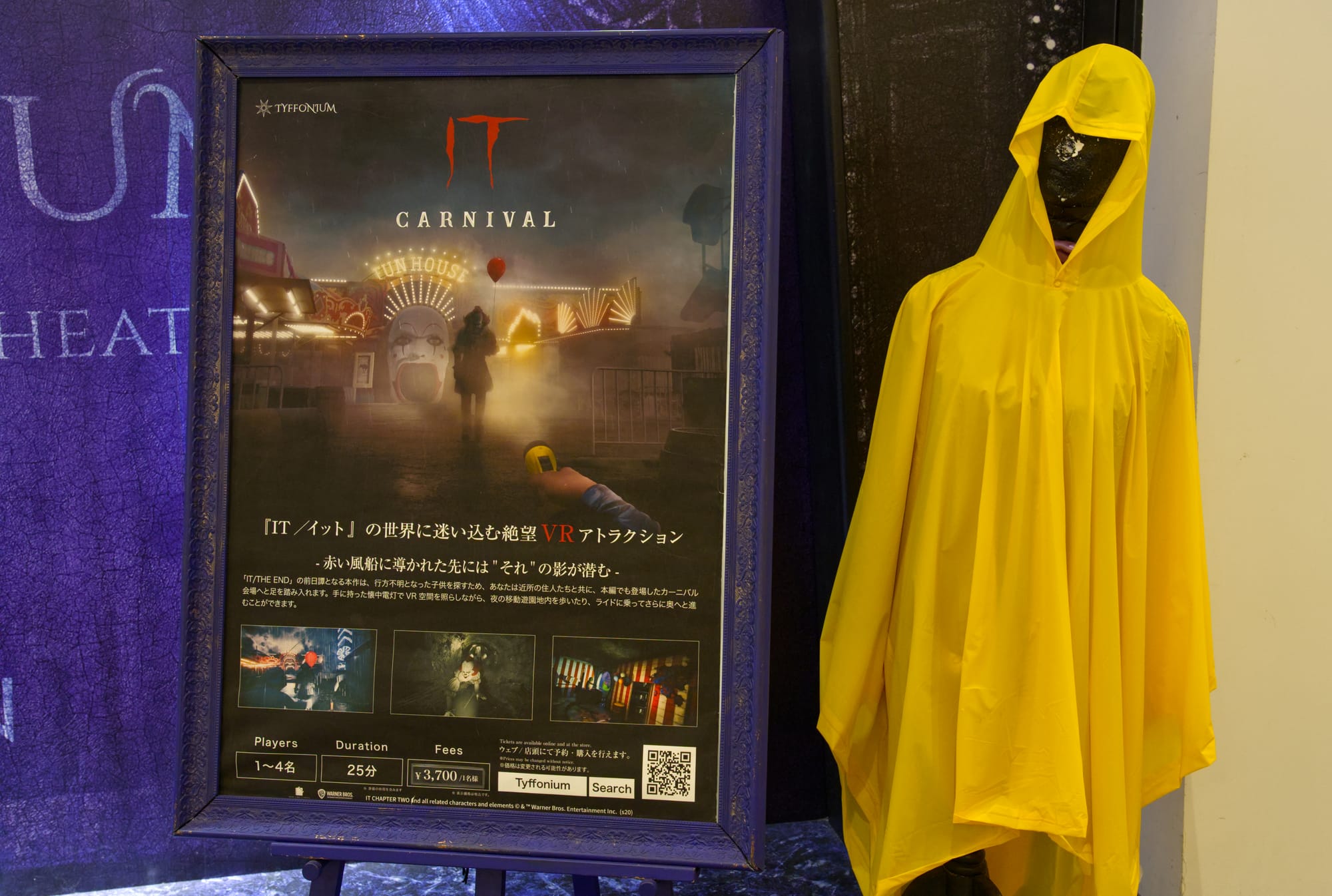
Even as-is, there’s enough fun here to recommend visiting Tyffonium. The cost of attractions ranges from roughly $16-23 depending on if you partake in a seated or free-roaming experience, each offering something unique that will no doubt spark conversations with friends long after you remove your headset.
And make sure to bring a friend! As a journalist experiencing these attractions for review, I’ve been testing these attractions as a solo visitor. That was still fun, but many of these attractions feel like they are best enjoyed when sharing laughter with friends. Or, in the case of the free walking attractions, scream, and cry at the horrors unfolding before your eyes, as I overheard from other attendees.
Having played similar attractions in Japan, there’s nothing quite like the mysterious worlds offered by Tyffonium.
The Last Of Us Renewed For Season 3 Like We All Expected

To the surprise of no one living above ground, HBO won’t be done telling the story of The Last of Us Part II by the end of the TV adaptation’s upcoming second season. Today, HBO announced the Emmy-winning, nightmare-inducing, tear-ripping drama has been renewed for a third, and it needed to be unless HBO wanted to…
Dinner With Jensen And Trump Eases NVIDIA GPU Trade Restrictions In China
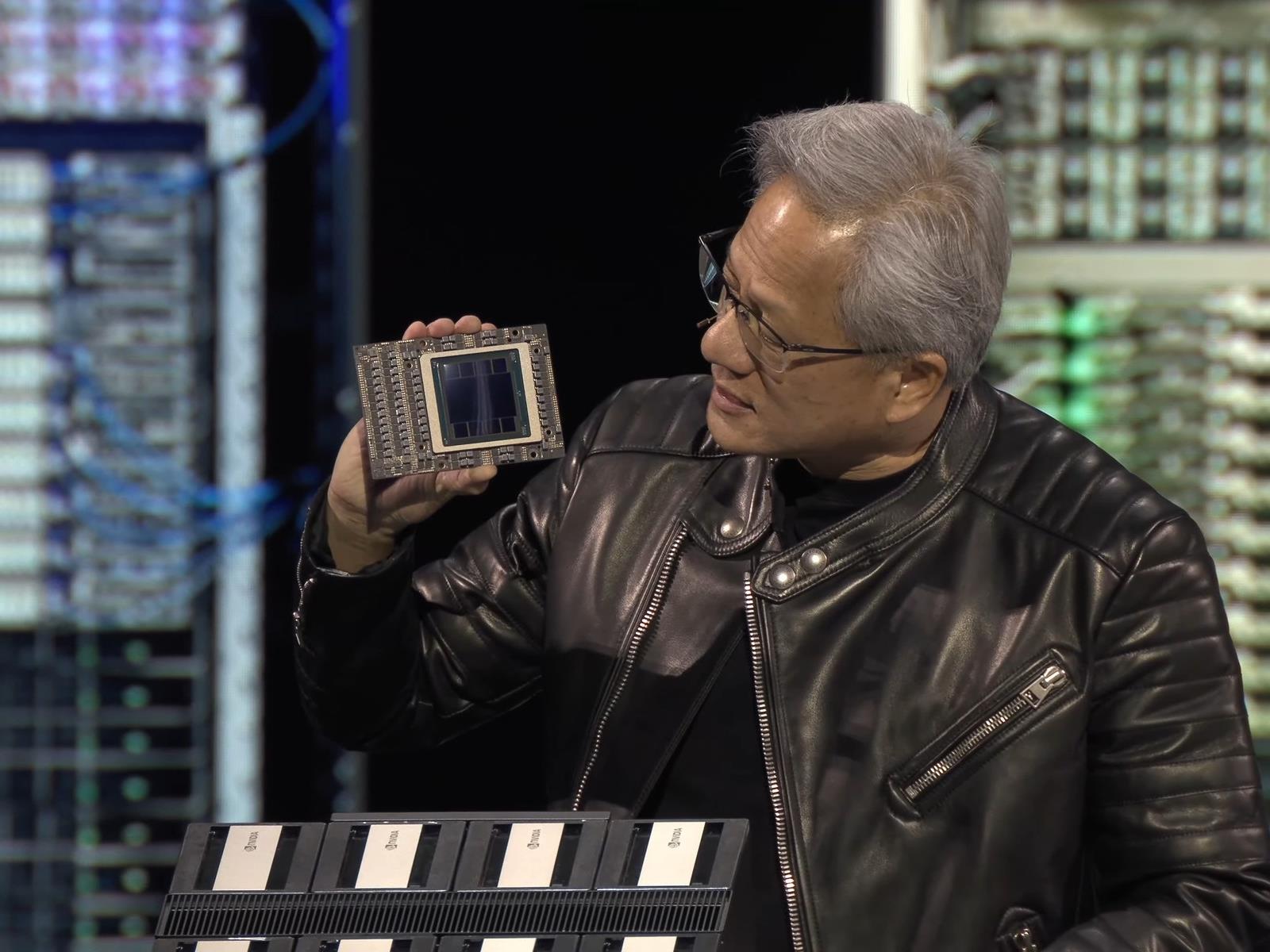
NVIDIA CEO Jensen Huang’s recent appearance at a $1 million-a-head dinner at Mar-a-Lago may have influenced more than just the guest list. According to sources with alleged knowledge of the matter, the Trump administration has shelved plans to impose new export restriction on NVIDIA’s Hopper H20 GPU, which is the most advanced AI chip that
Switch 2 Scores A Timed Exclusive To A Sequel For One Of The Top-Rated Games Of 2020
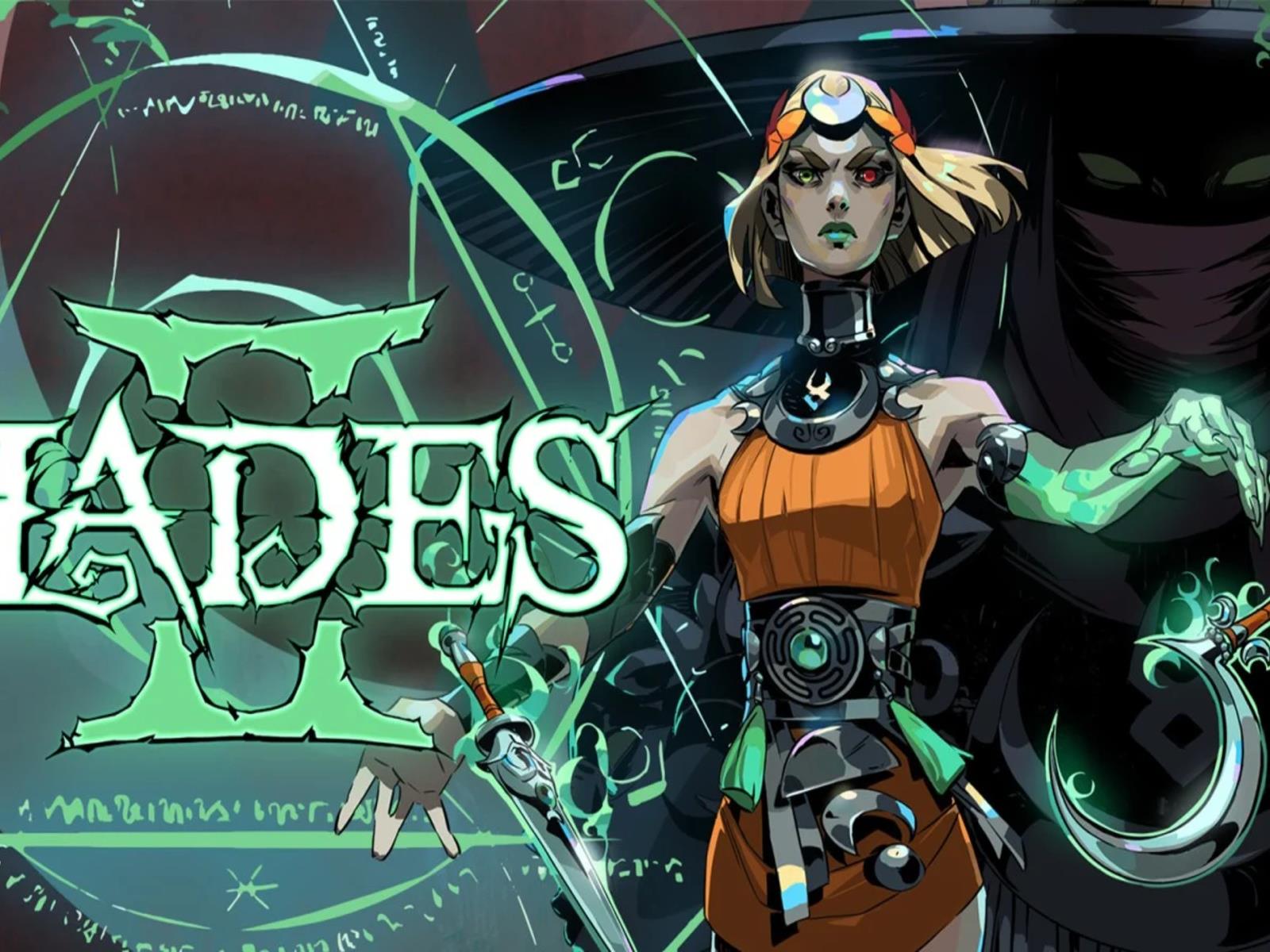
Nintendo’s Switch 2 Direct event last week held some surprises for fans, despite the never-ending stream of leaks in the prior months, such as better than expected hardware performance and a new paradigm for game pricing. Equally as surprising are the third-party exclusives the company was able to secure, which now includes the follow-up to
Owlchemy Labs releases “Hexas” update for Dimensional Double Shift
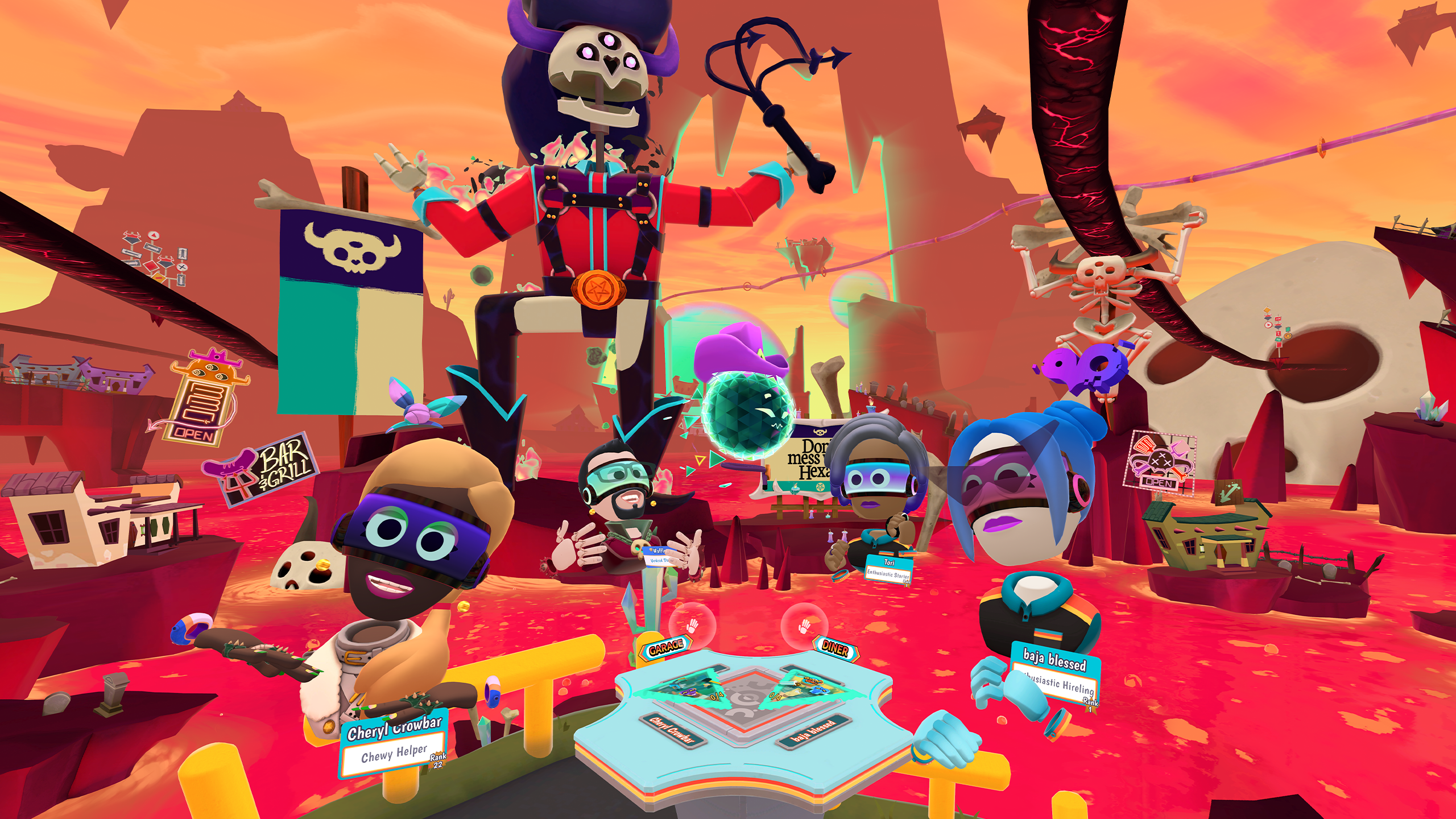
The new DLC “Hexas” for the VR co-op game Dimensional Double Shift developed by Owlchemy Labs has been released.
The post Owlchemy Labs releases “Hexas” update for Dimensional Double Shift appeared first on MIXED Reality News.
Alex and the Jets on Quest 3: Your kids will love this mixed reality game
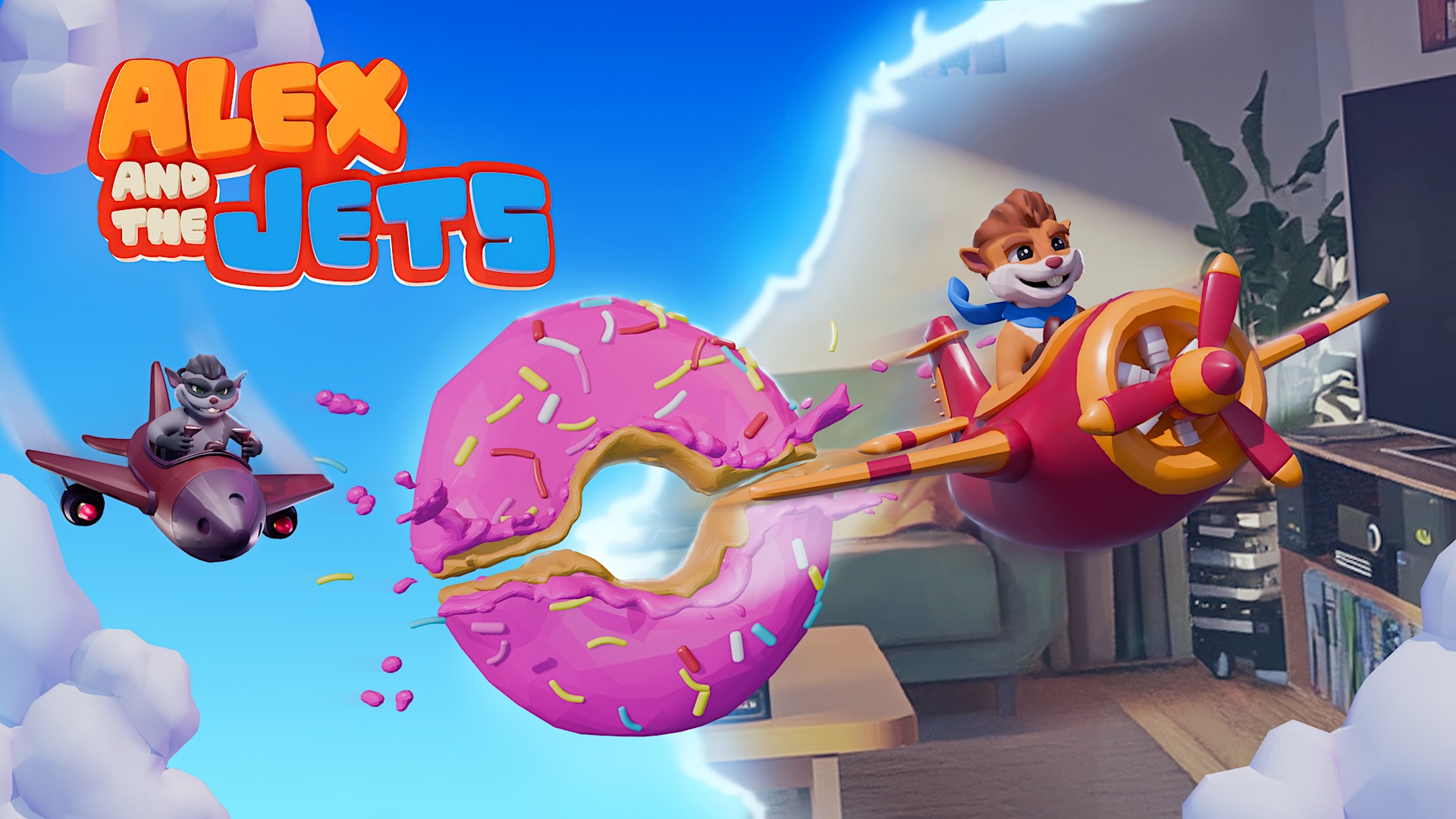
Alex and the Jets is a kid-friendly mixed reality game that turns your living room into a stage for fierce dogfights.
The post Alex and the Jets on Quest 3: Your kids will love this mixed reality game appeared first on MIXED Reality News.
Dimensional Double Shift Slaps Hog Butt & Milks Udders In Paid Hexas Expansion
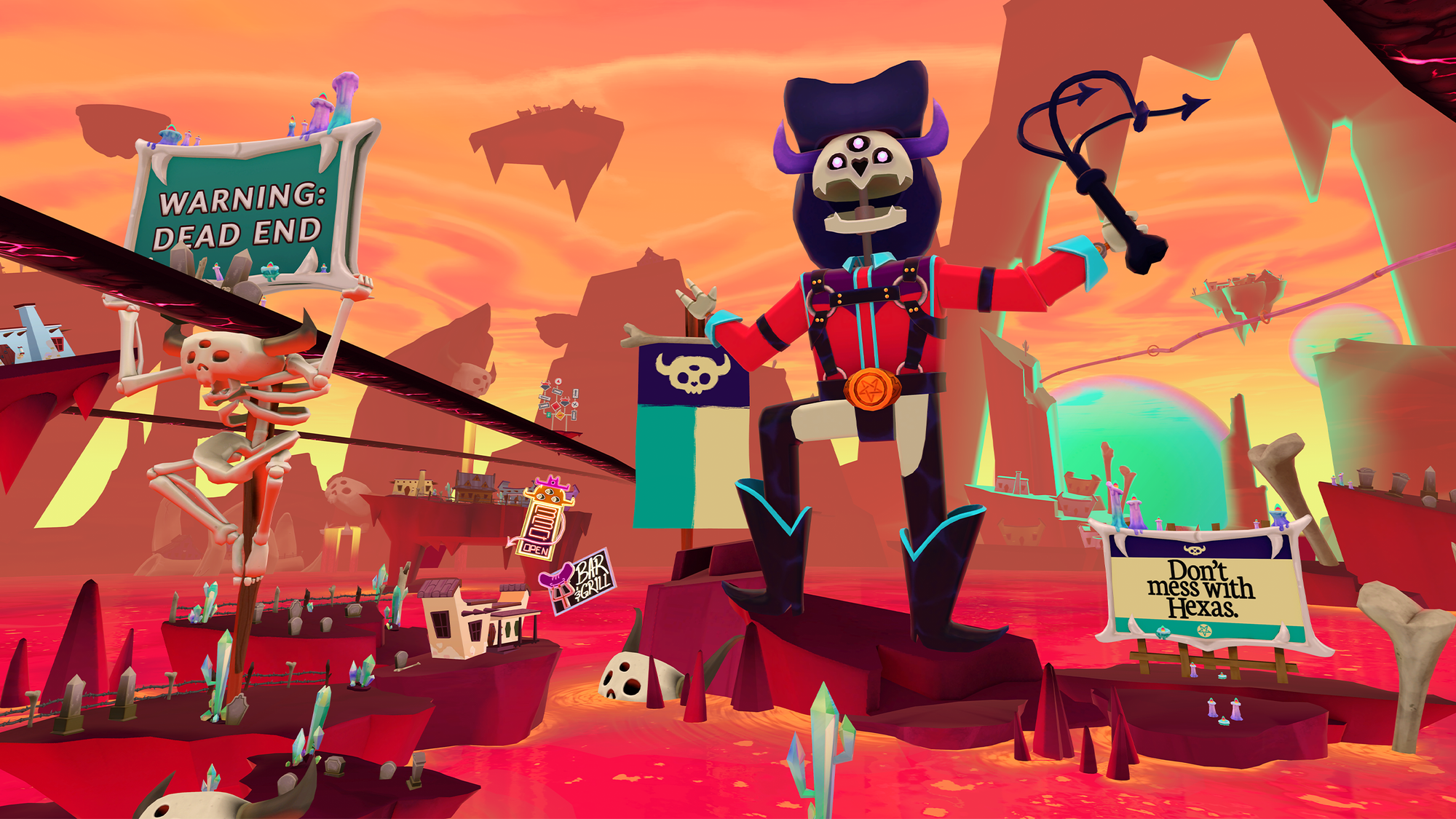
Dimensional Double Shift sends you to a Texas-inspired dimension in its first paid expansion today on Quest.
Launched last September, Dimensional Double Shift has now released its first ‘Dimension Pack’ after the co-op hand tracking multiplayer game recently surpassed 500k downloads. As employees of Gas N’ Grill, you’re now tasked with serving patrons across Hexas and that’s packed with “demonic patrons, oversized food, and monster trucks” that all require your attention.
0:00
/1:41
During GDC 2025, Don Hopper and I jumped into the expansion for a multiplayer session with Owlchemy Labs. Gameplay remains unsurprisingly similar to the ‘Treeatle’ dimension in the base game, with two new versions of the diner and garage levels available. Just like before, your group will serve the local citizens through preparing food orders and fixing cars.
My previous impressions cover the core gameplay, and several updates since launch have left Dimensional Double Shift feeling more polished. The activities remain rewarding with friends as you coordinate to prepare meals or fix these cars, with certain ingredients only being accessible in another person’s station, and I appreciate the game’s relaxed nature with no time constraints.
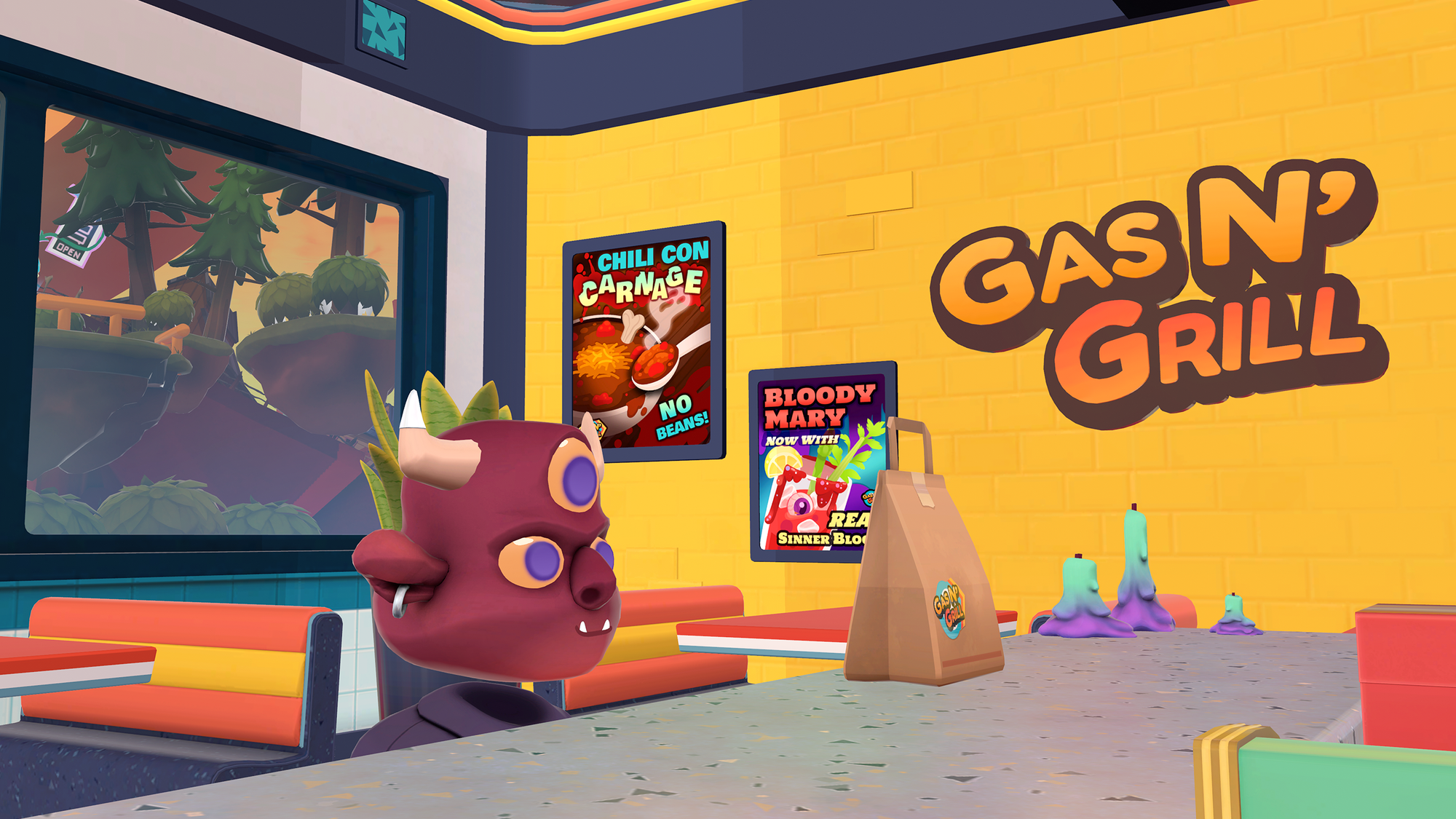
Hexas offers some welcome twists that fit the demonic theme perfectly, alongside other improvements like a ‘Room Browser’ for creating public rooms. While your goals largely remain the same, the art style has been fittingly reworked for this new dimension. Between cooking in a cauldron of blood and new puzzles when fixing Monster Trucks, there’s some appropriately themed new challenges.
What caught me by surprise was the, uh… well, the udder milking activity. Yes, that’s right. Anyone else remember that minigame in 1-2 Switch? I never thought I’d write this, but the hand tracking-only controls make this feel even more socially awkward. I had to briefly stop because I burst out laughing mid-demo; a game hasn’t tickled me this much since Thank Goodness You’re Here.
That’s before we discuss slapping hog butt. You do that to open the hog’s mouth in a different station and then spray it with barbecue sauce. Another task involves picking boogers out of a giant head before adding a fresh brain. It’s chaotic, incredibly silly, and these new activities walk a fine line that’s both suitable for kids while being hilarious for adults.
“One of the big pillars of this is that it’s hell not heck,” explained Owlchemy CEO Andrew Eiche in a post-demo interview, where he was joined by COO Sandra Marshall.
“We didn’t want to pull any punches, so we did that. We’re still a teen game and I can assure you that we’ve met the limits of that rating, but we’ve always wanted to say that the game appeals to all ages. It’s tough to appeal to all ages when everything feels a bit younger.”
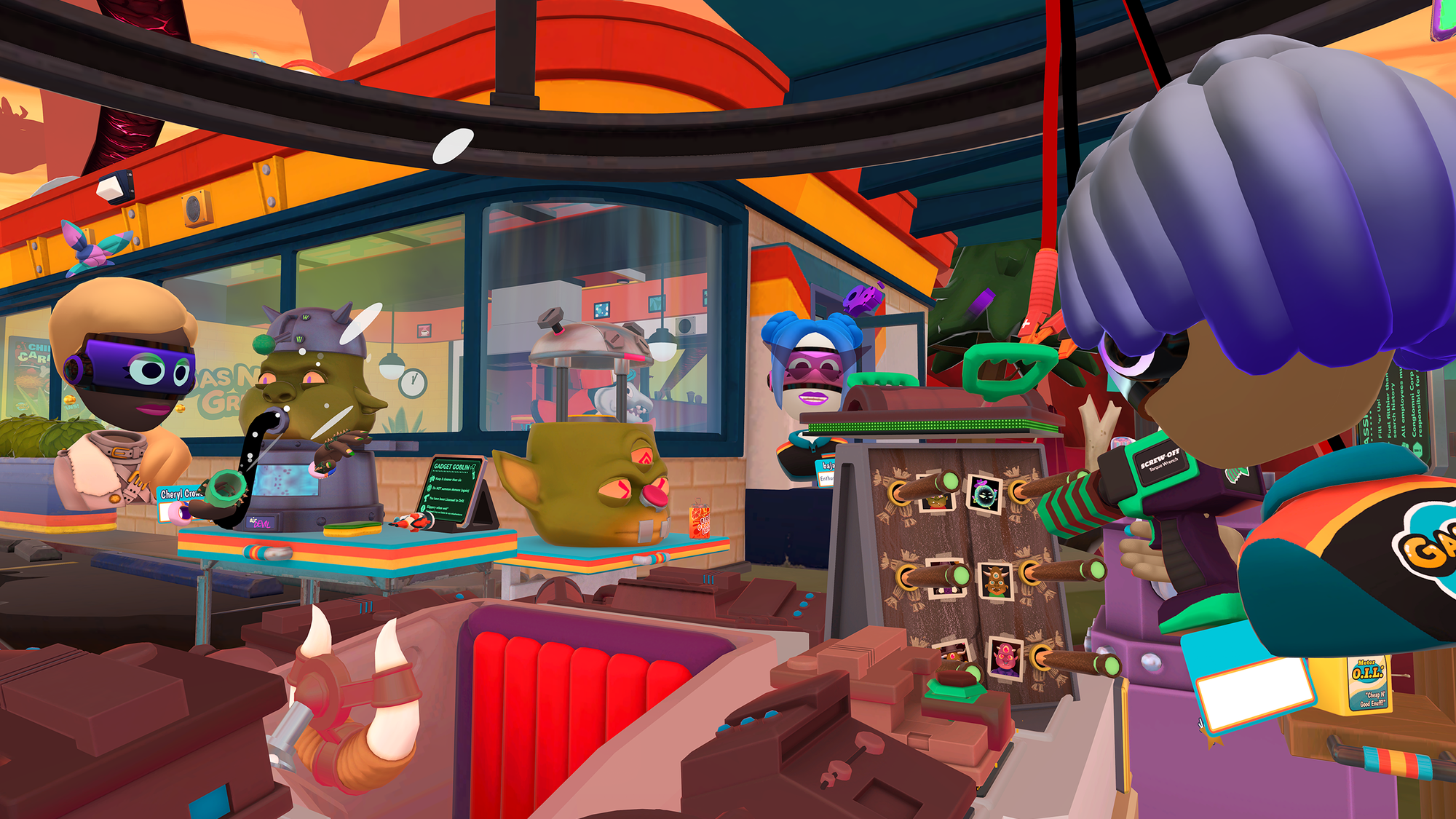
At $4.99, I was pleased to learn that an entire party won’t need to all buy the Hexas Dimension. Only one player must own it for other party members to access it, though only DLC owners will get Hexas-themed cosmetics like the rhinestone cowboy and desert road warrior. Eiche cites Walkabout Mini Golf’s guest pass, Golf+, and Jackbox Party Pack as influencing this decision.
“It was really tough to justify four people spending $20 sight unseen on a game. It’s much easier to say, everybody else gets it for free.”
As Owlchemy’s first free-to-play game, the studio’s learning from this experience by following three streams of information. Analytics, for which Owlchemy hired someone who formerly worked on Minecraft to assist. There’s also what the studio itself thinks of the game, and community feedback.
“There are things we thought would happen that didn’t. We do events once a week, we do matchmaking, and we were like, the second we do this, all of our players are gonna say, “just leave the matchmaking on all the time.” But they didn’t, they were like perfectly content with having it be once a week.”
Other lessons include learning that people don’t often respect the play spaces they’ve been assigned, which saw Owlchemy adding a feature that’ll count down from five as a warning to go back. Marshall advised that people are making friends through these events, and this led to Owlchemy implementing a button that lets you add the person you’re playing with as a friend.
Owlchemy sees the VR market heading toward social and embodiment experiences, something Eiche previously touched upon in a previous interview. The studio also remains fully committed to hand tracking in games, believing this controller-free option has proven itself further with PlayStation VR2 adding hand tracking support.
“They’re the last ship out of the port in terms of doing it, and that’s not a knock on them. [Sony’s] focus is the hardcore of the hardcore, yeah. PlayStation is for the gamers, and if they’re doing hand tracking? Wow. We didn’t expect it.”
That doesn’t mean hand tracking support for Job Simulator is coming to PlayStation VR2 anytime soon, however. At the time, Owlchemy advised that Sony doesn’t have a direct path through Unity for this, meaning Aldin Dynamics had to create their own for Waltz of the Wizard. That means there are still some technical hurdles to overcome.
While Owlchemy wouldn’t comment on Dimensional Double Shift potentially reaching other platforms like Android XR, more content updates are coming beyond the Hexas launch. New gameplay features and more dimensions are in development, and we’ll check back in when those become available.
The base game for Dimensional Double Shift remains free in early access on the Meta Quest platform, and the Hexas Dimension Pack costs $4.99.
Update Notice
Shortly after publication, we updated this piece with a minor quote correction where Andrew Eiche refers to Dimensional Double Shift as a “teen game.” We apologize for this error.
‘Dimensional Double Shift’ Moves to Early Access on Quest, Releases First Paid DLC
Owlchemy Labs announced its free-to-play social game Dimensional Double Shift is leaving open beta and getting its first paid DLC, bringing a new Texas-inspired dimension to the game.
Now in early access on Quest, Dimensional Double Shift is a lot like the studio’s parody games Job Simulator (2016) and Vacation Simulator (2019), tasking players with jobbing around a patently wacky universe, this time running a combination garage and diner, where you and three other players can fix up both cars and grub for alien patrons.
Called ‘Hexas’, the game’s first ‘Dimension Pack’ paid DLC brings users to a “fiery, Texas-inspired dimension filled with demonic patrons, oversized food, and monster trucks that need fixin’.” This includes 50+ Hexas-themed cosmetics, letting you dress up as a cowboy or desert road warrior.
“Hexas is a major milestone for Dimensional Double Shift, it’s our first Dimension Pack that completely changes the setting and gives players a new way to experience the game,” said Owlchemy Labs CEO Andrew Eiche. “Players looking for more fun ways to create chaos with their friends will find that there’s a lot to love about Hexas, and they’ll also be happy to hear that this is the first of many Dimension Packs.”
As a part of its release, the game is also updating to include the long-requested ‘Room Browser’ feature, letting users easily create and join public multiplayer rooms with friends.
The Hexas Dimension Pack is priced at $5, available exclusively on the Horizon Store for Quest 2 and above—which notably only one person in the team needs to own for everyone to play.
The post ‘Dimensional Double Shift’ Moves to Early Access on Quest, Releases First Paid DLC appeared first on Road to VR.
DaVinci Resolve Beta Supports Editing Apple Immersive Video
DaVinci Resolve 20 supports editing Apple Immersive Video.
What Is Apple Immersive Video?
The Apple Immersive Video format is 180-degree video with 8K per-eye resolution, 90FPS, stereoscopic 3D, high dynamic range (HDR), and spatial audio. First party content is served in the Apple TV app with higher bitrate than many other immersive video platforms.
We highly praised Apple Immersive Video in our Vision Pro review. It’s not possible to cast or record Apple Immersive Video though, so you’ll have to take our word for it unless you have access to a Vision Pro.
Blackmagic first announced that it would add support for Apple’s format to its popular professional video editing software back at WWDC 2024. Now, two months before WWDC 2025, that promise is being fulfilled.
DaVinci Resolve 20, available as a public beta now, lets users “edit, grade, mix and professionally deliver” Apple Immersive Video, as well as mix spatial audio for it.
Blackmagic’s $30K Apple Immersive Video Camera Now Available To Preorder
Blackmagic’s Apple Immersive Video camera is now available to preorder for $29,995, and DaVinci Resolve Studio will support editing it next year.
 UploadVRDavid Heaney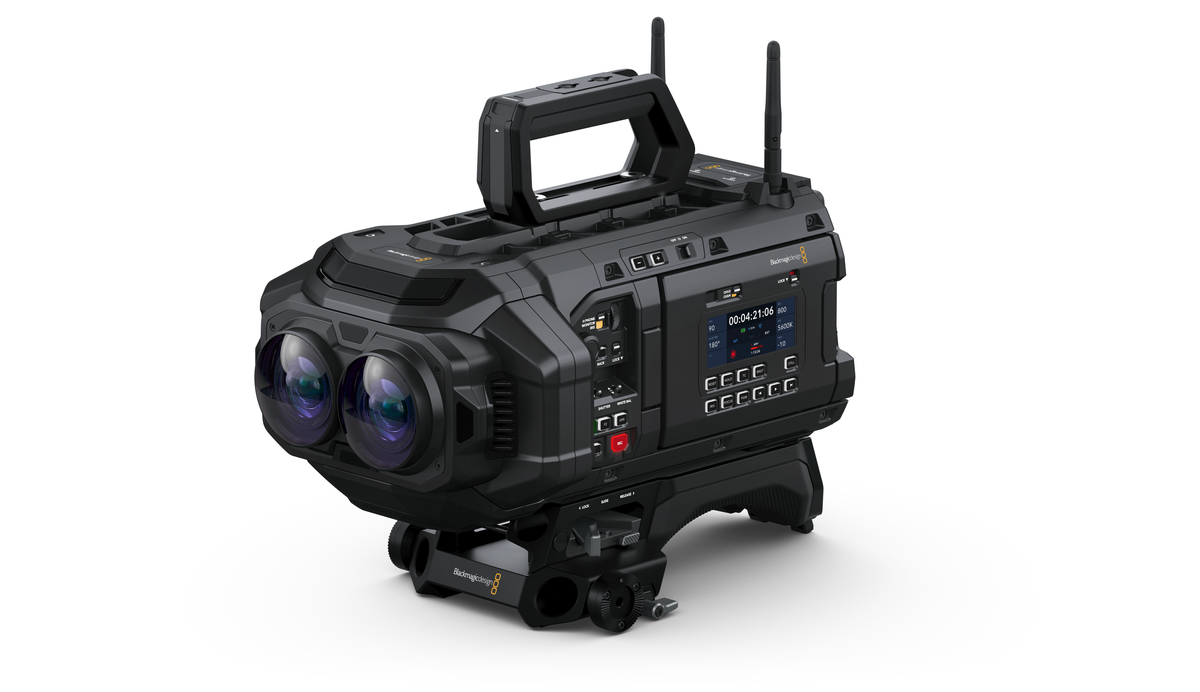
Blackmagic is also preparing to start shipping URSA Cine Immersive, the $30K Apple Immersive Video camera it opened preorders for in December. With the upcoming camera and DaVinci Resolve update, Blackmagic says it now offers “a true end-to-end workflow for Apple Immersive Video”.
Apple Immersive Video has been a standout area of content for Vision Pro, and looks great on its micro-OLED displays. But today it’s all produced by Apple with custom in-house cameras, severely limiting the rate of new content. The combination of Blackmagic’s new camera and DaVinci Resolve 20, then, should let any interested studio produce Apple Immersive Video content, and could usher in a wave of it for Vision Pro owners, which owners of future more affordable Apple Vision headsets should be able to enjoy too.
Half-Life: Alyx First Scene Ported To Quest 3 Standalone Via Unity
A developer ported the first scene of Half-Life: Alyx to Unity to experience it running standalone on Quest 3.
Valve’s award-winning AAA VR game is currently for Windows PC VR only. But a long-standing unanswered question looms in the industry: when will it be able to run on standalone headsets, without a PC?
Developer Boris Novikov didn’t want to wait for Valve to answer this question. He suspected that the XR2 Gen 2 chipset in Quest 3, which Meta has described as having a GPU as powerful as a 2016 Oculus Rift min spec PC, might already be capable of rendering City 17.
0:00
/2:55
Novikov extracted the 3D assets and sounds from the first scene of Alyx and brought them into Unity, adapting them for the different engine using custom shaders and processing scripts. He then added hand-object interactions by using the Hurricane VR framework, and faked the scene’s volumetric effects using the package MicroAVL. And notably, dynamic shadows are present for moving objects.
At Quest 3’s default render resolution, with 2x MSAA and fixed foveated rendering enabled, the scene runs at stable 72 FPS when you’re looking at some areas and drops significantly while looking at others. Novikov claims these drops are due to dense geometry, and could be solved by simplifying the 3D models used in some places.
Novikov’s work here shows that mobile chipsets are surprisingly powerful, and suggests it’s technically possible Valve could optimize Half-Life: Alyx to run on Deckard, its upcoming standalone headset which a recent leak revealed should use a similar kind of chip as Quest 3.
Could Valve Deckard Use LCD Panels & A Quest-Like Chip?
A Valve Deckard proof of concept model had 2K LCD panels and a Snapdragon 8 Gen 3 chipset, though this doesn’t mean the shipping Deckard will.
 UploadVRDavid Heaney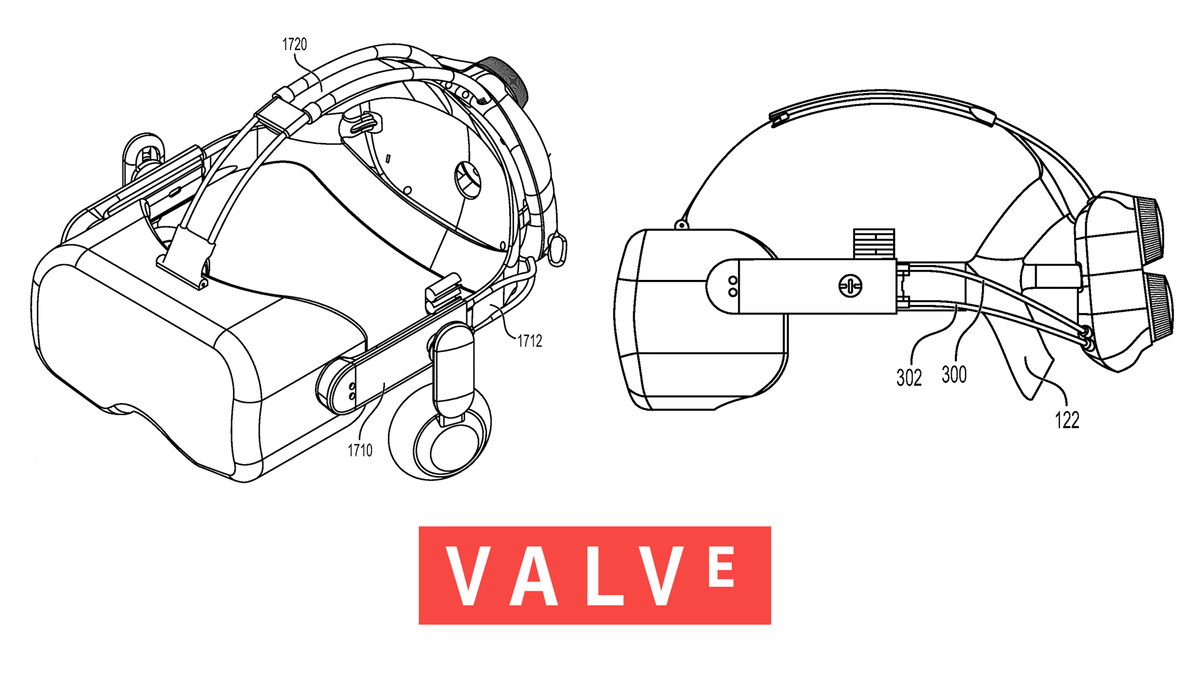
However, we should note that this is only the introductory experience of Alyx. There are no enemies or weapons here, and the inclusion of these elements and other complex game logic might significantly impact performance. Further, some other scenes might include such detailed geometry that simplifying it to run on mobile chipsets would be too much of a hit to the artistic intention for Valve to want to greenlight doing so. Our expectation remains that Deckard focuses on wirelessly streaming from your gaming PC, at higher frame rate, resolution, and graphical fidelity than is possible from a mobile chipset.
Hit Physics Sandbox ‘Besiege’ is Coming to Quest in May, Trailer Here
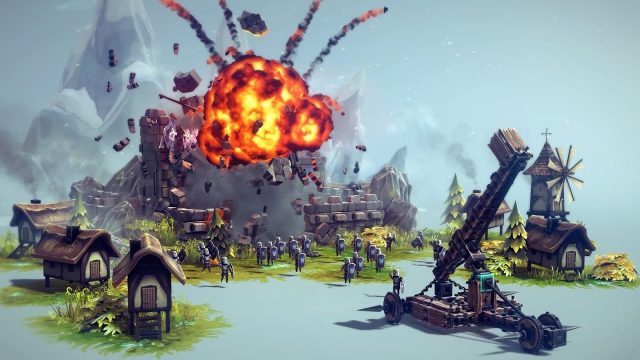

Ready the siege engines and charge the catapults (or trebuchets), because hit physics sandbox Besiege (2020) is coming to Quest next month.
Developed by Thief Simulator VR: Greenview Street (2022) studio 3R Games in partnership with original developer Spiderling Studios, Besiege VR is slated to let players create their own war machines to take over enemy fortresses.
Like the original, which managed to sell over four million copies and garner 95% positive user reviews on Steam, you can use all of the bits and bobs at your disposal to engineer catapults, tanks, planes, ships and giant mechs—or anything else you can jerry-rig to blast down the enemy walls and soldiers.
Information is still thin for now, although in the trailer we can see a third-person view of the player using the game’s part selection UI and hammering in pieces. Additionally, the studio says you’ll be able to stand “alongside your gargantuan killing machines in first person and experience their epic scale.”
There’s no exact release date yet, although Besiege VR is slated to land on Quest 2 and above sometime in May 2025, according to the game’s Horizon Store page.
The post Hit Physics Sandbox ‘Besiege’ is Coming to Quest in May, Trailer Here appeared first on Road to VR.
Studio tricked PSVR 2 users into buying fake “Flight Simulator” game

A studio has managed to fool PSVR 2 users with a VR game pretending to be Microsoft Flight Simulator.
The post Studio tricked PSVR 2 users into buying fake “Flight Simulator” game appeared first on MIXED Reality News.
Train Sim World VR: New York Makes Driving Trains Fun For All
There’s perhaps no medium better suited to deep simulation than VR, which is why it’s surprising that we haven’t seen more train simulators on either PC VR or standalone devices like the Meta Quest. The most hardcore simulator fans will recreate the driver’s seat of trains or invest in lavish setups and controls to recreate the experience of driving a train. Imagine having that recreated all around you in VR? Enter Train Sim World VR: New York.
Developed by Dovetail Games and Just Add Water, the game is a slimmed-down version of the PC version Train Sim World, tailored to the Quest platform and centered on the Harlem Route of the New York Metro. This is an impressive 1:1 scale recreation of the over 29 miles route, taking you through Manhattan and up to Harlem through the underground and overground scenic passages of the route, with real trains licensed and recreated in partnership with MTA.
0:00
/0:30
It’s a rather grand ambition to recreate this route in VR, but one the developers took in their stride after seeing the potential of the platform.
“I’ve been a lifelong train fan, and I’m a big simulation fan too. When Microsoft released Microsoft Train Simulator back in 2001, that was a gateway to a whole new world, and I’m still wondering where the exit is!” explained Matt Peddlesden, executive producer at Dovetail Games, of his history with the genre that brought him into the world of train simulators. Alongside working with Dovetail, Peddlesden founded his own community-driven UK Train Sim website.
Working on such a project in VR required a different approach to the company’s prior work on PC and consoles. “The key thing for me was figuring out how is a Quest platform different to a non-Quest platform,” continues Peddlesden. “I will sit in front of a PC for hours at a time meandering over 300 miles of mountain pass, but a Quest user probably doesn’t want to do that. That’s why we ended up with the Harlem Line [in New York] too, because it’s short, sharp bursts.”
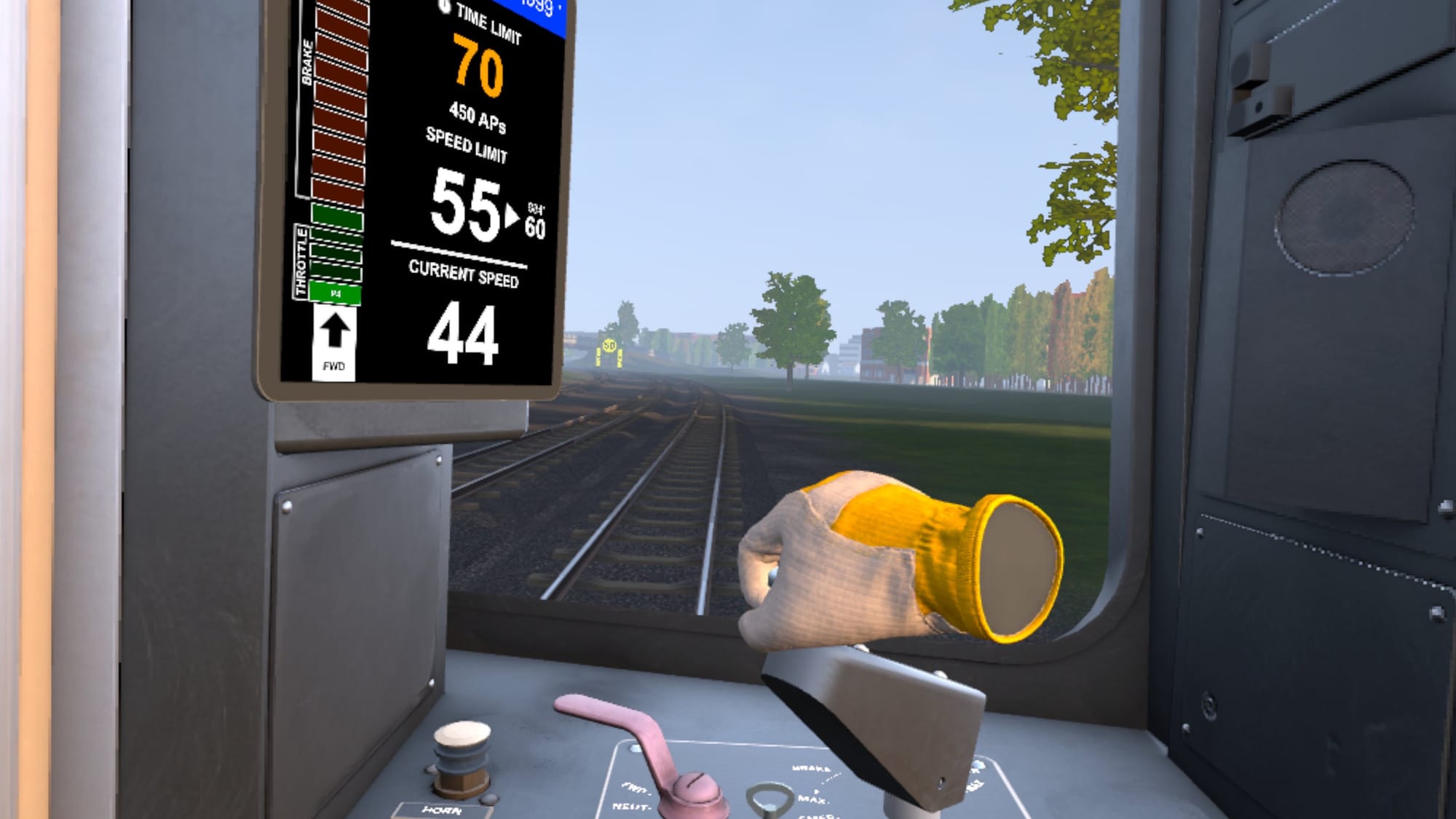
It’s designed for newcomers just as much as it is for the hardcore fans the team has fostered over the years on PC. The dedication to detail and accuracy is apparent, and none of the controls for running these trains, whether the older M3A stock of trains that run the New York Metro or more modern M7A models, have had their controls simplified. You will have to balance opening doors, adjusting the speed on a variable control lever, honking your horn, sticking to train schedules and speed limits just as you would if you were actually driving the trains.
That said, there has been some minimizing of unnecessary controls, and attempts have been made to ‘gamify’ aspects of the experience to add a bit of color to what can otherwise be a dedicated simulator. Unlike the PC version, a full campaign mode has a point scoring system for adhering to speed limits, honking at passerby fans or mechanics on the track, and for stopping in the station at the right time and location. This provides good incentive to replay select routes and perfect your skills, even if you’re not a geek for all the details.
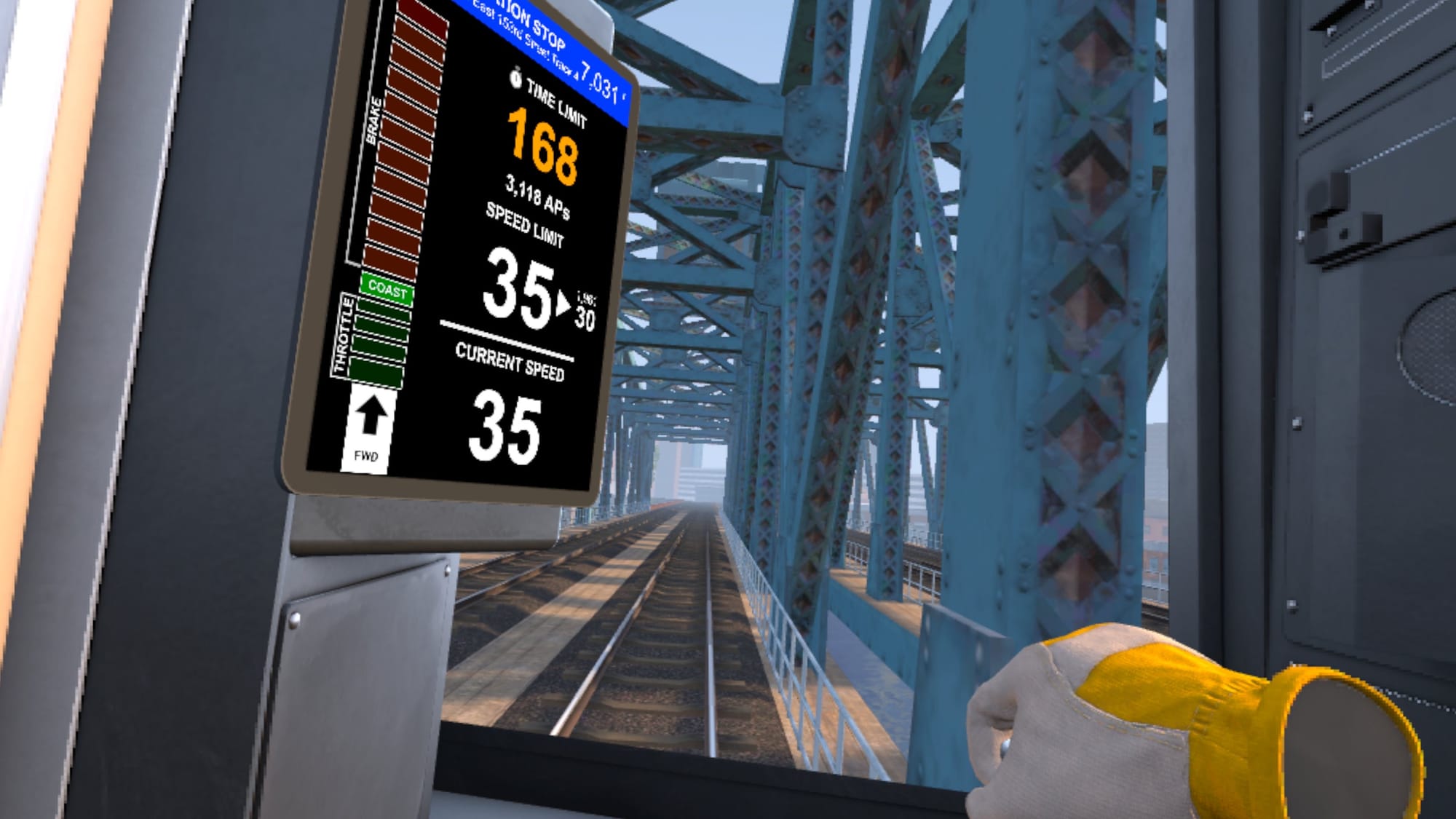
What follows is a fun blend of high-score hunting antics and replayability with a relaxing amount of zen and immersion, where you may not notice how long you’ve been playing until your headset battery reminds you to charge the system. The team have impressively recreated the feel without physical controls using the immersive nature of the platform, while considering how to adapt the experience to a VR audience more likely to be unfamiliar with similar titles.
“We had to please both the VR community and train enthusiasts, which is why we still have the authentic controls for driving the train, but we’ve added that more arcade mode into the main experience so that those users who want that fast-paced experience we have these score gates and objectives,” adds Nick Dent, lead game designer on the project from Just Add Water.
Blending accurate simulation with high scores, bonus activities and more game-like goals is a similar approach to that seen in arcade-y simulator experiences in the genre like Densha de Go!, a Japanese staple in arcades and on home consoles. Enter an arcade somewhere in Tokyo with one of these machines, and you aren’t just treated to a screen and a game. It’s a full physical recreation of a driver’s cabin not dissimilar to the stock seen on the Yamanote line, perfect for train fans and complete with space for a pocket watch, just like a real driver.
Gameplay mixes accurately recreating the feel of driving a train with points and goals and accessibility settings that allow anyone to join in the fun, even if their skills are far more modest. The team admitted their inspiration from the game and its intent to include everyone on this journey.
“We leaned on the Densha de Go side [of balancing fun with realism]. Played it for hours on the Switch!” explained Dent. “Especially on Quest, it needed that similar arcade element to bring in the VR community. There’s millions of headsets out there, you can’t ignore that.”
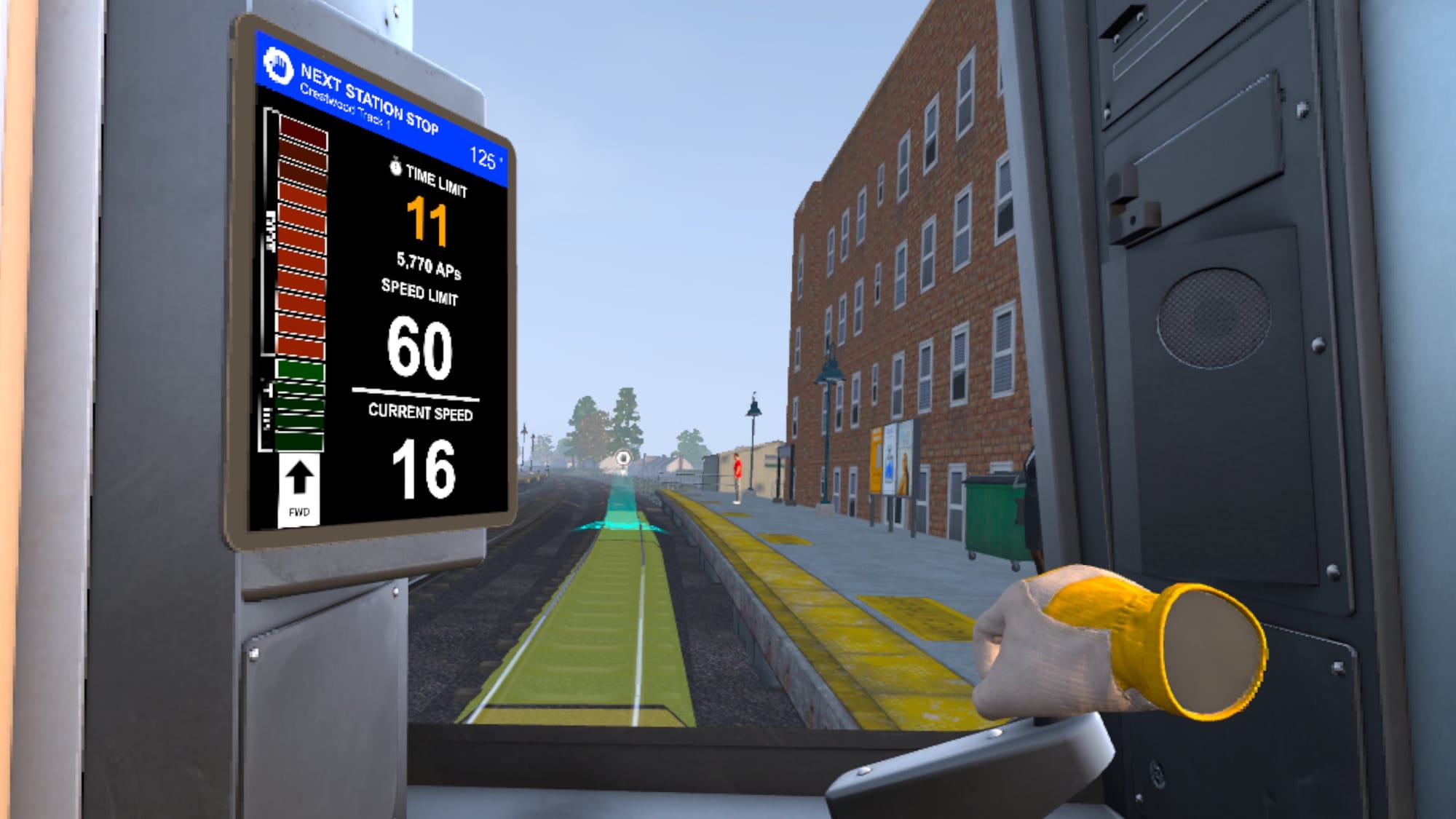
What’s most satisfying about the experience is that, the better you become, the more relaxing it is to play. With an understanding of the controls, it’s easy to just handle the controls without even needing to think, allowing you to appreciate the details of the world around you. While much has been visually simplified to cater for the hardware constraints, particularly on Quest 2, the recreation is accurate enough that I can pick out things I remember from my own trips to New York.
Even simply listening to the sounds of the train and adjusting the levers scratches an itch in the mind that soothes and relieves the world around you as you travel endlessly, which was far from easy to achieve.
“One of the key things about Train Sim World from a route’s perspective is that they’re 1:1 scale, which has definitely been one of the more challenging things about bringing the game to VR,” points out Peddlesden. “In video game terms, 29 miles is massive so the fact you can travel across this at 70 miles per hour without loading screens was perhaps one of the biggest challenges. Accurate simulation is important, but 72 frames per second is more important.”
Leaning into this zen-like tone while adding to the game-like elements of the experience, your menu is designed like an apartment, complete with smooth jazz to ease you into the game. Journey mode lets you get off the train to wander through the stations to find collectibles to decorate that apartment, appreciate the route and what it’s like to drive without the stresses of needing to hit management goals.
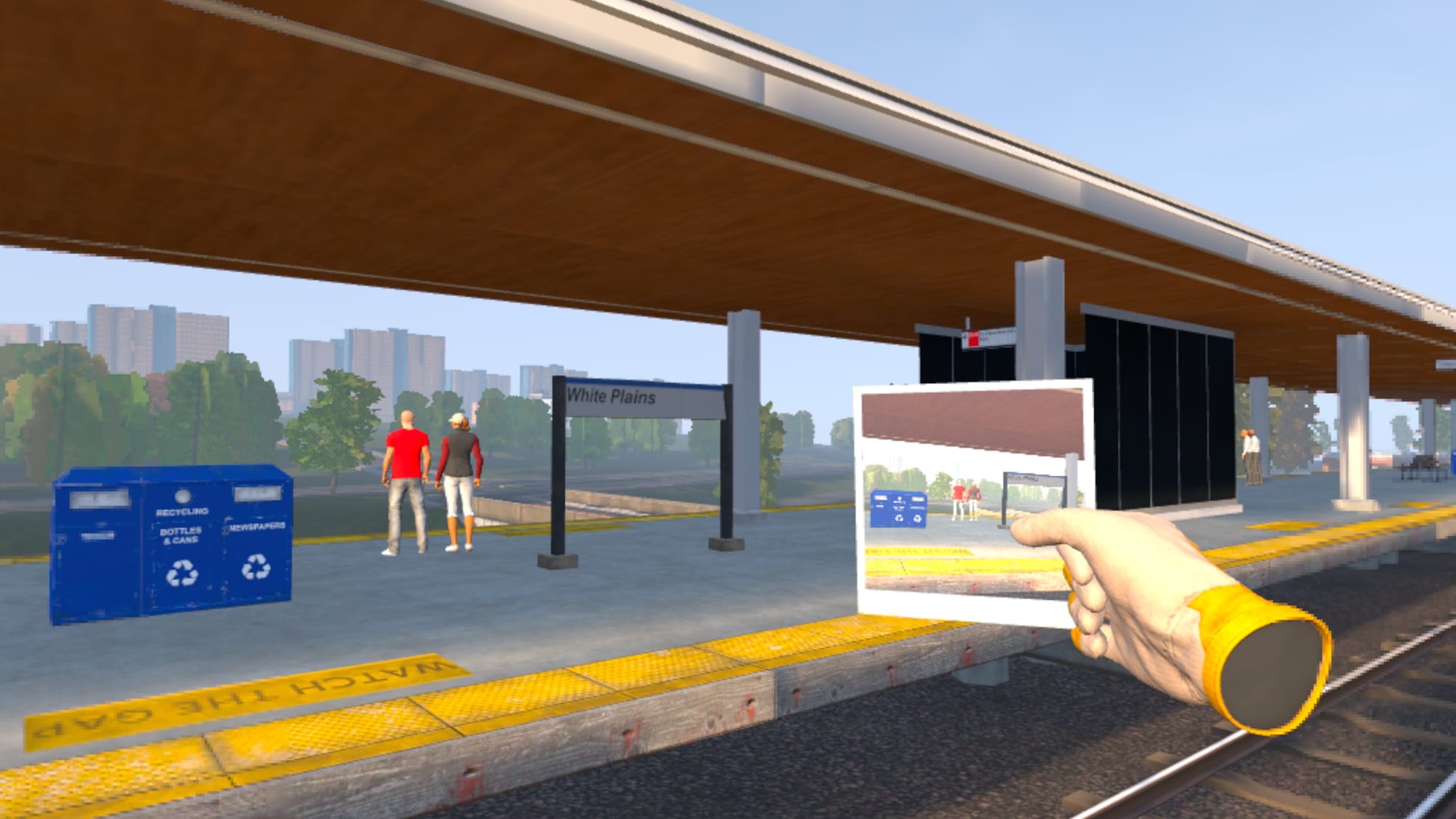
Train Sim World VR was made in partnership with MTA to ensure the accuracy of the train and line, letting the team gain a deeper understanding to ensure it’s as close to the real-world line as possible. But not too close, as the team were quick to note.
“We have regular meetings with MTA and Metro North where we would show them in-progress builds of the game or screenshots from various elements, which they could then provide feedback. If anything, the biggest concern isn’t about it being accurate but being too accurate because there is a safety and security concern, particularly with the Metro because you do feel like you’re in the train, which presents these safety concerns.”
The game balances what the core simulation fans want while making adaptations, not simplifications, to the experience to attract the uninitiated to the genre. So much so, that alongside creating an experience for less-experienced players to jump into train simulators, they brought hardcore fans from PC to VR as a result of the new dimension and depth VR could bring. Dovetail admitted that showing it off at events led to some fans who played the PC version going out to buy headsets for this game, with some even serving as beta testers.
As we closed off our conversation, the team noted its hope that this could be the springboard to bring more lines to VR in the future, provided it’s a success. I hope that happens. Whether more New York journeys or another location entirely, having spent time with this game, the idea of hopping back into Train Sim World VR to drive a train into somewhere new is exciting, not intimidating.
Now that I’ve finished writing this article, perhaps it’s time for another ride.
StarVault brings MOBA action to Virtual Reality on Meta Quest
A new virtual reality MOBA called StarVault is heading to Meta Quest headsets, offering team-based combat in a stylized sci-fi universe.
The post StarVault brings MOBA action to Virtual Reality on Meta Quest appeared first on MIXED Reality News.
A Minecraft Movie’s Chicken Jockey Meme Causing Chaos At Theaters With At Least One Incident Involving Police
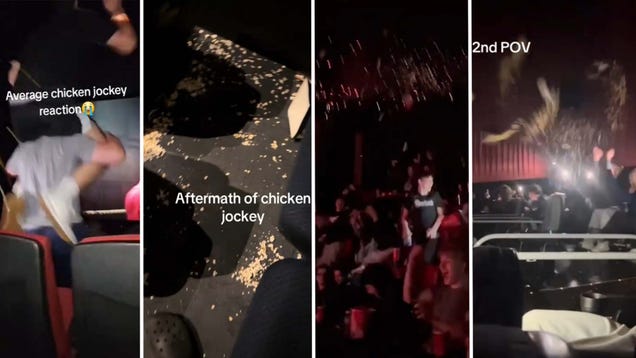
Over the weekend, A Minecraft Movie hit theaters nationwide. The adaption of Mojang’s uberpopular crafting and survival game has already made over $300 million worldwide. And it’s kickstarted some chaotic scenes at theaters thanks to single line of dialogue.
South Of Midnight’s Emotional Journey Doesn’t Overstay Its Welcome
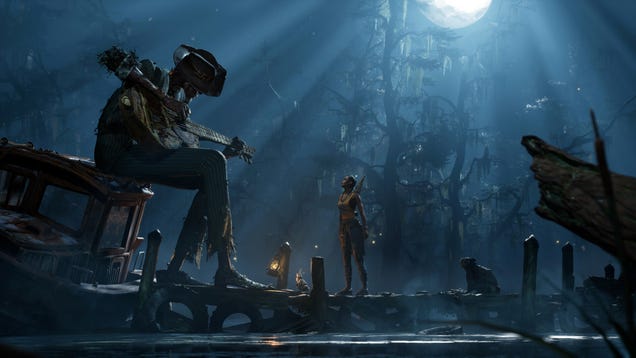
South of Midnight is a thrilling adventure set in the Deep South that sees you take on the role of a Weaver, a mender who brings peace to distraught spirits. This narrative-forward experience is a simple (but at times emotionally powerful) tale that will keep most folks glued to the screen from beginning to end. If…