Pico Motion Tracker Waist Version Offers Standalone Body Tracking

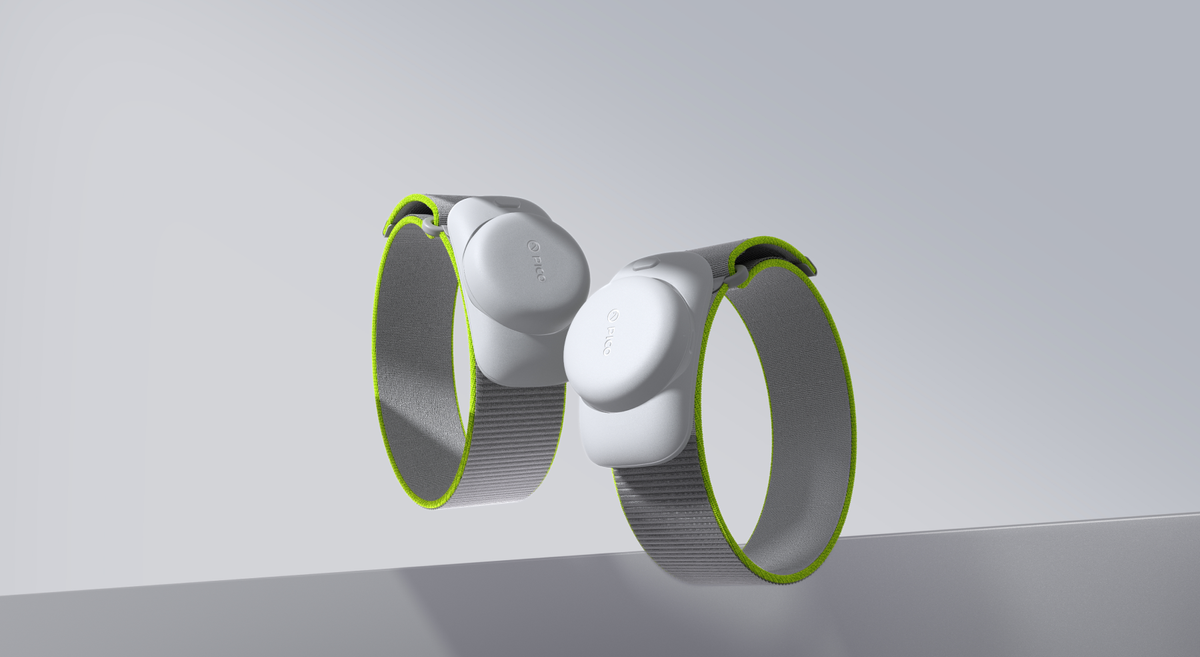
The new Pico Motion Tracker Waist Version offers standalone body tracking and works in both the mobile and PC versions of VRChat.

Pico Motion Trackers Add Leg Tracking To Pico Headsets
Pico Motion Trackers add leg tracking to Pico 4 Ultra, Pico 4, and Pico Neo 3 and feature a clever rapid calibration technique.
UploadVRDavid Heaney

Pico Motion Trackers launched alongside Pico 4 Ultra last year, though they support the earlier Pico 4 and Pico Neo 3 headsets too.

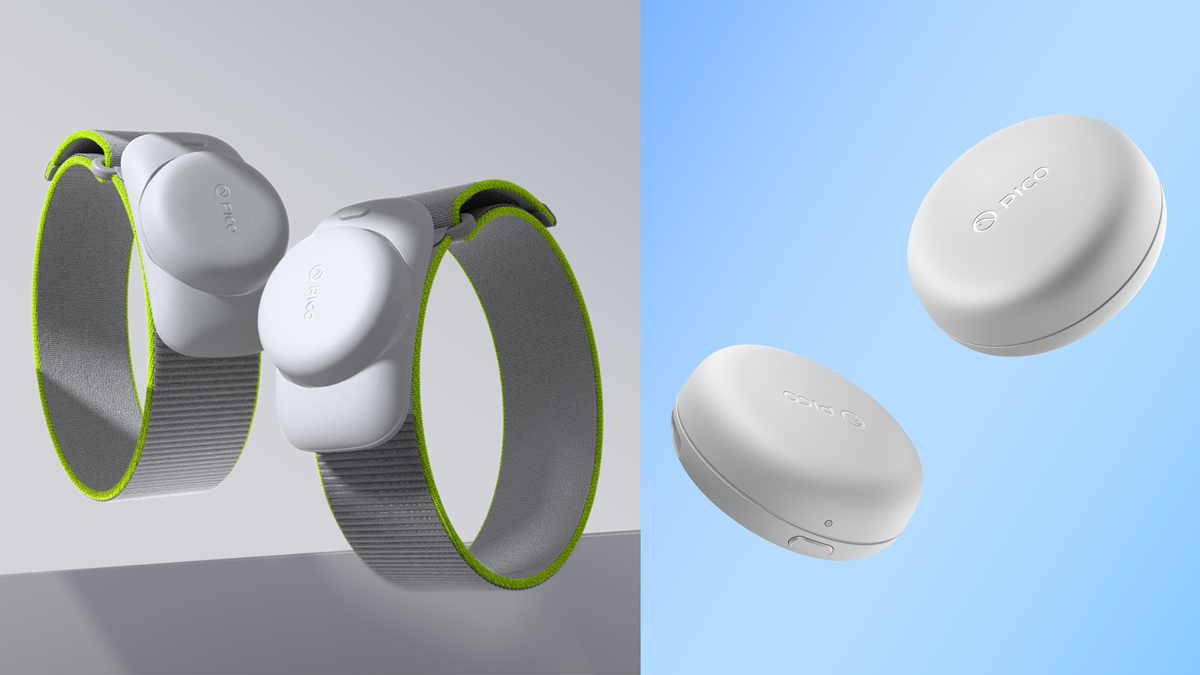
Until now Pico Motion Trackers have been sold in a pair for €90/£80, with a relatively short strap intended for attaching them to your ankles to enable leg tracking in supported titles, including VRChat.

Now, ByteDance is also selling Pico Motion Tracker Waist Version for €50/£40, a single tracker with a longer strap so you can attach it to your waist.

0:00

/0:30

The new waist tracker requires you to already own the ankle trackers for full body tracking, meaning the total cost for adding full body tracking to your Pico headset is €140/£120. There’s currently no bundle, so you have to buy the waist and ankle trackers separately.

Adding the waist tracker, ByteDance says, significantly improves the quality of body tracking compared to only having the ankle trackers, offering a true orientation for your waist.

In addition to enhancing social expressiveness in apps like VRChat, this could enable torso-relative thumbstick movement, an option that’s preferable to head-relative or controller-relative movement but requires body tracking.

Pico Motion Trackers Work In VRChat And Blade & Sorcery
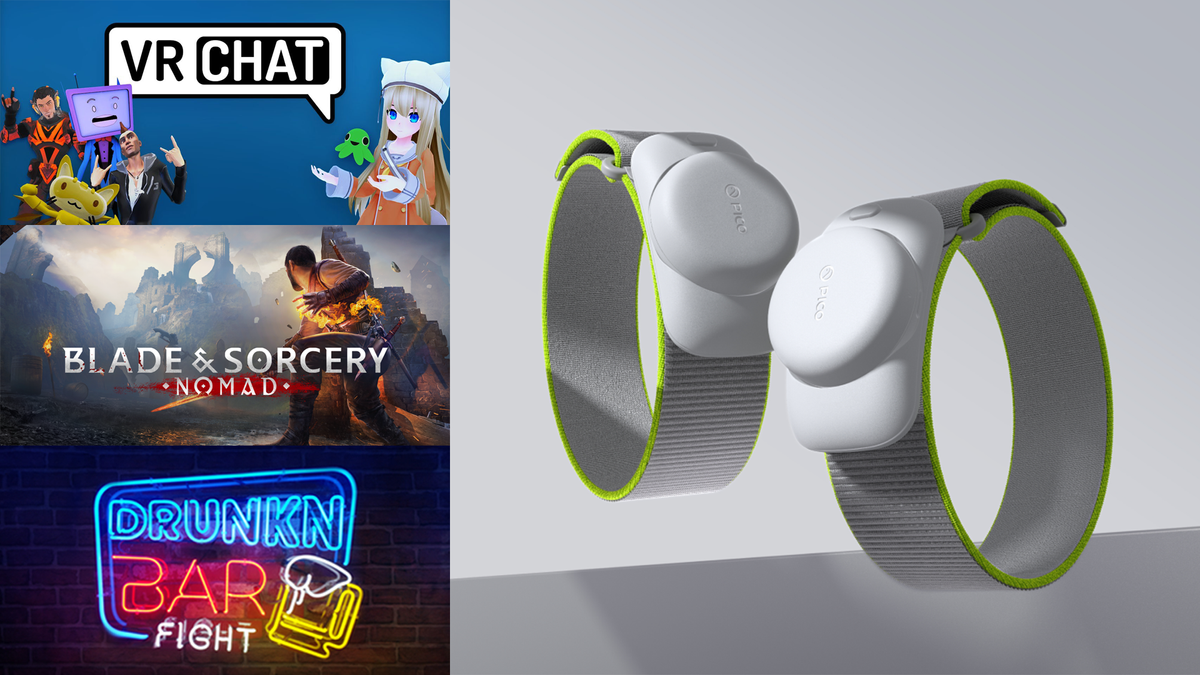
VRChat and Blade & Sorcery: Nomad will support leg tracking with Pico Motion Trackers. Read the full list of supported games here.
UploadVRDavid Heaney

Pico Motion Trackers are currently supported in VRChat, Blade & Sorcery: Nomad, Les Mills Dance, Racket Club, and PC VR via the built-in Pico Connect feature or the paid third-party app Virtual Desktop.

Like Sony’s Mocopi, each Pico Motion Tracker features an inertial measurement unit (IMU) containing a tiny accelerometer and gyroscope. But unlike other IMU trackers, Pico Motion Trackers also feature 12 infrared LEDs each, which are tracked by the headset for two purposes.

The first is rapid initial calibration. You simply stand still and look down, and the base position of your legs and torso are measured. From then on, they’re used to provide true 6DoF positional tracking whenever a tracker is within view of one of the headset’s tracking cameras.

When they’re not in view of a camera, the IMU data is fed into a skeletal model to produce plausible (but imperfect) estimated body poses, providing a higher quality output than pure IMU trackers at a significantly lower cost than Vive Trackers.

ByteDance claims an “average position error of 5 cm, an average angle error of as low as 6°, and an accuracy of not less than 98% for stepping action judgment and restoration” with a latency of less than 20 milliseconds.

Each tracker weighs just 27 grams, offers a claimed 25 hours of active use, and is charged via standard USB-C.

Meta Explains Why It Won’t Make Motion Trackers For Quest
Meta’s CTO says the company won’t make motion trackers for Quest unless Pico Motion Trackers do so well they prove him wrong.
UploadVRDavid Heaney

VR enthusiast owners of Quest headsets have been requesting a similar product from Meta for years now, but in September Meta’s CTO shot down the prospect, saying he doesn’t believe “the juice is worth the squeeze”.

Quest 3 and Quest 3S do offer developers a completely different body tracking solution, using their downwards-facing side cameras to track your wrist, elbows, shoulders, and torso using advanced computer vision algorithms and an AI model to generate plausible positions for your legs. This doesn’t offer true body tracking though, and the performance cost has led to almost no developer using it, not even Meta for its own Meta Avatars.

Pico’s solution has effectively no performance cost, works in any lighting conditions, and tracks your legs. Now, with the waist tracker, it can track your torso too.


‘FastHands’ Brings Parkour Action to Quest in May, Aiming to Level-up Hand-Tracked Locomotion

Indie studio X82 announced it’s releasing a parkour game next month that’s throwing in a veritable buffet of unique locomotion styles, hoping to put Quest’s hand-tracking on par with controller-based movement.

Called FastHands, the multiplayer game offers up endless procedurally levels that let you run, jump, climb and glide, tasking you to progress through obstacle courses filled with moving traps, speed boosts, and its fair share of impossible jumps.

While you can play seated and with controllers, the game’s use of hand-tracking aims to go a lot further than most, getting out of your chair to pump your arms for forward movement, glide through the air like Superman, and skitter up walls using your stick ‘spider hands’ to blast up verticals at a surprisingly fast pace.

Check out the trailer below to see just how hand-tracking is used in FastHands:

You won’t need to swing your arms ‘too much’, like in Sprint Vector (2018) though, instead requiring about 20cm (eight inches) of up and down movement to accelerate.

“It’s not too high effort as you only need a medium pace, but it’s intended to give a better feel of running while also making use of hand tracking,” X82 tells Road to VR. “There is also a seated / controller mode where you just use analogue sticks.”

Although fundamentally a parkour game, there’s also some shooting involved too, serving up targets (and other players) that you can hit with your trusty slingshot. Pull one hand back to charge and aim with the other—with or without controllers.

It’s an interesting array of hand-tracked stuff for sure, and we can’t wait to see it in action when it arrives in early access on Quest 2 and above. You’ll find it over on the Horizon Store when it launches on May 8th.

In the meantime, X82 is hosting closed multiplayer beta testing on the FastHands Discord (invite link). Join for more details on how to access the game and also provide feedback.

The post ‘FastHands’ Brings Parkour Action to Quest in May, Aiming to Level-up Hand-Tracked Locomotion appeared first on Road to VR.

Wallace & Gromit In The Grand Getaway Now Coming To Steam & PlayStation VR2

Wallace & Gromit in the Grand Getaway is heading to Steam and PlayStation VR2.

Originally launched in 2023 on Quest, Wallace & Gromit in the Grand Getaway is an original story that sees the famous duo stranded on Mars, joined by Wallace’s new golfing-themed Robo Caddy and an AI assistant, Beryl. A short adventure from co-developers Aardman, No Ghost and Atlas V, new store page listings confirmed that it’s coming to PC VR and PS VR2.

0:00

/1:12

It’s a safe assumption that these upcoming ports will not feature the mixed reality experience seen in the Quest release, Jamtastic!, where Wallace tests his new ‘jam-to-toast delivery system.’ Both store pages only mention the main campaign, ​and MR largely remains exclusive to standalone VR headsets.

We had positive impressions in our Grand Getaway review on Quest, believing it offers an entertaining adventure while criticizing Jamtastic! and “the occasional jank.”

Wallace & Gromit In The Grand Getaway does a fine job adapting Aardman’s classic films for VR, though a few smaller issues mean there’s room for improvement. While Jamtastic! could be more exciting and the main adventure suffers from occasional jank, this charming little adventure nails the spirit of the series, packed with humor and personality.

A release date remains unconfirmed for Steam and PlayStation VR2, but Wallace & Gromit in the Grand Getaway is out now on the Meta Quest platform. 

Wallace & Gromit VR Review – A Fine Day Out
Wallace & Gromit In The Grand Getaway successfully translates the films into a VR adventure with a few hiccups. Our full review:
UploadVRHenry Stockdale

Report Claims Apple Vision Pro 2 Mass Production Has Begun

A Chinese news outlet claims that Apple Vision Pro 2 has entered mass production already, though this contradicts other rumors.

IT Home cites a pseudonymous source, which it says claims that the “panels, shells and other key components” of the headset are already in mass production. It even names specific suppliers for the glass and shell.

No specifications or details about the potentially upcoming headset are given by the new report.

Apple Vision Pro Refresh With M5 Chip Could Enter Mass Production In Late 2025
Mass production of an Apple Vision Pro refresh with an M5 chip should start in late 2025, prominent supply chain analyst Ming-Chi Kuo claims.
UploadVRDavid Heaney

Back in September, supply chain analyst Ming-Chi Kuo claimed that mass production of a refreshed Apple Vision Pro with an M5 chipset was expected to begin in the second half of 2025.

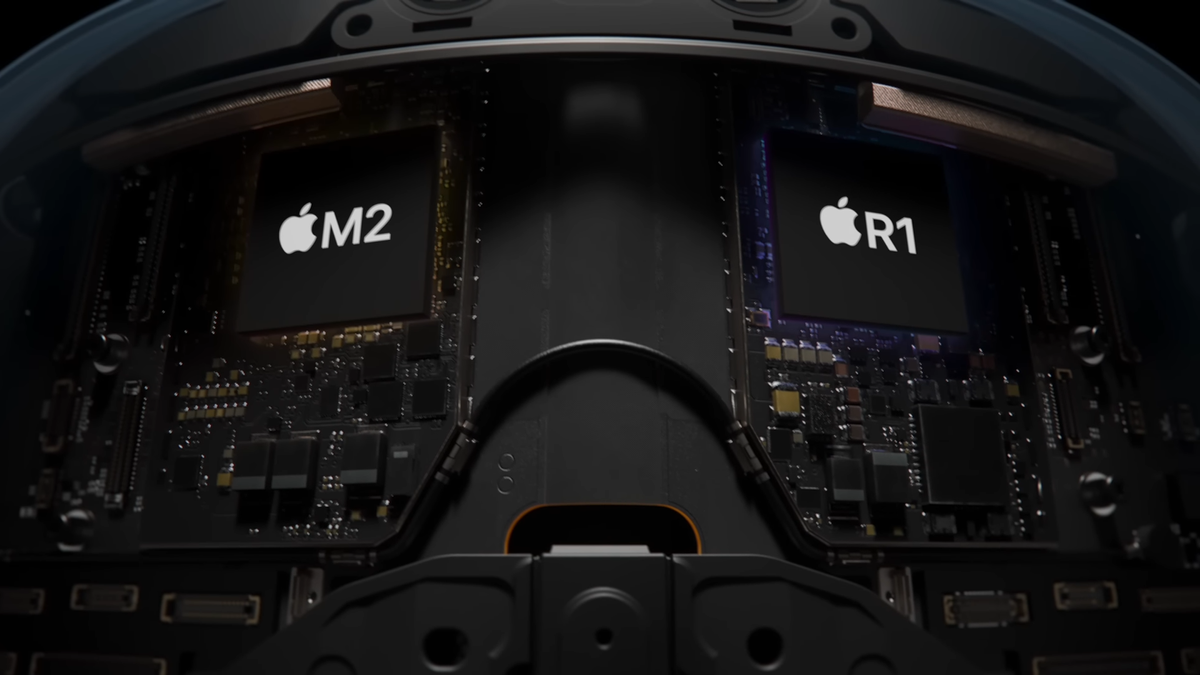
The M5 chip hasn’t yet been announced, but Apple claims M4 has a 50% more powerful CPU and 4 times more powerful GPU than M2, suggesting the M5 Vision Pro could deliver a phenomenal performance increase.

IT Home’s report, if true, would suggest a more aggressive timeline than Kuo expected. It also contradicts recent reporting from Bloomberg’s Mark Gurman, who in January said that he doesn’t expect Apple to launch a new Vision Pro in 2025.

Apple Reveals The Date It’s Expected To Unveil visionOS 3
Apple’s annual Worldwide Developers Conference (WWDC) will take place on June 9 this year.
UploadVRDavid Heaney

With rumors disagreeing, we’ll keep a close eye on Apple for any official announcements of a new Vision headset before drawing any conclusions. Apple is expected to reveal visionOS 3 at WWDC 2025, which is set for June 9.

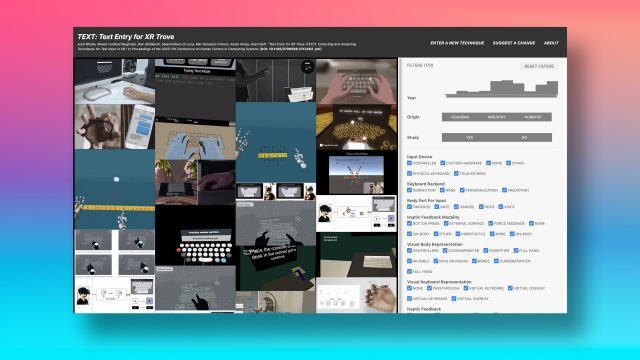
Researchers Catalog 170+ Text Input Techniques to Improve Typing in XR

Efficient text entry without an actual keyboard remains an industry-wide challenge for unlocking productivity use-cases in XR headsets. Researchers have created a comprehensive catalog of existing text entry techniques to codify different methods and analyze their pros and cons. By making the catalog freely available, the researchers hope to give others a head start on creating new and improved techniques.

Guest Article by Max Di Luca

Massimiliano Di Luca leads the VR Lab at the University of Birmingham, UK, where he is an Associate Professor in the School of Psychology and in the School of Computer Science. He previously worked at Meta where he pioneered work on hand inputs and haptics for VR. His most recent collaboration with industry was recently recognized by the ACM SIGCHI 2025 awards for pioneering the interaction framework of Android XR through exemplary industry-academia collaboration, establishing foundational input methods and interaction guidelines for XR operating systems.

As immersive experiences become increasingly sophisticated, the challenge of efficient text entry remains a crucial barrier to seamless interaction in virtual and augmented reality (VR/AR). From composing emails in virtual workspaces to logging-in and socializing in the metaverse, the ability to input text efficiently is essential for the usability of all applications in extended reality (XR).

To address this challenge, my team from the VR Lab at the University of Birmingham (UK) along with researchers from the University of Copenhagen, Arizona State University, the Max Planck Institute for Intelligent Systems, Northwestern University, and Google developed the XR TEXT Trove—a comprehensive research initiative cataloging over 170 text entry techniques tailored for XR. The TEXT Trove is a structured repository of text entry techniques and a series of filters that aim at selecting and highlighting the pros and cons of the breadth of text input methods developed for XR in both academia and industry.

These techniques are categorised using a range of 32 codes, including 13 interaction attributes such as Input Device, Body Part (for input), Concurrency, and Haptic Feedback Modality, as well as 14 performance metrics like Words Per Minute (WPM) and Total Error Rate (TER). All in all, the number of techniques and extensivity of the attributes provide a comprehensive overview of the state of XR text entry techniques.

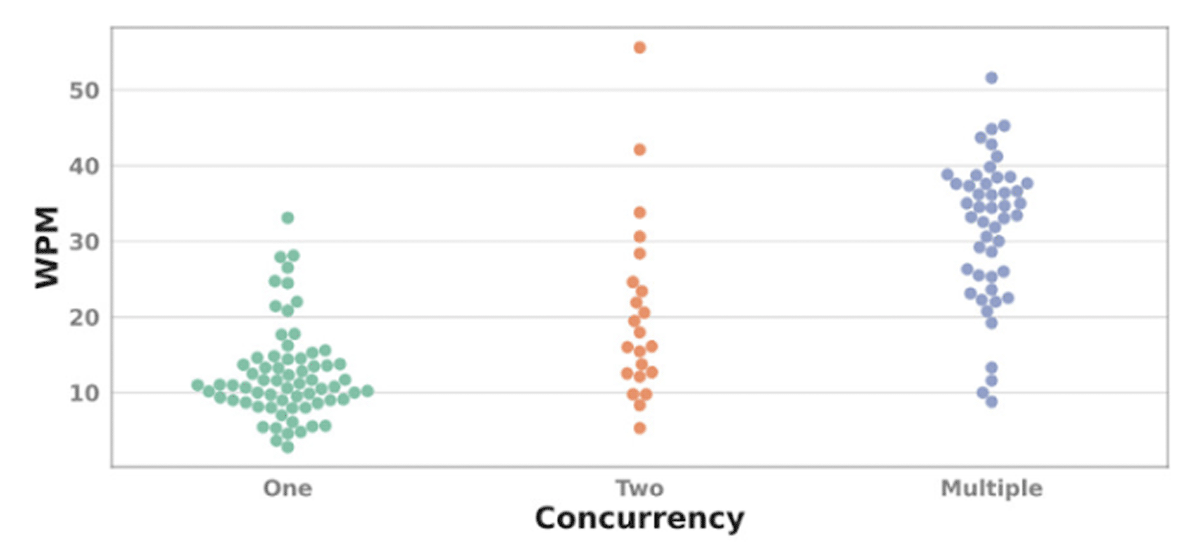
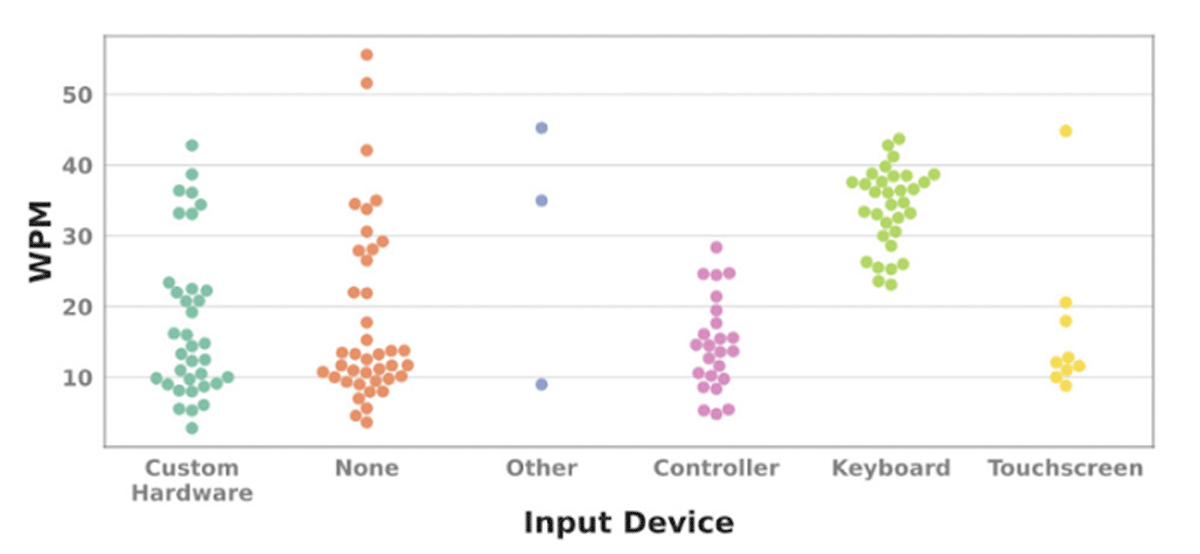
Several key takeaways can be surmised from our research. First and foremost, text input performance is inherently limited by the number of inputting elements (whether fingers, controllers, or other character selectors). Only multi-finger typing can lead to performance comparable to touch-typing speed with a keyboard on regular PCs. As visualized in the plots below, each additional input element (or finger) adds about 5 WPM speed on top users.

Words per minute using multiple fingers, and different input devices. (each dot represents one technique analyzed in the study).

Our research also indicates that haptic feedback, the presence of external surfaces, and fingertip-only visualization are preferable ways to improve typing performance. For instance, typing on surfaces (instead of in mid-air) contributes to a more comfortable and potentially more efficient typing experience. External surfaces also minimize sustained muscle strain, making interactions more comfortable and reducing the onset of Gorilla Arm Syndrome.

Finally, and more interestingly, as of today, no alternative has fully replaced the keyboard format, probably because it still delivers the highest words-per-minute. Perhaps because it also requires high learning curves. We believe that the main path for faster typing in VR than PC might lay on the need to reduce travel distances on a multi-finger keyboard via Machine Learning and AI. XR needs its own ‘swipe typing’ moment, which made one-finger typing on smartphones much more efficient.

In that regard, the deep dive from the XR Text Trove represents a significant step towards a more comprehensive understanding of text input in virtual and augmented reality. By providing a structured and searchable database, we aimed to offer a resource for researchers and developers alike, paving the way for more efficient and user-friendly text entry solutions in the immersive future.

As we explain in our paper, this work has the potential to significantly benefit the XR community: “To support XR research and design in this area, we make the database and the associated tool available on the XR TEXT Trove website. The full paper will be presented at the prestigious ACM CHI conference next month in Yokohama, Japan.

Several authors in our team are co-creators of the Locomotion Vault, which similarly catalogs VR locomotion techniques in an effort to give researchers and designers a head-start on identifying and improving various methods.

The post Researchers Catalog 170+ Text Input Techniques to Improve Typing in XR appeared first on Road to VR.

Walkabout Mini Golf Will Raise Its Price & Fold In 6 DLC Courses

Walkabout Mini Golf will raise its price to $25 and merge in 6 DLC courses to the base game on May 1.

The game is currently priced at $15, so that means a $10 price hike is coming in just under a month from now.

Upon the price increasing, the following six paid DLC courses will be merged into the base game:

Priced at $4 each, these six DLCs are currently worth $24 together. On May 1, they will no longer be purchases. Anyone who already owns Walkabout, as well as any new buyers, will have them for free.

Walkabout Mini Golf is part of both the Quest+ and PlayStation Plus games catalogs, so subscribers of these services will also get the six courses.

There’s no word as to whether those who already bought these DLCs will be compensated in any way.

Mighty Coconut says it’s making this change because the number of DLC courses has “started to dwarf the main content included with the game”, so new buyers will now get access to “the latest and greatest courses”, which typically are higher quality than the original courses.

“We’re also proud to be 100% player-funded and entirely independent, meaning that we don’t have outside investors, publishers or a parent company. What we make from selling the game and DLC goes directly to funding further development. That means our only goal is to maintain the balance of keeping our staff paid and happy while continuing to provide top-quality content for our players. Your support has been key to our success, and we can’t thank you enough for spending time in these worlds we love to create!”

The developer says that future DLC courses will continue to be released for $4, as it is now, with no plans for DLC course price increases.