This Arlo Wireless Security Camera Is at Its Lowest Price Ever Right Now

We may earn a commission from links on this page. Deal pricing and availability subject to change after time of publication.

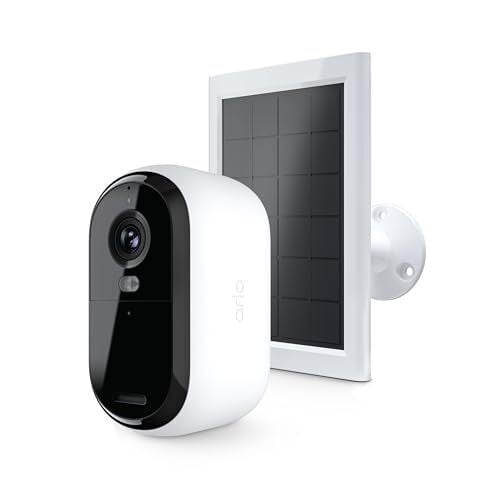
If you’ve been looking for a wireless outdoor camera that doesn’t need constant babysitting, the Arlo Essential Wireless Security Camera (2nd Gen) bundled with a solar panel is now at its lowest-ever price (according to price trackers)—$69.99, down from $99.99.

Designed for DIY setup, it’s fully wireless, with a built-in rechargeable battery and a USB-C port in case you want to charge it manually. The camera connects over 2.4GHz wifi and records sharp 2K video with a 130-degree field of view and 12x digital zoom. It captures color video at night when the spotlight is turned on. Otherwise, it switches to black-and-white via infrared. There’s also a motion sensor, mic, speaker, and a built-in siren, which you can activate from the app or let it trigger automatically. It plays nice with Alexa and Google Assistant, and you can set up routines with IFTTT. Just note—it doesn’t support Apple HomeKit, so if you’re deep in the Apple ecosystem, this might not be for you.

That said, you’ll need an Arlo Secure subscription to access cloud recordings and smart alerts. Without it, the camera won’t store any footage, meaning you can’t view recordings—only live footage. For $7.99/month, you get 60 days of video history for one camera and smart alerts for people, packages, pets, and more. The $24.99/month Premium plan adds a 24/7 emergency response option. The mobile app is where you’ll do everything—view live feeds, set motion zones, trigger the siren, or speak through the two-way mic. It’s not the most affordable option long-term with that monthly cost, but for $70 upfront—plus a solar panel—it might be worth it if you want simple, high-quality monitoring without dealing with wires.

The best drone for 2025

Drones have become an important tool in a creator’s bag of tricks, allowing them to capture aerial footage that elevates their videos. And nowadays, they’ve become more accessible as video quality and features have dramatically improved while prices have dropped.

Recent budget-friendly models include DJI’s Neo and Flip drones, along with the HoverAir X1 Pro lineup, all under $500. If you’ve got more to spend, the options are similarly plentiful with drones like the DJI Mini 4 Pro and HoverAir X1 Pro Max. And for the price of a good mirrorless camera, you can get DJI’s Mavic 3 Pro that offers awesome image quality, range and other features.

Price is obviously key, but you also need to consider features like video quality, obstacle avoidance and tracking. To help you decide which one is best for you and your budget, we’ve assembled this guide to the best drones you can buy right now, complete with models aimed at novices, professionals and filmmakers.

The best drones for 2025

What to look for in a drone

Camera features

For this guide, we’re looking only at drones that are basically flying cameras, so you want the best video and photo features possible. Bigger devices like DJI’s Mavic 3 Pro or Air 3S carry relatively large sensors, offering superior picture quality for nighttime cityscapes or other low-light scenes. Smaller models like the Mini 4 Pro and HoverAir X1 Max use smaller camera sensors, so they aren’t as good in dim light.

Field of view and minimum aperture are also important, with most drones typically having a wide-angle focal length, though a few others like the HoverAir X1 Max carry an ultrawide lens. Some models have multiple cameras including a wide and a zoom. As for aperture, lower numbers are better and allow for shooting in dim light. Most DJI models are solid in this regard, while the HoverAir models don’t perform as well.

Video resolution and slow-mo are also essential camera capabilities. Most drones these days can shoot at 4K with a frame rate of at least 30 fps, though some offer 6K or even 8K at up to 30 fps. Higher-end models can shoot 4K at up to 120 fps, allowing you to slow down the action dramatically to create a cinematic look.

Other noteworthy features include log or HDR video that supports higher dynamic range, particularly in bright and sunny conditions. Finally, the camera’s gimbal and stabilization are important factors to keep your footage looking as smooth as possible. Some drones have gimbals that can rotate the camera 90 degrees to give social media creators the maximum resolution for vertical formats.

Drone features: Speed, range, safety, battery life and obstacle detection

By and large, there are two types of camera drones to consider. The first are standard drones (usually with open propellers but not always) designed to fly outside and take scenic shots. Often there’s nothing to stop the props from striking skin or objects, so they can’t really be used indoors or around people. Some models like the DJI Neo and Flip have prop guards that better protect bystanders and property, as well as the drone itself.

Then there’s first-person-view (FPV) camera drones, which often have propeller guards and are meant to be used both indoors or outside to capture exciting footage. Standard models don’t need to go particularly fast as they’re mainly used to shoot fun videos for social media, but FPV drones need to move at high speeds to create excitement. Because of that speed, they’re also better in breezy conditions as they can fight gusts and return home more quickly. Acrobatic abilities (often promoted by the manufacturer in ads or packaging) are also important for FPV drones, as it allows the user to perform tricks and zip around obstacles.

Battery life is another important factor. The best drones boast a battery endurance of up to 45 minutes, while FPV drones like the Avata 2 can only fly for about half that time as they tend to be heavier and carry smaller batteries to reduce weight. As a general rule, a single battery isn’t enough for any serious shooting so you’d do well to buy your drone in a kit with a few batteries and a charger.

As for range, DJI tends to dominate in this area, with its latest models able to maintain a video signal at a distance up to 20km (12.4 miles). HoverAir’s models are weaker with the top-end X1 Max model limited to just 1km (0.6 miles) when using the optional beacon system. DJI also offers multiple ways to control its drones including headsets, joystick-type controllers, motion detection controllers and smartphones.

The best drones have sensors to detect obstacles in all directions. Others are limited to only avoiding obstructions coming at them from the front and some only rely on the main camera to prevent crashes. Finally, if you want to have your drone follow you around automatically, you’ll need it to be able to track you around when you’re vlogging, riding a bike or skiing, while also avoiding obstacles.

This article originally appeared on Engadget at https://www.engadget.com/cameras/best-drone-120046775.html?src=rss

Linux 6.16 To Add Asahi UAPI Header For Apple Silicon Graphics But No Actual Driver Yet

Submitted today via DRM-Misc-Next for queuing in DRM-Next until the Linux 6.16 merge window in June is the Asahi driver user-space API “UAPI” header. This is the user-space API intended for the Asahi kernel graphics driver for supporting the Apple M-Series graphics hardware under Linux. But due to being written in the Rust programming language and various kernel abstractions not yet ready among other obstacles, only the user-space API header is set to be added and not yet introducing the actual Direct Rendering Manager driver…

Labor and nonprofit coalition calls on California AG to stop OpenAI from going for-profit

A group of organizations, including nonprofits like LatinoProsperity and labor groups like the California Teamsters, are petitioning California Attorney General Rob Bonta to stop OpenAI from becoming a for-profit entity, The Los Angeles Times reports. OpenAI announced plans to transition to a public-benefit corporation in 2024, and reportedly has two years to pull it off or risk a large portion of the money its raised become debt.

The group’s primary concerns are that OpenAI “failed to protect its charitable assets” and is actively “subverting its charitable mission to advance safe artificial intelligence.” OpenAI started as a nonprofit research organization studying AI, but transitioned to a for-profit company that’s overseen and run by a nonprofit in 2019. 

That structure is legally allowed in the state of California, but the group’s petition claims that OpenAI’s decision to pursue a new structure is driven by a desire not to further its mission, but to provide “AI’s benefits — the potential for untold profits and control over what may become powerful world-altering technologies — to a handful of corporate investors and high-level employees.”

Engadget has reached AG Bonta for comment on the petition and will update this article if we hear back.

“Our Board has been very clear⁠ that we intend to strengthen the non-profit so that it can deliver on its mission for the long term. We’re not selling it, we’re doubling down on its work,” OpenAI told Engadget. “We look forward to the input and advice from leaders who have experience in community-based organizations on how we can help them achieve their missions, as recently announced by the creation of our advisory Commission.”

OpenAI’s primary justification for going for-profit is to raise more money. Currently, there’s nothing stopping OpenAI from convincing more people to invest, but as Engadget reported in February, it is limited in the returns it can offer investors. It wouldn’t have those limitations as a for-profit company, nor would it have to heed the demands of a nonprofit board focused on the risks of the company’s breakthroughs, rather than their utility as consumer products.

OpenAI’s board has attempted to reign in the for-profit side over the years, like pushing out Sam Altman in 2023, before he was rehired and the board was filled with new members more friendly to OpenAI’s for-profit goals. The organizations behind the petition believe that moves like that are enough justification for the AG to step in to protect the public’s interest.

The petition joins other attempts to stop OpenAI’s conversion, like Meta’s letter to Bonta claiming that OpenAI’s transition to a for-profit would “flout the law,” and Elon Musk’s attempt to buy the company.

Update 8:24PM ET: Added comment from OpenAI. 

This article originally appeared on Engadget at https://www.engadget.com/ai/labor-and-nonprofit-coalition-calls-on-california-ag-to-stop-openai-from-going-for-profit-212548103.html?src=rss

Microsoft Windows 95 Reboot Chime and Minecraft Soundtrack Inducted Into National Recording Registry

BrianFagioli writes: In a move that is sure to make longtime PC users do a double take, the Library of Congress has added two very unexpected sounds to its National Recording Registry. No, it’s not another classic rock album or jazz staple. Believe it or not, it’s actually the “Reboot Chime” from Windows 95 (that played when the operating system started) and the soundtrack from Minecraft!


Read more of this story at Slashdot.

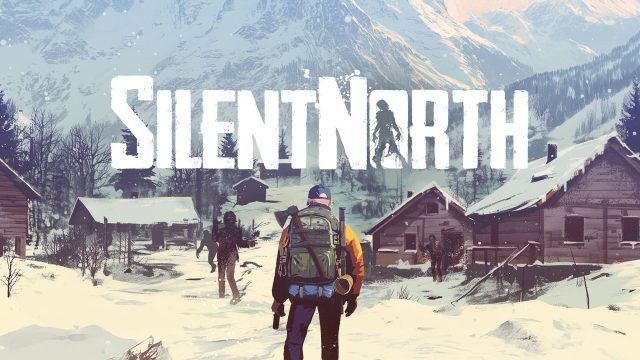
‘Rust’-like Shooter ‘Silent North’ Launches in Early Access on Quest & PC VR Headsets, Trailer Here

Silent North, the sandbox survival shooter from Ghosts of Tabor studio Combat Waffle, is now available in early access on Quest and PC VR headsets.

Like Face Punch Studio’s iconic PvPvE game Rust (2013), Silent North is an open-ended survival game that offers up a sandbox where you make the rules. Create allies, betray everyone, or just take in the game’s persistent world.

“It’s a completely different experience from Ghosts of Tabor, where survival is focused on high-stakes raids with an emphasis on tactical combat, gear collection, and extraction,” said Scott Albright, CEO and founder of Combat Waffle Studios. “The survival genre is so nuanced, but there’s one thing that tends to permeate every sub-genre: a total lack of immersive, VR ways to experience them. We’re working on changing that.”

And as you’d imagine, that also includes environmental hazards, hostile Infected (aka ‘zombies’), and fellow players looking to survive.

Described as an “alpha Early Access release,” Silent North is now available on the Horizon Store for Quest 2 and above and PC VR headsets via Steam, priced at $20.

The post ‘Rust’-like Shooter ‘Silent North’ Launches in Early Access on Quest & PC VR Headsets, Trailer Here appeared first on Road to VR.

VR Arena Battler GORN 2 Smashes Onto Quest & Steam Next Week

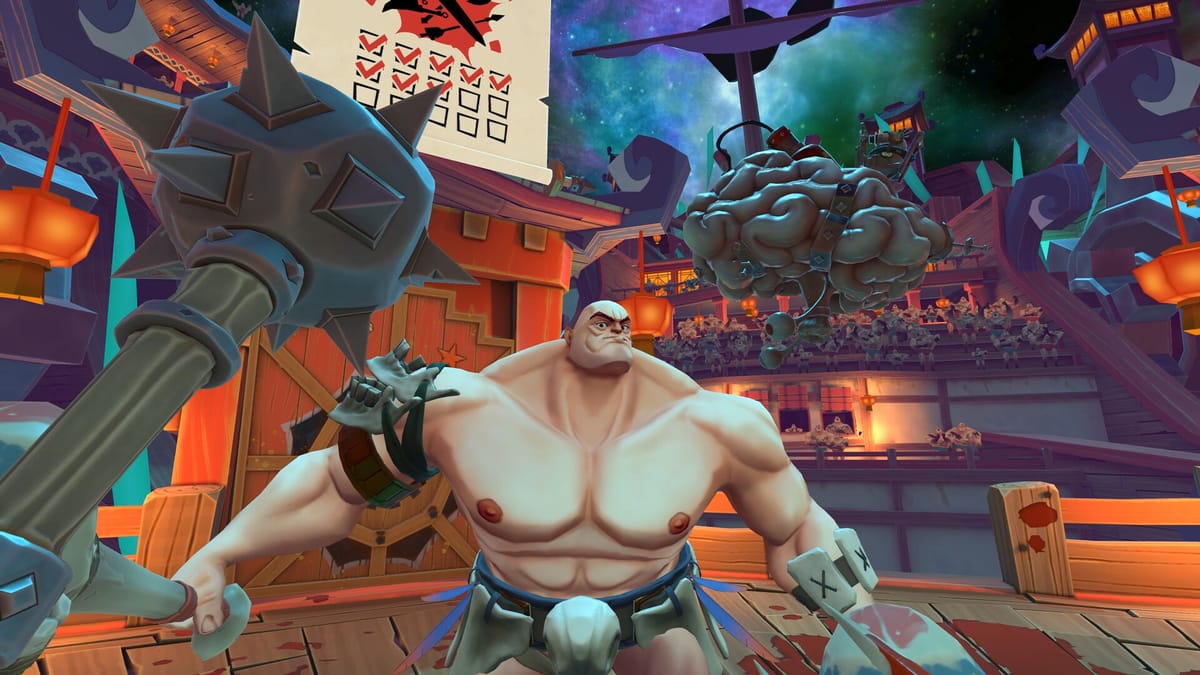
Arena battle sequel GORN 2 reaches Quest and Steam next week, with the PlayStation VR2 release coming later this year.

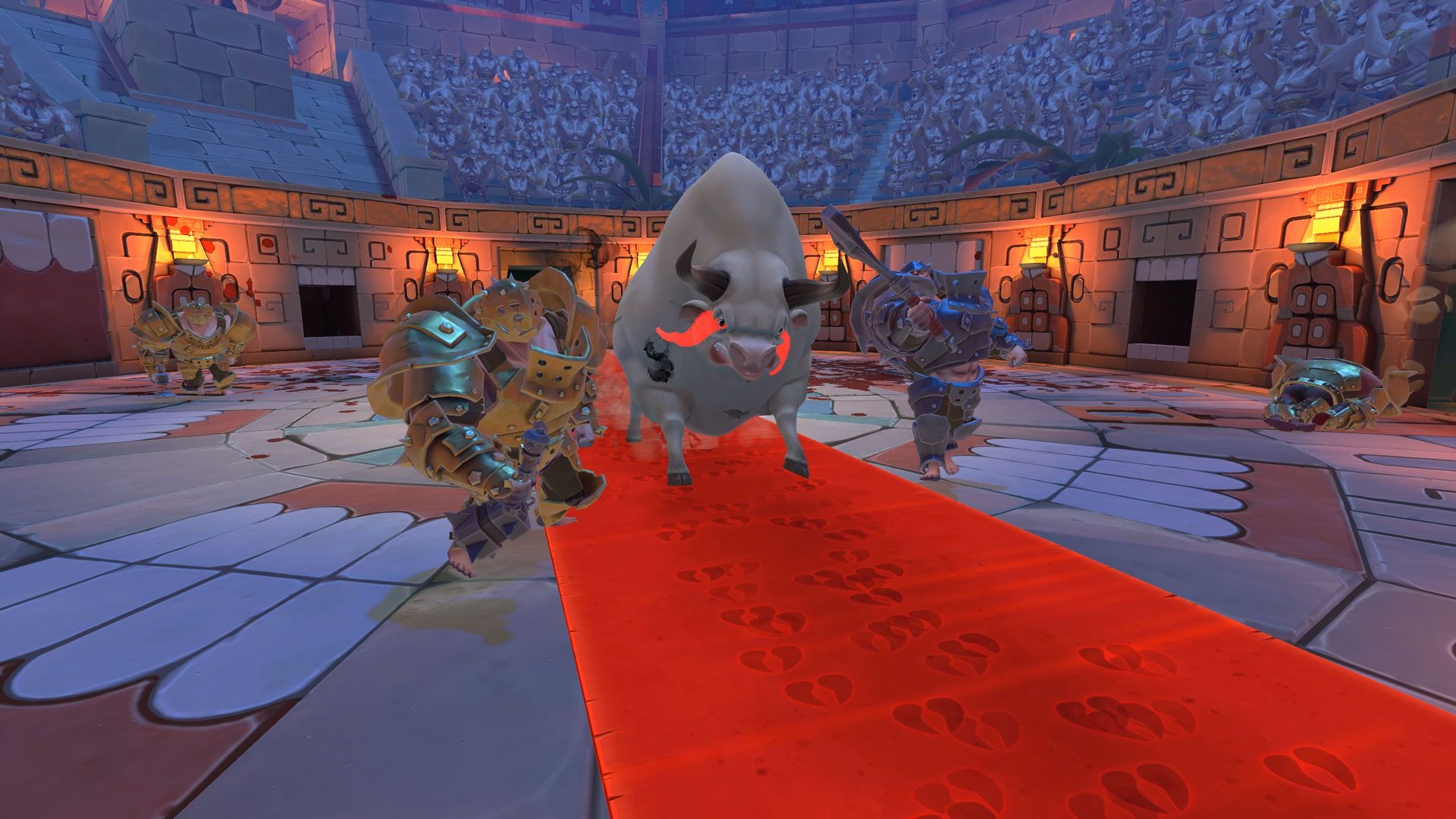
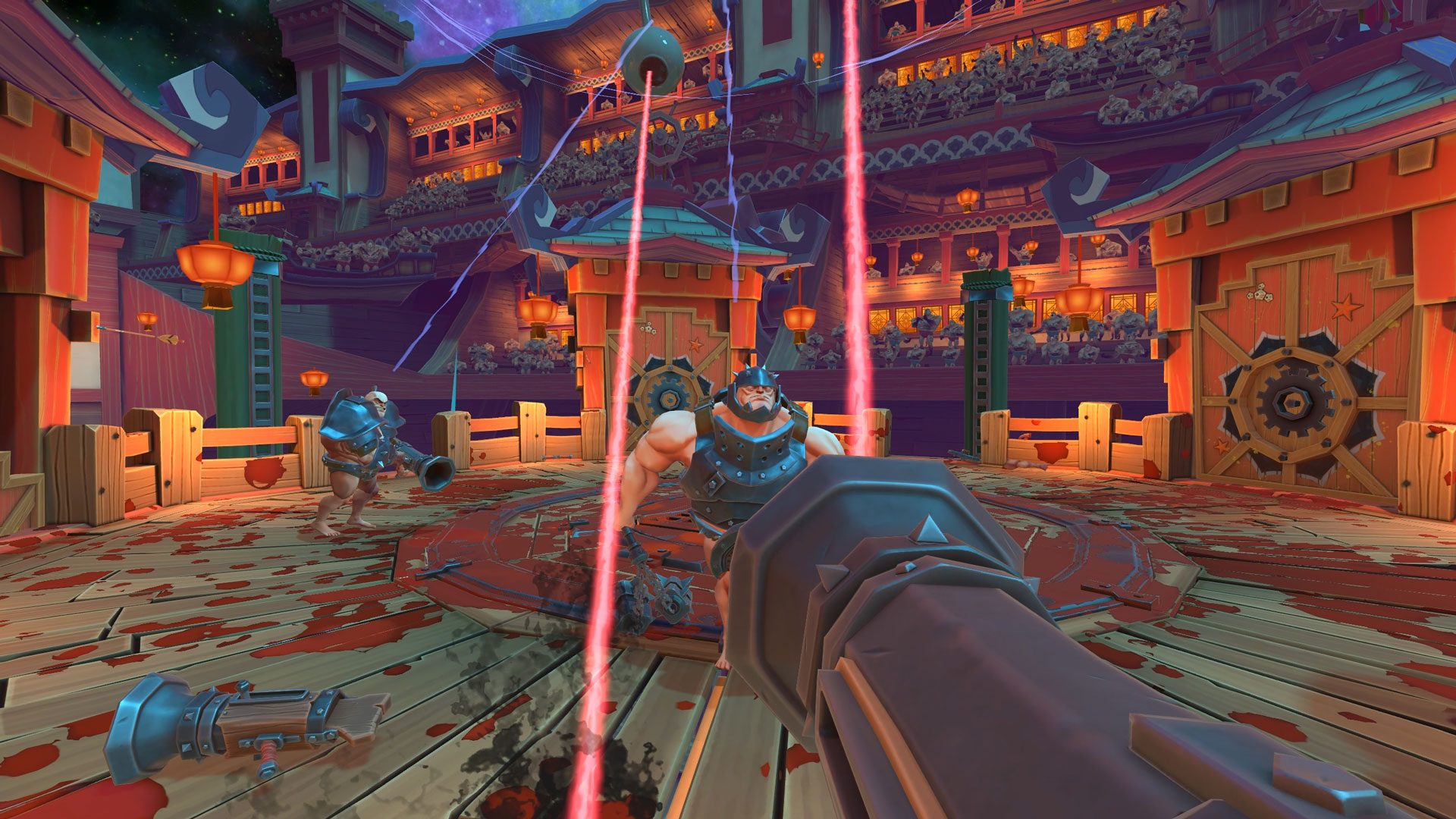
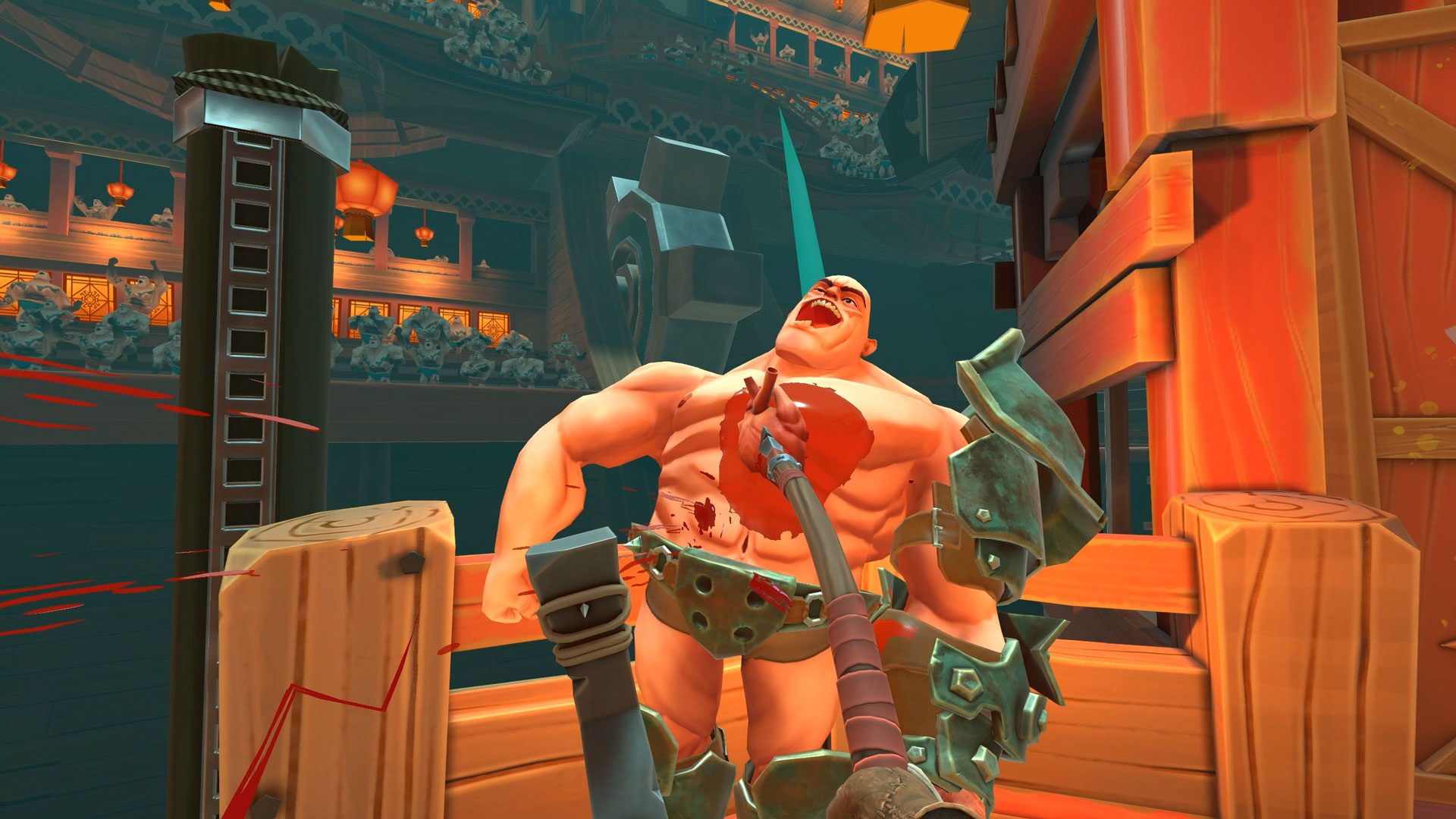
Developed by Free Lives (Gorn) and Cortopia Studios (Escaping Wonderland), GORN 2 amps up the original game’s combat mayhem, allowing players to battle against fellow gladiators in the afterlife. In this admittedly violent take on heaven, your job is to slash your way through five blood-soaked realms, with each layer leading to a final boss.

0:00

/1:17

During this process, you’ll reacquaint yourself with previously defeated warriors from the original game, defeating them again for glory and, more importantly, better battle goods. Beyond the main story mode, GORN 2 boasts an Endless Game Mode, which keeps the battle going until you can’t take it anymore, and a Custom Game Mode, which allows players to create bespoke arena maps.

In our recent preview, we found that while some enemy AI wasn’t as polished as we’d hoped, we enjoyed the weapon variety and absurd humor, saying “The comedic over-the-top brutality ties together well, the visuals look great, and a strong sense of humor ties it all together.”

GORN 2 will be available on Steam and Quest on April 17. The PlayStation VR2 release will follow later this summer.

GORN 2 Hands-On: Absurdly Hilarious Combat Builds Upon The Original Game Well
GORN 2 expands upon the original game well so far, delivering absurdly hilarious combat in our preview while remaining distinctly familiar.
UploadVRHenry Stockdale

Melee Combat Game ‘GORN 2’ Coming to Quest & PC VR Next Week, PSVR 2 This Summer

Free Lives announced the comically violent combat sim GORN (2019) is getting its long-awaited sequel next week on Quest and SteamVR headsets, bringing even more bloody melee mayhem.

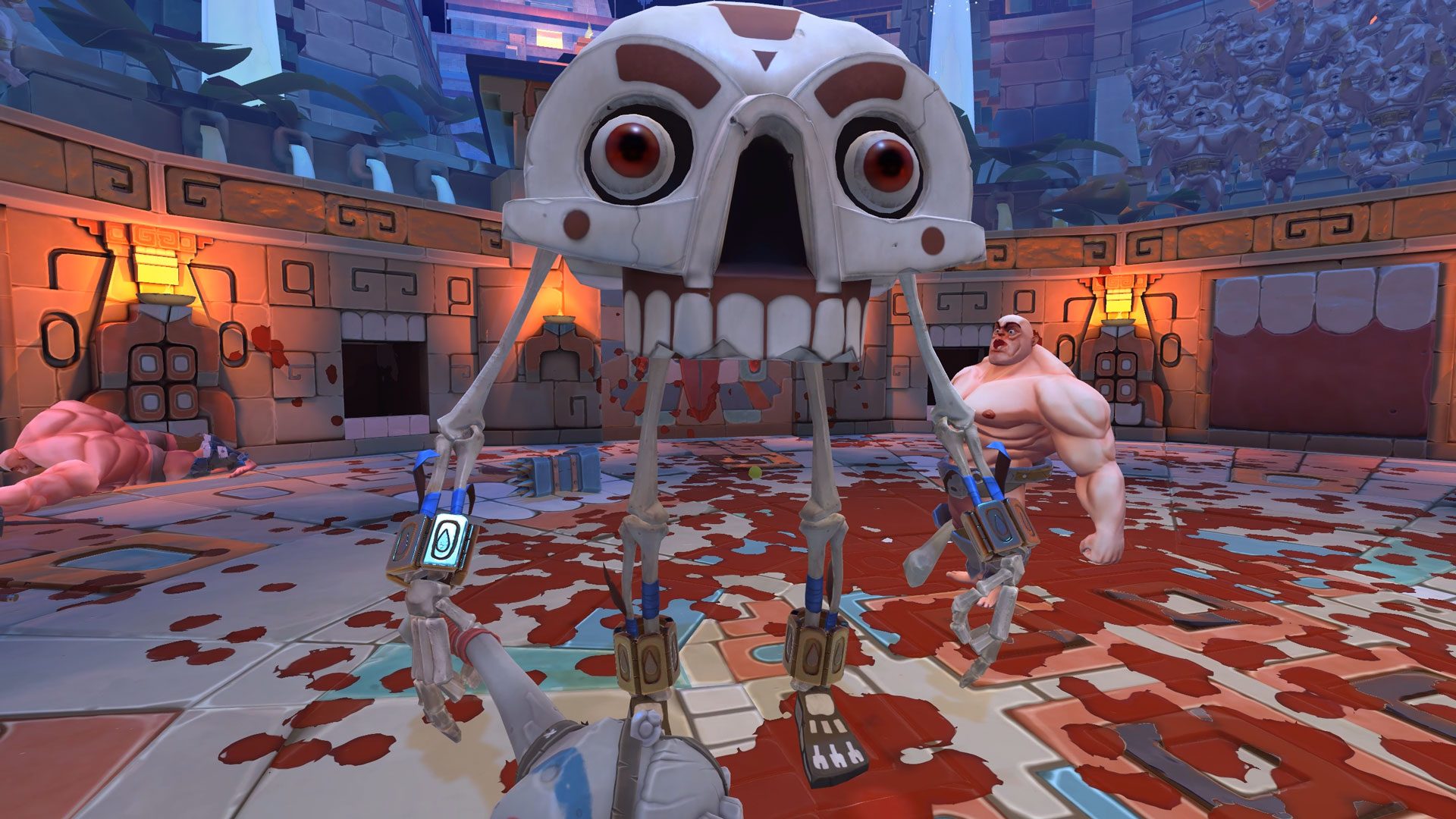
Developed by Free Lives and Cortopia, and published by Devolver Digital, GORN 2 is all about battling fridge-sized gladiators—just like the original—although this time around it’s promising even more weapons, arenas, traps, enemies and bosses.

The studios say their next fully physics-driven combat game will let players mercilessly strike down enemies with 35 weapons, taking you through a series of heavenly realms populated by the fallen heroes of the original game.

1 of 4


Image courtesy Devolver Digittal


Image courtesy Devolver Digittal


Image courtesy Devolver Digittal


Image courtesy Devolver Digittal

The game’s campaign, which is promising three-to-four hours of action, also contains five bosses you’ll need to beat. Once all is said and done though, Gorn 2 additionally comes with an Endless Mode, as well as a Custom Mode so you can create your own unique loadout of weapons and baddies.

Gorn 2 is coming to the Horizon Store for Quest 2 and above, and PC VR headsets via Steam on April 17. The studios say its PSVR 2 version will be launching this Summer, although there’s no exact release date yet.

The post Melee Combat Game ‘GORN 2’ Coming to Quest & PC VR Next Week, PSVR 2 This Summer appeared first on Road to VR.

A Terrible Microsoft Flight Simulator Ripoff Topped The March PS VR2 Download Charts

A terrible Microsoft Flight Simulator ripoff took #1 in Europe’s PlayStation VR2 download charts for March, and #4 in the US.

The game was originally titled “Flight Simulator 2025 VR” on the PlayStation Store when it launched last month, and has now been changed to “Flight Simulator Delivery 2025 VR”.

The original name, and current store page imagery, suggests a high-end simulator with impressive graphical fidelity. But trying the game on PS VR2, we found it falls well short of what you’d expect from a game sold on Sony’s platform, and it currently sits at a 1.38-star rating on the PlayStation Store.

Starting with an amateurish “Made With Unity” screen that suggests the developer either hasn’t paid for a Unity license or doesn’t know how to turn this notice off, the game brings you to a low-resolution menu where the only Settings available are the sound levels.

Choosing to start a new game brings you to a hangar where you can upgrade your plane and start missions. In the headset, the resolution of this area is so low that you have to lean in to clearly read the text. There’s also no guidance as to what you need to select to start flying.

Once you do figure out how to fly, you’re suddenly jolted into a poorly lit cockpit with a floating blank tablet beside you. The tablet is completely inert, and there is no tutorial for how to fly a plane. If you didn’t already know how to start a prop plane, you’d have no idea what to do.

0:00

/2:58

Once you do get in the air, it’s apparent just how low detail the environment is. It looks more like what you’d expect from a Quest 2 game than PS VR2, other than the lighting effects. During flight, you’ll hear a voiceover offering random irrelevant flight facts, but nothing related to what you’re supposed to be doing in the air.

Despite Microsoft’s recent push towards multiplatform gaming, no official announcement has been made regarding a PS5 or PlayStation VR2 port. Given the marketing of the new PlayStation VR2 game and last year’s launch of Microsoft Flight Simulator 2024 with PC VR support, we’d speculate many purchases were made mistakenly.

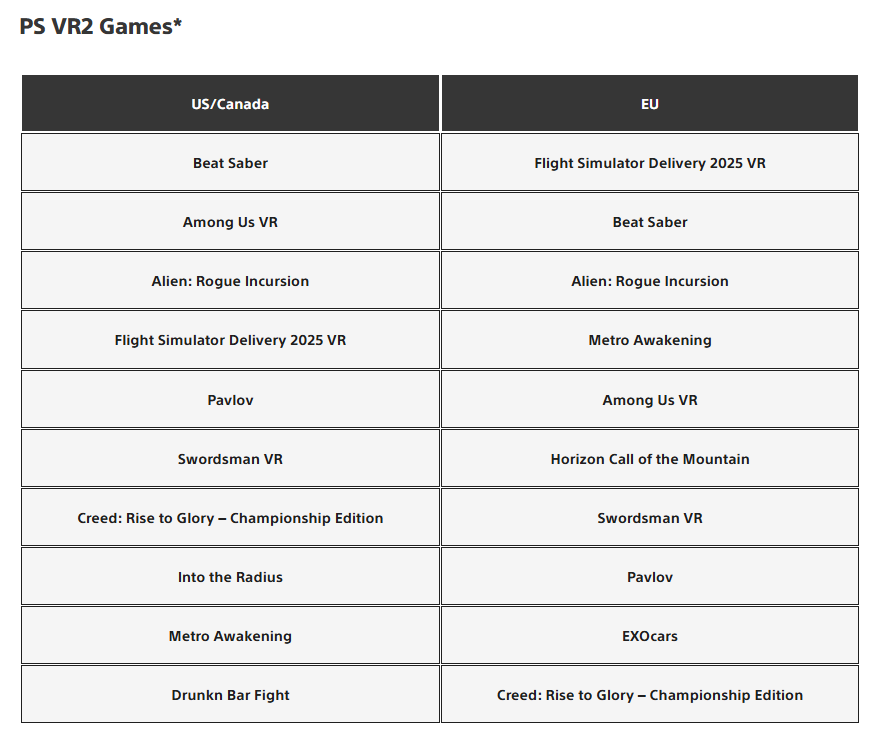
Here’s the full download chart for March 2025:

While the publisher’s ventured into flight sim territory before with last year’s flatscreen game Flight Simulator Delivery: Cargo Business, this isn’t the first time we’ve seen 404 Games in the VR space. The publisher also launched Grand Rush VR Highway Car Traffic Racing Simulator back in September, which currently sits at 1.58-star rating on the PlayStation Store.

If you’ve bought Flight Simulator Delivery 2025 VR, we’d advise against downloading it if you’re after a refund. Sony’s official refund policy states that a game cannot have been downloaded or streamed, and it must have been purchased in the last 14 days to be eligible. We’ve asked Sony if it’s providing refunds that go beyond these terms, and we’ll update this article if we get a response.

As for other games in the latest PlayStation VR2 download charts, March holds few surprises. Beat Saber, Among Us VR and Alien: Rogue Incursion rounded out the remaining top three positions across each region, though it’s worth remembering these charts don’t include PS5 games with optional PlayStation VR2 support. As such, the Hitman World of Assassination trilogy is completely absent.