Google has unveiled a new AI processor, the seventh generation of its custom TPU architecture. The chip, known as Ironwood, was reportedly designed for the emerging needs of Google’s most powerful Gemini models, like simulated reasoning, which Google prefers to call “thinking.” The company claims this chip represents a major shift that will unlock more powerful agentic AI capabilities. Google calls this the “age of inference.”
Whenever Google talks about the capabilities of a new Gemini version, it notes that the model’s capabilities are tied not only to the code but to Google’s infrastructure. Its custom AI hardware is a key element of accelerating inference and expanding context windows. With Ironwood, Google says it has its most scalable and powerful TPU yet, which will allow AI to act on behalf of a user to proactively gather data and generate outputs. This is what Google means when it talks about agentic AI.
Ironwood delivers higher throughput compared to previous Google Tensor Processing Units (TPUs), and Google really plans to pack these chips in. Ironwood is designed to operate in clusters of up to 9,216 liquid-cooled chips, which will communicate directly with each other through a newly enhanced Inter-Chip Interconnect (ICI).
A rare spot of good news today: For the second year in a row, US roads got a little safer. The National Highway Traffic Safety Administration published its early estimate of road deaths in 2024; 39,345 people lost their lives, which is a 3.8 percent decrease from the 40,901 deaths that occurred on US roads in 2023.
There’s no single cause, and studies have identified multiple contributing factors: empty roads designed to practically encourage speeding, little to no enforcement of traffic laws by the police, a general sense of fatalism in the face of public health restrictions that few Americans had ever contemplated in recent times, and car companies making big trucks and SUVs with high hoods, which are much more deadly to pedestrians and other vulnerable road users in a crash.
Scientists have recreated in a laboratory the sensory pathway that transmits feelings of pain to the human brain, in a breakthrough that could lead to better treatments. Financial Times: A team at Stanford University in California is the first to combine different neurons grown from human stem cells into a functioning brain circuit in a lab dish. Their experiments, published in Nature on Wednesday, illustrate scientists’ rapid progress in replicating living tissues and organs through synthetic biology.
When the Stanford scientists exposed the brain circuit they had created to sensory stimulants, they observed waves of electrical activity travelling along it. The molecule that makes chilli peppers hot, capsaicin, immediately induced a strong response.
[…] The synthetic brain circuits could be used to screen for better-targeted therapies for pain that tone down excessive waves of neurotransmission, without affecting the brain’s reward circuitry as opioids do, project leader [Sergiu] Pasca said. The assembloids themselves cannot be said to “feel pain,” he emphasised: “They transmit nervous signals that are processed by a second pathway going deeper into the brain and giving us the aversive, emotional component of pain.”
Previously seen letting mushrooms play a keyboard, Youtuber BionicandtheWires is back with another video, this time allowing a colony of oyster mushrooms to paint a picture. The mushrooms’ natural fluctuations in electrical activity is transformed into brush movement via attached solenoids. That painting, wow — way better than anything my nephew has ever done. Maybe next time he should employ a mushroom robot if he wants to take home anything but a purple ribbon from the middle school art show.
There’s a big Xbox showcase event scheduled June 8 at 1PM ET. This is happening the same weekend as Summer Game Fest, which begins on June 6. Xbox has typically held these kinds of live presentations alongside Summer Game Fest ever since E3 was sent to a farm upstate to live with other discontinued industry conferences.
We don’t know what will be shown at the annual Xbox Games Showcase. The company says it will bring us a “look at upcoming titles from across our first-party studios, in addition to incredible new titles from our third-party partners.” It’s a digital-only event, so there will be no crowd to hoot and holler at reveals.
One game that won’t be at the official presser is The Outer Worlds 2. That’s because it’s getting its very own livestream that follows the showcase. This game was originally teased all the way back in 2021, so it’s high time for a release date. Xbox promises a look inside developer Obsidian and trailers that reveal “new gameplay, details and developer insights.” Interestingly, The Outer Worlds 2is no longer an Xbox exclusive, as it’s also coming to PS5.
This article originally appeared on Engadget at https://www.engadget.com/gaming/xbox/xboxs-big-summer-showcase-is-set-for-june-8-at-1pm-et-152001789.html?src=rss
If Claude Plays Pokémon is supposed to offer a glimpse of AI’s future, it’s not a very convincing showcase. For the past month and counting, Twitch has watched Anthropic’s chatbot struggle to play Pokémon Red. Across multiple runs, Claude has failed to beat the nearly 30 year old game. And yet for David Hershey, the project’s lead developer, the showcase has been a success.
“I wanted some place where I could understand how Claude handles situations where it needs to work over a very long period of time,” Hershey explains to me over a video call. As part of his day job at Anthropic, Hershey works on the go-to-market team where he helps the company’s clients create their own agents (more on those in a moment). He first began working on Claude Plays Pokémon as a side project around the time Anthropic released 3.5 Sonnet last June.
As you can probably guess from the name, the project was partly inspired by Twitch Plays Pokémon, which debuted in 2014 and saw 1.16 million participate in a crowdsourced attempt to beat Pokémon Red using only the inputs viewers typed into the stream’s chatbox. Hershey wasn’t the first Anthropic employee to try to mold Claude into a Pokémon League Champion, but the project took on a life of its own right around the time he got involved.
In the early days of the project, it was a big deal when Claude managed to leave Red’s home and find Professor Oak. “I spent some ungodly number of hours tinkering to get it to make that kind of progress,” Hershey tells me. He would update his co-workers on Claude’s progress in an internal Slack channel. At that point, most of the company wasn’t paying attention, and it wasn’t something Anthropic planned to share with the world.
However, Hershey has made it a habit to revisit the project with each new major model release from Anthropic, starting with the upgraded version of Claude 3.5 Sonnet last fall and again more recently with 3.7 Sonnet. “It’s the way I go to see ‘What is this new model?’ ‘How does it work?’ ‘What can I learn about it?'” Hershey explains. And with Claude 3.7 Sonnet, the version of Claude playing the game right now, it was the first time “you could squint and see signs of life.”
Inside Anthropic the hope was that Claude would become better at trying different strategies and adjusting its approach when things didn’t go according to plan. With Pokémon Red, the company saw Claude do those things in real-time. “[Claude 3.7 Sonnet] spends less time stuck on assumptions,” says Hershey. “You’ll still see it make a guess and then spend some number of hours believing that’s true and making dumb decisions in the meanwhile, but previous models would kind of go on doing that forever.”
Antrhopic
And you can, quite literally, see Claude develop and run with those assumptions. Each ploddingly slow move in the game is preceded by a paragraph of text output from the AI — “I’ve encountered a wild ZUBAT while trying to navigate to (24,24). As per my strategy, I should flee from this battle to conserve resources” — followed by one single button press. Then it reassess the game state and does that all over again.
If you’ve been watching Claude fumble through Pokémon Red as a fan of the game, a model that spends “less time stuck on assumptions” appears minor, especially when the chatbot will frequently get stuck in areas like Viridian Forest, sometimes for days, due to the maze-like level design. Nonetheless, it is a milestone for the type of AI system that Claude 3.7 represents.
Like a lot of recent frontier AI systems, Claude 3.7 Sonnet is a reasoning model, meaning it’s designed to tackle problems by breaking them down into smaller pieces. “A lot of our customers care about how effective Claude is an agent,” explains Hershey. For the uninitiated, agents or agentic AIs are systems that are designed to plan and carry out complicated tasks without human supervision. Right now, most people think of AI as a blank chat box waiting to answer a question, but chatbots are only the consumer face of the industry; agentic systems represent an incremental but important step towards the promise of artificial general intelligence.
From that perspective, there are a couple of things that make Claude Plays Pokémon interesting. First, there’s the surprising fact Hershey delegated a lot of the programming that made the project possible to Anthropic’s coding agent including an overlay that allows Claude to make sense of Pokémon Red’s game world.
Second, and more importantly, Claude was not pretrained to play Pokémon Red. The chatbot knows some fundamentals about the game, such as the name of each gym leader and the order the player must beat them in, but it doesn’t have hundreds of years worth of game knowledge like some specialized AI systems. “You can throw a model at a game with no preparation, no guidance and it can learn everything itself,” he says. “I aim to be as close to that side as possible.”
Hershey had to give Claude some help. I already mentioned the overlay that allows it to interpret Pokémon Red’s interface. Pixel art is something all AI systems struggle with, and 3.7 Sonnet is no expectation. As humans, our imagination does a great job of filling in the details suggested by just a few pixels. What’s more, Claude doesn’t “see” the way we do.
If you watch it closely, you’ll notice each time it moves the player character, it will make a few inputs before reevaluating its position. Between those frames, Claude doesn’t have any sensory input. It can’t see Red walking, nor does it “hear” when its inputs cause him to crash into a tree or some other obstacle. Claude’s “poor vision” is one of the primary reasons it struggles with the game; in fact, Hershey had to give the chatbot a way to read the game’s memory so it was less likely to get confused if it misinterpreted the screen.
If the goal of the project was for Claude to beat Pokémon Red, that would have been easy. Hershey could have programmed a route through the game for the chatbot to follow, but at that point all he would have been testing is how well Claude follows a rigid set of instructions. “Claude is pretty good at that,” Hershey says. “I knew that. We all knew that.”
Instead, in leaving Claude to its own devices, the new model has shown it’s better at planning, coming up with new strategies and ultimately trying something different when its assumptions prove to be wrong. One of the more novel solutions Claude developed during its third run through the game was to intentionally cause all of its Pokémon to faint so that it could escape from Mt. Moon.
Still, Claude could be a lot better at both short- and long-term planning. In the same example I just mentioned, Claude deleted all of its notes on Mt. Moon after respawning at a nearby Pokémon Center, incorrectly believing it had successfully navigated the cave. One of its more promising runs ended after Claude failed to recognize it needed to talk to Bill to progress the game. It got stuck in an endless loop of bad decision making.
“Moving forward, I don’t know how useful this will be internally as a benchmark. It’s possible that with a small, tiny set of skills, Claude gets a little bit better and beats the game, and then the benchmark is not that interesting,” Hershey admits. “It could also be the case that there are things I don’t quite understand yet about what’s going to make our next model good, and then we’ll still be learning a lot more incremental things along the way.”
As for what happens next, Hershey says he doesn’t have a long-term strategy for Claude Plays Pokémon. “I’ve just spent so much time — my wife would say too much time — staring at this thing,” he says, laughing. I also get the sense Hershey’s not quite ready to close the book on the project. “I would imagine whenever a new model comes out, I’ll be playing Pokémon with it, and I will probably show the world that too.”
Until then, Anthropic, following a recent reset, continues to stream Claude Plays Pokémon on Twitch. The project has been successful enough to inspire an independent developer to program a Gemini Plays Pokémon stream, and if I had to guess, we’ll see more imitators before long.
This article originally appeared on Engadget at https://www.engadget.com/ai/claude-isnt-a-great-pokemon-player-and-thats-okay-151522448.html?src=rss
New research suggests that given the right kind of training, AI bots can deliver mental health therapy with as much efficacy as — or more than — human clinicians. From a report: The recent study, published in the New England Journal of Medicine, shows results from the first randomized clinical trial for AI therapy. Researchers from Dartmouth College built the bot as a way of taking a new approach to a longstanding problem: The U.S. continues to grapple with an acute shortage of mental health providers. “I think one of the things that doesn’t scale well is humans,” says Nick Jacobson, a clinical psychologist who was part of this research team. For every 340 people in the U.S., there is just one mental health clinician, according to some estimates.
While many AI bots already on the market claim to offer mental health care, some have dubious results or have even led people to self-harm. More than five years ago, Jacobson and his colleagues began training their AI bot in clinical best practices. The project, says Jacobson, involved much trial and error before it led to quality outcomes. “The effects that we see strongly mirror what you would see in the best evidence-based trials of psychotherapy,” says Jacobson. He says these results were comparable to “studies with folks given a gold standard dose of the best treatment we have available.”
We finally have the trailer for Murderbot, the Apple TV+ show based on Martha Wells’ seven book series, The Murderbot Diaries. It features Alexander Skarsgård as a security unit that is less interested in protecting humans and more excited about catching up on its favorite soap operas.
As Sarsgaard says in the trailer, “I was built to protect and obey humans. And humans are idiots. But now that I’ve hacked my programming, I can do whatever I want. As long as they don’t find out.” But, things take a turn when it gets chosen for a dangerous assignment. The security unit privately refers to itself as Murderbot, a fact that becomes more than awkward once the humans learn about the name.
Apple first announced the sci-fi adaptation, from About a Boy creators Chris and Paul Weitz, in late 2023. The first two of ten Murderbot episodes will come to Apple TV+ on May 16. The next eight episodes will debut every Friday.
This article originally appeared on Engadget at https://www.engadget.com/entertainment/tv-movies/the-murderbot-tv-show-trailer-is-here-150017588.html?src=rss
In an incredibly shocking turn of events, more generative AI features are coming to the Google Workspace suite of productivity apps by way of Gemini. Docs, Sheets, Chat, Meet and newcomer Vids are among the tools that are getting new AI capabilities that perhaps some folks will find useful.
Google is taking a cue from audio overviews in NotebookLM to bring new Gemini-powered audio features to Docs. You’ll soon have the option of listening to full audio versions of your documents or just the highlights in what Google calls a podcast-style overview. Those enrolled in the Workspace alpha testing program can start trying out these audio features in the coming weeks.
By the end of June, alpha testers will have access to an AI writing coach of sorts. The “help me refine” feature is said to offer suggestions on bolstering an argument, ensuring consistent formatting, enhancing the structure of the text and clarifying key points.
A similar feature is coming to Sheets later this year. The “help me analyze” tool will seemingly point out trends you might have overlooked, offer pointers on where to dig deeper for more insights and whip up charts to visualize the data.
In Meet, you’ll soon be able to ask Gemini to recap parts of a meeting you missed because you were running late, clarify certain decisions or topics, generate a recap in the format of your choice and help refine a point before you raise a virtual arm to join the conversation. This so-called “personal in-meeting advisor” will be generally available in Meet before the end of June.
As for Chat, Google will soon offer the option to mention @gemini in a conversation to receive a summary that includes open questions, important decisions that were made and lays out next steps. It could be a useful way to distill everything that happened in a bustling group chat. This capability will be available through the Labs early-access program in the coming weeks.
In Vids, you’ll soon be able to generate what Google says are “high-quality, original” clips using the Veo 2 model (perhaps ignoring the fact that generative video AI models mash together footage that they were trained on and arguably don’t create anything truly original at all). Workspace alpha can get their hands on this in the coming weeks.
Elsewhere, there’s another new feature called Google Workspace Flows. Google bills this as “a brand-new way to automate and orchestrate work across your apps, powered by AI.” It employs Gems, customizable AI agents that can be created with Gemini, to take care of specialized tasks, such as researching, analyzing and generating content.
The company says that Workspace Flows can, for instance, address a customer support ticket by analyzing the issue, researching a solution and drafting a reply that the support team can review before sending. Gems can mine your Google Drive files for context. Google’s also working with third-party partners to integrate Workspace Flows into their apps and tools. Google is now rolling out Workspace Flows in the alpha program.
Lastly, as of today, Google will allow Workspace users to choose where Gemini processes their data. So if you’re in the European Union and don’t want your data to travel to the US (or vice versa), that’s now an option. Google makes it clear that this is to help comply with regulations such as the EU’s GDPR.
This article originally appeared on Engadget at https://www.engadget.com/ai/surprise-google-workspace-is-adding-more-ai-tools-to-docs-sheets-chat-and-other-apps-143644125.html?src=rss
As President Donald Trump signed a slew of executive orders Tuesday aimed at keeping coal power alive in the United States, he repeatedly blamed his predecessor, Democrats, and environmental regulations for the industry’s dramatic contraction over the past two decades.
But across the country, state and local officials and electric grid operators have been confronting a factor in coal’s demise that is not easily addressed with the stroke of a pen: its cost.
For example, Maryland’s only remaining coal generating station, Talen Energy’s 1.3-gigawatt Brandon Shores plant, will be staying open beyond its previously planned June 1 shutdown, under a deal that regional grid operator PJM brokered earlier this year with the company, state officials, and the Sierra Club.
Samsung Electronics and Google Cloud are jointly entering the consumer robotics market with Ballie, a yellow, soccer-ball-shaped robot equipped with a video projector and powered by Google’s Gemini AI models. First previewed in 2020, the long-delayed device will finally launch this summer in the US and South Korea. The mobile companion uses small wheels to navigate homes autonomously and integrates with Samsung’s SmartThings platform to control smart home devices.
Running on Samsung’s Tizen operating system, Ballie can manage calendars, answer questions, handle phone calls, and project video content from services including YouTube and Netflix. Samsung EVP Jay Kim described it as a “completely new Ballie” compared to the 2020 version, with Google Cloud integration being the most significant change. The robot leverages Gemini for understanding commands, searching the web, and processing visual data for navigation, while using Samsung’s AI models for accessing personal information.
Then there’s the pause feature, which will stop the game if you open the PS Portal quick menu. Gameplay will also pause if you click the power button. Be warned, you will get disconnected from the cloud streaming session if more than 15 seconds go by without you unpausing it (clicking the power button again). Plus, you’ll be paused if there’s a system error message on your screen. However, these features don’t work, as of yet, in multiplayer mode.
You’re also going to have a clearer idea of when it’s your turn to play. You will get an estimated wait time if the streamer server is full and then be put right into the game when you’re up. Then there’s the new create button, which takes a screenshot (when held down) or records a video of the game (when clicked twice). This media will stay in the PlayStation App library under captures for 14 days.
There’s two more, minor, updates to Cloud Streaming. You’ll now receive an inactivity notification after 10 minutes of no action, just letting you know that the session is about to end. Plus, there’s a user feedback screen that will pop up at the end in case there’s anything you want PlayStation to know.
Sony first announced the Cloud Streaming trial late last year and its available to all PlayStation Plus Premium members in beta. The experimental system lets you stream select games from PlayStation’s servers, regardless of if you own a PS5.
This article originally appeared on Engadget at https://www.engadget.com/gaming/playstation/ps-portals-cloud-streaming-beta-gets-automatic-pauses-and-screen-captures-141945431.html?src=rss
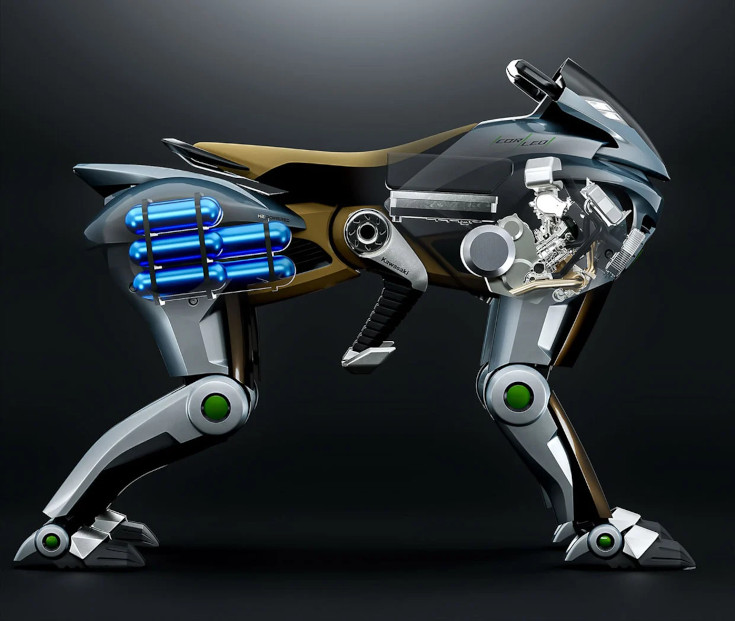
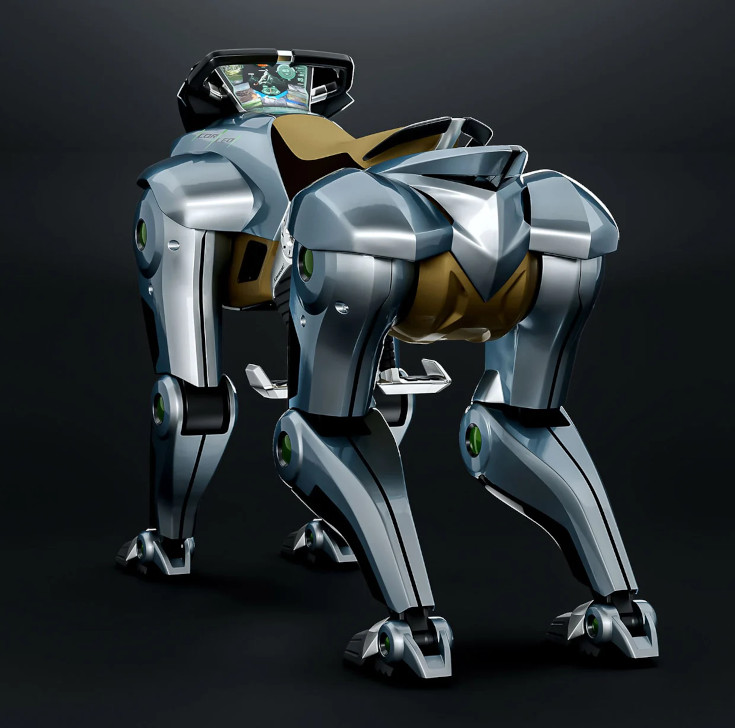
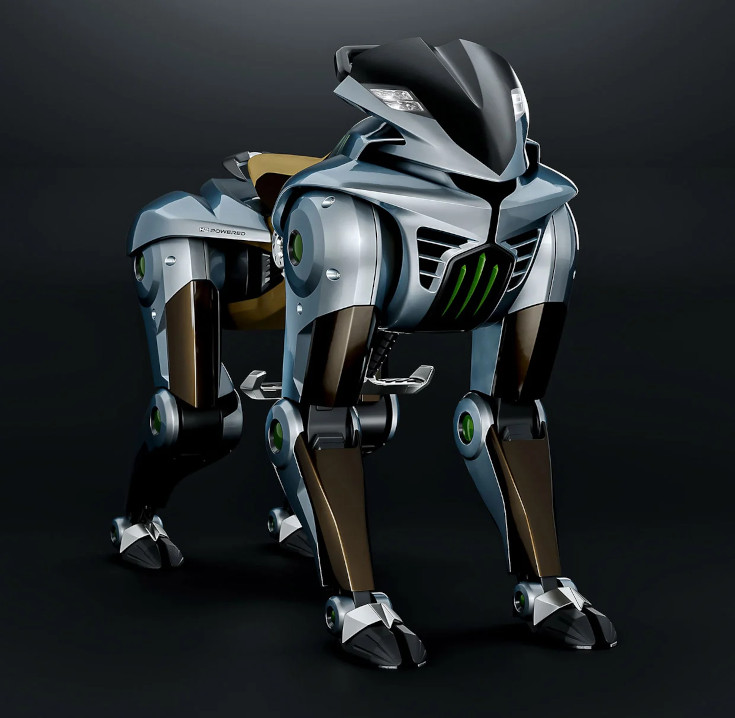
Because what good will future robots be if we can’t ride them into battle against other robots, Kawasaki has released a video of its conceptual hydrogen-electric CORLEO. CORLEO is a large quadruped robot that could be ridden by one or two people like a giant dire wolf. It looks like a great way to get your legs crushed in its legs, especially if you’re off-roading at high speed. A cool concept for sure, but if everything I saw in a video was made real I’d be getting towed behind a speeder bike on my hoverboard right now.
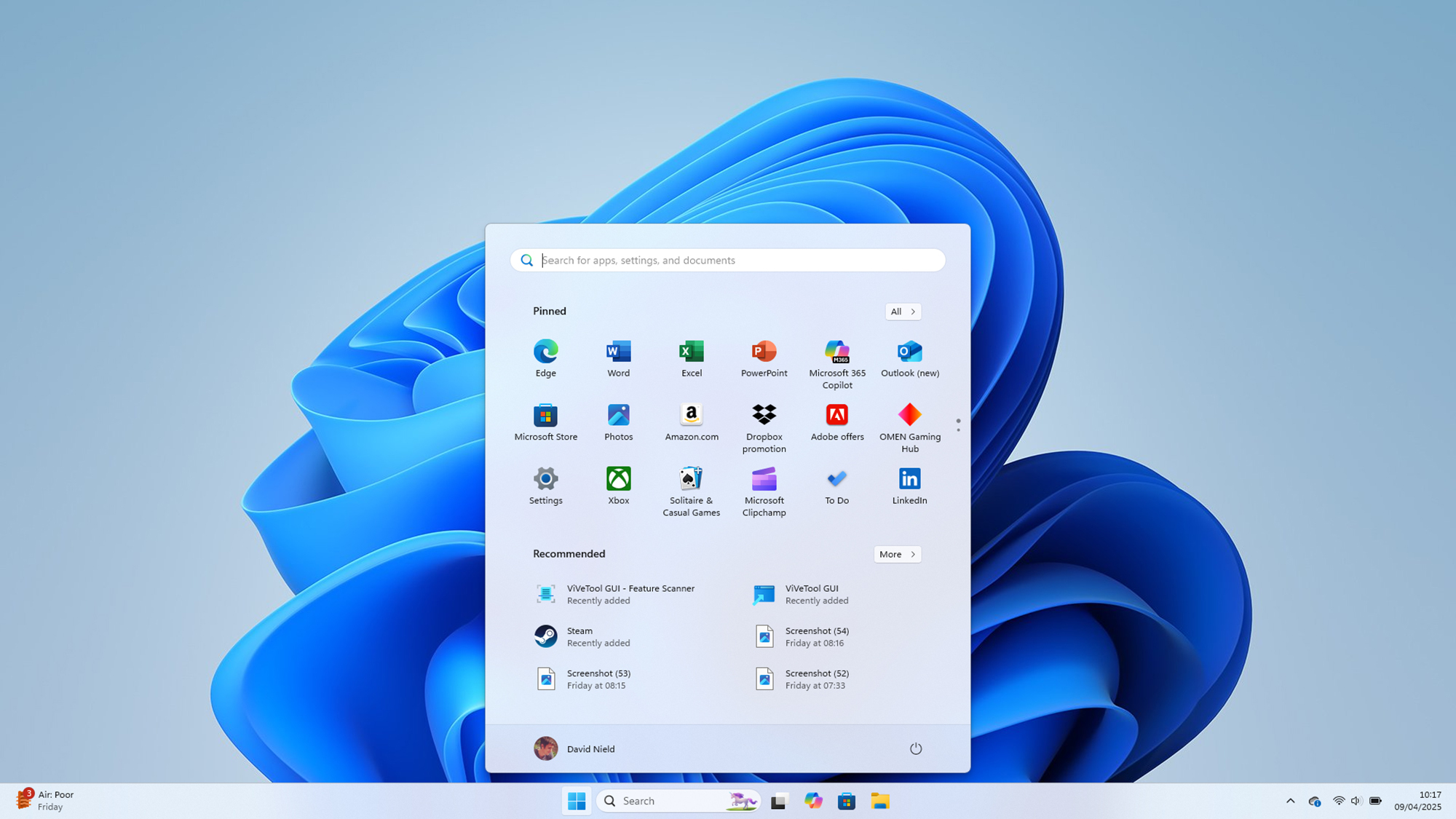
The Start menu is the gateway to everything on a Windows PC, from files to apps to settings, and it looks as though Microsoft is planning a substantial refresh for the menu’s interface. Changes have been spotted in the early testing versions of the operating system by tipster @phantomofearth, and should eventually appear for everyone.
As it stands today, the Start menu shows a search bar up at the top, then you’ve got two other sections: Your pinned apps, and your recommended links (usually to files you’ve recently opened or apps you’ve recently used). Both those sections can be expanded with a click to show more programs and files.
How the Start menu looks today. Credit: Lifehacker
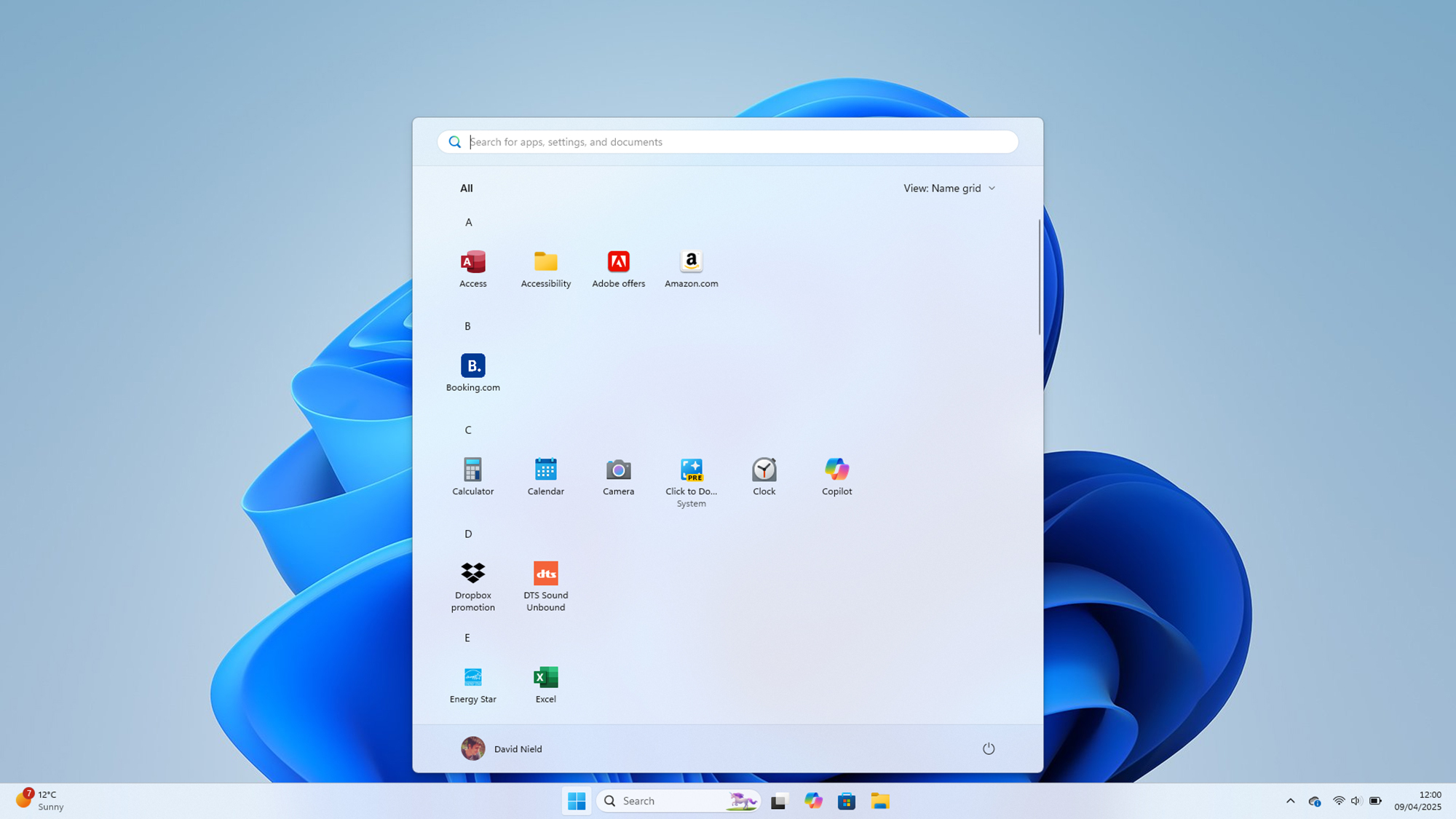
The version of the Start menu now in testing expands what you can see and access straight away. You get your pinned apps, your recommendations, and then a list of every app that’s installed—this full app list no longer needs an extra click. This full list of programs can appear as a standard alphabetical list, as a grid grouped by app name, or as a grid grouped by category (a bit like the App Library on iOS).
Further customization options available in the updated Start menu let you increase the size of the pinned app section, and remove the recommended section entirely—neither of those options were available before. It means a more flexible approach for users, and easier access to apps, at the expense of some extra screen space.
The reaction to the upcoming changes seems to be mostly positive, especially when it comes to getting to the full Start menu list more quickly. You’ve still got the search box up at the top of the menu panel, so you can jump to specific apps if you know what you’re looking for, but the revamped approach is more convenient.
There’s no word yet on when everyone is going to get these changes, but given how significant they are, Microsoft may well wait a while to refine the new interface approach. The version that ends up rolling out to everyone might not look like the screengrab I captured, which you can see at the top of this article.
Testing out the new Start menu
Most people will be content to sit tight and wait for the new Start menu to roll out officially, but if you’re keen to test it out now, it’s not too difficult to do. Bear in mind though that this does involve beta software and some additional hacking, so do this at your own risk—I wouldn’t recommend doing this on a computer you rely on every day.
First you need to join the WIndows Insider Program, which is free to do: You can do that on the web here by logging into the Microsoft account that’s linked to your laptop or desktop. Follow the instructions on screen, and when you’re redirected to the Windows Update section of Settings in Windows itself, choose the beta channel.
The new Start menu can be set to just show apps. Credit: Lifehacker
You should then shortly see new updates available to install, which will put the beta version of Windows 11 on your computer after a restart or two. This new Start menu isn’t yet enabled in the beta channel though, even though it’s been spotted inside the operating system code, so you need to apply some extra tweaks to get it working.
Those tweaks can be applied with a third-party utility called ViVeTool, which you can download from here. When it’s up and running on your system, click Advanced Options or press F12, and then enable the following features (as per instructions from @phantomofearth): 49221331, 47205210, and 49402389. If that doesn’t work, try enabling 48433719 before the other three.
There are additional settings attached to the new Start menu. Credit: Lifehacker
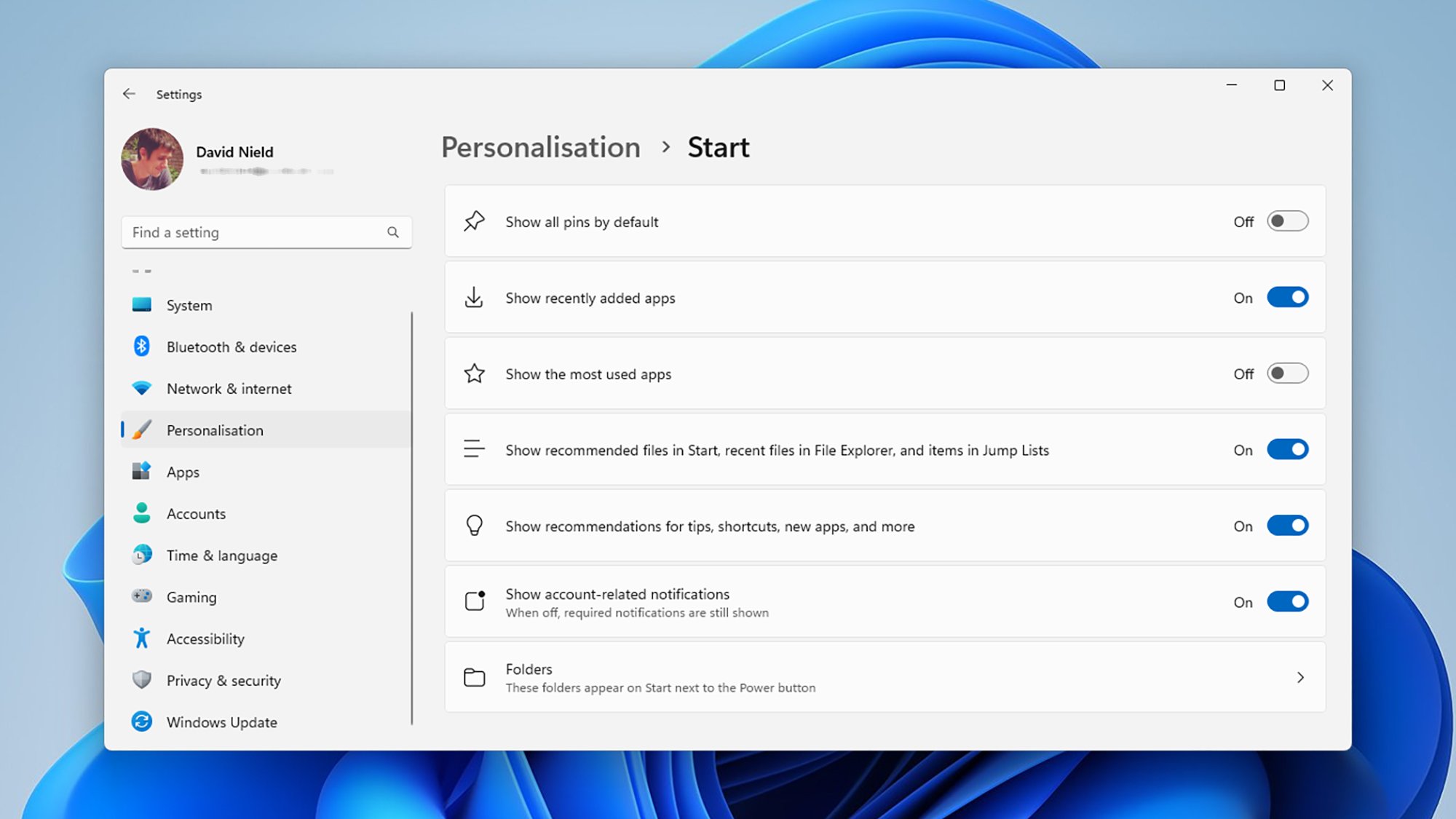
After another restart, you should get your new Start menu, as well as the additional options—which you can find by opening Settings and choosing Personalization > Start. It’s possible to turn off all the recommended and pinned items and just have your full list of installed apps if you want, which is reminiscent of the old Windows 8 approach.
Having spent a few hours testing out the new Start menu, it certainly feels more comprehensive to me, with every app available straight away in an interface that doesn’t feel too busy or cluttered. More customization options have to be welcomed as well: I can’t see myself using the Category view much, for example, but it’s easy enough to change.
Samsung’s Ballie will go on sale in the US and South Korea this summer, the company announced today. What’s more, through a partnership with Google Cloud, the diminutive robot will ship with a Gemini AI model.
Samsung didn’t state the specific system that powers Ballie, but in combination with the company’s own proprietary language models, it says the robot has multimodal capabilities, meaning Ballie can process voice, audio and visual data from its sensors. According to Samsung, Ballie can also manage your smart home devices and even offer health and styling recommendations, if you’re inclined to seek that type of advice from a robot.
Samsung has yet to announce pricing for Ballie, though with the uncertainty around the Trump administration’s recently announced tariffs, you can’t blame Samsung, can you? The company first demoed Ballie in 2020. The robot has gone through a few iterations since the then, with the version you see above first demoed at CES 2024. Samsung said then Ballie would arrive sometime in 2024, but last year came and went without the robot hitting store shelves.
This article originally appeared on Engadget at https://www.engadget.com/ai/samsungs-cute-ballie-robot-arrives-this-summer-with-google-gemini-in-tow-133658886.html?src=rss
It’s almost time for The Triple-i Initiative, a gaming showcase for indie publishers and developers. You can watch the stream on The Triple-i Initiative’s YouTube channel at 9AM PT / 12PM PT on April 10. It’s also available on Twitch, Bilibili and Steam. This presentation is the second annual edition and, based on the teaser video, it looks like we will see an interesting range of games.
The 45-minute or so showcase should include looks at Enshrouded, V Rising and Deep Rock Galactic. Poncle, the studio behind Vampire Survivors is also set to reveal something, alongside other developers like Sloclap. All in all, the stream should include everything from demo drops to release dates for over 30 games.
The team at Engadget is very excited that Balatro publisher Playstack is also planning something for the event. “We had been saving our big announcement for a special showcase,” said Marta Matyjewicz, marketing manager at Playstack, in a statement. “We were amazed by the quality of last year’s Triple-i, so when the opportunity came to be a part of it, we knew we had to take it.”
This article originally appeared on Engadget at https://www.engadget.com/gaming/how-to-watch-the-triple-i-initiative-indie-showcase-on-april-10-133037464.html?src=rss
Microsoft has released its April 2025 Patch Tuesday update, which fixes 134 malicious bugs across its systems—including one zero-day exploit. Windows and Microsoft users should ensure their devices are up to date with the latest patches.
Patch Tuesday updates for April 2025
One of the vulnerabilities fixed this month was a zero-day, which is a flaw that is exploited or publicly disclosed before an official patch is released by developers.
The active exploit—labeled CVE-2025-29824—is an elevation of privilege vulnerability in the Windows Common Log File System (CLFS) Driver. The flaw, which was identified by the Microsoft Threat Intelligence Center, allowed attackers to gain SYSTEM privileges locally. According to reporting from Bleeping Computer, this zero-day was exploited by the RansomEXX ransomware gang.
Microsoft has released a patch for Windows Server and Windows 11 and expects to notify users when security updates for Windows 10 for x64-based Systems and Windows 10 for 32-bit Systems.
April’s update fixes 49 elevation of privilege flaws, nine security feature bypass flaws, 31 remote code execution flaws, 17 information disclosure flaws, 14 denial of service flaws, and three spoofing flaws.
Eleven of the remote code execution vulnerabilities were categorized as “critical” and were found across Microsoft Office, Microsoft Office Excel, Remote Desktop Gateway Service, Windows Hyper-V, Windows LDAP, and Windows TCP/IP. Microsoft also released patches to vulnerabilities in Mariner and 13 Microsoft Edge bugs this month.
What Microsoft users need to do
Security updates for Windows and Microsoft are usually downloaded and installed automatically, but you can check your PC’s status by going to Start > Settings > Windows Update and selecting Check for Windows updates. Patch Tuesday fixes are released on the second Tuesday of every month at 10 a.m. PT, so now is a good time to ensure your system is up to date.
The warm weather is here, which means saying goodbye to gym memberships and hello to exercising in the fresh air. Without machines measuring your progress, a fitness tracker can ensure you’re staying on top of your workout. Now is a great time to pick on up, with the Fitbit Charge 6 down to $120 from $160.
This 25 percent discount brings our favorite fitness tracker down to its lowest price of 2025. We’ve given the Charge 6 this accolade thanks to features like a more accurate heart rate monitor and it’s use of Bluetooth to pair with exercise machines (if you do miss the indoors). It also offers 20 different workout modes for tracking your exercises. Plus, Google, which owns Fitbit, allows for anyone with a YouTube Music premium subscription to skip and control music playback.
Other perks of the Fitbit Charge 6 include using Fitbit Pay or Google Wallet for contactless payments and a great built-in GPS. The Fitbit 6 also offers seven days of battery life, much longer than the day or two you get with an Apple Watch (a much more complex device, but still).
The 2025 BAFTA game awards took place yesterday in London and were dominated by one of our favorite games this year, Astro Bot. The PlayStation 5 platformer took home prizes in five categories including Best Game, along with Animation, Audio Achievement, Family and Game Design. That’s no surprise, considering the game’s critical accolades and popularity with fans.
Astro Bot is the first fully-fledged and fully-priced version in the Astro universe. “With precise and responsive controls, adorable characters and an exciting variety of mechanics and environments, Astro Bot is easily one of the best games that Sony has every produced,” wrote Engadget’s Jessica Conditt. It beat out some strong competition in the Best Game category, including Balatro, Black Myth: Wukong, Helldivers 2, The Legend of Zelda: Echoes of Wisdom and Thank Goodness You’re Here.
Still Wakes the Deep came in second with three BAFTAs: New Intellectual Property, and Performers in Supporting and Lead Roles. One of those winners, Scottish actor Karen Dunbar (playing Finlay), humorously declared in her acceptance speech that “I’m not even an actor, I’m a gynecologist!”
Other key winners of the evening included Balatro for Debut Game category, Thank Goodness You’re Here for Best British Game, Helldivers 2 in the multiplayer and music categories, Neva for Artistic Achievement and Metaphor: ReFantazio for Narrative. For a complete list of winners check here and you can watch the entire ceremony below.
This article originally appeared on Engadget at https://www.engadget.com/gaming/bafta-game-awards-adorably-dominated-by-astro-bot-130012074.html?src=rss
Google has started rolling out the loss of pulse detection feature for Pixel Watch 3 devices in the US. The feature does exactly what it describes: It checks for your pulse when the watch is on your wrist and will call emergency services if it determines that your pulse has stopped. It debuted in several European countries last year when the watch launched, but it didn’t get approval from the US Food and Drug Administration until February this year.
The feature uses concurrent passive algorithms to check for the presence of a pulse at the rate of once a second. If it detects the absence of a pulse, active sensors kick in to check for signals that could indicate false detections, such as if you’re no longer wearing the watch. It’s only then that the device will enter the Stage 1 alert phase, wherein it will send you a haptic notification asking you to tap a promp that says “I’m OK.” If you’re unresponsive, it will ramp up the alerts and add sounds, counting down to give you time to respond before it calls emergency services.
Google says the feature could save you in instances wherein every second matters, such as when you’re having a cardiac or respiratory arrest, or when you’ve gotten poisoned. In cases like those, you can only get immediate help if someone is around to see them happen. That’s not always possible: As Google explains, half of all loss of pulse events related to cardiac arrest are unwitnessed. With this feature, you could be attended to much more quickly if you do need help and prevent more permanent damage to your body.
Google
This article originally appeared on Engadget at https://www.engadget.com/mobile/google-is-rolling-out-pixel-watch-3s-loss-of-pulse-detection-feature-in-the-us-120038008.html?src=rss