
Following the DXVK 2.6 release from a few days ago for Direct3D 8/9/10/11 atop Vulkan and ahead of the upcoming Proton 10.0 release for further enhancing Valve’s Steam Play, out today is DXVK-NVAPI 0.9 as the NVIDIA NVAPI integration for use with DXVK…
Monthly Archives: March 2025
Quest’s Spring Savings & Steam’s Spring Sale Offer Discounts On Blockbuster VR Games
Meta’s Spring Savings and Steam’s Spring Sale offer significant discounts on blockbuster VR titles.
On Meta’s Horizon Store you can currently get the Quest versions of major games like Skydance’s Behemoth, Arizona Sunshine Remake, Arizona Sunshine 2, Dungeons of Eternity, Into The Radius, and Red Matter for up to 50% off, as well as the exclusive Assassin’s Creed Nexus.
Meanwhile, Valve’s Steam is offering significant discounts on major titles only playable in VR on PC, including Half-Life: Alyx 70% off, 60% off Fallout 4 VR, 80% off DiRT Rally 2.0, and 70% off Elite Dangerous, as well as notable savings on the PC VR versions of games like Skyrim VR, Arizona Sunshine 2, and No Man’s Sky.
Meta’s sale ends on the midnight between March 23 and March 24, just over one week from now. Valve’s sale generally ends at 10am PT on March 23, though the discounts on some specific titles end sooner.
Assassin’s Creed Nexus VR Review: It Stands With The Series
Assassin’s Creed Nexus VR proudly stands alongside the main series. Our full review:
 UploadVRHenry Stockdale
Meta’s Spring Savings
Here’s a list of some of the titles currently on sale for Quest, sorted from the greatest to least percentage discount. Linked on the game name you’ll find our review or most recent coverage.
- Demeo – $20 (50% off)
- Assassin’s Creed Nexus – $20 (50% off)
- Skydance’s Behemoth – $20 (50% off)
- Red Matter – $14 (44% off)
- Pistol Whip – $17 (43% off)
- Arizona Sunshine 2 – $24 (40% off)
- Arizona Sunshine Remake – $20 (33% off)
- Dungeons of Eternity – $20 (33% off)
- Into The Radius – $20 (33% off)
- Metro Awakening – $28 (30% off)
- Real VR Fishing – $14 (30% off)
- Cubism – $5 (30% off)
- Ghosts Of Tabor – $20 (20% off)
Bundles
Meta is also offering six bundles, letting you get a collection of games for a lower price than buying them individually. And if you already own one or more of the games in the bundle, the price is lowered to reflect that.
- Tactical FPS Realism: Breachers + Contractors Showdown
- Purge the Scourge: Grimlord + Undead Citadel
- No Strings Attached: Trombone Champ: Unflattened! + Unplugged: Air Guitar
- Sandbox Spa Faves: Pets & Stuff + Titans Clinic
- Cinematic Shootouts: Vendetta Forever + Action Hero
- Chaotic Platformers: No More Rainbows + Human Fall Flat VR
- Whimsical Party Starters: Game Night + Trivia Crack World
- Trials and Treasure Bundle: Ancient Dungeon + Thief Simulator VR
- Walkabout Mini Golf: Evil Lairs Bundle: Walkabout Mini Golf with the Laser Lair, Ice Lair, and 8-Bit Lair DLC courses
Half-Life: Alyx Review – Supremely Polished, Surprisingly Familiar, Occasionally Awkward And Unshakably Essential VR
Second chances. Not everyone gets one. And yet, in Half-Life: Alyx, Valve finds itself with an embarrassment of them. Forget all that ‘back from the dead’ stuff for a minute; you don’t need me to tell you Half-Life has been away for a very long time. More pressing is
 UploadVRJamie Feltham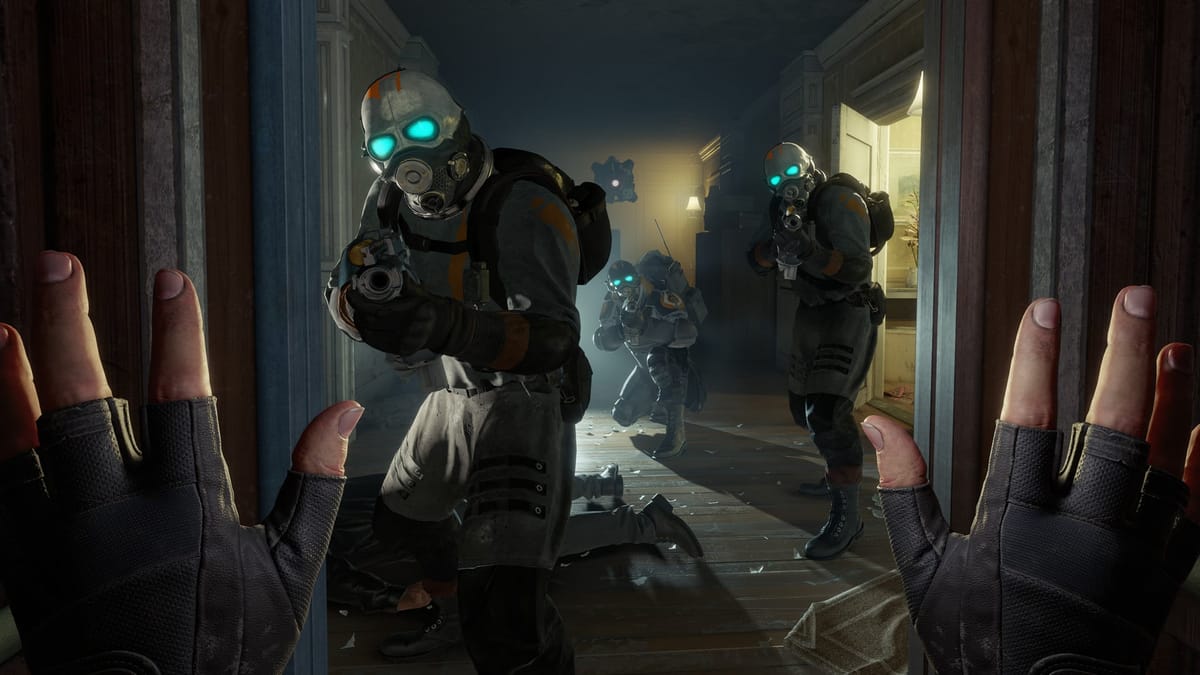
Steam’s Spring Sale
Here’s a list of notable blockbuster titles currently on sale on Steam. Linked on the game name you’ll find our review or most recent coverage.
- DiRT Rally 2.0 – $4 (80% off)
- The Elder Scrolls V: Skyrim VR – $15 (75% off)
- Elite Dangerous – $6 (70% off)
- Half-Life: Alyx – $18 (70% off)
- Fallout 4 VR – $24 (60$ off)
- No Man’s Sky – $24 (60% off)
- Superhot VR – $10 (60% off)
- Arizona Sunshine 2 – $24 (40% off)
- Arizona Sunshine Remake – $20 (34% off)
- Job Simulator – $15 (25% off)
- Ghosts of Tabor – $19 (25% off)
- Boneworks – $24 (20% off)
- Bonelab – $32 (20% off)
- Pavlov – $20 (20% off)
- VTOL VR – $21 (30% off)
Apple considered making the rumored iPhone 17 Air ‘completely port-free,’ according to report
The so-called iPhone 17 Air, which is rumored to be coming this fall, is said to be Apple’s thinnest iPhone ever. But, if the company had gone through some of its earlier plans for the device, slimness may not have been the most talked-about element. In the Power On newsletter, Bloomberg’s Mark Gurman writes that Apple at one time planned to ditch the USB-C port “to make the Air device Apple’s first completely port-free iPhone.”
The company reportedly shelved the idea to avoid sparking fresh problems with EU regulators. According to Gurman, however, Apple is still holding onto it for future slim iPhones depending on the success of the iPhone 17 Air. Apple is expected to release four iPhones this year, in line with its strategy of the last few years, with the one currently nicknamed the iPhone 17 Air being roughly 2 millimeters thinner than the rest. Leaker Sonny Dickson this weekend shared a series of photos said to be of iPhone 17 dummies, showing just how slim the Air could look alongside the rest of the family.
Here’s your first look at the iPhone 17 dummies, Thoughts? pic.twitter.com/WnOjD71Iba
— Sonny Dickson (@SonnyDickson) March 16, 2025
Gurman reports that the iPhone 17 Air will be priced at around $900, sitting between the entry-level iPhone 17 and the two higher-end models with similar battery life to what we’re already used to, a roughly 6.6-inch screen, Dynamic Island and the Camera Control button. Of course, nothing’s been confirmed officially yet, but the iPhone 17 rumors and leaks are sure to keep coming over the next few months.
This article originally appeared on Engadget at https://www.engadget.com/mobile/smartphones/apple-considered-making-the-rumored-iphone-17-air-completely-port-free-according-to-report-165334942.html?src=rss
Startup Claims Its Upcoming (RISC-V ISA) Zeus GPU is 10X Faster Than Nvidia’s RTX 5090
“The number of discrete GPU developers from the U.S. and Western Europe shrank to three companies in 2025,” notes Tom’s Hardware, “from around 10 in 2000.” (Nvidia, AMD, and Intel…)
No company in the recent years — at least outside of China — was bold enough to engage into competition against these three contenders, so the very emergence of Bolt Graphics seems like a breakthrough. However, the major focuses of Bolt’s Zeus are high-quality rendering for movie and scientific industries as well as high-performance supercomputer simulations. If Zeus delivers on its promises, it could establish itself as a serious alternative for scientific computing, path tracing, and offline rendering. But without strong software support, it risks struggling against dominant market leaders.
This week the Sunnyvale, California-based startup introduced its Zeus GPU platform designed for gaming, rendering, and supercomputer simulations, according to the article. “The company says that its Zeus GPU not only supports features like upgradeable memory and built-in Ethernet interfaces, but it can also beat Nvidia’s GeForce RTX 5090 by around 10 times in path tracing workloads, according to slide published by technology news site ServeTheHome.”
There is one catch: Zeus can only beat the RTX 5090 GPU in path tracing and FP64 compute workloads. It’s not clear how well it will handle traditional rendering techniques, as that was less of a focus. In speaking with Bolt Graphics, the card does support rasterization, but there was less emphasis on that aspect of the GPU, and it may struggle to compete with the best graphics cards when it comes to gaming. And when it comes to data center options like Nvidia’s Blackwell B200, it’s an entirely different matter.
Unlike GPUs from AMD, Intel, and Nvidia that rely on proprietary instruction set architectures, Bolt’s Zeus relies on the open-source RISC-V ISA, according to the published slides. The Zeus core relies on an open-source out-of-order general-purpose RVA23 scalar core mated with FP64 ALUs and the RVV 1.0 (RISC-V Vector Extension Version 1.0) that can handle 8-bit, 16-bit, 32-bit, and 64-bit data types as well as Bolt’s additional proprietary extensions designed for acceleration of scientific workloads… Like many processors these days, Zeus relies on a multi-chiplet design… Unlike high-end GPUs that prioritize bandwidth, Bolt is evidently focusing on greater memory size to handle larger datasets for rendering and simulations. Also, built-in 400GbE and 800GbE ports to enable faster data transfer across networked GPUs indicates the data center focus of Zeus.
High-quality rendering, real-time path tracing, and compute are key focus areas for Zeus. As a result, even the entry-level Zeus 1c26-32 offers significantly higher FP64 compute performance than Nvidia’s GeForce RTX 5090 — up to 5 TFLOPS vs. 1.6 TFLOPS — and considerably higher path tracing performance: 77 Gigarays vs. 32 Gigarays. Zeus also features a larger on-chip cache than Nvidia’s flagship — up to 128MB vs. 96MB — and lower power consumption of 120W vs. 575W, making it more efficient for simulations, path tracing, and offline rendering. However, the RTX 5090 dominates in AI workloads with its 105 FP16 TFLOPS and 1,637 INT8 TFLOPS compared to the 10 FP16 TFLOPS and 614 INT8 TFLOPS offered by a single-chiplet Zeus…
The article emphasizes that Zeus “is only running in simulation right now… Bolt Graphics says that the first developer kits will be available in late 2025, with full production set for late 2026.”
Thanks to long-time Slashdot reader arvn for sharing the news.


Read more of this story at Slashdot.
Debian 12.10 “Bookworm” Released with 66 Bug Fixes and 43 Security Updates
Today, the Debian Project announced the release and general availability of Debian 12.10 as the ninth ISO update to the latest Debian GNU/Linux 12 “Bookworm” operating system series.
Horizon Actor Ashly Burch Speaks on Sony’s AI Aloy Video

A genAI Aloy may not pop up in Horizon 3, but the possibility has still left a bad taste in viewers’ mouths.
Codon Python Compiler Gets Faster – and Changes to Apache 2 License
Slashdot reader rikfarrow summarizes an article they wrote for Usenix.org about the Open Source Python compiler Codon:
In 2023 I tried out Codon. At the time I had difficulty compiling the scripts I most commonly used, but was excited by the prospect. Python is essentially single threaded and checks the shape (type) of each variable as it interprets scripts. Codon fixes types and compiles Python into compact, executable binaries that execute much faster.
Several things have changed with their latest release: I have successful compiles, the committers have added a compiled version of NumPy (high performance math algorithms), and changed their open source license to Apache 2.
“The other big news is that Exaloop, the company that is behind Codon, has changed their license to Apache 2…” according to the article, so “commercial use and derivations of Codon are now permitted without licensing.”


Read more of this story at Slashdot.
This Working TARDIS Travels Through Resonite
Doctor Who fans successfully recreated a working TARDIS inside Resonite.
Ultrawidegamer and Navy3001 are firing up the console and inviting curious users along as they world-hop with the TARDIS they’ve built out of their passion for the hit BBC show.
Their latest TARDIS is capable of carrying up to five users to different world instances and holds a system of inter-dimensional hallways with additional rooms.
Yes, the TARDIS is larger on the inside. And when it travels, all users inside of it are carried and appear in-world together.
“Before this TARDIS existed nobody thought what we were doing was even possible,” Ultra explained.
The two originally sought to create a rough concept with a 3D model created by a different user. The plausibility of their project remained dubious until Navy experienced a breakthrough in design.
“The day that I did the first worldscript with the TARDIS, I spammed [Ultra] with messages saying, ‘I did it!’.”
To commemorate the accomplishment, Navy took a photo of the TARDIS sitting in a field of green grass, a snapshot of a random world he’d landed in.
It was the first of many adventures to follow.
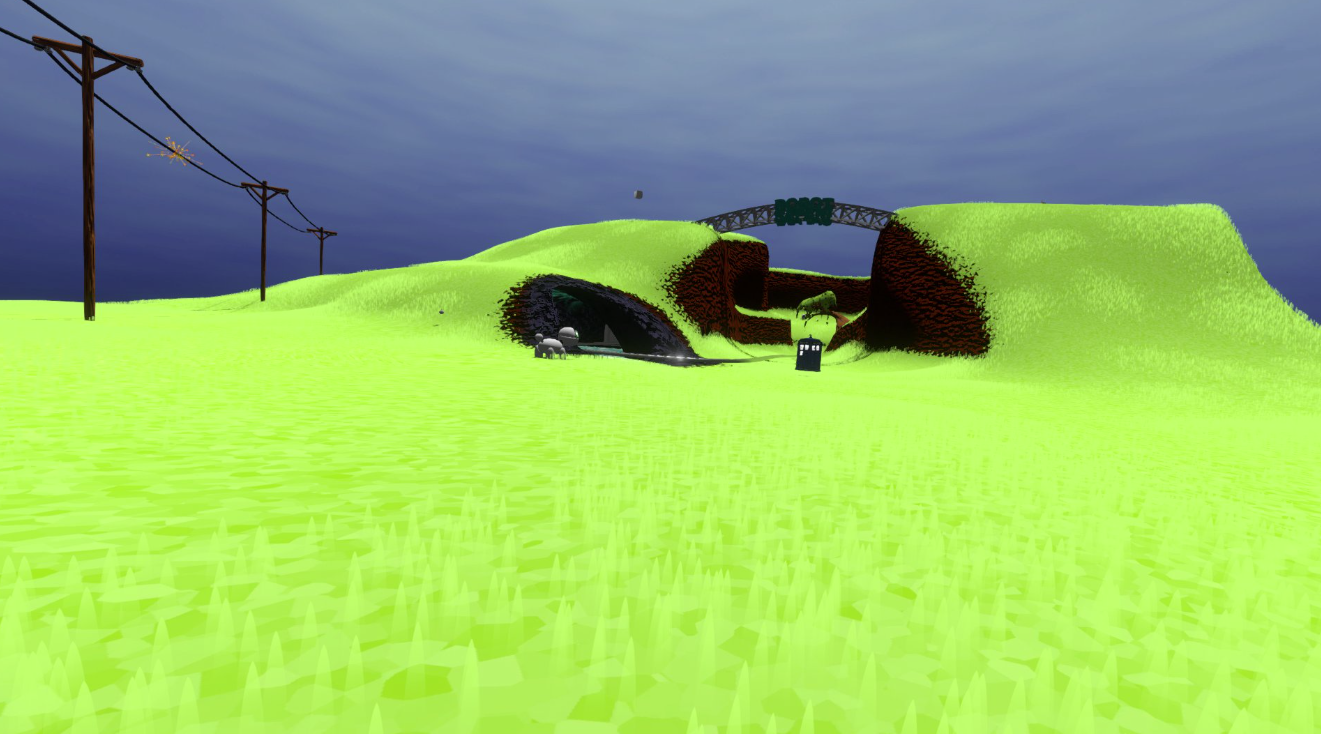
Parking The TARDIS
The virtual TARDIS has gone through several iterations, some with varying features.
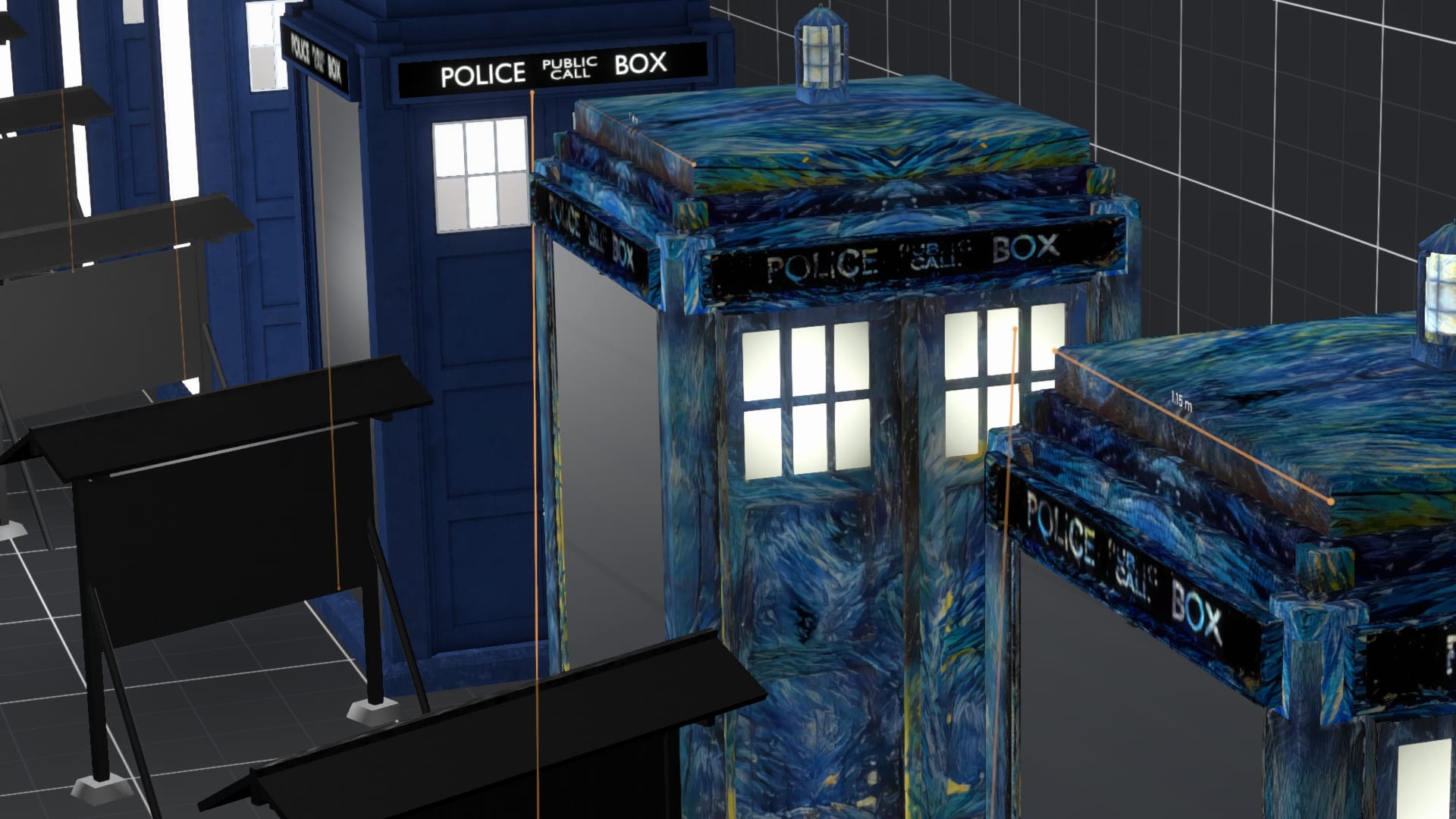
The interior originally reflected the First Doctor’s console room, but like an ever-expanding clubhouse they added new hallways, rooms and features, eventually implementing a placement system which lets them park the TARDIS in a spot other than their chosen world’s spawn area. There’s even an animated tunnel which appears on-screen during the engine warp sequence to give an additional feeling of immersion.
It’s still up to the driver to make sure the TARDIS lands correctly. There are so many buttons on the console. How does anyone know which one to press?
“Locally for [the driver] the button highlights as it needs to be pressed and then it will slowly fade out,” Ultra explained. “If we don’t click it in that amount of time then we lose the indicator. It has to be done quickly and correctly.”
In other words, they’ve made a little game out of controlling the TARDIS that requires you to behave a lot like a wild Doctor steering the ship through space and time.
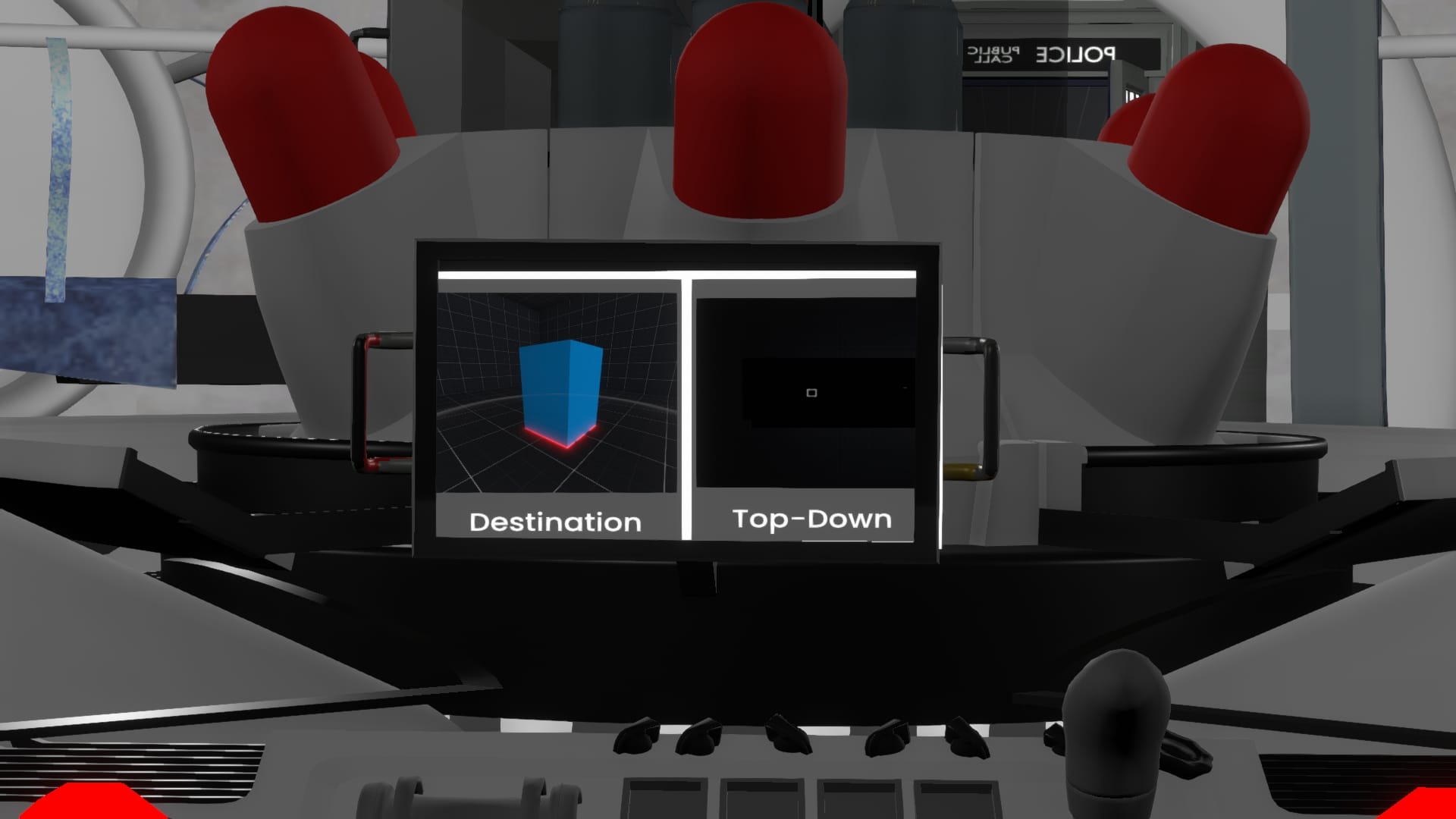
I joined a travel demonstration featuring Navy, Ultra, and their friends CJay and LLax. I’d been a fan of Doctor Who for a while so visiting a working copy of the show’s creation in VR felt surreal and exciting. As Navy buzzed around the console, our group chattered about which era of Doctor Who was our favorite. Ultra prefers David Tennant while Navy likes Christopher Eccleston. I have a lot of favorites but I enjoyed John Hurt’s acting the most.
Just as we got into the subject, the engine stopped whirring and the lights powered down. Something had gone wrong. Our guide brandished a sonic screwdriver and moved toward the engine room with the rest of us in tow. The power core was missing! We had to leave the TARDIS in order to search for it.

Nowhere To Hide
“Just so you guys know, staying in the TARDIS does not mean you’ll be safe,” Navy announced to the group before heading toward the front door. Beyond the main exit, I could see a green office hallway. It wasn’t until our group stepped outside that I realized where we were.
Navy documents his adventures with the TARDIS on his Youtube channel. In order to facilitate the most fun for everyone, he creates different campaign-style worlds to land in and will set the engine’s power core to spawn somewhere on that map. The day of our interview, we were thrown in the TARDIS into a backrooms world full of monsters. We would have to make our way through the maze of corridors, retrieve the engine component, and head back to the TARDIS without dying.

Walking into the dreary green hallways felt like a nightmare. We could hear occasional growling but couldn’t see any monsters yet. CJay fluttered right behind me while LLax bravely flanked every corner possible.
“The key is to make sure you’re not the slowest”, CJay advised as we snuck along.
Eventually we were confronted by a lumbering yellow creature called “Mister Happy” who chased us for several minutes while another shadow monster moved toward us in increments, like a weeping angel. CJay died in the middle of all the chaos. The rest of us ran aimlessly until we found the power core and scrambled back toward the TARDIS.
I was relieved when we landed in the next world. Mercifully peaceful, it featured a purplish landscape with gorgeous starlike formations floating in the sky.
Looking Ahead
Ultra and Navy are nowhere near done when it comes to updating their TARDIS. They plan to implement as many interdimensional rooms from the Doctor Who series as possible. And of course, another remodel is also in the works.
They both have found Resonite to be the place for their adventures, as opposed to other places like VRChat, because of how much freedom the tooling offers them in creating whatever they can dream of.
“All other games that are similar to [here], there are hard limitations on some stuff you can do,” said Ultra.
Navy and Ultra also agree on how easy it is to collaborate on creations together due to Resonite’s live-building capabilities.
Interested users who want to take a look at the duo’s past TARDIS creations can visit their online museum. To see the current TARDIS in action, try visiting their related virtual pub called The Navy Seal.
The Doctor might just stop by if there’s space to join.
Resonite carries very positive reviews on Steam and you’ll need a fairly powerful PC to take you through your journeys there.
Valve Is Rumored To Bring SteamOS To Desktop PCs Very Soon

A leaker on X (formerly Twitter) claims Valve is getting release a version of SteamOS for desktop systems, which if true would effectively extend the Linux-based platform’s reach beyond the realm of gaming handhelds. The rumor surfaced just before Valve released its SteamOS 3.7.0 Preview build with some key tweaks to the operating system’s
Apple is reportedly working on two new versions of the Studio Display
We’ve recently heard rumors that Apple is working on the next generation of its Studio Display, and Bloomberg’s Mark Gurman now reports that there may actually be two new models in the works. Building on his previous reporting about a potential update to the 2022 Studio Display that could be released next year, Gurman writes this weekend in the Power On newsletter that sources have told him “Apple is working on a second new monitor.” The first is code-named J427, while the second is reportedly being referred to as J527.
It’s been three years since Apple introduced the $1,599 27-inch Studio Display and twice that since the release of the $5,000 Pro Display XDR. Considering the age of both monitors, Gurman says one of two scenarios may play out, either that “Apple is developing both and will choose one to launch, or it’s a second model with a different screen size or set of specifications.”
This article originally appeared on Engadget at https://www.engadget.com/computing/apple-is-reportedly-working-on-two-new-versions-of-the-studio-display-145521711.html?src=rss
Cybersecurity Alert Warns of 300 Attacks with ‘Medusa’ Ransomware
A ransomware-as-a-service variant called “Medusa” has claimed over 300 victims in “critical infrastructure sectors” (including medical), according to an joint alert from CISA, the FBI, and the Multi-State Information Sharing Analysis Center.
And that alert reminds us that Medusa is a globe-spanning operation that recruits third-party affiliates to plant ransomware and negotiate with victims, notes the Register. “Even organizations that have good ransomware recovery regimes, meaning they don’t need to unscramble encrypted data as they have good backups and fall-back plans, may consider paying to prevent the release of their stolen data, given the unpleasant consequences that follow information leaks.
Medusa actors also set a deadline for victims to pay ransoms and provide a countdown timer that makes it plain when stolen info will be sprayed across the internet. If victims cough up $10,000 in cryptocurrency, the crims push the deadline forward by 24 hours.
The advisory reveals one Medusa actor has taken things a step further. “FBI investigations identified that after paying the ransom, one victim was contacted by a separate Medusa actor who claimed the negotiator had stolen the ransom amount already paid,” the advisory states. That separate actor then “requested half of the payment be made again to provide the ‘true decryptor’,” the advisory states, describing this incident as “potentially indicating a triple extortion scheme.”
The security groups’ advisory stresses that they “do not encourage paying ransoms as payment does not guarantee victim files will be recovered. Furthermore, payment may also embolden adversaries to target additional organizations…” (But “Regardless of whether you or your organization have decided to pay the ransom, FBI, CISA, and MS-ISAC urge you to promptly report ransomware incidents…)
Besides updating software and operating systems, the alert makes these recommendations for organizations:
Require VPNs (or jump hosts) for remote network access
Block remote access from unknown/untrusted origins, and disable unused ports
Segment networks to help prevent the spread of ransomware
Use a networking monitoring tool to spot and investigate abnormal activity — including lateral movement (using endpoint detection and response tools). Log all network traffic, and monitor it for unauthorized scanning and access attempts.
Create recovery plans with encrypted offline backups of sensitive/proprietary data and servers
Require multifactor authentication, use strong (and long) passwords, and “consider not requiring frequently recurring password changes, as these can weaken security.” (Also audit access control following the principle of least privilege, and watch for new and/or unrecognized accounts.)
Disable command-line and scripting activities and permissions.


Read more of this story at Slashdot.
Marvel’s Imperial Event Will Change Its Hierarchy of Cosmic Power

Jonathan Hickman’s ready to shake up Marvel’s world again with Federico Vizentini and Iban Coello in the cosmic epic Imperial.
ERR_NAME_NOT_RESOLVED and How To Fix It?
You know how frustrating it can be if you’ve ever encountered the ERR_NAME_NOT_RESOLVED error while browsing. This error typically means that your browser cannot resolve the domain name into an IP address, preventing you from accessing a website. Computers have IP addresses assigned to communicate with other computers on the network. As IP addresses can be challenging to memorize, we often turn to easy-to-remember domain names to reach specific computers on a network. The Domain Name System (DNS) acts as a digital phone book with names correlating to domain names and phone numbers translating to IP addresses. A DNS shows which domain points to which IP address to reach that particular server.
The post ERR_NAME_NOT_RESOLVED and How To Fix It? appeared first on Linux Today.
Scientists Discover Potential Ozempic Rival That Could Help People Lose Weight With Less Nausea

Stanford Medicine researchers have identified a promising, naturally occurring molecule that could help people lose weight—without the nauseating symptoms now commonly seen with GLP-1 drugs.
Finding Avowed’s Best Armor, Mastering Monster Hunter Wilds’ Best Weapon, And More Of The Week’s Tips

This week, our Avowed tips will help you survive the Living Lands as we’ll guide you to the best armor, no matter what class you’re playing. We’ll also help you make the most of Monster Hunter Wilds’ best weapon, give you some pointers for Civilization VII, and fill you in on Suikoden I & II HD Remaster. Read on for…
Wild ‘Waterbending’ Technique Uses Waves to Steer Floating Objects With Precision

Researchers manipulated water waves to move ping pong balls and grains of rice with a level of precision that seems straight out of a sci-fi movie.
Ocean Levels Rise to a 30-Year High – and Faster Than Expected
The Washington Post reports:
Oceans last year reached their highest levels in three decades — with the rate of global sea level rise increasing around 35% higher than expected, according to a NASA-led analysis published Thursday… Last year’s rate of average global sea level rise was 0.23 inches per year, higher than the expected 0.17 inches per year, NASA said in a news release.
The rate of global sea level rise follows a trend of rapidly increasing rates over the past 30 years. From 1993 to 2023, the rate of global sea level rise doubled, increasing from 0.08 inches per year to 0.18 inches, another NASA-led study showed. Overall, the global sea level has climbed by 4 inches since 1993.
More details from ABC News:
Climate change was a major driver to an unexpected level of sea level rise in 2024, according to a new NASA analysis… The majority of the difference between predicted and actual sea level rise was attributed to thermal expansion — or the ocean waters expanding as they warm, researchers said. An unusual amount of ocean warming, combined with meltwater from land-based ice such as glaciers, led to the increase of sea level rise last year, according to NASA.
About two-thirds of sea level rise in recent years has resulted from the melting of ice sheets and glaciers, with a third coming from thermal expansion, according to NASA. In 2024, those metrics flipped, with two-thirds of the rise attributed to expanding ocean water and one-third attributed to contributions from melting ice. “With 2024 as the warmest year on record, Earth’s expanding oceans are following suit, reaching their highest levels in three decades,” said Nadya Vinogradova Shiffer, head of physical oceanography programs and the Integrated Earth System Observatory at NASA… Human-amplified climate change is the primary cause for present-day rising sea levels, climate research shows.


Read more of this story at Slashdot.
Linux 6.14-rc7 To Support A Few More Gaming Controllers
Ahead of the Linux 6.14-rc7 kernel release later today, a set of input subsystem updates were merged overnight that add in support for a few more gaming controllers…
AI Sucks at Reading Clocks

Large language models still struggle with simple tasks like telling time.
One Line Of Code Optimizes F2FS Performance For Small Multi-Threaded Writes
An SK engineer has posted a Flash-Friendly File-System (F2FS) driver optimization for Linux that one line of code changed is helping with performance especially for multi-threaded workloads involving small writes to SSD storage…