The original Looney Tunes animated shorts that aired between the 1930 and 1969 are no longer available to stream on Max, Deadline reports. Warner Bros. Discovery removed them from the streaming service as part of its ongoing shift away from children’s shows and towards adult and family programming.
For now, newer Looney Tunes series and spin-offs remain, like New Looney Tunes and Baby Looney Tunes, but the decision still feels odd because Warner Bros. Discovery just released The Day The Earth Blew Up: A Looney Tunes Story in theaters on March 14. Of course, the company is no stranger to ill-conceived (frequently anti-art) decision making.
The original Looney Tunes were last on the chopping block in 2023, when a press release covering shows and movies that were being added and removed from Max included the iconic animated shorts. Warner Bros. Discovery walked back that announcement, saying it was an error, but apparently plans change. While it seems strange to remove something Warner Bros. Discovery owns and doesn’t have to pay an exorbitant licensing fee to offer, pulling shows and scrapping the release of movies has been the company’s recent strategy to save money and earn tax breaks — see another Looney Tunes-related release, Coyote vs. Acme, or Batgirl.
As far as this recent deprioritization of children’s programming on Max goes, Warner Bros. Discovery has been working on it for a while. The company shutdown Boomerang, Warner Bros. Discovery’s streaming service for classic cartoons, in 2024. Warner Bros. Discovery decided to not renew its distribution deal for Sesame Street last year, too, but removing around 200 old episodes of the showin 2022 was probably a good sign the company had lost interest way earlier.
This article originally appeared on Engadget at https://www.engadget.com/entertainment/streaming/warner-bros-discovery-pulled-the-original-looney-tunes-shorts-off-max-190500556.html?src=rss
Spunge Games’ new dragon-raising mixed reality pet simulator, Eggy, launches April 17 on Meta Quest 3 and 3S.
Eggy begins in the player’s home, where we find a glowing egg and a mysterious book. Inside the egg is a dragon, and inside the book is everything we need to know about raising the beast. Once our dragon hatches, it’s up to us to clean, feed, play with, and train it for life outside the nest.
Notes from the developer shine a light on the game’s mechanics:
“Every choice—feeding, training, and bonding—impacts your dragon’s skills and survival in the Dragon Realm. Listen for purrs, songs, or sad rumbles. Sing, pat, or dance to comfort and connect with your dragon. Train your dragon to eat, walk, and fly. When the time comes, let it leave the nest and forge its own legacy beyond reality.”
0:00
/0:54
We recently wrote about a new trailer for Stay: Forever Home, another virtual pet experience debuting this April.
Stay blends mixed reality and VR, inviting players to explore a magical world alongside their virtual pet Ember. When you’ve had enough of VR adventures, you can bring Ember into your real-world space in MR—where they’ll play and interact.
Eggy is from the developer of Dead Second, a Time Crisis-inspired cover shooter that launched on Quest in 2021. We’re curious to see direct video from a headset for Eggy, as the trailer video looks to be largely computer generated. We’ve reached out to learn more and will update if we hear back.
Those stranded Starliner astronauts are finally coming back to Earth, with a touchdown expected on Tuesday evening. Coverage begins on Monday night at around 10:45PM ET, with streams available on NASA’s website and via the NASA+ app.
Monday night’s stream will focus on the hatch closing and the undocking procedure. The stream will go dark until 4:45PM ET on Tuesday as the crew approaches splashdown. The arrival is scheduled for around 5:57PM ET and a live press conference is set for 7:30PM ET.
The two NASA astronauts returning (Suni Williams and Butch Wilmore) were part of Boeing’s Starliner crew to the ISS. This was supposed to be a one-week stay but, just like Gilligan and the rest, was extended to nine months when the ship was deemed unfit for a crewed return to Earth. Five of the thrusters failed enroute. This is forcing the pair to hitch a ride on a SpaceX Dragon spacecraft. SpaceX also ran into a delay, as this mission was originally scheduled for February.
The Starliner returned, but without the crew. NASA planned to retrieve Williams and Wilmore back in September via a crewed mission with two empty seats. However, that launch faced technical issues and was delayed until April. This partnership with SpaceX will bring the pair home a couple of weeks early.
This article originally appeared on Engadget at https://www.engadget.com/science/space/you-can-watch-the-starliner-astronauts-return-to-earth-after-an-unplanned-nine-month-visit-185308418.html?src=rss
Eight days. That’s how long Boeing Starliner’s mission — its first flight test with crew aboard — was supposed to last. But this mission has been singular in almost every way, and astronauts Butch Wilmore and Suni Williams have instead spent the past nine and a half months aboard the International Space Station.
Now, finally, they’re headed home. Their SpaceX Crew Dragon capsule is slated to begin undocking from the ISS at 1:05 am ET Tuesday and is scheduled for splashdown at 5:57 pm ET, according to NASA’s timetable. (Portions of the mission will stream live on the agency’s website.)
The Starliner crew was never truly stranded, to be clear. They always had a way off the space station in an emergency. But if this mission’s foibles taught us one thing, it was to expect the unexpected. Even now, six months after the troubled spacecraft autonomously undocked from the ISS and landed at White Sands Missile Range in New Mexico, leaving its crew behind and effectively ending the flight test, the mission is still making headlines. Boeing Starliner CFT went from a symbol of the myriad struggles in Boeing’s aviation business to a political punching bag, courtesy of President Donald Trump and Elon Musk.
Why did it take so long to bring the astronauts home? And did NASA cave to political pressure in setting the return date? Lets take a look at how we got here and what the evidence suggests.
Starliner was floundering well before liftoff
Boeing Starliner had a long, troubled history before it even got off the ground. Back in 2014, the Space Shuttle era had ended, and the United States was dependent on Russian Soyuz capsules to fly its astronauts. To remedy this, NASA awarded two companies — Boeing and SpaceX — Commercial Crew contracts to build new spacecraft to ferry astronauts to and from the ISS.
The official target date for a crewed flight test for these two companies was flexible. But, according to a 2016 report from William Gerstenmaier, the agency’s head of human spaceflight at the time, it was clear NASA expected these demonstration flights to occur in 2017. (Gerst now works for SpaceX.)
Obviously, that did not happen. SpaceX’s uncrewed orbital test occurred in 2019, while the crewed demonstration flight was in 2020. Boeing also finally launched its Starliner capsule to the ISS for an uncrewed test in December 2019. However, that flight went so badly (the capsule did not reach its intended orbit or dock with the station) that NASA required Boeing to implement fixes and perform a second test in May 2022. That test went mostly well, though two of the capsule’s thrusters failed during the orbital insertion burn, and post-flight inspections revealed nearly a mile of flammable tape in the capsule wiring which required removal.
Boeing’s CST-100 Starliner attached to an Atlas V rocket.
ASSOCIATED PRESS
The May 2024 launch was delayed a few times due to rocket issues and problems with ground systems. NASA and Boeing also detected a helium leak in the propellant system (helium is used to push propellant to the thrusters). They attributed it to a defective seal, but after the spacecraft launched on June 5, it sprung a total of five helium leaks. What’s more, five thrusters failed on approach to the ISS.
Astronauts Wilmore and Williams were able to successfully dock with the ISS, but their mission changed significantly in those few hours; they had to figure out what, exactly, was wrong with the spacecraft and whether it was safe to bring them home.
It’s important to remember that NASA has only tested six total new crewed spacecraft (Mercury, Gemini, Apollo, Space Shuttle, SpaceX Crew Dragon, and Boeing Starliner). It’s a very difficult process, and everyone expects there to be problems — that’s why NASA does these tests. But even for a test flight, this was bad.
Eight days to nine months
Over the summer of 2024, NASA quietly tested and re-tested Starliner’s thrusters, both in orbit and on the ground, to find out why the thrusters failed. In the absence of meaningful updates from NASA, people started to seriously question whether the agency thought Starliner was safe to bring the astronauts home.
In mid-July, NASA paid SpaceX to study bringing more than four astronauts home on a single Crew Dragon capsule, as well as launching two astronauts on a Crew Dragon instead of the usual four. The agency insisted this was related to Frank Rubio’s extended stay on the ISS the year before. However, at a press conference in early August, Commercial Crew program manager Steve Stich confirmed that, in July, NASA had started working with SpaceX on contingency scenarios for Butch and Suni’s possible return, as they continued to troubleshoot Starliner’s faulty thrusters.
Finally on August 24, NASA announced that Starliner would return to Earth uncrewed. There were serious issues with Starliner’s propulsion system. NASA was concerned about a worst-case scenario in which the thrusters failed and, at the same time, the helium leak rates increased. This could have left the astronauts in orbit, unable to perform a re-entry burn. Butch and Suni would become part of SpaceX’s ninth Commercial Crew flight (aptly named Crew-9), which would launch on September 28 with just two astronauts. They would serve out the remainder of this mission, which would keep them on the ISS through mid- to late-February.
But why leave them in space until 2025? The bottom line is that the agency chose the least risky option. An extra return mission would have added unnecessary complexity. “Relative to sending up a new Dragon so that Butch and Sunny didn’t have to stay up until February, we really never considered that option,” Steve Stich, the program manager for NASA’s Commercial Crew Program, explained at a press conference on August 7. Plus, it takes around four months to prepare a SpaceX Crew Dragon capsule for launch, and the extra cost would have been too much for NASA to absorb.
Butch Wilmore and Suni Williams aboard the ISS.
ASSOCIATED PRESS
Astronauts are accustomed to mission delays and extensions; Frank Rubio had his ISS long-duration stay extended from 6 months to over one year because of a leaky Soyuz capsule, finally returning to Earth after a record-breaking 371 days in space. NASA astronauts can handle a year in space.
“While it’s not great to stay up there longer, the ISS has the appropriate countermeasures to maintain their health out to a year at least,” Dr. Dan Buckland, a space medicine researcher at Duke University explained to Engadget in an email. “Put another way, the expected recovery time on Earth might get longer the longer they stay, but the health plateau they are currently at is probably sustainable for the next few months at least.”
This was NASA’s return plan for the Starliner astronauts, which it began working on in July 2024 and announced to the public that August. Fast forward to March of 2025 and almost nothing has changed, except that the mission has become a political punching bag.
Delays and political posturing
The story got even more complicated in mid-December, when NASA announced that Crew-9’s return would be delayed because of a problem with the Crew-10 SpaceX Crew Dragon spacecraft. When a relief crew arrives at the International Space Station, NASA schedules their missions to overlap for a few days. These are called handovers, and they typically run about five days long.
Crew-10 was scheduled to fly on the brand new Crew Dragon, but problems with the batteries on the spacecraft meant that it wouldn’t be ready for a mid-February launch. As a result, Crew-10 wouldn’t launch until late March, and Crew-9 wouldn’t return until after the in-person handover.
Delays with space missions are extremely common, so no one expected that on January 28 Boeing Starliner would come roaring back into the headlines. On Truth Social, President Trump posted the following:
“I have just asked Elon Musk and @SpaceX to “go get” the 2 brave astronauts who have been virtually abandoned in space by the Biden Administration. They have been waiting for many months on @Space Station. Elon will soon be on his way. Hopefully, all will be safe. Good luck Elon!!!”
The same day, Elon Musk, the CEO of SpaceX, published a post on X claiming that the Biden administration had left the astronauts aboard the ISS. He later said in a Fox News interview on February 18 that the decision to leave Wilmore and Williams in orbit until the end of the Crew-9 mission had been politically motivated.
However, Steve Stich confirmed in a March 7 press briefing that the decision to return Butch and Suni as a part of Crew-9 was made between himself and ISS program manager Dana Weigel, after which it was run up to the administrator. This was not a top-down decision.
What about the return date for Crew-9, though? After this political kerfuffle with Trump and Musk, NASA announced February 11 it was swapping the Crew Dragon capsule for Crew-10 to a previously flown spacecraft. This meant that they could move up Butch and Suni’s return date by two weeks, to mid-March.
Well, as far as anyone can tell, this was also not the result of political pressure.
At a Crew-10 media briefing on Friday, March 7, Stich made it clear that the capsule swap was driven by other motivations, including needing to fit the Crew-10 launch in between the Intuitive Machines mission which launched on February 27 from the same pad (RIP Athena) and the Soyuz handover on the ISS in April. Officials were discussing swapping the capsules a month before the president’s Truth Social post (though it’s possible the President was aware of the discussion when it was happening.)
Intuitive Machines’ Athena lander nearing the lunar surface.
ASSOCIATED PRESS
“The president’s interest sure added energy to the conversation,” said Ken Bowersox, NASA’s associate administrator for space operations, during that media teleconference. In the end, it’s hard to believe any narrative in which the timeline of Butch and Suni’s return was politically motivated, whether by the Biden administration or the Trump administration.
It’s incorrect to say that NASA isn’t subject to political whims, because it’s a government agency, with a budget proposed by the president and determined by Congress. The agency is bracing itself for drastic budget cuts to its science operations this year. Generally speaking, that means it’s likely that if NASA can safely and reasonably do something that the president asks for, it will try.
But changing around mission timelines and sending up “rescue” missions for astronauts who aren’t in danger? A NASA spokesperson refused to comment on this directly.. But it’s unlikely this was the case, especially considering they stuck with a flight plan that’s been in place since August 2024.
“They simply make the best decisions based on the evidence that they have at the moment, taking into account that their top priority is the lives of the astronauts,” Laura Forczyk, founder of the space consulting firm Astralytical, explained. “NASA makes the best decisions that it can in the moment, regardless of what the popular opinion is.”
What’s next for NASA and Boeing?
Once the Crew-9 capsule splashes down, that will truly bring an end to the Boeing Starliner mission, but its ramifications will be felt for a very long time. There are serious questions about the direction of the agency going forward, given the political climate and the new administration’s priorities.
NASA acting administrator Janet Petro has already eliminated the Office of the Chief Scientist, in compliance with the Trump administration’s Reduction in Force order. More cuts are likely; rumors suggest that as much as half of NASA’s science budget will be slashed. This raises questions about whether NASA will be able to operate iconic observatories like the Hubble Space Telescope and the James Webb Space Telescope.
And NASA’s incoming administrator, Jared Isaacman, is a friend of Elon Musk and works closely with SpaceX. Isaacman conducted the first private spacewalk with Sarah Gillis on Polaris Dawn, a flight he paid SpaceX for, last year. Isaacman still hasn’t been confirmed as administrator, but if he is, he will likely change NASA’s human spaceflight program, starting with the return to the moon: The Artemis III moon landing is currently scheduled for no earlier than mid-2027).
What’s more, we still don’t know the fate of the Starliner program. While NASA continues to work with Boeing to close out in-flight anomaly investigations, it’s uncertain when (or if) the next flight of Starliner might occur. There are also questions surrounding whether Boeing even wants to fly another mission. Back in October,The Wall Street Journal reported that Boeing — which also built many modules for the ISS — was considering selling off its space business altogether. As of February 2025, Boeing’s total losses on Starliner had reached $2 billion.
Whatever happens with Boeing Starliner, the massively disproportionate political backlash to a routine NASA decision that prioritized the health and safety of their astronauts is a troubling indicator of what’s to come for the agency.
This article originally appeared on Engadget at https://www.engadget.com/science/space/boeing-starliner-astronauts-finally-head-home-nine-months-later-184546850.html?src=rss
Games have never been more social but the tools for connecting with friends and fellow fans across the gaming realm are still surprisingly fractured. Discord hopes to fix that with a new Social SDK it’s making available to developers to allow them to integrate the platform’s tools and perks directly into their games.…
An anonymous reader shares a report: Xbox 360 modders have discovered a new way to get homebrew apps and games running on the console. A new software-only exploit known as BadUpdate allows you to use a USB key to hack past Microsoft’s Hypervisor protections and run unsigned code and games.
Modern Vintage Gamer has tested BadUpdate and found that you don’t even have to open up your Xbox 360 console to get it running. Unlike the RGH or JTAG exploits for the Xbox 360, this BadUpdate method just requires a USB key. If you have the time and patience to get this running successfully, you’ll be able to run the Xbox 360 homebrew store which includes games, apps, emulators, utilities, and even custom dashboards.
Half-Life, one of the best first person shooters of all time, got its flowers with the amazing Black Mesa remake made by fans with Valve’s blessing. Half-Life 2 is now getting the same treatment, once again led by fans, with Half-Life 2 RTX. While the team initially debuted its effort towards the end of last year, it still needed more time
There are plenty of reasons why you may want to change your Overwatch 2 gamertag on Battle.net. Maybe you’re starting a stream channel and you want your new user name to match your channel name. Maybe you made it while you were younger and have an embarrassing username taunting you. Or, maybe making your tag…
When you buy a new home, it’s natural to get excited about wanting to move in and settle in as quickly as possible, putting off potential renovations—even the ones that will make you happier in the space—and other home projects until later. And sure, some renovations, like kitchen remodels or additions, require a lot of planning and are best scheduled when your bank account and stress levels have recovered from the home-buying process.
That said, there are some home projects that are best tackled right away—because they come with a lot of disruption, take a long time to pay off on the investment, or both.
Planting trees
If your property has outdoor space but no trees, the time to plant some is right away. Trees offer a lot of benefits—they beautify the property, provide shade that helps keep your house cool in the warmer months, and add serious value to your house.
But trees take decades to mature—20 to 30 years on average, thought some species will mature in just a few years. Depending on where you live and the variety of tree, waiting to plant might mean that the people who get to enjoy your lush, leafy outdoor space (and the added value it brings) will be the folks who buy the house from you.
Refinishing the floors
If your new house has old floors, don’t wait to refinish or replace them. The ideal time to sand, stain, and seal hardwood, tear out worn old planks, or remove ancient carpet is before you have all your furniture in place and you’ve transplanted your busy schedule to the new house. Even if you’re willing to move everything out of some rooms (or an entire floor), the dust and noise of refinishing flooring will probably drive you to move out for a few days or weeks. If you know you’ll need to redo those floors eventually, rip off the bandage and get it done before you move in. Then you can arrange your furniture with the knowledge that you won’t have to move it any time soon.
If you’re not going to replace or refinish old flooring, you should at least have a deep clean done before you move, especially if we’re talking about carpeting. Carpets trap dust, dirt, mold spores, and a host of other stuff—and this can all be deep down in the pile, so even a carpet that looks clean might not be. The easiest time to have the floors in your home cleaned is before you and your family are living on it.
Removing popcorn ceilings
If your home has popcorn ceilings you probably know you’re going to get rid of them eventually. There are two compelling reasons to do so right away, before you move in. One, removing popcorn ceilings is a dust nightmare, so getting the work done before your furniture, clothes, and everything else you own can be coated in a layer of grime will be the better option.
Two, you might need to worry about asbestos, depending on when your home was built and when those ceilings were installed. You’re well advised to test for it before scraping those ceilings off. If asbestos is present, the removal and remediation will be more complex, and you will have to vacate the house while it’s being done.
Painting your home’s interior
Painting the interior of your home before you move in is one of the smartest home improvement projects you can do. First of all, a coat of paint will make even a new build home feel fresh and inviting. And painting the walls and ceilings of your house will be a lot easier when you don’t have to move or cover a ton of furniture, window treatments, or possessions.
Changing locks and codes
This is one project a lot of homeowners overlook—but it’s crucial: Change (or rekey) the locks and any security codes associated with the house. Homeowners tend to hand out keys to their home over the years—to contractors, neighbors, house cleaners, even dog walkers. And they’re not always great about remembering to collect them, so it’s possible a lot of people have keys to your house when you move in, or the codes to the alarm system you inherited. The time to change those keys and codes is before you move in and get caught up in everyday life and forget to do it.
And, yes, you should have the locks changed even if the house is a new build. The builder probably has master keys to those locks or a record of the alarm system codes, and you don’t want to rely on their discretion or competence when it comes to your security.
Replacing the windows
Replacement windows are expensive, so it’s no wonder people tend to put this project off. If the windows in your house are in decent shape (even if they’re old) delaying their replacement feels like money in your pocket.
But old windows, even if they’re functional, are going to be an eyesore, and they’re not going to be very effective in terms of soundproofing, nor are they very energy efficient. Delaying this project will doom you to years of drafts, water leaks, and being able to hear every car that drives past the house all too clearly. If you’d prefer more peace and quiet and lower utility bills, bite the bullet and replace those windows right away.
Air sealing
“Air sealing” a house is a process of identifying and eliminating gaps and openings that let your climate-controlled air escape and let the outdoor cold, heat, and/or humidity in. If your house is porous and lacks proper insulation, you’ll constantly lose the battle to keep its interior comfortable—and you’ll pay a lot for a losing cause, too.
Sealing up a house is a process of identifying air leaks (a process you can do yourself), then caulking and otherwise plugging up the gaps you identify. While you’re at it, take a look at the insulation in your attic, crawl space, or basement and consider having it upgraded (or added, if it’s missing) to make the house as snug as possible. Getting this done is a lot easier before you’ve moved in, and getting it done as soon as possible reduces the time you’ll be overpaying to heat or cool the place.
A federal broadband official departed the US government with a warning that a Trump administration plan will strand rural Americans with worse Internet access in order to help Elon Musk secure public money for Starlink.
“Stranding all or part of rural America with worse Internet so that we can make the world’s richest man even richer is yet another in a long line of betrayals by Washington,” wrote Evan Feinman, who had been a Commerce Department official and director of the $42.45 billion Broadband Equity, Access, and Deployment (BEAD) program since 2022.
As Politico reported, Feinman made the statement in “a blistering email to his former colleagues on his way out the door Sunday warning that the Trump administration is poised to unduly enrich Elon Musk’s satellite Internet company with money for rural broadband.”
Twitter may be dead, but the 12-foot tall bird logo from its San Francisco headquarters can be yours forever if you have enough money. The sign — one of two birds that formerly adorned Twitter’s office — is up for auction.
The massive logo that marked the company’s headquarters on San Francisco’s Market Street is undoubtedly one of the most iconic symbols associated with the social media company. (The sign was unceremoniously removed after Musk’s rebranding of the company to X.) Unsurprisingly, the unique piece of social media history won’t come cheap. At the time of this writing, bids are at $21,664, though auction house RR Auction estimates the sign could go for as much as $40,000.
RR Auction
Would-be buyers should also be aware that they are also responsible for costs to move the sign from the San Francisco storage facility where it’s currently located. That alone will be no small feat. The sign is 145˝ x 105˝ (roughly 12 feet by 8 feet) and weighs in at 560 pounds, according to the listing. A YouTube video accompanying the listing shows that it took a crane and a team of several workers to remove the sign from the building.
Notably, this isn’t the first “Larry” (the nickname former Tweeps gave to the site’s iconic bird logo) is hitting the auction block. Following Elon Musk’s takeover of Twitter in 2022, much of the contents of Twitter’s former offices were auctioned off in 2023. Other, slightly smaller versions of the logo proved to be popular at the time, with one statue that decorated the office selling for $100,000. The building’s other large bird logo was auctioned off in that sale for an undisclosed price.
This article originally appeared on Engadget at https://www.engadget.com/social-media/the-560-pound-twitter-logo-from-its-san-francisco-headquarters-is-up-for-auction-180326992.html?src=rss
If you’re frustrated by some of your favorite apps pestering you to sign up for a subscription, some new data may help you empathize with their developers more. According to revenue data from “over 75,000” mobile apps, the vast majority have a hard time making $1,000 per month.
The data is detailed in RevenueCat’s 2025 State of Subscription Apps report. RevenueCat makes a mobile app subscription tool kit and gathered the report’s data from apps using its platform. The report covers “more than $10 billion in revenue across more than a billion transactions,” and RevenueCat’s customer base ranges from indie-sized teams to large publishers. Buffer, ChatGPT, FC Barcelona, Goodnotes, and Reuters are among the San Francisco-based firm’s customer base.
Additionally, the report examines apps that rely primarily on in-app subscriptions, as well as those that only generate some revenue from subscriptions. All apps examined, though, actively generate subscription revenue and “meet a minimum threshold of installs or revenue (to ensure statistically meaningful findings,” according to the report.
You’ve seen it at the end of hundreds of recipes: “Add salt to taste.” Whether it’s beef stew or a chocolate chip cookie, salt is a seasoning we often lean on as an inoffensive way to wake up the palate. But, like it or not, sometimes salt needs help. (Coming from a long-time salt worshiper, this is saying a lot.) For a surefire way to kickstart your tastebuds, crack open the MSG. I do it on a regular basis.
What is MSG?
Though the misinformation about MSG is waning, there are still plenty of folks who’ve heard (and believe) that it’s poisonous, leads to health problems, or is bad for you just because. This is incorrect. Our Senior Health Editor, Beth Skwarecki, breaks down how the MSG scare started and the racism that kept it alive long after it was disproven.
MSG is exactly what its longer chemical name, monosodium glutamate, indicates: a harmless combination of sodium and the glutamate amino acid. Amino acids combine to form proteins, and they are naturally in our bodies, plants, and other animals. In fact, glutamates and monosodium glutamate are also naturally occurring in plenty of our food already, like parmesan cheese, kombu seaweed, tomatoes, mushrooms, and grapes—to name a few. You might already be enjoying MSG more than you know.
What does MSG taste like?
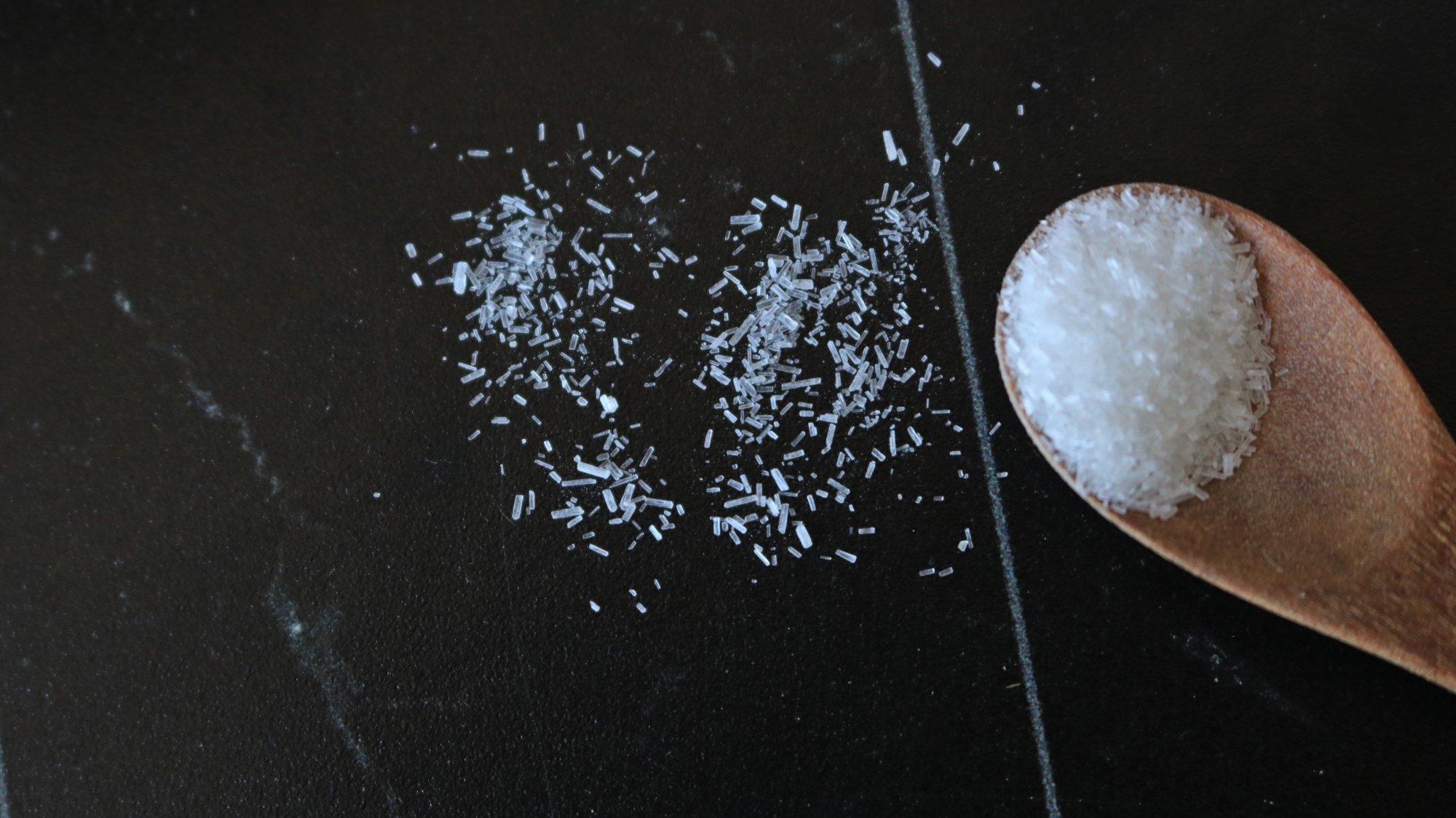
Monosodium glutamate is a teeny, clear, crystalline substance. It looks a lot like salt at first glance, but when you look closely you’ll see that the granules are longer and more regular in shape. It dissolves quickly so it doesn’t have a texture when you eat it.
Credit: Allie Chanthorn Reinmann
We identify the flavor of MSG as umami, or savory. It’s one of the five elemental flavors we can detect: umami, salt, sweet, sour, and bitter. Like sweet or salty, or any building block, it’s not exactly like anything else. Umami is a word we can use to describe other things, though, and that can help you identify when you taste it.
I often can taste umami in deeply savory foods—dishes with mushrooms, meats, olives, aged cheeses or yeast extracts. When you eat pizza, especially pepperoni pizza, umami is there. Umami adds complexity of flavor, almost like a bass line beneath the music of the entire dish. If you take a bite of risotto and you can feel your mouth water, MSG is actually what is making that happen. When you eat MSG, the glutamate receptors in your taste buds (yep, your body was made to detect glutamates) fire up and actually trigger salivation.
Use MSG in your cooking and baking
I want all of my cooking to make people salivate and take another bite. Since MSG doesn’t taste like anything, it can go in sweet and savory dishes without throwing off the flavor profile. Adding a pinch here or there is going to give your casserole, spaghetti sauce, chocolate cake, or blondies recipe an irresistible je ne sais quoi. I highly recommend adding MSG to brownies—here’s my recipe for dark chocolate soy sauce brownies, but you can use boxed mix and just stir in a quarter-teaspoon of MSG to get the same effect without using soy sauce.
The same goes for savory dishes. I like to stir a pinch into soups and stews toward the end, taste, and take it from there. Basically, you use MSG as you would any seasoning in your cupboard—add, taste, adjust. Even though sodium is part of the MSG equation, it’s not exactly salty, so you will likely use it in conjunction with a pinch of regular cooking salt.
If I’m making homemade stocks or broths, I’ll add about a quarter-teaspoon of MSG per four cups of liquid before I add salt simply because I might not need as much as I think. Taste the food if you can, and then add salt to taste. As I mentioned earlier, sometimes we add more salt when what we’re actually looking for is more umami. Using a smidge of MSG can actually help you reduce your salt intake. As Beth mentions in her article linked above, “sodium only makes up 12% of the weight of MSG (as opposed to 40% of table salt).”
Get an MSG cellar
Credit: Allie Chanthorn Reinmann
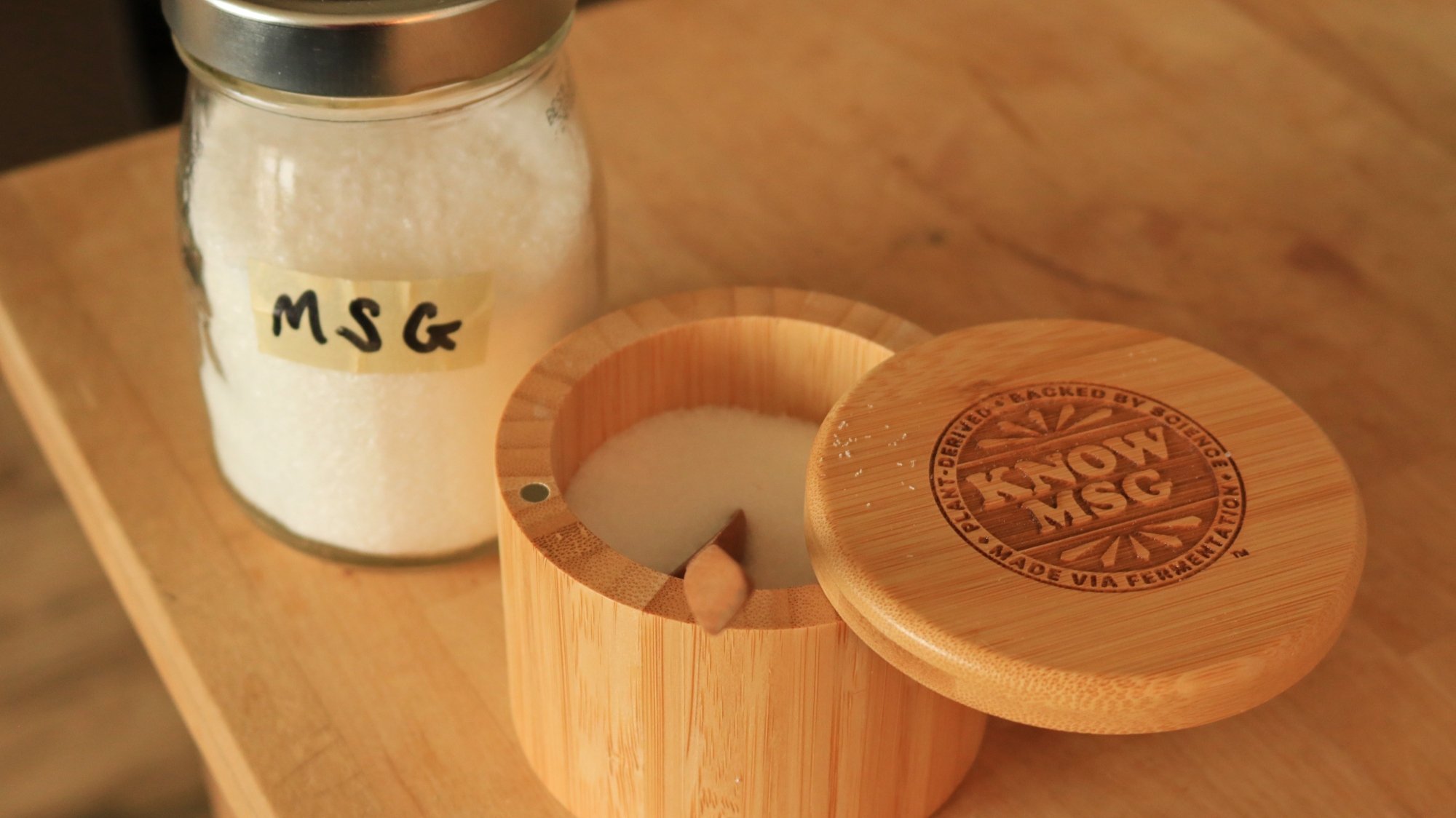
One of the best gifts I’ve ever gotten was my MSG cellar. But you don’t need one made especially for MSG—you can use any salt cellar. You can also buy these cute panda Ajinomoto MSG shakers instead of a cellar to easily sprinkle it onto your food just like you would salt or pepper.
In the store, MSG might be packaged in medium-sized clear bags, or small seasoning bottles. Check the seasoning aisle of your grocery store. In the Uzbek market near me they carry clear bags of Ajinomoto and I decant it at home into my MSG cellar and smaller back-up jars for easier storage. In my Shoprite, I’ll find MSG in seasoning shakers like these from Ac’cent and Spice Supreme. A little goes a long way, so a shaker this size can last you eight months or longer.
Here are some things I’ll always season with MSG:
All my egg dishes. MSG brings out the best in your breakfast. All it takes is a pinch per two eggs. Add it to your scrambles, omelettes, quiches, and casseroles.
Soups and broths. MSG brings complexity, a more “round” flavor, to broths. It’s subtle, but once you have a broth with MSG it’s impossible to go without. A quarter-teaspoon per quart of broth will add a richness that pairs well with every soup, from sweet, earthy borscht to savory beef stew.
Fresh sliced tomatoes. Enjoy the best tomato sandwich or BLT of your life. There is no better way to quickly improve crappy tomatoes than to add a mixture of MSG, salt, and sugar. And even if they’re not crappy, I still add it—sans sugar.
Burgers and meatballs. Any mixed ground meat situation is better with MSG. Beef and veal meatballs, pork dumplings, turkey burgers—especially turkey burgers—will have a richer, more meaty flavor from a dose of MSG (about a half-teaspoon per pound of meat). This is actually a prime example of when more salt just wasn’t giving me the flavor I wanted. MSG and less salt fixed my burgers and meatballs.
Salad dressings. Whether you’ve been looking for a way to avoid those anchovies in your homemade caesar, or your Dijon dressing needs a softened edge, MSG is a great way to improve your whole salad.
Gravies and sauces. MSG brings a welcome depth of flavor to tomato sauces, meatiness to brown gravies, and while the French might never admit this, all of the mother sauces are better with MSG.
Roasted vegetables. Part of the reason that roasted veggies are so good is because the flavors are concentrated and the natural sugars caramelize. Adding MSG will elevate them to a whole new level of flavor. Simply sprinkle it in when you toss them with oil and salt before roasting. If you’re new to roasting, here’s the easy way to do it.
Harvard University on Monday announced that tuition will be free for students from families with annual incomes of $200,000 or less starting in the 2025-26 academic year. From a report: “Putting Harvard within financial reach for more individuals widens the array of backgrounds, experiences, and perspectives that all of our students encounter, fostering their intellectual and personal growth,” Harvard University President Alan M. Garber said in a statement. “By bringing people of outstanding promise together to learn with and from one another, we truly realize the tremendous potential of the University.”
The new plan will enable about 86% of U.S. families to qualify for Harvard financial aid and expand the Ivy League college’s commitment to providing all undergrads the resources they need to enroll and graduate, according to Garber.
Intel has achieved a significant early milestone in its Arizona semiconductor fabrication plant, with the first wafers successfully processed on its advanced 18A process node. This achievement, announced at the same time as its March 13th conference, signals positive momentum for the company’s manufacturing roadmap.
The Zwift Games are upon us, and with them big race packs on fresh routes. Having finished third in stage 1 (read more) and second in stage 2 (read more), I was really enjoying myself in the 450-570 group.
But then the climb stages arrived, and everything changed. Here are my summaries of stages 3 and 4 of Zwift Games.
Stage 3: Warmup
It didn’t take long for me to realize that today wasn’t going to be pretty.
As I spun my legs to gently warm them up prior to the race, I could tell today (Tuesday, March 11) was a bad leg day. You know what I’m talking about. Sometimes these days are expected, other times they come as a surprise. Today was a bit of a surprise since I had ridden the day before and felt fairly good.
What was the cause? Poor sleep? Insufficient nutrition? Getting sick? I wasn’t sure. But I could tell something was off.
Stage 3: Volcano Implosion
Stage 3 took place on the new Downtown Eruption route in Watopia, and I knew exactly where I would have trouble here: the Volcano KOM. This segment has often been my undoing in races, as it’s just a bit too steep and long for me to hang on!
We had a big pack of 144 starters in the race, so I knew the effort was going to be extra tough. That’s just how it works on Zwift: bigger packs mean more strong riders, generally.
The course begins with a quick climb up the bottom half of the Hilly KOM, and it took ~450 watts for 50 seconds to hold onto the group here. Job done, but I knew the big test was up the road.
I made it to the foot of the Volcano KOM without incident, but it wasn’t long (around 600 meters in) before I saw my avatar drifting backward in the group. At 1.1km into the climb, the white flag came out. 75 riders rode away in a long string ahead, and I was quickly passed by several more.
At first, I sat up and spun easily, sinking down to 93rd place. Then I realized there was still a GC competition going on, so I pushed a bit to catch the wheels of the small group just ahead as we hit the flat halfway point of the Volcano KOM.
But then the road tilted up again, and that group rode away from me too! Jimmeny Christmas. This was bad.
Over the top, I found myself with just a couple of riders. We descended together, and I used the supertuck and some well-timed power to bridge us up to a small group just up the road.
The race may be lost, but you can still make it interesting, right?
You can tell it’s a bad leg day when your legs like you’re riding at threshold, but your heart rate doesn’t want to get above tempo zone. That’s what I was feeling on this day – like I couldn’t even push my legs hard enough to make my heart work hard!
Stage 3: Finish
Six of us made our way through Downtown Watopia, then it was time for the final challenge: the Hilly KOM. This climb is around 2 minutes long and, again, has been my nemesis in past races, seeing me dropped by just a few seconds as we crest the top.
Our group strung out and separated up this climb, and I finished somewhere in the middle of my pack of 6, for a final placement of 94th overall.
On Saturday, March 15, I raced the second climbing stage on the new London Uprising route. I knew this one would be rough, too, because it features two big climbs: Fox Hill and Box Hill.
My legs felt nicely recovered during the warmup, and I spun my legs for around an hour prior to the race.
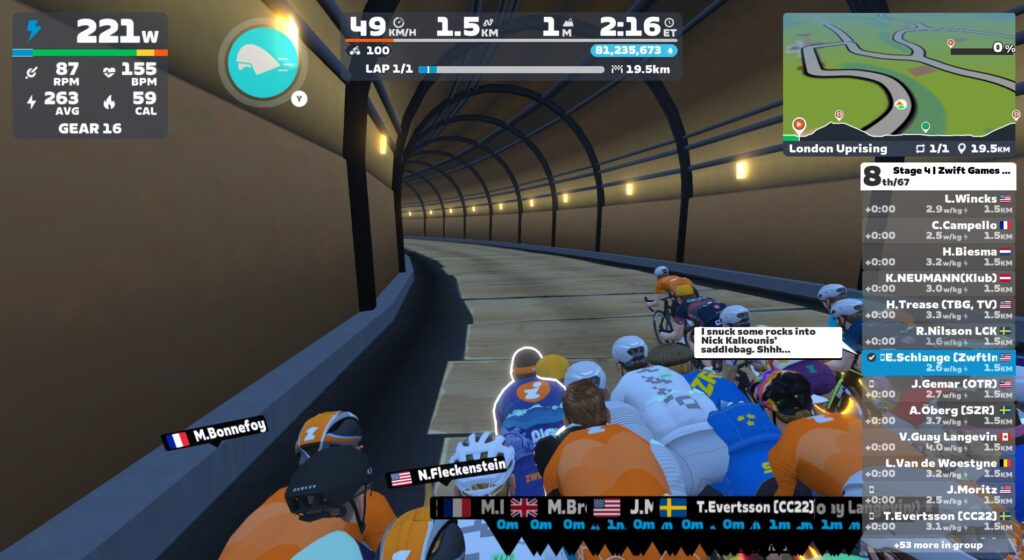
I’d been chatting with Nick Kalkounis from ZwiftHQ about the Zwift Games stages prior to this, sharing my results as he shared his. (Nick is a cool dude who’s done a lot of work with Zwift Racing Score. We met on my trip to the Specialized Win Tunnel back in October – read more about that here).
We decided to meet up for this race, and Nick invited Tim Hanson (of zwiftracing.app fame) along. So the three of us were having a sort of informal “race within the race.” Nick is a fit dude without a scrap of fat on his body, so I didn’t think I stood much chance against him on this course. But it’s always fun to race with friends anyway. Let’s go!
Stage 4: Outfoxed
The London Uprising route begins by taking riders straight up Fox Hill. Then you descend, do a lap of the Classique, and head up Box Hill for the finish.
Simple. But not easy.
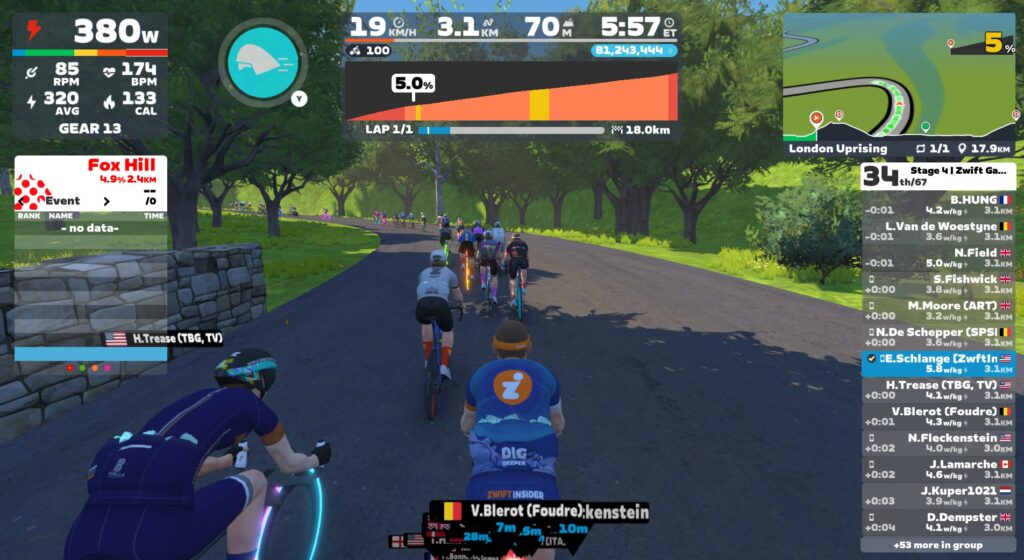
The start was pretty chill, since everyone knew the work would begin just up the road. 67 riders left the start pens, and soon enough we hit Fox Hill, and things exploded! Despite holding some solid power numbers (for myself, at least), I was dropped from the front group by the time we hit the first flattish spot just ~400 meters into the 2.4km climb. And I kept drifting back. 34th… 36th… 39th.
At 3.4km, I saw a gap to the group behind, so I pushed to hold the wheels just ahead. “Maybe Nick is in that group behind?” I hoped, against hope. Then I tapped his name in the Companion app and hit “Fan View”… and saw that he was sitting in 2nd place, on the 1st place rider’s wheel. Crap!
I finished Fox Hill in 39th, and joined a group of 7 riders. We were caught by a group of 8 from behind, despite my valiant supertucking, and that group headed to the Classique.
Soon enough, a few riders from our group got bored and attacked, leaving me in a pack of 10 riders with 3 up the road. By the time we hit the base of Box Hill, I was in a group of 8 constituting places 34-42.
Stage 4: Finish
On the first section of Box Hill, our group stretched out, and I simply didn’t have the legs to hold on. Most of them went up the road, then as it leveled out I found a bit of energy to push hard to reel in some riders just ahead.
I made it to the flat top of Box Hill with two other riders in 38-41st place, and my only goal was to beat both of them to the line. I deployed my aero powerup and went hard with 250 meters to go, but M. Moore (ART) had a much stronger sprint and blew past me. I finished 39th overall.
Chapeau to Nick Kalkounis, who hit the bottom of Box Hill with the front pack, and ended up finishing in 21st.
Races with climbs over a few minutes are always tough for me, and Zwift Games stages 3 and 4 were no exception. Stage 3 was especially rough because my legs just didn’t show up!
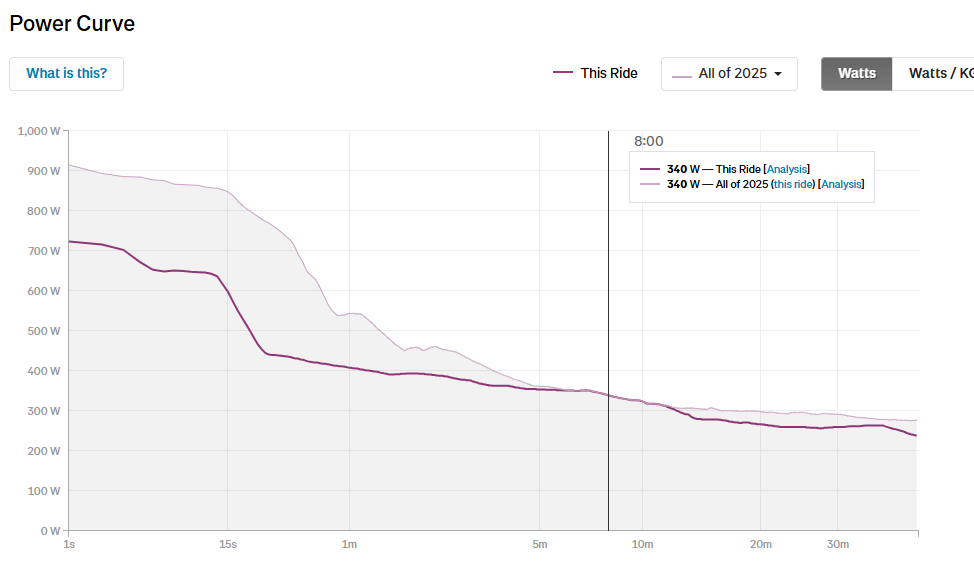
I actually had some decent power numbers in Stage 4, hitting 2025 bests in the 6-11 minute range as I climbed Fox Hill:
But that simply wasn’t good enough. It’s clear that my racing score puts me in a group where I have a shot at the podium in flat races, but will get dropped handily if the race features any significant climbing.
Which, to be honest, is how it should work. I have no complaints. If I want to put in a hard effort and know I won’t have a shot at a win, I can do a climbing race. If I want a shot at a podium, I need to stick to flatter events.
Your Thoughts
Did you race Zwift Games stages 3 and 4? How did they unfold for you? Share below!
Microsoft’s Windows updates over the last couple years have mostly been focused on adding generative AI features to the operating system, including multiple versions of the Copilot assistant. Copilot has made it into Windows 11 (and even, to a more limited extent, the aging Windows 10) as a native app, and then a wrapper around a web app, and soon as a native app again.
But this month’s Windows updates are actually removing the Copilot app from some Windows 11 PCs and unpinning it from the taskbar, according to this Microsoft support document. This bug obviously won’t affect systems where Copilot had already been uninstalled, but it has already led to confusion among some Windows users.
Microsoft says it is “working on a resolution to address the issue” but that users who want to get Copilot back can reinstall the app from the Microsoft Store and repin it to the taskbar, the same process you use to install Copilot on PCs where it has been removed.