
This “throws open the door for corruption,” FTC commissioner Alvaro Bedoya told Gizmodo.

This “throws open the door for corruption,” FTC commissioner Alvaro Bedoya told Gizmodo.

The NanoPhone is cheaper than an iPhone and smaller than a credit card, but with 4G connectivity and dual SIM support, it’s definitely not a toy.

The OneXSugar makes use of Qualcomm’s new G3 Gen 3, but the main reason you want it is because it’s literally a Transformer.
Carl Erik Rinsch, the director of 47 Ronin, has been charged for defrauding a streaming service out of $11 million, according to the Southern District of New York’s US Attorney’s Office. While the court documents didn’t name the service, an old report from The New York Times made it obvious that it was none other than Netflix. In 2018, Rinsch pitched a sci-fi series called White Horse, referencing the first horseman of the apocalypse, to several services, namely Amazon, Apple, HBO, Hulu, Netflix and YouTube. The Times’ report said that Amazon had already won the bidding war, but Netflix’s former VP of Original Content, Cindy Holland, called Rinsch on a weekend and offered millions more, along with the privilege of making a director’s cut.
In its announcement of the indictment, the US Attorney’s Office explained that Netflix had paid $44 million for the development of White Horse, which had been renamed to Conquest, between 2018 and 2019. Some of that money went to paying off the project’s earliest investors. (Keanu Reeves, the star of 47 Ronin, sank his own money into the project after Rinsch got in trouble with 30West, one of the project’s first investors, for not reaching a deadline.) Between late 2019 and early 2020, Rinsch asked Netflix for more funding, and the company gave him $11 million more to complete the series. But Rinsch never finished the show, and Netflix accused him of using those funds to make “personal and speculative purchases of securities.”
The director allegedly lost most of the $11 million to trading, but he made it back and earned more from investing the rest on cryptocurrency. Rinsch allegedly went on a shopping spree after that, spending almost $4 million on furniture and antiques, $2.4 million on five Rolls-Royces and one Ferrari, as well as $652,000 on luxury watches and clothing. The indictment also said that Rinsch spent over $1 million to sue Netflix for more money. According to The Times’ report, Rinsch claimed in his lawsuit that Netflix broke its contract and owed him several more payments worth $14 million. In the midst of all of these, Rinsch reportedly displayed erratic behavior: He allegedly claimed to have discovered Covid-19’s secret transmission mechanism, treated the show’s staff horribly and accused his wife of plotting his assassination.
Conquest was supposed to be about a genius who invented a human-like species called Organic Intelligent. These OIs are deployed to solve problems and provide humanitarian aid around the world, but they are, of course, not what they seem and are hiding a darker nature. Rinsch has been charged with one count of wire fraud and one count of money laundering, both of which carry a maximum sentence of 20 years in prison. He was also charged with five counts of engaging in monetary transactions in property derived from specified unlawful activity, each count carrying a maximum sentence of 10 years.
This article originally appeared on Engadget at https://www.engadget.com/entertainment/streaming/47-ronin-director-charged-with-11-million-fraud-over-doomed-netflix-sci-fi-series-123040218.html?src=rss
Growing seeds is a relatively simple process: Bury seeds in dirt, add water, heat, and light from the sun, and in most cases, something is going to sprout. The problem is, most of us conduct this process inside, because we’re trying to get a jump on the growing season. Inside, where there’s no sun, heat is hard to control, and the most your seedlings can stretch out their new little root legs is the size of the plastic cell they’re planted in. As such, it takes some practice to grow strong, resilient seedlings, and beginners make plenty of mistakes. The good news is, most of them are solvable.
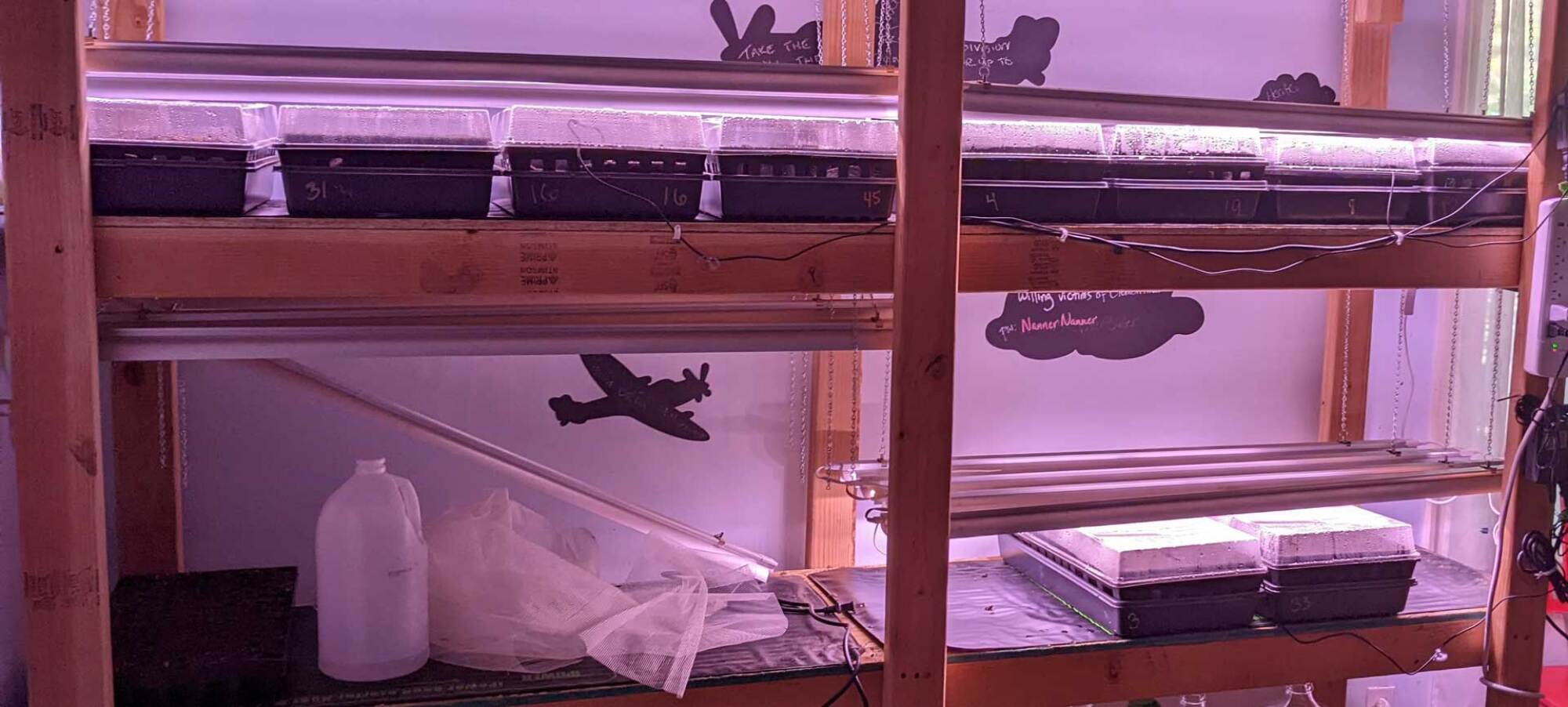
This is one of the easiest problems to diagnose, because it is also one of the most likely problems. Remember, when growing seeds inside, you have to try to replicate the sun. When people estimate how much light they need to reproduce the sun, they almost always underestimate. The tell is easy: Your seedlings will be “leggy” with long stems that aren’t strong enough to support the leaves of the plant. The stem is often curved, almost like the plant has scoliosis. The seedlings may bend towards the light, too.
The solution is, of course, to add more light. I find too often people starting out seeding for the first time buy one growing lamp to arc over their entire shelf of seedlings, when each tray needs 2000-5000 lumens (that’s a lot of lumens). It’s not just how strong the light is but also how long they’re on: Seedlings need 14-16 hours a day of sunlight. Those lights need to be much closer to your seedlings than you think, too. Six to eight inches above your seedlings is the right distance.
If your seedlings are already too leggy, you can try a few things. First, if they’re tomatoes or peppers, you’ll be able to bury the stem deep into the soil when you pot up the seedling or plant it outside, and this will solve many problems. If it’s another kind of seedling, like cucumber, they don’t usually require the same strong stems, and will likely correct themself over time. It will help to run a fan in the room and run your hands over the seedlings a few times a day. Both will encourage the stems to strengthen.
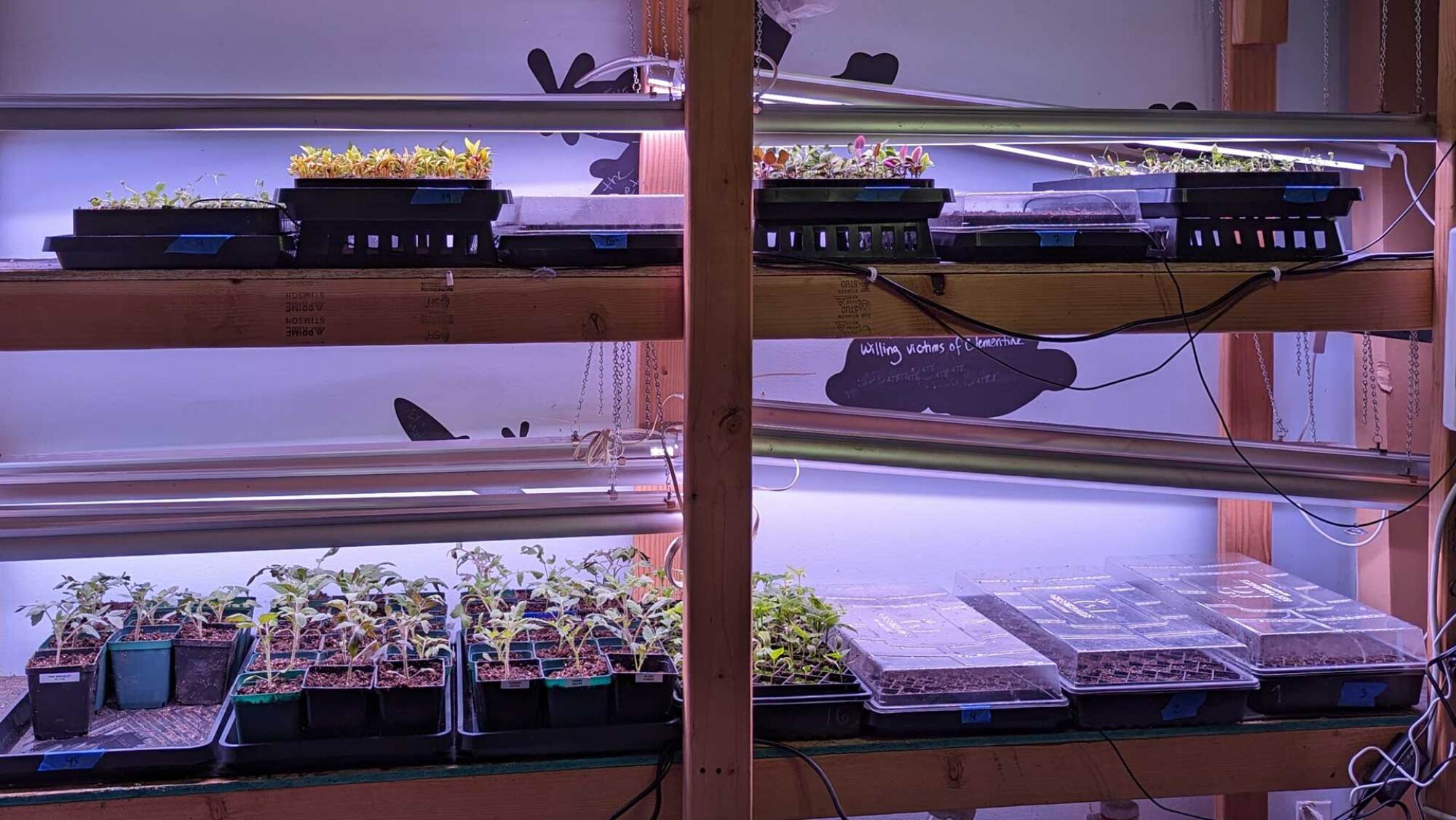
With most plant diagnosis, it can be frustrating to hear, “it may be too much or too little.” This isn’t true with light. It’s really easy to tell if there’s not enough, as above, or too much. Like us, plants can get sunburned. They develop scorch marks with the leaves at the top bearing almost white or golden splotches. The splotches don’t have a pattern to them, either.
Now, seedlings are susceptible to a lot of diseases, fungus, and virus, so you may find yourself concerned with knowing whether this is sunburn or something else. The good news is, it doesn’t matter because the solution is the same: Cut it off. The sunburned leaves can’t absorb light or nutrients and can’t recover, so cut them off entirely, and let the rest of the plant recover. Obviously, move the lights farther away, but don’t overcorrect. While seedlings can get closer to traditional lightbulbs, my experience is they burn easier with LEDs, so while traditional tube lights can be within inches of my seedlings with no issue, I keep LED lights six inches or more away.
Of all the seeds you plant, some just aren’t going to germinate. There are a lot of reasons for that, but let’s cover the most likely causes. First, you may have buried the seed too deep or not deep enough. On the back of each seed package are directions for how deep to plant seeds—and it’s not a loose recommendation. While the difference between a seed planted an inch deep or one and a half inches deep might not matter, there’s a huge difference between seeds that need to be lightly covered—like carrots and most flowers—and those that get buried, like tomatoes, peppers, cucumbers, and sunflowers. Another tell is this: The bigger the seed, the deeper you bury it. Zinnia seeds barely get covered, but pea seeds need a depth of an inch or so, and large bean seeds need to be buried deep in the soil.
This is, unfortunately, one of those problems you need to solve ahead of time. If a seed has been sitting in wet soil for too long, and it hasn’t germinated, it has likely gone rotten. You’d just need to start over; by the time you’ve figured out a seed isn’t germinating, it’s likely only a few weeks since you planted, so you haven’t lost too much time.
Another reason might be that the seeds are simply expired. Every kind of seed has an expiration date. It can be very short, like alliums (onions), which are good for a year. Experienced gardeners will know that these are merely guidelines; you can always test your seeds by trying to germinate them to see if they’re still OK.
The seed mat you’re using to heat up your seeds could also be too hot, cooking your seeds. You want the seeds and soil to remain between 70-80°F, but no more. Once your seeds are cooked, they’re goners, so start over with fresh seeds.
You can over-love your plants. Too much water, even if your plant survives, discourages your seedlings from growing strong root systems. Under-watering is always the better solution, so long as the plants have enough to survive, since it causes the roots to reach out in search of more resources, forming stronger root systems. Watering methods for seedlings that allow them to only uptake as much water as they need are the most ideal, such as bottom watering, which leaves a little water in the tray for the soil to wick up. But even if you water from the top, you want soil that is lightly moist, but never soaking wet.
Yellowing leaves or mushy plants are usually a sign of overwatering. If the plants start to smell bad, mold is likely developing in the water, which is another sign there’s too much water. In those cases, the solution is to go the other way and use less water. Your plants may or may not recover. If you trim away any root rot or squishy leaves and stems, it may recover.
However, most seedlings will develop some green or white fungus on top of the soil, and that is not necessarily a bad sign. It just happens, and it won’t affect your seedling in any way.
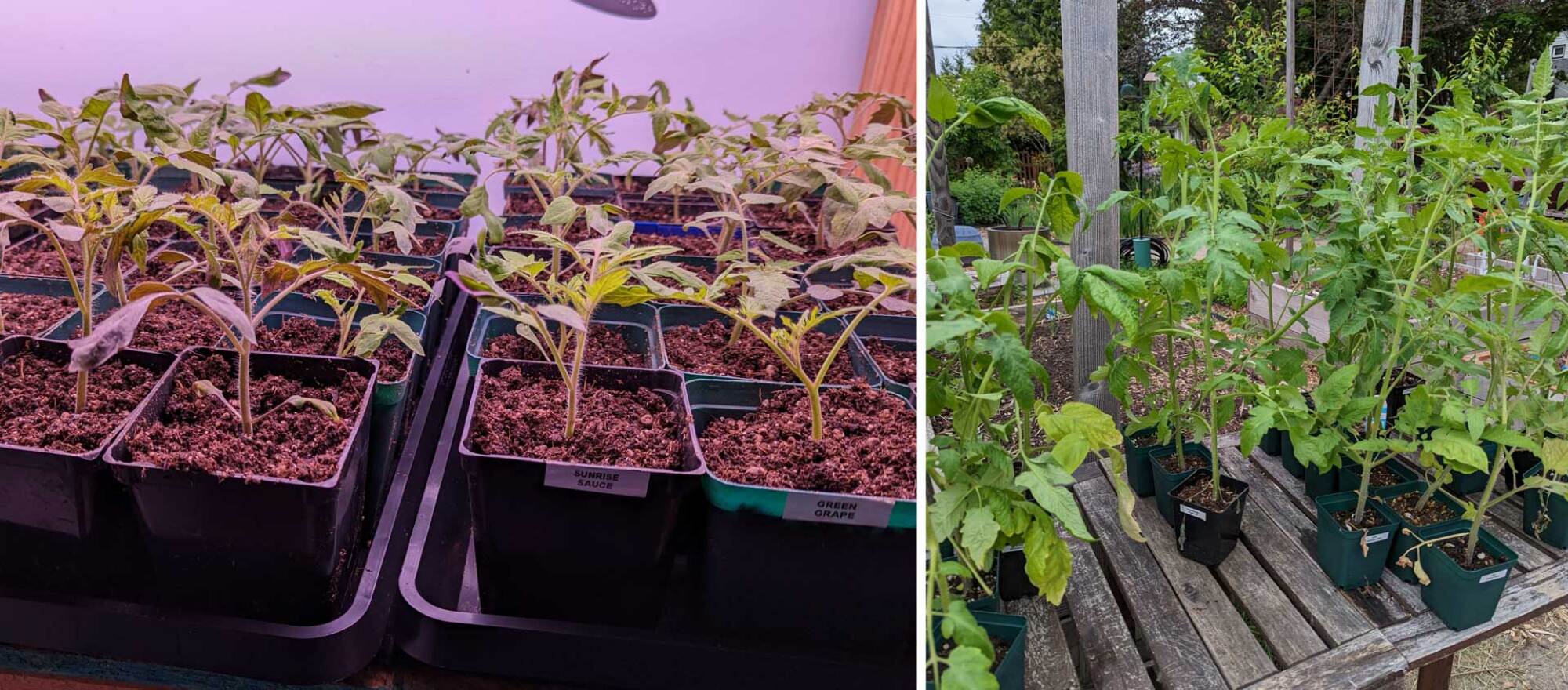
Droopy seedlings usually need water. Tomatoes, in particular, will start leaning over and will quite literally look sad. This can happen toward the end of the watering cycle, and if not left to fester, it’s not a problem, but it’s a sign that you should water them. You should see plants immediately perk up, within an hour or two of watering.
If your soil block is really dry, that’s never a good sign. You want your soil to always be lightly moist, not dry. If you’re having trouble keeping your soil moist, you should consider bottom watering, as mentioned above, because it is a consistent method. The soil takes up what it needs.
In the fall of 2020, a 77-year-old man in Florida realized he had gotten one of the worst gifts imaginable—one that kept on giving.
According to a case report published in this month’s issue of Emerging Infectious Diseases, the man showed up at a Gainesville hospital with chest pain that just wouldn’t go away. For nearly two years prior, the man—a pastor living on a rural farm with dogs and goats—had been in and out of hospitals, and on and off of various antibiotics.
Generally, the man wasn’t in the best health. His medical history included type 2 diabetes, high blood pressure, high cholesterol, and heart failure with reduced ejection fraction. For the latter, he had an automated implantable cardiac defibrillator (AICD) placed—and it was not his first. The man had a notable history of having gone through multiple defibrillators and revisions, including getting a new generator in 2018. Some possible reasons for such a history could include heavy use of the device and infections.

Save up to 50% on an EcoFlow Delta 2 or Delta 2 Max fir a limited time at Amazon.
Nearly 30 years after its first release, the open source Java programming language is continuing to improve. Today Java 24 becomes generally available, bringing with it substantial improvements across language features, libraries, security, and runtime performance. The latest release contains exactly 24 Java Enhancement Proposals (JEPs), coincidentally matching the version number, along with approximately 3,500 additional fixes and improvements.
Marriage: The sacred union of two hearts, two souls, and, less romantically, two tax returns. While poets and romantics wax lyrical about eternal love, accountants and financial advisors see matrimony through a different lens. After all, marriage is a significant economic transaction with its own balance sheet. Let’s take a cold, calculating look at the institution that promises “for richer or poorer”—and find out which one you’re more likely to experience.
For the most part, there are plenty of ways in which “I do” means “we save.”
For some couples, marriage delivers an immediate return on investment through the “marriage bonus.” Couples with disparate incomes often find themselves in a lower tax bracket together than they would be separately. However, the IRS doesn’t send wedding gifts—this benefit typically favors traditional arrangements where one spouse significantly out-earns the other.
Check out this calculator from the Tax Policy Center to see how much federal income tax two people might pay if they were to marry. It compares the taxes a married couple would pay filing a joint return with what they would pay if they were not married and each filed as single or head of household.
Nothing says romance like discounted health insurance premiums. Many employers offer family coverage that costs less than two individual plans. Plus, you’ll only need to meet one family deductible instead of two individual ones when you both get sick from the same wedding buffet.
Married or not, two can live almost as cheaply as one—especially when it comes to housing, utilities, and streaming subscriptions. Why maintain two half-empty refrigerators when you can maintain one completely full one? The shared-expense model makes everyday living more efficient, assuming you can agree on a thermostat setting.
Marriage offers a built-in retirement safety net. Surviving spouses can claim their deceased partner’s Social Security benefits if they exceed their own. It’s the government’s way of saying, “Sorry for your loss—here’s some money.”
When “I do” becomes “I’m due…to pay.” Hey, not all of my wordplay is perfect, OK?
This is the flip side of the marriage bonus. Some dual-income couples with similar earnings find themselves paying more in taxes together than separately—the infamous “marriage penalty.” Nothing strengthens a relationship like realizing you’re paying thousands more annually for the privilege of filing jointly. Here’s that calculator again.
When you marry someone, you don’t just get their charming quirks—you might get their debt too. While premarital debt typically remains separate, any debt accumulated during the marriage can become shared responsibility, depending on your state’s laws. Their student loan debt remains theirs, but their impulsive decision to finance a luxury boat “for weekend getaways” becomes your shared financial burden.
Before you assume you’re on the hook for a debt, it’s usually worth it to take a breath and dig into whether you’re actually responsible.
Approximately 40-50% of marriages end in divorce—a statistic that financial planners can’t ignore. The average divorce costs between $15,000 and $30,000 in legal fees alone, not counting the financial aftermath of dividing assets, potential alimony, and the cost of establishing two separate households. No wedding DJ ever announces, “And now, let’s factor in the statistical probability of spending $20,000 to undo this entire event!”
Some income-based government benefits may decrease or disappear entirely when household income is calculated jointly. Marriage can inadvertently disqualify individuals from financial aid, assistance programs, or income-based repayment plans for student loans.
You’ll hear people say, “Sign a pre-nup,” but what exactly does that entail? And what else can you do to protect your finances in your marriage?
Nothing says “romance” like discussing how to divide assets in case of divorce before you’ve even cut the wedding cake. Despite its unromantic reputation, a prenuptial agreement provides clarity and protection for both parties. Think of it as insurance—you don’t buy home insurance because you expect your house to burn down, but because you recognize it could.
Before marriage, schedule a judgment-free financial disclosure session. Reveal credit scores, debt loads, assets, spending habits, and financial goals. Finding out your spouse has $60,000 in credit card debt during your honeymoon makes those “for richer or poorer” vows feel a bit more literal than intended.
Decide early how you’ll handle money: Will you merge everything, keep separate accounts, or create a hybrid system? Determine who pays for what, how savings will be allocated, and how major purchases will be decided. This prevents the “I thought you were paying the electric bill” conversation in the dark.
Consider maintaining some financial independence, like a personal emergency fund or credit card in your own name. This isn’t about planning for divorce—it’s about maintaining financial identity and credit history, which becomes crucial if you face unexpected circumstances like a spouse’s death or incapacitation.
Marriage represents many things: a romantic milestone, a legal contract, and—whether we like to admit it or not—a financial partnership with significant economic implications. While love may be the reason you marry, money will likely be something you discuss daily for the rest of your lives together.
The good news? Financial compatibility doesn’t require identical views on money—just open communication, mutual respect, and occasionally, the willingness to compromise on whether a $7 daily latte habit constitutes “essential spending.”
After all, as the old saying goes: Love may be blind, but marriage is a long-term investment strategy with variable returns and significant tax implications.

Thousands of years ago, Greco-Roman statues offered viewers a multi-dimensional experience that also called to our olfactory senses.
Playdate, the little yellow gaming machine with a crank, is getting a price increase in a few days. In a newsletter that Panic has sent out, the developer said that Playdates will cost $229 starting on March 25 but that you can still get the device for $199 until then. Apparently, Panic moved to a new factory, and it would “cost quite a bit more” to manufacture the devices there than at the company’s old facility. Panic cited manufacturing costs, as well, when it raised the handheld’s price from $179 to $199 last year.
On the day the Playdate is getting a price hike, Panic is also dropping “an (extremely) limited stock” of systems that are either fully refurbished at its factory or have “very minor cosmetic issues.” The refurbished units will sell for $179, and Panic says that they “work great,” can “play games perfectly” and come with a six-month warranty. “If price has kept you from buying a Playdate, we’re hopeful these great systems might help,” the company has written in its announcement.
The handheld gaming console came out in 2022. It has a black-and-white screen with over 150 games that you can download from its Catalog. While the device has the traditional arrow and gaming buttons, it also has a crank that developers incorporate into their games — in Chopter Copter, for instance, you’ll have to turn the Playdate on its side to use the crank as a helicopter-style rotor. If you already have a Playdate, the company is having a Catalog Anniversary Sale right now until March 20, where you can stock up on more titles for the handheld. Panic also reconfirmed that it’s working with developers to put together a Season 2 bundle, which will deliver a set number of games in a curated collection to buyers’ devices over a certain period.
This article originally appeared on Engadget at https://www.engadget.com/gaming/the-diminutive-playdate-console-is-getting-a-price-increase-to-229-on-march-25-120004199.html?src=rss
Our wheel and frame performance charts are useful tools, but they don’t answer one crucial question for many Zwift racers: how does X frame paired with Y wheelset perform compared to the Zwift Concept Z1 (Tron) bike?
With Zwift tweaking performance parameters and releasing new bikes this week, it was time to update this popular chart with current data. Below, you’ll find a scatter plot chart pitting the Tron bike against top-performing wheels and frames.
Tip: we charted how many seconds each setup saves across an hour of riding, which means you’ll find the top performers higher on the Y-axis and further right on the X-axis.
Frames used:
Wheels used:
Colored based on frame. Mouse over each point for details.
Zwift Concept Z1, S-Works Venge, S-Works Tarmac SL8, Pinarello Dogma F 2024, Canyon Aeroad 2024, Cannondale SuperSix EVO LAB71, Specialized Aethos
Chart updated March 18, 2025
The most surprising thing you can see immediately is that Zwift’s performance tweaks have turned the Tron bike into a leading aero bike, but a poor climber. It’s no longer an all-arounder.
See the old Tron vs Top Performers chart for comparison >
This change is due in part to Zwift making the Tron bike a bit heavier. But they also made the disc wheels a bit slower on road bikes, and those nerfed disc wheels no longer let us beat the Tron.
The next thing worth noting is how the new S-Works Tarmac SL8 is the best performer in almost every way. (See how its purple dots are higher and further right than all the other bikes.) It’s only edged out in pure aero performance, but even then its most aero setup (paired with the Zipp 858/Super9) only loses 2.4 seconds over an hour of flat roads to the Tron bike, while being 6.5 seconds faster on an hourlong climb.
Speaking of the new Tarmac, you can see that, with its release, there’s really no place for the S-Works Aethos. It used to be the pure climber that beat everyone else up the Alpe, but the Tarmac now edges it out while being much more aero. (It is possible that tests at lower power, perhaps 2 W/kg, would see the lighter Aethos edging the Tarmac whose superior CDA would have less of an effect at lower speeds. Stay tuned for more on this topic…)
Let’s talk about wheels a bit, since their performance was modified this week as well.
One big piece of news is that the DT Swiss Disc is no longer the obvious king. The Zipp 858/Super9 is just a bit more aero, and gains almost 5 seconds on the climb.
Another big piece of disc news is that all the disc wheels were made heavier this week. It used to be sort of an “even trade” going from a good disc wheelset to the best non-disc wheels… you would lose about as much in your flat time as you gained in your climb performance.
But now, going from the Zipp 858/Super9 to the ENVE 7.8 improves your climb hour by ~11s on the climb, while costing you less than 4s on the flats. This makes it hard to justify using a disc wheel on all but the flattest races.
The ENVE 8.9 wheels have received a bit of a polish, making them perhaps the best non-disc wheels available in terms of pure aero performance. If you’re looking for good climbing wheels, though, the Zipp 454s are probably your best bet. In fact, as you can see in the chart, they edged out the Lightweight Meilensteins! (The same disclaimer as above holds true here, though, that riders are lower speeds may see the lighter Lightweights beating the 454s.)
What conclusions do you draw from this chart? Share your thoughts below!

Save up to $1,000 with a trade-in and another $300 if you choose to go pink.
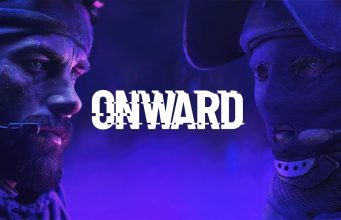
Onward (2020), the mil-sim shooter from Meta-owned Downpour Interactive, announced its big 2.0 update is coming next week, promising to be its “biggest update ever” since the game’s early access launch in 2016.
Coming March 25th on all supported platforms, Onward’s 2.0 update is slated to include a “remastered fan favorite map”, a brand new map, over a dozen new weapons, and the ability to select and customize an Operator before going into a match, the studio says in a Meta blogpost.
With the 2.0 update, Downpour Interactive says the studio has “completely redone our weapons and utilities—this means both graphically and polishing their functionality,” noting it also includes 13 new weapons, which will include a pump-action shotgun and revolver for the first time. Every weapon and piece of equipment has gotten a redesign, such as weapon models, accessories, drones, and even smoke grenades, the studio says.
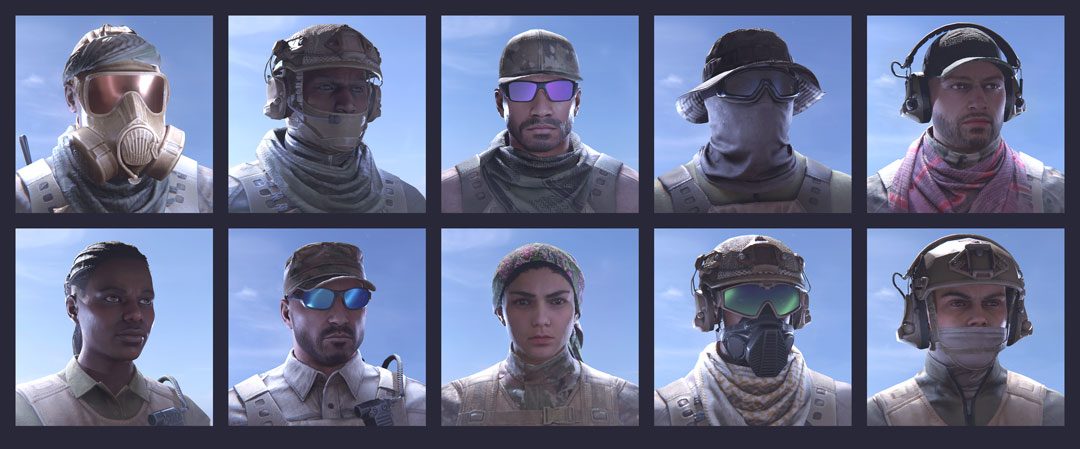
At startup, you’ll also find a cadre of 20 operators to choose from, which now features the first inclusion of female operators.
Onward 2.0 is also set to include the overhauled fan favorite ‘Downfall’ map, as well as a new map in ‘Overgrowth’, which are “more graphically advanced than our current maps.”
“We tried to push the limits of what we could do visually, while also bringing in new terrain tactics, by introducing ladders to gain different tactical viewpoints as an example,” the studio says. “There are two goals when it comes to both the new weapons, and these new maps: iterate and improve on what’s already in the game, while providing players with new and exciting ways to play the game at the same time.”
You can check out the full list of changes coming to Onward in its 2.0 update over on Downpour Interactive’s latest blogpost, which includes various quality of life updates.
Like all other updates, the Onward 2.0 update is slated to arrive to the game for free. You can grab Onward over on the Horizon Store for Quest 2 and above, and Steam for PC VR headsets, where it’s priced at $25.
The post Mil-sim Shooter ‘Onward’ is Getting Its “biggest update ever” in 2.0 Release Next Week, Trailer Here appeared first on Road to VR.

This lifetime subscription will grant you access to all 14-languages in Babbel’s curriculum and will never expire.

The mission’s first large set of survey data is a treasure trove for clues about the history of the universe.
The abstract of a paper published on National Bureau of Economic Research: Ensuring broad access to the patent system is crucial for fostering innovation and promoting economic growth. To support this goal, the U.S. Patent and Trademark Office offers reduced fees for small and micro entities. This paper investigates whether fee rates affect the filing of applications by small and micro entities. Exploiting recent fee reforms, the study evaluates the relationship between fee changes and the number of new entrants, controlling for potential confounding factors such as legislative changes. The findings suggest that fee reductions alone are insufficient to significantly increase participation in the patent system among small and micro entities.


Read more of this story at Slashdot.
Today, the Fedora Project announced the beta version of the upcoming Fedora Linux 42 release for public testing to give us a glimpse of the new features and report potential bugs.
Theora is Xiph.Org’s first released video codec designed for use with Ogg. Theora started out based on the VP3 codec. It’s been over 16 years since the release of the libtheora 1.0 reference software implementation and tagged this week was libtheora 1.2 beta.

The move to a free-to-play model seems to have paid off for Mannequin. The VR game is experiencing a rush of new players on Quest.
The post VR game Mannequin sees huge influx of new players after switch to F2P appeared first on MIXED Reality News.