
/e/OS is a
privacy-centric, open-source mobile operating system that
has primarily been targeted at mobile phones, with only a few
community supported images available for tablet devices. In December,
Murena—a company that sells devices with /e/OS
preinstalled—announced
that /e/OS now officially supports tablets as well, starting with the
Pixel tablet. The user experience is close enough to
mainstream alternatives to make it attractive, but there are some
under-the-hood problems that may give users pause.
Monthly Archives: March 2025
Game Developers Launch North America’s First Industry-Wide Union Anyone Can Join

Game industry unionization efforts that exploded across Sega of America, Bethesda, and others have recently been on pause. A new initiative by the Communications Workers of America could jumpstart things again. At the Game Developers Conference 2025 happening this week, the group announced the founding of the United…
Supply Chain Attacks on Linux distributions (Fenrisk)
A security company called Fenrisk has posted an overview of a pair
of claimed successful supply-chain attacks on the Fedora and openSUSE
distributions.
We successfully identified vulnerabilities in the Pagure, the Git
forge used by Fedora to store their package definitions. We also
compromised Open Build Service, the all-in-one toolchain used and
developed by the openSUSE project for compilation and packaging.Their exploitation by malicious actors would have led to the
compromise of all the packages of the distributions Fedora and
openSUSE, as well as their downstream distributions, impacting
millions of Linux servers and desktops.
Best Free and Open Source Alternatives to Citrix Wrike
Citrix Wrike is a collaborative work management solution. We recommend the best free and open source alternatives for Linux.
Samsung’s 9100 Pro PCIe 5 SSD Is Wicked-Fast And Now Available To Buy
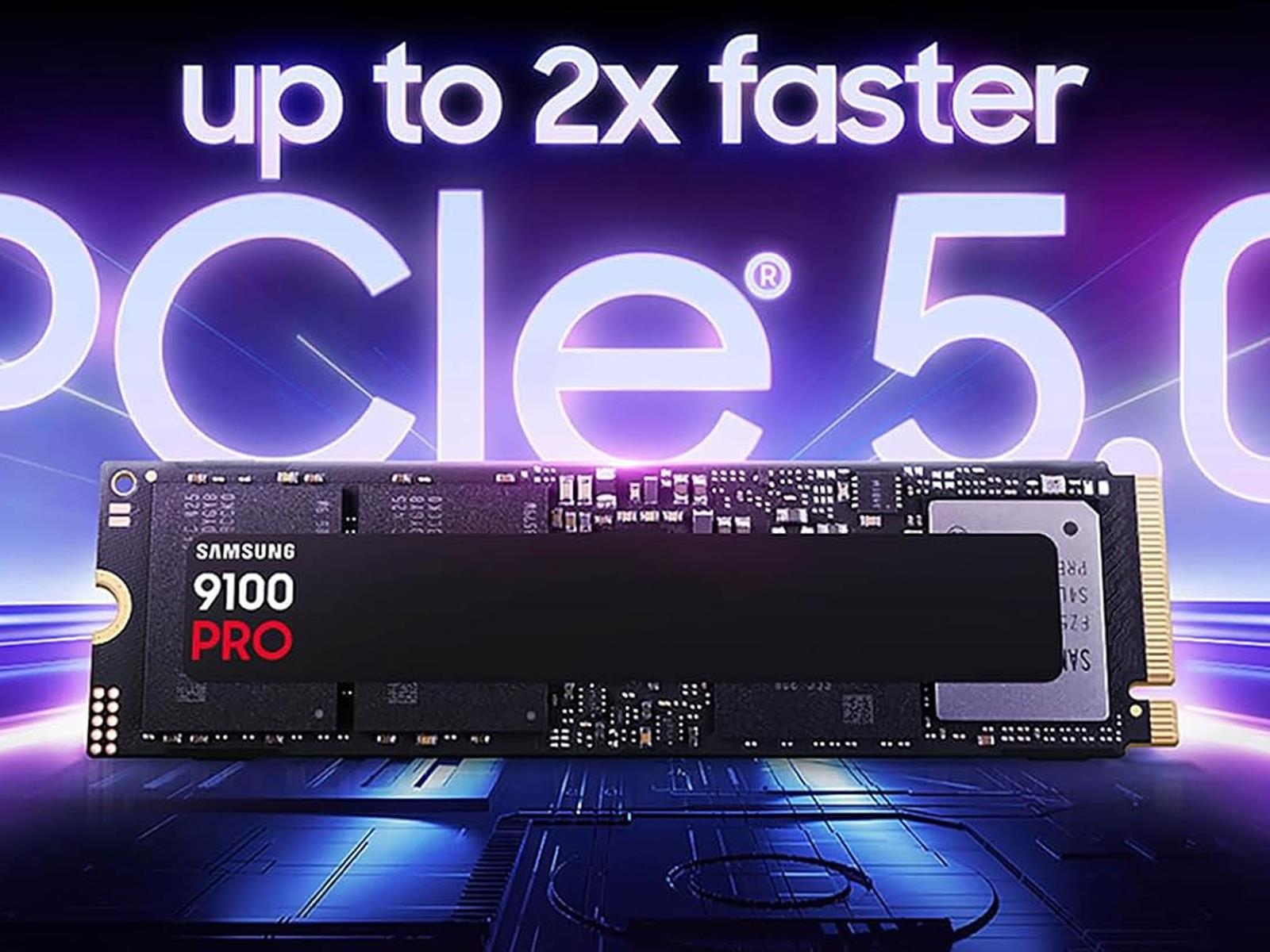
Towards the latter part of last month, Samsung reinserted itself into the flagship solid state drive (SSD) space with the introduction of its 9100 Pro series to supplant its still-awesome 990 Pro as its fastest consumer drive line. Now several weeks later, you can actually purchase the 9100 Pro in various capacities, and with or without an
Apple’s new base iPad is $20 off in the Amazon Spring Sale
The sun is out, the birds are chirping and the Amazon Spring Sale is just around the corner. Though it officially starts March 25, we’re already seeing a bunch of early Amazon Spring Sale deals for brands like Dyson, Samsung and Apple. The latter includes a six percent discount on Apple’s new 11-inch iPad.
The 128GB 2025 model is down to $329 from $349 in every color. It comes with an A16 chip that gives it a performance boost, though not enough power for Apple Intelligence like the iPad Air with an M3 chip. It also offers features such as a 12MP wide camera, 4K video and a liquid retina display.
If you’re not fussed about getting the newest model then check out Amazon’s sale on Apple’s 10th generation iPad. Right now, it’s down to $269 from $349 — a 23 percent discount. It’s screen is one-tenth of an inch smaller and it offers many of the same features, like 4K video recording and a 12MP wide camera. Plus, it still has a USB-C port rather than the old lightning port.
This article originally appeared on Engadget at https://www.engadget.com/deals/apples-new-base-ipad-is-20-off-in-the-amazon-spring-sale-143705838.html?src=rss
The Difference Between Weightlifting and Weight Lifting (and Why It Matters)
We may earn a commission from links on this page.
This will be an extremely pedantic post, and one that I am terribly sorry to have to write. I’ve been into weight lifting (two words) for a long time, but about six years ago I got into weightlifting (all one word). It turns out these are two very different things.
Weightlifting, all one word, is the sport that is contested in the Olympics in which people—wearing what look like old-timey swimsuits—pick up barbells loaded with brightly colored weights. In one of the events, the snatch, the bar is lifted from the ground to overhead in one swift movement. In the other, the clean and jerk, the bar is lifted to the shoulders and the lifter pauses to breathe and question their life choices before using another sudden movement to shove it sky high. (You can lift more weight the second way, which is why they are separate events. Each lifter’s best snatch and best clean and jerk are added together to find out who wins.)
Weight lifting, two words, refers to the action of lifting a weight—any weight. If you’ve never heard of this distinction or never thought of it when you said or heard the word “weightlifting,” bear with me here.
Why “weightlifting” refers to the sport of the snatch and clean and jerk
Early weightlifting competitions, in the 1800s, evolved out of circuses and stage shows where a strongman would show off feats of strength to an audience. Sometimes these strongmen would challenge each other, and would bring in judges to verify the weights and ensure a fair competition. Gymnasts around this time trained with dumbbells and barbells as well, and would also set up their own friendly competitions. By the time the first (modern) Olympics rolled around in 1896, there was enough interest in weightlifting as a competitive sport that it was one of the sports contested.
It took decades after that for competitive weightlifting to evolve into the form we can still see in the Olympics. The dumbbell lifts and one-hand lifts were dropped; by 1928 the sport had three barbell lifts, each of them done with both hands. In 1972, one of them (the clean and press) was dropped from competition. This leaves the two-lift sport we know and love today. (We all do love it, right? It’s our favorite? Good.)


The idea of lifting weights for fun and health didn’t become popular until after the competitive sport became established. The name “weightlifting” was already taken, so when some weightlifters decided to challenge each other in other lifts, like the squat and bench press, they had to choose a different name. (Thus was born powerlifting.) Other offshoots chose names, too. The “World’s Strongest Man” TV specials led to the sport of strongman, where people (not just men) lift a variety of implements like stones and kegs and log-shaped barbells, and no two competitions are the same.
Probably the most famous strength sport is bodybuilding, where competitors don’t actually lift anything in competitions; they just show off the body that they built through lifting weights. Much of gym culture as we know it today was born from the bodybuilding style of training, as bodybuilders and barbell manufacturers collaborated to write and publish magazine articles for the masses. If you think of your strength training in terms of “reps” or “muscle groups,” this is why.
You can also, of course, just lift weights. This isn’t weightlifting, because that’s the name for the Olympic sport; it’s “lifting weights” or “lifting” or “strength training” or “resistance training.” You can, if you must, call it “weight lifting.”
I’m a weightlifter, and I agree that this makes no sense
I hate that I have been forced to become so pedantic about this. Weightlifting is an awful, terrible, no-good, very-bad name for one of many sports in which people lift weights. Powerlifting, by the way, is almost as badly named; it’s actually the Olympic lifts that showcase power, and the “power lifts” that showcase strength. So people like me are left protesting that we are weightlifters, not powerlifters or bodybuilders, and the average person curling a dumbbell in the gym has no clue why we care so much about whether or not there is a space between “weight” and “lifting.”
The problem, ultimately, is that nobody ever came up with a better name for the sport they have in the Olympics. Some people will call it “Olympic lifting,” leading to confusion when you tell your friends that you do it but also that you are not going to the Olympics for it.
Crossfitters have found a workaround by casually referring to “oly lifting,” which I support in theory, but weightlifters have not embraced the term. We compete in weightlifting, and clarify what we mean by saying “you know, weightlifting weightlifting,” while miming the motion of a snatch. I’m sorry. This is the best we have for now.
Vinyl record sales continue to rise amid music streaming’s dominance
Despite streaming services continuing to dominate the business of recorded music, there’s still very much a place for physical media in that sector. The Recording Industry of America said in an annual report [PDF] that sales of vinyl records rose for the 18th straight year in the US to $1.4 billion — the highest revenue for that format since 1984, when CDs started to emerge.
Vinyl accounted for nearly three-quarters of physical format revenue in 2024. It was the third consecutive year that there were more shipments of vinyl records than CDs — 44 million vs. 33 million. It perhaps helps vinyl’s case that the RIAA has factored in sales figures directly from indie labels for the first time this year. And that Taylor Swift released thirty-six variants of her most recent album, The Tortured Poets Department, including eight vinyl editions.
Many fans prefer to own physical copies of music for many reasons, such as their belief that vinyl offers better audio quality and an all-round superior listening experience to streaming services, as well as a way to perhaps better support artists. Scouring the racks at a record store is a fun pastime as well. Vinyl records and CDs are also a hedge against the possibility of music vanishing from streaming services if rights agreements expire or an artist decides to yank their music from a platform.
Still, streaming services hit a new milestone last year. The RIAA reports that the average number of paid subscriptions for the year hit 100 million in the US for the first time. That’s a three percent increase from 2023.
Revenue from paid subscriptions rose by five percent to $11.7 billion, with the total revenue from streaming (factoring everything from ad-supported services to fitness apps) growing four percent to $14.9 billion. Streaming accounted for 84 percent of recorded music revenue for the third year running.
This article originally appeared on Engadget at https://www.engadget.com/entertainment/streaming/vinyl-record-sales-continue-to-rise-amid-music-streamings-dominance-142131328.html?src=rss
The 1960s Tech Keeping NASA’s Voyager Probes Alive for Nearly 50 Years

Solar panels are next to useless in the outer solar system, so NASA’s Voyager probes rely on nuclear batteries—technology first developed in the 1960s—to keep running billions of miles from Earth.
Intel Wrapping Up Family 18 / Family 19 CPU Model Preparations Ahead Of Linux 6.15
Over the past year Intel has been working to prepare the Linux kernel for the end of the “Family 6” CPU era. There’s been a big rework to the Intel CPU model handling within the Linux kernel given that “Family 6” has been in use since the 1990s and moving forward Intel CPUs will appear in Family 19 like Diamond Rapids along with Family 18 as part of the new CPU identification. Thus a lot of Linux kernel checks need to be reconfigured for the multi-family Intel handling. With Linux 6.15 it looks like most of that will be finally wrapped up…
3D Printed Automated Dice Rolling Machine
This is a clever dice rolling machine designed and assembled by The Karakuri Channel from 3D printed parts. When USB powered, it’s capable of rolling two mini dice over and over, collecting the dice after a roll, sending them up an elevator, and rerolling (complete with two rings that descend to prevent the dice from rolling off the table). That’s pretty incredible. But is it even a valid roll if you don’t blow on the dice first and yell, “Come on, baby, daddy needs a new pair of shoes!” I would argue not.
McDonald’s Japan Launches Official ‘VRChat’ World, Tapping Into Japan’s Massive VTuber Trend


When you think of corporate brand engagement in VR, Meta is typically the prime suspect. In the past, they’ve brokered exclusive deals with Wendy’s for a Horizon Worlds social experience, and KFC for its finger-lickin’ weird escape room. Now, McDonald’s Japan has opened its own little slice of brand engagement heaven in VRChat, underlining just how big the social VR platform has become in Japan.
Available from now until June 17th, the official McDonald’s Japan world isn’t particularly massive, only featuring a single room where you can munch on virtual fries and take photos at few of the virtual photo spots, which include a super-size fry container to climb into, virtual cardboard cutouts of various McDonald’s mascots, and floating promotional text with flying fries everywhere.
On the surface, it’s essentially the same sort of promotional brand experience you see pop up in Japan from time to time, albeit completely in VR. Under the hood though, it’s leveraging some of the most recent developments in getting Japan’s Gen-Z to the golden arches, mashing up Japanese virtual streamers (aka VTubers) and the country’s love for VRChat.
本日3/19(水)より「マクドナルド 渋谷東映プラザ店」が
ティロリミックスと特別コラボ!#Ado #YOASOBI #星街すいせい pic.twitter.com/j8c5rDzK77— マクドナルド (@McDonaldsJapan) March 19, 2025
The world was built around McDonald’s most recent marketing campaigns in Japan, celebrating the release of its annual ‘Tirori Mix’ animated music video collaboration. First released in 2022, Tirori Mix mashes up vocals from beloved J-pop idols with an animated short that remixes the “Tirori” chime played in McDonald’s Japan restaurants when an order is ready. This year’s collab included Ado, YOASOBI, and Hoshimachi Suisei, which you can catch here.
But why VRChat and not Horizon Worlds? VRChat hasn’t released specific user stats, however Japanese users make up the top visitors to the the company’s website, according to Similarweb, accounting for over 33% of users. And there’s a good reason why.
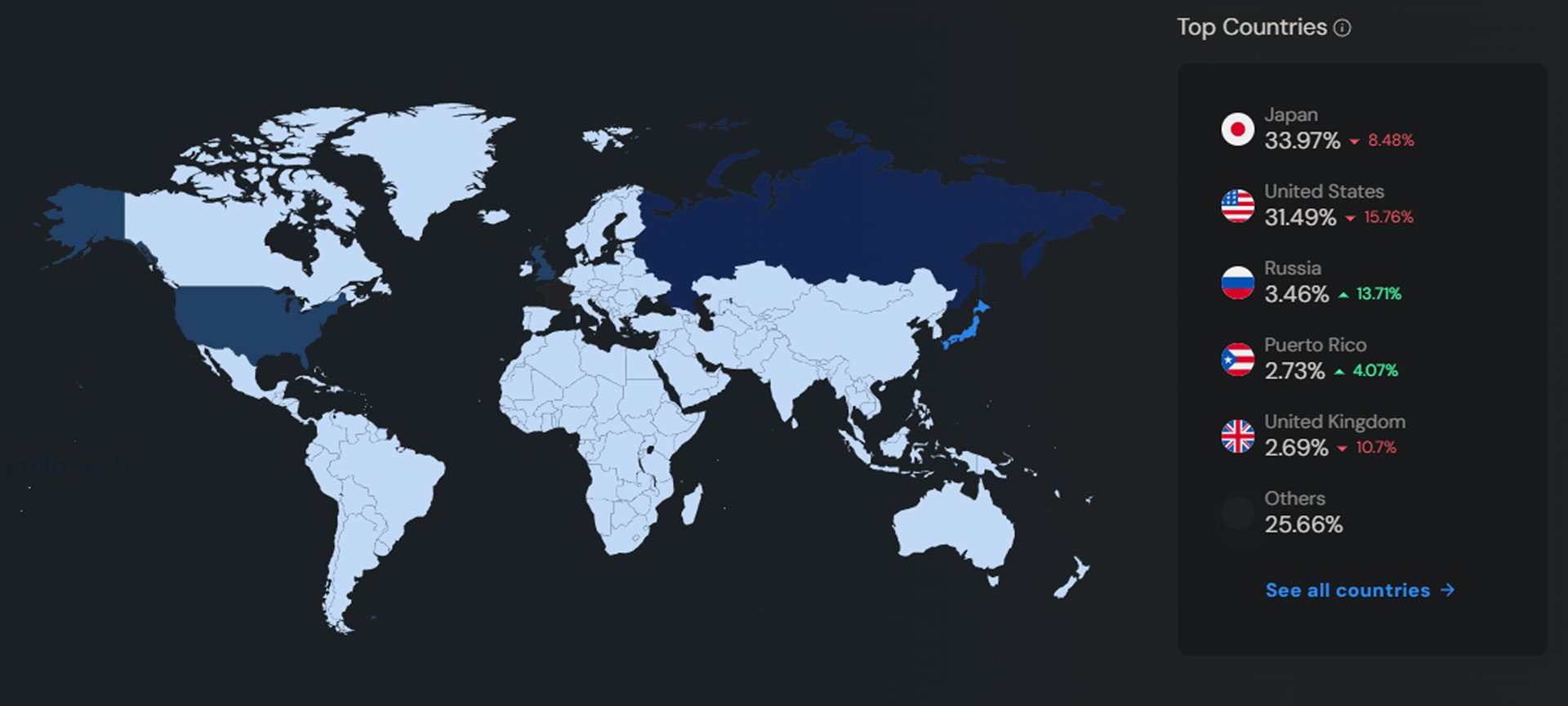
Any random visit to VRChat can confirm just how big it is in Japan; it’s chock-full of Japanese language worlds—everything from recreations of the historic streets of Kyoto to more demure spots for community meetups—although one of the most important factors is VRChat’s support for user-generated avatars.
While anyone can create a unique avatar in a standard 3D modeling software like Blender and upload it to VRChat, or otherwise buy one, being able to have a persistent avatar across multiple platforms has increased the platform’s cross-promotion among Japan’s anime-garbed VTubers.
And VTubing is big business in Japan. Massive talent agencies like Hololive, Nijisanji and VShojo have essentially co-opted Japan’s long-engrained idol culture by recruiting, training, and managing this new subset of idols, which don full-articulated VR avatars.
Notably, Hoshimachi Suisei, who is featured in Tirori Mix 2025, is a one of the biggest Japanese language VTuber, who is not only the most popular Music VTuber in Japan at 2 million+ subscribers on YouTybe, but has also performed live concerts, appeared on TV, and even ranked on the Japanese music charts.

Meanwhile, Meta is fighting to gain consistent engagement in Horizon Worlds, which notably limits avatar customization and operates within a more closed ecosystem. To boot, in a bid to gain more traction among users, the company recently announced it was launching a $50 million creator fund to incentivize the creation of new and improved content in Horizon Worlds.
And while Meta may be after its own Gorilla Tag-style hit on Horizon Worlds in the short term, until it opens up avatar customization to include more than its standard avatars and pick-and-mix of accessories, it will have a hard time tapping into that sort of cross-promotional gold Japan’s VTubers have been so successful at driving.
The post McDonald’s Japan Launches Official ‘VRChat’ World, Tapping Into Japan’s Massive VTuber Trend appeared first on Road to VR.
Pebble Founder Unveils Slick E-Ink Smartwatches With Impressive Battery Life
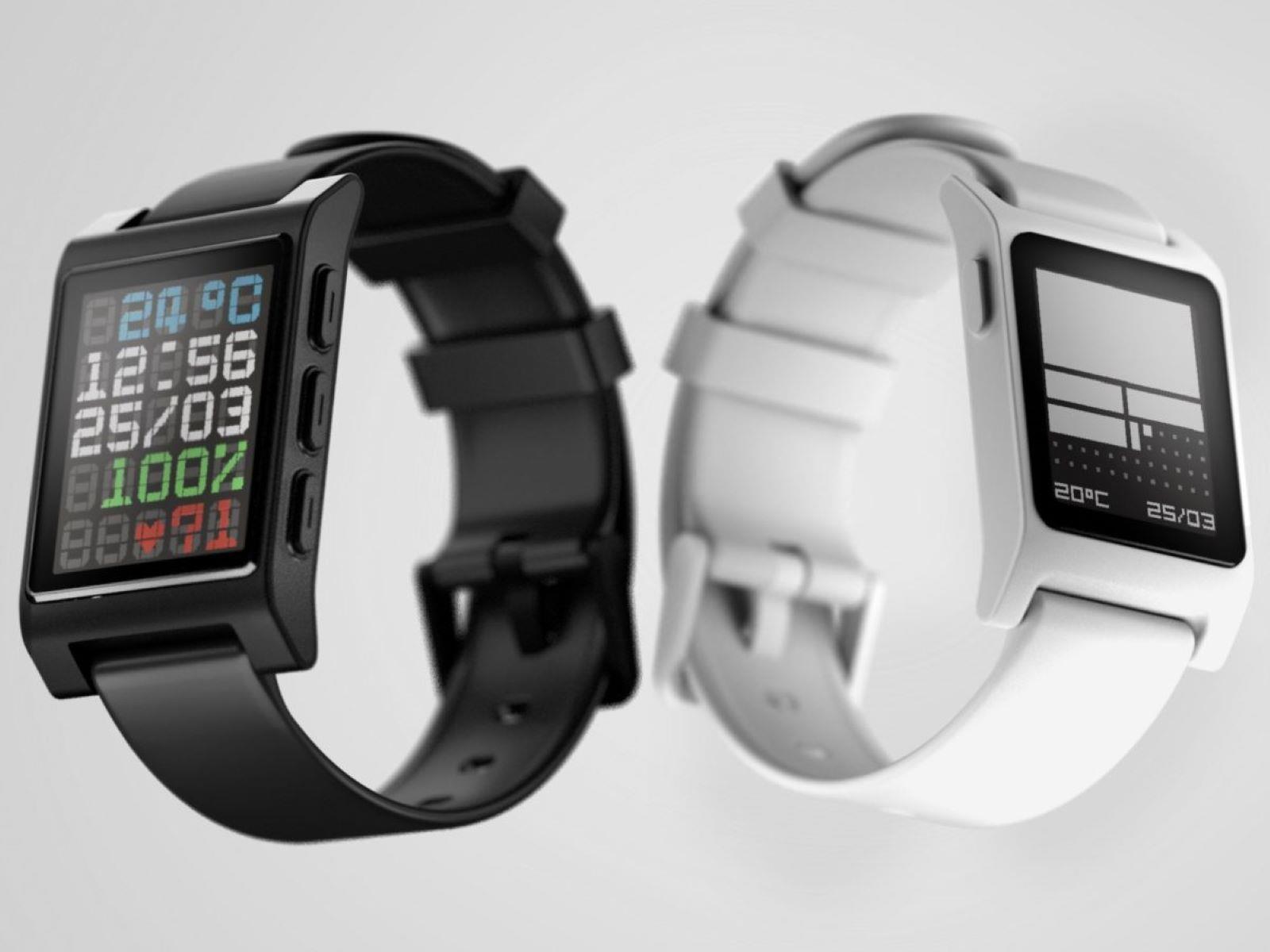
Remember the Pebble? Quite possibly the first smartwatch when it launched in 2013, it eventually fizzled out three years later (not thanks to FitBit), but it left an indelible ripple in the tech world that’s still felt in the wearables we have today. Guess what, the founder of Pebble has decided to bring the nostalgia into 2025 with two new
Here’s how the Pixel 9a compares to the competition
After a mountain of leaks, Google has finally announced the Pixel 9a. There’s a good chance you clicked on this article to find out how the 9a compares to its predecessor. The good news is you came to the right place. Even better, it’s a favorable comparison.
Pixel 9a vs Pixel 8a
For starters, the Pixel 9a features a new design. Instead of borrowing the design language of Google’s more expensive devices, the new phone has its own identity. Gone is the divisive camera bar that has defined recent Pixel phones. Instead, the main camera module is nearly flush with the rear of the phone. Additionally, the new handset offers slightly better ingress protection. It’s IP68-certified against water and dust, up from IP67 on the 8a. The Pixel 9a will also be available two lovely new colors: Iris and Peony. Sadly, Google won’t offer an Aloe colorway this time around, at least not at release.
Outside of those changes, the 9a sports a larger 6.3 display. Like with the 8a, Google has gone with a FHD panel, meaning the 9a’s screen is slightly less dense due to it being a bit larger overall. However, it’s the better display. The 9a’s pOLED panel is capable of reaching a peak brightness of 2,700 nits, up from 2,000 nits on the 8a. It’s also HDR10+ certified, with a 120Hz refresh rate. That additional brightness will make it easier to see the 9a’s screen in bright sunlight.
Internally, the 9a features Google’s latest Tensor G4 SoC, paired once again with 8GB of RAM. Google has also outfitted the 9a with a larger 5,100mAh battery, up from 4,492mAh on the 8a. Just as importantly, the 9a is capable of charging at a faster 23W. That’s still slow compared to a device like the Nothing 3a Pro, which is compatible with 50W power adapters, but an improvement over the 8a’s glacial 18W. Oh, and if you were hoping for Qi2 support, I’m sorry to say the 9a is limited to charging at 7.5W wirelessly.
As for cameras, Google hasn’t changed its winning formula. The 9a features a 48MP main camera with f/1.7 lens and optical image stabilization (OIS). On paper, that might seem like a downgrade from the 8a’s 64MP main sensor, but they both feature a 0.8µm pixel pitch, meaning they’re capable of capturing the same amount of light, and it appears Google sourced a newer sensor for the 9a. Otherwise, the Pixel 9a appears to feature the same ultrawide and selfie cameras as its predecessor. As always, when you buy a Pixel phone, you’re buying it for Google’s computational photography features, and you get all the usual standouts like Night Sight, Best Take and more.
Pixel 9a vs iPhone 16e and Nothing 3a Pro
The iPhone 16e continues to confound since its announcement in February. At $599, it’s a full $100 more expensive than the Pixel 9a, and comparing the two based on hardware alone, Google’s new midrange phone is the better deal. You get a significantly bigger battery, a 120Hz display and an entire extra camera. Of course, whether you should buy the 9a over the 16e will entirely depend on your preference for Android over iOS. If you like prefer Apple’s software, the Pixel 9a won’t do it for you.
The more interesting comparison is between the 9a and Nothing’s new Phone 3a Pro. For $40 less, you get an even bigger screen, a more original design and, most notably, a periscope camera that offers 3x optical zoom. A great telephoto is really hard to find at this price range, so the 3a Pro might be worth considering for that reason alone. The tradeoff is Google’s software support is unmatched, and 3a Pro comes with a limited warranty in the US.
|
Pixel 9a |
Pixel 8a |
iPhone 16e |
Nothing 3a Pro |
|
|
Price |
$499/$559 |
$499/$559 |
$599 / $699 / $899 |
$459 |
|
Dimensions |
154.7 x 73.3 x 8.9 mm (6.09 x 2.89 x 0.35 inches) |
152.1 x 72.7 x 8.9 mm (6 x 2.9 x 0.4 inches) |
146.7 x 71.5 x 7.8 mm (5.78 x 2.82 x 0.31 inches) |
163.52 x 77.5 x 8.9 mm (6.44 x 3.05 x 0.33 inches) |
|
Weight |
186g (6.56 ounces) |
188g (6.7 ounces) |
167g (5.88 ounces) |
211g (7.44 ounces) |
|
Screen size |
6.3 inches |
6.1 inches |
6.1 inches |
6.77 inches |
|
Screen resolution |
1080 x 2,424 pixels (421ppi) |
1,080 x 2,400 pixels (430ppi) |
1,170 x 2,532 pixels (460 ppi) |
1,080 x 2,392 pixels (387ppi) |
|
Screen type |
pOLED |
pOLED |
OLED |
AMOLED |
|
SoC |
Tensor G4 |
Tensor G3 |
Apple A18 |
Snapdragon 7s Gen 3 |
|
RAM |
8GB |
8GB |
8GB |
12GB |
|
Battery |
5,100mAh |
4,492mAh |
4,005mAh |
5,000mAh |
|
Storage |
128 / 256 GB |
128 / 256 GB |
128 / 256 / 512 GB |
256 GB |
|
Rear cameras |
Wide: 48MP, f/1.7 Ultrawide: 13MP, f/2.2 |
Wide: 64MP, f/1.89 Ultrawide: 13MP, f/2.2 |
Wide: 48MP, f/1.6 |
Wide: 50MP, f1/1.9 Ultrawide: 8MP, f/2.2 Periscope telephoto: 50MP, f/2.6 |
|
Front camera |
13MP, f/2.2 |
13MP, f/2.2 |
12MP, f/1.9 |
50MP, f/2.2 |
|
Water / dust rating |
IP68 |
IP67 |
IP68 |
IP64 |
|
Wi-Fi |
Wi-Fi 6E |
Wi-Fi 6E |
Wi-Fi 6 |
Wi-Fi 6 |
|
Bluetooth |
v6.0 |
v5.3 |
v5.3 |
v5.4 |
|
OS |
Android 15 |
Android 15 |
iOS 18 |
Android 15 / Nothing OS 3.1 |
|
Colors |
Obsidian / Porcelain / Iris / Peony |
Obsidian / Porcelain / Aloe / Bay |
Black / White |
Black / Gray |
This article originally appeared on Engadget at https://www.engadget.com/mobile/smartphones/heres-how-the-pixel-9a-compares-to-the-competition-141043690.html?src=rss
Saltwater contamination in freshwater systems is on the rise
Global sea levels rose faster than expected last year, largely due to warming ocean temperatures, a new NASA analysis found.
As seawater creeps further into coastlines, salt threatens to pollute the freshwater reserves that people depend on. But this brine isn’t just coming from the ocean: New research shows freshwater ecosystems are facing widespread dual threats of salt contamination from the sea and land, made worse by climate change.
Humans are a salty species, using the mineral for a vast number of reasons—from de-icing the roads during snowstorms to seasoning food.
Google Wallet is now available for kids
Gone are the days of kids asking their parent to borrow cash or their card when going out with friends. Instead, parents can now give their kids access to Google Wallet for making in-store payments with their Android device. Google first announced that this feature was coming back in October.
Kids can also use Google Wallet to store passes to things, including a library card, ticket for an event or a gift card. But, parents have a lot of oversight, such as receiving an email every time their child makes a purchase. They can also monitor everything within Family Link, along with remove a payment card or shut off access to all passes.
Google
Right now, Google is just rolling out the new feature for families in the US, UK, Australia, Spain and Poland. Parents in any of these locations should see the option pop up within the next few weeks.
Apple users can already access a similar feature with Apple Cash Family. Parents can set up anyone in their Family Sharing group and let them make purchases, or send and receive money through their wallet or messages. Just like on Android, parents can see their kids’ purchases and get notifications each time they buy something. Plus, parents can view the remaining balance or send an allowance through Apple Cash by creating a recurring payment.
This article originally appeared on Engadget at https://www.engadget.com/apps/google-wallet-is-now-available-for-kids-140039676.html?src=rss
Google reveals Pixel 9a, with the largest battery ever in a Pixel
Google has taken the wraps off the Pixel 9a today, a phone that has leaked about a thousand times in recent weeks, as is the Pixel tradition. Still, there are some things to know about this phone you can’t glean from leaked renders or a YouTube unboxing. This phone maintains the same $499 price tag as last year’s A-series phone, but it has a larger battery, a new camera, and a simpler design that ditches the camera bar of other recent Pixel phones.
The Pixel 9a has the same flat aluminum frame that has been in vogue on smartphones for the past few years. Unlike the more expensive Pixels, the back is plastic instead of Gorilla Glass. Google says it’s made of 81 percent recycled material, and the aluminum is 100 percent recycled. Apparently, these percentages are a record for the Pixel series, if that’s something that matters to you.
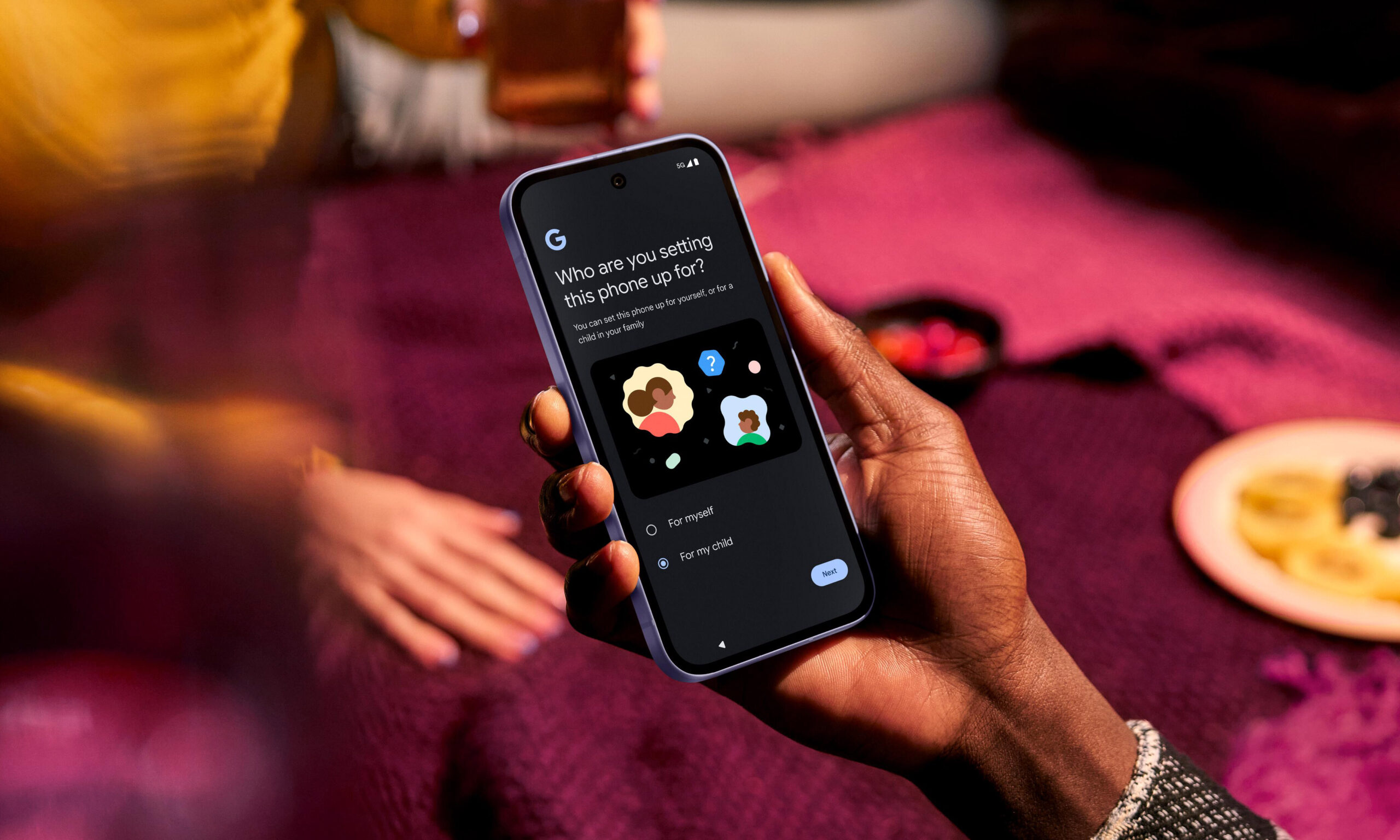
Google officially introduces the Pixel 9a for $499
Google has followed up an ocean’s worth of leaks with the official announcement of its Pixel 9a smartphone, which will retail for $499. Possibly the biggest change to the new A-series model is in its appearance, with the removal of the camera bar on the back of the phone. In the 9a, the camera housing is “slightly domed,” sitting nearly flush with the rest of the frame, giving this midrange model a sleeker appearance. There are also new colors for this series — a pale purple dubbed Iris and a vibrant pink named Peony — joining the usual Porcelain and Obsidian options. (The peony option is similar to that on the pricier Pixel 9.)
The Pixel 9a is also getting a chip upgrade, moving up to Google’s Tensor G4 processor from the G3 that was in Google’s excellent Pixel 8a. Performance in the 8a was already quite good, so expect even smoother control with the G4. As with the 8a, the 9a is equipped with 8GB of RAM and comes with either 128GB or 256GB of storage. The new A-series also promises up to “30+ hour battery life.”
Cameras were a big reason why we liked the Pixel 8a, naming it our top pick for a midrange smartphone. The housing is different in the 9a, but it’s also got slightly different specs inside. The rear dual cameras in the 9a offer 48MP wide and 13MP ultrawide lenses, while the front is equipped with a 13MP selfie camera; the 8a had 64MP wide in the rear camera. It’ll support AI-powered features such as Magic Editor, Magic Eraser, Best Take and Photo Unblur. Google is bringing the Macro Focus option to the A-series for the first time for photos with lots of close-up details. There’s also Night Sight to help improve your nocturnal photography.
The 9a will be available in the US and Canada in North America, as well as numerous other countries in Europe and the Asia Pacific region. Pre-orders will open in April, with no further detail on availability.
This article originally appeared on Engadget at https://www.engadget.com/mobile/smartphones/google-officially-introduces-the-pixel-9a-for-499-140028722.html?src=rss
The Google Pixel 9a might be the new midrange smartphone king
A couple of weeks ago, Apple released a more affordable take on its flagship handsets with the iPhone 16e. But now Google is hitting back with the Pixel 9a and from what I’ve seen, it looks like a way better deal.
From the front, the 9a looks a lot like the standard Pixel 9. Its screen is the same size at 6.3 inches across, while also offering a 120Hz refresh rate and a surprisingly strong 2,700 nits of peak brightness. On the inside, the 9a packs a Tensor G4 chip, just like you get on its more expensive siblings, along with other handy features including an IP68 rating for dust and water resistance and Google’s standard seven years of OS updates, feature drops and security patches.
But Google did something a bit surprising by giving the 9a a 5,100mAh battery, which is technically the biggest power pack in any member of the Pixel 9 family. That includes the Pixel 9 Pro XL (5,060mAh), though only by just a tiny bit. Regardless, Google says this gives the 9a the best longevity of any Pixel on sale today.
If you flip the phone around, there are some other changes such as a new iris purple hue, which joins the existing peony, porcelain and obsidian color options. But the thing that jumps out the most is the lack of a camera bar, which has been present on practically all of Google’s phones dating back to the Pixel 6. Instead, you get a simple window that sits almost flush against the back of the device — a window which Google says was inspired by the shape of a water drop.
Sam Rutherford for Engadget
Unfortunately, you don’t get a dedicated optical zoom (though it does support up to 8x digital SuperRes zoom). There is a 48MP main sensor that is similar, but slightly different to the one used on the Pixel 9 Pro Fold and a 13MP sensor for its ultra-wide cam. The 9a also includes a built-in AI macro focus feature so you can get really close to things, on top of support for tons of Pixel-specific camera tools like Add Me, Best Take, Magic Editor and more.
Notably, because it’s powered by the Tensor G4, the 9a has access to all of the same AI features available on the rest of the Pixel 9 line. This includes Gemini Live Video, the Pixel Recorder app, and Pixel Studio not to mention security and safety offerings like Google VPN, car crash detection and so on. Sadly, I only had a brief time with the phone so we weren’t able to test out many of its new features.
Google seems to be feeling pretty confident about this phone, with the company saying that it will have the best cameras on any handset under $500. That’s a pretty big claim, but it’s not entirely outlandish as Google’s camera processing has been top-notch for quite some time. And with a starting price of $499, the Pixel 9a is skating in right under that line.
So what’s the catch — all this for $300 less than a regular Pixel 9? From what I’ve seen so far, the biggest differences between the standard Pixel 9 and the 9a are that Google hasn’t improved the latter’s 23-watt wired or 7.5-watt wireless charging speeds, both of which are rather slow compared to a full-priced flagship. You also get less RAM, with the 9a featuring 8GB instead of 12GB. And while the 9a has Gorilla Glass covering its screen in front, around back there’s a plastic panel made from around 85 percent recycled materials. But again, for three Benjamins less than the standard model, those are compromises I’m mostly willing to put up with.
The Google Pixel 9a will be available sometime in April starting at $499 with 8GB of RAM and 128GB of storage (the 256GB model is an optional upgrade). Purchases include free three-month subscriptions for Google One and YouTube Premium along with a six-month trial for Fitbit Premium.
This article originally appeared on Engadget at https://www.engadget.com/mobile/smartphones/the-google-pixel-9a-might-be-the-new-midrange-smartphone-king-140021156.html?src=rss
Google’s Pixel 9a Could Be One of the Best Deals in Smartphones

$500 gets you all of the best parts of being a Google Pixel user. You just have to want to be a part of this ecosystem.