Balls to the Wall merges match 3 puzzle mechanics with a mixed reality shooter, and it’s out now on Quest.
Created by Cat City Games, the studio describes Balls To The Wall as a mix between Candy Crush and Duck Hunt. Featuring 20 different levels with three difficulty settings, you can face these levels in a solo campaign or compete against friends in competitive online multiplayer. Released last week on Quest, here’s the launch trailer.
Created by film and television editor Chris W. Hill, you’re tasked with matching three marbles of the same color to destroy them. You can swap individual marble positions, while special items like crystals can destroy all of one particular color at the same time. Each difficulty setting has its own leaderboards and hitting bombs during a session causes you to lose points.
“Balls to the Wall is a labor of love for me, and I’m incredibly happy to bring this new experience to the XR space,” said Hill, Founder and Lead Developer at Cat City Games. “As a gamer myself, I designed this to be fun for everyone and accessible to anyone, and I’m looking forward to continuing to support the game and build out even more content to bring extra value to our players for years to come.”
Balls To The Wall is available now on Quest 3/3S and Quest Pro for $15.
A Norwegian man said he was horrified to discover that ChatGPT outputs had falsely accused him of murdering his own children.
According to a complaint filed Thursday by European Union digital rights advocates Noyb, Arve Hjalmar Holmen decided to see what information ChatGPT might provide if a user searched his name. He was shocked when ChatGPT responded with outputs falsely claiming that he was sentenced to 21 years in prison as “a convicted criminal who murdered two of his children and attempted to murder his third son,” a Noyb press release said.
ChatGPT’s “made-up horror story” not only hallucinated events that never happened, but it also mixed “clearly identifiable personal data”—such as the actual number and gender of Holmen’s children and the name of his hometown—with the “fake information,” Noyb’s press release said.
Electrician Simulator VR brings a realistic sparkly simulator to Quest, PS VR2 and Steam soon.
Developed by Take IT Studio!, Electrician Simulator VR aims to teach players the ropes of the electrical trade, sending them on a series of serious and silly commissions. Through the levels, you’ll learn to run diagnostics, verify voltage and tinker with tools to resolve the client’s issue— with jobs in Electrician Simulator VR ranging in difficulty from light fittings to heavy-duty installations.
0:00
/0:57
Across the announcement trailer, you can see plenty of wacky accidents, with the player smashing light fixtures and plates, getting electrocuted while jostling wires and attempting to extinguish a fire with their bare hands. Seemingly taking comedic cues from PowerWash Simulator VR, Take IT Studio! appears to be leaning into the sillier side of otherwise monotonous activities by making the most of VR’s physics gameplay and immersive environmental storytelling.
Electrician Simulator VR is a port of the flatscreen game of the same name, also developed by the same team. It features a similar setup, with players taking on odd jobs like fixing up home appliances and correcting improper wiring.
Electrician Simulator VR is arriving on Quest, PS VR2 and Steam on March 21.
Two new smartwatches running open-source PebbleOS have been introduced: Core 2 Duo and Core Time 2. These watches maintain compatibility with thousands of existing Pebble apps while incorporating modern hardware updates.
prisoninmate writes: GNOME 48 desktop environment has been released after six months of development with major new features that have been expected for more than four years, such as dynamic triple buffering, HDR support, and much more. 9to5Linux reports: “Highlights of GNOME 48 include dynamic triple buffering to boost the performance on low-end GPUs, such as Intel integrated graphics or Raspberry Pi computers, Wayland color management protocol support, new Adwaita fonts, HDR (High Dynamic Range) support, and a new Wellbeing feature with screen time tracking.
“GNOME 48 also introduces a new GNOME Display Control (gdctl) utility to view the active monitor configuration and set new monitor configuration using command line arguments, implements a11y keyboard monitoring support, adds output luminance settings, and it now centers new windows by default.”
Networking is one of the fundamental aspects of working with containers in Docker. Using Docker Compose, you can easily connect multiple containers and manage complex applications comprised of several services. In this article, we will explore how to connect two containers using Docker Compose effectively. By the end, you will have a clear understanding of how to define networks in your configuration and enable seamless communication between your services.
OpenAI has launched a more powerful version of its o1 “reasoning” AI model, o1-pro, in its developer API. From a report: According to OpenAI, o1-pro uses more computing than o1 to provide “consistently better responses.” Currently, it’s only available to select developers — those who’ve spent at least $5 on OpenAI API services — and it’s pricey. Very pricey. OpenAI is charging $150 per million tokens (~750,000 words) fed into the model and $600 per million tokens generated by the model. That’s twice the price of OpenAI’s GPT-4.5 for input and 10x the price of regular.
On March 14, 2025, a root certificate used to verify signed content and add-ons for Firefox, Thunderbird, and other Mozilla projects expired. The expiration of this certificate will cause problems for Firefox users unless they update to version 128 (or ESR 115.13+). This includes versions for Linux, MacOS, Windows, Android, and iOS — in other words, all platforms.
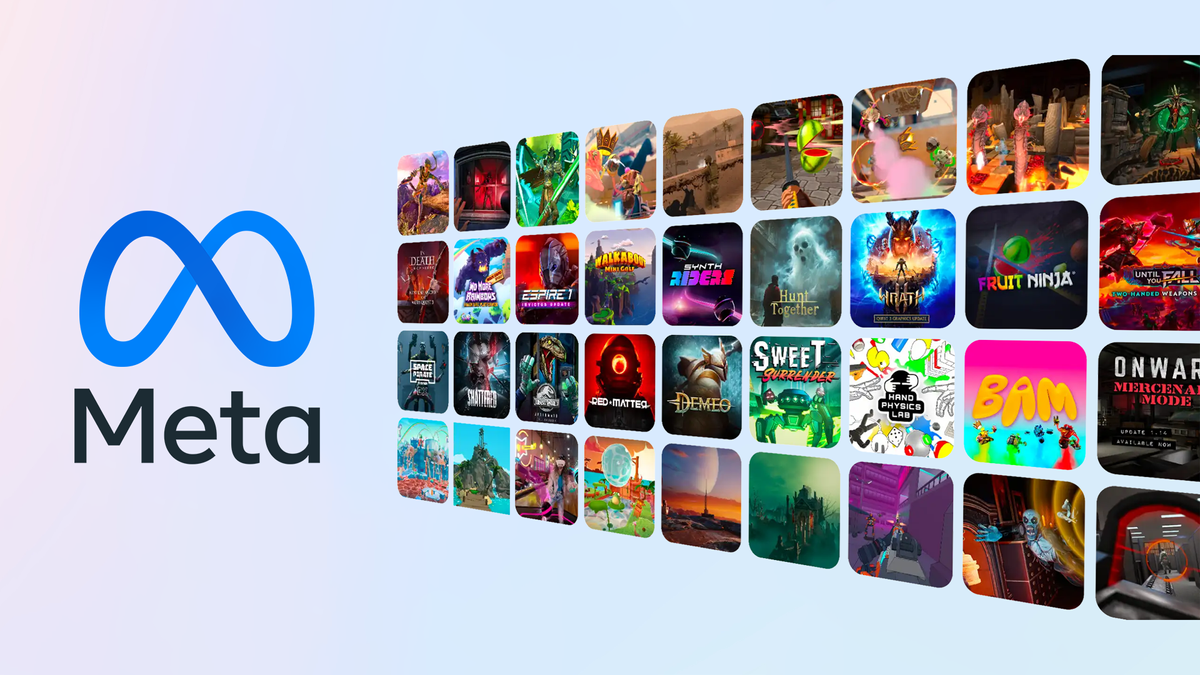
Meta says it funded over 100 VR & mixed reality titles that shipped in 2024, and has over 200 currently in “active production”.
These figures were revealed today at GDC 2025 by Meta’s Director of Games Chris Pruett, during a talk where he also revealed that over $2 billion has been spent on Quest content to date, and monthly headset usage increased 30% in 2024.
The talk came just hours after Meta’s CTO Andrew Bosworth declared on X that “we are still investing massively in VR gaming and don’t plan to stop”, while noting that “there is a much stronger continuum between social and gaming than there used to be though, true on our platform with things like Gorilla Tag and true elsewhere with things like Fortnite”.
We are still investing massively in VR gaming and don’t plan to stop. I think there is a much stronger continuum between social and gaming than there used to be though, true on our platform with things like Gorilla Tag and true elsewhere with things like Fortnite
Meta directly invests in VR and mixed reality content through two ventures, Oculus Studios and Oculus Publishing, the only remaining usages of the Oculus brand.
Oculus Studios consists of the seven acquired studios building VR and MR games: Beat Games, Camouflaj, Sanzaru Games, Downpour Interactive, BigBox VR, Armature, and Twisted Pixel. Ready At Dawn was the eighth, before Meta shut it down last year.
Meanwhile, Oculus Publishing “funds, supports, and manages” third-party VR and MR developers to build and port titles for Quest, some exclusively and others not.
Two years ago Meta said 150 games were in “active development”, and now it says 100 were shipped in 2024 while 200 are currently in “active production”. That suggests the perception of Meta pulling back on investing in games may not be entirely accurate.
However, Bosworth’s statement that there is “a much stronger continuum between social and gaming than there used to be” may suggest that the type of games being funded are different than in past years, reflecting Pruett’s comments during his GDC talk around the shifting demographics of Quest buyers.
Last year Meta launched Oculus Publishing Ignition, a fund for small newly-formed teams to build games that are “more mainstream than niche and broad in scope with compelling Quest 3 interaction mechanics”. Pruett says Meta settled on 21 startups to receive funding from this venture.
Pruett said Meta’s focus for 2025 is “largely” on the rising number of adults who enjoy “sports, action movies, concerts—all kinds of stuff”, suggesting less focus on traditional gaming content.
An anonymous reader shares a report: LG has ceased its XR product commercialization efforts, it confirmed, though will still continue long-term R&D.
The news of LG ending its XR product plans was first reported by South Korean news outlet The Bell, citing an industry source. In a statement given to the outlet, LG confirmed the claim but clarified that it will still continue long-term XR research and development.
According to The Bell, LG took the decision because it believes the XR market isn’t growing as quickly as it expected, and it wants to focus more on heating, ventilation, air conditioning (HVAC) and robotics.
We may earn a commission from links on this page. Deal pricing and availability subject to change after time of publication.
Getting a premium economy or business class seat for the price of economy sounds like a fantasy, but that’s what the Dollar Flight Club Premium+ Plan helps you do: This subscription service does the heavy lifting of hunting down the best flight deals and sending them to your inbox. Usually, a year of DFC Premium+ costs $99.99, but right now, new users can get it for just $29.99 on StackSocial. That’s a solid discount—unless, of course, you already have an account (in which case, no dice). Also, you have to redeem your code within 30 days of buying, and after your discounted year, the membership renews at full price automatically. If you’re okay with that (or plan to cancel before renewal), you could lock in some serious travel savings with this deal.
With a Premium Plus+ membership, you get access to discounted fares across Economy, Premium Economy, and Business Class, meaning there’s a chance you could score a lie-flat seat to Europe for the price of an economy ticket. You’ll also get alerts for domestic and international mistake fares (those rare but amazing airline pricing errors), plus exclusive deals not available online, since DFC works directly with airlines. On top of that, members also get discounts on travel perks like Priority Pass and TSA PreCheck. Before you get too excited, though, keep in mind that Dollar Flight Club currently only covers members in North & South America, Europe, Australia, and New Zealand.
If you travel frequently or have a bucket list trip in mind, this subscription might be an easy way to catch mistake fares, last-minute deals, and discounts on flights—sometimes up to 90% off. Just set your home airports, pick your ideal destinations, and let Dollar Flight Club scour the internet for the best fares. And unlike generic flight deal newsletters, this service tailors alerts to your preferences (departure airports and destinations), so you won’t waste time on irrelevant deals.
It looks like Meta’s campaign to bury a dishy, tell-all memoir from a former employee isn’t exactly working. In fact, it seems that the company’s legal maneuvers to block the book have had the exact opposite intended effect.
Careless People has debuted at number one on the New York Times bestseller list. It’s also spent much of the week in the number three position on Amazon’s bestseller list. That’s despite the fact that Sarah Wynn-Williams, a former policy director at Facebook, has been barred from promoting or publicly discussing the book following legal action by Meta.
The memoir details much of the inner workings of Facebook during the nearly seven years Wynn-Williams worked there. It reveals new details about the company’s relentless ambition to bring the social network to China, as well as numerous shocking stories about how Mark Zuckerberg, Sheryl Sandberg and other executives behaved behind closed doors. (In addition to her revelations in Careless People, Wynn-Williams has also filed a whistleblower complaint with the Securities and Exchange Committee. That complaint has not been made public, but according to NBC News, she alleges that Facebook “misled” investors.)
Meta has come out forcefully against Wynn-Williams and the book, describing it in a statement as “a mix of out-of-date and previously reported claims about the company and false accusations about our executives.” The company says Wynn-Williams was fired in 2017 “for poor performance and toxic behavior.”
Meta initiated arbitration proceedings against Wynn-Williams last week, resulting in a decision that for now prevents her from publicly discussing or promoting the work. But, as the bestseller lists show, the move has done little to kill interest in the work.
This article originally appeared on Engadget at https://www.engadget.com/social-media/careless-people-hits-the-top-of-the-new-york-times-bestseller-list-235008451.html?src=rss
Research announced today is the first of its kind to suggest that anti-amyloid drugs can delay or even stop the progression of symptoms in people with early-onset Alzheimer’s.
Imagine that you are a maintainer of a widely used open source project relied upon by developers worldwide. Being a maintainer means, that you get to decide which contributions by external contributors get accepted.
Spring hasn’t really been as big of an online shopping season, comparatively speaking: We’ve got Prime Day during the summer, October Prime Day and Black Friday during the fall, and a bunch of holiday sales during winter. But that might be changing with the recent Big Spring Sale from Amazon, in its second year. Target has decided to compete for your money as well with a Circle Week event, coming later this month.
What is Target’s Circle Week?
Circle Week is Target’s name for its biggest sale, which used to happen once a year but, much to the dismay of Target workers, now happens multiple times a year. Usually, you’ll see one when other major retailers have big sale events as well like Christmas or October Prime Day.
When is Circle Week?
This upcoming Circle Week will be from March 23 to March 29.
Do you need to be a member to shop for Target Circle Week?
Unlike Amazon’s Big Spring Sale, you will need to be a Circle member to take part in the sale, but unlike being a Prime Member, membership is free. You can sign up on the Target app or Target.com.
What deals can I find during Target Circle Week?
Mainly spring items, but sale categories broadly include apparel, patio furniture, home essentials, beauty products, grocery items, toys, books, movies, and music. You can shop in person or online, and there will be a “Deal of the Day” for every day of the event. If you want early access to the deals, you can join Target Circle 360, which starts at $10.99 per month.
Here is a bit more detail from Target’s press release:
30% off tees, tanks, shorts and dresses for the family
30% off patio furniture and accessories
25% off select Pillowfort, teen bedding and decor
25% off Threshold and Casaluna bedding
20% off Brightroom plastic storage bins and closet organization
Up to 40% off kitchen and floorcare essentials including Instant Pot, Ninja and Shark appliances
Up to 30% off select LEGO
Save up to $200 on select Apple devices
Does the competition also offer sales?
Amazon’s Big Spring Sale will be taking place from Wednesday, March 20 through Monday, March 25. But Walmart and Best Buy will also have competing sales.
Meta says over $2 billion has been spent on Quest content to date, and monthly headset usage increased 30% in 2024.
The figures were revealed today at a GDC 2025 talk by Meta’s Director of Games Chris Pruett. Meta Reality Labs, the company’s hardware and metaverse division, has brought in a total of $9 billion since Quest 2 launched, suggesting that over 80% of its revenue has come from hardware and other services, with less than 20% coming from content revenue.
Meta has given a total store spend figure twice in the past. In February 2022 the company said over $1 billion had been spent on the Quest Store, and in October 2022 it said this figure had surpassed $1.5 billion.
The revelation of headset usage per month increasing by 30% in 2024 follows Pruett’s announcement at last year’s GDC that Quest 3 has higher retention than previous Meta headsets.
“The number of people who own and are actively using a headset is larger than it has ever been”, Pruett told the audience today.
While total platform spending increased 12% in 2024, a figure Meta previously gave in response to developer concerns, the type of spending and type of content bringing in revenue significantly changed.
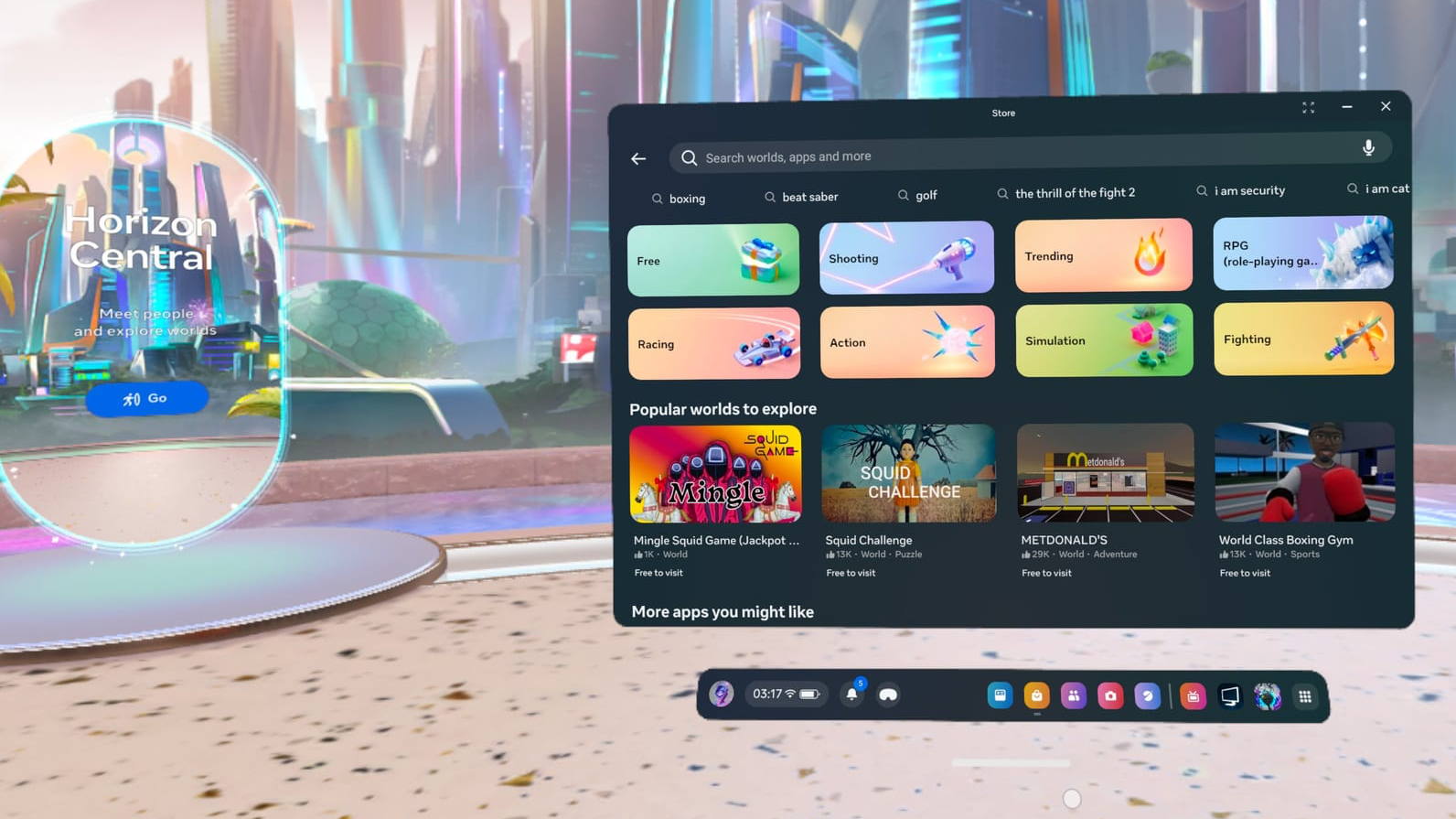
Last month Meta revealed that free-to-play apps now account for 70% of time spent on Quest, with Pruett acknowledging that this has come with a reduction in spending for some paid titles. However, he notes that the majority of revenue still comes from paid titles.
While some of the shift is specific to VR/MR, Pruett noted that it mirrors wider trends across the games industry, where “spending is flat, investment has dried up, the only games that seem to be doing very well are big live service titles and indie darlings”.
As for Quest specifically, Pruett said that the launch of Quest 3S “signaled a larger audience shift than we expected”. Quest 3S buyers are younger on average, he explained, with not as much disposable income as previous Quest headset buyers. While teenager buyers have been growing with every headset release, with Quest 3S they now represent the majority of both buyers and active users, he revealed.
These teenage Quest users, he explains, “want to play the same sorts of games they’re playing elsewhere”, primarily free-to-play titles with a strong focus on social interaction such as Gorilla Tag and paid “meme games” such as I Am Cat.
Further, a new audience of mainstream adult Quest buyers have emerged that aren’t as interested in immersive VR or mixed reality apps at all, seeing their headset “as an extension of their TV—a device primarily for media consumption”.
“They like sports, action movies, concerts—all kinds of stuff. They also play games on their phones or consoles, but it’s a secondary pastime.”
According to Pruett it is this shift, and not the opening of the store or focus on Horizon Worlds, that is responsible for the vast majority of the reduction of revenue that some developers who had been targeting VR enthusiast buyers have been reporting.
He said that as Meta opened the store, it tested the change by exposing different users “to the old view and the new view”, and after months of tracking the results found a less than 1% difference in spending. He says Meta ran the same experiment for its heavy promotion of Horizon Worlds in the phone app and found it decreased spending “by 3% at most”. Overall, neither of these changes lead to a reduction in overall spending, with it in fact rising by 12% in 2024.
Most VR enthusiasts come to the store already knowing what they want to buy anyways, Pruett claimed, and thus these changes didn’t much affect them.
“We realize that 2024 had a lot of change all at once. We spent a long time unpacking and untangling the impact of these changes because it’s easy to conflate correlation with causation. The research isn’t done yet—we’re still learning and fine-tuning. For example, our store ranking algorithm has changed significantly several times over the last 12 months. It’s an ongoing project, and we don’t always get it right. Luckily, the data tells us pretty clearly when we’ve made mistakes so we can course correct.”
We may earn a commission from links on this page. Deal pricing and availability subject to change after time of publication.
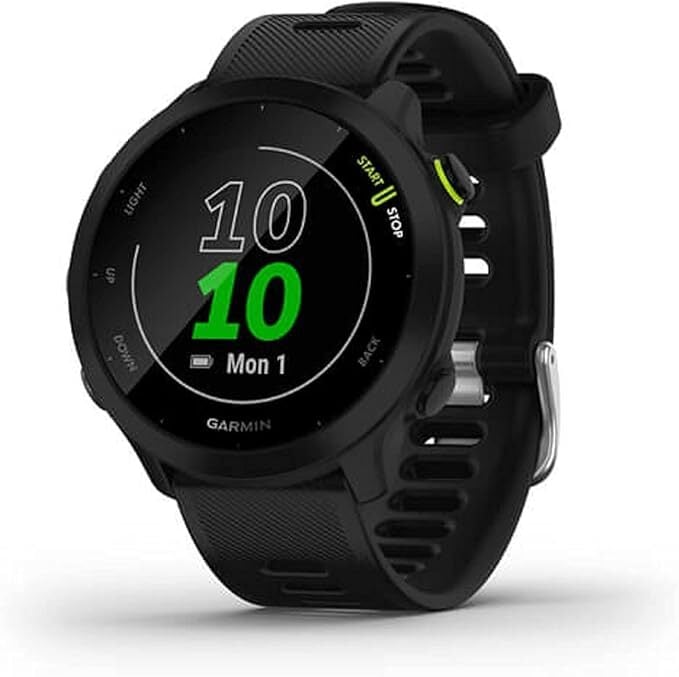
Ever since I retired my G-Shock in 2015, I’ve been using fitness smartwatches, and some way or another, they’ve all been Garmins—some were passed down from family members and others were gifts. If you’ve never owned a Garmin watch and want to try one out, the best budget Garmin for runners is down to its lowest price ever, according to price tracking tools. You can get the Garmin Forerunner 55 for $149.99 (originally $199.99).
As Senior Health Editor Beth Skwarecki said in her intensive search for the best fitness watches for runners, the Garmin Forerunner 55 is the best budget choice you can make, especially at this new record-low price. You get some features that have historically only been found in the premium versions, like the Respiration Rate Tracker feature, which tracks your breathing rate. The battery life is up to two weeks when it’s in standby mode and 20 hours when using GPS tracking.
You can use the Daily Suggested Workouts to suggest how to train to reach your running goals. If you like to run on tracks, you can choose which lane you’re in with Track Mode, which gives you exact pacing for much better accuracy, snapping your times at 100 meter intervals. Based on those numbers, you can also see the Race Predictor, which tells you how you’d fare in a marathon and other race lengths using your VO2 max and other metrics. There’s also Recovery Hours which suggests how long you should wait until you do another intense workout.
As bird flu continues to rampage in dairy farms and poultry facilities around the country, the office tasked with coordinating the federal government’s response to pandemic threats, including bird flu, has been sidelined by President Trump and sits nearly empty, according to CNN.
The White House Office of Pandemic Preparedness and Response Policy (OPPR)—established by a Congressional statute in 2022 in response to failures during the COVID-19 pandemic—used to include a staff of about around 20 people. Now, only one staffer remains, and it’s unclear who they report to. The OPPR director has been moved to the National Security Council (NSC).
The report on the vacancies comes amid other moves that call into question the country’s ability to respond to a pandemic threat under the Trump administration. The USDA has shifted its response to the ongoing bird flu outbreak away from the health threat. For instance, in late February, agriculture secretary Brooke Rollins touted a $1 billion effort to combat bird flu as a “strategy to deliver affordable eggs.”
A new study examining meme creation found that AI-generated meme captions on existing famous meme images scored higher on average for humor, creativity, and “shareability” than those made by people. Even so, people still created the most exceptional individual examples.
The research, which will be presented at the 2025 International Conference on Intelligent User Interfaces, reveals a nuanced picture of how AI and humans perform differently in humor creation tasks. Still, the results were surprising enough to have one expert declaring victory for the machines.
“I regret to announce that the meme Turing Test has been passed,” wrote Wharton professor Ethan Mollick on Bluesky after reviewing the study results. Mollick studies AI academically, and he’s referring to a famous test proposed by computing pioneer Alan Turing in 1950 that seeks to determine whether humans can distinguish between AI outputs and human-created content.