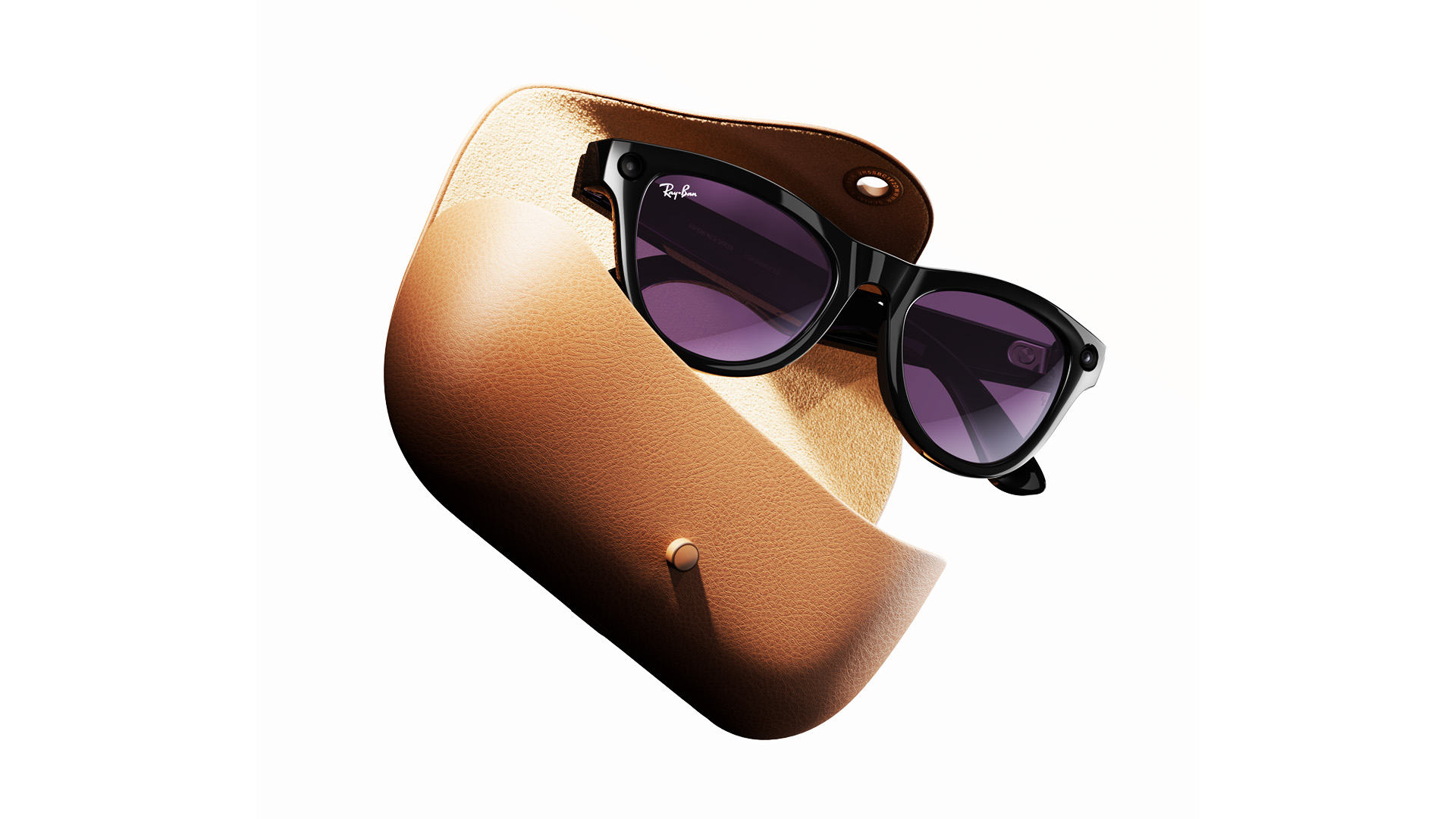
Meta AI is rolling out this week in Germany and simultaneously in over 60 other countries, including EU states. Meta AI will be available in six other European languages, including German. Once rolled out, Meta AI will be available on Facebook, Instagram, Whatsapp and Messenger apps. However, the introduction of Meta AI will not affect … Meta AI launches in Germany, but not on Meta Quest & Ray-Ban Smart Glasses
While there is Kpatch, Ksplice, and other live patching solutions already in use for patching a running Linux kernel for deploying security updates without downtime, Google engineers are developing the Live Update Orchestrator as a new means of transitioning to a new updated kernel with minimal downtime…
Microsoft is developing a new Windows 11 feature that will explain how hardware limitations affect PC performance. The latest preview builds include a hidden FAQ section in system settings that addresses GPU memory, system RAM, and OS version impacts.
The feature, discovered by Windows observer “phantomofearth” in this week’s Dev Channel build, requires manual activation. It provides specific recommendations for configurations like low RAM or GPUs with less than 4GB memory, and flags outdated Windows versions.
Fujifilm has unveiled one of the wilder cameras I’ve seen in awhile, the 102MP medium-format GFX100RF compact camera. Yes, you read that right — this is a carrying-around street camera with a massive sensor and fixed 35mm f4 lens (28mm full-frame equivalent) that can shoot 11,648 x 8,736 photos. If that wasn’t enough, it has features we’ve rarely seen on compact cameras, like a built-in ND filter and dedicated aspect ratio dial.
The GFX100RF uses the same 102MP CMOS II HS medium format sensor found on the GFX100 II mirrorless camera. As Fujifilm teased last week, it can be thought of as a higher-resolution version of its popular X100 VI APS-C compact. Though smaller than any other GFX camera, it’s heavier than many full-frame mirrorless cameras at 1.62 pounds (735 grams). For a premium feel, the camera is “machined from a single block of aluminum and the lens ring, dials, bottom plate, and other details are all precision-machined from aluminum as well,” Fujifilm wrote in a press release.
Fujifilm
Like the X100 VI, it’s designed as a street camera with the shutter speed, exposure compensation and aperture settings quickly visible and adjustable. However, the GFX100RF has a new dial on the back that lets you choose from nine aspect ratios including 7:6, 1:1, 3:4, 16:9, 17:6 and the 65:24 “XPan” widescreen ratio found on other GFX models.
It also has a tele-converter selector/lever on the front of the camera to digitally change the focal length from the native 35mm to 45mm, 63mm and 80mm (35mm, 50mm and 65mm full-frame equivalent), with a corresponding loss of resolution. When using those modes, a new “Surround View” function can be selected that displays the area outside the image range as a semi-transparent frame.
Fujifilm says the all-important fixed lens can suppress spherical aberration and field curvature thanks to a 10-element, eight-group configuration that includes two aspherical lenses. It uses a newly developed “nano-GI” coating optimized to suppress internal reflections, even at the edges. Despite the large sensor size, it can focus as close as 7.9 inches, allowing for some interesting high-res macro possibilities.
Fujilfilm X100VI (top) and GFX100RF
Fujifilm
The shutter itself is a leaf instead of focal plane type to reduce size, and the GFX100RF is Fujifilm’s first GFX model with a built-in four-stop ND filter. That’s a handy feature on a medium format camera for bright light shooting, as it allows for slower shutter speeds to add motion blur or wider apertures for shallower depth of field.
The GFX100RF has a similar autofocus system to the GFX100 II including an AF prediction function and face/eye AF that can recognize subjects like animals, vehicles, birds, and airplanes. Burst speeds are a fairly decent 6 fps with the mechanical shutter at full resolution, a bit slower than the GFX100S II. It has a 5.76-million-dot offset electronic viewfinder like the one on the X100VI and a 3.1-inch 2-axis tilting 2.1-million-dot rear display.
Fujifilm
It can even shoot 4K 30fps 4:2:2 10-bit video (likely with some pixel binning), and Fujifilm says it’ll deliver up to 13+ stops of dynamic range when using the FLog-2 setting. Other features include an SDXC UHS-II card slot, 20 built-in film simulations, SSD recording, mic and headphone ports and a microHDMI connector. One feature noticeably lacking compared to the X100VI is in-body stabilization.
The GFX100RF is likely to appeal highly to street and travel photographers considering its capabilities. It’s not cheap at $4,900, but that price is less than its main competition, the $6,660 Leica Q3, while offering a larger sensor and 40 extra megapixels. It’ll be available in black or silver when it arrives in late April 2025.
This article originally appeared on Engadget at https://www.engadget.com/cameras/fujifilms-gfx100rf-is-a-102mp-medium-format-compact-camera-110044609.html?src=rss
Intel updated their AVX10 whitepaper and associated open-source compiler patches around this next Advanced Vector Extensions standard… While AVX10 had intended to allow either 256-bit or 512-bit modes depending upon processor capabilities, Intel has dropped the 256-bit-only approach and going for 512-bit everywhere.
Linux developer SeongJae Park has posted a set of patches for the Linux kernel’s wonderful DAMON code to provide for self-tuned memory tiering that “just works” and is racking up some nice performance wins…
The Google Chrome web browser is moving away from the FreeType font rendering library and instead pursuing their Skrifa project that is written in Rust for better memory safety around handling fonts on the web…
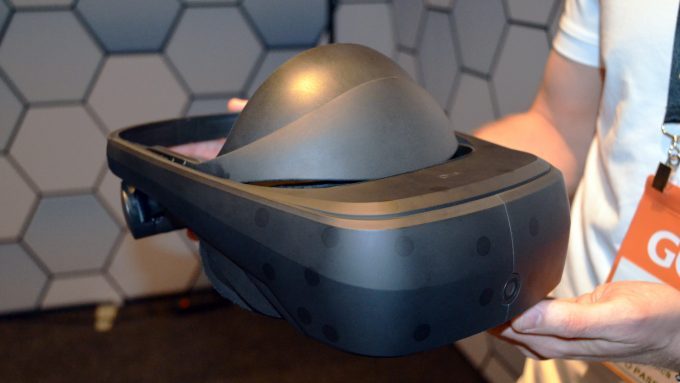
LG was previously tapped to partner with Meta to advance its XR efforts, however after high-level talks fell through, LG has now confirmed it’s closed its XR product division, instead focusing on long-term research and development.
According to South Korean news outlet The Bell(via UploadVR), LG is tuning down its XR efforts, which included the disbandment of the organization responsible for XR products late last year.
LG confirmed the news with The Bell in a Korean language statement, machine translated from Korean:
“Although the development organization under the HE Business Division has disappeared, research and development (R&D) is being conducted within the CTO division,” LG told The Bell. “We decided to delay the commercialization plan and focus on R&D.”
Previous reports from May 2024 suggested the LG/Meta deal was already on thin ice, as insiders alleged the South Korean tech giant wasn’t full steam ahead, but rather “controlling its pace”. Then, in June 2024, LG announced was shaking up its XR product division, which was unusual for the company.
Mark Zuckerberg (Meta), William Cho (LG), and Park Hyoung-sei (LG)
At the time, LG said hoped to bring its own content/service capabilities to Meta’s platform, which would suggest LG was mostly interested in a lucrative content deal. While unconfirmed, it was however rumored as early as 2023 that Meta was contracting LG to manufacture a competitor to Vision Pro.
LG has been a minor player in XR, having only productized a single XR headset, its 2016 smartphone-tethered LG 360 VR headset for immersive media viewing, which due to poor reception never saw a follow-up.
Then, in 2017, the company announced it was working on a PC VR headset for SteamVR, however the project was quietly abandoned.
Miracle-WM 0.5 released on Wednesday as their first update of 2025 for this Mir-based Wayland tiling window manager. With this release comes a number of new features and other enhancements…
It’s easier to replace bits of userland than the kernel. Efforts are afoot to replace the GNU coreutils with Rust ones in the version after next of Ubuntu, 25.10 – which also means changing the software license.
This blog post will explain everything about the HTTP 304 status code. HTTP 304 Not Modified is a status code that indicates that the server has found no changes in the requested page since the last visit.
Portable monitors have been around for years, but their importance skyrocketed during the pandemic. And with the continuation of remote and hybrid work positions, they’re going to be staples for the foreseeable future. But picking one isn’t as simple as it seems. At this point, almost every major PC maker has its own take on travel-friendly displays, with prices ranging from as little as $100 to nearly $1,000. So to help sort through the confusion, I tested out a bunch of options to put together a short list of the best portable monitors on sale today.
Things to consider before buying a portable monitor
Before you start looking at specific products, it’s super important to think about how and where you plan on using a second monitor as a portable display. Larger panels are great for home use where you may only need to move it or put it away when you have company over. Meanwhile, smaller screens are great for travel and whipping out at a coffee shop or shared workspace. But if you go too small, you may be adding extra weight to your bag without providing a ton of extra utility, especially if it lacks a good USB-C cable or mini HDMI for connectivity. Screen size and compatibility with your existing devices should be top considerations.
It’s also important to consider your typical workload, as artists may get extra value out of monitors with higher maximum brightness, HDR, wider color accuracy and a higher contrast ratio. Those who spend all day looking at spreadsheets won’t get as much value from more vibrant displays or FHD displays with high refresh rates, but they may still benefit from having a basic plug-and-play second monitor for multitasking.
What to look for in a portable monitor
Aside from price and screen size, some of the most important specs in a portable monitor include panel type, pixels per inch, brightness, refresh rate and connectivity. Most portable monitors use IPS LCD displays, which generally offer good viewing angles, strong brightness and good power efficiency. However, some higher resolution models now feature OLED screens that support wider color gamuts, better color accuracy and contrast ratio, which can be a major benefit for artists and content creators. Some budget models may use TN panels, as that can help cut costs and reduce energy consumption. That said, we generally try to stay away from those as they often have worse image quality compared to IPS screens.
For brightness, 300 nits is the lowest we recommend — anything less can make the monitor hard to use even in some indoor environments. Ideally, we look for screens that are closer to 350 or 400 nits and above for better accuracy and visibility.
Connectivity is also important because if you can’t easily hook your phone, gaming console, or laptop to a monitor, it becomes an oversized paperweight. Most travel displays include an HDMI port or USB-C port(or both), which cover the large majority of devices. It’s rare to find a portable monitor these days with only USB-A, since the majority of devices have moved over to USB-C. However, we also like models that support passthrough power over USB-C connections, which reduces the complexity of your setup and decreases the number of cords and adapters you have to carry around.
Finally, most portable monitors feature 60Hz refresh rates, which is fine for most use cases. However, if you’re looking for a gaming monitor, there are models with 120Hz or even 240Hz refresh rates. These are excellent choices for gamers looking to maintain smooth fps while playing on the go.
This article originally appeared on Engadget at https://www.engadget.com/computing/accessories/best-portable-monitor-120050851.html?src=rss
Fedora Linux is one of the most popular desktop Linux distributions, and Fedora 42 is now available for beta testing. Fedora Workstation now has GNOME 48 and an updated installer, and there’s now an official version of Fedora with the COSMIC desktop environment.
The National Archives has released thousands of pages of declassified records related to the assassination of President John F. Kennedy in 1963. From a report: The records were posted to the National Archives’ website, joining recently released records posted in 2023, 2022, 2021 and 2017-2018.
“This release consists of approximately 80,000 pages of previously-classified records that will be published with no redactions,” said the announcement from the Office of the Director of National Intelligence. “Additional documents withheld under court seal or for grand jury secrecy, and records subject to section 6103 of the Internal Revenue Code, must be unsealed before release.”
President Donald Trump signed an executive order on Jan. 23 directing the release of all remaining records related to the assassination, saying it was in the “public interest” to do so. Tuesday’s initial release contained 1,123 records comprising 32,000 pages. A subsequent release on Tuesday night contained 1,059 records comprising 31,400 additional pages.
Nvidia has not been approached about acquiring a stake in Intel, CEO Jensen Huang said on Wednesday, addressing speculation about potential semiconductor industry consolidation.
“Nobody’s invited us to a consortium,” Huang told reporters at Nvidia’s annual developer conference. “Nobody invited me. Maybe other people are involved, but I don’t know. There might be a party. I wasn’t invited.”
Reuters previously reported that Taiwan Semiconductor Manufacturing Co (TSMC) had approached Nvidia, Broadcom and Advanced Micro Devices about joining a potential joint venture to operate Intel’s factories. Other media outlets reported Intel was considering separating its manufacturing operations with U.S. President Donald Trump’s support, potentially transferring control to a TSMC-led consortium.
DNS is one of these things many take for granted that is critical to using the internet. Without DNS, the internet breaks. It’s critical that a DNS server keeps the internet working in a secure and stable manner. We pick the finest DNS servers.
The team at Nexus Mods have released a new version of their open source and cross-platform Nexus Mods app, with Stardew Valley modding now considered close to being ready for everyone. Eventually, this app will replace the Vortex app, once it’s ready and supports more games.