Apple is moving the visionOS team out of the Vision Products Group, with the VP who founded it, as part of a shake-up to get Siri back on track.
The Vision Products Group (VPG) is the division within Apple responsible for Apple Vision Pro and visionOS. It was founded in 2015 by Mike Rockwell, a former Dolby executive, and originally known as the Technology Development Group (TDG) until the reveal of Vision Pro in 2023.
Rockwell was a prominent figure in Vision Pro’s introduction at WWDC 2023, introducing the technical architecture of the device’s hardware and system software.
Contrary to Apple’s set organizational structure, the VPG has been running as a mostly self-contained unit, with its own hardware, software, and content teams. But that’s seemingly about to change.
Today, in a bombshell report, Bloomberg’s Mark Gurman says that Apple CEO Tim Cook has “lost confidence” in artificial intelligence chief John Giannandrea’s ability to deliver on the advanced Siri features the company recently announced it had to delay. In a “rare shake-up”, Cook is appointing Mike Rockwell to a new role under Craig Federighi, the company’s SVP of engineering, where he will be in charge of Siri to get it back on track.
In his new role, Rockwell will also take the visionOS parts of the VPG with him, meaning he will be running both visionOS and Siri.
As for the Vision hardware teams he’s leaving behind, Rockwell will reportedly be replaced by Paul Meade, currently the Vision Products Group’s head of hardware engineering.
The shake-up comes six months after Dan Riccio, the Vision Products Group’s SVP and thus the executive between Rockwell and Cook, retired.
Riccio’s retirement saw the Vision Products Group placed under Apple’s SVP of Hardware Engineering John Ternus, where it still sits. But soon, it will be Paul Meade reporting to Ternus, not Rockwell any longer.
Essentially, Apple is merging its XR efforts into the regular structure of the company, though more by coincidence than plan.
The Future Of Apple Vision
The restructuring comes as Apple is reportedly working on both a refresh of Vision Pro and a new cheaper non-Pro Vision headset.
The Vision Pro refresh will reportedly feature the M5 chipset, a significant upgrade from the current headset’s M2 that could unlock new capabilities and improve existing features.
Meanwhile, Apple has reportedly been talking to multiple display suppliers in its struggle to deliver a cheaper non-Pro headset, which could use an A-series chipset and might even drop the EyeSight front display.
Meade taking the mantle for Rockwell may bring changes to Apple’s XR strategy, and could even lead to the cancellation of or significant changes to these two in-development headsets. But regardless of Apple’s exact hardware plans, the core element in common will be the visionOS operating system, which is set to continue to improve over time.
Bloober Team is taking its horror game cred into a new direction with the launch of publisher Broken Mirror Games. This “co-development label” is collaborating with Rock Square Thunder, an indie outfit founded by ex-Bloober devs, for a new open-world survival horror game called I Hate This Place. It’s scheduled for release in the final quarter of 2025 on PC, PlayStation, Xbox Series S/X and Nintendo Switch.
The source material for this adaptation is a comic book series of the same title from Skybound Entertainment by writer Kyle Starks and artist Artyom Topilin. Fittingly, the game has kept a hand-drawn style for its tale of protagonist Elena, who has accidentally unleashed a nightmarish force and now has to fight for her life by using her wits and finding shelter before the sun sets.
This article originally appeared on Engadget at https://www.engadget.com/gaming/bloober-team-launches-horror-publishing-label-with-debut-game-i-hate-this-place-220032691.html?src=rss
There’s something really exciting about FBC: Firebreak, Remedy’s take on cooperative, online first-person shooters. I’ve been trying to pinpoint a specific wow factor since attending the game’s developer-led demonstration last week, but I’ve concluded it’s a combination of multiple cool features blended perfectly together. FBC: Firebreak is set in the sterile headquarters of the Federal Bureau of Control and it features Remedy’s trademark dark surrealism, but it’s also infused with a healthy dose of silliness and mechanical depth. The result feels like a modern Left 4 Dead in the best possible way, just with Hiss instead of zombies and three players instead of four.
Left 3 Dead, anyone?
FBC: Firebreak takes place six years after the end of Control. The Oldest House, which used to be the seat of power for the FBC, has been sealed with the Hiss inside, and it’s now time to eradicate the invasion and lift the lockdown. The agency is sending in the Firebreak team, a unit composed of government volunteers with no extra combat training and little hope of making it out alive. As a member of Firebreak, you’re handed some special equipment, patted on the back and locked inside the headquarters with the Hiss and every unfortunate employee it’s infested. Good luck.
The game is broken down by Jobs, which are essentially custom-built missions in specific regions of The Oldest House. All Jobs have three zones, but otherwise each one has a unique objective, crisis, and environment. After selecting a Job, you get to customize your run by setting the Threat Level and Clearance Level — Threat Level determines combat difficulty and the number of rewards up for grabs, while Clearance Level sets the number of zones you have to clear and the type of rewards.
“I will say we do have more than three clearance levels, and you get into some pretty interesting stuff later, such as corrupted items that appear during the job,” game director Mike Kayatta said.
Remedy Entertainment
Before the match begins, each player gets to select one of three Crisis Kits, loadouts designed with specific playstyles in mind. Crisis Kits come with a tool and an item each. The Jump Kit is based around electricity and it has the Electro-Kinectic Charge Impactor, a portable jackhammer kind of device with a conductive metal plate on the end, capable of slamming into enemies or propelling yourself into the air. It also has the BOOMbox, which plays music to attract enemies before exploding. The Fix Kit gives you a big wrench that’s able to repair machinery and stagger Hiss, and it also includes a turret that you have to smack with the wrench to assemble. The Splash Kit is for all the water signs out there — it features the Crank-Operated Fluidic Injector, an industrial water cannon that can extinguish fires and soak enemies so they’re primed for extra damage, plus a Humidifier, which sprays healing water in a wide area.
“A good way to look at all of this is that you’re going to kind of combine the threat level and the clearance level and the type of job you want to play to sort of create your own load, your own experience, exactly the session that you’re looking for with whatever group you’re playing with that night,” Kayatta said.
Members of the Firebreak squad have their own Research Perks, or upgrade slots. You purchase Perks with currency earned during Jobs, and stacking upgrades of the same type strengthens their effect. Equipping three Perks of the same type lends that ability to nearby teammates as well.
Remedy Entertainment
“For example, one perk might give you the feature that each missed bullet has a chance to return to your clip, or the ability to extinguish yourself by jumping up and down, which is how that of course works,” community manager Julius Fondem said. “If you equip just one perk, you get its effect. Simple, straightforward. If you equip two of the same type, you get a stronger version of that perk. And if you equip three of the same perk type, you can actually share its effect with your nearby crewmates. As you increase your kit proficiency, you’ll increase the slots you have to play with, giving you the opportunity to play with a lot of different builds and strategies.”
Killing Hiss is all fine and dandy, but collecting currency is a major goal of each run in FBC: Firebreak, too. Currency is used to purchase new gear and cosmetics as well as Perks. Regardless of whether you actually escape a Job alive, you’re rewarded with XP and proficiencies for the gear you used. You can only earn currency by finding it in the environment and successfully escaping with it (and your life).
“Ultimately, Firebreak is about efficiency,” Fondem said. “You can’t fail objectives, but the longer you spend doing them, the more and more Hiss will show up to stop you, increasing the chance that your crew dies on the job. That means the longer you spend exploring for currency, the more risk you’re inviting and the harder it will eventually become to make it back to headquarters in one piece.”
Speaking of currency — Remedy promises it won’t charge for critical content post-launch.
“We want to keep all of our players united, which means that all playable post-launch content, such as Jobs, will be free for everyone who has the game,” Fondem said. “We’ll support the game by offering paid cosmetic content as well.”
The Job that Remedy showed off in the media briefing (and featured in today’s Future Games Show Spring Showcase) was Paper Chase, a mission filled with flying yellow sticky notes, sticky-note monsters, and one hulking sticky-note titan as the final boss. It’s set in a classic FBC office space, concrete walls and blood-orange carpet, and players have to eradicate the rogue, multiplying sticky notes as well as the rushing Hiss. Little squares of paper swirl through the air and cling to the player’s face, covering the screen at times, amid explosions, flickering lights and showers of bullets. At one point, a player places a piggy bank in their melee weapon and smashes it on the Hiss, screaming, “Stand back, piggy’s coming out!” It activates an AOE wind effect on nearby enemies. There are environmental factors to mess with and a range of weapons to deploy — shotguns, machine guns, rifles, pistols, water cannons, turrets, grenades, electrified impact devices, boomboxes — and overall, Paper Chase seems like a damn good time.
Remedy Entertainment
It’s taken plenty of iteration to get to this point. And as it turns out, FBC: Firebreak isn’t limited to three players just to differentiate itself from a slightly similar 16-year-old game with a four in its title.
“The reason why we did three-player squads, really, it was like an organic quirk of the development,” Kayatta said. “We actually started testing with four players. I think it just didn’t feel quite as good. It was a little harder to understand where people were. That’s something that’s, like, not required but definitely helpful in this game. And it just felt like, with all of the chaos and all of the fun systems going off, three just felt right over time. So that’s it. And yeah, you can play solo or duo.”
FBC: Firebreak is due out this summer, and it’s heading to PlayStation 5, Xbox Series X/S and PC via Steam and Epic Games Store, plus it’ll be available day-one on Game Pass and PlayStation Plus. It’ll support cross-play. Remedy is aiming for a “lower-minimum” PC spec requirement and optimizing the game for Steam Deck. Still, FBC: Firebreak will ship with full ray-tracing support, DLSS 4 with Multi Frame Generation and NVIDIA Reflex capabilities.
This article originally appeared on Engadget at https://www.engadget.com/gaming/fbc-firebreak-first-look-left-4-dead-but-with-remedys-silly-surreal-touch-214657219.html?src=rss
Games from Remedy Entertainment—like Alan Wake 2, Control, and Max Payne—tend to be single player, third-person, linear adventures with cutscenes, lots of dialogue, and endings. FBC: Firebreak isn’t like those past games at all. And while it might disappoint some Remedy fans, I’m excited to see the studio doing…
The Federal Communications Commission is making it easier for telcos to turn off old copper phone and DSL networks with four changes that relax requirements related to copper shutoffs. FCC Chairman Brendan Carr—who is also pushing a “Delete, Delete, Delete” initiative to get rid of as many rules as possible—said in an announcement today that agency rules have prevented providers from upgrading to faster networks.
“Outdated FCC rules have left Americans sitting in the slow lane for far too long,” Carr said. “Those FCC rules have forced providers to pour resources into maintaining aging and expensive copper line networks instead of investing in the modern, high-speed infrastructure that Americans want and deserve.”
The key question for people using old copper service is whether they will ever get a big upgrade to fiber lines for phone and Internet access or if they’ll have to make do with wireless replacements that vary greatly in quality and speed. As we previously reported, AT&T is aiming to eliminate copper phone and DSL lines from its 21-state wireline network but will not deploy fiber in the more sparsely populated half of that territory.
Tvrtko Ursulin of Igalia has been working on some optimizations to the DRM synchronization object “drm_syncobj” code for slightly more efficient use on the CPU side.
Each turn means picking two from maybe a dozen different possible action cards. Each of those cards has two options (plus a “default”), and each of those cards is played out against multiple other actions by your enemies and companions. And that’s just the game itself—actually getting the game set up and getting your fellow gamers to agree on semi-regular appointments is a whole other crusade against tough odds.
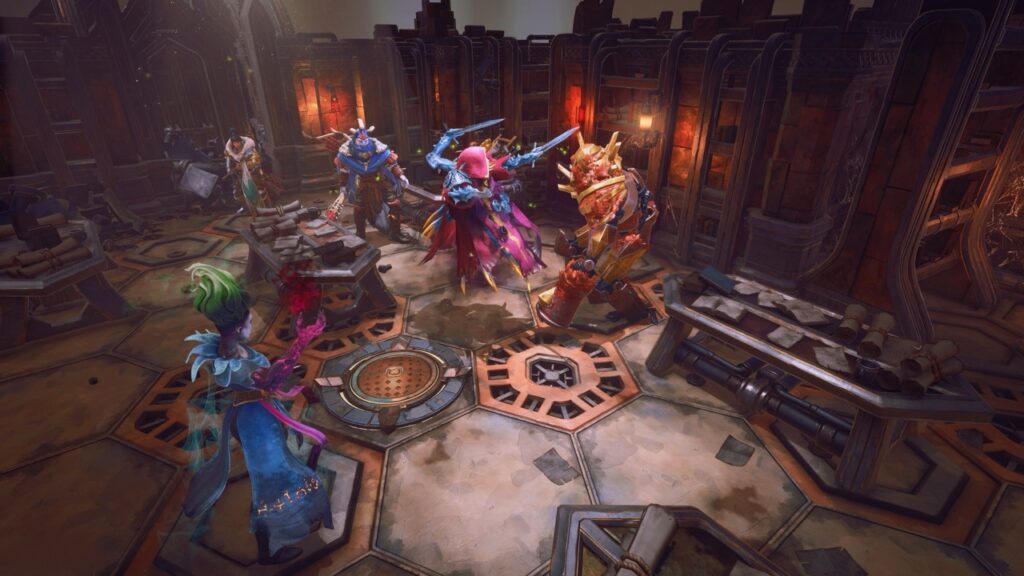
When you’re zoomed in, and especially in interior spaces, you can easily see Frosthaven‘s hex-based board game roots
Credit:
Arc Games
Treacherous terrain is a big part of the strategy, whether using it for power-ups or kiting enemies into bad spots.
Credit:
Arc Games
Summons and spell-casting add another layer of complexity onto the game’s meaty combat.
Credit:
Arc Games
Your outpost provides you with boons, quests, and other higher-level management options.
Credit:
Arc Games
Like Gloomhaven before it, Frosthaven is getting a PC game, which should make exploring a baddie-infested tundra easier to set up and potentially easier to do multiplayer. A closed beta test begins March 27, with sign-ups at the game’s website. The game will launch into early access during 2025, with more than 35 quests across the first two acts available, with over 130 quests planned in total. It will have single-player and up to four-player multiplayer, with players able to pick up their teammates’ characters if there’s a momentary dropout.
Console makers and game developers like Microsoft, Nintendo and Electronic Arts have created a new initiative, managed by the Entertainment Software Association (ESA), that aims to make it easier to know what accessibility features games have.
The new Accessible Games Initiative has defined a set of 24 accessibility tags that will appear in participating game storefronts and product pages so players can know what features a game has before they buy it. The tags have easy to understand definitions and cover a range of accessibility features games offer, like subtitles, input remapping for controls, text-to-speech and speech-to-text in chat and narrated menus. All of the tags and definitions are available to view on the Accessible Games Initiative’s website. The ESA also says it will provide developers with criteria for the tags so they can develop accessibility features with them in mind.
The new tags are designed to co-exist with existing accessibility information on product pages, but some companies may choose to focus exclusively on the new “cross-industry” standard. For example, Microsoft plans to “replace existing Xbox Game Accessibility Feature tags with their equivalent Accessible Games Initiative tags” to avoid duplication, while keeping its own tags that aren’t in the initiative’s list.
The idea for the Accessible Games Initiative “was first developed by Electronic Arts, Google, Microsoft, Nintendo of America, Sony Interactive Entertainment and Ubisoft,” according to the ESA, and new companies have joined in time for launch, like “Amazon Games, Riot Games, Square Enix and Warner Bros. Games.”
Offering some kind of standardized way to know what accessibility features a game has is desperately needed. While developers have gotten better at offering accessibility features in their games by default, players interested in a specific feature have mostly had to rely on third-party resources like Can I Play That? to figure out how well they’ve been interpreted and implemented. These tags should start to fix that.
The only open question is when they’ll be adopted. The ESA told The Verge that “the timeline for implementation of the tags is company-dependent,” meaning there could be a wait ahead for players hoping to take advantage of the Accessible Games Initiative’s work.
This article originally appeared on Engadget at https://www.engadget.com/gaming/game-companies-will-standardize-accessibility-labels-on-storefronts-and-product-pages-211335539.html?src=rss
Max’s April slate includes anticipated new seasons of several original series. First up is the fourth installment of Max Original comedy Hacks starring Jean Smart as an aging comedian and Hannah Einbinder as her young writer trying to get their late night show up and running. Two episodes will premiere on April 10, with additional episodes dropping weekly until the season finale on May 29.
Next is the sophomore season of HBO Original post-apocalyptic drama The Last of Us (April 13), based on the video game franchise of the same name. This season picks up five years after the events of the season one—Pedro Pascal and Bella Ramsey will return as Joel and Ellie, with Kaitlyn Dever appearing as Abby. New episodes of the Primetime Emmy-winning show will be released weekly, also streaming in American Sign Language (ASL).
On the film side, Max will be streaming A24’s Y2K (April 4), a disaster comedy set on New Year’s Eve 1999, and Babygirl (April 25), the thriller starring Nicole Kidman as a CEO having an affair with her intern (played by Harris Dickinson).
Max subscribers will also get a variety of live sports, including NHL and NBA regular season and playoff games as well as early season MLB matchups.
Google is introducing an AI-powered update to Gmail search that prioritizes “most relevant” results based on recency, frequent contacts, and most-clicked emails. The feature aims to help users more efficiently locate specific messages in crowded inboxes. The update is rolling out globally to personal Google accounts, with business accounts to follow at an unspecified date. Users will have the option to toggle between the new AI-powered “most relevant” search and the traditional reverse chronological “most recent” view.
From tracking a project’s history to consolidating code, Git has become a cornerstone of modern software development. As such, learning how to use Git properly is important for any developer looking to collaborate with others. In this article, I will go through some Git beginner’s tips to help you to build a good Git habit today.
Welcome to “Cookbook of the Week.” This is a series where I highlight cookbooks that are unique, easy to use, or just special to me. While finding a particular recipe online serves a quick purpose, flipping through a truly excellent cookbook has a magic all its own.
I love cookbooks that combine comfort food with a smattering of unfamiliar recipes that make me think, “Ooh, I wonder what that’s like.” This mingling of brand-new dishes with ones that stir a bit of nostalgia is usually a hit for me. This week, I chose Salt, Sugar, MSG to feature for my cookbook of the week. Not only does it tick those boxes above for this Asian-American kid, but this book is also a reliable resource for those dinners when you’re in the mood for a little bit of everything.
About the book
Salt, Sugar, MSG is hot off the presses—it was published on March 18—and comes from chef Calvin Eng along with Phoebe Melnick. It may be Eng’s cookbook debut, but if you’ve ever tried his food at Win Son or Bonnie’s, you know that he is no flash-in-the-pan recipe developer. He’s been charming New Yorkers with interesting and bold flavors for some time—and there are many great examples of exactly that in Salt, Sugar, MSG.
As you might guess from the title, this cookbook is not MSG-free. Quite the opposite actually: You’ll find MSG popping up here, there, and in unexpected places—kind of like how MSG and other glutamates naturally pop up in a lot of our food. Eng uses MSG like any other seasoning in this cookbook, because that’s exactly what it is: A cheap, easy, and harmless solution to boosting umami in your dishes, like Fuyu Cacio e Pepe Mein and MSG Caramel.
Not only does the actual food benefit from the addition of monosodium glutamate, but I appreciate him using MSG in the title. It normalizes an ingredient and an entire community that once heavily suffered from the complete bullshit toxic myth of “Chinese restaurant syndrome.” Chef Eng has even teamed up with Ajinomoto to help dispel the myths surrounding MSG. If you’re just stretching your MSG wings, this cookbook offers plenty of opportunities for you to start getting your reps in.
A great cookbook for mix-and-match pairings
Throughout the book, in the headnotes and in chapter introductions, you’ll read anecdotes from Calvin Eng’s childhood and his current shopping habits in Chinatown. His stories about the smell of warm soy milk and shopping for vegetables reminded me of grocery shopping with my mom at our local Asian market in New Jersey. One of my favorite parts of that shopping trip was (and still is) the fresh bakery section.
Everything in that area of the store had been freshly made that morning, and we’d pick up a little bit of everything. We’d grab congee, pork buns, soy milk, hot noodle dishes, vegetable stir fries, and armfuls of scallion pork floss buns. At home, my mom would unpack everything and we’d all snack and basically chow down on this kitchen table banquet. Salt, Sugar, MSG welcomes this mix-and-match style of eating.
Many of the dishes in this book are satisfying as single snacks or parts of a greater meal. Somehow, they all seem like they’d pair well with each other. If you picked three recipes out of this book blindfolded, you’d likely have a well matched meal. To test that theory, I just did exactly that and here’s the menu I came up with: the Lemon Cola Chicken Wings, Perfect Pot of Steamed Rice, and Shrimp and Pork Wonton Soup. See? You need some vegetables? Same technique in the vegetable chapter—Hot Salad (romaine lettuce with a sweet and salty soy sauce dressing). Done.
While other cookbooks might give you a single recipe that includes the meat, veg, and carbs all together, Salt, Sugar, MSG gives you space to formulate the perfect meal for what you’re craving. This style of eating reflects how you might order at a dim sum restaurant or banquet hall—a plate of greens, a dish of steamed prawns or roast pork, steamed egg custard, and some rice. It’s actually a great cookbook for small appetites (just make a few plates for snacking) as well as for big family meals.
The dish I made this week
Credit: Allie Chanthorn Reinmann
I did my own version of mix and match for lunch this week with the Piggies in Scallion Milk Bread Blankets and Yeun Yeung (milk tea with coffee). I don’t much care for the average American hot dog on a bun, but dammit, if you change that bun to milk bread and add scallions, it’s a whole different ball game for me.
The milk tea recipe, as simple as it is, was the first thing I decided on. It asks for orange pekoe tea, so I grabbed the Twinings Ceylon at my Shoprite and set up my boiling water, evaporated milk, and condensed milk. I was a little nervous that it would be too sweet (sometimes Thai iced tea overwhelms me) but it was perfectly creamy and sweet with a welcome bitter edge. I saved the rest for the morning so I could make the Bonus Recipe Yuen Yeung, which is just the addition of black coffee.
The piggies were fantastic. I should have made all 12 like the recipe told me, but I turned the other half of the bread dough into a large milk bread loaf. (I was such a fool.) The milk bread recipe starts with a simple tangzhong (roux) which helps keep the bread dough soft and spongy. The sugar, egg, and butter enrich the dough and give the finished bun that perfect balance of richness along with the salt and umami from the hot dogs. Scallion hot dog buns and milk tea coffee—my new favorite lunch.
Where to buy it
Salt, Sugar, MSG is available as a hardcover, or as an e-book for a reasonable price. Since it’s brand new, you will definitely be seeing this one at the big box book shops and likely even at the local independent bookstores. Even if you don’t see it on their shelves, ask to see if they can order it to their location.
Barring any last minute issues or hesitation by Linus Torvalds, the Linux 6.14 kernel is aiming for releasing as stable this coming Sunday on 23 March. Here’s a reminder about some of the most interesting changes to find with Linux 6.14…

 UploadVRDavid Heaney
 UploadVRDavid Heaney
 UploadVRDavid Heaney