
The new open-source PebbleOS smartwatches, Core 2 Duo and Core Time 2, bring back e-paper screens, long battery life, and classic design.
Monthly Archives: March 2025
Komoot acquired by tech firm, with expected mass layoffs leaving future of 150 staff in doubt
Route-planning app Komoot has been acquired by Italian tech firm Bending Spoons, with sources close to the matter expecting “significant cutbacks” to Komoot’s workforce.
Bending Spoons’ portfolio includes Evernote, Meetup, and WeTransfer, and is claimed to be used by more than 300 million users monthly. Komoot has 45 million users.
The news follows this month’s announcement that new Komoot users would face a monthly fee to send routes to devices.
Uncertain future for staff and sponsorships
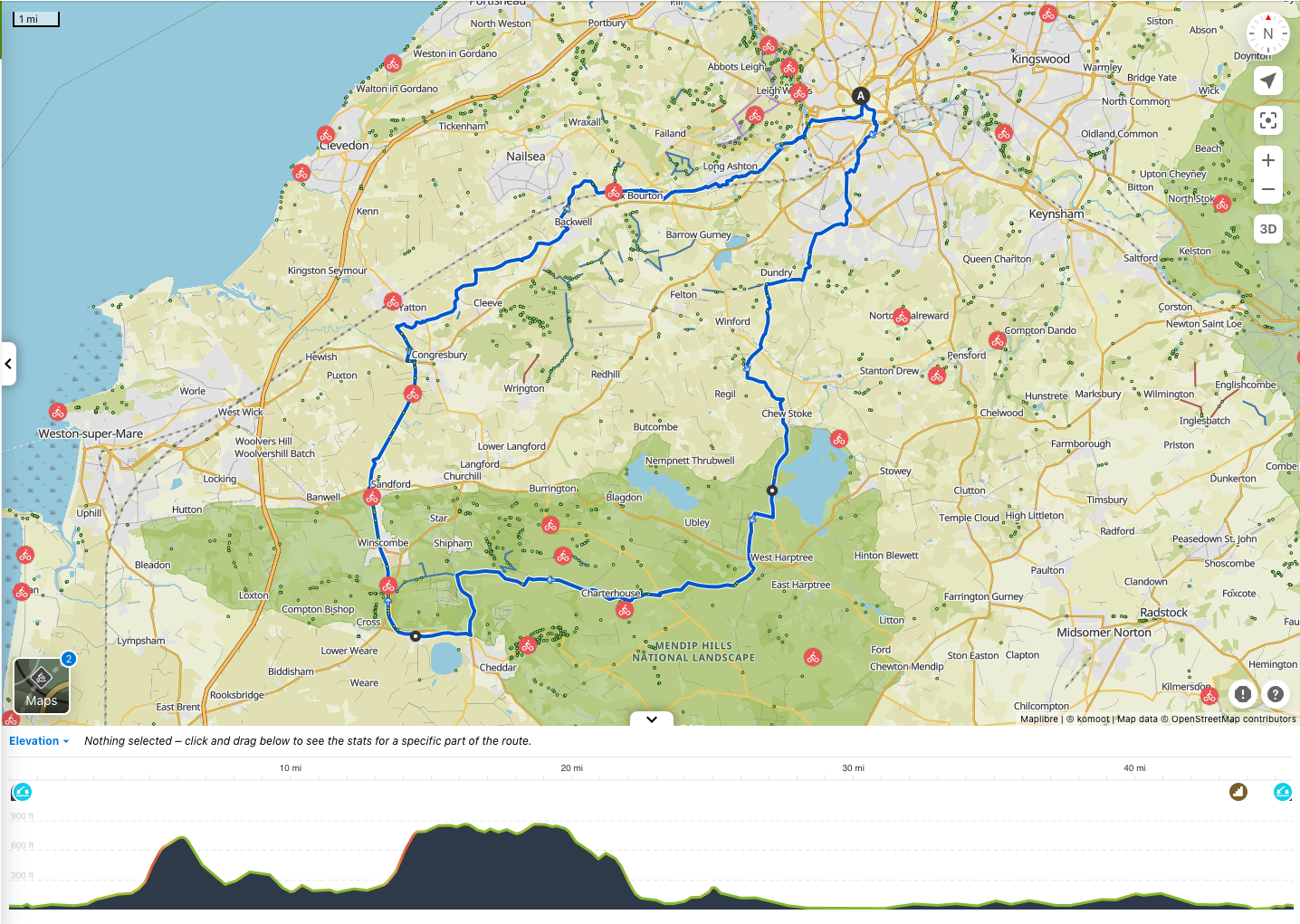
Komoot employs around 150 people, most of whom work remotely. Around 25 are based in the UK.
A report published on Sportive suggests job losses are expected after a short transition phase as Bending Spoons evaluates the business.
The company is well-known in the outdoors industry for fostering a family-like ethos. The report says employees with decades of experience at the company were “totally blindsided” by the announcement.
In a LinkedIn post, insurance provider Bikmo’s chief growth officer Ben Thompson described Bending Spoons as “renowned [for] taking businesses and stripping the teams out”, adding that “a significant number of Komoot staff will be made redundant almost immediately”.
The acquisition also casts doubt over Komoot’s sponsorships of popular cycling events, including the Komoot Women’s Rally series.
What does this mean for users?
At the time of writing, Komoot’s core offering remains free, with additional features such as offline maps and advanced route planning available via one-time purchases or a Premium subscription.
It’s unclear whether Bending Spoons will alter this model, but given its past work scaling platforms, change is likely.
Komoot’s CEO and co-founder Markus Hallermann said of the acquisition: “We’ve built Komoot from the ground up and grown it to 45 million users, making it Europe’s leading outdoor platform.
“However, what got us here won’t take us to the next level. Scaling a company requires a different mindset and skill set than building one. That’s why we believe Bending Spoons, with its unique expertise in driving innovation and scaling platforms, is the perfect partner to lead Komoot into the future.”
Luca Ferrari, Bending Spoons’ CEO, echoed this sentiment, highlighting Komoot’s “impressive achievements” and expressing confidence in its future growth.
Table Troopers On Quest Looks Like Worms In Mixed Reality
Table Troopers is a mixed reality multiplayer game inspired by Worms, and it’s coming to Quest later this year.
Developed by German studio Cosmorama Technologies, Table Troopers takes the rotatable tabletop approach for a new MR strategy game. Reminiscent of Team 17’s acclaimed series Worms, this lets you charge individual units with attacking enemies across the battlefield. Using hand tracking controls, you can move units directly and fire weapons to create lasting environmental destruction.
0:00
/1:01
As seen in the above gameplay trailer using alpha build footage, Table Troopers offers a wide selection of weapons that range between sniper rifles, stick grenades and RPGs. You can also call in aerial support for dropping bombs, dealing heavy damage to the battlefield. While the above footage shows color passthrough, Cosmorama informed UploadVR that Quest 2 is also supported.
It’s one of the first titles to publicly appear from Oculus Publishing’s Ignition program, a fund for small newly formed teams aiming to build games which are “more mainstream than niche and broad in scope with compelling Quest 3 interaction mechanics”. During his recent GDC 2025 talk, Meta’s Director of Games, Chris Pruett, confirmed it’s provided funding to 21 different startups.
Table Troopers is coming to the wider Meta Quest platform later this year.
Canyon’s new Exceed is the gravel biker’s MTB
Canyon’s long-running cross-country focused hardtail, the Exceed, has had a refresh for 2025, with its focus shifting from pure XC racing to adventure riding.
It’s fair to say the days of hardtail XC racing have largely passed, with almost the whole World Cup field now on full-suspension bikes, as are most privateer racers, even in national series.
The onward march of technicality in XC means the humble hardtail mountain bike is now rarely the fastest way up and down an XC race course.
Yes, there’ll always be hardcore hardtail fans in XC, who want the stiffest connection from crank to wheel, but those people are in ever-diminishing numbers.
Likewise, the growth of adventure riding and ultra-distance racing seems unabated. The Silk Road Mountain Race, the Tour Divide and other events are pulling in both household names and widespread coverage.

While the rapid growth of gravel riding has seen events such as these becoming a festival of curly bars, the reality is hardtails offer additional comfort over long, rough rides.
In my own experience, I’m now more likely to pull my cross-country bike out of the garage for a local long lap than I am my gravel bike.
I don’t lose much on road drags, and the slippery technical ups and downs that litter UK ‘gravel’ are simply more fun on a mountain bike.
All of the above points have been cited by Canyon as reasons why the new Exceed has lost its sharp, racy edge.
No longer is it a bike built specifically for the race course. It’s now designed to tap into the adventure-focused world the best gravel bikes have unlocked, but where broad tyres, suspension forks and less aggressive geometry excel.
Canyon’s 2025 Exceed hardtail
So, the new Exceed is a simply effective, efficient off-road machine, then.
Canyon tells us the bike is no longer designed for weight weenies, but for riders looking for a fast and comfortable off-road experience, whether that’s speedy local laps or something altogether more adventurous.
Strap a race number on it and it’ll still perform, though.
The frame is built from carbon and has a much more modern aesthetic, with a more notably dropped top tube, than the outgoing model for added standover, slacker angles for more relaxed handling, and plenty of carrying capacity.

Despite the lower top tube, Canyon has strived to ensure there’s still plenty of space inside the front triangle for load-carrying. There’ll be Canyon’s own flush-fit frame bags built specifically for the Exceed, for example.
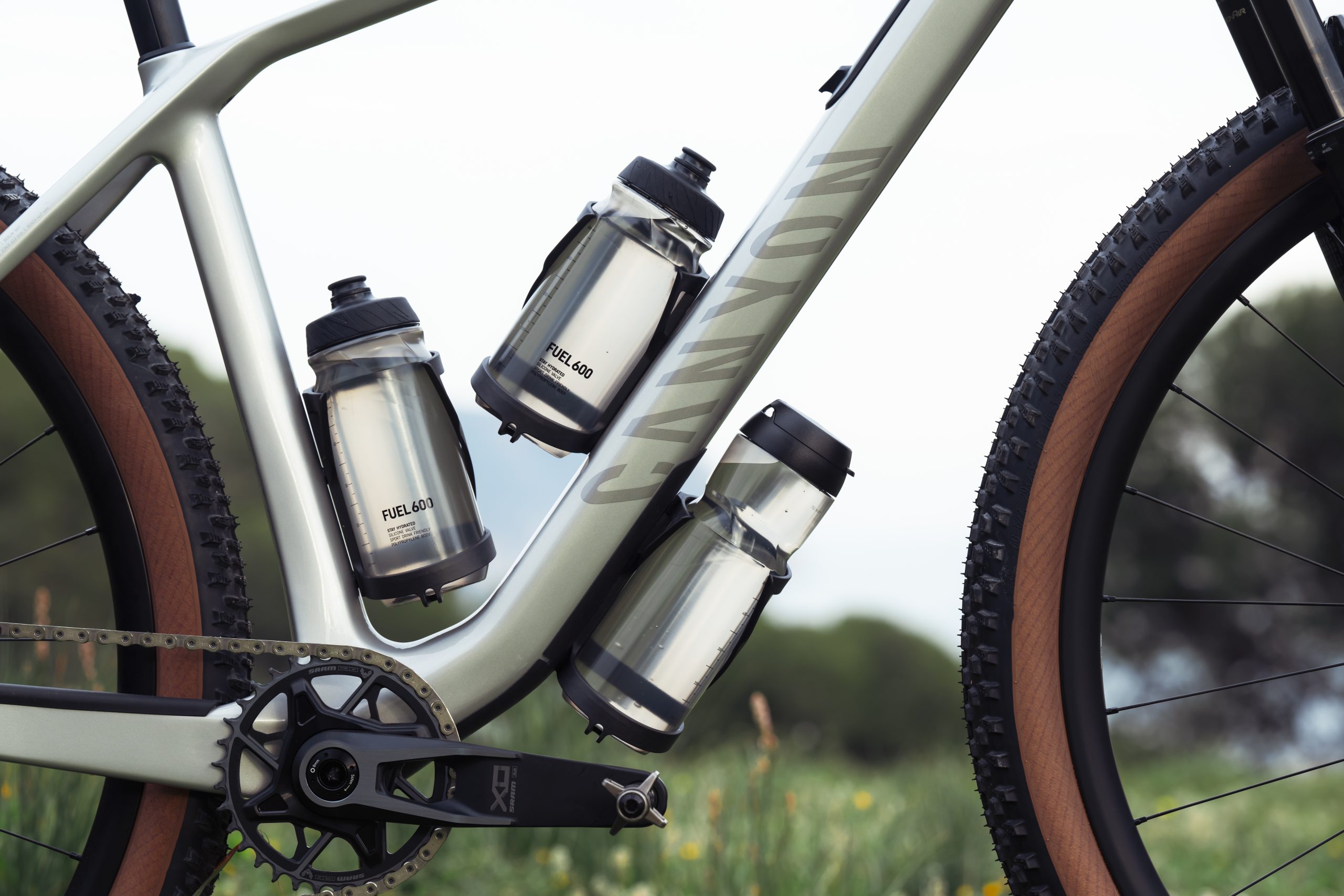
Hardtails might not offer as much comfort as full-suspension mountain bikes, but Canyon has designed the frame to be compliant, adding a hint of comfort to its ride via lateral flex in the rear triangle.
Skinnier sections of chainstay near the bottom bracket are said to add compliance, without compromising power transfer to the rear wheel.
In addition, the frame flex helps the Exceed carve fast corners, according to Canyon.
This comfort is also aided by a new VCLS seatpost, available on the top-spec model, or aftermarket.
Canyon’s VCLS seatposts combine two D-shaped sections of post, allowing up to 20mm for forward/back movement, which is intended to increase the seated comfort of the bike.
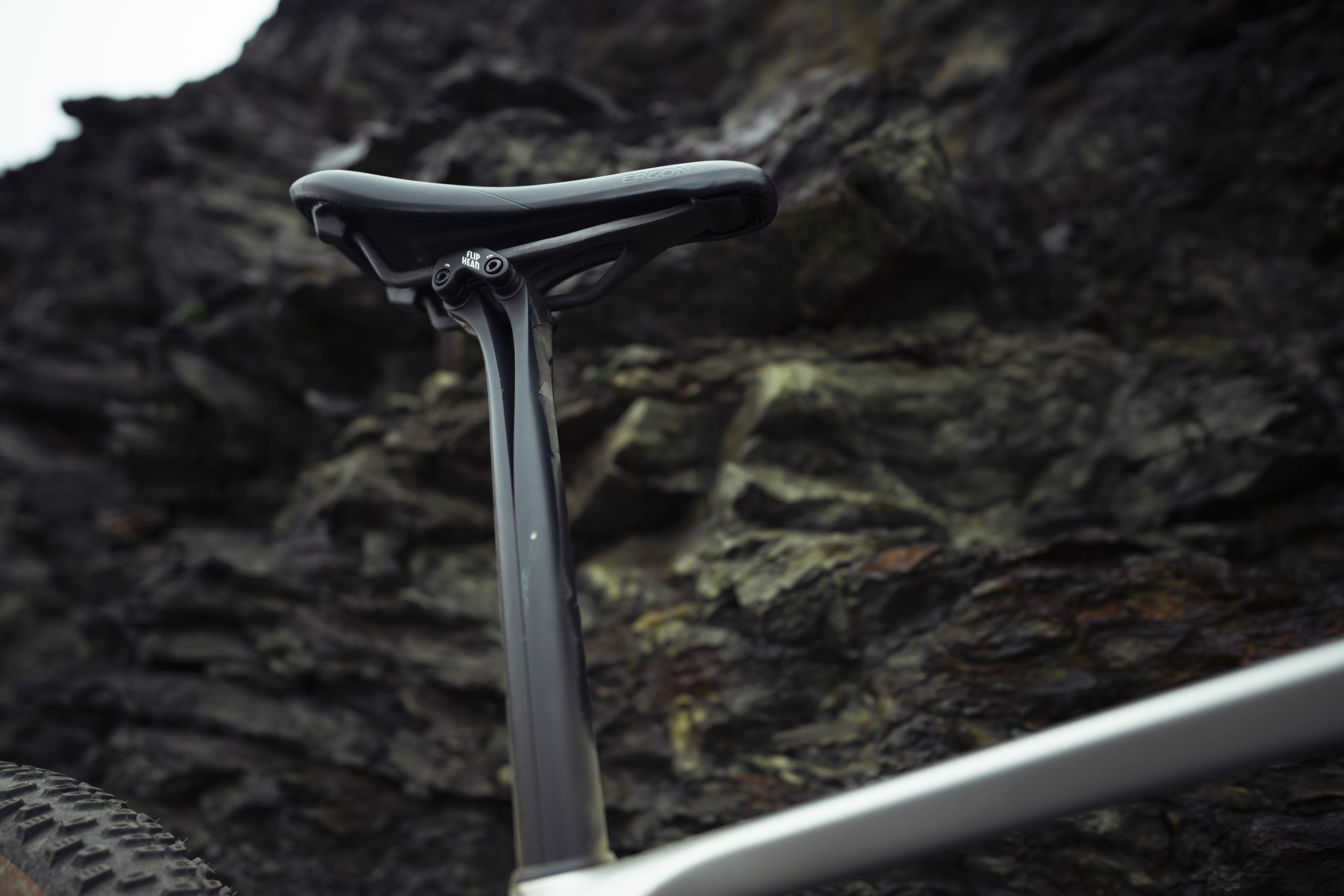
While the VCLS posts have always been 27.2mm in diameter – designed as they are for Canyon’s gravel bikes – there’s a 30.9mm option for the Exceed.
This means the seat tube is broad enough to accept a wide range of dropper posts, although none of the models comes with one as stock.
Dropper post cable routing is included in the frame, as is fully sheathed internal routing for gear cables and brake hoses.

Another update is the use of Canyon’s LOAD Internal Storage System. Like many brands’ bikes, the Exceed has a storage hole in its down tube, with the inside of the port’s lid able to carry a CO2 canister for speedy deployment in a race.
Final finishing touches include a threaded BB, three sets of bottle-cage bosses and enough frame protection to ward off chain slap, heel rub and rock strikes.

Canyon Exceed range details
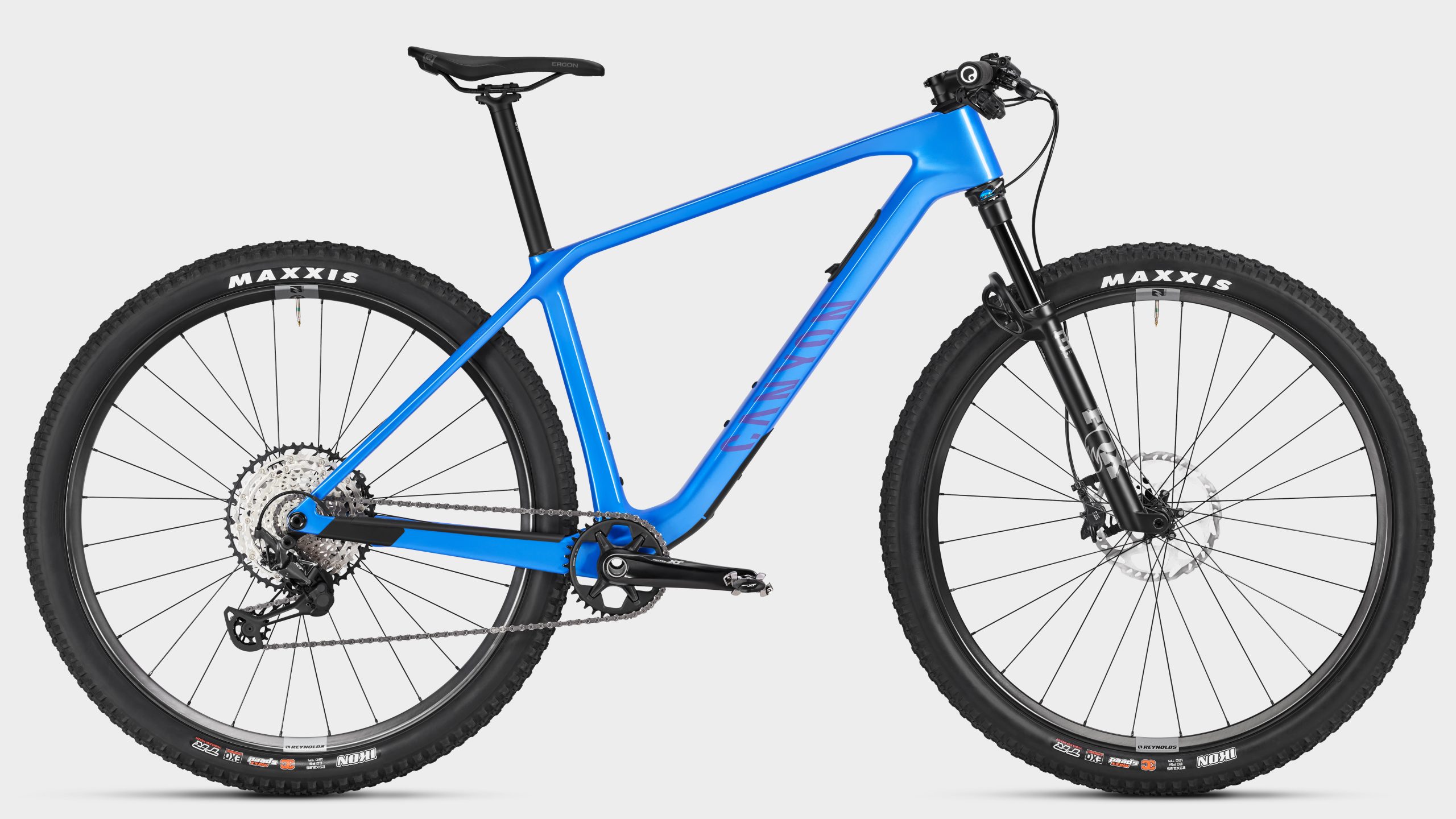
The Exceed has a middle-of-the-road geometry, which should be pretty easy to get on with.
Across the five sizes, reach numbers range from 408mm to 485mm. Head angles sit at 67 degrees, while effective seat angles are 75 degrees. Chainstays grow from 425mm on the XS to Medium bikes to 430mm and 435mm on the Large and X-Large bikes respectively.
Five models will be on offer, ranging from the €1,999 Exceed CF 5 to the Exceed CF 9 at €4,999.
Spec lists feature Shimano drivetrains on the three cheaper builds, with SRAM’s Transmission on the two pricier builds.
RockShox’s 100mm-travel Recon and SID forks dominate the spec lists, with the appearance of a Fox 32 Step-Cast on the mid-spec CF 7.
Asahi Linux loses another prominent dev as GPU guru calls it quits
Another developer has dropped out of Asahi Linux, the project to get Linux up and running on Apple silicon. On Tuesday, a developer going by “Asahi Lina” announced she would be pausing work on Apple GPU drivers indefinitely. Asahi Lina posted on Bluesky: “I no longer feel safe working on Linux GPU drivers or the Linux graphics ecosystem.”
Verse Is A Meditative Experience Coming To Quest And PC VR Soon
Verse VR is an immersive exploration game set across cultural sites, and it’s coming soon to Quest and PC VR.
Announced during World Poetry Day, Verse VR allows players to walk through a series of global locations and immerse themselves in unique cultures through poetry and music. Across eight locations, players can find and unlock 28 original musical compositions and spoken word experiences from globally recognized artists such as Sadio Sissokho, Aïcha Sylla, Lipeng Wu, and Amely Zhou. There are also 17 additional tracks to uncover.
0:00
/1:00
“Verse VR is a digital sanctuary—a place to slow down and connect with the world’s beauty,” explains Lofty Sky Entertainment Creative Director Judith Cheung in a prepared statement, stating this was inspired by a desire to bridge divides.
“In a fast-paced digital era, we wanted to craft an experience where poetry and oral traditions remind us of our shared humanity.”
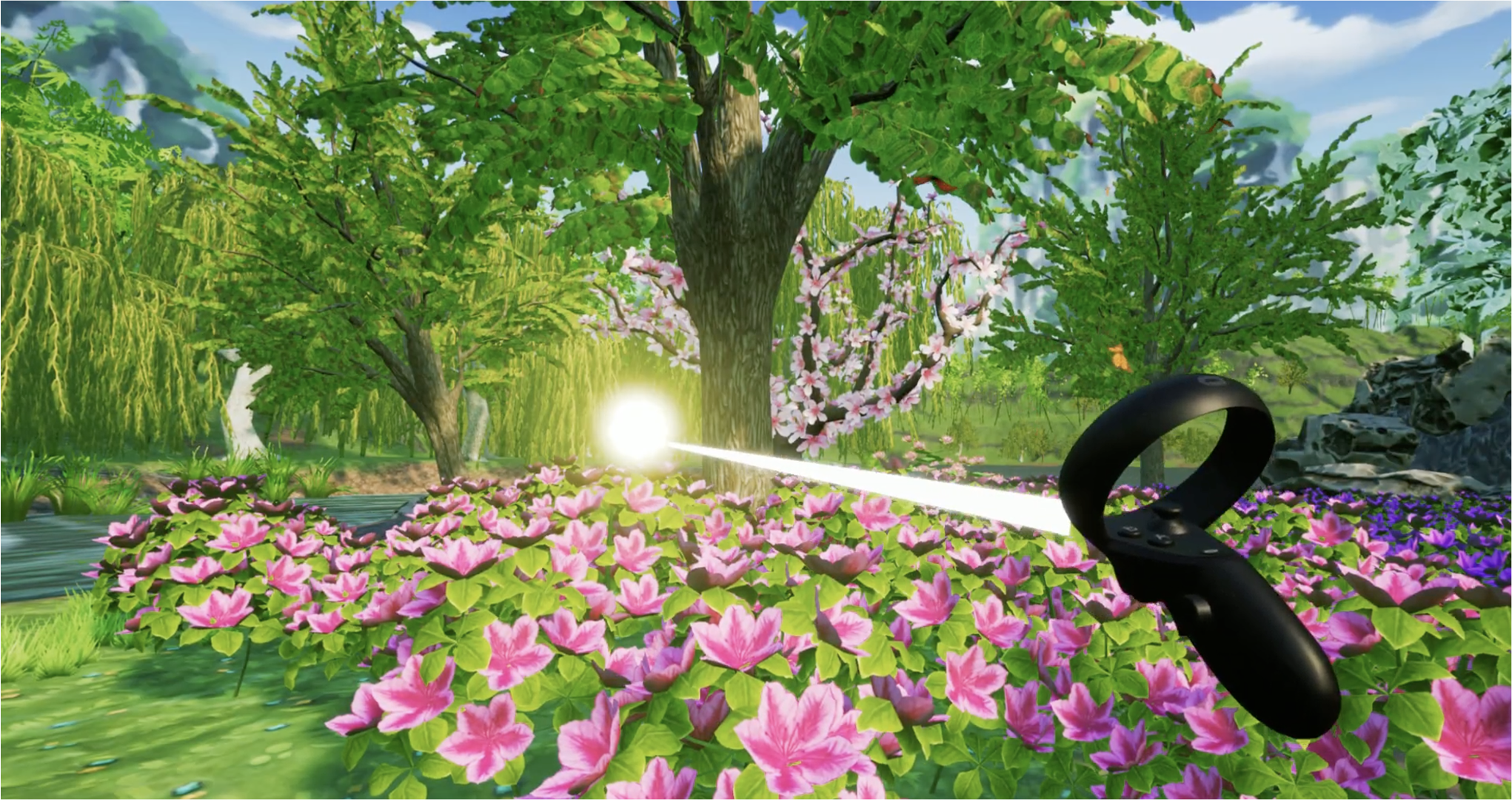
Here are the locations coming to Verse VR:
- Orchard Pavilion
- Remains of Orphalese
- Mali River Bed
- Victorian Conservatory
- Tang Hull
- Temple of Apollo
- West African Village
- Butterfly Gazebo
Verse VR will be available in standard and deluxe editions, with the deluxe edition including an additional 11 tracks. That’s coming to Steam, Quest, and the Epic Games Store.
Elsewhere Electric is a unique co-op VR game, check out the first trailer

Elsewhere Electric is an innovative co-op game with an interesting twist: one person plays in the headset, the other on the smartphone.
The post Elsewhere Electric is a unique co-op VR game, check out the first trailer appeared first on MIXED Reality News.
The world’s smallest VR headset gets lighter and clearer

Bigscreen Beyond is the world’s smallest and lightest VR headset. The successor further reduces the weight and improves the lenses.
The post The world’s smallest VR headset gets lighter and clearer appeared first on MIXED Reality News.
CIQ Previews a Security-Hardened Enterprise Linux
CIQ continues to display its enterprise Linux chops with a new security-first Linux distribution.
Best Free and Open Source Alternatives to Salesforce Heroku
Heroku is a cloud platform to build, deliver, monitor and scale apps. We recommend the best free and open source alternatives.
Essential Tools and Frameworks for Mastering Ethical Hacking on Linux
In today’s digital world, cybersecurity threats are ever-growing, making ethical hacking and penetration testing crucial components of modern security practices. Ethical hacking involves legally testing systems, networks, and applications for vulnerabilities before malicious hackers can exploit them.
‘Half-Life: Alyx’ is Now Five Years Old. What’s Next for Valve in VR?
Five years after Half-Life: Alyx reshaped expectations for VR gaming, Valve remains a quiet yet critical force in the industry. Despite little fanfare, the company has continued to shape the VR landscape through steady updates to SteamVR, integration with standalone headsets like Quest, and whispers of new hardware and games. Now, as the fifth anniversary of Alyx passes, the question looms larger than ever: is Valve still all-in on VR, or is it slowly retreating from the frontier it helped define? Here’s what we know.
All it takes is one little global pandemic and—boom!—Half-Life: Alyx is five years old. Though it only felt like two or three years for many of us.
In fact, the pandemic nearly postponed the launch of the game altogether. Half-Life: Alyx launched in March of 2020—the same month that much of the US began issuing stay-at-home orders in an effort to slow the spread of COVID-19. Many businesses were disrupted overnight; those lucky enough to have a business model that could be done remotely had to scramble to figure out how to keep the gears turning while business was anything but usual.
That included Valve Software, the developer of Half-Life: Alyx. Had lockdowns hit just a few weeks earlier, the company has said it very well could have disrupted the launch of the game. In fact, the pandemic led the company to cancel its only Half-Life: Alyx press preview event. Luckily the game still made it out the door on its scheduled March 23rd release date.
Half-Life: Alyx has been hailed by many not just as the ‘best VR game’, or ‘best Half-Life‘ game, but even one of the ‘best games ever’. Five years later, the game holds the 24th spot on Steam250’s list of the best rated games on all of Steam.
But Valve has done more than make one of the best VR games to date. The company’s ‘Index’ VR headset long stood as the premier choice for PC VR, and let’s not forget that Steam’s comprehensive VR support has made it the lifeblood of the PC VR industry in the last five years.
Despite having such an impact on the shape of the VR landscape, Valve has been very quiet about its plans for the category in the last few years. There’s been essentially zero official announcements of any major plans (like a new VR game or headset).
So then, what is Valve up to in VR—if anything? Here’s what we know.
What’s Next for Valve in VR

For one, we shouldn’t disregard that SteamVR has remained the singularly most important PC VR platform to date. The company has made slow but meaningful updates to SteamVR over the years. The biggest addition in recent years came at the end of 2023 when Valve unexpectedly launched the Steam Link app for Quest headsets, which made it more convenient for Quest users to play SteamVR games wirelessly from their PC.
And it sounds like Valve isn’t done with Steam Link. Recent datamining from reliable sources points to the company working to launch Steam Link on new headsets like the Vive Focus headsets from HTC and Pico headsets from Bytedance.
Further, it seems that Valve has more plans to improve wireless PC VR for standalone headsets. References found in recent Valve software point to a “SteamVR Link Dongle,” which is increasingly expected to be a USB device to create a dedicated wireless link between the user’s PC and headset.
Currently, when you use Steam Link, your headset needs to connect to your router and then your router needs to connect to your PC. If you’re playing within a room or two of the router, it’ll probably work just fine. But for people with subpar wireless setups (or those that want to crank their bandwidth to the max for the best quality), it’s not uncommon to see connection-related quality issues like stuttering or pixelation.
Assuming it works like expected, a SteamVR Link Dongle would create a direct connection between the PC and the headset. Not only would this cut out the middleman of the router, it would also mean having a wireless connection of known capability that would allow Valve to fine-tune things for the most seamless PC VR experience. Datamining suggests the dongle would use Wi-Fi 6E.
It’s unclear if the SteamVR Link Dongle would support third-party headsets like Quest, or if it’s being designed as an accessory for Valve’s long-rumored ‘Deckard’ headset.
Valve’s Next VR Headset

After the 2019 launch of Index, the first serious hints that Valve was working on a new VR headset came in the form of patents that filed in 2020. The patents envisioned several ideas from the company including a fully standalone headset and a number of ergonomic designs.
It’s been five years since those patents were first published. And despite no definitive announcement that a new headset is in the works, a drip of clues from Valve itself and datamining efforts suggest the company is still actively working on a new VR headset, even if it is happening on Valve Time .
.
It was just a few months ago that a 3D model of previously unseen VR controllers—believed to be designed for Valve’s next headset—showed up in recently updated SteamVR files. The controllers didn’t just provide fresh hope that Valve was still at work on a new VR headset, they also hint toward the way the headset will be positioned.
Valve’s ‘Deckard’ headset (which may be branded as ‘Index 2’) is thought to be a standalone headset that primarily streams content from a host PC running SteamVR. This is essentially the same thing that anyone using a Quest headset and Steam Link uses today.
But the layout of the leaked Deckard controllers—which has a traditional layout with a D-pad on the left side and four face-buttons on the right side—suggests that Valve could position the headset for both VR games and playing flatscreen VR content on a huge virtual screen.
After all, SteamVR already supports playing flatscreen games on a big virtual screen. But because almost all VR controllers today don’t quite mirror standard gamepads, input compatibility isn’t guaranteed. Which means if you want to go from playing a VR game to a flatscreen game on a virtual screen, you may need to set down your VR controllers and pick up a gamepad.
If the Deckard controllers stick with the traditional gamepad layout, it could be much easier for players to move between VR games and flatscreen games and back again.
Even more recently than the controller leak, a leaker who has revealed accurate info on a number of Valve-specific projects in the past claims Valve’s next headset will launch in 2025 with a price of $1,200.
While we can’t independently verify that claim, there’s at least some evidence that it might not be a total farce.
Brad Lynch, a dataminer who has established himself over the years as a reliable source of Valve-related info, uncovered newly added references to “Deckard EV2” in the latest release of SteamVR just last week.
EV2 likely refers to a second “Engineering Validation” device, which suggests the headset is getting closer to production. There could surely be an EV3 or EV4 to come, but according to Lynch, Valve’s Steam Deck OLED handheld reached EV2 before heading to production. Further, he says “I’m very confident [Valve’s next headset] will be revealed this year.”
Valve’s Next VR Game

Half-Life: Alyx launched back in early 2020 to near universal acclaim. Five years later it remains one of the largest and most polished VR games ever made. Even so, it’s unclear if the company was happy with the sales performance of the game compared to the time and resources required to make it.
Whether or not Valve will commit to making another VR game of that scale is still an open question. But here’s what we know.
Last month, the same Valve leaker that claimed the Deckard headset would launch in 2025 also claimed the company is nearly set to ship games or demos “that are already done,” specifically for Deckard.
This aligns with details from Tyler McVicker, a long-time Valve dataminer who previously unearthed significant details about Half-Life: Alyx in the years leading up to the game’s launch.
Less than a year ago McVicker said he found evidence that Valve was building another VR game alongside work on the Deckard headset. And while Valve has plenty of major IP to draw from, McVicker believes the company’s next VR game will be another entry in the Half-Life series. Or it could be two entries in the series, technically.
McVicker believes the game will be an asymmetric co-op game where one half of the game is built for a flatscreen player on PC and the other half for a VR player.
“The computer player would always be Gordon Freeman, while the VR player would be Alyx Vance. The idea was that these two characters would interact, with the VR player experiencing Alyx’s story and the PC player experiencing Gordon’s story, both having cooperative elements between them,” he said.
Perhaps Valve envisions this game as a cohesive experience to unite its two latest hardware projects: Steam Deck and Deckard?
For Valve’s part, the company isn’t ready to confirm or deny its work on a new headset or VR game. We reached out to the company to ask if it had anything to share about its future VR plans at the five year anniversary of Half-Life: Alyx.
“We don’t have anything new to share right now but […] we’ve really enjoyed seeing all the cool experiences that folks have created and uploaded to the Half-Life: Alyx Workshop,” a spokesperson told Road to VR.
Valve is Unlike Almost Any Other Company

There’s something worth understanding about Valve that puts everything above into context. The company has a novel ‘flat’ management structure that’s not shared by any peer in the same weight class as Valve. Compared to most companies, Valve gives its employees significantly more freedom to decide what the company builds and releases.
As described by the Valve Employee Handbook, it’s largely up to employees at the company to choose what projects to take on, and to inspire others to join them. If an employee wants to work on something but can’t inspire others to help build it, that project probably won’t go anywhere.
But when a project does get traction, the group building it is generally comprised of people who genuinely believe in what they’re building. Aside from having the coffers to pay for world-class talent, this is a major reason why Valve punches far above its weight class despite having a relatively small workforce compared to industry peers.
Valve may not be releasing new headsets or VR games every year, but the steady improvements to SteamVR—and the occasional hints of something brewing behind the scenes—suggest there’s still a group within the company that genuinely believes VR is worth building.
The post ‘Half-Life: Alyx’ is Now Five Years Old. What’s Next for Valve in VR? appeared first on Road to VR.
SOMDEVICES Expands SoM Lineup with µSMARC RZ/V2N for AI and Vision Applications
SOMDEVICES has introduced the µSMARC RZ/V2N, a System-on-Module based on the Renesas RZ/V2N processor. Designed for AI-driven machine learning, vision applications, and industrial automation, this module delivers high computational performance in a compact form factor.
Kali Linux 2025.1 Ethical Hacking Distro Is Here with Xfce 4.20, Refreshed Theme
Offensive Security announced today the release and general availability of Kali Linux 2025.1 as the first update to this Debian-based distribution for ethical hacking and penetration testing in 2025.
Plasma 6 Finally Lands in Kali Linux 2025.1a
Kali Linux 2025.1a is here with Plasma 6.3, a refreshed theme, and major updates for Raspberry Pi, Xfce 4.20, and NetHunter.
Intel Updates Advanced Performance Extensions “APX” Code For The Linux Kernel
In addition to Intel software engineers this week being busy doing a late restructuring of AVX10 support in moving away from possible 256-bit maximum vector register size (a great move and still so excited to see this materialize!), there are also Intel engineers continuing work on enabling Advanced Performance Extensions (APX) on the Linux kernel side…
The Pebble Smartwatch is back with the Core 2 Duo and Core Time 2 models running PebbleOS open-source firmware
The Pebble Smartwatch was first introduced in 2012 with a black and white e-Paper display, a week of battery life, and an amazingly successful Kickstarter company that raised over 10 million dollars. It was followed by the Pebble Time with a color display in 2015, and the Pebble 2 & Time 2 watches followed in 2016.
Linux Foundation’s trust scorecards aim to battle rising open-source security threats
How do you tell the difference between trustworthy open-source developers and hackers? Here’s one idea.
Bigscreen Sells More Beyond 2 Headsets In 4 Hours Than Original In First 2 Months
Bigscreen says it sold more Beyond 2 headsets in the first 4 hours than it did Beyond 1 in its first 2 months.
New orders of Beyond 2 and Beyond 2e will now ship in June, compared to April and May for the first batches respectively.
Bigscreen Beyond 2 Has Clearer, Wider, Adjustable Lenses And Optional Eye Tracking
Bigscreen Beyond 2 starts shipping next month with significantly upgraded & adjustable lenses, and Beyond 2e is coming in May with eye tracking too.
 UploadVRDavid Heaney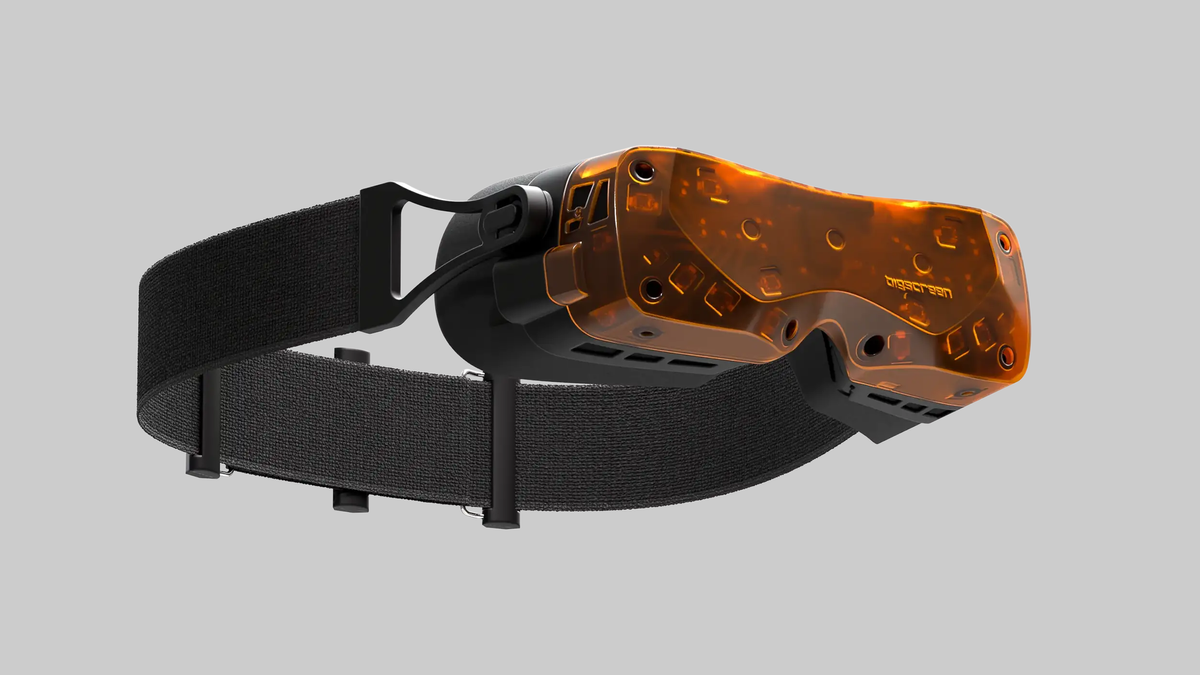
Bigscreen Beyond 2 and Beyond 2e were announced and went on sale earlier today. Compared to the original, Beyond 2 adds clearer, wider lenses with independent IPD adjustment, all while actually weighing 20 grams less, and Beyond 2e also adds eye tracking via just 1.05 grams of tiny sensors.
The original Bigscreen Beyond is used by 0.45% of SteamVR users, around 1 in 200. We’ll keep a close eye on the adoption of Beyond 2 in the coming months, with its initial sales velocity suggesting it might surpass the original by the end of the year.
You can read more about the features and specifications of Beyond 2 and Beyond 2e here, and you can read our hands-on impressions of Beyond 2 from GDC 2025 here.
Bigscreen Beyond 2 Hands-On: Refining A Vision For VR Enthusiasts
When Bigscreen’s founder told us he was bringing the sequel to the Beyond PC VR headset to GDC 2025, we booked a flight immediately to try it.
 UploadVRIan Hamilton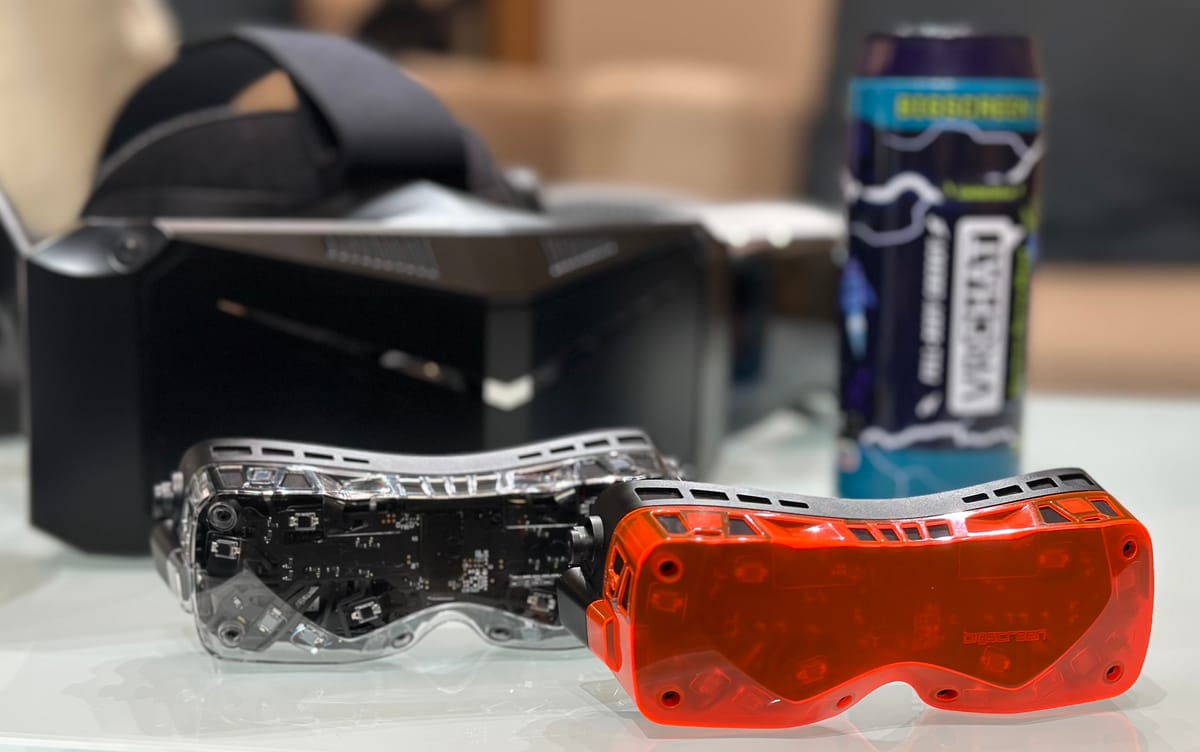
Set an AppImage Application as Default App
Imagine you found a cool text editor like Pulsar and downloaded it in the AppImage format. You enjoy using it and now want to make it the default application for markdown files.