The disappearance and unavailability of classic titles is causing an existential crisis in all of video gaming. Last November, in response, online PC games store GOG announced a Preservation Program, where over 100 games are promised ongoing support to be sold and run on modern machines forever. It was announced last…
McDonald’s Japan launched its first official VRChat world to commemorate a new promotional campaign starring the biggest real-life and virtual artists in the country.
In 2023, McDonald’s Japan launched the Tiro Remix project, a special nationwide promotional campaign that remixed two of the biggest songs of that year, Ado’s Show and Asmi’s Paku. This created a new song that uses the iconic sound of McDonald’s fries being prepared as the song’s beat.
The project’s success saw them repeat the project the following year with a new slate of artists. Now in its third year, the company has brought three of the biggest artists in Japan today in Ado, YOASOBI and Hololive VTuber Hoshimachi Suisei, for an all-new song and promotional campaign.
To expand the campaign’s latest iteration, alongside selling a special t-shirt and decorating their central Shibuya store based on characters in the new music video, the company collaborated with Suisei for a special YouTube livestream. This took place in a limited-time McDonald’s fries-themed world inside VRChat, which allowed visitors to enjoy their first ever ‘virtual McDonald’s fries’.
This unique world is the first-ever official VRChat world developed by McDonald’s, and it’s themed around the experience of visiting their Japanese stores. Picking up packets of fries from the food table will trigger a ‘tirori’ sound often heard in Japanese stores as the fries are being prepared, while it’s also possible to pick out and eat individual fries from the packets.
With multiple packets sitting tantalizingly on the table for visitors to eat, those who visit the world as a group can share the experience with friends, just like in a real McDonald’s. It’s also possible to pose with virtual standees based on the fries mascot and characters from the music video.
Although the music video produced for the Tiro Remix campaign is limited to audiences in Japan, you can visit the McDonald’s Virtual Tirori World for free in VRChat from any country for a limited time until June 17th.
There’s a bidding war for the film adaptation of Split Fiction, according to the information Variety has gathered at this year’s Game Developers Conference. Split Fiction is a split-screen multiplayer co-op game by Swedish indie developer Hazelight, which was also the studio behind the genre-defining game It Takes Two. The publication says Story Kitchen, the same media company that pieced together the It Takes Two film adaptation package until it was picked up by Amazon, is already looking for actors, writers and a director for the project.
Variety didn’t mention specific companies bidding for the game’s rights, but offers are reportedly coming in from “multiple top Hollywood studios.” Split Fiction was specifically designed for split-screen gaming through local or online play. You can control either one of the two main characters, Zoe and Mio, as they navigate multiple worlds and overcome various obstacles. The game’s story revolves around the two authors who were invited by a company called Rader Publishing to test a new simulation technology that allows players to experience their own fictional stories as reality.
Due to an accident, Mio fel into Zoe’s story, which created a glitch that allowed them to travel to and from each other’s science fiction stories featuring dragons, cyberpunk motorcycles and other sci-fi and fantasy elements. The game was released on March 6, 2025 and is currently available on the PlayStation 5, Xbox Series X|S and PC.
This article originally appeared on Engadget at https://www.engadget.com/gaming/a-split-fiction-movie-is-reportedly-in-the-works-121528148.html?src=rss
This weekend we’re featuring two tough community races: the long-running KISS 100 and the brand-new Spring Classics series from PETA-Z! Also in the mix is a popular charity ride and of course the Big Spin rides and Zwift Games races.
Milano-Sanremo by PETA-Z & MoC®
New Series Tough Races
This Saturday the PETA-Z team kicks off their Spring Classics weekly race series with a Zwifty edition of Milano-Sanremo, held on Beach Island Loop. The race is 64.1km long for A/B/C riders, and 38.5km long for D/E.
Be sure to read the event description for important details!
The Tour de 4 is an initiative launched by Sir Chris Hoy to change the perception of people living with stage 4 cancer and to raise vital funds for cancer charities across the UK. These rides are proving quite popular, thanks in no small part to the big-name guest riders in attendance.
The KISS 100 is probably the longest-running long race on Zwift’s calendar. The A category, in particular, always has some hitters showing up!
This week the race is on 9 laps of New York’s Astoria Line 8 for a total length of 104.5km. The later timeslot (linked below) is typically the popular one, but the same event is also held at 6am UTC each Sunday.
The Big Spin series is underway, and riders are showing up en masse for fun group rides with a prize spinner at the end! Have you won the BMX bike yet?
We choose each weekend’s Notable Events based on a variety of factors including:
Is the event unique/innovative in some way?
Are celebrities (pro riders, etc) attending/leading?
Are signup counts already high, meaning the event is extra-popular?
Does the ride include desirable unlocks or prizes?
Does the event appeal to ladies on Zwift? (We like to support this under-represented group!)
Is it for a good cause?
Is it just plain crazy (extra long races, world record attempts, etc)?
Is it a long-running, popular weekly event with a dedicated leader who deserves a shout out?
In the end, we want to call attention to events that are extra-special and therefore extra-appealing to Zwifters. If you think your event qualifies, comment below with a link/details and we may just include it in an upcoming post!
For all of the money and clout Meta has, it can’t stop the triennial emergence of a whistleblower revealing how awful its leadership is. Careless People, the tell-all memoir from former staffer Sarah Wynn-Williams is the latest, dishing plenty of dirt on the house of Zuckerberg. The book has shot to the top of The New York Times’ bestseller list despite Meta’s attempts to suppress it.
There’s plenty of scorn for Joel Kaplan, the former George W. Bush staffer and friend of Brett Kavanaugh, who has long been seen as the figure behind Facebook’s rightward pull. Kaplan is accused of blocking attempts to address the company’s role in the Myanmar genocide. The book suggests Kaplan didn’t know Taiwan was an island, and that he reportedly harassed Wynn-Williams.
What’s surprising, really, is how unsurprising many of the revelations are, from Zuckerberg’s venality to the company’s general indifference to the harms it creates. It’s not likely many of the claims here will make many people reconsider their relationship with the company and its products, either.
Fujifilm has been on a hot streak for a while, to the point it’s looking to flex its muscles with some absolutely wild specs. The company announced the GFX100RF medium format compact camera with, wait for it, a 102 megapixel sensor. It’s machined from a single block of aluminum, aping the aesthetic found on the company’s other X-series cameras. I can’t wait to see the hipsters who wanted something fancier than an X100 VI wasting this camera’s talents in the next few years.
Google has announced the already widely leaked Pixel 9a, its latest budget addition to the Pixel line. It ditches the Pixel’s famous camera bar in favor of a regular raised lens housing, but it has the same Tensor G4 chip as its pricier siblings. That will enable owners to harness some of the same AI smarts Google’s been selling on the flagship Pixels at a far lower price. Check out Sam Rutherford’s hands-on to see if your wallet might be tempted to crack open.
This article originally appeared on Engadget at https://www.engadget.com/general/the-morning-after-a-closer-look-at-facebooks-leadership-114522686.html?src=rss
After a ton of leaks, Google officially announced the $499 Pixel 9a, which has the potential to be the new king of mid-range phones. It has dual cameras and access to Google’s AI features — in many ways, it’s everything the iPhone 16e should have been (especially its price). In this episode, Senior Writer Sam Rutherford joins us to discuss what’s great about the Pixel 9a, as well as its potential downsides compared to the Pixel 9.
Listen below or subscribe on your podcast app of choice. If you’ve got suggestions or topics you’d like covered on the show, be sure to email us or drop a note in the comments! And be sure to check out our other podcast, Engadget News!
Google’s announces the Pixel 9a – potentially the new midrange king – 1:15
Fujifilm’s GX100RF: a 102MP medium format camera (nice!) with only one F4 lens (boo!) – 21:31
Karissa Bell’s roundup of the craziest stuff from Facebook whistleblower Sarah Wynn-Williams’ book – 24:14
Donald Trump attempts to fire FTC’s two Democratic commissioners – 29:34
Amazon will send all Alexa recordings to the cloud, no more local processing – 32:52
Chinese EV maker BYD announces chargers that give 249 miles of range in 5 minutes – 39:10
Pebble founder introduces two new e-paper smartwatches – 46:47
Listener Mail: Trying to choose an OLED TV – 57:35
Around Engadget – 1:03:49
Working on – 1:09:56
Pop culture picks – 1:10:28
Credits
Hosts: Devindra Hardawar and Cherlynn Low Guest: Sam Rutherford Producer: Ben Ellman Music: Dale North and Terrence O’Brien
This article originally appeared on Engadget at https://www.engadget.com/computing/engadget-podcast-googles-pixel-9a-is-ready-to-take-on-the-iphone-16e-113020014.html?src=rss
Inspired by Star Fox and Ikaruga, The Phoenix Gene is a new third-person narrative on-rails shooter coming to Quest this spring.
Developed by HEROmation, The Phoenix Gene is the studio’s debut VR project that’s been in development for over three years. You play as Firestorm, a phoenix aiming to protect a young janitor called Jackie after she becomes targeted by her employer’s Life Rite following an accident involving an immortality serum. Here’s the recent teaser trailer.
0:00
/0:57
Set across alternate timelines and eight multiverse realms, Firestorm must stop this corporation from unraveling the secrets to immortality as Jackie grapples with her newfound powers. It’s described by HEROmation as blending “intense action with strategic gameplay inspired by classics like Pistol Whip, Star Fox, and Ikaruga.”
Gameplay involves steering the phoenix across various worlds, using the Touch Controllers to steer away from enemy traps and shoot down these foes. Much like Ikaruga, toggling between these worlds can allow you to absorb enemy fire, and the studio promises that this also reveals hidden collectibles. The game doesn’t use a HUD, while abilities like smart bombs, flamethrowers, and health boosts can be upgraded by collecting floating gold flames across levels.
HEROmation aims to expand the story further with an exclusive ‘VR Book Experience,’ which provides access to the first novel in an upcoming six-book series within the game. The studio also confirmed in a press release that the soundtrack is being composed by Grant Kirkhope, best known for his work on Mario + Rabbids, GoldenEye 007, and Banjo-Kazooie.
The Phoenix Gene arrives on the Meta Quest platform this spring.
Welcome to Edition 7.36 of the Rocket Report! Well, after nine months, NASA astronauts Butch Wilmore and Suni Williams are finally back on Earth, safe and sound. This brings to conclusion one of the stranger and more dramatic human spaceflight stories in years. We’re glad they’re finally home, soon to be reunited with their families.
As always, we welcome reader submissions, and if you don’t want to miss an issue, please subscribe using the box below (the form will not appear on AMP-enabled versions of the site). Each report will include information on small-, medium-, and heavy-lift rockets as well as a quick look ahead at the next three launches on the calendar.
Summary of 2024 launch activity. In its annual launch report, released earlier this month, Bryce Tech analyzed the 259 orbital launches conducted last year. Among the major trends the analysts found were: Nearly 60 percent of all launches were conducted by US providers, Commercial providers accounted for about 70 percent of launches, and Small satellites, primarily for communications, represented the majority of all spacecraft launched at 97 percent.
A set of eleven patches being worked on for the ASUS HID and platform drivers work to enhance the support for the AMD Strix Halo powered ROG Flow Z13 (2025) laptop as well as adding RGB control support for the ROG Ally gaming handheld…
Nvidia CEO Jensen Huang on Thursday walked back comments he made in January, when he cast doubt on whether useful quantum computers would hit the market in the next 15 years. From a report: At Nvidia’s “Quantum Day” event, part of the company’s annual GTC Conference, Huang admitted that his comments came out wrong. “This is the first event in history where a company CEO invites all of the guests to explain why he was wrong,” Huang said.
In January, Huang sent quantum computing stocks reeling when he said 15 years was “on the early side” in considering how long it would be before the technology would be useful. He said at the time that 20 years was a timeframe that “a whole bunch of us would believe.” In his opening comments on Thursday, Huang drew comparisons between pre-revenue quantum companies and Nvidia’s early days. He said it took over 20 years for Nvidia to build out its software and hardware business.
He also expressed surprise that his comments were able to move markets, and joked he didn’t know that certain quantum computing companies were publicly traded. “How could a quantum computer company be public?” Huang said.
The AMD P-State Linux kernel driver for CPU frequency scaling with modern Ryzen processors has been working out quite well and proving very effective over the prior ACPI CPUFreq generic driver use. Beyond recently being extended to becoming the default for EPYC 9005 “Turin” processrs, AMD P-State has recently been seeing some patches for additional feature work…
IO Interactive considers Hitman on PlayStation VR2 its chance at redemption, and we interviewed the studio alongside a hands-on preview to learn more.
Third time’s the charm might be the conventional saying, yet Hitman is pinning its hopes with attempt no.4. Previous versions of Hitman 3 for PSVR and PC VR had merits but ultimately fell short, and much has already been said about the widely criticized Quest 3 port last year. While Reloaded was handled by an external studio, it’s clear IOI had unfinished business following the PC VR version.
0:00
/0:22
Hitman World of Assassination gameplay footage provided by IO Interactive
With a new adaptation heading for PlayStation VR2 this month, it’s no surprise then that Eskil Mohl, Senior Game Designer for Hitman World of Assassination at IO Interactive, sees this as a chance to make amends.
“This is a redemption for us because we ported the PSVR version to PC, and it got released prematurely,” Mohl said during a face-to-face interview at the studio’s Copenhagen office. Referring to the PC VR version’s mixed reception, he believes aspects of the game could’ve been improved with more time.
Acknowledging that not being able to use your left hand on PC VR was “horrible,” Mohl described the controls as like having a DualShock 4 in your hand, and this edition lets you use both hands. He expressed the team’s love for VR, stating its priorities include “getting rid of as many face button prompts as we can” and introducing manual reloading.
“With this version, we are much closer to our original hope of what this game can do, these were all things we knew we had to do.”
Before speaking with Mohl, I spent roughly an hour playing a preview build across two missions: “World of Tomorrow” in Sapienza from the first game, followed by Hitman 2’s “The Finish Line” in Miami.
As someone who completed World of Assassination trilogy on flatscreen platforms, everything quickly clicked into place with what to do. Sapienza saw me following the ‘Absolution’ mission story where you try infiltrating a field lab, while Miami was me effectively freestyling.
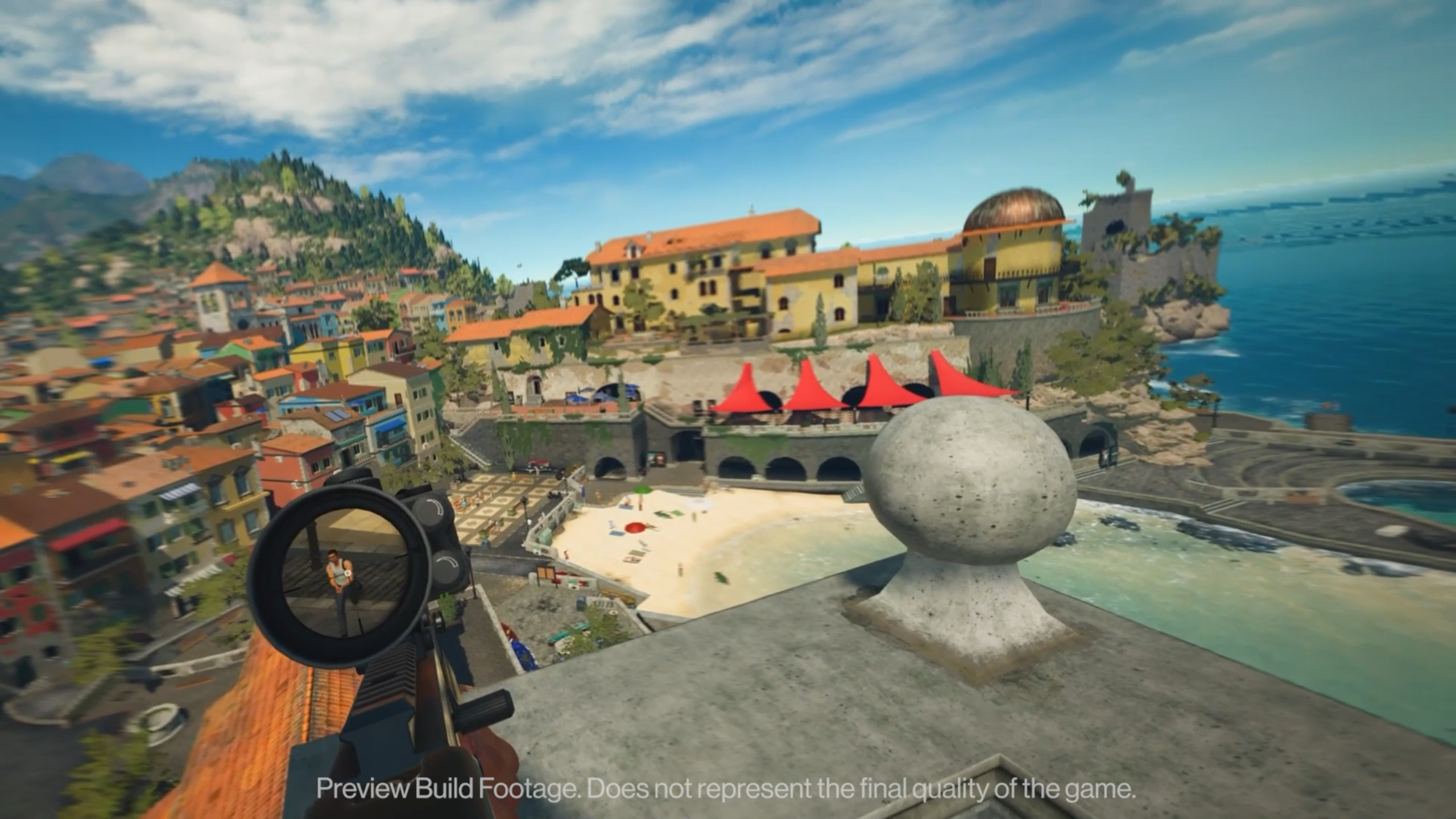
Even now, it’s hard not to feel impressed by the sense of agency, freedom, and scale these missions offer. Most of my mission attempts ended with fleeing the scene after botching a mission story, though the sheer flexibility these games offer lets you get creative across this sandbox. Some actions like crowbar-ing a door open have some nice physicality in VR, as does physically dragging someone’s body to hide them.
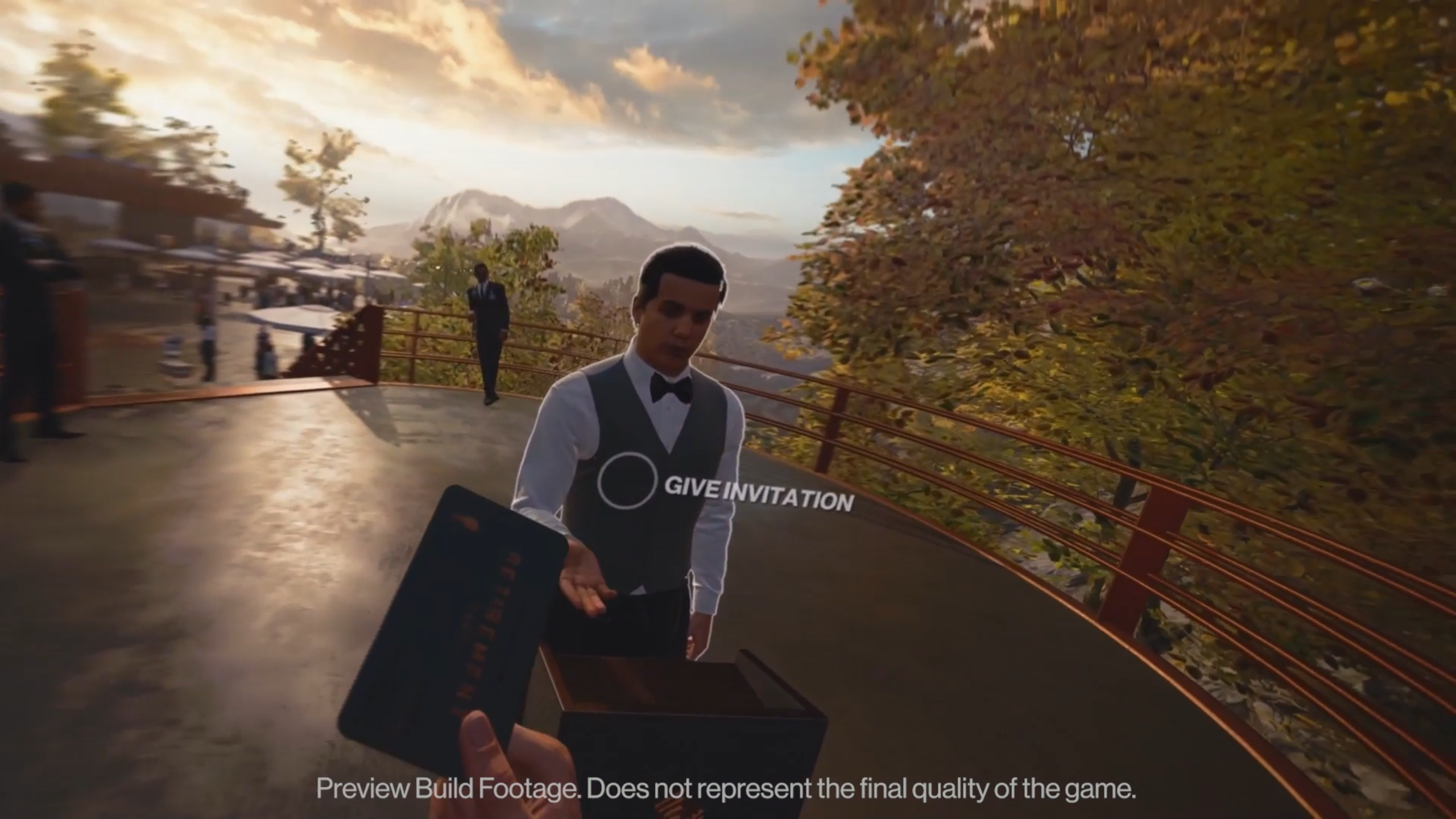
The PlayStation VR2 version offers welcome changes that were also seen in Reloaded, such as dual-wielding, manual reloading, and using your watch for the mini-map. This edition also adds improvements such as positional interactions, like tapping a keyboard to hack the security cameras on higher difficulties or moving a crowbar to bar open a door. Doors can be both pushed open with motion controls or with a face button.
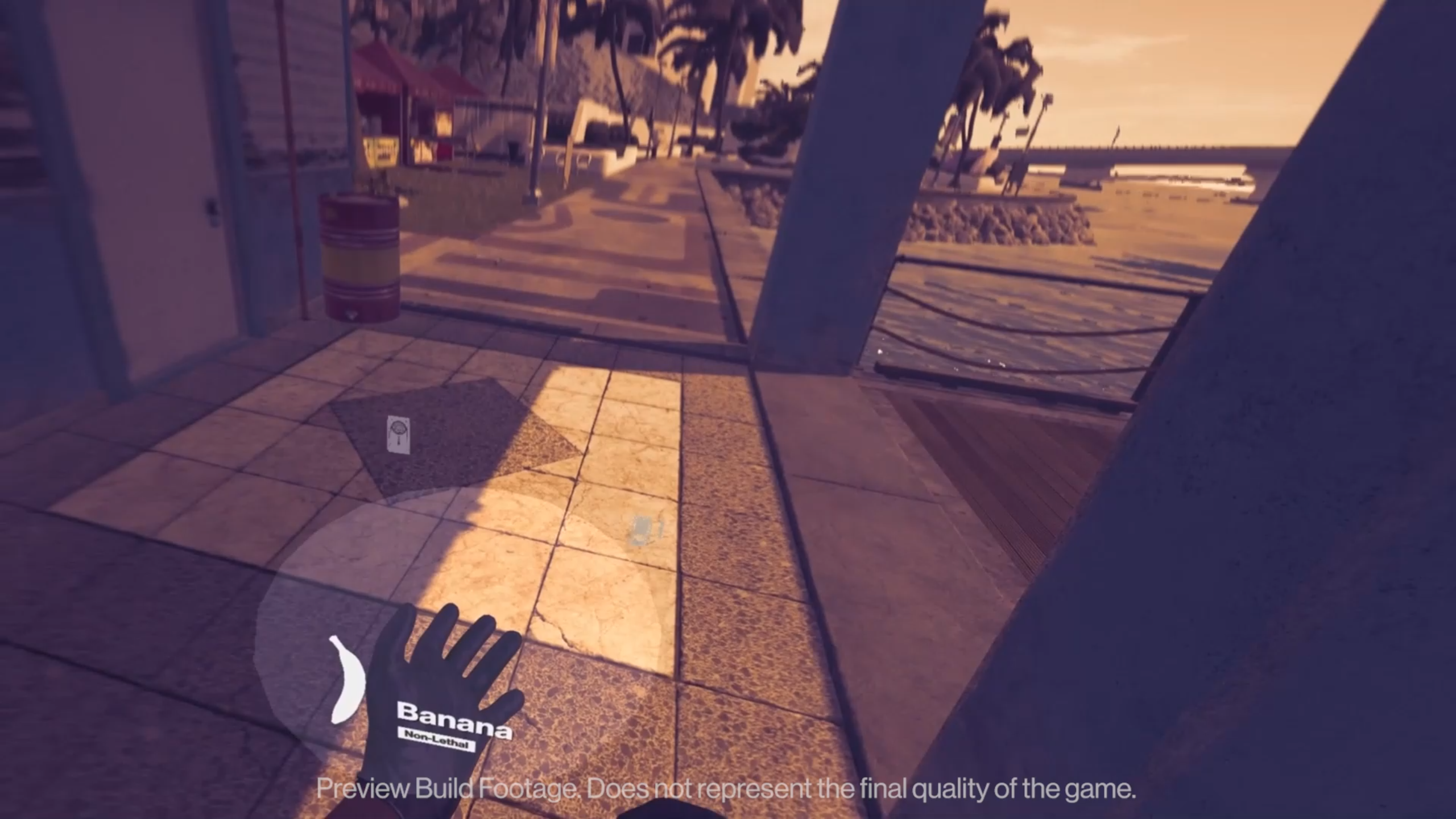
Inventory items can be summoned with the d-pad, followed by grabbing the items off a rotated inventory screen. This isn’t the most immersive approach since it’s more of a fancy menu screen, yet I wouldn’t call this a problem. Giving Agent 47 something like a backpack or pouch would feel out of place with his disguises, so I’m fine with this trade-off.
Room-scale movement is also supported on PlayStation VR2, something I queried since PS VR2 being a wired headset means your movement is limited. Mohl explained the game can track your position more freely, saying PSVR 1 didn’t support it because it needed the external PS Camera for tracking. As such, your position was fixed on the older headset to let the camera detect your location.
“Since PC VR support was a direct port from PSVR, you didn’t have room-scale movement, which meant that if you physically moved in your room, you’ll be moving out of his body. That’s one of the very understandable critiques that we had on PC.”
One especially nice change is the fact you can see your full outfit. Reloaded only uses floating hands, something XR Games previously attributed to stopping immersion-breaking movement issues and giving them more performance power. With PlayStation VR2’s higher spec hardware, that’s evidently not an issue here, and you actually feel like part of this world.
That’s not to say the PlayStation VR2 version doesn’t have some compromises or issues, though. One disguise’s watch looks painted onto Agent 47’s arm, and twisting my arm physically distorted the watch, which isn’t great. Mohl also advised that you can’t actually see your legs when moving in first person mode. I admittedly didn’t notice this while playing, since your upper half obscures this.
“We wanted to keep the body as much as we could. I don’t know if you noticed the legs are not showing, but we found out that you hardly ever see that.”
Not every action immediately feels natural for me, though I accept this may require further playtime. Personally, I didn’t find it clear that holding someone you’ve knocked out and dragging your hand away takes their outfit. A prompt does appear telling you how to do this action, though I missed it in my hurry to not get caught. Putting that outfit on involves simply moving the clothes “bag” to your chest. Sprinting involves pressing the left analog stick in but I often needed to press this twice to get it working, which I’m unsure whether that’s intentional or not.
Since IOI’s porting an existing game rather than creating one just for VR, the team made some creative choices like jumping to third-person view when climbing windows or pipes. Mohl accepts some players might view this as a “cop out” but says this lets you see Agent 47 “in all his splendor,” including his legs. For me, this doesn’t detract from the enjoyment that much.
Other design challenges emerged with this adaptation, since the trilogy has over 200 weapons and hundreds of disguises. Mohl calls this a massive undertaking in itself, while additional changes involved item handling, improving the sniper’s scope for VR, and removing the button prompts. Not every item across environments can be directly handled, either.
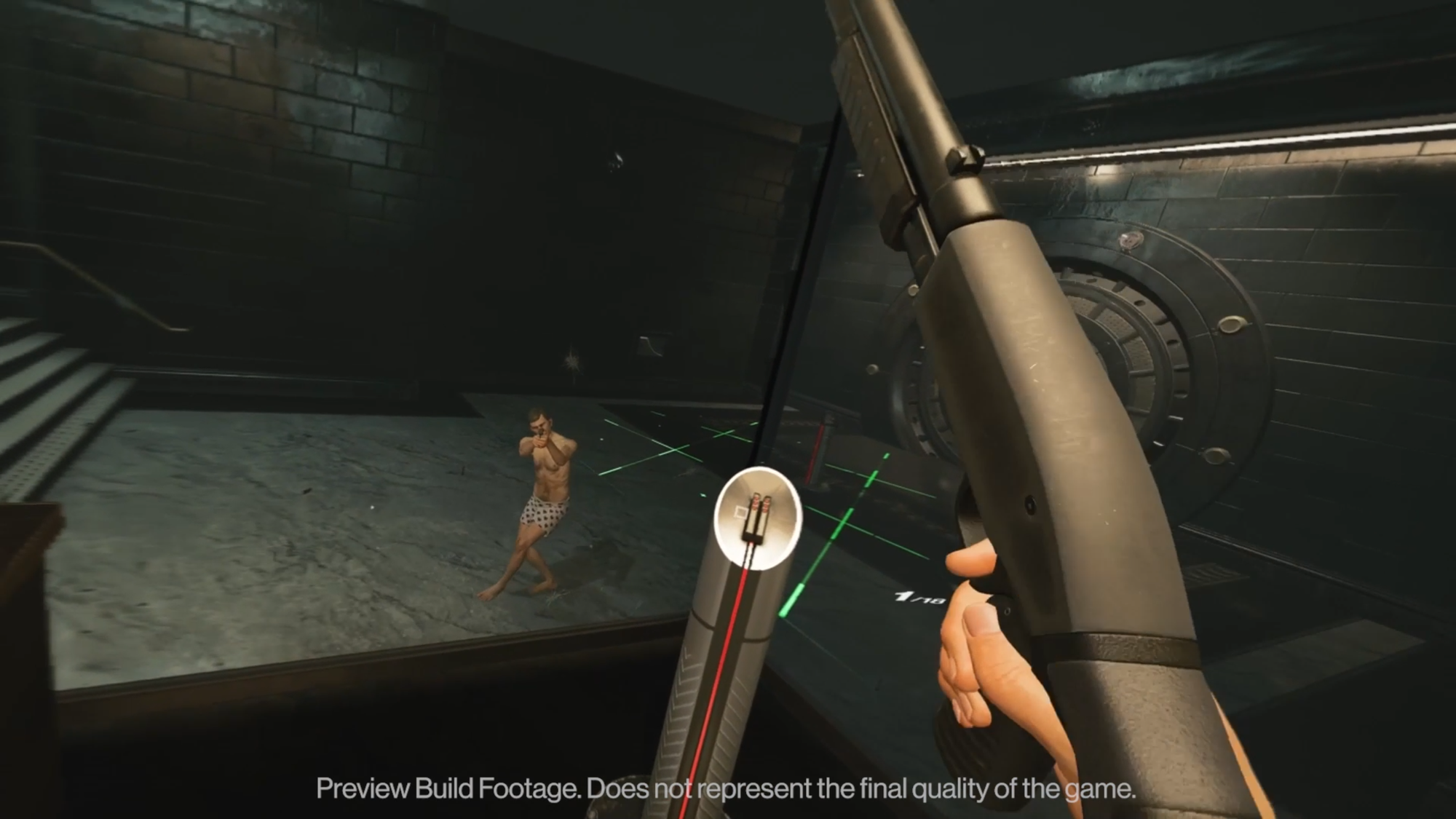
With manual reloading, only a couple of guns emerged during my runs, but this involved a simple process of ejecting a clip with a face button, followed by dragging an ammo pouch into the slot. A simple approach that does what’s necessary and gives you that extra immersion, though this highlighted an unexpected issue during design. In the flat version, the gun’s handle would always fall off instead of the magazine.
Still, I have to ask the question. What’s driving IO Interactive to attempt Hitman VR again, after all this time? Mohl believes that the original levels from the 2016 game still hold up well visually, a sentiment I have to agree with in VR, and he considers this a celebration of the original team’s efforts.
Going into the technical details, IOI confirmed Hitman on PlayStation VR2 is running at 60Hz reprojected to 120Hz, which caused a noticeable ghosting effect on several occasions. Dynamic foveated rendering is also supported alongside eye-tracked aim assist for targeting enemies. Haptics for the Sense Controllers add some enjoyable yet subtle feedback, though headset haptics aren’t currently supported, and adaptive trigger support when firing guns feels nice.
With all these features coming, I asked a question many have wondered since the PS VR2 version’s announcement. Can we expect these changes and enhancements to reach the PC VR version? IO Interactive won’t confirm any plans but, “if that happens, then naturally we’re going to be building on what we’ve done here now.”
My preview has me optimistic that the PlayStation VR2 version could become the best way to play Hitman World of Assassination in VR. Whether this will convince previous adopters to give this another try, I’m not sure, and I can understand any potential hesitancy after three prior efforts. For now, it’s offering some welcome changes, and I’m encouraged by what I’ve seen.
Hitman World of Assassination reaches PlayStation VR2 on March 27 with a $10 DLC pack, which requires owning the base game on PS5. It’s also being sold through the Hitman WOA Part One – VR2 Edition for $39.99.
Disclosure: UploadVR’s travel and accommodation costs were covered by IO Interactive for this trip.
If you think about it, Severance‘s “innies” — the people trapped in an endless cycle of office work — should genuinely hate their “outies” — their other halves who exist everywhere else. While outies are free to live a seemingly carefree existence, unburdened by the labor, boredom and indignities of office life, innies have no escape. Every time they enter the elevator at the end of their shifts, which triggers the switch to their outie persona, innies just blink and return to the sterile hallways of nefarious biotechnology firm Lumon Industries. There are no weekends or holidays, there isn’t even time to sleep.
Spoilers ahead for Severance season 2. No spoilers for the finale, “Cold Harbor.”
Severance‘s first season arrived as we were all reeling from the initial onslaught of the COVID pandemic and many of us were dealing with our own work-life balance issues. It introduced the show’s core concept — that Lumon pioneered the ability to completely separate work and life experiences — and it made the terms “innie” and “outie” a new cultural shorthand. But the debut season also leaned heavily on the outie perspective, sometimes to a fault. In its second season, Severance became even stronger by focusing more on the innie perspective. Do they deserve whole lives, or just the labor their outies don’t want to deal with? Are they allowed to fall in love? Are they even real people?
Apple
These are all concepts the show previously touched on, but the innie experience became all the more tragic as season two went on. We watched as Adam Scott’s Mark S. wrestled with the dueling desires to rescue Lumon’s wellness counselor, Ms. Casey, who was revealed to be his outie’s supposedly dead wife, and also nurture a budding romance with fellow innie Hellie R. (Britt Lower). John Turturro’s Irving B. spent the entire season nursing a broken heart, after the innie he fell in love with disappeared. And Zach Cherry’s Dylan G. ended up falling in love with his outie’s wife (Merritt Wever), who saw the best aspects of her floundering husband through his innie.
Innies owe their lives to their outies, but lead a tortured existence that basically just makes everything easier for outies. Season two made it clear that the process of severance, which involves a brain injection that splits the innie and outie personas, essentially creates an adult child who only exists to work. Innies have no understanding of science, history or the greater world beyond what Lumon tells them. And naturally, the company’s messaging to innies is purely focused on efficiency, output and the cult-like adoration of its founder, Kier Eagan. (It’s as if Apple based its entire internal culture on worshipping Steve Jobs as a god, complete with archaic rituals and holy texts.)
Apple
While we spent less time with outies in this season, the show still had a sharper take on their side of the severed experience. There’s a funny nod to the “return to office” phenomenon, where Tramell Tillman’s Milchick practically had to beg the outies to come back to Lumon, following their innie revolt at the end of season one. In our world, RTO is mostly a phenomenon where executives are eager to witness their employees toiling away, rather than allowing them to potentially slack off while working at home.
We also get a sense of what outies lose by giving up their work life to their innies. When Dylan G.’s outie, Dylan George, is turned down for a basic job outside of Lumon, he learns he can’t count his innie’s work time, since he didn’t actually experience it. (In some ways it feels reminiscent of what we could lose by outsourcing work to AI tools.) Severance isn’t just a trap for the innies stuck in Lumon’s offices, their outies will also have a tough time landing a job anywhere else. The only choice is to stay loyal to Lumon, and its dear founder Kier, until you retire. Or die.
According to Dan Erickson, the creator and showrunner of Severance, this season was partially inspired by the recent Hollywood writer’s strike. “We were all talking to our guilds and having conversations about workers rights and what we owe our employers and what we should reasonably expect back in return… And how much of ourselves and our lives and our energy we should be willing to give up for the sake of a job,” he said in an interview on episode 252 of the Engadget Podcast.
Apple
While much of the second season was written before the strike, “consciously or unconsciously, I think that the tone of that, of those conversations made their way into the story,” Erickson said. “And certainly I think that they’ll be on people’s minds as they’re watching the show. Because at the end of the day… it is a show about the rights of workers and what they deserve as human beings.”
As I watched this season of Severance, and processed the events of its explosive finale, I couldn’t help but be reminded of Kazuo Ishiguro’s heartbreaking novel Never Let Me Go. It’s set in a strict boarding school where students are raised to serve one specific purpose, and their own lives are devalued in the process. But they still love, learn and dream. They have hopes and desires. Every innie should be so lucky.
This article originally appeared on Engadget at https://www.engadget.com/entertainment/tv-movies/severance-season-two-review-innie-rights-and-humanity-made-for-a-stronger-show-100003400.html?src=rss
The Vulkan 1.4.311 specification update is out today with a handful of issues resolved with various clarifications and other subtle refinements. Plus two new extensions…



 Milano-Sanremo by PETA-Z & MoC®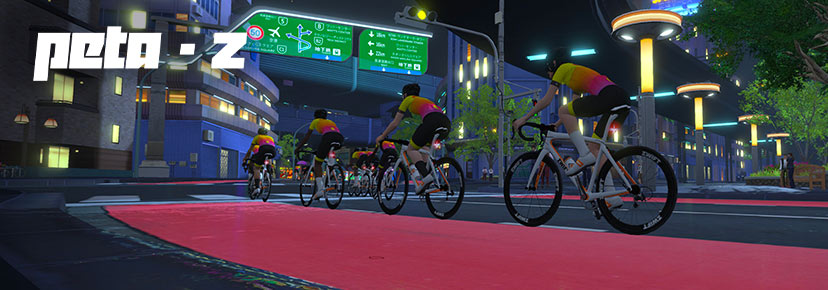
 New Series
 Sir Chris Hoy’s | Tour de 4



![[ALT-TEXT] Person with Sony VR headset, two pistols in his hands, world map in the background, futuristic atmosphere.](https://www.prime-wow.com/wp-content/uploads/2025/03/Hitman-World-of-Assassination-PSVR-2-1.jpg)