Things have gotten a little wild in the Chicago suburb of Orland Park, Illinois, where local cops accused a former cop of impersonating a current cop on Facebook. The department also noted that a top police official had “a glitter bomb sent to him anonymously at the Police Department” and “was contacted by a suicide prevention hotline as a result of a spoofed call.”
So, in a bit of a freak-out over this alleged harassment and impersonation, the Orland Park police investigated and eventually sought charges against the former cop—who said that all he had done was to create a parodic Facebook page critiquing the current departmental leadership.
The whole case was eventually tossed by a judge, who said that the Facebook page wasn’t criminal, and now the former cop is suing the current cops for going after him.
Scientists at Zhejiang University have created the world’s smallest LED display, featuring pixels just 90 nanometers wide — roughly the size of a typical virus and too tiny to be seen with optical microscopes. The breakthrough, described in Nature this week, uses perovskite semiconductors that maintain brightness even at microscopic scales, giving them an advantage over conventional LEDs.
The research team, led by Baodan Zhao, also demonstrated a larger display with pixels measuring about 100 micrometers (human hair width) that successfully rendered images including a spinning globe.
30 years ago today, the ending of ‘Prime Factors’ wrote a check that Voyager‘s episodic nature could rarely cash–but it was still worth writing anyway.
A United States District Court judge has approved a settlement between HP and customers who sued the company for firmware updates that prevented printers from working with non-HP ink cartridges.
The class-action lawsuit, filed in December 2020, alleged HP “wrongfully compels users” to buy only HP ink by issuing updates that block competitors’ cartridges. Under the settlement, HP admits no wrongdoing and won’t pay monetary damages to affected customers, though it will pay $5,000 each to the three plaintiffs and $725,000 in attorneys’ fees.
HP has agreed to allow users of specific printer models impacted by the November 2020 update to decline firmware updates containing “Dynamic Security” features — HP’s term for technology that blocks cartridges using non-HP chips. The settlement applies only to 21 specific printer models, leaving numerous other HP printers subject to Dynamic Security restrictions. HP has previously paid millions in similar cases in Europe, Australia, and California related to printer bricking.
On May 9, AMC Theatres will start showing a sci-fi movie that was shot in Swedish but will look like it was made in English instead. Watch the Skies, which was released in its home country as UFO Sweden, had undergone “visual dubbing” with the help of artificial intelligence. An AI company called Flawless used its technology to digitally alter the film’s images, making the actors look like they were truly speaking in English. Notably, the original actors recorded their own dialogues in English in a sound booth — Flawless AI’s technology merely altered the movements of their lips in the movie.
On its website, Flawless says its TrueSync AI technology “captures every nuance of an actor’s performance and generates new lip movements that perfectly map to the new language audio, providing the perfect visual dub.” Variety says the tool is compliant with the rules set by SAG-AFTRA, which ended a four-month strike in 2023 after securing a deal with studios that protects members “from the threat of AI.”
Flawless AI’s technology could lower the barrier of entry into foreign films. It could make them more appealing to audiences resistant to watching subtitled movies and could provide a better experience for audiences in countries that normally dub movies in their native language. “Showing our materials to filmmakers, especially over the past year, they realize the potential from going to a local stage to a global stage,” the company’s co-founder, Scott Mann, told Variety. “It’s a huge opportunity to get your work out and it’s been invigorating. They are so excited about showing their work in a wider audience, and especially in America.”
Watch the Skies revolves around a teenager who believes that her missing father wasn’t dead but was abducted by aliens. To uncover the truth about her father’s disappearance, she teams up with UFO Club to look for him. AMC Theatres has committed to showing the film in 100 locations across America.
This article originally appeared on Engadget at https://www.engadget.com/ai/amc-theatres-will-screen-a-swedish-movie-visually-dubbed-with-the-help-of-ai-130022232.html?src=rss
We may earn a commission from links on this page. Deal pricing and availability subject to change after time of publication.
The Beats Fit Pro are a solid choice for anyone who wants Apple’s seamless connectivity without shelling out for AirPods Pro. Right now, Woot is offering them for just $109.99 (down from $159.99), marking their lowest price ever, according to price trackers. This deal runs for the next six days or until stock runs out. Prime members get free shipping, while others pay $6. One catch—Woot only ships within the contiguous U.S.
Fit is the focus, here. The built-in earfins keep the earbuds secure without the need for extra attachments. The sound leans toward Beats’ signature style—deep bass, crisp highs, and a slightly recessed midrange. Noise cancellation does an above-average job with lower frequencies but struggles a bit with sharper sounds (like clinking dishes in a café), according to this PCMag review.
Apple users get the most out of these earbuds, with their H1 chip making pairing seamless, along with access to features like Find My tracking, Spatial Audio with head tracking, Adaptive EQ, hands-free Siri, and automatic switching between Apple devices. Android users can still use the Beats app for features like the Ear Tip Fit Test (to get the best seal), firmware updates, and listening mode controls, but they miss out on Spatial Audio, Find My, and hands-free Siri.
The IPX4 rating of the Fit Pro is less impressive for workout-ready earbuds—they’ll handle sweat and light rain, but they’re not exactly built for heavy downpours, and the case isn’t water-resistant. That’s a bit of a letdown for fitness buds. These earbuds support Bluetooth 5.0 and AAC/SBC codecs, but not AptX. That might not be a dealbreaker unless you’re really picky about audio quality. As for battery life, you get six to seven hours per charge (depending on ANC use), with up to 23 extra hours in the case.
The Cycle to Work Scheme is a great way for cyclists working in the UK to save at least 32 per cent on the cost of a bike and cycling equipment.
It’s been used by more than 1.6 million commuters working for 40,000 different employers since it was introduced by the government in 1999 to promote “healthier journeys to work and reduce environmental pollution”.
In this guide, we’ll look at how the scheme works and whether you’re eligible to buy a bike tax-free to cycle to work.
What is the Cycle to Work scheme?
The Cycle to Work Scheme is worth considering before buying a new bike. Steve Sayers / Our Media
The Cycle to Work Scheme is an employee benefit scheme set up by the government in 1999 that enables employers to ‘hire’ bikes and safety equipment to employees through salary sacrifice.
The aim of the scheme is to get more people to commute to work by bike, promoting exercise while reducing pollution.
How does the Cycle to Work scheme work?
The Cycle to Work scheme essentially lets you get your hands on any bike you like. Russell Burton / Immediate Media
In theory, your employer buys a bike for you to ride to work on while you effectively ‘hire’ it through salary sacrifice, allowing you to save money by not paying tax and National Insurance contributions on the monthly fee – much like a company car.
At the end of the ‘hire’ period, you will usually be able to buy the bike from your employer for a nominal fee.
In other words, the salary sacrifice is made from your gross salary, not your net salary.
At the beginning of the scheme, you will be given a voucher or a ‘Letter of Collection’ number that you can redeem at your local bike shop or enter online.
Employers can gain from their staff enrolling in the Cycle to Work scheme. Dave Caudery / Our Media
Because the scheme was set up with the intention of getting more people cycling to work, rather than leisure riding, your employer remains the owner of the bike once you finish the hire period.
While it’s common knowledge that in practice the employee is ‘buying’ the bike, that isn’t legally the case until the salary sacrifice ends and the employer ‘sells’ the now heavily depreciated equipment to the employee.
There is also a benefit to the employer, because they will make savings on National Insurance contributions for each employee who enters into the scheme.
Is there a price limit for the Cycle to Work Scheme?
Most schemes are not limited, enabling you to buy virtually any bike. Russell Burton / Our Media
When the Cycle to Work Scheme first started, there was a price limit of £1,000 because many of the providers were not regulated by the Financial Conduct Authority (FCA).
These days, most providers are FCA-regulated, meaning the limit is at your employer’s discretion, with many opting to have no limit in place.
Some employers may still have a set limit of £1,000, £2,000 or £5,000, including safety equipment because this reduces administrative costs.
Do I own the bike at the end of the Cycle to Work scheme?
There are a few options on what’s next after finishing your agreement. Steve Sayers / Our Media
Because you have technically hired the bike from the scheme for the length of your agreement, you are left with a few options at the end of it:
Enter into a new agreement, paying a small deposit to rehire the bike
Buy the bike from the scheme
Give the bike back
Under HMRC rules, when buying the bike back at the end of the term you need to make a one-off payment to the scheme provider.
This will depend on the initial value of the bike and how long you’ve been using it.
Here’s a table of the minimum value HMRC places on a used bike of different ages:
Providers won’t usually extend the agreement beyond a specified term. Even if you keep the bike until it’s worth zero, you’ll probably have to make a nominal payment to the provider to assume ownership.
How does the Cycle to Work scheme work if you leave your job?
Things can get a little tricky if you leave your job while still in an agreement. Rebecca Leach / Our Media
If you leave your employer while the initial Cycle to Work salary sacrifice agreement is still in force, you’ll need to pay off the balance and usually the depreciated value of the bike too, if you want to keep it. You have the option to give it back to your ex-employer too.
Depending on your scheme provider, you may be able to transfer your agreement to your new place of work.
What are the rules of the Cycle to Work scheme?
There are terms to the Cycle to Work Scheme. Dave Smith / Specialized
While it’s unlikely you’ll have HMRC stalking your Strava in search of your daily commute, the government states that 50 per cent of a bike’s use must be made up of ‘qualifying journeys’, such as commuting to work.
How this is enforced remains unclear, but there is no scrutiny over the type of bike you buy. This means you could, for example, choose one of the best enduro bikes to ride to work – and use it every weekend.
Being self-employed makes accessing the scheme more difficult. Steve Sayers / Our Media
To take part in the Cycle to Work scheme you need to receive a salary through the Pay-As-You-Earn (PAYE) system.
The scheme allows you to sign up as an employer and an employee, meaning directors of single-person limited businesses can join the scheme.
Your PAYE salary needs to be above the National Minimum Wage after the salary sacrifice for the bike has been taken out to qualify for the Cycle to Work scheme.
You cannot participate in the Cycle to Work scheme if you are a sole trader because you will be paying tax and National Insurance once a year through a Self Assessment tax return.
You can however claim the tax back on any bike bought for work purposes.
Can I buy an electric bike on the Cycle to Work scheme?
As there is no scrutiny on what bike you choose, you could decide to ‘hire’ an electric bike for the duration of your agreement to help you up the hill to the office or shuttle you to the top of the trail at the weekend.
How much money does the Cycle to Work scheme save?
You could save up to 47 per cent. Russell Burton / Immediate Media
The amount you save will depend on your tax bracket, and the value of the bike and kit you buy.
Because your monthly payments for the bike will reduce your gross salary, you’ll save the tax and National Insurance contributions you’d pay on that part of your pay packet over the term of the Cycle to Work agreement.
If you are a basic rate tax-payer, that amount will be 32 per cent of the purchase price, broken down as 20 per cent from the tax savings and 12 per cent from National Insurance.
For a higher-rate tax-payer that increases to 42 per cent, with 40 per cent from tax and 2 per cent from National Insurance.
You’ll see a saving of 47 per cent if you pay the additional tax rate that kicks in after £150,000.
If you’re a top-rate tax-payer in Scotland then you can see savings of 49 per cent.
Cycle to Work scheme calculator
Savings depend on your salary, and the price of the bike and extras you choose. Lucy Rowe / Our Media
Here’s a table of typical savings for a bike purchase on a Cycle to Work scheme:
If you have the price of the bike you’re looking for and know your gross salary, then online calculators such as that on the Green Commute Initiative’s website will work out the indicative numbers.
Reducing your gross salary might impact other benefits, such as statutory sick pay and the size of your pension pot, so make sure to check these out before committing to the agreement.
You can’t take on payments that reduce your salary below the minimum wage, plus you should consider insuring your bike because if it is stolen you will still be liable for the payments.
Is the Cycle to Work scheme worth it?
The value of the Cycle to Work scheme is dependent on your personal situation. Russell Burton / Immediate Media
If you’re in the market for a new bike, buying it through the Cycle to Work scheme can be a good way to save money through cycling and spread the cost of the purchase over the duration of the agreement.
Depending on your personal circumstances, and how generous your employer is with the price limit, the Cycle to Work scheme can offer some serious savings on new bikes.
What are the benefits of the Cycle to Work scheme?
There are many benefits associated with the scheme. James Maloney/SWPix.com
Apart from the obvious cost savings associated with the scheme, the ability to pay for the bike over a period of time shouldn’t be overlooked because it enables you to effectively take out an interest-free loan on the purchase of the bike.
While the scheme is aimed towards commuting, there is no control over what bike you can ‘hire’, meaning you have a full range of options including hybrid bikes, road bikes and mountain bikes.
There is also the benefit of knowing you’re effectively spending tax-payer money on recording faster segment times on your new road bike or shredding the good stuff on your new mountain bike.
What Cycle to Work schemes are available?
The Cycle to Work scheme is almost always accessed via a third-party provider. Steve Sayers / Our Media
Cyclescheme
GCI
Cycle2Work
Bike2Work
Cycle Solutions
Where can it be used?
Accepted in over 2,600 partnered shops with exclusive rights to Canyon
Accepted in over 1,300 partnered shops
Accepted in Halfords and Tredz, but can be redeemed on behalf of Halfords by some bike shops
Accepted in over 2,200 partnered shops
Accepted in 1,250 shops and the scheme’s online store
Hire period
Up to 36 months
Up to 60 months
Up to 18 months
12 months
Up to 18 months
Purchase option
Own it after 4 years by paying a 3 or 7 percent deposit at the start of agreement, or buy after 12 months at HMRC’s 18 to 25 per cent Fair Market Value price
Pay a nominal £1 fee at the end of extended hire, or buy after 12 months at HMRC’s 18 to 25 per cent Fair Market Value price
Extend hire period and own the bike after 4 years, or buy after 12 months at HMRC’s 18 to 25 per cent Fair Market Value price
Own it after 4 years by paying a 3 or 7 percent deposit at the start of agreement, or buy after 12 months at HMRC’s 18 to 25 per cent Fair Market Value price
Extend hire period and own bike after 5 years, or buy at the end of scheme at HMRC’s 18 to 25 per cent Fair Market Value price
The Cycle to Work scheme is catered for by many different providers, with some employers signed up to specific schemes, limiting which ones are available to you.
Small employers will usually allow you to pick the scheme you want to use, which can be helpful because some bike shops may have preferences on providers.
Cyclescheme
Cyclescheme is one of the largest providers, claiming to have more than 1 million customers and over 2,600 partnered bike shops across the UK.
Cyclescheme also has exclusive access to big bike brands such as Canyon, Saracen and Planet X.
Green Commute Initiative
The Green Commute Initiative is a social enterprise that is focused on getting more people out of cars and onto bikes.
The company is FCA-regulated and enables its users to take up to £10,000 worth of salary sacrifice, opening up a large range of bikes.
It also offers varying periods for repayment and doesn’t charge end-of-term fees to own the bike, only a nominal £1 marker that acts as proof of ownership.
Cycle2Work
Cycle2Work is Halfords’ Cycle to Work scheme, and can be redeemed in its stores and online.
The scheme is also partnered with Tredz, enabling you to redeem your ‘Letter of Collection’ on its website.
Cycle2Work isn’t available in every bike shop, but many independents can redeem the voucher on Halfords’ behalf. This does limit where you can buy your bike from, though.
Bike2Work
Bike2Work is another large provider that is partnered with more than 2,200 shops throughout the country.
Many online stores, such as Tredz, also accept its vouchers.
Cycle Solutions
Cycle Solutions is a medium-sized Cycle to Work Scheme provider. It claims to offer a choice of 400 brands (including Giant, Specialized and Cannondale) from more than 1,250 independent and chain bike shops.
Large employers, such as the Co-op and NHS England, are signed up to Cycle Solutions’ scheme.
It also has its own online bike shop dedicated to the bikes and accessories available through its scheme.
Where can I buy a bike on Cycle to Work?
Most local bike shops will be able to redeem Cycle to Work Scheme vouchers. Getty
You can buy pretty much any bike you like via the Cycle to Work Scheme, as long as it’s not a children’s bike.
Where you buy your Cycle to Work bike is somewhat governed by your provider. However, many independent bike shops will be signed up to various providers, making it easier for you to find the exact model you’re looking for.
You can also redeem your Cycle to Work voucher online at major retailers including Sigma Sports.
Cycle to Work scheme alternatives
The Cycle to Work scheme isn’t the only way to save on commuting kit. Steve Sayers / Our Media
There are other alternatives to the Cycle to Work scheme that may be just as lucrative.
Choosing to buy a bike on finance will enable you to spread the cost of the bike in a similar manner to the Cycle to Work scheme.
It may even offer a more favourable contract because you can own the bike outright after 12 months rather than having to pay HMRC’s Fair Market Value price to own the bike or wait four years for the bike to be fully depreciated.
However, buying a bike on finance may mean you have to pay interest and any other fees.
What are the problems of the Cycle to Work scheme?
The Cycle to Work scheme can affect your pension pot and other finances. Mike Kemp/In Pictures via Getty Images
Many shops will only sell bikes at the recommended retail price due to fees associated with Cycle to Work vouchers.
If your employer sets a price limit for the voucher, you’re somewhat limited in your bike choice and your savings.
Under most Cycle to Work schemes, you have to spend the value of the voucher in one go. This stops you from adding commuting accessories to your bike after buying it.
Most schemes prevent you from buying a bike and adding accessories at a later date. Cycling Plus / Robert Smith Photography
However, Gogeta, a new cycle scheme provider, is more flexible. Its voucher acts more like a gift card. You can make multiple purchases during the 12-month scheme until the balance runs out.
Another difference from the main providers is you can use a Gogeta voucher at different retailers.
When using the Cycle to Work scheme, it can be easy to overburden yourself. So make sure you only ‘hire’ a bike you can afford because you will be liable for the payments for the duration of the arrangement.
If you decide to leave your company, you’ll have to pay off the entire balance of the bike before leaving, and also the depreciated value of the bike if you want to keep it.
And as previously mentioned, self-employed people and those on the minimum wage are not eligible for the scheme. These are things the Cycle to Work Alliance (a group of scheme providers) and the Association of Cycle Traders, which represents 4,000 UK cycling retailers, are campaigning to change.
Submitted today ahead of the Linux 6.14 stable release expected Sunday is a lone scheduler fix for the kernel. This patch is for reverting a change made to the Linux kernel two years ago that ended up regressing some workloads with a significant performance hit…
Look, we’re all familiar with the sorry state of current-generation GPUs, in terms of availability and partner pricing. We’ll try our best to refrain from beating that dead horse. Instead, let’s discuss the inevitable launch of more mainstream SKUs that are in the pipeline, which in theory, should offer gamers a more affordable upgrade path
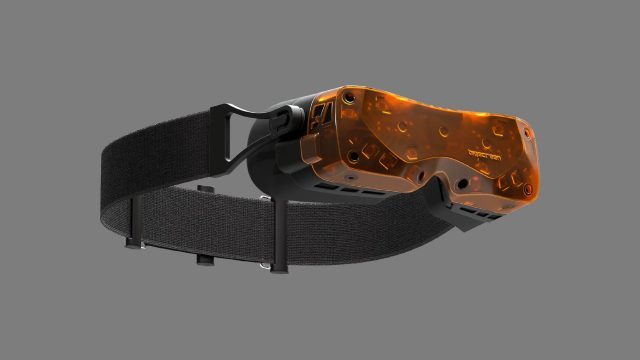
Bigscreen launched orders for its upcoming Beyond 2 PC VR headset yesterday, which is boosting field-of-view and clarity thanks to the inclusion of a new pancake lens design. Now, the company says that within a mere 10 hours of sales going live, Beyond 2 has already outsold the original Beyond by a significant margin.
In a series of updates on X, Bigscreen revealed just how well Beyond 2 was doing among PC VR enthusiasts.
“In just the first 25 minutes, Beyond 2 outsold the first day of Beyond 1 sales. In the first hour, we’ve doubled Beyond 1 launch day sales.” Bigscreen said early yesterday.
As the day went on, the company released more info on sales performance of Beyond 2 and its eye-tracking variant, Beyond 2e. And the most recent stat is pretty staggering.
“Within 10 hours of launch…Beyond 2 has sold more than the first FOUR MONTHS of Beyond 1 sales.”
Bigscreen Beyond 2 | Image courtesy Bigscreen
At the time of this writing, Beyond 2 and Beyond 2e are now quoted to ship in June 2025, already blowing past the first shipment batches, which were planned for April and May respectively.
But why the hype for Beyond 2? While you can read more about Beyond 2 here, including specs, it may come down to the easy upgrade pathway laid out by Bigscreen. Not only can Beyond 1 users purchase at a discount—$849 for Beyond 2 and $1049 for Beyond 2e—but it’s also backwards compatible with most Beyond 1 accessories, including the custom facial interface that’s required for Beyond 1.
Moreover, Beyond 2 packs in a new pancake lens design, offering up a wider 116-degree diagonal FOV, an adjustable IPD mechanism, and a lighter 107g design, with the 2e model adding AI-powered eye-tracking. It still has the same dual 1-inch 2,560 × 2,560 micro-OLED displays as the original Beyond, although its new lenses boast better clarity and FOV over the original.
Beyond 2 and 2e are priced at $1,019 and $1,219 respectively (or discounted for Beyond 1 owners). It was also unveiled alongside a new halo-style mount and Lightblocker facial interface, which is set to arrive in Q3 2025.
The Titanic VR experience, previously only on PC VR and PlayStation VR, is coming to Quest 3 and Quest 3S next month.
Titanic VR originally released on Steam, the Oculus Rift Store, and on the original PlayStation VR in 2018, leveraging the power of your gaming PC or PS4 to let you experience and understand history by reliving the tragic sinking of RMS Titanic in 1912 as a survivor, and exploring the shipwreck in a submarine in the present day.
The developer Engage XR, formerly Immersive VR Education, is the same behind the Apollo 11 VR experience, which first released on early PC VR in 2015.
But while Engage felt Apollo 11 was suitable for the original Oculus Quest, and delivered it as a launch title, the developer didn’t feel that standalone chipsets were up to the task of rendering the Titanic experience, with its hundreds of NPCs and detailed exterior and interior recreation of the enormous ship – until now.
0:00
/2:19
The first footage of Titanic VR running standalone on Quest 3.
Engage says it’s “pushing the limits” of the XR2 Gen 2 chipset in Quest 3 and Quest 3S to bring the full Titanic VR experience to standalone VR. The developer has shared the first footage of the submarine experience running standalone on Quest 3, and you can see it above.
Titanic VR launches on the Meta Horizon Store for Quest 3 and Quest 3S on April 14, and you can wishlist it now. The price hasn’t yet been revealed, but the PC VR version is $20, for reference.
You can find our review of the PC VR version of Titanic VR here, but keep in mind that the graphics and performance will be different between it and the coming Quest 3 port.
NVIDIA’s GTC event, particularly Jensen Huang’s keynote, should be mandatory watching for anyone interested in working for, buying or building tech. The event is as well orchestrated as an old Steve Jobs event, and while Huang isn’t as charismatic as Jobs was (few are), the content is less about pitching products and more about pitching a very different future.
At these events over time, I’ve seen the future of drones, robots, autonomous cars, AI simulation (up to world scale), gaming and video conferencing, though this last, which used photorealistic digital background built from components, was unintended.
This month’s event was no exception. I’ll focus on what was interesting.
The Birth of Next Generation AI
The keynote opens up how AI can be used to create predictive models, views into the future, turn knowledge into what looks to me like magic, improve our knowledge of the human body to make us healthier, protect critically endangered wildlife, turn ideas into positive scientific and social revolutions, help make people better both physically and mentally, and take that leap to where no one has gone before.
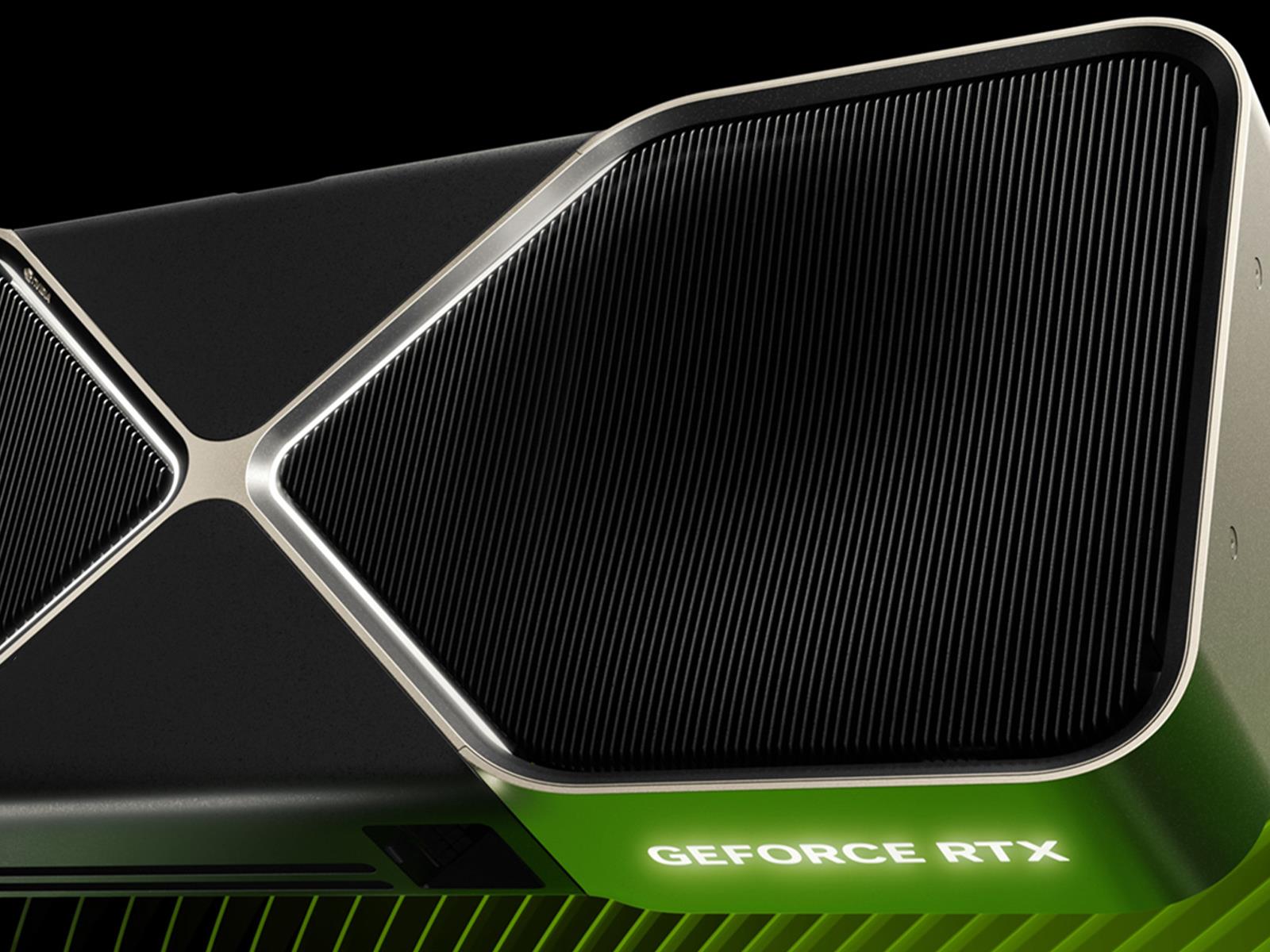
As a background, Huang used his headquarters building in simulation, and as many know, that building was first fully simulated before it was built (something everyone should do). NVIDIA has been so successful with AI and artificial intelligence it can’t build its graphics cards fast enough, and its Blackwell-based 5090 cards are sold out worldwide.
This event has grown from one of the smallest of its type in the industry to one of the largest, arguably growing beyond the capabilities of the resources in Silicon Valley. And this isn’t the only thing pushing resources. According to Huang, a year ago we were 100x off in terms of the resources needed to run AI at scale largely because a year ago we weren’t as focused on quality as we are now. DeepSeek was one of the big examples of this shift, and it caught the world sleeping.
NVIDIA’s Blackwell processor would have seemed like an insane product to create two years ago because the performance requirements back then seemed more than adequate. But even Blackwell may not be enough to meet the emergent needs of AI users, and no one else is close to providing a Blackwell solution let alone something stronger. Part of this is because AI has moved from something people create to something that is created by AI. This is already forcing a massive change in datacenter design. That is the basis of the announcement at the event of Blackwell Ultra and advances in photonics that increase Blackwell’s capabilities to address these new and growing needs.
Huang spoke to targeted AI from manufacturing to automobiles.
NVIDIA Halos
This is basically a logical shield for automobiles, creating a protective layer between the car and the environment around it. When it comes to autonomous driving, NVIDIA is well ahead of everyone else in terms of safe performance. With Omniverse being the safest and more comprehensive simulation, to Cosmos, a learning model where a teacher is created, and then subsequent tuning automatically optimizes the results. This could be particularly useful for fringe events like extreme weather shifts, black ice or occluded visibility which have all been problematic to this technology.
I think future cars should tell you what tech is in them so you can better trust the result with your family.
Robotics
This is one of the segments that I personally find the most interesting. NVIDIA has been at the forefront of this. It’s ironic that the company that first argued that robots would eventually outstrip both PC and smartphones was Dell Technologies which still has made no move toward this massive opportunity. NVIDIA has been on top of this from the start with Omniverse training so it can, like autonomous cars, be safely trained for even extreme fringe events, making them both safe and performant with more and more capabilities, greater safety, and massively improved performance.
This next generation of robots will be able to work more as a system and learn real-time as they operate. They announced Mega, which tests robots at scale, and Isaac GROOT N1, which is inspired by human cognitive processing, making these robots vastly easier to spin up and apply to new environments.
And they closed with an update on a Disney Star Wars robot that pretty much works like the simulations in the movies. They announced Newton, a collaboration between Deep Mind, Disney Research and NVIDIA. If they can get the cost of this thing down to something affordable, I can see variants in most every home, particularly those that don’t allow pets.
Wrapping Up:
NVIDIA GTC is where you go to see the future of computing, but increasingly, it is where you go to see the future of the developed world. From pervasive AIs to pervasive robotics to simulation and everything in between, if you want to see the future, check out the GTC keynote. It doesn’t cost you anything but your perception of what is possible and how amazing the future will become. Particularly during times like this, a bit of “amazing” can help restore hope for a better tomorrow.
AMD on Thursday announced GAIA for “Generative AI Is Awesome” as a means of easily running local large language models (LLMs) on Ryzen AI PCs with the XDNA NPU. GAIA provides an easy software demonstration for Ryzen AI capabilities but sadly for the moment is limited to Microsoft Windows platforms…
European Central Bank Chief Economist Philip Lane warned that Europe must develop a digital euro to counter growing American influence over the continent’s financial system [alternative source] amid escalating geopolitical tensions. Lane specifically cited Europe’s “current dependence on US payment-card providers Visa and Mastercard, as well as technology companies including PayPal, Apple and Google” as a vulnerability requiring urgent action.
His comments come as President Donald Trump’s administration promotes dollar-backed stablecoins worldwide as part of a broader cryptocurrency strategy, alarming European officials. ECB Governing Council member Francois Villeroy de Galhau recently cautioned that “the US risks bringing about the next financial emergency through its support of cryptocurrencies.”
“The digital euro is not just about adapting to the digital age. It is about ensuring Europe controls its monetary and financial destiny,” Lane told a conference in Ireland, noting that a digital currency would “limit the likelihood of foreign-currency stablecoins gaining a foothold” in Europe.