Genetic testing company 23andMe declares bankruptcy

On Sunday, the genetic testing and heritage company 23andMe announced that it had entered Chapter 11 bankruptcy and was asking a court to arrange its sale. The company has been losing money for years, and a conflict between its board and CEO about future directions led to the entire board resigning back in September. Said CEO, Anne Wojcicki, has now resigned and will be pursuing an attempt to purchase the company and take it private.

At stake is the fate of genetic data from the company’s 15 million customers. The company has secured enough funding to continue operations while a buyer is found, and even though US law limits how genetic data can be used, the pending sale has raised significant privacy concerns.

Risky business

The company launched around the time that “gene chips” first allowed people to broadly scan the human genome for sites where variations were common. A few of these variants are associated with diseases, and 23andMe received approval to test for a number of these. But its big selling point for many people was the opportunity to explore their heritage. This relied on looking broadly at the patterns of variation and comparing those to the patterns typically found in different geographic regions. It’s an imperfect analysis, but it can often provide a decent big-picture resolution of a person’s ancestry.

Read full article

Comments

Android 16 Adds A New Setting To Make It Way Faster To Unlock Your Pixel Phone

Android 16 Adds A New Setting To Make It Way Faster To Unlock Your Pixel Phone
It looks as if the latest Android 16 Beta 3 will solve an age-old Pixel limitation, which is keeping the fingerprint scanner active when the screen is off. No more needing to wake the screen first and then unlock your device with your fingers. Why this wasn’t activated in the first place is anyone’s guess, but hey, you now have the option

Samsung Unveils A 3D OLED 4K Monitor And More Next-Gen Gaming Displays

Samsung Unveils A 3D OLED 4K Monitor And More Next-Gen Gaming Displays
If you thought 3D monitor technology was left behind a few years ago, Samsung has some news for you. Gaming monitors have been on the warpath with updated specs, with 4K and OLED being the main buzzwords the last several years. Now Samsung is looking to reintroduce 3D technology back into the fray, with some new cutting-edge displays. 

To

Linux Kernel 6.14 Officially Released

prisoninmate shares a report: Highlights of Linux 6.14 include Btrfs RAID1 read balancing support, a new ntsync subsystem for Win NT synchronization primitives to boost game emulation with Wine, uncached buffered I/O support, and a new accelerator driver for the AMD XDNA Ryzen AI NPUs (Neural Processing Units).

Also new is DRM panic support for the AMDGPU driver, reflink and reverse-mapping support for the XFS real-time device, Intel Clearwater Forest server support, support for SELinux extended permissions, FUSE support for io_uring, a new fsnotify file pre-access event type, and a new cgroup controller for device memory.


Read more of this story at Slashdot.

The 6.14 kernel is out

Linus has released the 6.14 kernel, a bit
later than expected:

So it’s early Monday morning (well – early for me, I’m not really a
morning person), and I’d love to have some good excuse for why I
didn’t do the 6.14 release yesterday on my regular Sunday afternoon
release schedule.

I’d like to say that some important last-minute thing came up and
delayed things.

But no. It’s just pure incompetence.

See the LWN merge-window summaries (part 1, part 2) and the KernelNewbies 6.14 page
for details on what’s new in this release.

23andMe has filed for bankruptcy and CEO Anne Wojcicki has stepped down

DNA testing company 23andMe has filed for Chapter 11 bankruptcy, following a tumultuous few years that included significant layoffs and a wide-ranging data breach. It plans to find a buyer and continue operations throughout the process, with the company’s CEO, Anne Wojcicki, resigning to bid for the company independently. The Board of Directors’ Special Committee previously rejected a proposal from Wojcicki.

“We expect the court-supervised process will advance our efforts to address the operational and financial challenges we face, including further cost reductions and the resolution of legal and leasehold liabilities. We believe in the value of our people and our assets and hope that this process allows our mission of helping people access, understand and benefit from the human genome to live on for the benefit of customers and patients,” said Mark Jensen, chair and member of the Special Committee, in a release.

Jensen added that the company is committed to safeguarding customer data and that “being transparent about the management of user data going forward, and data privacy will be an important consideration in any potential transaction.”

There was a time when 23andMe was all the rage, with everyone you knew sending samples of their saliva. However, things have declined since the company went public. It was once valued at $6 billion, but this month that number was less than $50 million. The company also laid off over 200 employees late last year.

But, the largest hurdle came in 2023 when hackers accessed the information of 6.9 million customers — the breach started in April of that year, but 23andM3 noticed it five months later, in September. The company announced the leak that October. One year later, 23andMe settled a class action lawsuit for $30 million, following claims such as that the company failed to tell plaintiffs that they were specifically targeted for being of Chinese or Ashkenazi Jewish heritage.

This article originally appeared on Engadget at https://www.engadget.com/big-tech/23andme-has-filed-for-bankruptcy-and-ceo-anne-wojcicki-has-stepped-down-144629683.html?src=rss

Minecraft Is Getting A Major Visual Upgrade, Flying Mounts, And My Favorite Quality Of Life Feature In Years

2025 is going to be a neat year for Minecraft. Not only is the survival crafting game moving to more frequent feature drops, it’s also getting flying mounts and a big boost to its more than decade-old graphics. Revealed during a special Minecraft Live, Vibrant Visuals will make every pixelated world full of new life…

Read more…

Here’s How the Pixel 9a Stacks Up Against the iPhone 16e

The most affordable iPhone, or the most affordable Pixel? Which one is right for you? Google’s Pixel 9a comes in $100 cheaper than the iPhone 16e, and has many AI features and specs from its flagship big brother, the Pixel 9. And it’s a similar story with the iPhone 16e. The Pixel 9a starts shipping in April, while the iPhone 16e is out already (and we’ve already compared it with Samsung’s mid-range lineup).

But, as always, the devil is in the details. Here’s how Google’s new Pixel 9a compares to the iPhone 16e.

Design

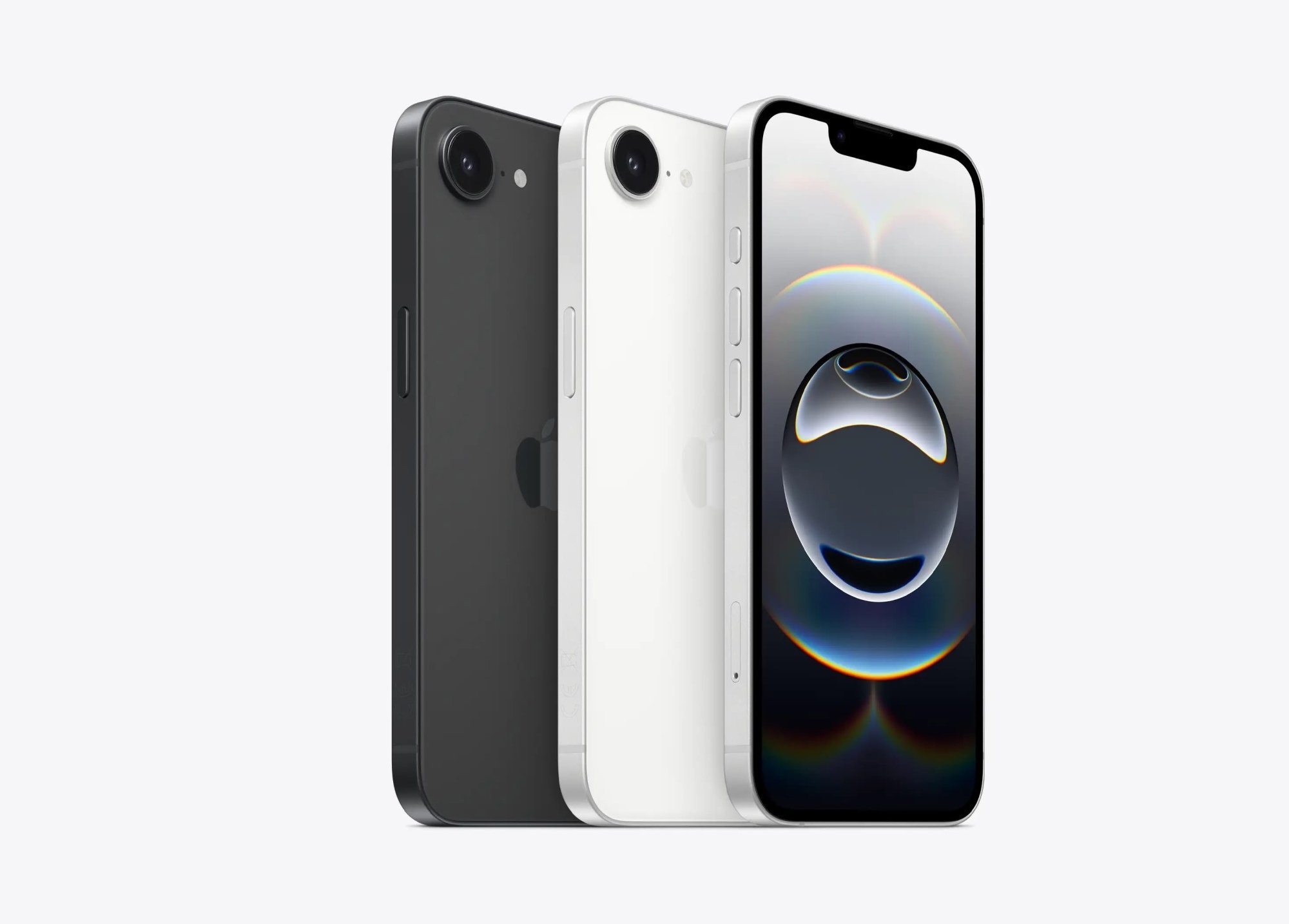
iPhone 16e.

Credit: Apple

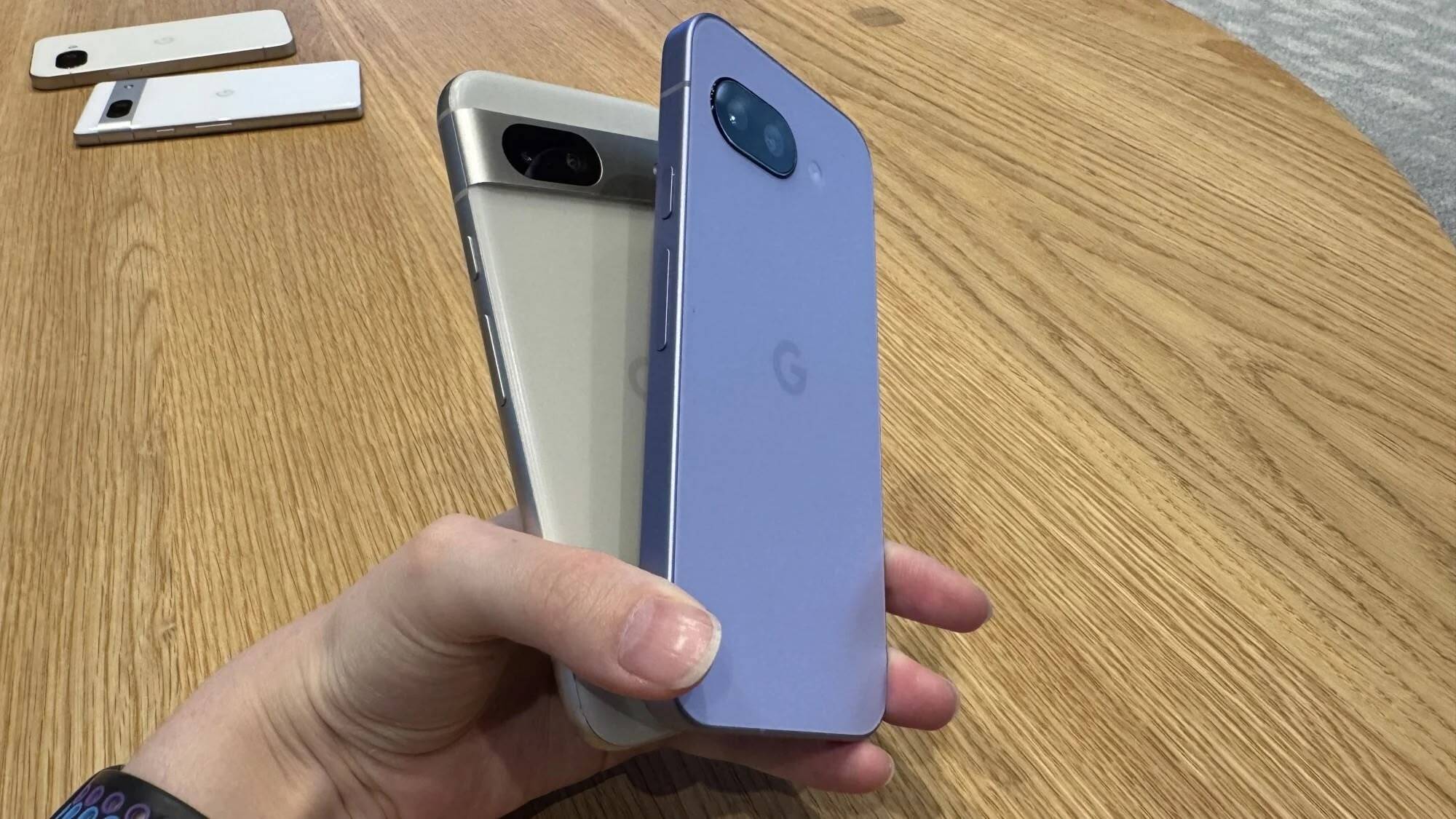
Both the iPhone 16e and the Pixel 9a have a similar design language. They have flat sides, flat fronts, and rounded edges. And unlike its flagship counterpart, the Pixel 9a does not feature a camera bump. This is a big departure for the Pixel line, but it does make it look more like an iPhone.

Pixel 8a vs Pixel 9a.
Pixel 8a (left) vs Pixel 9a (right).
Credit: Michelle Ehrhardt

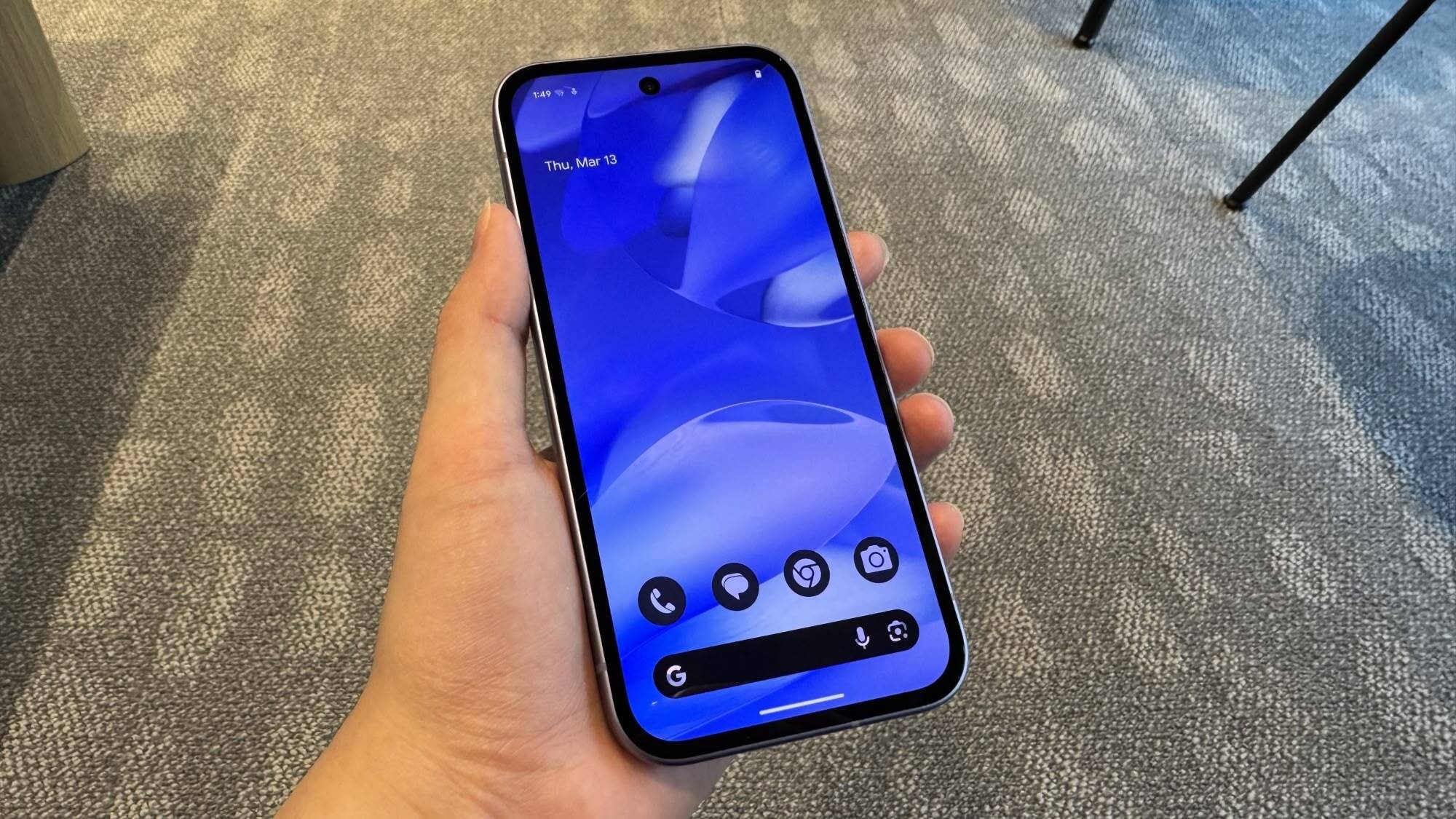
On the front, the iPhone features a notch-style display instead of the Dynamic Island found on the flagship iPhones. The Pixel 9a, comparatively, has a circular cutout at the top for the front-facing camera.

The Pixel 9a weighs 6.6 ounces, while the iPhone 16e is ever so slightly lighter at 5.9 ounces.

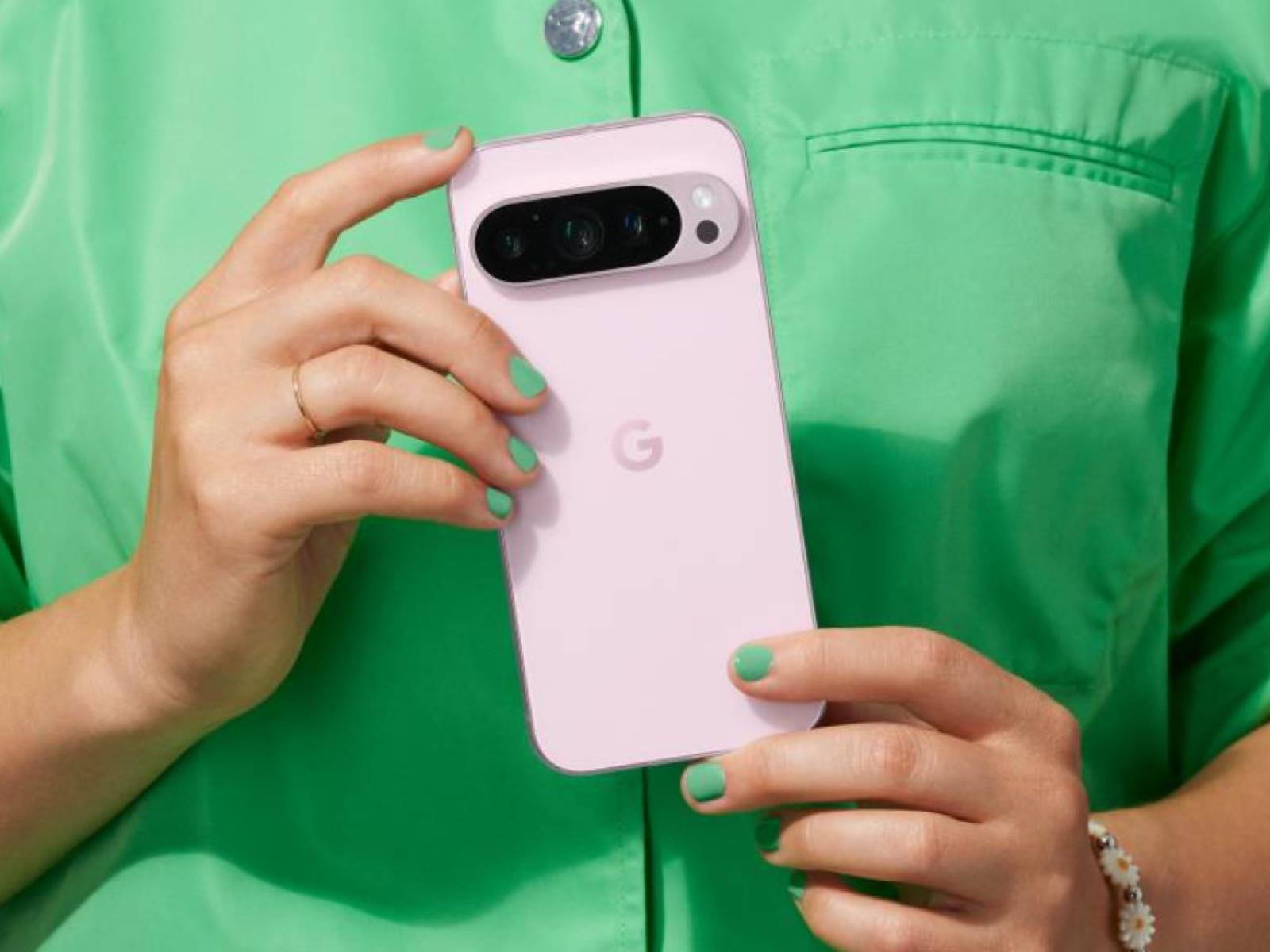
The iPhone 16e only comes in Black or White, but the Pixel 9a comes in four different color options: Porcelain, Obsidian, Peony, and Iris. The Peony color is the light-pink option, while the Iris color looks like a mix of purple and lavender.

Display

Pixel 9a display.

Credit: Michelle Ehrhardt

The Pixel 9a has a 6.3-inch OLED screen (2,424 by 1,080 pixels), supports variable refresh rate (between 60-120Hz), and has a max brightness of 2700 nits (1800 nits typical brightness).

The iPhone 16e on the other hand a smaller 6.1-inch OLED display with a nearly identical resolution (2,532 by 1,170 pixels), and offers a fixed 60Hz refresh rate and a maximum brightness of 1200 nits (800 nits typical brightness).

On paper, it seems like the Pixel is out in the lead here, offering a high-refresh rate display that’s slightly bigger, sharper, and much brighter than the iPhone.

Performance

Both the iPhone 16e and Pixel 9a run on chips made by the same company, and are featured in their flagship counterparts. The iPhone 16e features an Apple A18 chip (minus one GPU core) that’s found in the iPhone 16 series, while the Pixel 9a uses Google’s Tensor G4 chip, same as the Pixel 9. Both devices feature 8GB RAM, which is a downgrade from the flagship.

While the Pixel 9a benchmark scores aren’t out yet, we can use the Pixel 9 as a comparison, as both devices share the same chip. In Geekbench, Pixel 9 scored 1,657 in single-core performance and 4,060 in multi-core performance.

The iPhone 16e, on the other hand, score 2,706 in single-core testing and 7,942 in multi-core testing.

Based on raw numbers, it looks like the iPhone 16e’s performance is far better than Pixel 9a’s. Both devices should be plenty fast for day-to-day use, but the extra headroom from the A18 processor bodes well for iPhone 16e’s longevity.

Cameras

The iPhone 16e famously has a single camera setup with a single 48MP lens at the rear, while the Pixel 9a has a 48MP ( f/1.7) wide-angle lens and an additional 13MP ( f/2.2) ultra-wide sensor. Apple’s sensor lets in more light, however, which should make low-light photography better.

Both devices capture 4K video at 30 or 60 frames per second. The iPhone also has options for 24 and 25 frames per second.

iPhone and Pixels are generally good at photography, and each have their own slightly different look that largely comes down to computational postprocessing. Both devices also come with their own AI photo editing features, although it’s uncertain which will be more useful until the Pixel 9a releases.

Battery Life

Both phones go big on battery life. Google has put in a massive 5,100 mAh battery in the Pixel 9a and is promising over 30 hours of battery life.

The iPhone 16e, meanwhile, features a 4,004 mAh battery, and Apple says it has the largest battery life of any iPhone, promising 26 hours of offline video, or 21 hours of streaming video. In real life testing, PCMag found that the iPhone 16e lasted 21 hours and 39 minutes in a battery benchmark test, although Pixel 9a tests are still a question mark.

Price

With the Pixel 9a, you clearly get more for less. Google’s budget phone starts at $499 for 128GB storage, and the upgrade to 256GB only costs $559.

On the other hand, the iPhone 16e starts at $599 for 128GB, and goes up to $699 for 256GB, or $899 for 512GB.

Although, it’s worth reiterating that the iPhone 16e is available to purchase right now, while the Pixel 9a will start shipping sometime in April 2025.

Which One Is Right For You?

Your choice starts with the ecosystem. If you want a smartphone to work well with your Mac, the iPhone 16e might be the default choice for you. The same goes for Pixel 9a if you really want an Android phone.

If you want the best AI features, the Pixel 9a might have an edge. It comes with Gemini Nano built-in, and the Gemini app adds support for AI features like Gemini Live, AI photo editing, and more. Apple Intelligence on the iPhone 16e also supports AI features like Writing Tools, photo Clean Up, and more, but the AI-enhanced Siri largely isn’t out yet.

As for hardware, if you want a phone that will last for a longer time, the iPhone 16e’s slightly stronger chip is a better bet. However, the Pixel 9a is the value for money pick. Not only is the base model $100 cheaper, the 256GB version is $140 cheaper than the iPhone 16e.

Redo Rescue: A Free and Easy Backup & Recovery Solution

Redo Rescue (formerly Redo Backup and Recovery) is a powerful and user-friendly backup and disaster recovery solution that provides a simple, easy-to-use interface that anyone can navigate.

Whether you’re using Linux or Windows, Redo Rescue supports bare-metal restores, meaning you can fully recover your system even if your hard drive fails or gets corrupted within minutes.

With Redo Rescue, all your files, settings, and system configurations will be restored to the exact state they were in when the most recent backup was taken.

The software runs as a live ISO image, built on Debian, and provides a graphical interface for ease of use, which is open source and completely free for both personal and commercial use.

The post Redo Rescue: A Free and Easy Backup & Recovery Solution appeared first on Linux Today.

Linux 6.14 Released With Working NTSYNC Driver, AMD Ryzen AI Accelerator Support

There was a hiccup yesterday with no Linux 6.14 release or 6.14-rc8 otherwise… Linus Torvalds has a very good track record of sticking to his Sunday release regiment. Yet yesterday was quiet. Today though Linus Torvalds released the Linux 6.14 kernel as the newest stable version. Linux 6.14 is what’s set to go on and power Ubuntu 25.04, Fedora 42, and other spring 2025 Linux distribution releases…

Footage Of Other Actors Auditioning For Back To The Future’s Marty McFly Role In 1984

This is a video included in the extras of a Blu-Ray copy of Back To The Future featuring actors (Billy Zane, C. Thomas Howell, Jon Cryer, and Ben Stiller) in 1984 auditioning for the role of Marty McFly. There’s also clips of Peter DeLuise auditioning for Biff Tannen and Kyra Sedgwick for Jennifer Parker. What might have been! I think they nailed the casting though. Apparently (but not shown in the video) Jeff Goldblum, John Lithgow, Dudley Moore, Ron Silver, Robin Williams, John Cleese, Mandy Patinkin, Gene Hackman, James Woods, and Mark Mothersbaugh were all considered for Doc Brown’s role. Are you thinking what I’m thinking? “Does it involve building a time machine and repeatedly traveling back to the casting and meddling so each actor gets the part just to see how that version of the movie turns out?” Oh what, you’ve got something better to do?

FBI Warns Millions Of Drivers To Beware Of Unpaid Toll Road SMS Scam

FBI Warns Millions Of Drivers To Beware Of Unpaid Toll Road SMS Scam
In today’s high-tech world, some toll roads keep the traffic moving by using transponders and cameras, rather than requiring that every driver come to a full stop to shove money into a machine (or into the hands of a gatekeeper). Mistakes can happen, though, and the FBI issued a warning to hundreds of millions of commuters to be on the lookout

Apple is finally updating AirPods Max with lossless and ultra-low latency audio

No, pigs aren’t flying, hell hasn’t frozen over and you (probably) haven’t won the Powerball jackpot, but something else nearly as unexpected is happening. Over four years after it debuted AirPods Max, Apple is set to update them with long-overdue features. The company is bringing lossless audio and ultra-low latency audio to the overear headphones when it rolls out iOS 18.4, iPadOS 18.4 and macOS Sequoia 15.4 in April.

It’s the first (and only major) update Apple has given the AirPods Max outside of starting to offer a model with a USB-C charging port back in September. And that’s the kicker: based on the wording in Apple’s press release, it seems the update will only be for the USB-C version of the AirPods Max, not the original version with the Lightning port. What’s more, it appears that lossless audio and ultra-low latency audio may only be available when you connect the headphones to an audio source via a USB-C cable. Engadget has asked Apple for confirmation.

As luck would have it, Apple is starting to sell a USB-C to 3.5mm cable today. It’ll run you $39. There will also be the option to connect your iOS or iPadOS device to speakers or car stereos that have 3.5mm audio ports with the cable.

Still, you’ll at last be able to listen to 24-bit, 48 kHz lossless audio with AirPods Max. Lossless audio will also be compatible with Personalized Spatial Audio, Apple says. Apple Music subscribers can listen to more than 100 million songs in lossless audio.

The company notes that, following the firmware update, “AirPods Max will become the only headphones that enable musicians to both create and mix in Personalized Spatial Audio with head tracking.” It adds that the ultra-low latency audio feature will allow for no response delay on par with the speakers built into Mac, iPad and iPhone devices. It suggests this feature could be a boon for gamers and livestreamers.

This article originally appeared on Engadget at https://www.engadget.com/audio/headphones/apple-is-finally-updating-airpods-max-with-lossless-and-ultra-low-latency-audio-140142271.html?src=rss

VR Shooter Hard Bullet Makes Quest Debut Later This Year

The physics-based combat simulator Hard Bullet arrives on Quest 3 and 3S later this year.

Developed by GexagonVR, Hard Bullet takes inspiration from classic Hong Kong action movies. Across various game modes, players are tasked with taking on waves of ragdoll enemies using a combination of environmental bric-a-brac, physical movements and curated loadouts to wipe them out.

Previously, Hard Bullet’s immersive gun-forward gameplay was exclusive to PC VR headsets following its launch in 2020. However, the fighting simulator will now be available for Quest 3 and 3S headsets this summer. You can check out comparison footage of the PC VR and Quest edition of Hard Bullet below:

0:00

/0:41

“The Meta Quest platform will bring Hard Bullet to an even wider audience, allowing players to experience its raw action in a fully untethered environment,” explained GexagonVR founder Oleg Sanin in a prepared statement. “We can’t wait for Quest users to dive into the physics-driven chaos and create their thrilling combat encounters.”

Hard Bullet is available now on Steam and will launch for Quest headsets in summer 2025.

Samsung One UI 7’s ‘Automatic Verification’ Promises to Solve CAPTCHAs for You

Filling out CAPTCHAs to prove you’re a human is one of the regular annoyances of the internet—but maybe it doesn’t need to be. A new feature in the latest version of One UI 7 for Samsung devices promises to solve CAPTCHAs (or Completely Automated Public Turing tests, to name them in full), but it’s not yet clear how effective it will be.

Why sites use CAPTCHAs

CAPTCHAs pop up on numerous websites, often when you’re trying to log in, and their purpose is to prove you’re not a bot. The idea is that websites don’t want to be overwhelmed with bot spam or come under attack from a swarm of bots, and CAPTCHAs are one way to prevent those problems.

The challenge that you’re met with is typically something that’s relatively straightforward for a person to do, but tricky for a web bot. You may have to identify a group of misshapen letters that are put on top of a distracting background, or you might have to click all the pictures in a grid that have motorcycles in them.

While it is necessary to put up defenses against bots, these CAPTCHAs can be a frustrating hurdle for users to get over, and they can often take up a minute or two to complete in full. What’s more, some versions of these bot checkers also look at your behavior and actions in the browser to determine whether or not you’re human—which isn’t great from a privacy point of view.

With all that in mind, Samsung is aiming to make your life online a little easier with a new feature called Automatic Verification, which essentially solves CAPTCHAs for you. As spotted by SammyGuru, it’s available in the latest version of the Samsung Internet browser on One UI 7, so you can try it now on Galaxy S25 phones, and it’s coming soon to older devices.

How to turn on Automatic Verification

Samsung Internet
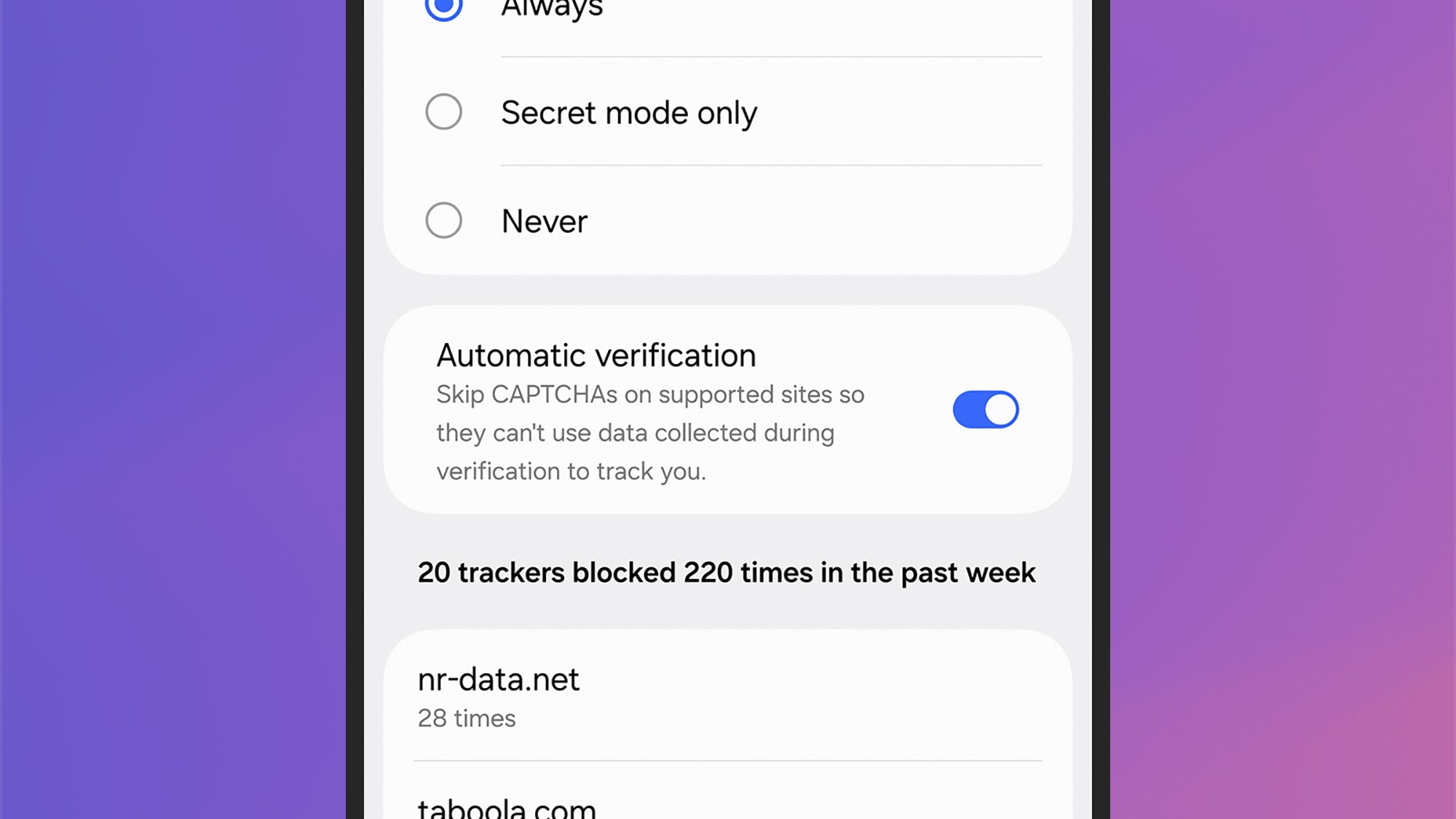
Enabling the Automatic Verification feature.
Credit: Lifehacker

Open up Samsung Internet on your phone, then tap the menu button (three horizontal lines, bottom right) and Settings. Choose Privacy dashboard, then Smart anti-tracking, and you’ll get to the Automatic Verification toggle switch—if it’s not already enabled, you can turn it on here.

The feature “prevents websites from using data collected during the user authentication process to track your activities” according to the notes accompanying the latest app update. “You can use Automatic Verification to skip the CAPTCHA step on websites.”

There are a few caveats to keep in mind. First, this is a feature that’s restricted to the Samsung Internet browser, so you can’t use it with other web browsers you might have installed on your device. Also, websites have to support the feature, Samsung says—it’s not clear what that means, but it sounds like it won’t work with every CAPTCHA you come across.

Does Automatic Verification work?

I tested the feature out on several websites, including the demos available at NopeCHA, and they all appeared as normal—it didn’t appear that Automatic Verification made any difference. This could be a case of a feature that’s great in theory but which doesn’t actually work when put to the test. Alternately, it might be too soon to expect results, as Samsung has only just introduced the feature, so it’s perhaps no surprise that it’s not playing nicely with every website yet.

If Automatic Verification is eventually supported more widely across the most popular websites, it could be another reason to stick to Samsung’s built-in mobile browser. At this point, that’s a big if.

DNA-Testing Firm 23andMe Files for Bankruptcy

DNA-testing company 23andMe has filed for Chapter 11 bankruptcy protection [non-paywalled source] in Missouri and announced CEO Anne Wojcicki’s immediate resignation, weeks after rejecting her proposal to buy back the business she co-founded. The bankruptcy filing represents “the best path forward to maximize the value of the business,” said Mark Jensen, board member and special committee chair.


Read more of this story at Slashdot.

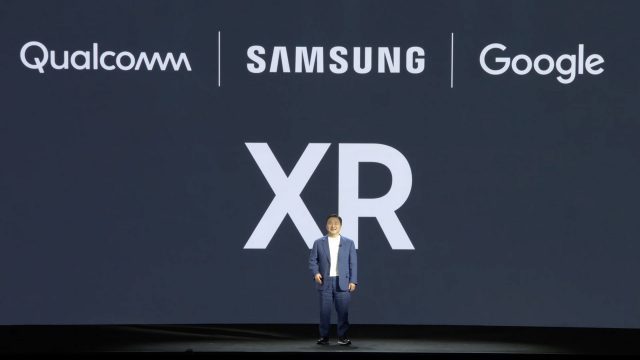
Samsung Reportedly Planning to Release XR Glasses This Year

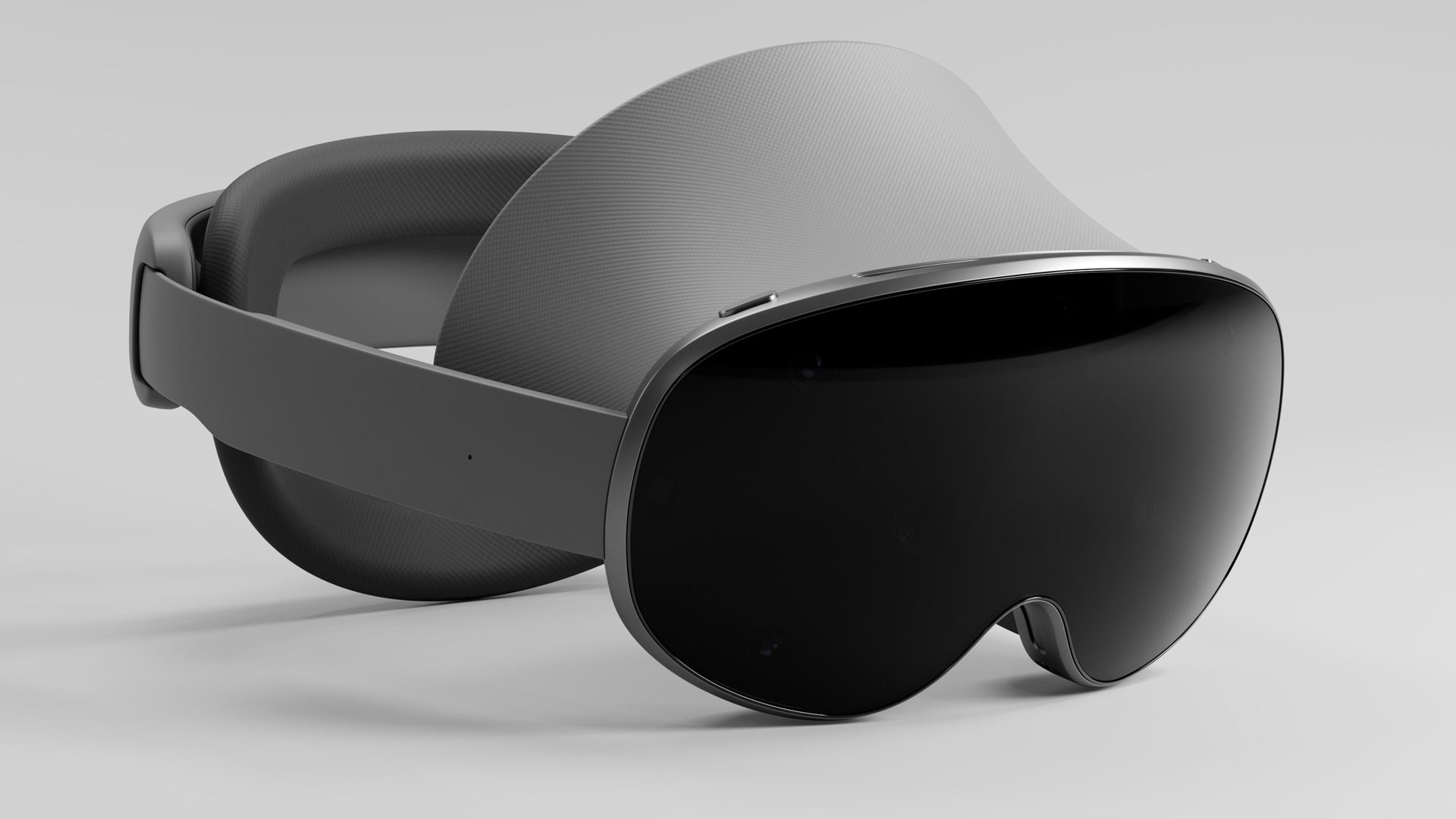
We’ve been waiting to hear about Samsung’s entrance into XR for a few years now, with the company’s still unnamed mixed reality headset ‘Project Moohan’ set to debut sometime this year running Google’s Android XR operating system. Now, a report from ETNews (Korean) maintains the South Korean tech giant may also have a pair of XR glasses up its sleeves.

Citing industry sources, the report alleges Samsung is developing XR glasses (noted as ‘smart glasses’ in the report—more on that below) with the goal of releasing them by the end of the year.

Samsung is reportedly now finalizing functions and specs of the device, which is said to be codenamed ‘Haen’ (‘coast’ or ‘seashore’ in Korean).

“With Apple’s Vision Pro already on the market, Samsung’s focus will be on providing a more advanced user experience,” an industry insider told ETNews.

Notably, the report doesn’t specify precisely what sort of device Haen is, which is why we’re simply calling them ‘XR glasses’ for now.

Samsung Project Moohan | Image courtesy Google

The report refers to the device as a pair of ‘smart glasses’ (machine translated from Korean), however this is sometimes used interchangeably to refer to two types of devices—AR glasses like Meta Orion, which blend digital images with the user’s physical surroundings, and smart glasses, which typically have a more simplistic heads-up display, like the now retired Google Glass. You can find out more about the differences between smart glasses and AR glasses here.

Since the report doesn’t specify Haen’s specific functions, we’ve referred to them as XR glasses for now.

While reports should generally be taken with a grain of salt, ETNews was the outlet that broke the news that LG was shaking up its XR product division, confirming that talks with Meta were going in a seemingly unplanned direction. Meta had tapped LG in February 2024 to partner on XR software and hardware, which at the time was rumored to include LG manufacturing a Vision Pro competitor for Meta. LG has since confirmed it’s closing its XR product division, instead focusing on long-term R&D.

Still, this isn’t the first time we’ve heard Samsung was getting ready to enter the XR glasses market. In 2021, Microsoft leaker ‘WalkingCat’ posted two leaked videos showing off futuristic AR concept devices from the company. Samsung has also filed a number of trademarks over the years, with its most recent ‘Galaxy Glasses’ patent filed with the United States Patent and Trademark Office (USPTO).

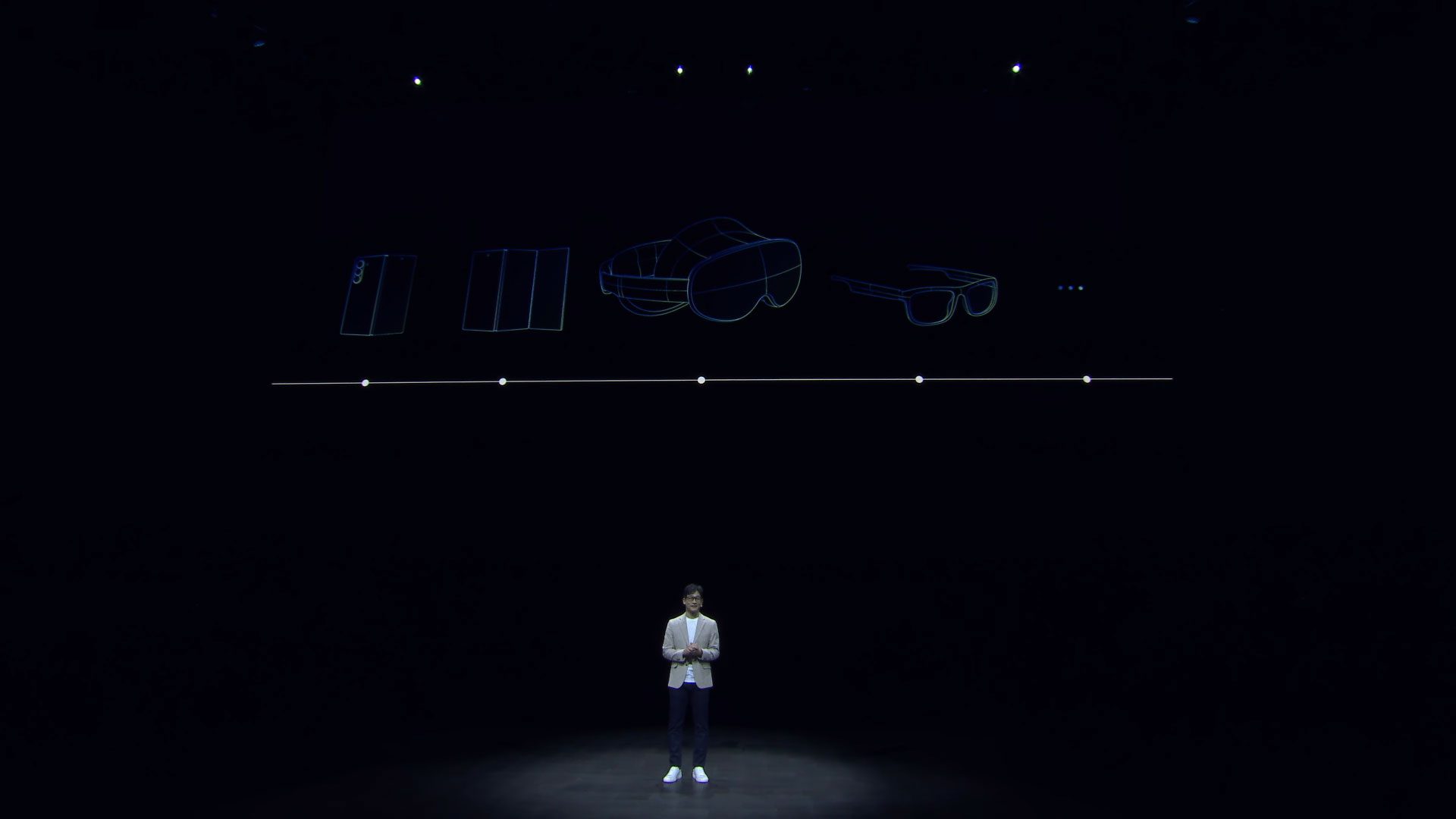
Then, a report from South Korea’s Yonhap News last year alleged Samsung would unveil a pair of XR glasses at the the company’s Unpacked product event in January, which unfortunately didn’t materialize. Small recompense: Samsung did show off a slide featuring XR glasses as a part of its future roadmap.

Image courtesy Samsung

The device mentioned in the Yonhap News report was said to include a payment function, gesture recognition, and facial recognition, noting that it was expected to launch around Q3 2025. Still, no mention of displays, or specific functions that would delineate it as smart glasses of AR glasses as such.

Whatever the case, Samsung seems to be gearing up to make the best use of its partnership with Google to integrate Android XR into its next big entry into the segment, Project Moohan.

Until now, we’ve gotten a hands-on with Moohan, and even seen a “near-final” version of the hardware back at Unpacked 2025 in January, although its launch date and actual name is still under wraps.

Provided Samsung wants to make a splash, it could reveal the device at a number of venues: Google’s upcoming I/O conference in May, Qualcomm’s Snapdragon Summit in October/November, or even a hypothetical special event dedicated to both Moohan and possibly its XR glasses efforts.

The post Samsung Reportedly Planning to Release XR Glasses This Year appeared first on Road to VR.

Valve Hasn’t Released A VR Game In 5 Years, And That’s Not OK

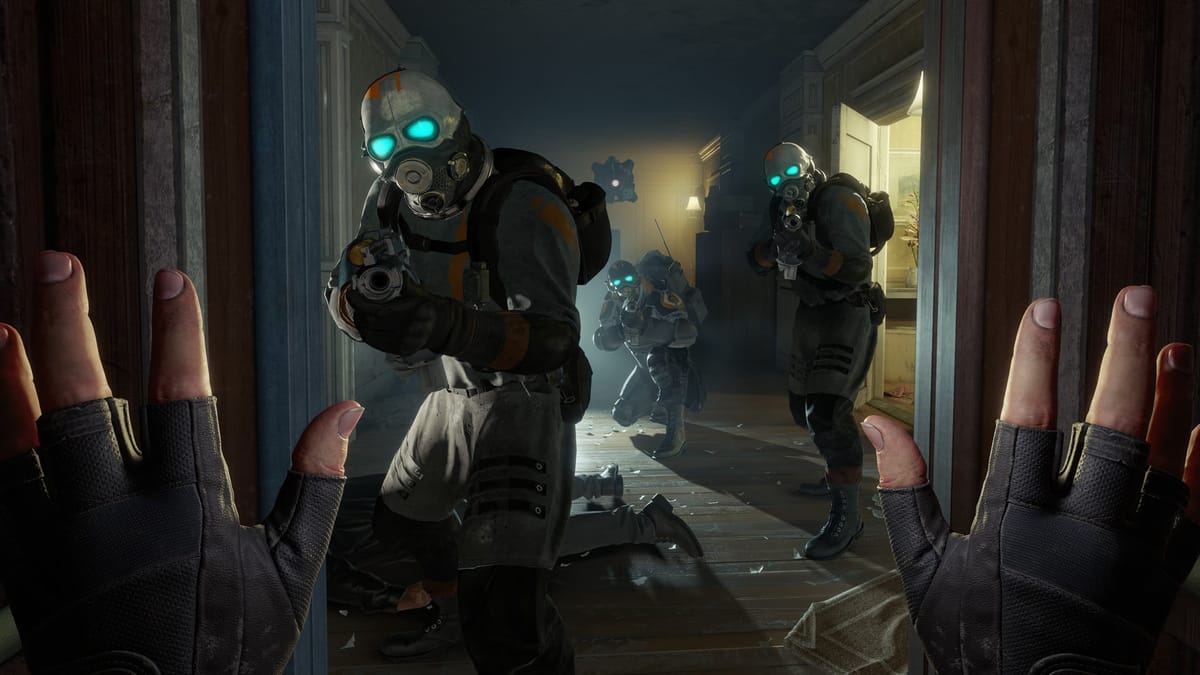
Half-Life: Alyx released five years ago.

Considered by many to be the best VR game ever made, Alyx arrived just under nine months after Index as the first of the three “full” Valve VR games Valve had teased before the headset’s release.

The problem, of course, is that the other two games never arrived, with Valve confirming upon Alyx’s release that they weren’t even in development. In the almost six years since launching the $1000 Index, Valve has released just one game and commissioned two 15-minute demos (Aperture Hand Lab and Moondust).

Valve: “At The Moment, There Aren’t Three Other VR Titles In Development”
Back in February 2017, Valve’s Gabe Newell revealed that the company was working on three ‘full’ VR games. Over three years on, and we finally have one of those games in Half-Life: Alyx, out today (review here!). Are there still two other new Valve VR games on the way?
UploadVRJamie Feltham

No other gaming platform holder would get away with releasing just one game and two demos for its hardware in six years. Imagine the reaction, and the headlines, had Nintendo had done this with Switch, or Sony with PlayStation 5. But for some reason Valve is given a free pass.

Ironically, it’s Meta that is constantly accused of abandoning, or being on the verge of abandoning, VR gaming. Every year without fail, our industry comes up with rumors and theories about how Meta will pull out of gaming any second now. Yet since Alyx launched, Meta has delivered Medal of Honor: Above and Beyond, Lone Echo 2, Resident Evil 4 VR, Assassin’s Creed Nexus, Asgard’s Wrath 2, and Batman: Akrham Shadow – essentially a blockbuster VR title every year, at least. It’s also funded hundreds of smaller developers, while we’ve seen no indication of Valve doing the same.

Meta: “We’re Still Investing Massively In VR Gaming And Don’t Plan To Stop”
Meta says it funded over 100 VR & mixed reality titles that shipped in 2024, as well as over 200 currently in “active production”.
UploadVRDavid Heaney

I bring this up Valve’s lack of commitment to VR because in my view, it’s one of the few companies that truly understands the medium, and thus its absence is sorely felt.

Half-Life: Alyx isn’t a flatscreen game shoehorned into VR, as so many other VR titles unfortunately still are. It’s an example of content made from the ground up for virtual reality. Despite its narrative scale, Alyx focuses on polished hand-object interactions, doesn’t get bogged down by janky IK arms, and prioritizes a sharp presentation with high-resolution textures and high quality materials over flashy dynamic lighting.

In our timeline, SteamVR has grown over the past six years, but at a glacial pace. Can we imagine a timeline where Valve leveraged its other IPs like Counter-Strike, Portal, Left 4 Dead, Team Fortress, and Dota to release blockbuster VR title every year? Is it really too much to ask that the one company to make serious profit from PC VR invests in its future?

“But that’s just not Valve’s style!” you may argue. And you may be right. But in that case Valve should fund other developers to build great SteamVR content. Rather than commission Cloudhead Games to make a 15-minute Portal-themed demo, why not a 15-hour Portal-themed game?

“But Valve is a much smaller company than Meta!”, you may continue. And while it’s true that Valve isn’t Meta scale, it isn’t as small as it’s sometimes depicted. Valve is estimated to bring in $10 billion revenue each year, and Gabe Newell reportedly owns multiple “superyachts”. Valve hasn’t been an indie darling for decades, now. It can afford to invest in VR.

“But Valve just doesn’t want to artificially inflate the market”, you may further retort. But in that case, why release Alyx in the first place?

Half-Life: Alyx Review – Supremely Polished, Surprisingly Familiar, Occasionally Awkward And Unshakably Essential VR
Second chances. Not everyone gets one. And yet, in Half-Life: Alyx, Valve finds itself with an embarrassment of them. Forget all that ‘back from the dead’ stuff for a minute; you don’t need me to tell you Half-Life has been away for a very long time. More pressing is
UploadVRJamie Feltham

How Gabe Newell spends his money is ultimately up to him. But if we’re going to call for greater investment in VR gaming from platform holders, Valve should be at the top of our list. I say this that because I love Half-Life: Alyx, and I believe our industry would greatly benefit from seeing more from the geniuses behind it.